Free Printable Naming Organic Compounds Worksheets for Class 12
Class 12 students can master naming organic compounds with Wayground's comprehensive collection of free chemistry worksheets, featuring structured practice problems, printable PDFs, and detailed answer keys to build confidence in IUPAC nomenclature rules.
Explore printable Naming Organic Compounds worksheets for Class 12
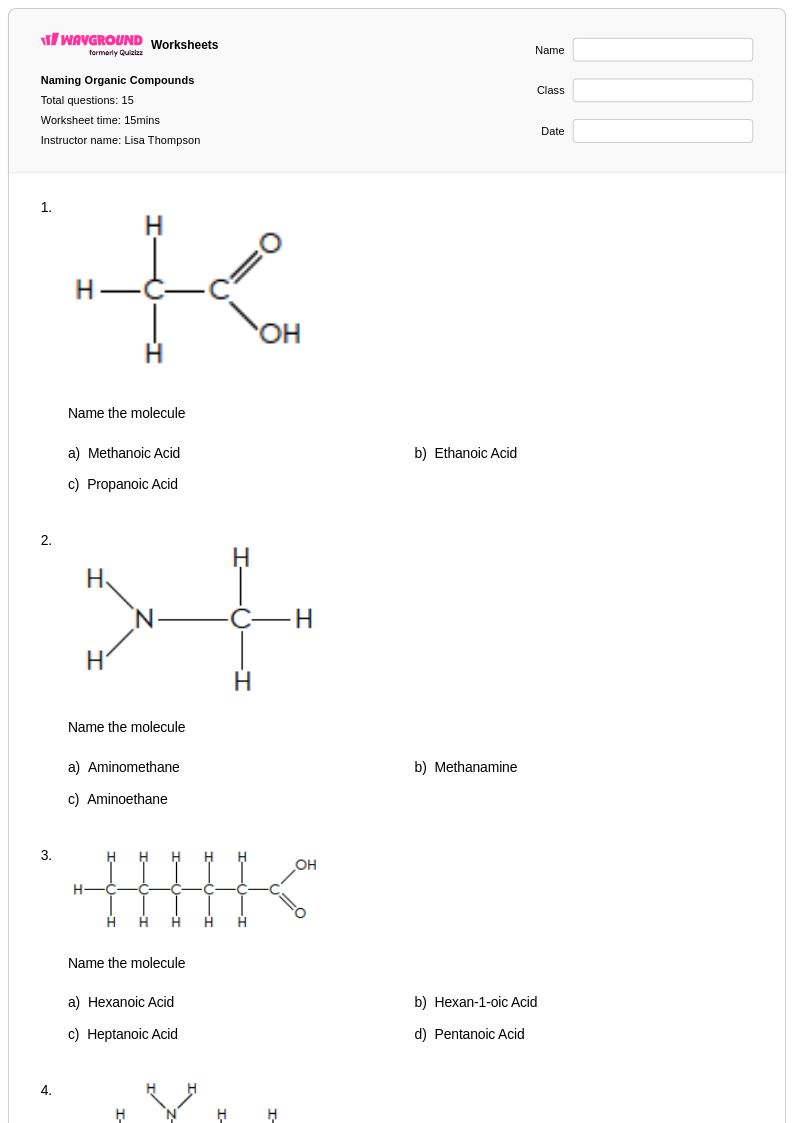
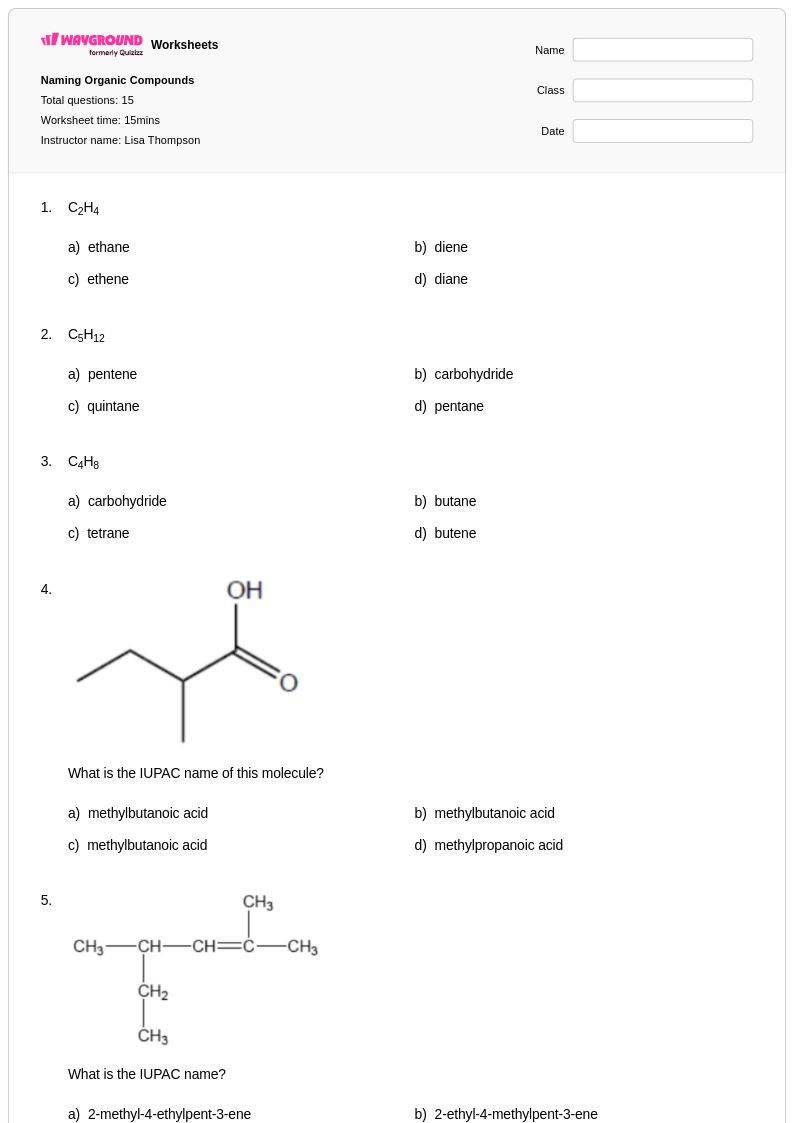
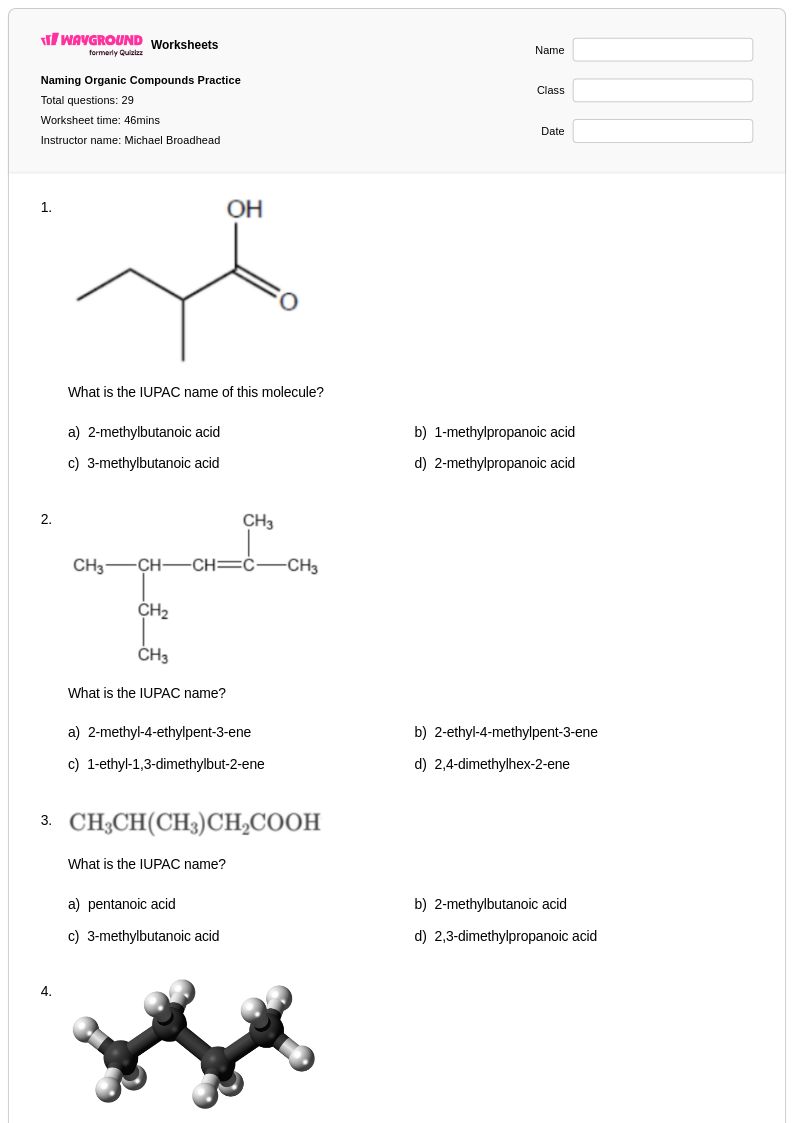
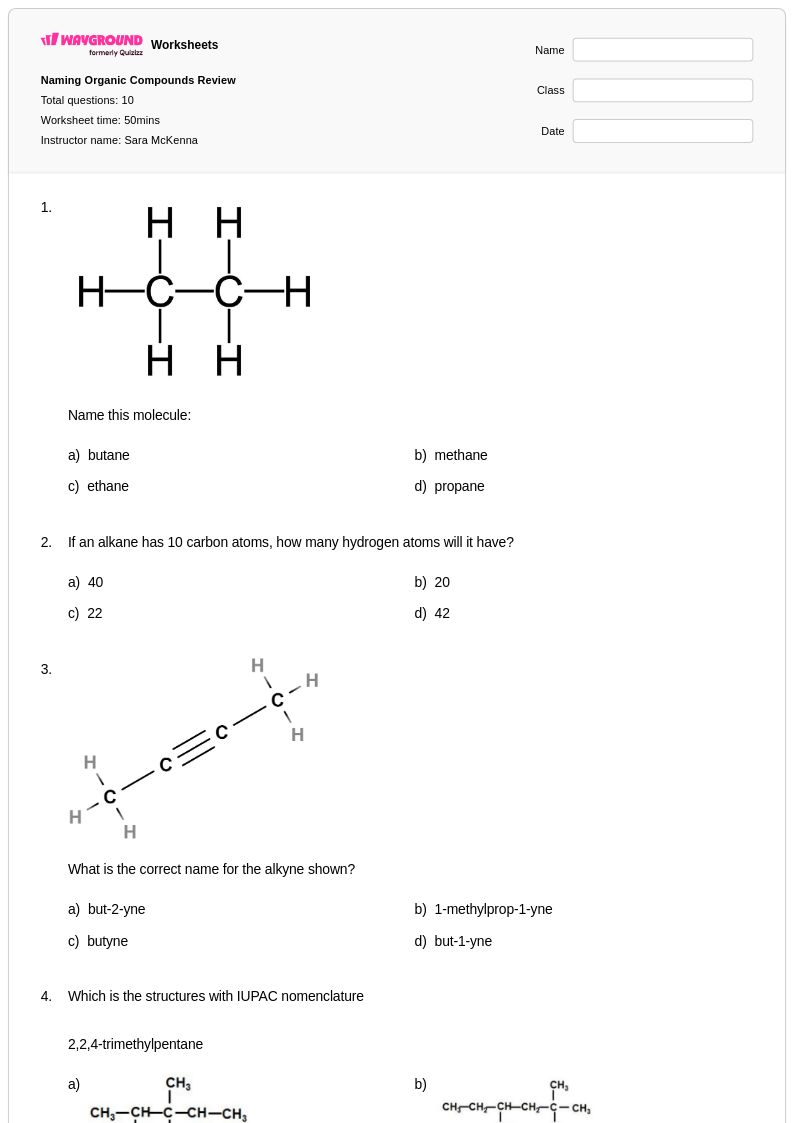
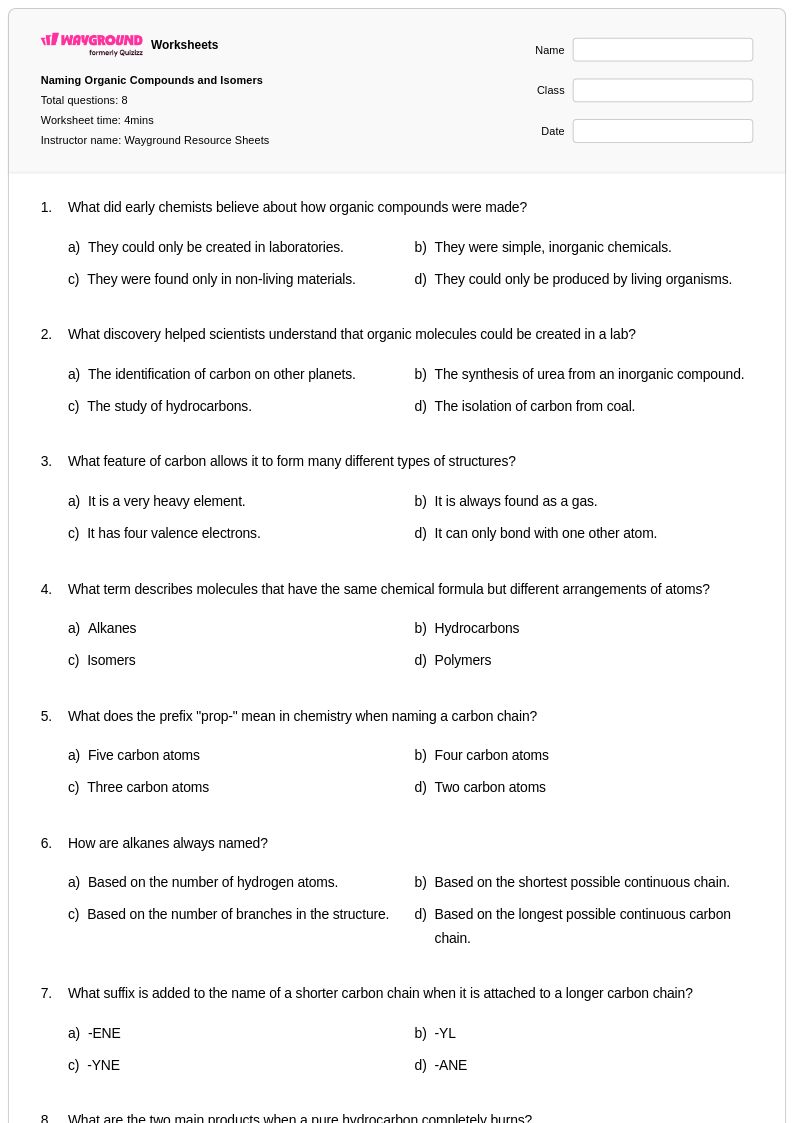
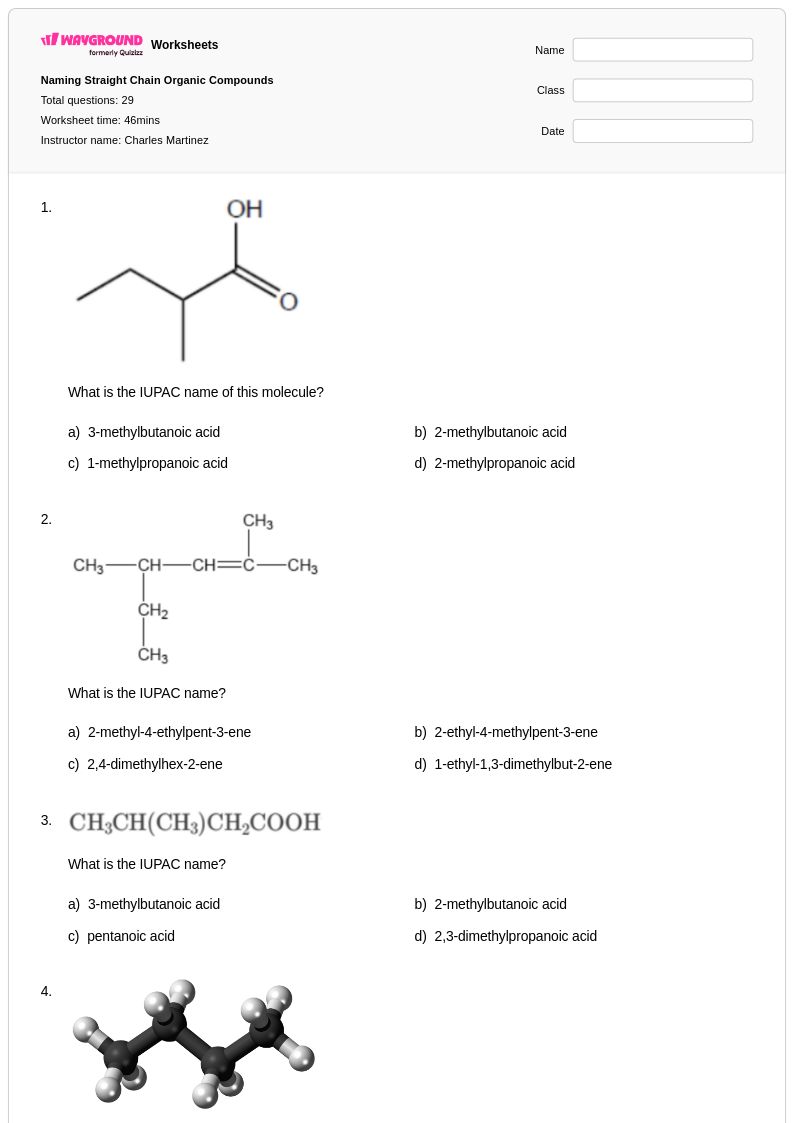
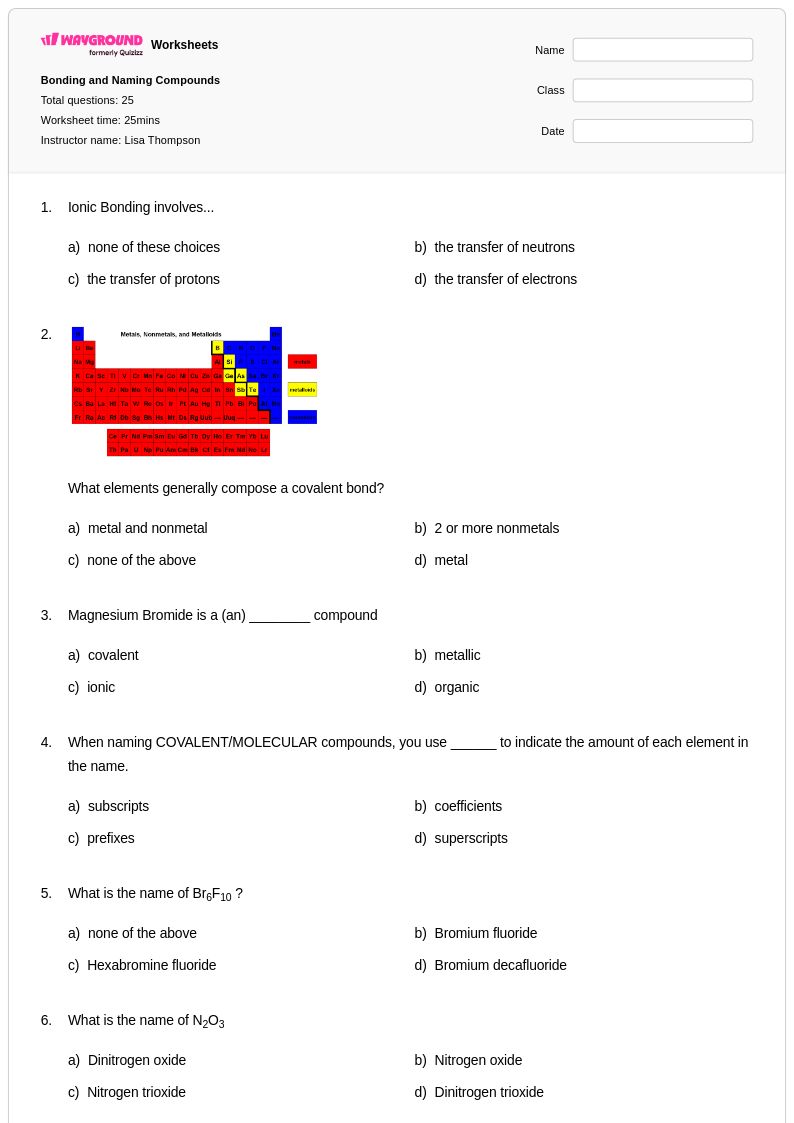
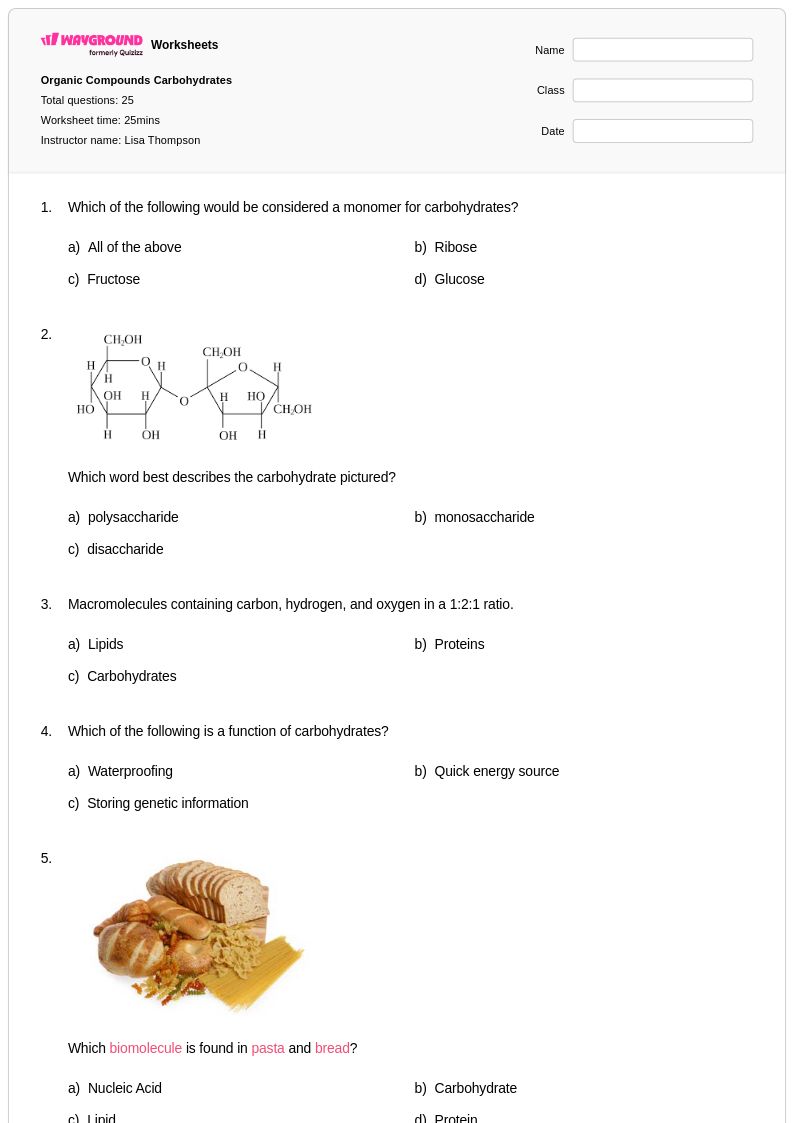
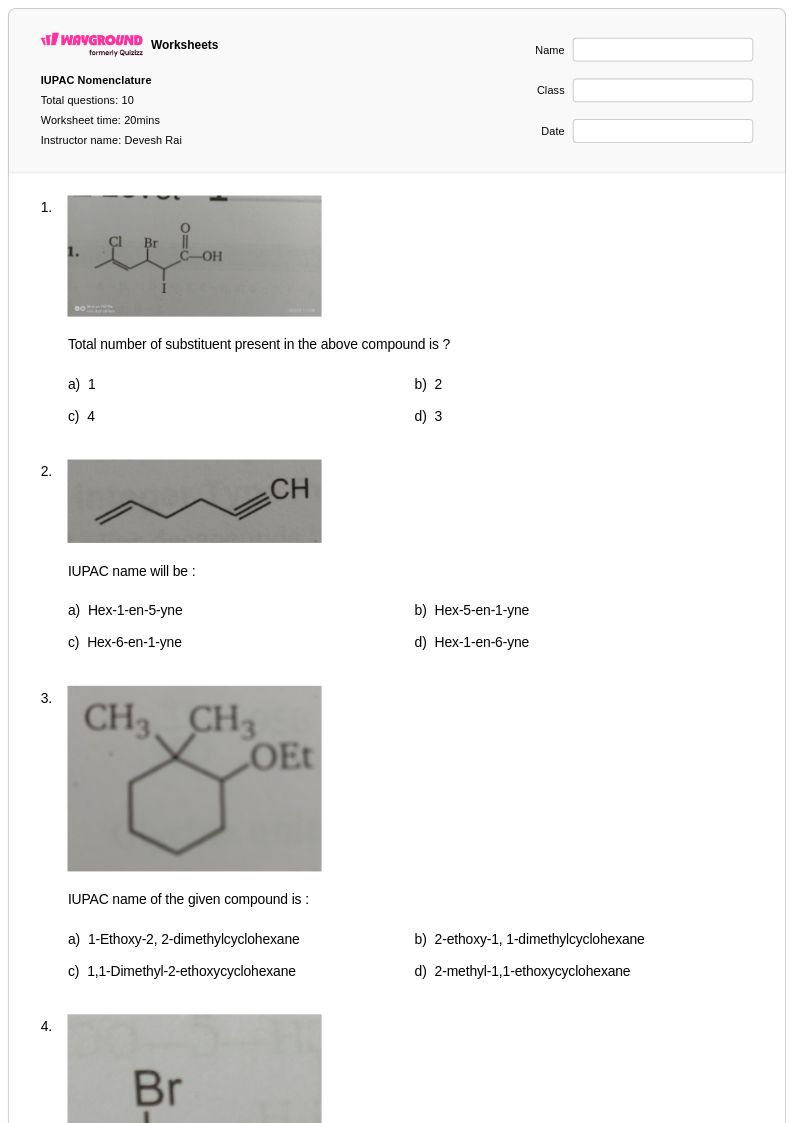
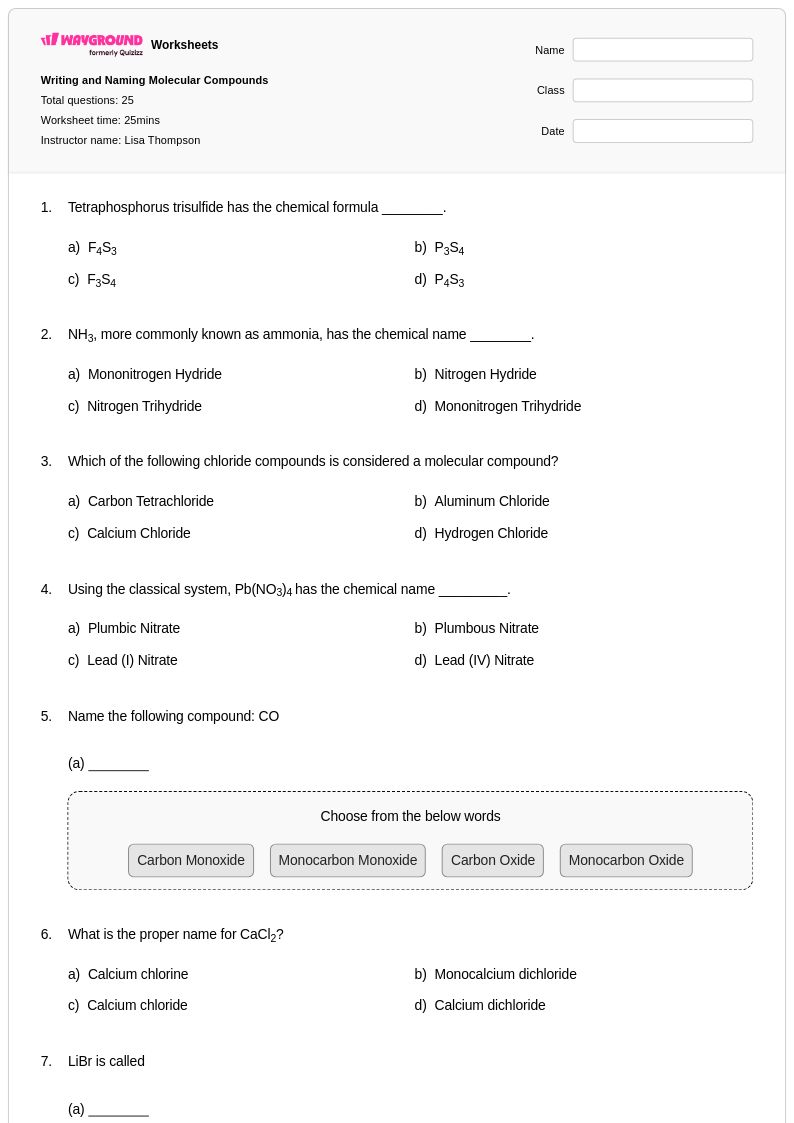
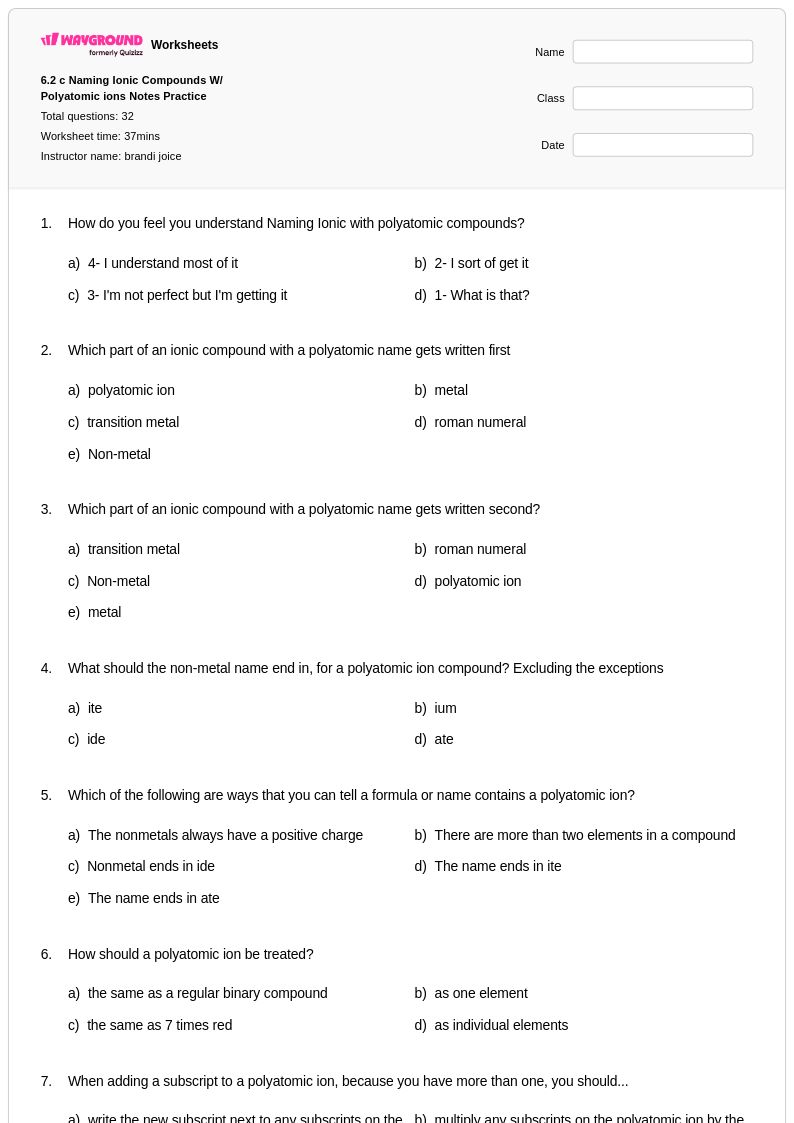
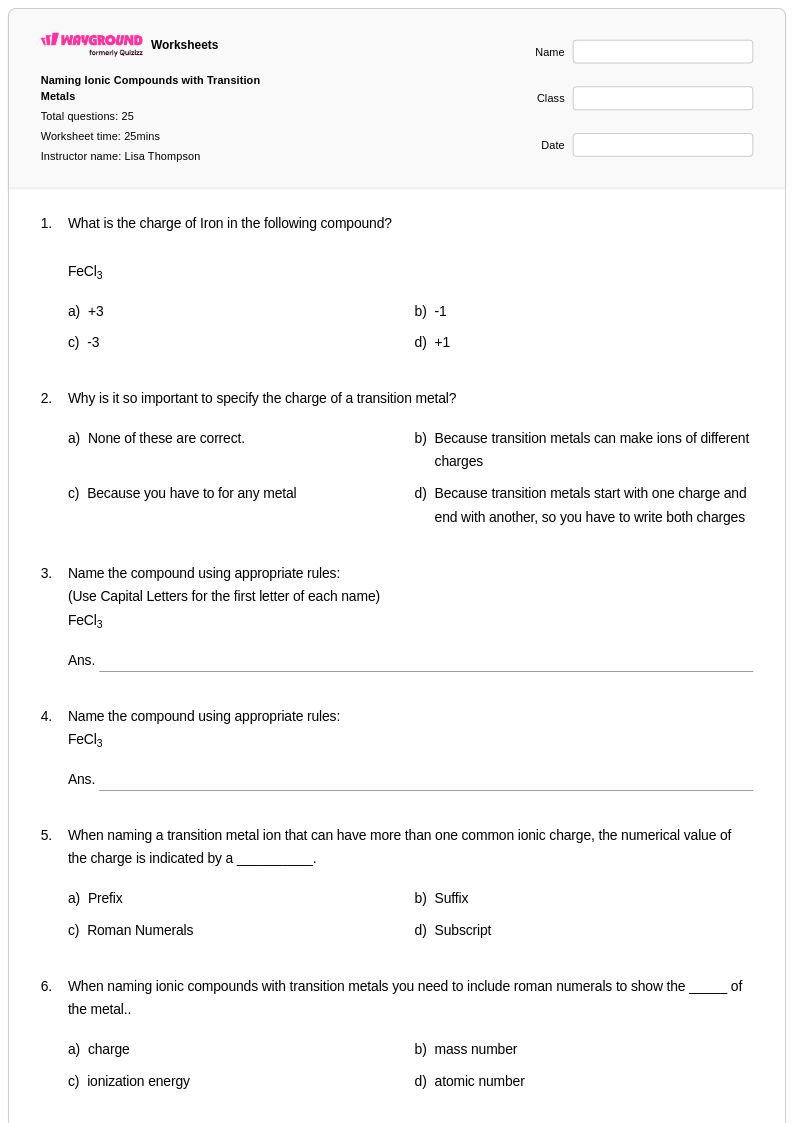
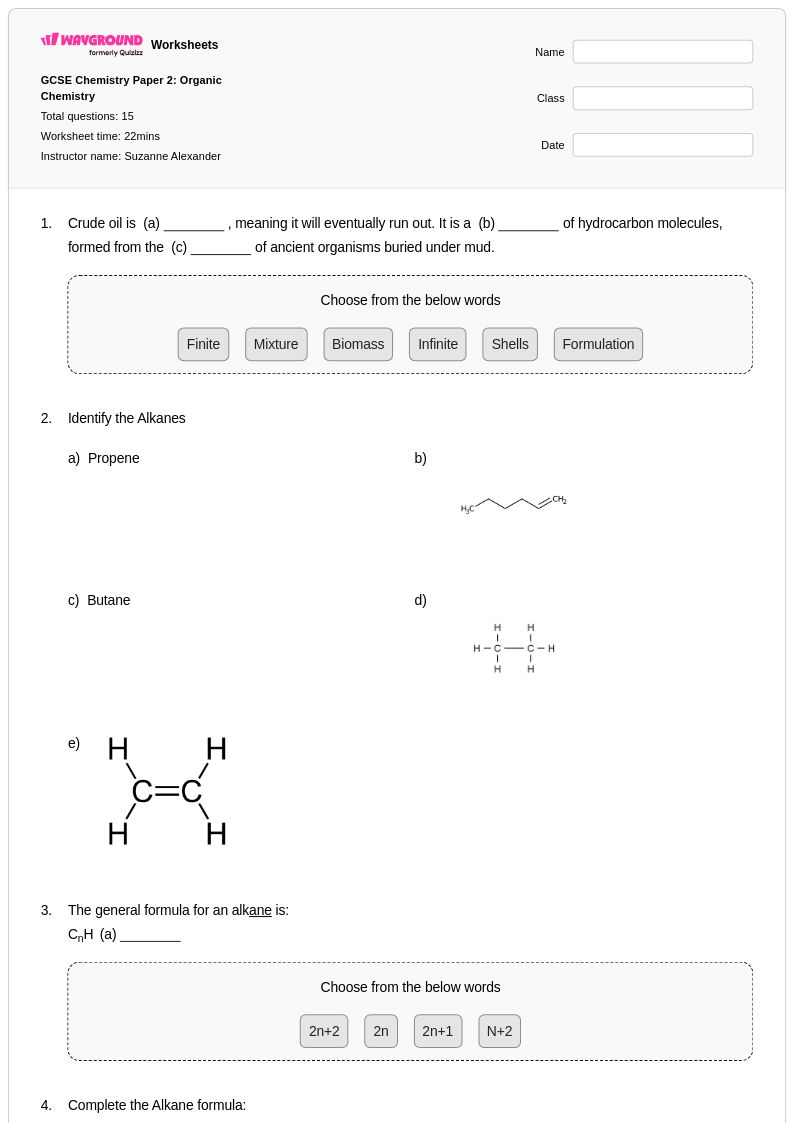
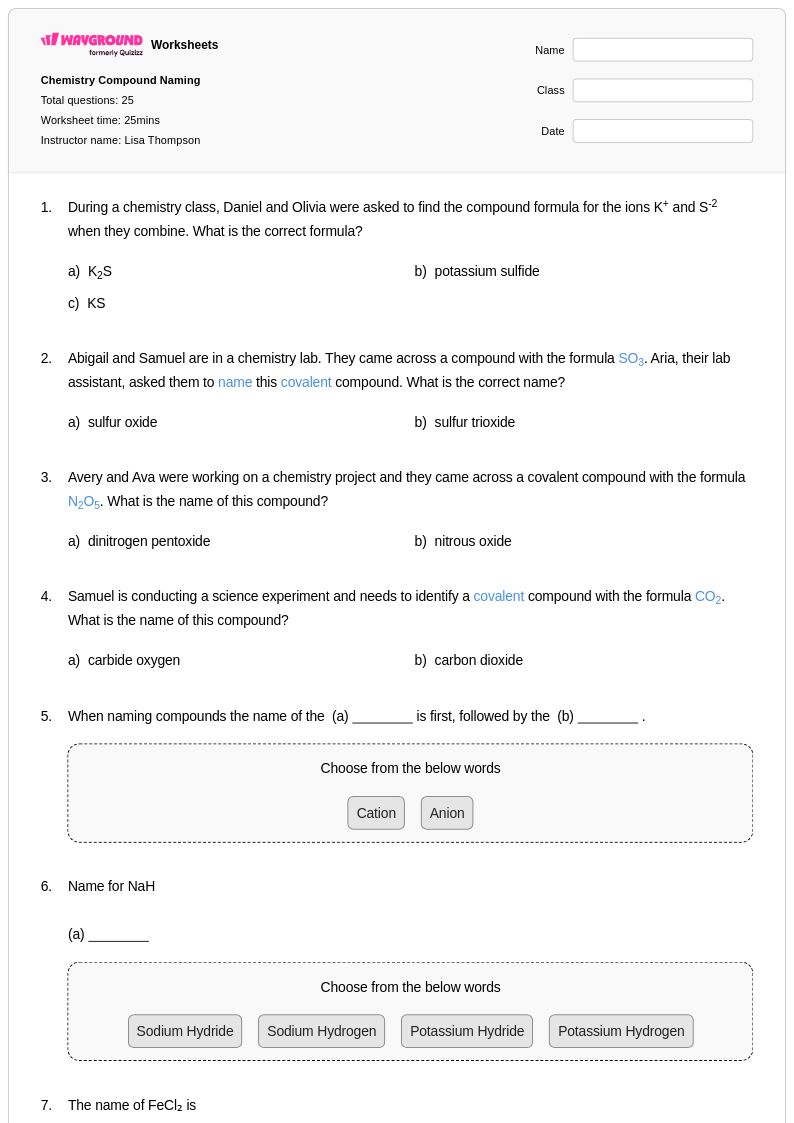
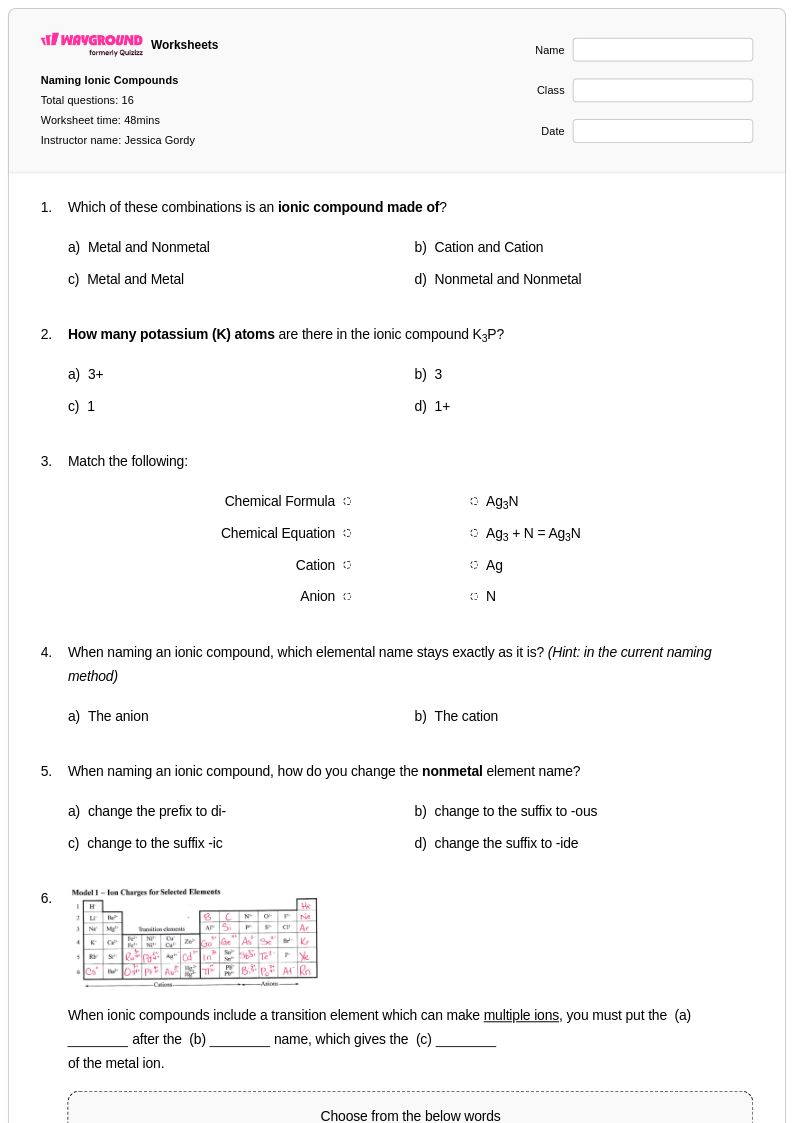
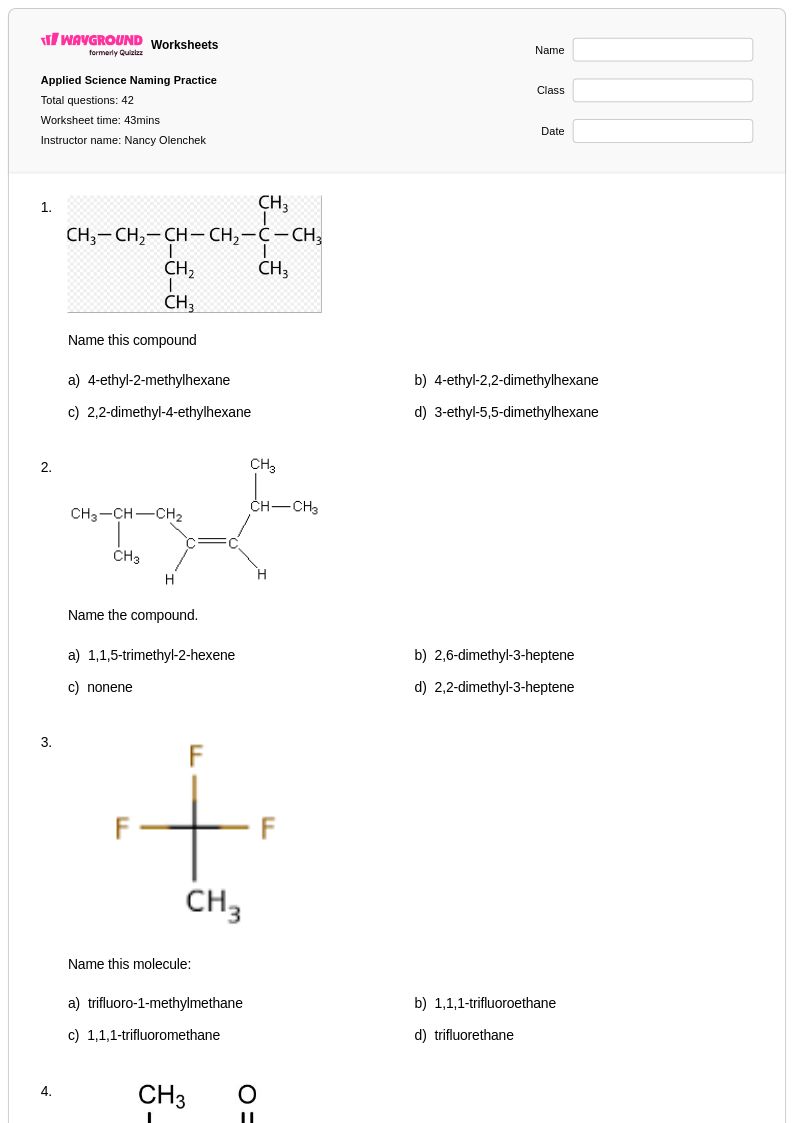
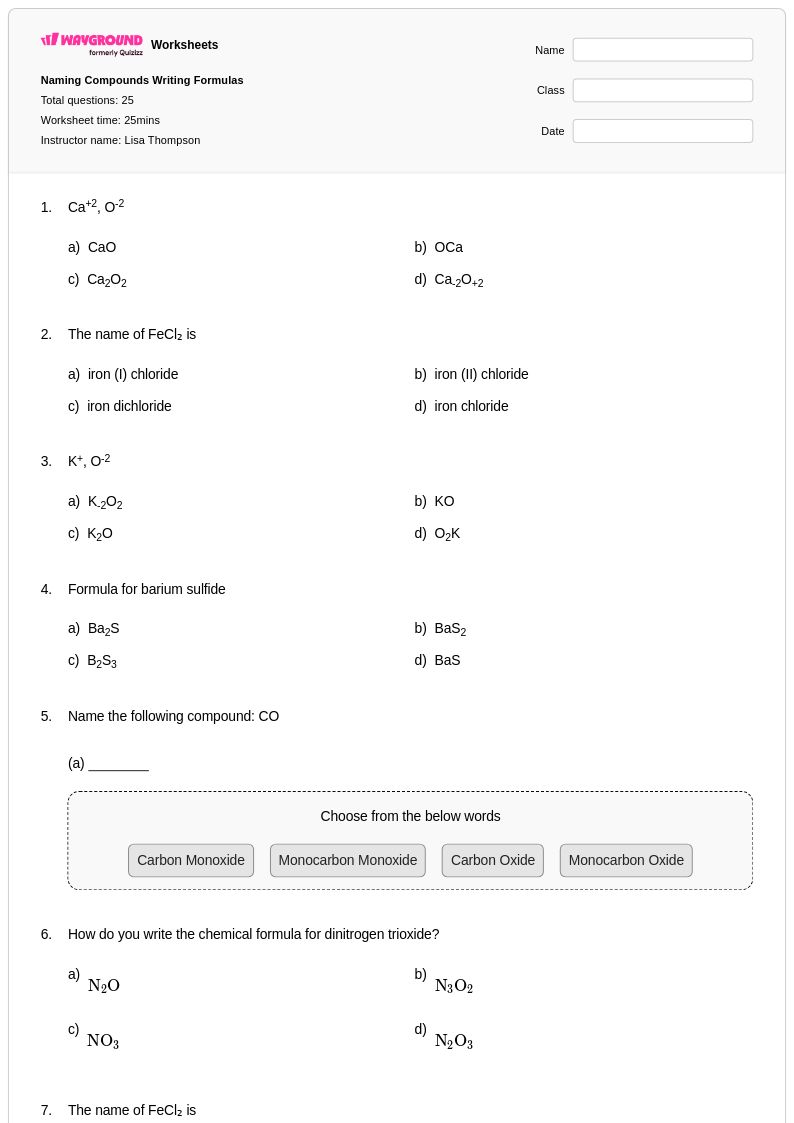
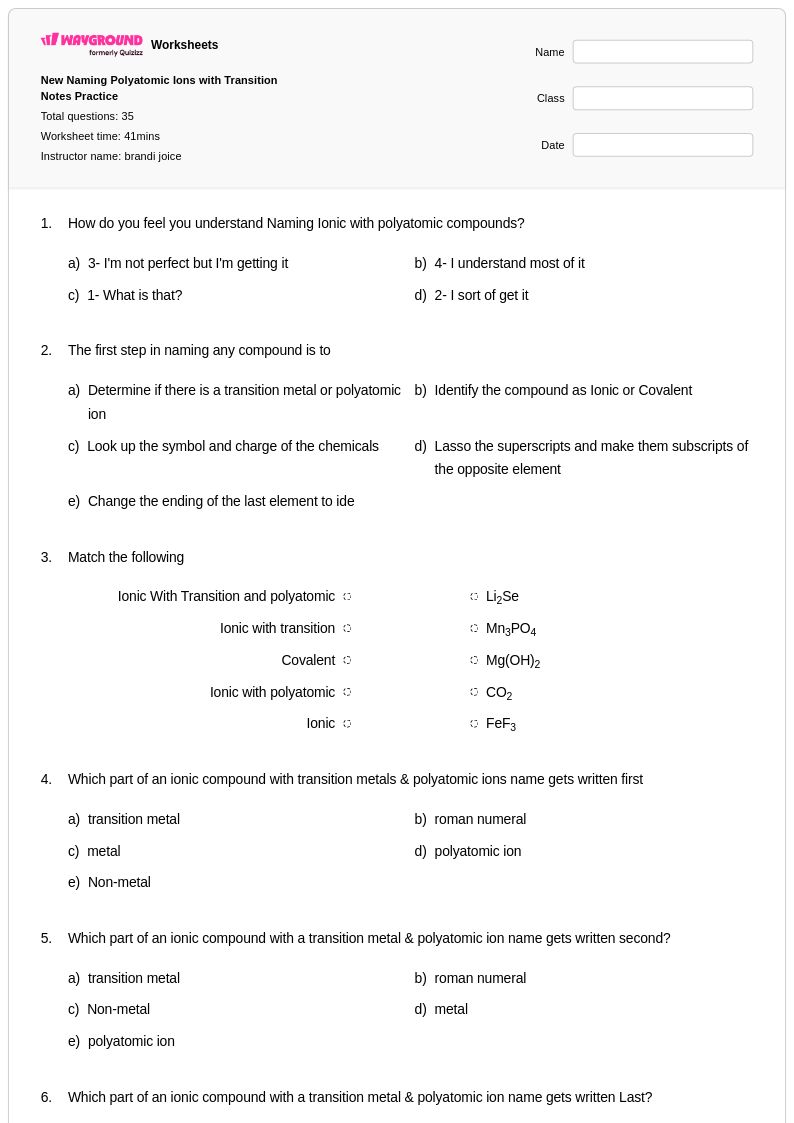
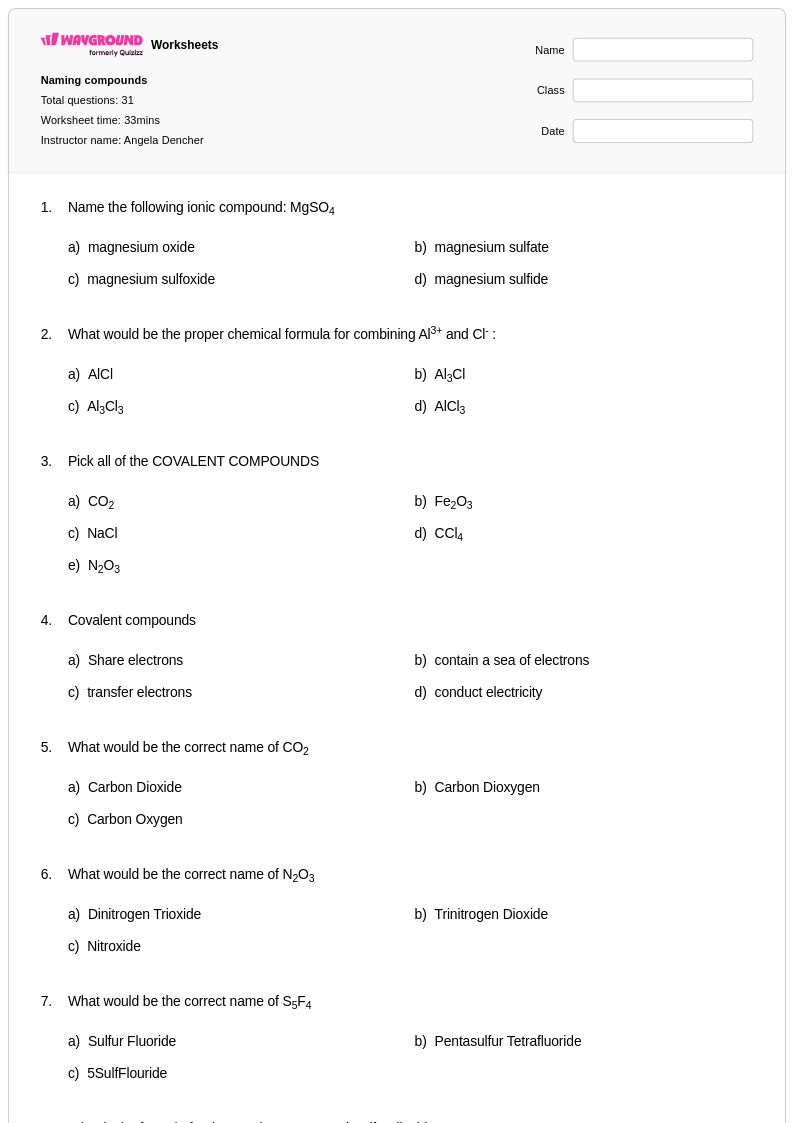
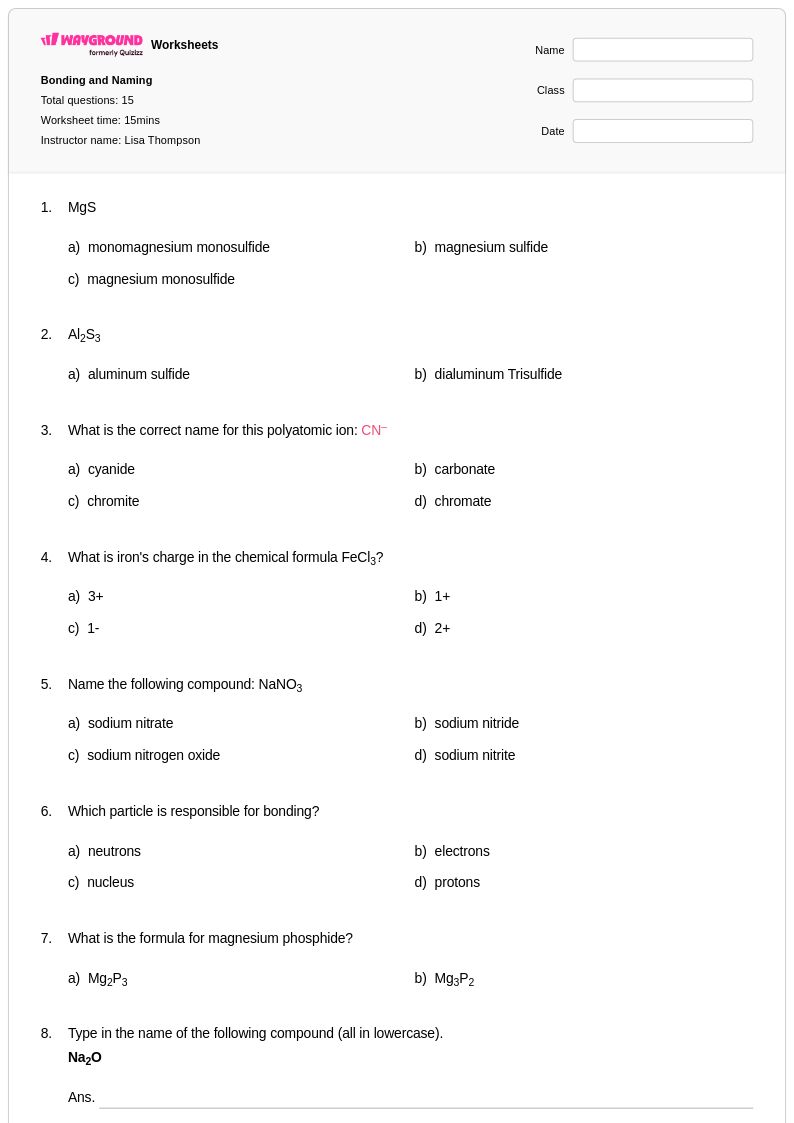
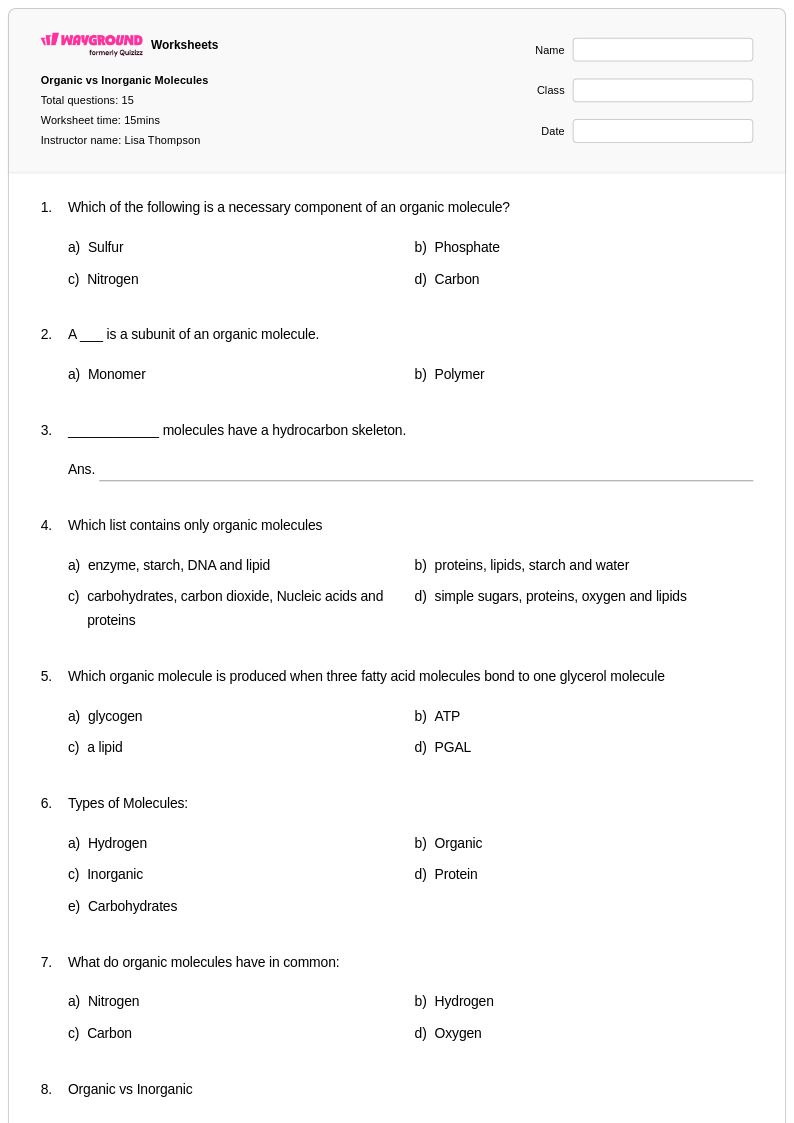
Naming organic compounds represents a fundamental skill in Class 12 chemistry that requires students to master systematic nomenclature rules for complex molecular structures. Wayground's comprehensive collection of naming organic compounds worksheets provides targeted practice with IUPAC naming conventions, functional group identification, and structural analysis across alkanes, alkenes, alkynes, aromatic compounds, and molecules containing multiple functional groups. These carefully designed practice problems strengthen students' ability to translate between chemical names and structural formulas while building confidence with branched chains, stereochemistry, and priority rules. Each worksheet comes with a detailed answer key and is available as a free printable pdf, making it easy for educators to assign meaningful practice that reinforces the systematic thinking required for advanced organic chemistry nomenclature.
Wayground's extensive library of millions of teacher-created resources ensures that educators have access to high-quality naming organic compounds materials that align with chemistry standards and Class 12 curriculum expectations. The platform's robust search and filtering capabilities allow teachers to quickly locate worksheets targeting specific aspects of organic nomenclature, from basic alkyl groups to complex polyfunctional molecules, while differentiation tools enable customization for varying student ability levels. These resources are available in both digital and printable pdf formats, providing flexibility for classroom instruction, homework assignments, test preparation, and remediation activities. Whether used for initial skill development, enrichment challenges, or targeted review before assessments, these worksheets support comprehensive lesson planning and help students develop the systematic approach necessary for mastering organic compound nomenclature.
FAQs
How do I teach IUPAC naming of organic compounds to chemistry students?
Start by building a strong foundation with simple alkanes before introducing branched chains, functional groups, and substituents. Teach IUPAC rules incrementally — parent chain identification first, then numbering direction, then substituent naming and positioning. Students need repeated exposure to priority rules and functional group hierarchies before they can reliably name complex molecules, so scaffolded practice across multiple class sessions is more effective than a single comprehensive lesson.
What exercises help students practice naming organic compounds?
Effective practice includes both structure-to-name and name-to-structure exercises, since students need to work fluently in both directions. Worksheets that isolate one rule at a time — such as alkyl group identification or substituent numbering — help students build systematic competence before tackling problems that combine multiple naming conventions. Practice problems covering alkanes, alkenes, alkynes, and functional group combinations, along with answer keys that explain the reasoning behind each name, reinforce the logical framework of organic nomenclature.
What mistakes do students commonly make when naming organic compounds?
The most frequent errors involve selecting the wrong parent chain, particularly when students choose the longest chain they see rather than the one that includes the principal functional group. Students also consistently number substituents from the wrong end of the chain, failing to apply the lowest locant rule correctly. Stereochemistry designations and priority rules for molecules with multiple functional groups are especially error-prone, as these require students to apply layered conventions simultaneously.
How do I differentiate organic nomenclature practice for students at different skill levels?
Begin lower-level students with single-substituent alkanes and build toward branched chains before introducing unsaturation or functional groups. Advanced students can be challenged with molecules containing multiple functional groups, stereochemistry, or complex substituent combinations. On Wayground, teachers can apply accommodations such as reduced answer choices for students who need support, or extended time for those who require additional processing time, allowing differentiation to happen within the same assignment without singling out individual students.
How can I use Wayground's naming organic compounds worksheets in my chemistry class?
Wayground's naming organic compounds worksheets are available as printable PDFs for traditional classroom use and in digital formats for technology-integrated environments, giving teachers flexibility for homework, in-class practice, or lab warm-ups. Teachers can also host the worksheets as a live quiz on Wayground, making it easy to track student performance in real time. Each worksheet includes a complete answer key so students can self-check or teachers can review work efficiently.
How do I help students understand the logic behind organic nomenclature rather than just memorizing rules?
Frame IUPAC naming as a decision-making algorithm rather than a list of rules to memorize — students who understand why each step exists are far more consistent than those who memorize steps in isolation. Use molecular models or structural diagrams alongside naming exercises so students connect the written name to a physical structure. Asking students to explain their naming decisions aloud or in writing reinforces the reasoning process and surfaces misconceptions before they become entrenched habits.