
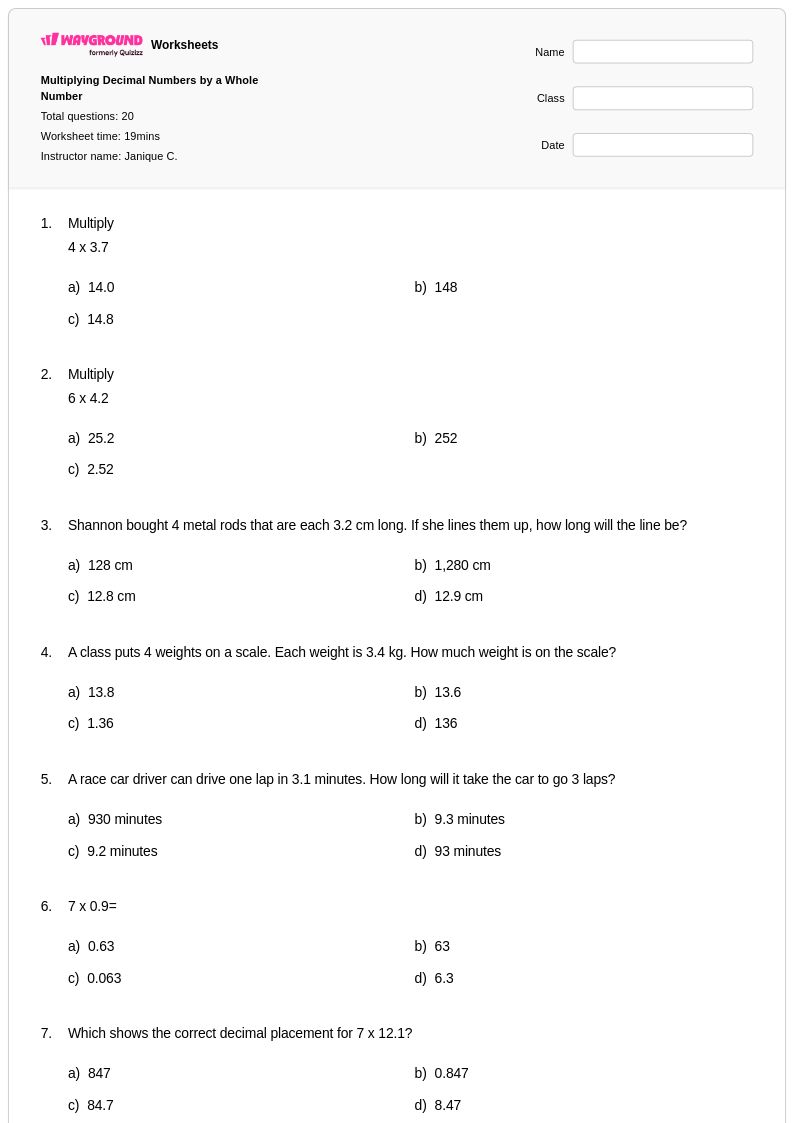
20 Q
6th
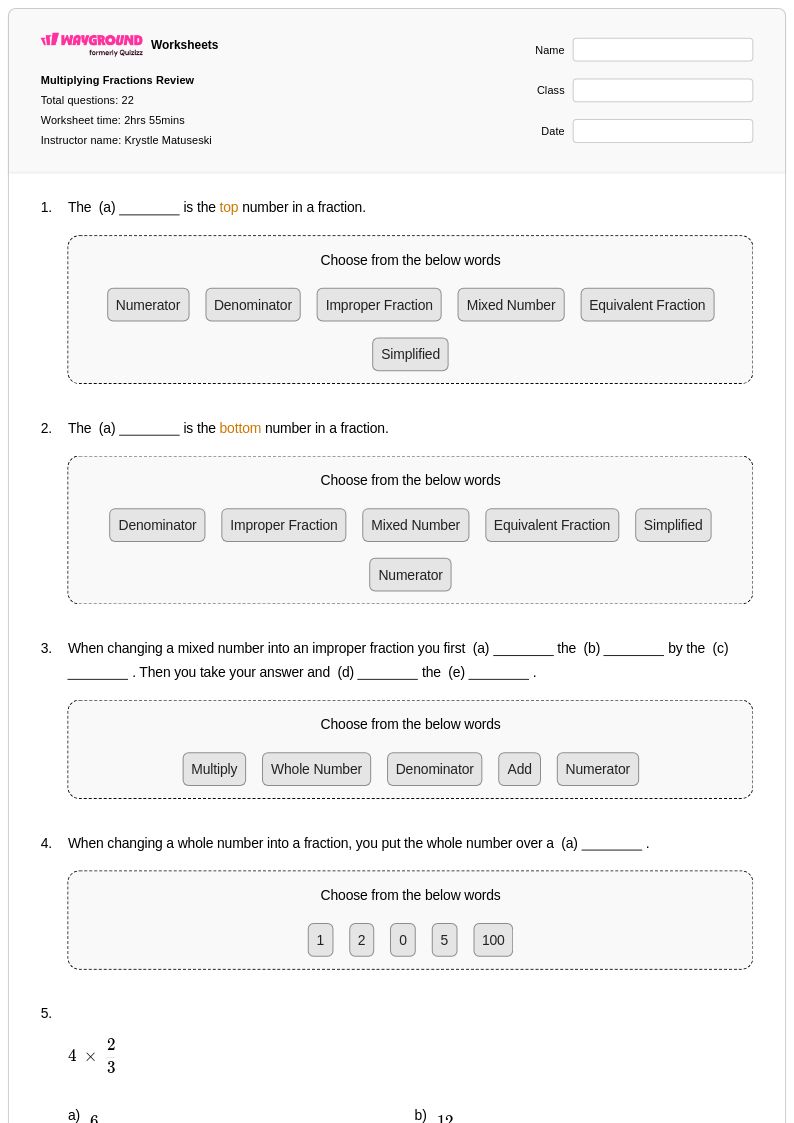
22 Q
6th
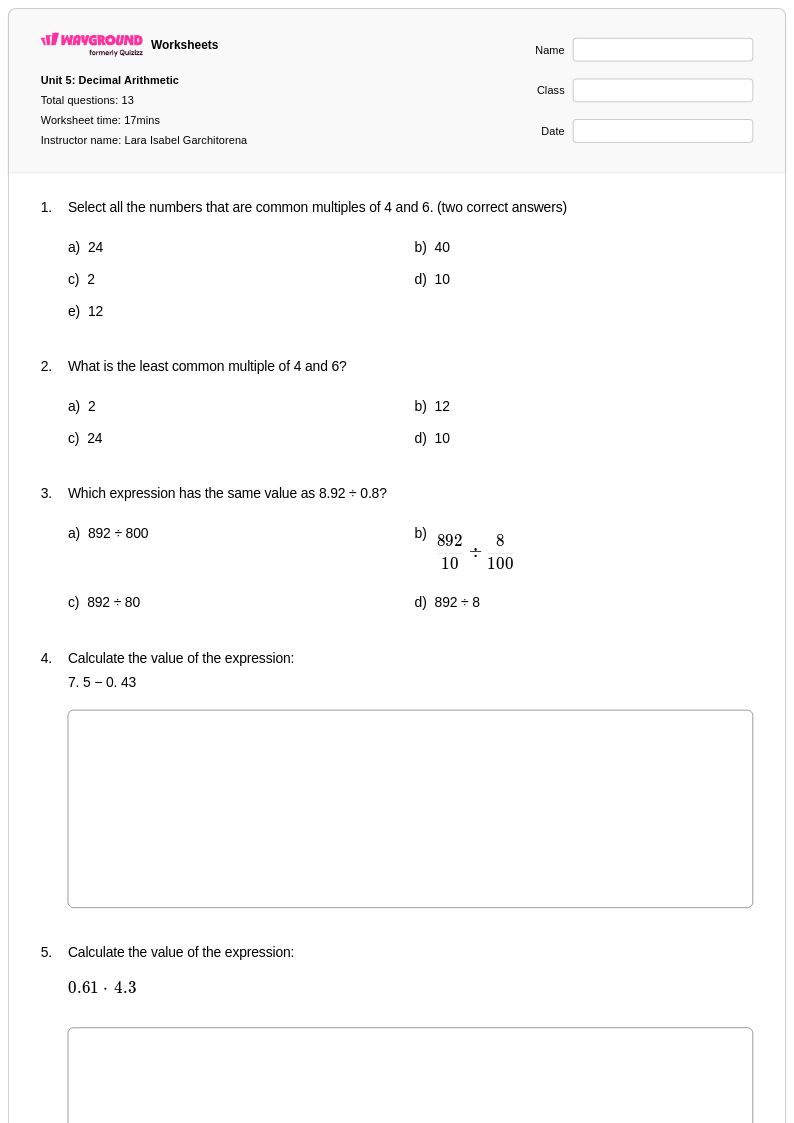
13 Q
6th
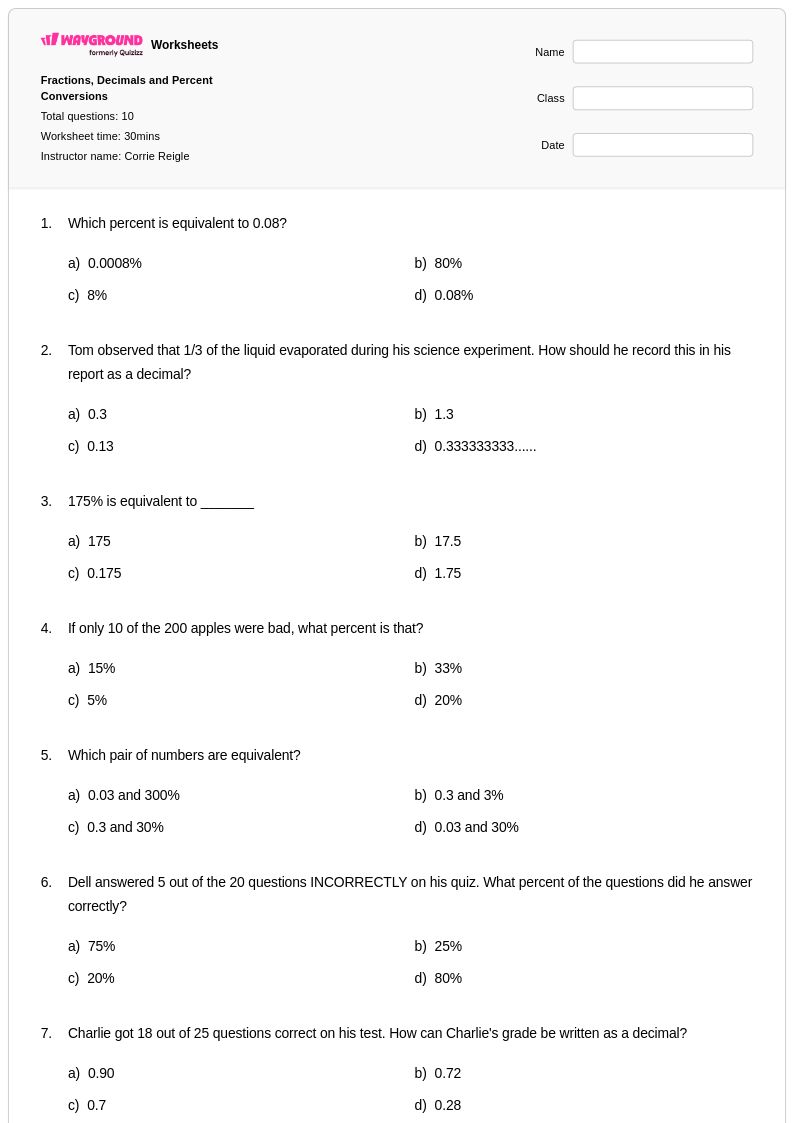
10 Q
6th
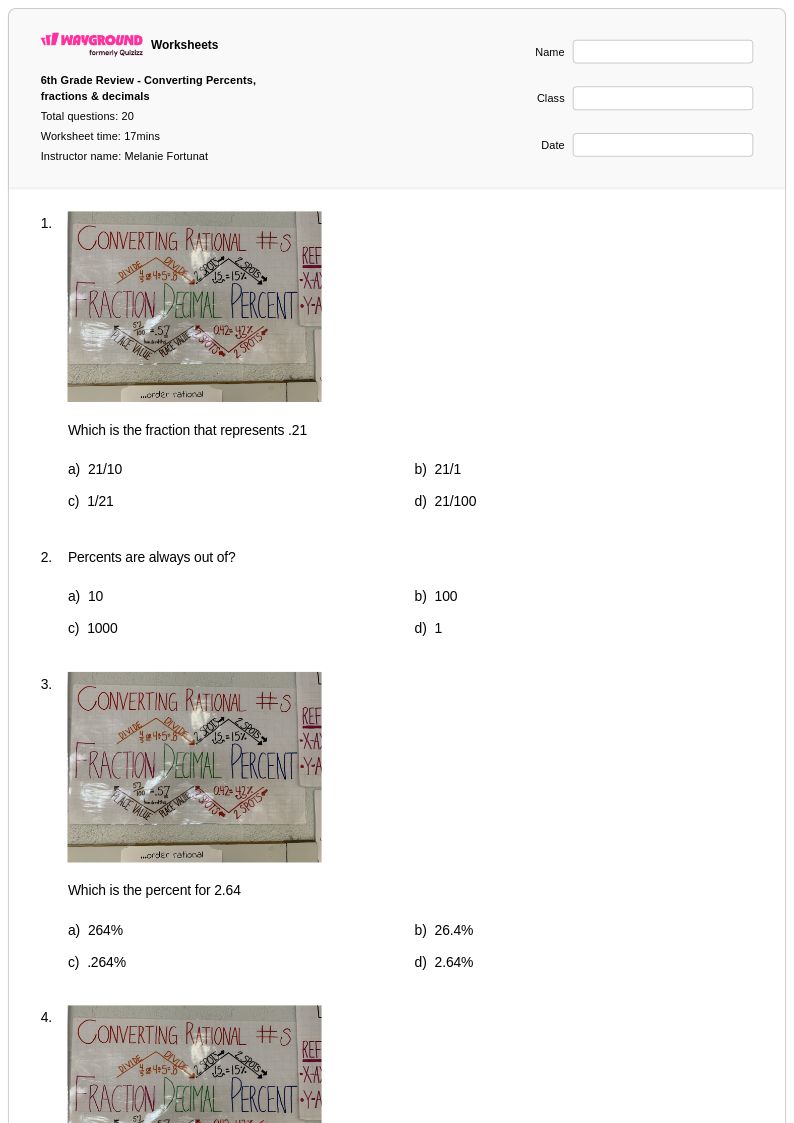
20 Q
6th
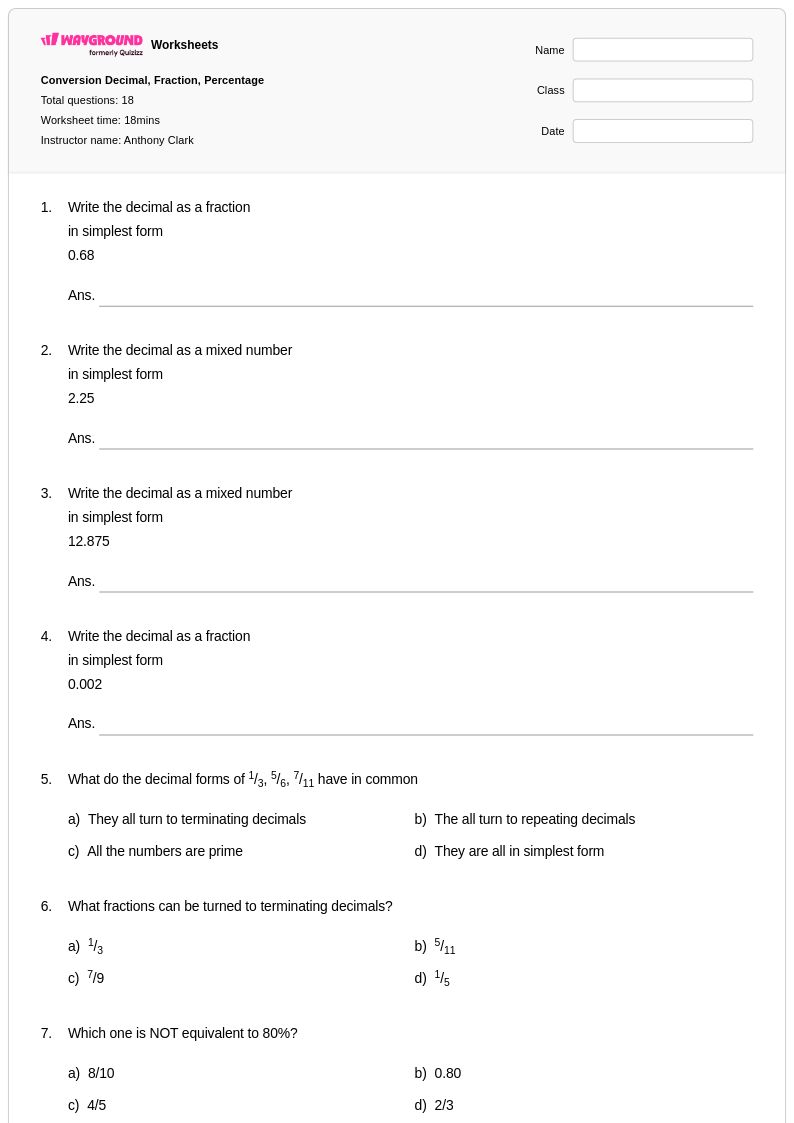
18 Q
6th - Uni

10 Q
6th
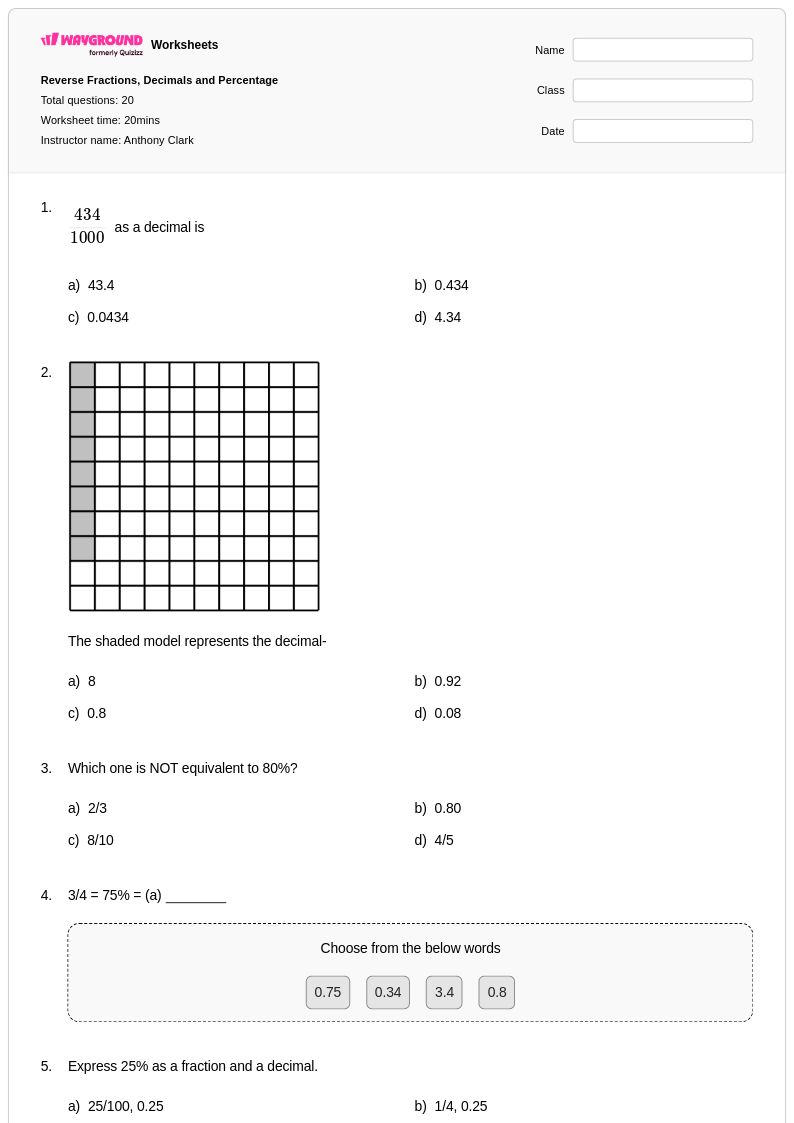
20 Q
6th - Uni
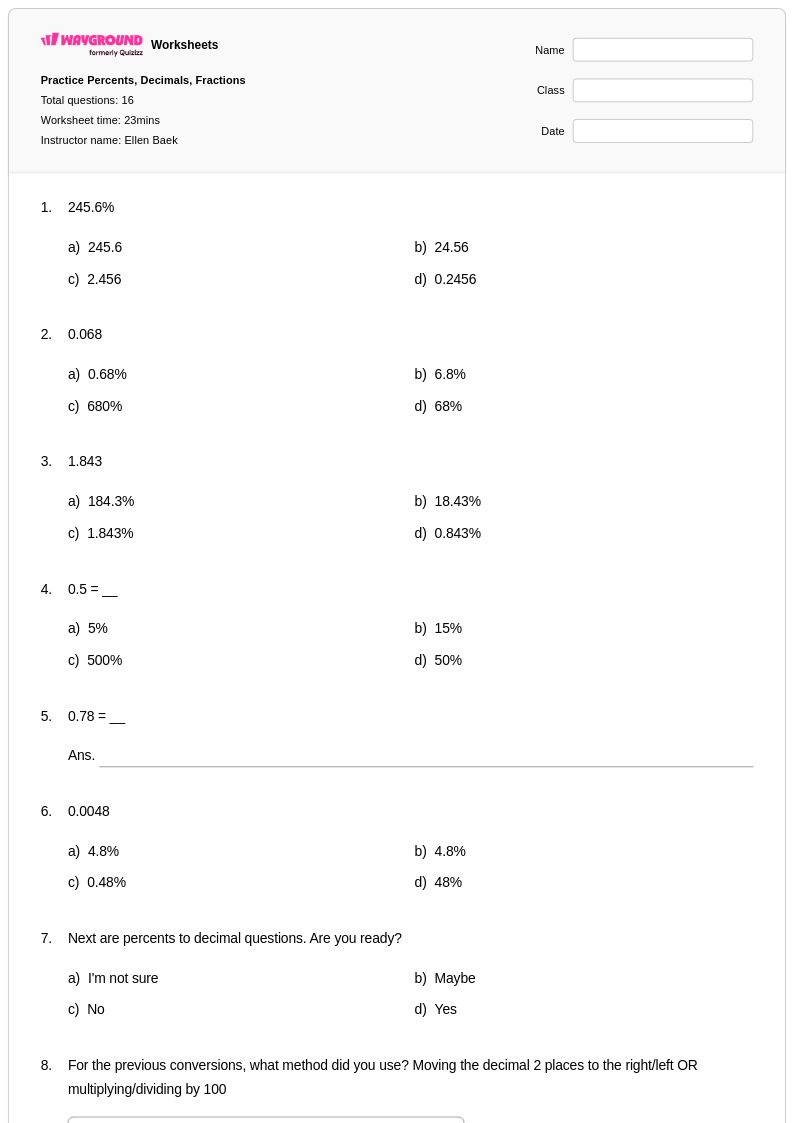
16 Q
5th - 8th
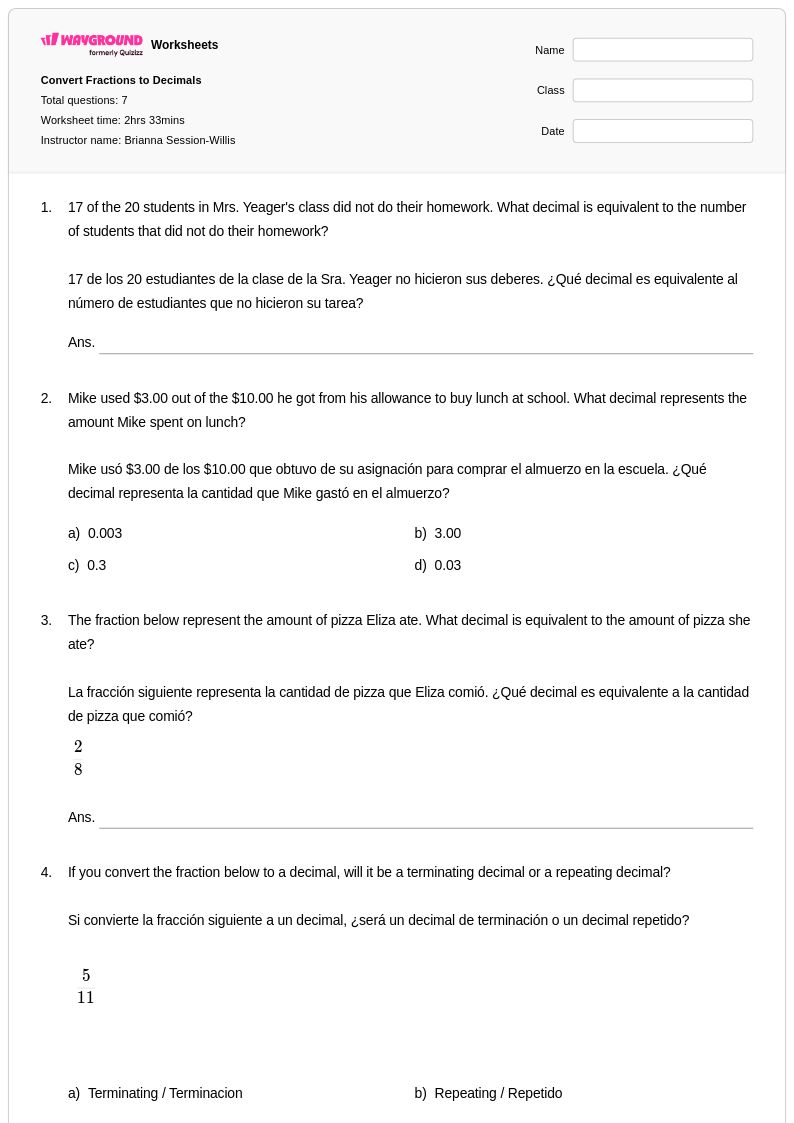
7 Q
6th - 8th

23 Q
6th
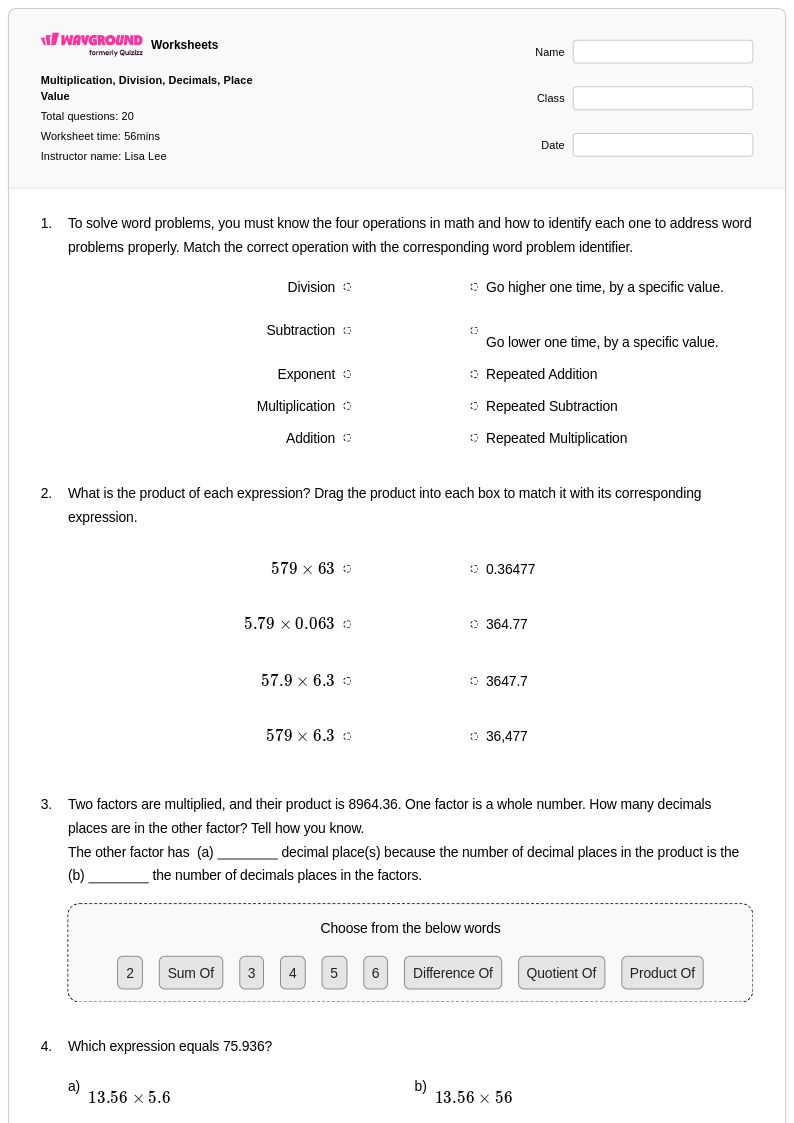
20 Q
6th
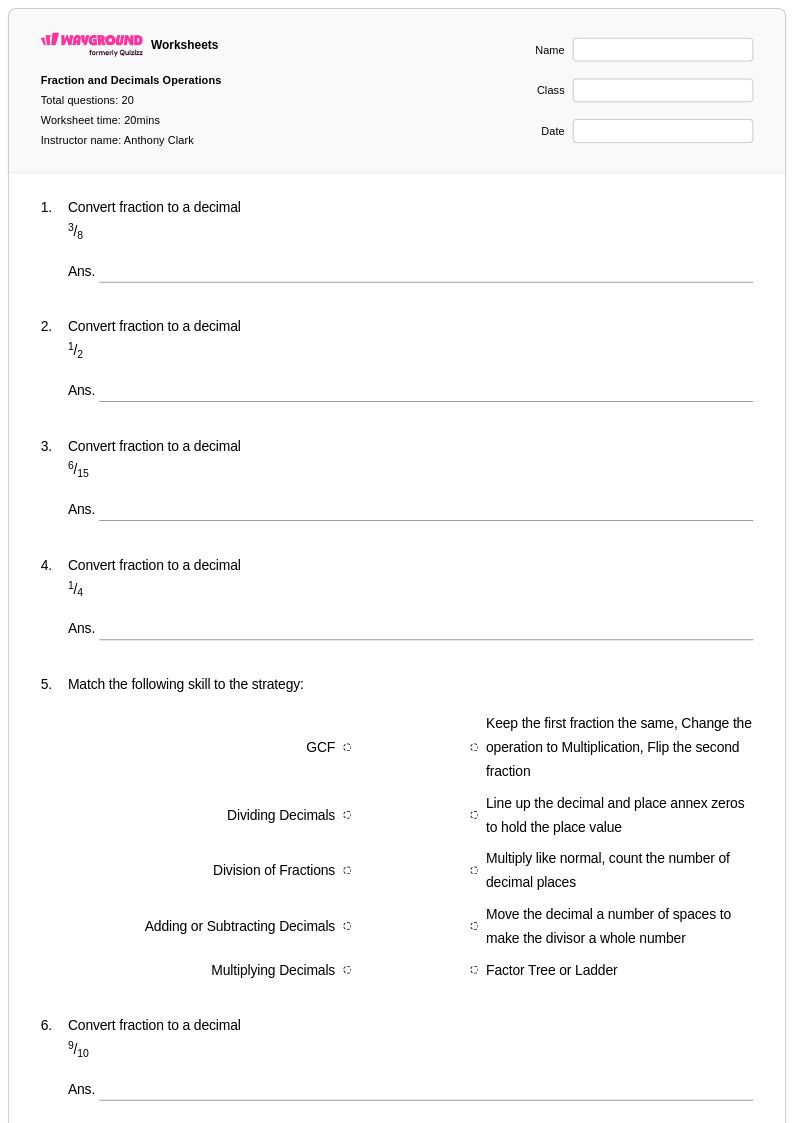
20 Q
6th - Uni
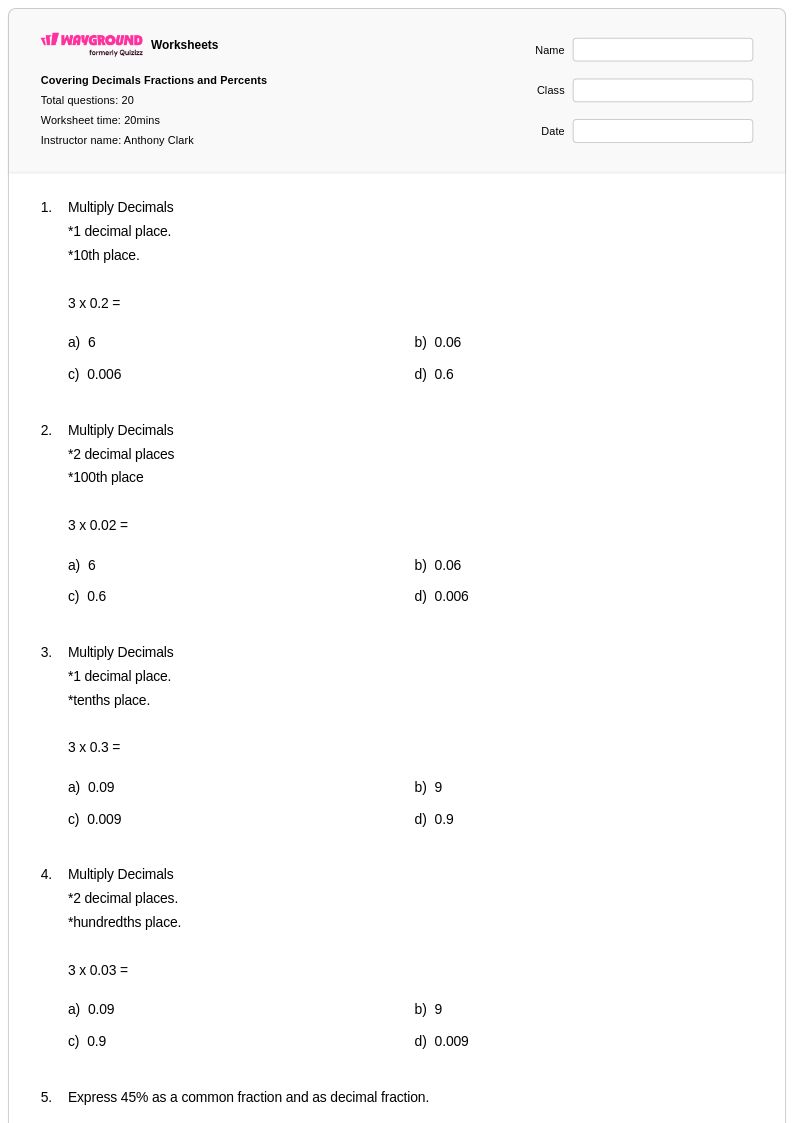
20 Q
6th - Uni
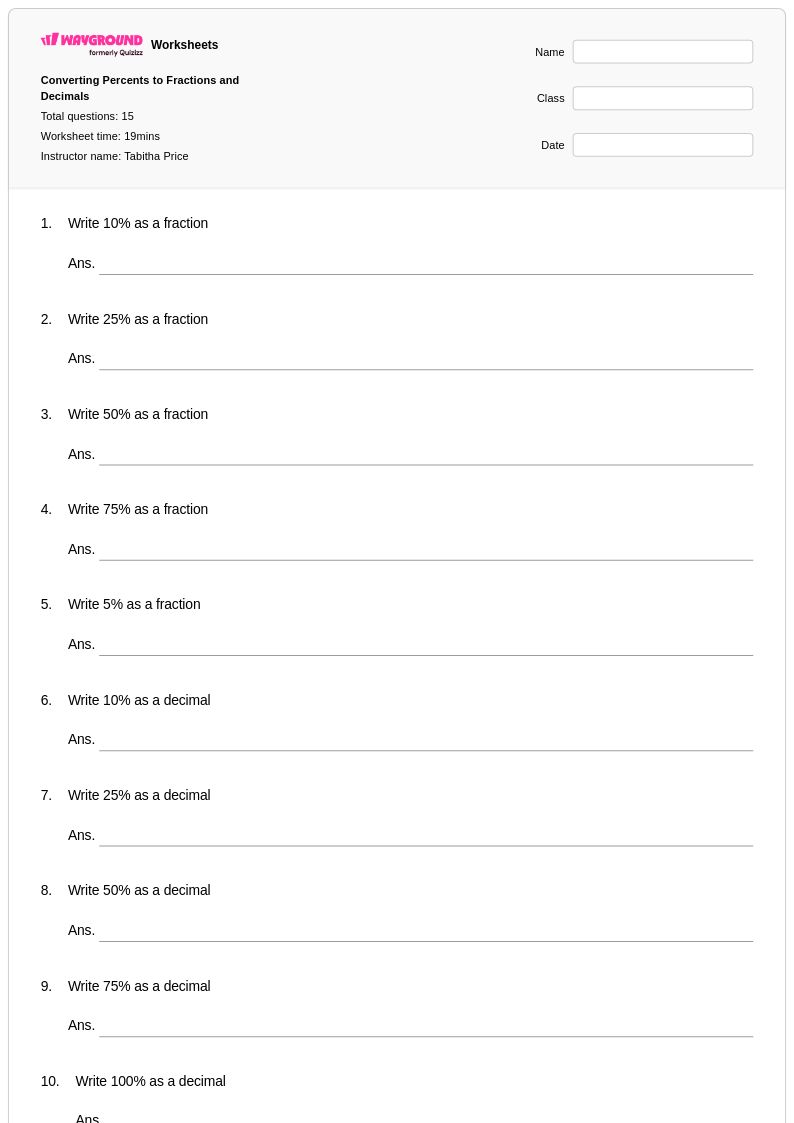
15 Q
5th - 8th
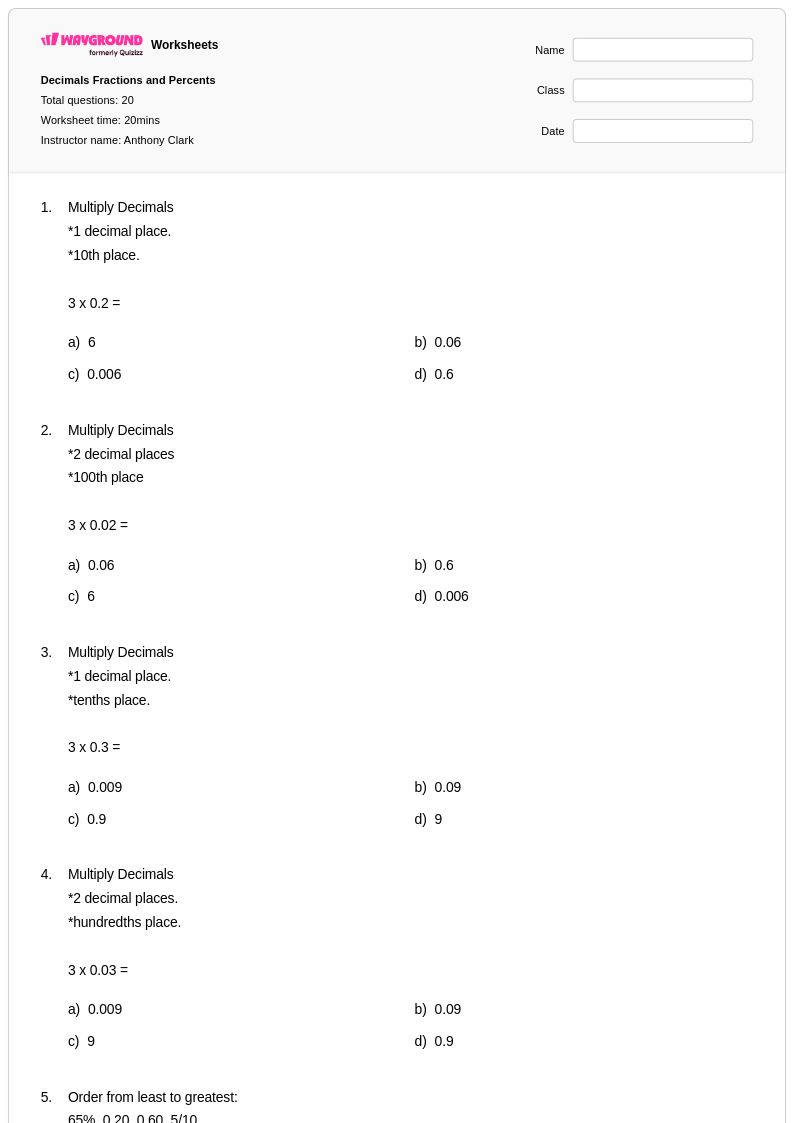
20 Q
6th - Uni
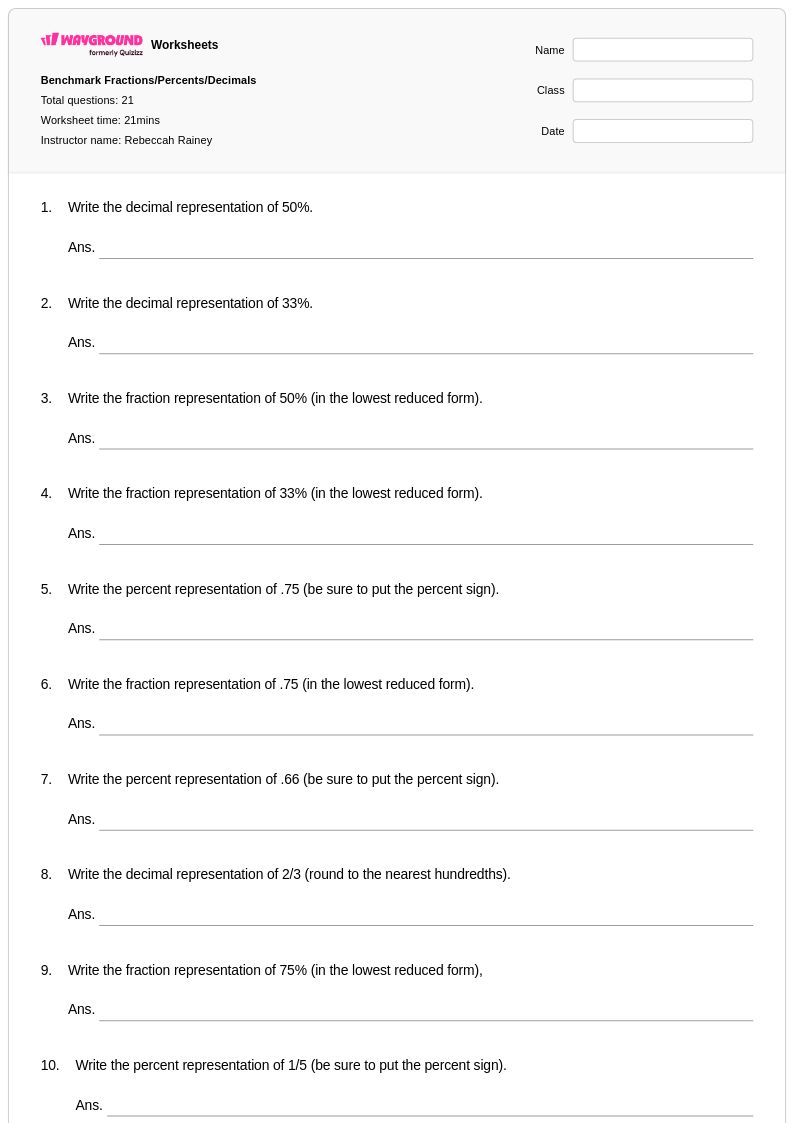
21 Q
6th
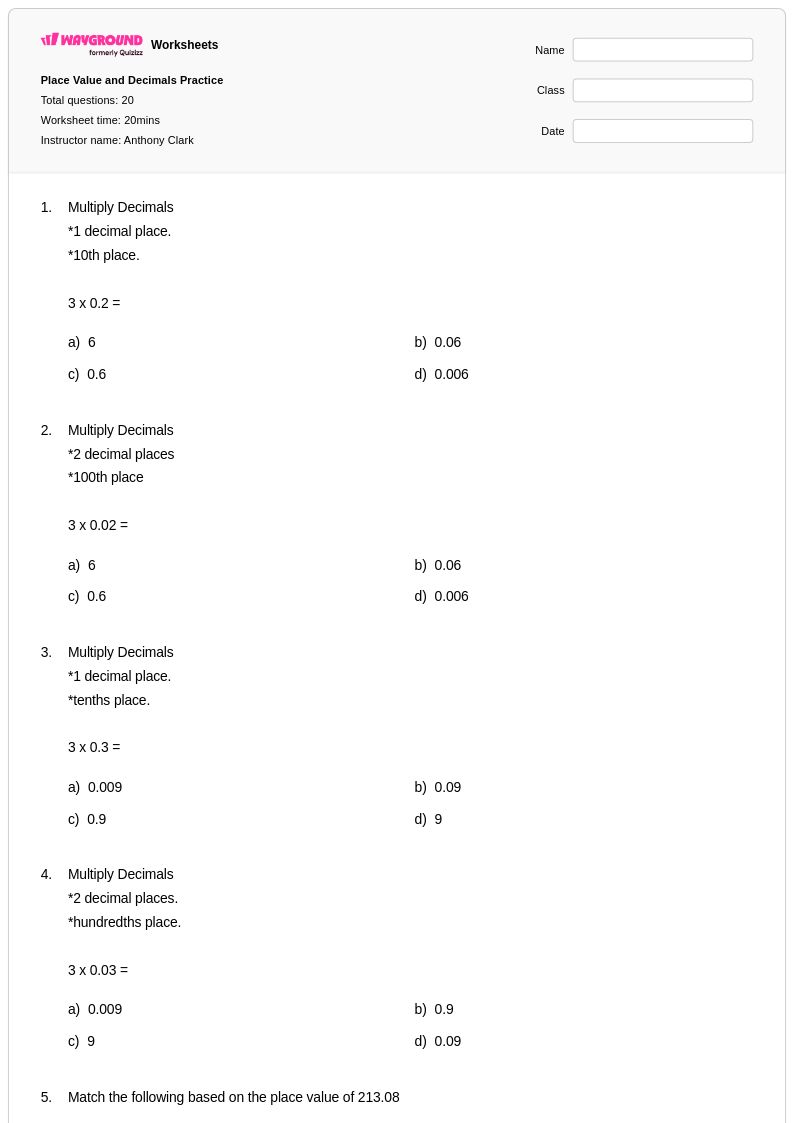
20 Q
4th - Uni
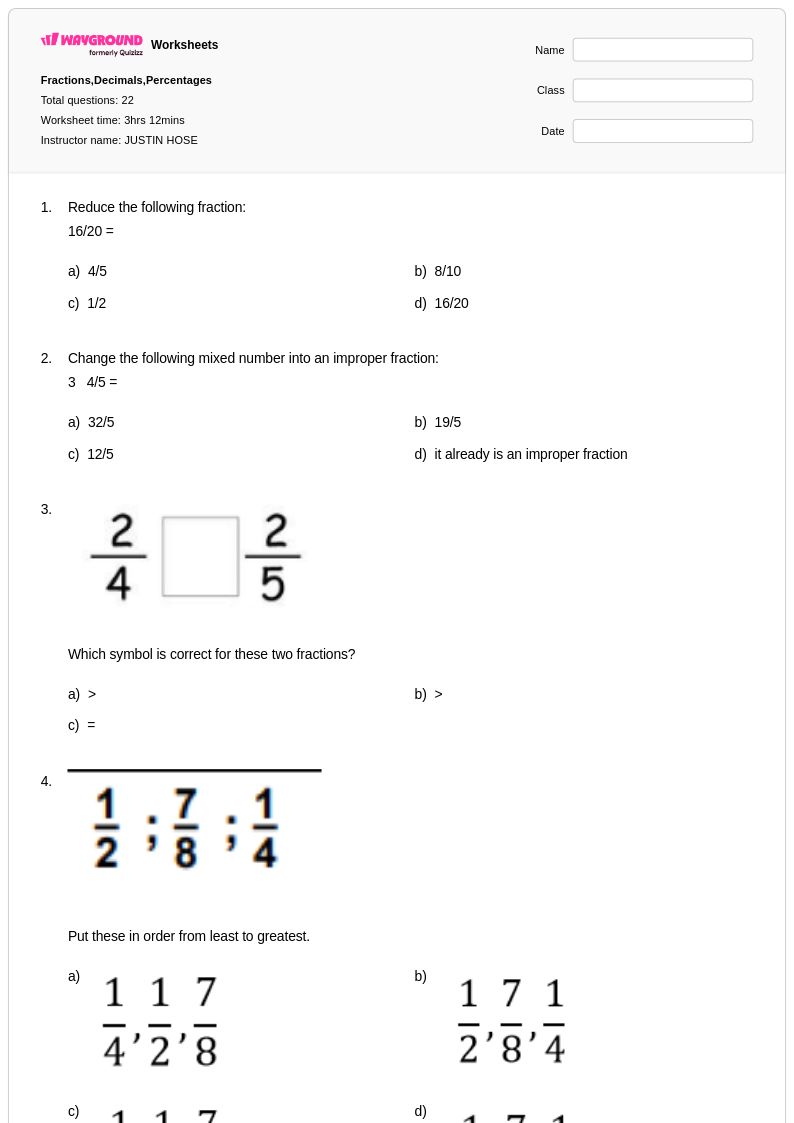
22 Q
6th
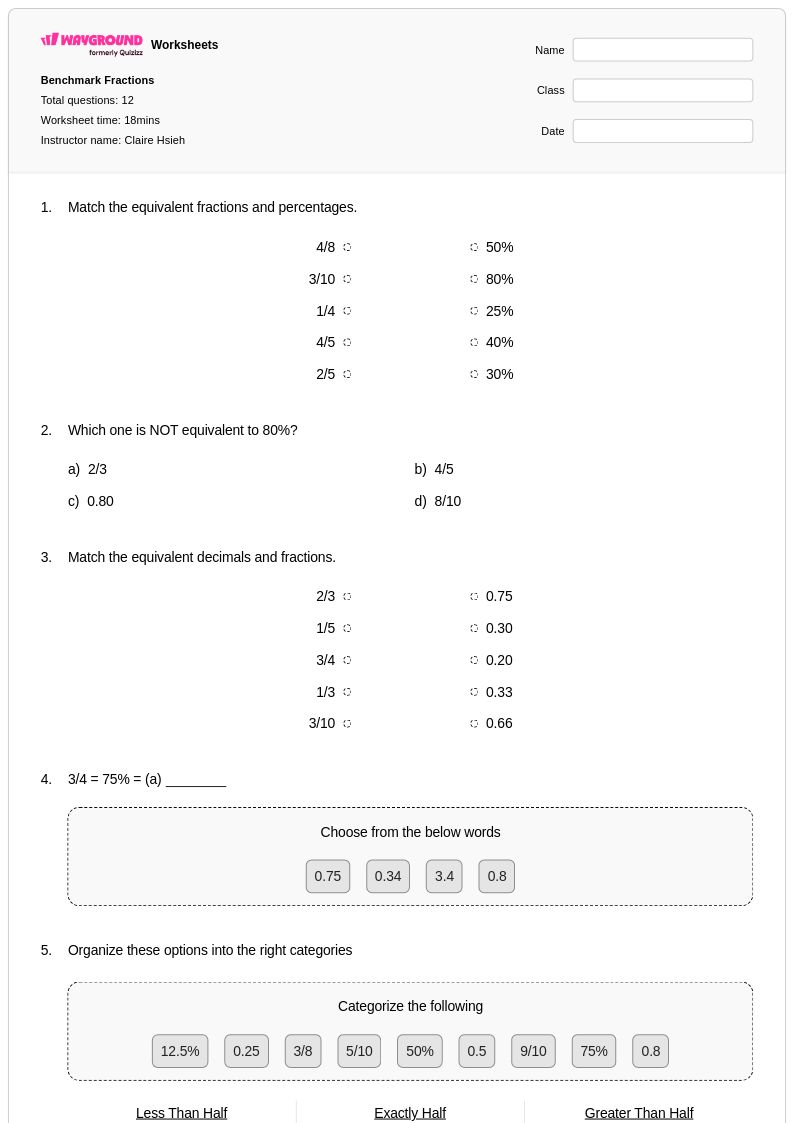
12 Q
6th - 8th
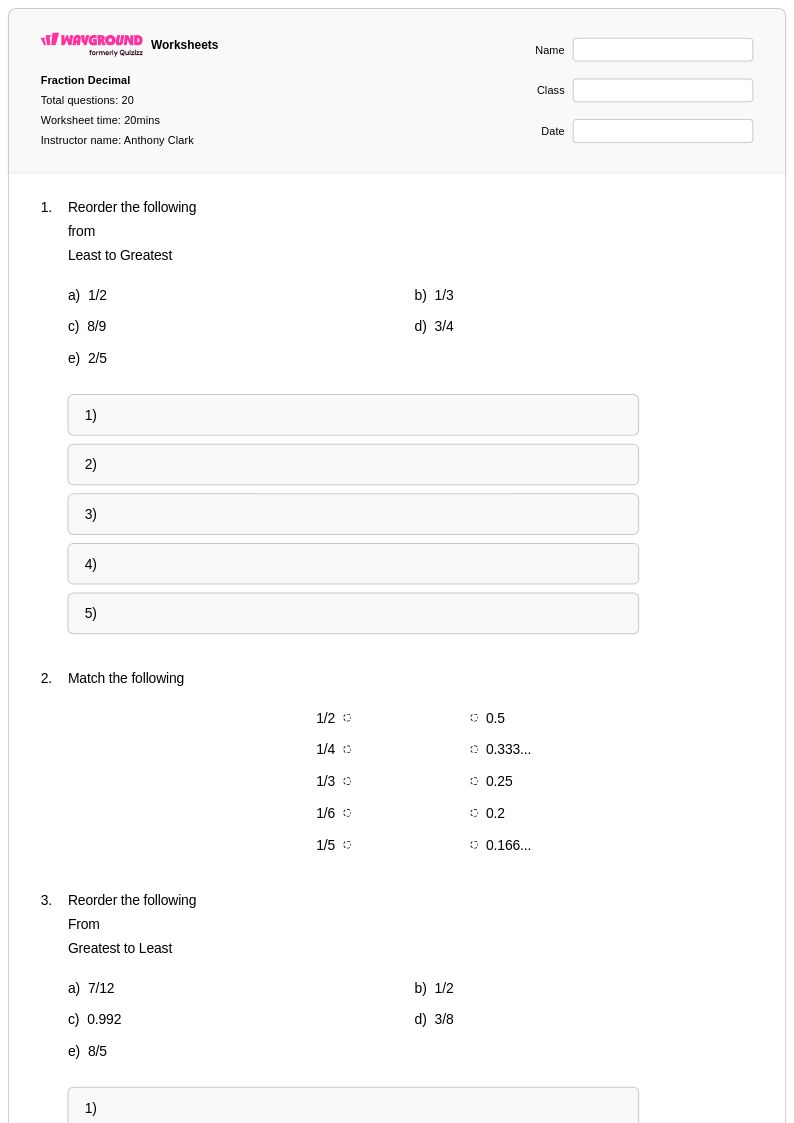
20 Q
5th - Uni
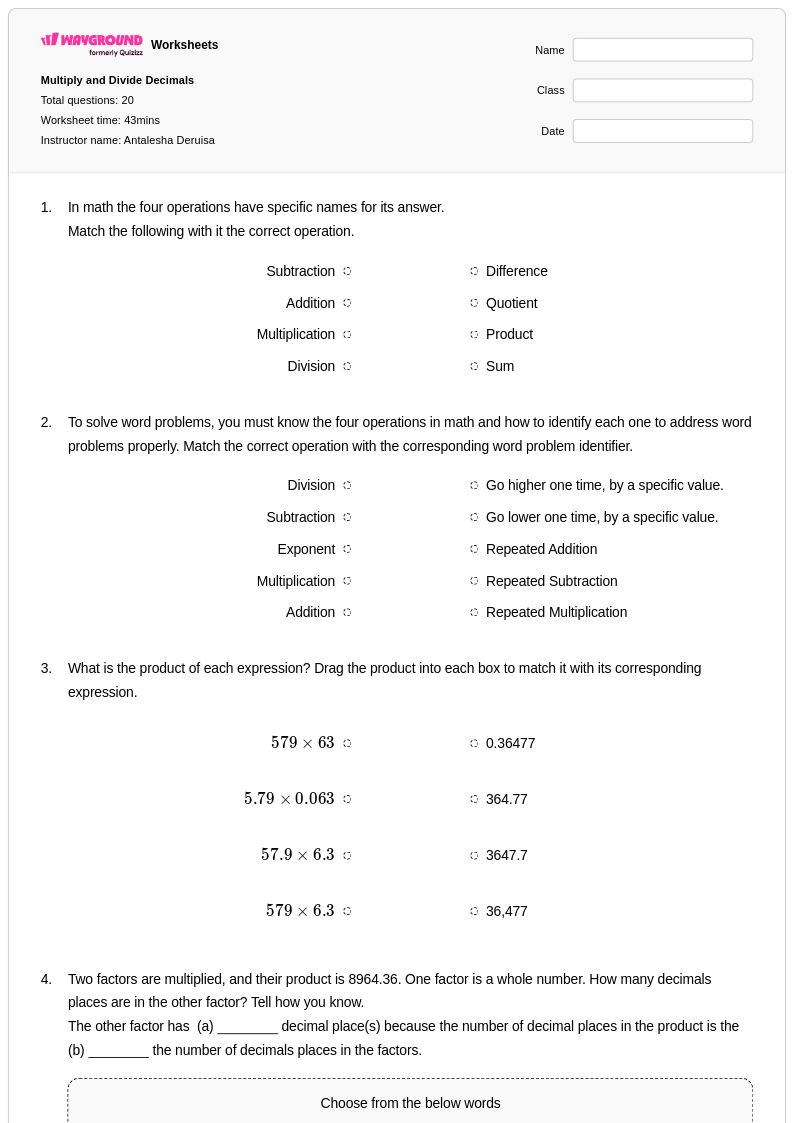
20 Q
6th
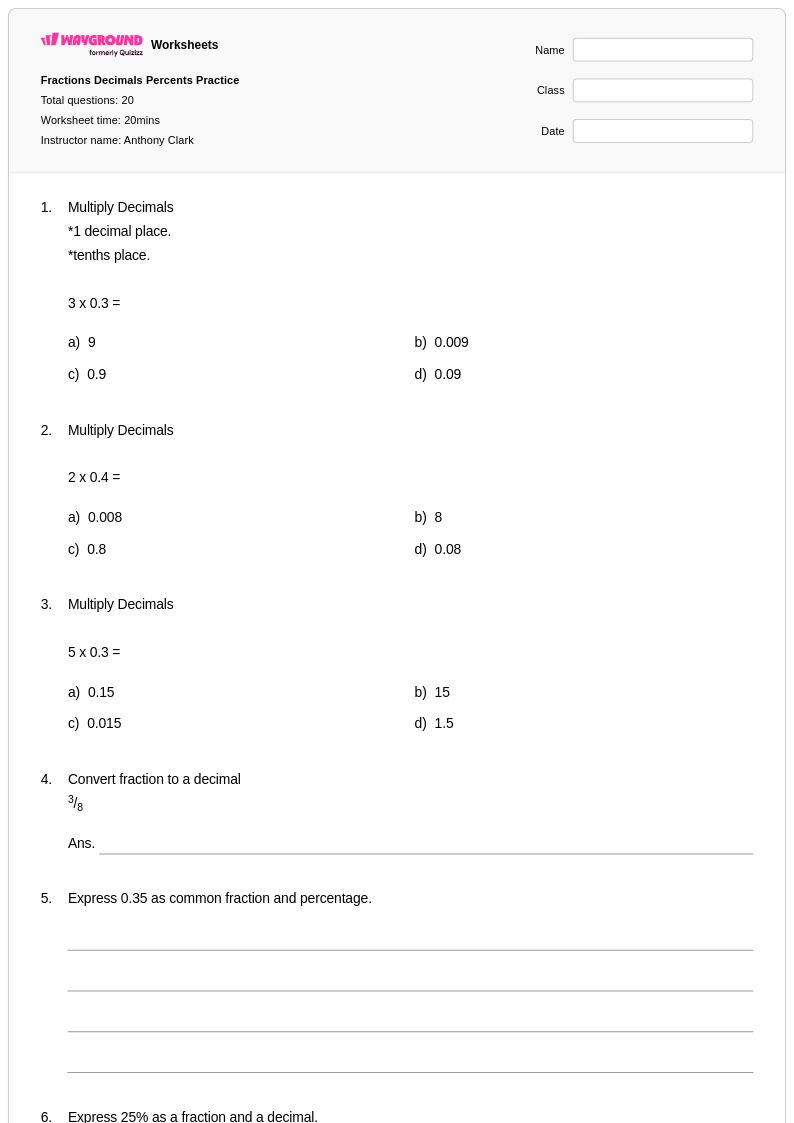
20 Q
6th - Uni
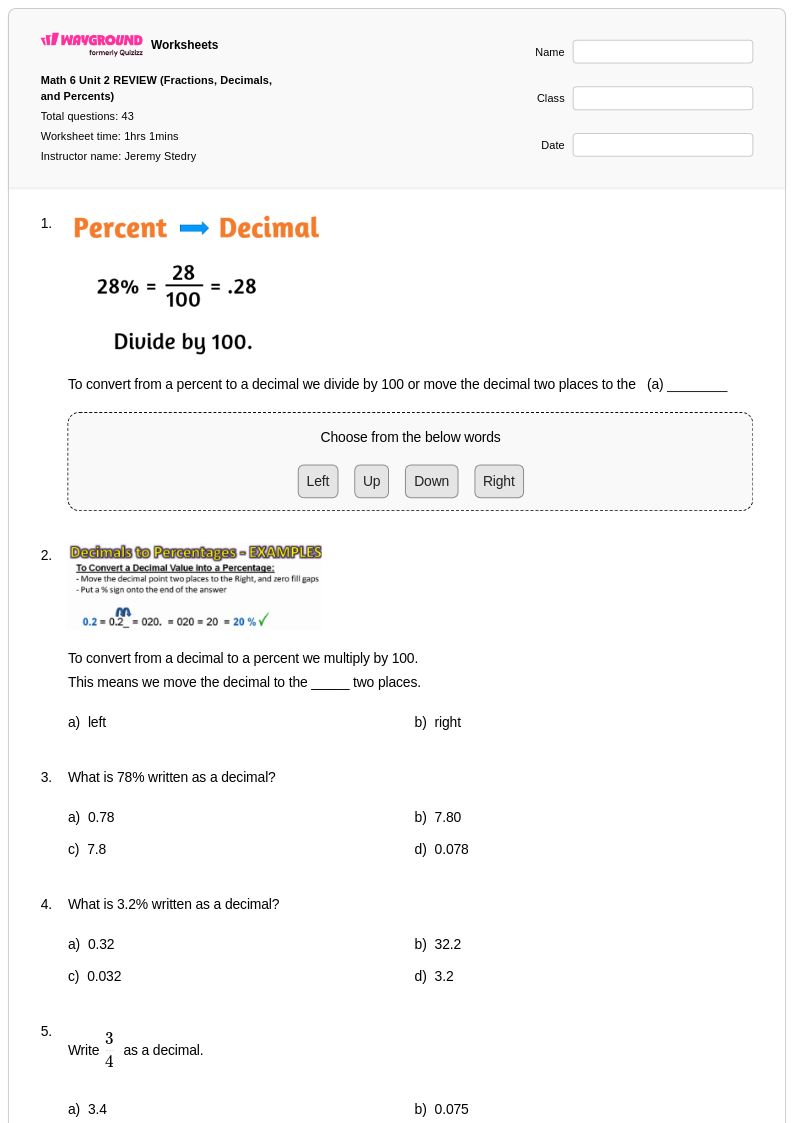
43 Q
6th
Explore Decimal to Binary Conversion Worksheets by Grades
Explore Other Subject Worksheets for class 6
Explore printable Decimal to Binary Conversion worksheets for Class 6
Decimal to binary conversion worksheets for Class 6 students provide essential practice in understanding how our everyday base-10 number system translates into the binary base-2 system that computers use. These comprehensive worksheets available through Wayground (formerly Quizizz) strengthen critical mathematical thinking skills by teaching students to systematically convert decimal numbers into sequences of ones and zeros. Students develop computational fluency while learning to break down decimal values through repeated division by two, recording remainders to build binary representations. Each worksheet includes detailed practice problems that progress from simple single-digit conversions to more complex multi-digit challenges, complete with answer keys that allow for immediate feedback and self-correction. These free printable resources reinforce number sense concepts while introducing students to fundamental computer science principles, making abstract mathematical concepts concrete through hands-on practice with pdf worksheets designed for both classroom instruction and independent study.
Wayground (formerly Quizizz) empowers educators with millions of teacher-created decimal to binary conversion resources that streamline lesson planning and provide targeted skill practice for Class 6 mathematics instruction. The platform's robust search and filtering capabilities allow teachers to quickly locate worksheets aligned with specific standards and learning objectives, while built-in differentiation tools enable customization for diverse student needs and ability levels. Teachers can access these materials in both printable pdf formats for traditional classroom use and digital formats for interactive learning experiences, providing flexibility for various instructional approaches. The extensive collection supports remediation for struggling learners through scaffolded practice problems, offers enrichment opportunities for advanced students with challenging conversion exercises, and provides ongoing skill reinforcement through varied problem types that maintain student engagement while building mathematical confidence and computational thinking abilities.
FAQs
How do I teach decimal-to-binary conversion to Grade 6 students?
What decimal-to-binary exercises are appropriate for Grade 6?
What mistakes do Grade 6 students make when converting decimals to binary?
How can I use a Grade 6 decimal-to-binary worksheet from Wayground?
How can I differentiate decimal-to-binary practice in Grade 6?
Is decimal-to-binary conversion suitable for Grade 6?