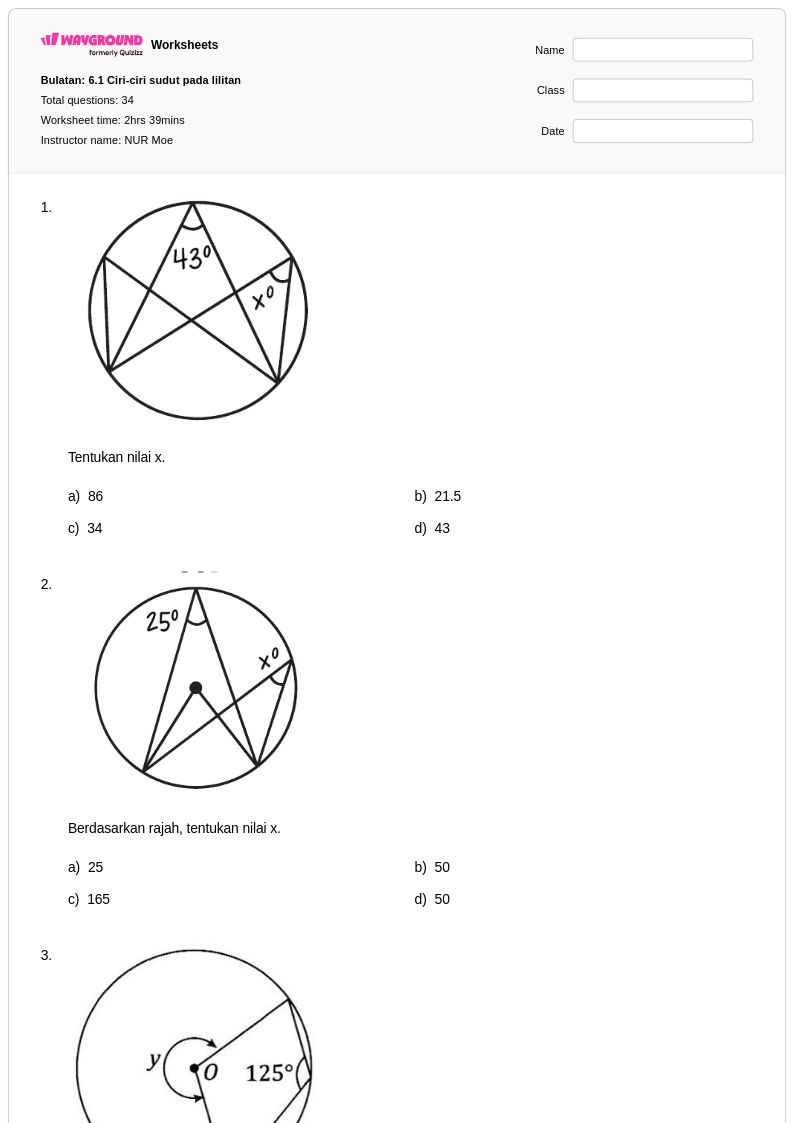
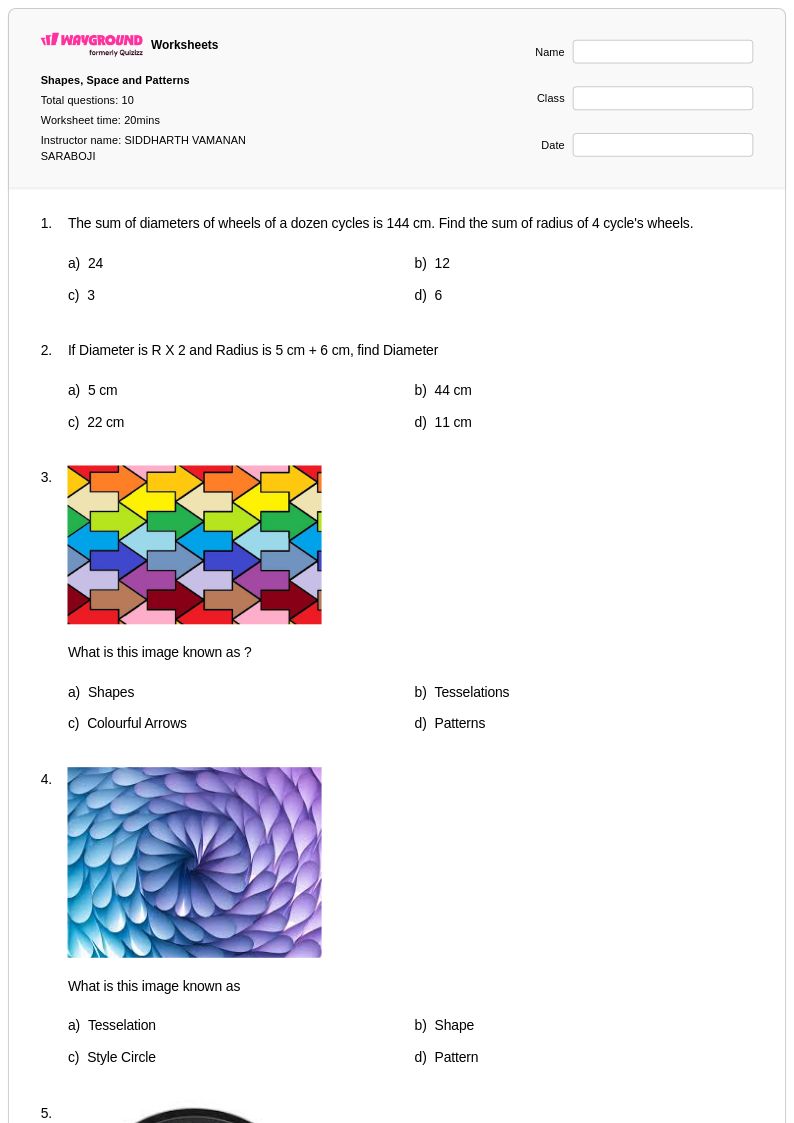
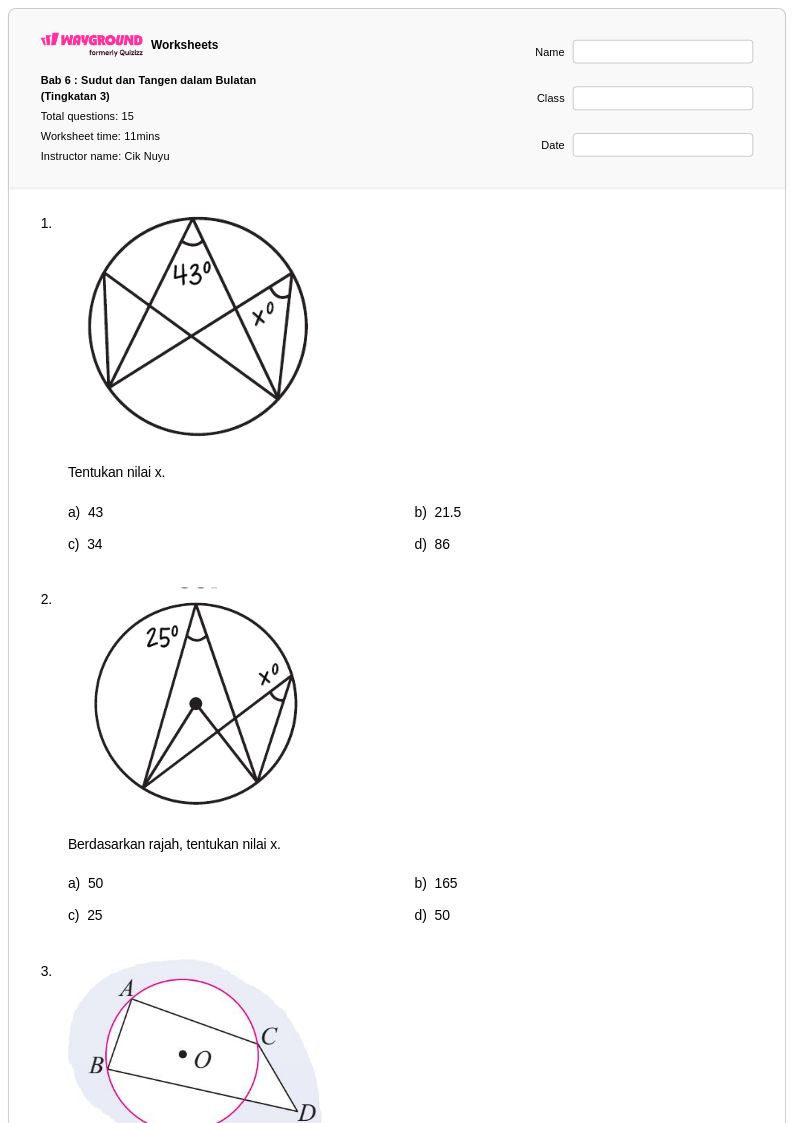
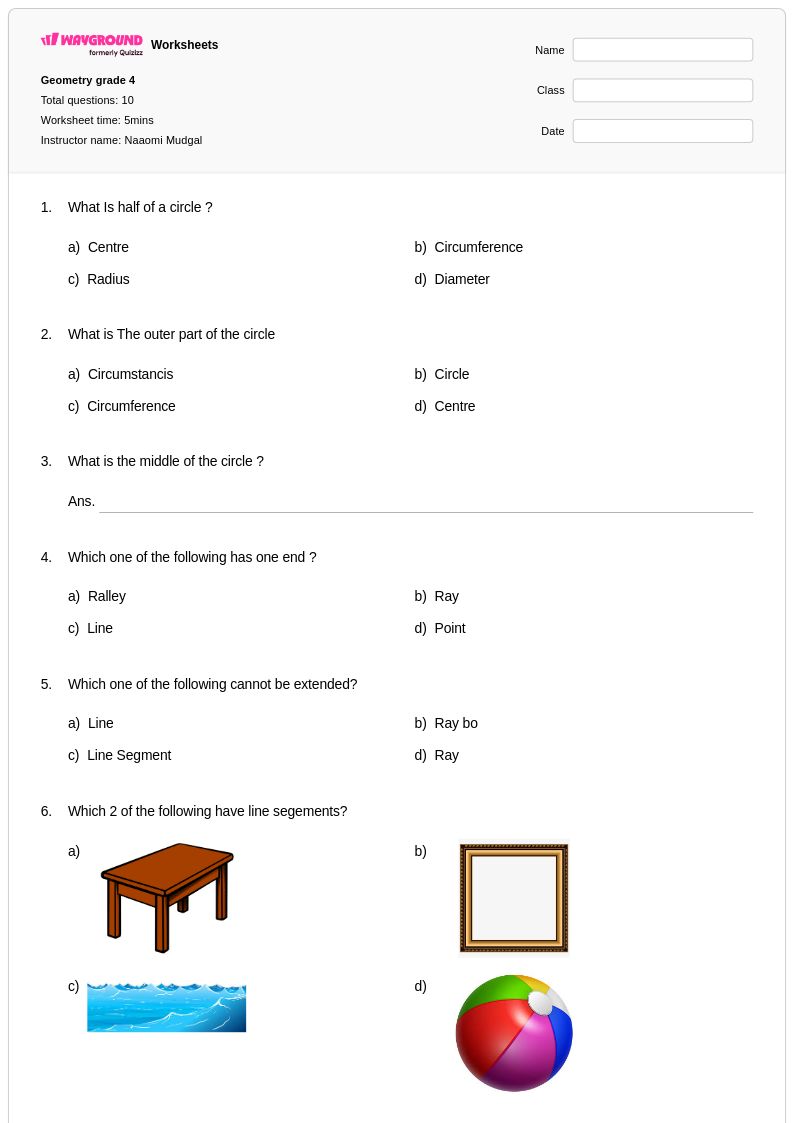
Explore Wayground's free Class 3 diameter worksheets and printables that help students master measuring circles through engaging practice problems with complete answer keys in PDF format.
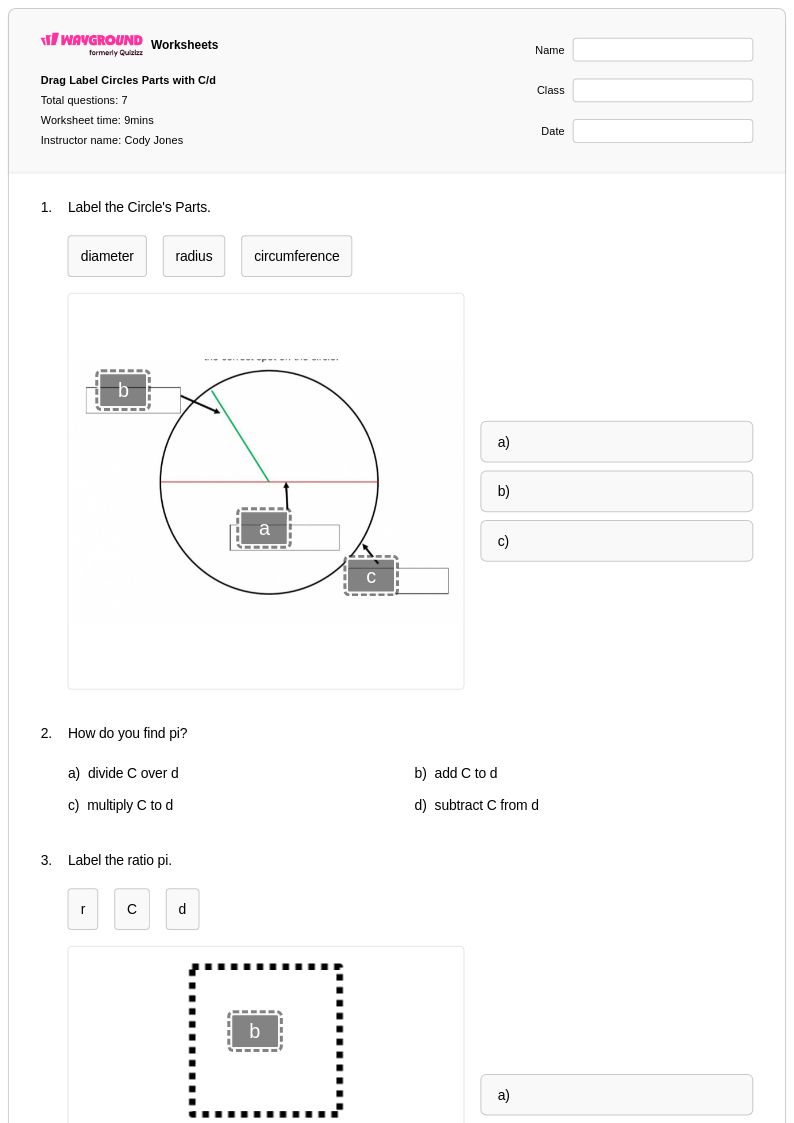
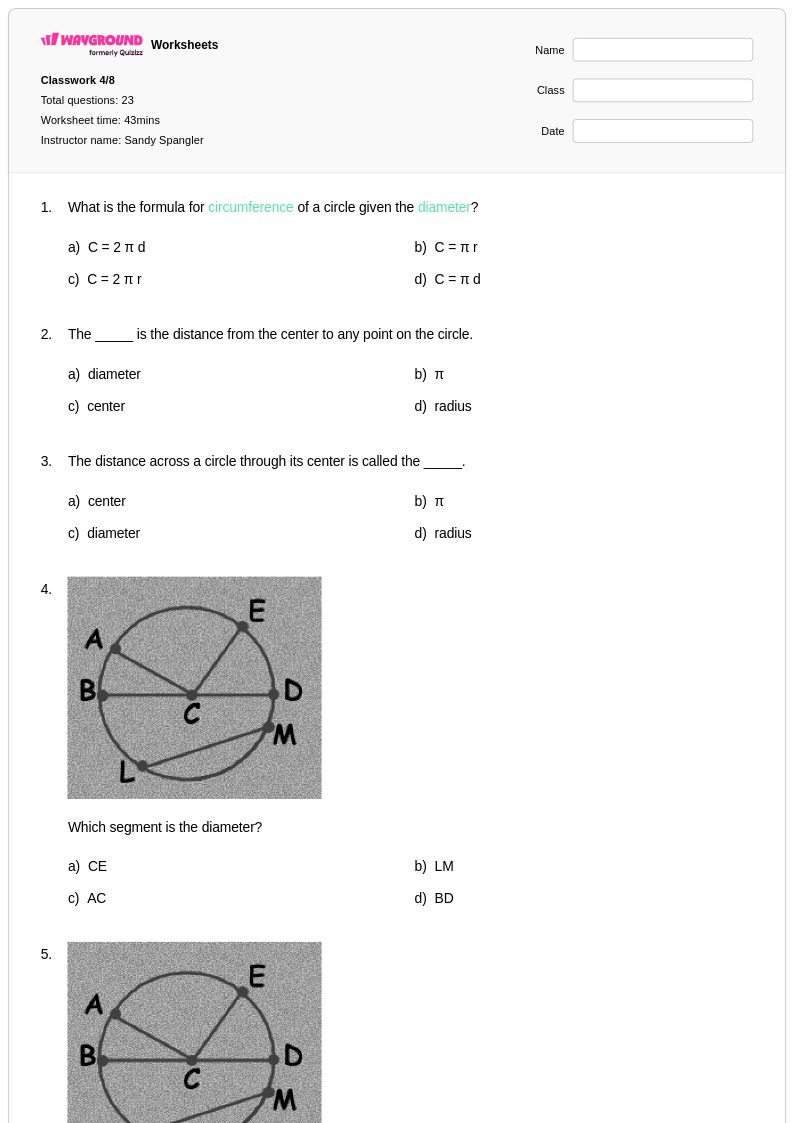
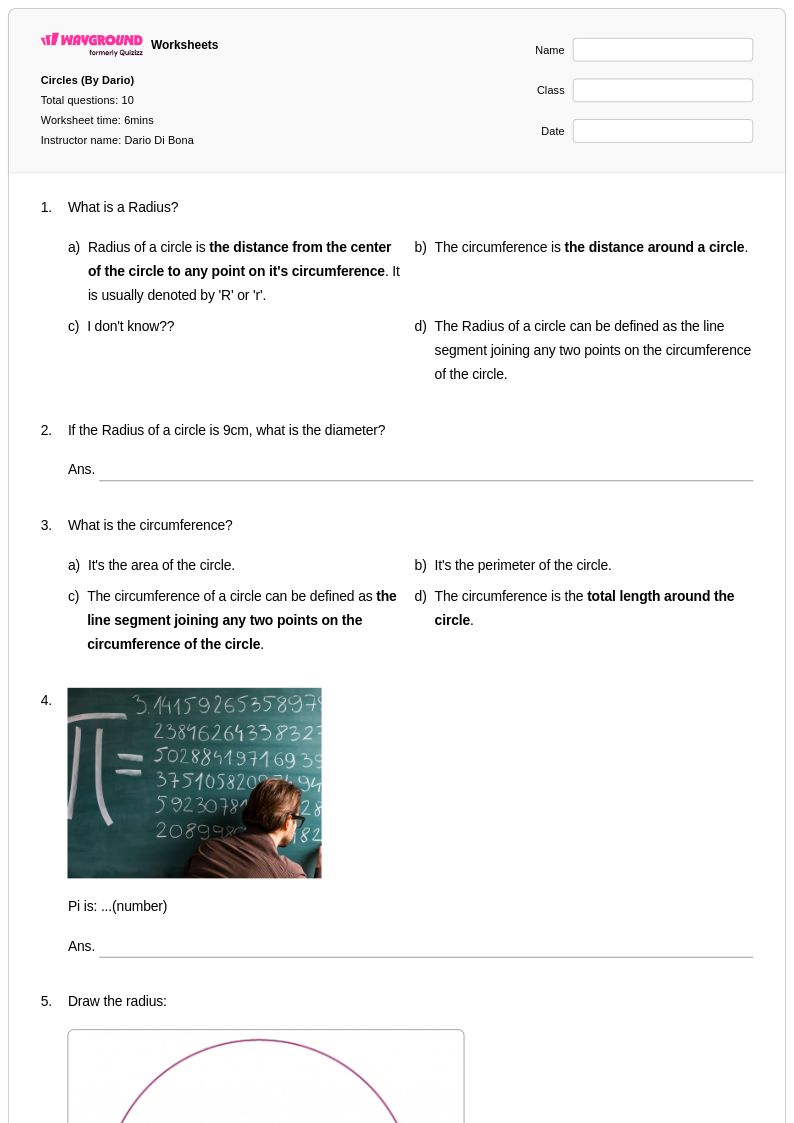
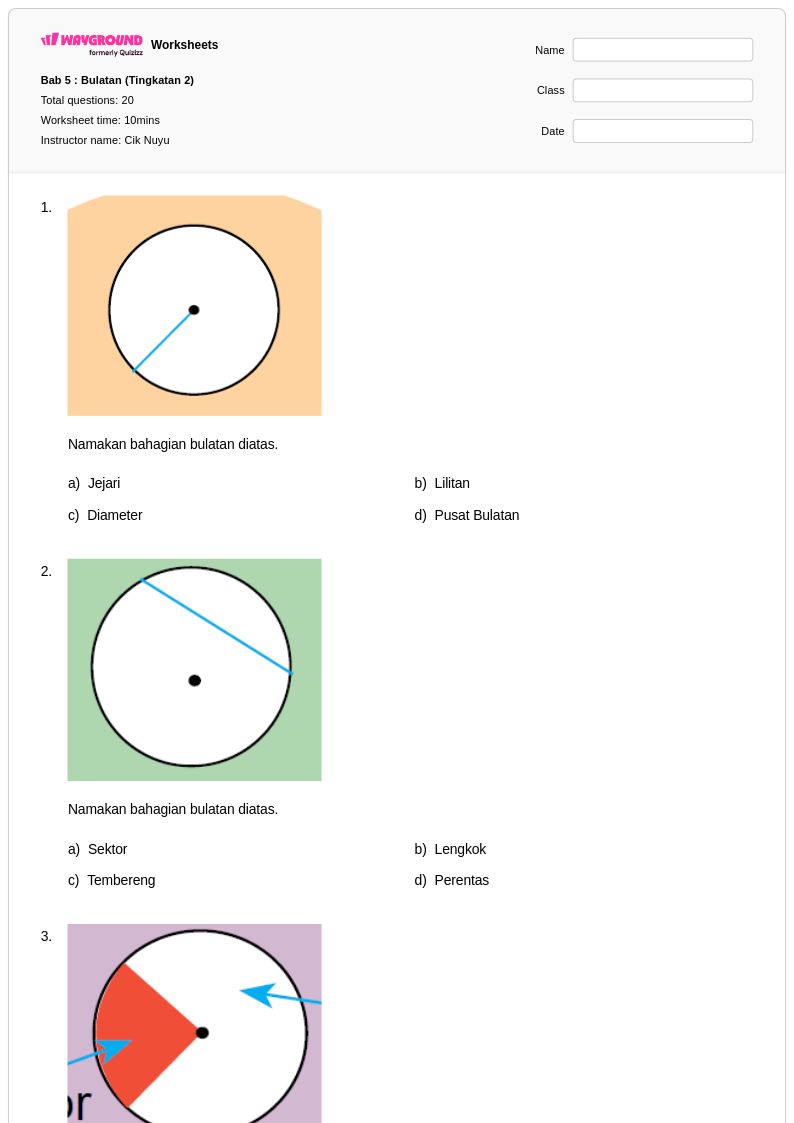
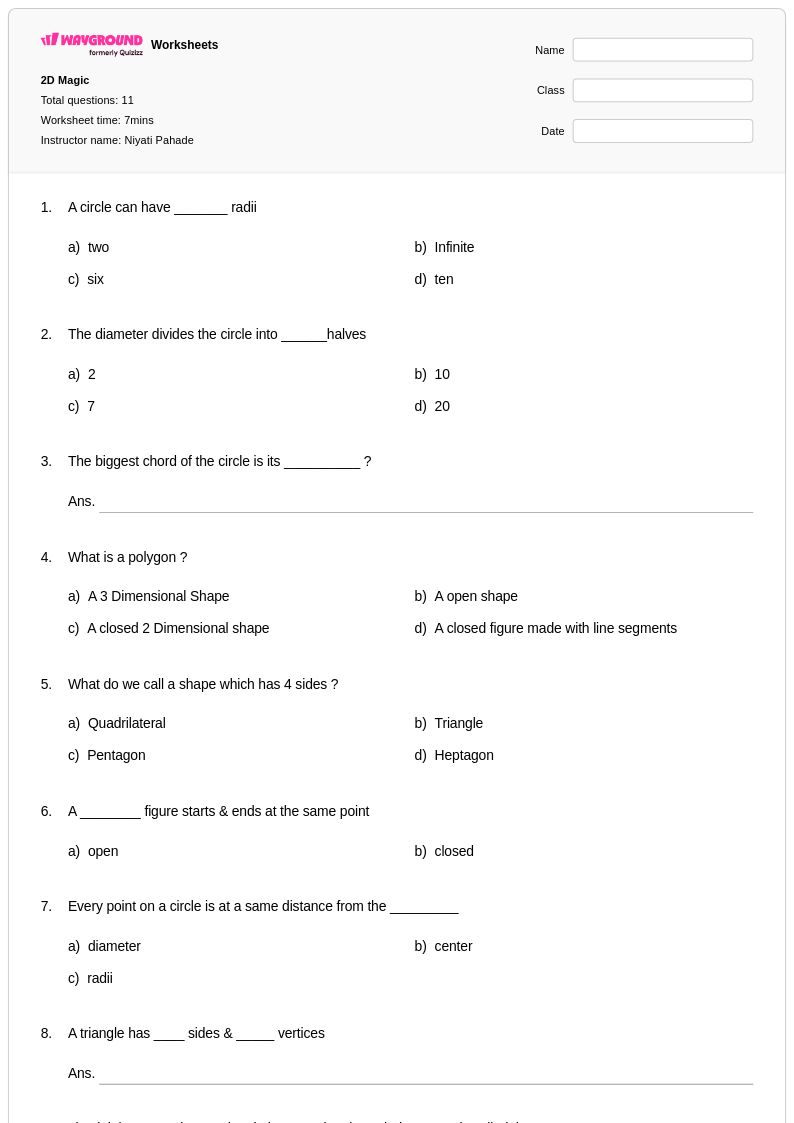
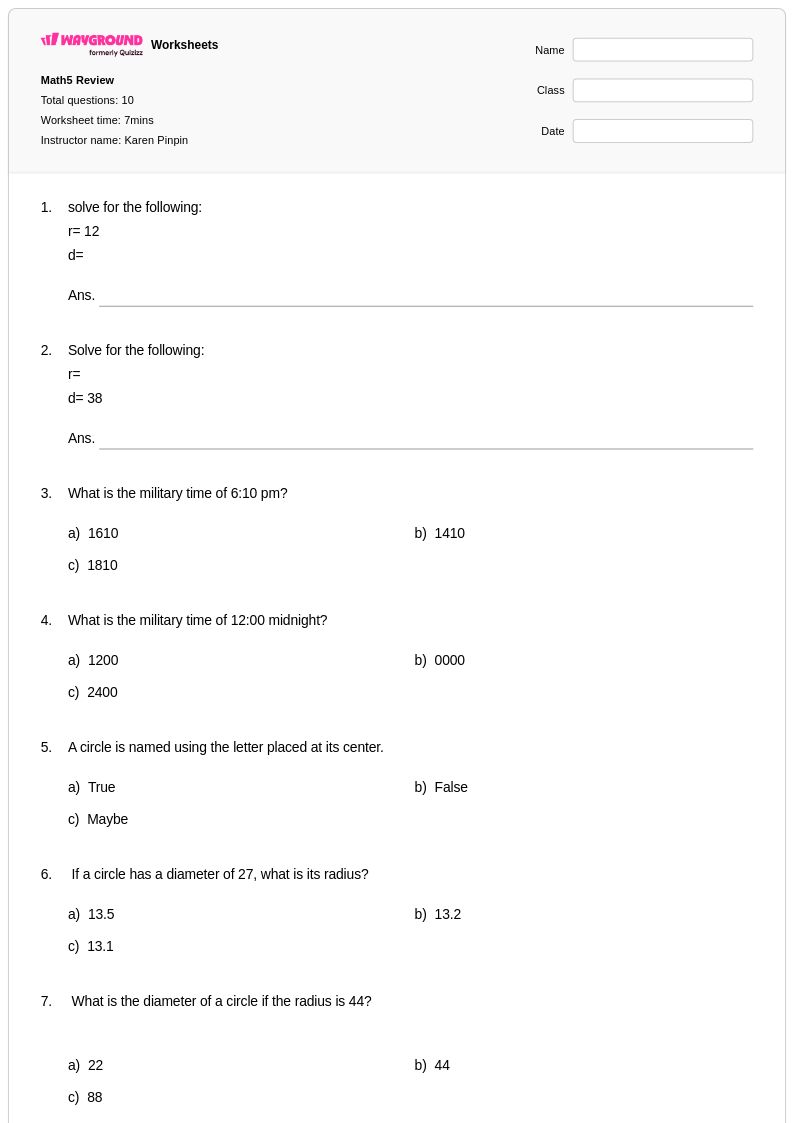
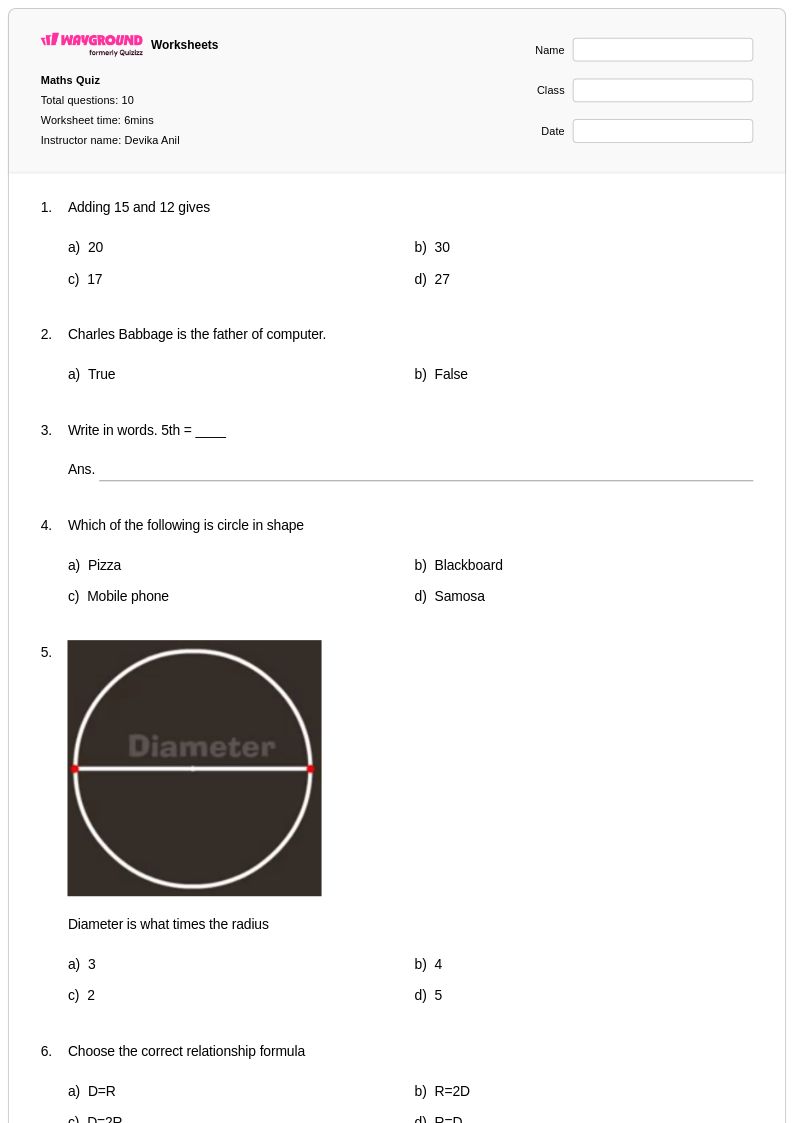
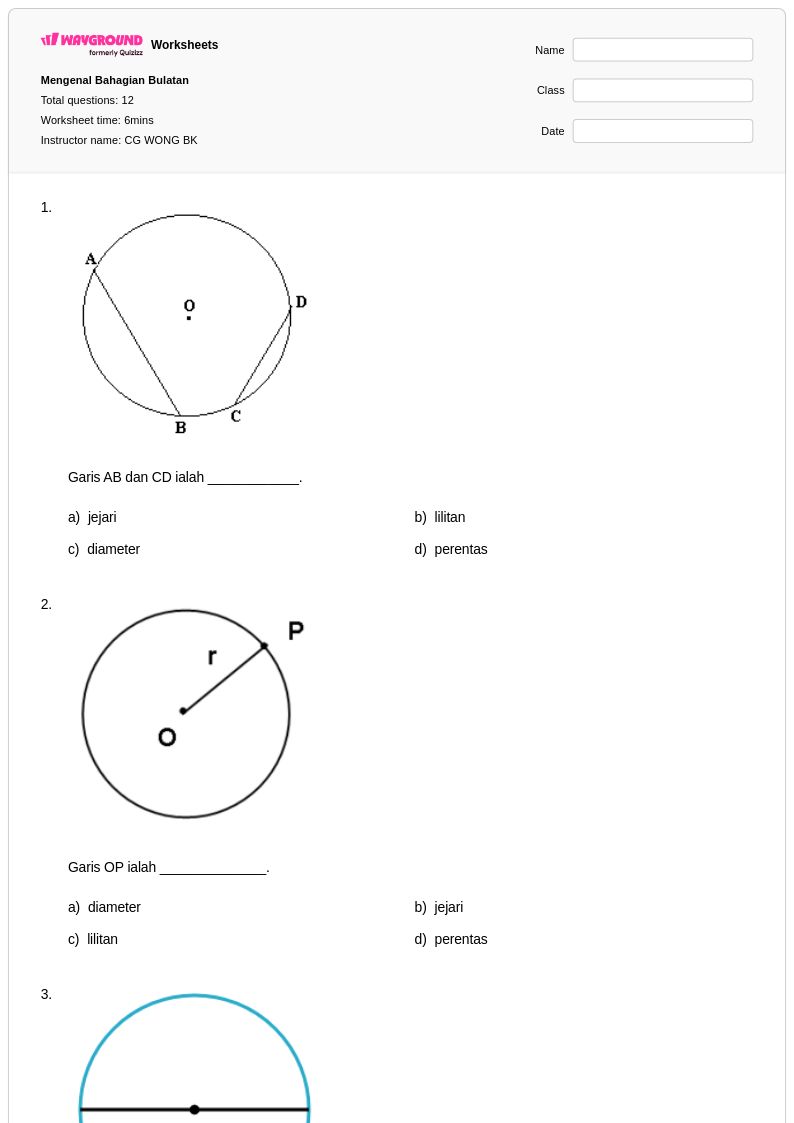
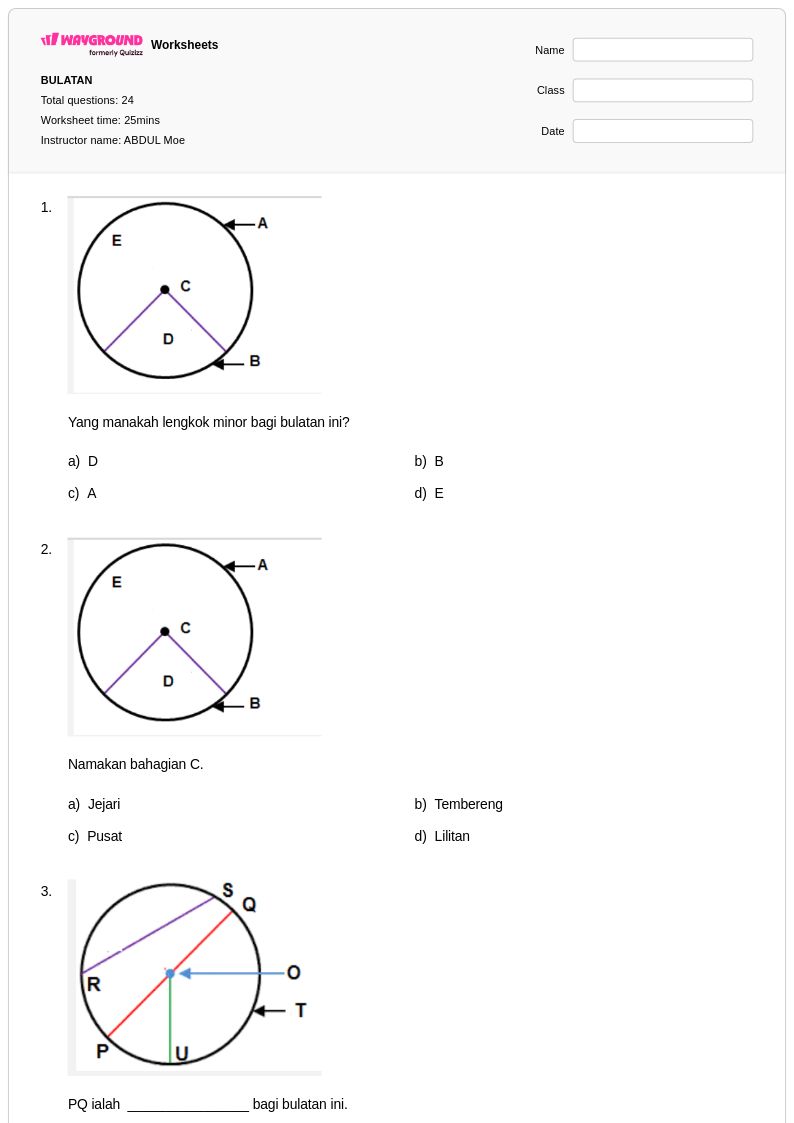
Diameter worksheets for Class 3 from Wayground (formerly Quizizz) provide young learners with essential practice in understanding one of geometry's fundamental concepts. These comprehensive printables introduce students to the diameter as the longest distance across a circle, passing through its center point. The worksheets strengthen critical mathematical skills including spatial reasoning, measurement concepts, and geometric vocabulary through engaging practice problems that progress from basic identification to practical applications. Each worksheet collection includes detailed answer keys and free pdf downloads, making them accessible resources for both classroom instruction and independent practice at home.
Wayground (formerly Quizizz) empowers educators with millions of teacher-created diameter worksheets that support diverse learning needs in Class 3 mathematics instruction. The platform's robust search and filtering capabilities allow teachers to quickly locate standards-aligned materials that match their curriculum requirements and student proficiency levels. Advanced differentiation tools enable customization of worksheet difficulty, while flexible formatting options provide both printable pdf versions and interactive digital alternatives. These comprehensive resources facilitate effective lesson planning by offering materials suitable for initial instruction, targeted remediation, skill enrichment, and ongoing assessment, ensuring that every student develops a solid foundation in understanding diameter and its relationship to other geometric concepts.
FAQs
How do I teach diameter to third graders?
Third graders are ready to work with diameter more analytically. They should be able to identify it, measure it, and use the diameter-radius relationship fluently in both directions, given the diameter, find the radius, and vice versa. A strong Grade 3 lesson also introduces diameter as the longest possible chord in a circle, which deepens understanding beyond the definition and sets up later work with circumference. Word problems that embed diameter in a real context ("a circular garden has a diameter of 8 feet, what is its radius?") push students to apply rather than just recall.
What exercises help third graders practice diameter?
At Grade 3, the most valuable practice combines measurement and calculation: measuring diameter on diagrams, converting between diameter and radius, and solving simple word problems. Wayground's Grade 3 diameter worksheets progress from basic identification to multi-step problems, giving students practice that builds toward the more formal circle geometry they'll encounter in middle school.
What mistakes do third graders commonly make with diameter?
By Grade 3, most students know the definition — the errors shift to calculation. The classic mistake is dividing by 2 when they should multiply (or the reverse) when converting between diameter and radius. A second error is misreading word problems: students identify the radius in the problem but solve as if it were the diameter. Having students underline and label given measurements before calculating catches this consistently.
How do I use Wayground's Grade 3 diameter worksheets?
Every worksheet includes a detailed answer key. For classwork or homework, print the PDF — students doing ruler-based measurement problems benefit from working on paper. You can grade printed submissions quickly using the Wayground for Teachers app. For review or assessment, hosting the worksheet as a digital quiz on Wayground gives you instant results without manual grading.
How does diameter fit into the Common Core math progression?
Common Core places formal circle measurement, using diameter to calculate circumference, in Grade 7. Grade 3 diameter work is foundational: students are solidifying the relationship between diameter and radius and developing accurate measurement habits that Grade 7 takes for granted. The specific skill Grade 3 builds toward is understanding that diameter is a fixed, measurable property of a circle, not an estimate, precision with a ruler now makes the pi × diameter formula meaningful later.
How can I differentiate diameter practice for my Grade 3 class?
For students still shaky on the diameter-radius relationship, Wayground's reduced answer choices accommodation limits options to reduce guessing and keep focus on the concept. For students ready to go further, the same worksheet can be extended by asking them to calculate circumference using the diameter they just found — no new worksheet needed. For any student who needs it, font size and spacing adjustments on the printed version make the diagrams easier to read and work with.