
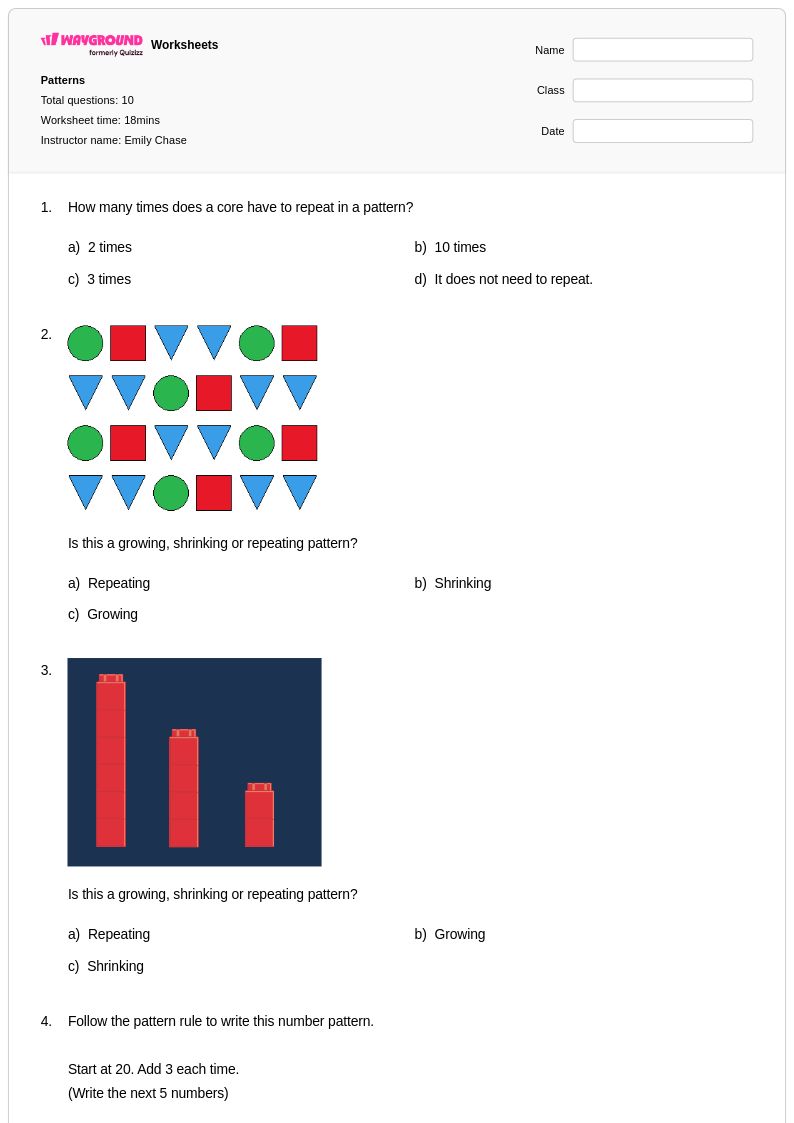
10 Q
2nd
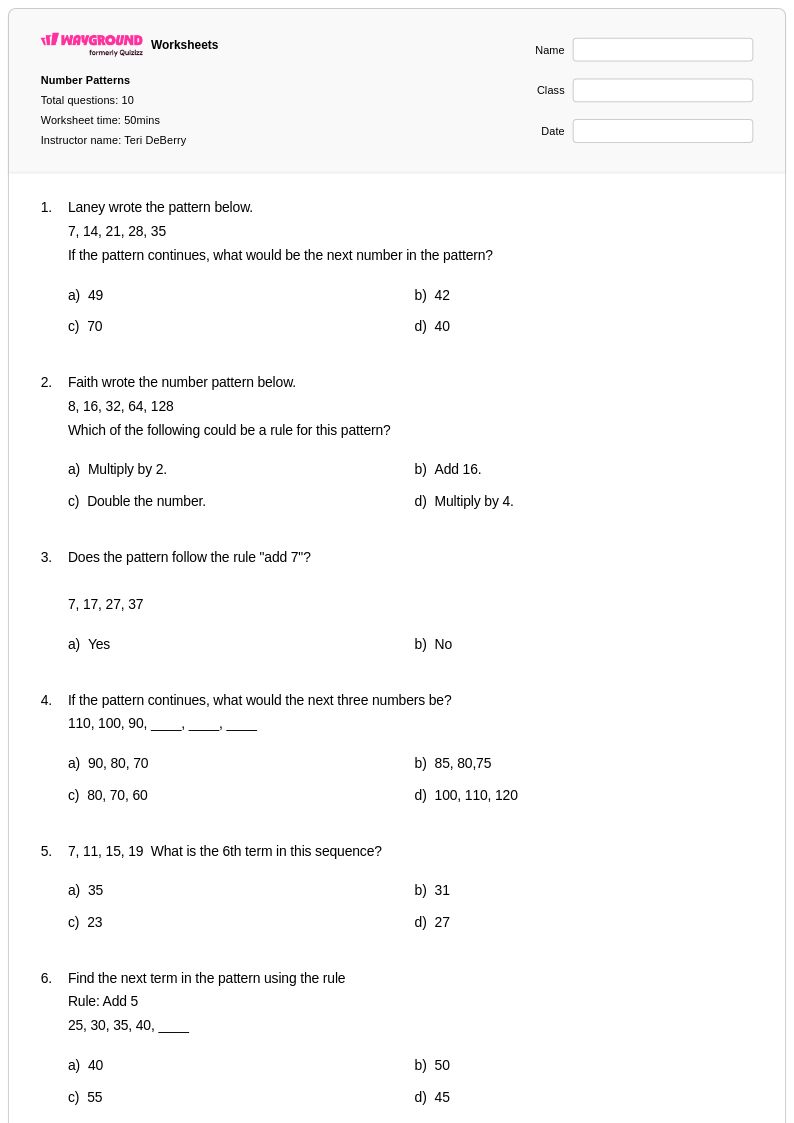
10 Q
2nd - 3rd
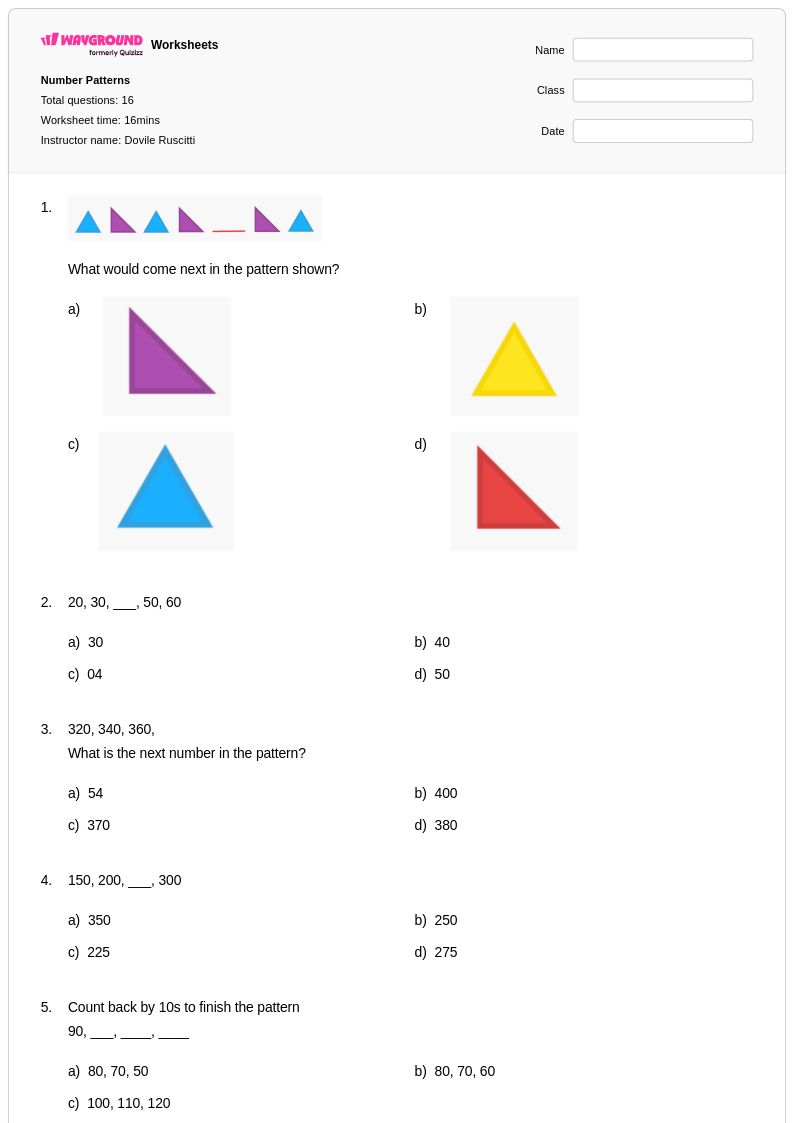
16 Q
1st - 4th
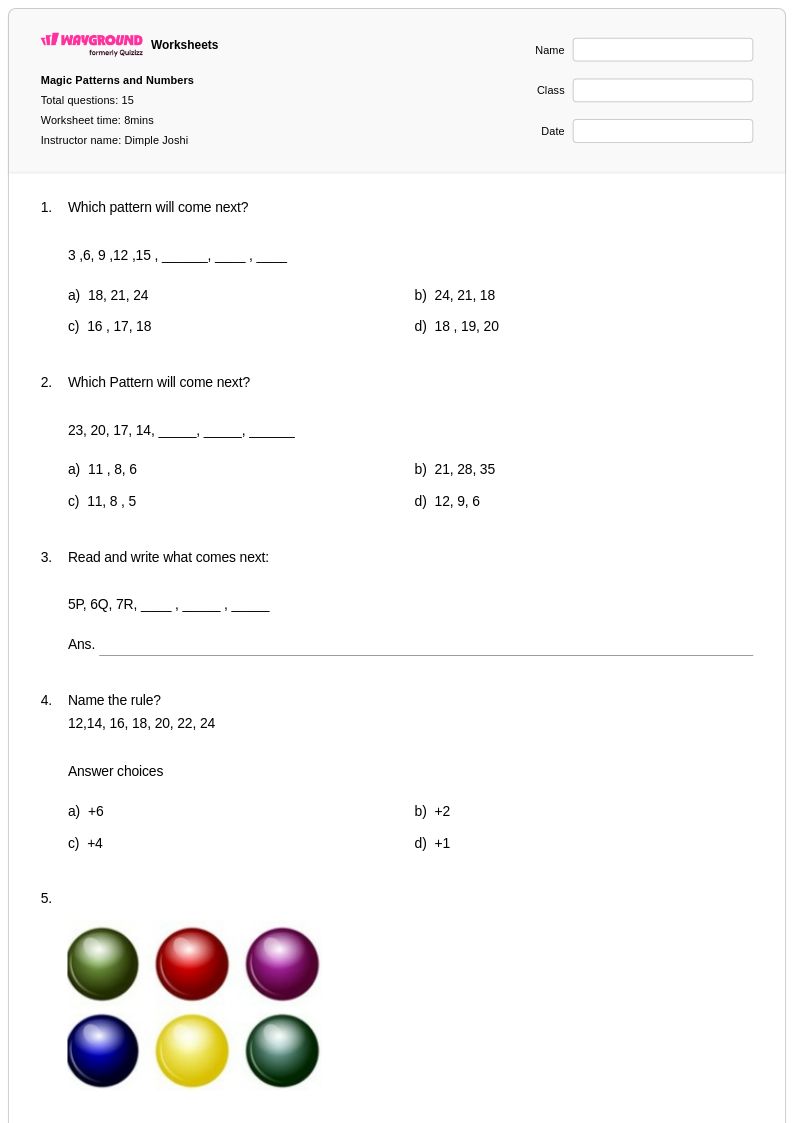
15 Q
2nd
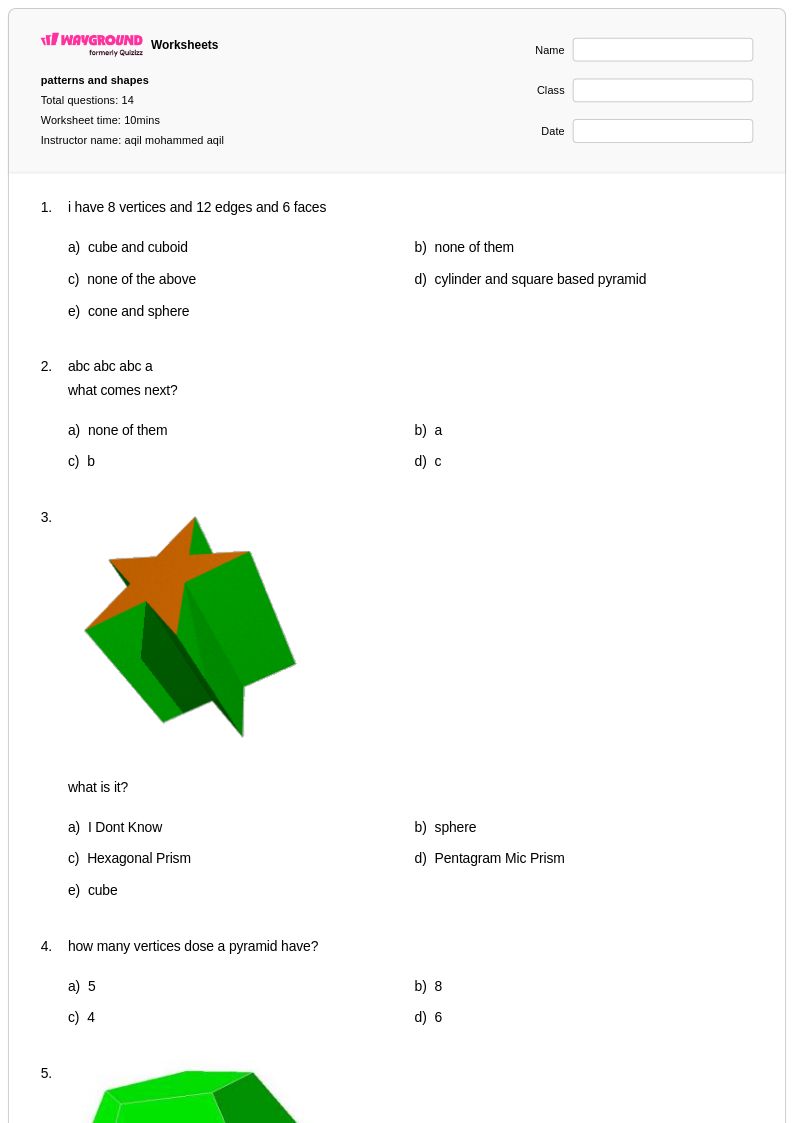
14 Q
2nd
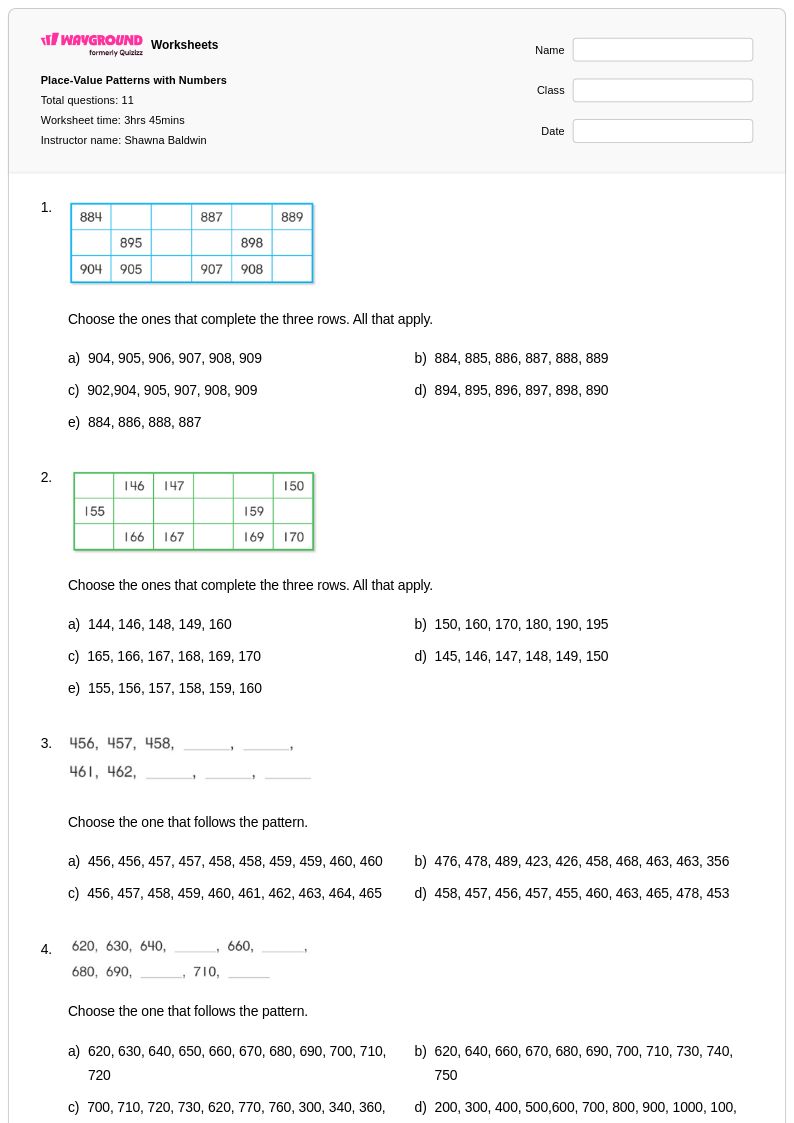
11 Q
2nd
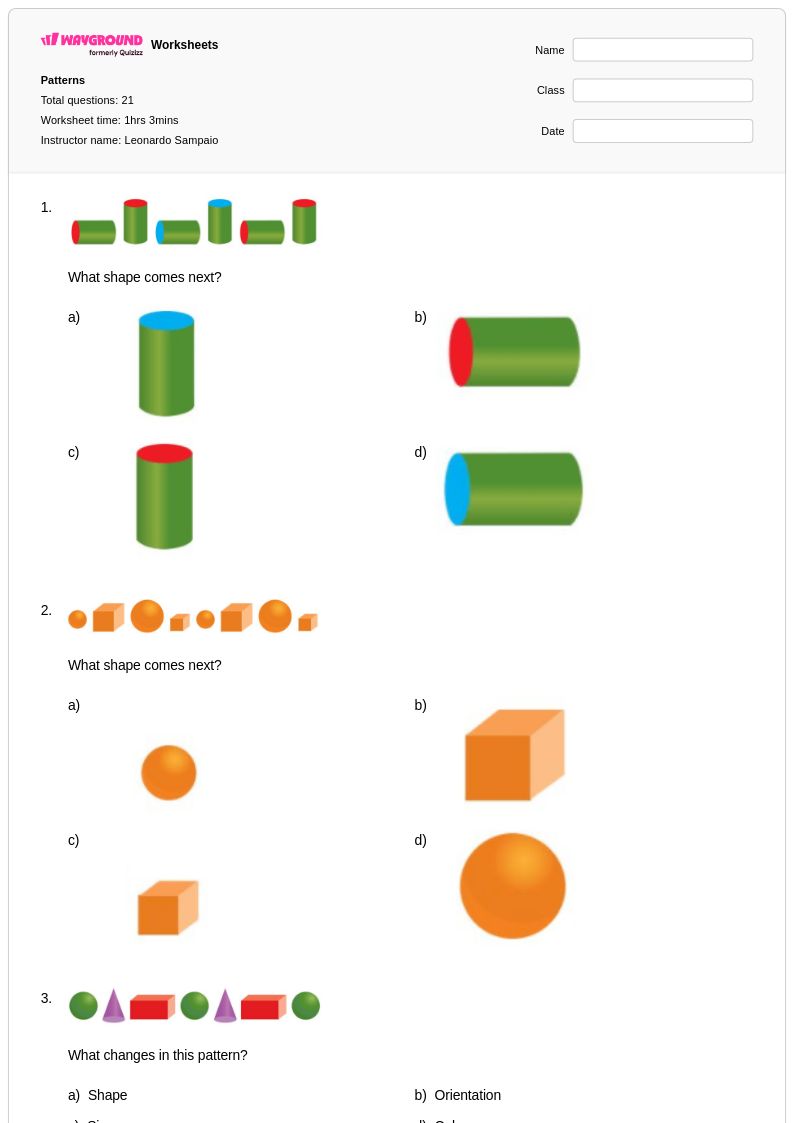
21 Q
2nd
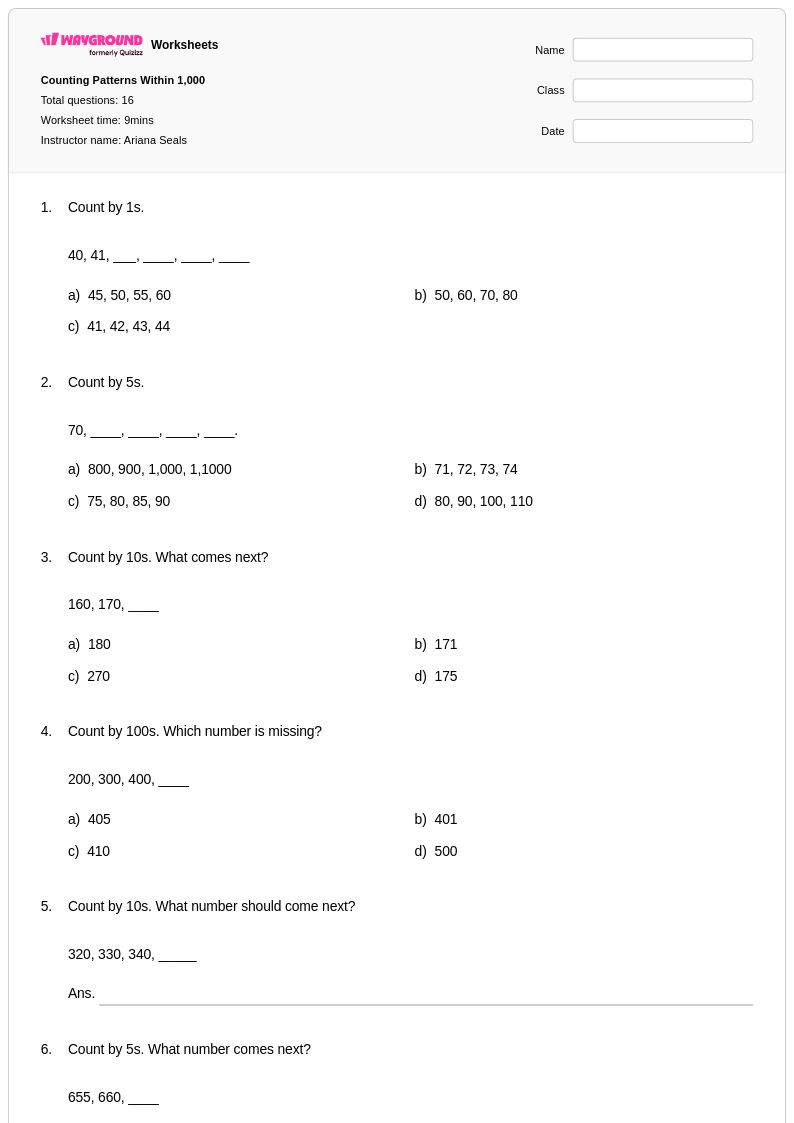
16 Q
2nd
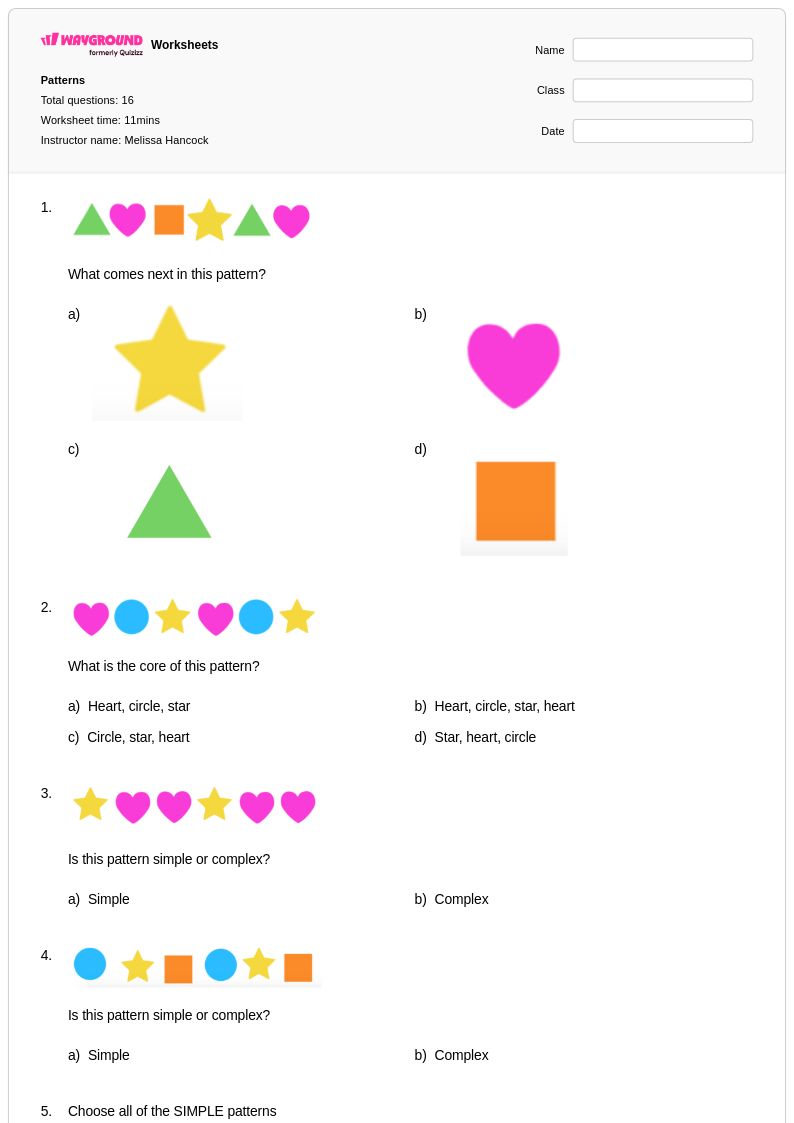
16 Q
2nd
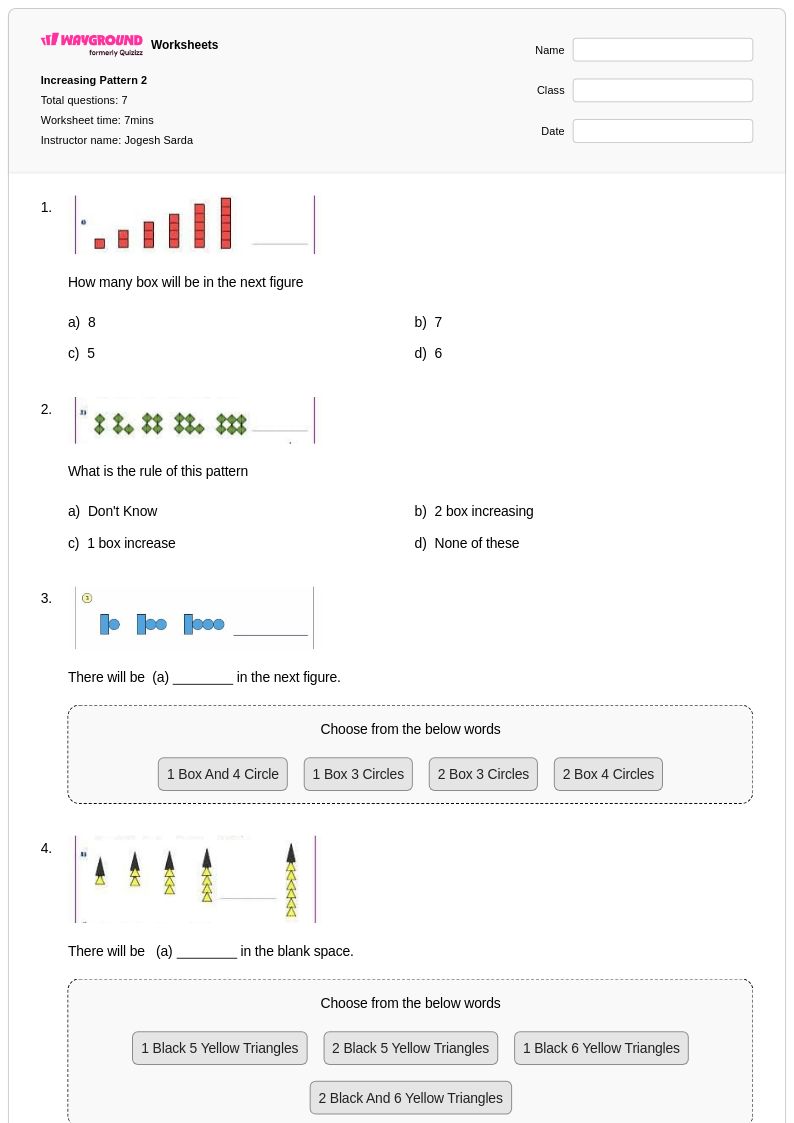
7 Q
2nd
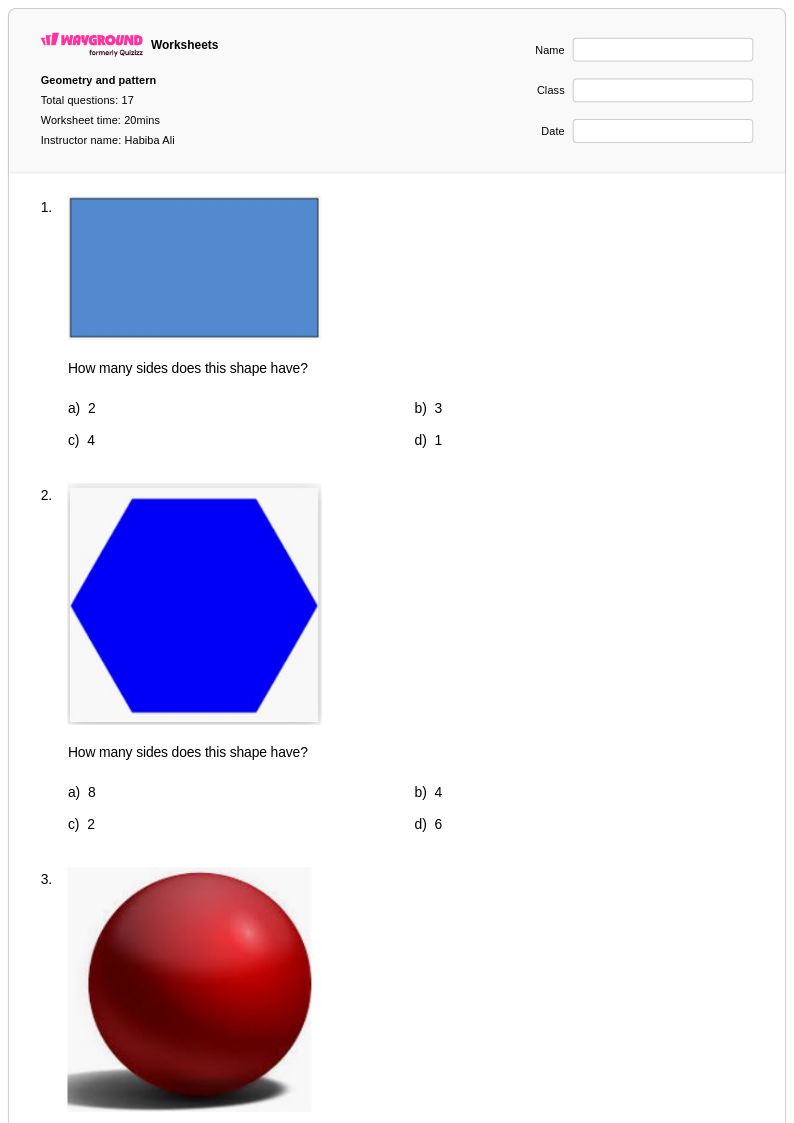
17 Q
1st - 2nd
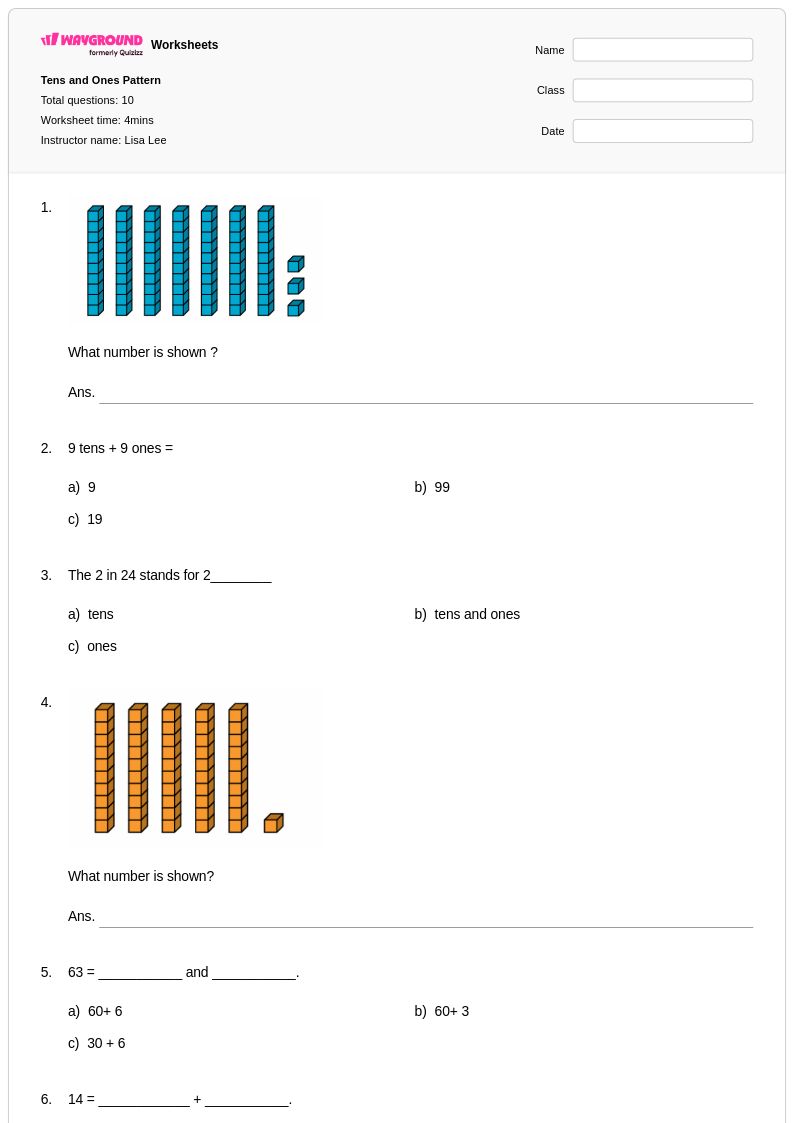
10 Q
1st - 3rd
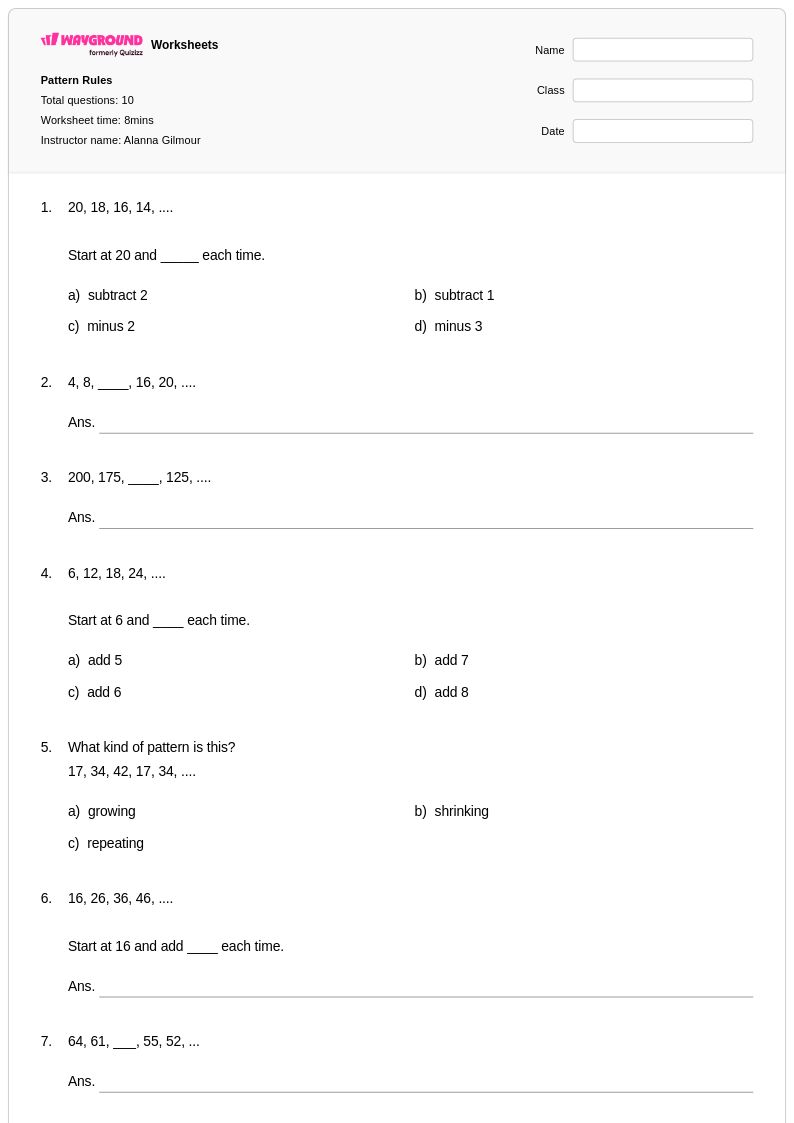
10 Q
2nd
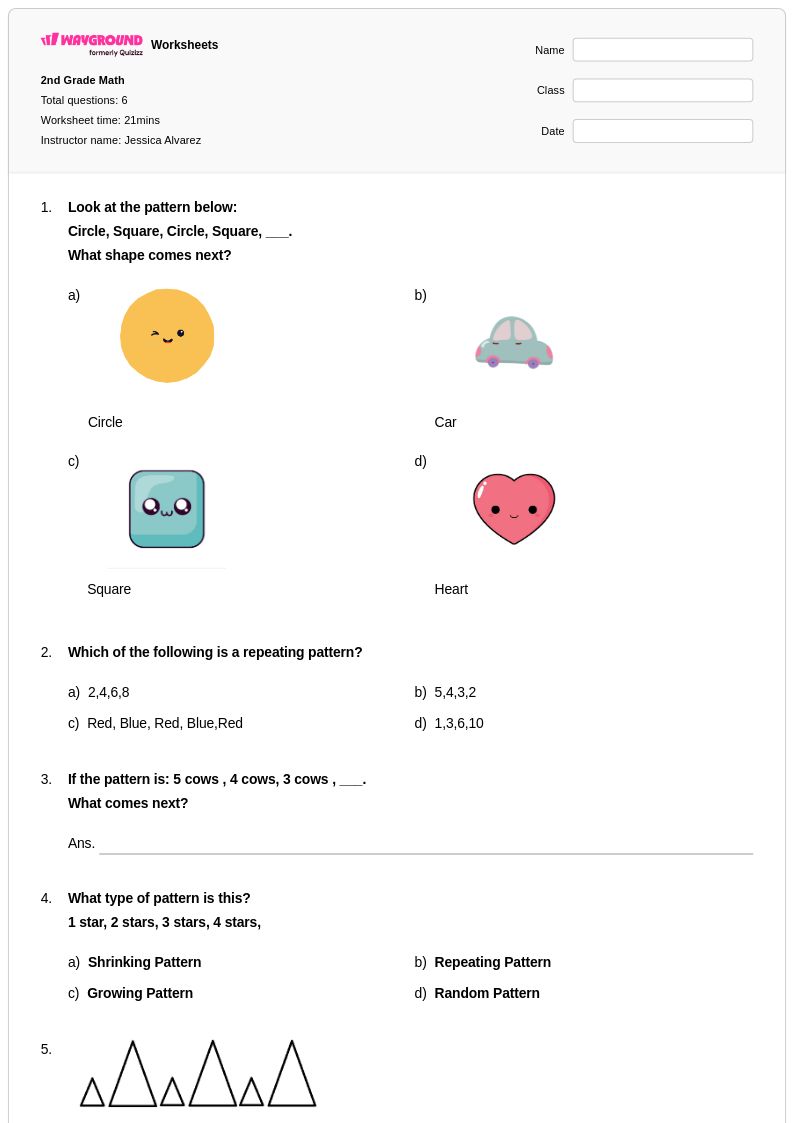
6 Q
2nd
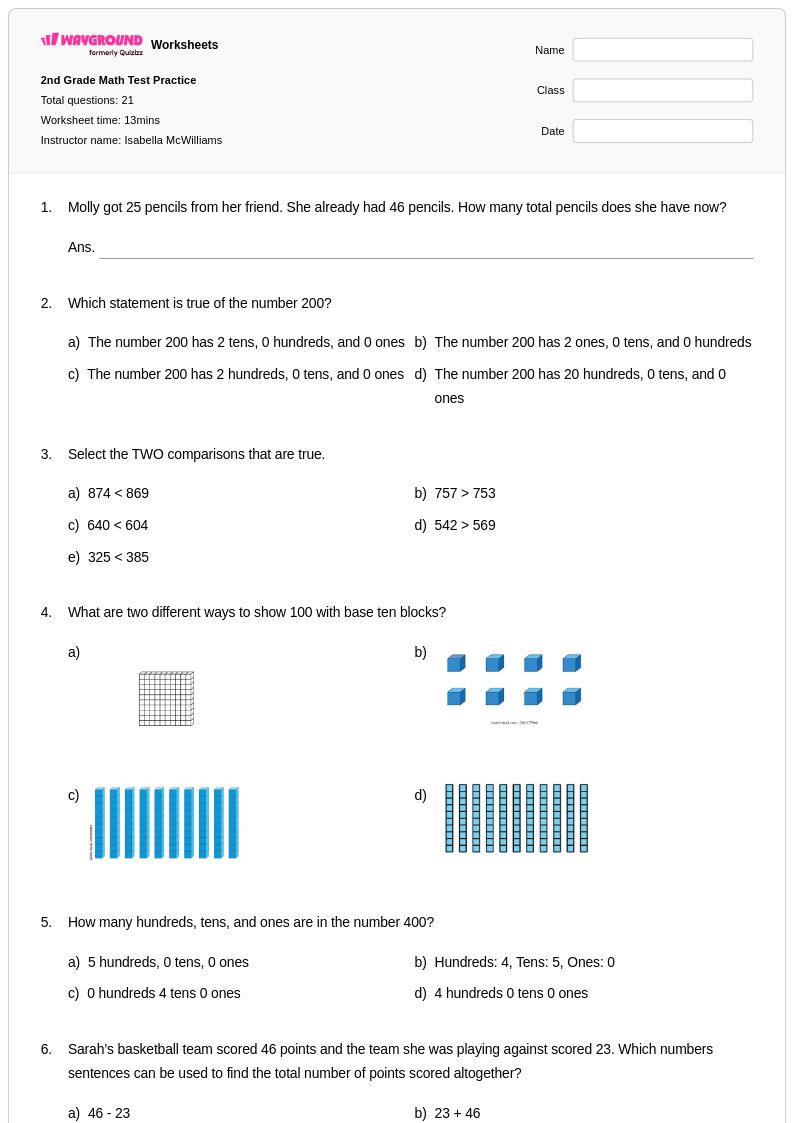
21 Q
2nd
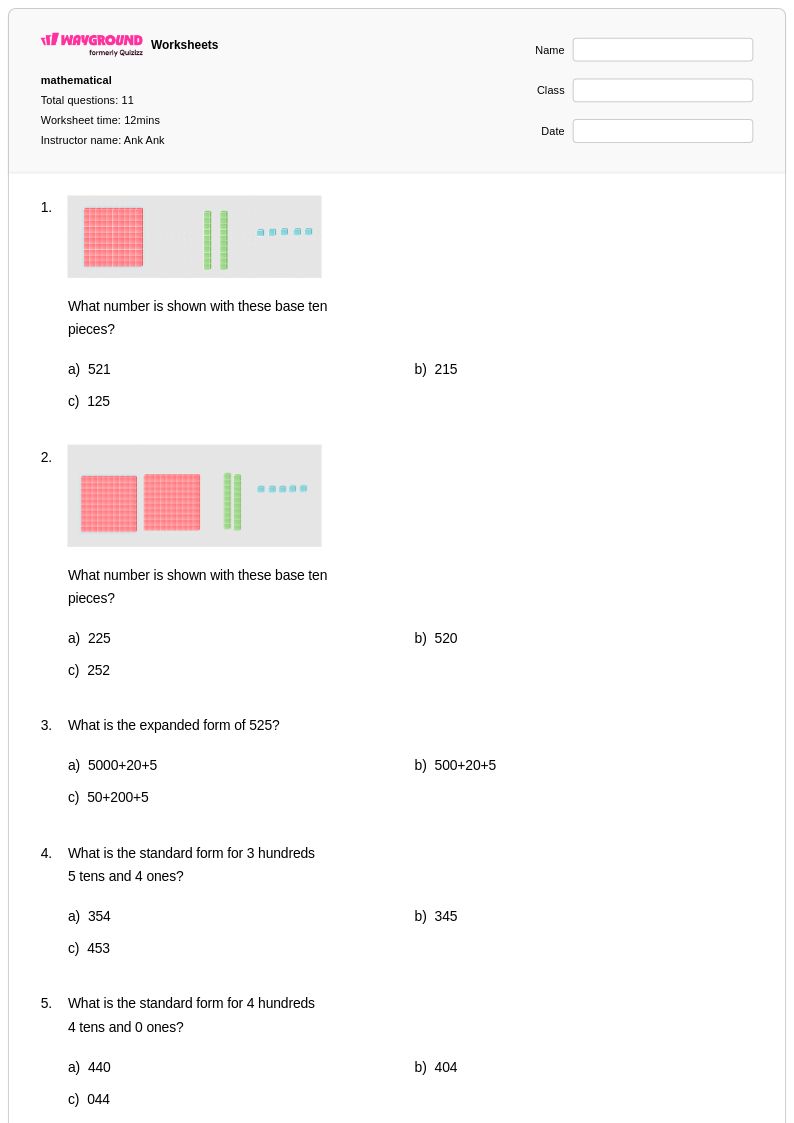
16 Q
1st - 5th
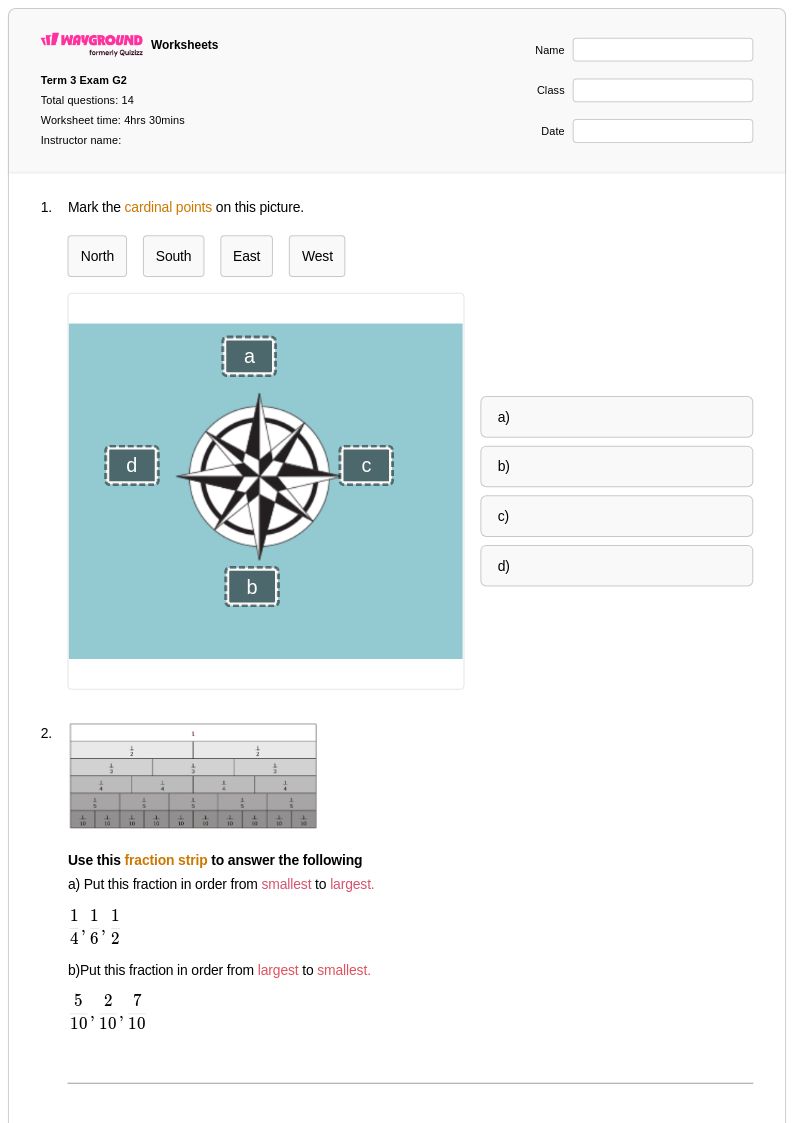
14 Q
2nd
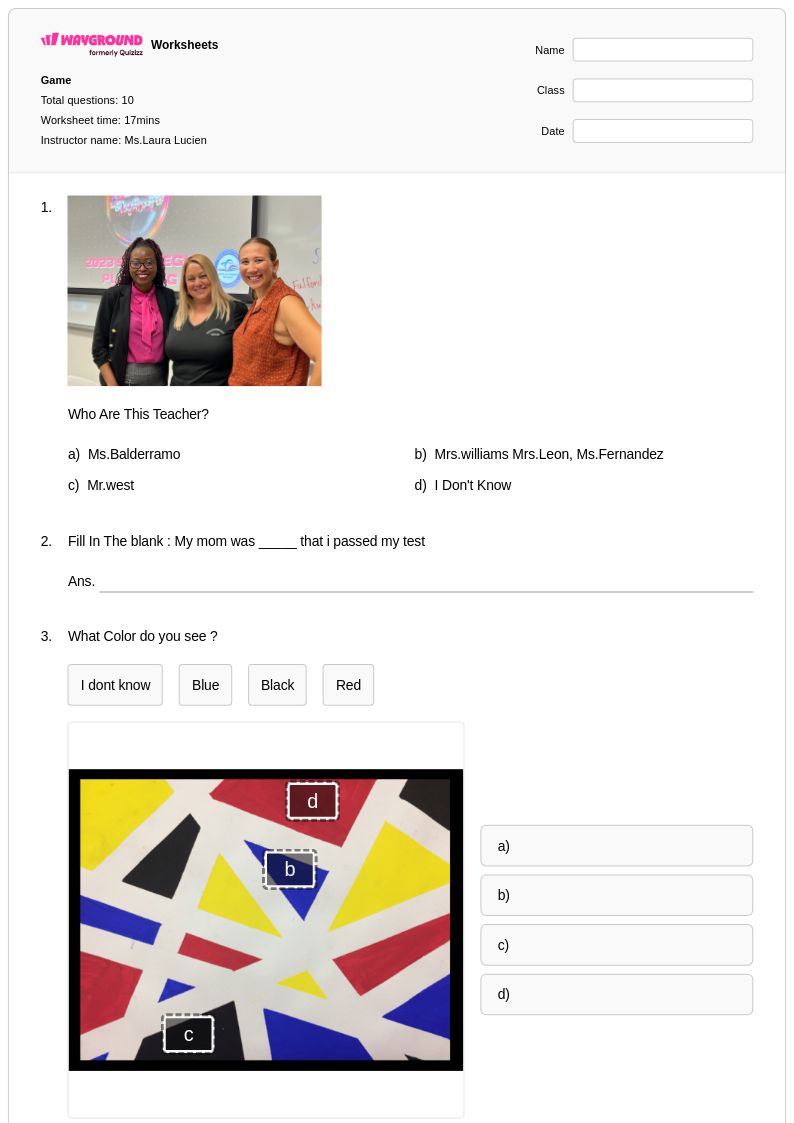
10 Q
1st - 5th
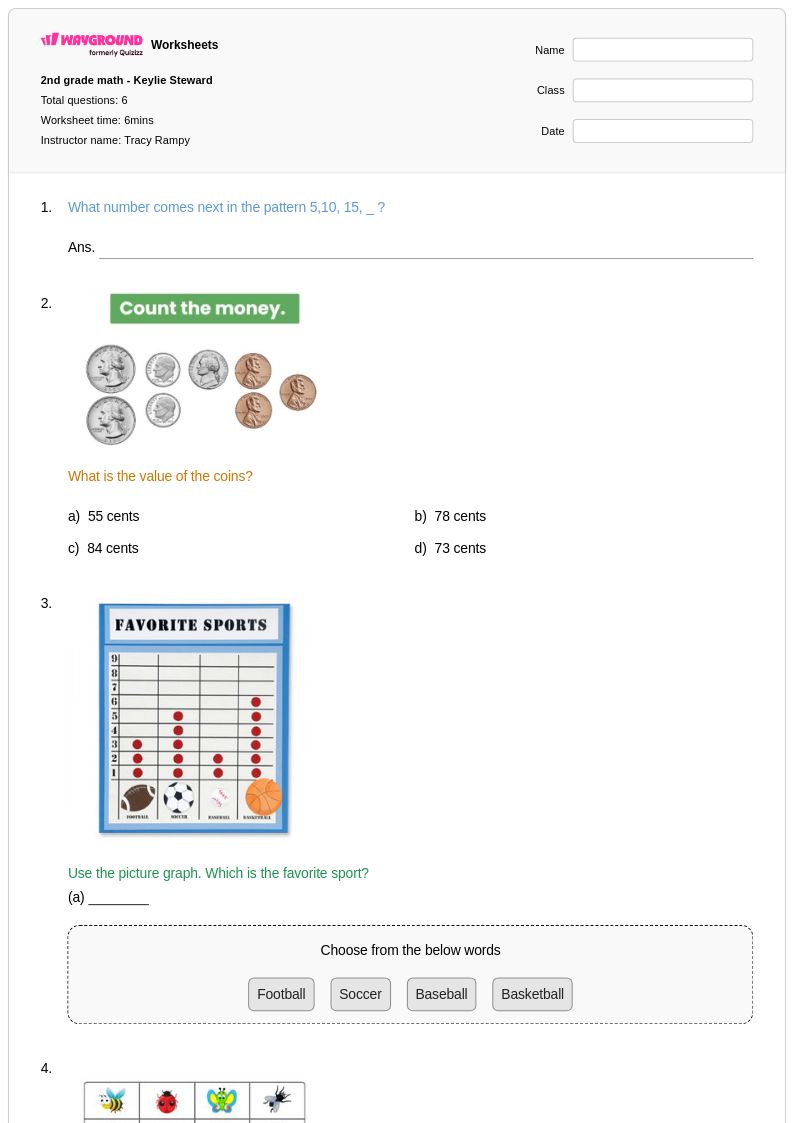
6 Q
2nd
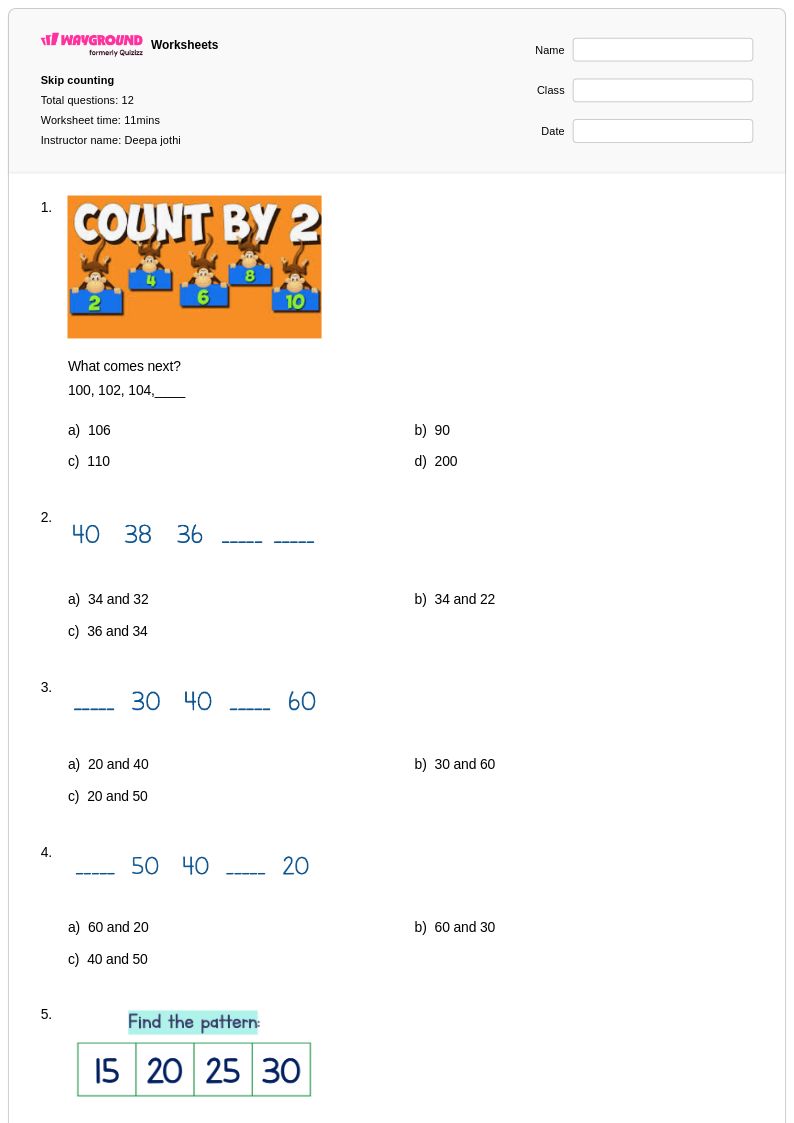
12 Q
2nd
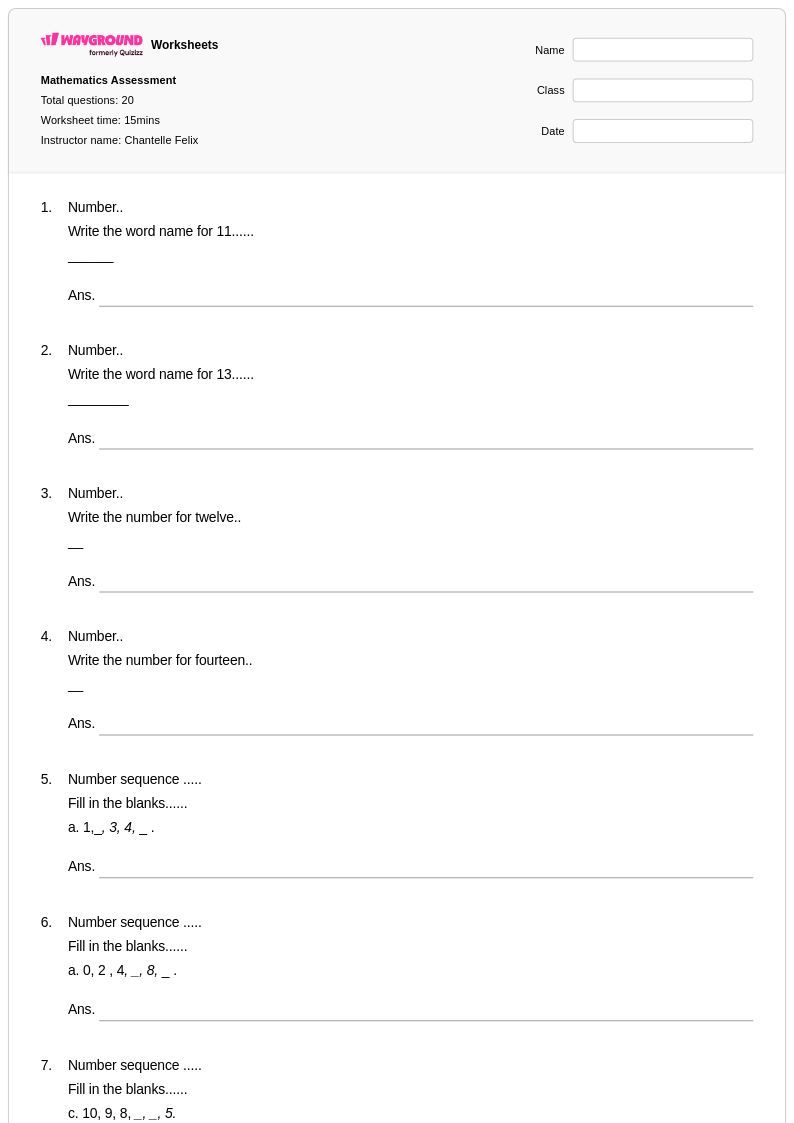
20 Q
1st - 2nd
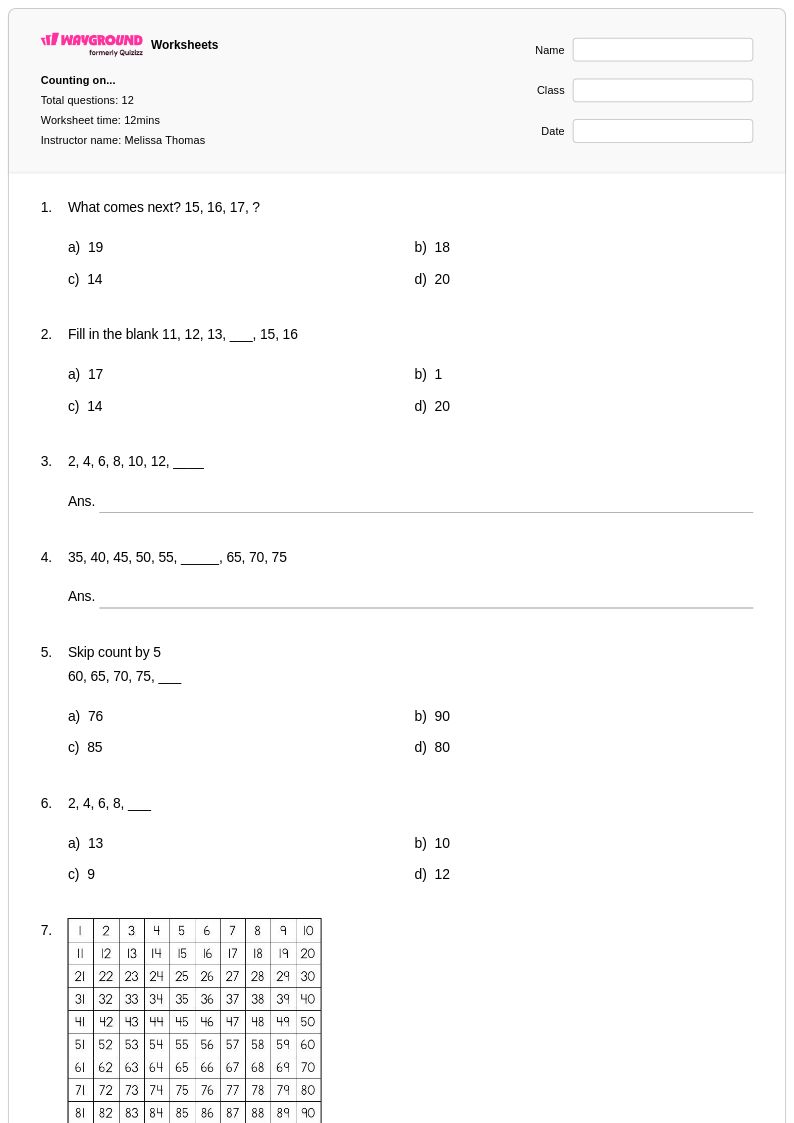
12 Q
1st - 2nd
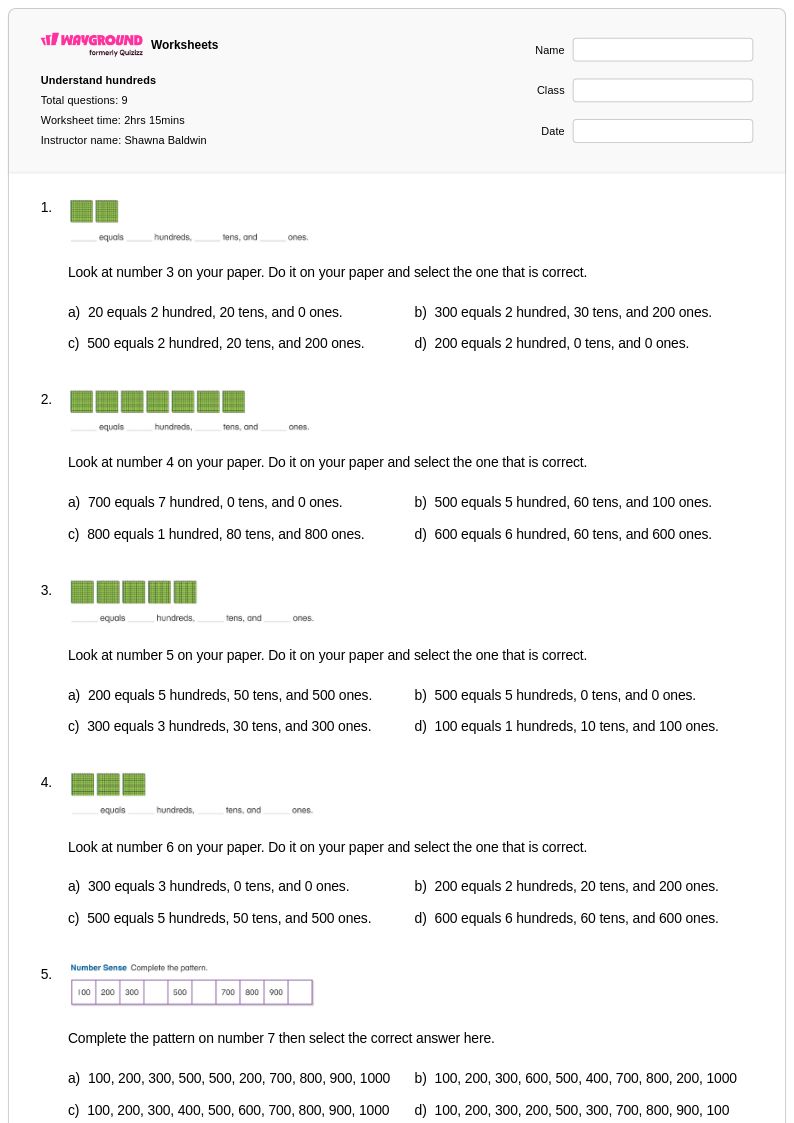
9 Q
2nd
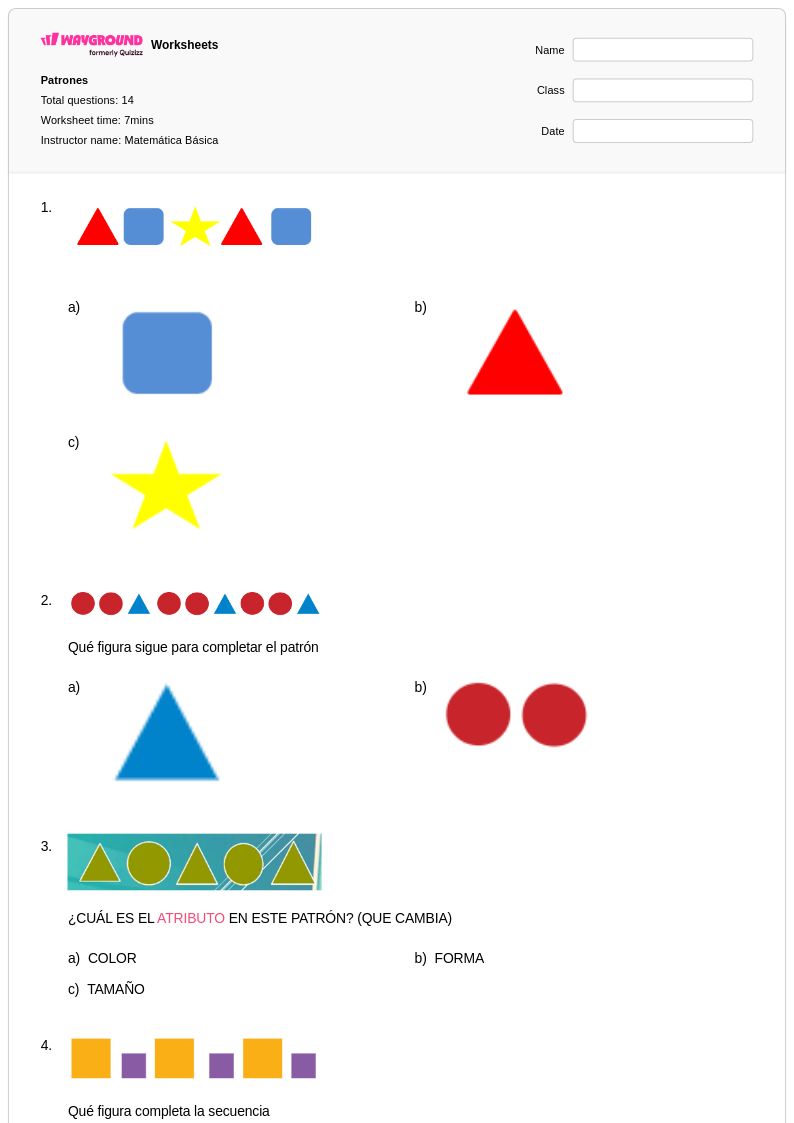
14 Q
2nd
Explore Dot Patterns Worksheets by Grades
Explore Other Subject Worksheets for class 2
Explore printable Dot Patterns worksheets for Class 2
Dot patterns worksheets for Class 2 students available through Wayground (formerly Quizizz) provide essential foundation-building practice for developing number sense and visual mathematical reasoning. These carefully designed printables help young learners recognize quantity without counting, strengthen subitizing skills, and build mental math fluency through systematic exposure to various dot arrangements. Students work with practice problems that feature dots organized in familiar patterns such as dice configurations, ten frames, and arrays, enabling them to quickly identify numbers and understand numerical relationships. Each worksheet includes comprehensive answer keys and free pdf downloads, making them accessible resources for consistent skill reinforcement both in classroom settings and at home.
Wayground (formerly Quizizz) empowers educators with an extensive collection of millions of teacher-created dot pattern resources that support diverse learning needs in Class 2 mathematics instruction. The platform's robust search and filtering capabilities allow teachers to quickly locate worksheets aligned with specific standards and differentiated for various skill levels, from basic pattern recognition to more complex numerical reasoning tasks. These customizable materials are available in both printable and digital pdf formats, providing flexibility for lesson planning, targeted remediation, and enrichment activities. Teachers can seamlessly integrate these dot pattern worksheets into their number sense curriculum, using the visual representations to bridge concrete and abstract mathematical thinking while building students' confidence in numerical fluency and pattern recognition skills.