
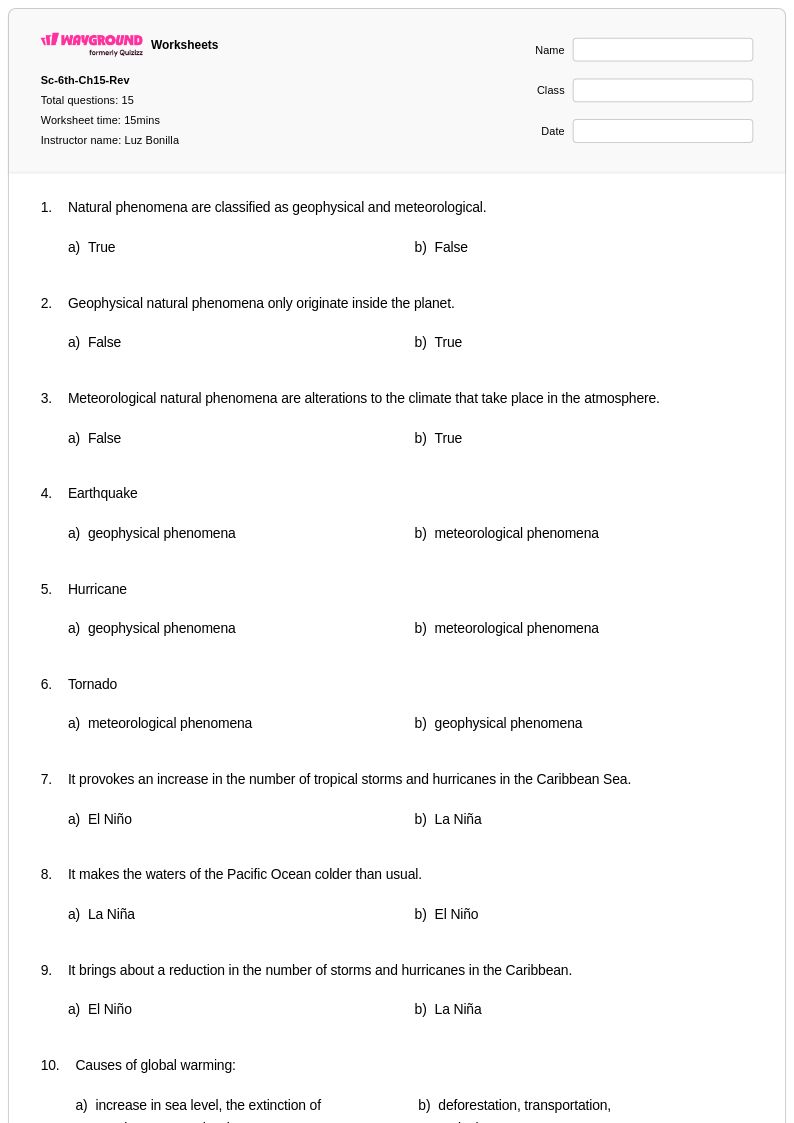
15 Q
6th - 8th
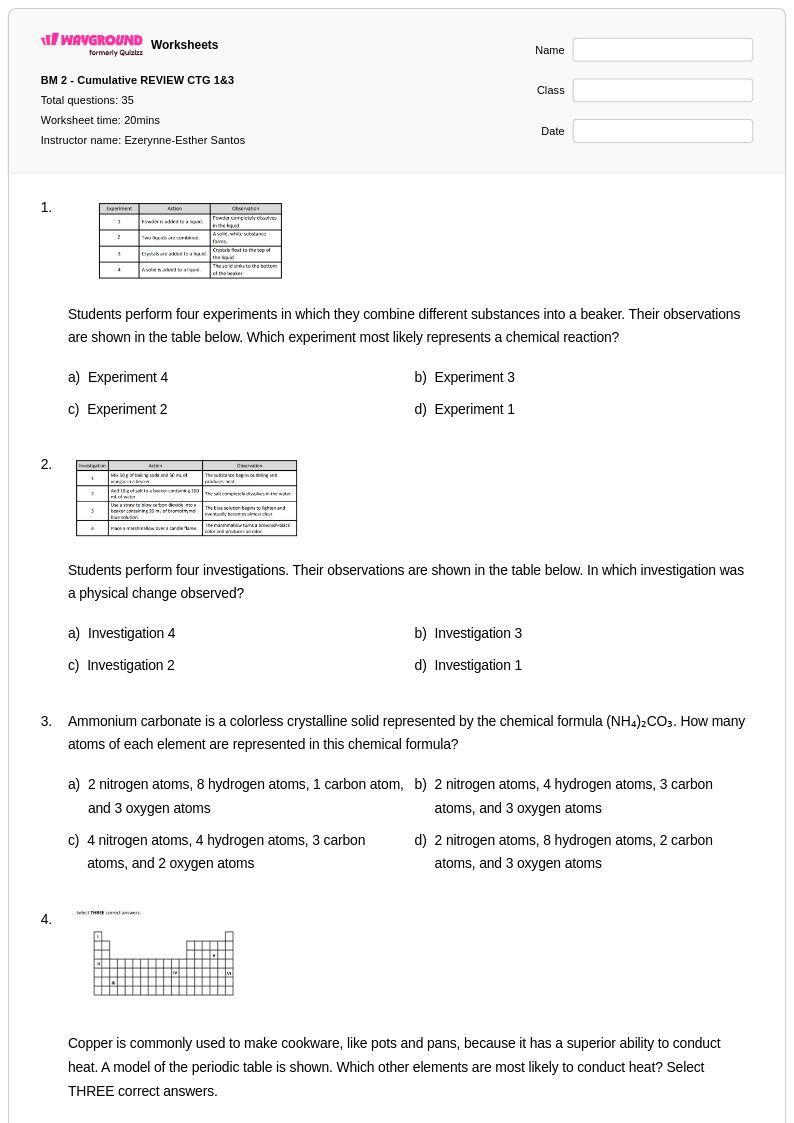
35 Q
8th - Uni
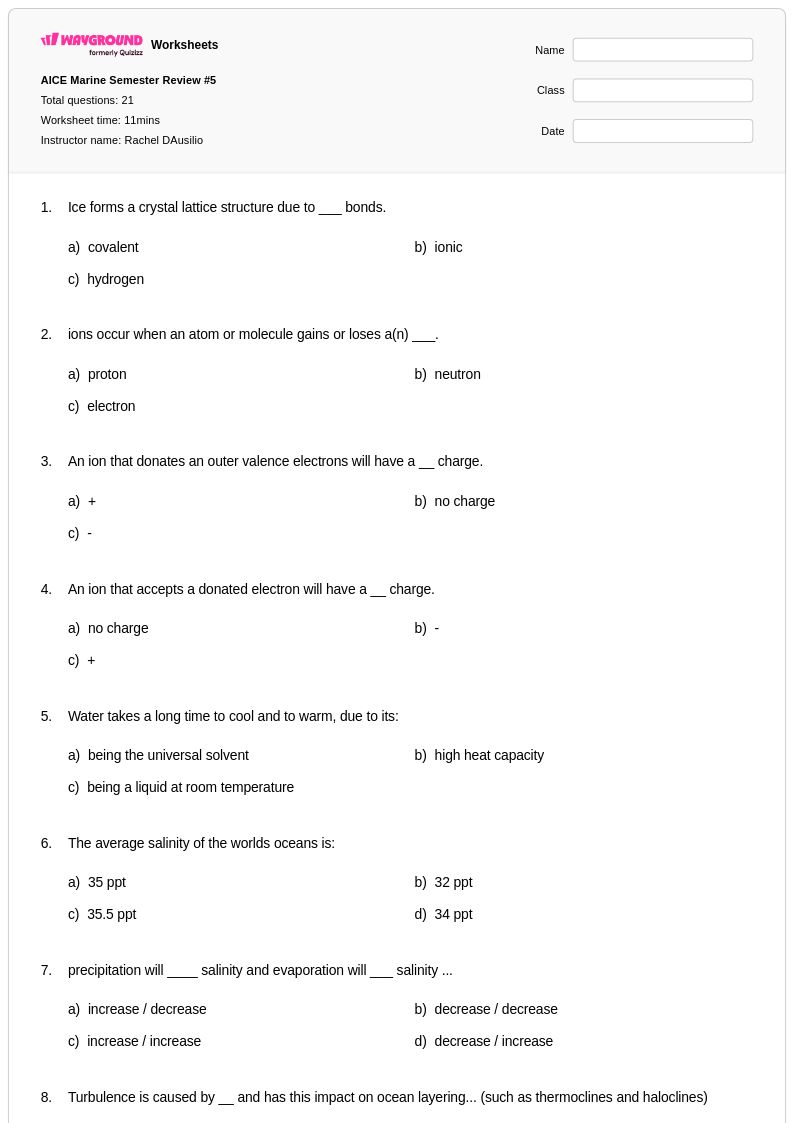
21 Q
8th
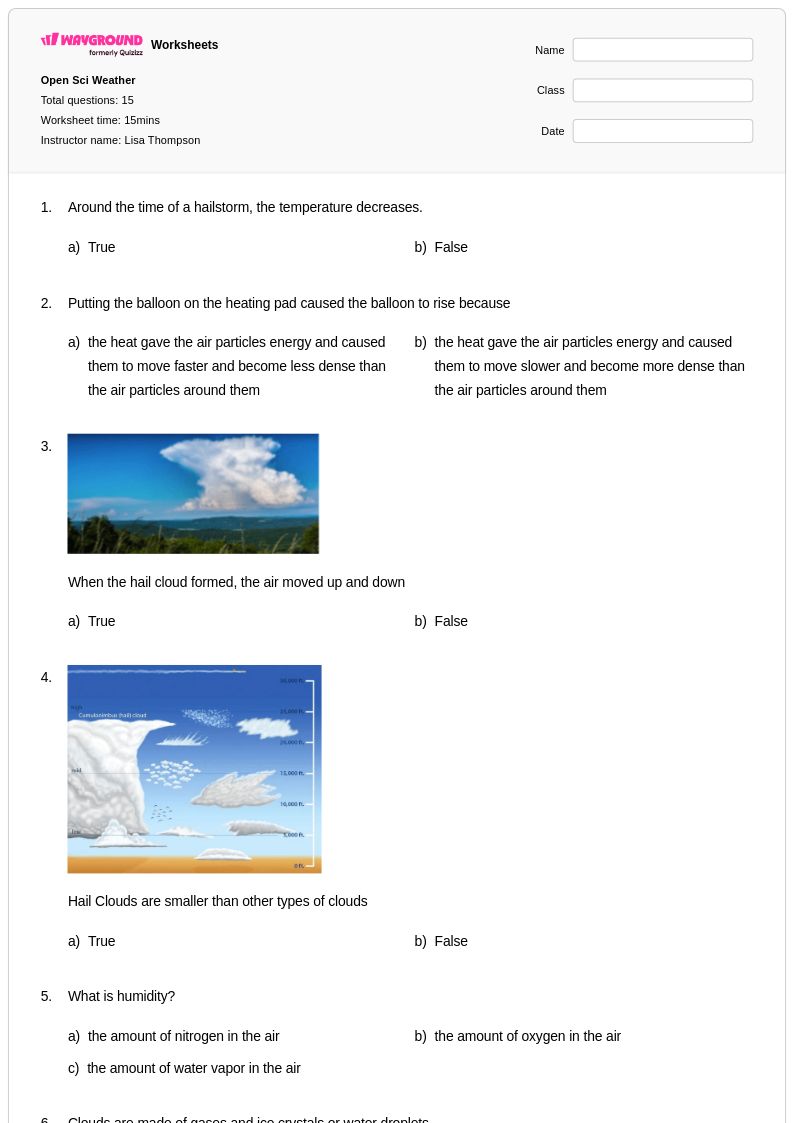
15 Q
7th - Uni
20 Q
6th - 8th
15 Q
3rd - Uni
25 Q
6th - Uni
26 Q
8th
15 Q
6th - Uni
25 Q
6th - Uni
15 Q
6th - Uni
25 Q
5th - Uni
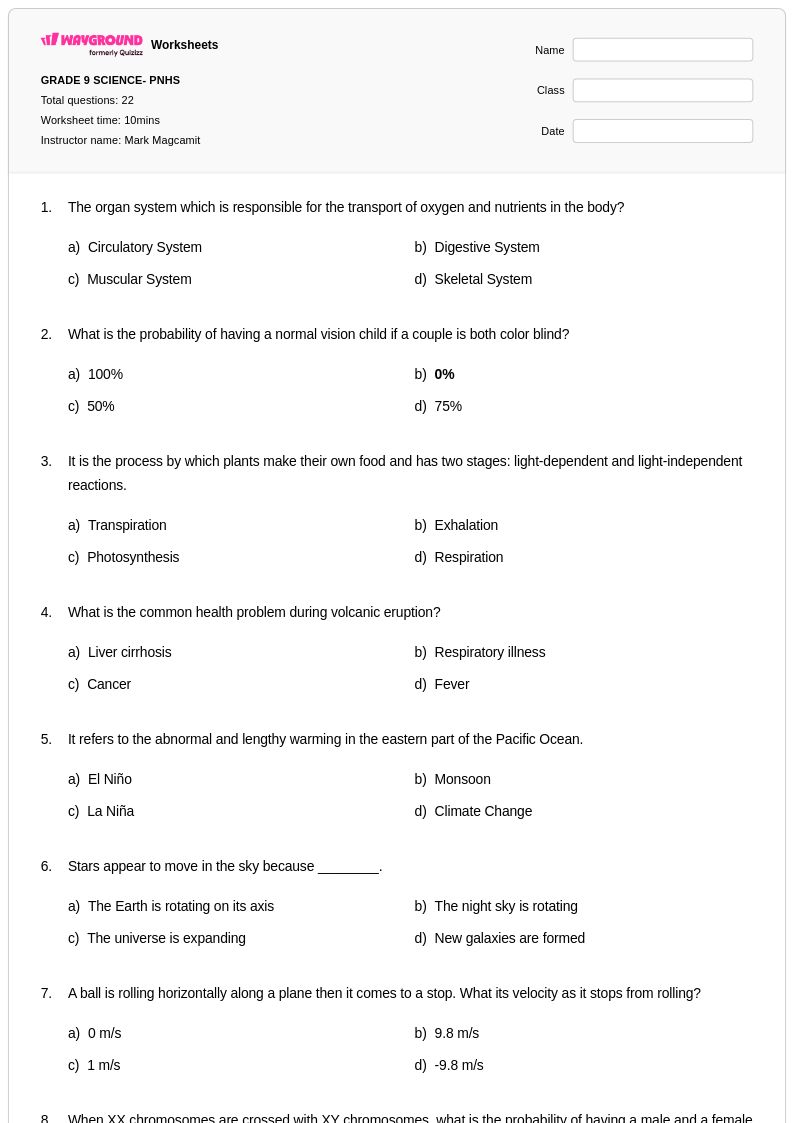
22 Q
8th - 9th
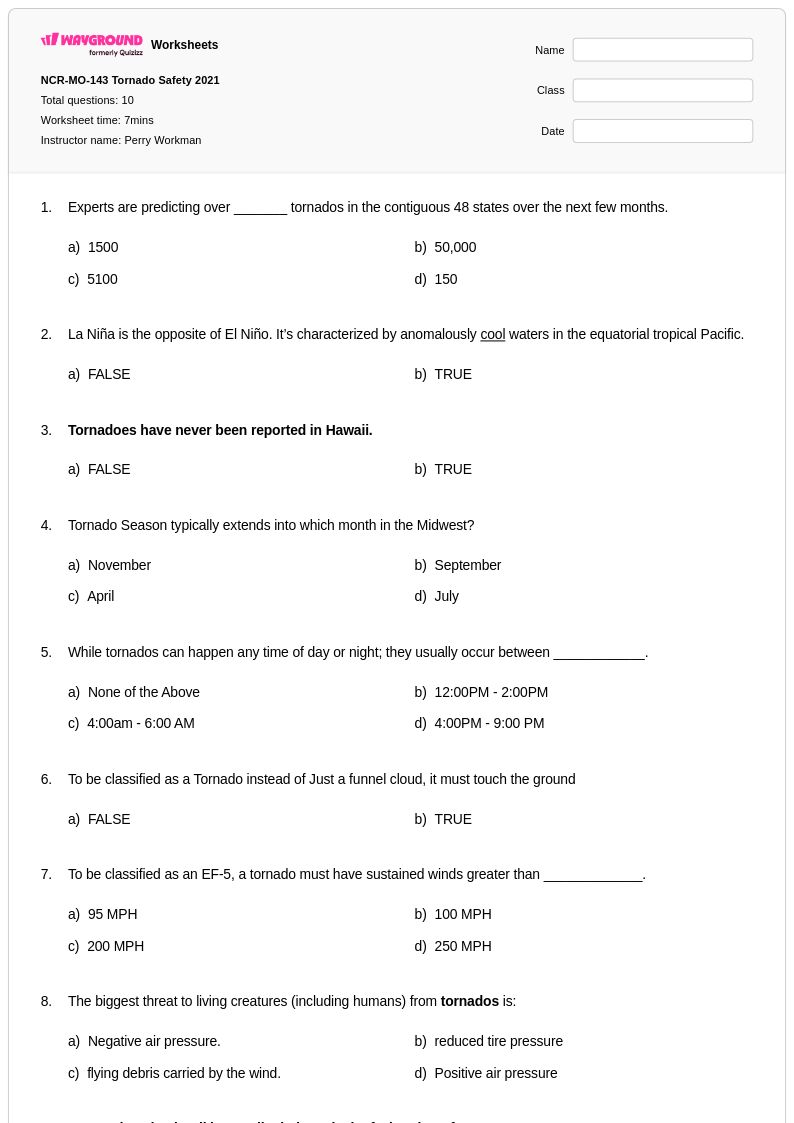
10 Q
6th - PD
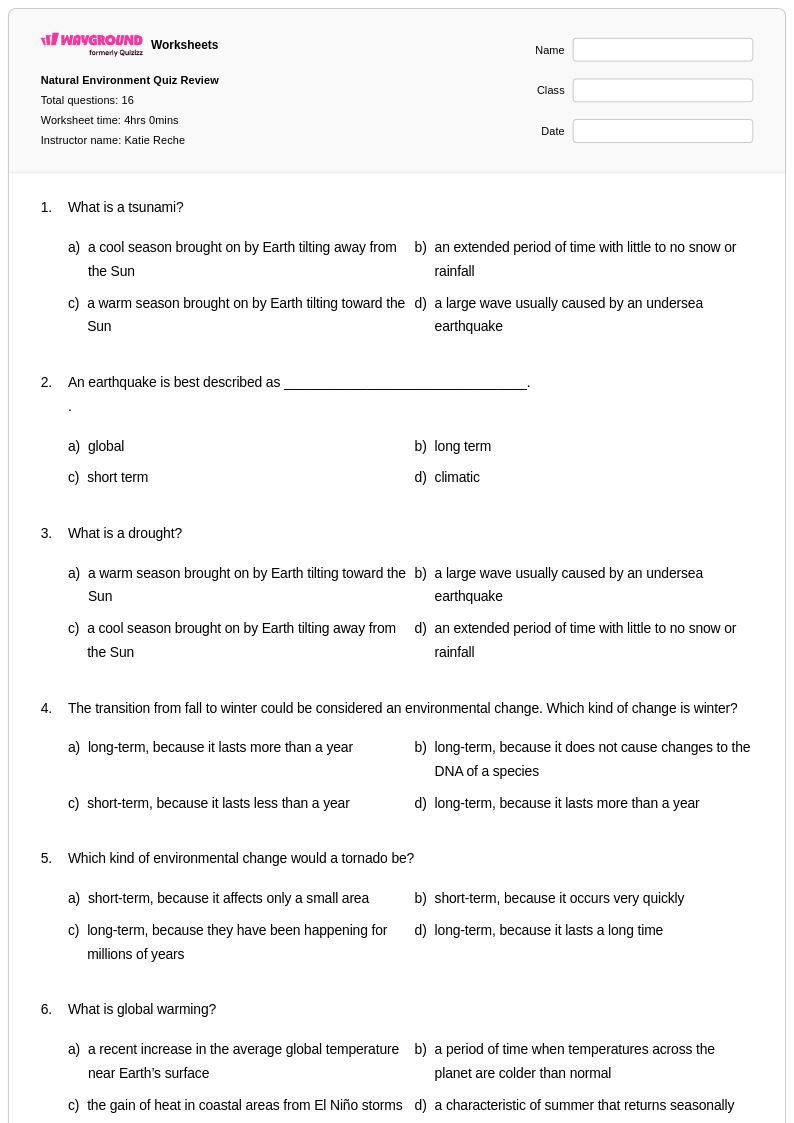
16 Q
8th
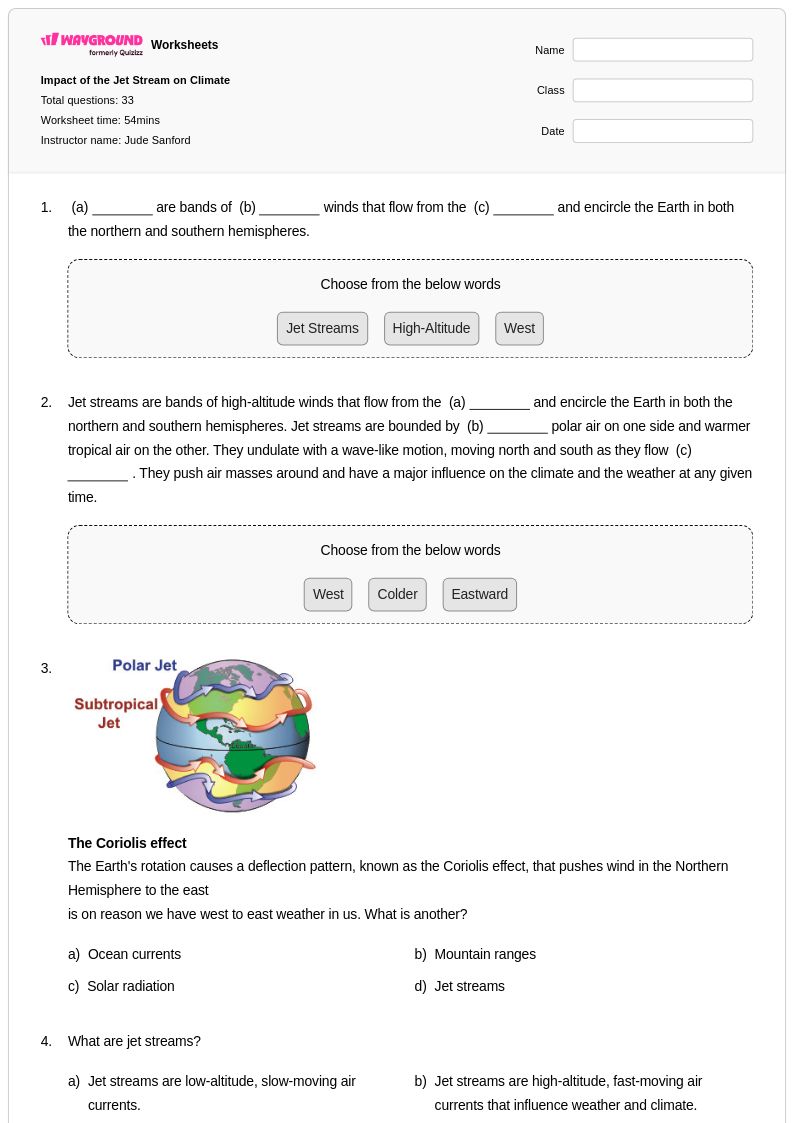
33 Q
6th - 8th
25 Q
4th - Uni
28 Q
8th
6 Q
8th
15 Q
6th - Uni
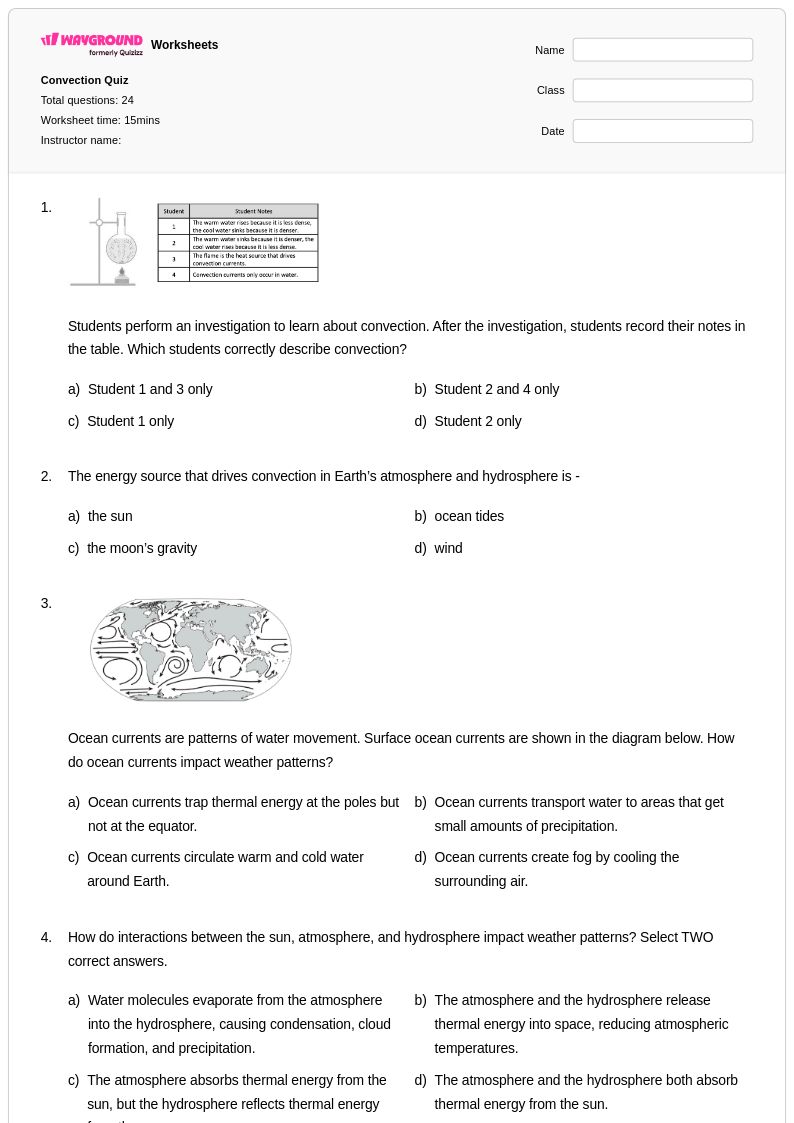
24 Q
8th
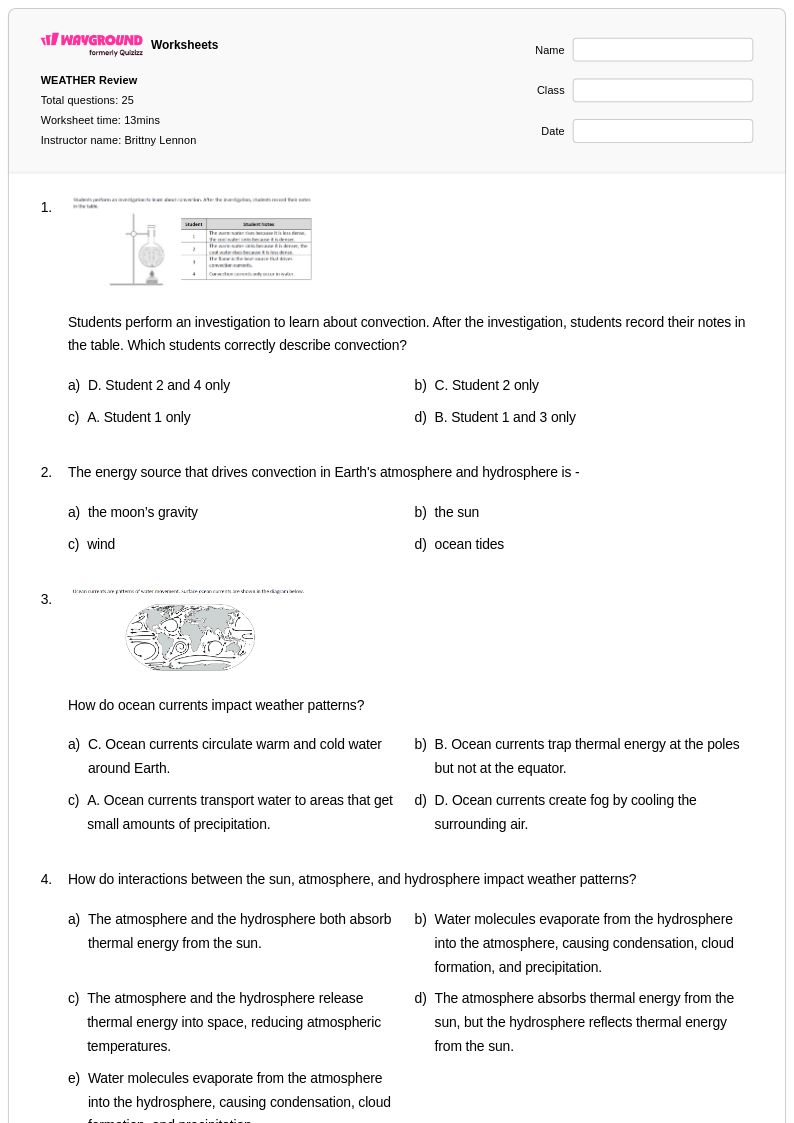
25 Q
8th
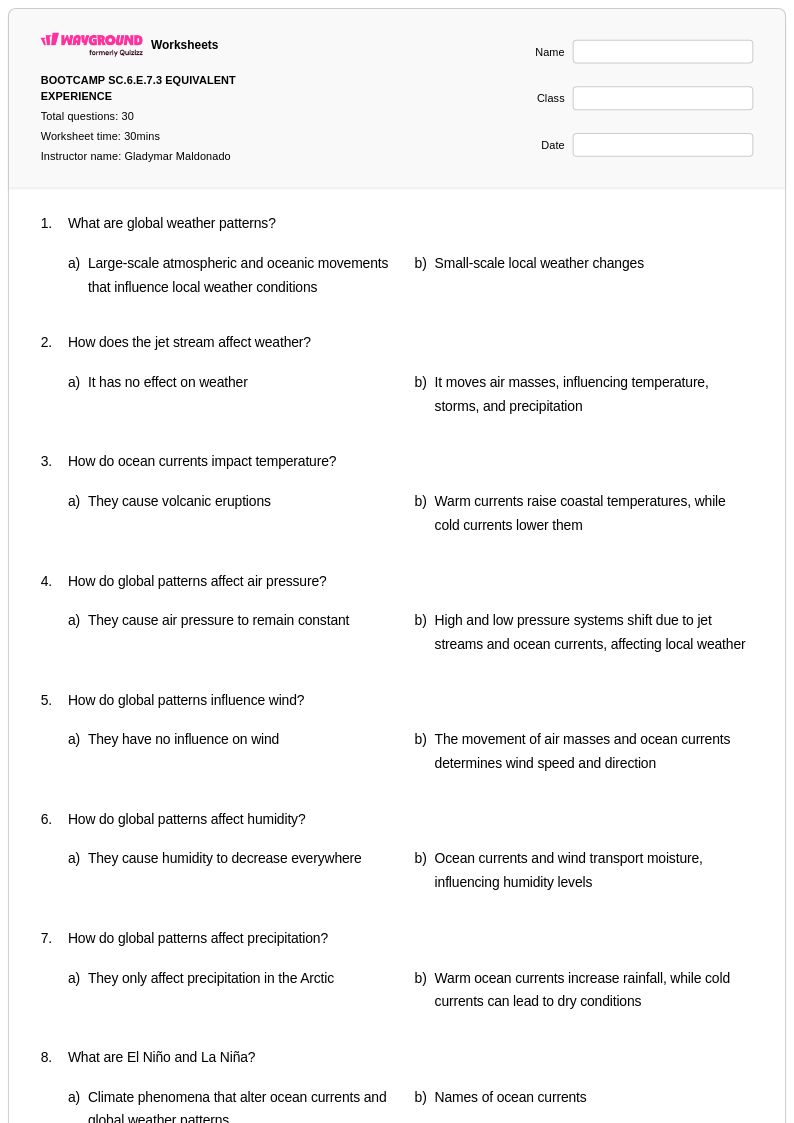
30 Q
6th - 8th
Explore El Niño and La Niña Worksheets by Grades
Explore Other Subject Worksheets for class 8
Explore printable El Niño and La Niña worksheets for Class 8
El Niño and La Niña worksheets for Class 8 students available through Wayground (formerly Quizizz) provide comprehensive coverage of these critical climate phenomena and their global impacts. These educational resources strengthen students' understanding of ocean-atmosphere interactions, temperature and precipitation pattern changes, and the far-reaching effects on weather systems worldwide. The worksheets feature detailed practice problems that challenge eighth graders to analyze data patterns, interpret climate maps, and connect El Niño and La Niña cycles to regional weather variations. Each worksheet collection includes answer keys and explanations that help students master complex concepts like thermocline disruption, trade wind reversals, and teleconnections. Available as free printables and digital resources, these materials support both independent study and classroom instruction while building essential scientific literacy skills.
Wayground (formerly Quizizz) empowers educators with millions of teacher-created El Niño and La Niña worksheet resources specifically designed for Class 8 Earth and Space Science curriculum requirements. The platform's advanced search and filtering capabilities allow teachers to quickly locate materials that align with specific learning standards and differentiate instruction based on individual student needs. Teachers can customize existing worksheets or create new ones using flexible editing tools, then distribute them in printable pdf format or through interactive digital assignments. These comprehensive worksheet collections support diverse instructional goals including lesson planning, skill remediation, concept enrichment, and ongoing practice, enabling educators to effectively address varying learning styles and academic levels within their eighth-grade science classrooms while ensuring students develop deep conceptual understanding of these important climate systems.