Enhance Class 3 students' vocabulary skills with our comprehensive collection of En Suffix worksheets, featuring engaging printables, practice problems, and answer keys to master word patterns through interactive learning activities.
Explore printable En Suffix worksheets for Class 3
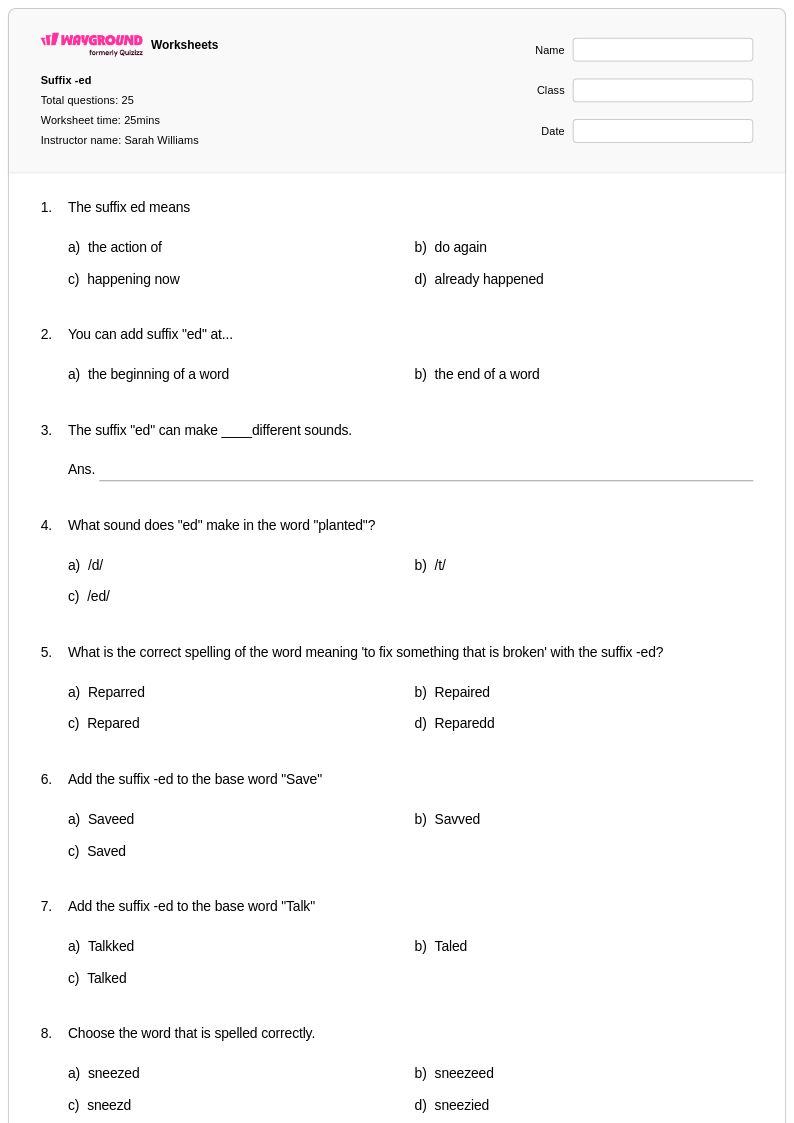
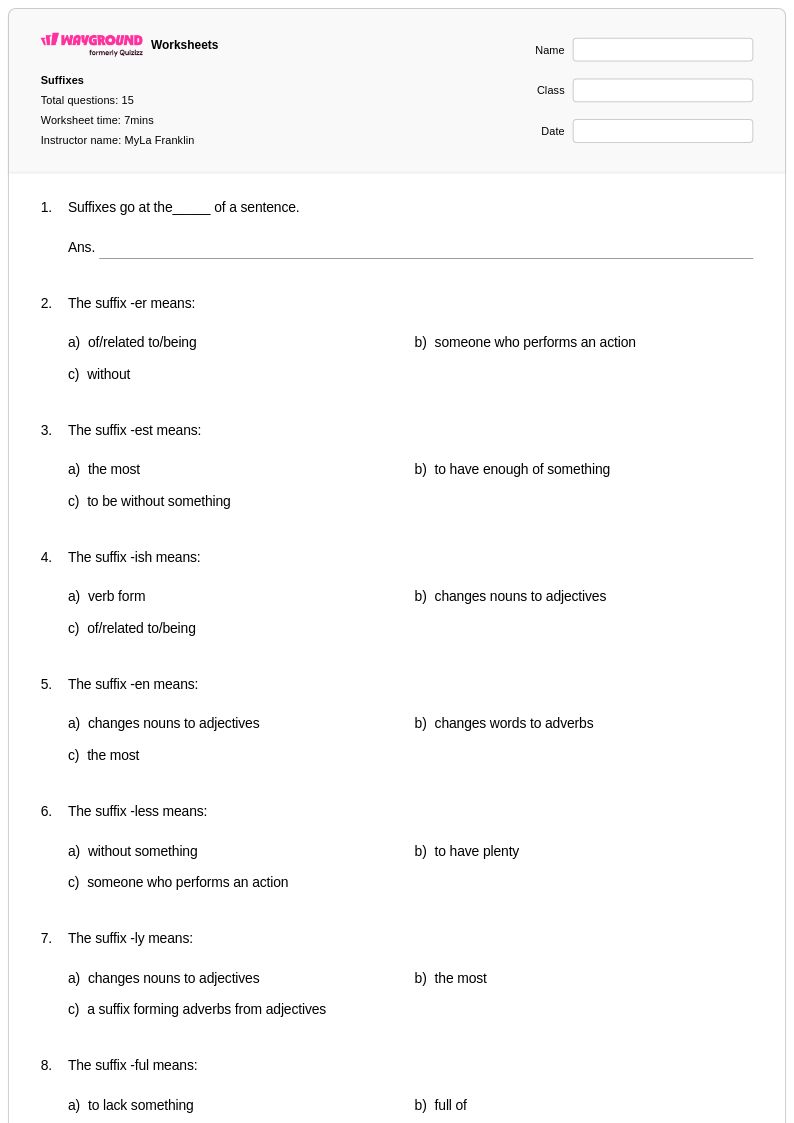
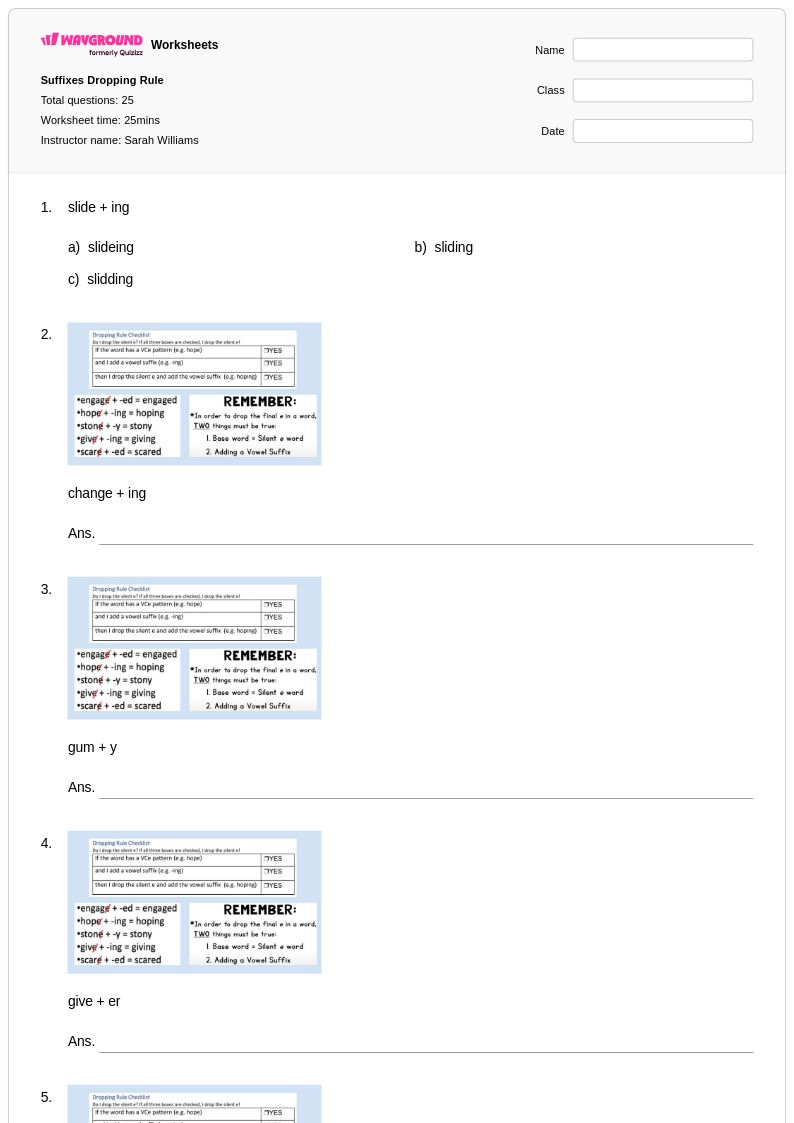
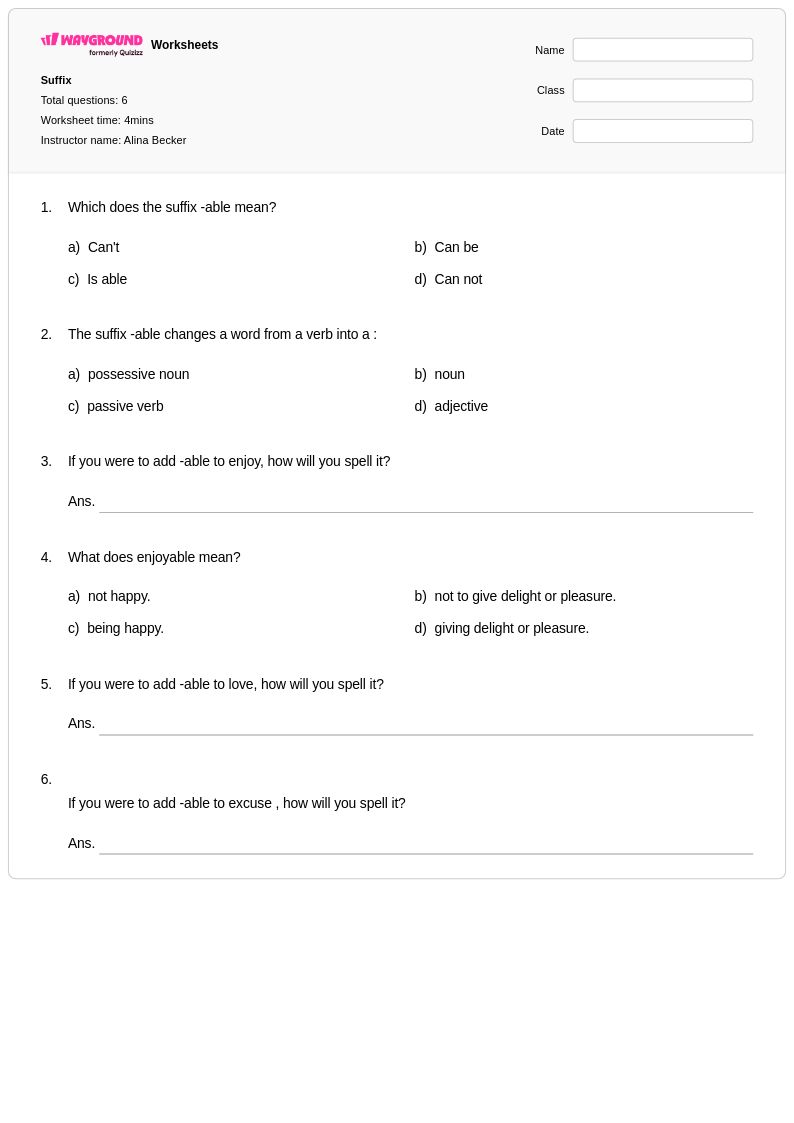
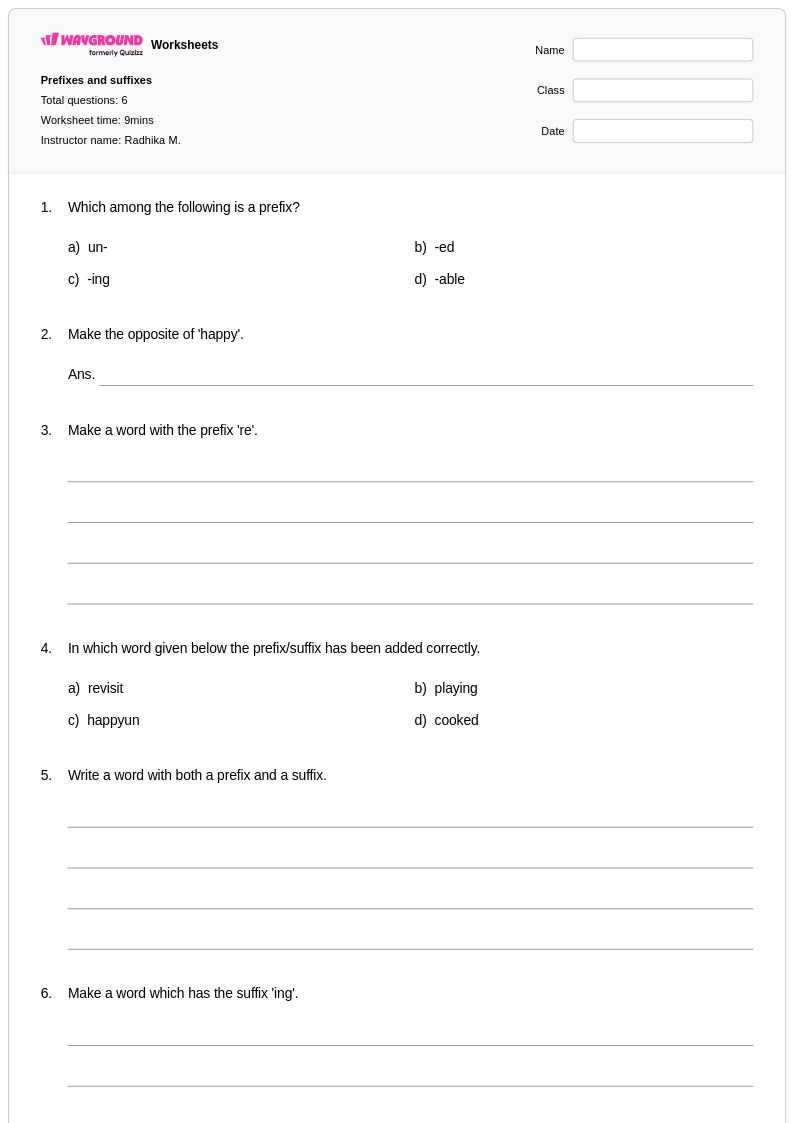
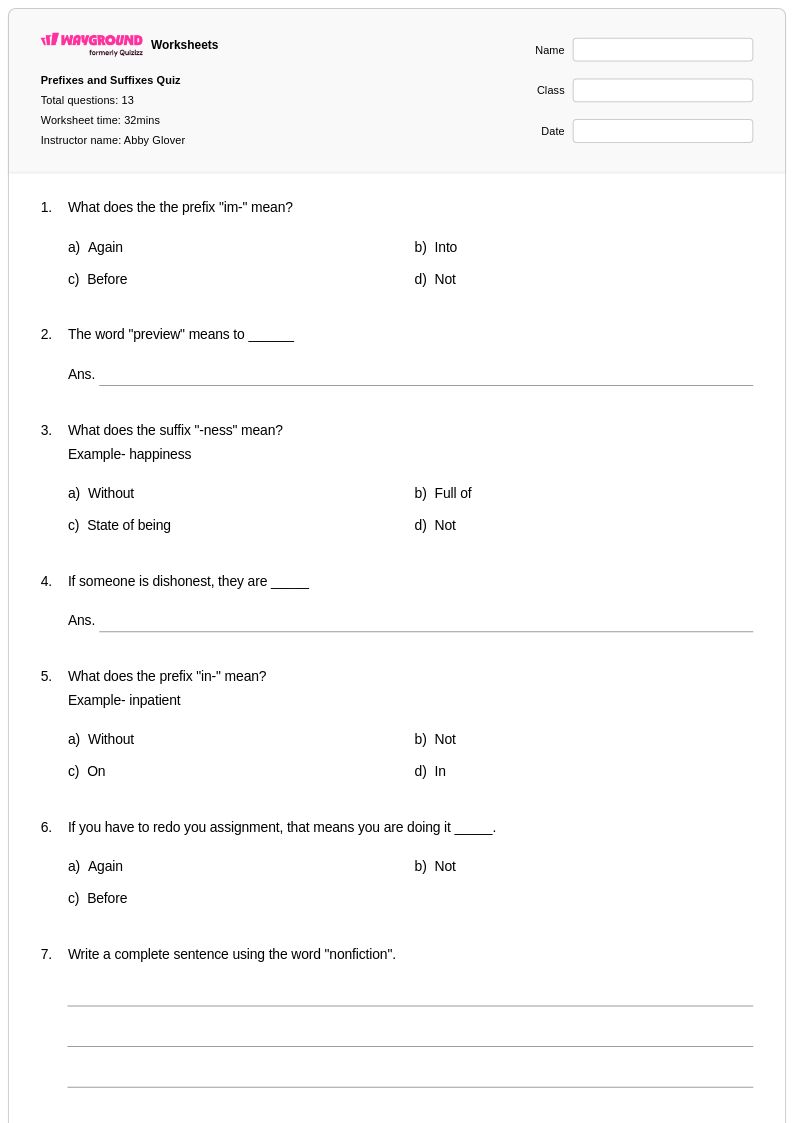
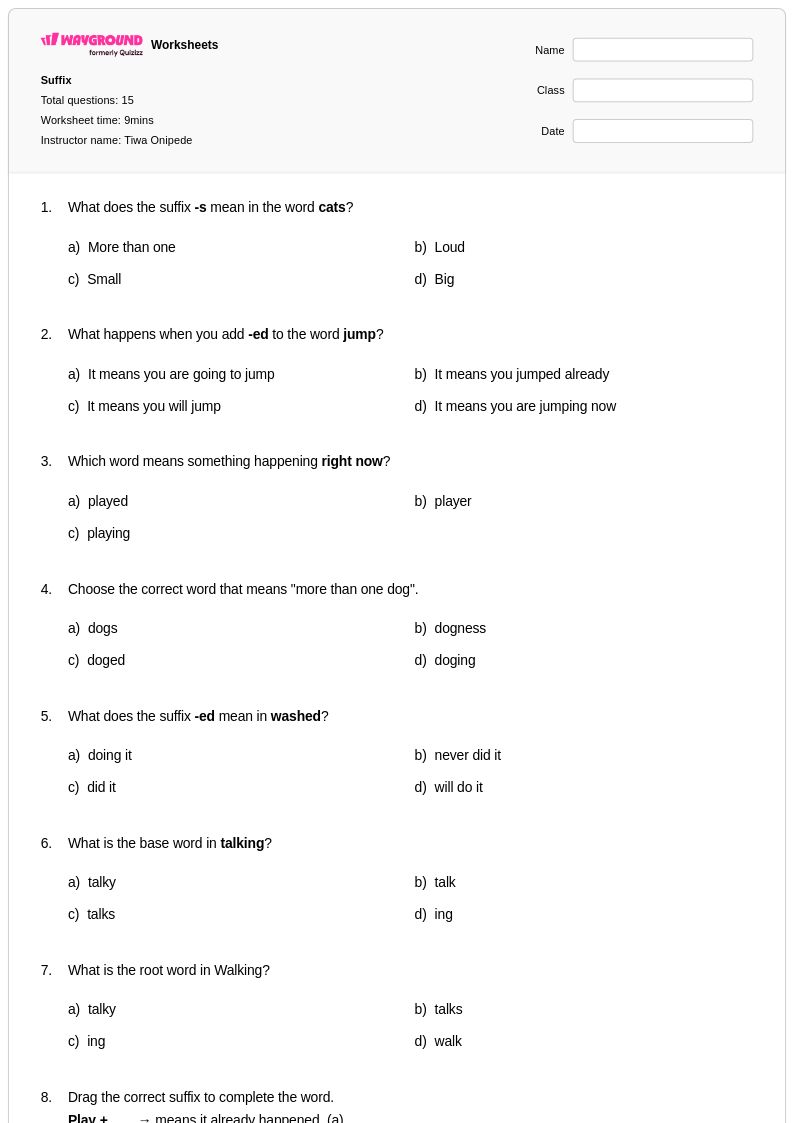
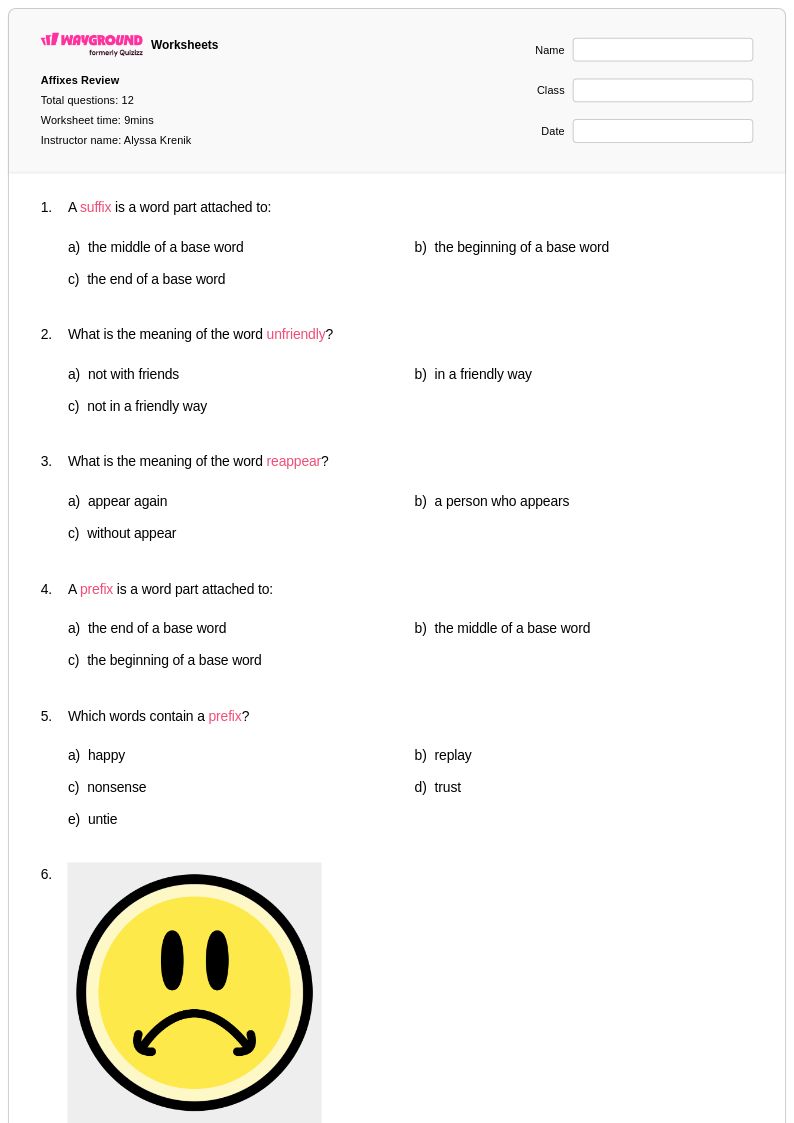
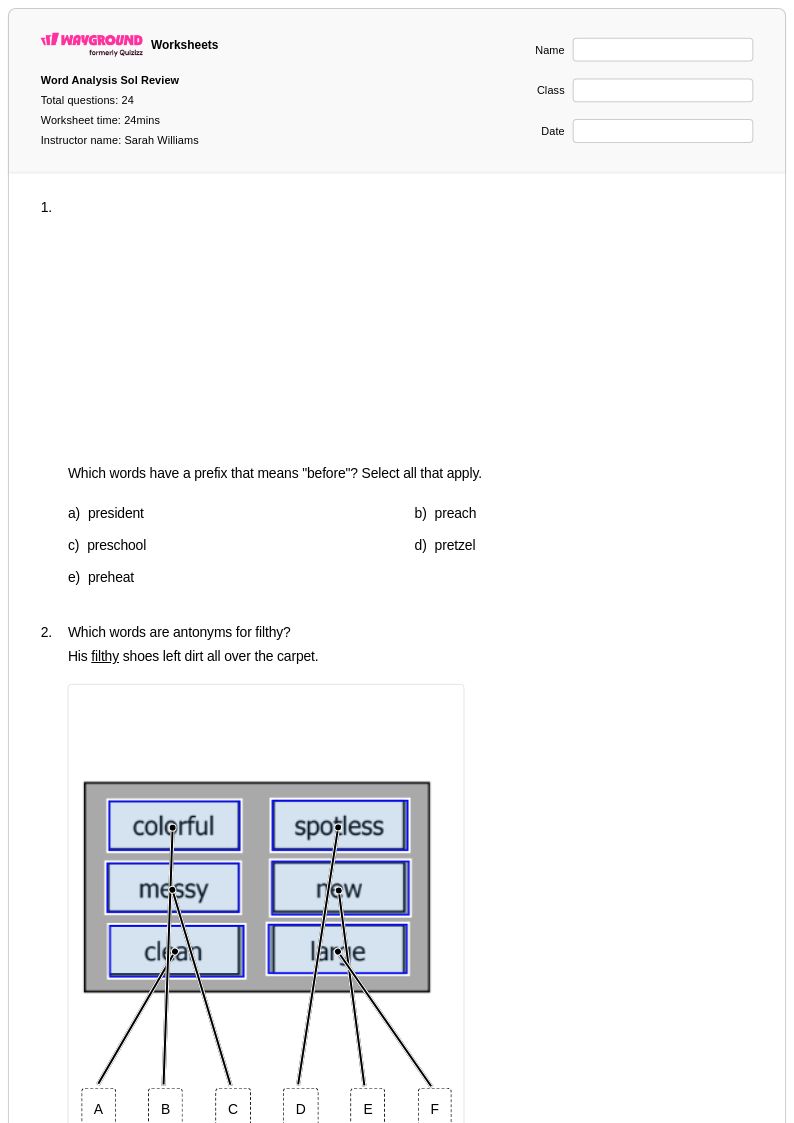
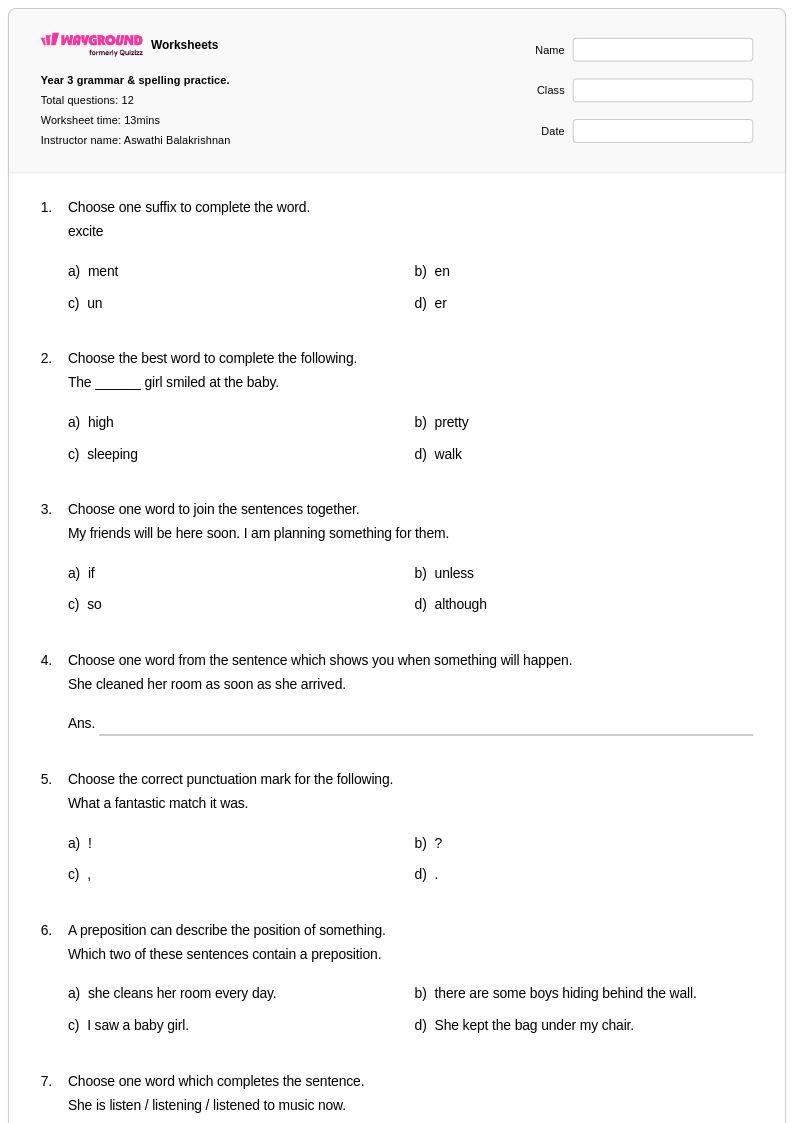
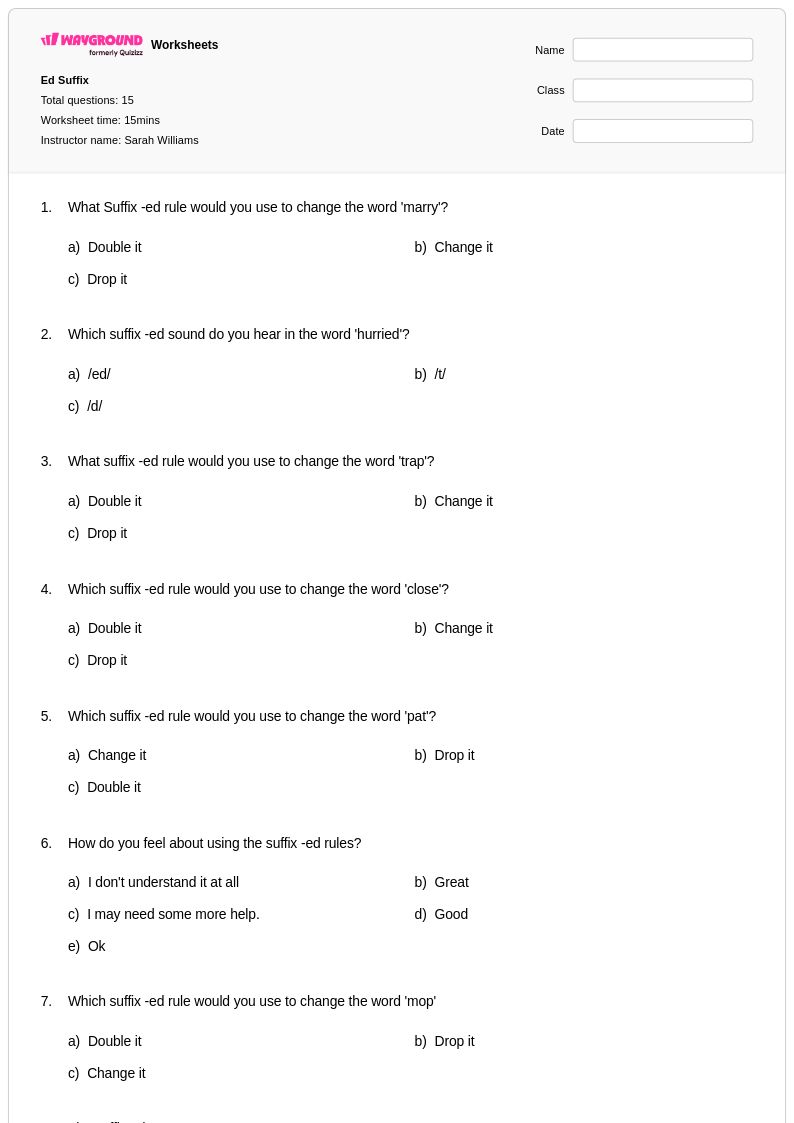
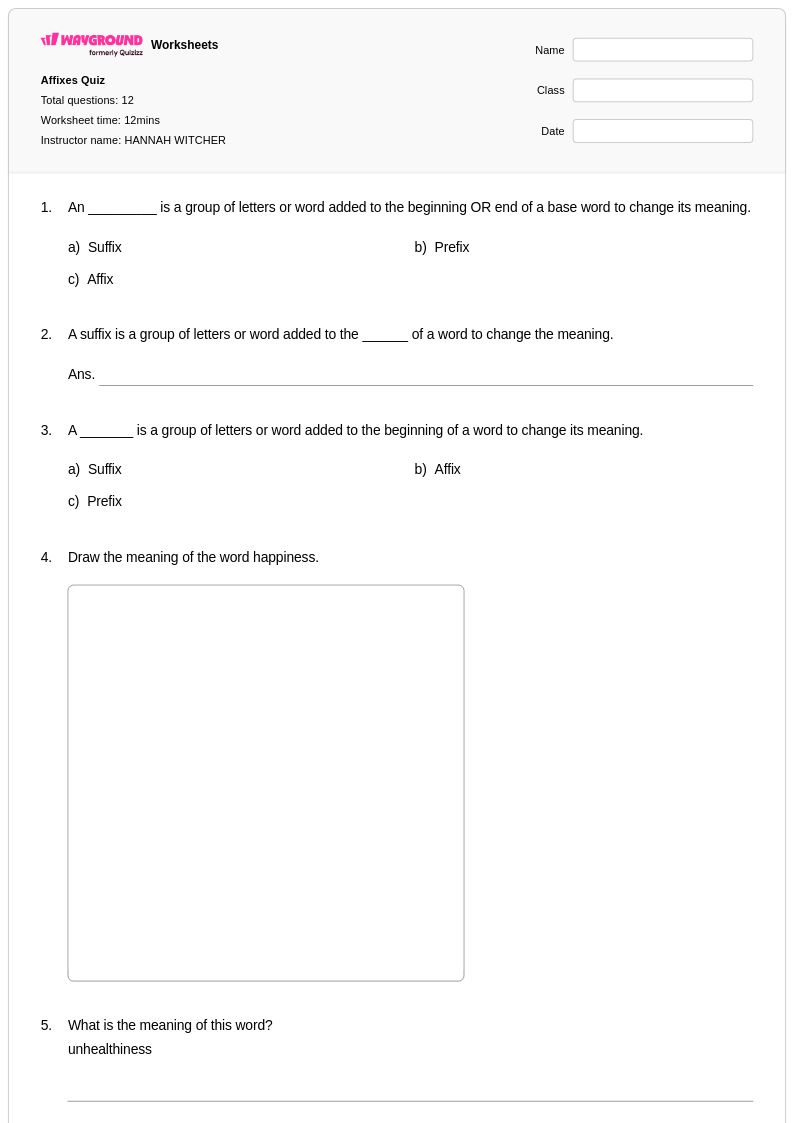
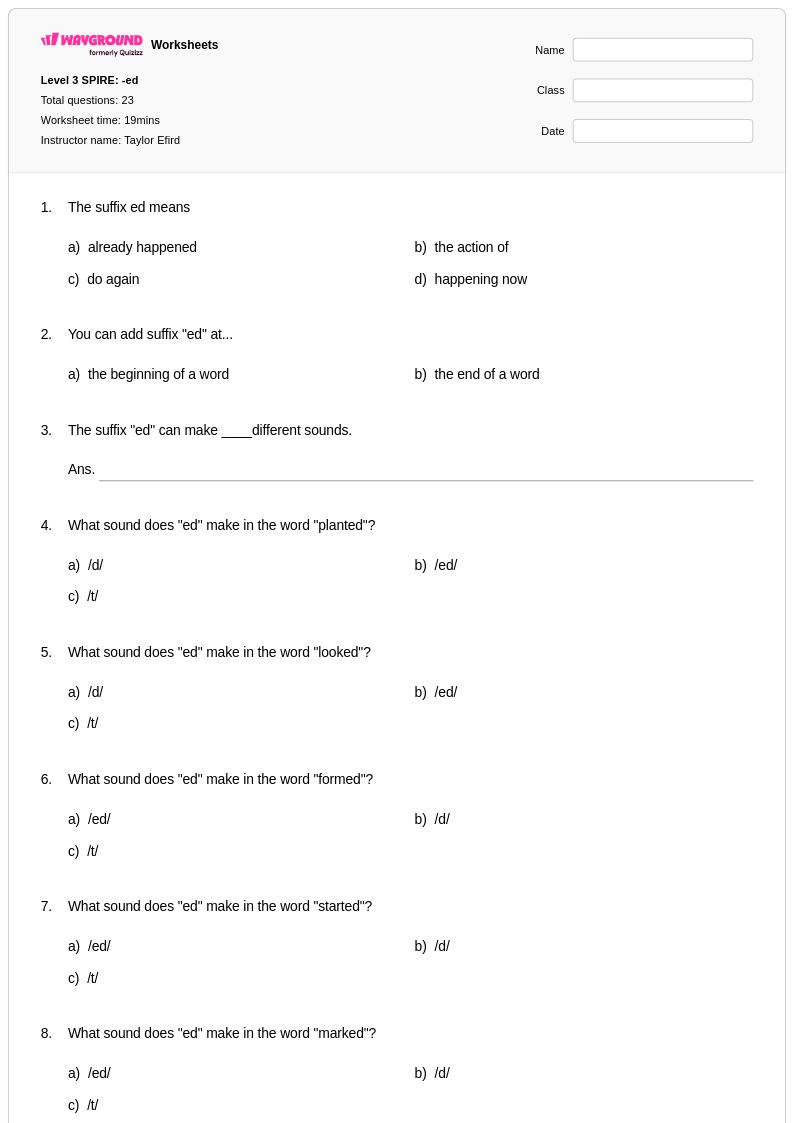
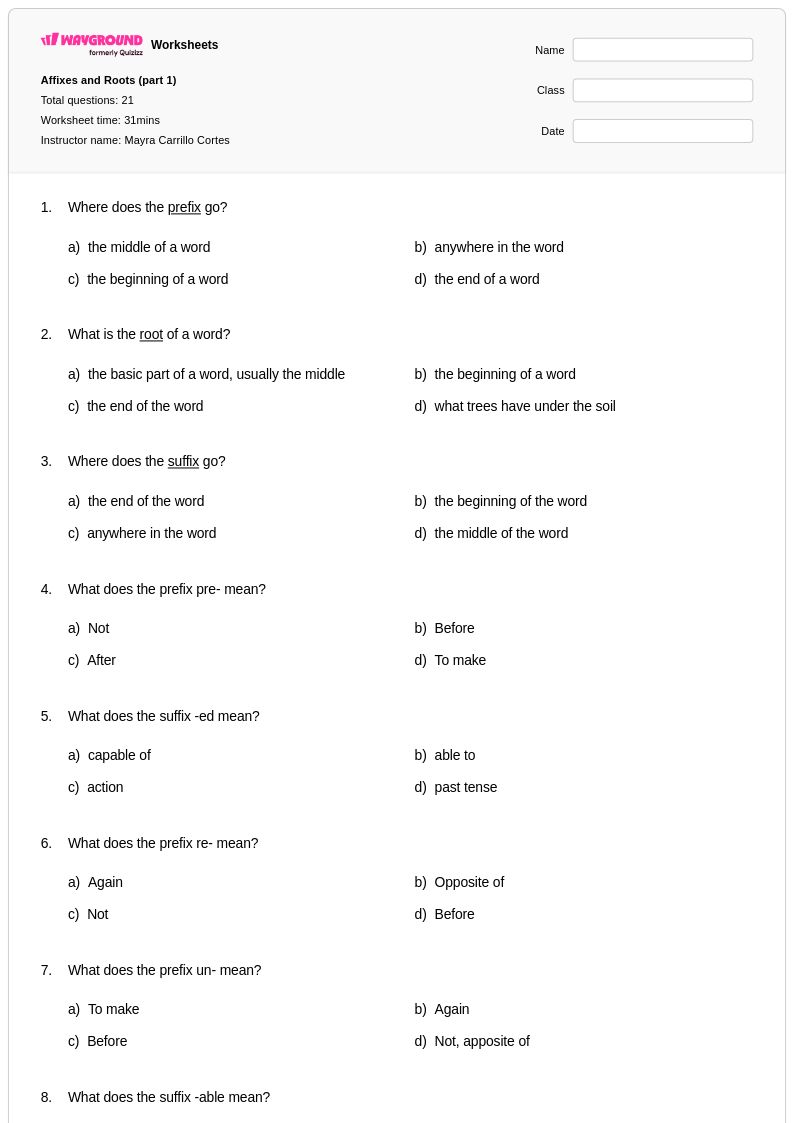
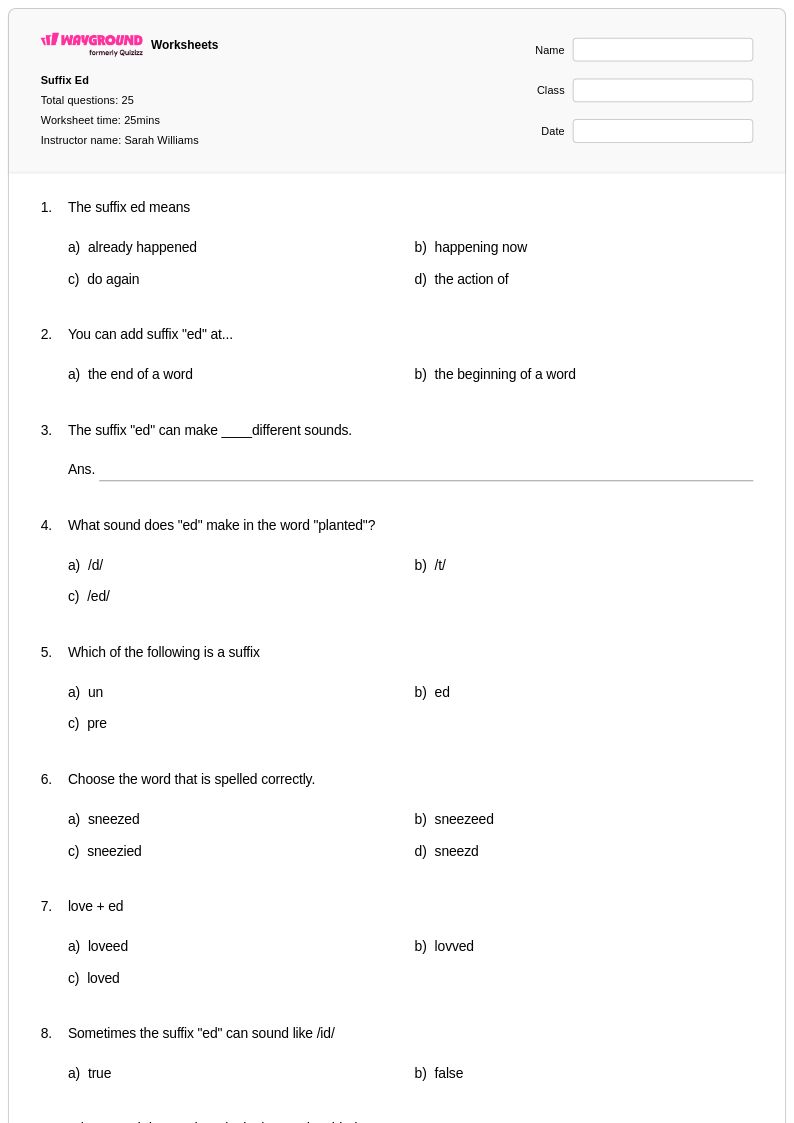
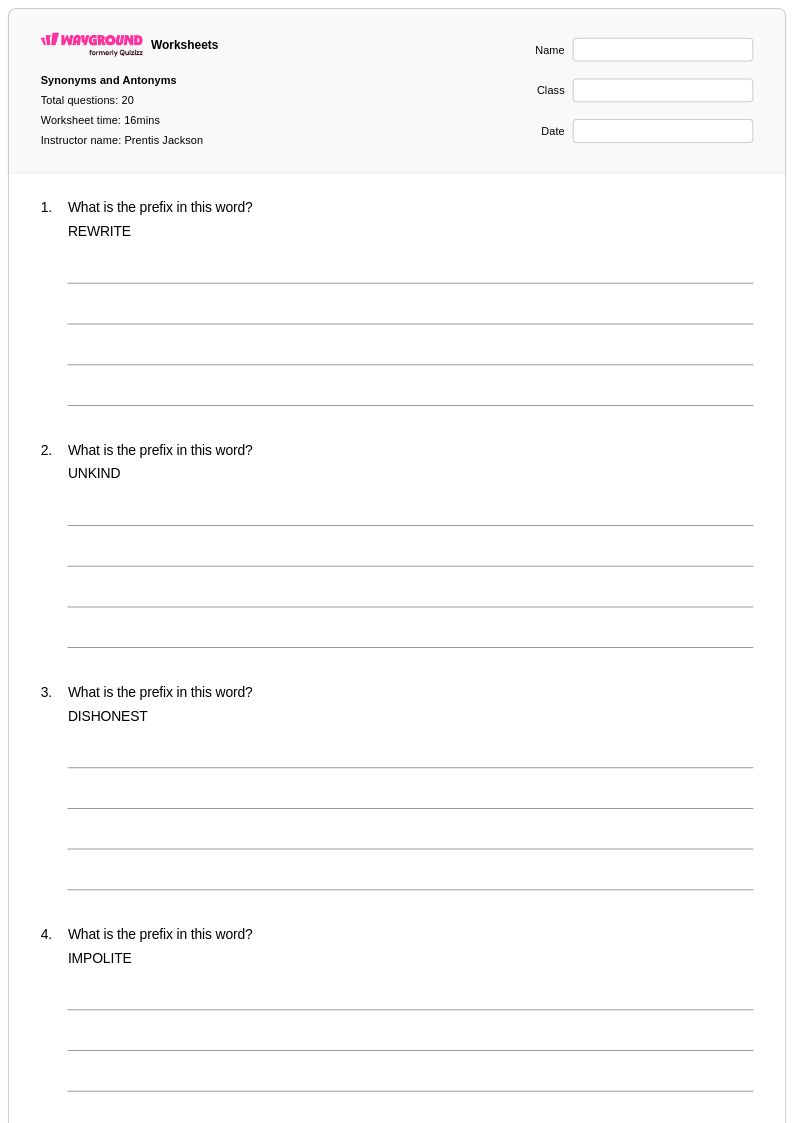
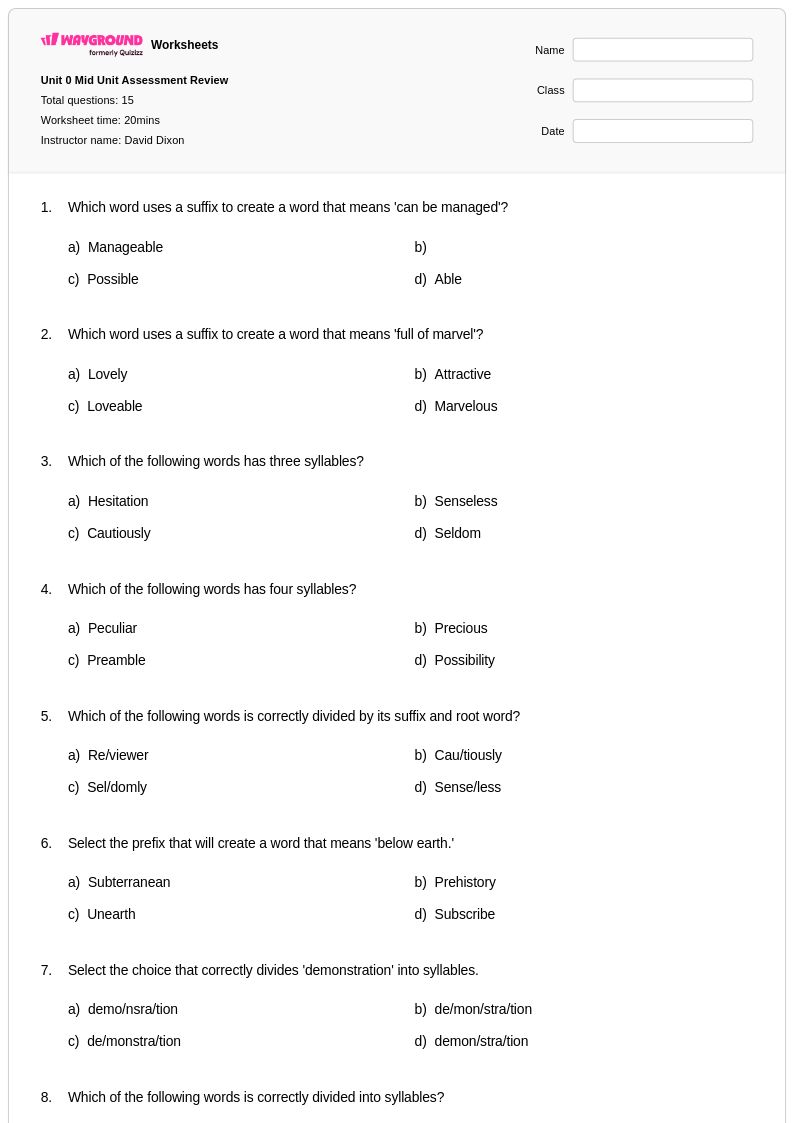
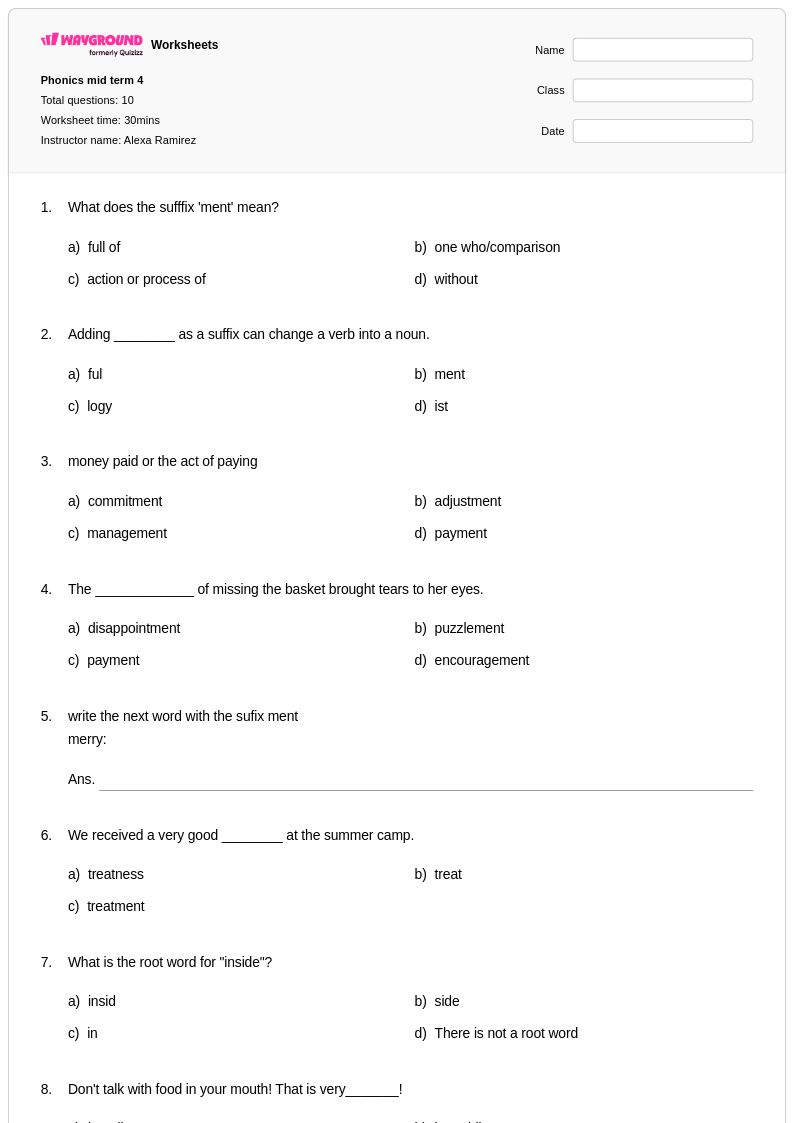
The en suffix worksheets available through Wayground (formerly Quizizz) provide Class 3 students with comprehensive practice in recognizing and applying this important word pattern that transforms verbs into past participles and adjectives. These carefully designed printables focus on helping young learners understand how adding "en" to base words creates new meanings, such as changing "gold" to "golden" or "wood" to "wooden," while strengthening their phonics knowledge and vocabulary development. Each worksheet includes structured practice problems that guide students through identifying en suffix patterns, completing word transformations, and using these newly formed words in context, with accompanying answer keys that support independent learning and allow teachers to quickly assess student progress. The free pdf resources emphasize systematic skill-building through engaging activities that help third graders master this crucial morphological pattern.
Wayground (formerly Quizizz) empowers educators with an extensive collection of millions of teacher-created en suffix worksheets specifically designed for Class 3 learners, featuring robust search and filtering capabilities that allow instructors to quickly locate materials aligned with their curriculum standards and learning objectives. The platform's differentiation tools enable teachers to customize worksheet difficulty levels and content focus areas, ensuring that both struggling learners and advanced students receive appropriate challenge levels during word pattern instruction. These resources are available in both printable pdf formats for traditional classroom use and digital formats for interactive learning experiences, making them invaluable for lesson planning, targeted remediation sessions, enrichment activities, and daily skill practice routines that build students' morphological awareness and reading comprehension abilities.
FAQs
How do I teach the en suffix to elementary students?
Start by helping students recognize two distinct roles the 'en' suffix plays: forming past participles from verbs (break → broken, speak → spoken) and creating adjectives from nouns (wood → wooden, gold → golden). Use sorting activities where students categorize 'en' words by function before moving into sentence-level application. Building explicit word family charts helps students see the pattern systematically rather than memorizing individual words.
What exercises help students practice the en suffix?
Effective practice includes word transformation tasks where students add 'en' to a base word and use the new form in a sentence, as well as cloze activities where they select the correct 'en' form to complete a sentence. Gap-fill exercises that require students to distinguish between the base word and its 'en' form reinforce both spelling and meaning simultaneously. Progressing from recognition tasks to independent production tasks ensures students build durable understanding rather than surface familiarity.
What mistakes do students commonly make with the en suffix?
A frequent error is over-generalizing the pattern and adding 'en' to words that don't follow it (e.g., writing 'fasted' as 'fasten' in the wrong context, or assuming all verbs can become past participles with 'en'). Students also confuse the past participle function with the simple past tense, using 'broken' and 'broke' interchangeably. Another common mistake is misspelling base words when adding 'en', particularly with words that require a spelling change, such as dropping or doubling a letter.
How can I use en suffix worksheets to support differentiated instruction?
En suffix worksheets can be tiered by task complexity: struggling learners benefit from word recognition and matching tasks, while on-level students work through transformation and sentence completion exercises, and advanced students tackle open-ended writing tasks using 'en' words in context. On Wayground, teachers can apply individual accommodations such as read aloud support, reduced answer choices, and extended time for students who need it, while the rest of the class works with default settings. These accommodations are saved per student and carry over to future sessions.
How do I use Wayground's en suffix worksheets in my classroom?
Wayground's en suffix worksheets are available as printable PDFs for traditional classroom use and in digital formats for technology-integrated learning environments. Teachers can assign them as independent practice, homework, or formative assessment, and can also host worksheets directly as a quiz on Wayground for real-time student responses. Each worksheet includes a complete answer key, reducing prep time and making them ready to use immediately.
Why is teaching the en suffix important for vocabulary development?
Understanding the 'en' suffix builds morphological awareness, which is a strong predictor of reading comprehension and spelling ability. When students recognize that a single suffix can signal both past participle verb forms and adjective derivations, they gain a decoding strategy that applies across hundreds of words. This structural knowledge reduces cognitive load when encountering unfamiliar vocabulary, because students can break words into meaningful parts rather than treating each new word as isolated.