Free Printable Estimating Quotients Worksheets for Class 4
Class 4 estimating quotients worksheets from Wayground provide free printable practice problems and answer keys to help students master division estimation strategies through engaging PDF activities.
Explore printable Estimating Quotients worksheets for Class 4
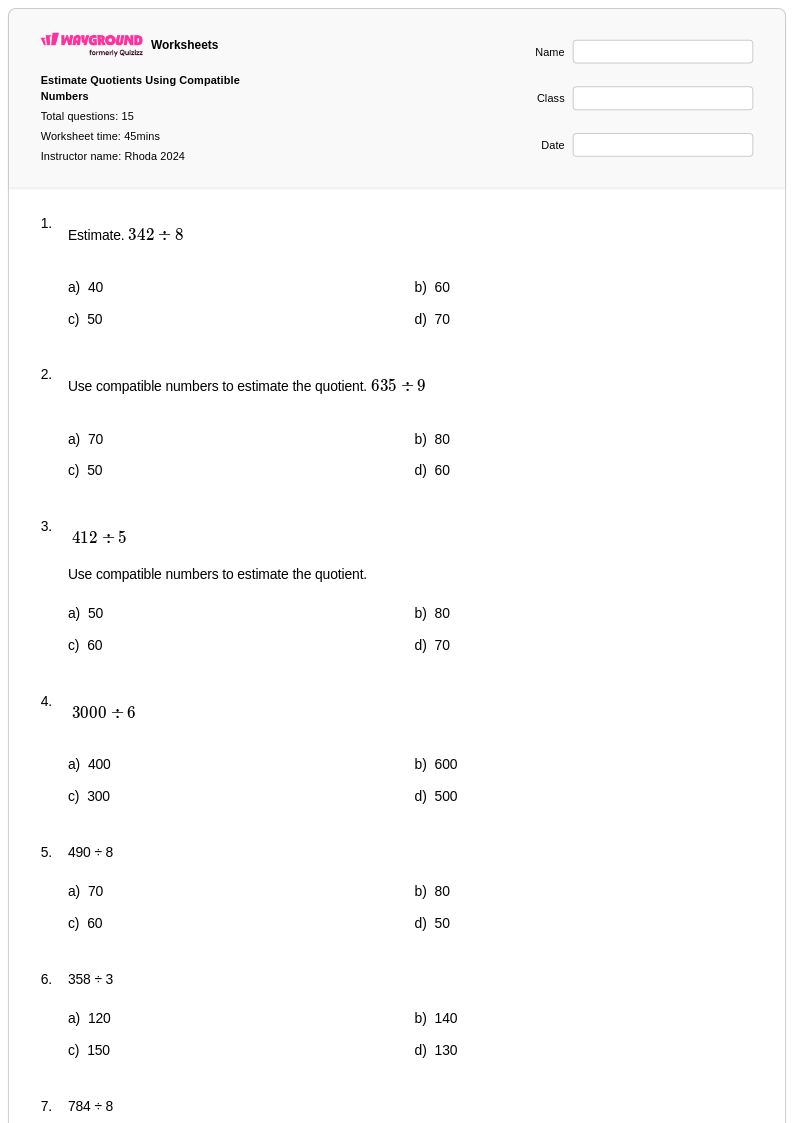
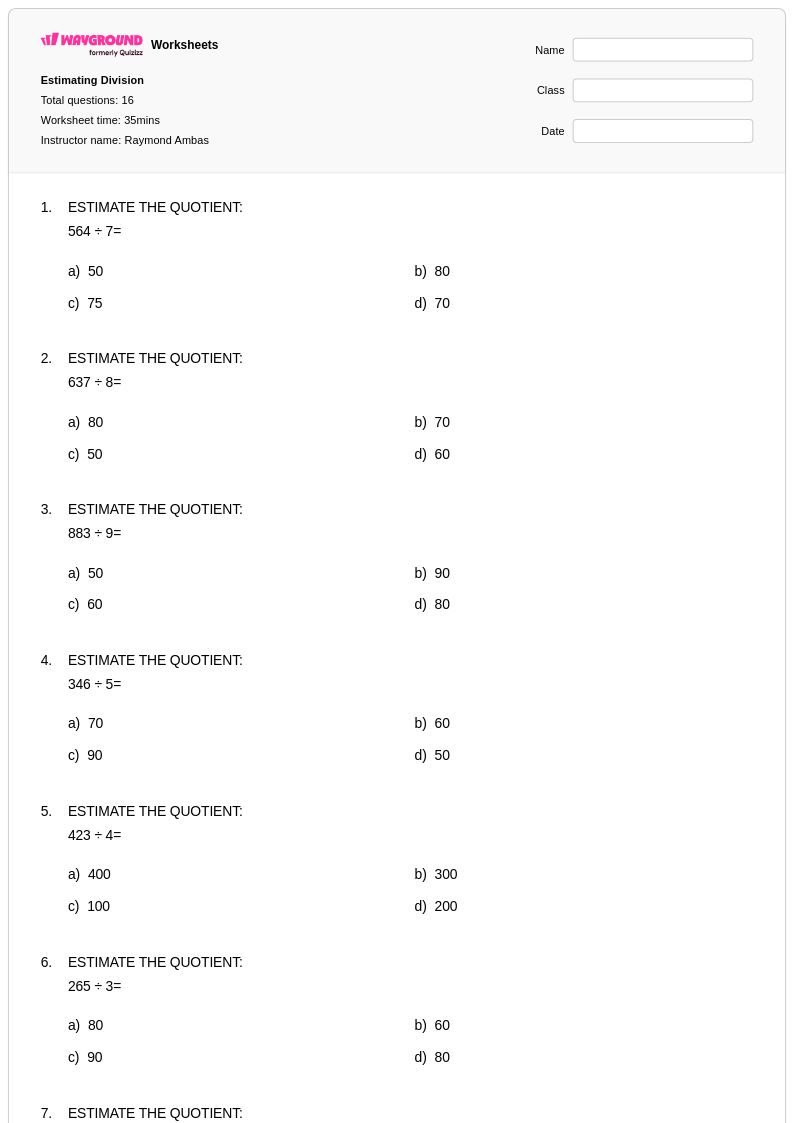
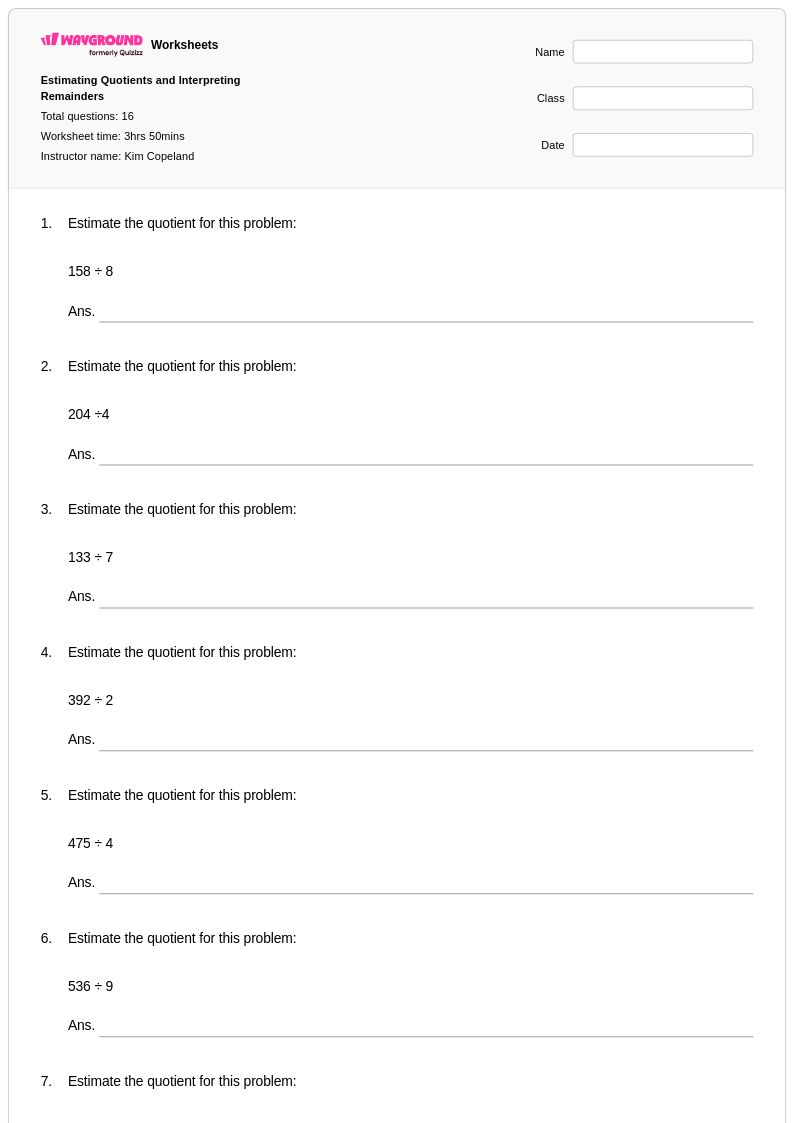
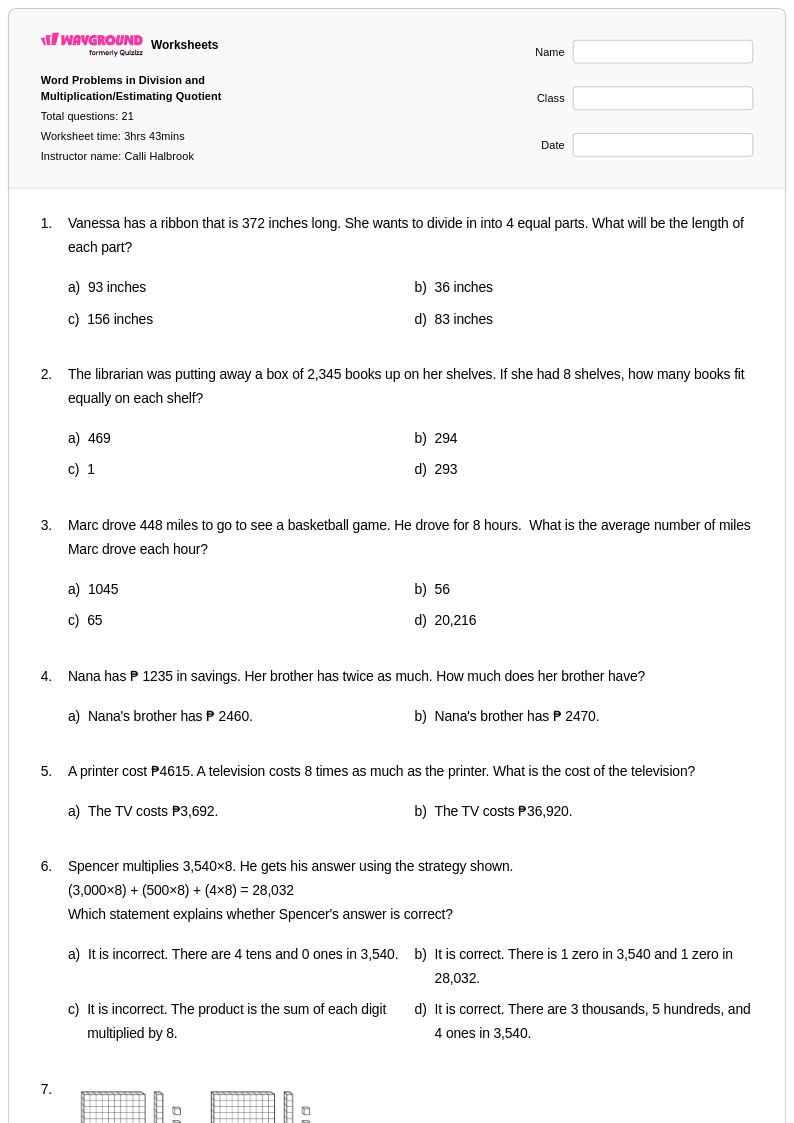
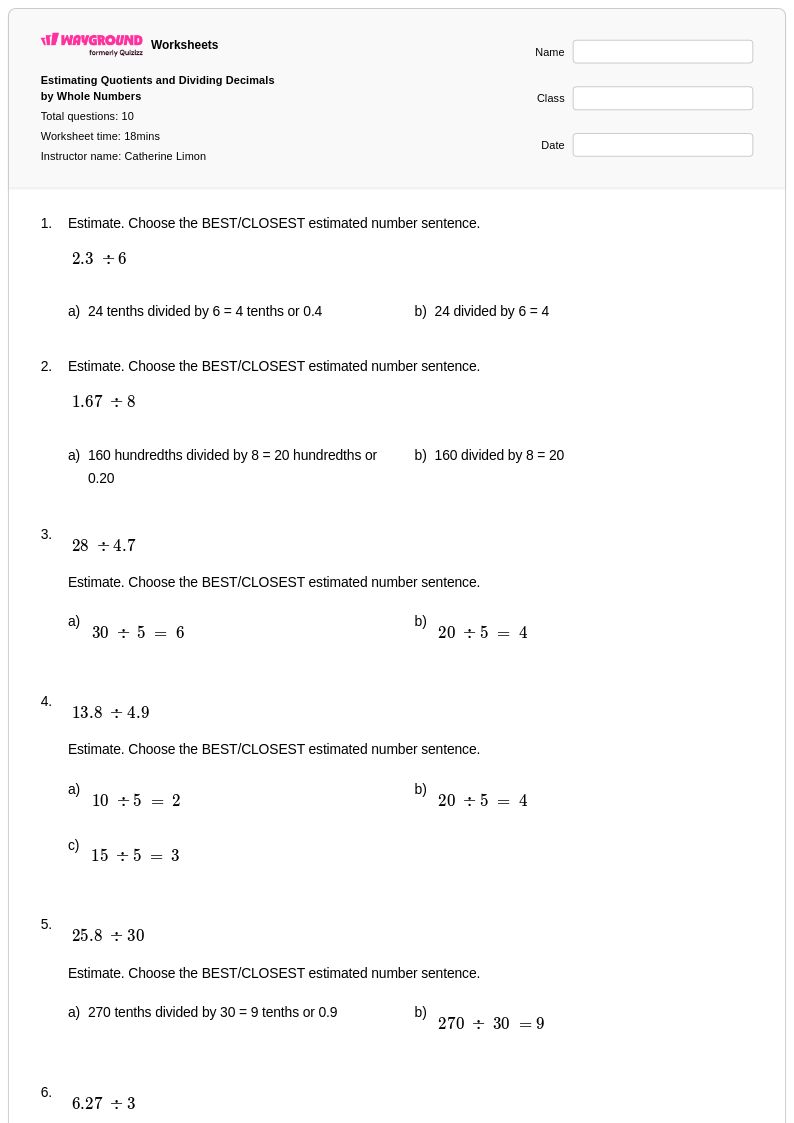
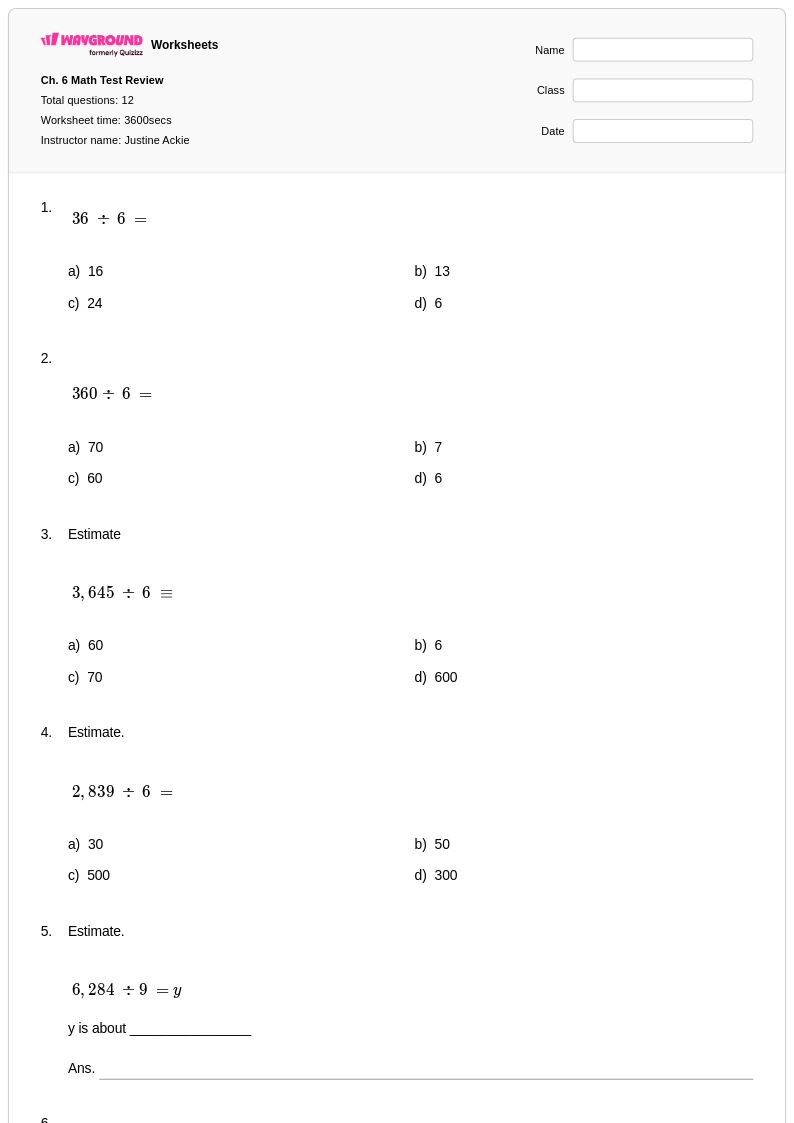
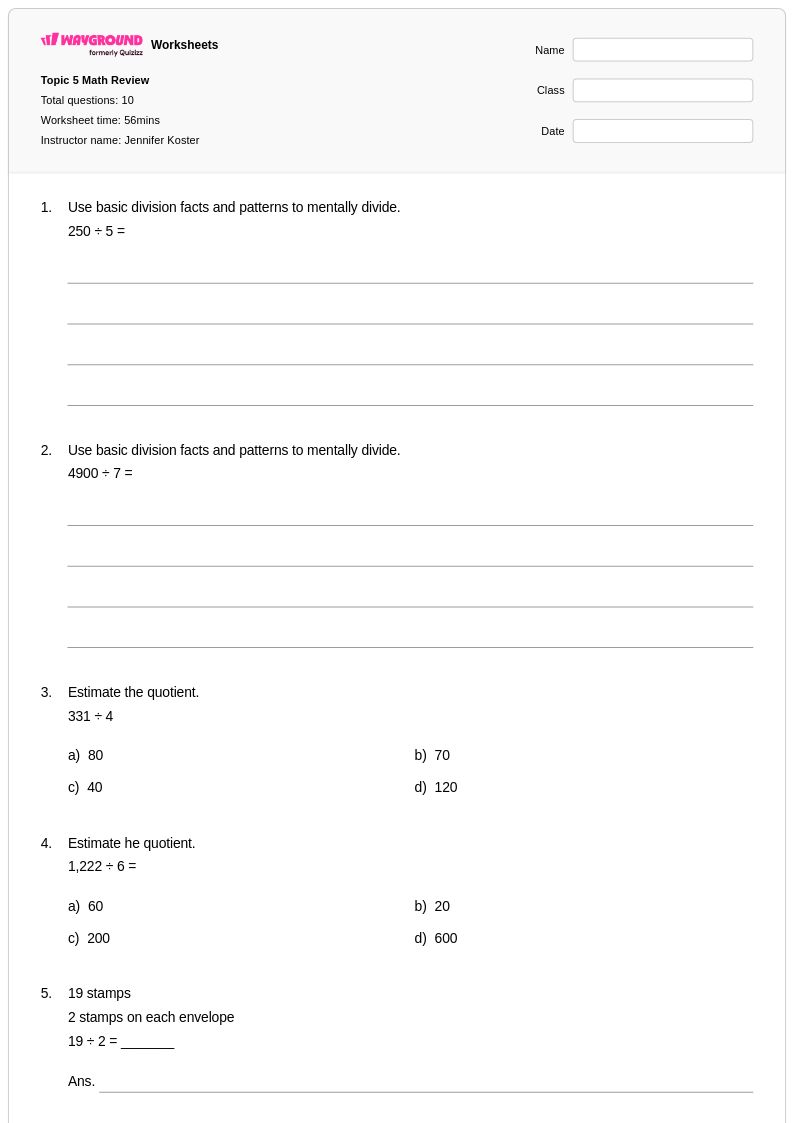
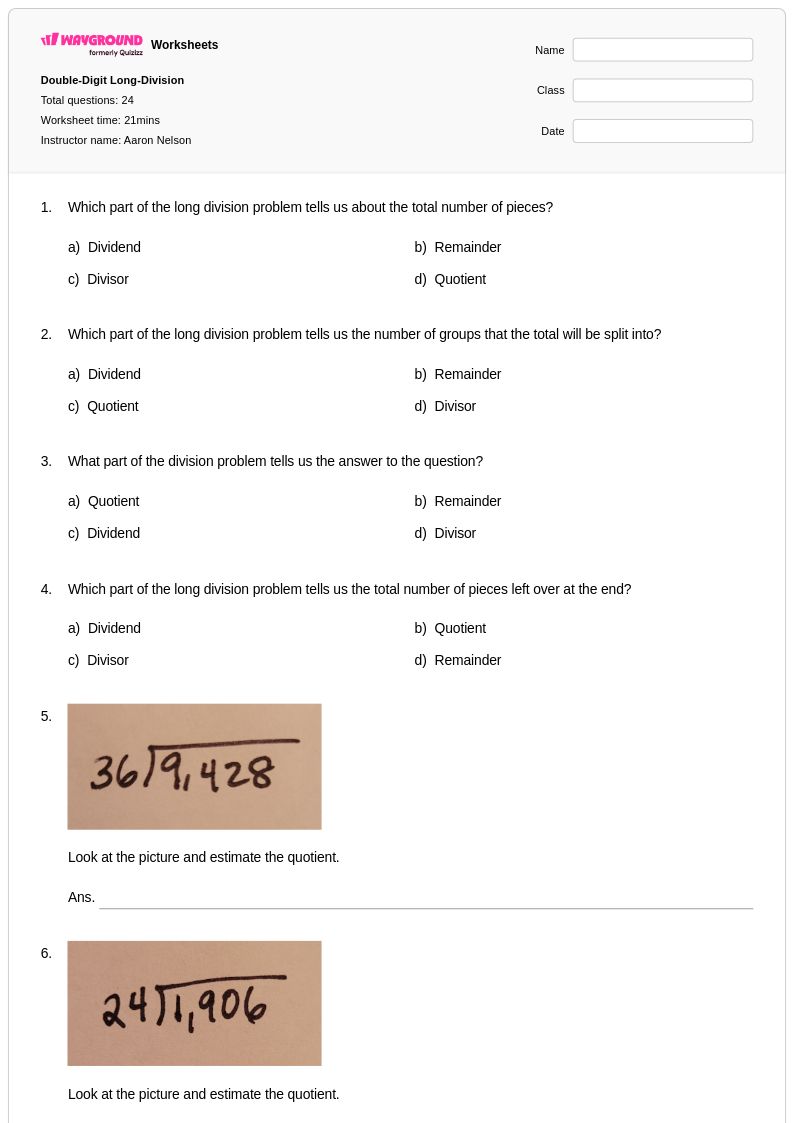
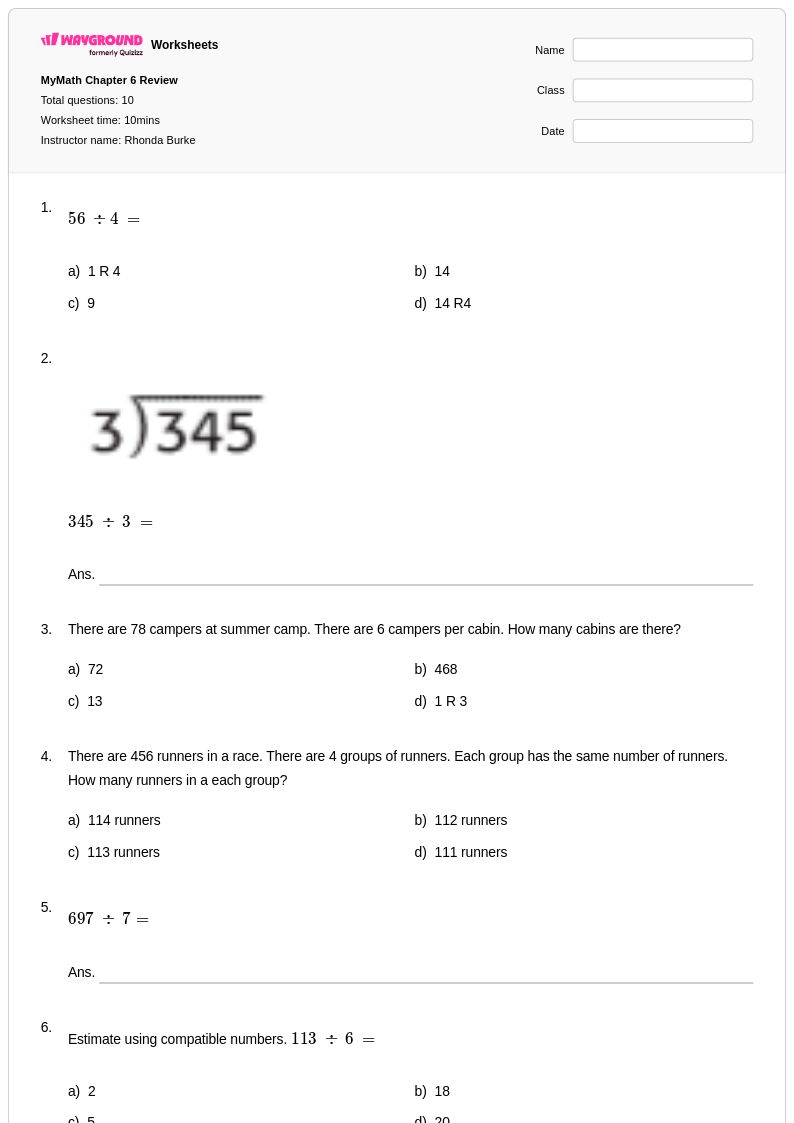
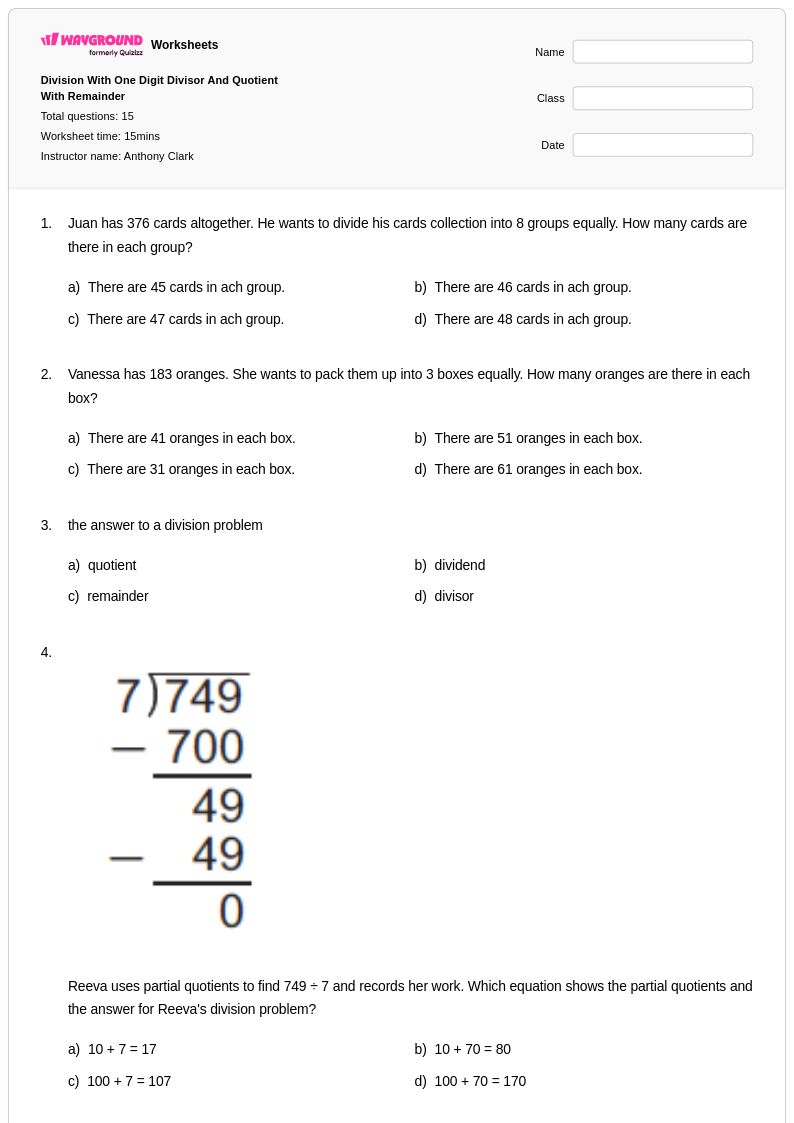
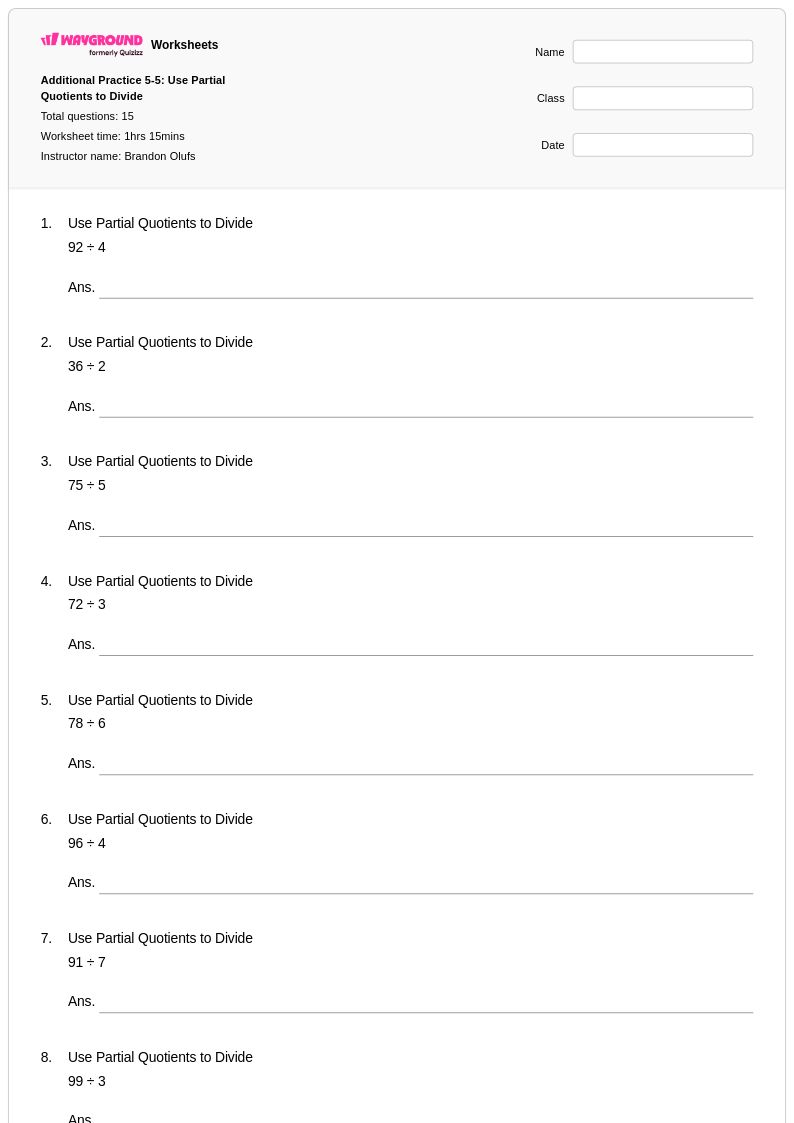
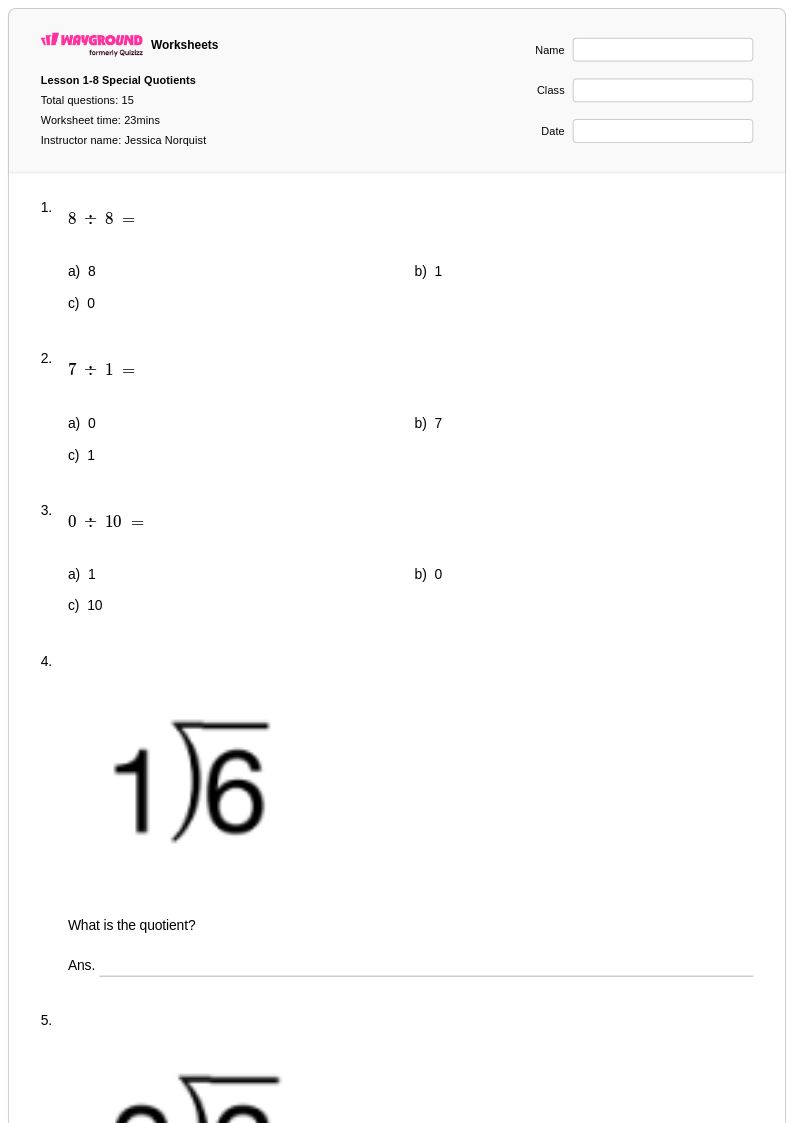
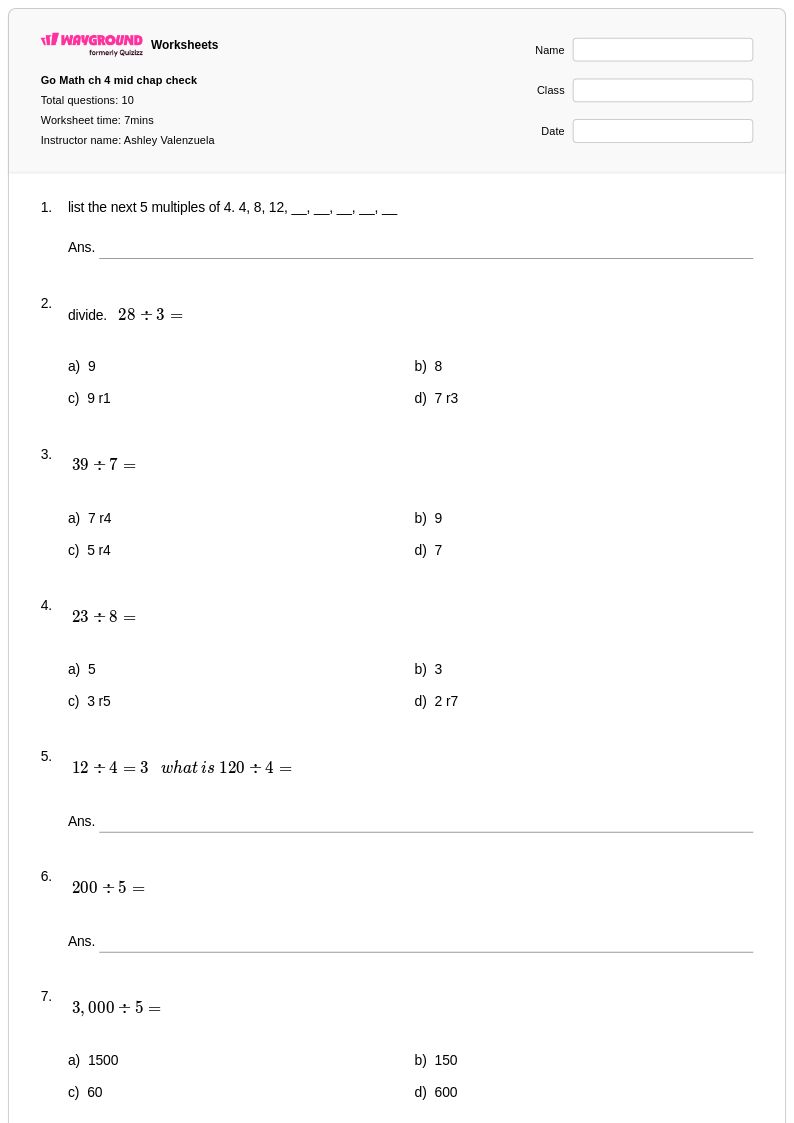
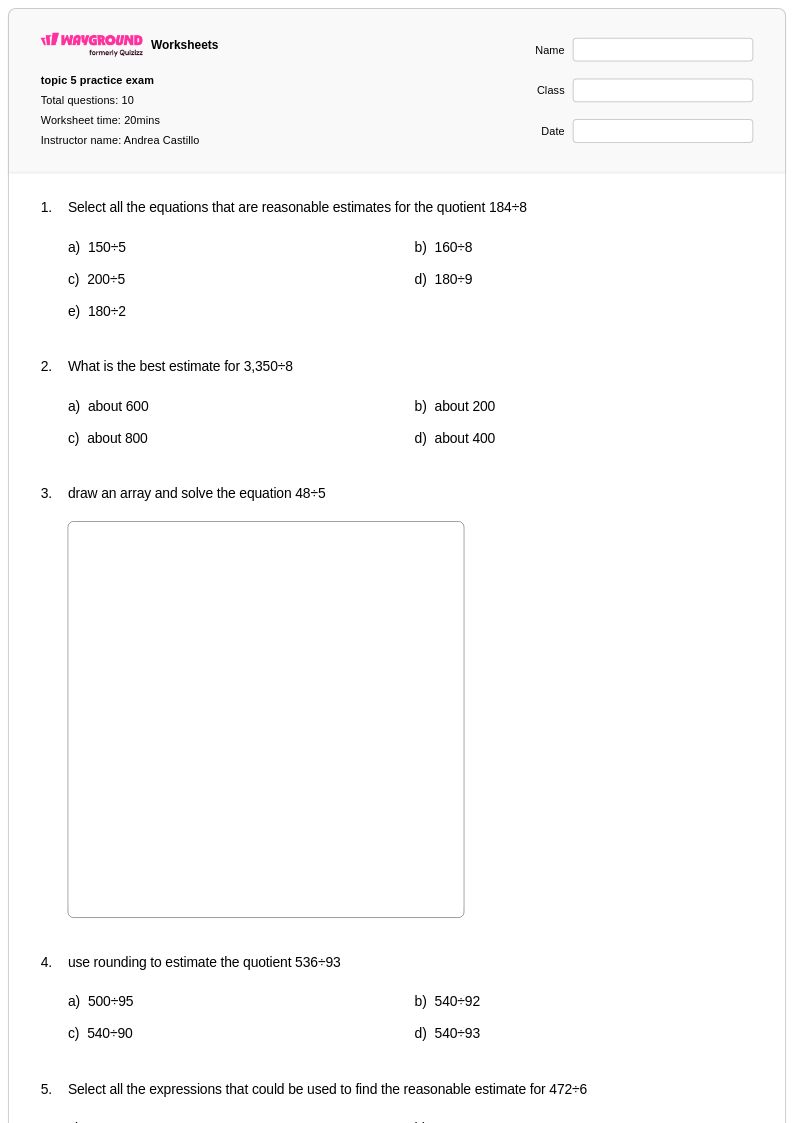
Estimating quotients represents a fundamental mathematical skill that Class 4 students must master to build computational fluency and number sense. Wayground's comprehensive collection of estimating quotients worksheets provides educators with expertly designed practice problems that teach students to make reasonable approximations when dividing multi-digit numbers. These printable resources systematically guide learners through essential strategies such as rounding dividends and divisors to compatible numbers, using benchmark divisions, and applying place value understanding to predict quotient ranges. Each worksheet includes detailed answer keys that help teachers efficiently assess student progress, while the free pdf format ensures easy classroom distribution and homework assignments that reinforce critical estimation techniques.
Wayground's extensive library, featuring millions of teacher-created resources, empowers educators to locate precisely the right estimating quotients materials for their Class 4 mathematics instruction. The platform's robust search and filtering capabilities allow teachers to quickly identify worksheets aligned with specific curriculum standards and differentiate instruction based on individual student needs. Whether planning whole-class lessons, targeted remediation sessions, or enrichment activities for advanced learners, educators can customize these digital and printable resources to match their instructional goals. The flexible pdf format supports both traditional paper-based practice and modern classroom technology integration, enabling teachers to seamlessly incorporate estimating quotients skill-building into diverse learning environments while maintaining consistent academic rigor across all student populations.
FAQs
How do I teach estimating quotients to 4th graders?
Start with rounding the dividend to the nearest ten or hundred so it becomes a number students can divide mentally. For example, 263 ÷ 4 becomes 280 ÷ 4 = 70. Once that's solid, introduce compatible numbers as a more flexible strategy — finding a nearby dividend that pairs cleanly with the divisor. Fourth graders need to see estimation as a tool for checking reasonableness, not just a warm-up exercise before exact division.
What exercises help 4th graders practice estimating quotients?
Problems that pair estimation with a real-world context work well at this grade — "About how many boxes do we need?" is more motivating than a bare division expression. Beyond that, having students estimate first and then calculate exactly, then compare the two, builds the habit of using estimation as a check. Wayground's Grade 4 worksheets are structured to move from simpler dividends toward multi-digit problems as students gain confidence.
What mistakes do 4th graders commonly make when estimating quotients?
The most common issue is rounding to an incompatible number — for instance, rounding 263 to 260 instead of 280, which doesn't divide cleanly by 4. Students also frequently round up when they should round down (or vice versa) because they're applying rounding rules mechanically without asking whether the result is actually easier to divide. A quick classroom fix: after rounding, have students ask themselves, "Can I divide this in my head?" before moving on.
How do I use Wayground's Grade 4 estimating quotients worksheets?
Every worksheet comes with a complete answer key, so grading is straightforward. You can print the PDF for paper practice — useful for classrooms managing screen time — and then use the Wayground for Teachers app to scan and grade submissions without manual scoring. Alternatively, host the worksheet as a digital quiz on Wayground for students to complete on a device. Same content, either format.
What grade level covers estimating quotients?
Estimating quotients is typically introduced in Grade 4, when students are developing multi-digit division skills and need strategies for checking reasonableness. It deepens in Grade 5 as division extends to larger numbers, and again in Grade 6 when decimals and fractions enter the picture. The Grade 4 focus is on whole-number dividends with single- and double-digit divisors.
Is estimating quotients aligned to Common Core standards for Grade 4?
Yes. Common Core's Grade 4 expectations include using place value understanding and properties of operations to perform multi-digit arithmetic, and estimation is central to that — students are expected to assess whether answers are reasonable, not just compute them. Estimating quotients builds directly from the Grade 3 work on basic division facts toward the Grade 5 expectation that students can fluently divide multi-digit numbers and evaluate the sense of their results.
How can I differentiate estimating quotients practice for my Grade 4 class?
For students who find the mental math overwhelming, the reduced answer choices accommodation in Wayground limits the options shown, so they can focus on the estimation strategy rather than the decision load. For English language learners or students with reading difficulties, the Read Aloud feature and worksheet translation tools mean language isn't the barrier to demonstrating math understanding. Advanced students can be pushed toward problems where both the dividend and divisor need rounding, which requires more flexible thinking.