Free Printable Estimating Quotients Worksheets for Class 5
Class 5 estimating quotients worksheets from Wayground help students master division estimation strategies through engaging printables, practice problems, and comprehensive answer keys for effective mathematical learning.
Explore printable Estimating Quotients worksheets for Class 5
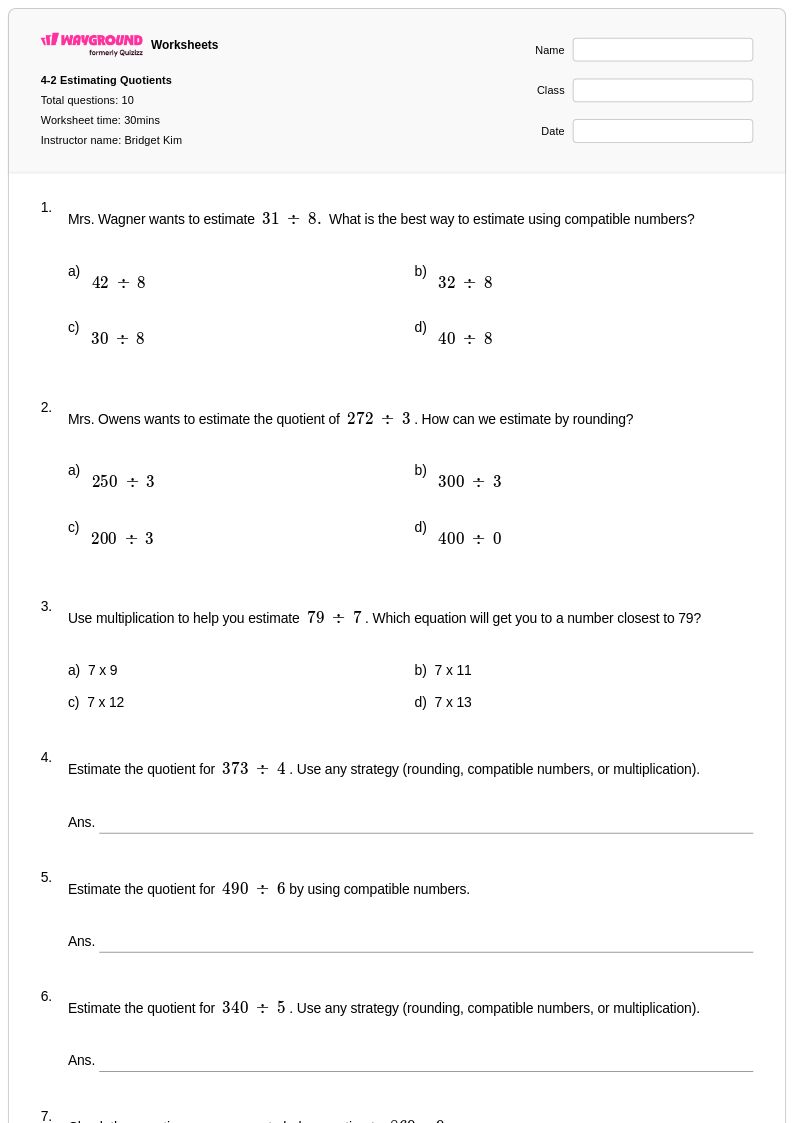
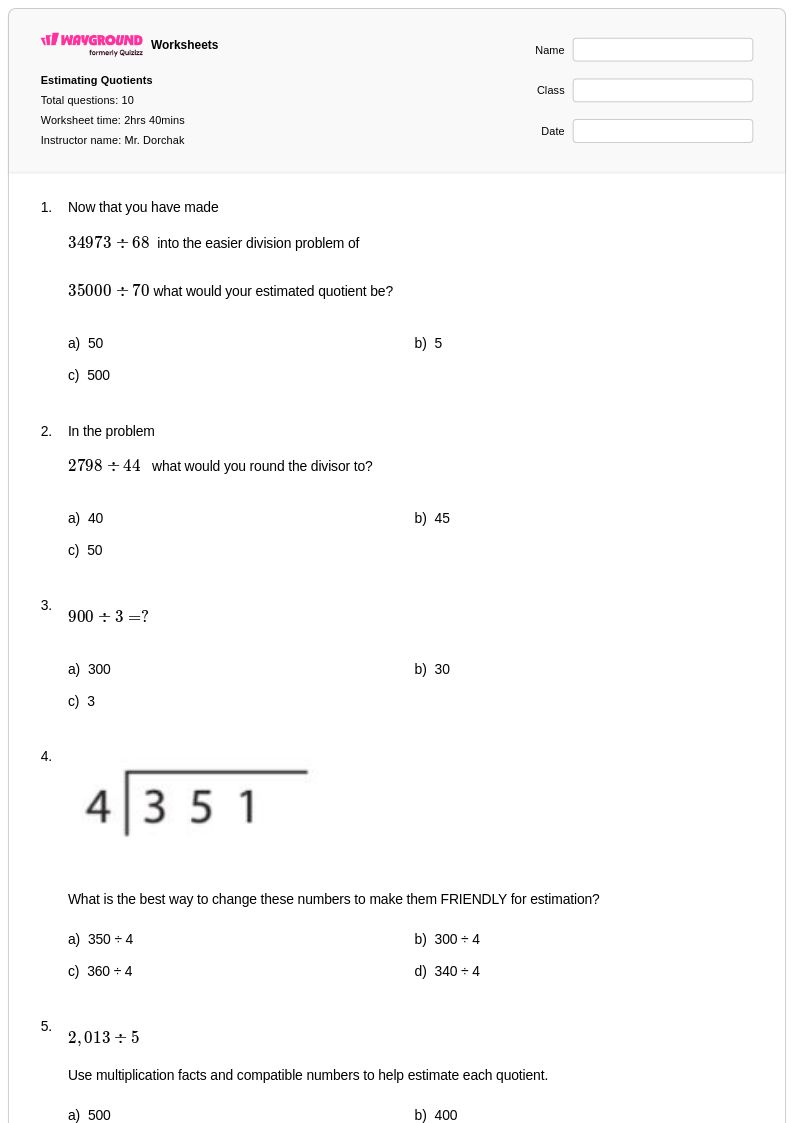
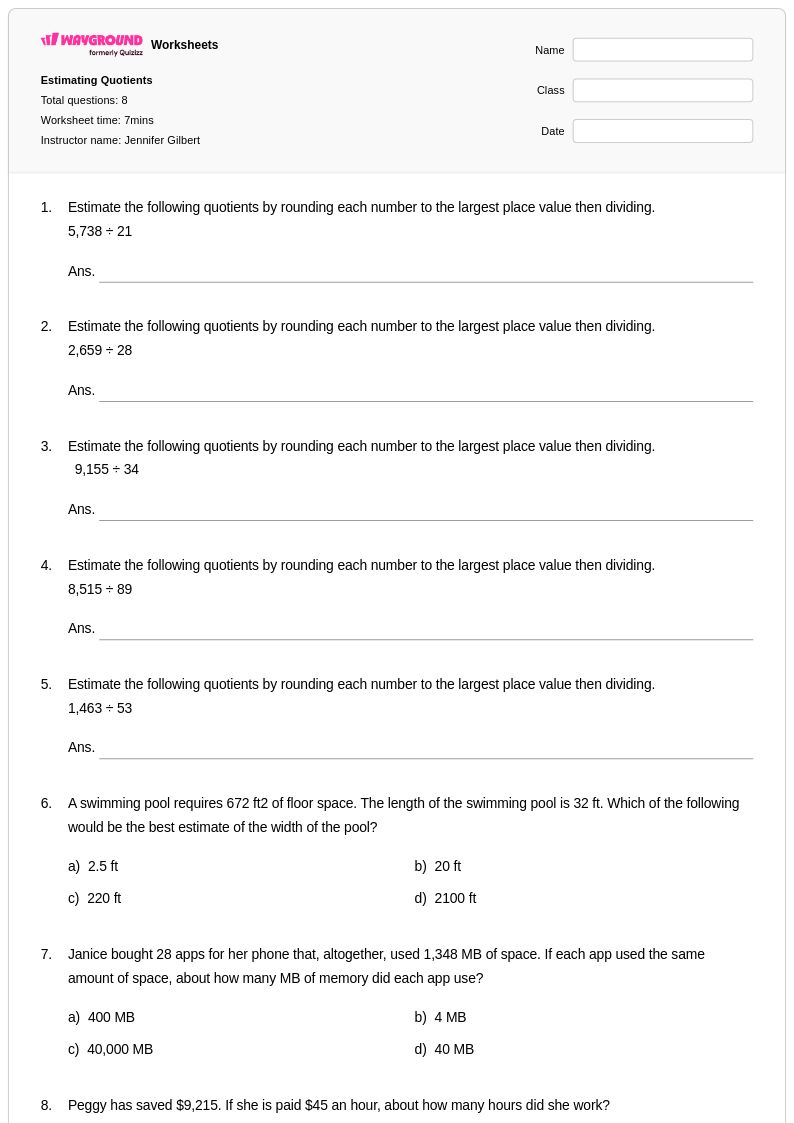
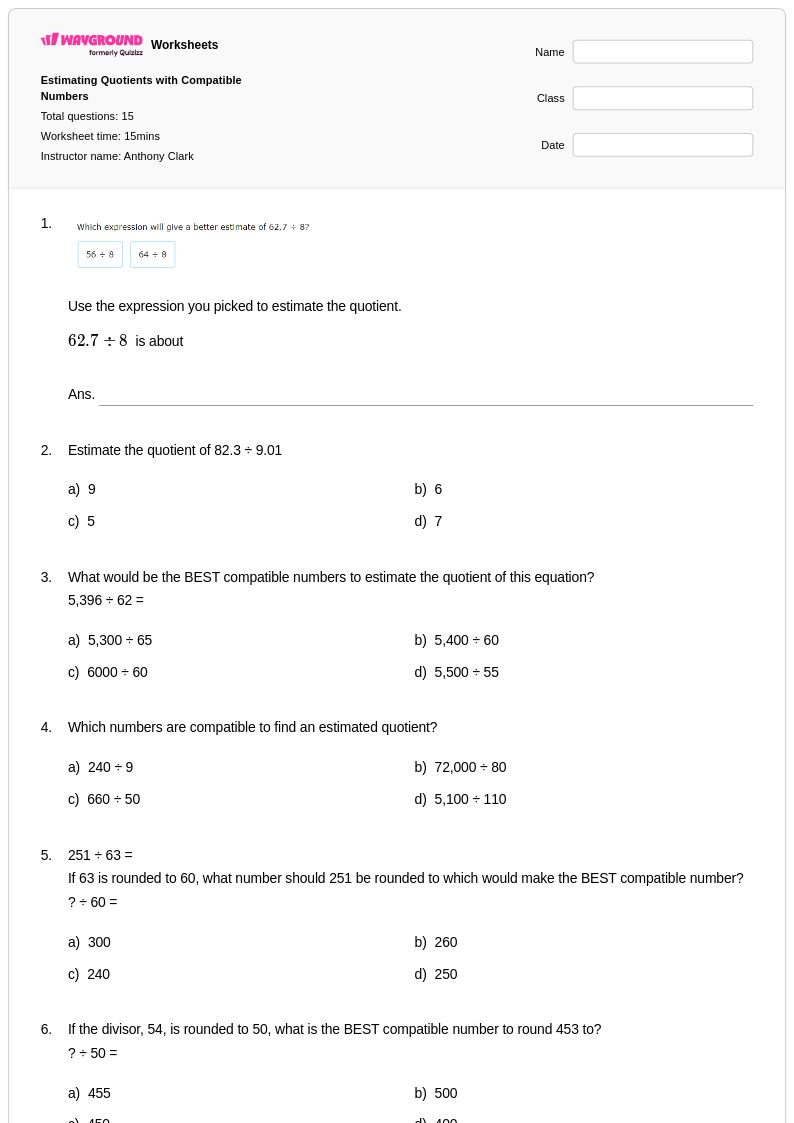
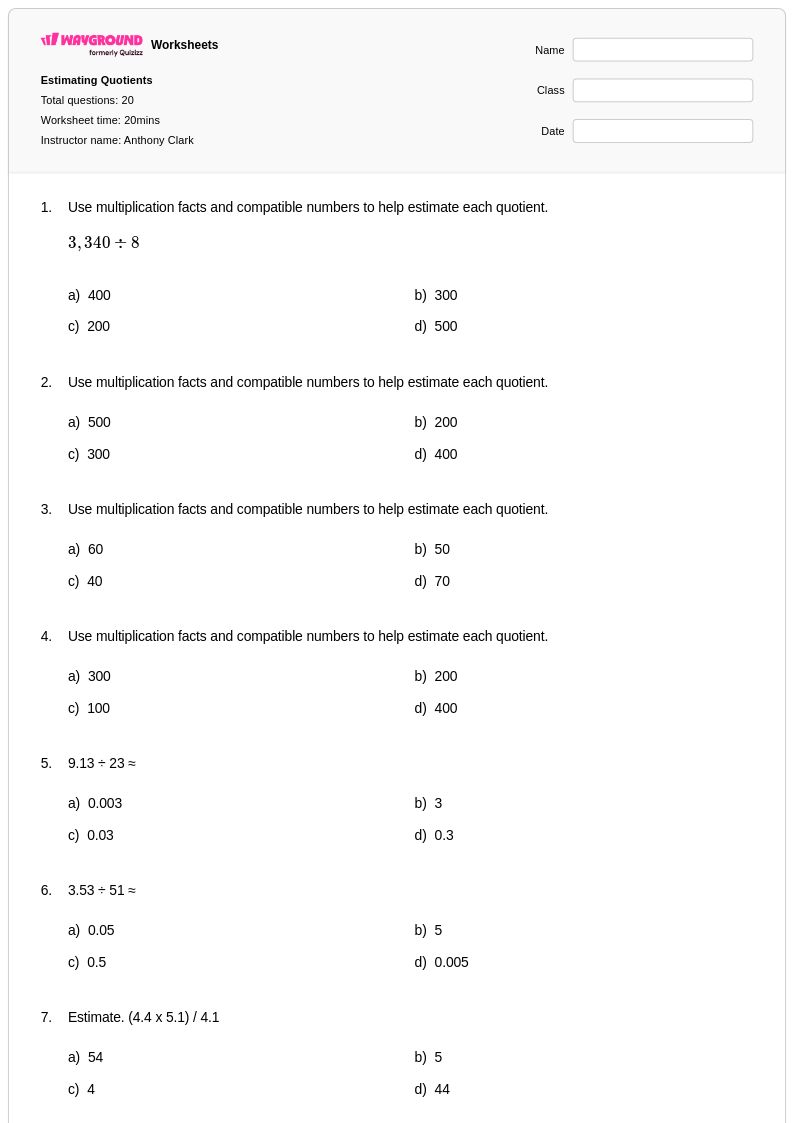
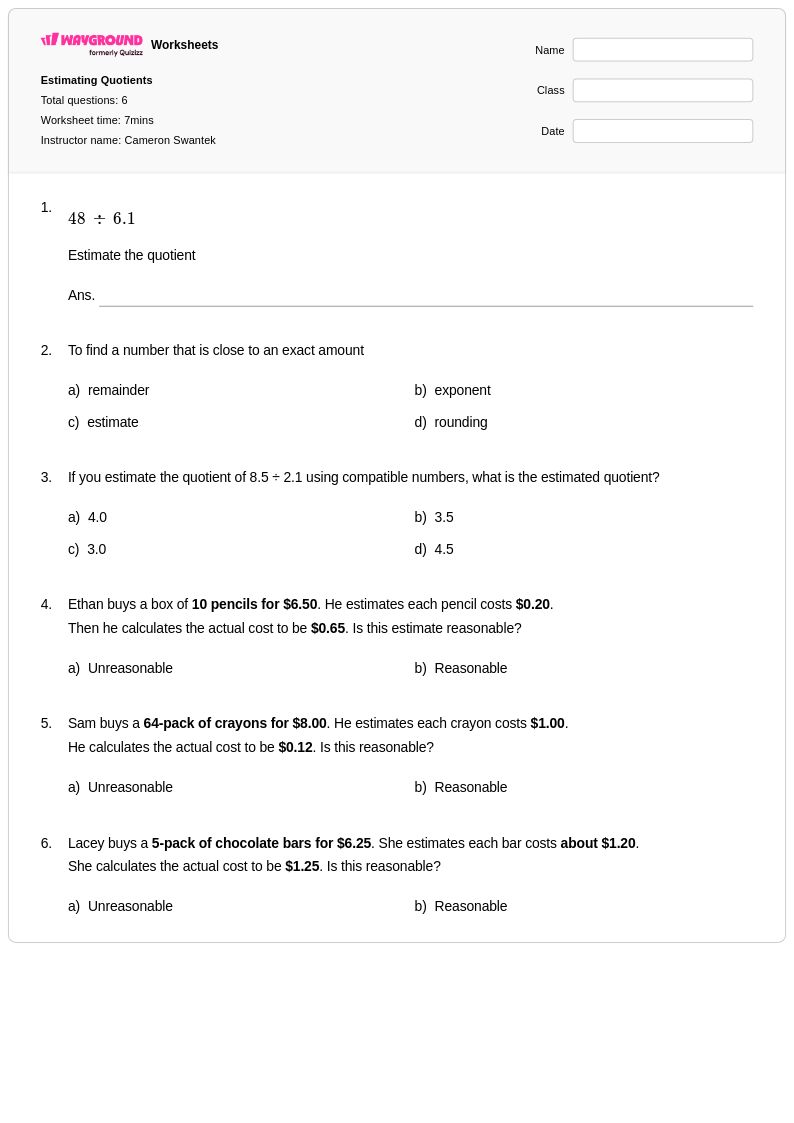
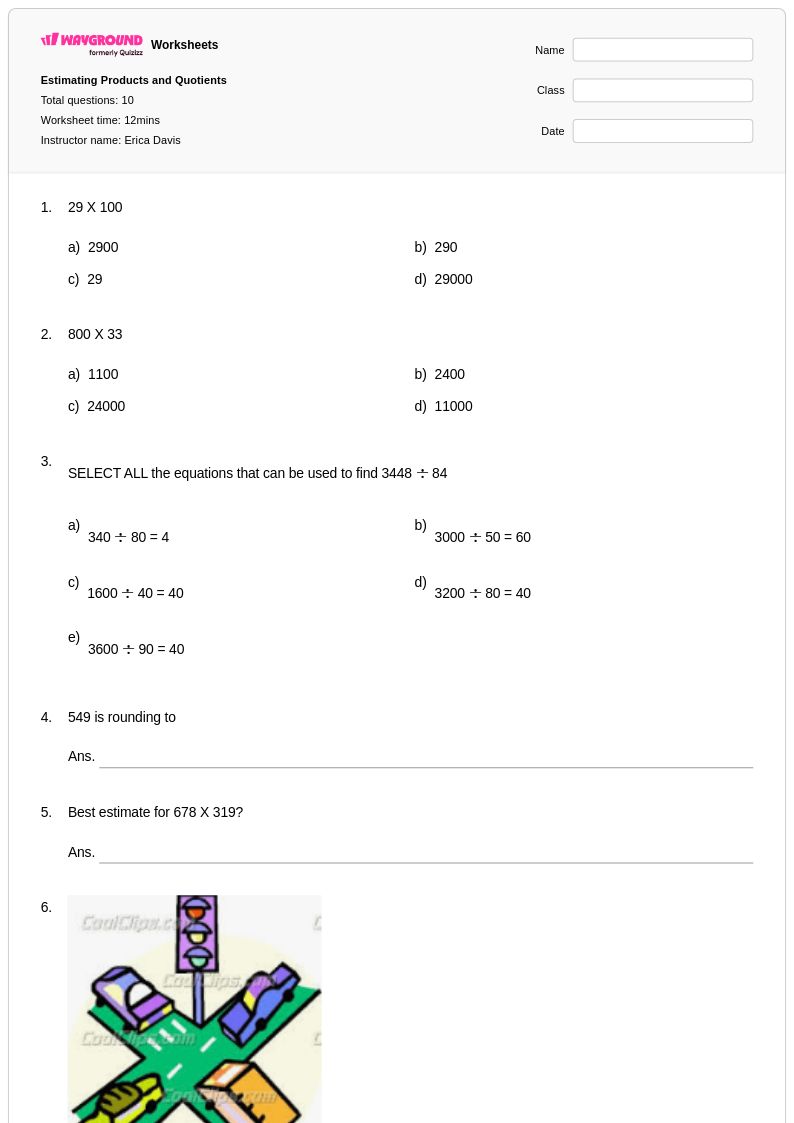
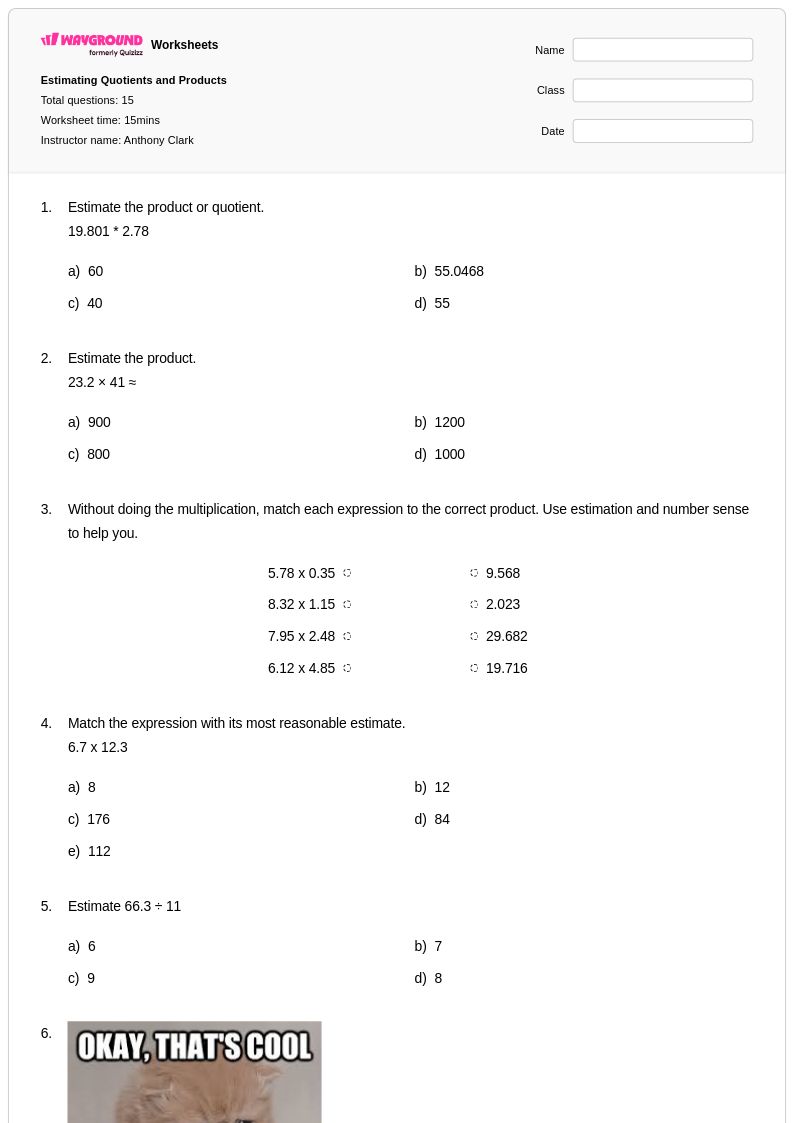
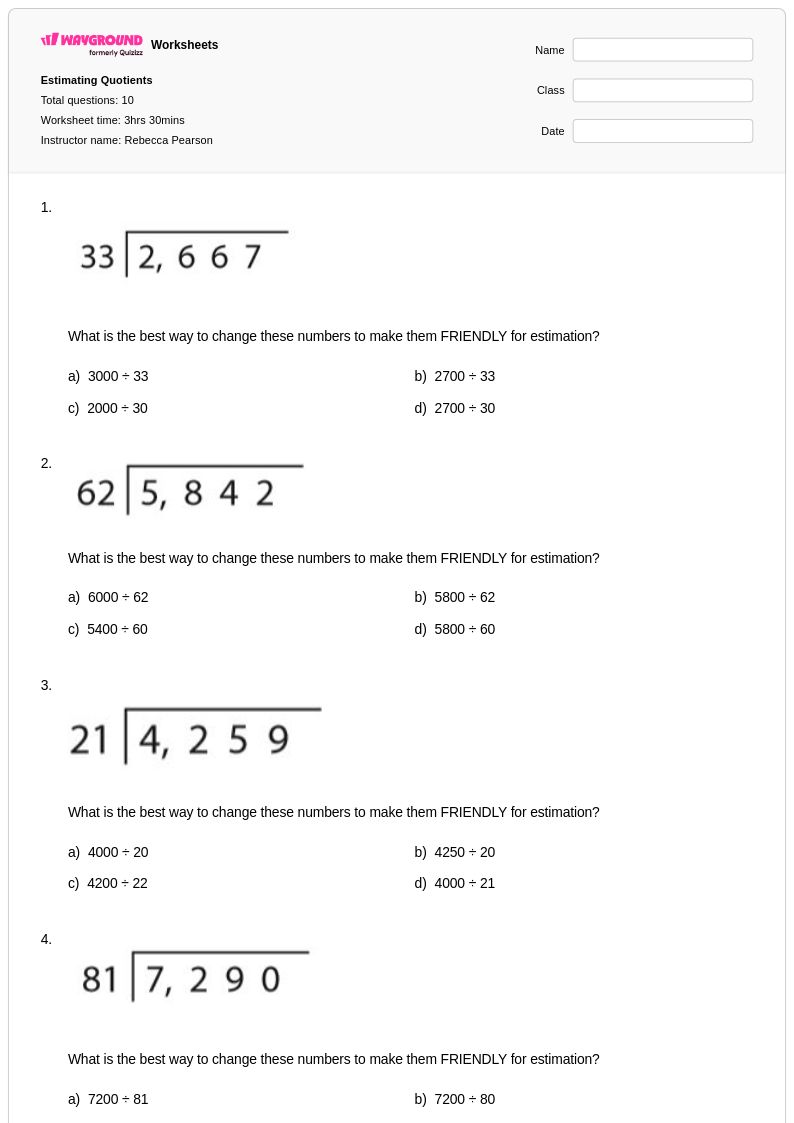
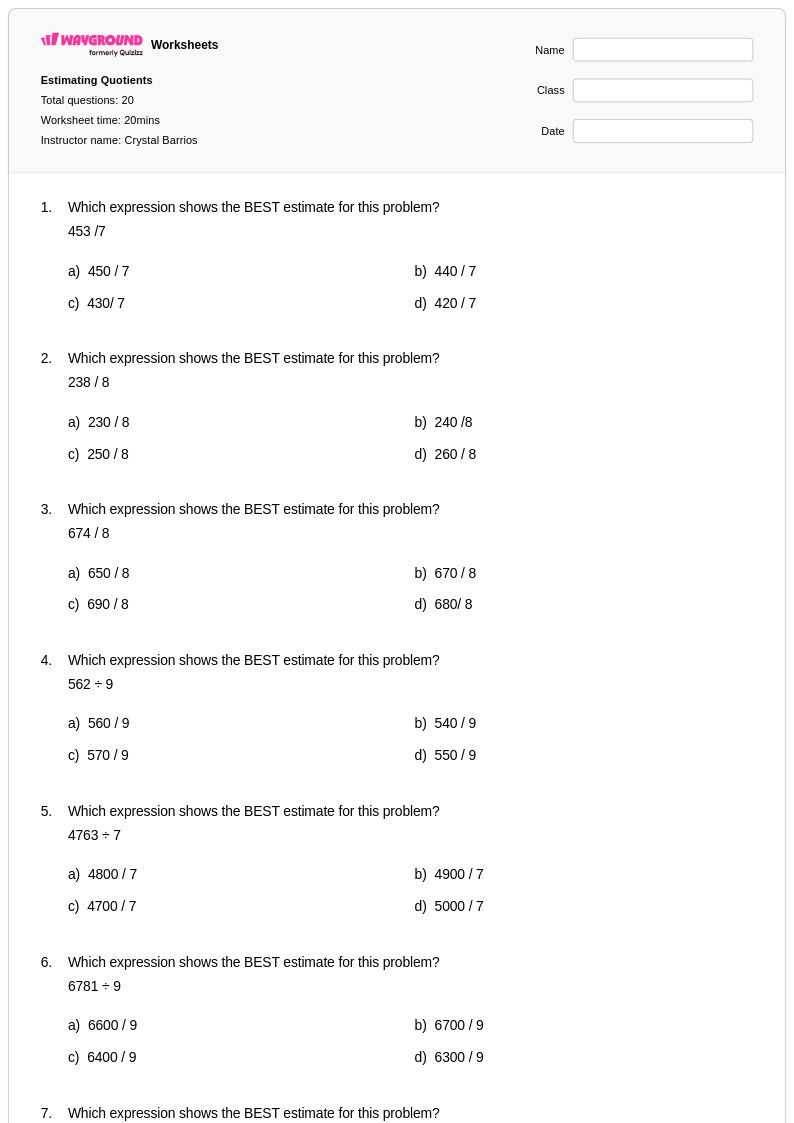
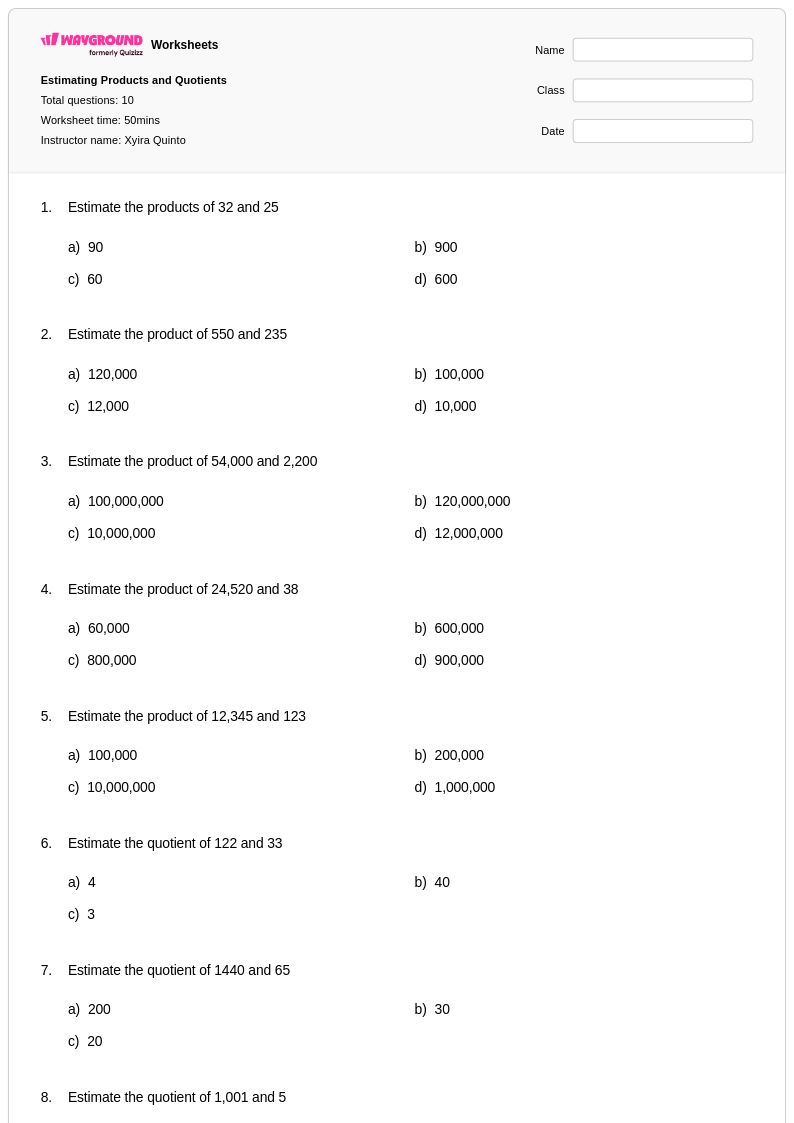
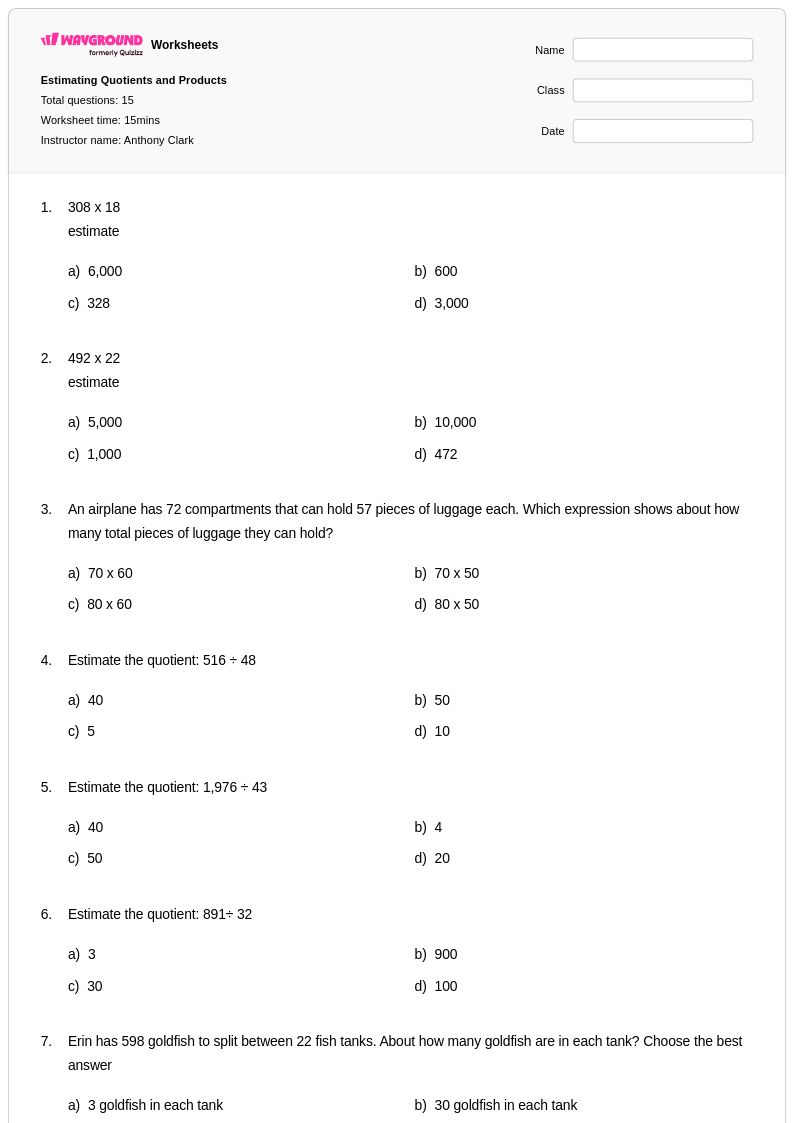
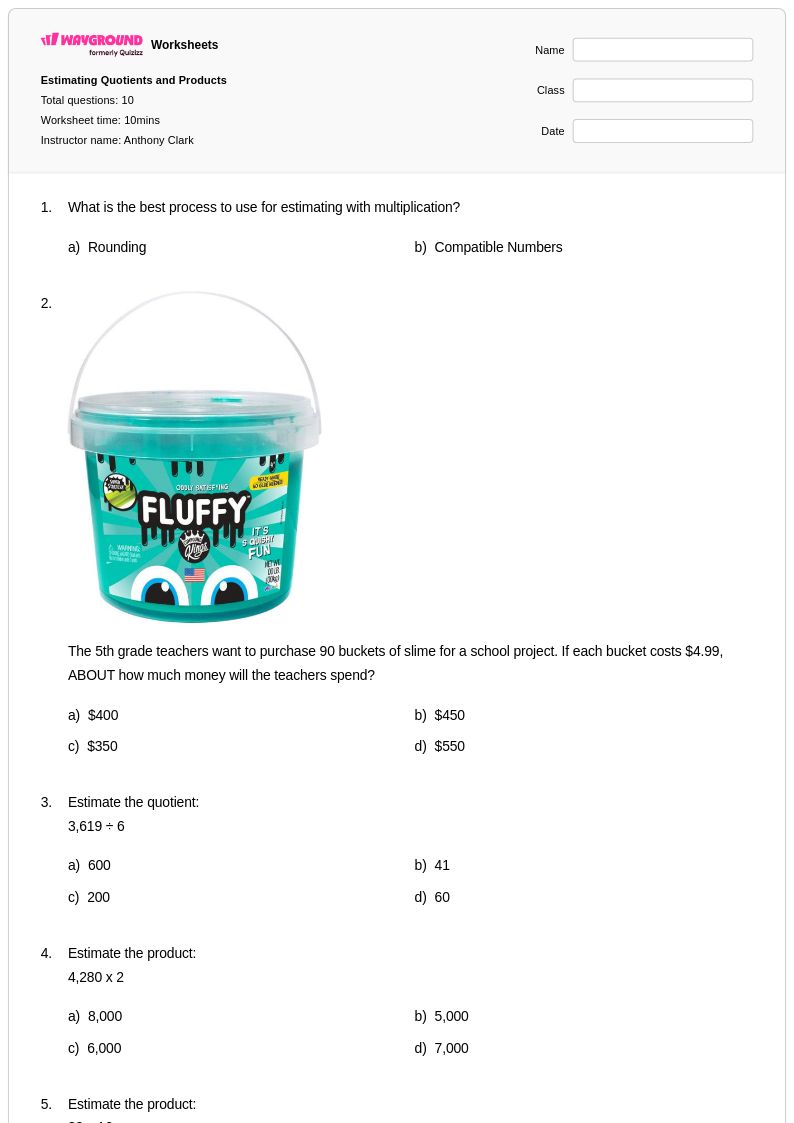
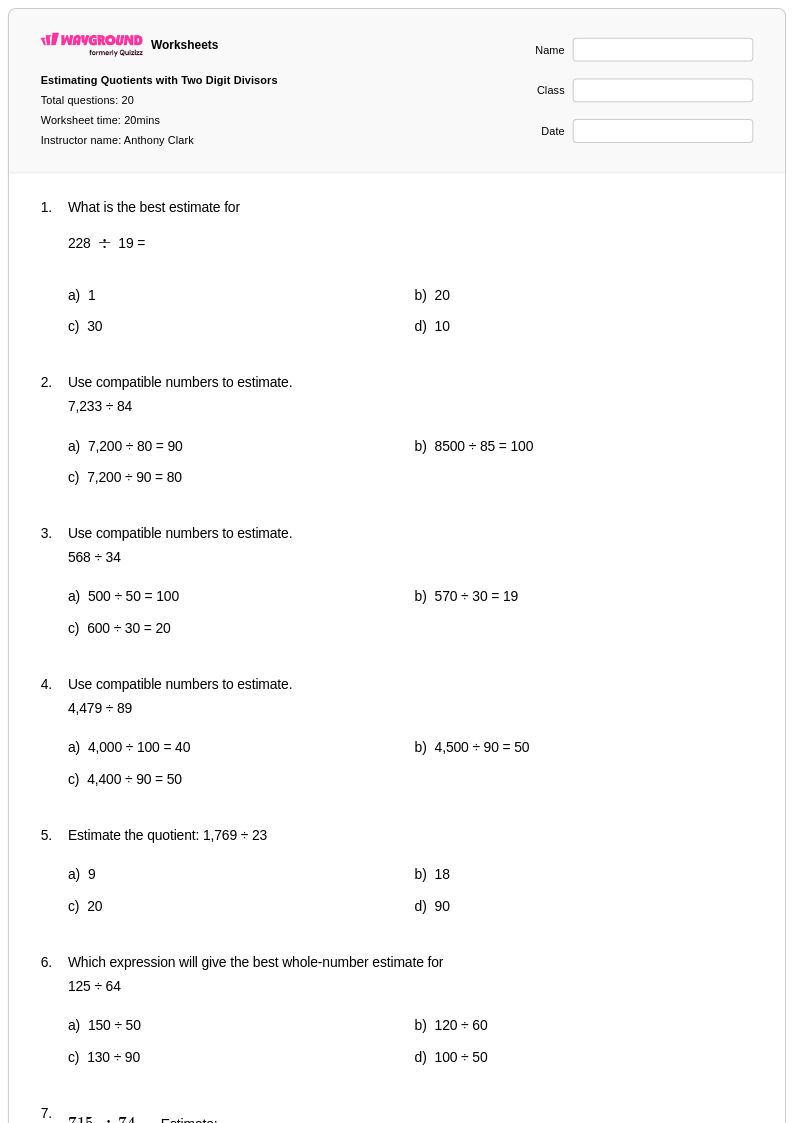
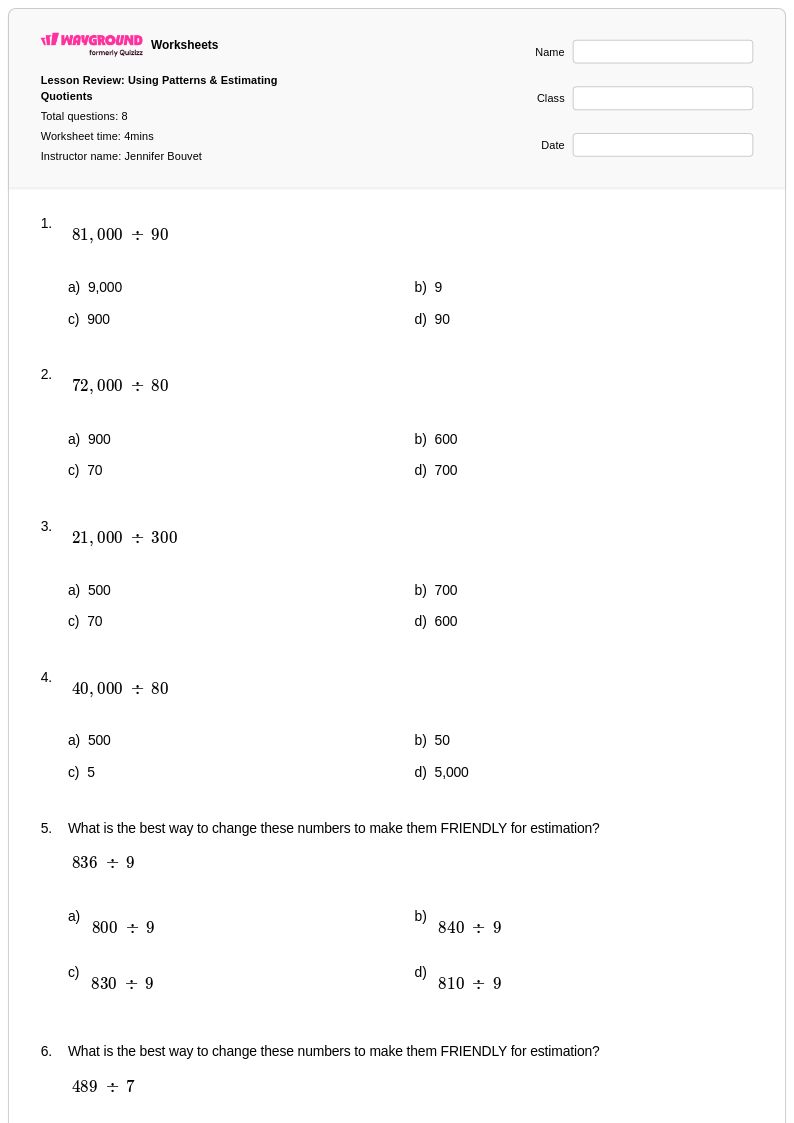
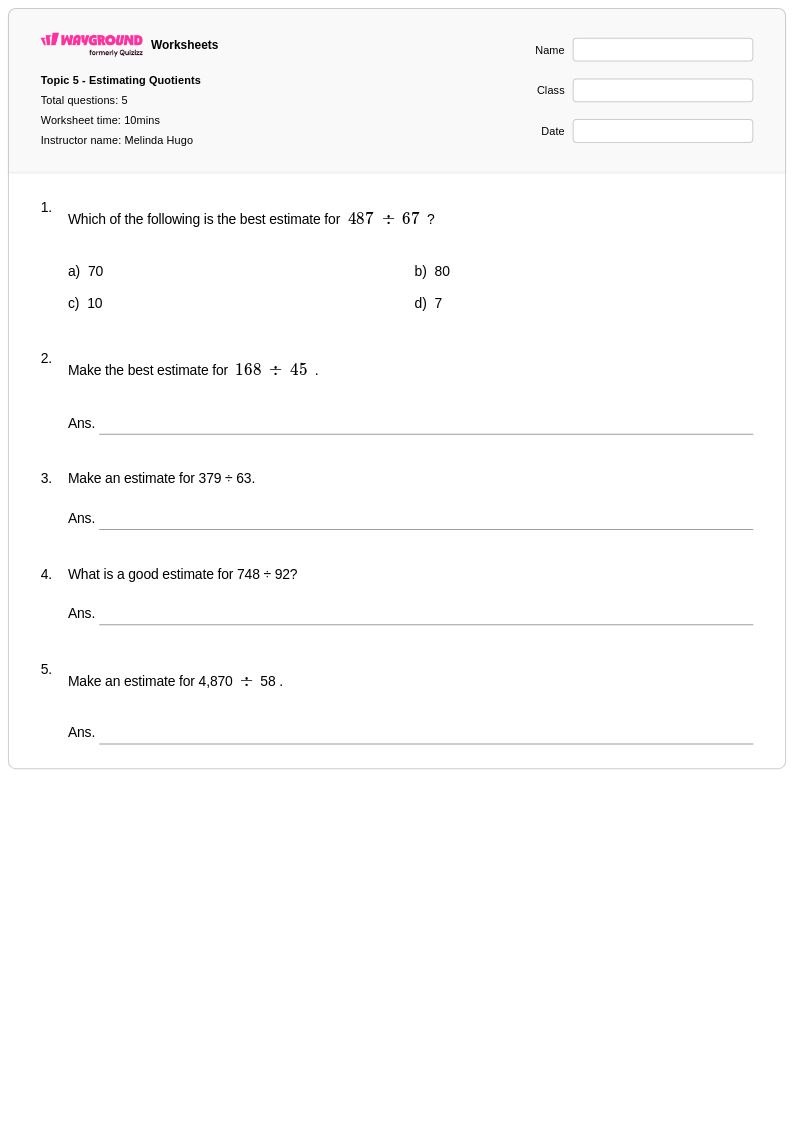
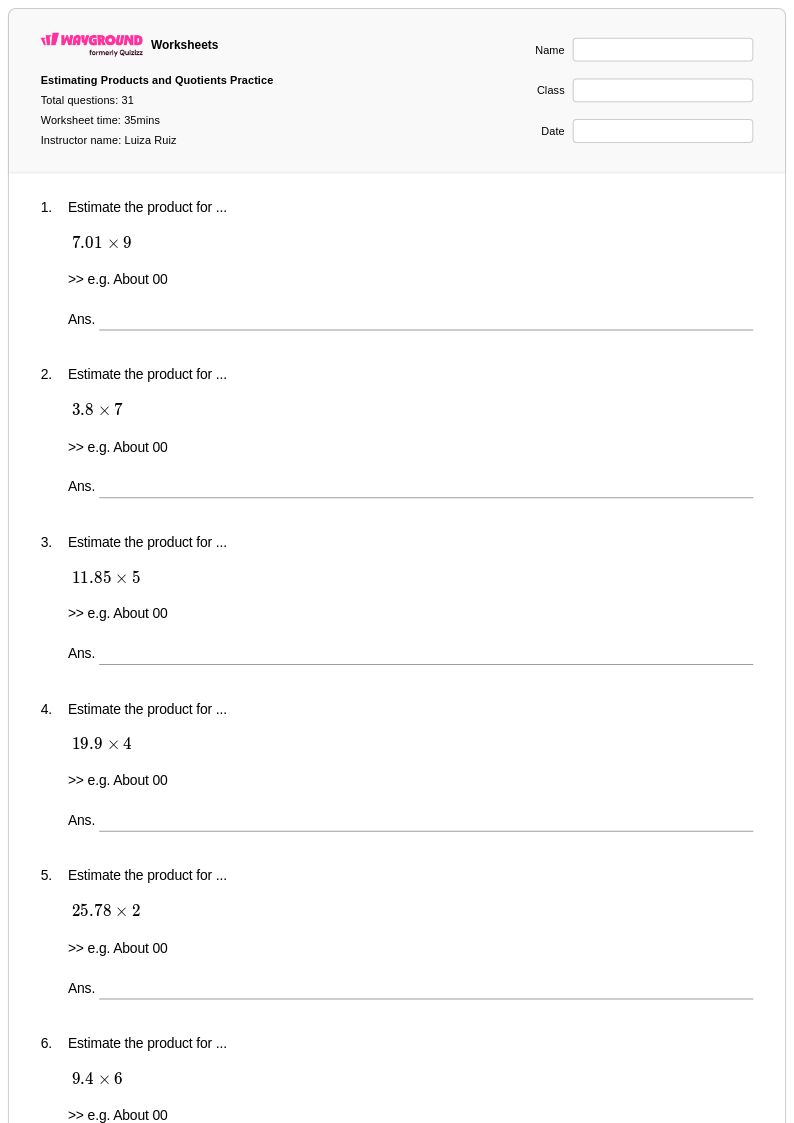
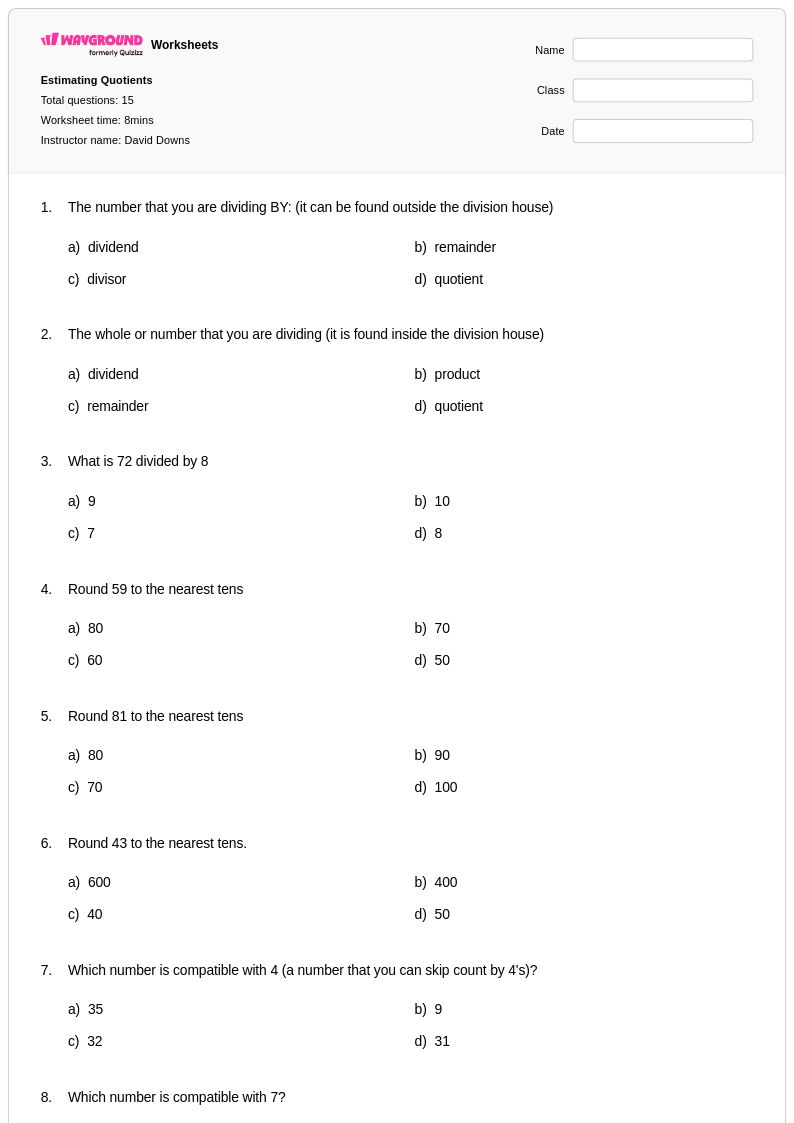
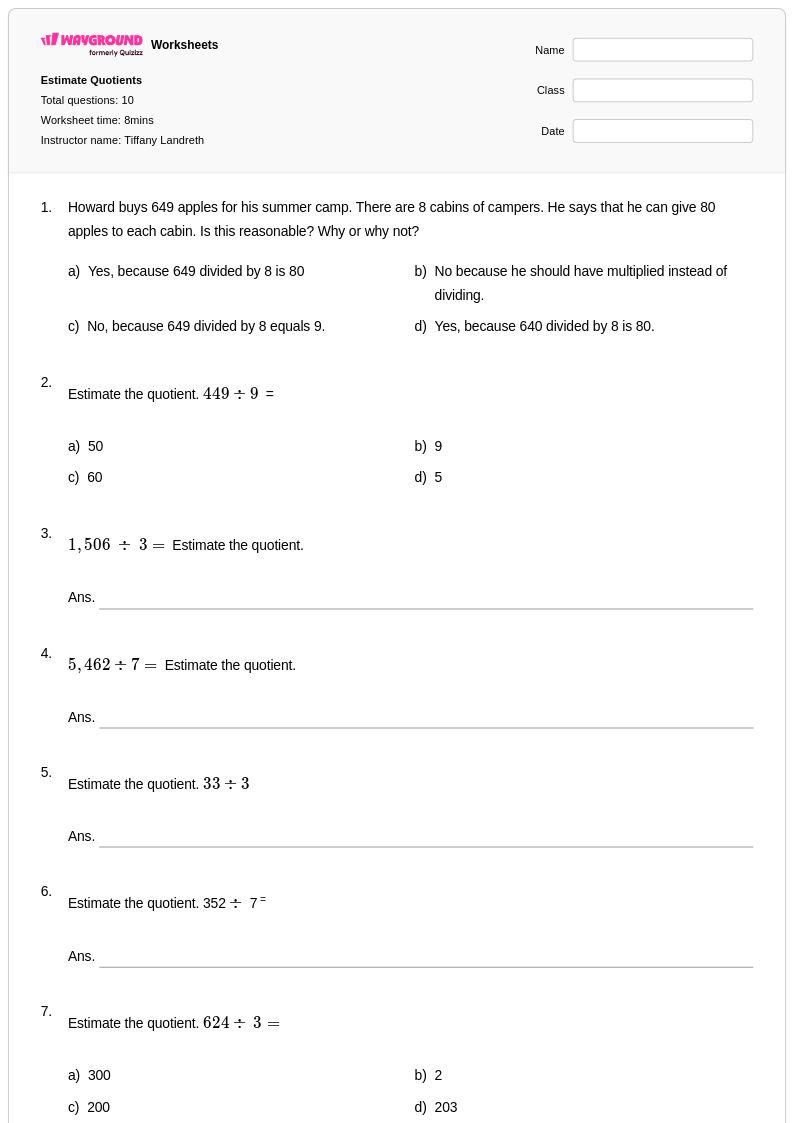
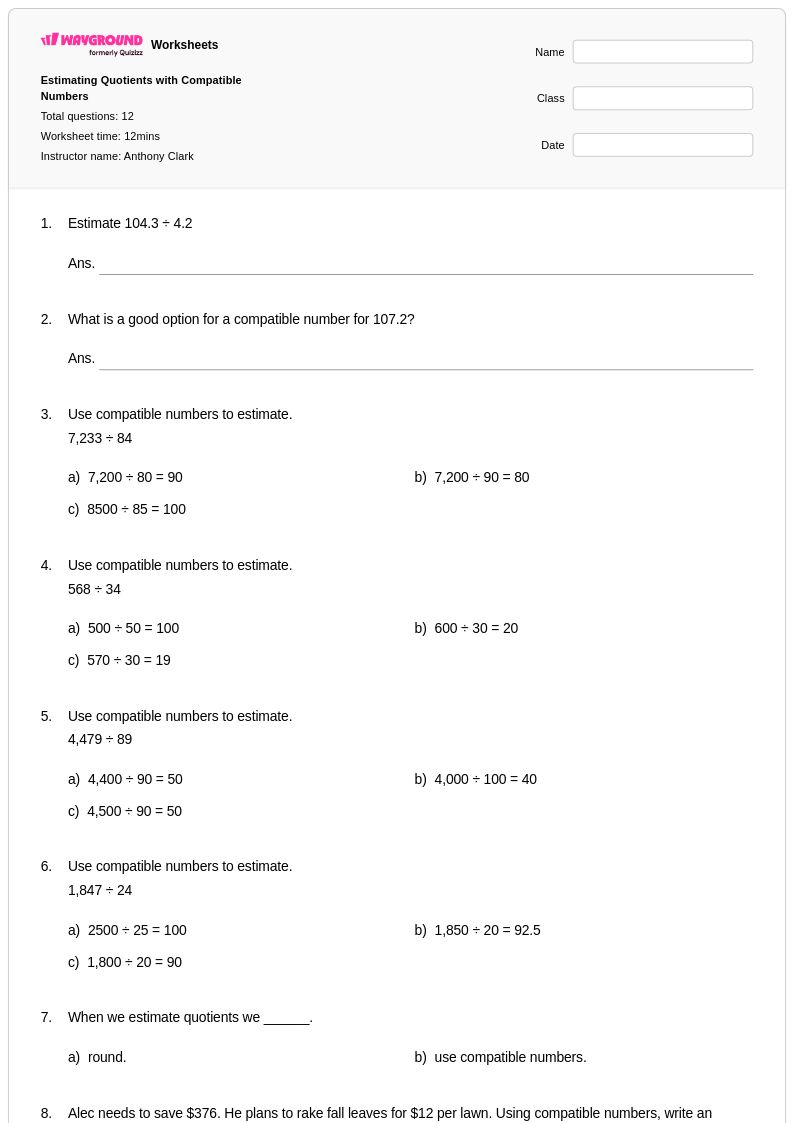
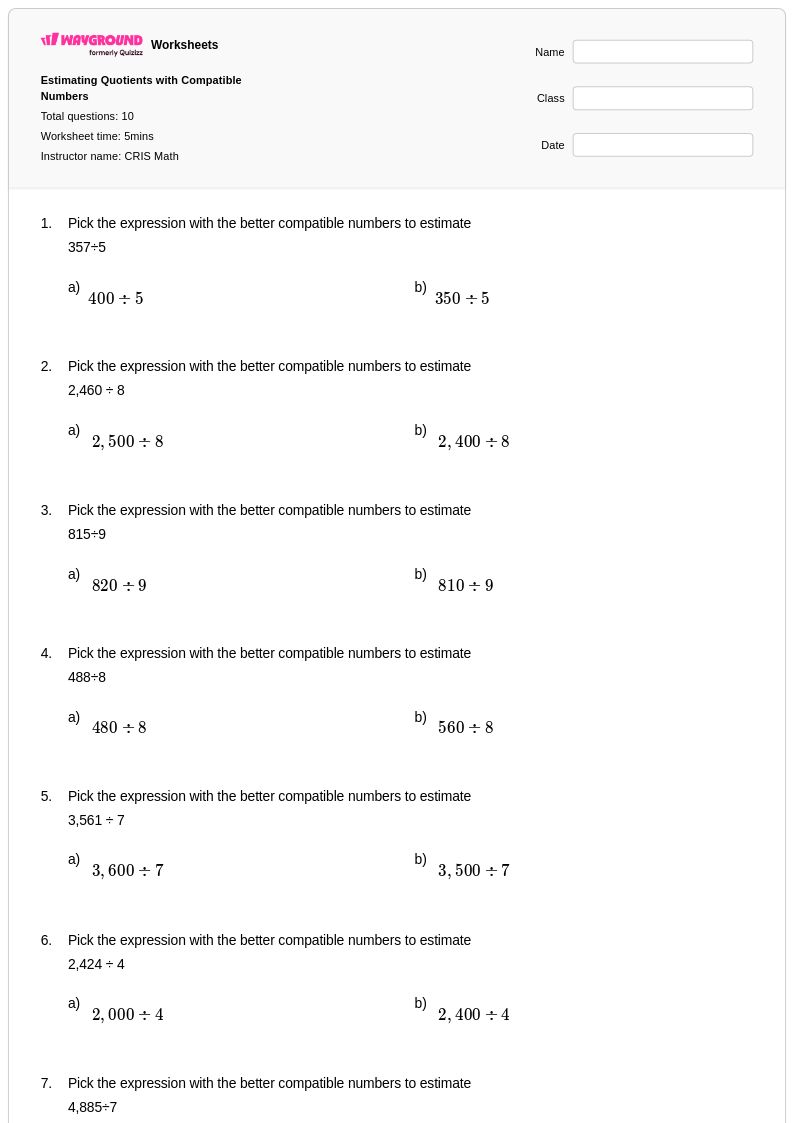
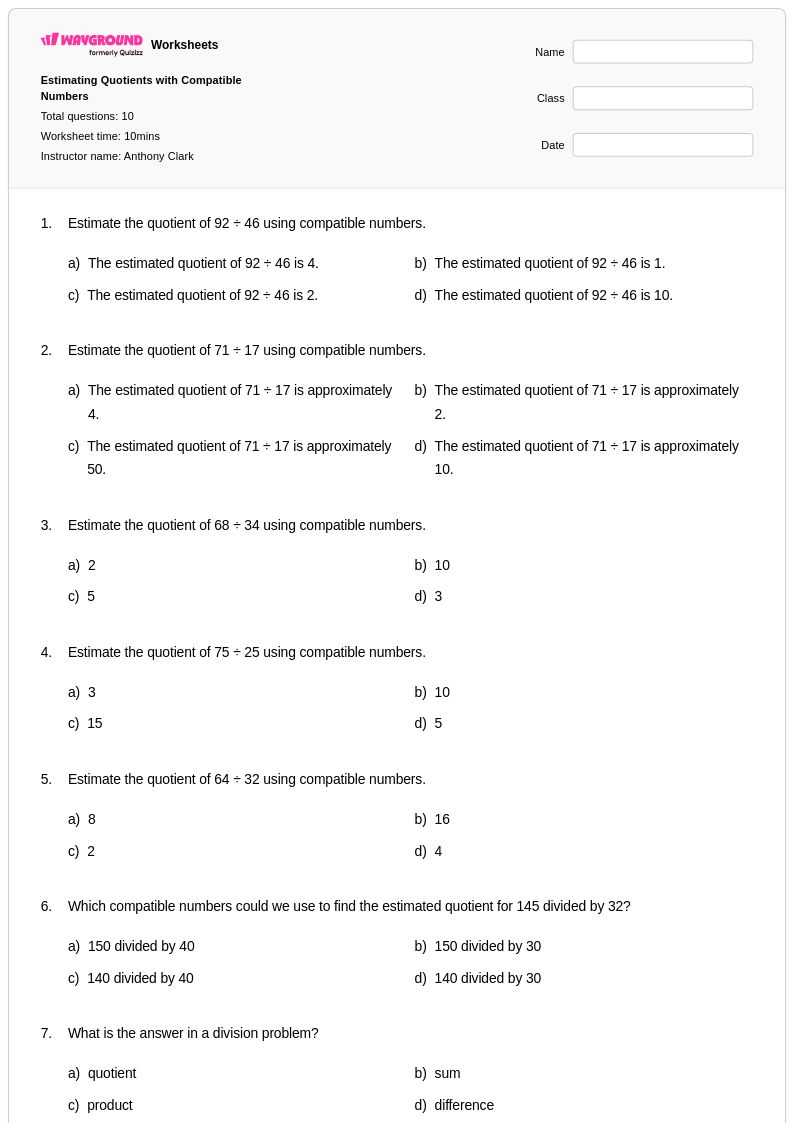
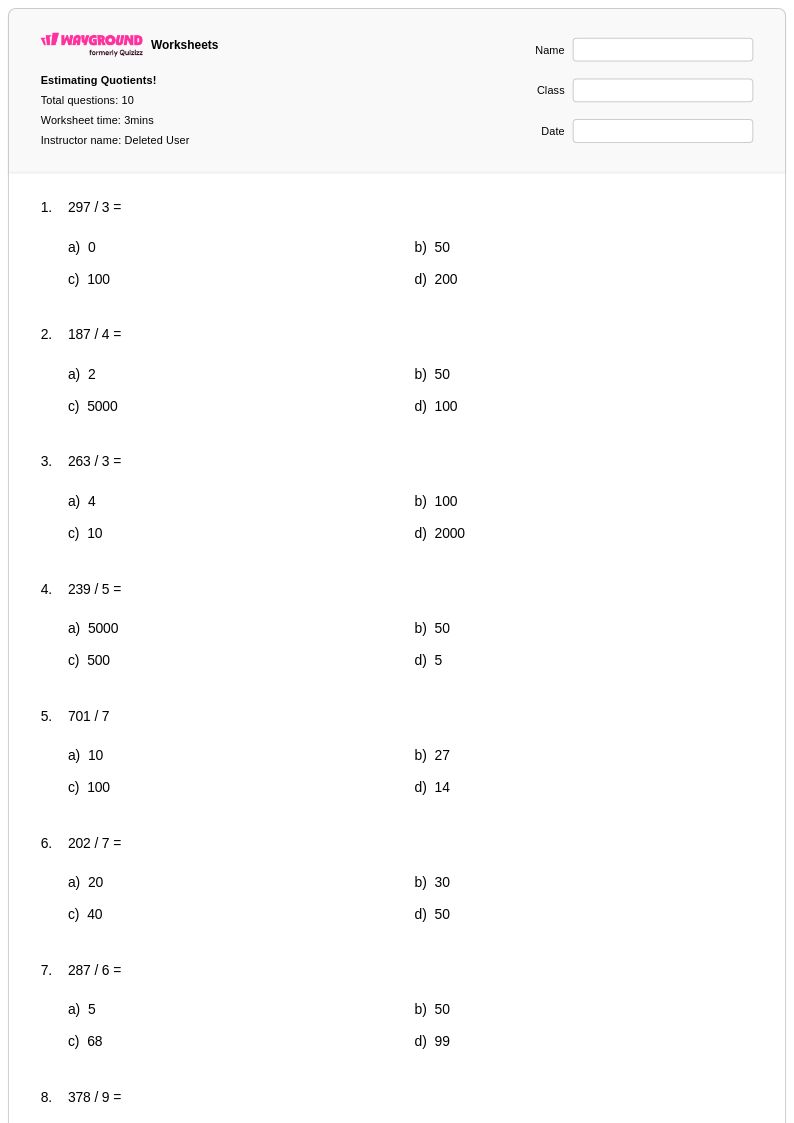
Estimating quotients represents a fundamental mathematical skill that Class 5 students must master to develop number sense and computational fluency in division. Wayground's comprehensive collection of estimating quotients worksheets provides educators with expertly crafted practice problems that guide students through various estimation strategies, including rounding dividends and divisors to compatible numbers, using benchmark divisions, and applying place value understanding to make reasonable predictions about division outcomes. These printable resources feature progressive difficulty levels that begin with simple two-digit by one-digit estimations and advance to more complex multi-digit scenarios, ensuring students build confidence while strengthening their ability to evaluate the reasonableness of calculated results. Each worksheet comes with a detailed answer key that supports both independent practice and guided instruction, while the free pdf format ensures accessibility for classroom use, homework assignments, and targeted intervention sessions.
Wayground's robust platform empowers teachers with access to millions of educator-created resources specifically designed to support Class 5 division instruction and mathematical reasoning development. The platform's advanced search and filtering capabilities allow instructors to quickly locate estimating quotients materials that align with specific curriculum standards and learning objectives, while built-in differentiation tools enable seamless customization for diverse student needs and ability levels. Teachers can effortlessly modify existing worksheets or combine multiple resources to create comprehensive practice sets that address individual learning gaps, support remediation efforts, or provide enrichment opportunities for advanced learners. The flexible digital and printable formats accommodate various instructional settings, from traditional paper-based activities to interactive digital assignments, ensuring that educators can effectively integrate these estimating quotients resources into their lesson planning, assessment strategies, and ongoing skill development initiatives.
FAQs
How do I teach estimating quotients to 5th graders?
By Grade 5, students should move beyond simple rounding and work with compatible numbers fluently — finding the nearest dividend that divides cleanly by the given divisor. A useful classroom routine: before any division problem, ask students to name a compatible pair first, then estimate, then calculate. This makes estimation a genuine thinking step rather than a formality. Grade 5 is also the right time to start estimating with two-digit divisors, which requires rounding both numbers.
What exercises help 5th graders practice estimating quotients?
Three exercise types build the skill well at this grade: estimating with two-digit divisors (where students must round both numbers), comparing two estimates to decide which is closer to the exact answer, and error-analysis problems where students identify a flawed estimate and explain what went wrong. That last type is particularly effective because it requires students to articulate their reasoning, not just produce a number.
What mistakes do 5th graders commonly make when estimating quotients?
The biggest jump in Grade 5 is two-digit divisors, and students frequently round only the dividend while leaving the divisor unchanged — which makes the mental division no easier. A related error: rounding both numbers in the same direction (both up or both down) without considering that rounding one up and one down can produce a more accurate estimate. These aren't careless mistakes; they reflect incomplete understanding of what compatible numbers actually means.
How do I use Wayground's Grade 5 estimating quotients worksheets?
The worksheets are available as printable PDFs with a complete answer key included, so you can distribute them for independent practice or homework without extra prep. For a more interactive session, host the worksheet as a digital quiz on Wayground — students submit answers online and you get results without manual grading. If you go the paper route, the Wayground for Teachers app lets you scan student submissions for quick grading.
How does estimating quotients fit into the Common Core progression at Grade 5?
Common Core builds toward Grade 5 students fluently dividing multi-digit whole numbers and beginning to divide decimals. Estimation is the reasonableness check that runs alongside that computation work — students are expected to know roughly what answer to expect before they calculate, and to flag results that don't make sense. The Grade 5 estimating quotients work specifically prepares students for decimal division in Grade 6, where exact mental calculation becomes impractical and estimation becomes essential.
How can I support struggling students with estimating quotients in Grade 5?
Students who struggle here usually have gaps in either basic division facts or place value — it's worth diagnosing which before assigning more estimation practice. For students with the conceptual understanding but processing challenges, Wayground's Read Aloud feature and extended time accommodation reduce the cognitive load of the format itself. On the worksheet side, wider font spacing and larger font sizes can help students track multi-digit numbers without losing their place mid-problem.