
Recommended Topics for you
- Dividing Powers
- Multiplying Powers
- Negative and Fractional Indices
- Power to a Power
- Product of Powers
- Properties of Exponents
- Quotient of Powers
- Squaring Numbers
- Zero Exponent Rule
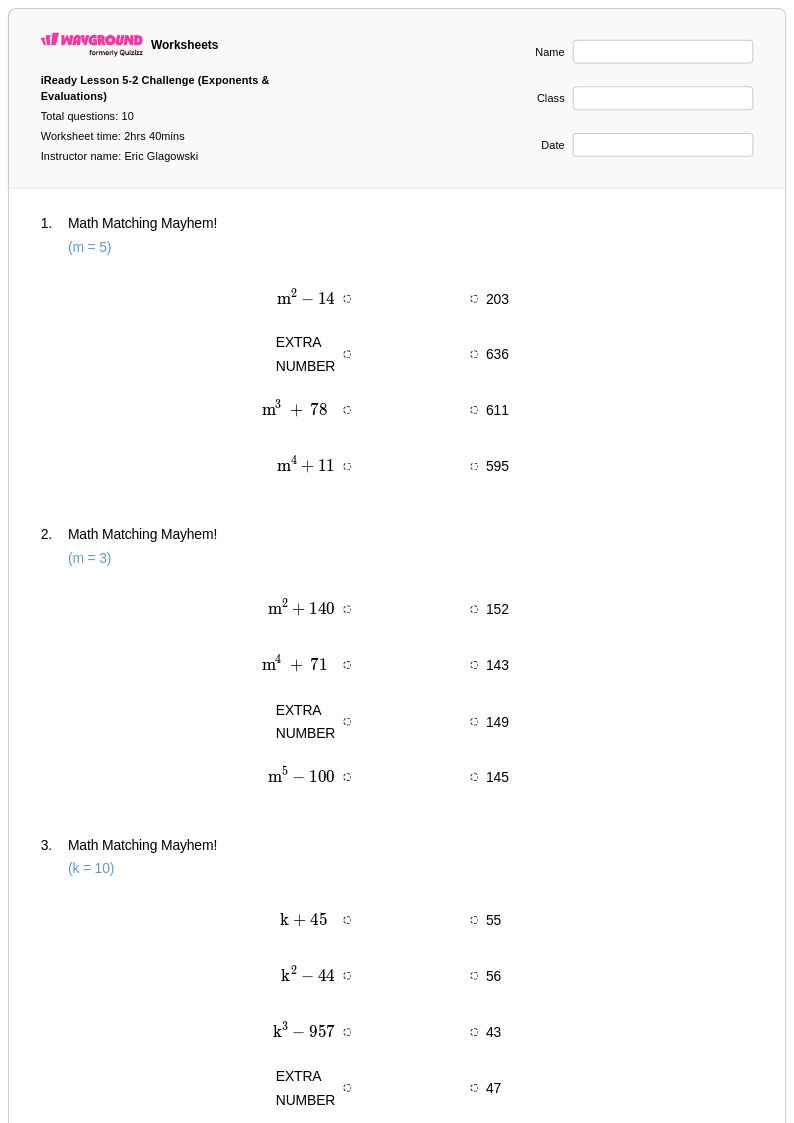
10 Q
6th
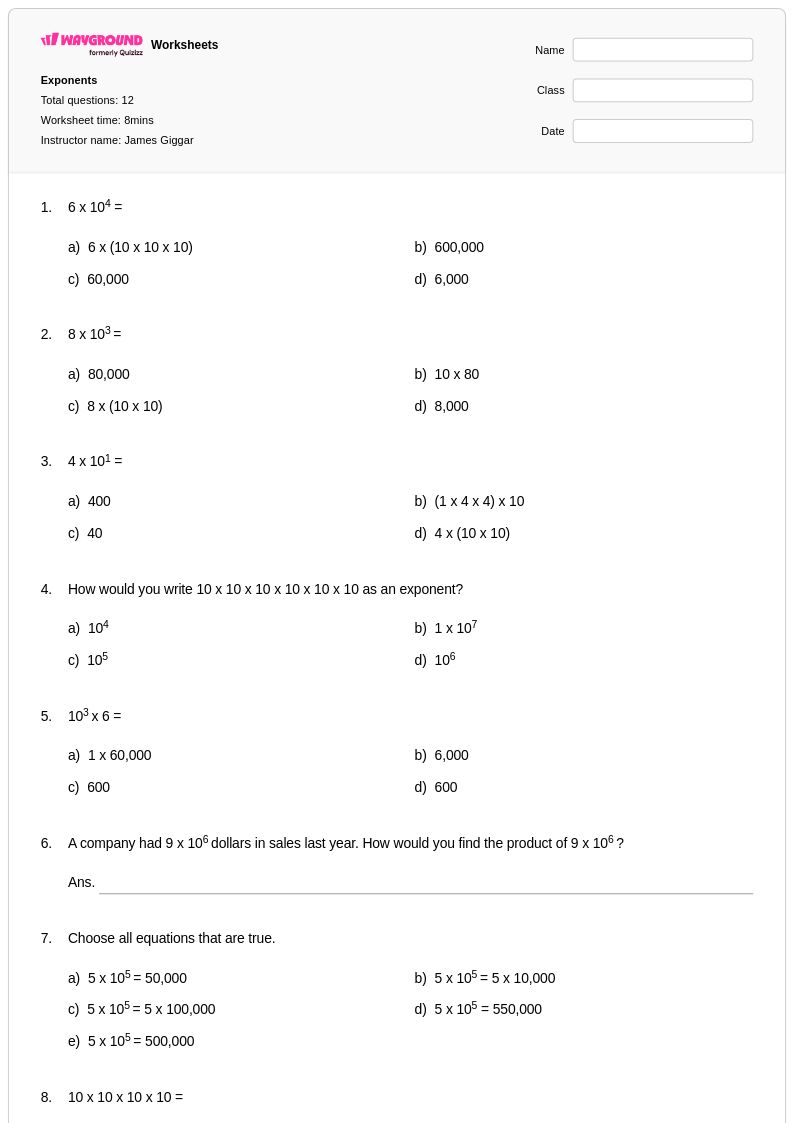
12 Q
4th - 6th
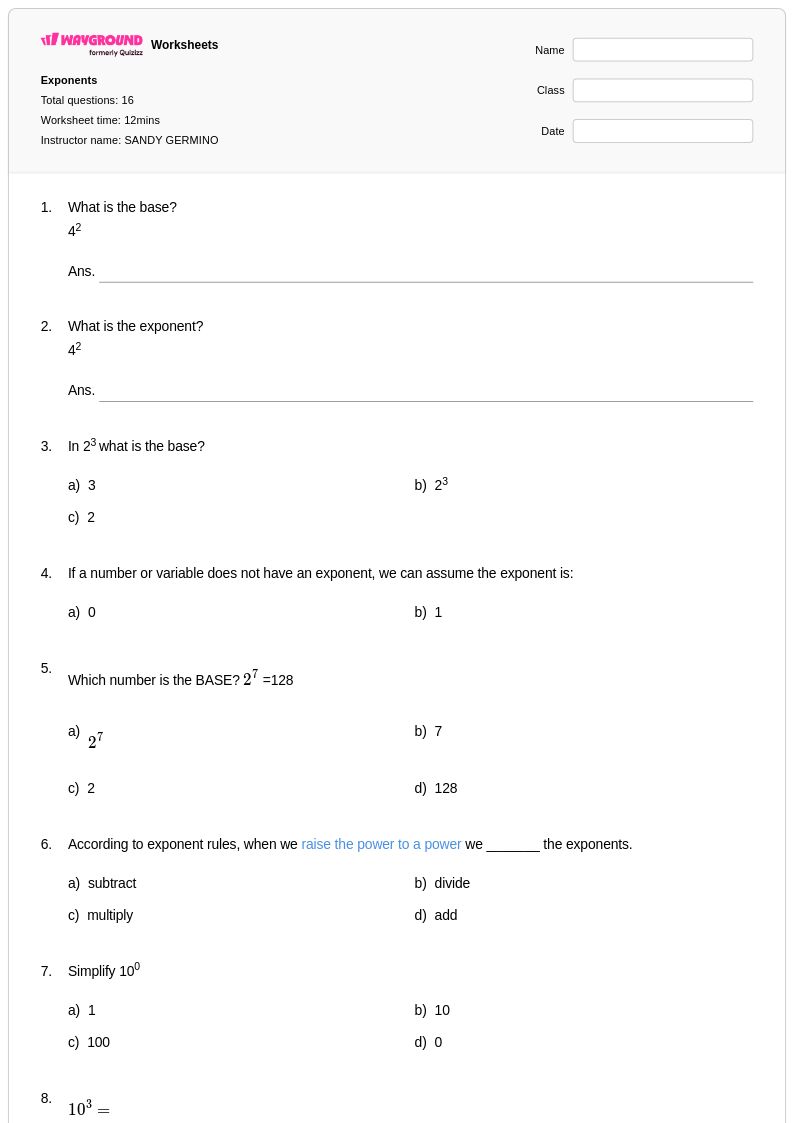
16 Q
6th
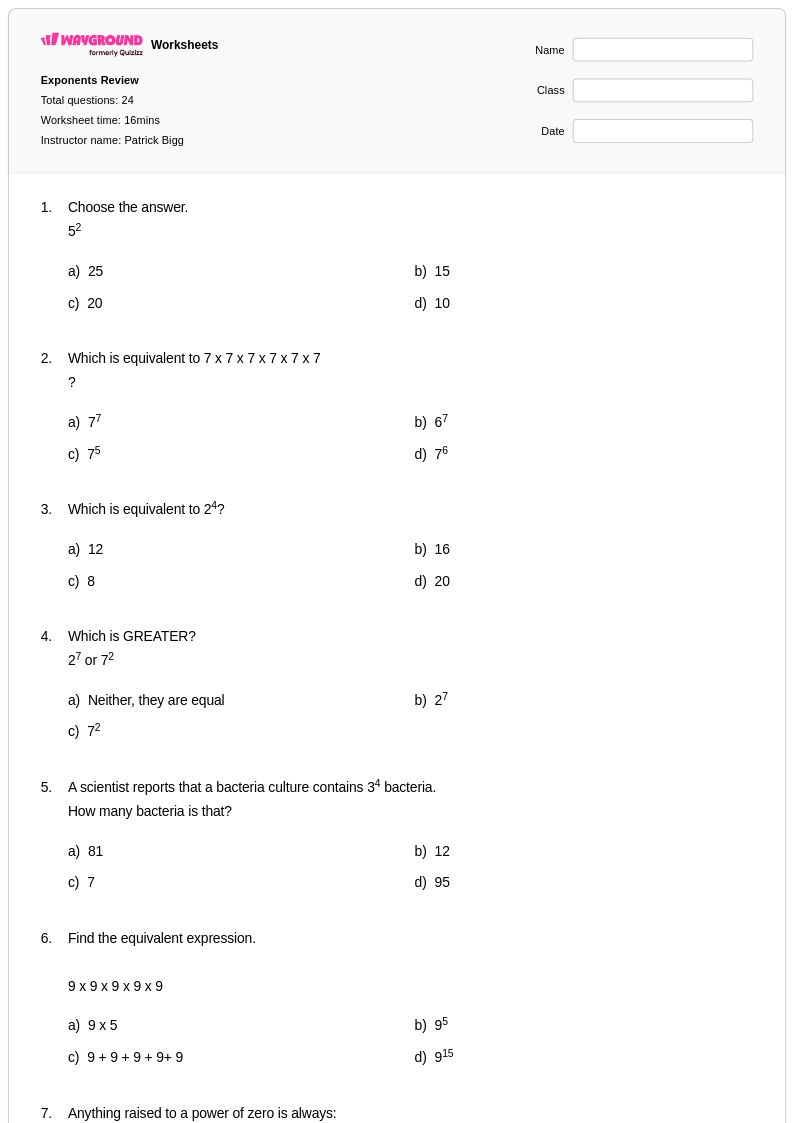
24 Q
6th
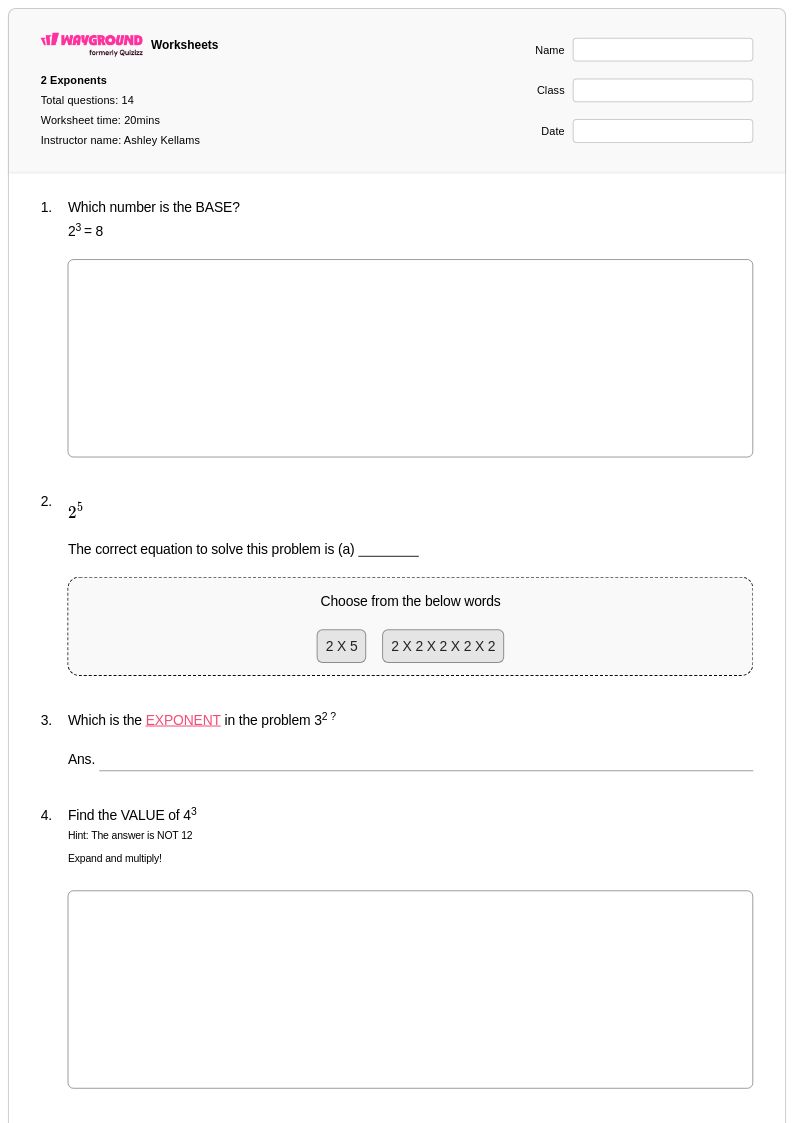
14 Q
6th
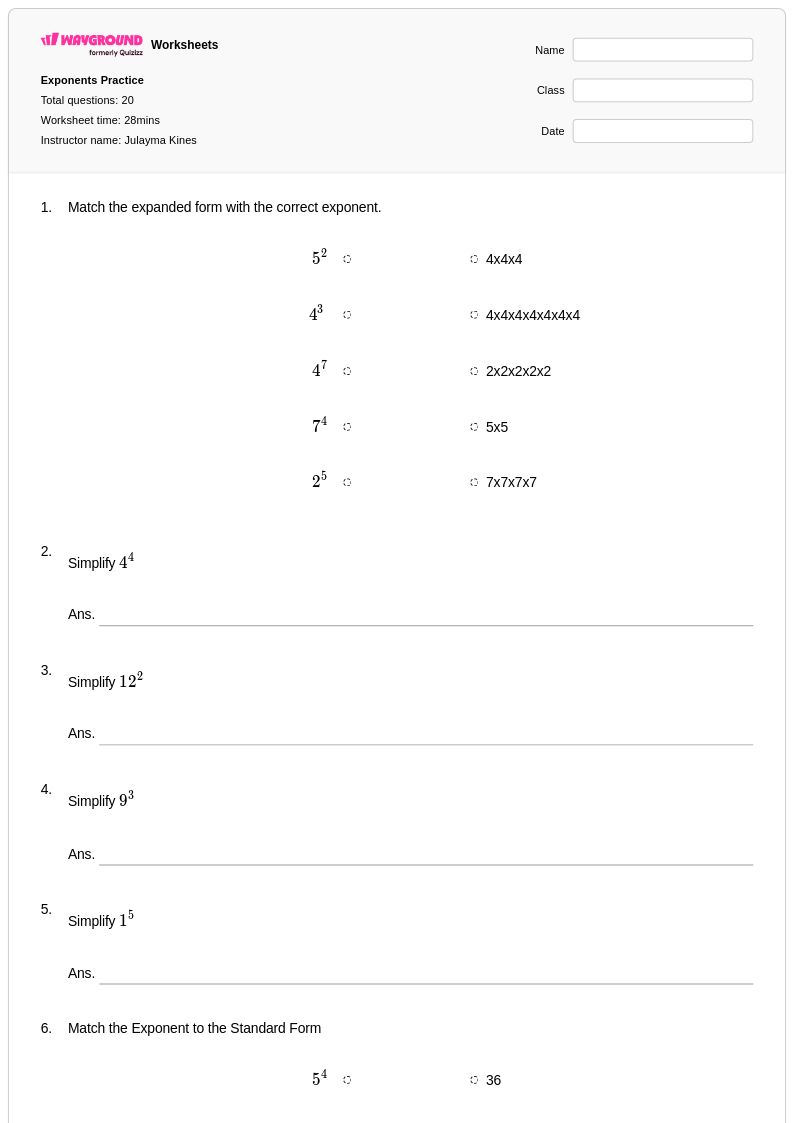
20 Q
6th
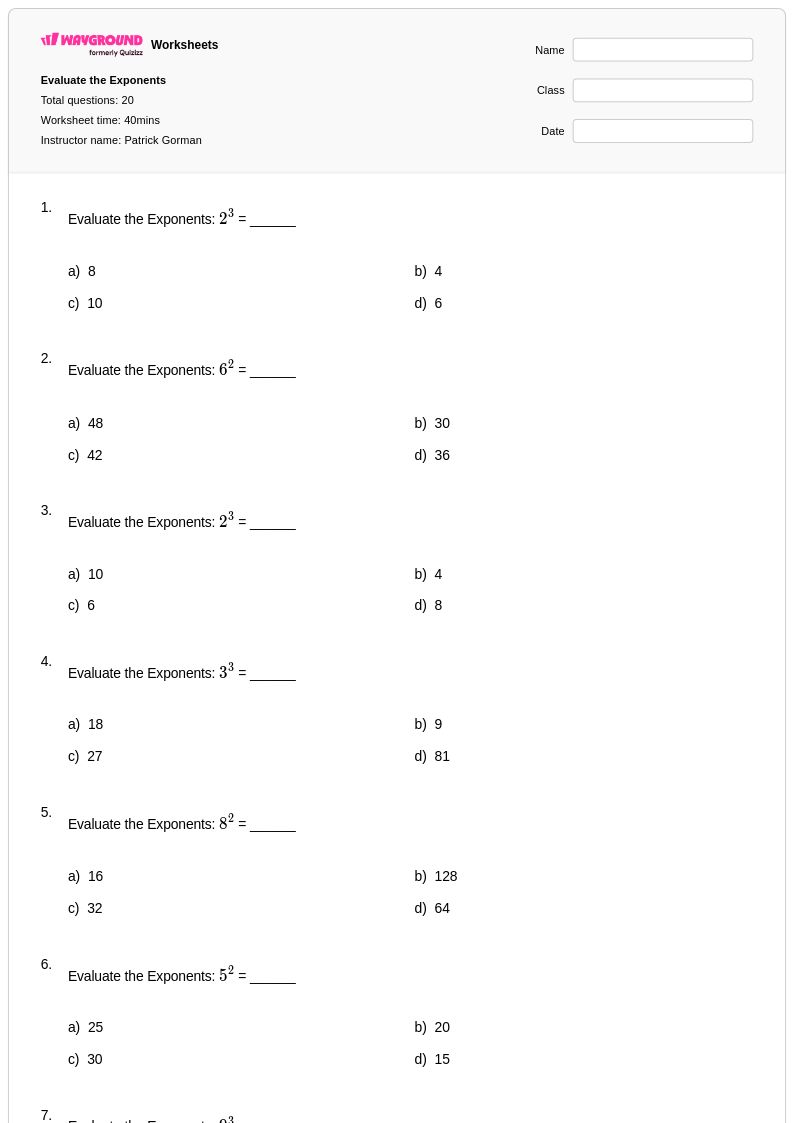
20 Q
6th
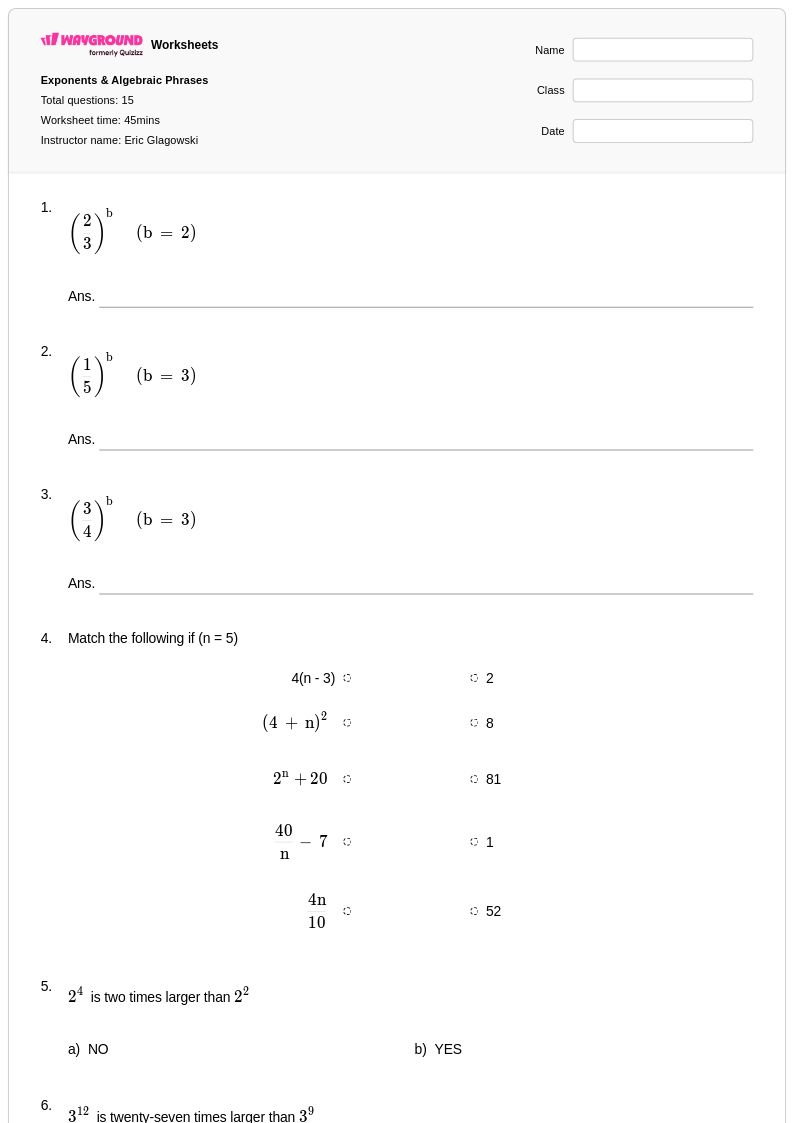
15 Q
6th
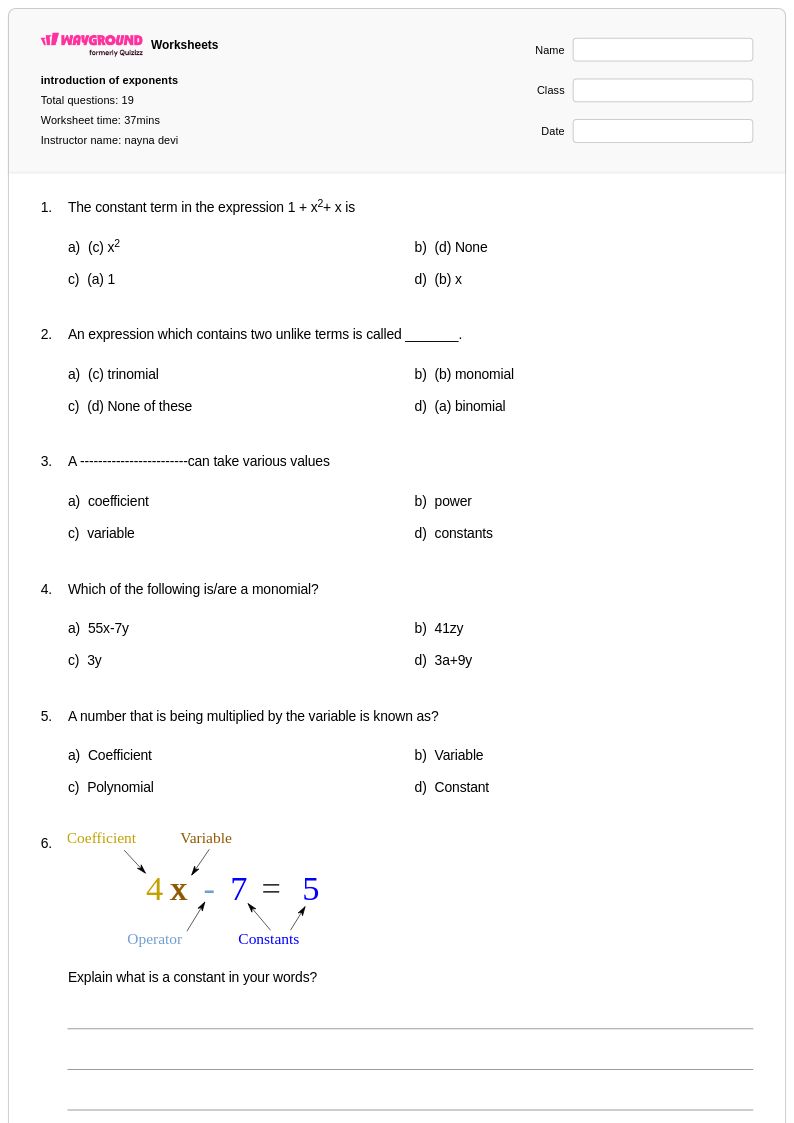
19 Q
6th - Uni
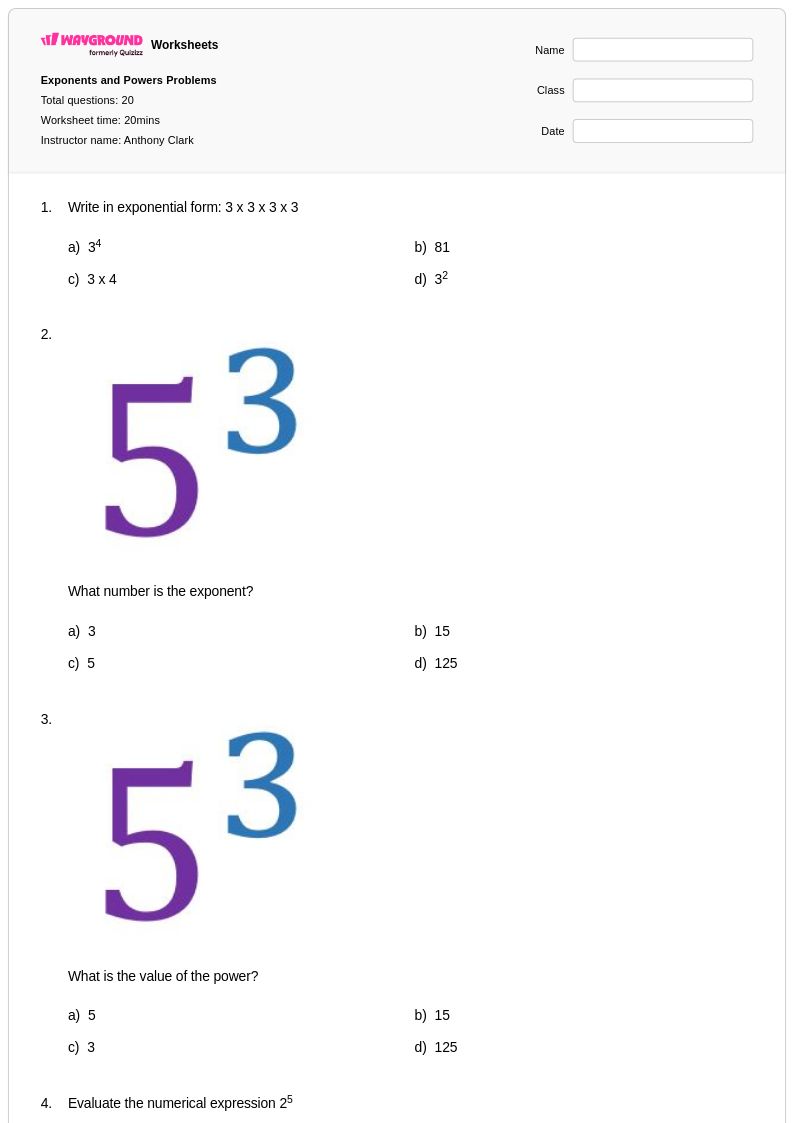
20 Q
6th - Uni
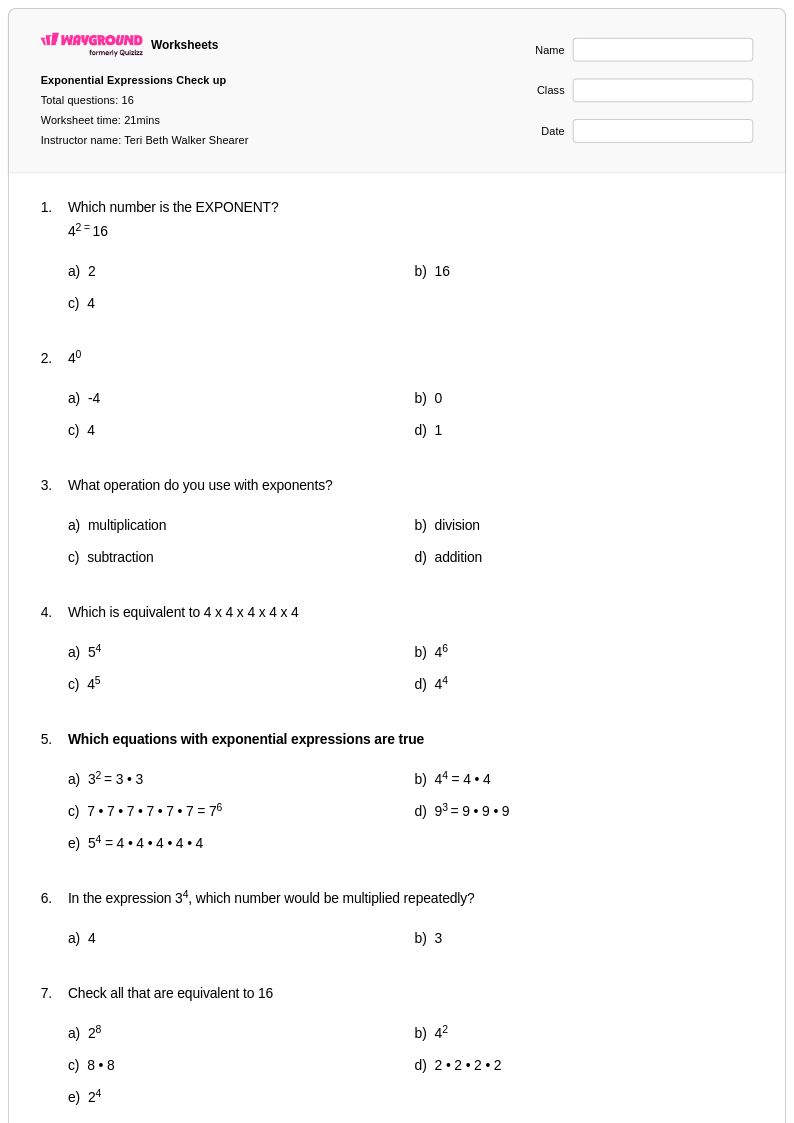
16 Q
6th
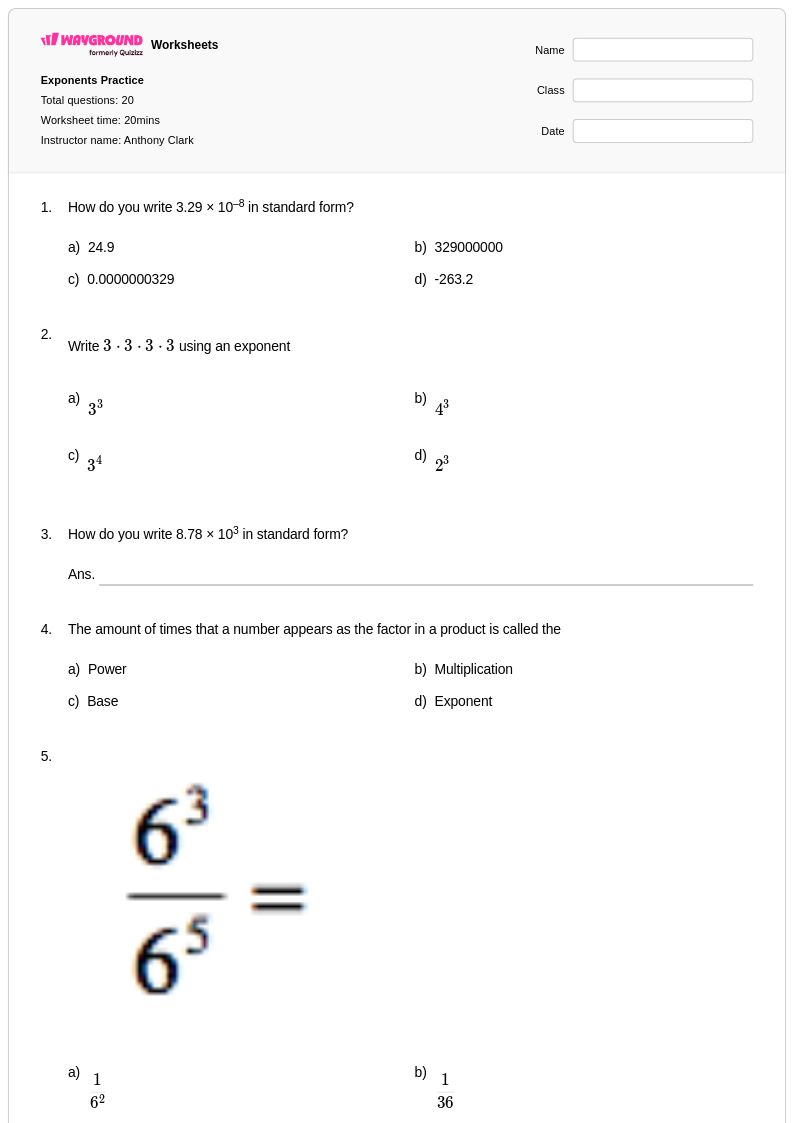
20 Q
6th - Uni
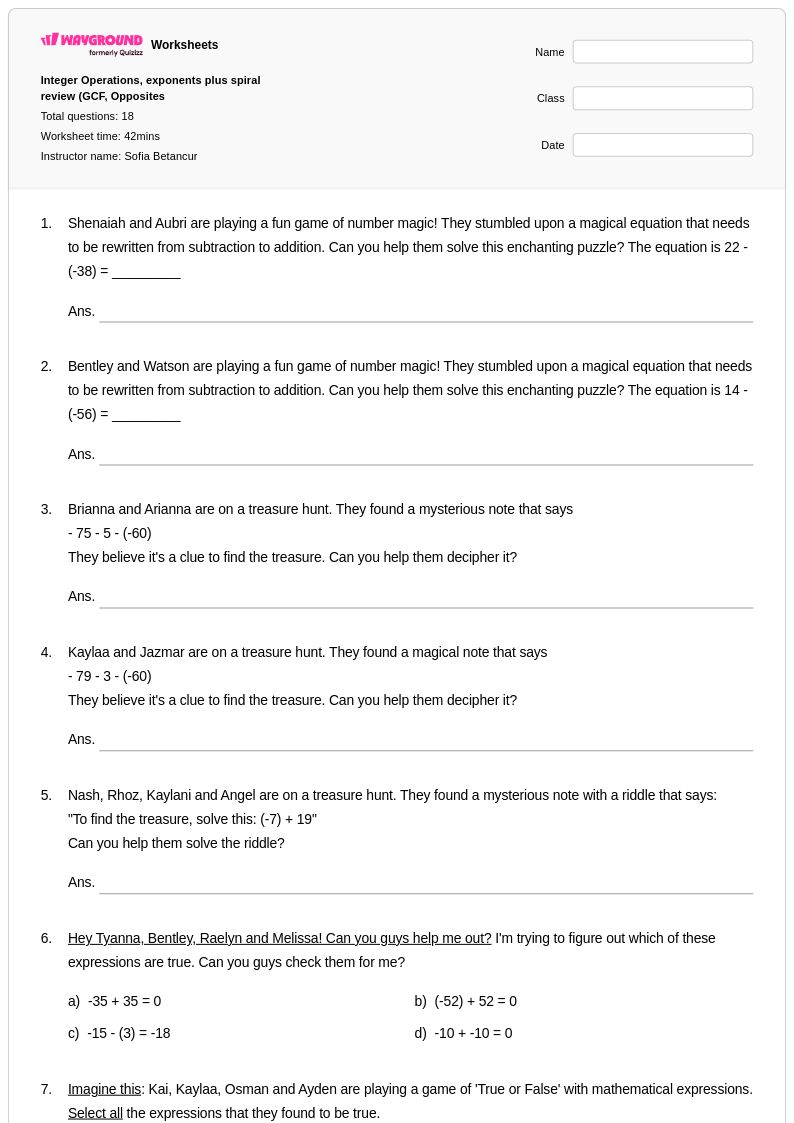
18 Q
6th
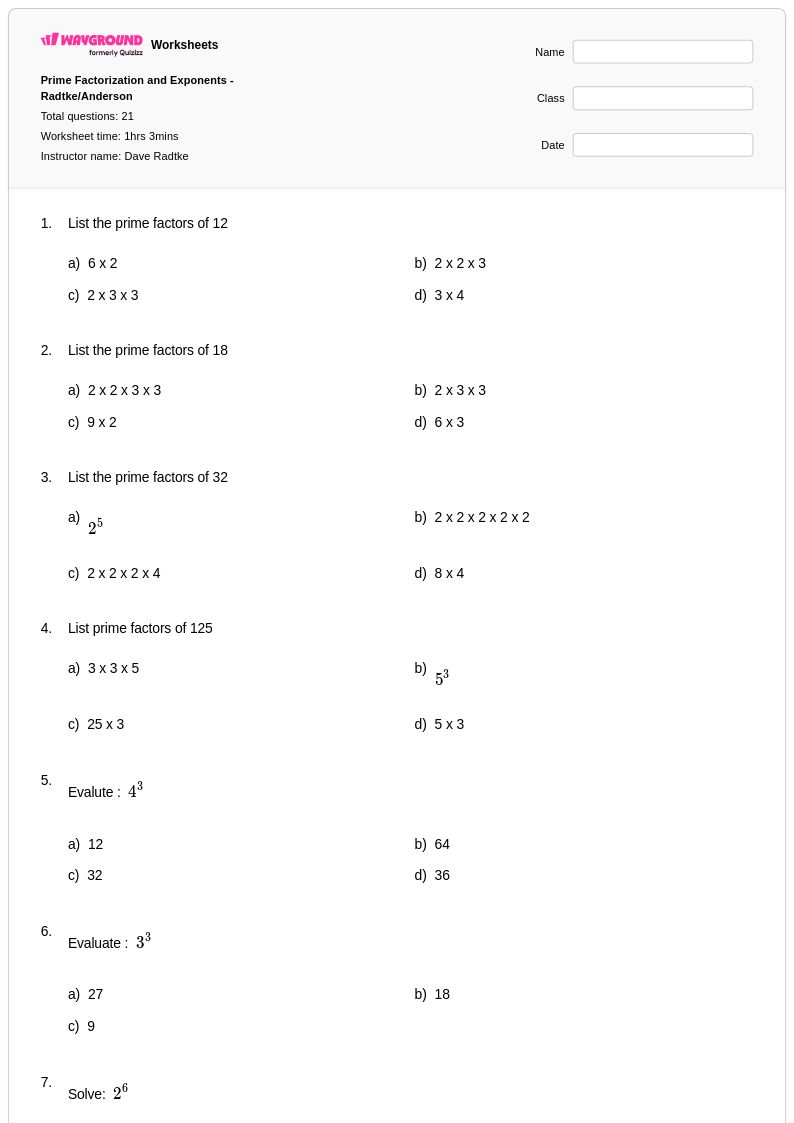
21 Q
6th
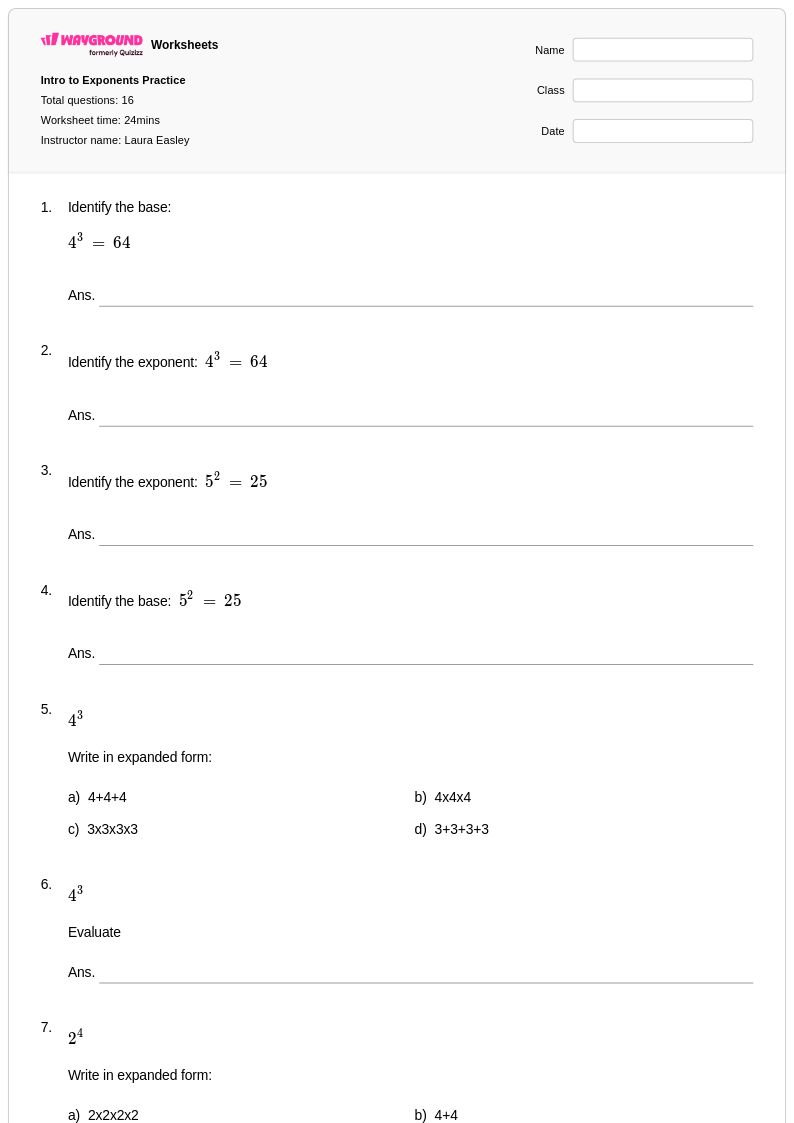
16 Q
6th
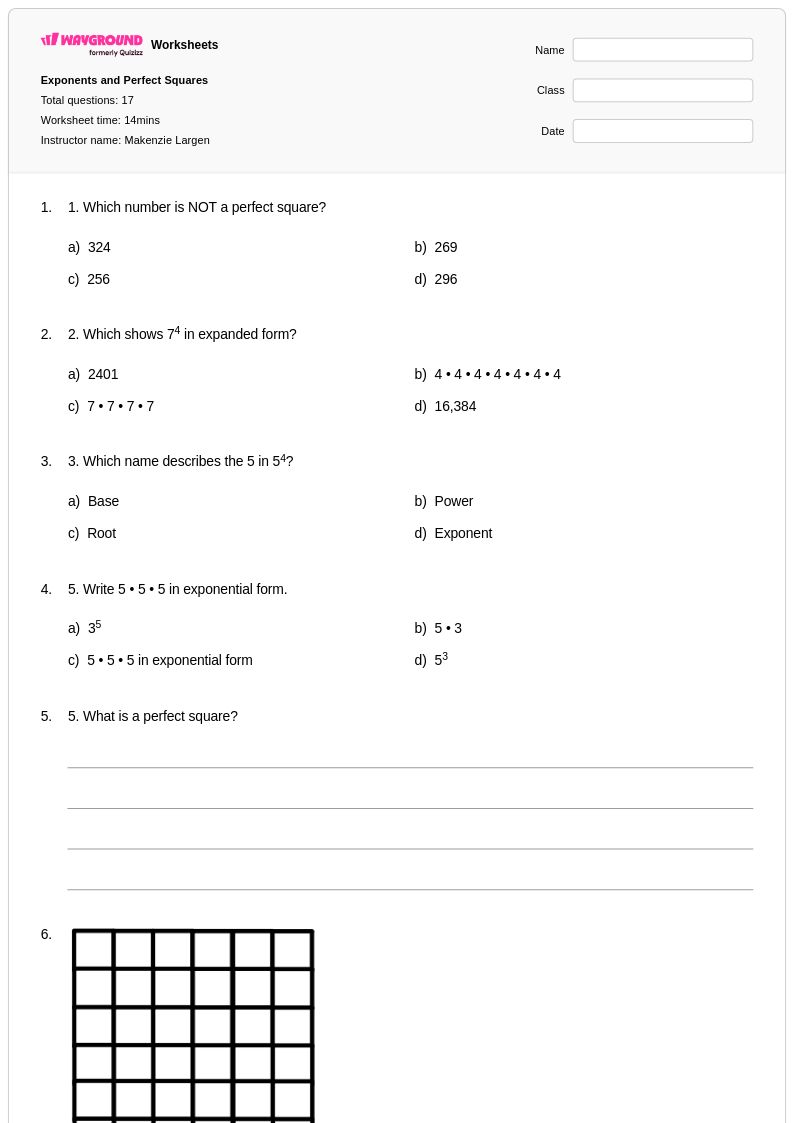
17 Q
6th
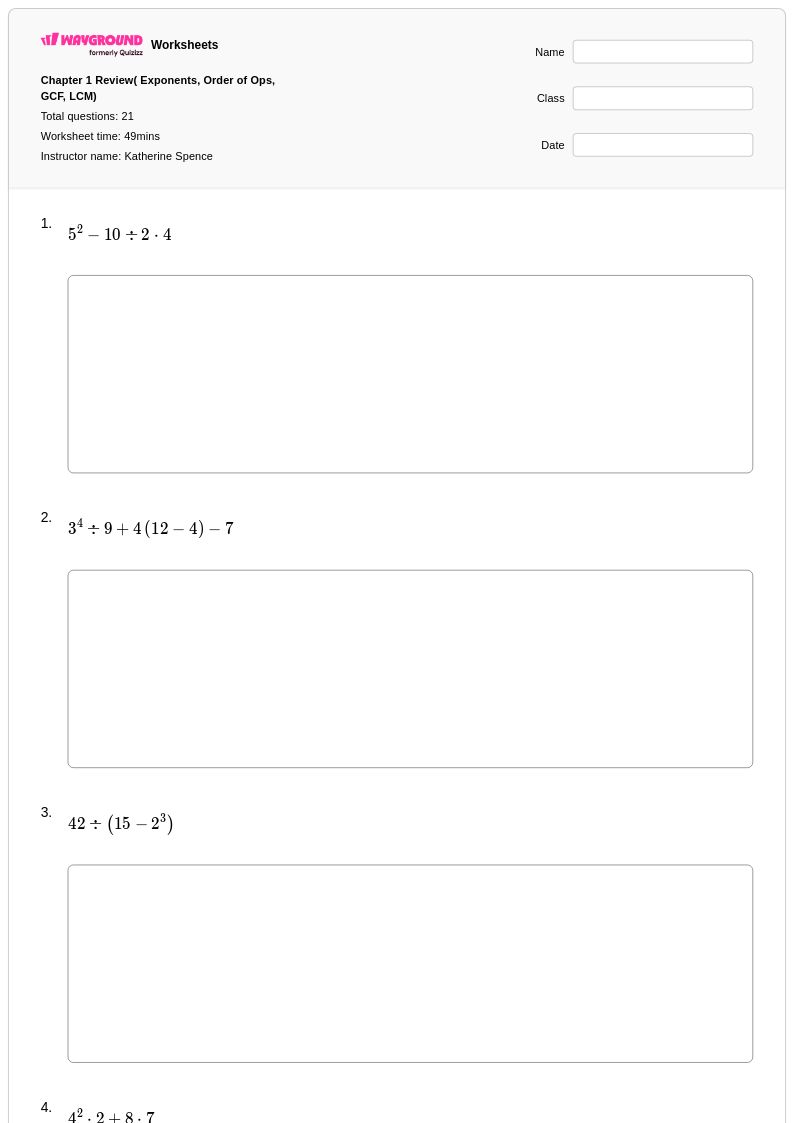
21 Q
6th
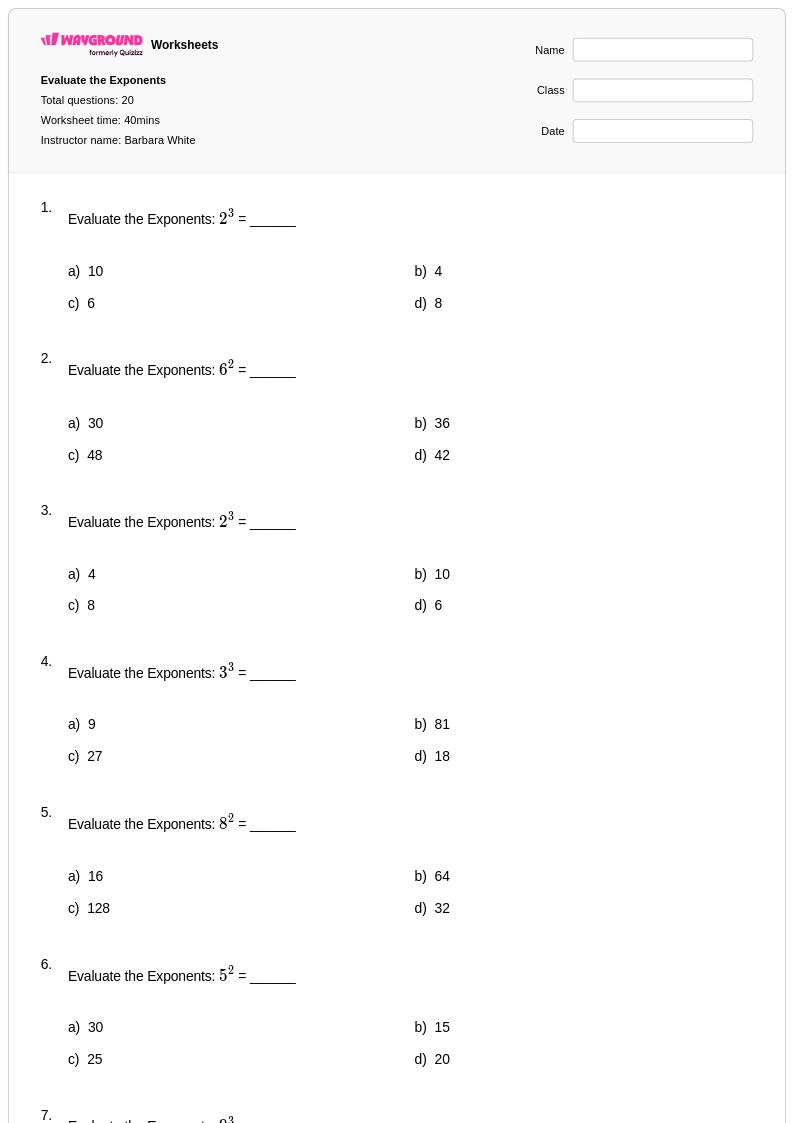
20 Q
6th
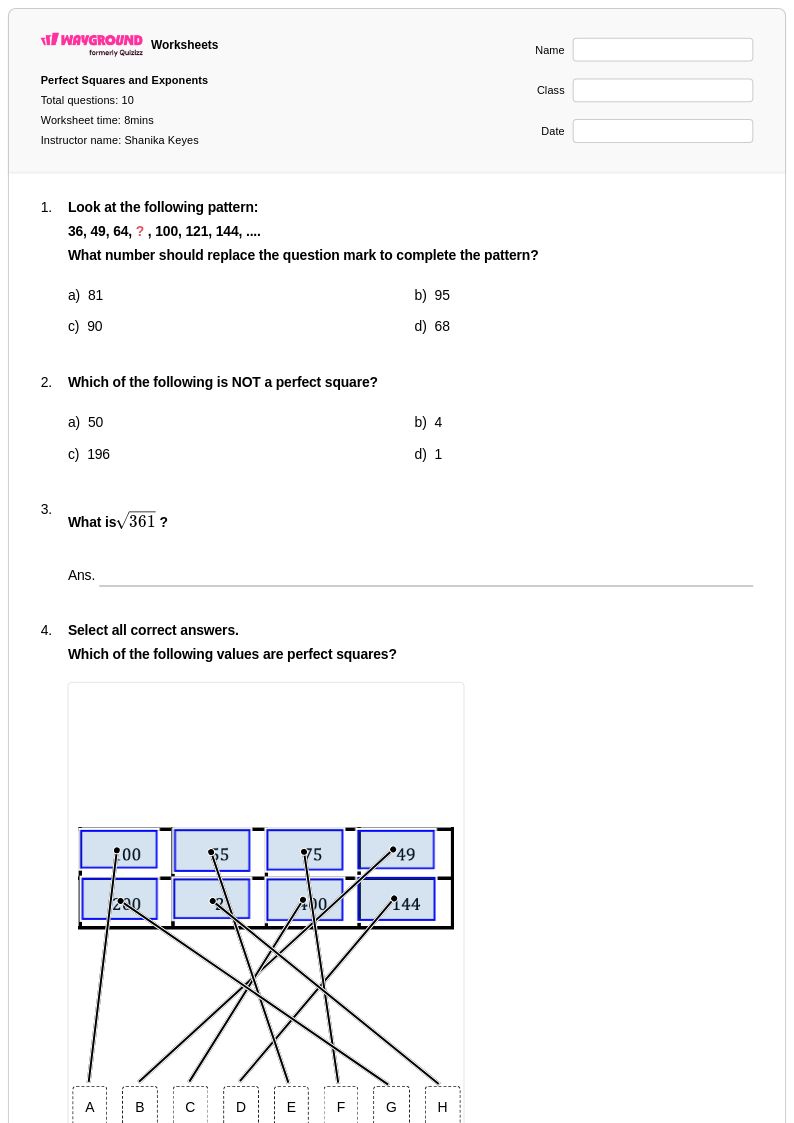
10 Q
6th - Uni
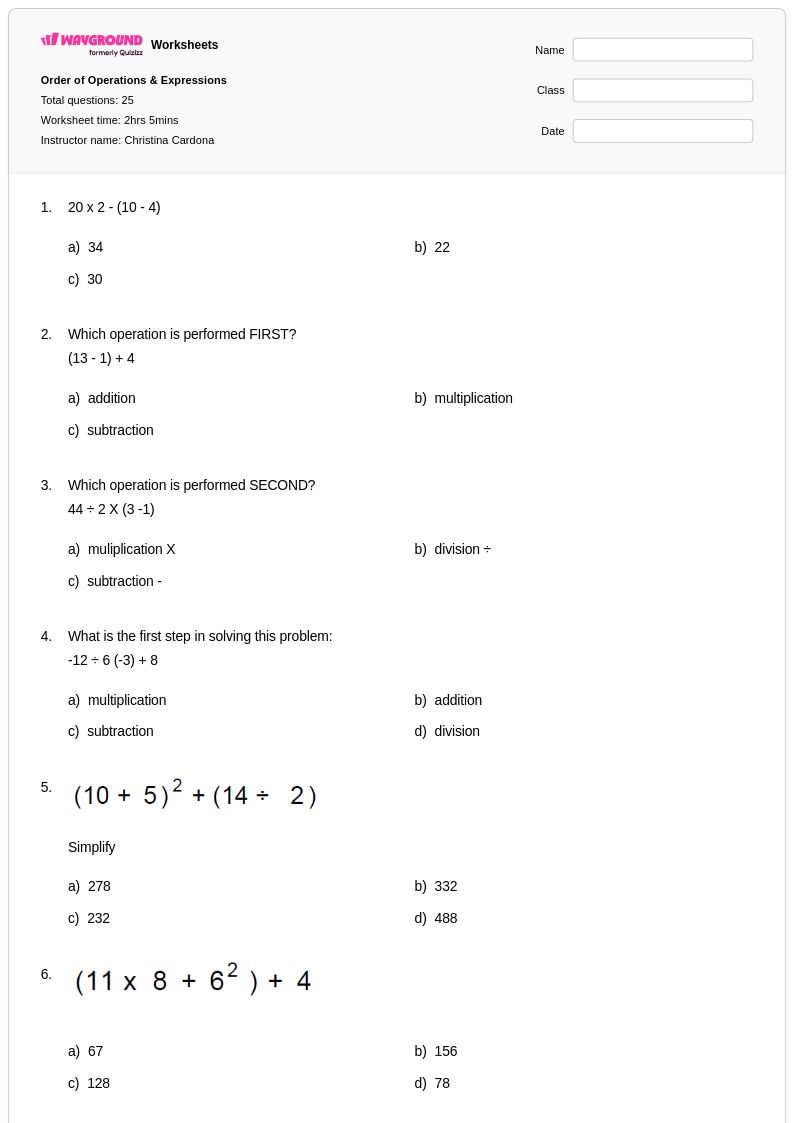
25 Q
6th
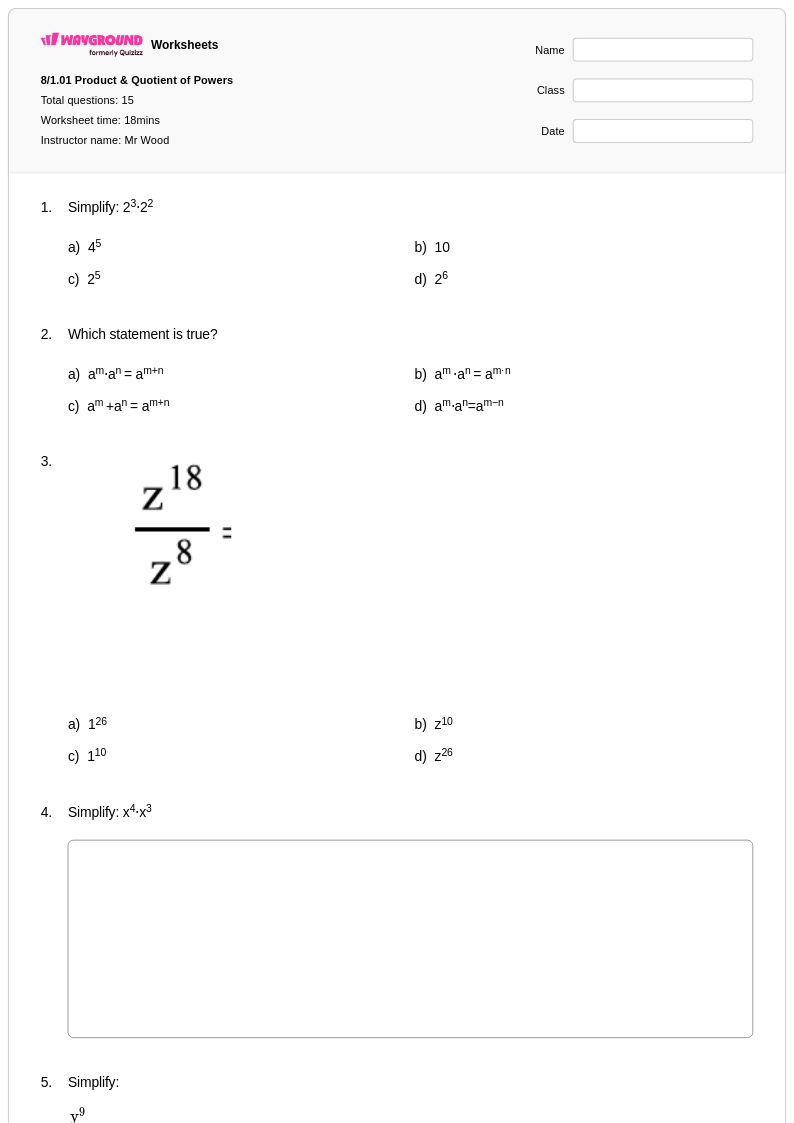
15 Q
6th - 8th
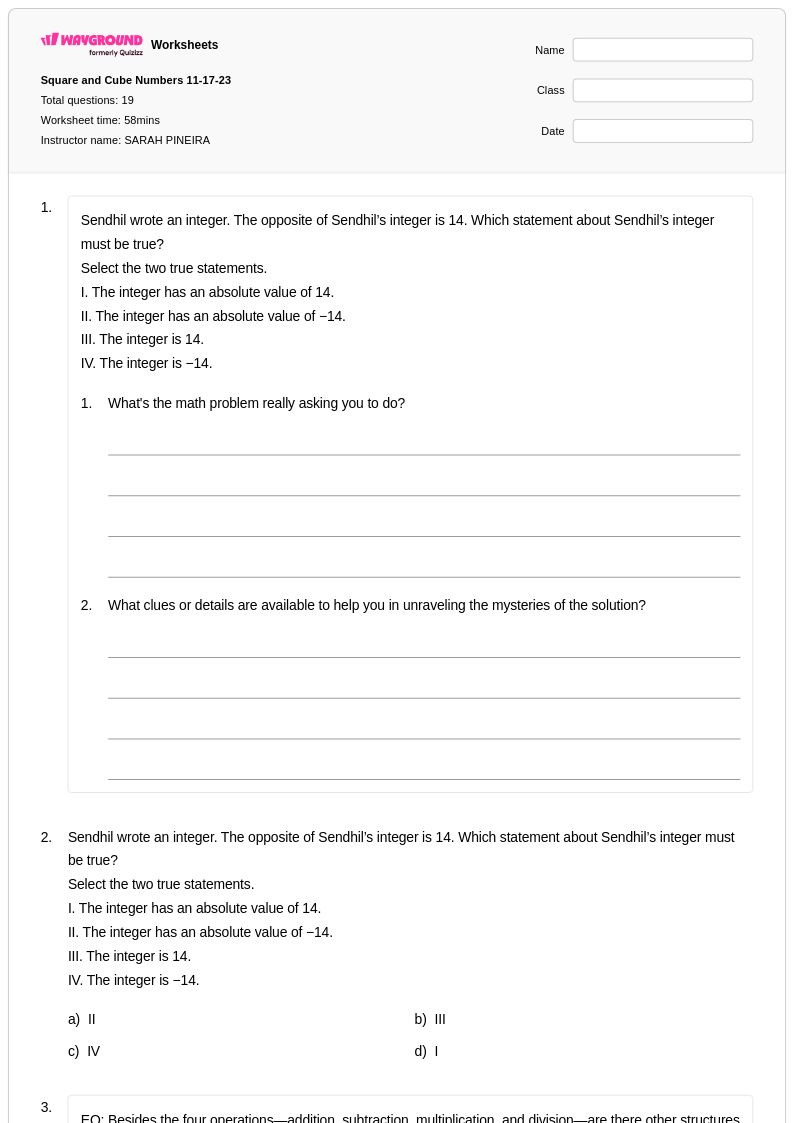
22 Q
6th
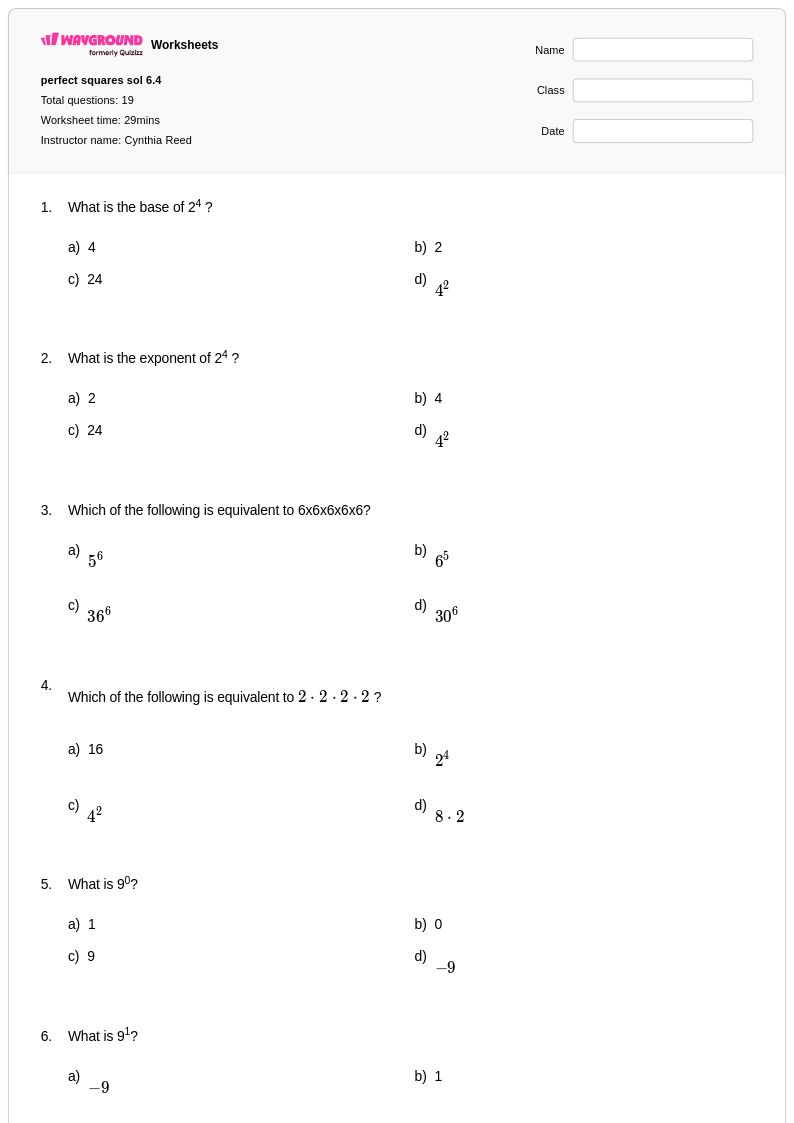
19 Q
6th - 8th
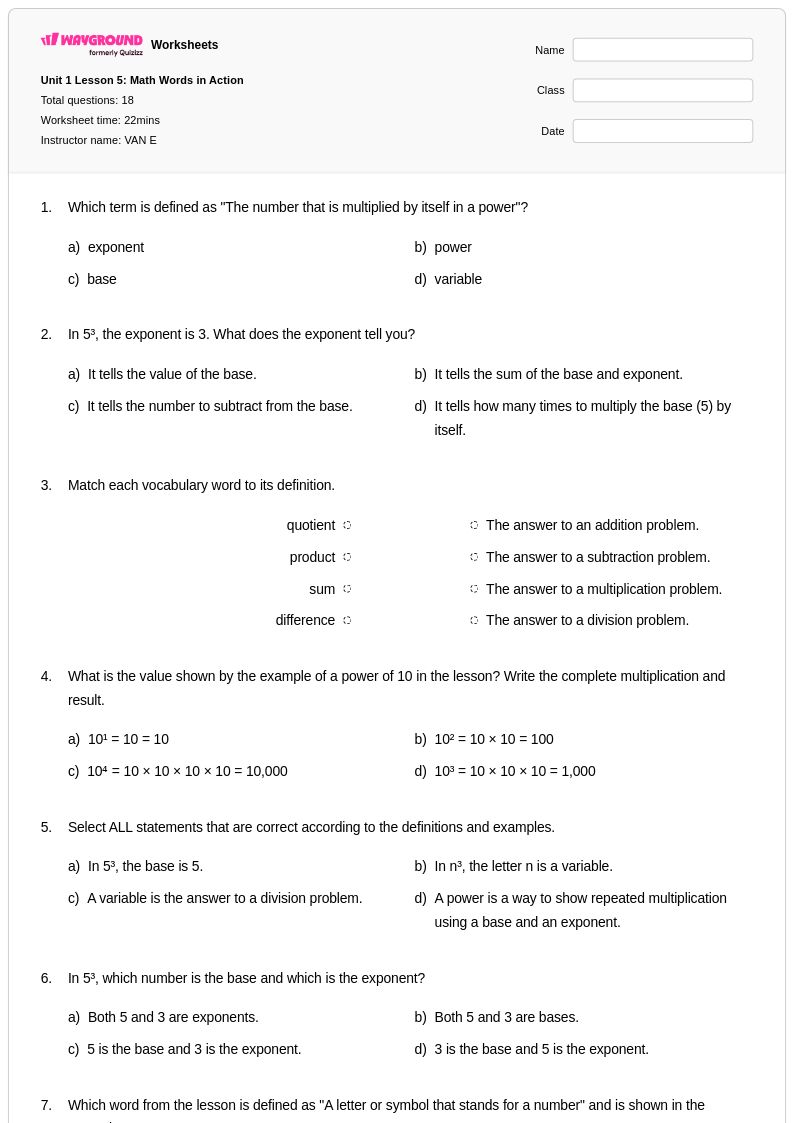
18 Q
6th
Explore Exponents Worksheets by Grades
Explore Exponents Worksheets for class 6 by Topic
Explore Other Subject Worksheets for class 6
Explore printable Exponents worksheets for Class 6
Exponents worksheets for Class 6 students available through Wayground (formerly Quizizz) provide comprehensive practice with the fundamental concepts of exponential notation and powers. These carefully designed resources help students develop essential number sense skills by working with base numbers and exponents, understanding the relationship between repeated multiplication and exponential form, and evaluating expressions involving whole number exponents. The worksheet collections include systematic practice problems that progress from basic exponential notation to more complex applications, complete with answer keys that enable immediate feedback and self-assessment. Students gain confidence working with squares, cubes, and higher powers while building the foundation for advanced mathematical concepts they will encounter in higher grades. These free printables offer structured opportunities to master exponential relationships through varied problem types and real-world applications presented in accessible PDF format.
Wayground (formerly Quizizz) supports mathematics educators with an extensive library of millions of teacher-created exponents worksheets specifically designed for Class 6 learners. The platform's robust search and filtering capabilities allow teachers to quickly locate resources that align with specific curriculum standards and learning objectives related to exponential concepts and number sense development. Advanced differentiation tools enable educators to customize worksheet difficulty levels, problem types, and complexity to meet diverse student needs, whether for remediation of foundational exponential concepts or enrichment activities involving multi-step problems with exponents. The flexible format options, including both printable and digital versions, facilitate seamless integration into various instructional settings, from traditional classroom environments to hybrid and remote learning situations. This comprehensive approach to worksheet management streamlines lesson planning while providing targeted skill practice that reinforces exponential thinking and mathematical reasoning.
FAQs
How do I teach exponent rules to sixth graders?
What exercises help sixth graders practice the properties of exponents?
What mistakes do sixth graders make with exponent rules?
How do I use Wayground's Grade 6 exponents worksheets?
Are Grade 6 exponents aligned to Common Core?
How can I differentiate exponent practice for my sixth-grade class?