Free Printable Flower Anatomy Worksheets for Class 5
Class 5 flower anatomy worksheets from Wayground help students explore plant structures through engaging printables, practice problems, and free PDF resources with comprehensive answer keys for effective biology learning.
Explore printable Flower Anatomy worksheets for Class 5
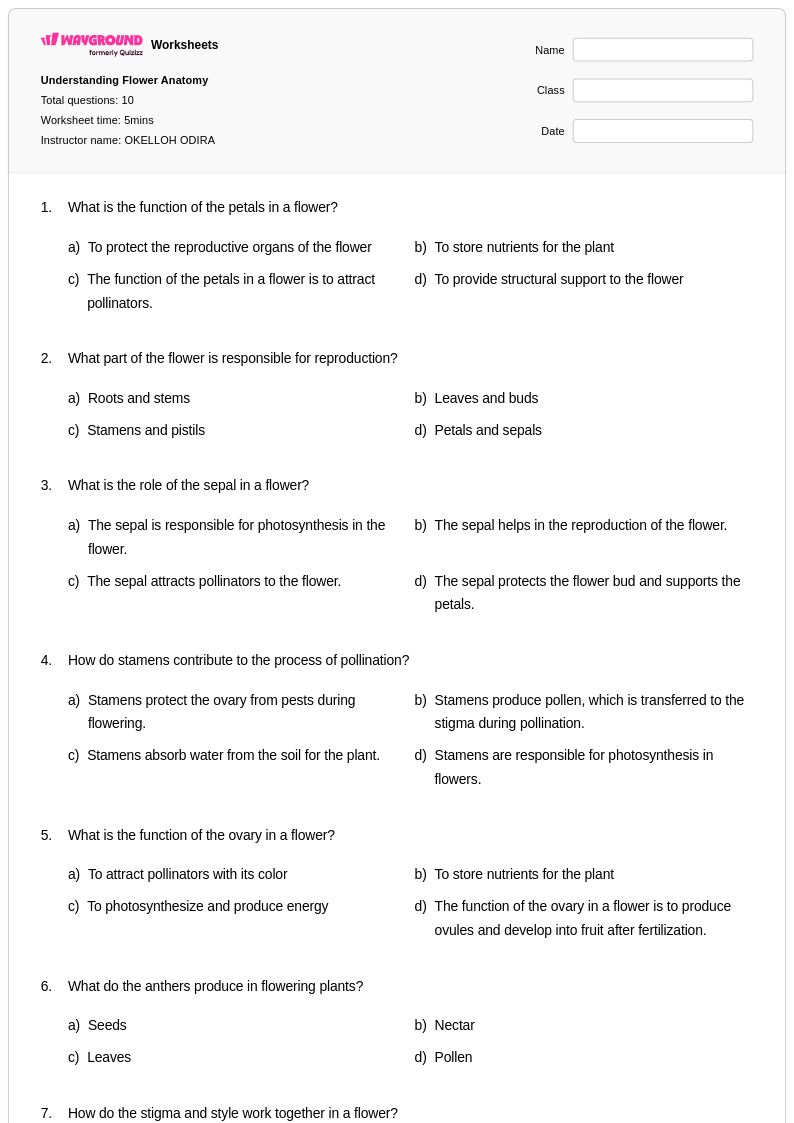
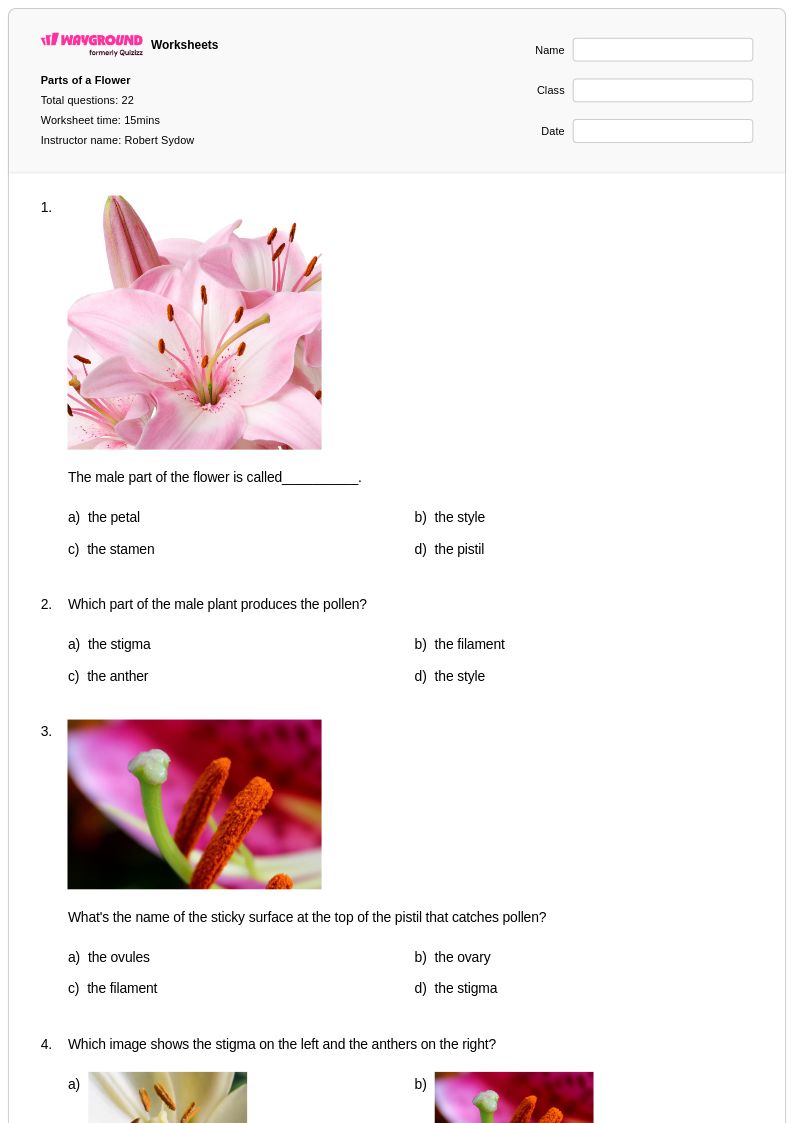
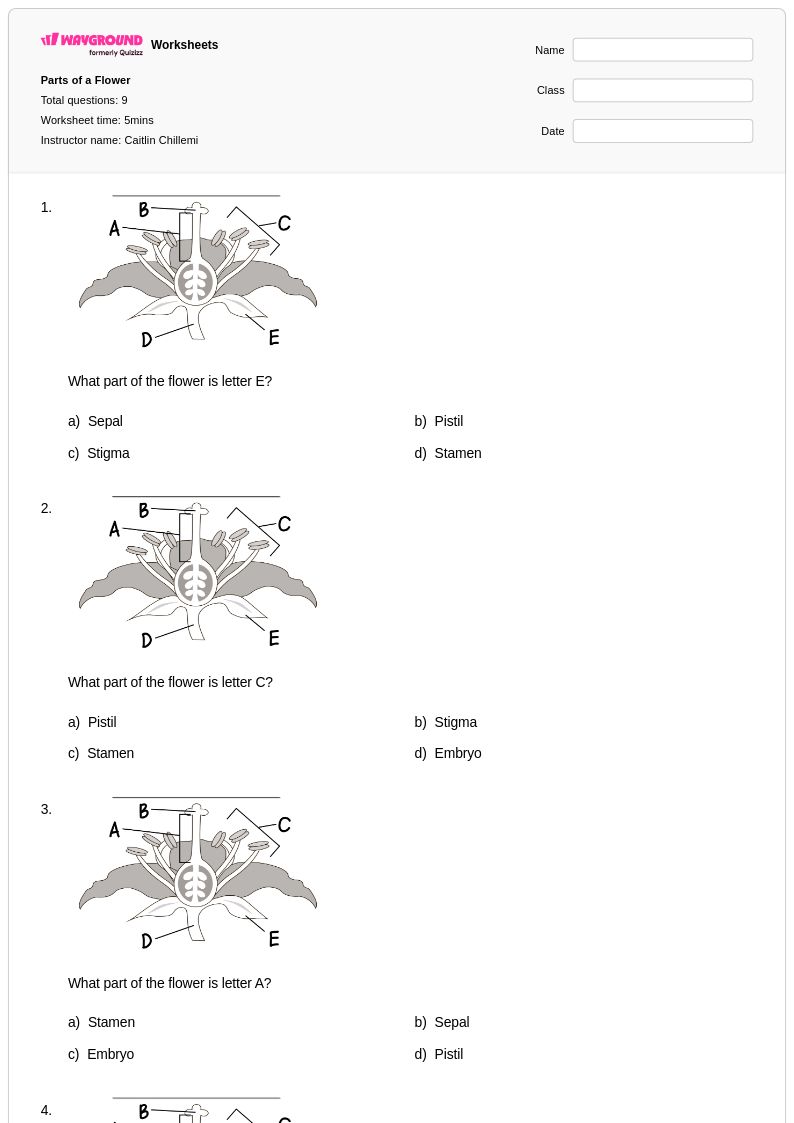
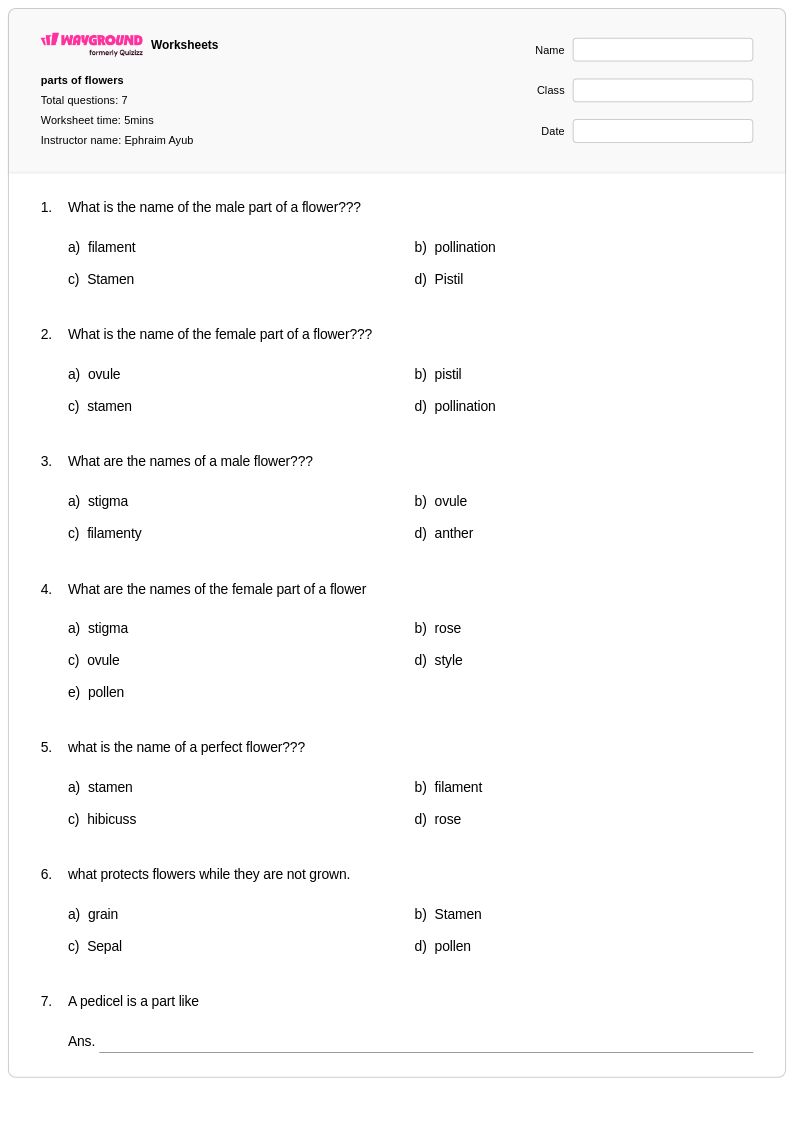
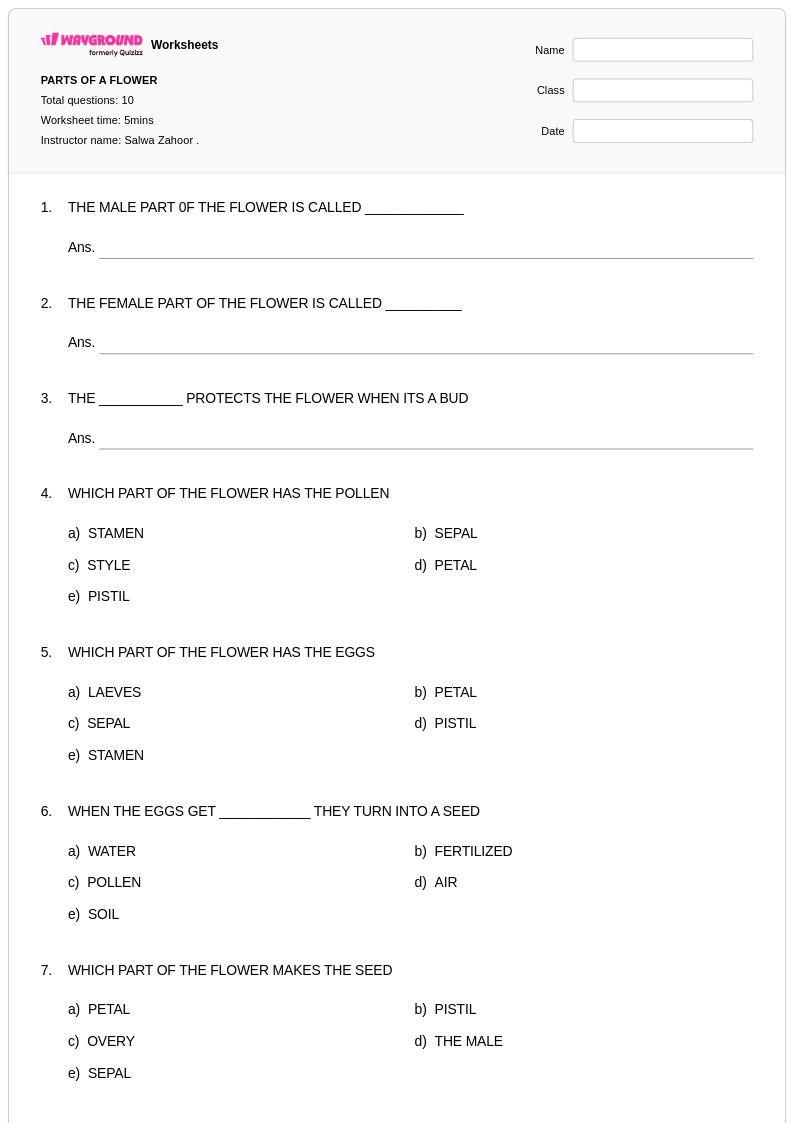
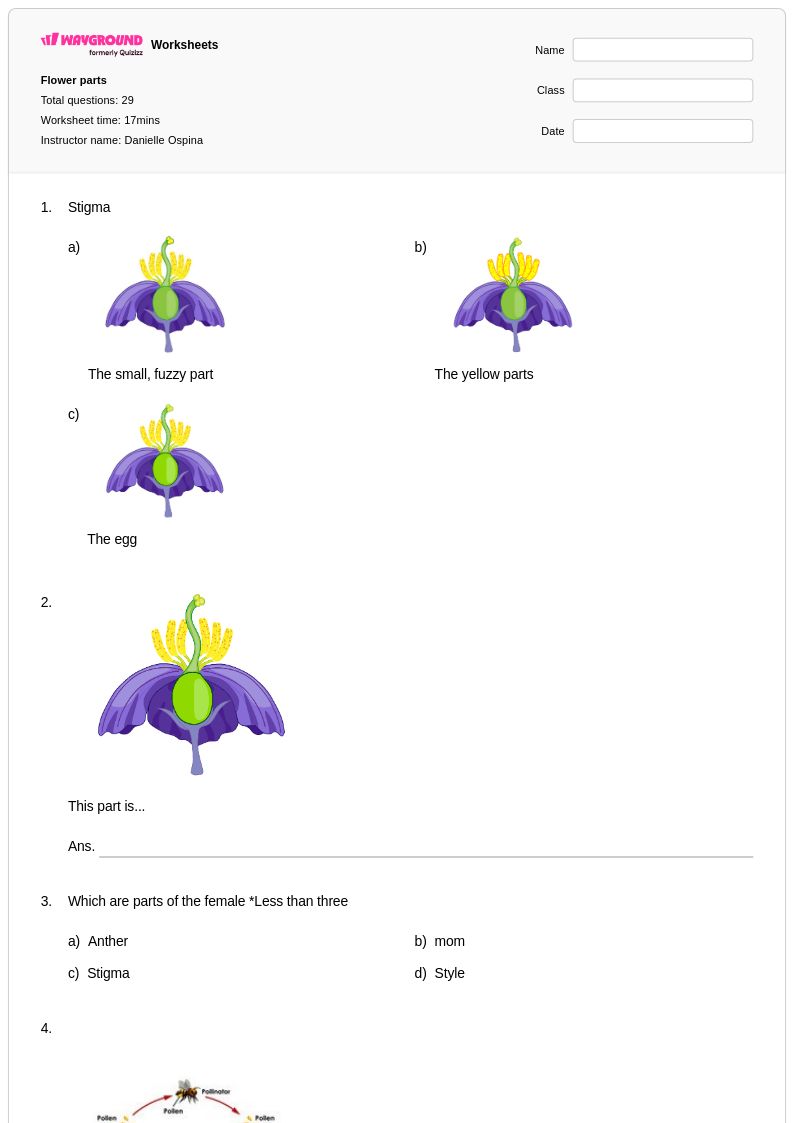
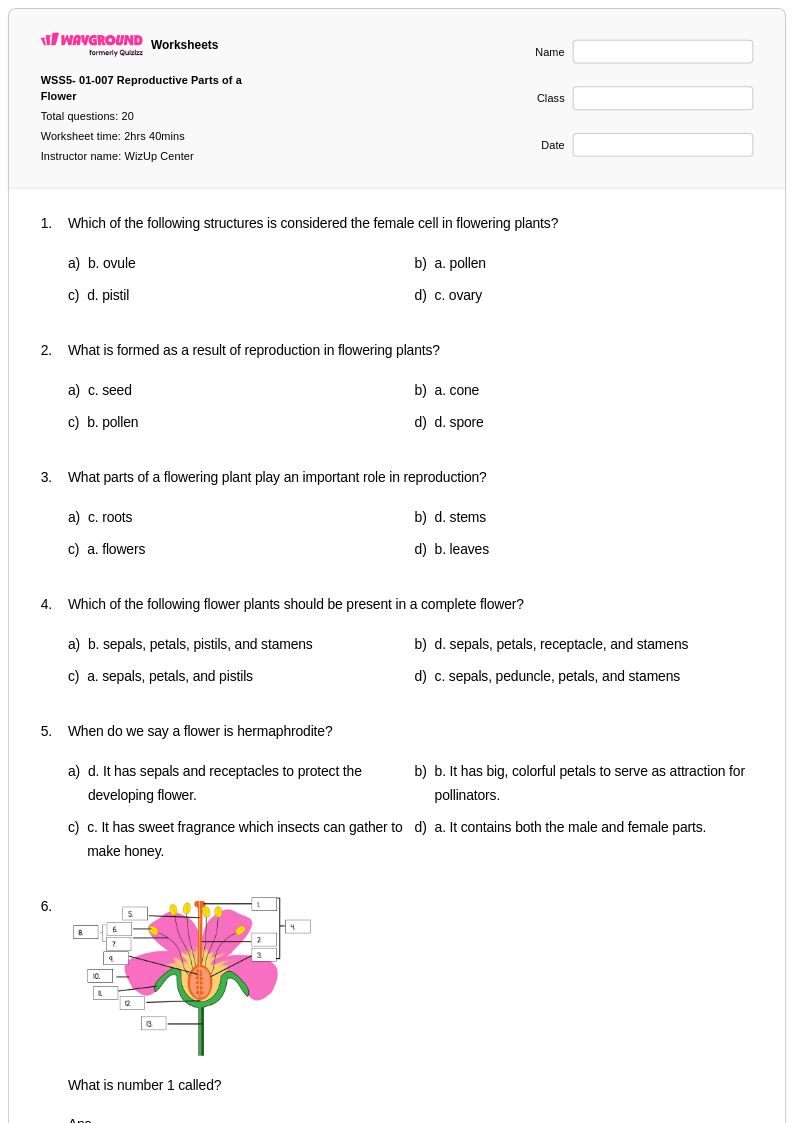
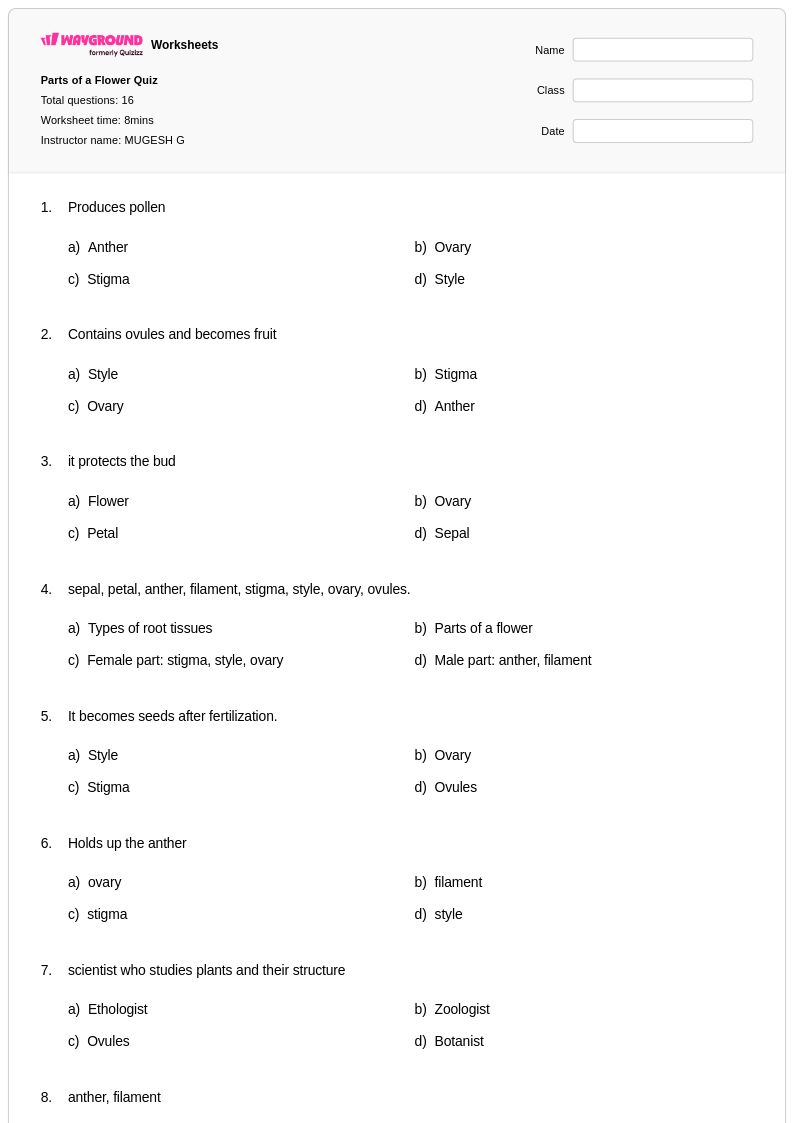
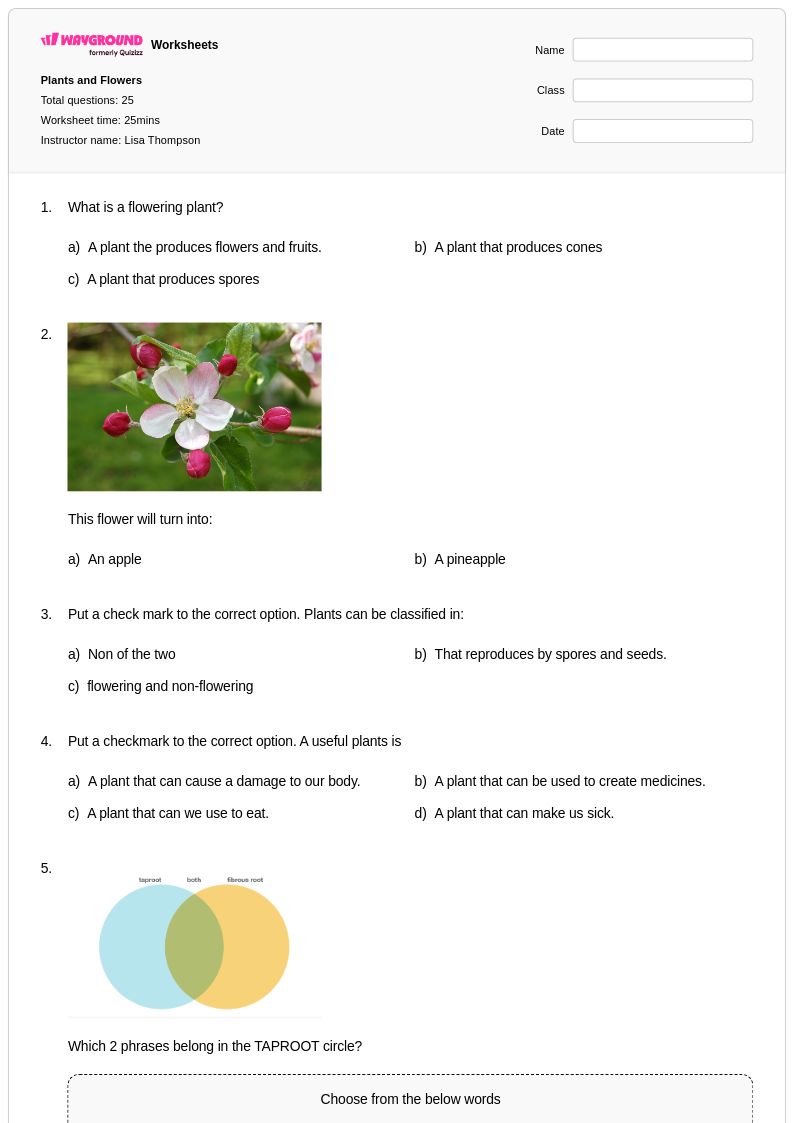
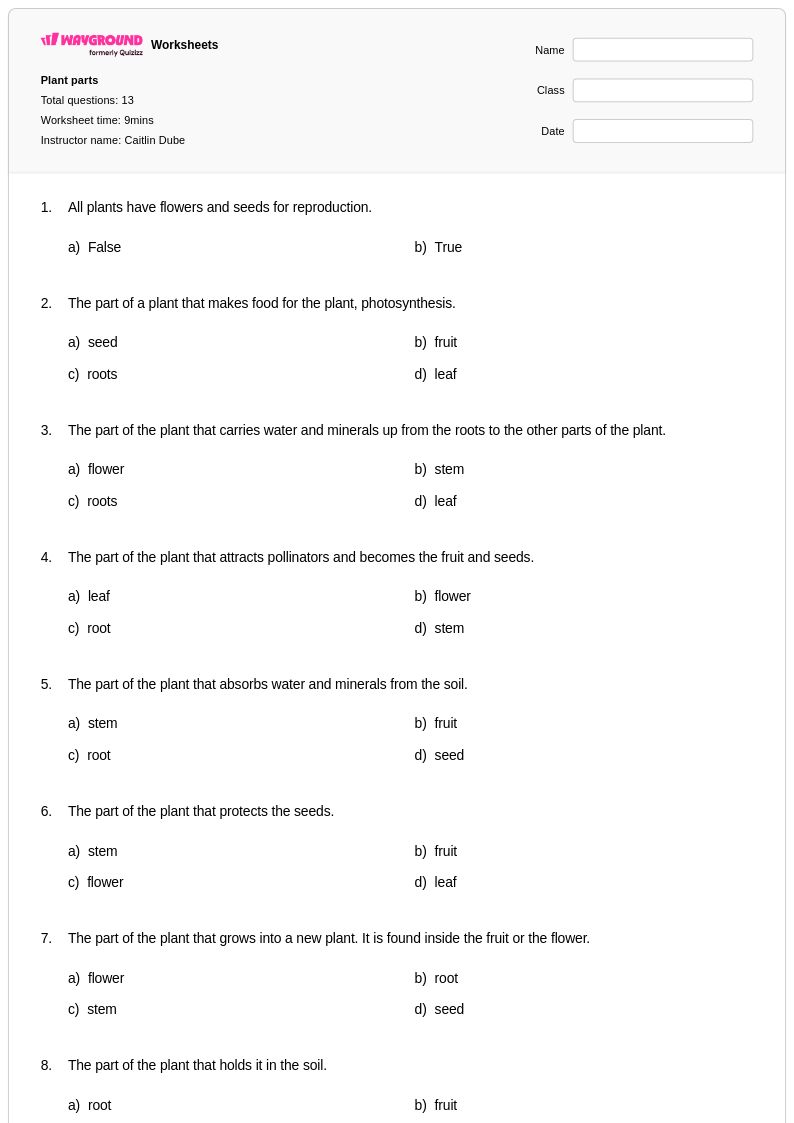
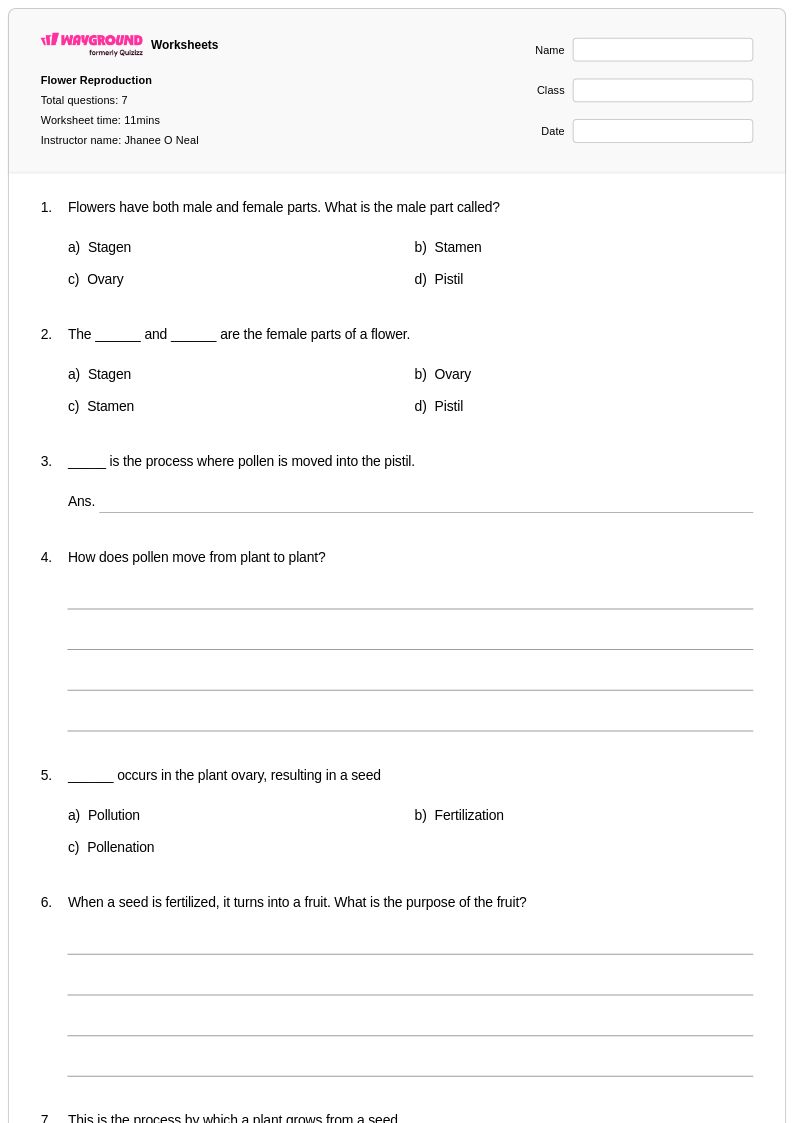
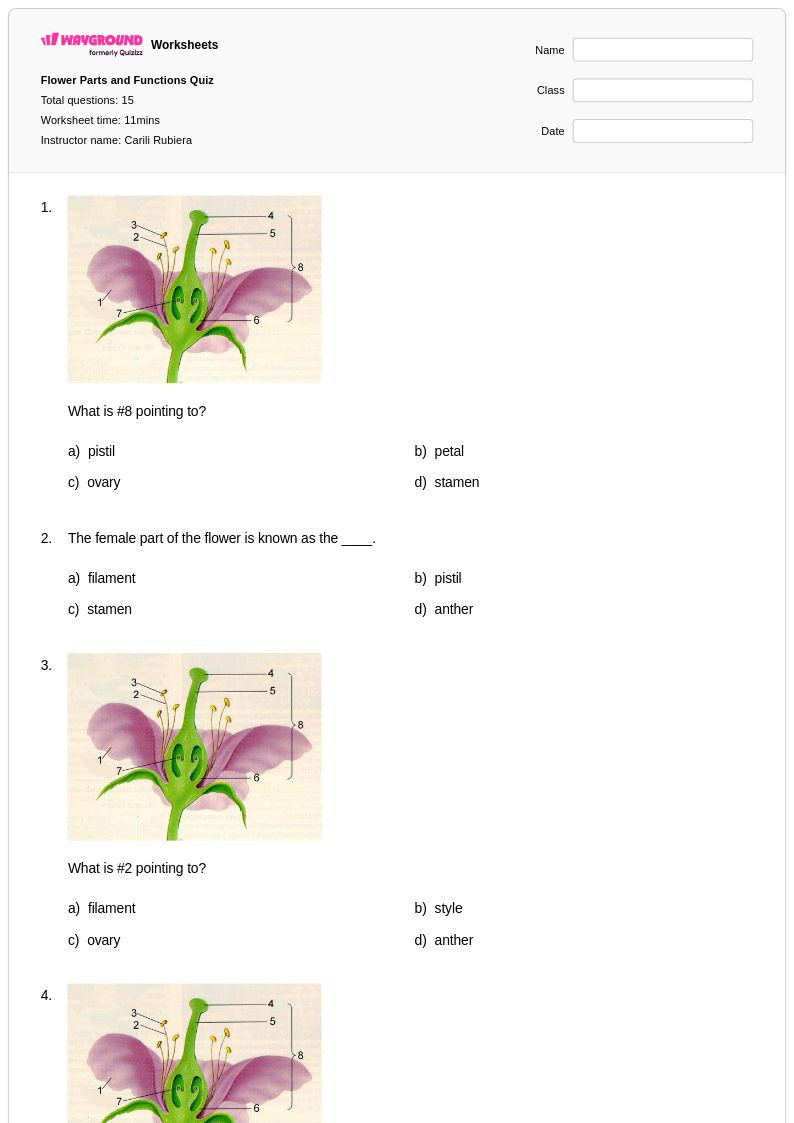
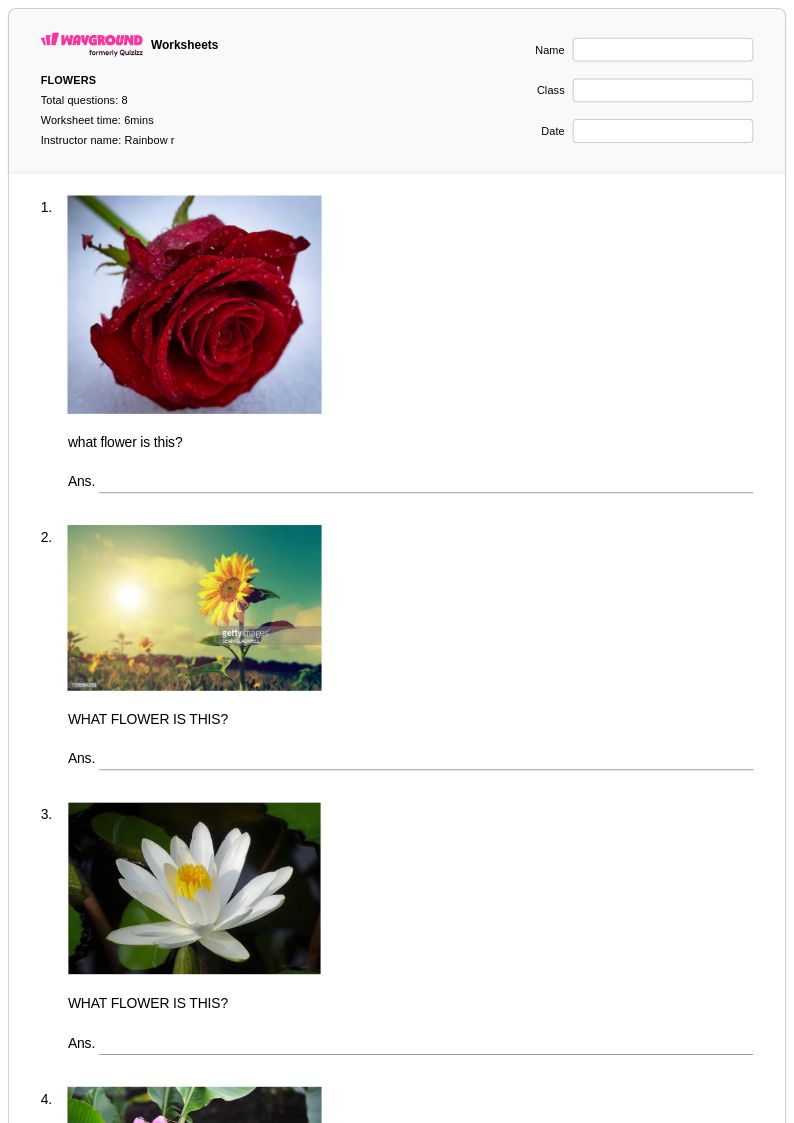
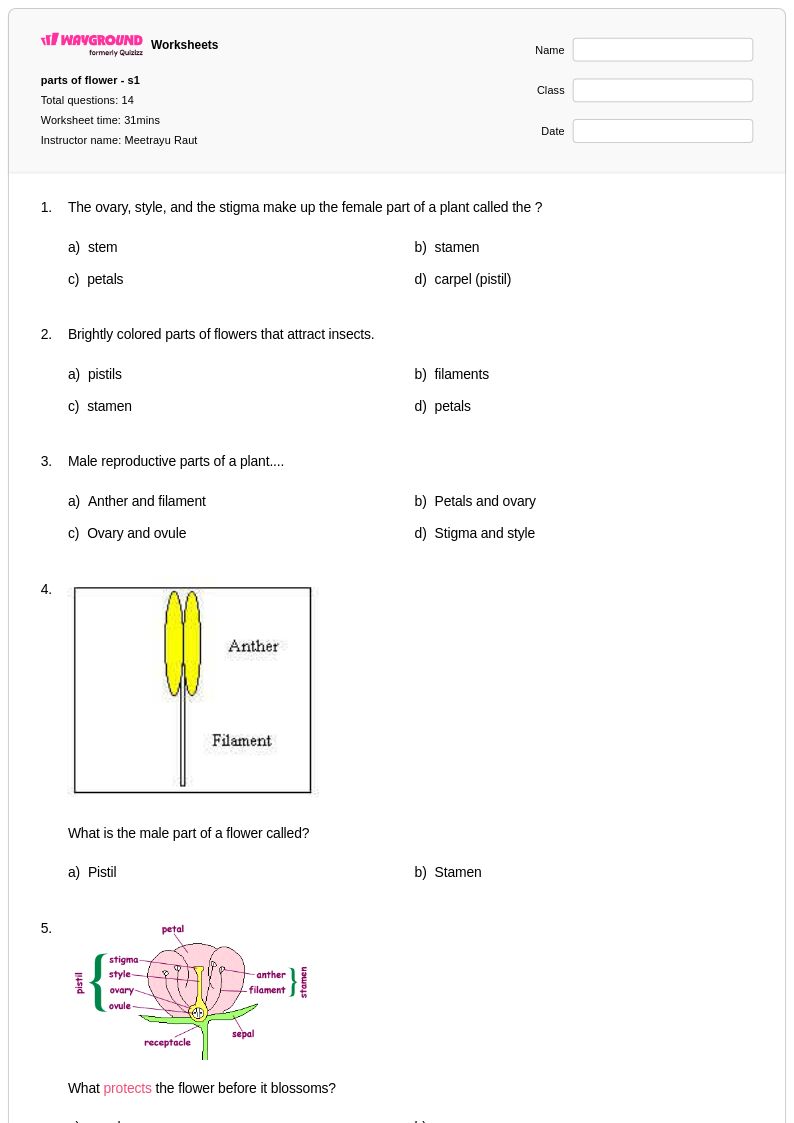
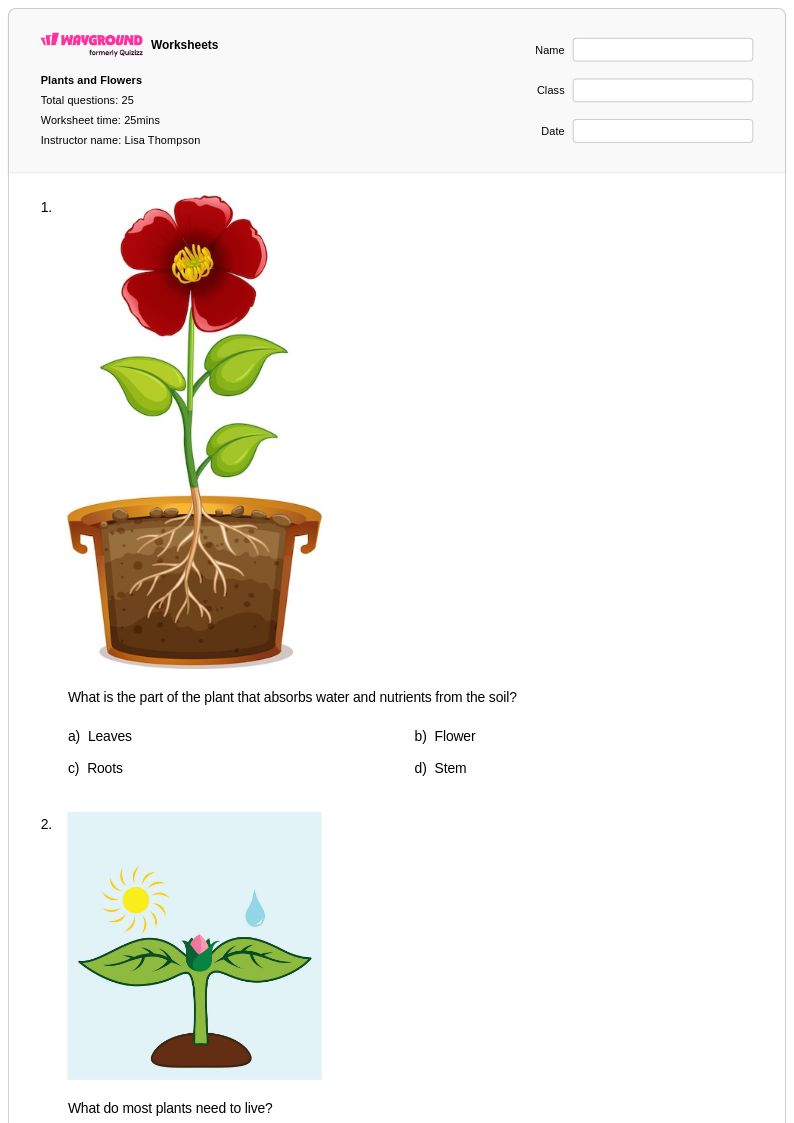
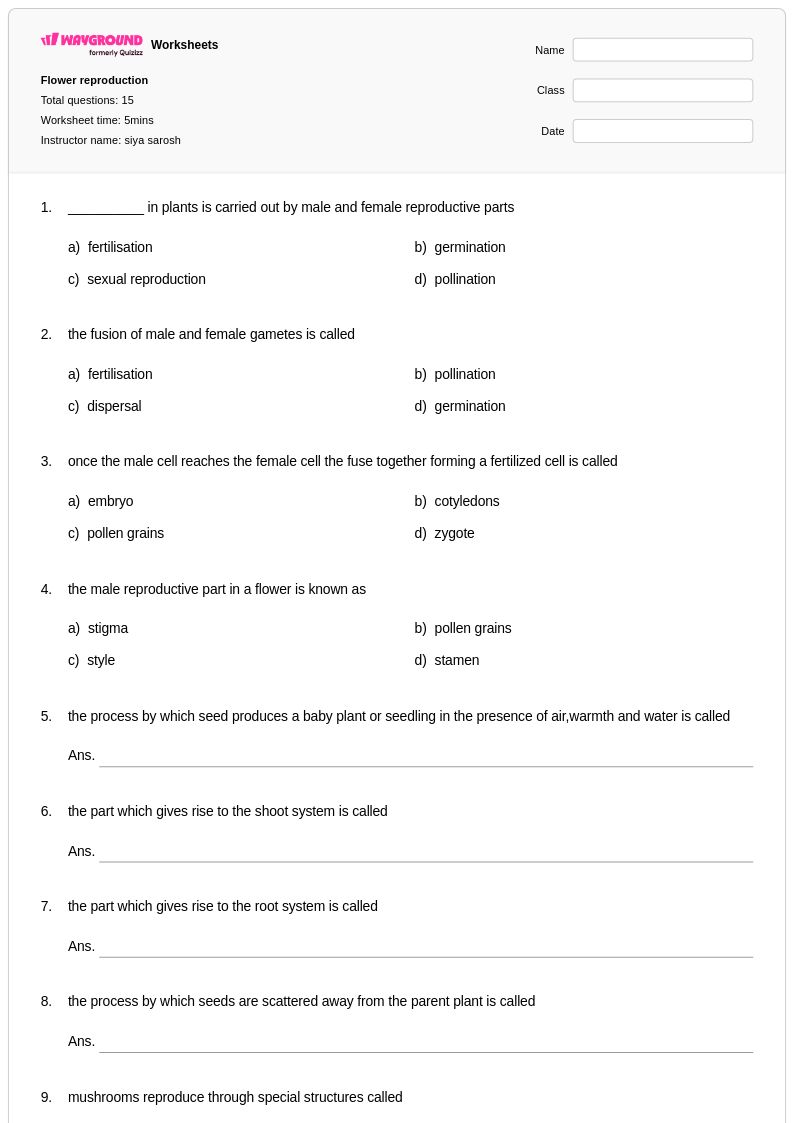
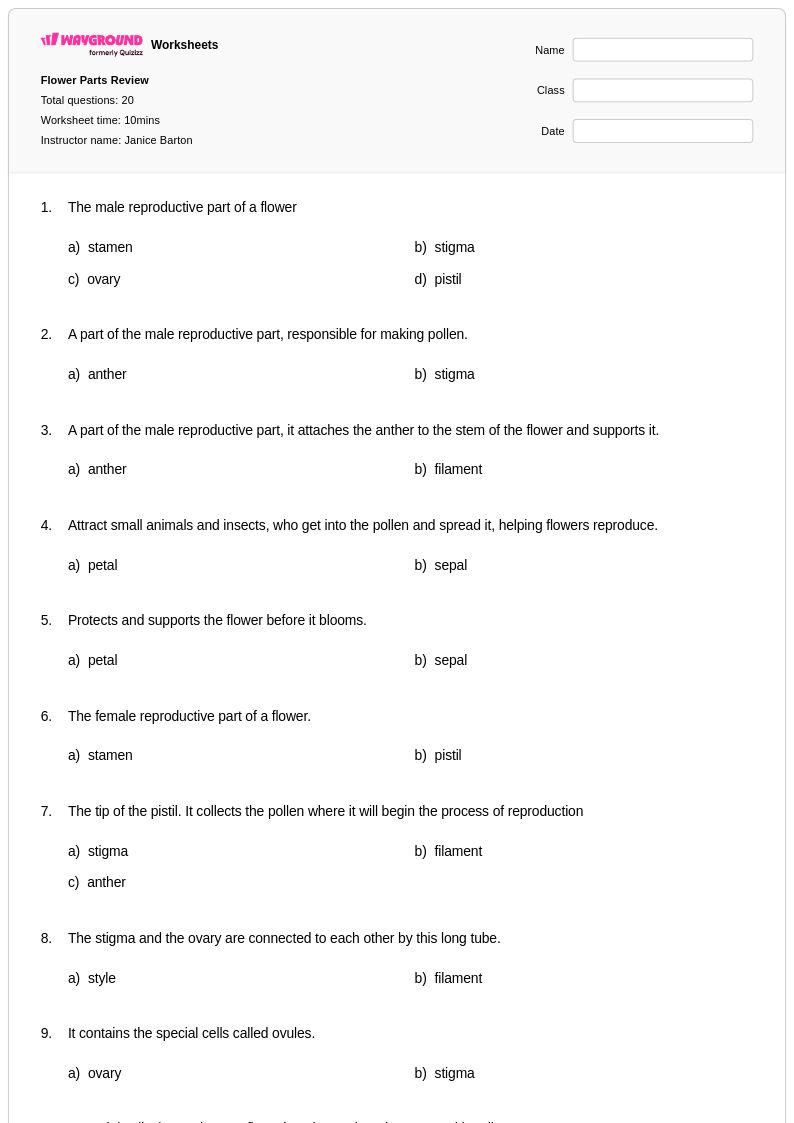
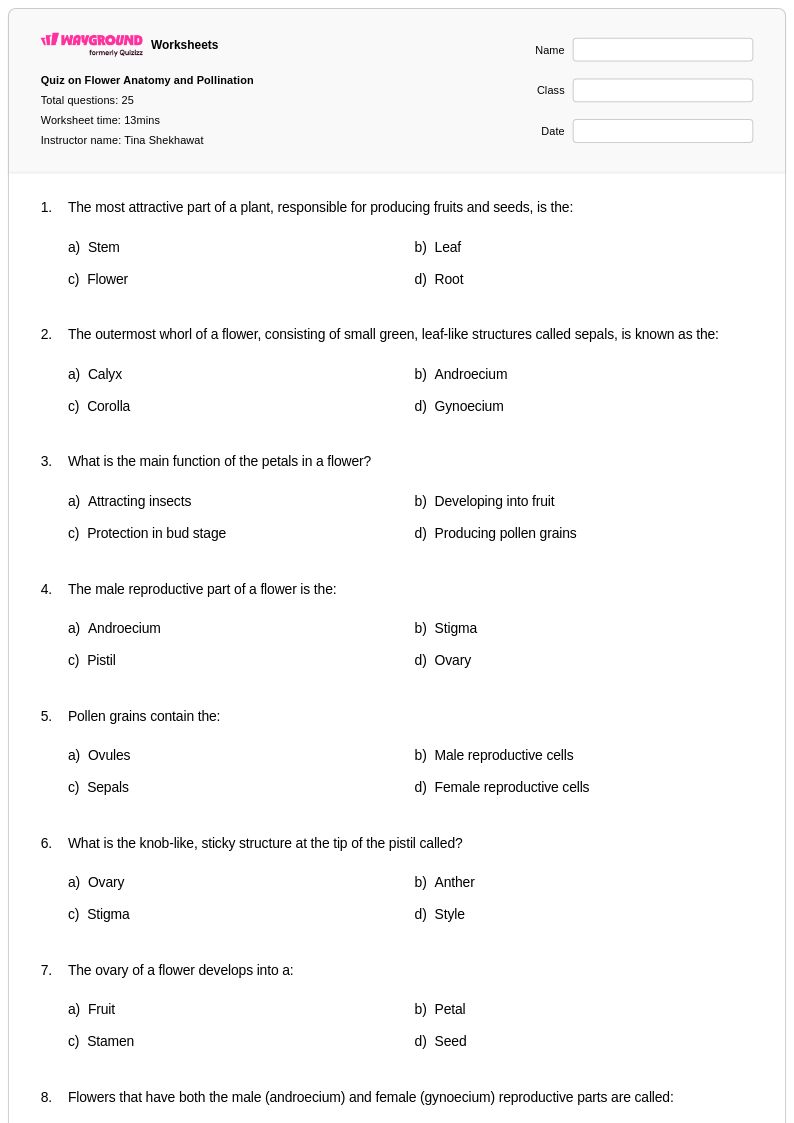
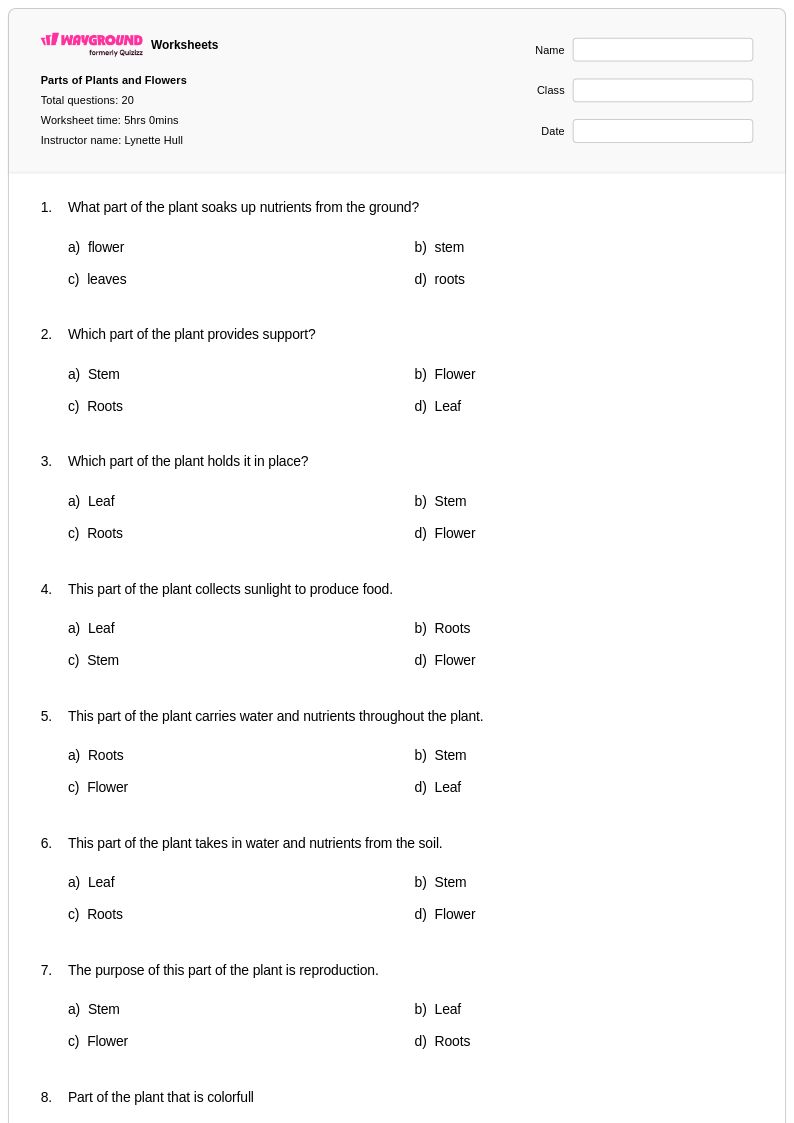
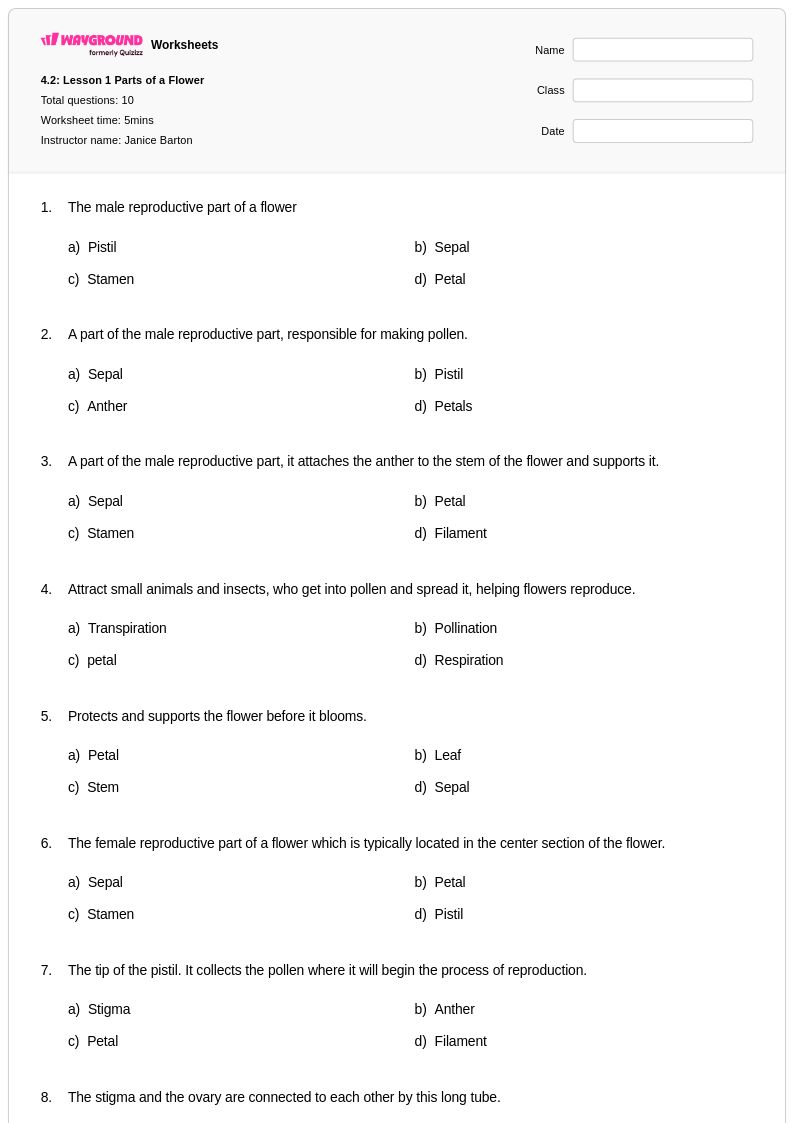
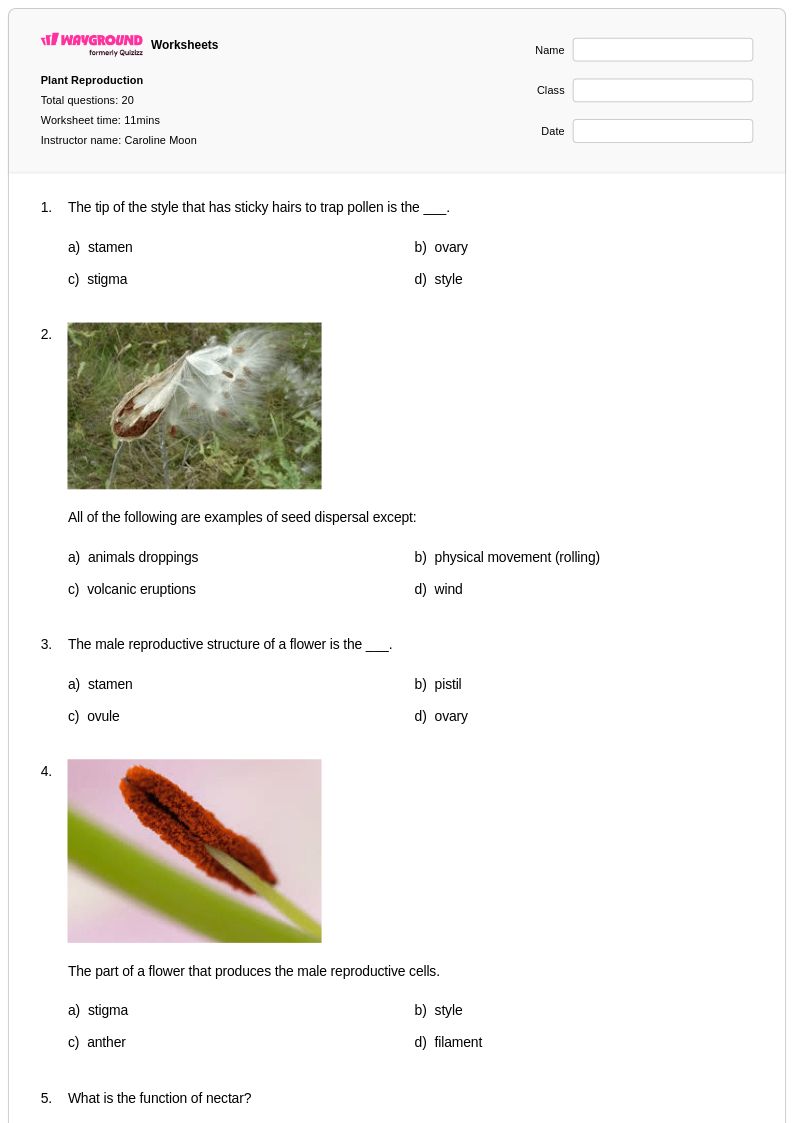
Flower anatomy worksheets for Class 5 students available through Wayground (formerly Quizizz) provide comprehensive exploration of plant reproductive structures and their essential functions. These educational resources systematically guide students through identifying key components such as petals, sepals, stamens, pistils, and other critical flower parts while developing foundational botanical vocabulary and scientific observation skills. The collection includes detailed diagrams, labeling activities, and practice problems that reinforce understanding of how flowers facilitate plant reproduction and survival. Teachers can access printable pdf versions alongside digital formats, with complete answer key materials supporting both independent student work and guided instruction. These free resources strengthen students' ability to connect structure with function in biological systems while building the observational and analytical skills essential for scientific inquiry.
Wayground's extensive collection draws from millions of teacher-created resources specifically designed to support Class 5 flower anatomy instruction across diverse classroom environments. The platform's robust search and filtering capabilities enable educators to locate materials aligned with state science standards while offering differentiation tools that accommodate varying student readiness levels and learning preferences. Teachers can customize worksheets to emphasize specific anatomical structures or biological processes, creating targeted practice opportunities for remediation or enrichment as needed. The dual availability of printable and digital formats provides instructional flexibility, allowing seamless integration into both traditional classroom settings and technology-enhanced learning environments. This comprehensive resource ecosystem supports effective lesson planning by providing educators with scientifically accurate, grade-appropriate materials that can be adapted to meet individual student needs and curriculum requirements.
FAQs
How do I teach flower anatomy to students effectively?
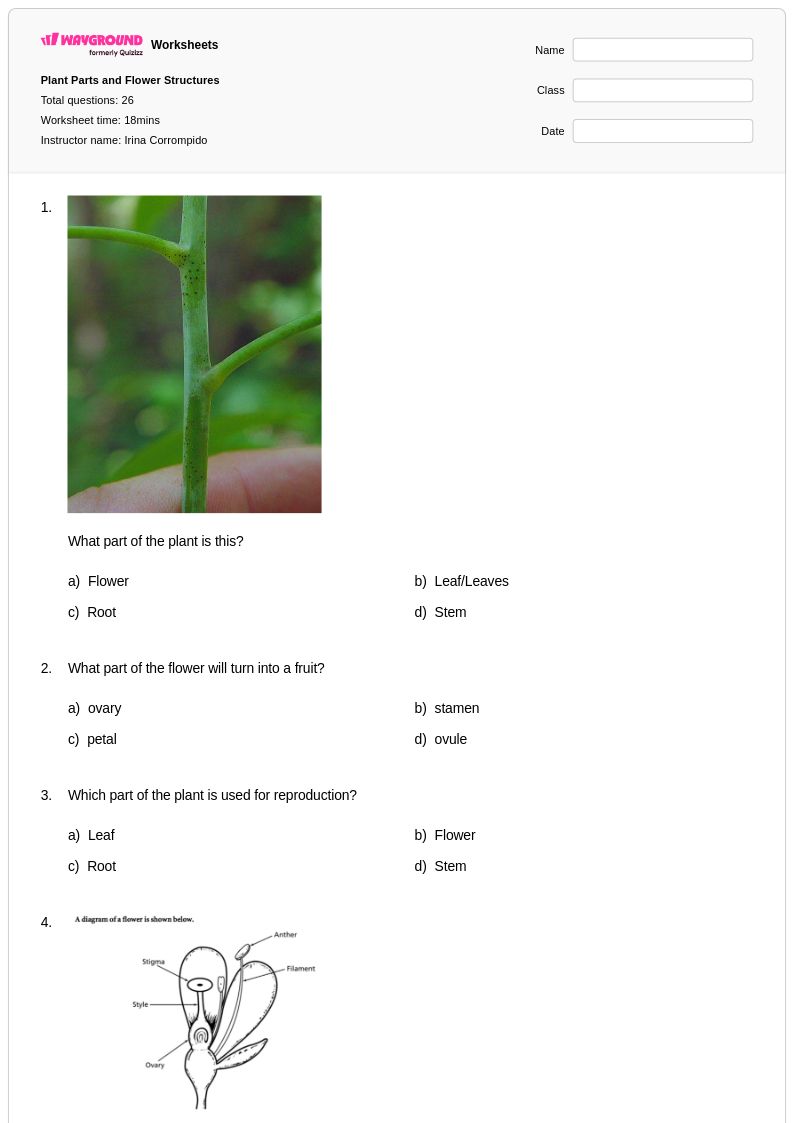
The most effective approach to teaching flower anatomy combines visual labeling with hands-on dissection or observation. Start by introducing the major structures — petals, sepals, stamens, pistils, and reproductive organs — before connecting each part to its function in pollination and fertilization. Using labeled diagrams alongside real or model flowers helps students build accurate mental maps of plant structure. Reinforcing the relationship between form and function, rather than memorizing names in isolation, leads to deeper conceptual understanding.
What exercises help students practice identifying flower parts?
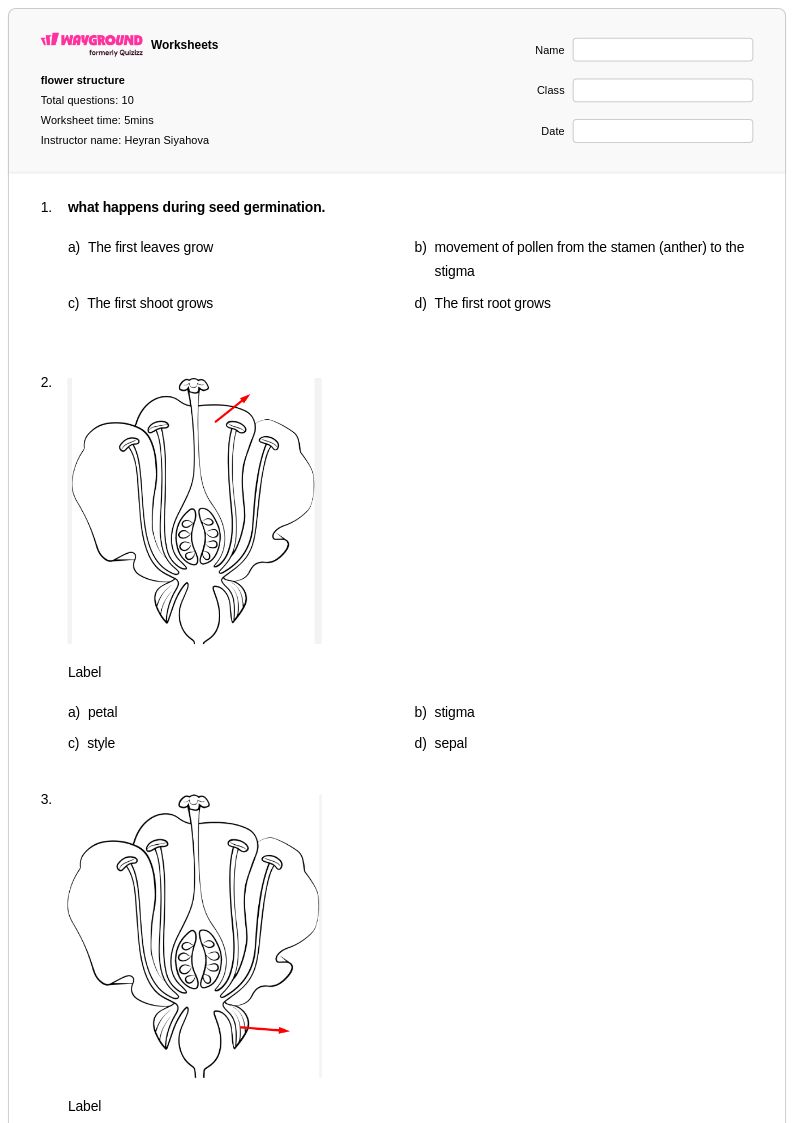
Diagram labeling exercises are the most direct way for students to practice identifying flower structures such as the pistil, stamen, petals, and sepals. Cross-sectional diagram activities add depth by requiring students to identify internal reproductive organs like the ovary, ovule, and anther. Comparative exercises that ask students to distinguish between male and female reproductive structures, or between complete and incomplete flowers, build higher-order botanical reasoning. These practice types work well as classwork, homework, or low-stakes assessment preparation.
What mistakes do students commonly make when learning flower anatomy?
One of the most common errors is confusing the pistil and stamen — students frequently swap the male and female reproductive structures or misattribute their functions. Another frequent misconception is treating petals as the most important part of a flower, when in fact the reproductive organs are central to a flower's biological purpose. Students also often struggle to connect structural features, like the sticky stigma surface, to their functional role in capturing pollen. Targeted diagram exercises that require students to label and explain function simultaneously can address these gaps directly.
How can I use flower anatomy worksheets in different classroom settings?
Flower anatomy worksheets on Wayground are available as both printable PDFs and in digital formats, making them adaptable for traditional print-based instruction, 1:1 device classrooms, and hybrid learning environments. Printable versions work well for in-class labeling activities, dissection follow-ups, or take-home review. Digital versions can be hosted as a quiz directly on Wayground, giving teachers access to real-time student responses. All worksheets include complete answer keys, so they can be used for self-paced review, peer checking, or teacher-led correction without additional preparation.
How do I differentiate flower anatomy instruction for students at different levels?
For students who need additional support, simplified diagrams that focus on the four or five major external structures before introducing internal reproductive anatomy can reduce cognitive overload. More advanced learners benefit from comparative exercises that examine how flower structure varies across species and connects to specific pollination strategies. On Wayground, teachers can apply accommodations such as read aloud support, reduced answer choices, and extended time to individual students, allowing the same worksheet to serve multiple learner profiles within a single classroom session.
How does flower anatomy connect to broader plant biology concepts?
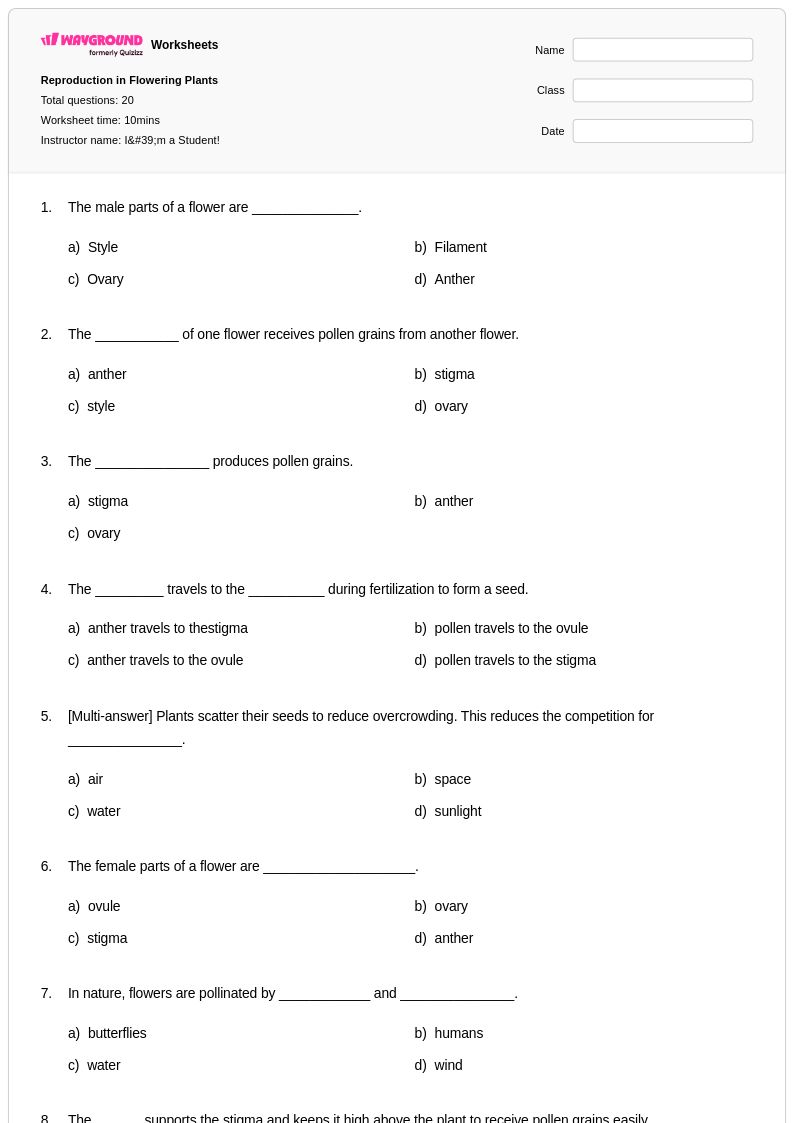
Flower anatomy is the structural foundation for understanding plant reproduction, which connects directly to pollination ecology, fertilization, seed development, and species continuity. Understanding how the stamen produces pollen and how the pistil receives it links structural knowledge to the broader processes of sexual reproduction in plants. This topic also bridges into genetics when discussing how cross-pollination introduces genetic variation. Teachers covering life cycles, ecosystems, or plant adaptations will find flower anatomy an essential anchor concept.