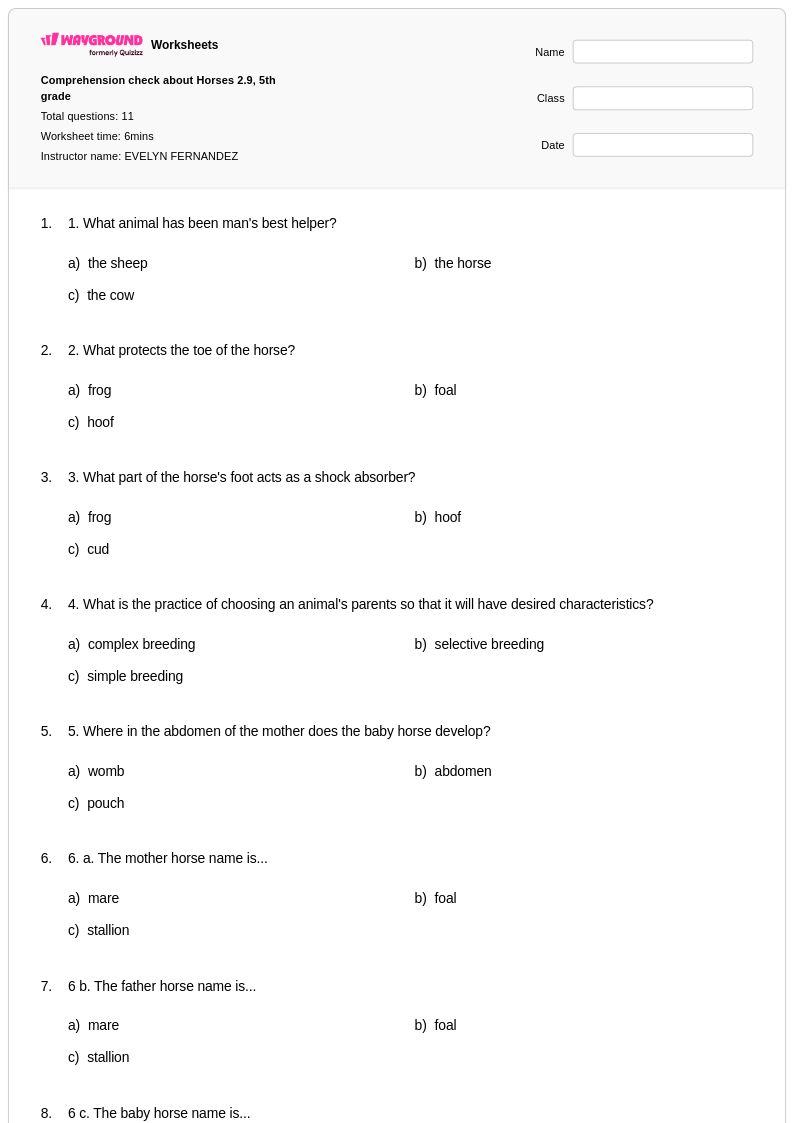
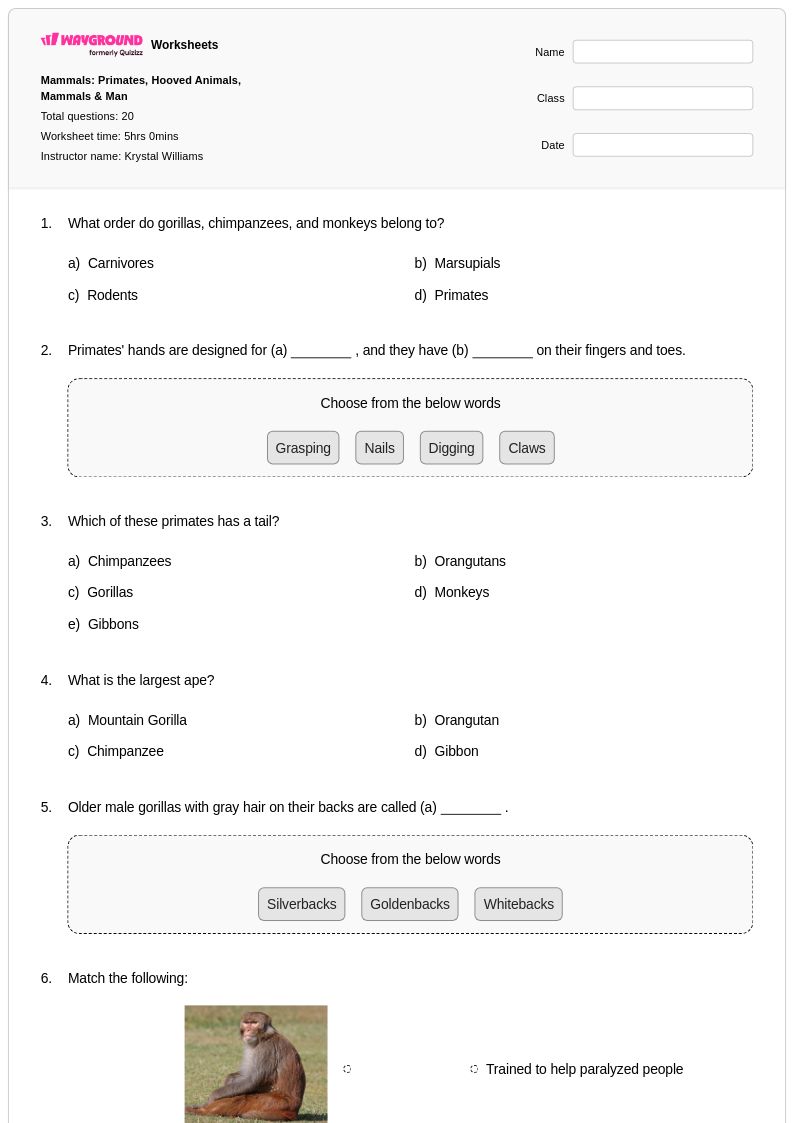
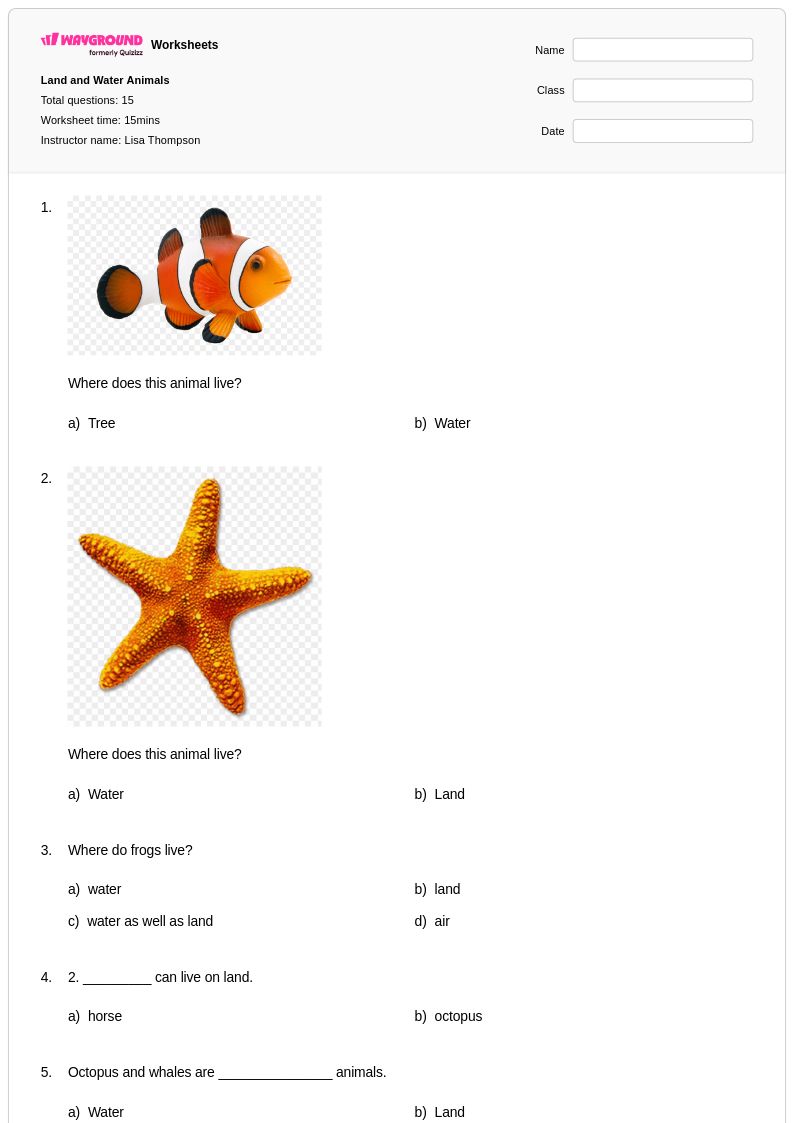
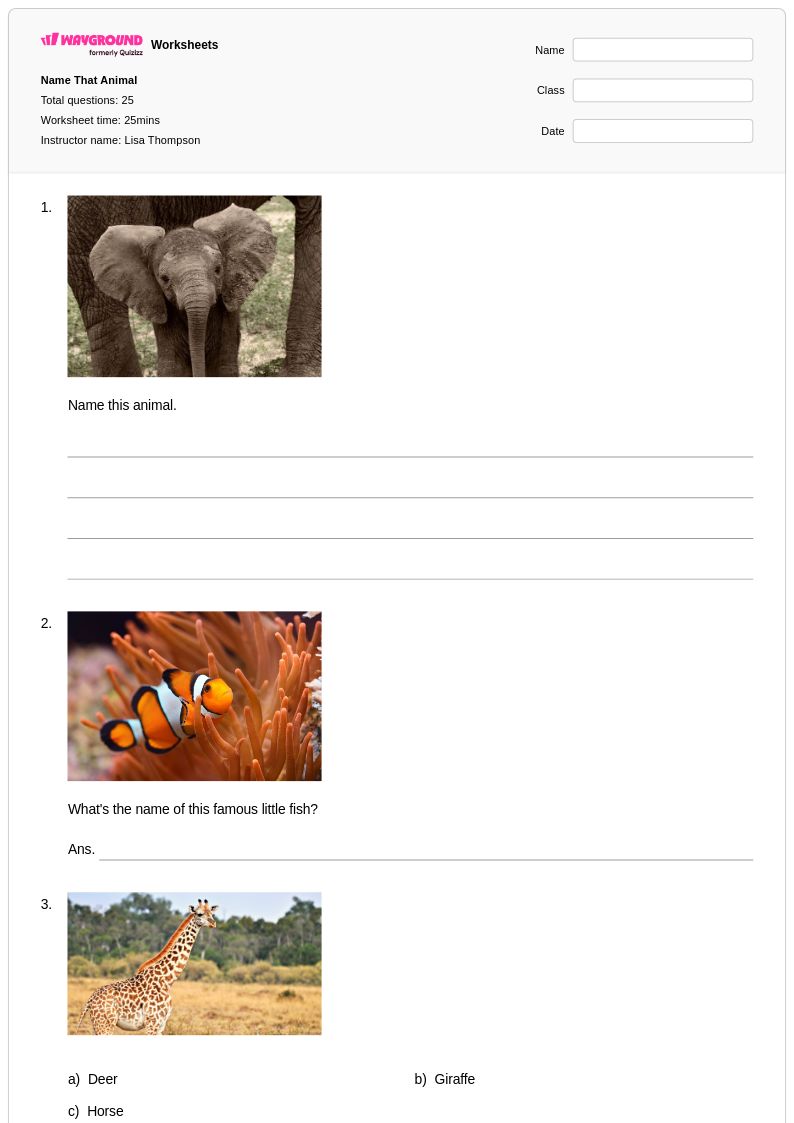
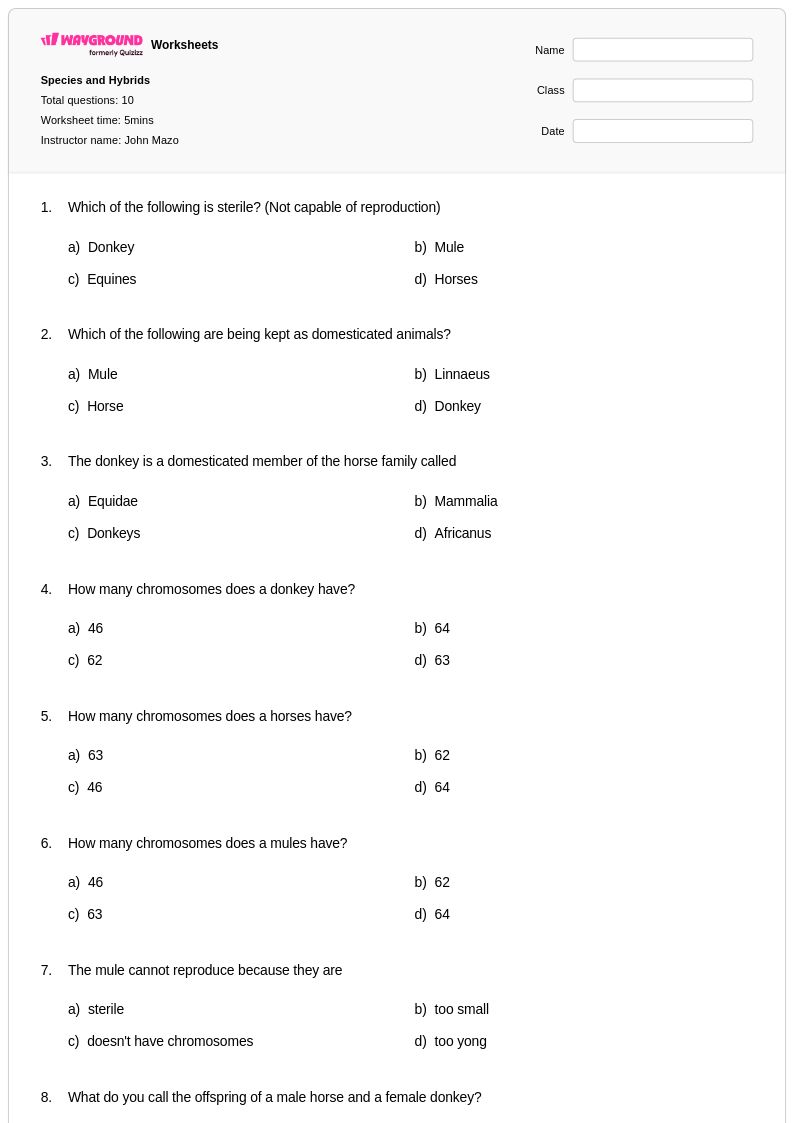
Explore Wayground's free Class 5 horse biology worksheets and printables that help students learn about equine anatomy, behavior, and life cycles through engaging practice problems with complete answer keys.
Horse-focused biology worksheets for Class 5 students available through Wayground provide an engaging way to explore animal anatomy, physiology, and classification concepts. These educational resources help students develop critical thinking skills about mammalian characteristics, life cycles, and adaptations while building scientific vocabulary related to equine biology. The comprehensive worksheet collection includes practice problems covering horse skeletal structure, digestive systems, breeding patterns, and habitat requirements, with accompanying answer keys that enable independent learning and self-assessment. Teachers can access these free printables in convenient PDF format, making it simple to incorporate hands-on learning activities that connect abstract biological concepts to a familiar and fascinating animal that captures student interest.
Wayground's extensive platform supports educators with millions of teacher-created resources specifically designed for Class 5 biology instruction, including specialized horse-themed content that aligns with elementary science standards. The platform's robust search and filtering capabilities allow teachers to quickly locate worksheets that match specific learning objectives, whether focusing on animal classification, comparative anatomy, or ecosystem relationships. These digital and printable materials offer flexible customization options that support differentiation strategies, enabling teachers to modify content complexity for diverse learners while maintaining engagement through animal-focused themes. The comprehensive worksheet collections streamline lesson planning and provide reliable resources for skill practice, remediation activities, and enrichment opportunities that deepen students' understanding of biological principles through the study of horses.
FAQs
How do I teach horse anatomy to students?
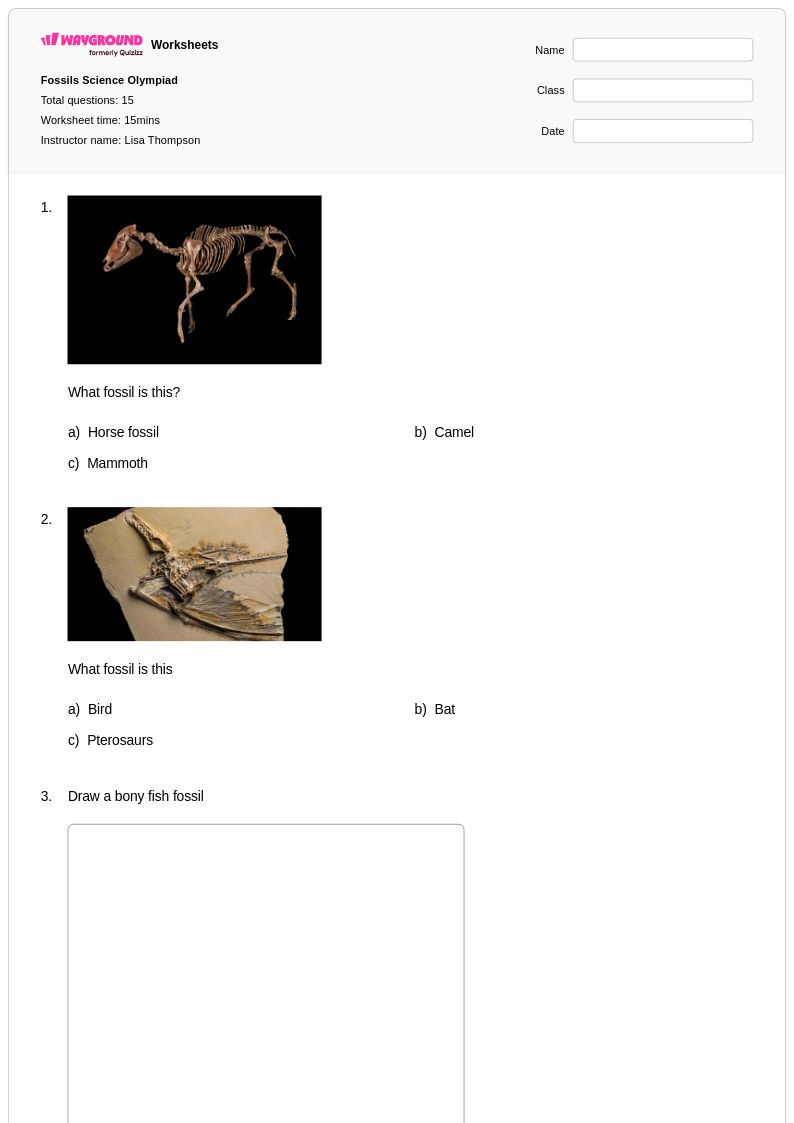
Teaching horse anatomy is most effective when students can connect skeletal and muscular structures to real functions, such as how the horse's long leg bones and large muscle groups support speed and endurance. Start with labeled diagram activities that ask students to identify major bones, muscle groups, and organ systems before moving to comparison exercises that contrast equine anatomy with other mammals. Connecting anatomical features to behavioral and athletic capabilities helps students retain terminology and understand form-function relationships in biology.
What worksheets help students practice equine biology concepts?
Worksheets that combine anatomical labeling, classification exercises, and digestive system diagrams are particularly effective for reinforcing equine biology concepts. Practice problems covering horse breeds, genetic inheritance patterns, and skeletal structure give students multiple entry points into the content. Adding comparative biology exercises, where students contrast horse physiology with other mammals, deepens understanding of broader biological principles while keeping the content species-specific and engaging.
What common mistakes do students make when studying horse biology?
A frequent misconception is that horses are simple herbivores with digestive systems similar to ruminants like cows; in reality, horses are hindgut fermenters with a single-chambered stomach, which makes their digestion distinctly different. Students also tend to conflate skeletal adaptations for speed with those for strength, missing the nuanced differences between a horse's limb structure and that of load-bearing mammals. Addressing these errors explicitly during classification and anatomy activities prevents them from compounding into larger misunderstandings about mammalian biology.
How do I use horse biology worksheets in my classroom?
Horse biology worksheets on Wayground are available as printable PDFs for traditional classroom use and in digital formats for technology-integrated or remote learning environments, and teachers can also host them as a quiz directly on Wayground. Printable versions work well for independent study, lab stations, or homework assignments, while digital versions allow for real-time feedback during instruction. Each worksheet includes a complete answer key, so teachers can use them for guided practice, formative assessment, or self-paced review with minimal preparation time.
How can I differentiate horse biology worksheets for students at different ability levels?
Wayground allows teachers to apply student-level accommodations directly to digital worksheets, including reduced answer choices to lower cognitive load for struggling learners, read aloud support for students who benefit from audio delivery, and extended time settings configurable per student. These accommodations can be assigned to individual students while the rest of the class receives default settings, with no notification to other students. This means a single horse biology worksheet can serve the full range of learners in one classroom without requiring teachers to create multiple separate versions.
What biology standards do horse anatomy worksheets typically address?
Horse anatomy worksheets commonly align with life science standards covering mammalian body systems, vertebrate classification, and comparative anatomy. They also support standards related to heredity and genetic variation when covering horse breed genetics and inheritance patterns. Because horses are a highly studied domesticated species, they serve as an accessible and concrete model organism for teaching broader biological principles such as adaptation, evolutionary change, and the relationship between structure and function.