
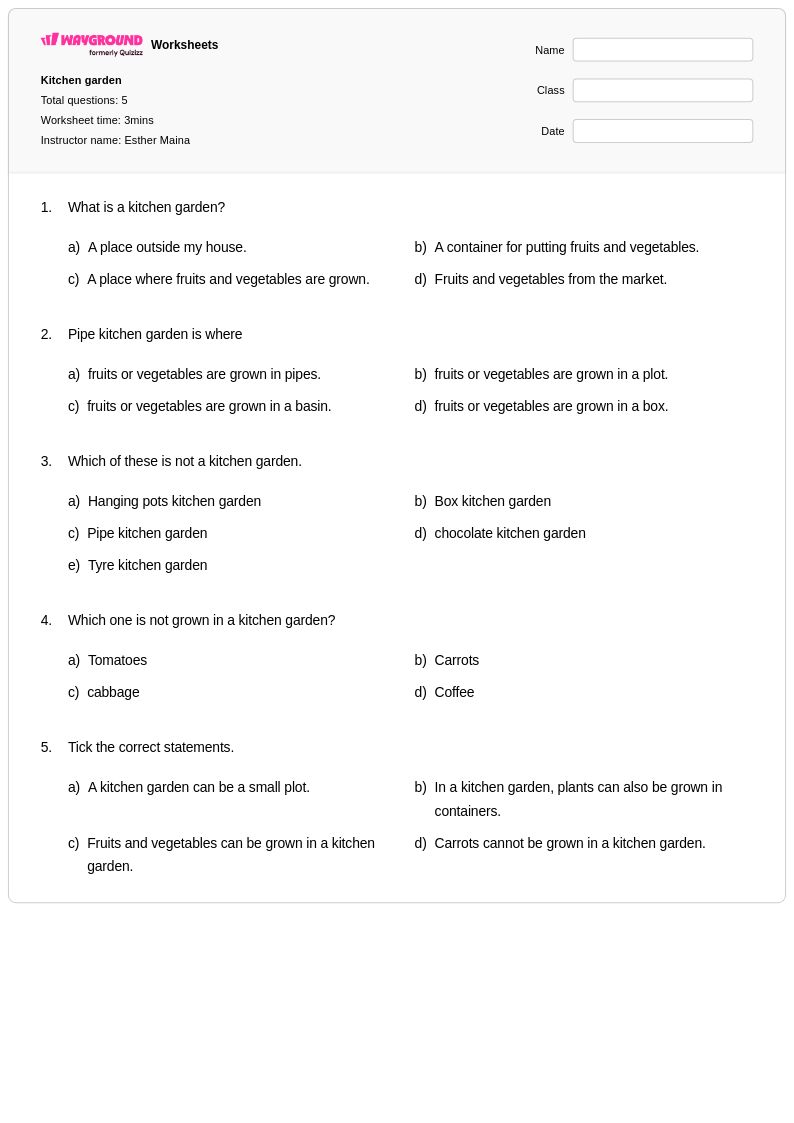
5 Q
3rd
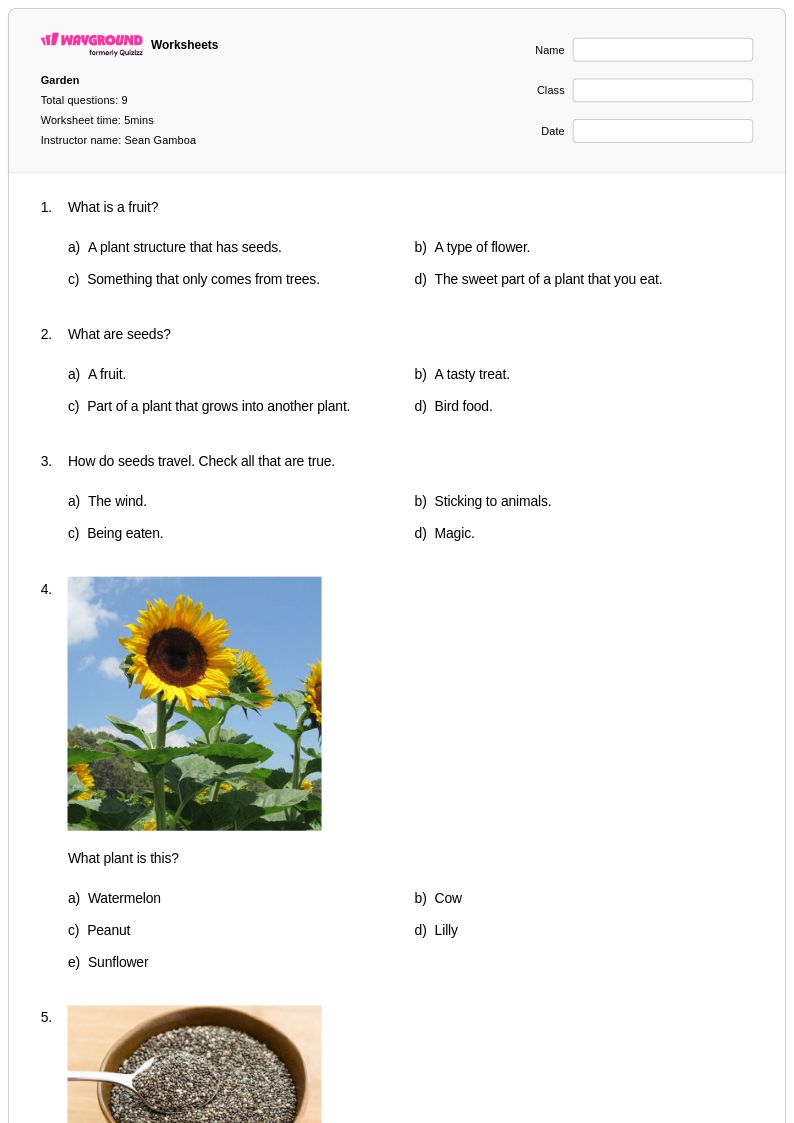
9 Q
3rd
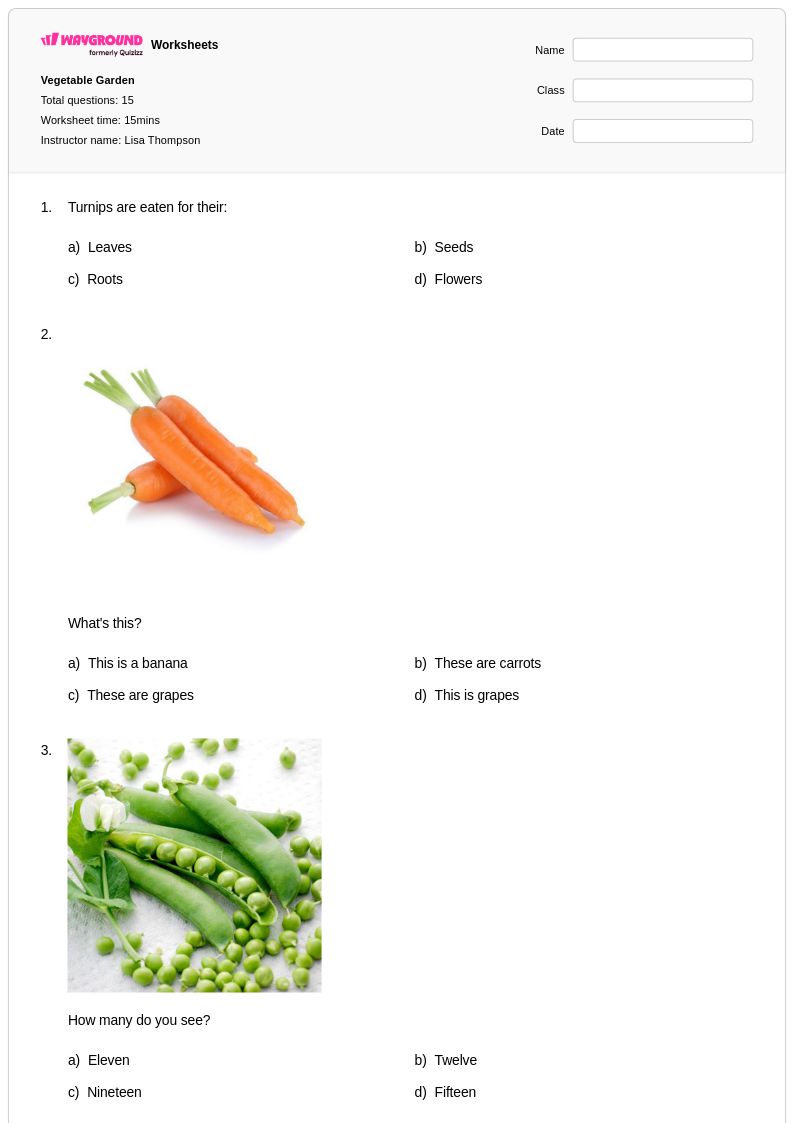
15 Q
2nd - Uni
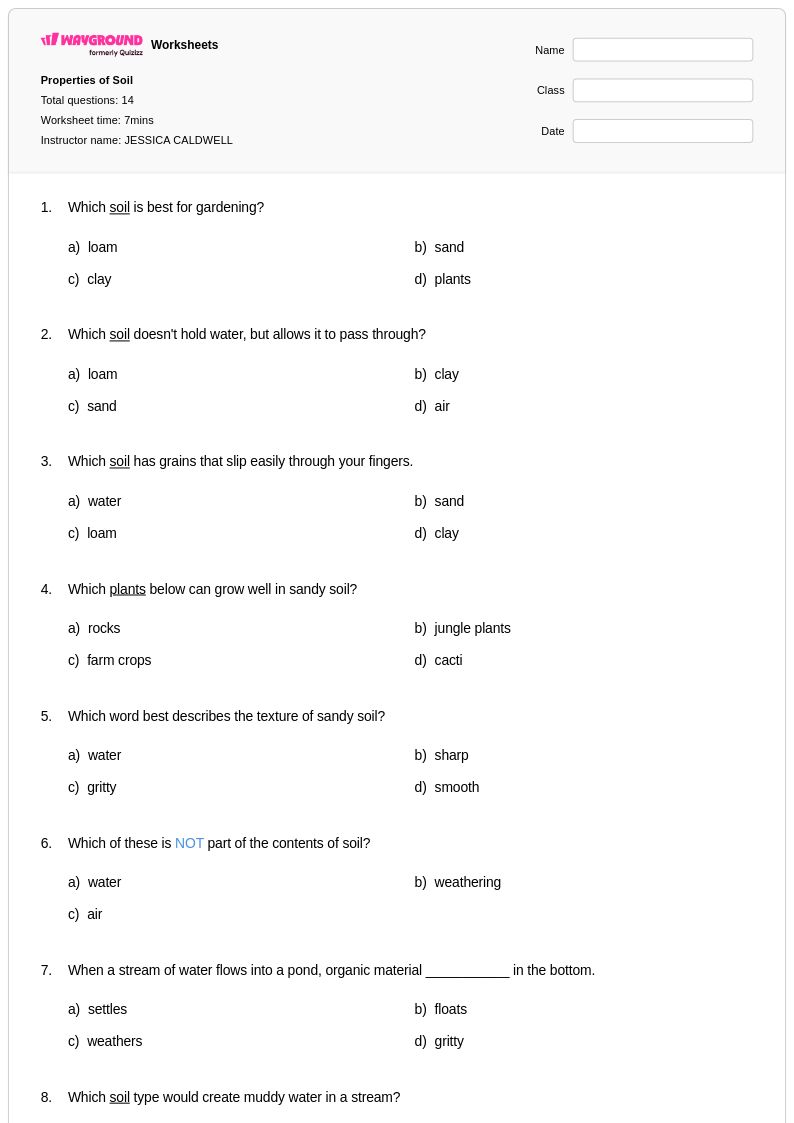
14 Q
3rd
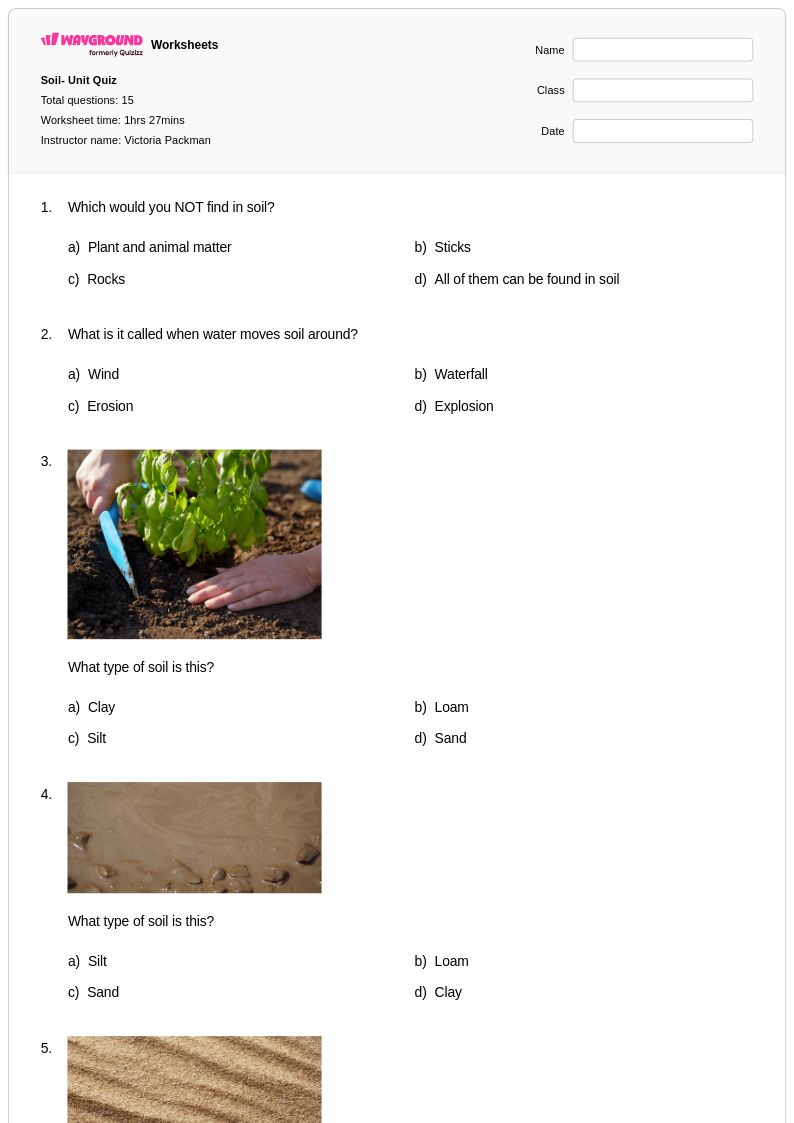
15 Q
3rd
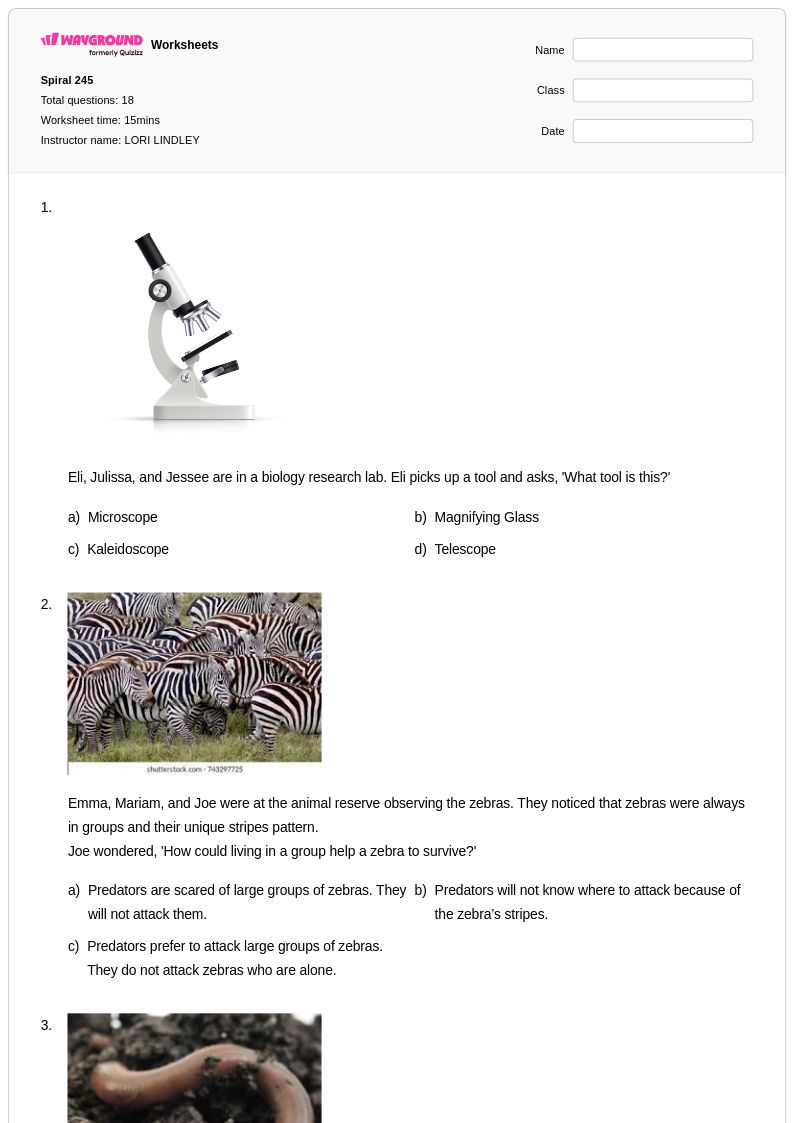
18 Q
3rd
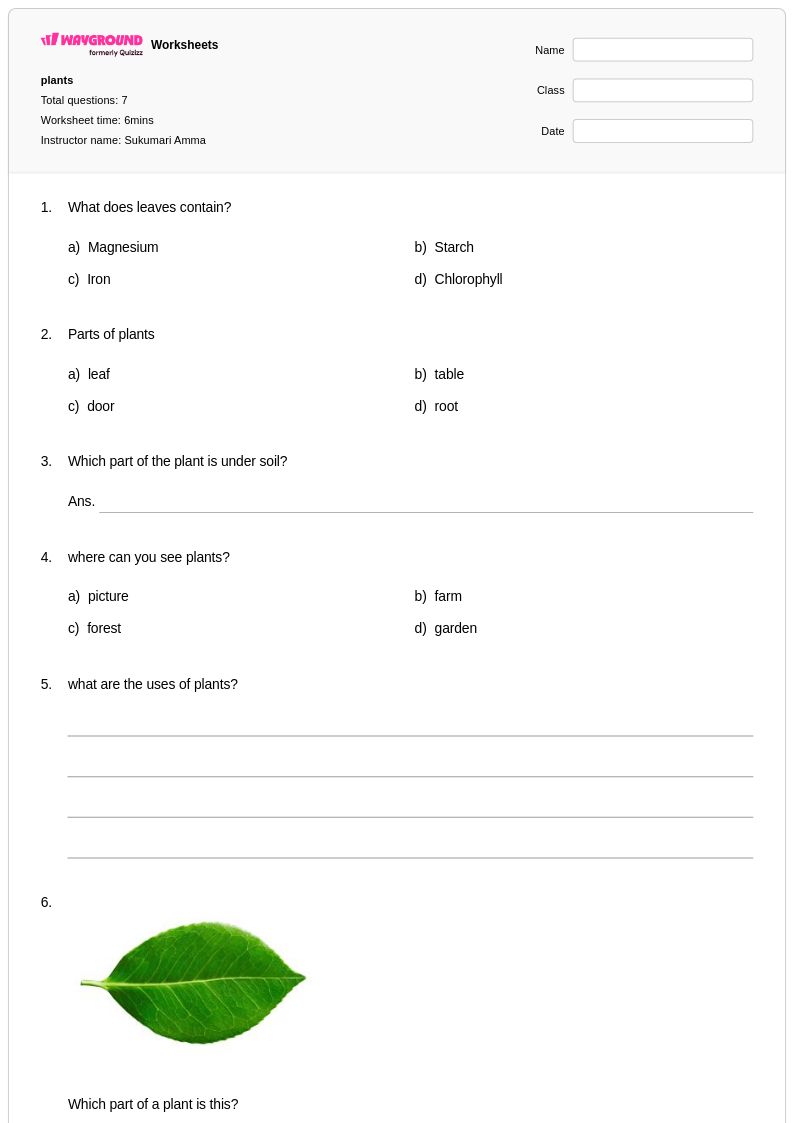
7 Q
1st - 3rd
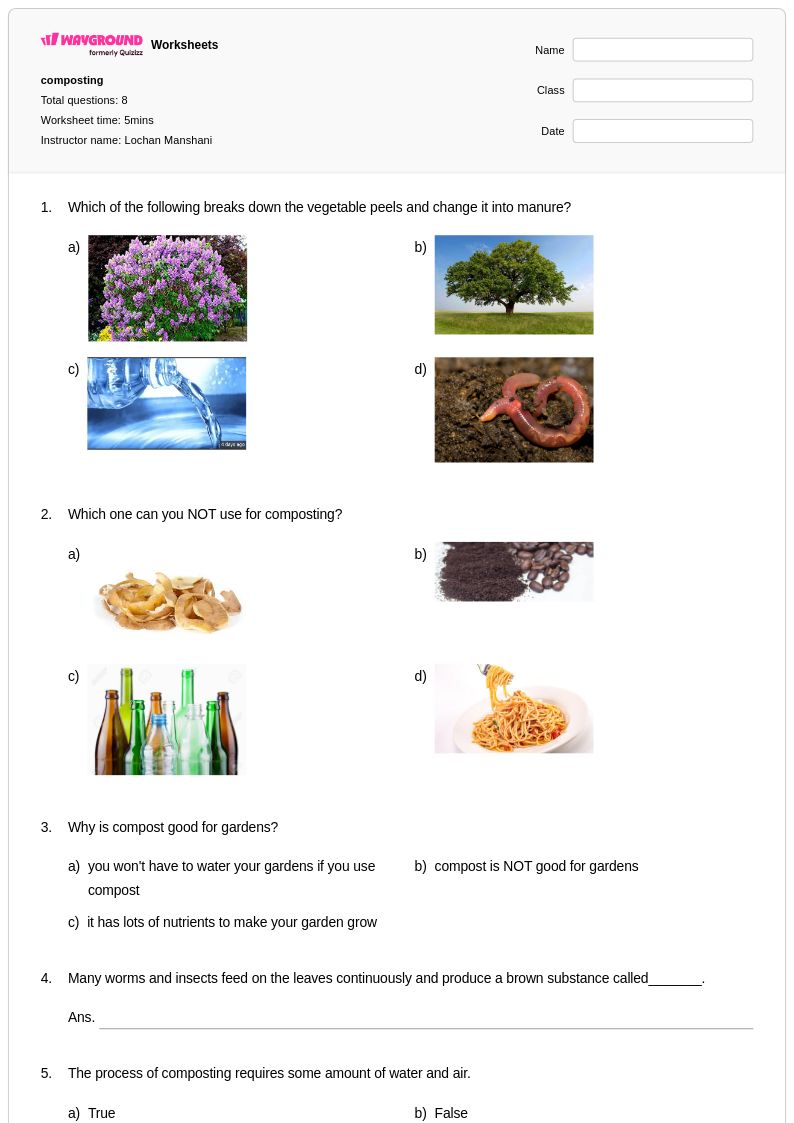
8 Q
3rd
10 Q
2nd - 5th
10 Q
3rd
14 Q
3rd
11 Q
3rd
10 Q
3rd
10 Q
3rd
10 Q
3rd
8 Q
3rd
23 Q
3rd - Uni
10 Q
1st - 5th
14 Q
3rd
12 Q
3rd
15 Q
3rd - 4th
17 Q
3rd - 5th
17 Q
3rd
18 Q
3rd - 5th
Explore Other Subject Worksheets for class 3
Explore printable Garden Planning worksheets for Class 3
Garden planning worksheets for Class 3 students available through Wayground (formerly Quizizz) provide an engaging introduction to practical life science concepts that connect classroom learning with real-world applications. These comprehensive resources help young learners understand plant life cycles, seasonal growing patterns, soil requirements, and basic ecosystem relationships while developing critical thinking and planning skills. Students work through practice problems that challenge them to design garden layouts, select appropriate plants for different conditions, and understand the interdependence between plants, animals, and environmental factors. Each worksheet collection includes detailed answer keys and is available as free printables in convenient pdf format, allowing educators to seamlessly integrate hands-on science learning into their curriculum while reinforcing fundamental botanical and ecological principles.
Wayground (formerly Quizizz) supports educators with millions of teacher-created garden planning resources specifically designed for Class 3 life science instruction, featuring robust search and filtering capabilities that align with educational standards and diverse learning objectives. The platform's differentiation tools enable teachers to customize worksheets for varying skill levels, ensuring that all students can engage meaningfully with concepts ranging from basic plant needs to complex garden ecosystem planning. These flexible resources are available in both printable and digital formats, including downloadable pdf versions, making them ideal for classroom instruction, homework assignments, remediation activities, and enrichment projects. Teachers can efficiently plan comprehensive garden-themed science units while using these materials to provide targeted skill practice, assess student understanding of life science concepts, and create meaningful connections between scientific principles and practical environmental stewardship.
FAQs
How do I teach garden planning concepts in a science classroom?
What exercises help students practice garden planning skills?
What mistakes do students commonly make when learning garden planning?
How can I differentiate garden planning worksheets for students at different skill levels?
How do I use Wayground's garden planning worksheets in my classroom?