Free Printable Chick Life Cycle Worksheets for Class 3
Class 3 students explore the fascinating chick life cycle with Wayground's free printable worksheets and practice problems, complete with answer keys to reinforce learning about animal development stages.
Explore printable Chick Life Cycle worksheets for Class 3
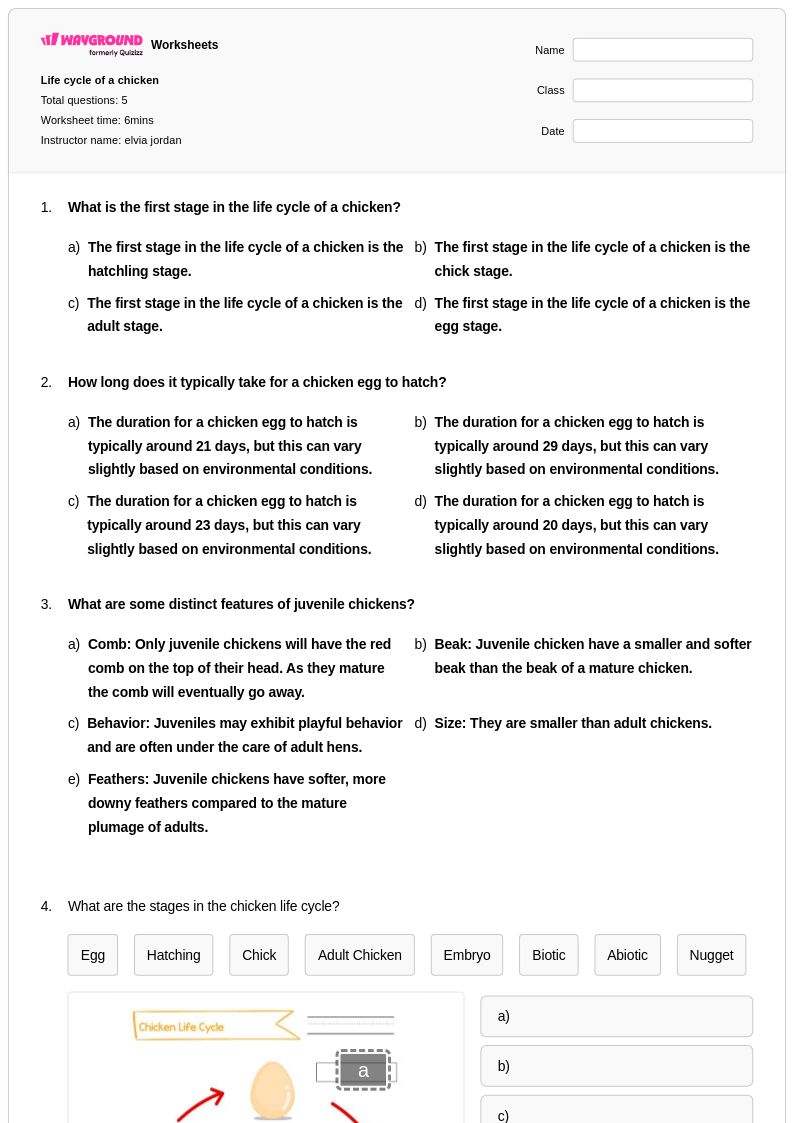
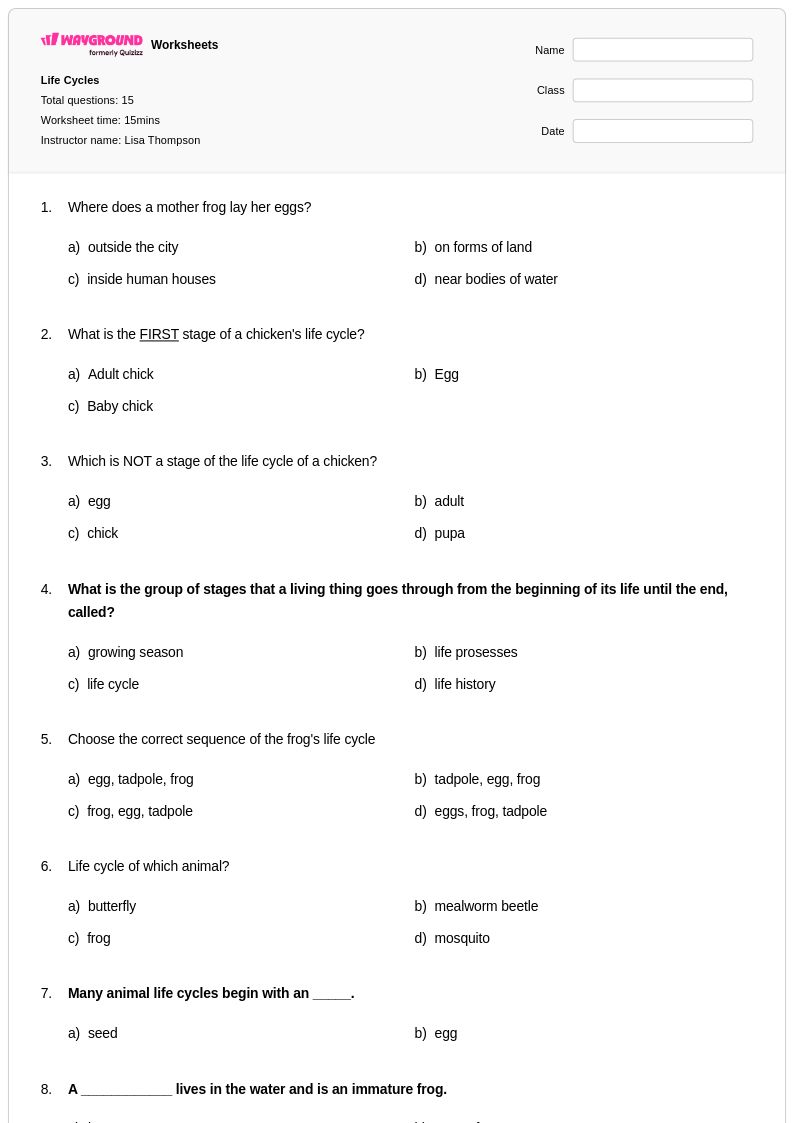
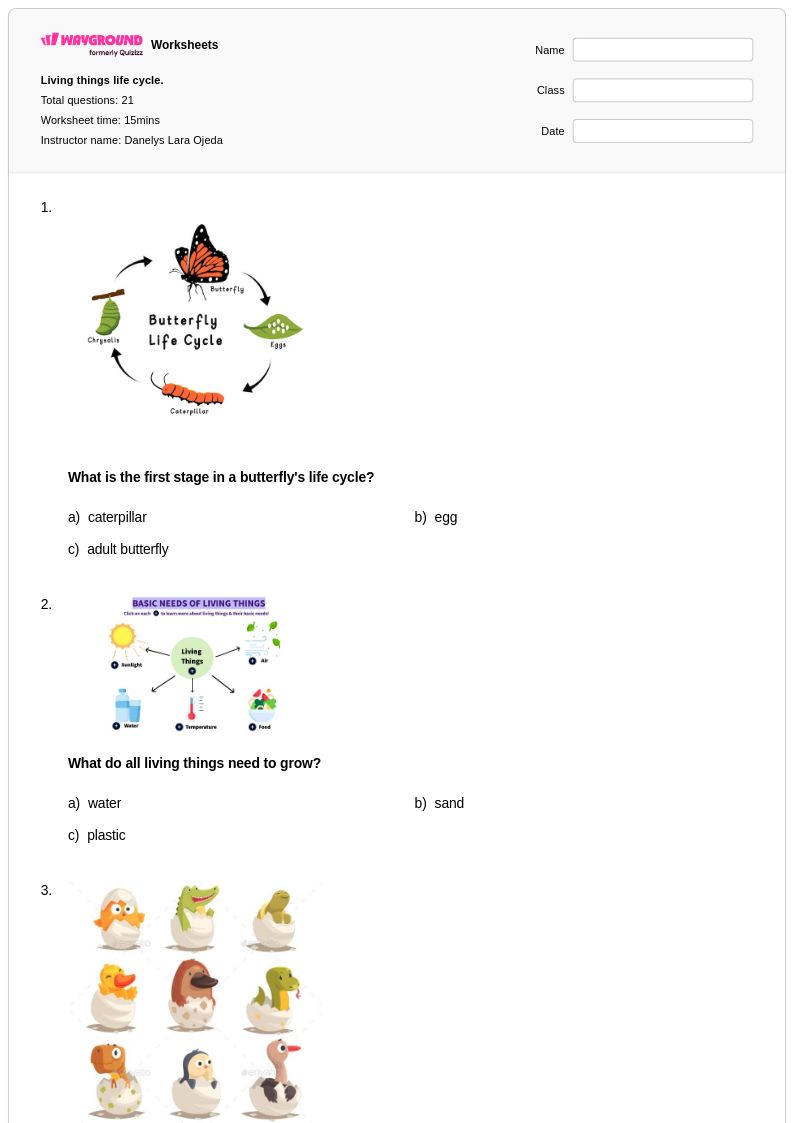
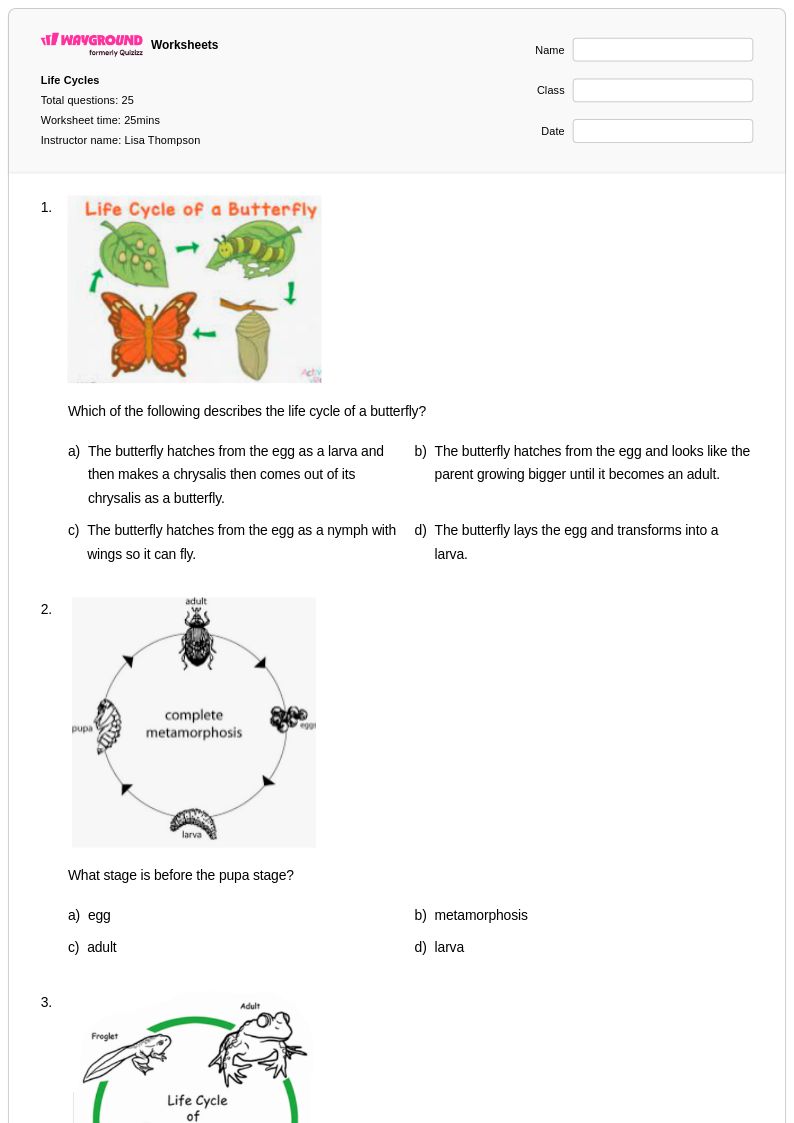
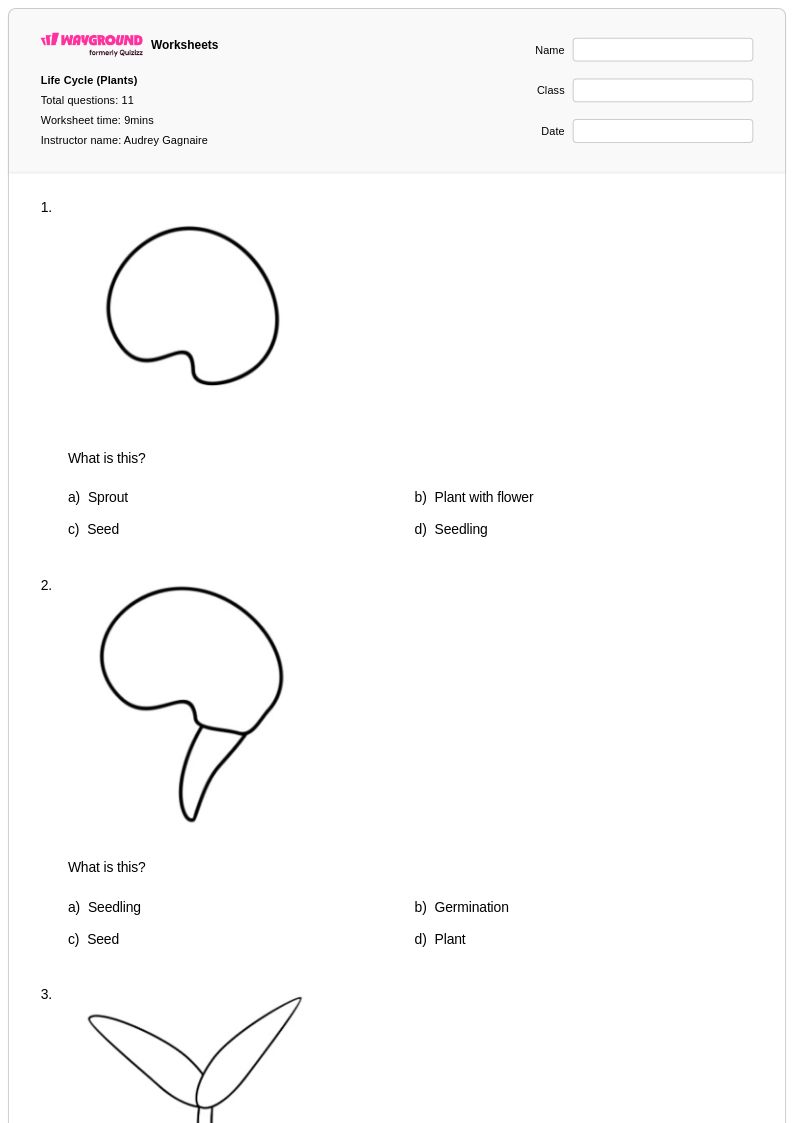
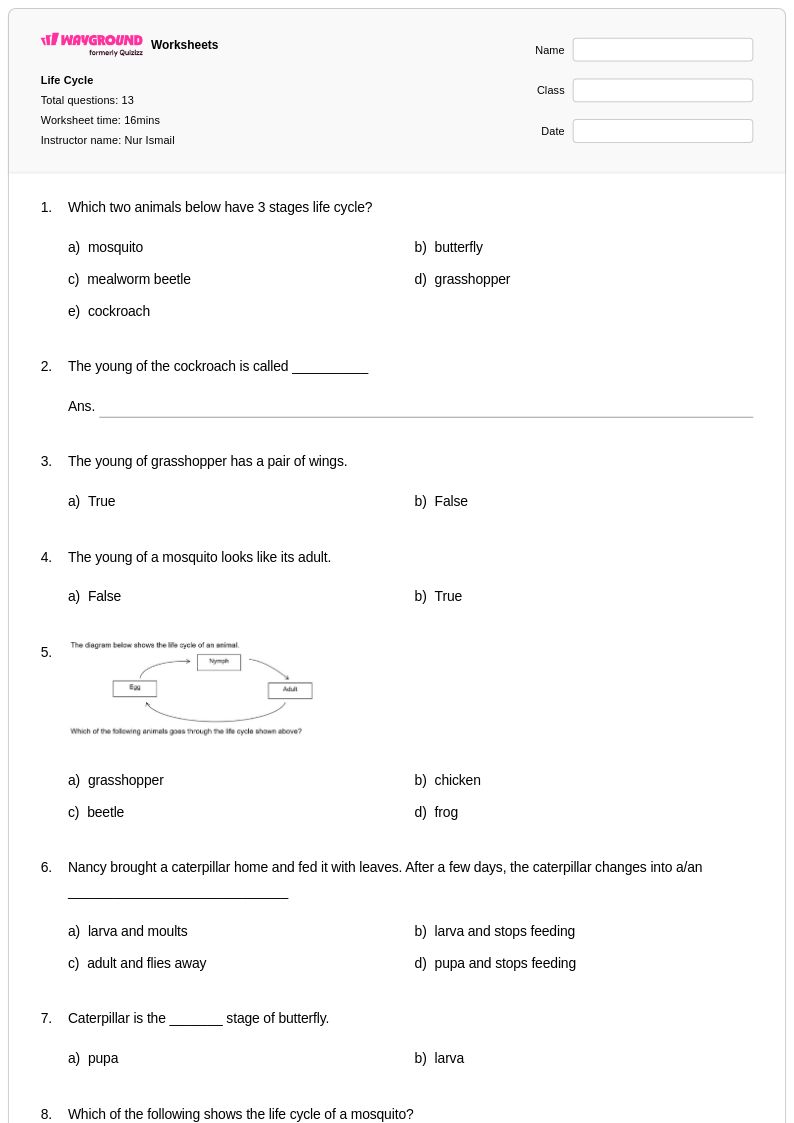
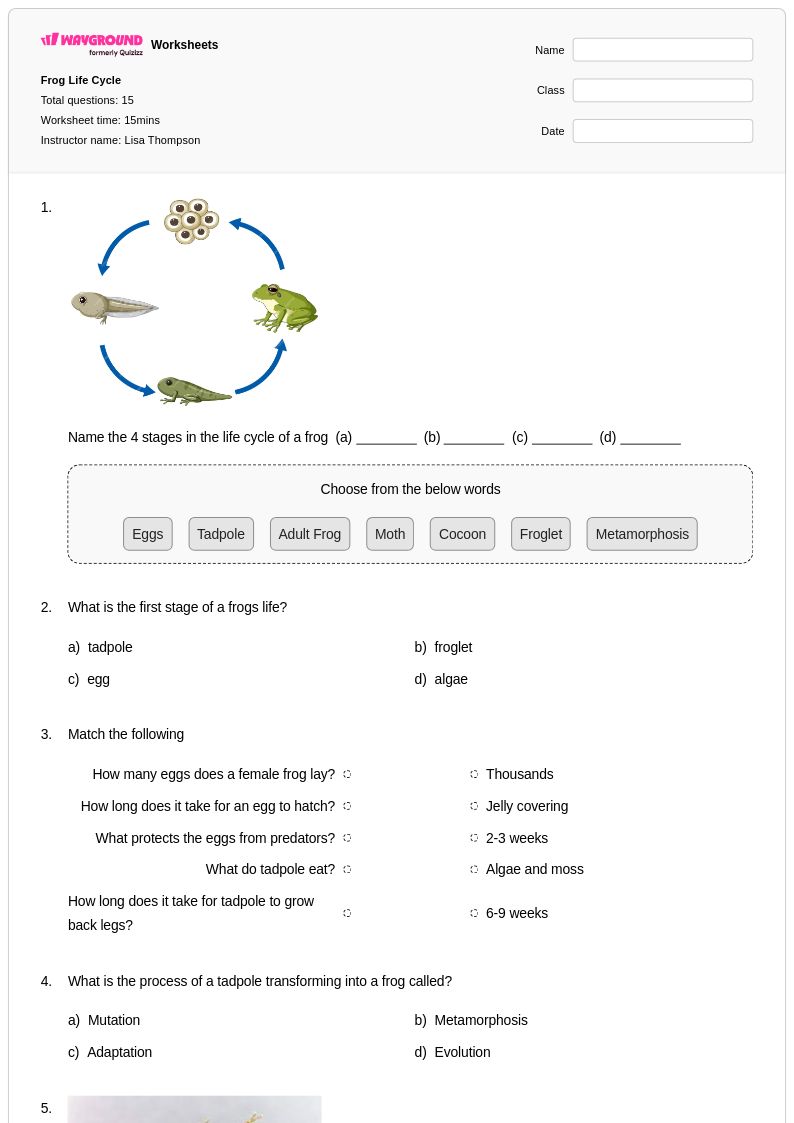
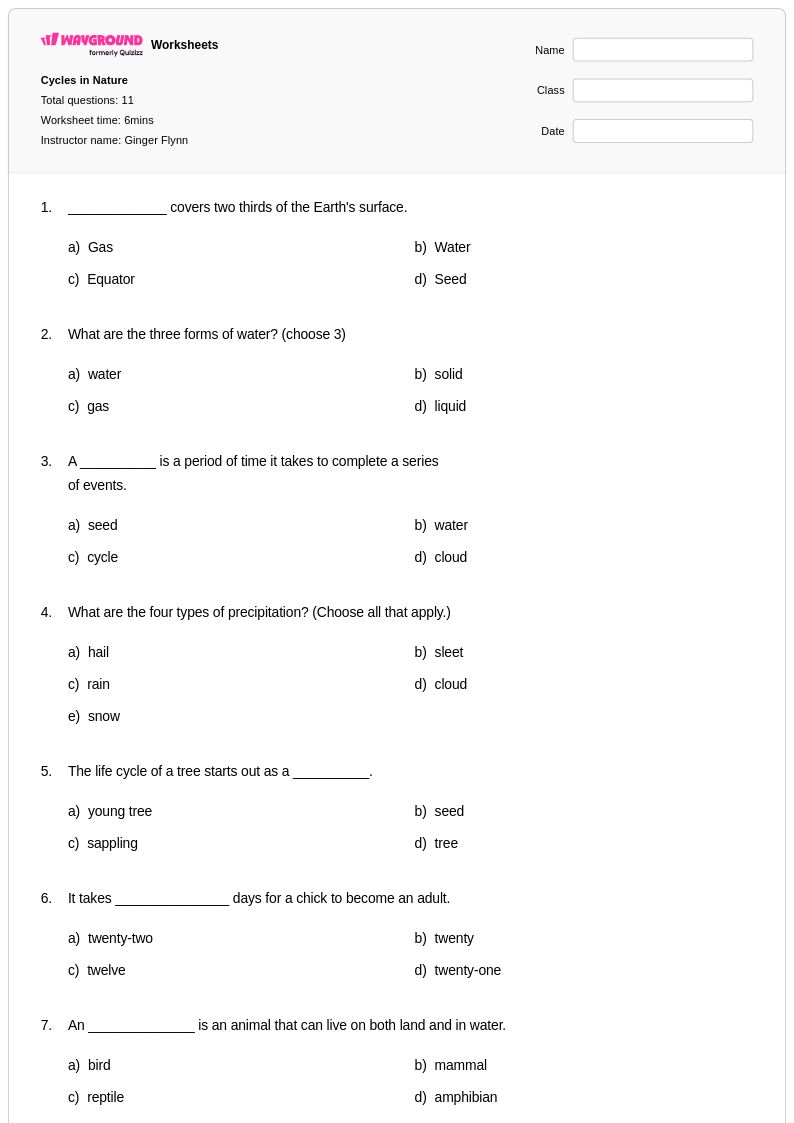
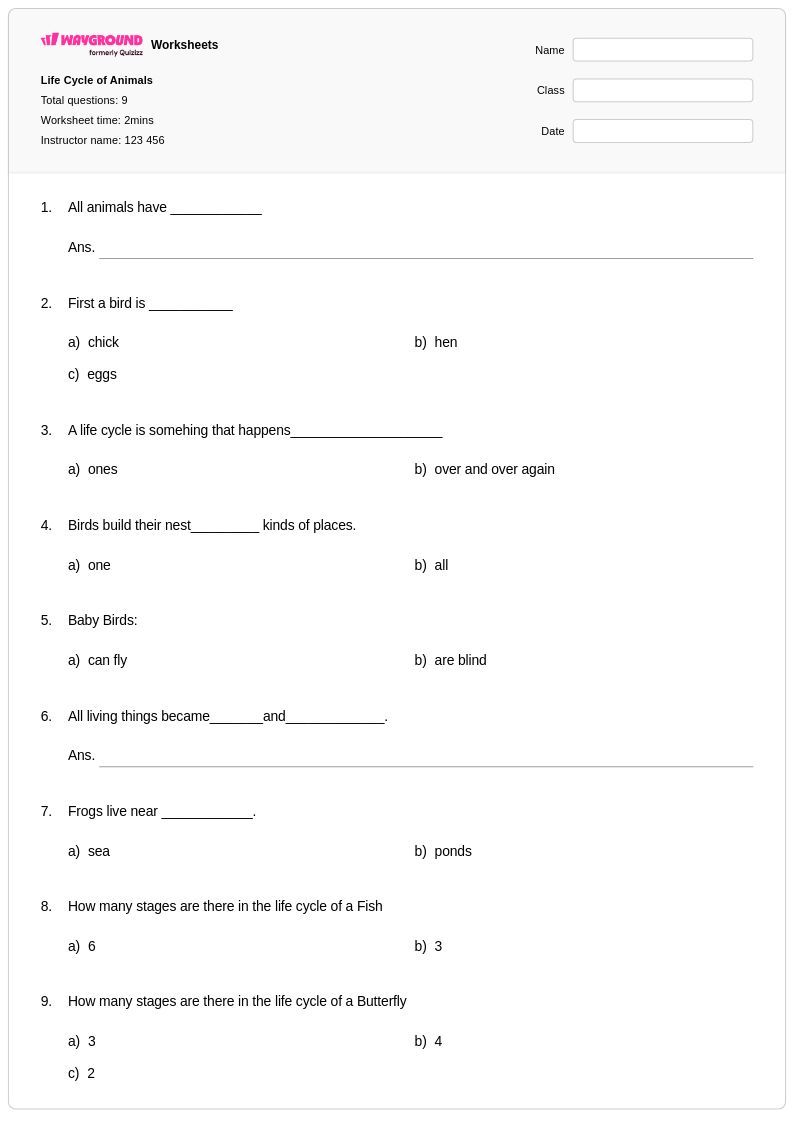
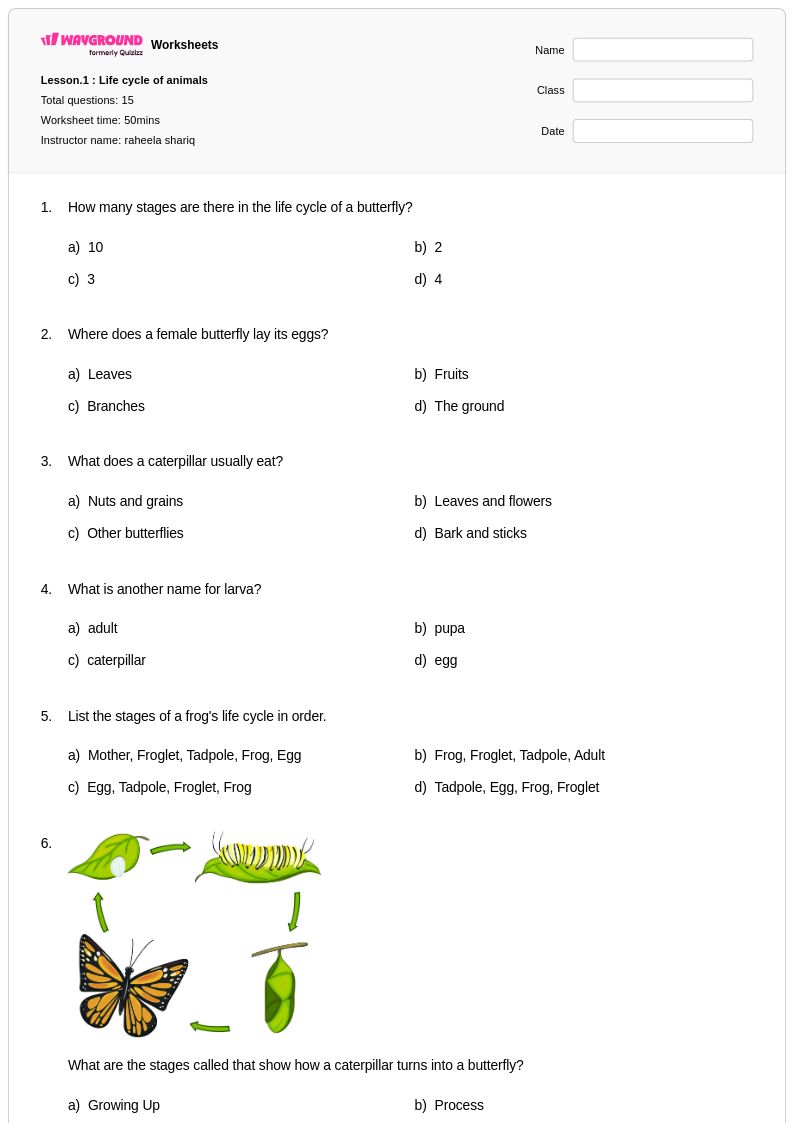
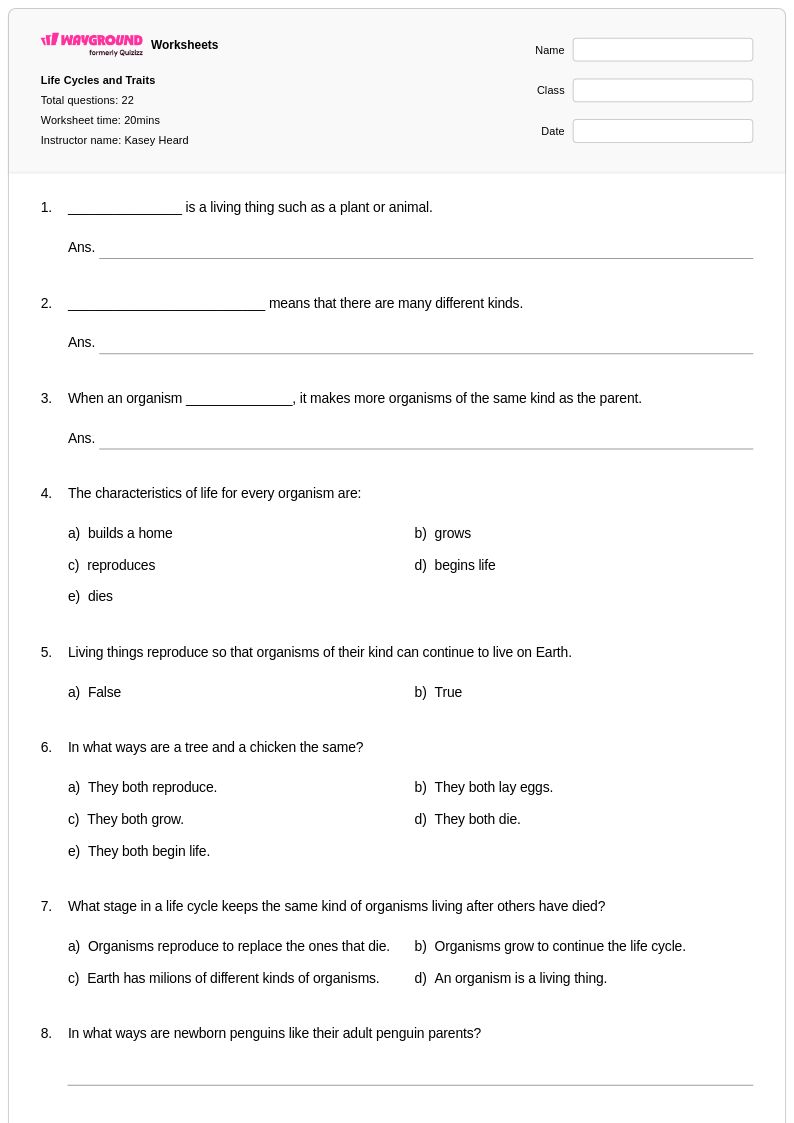
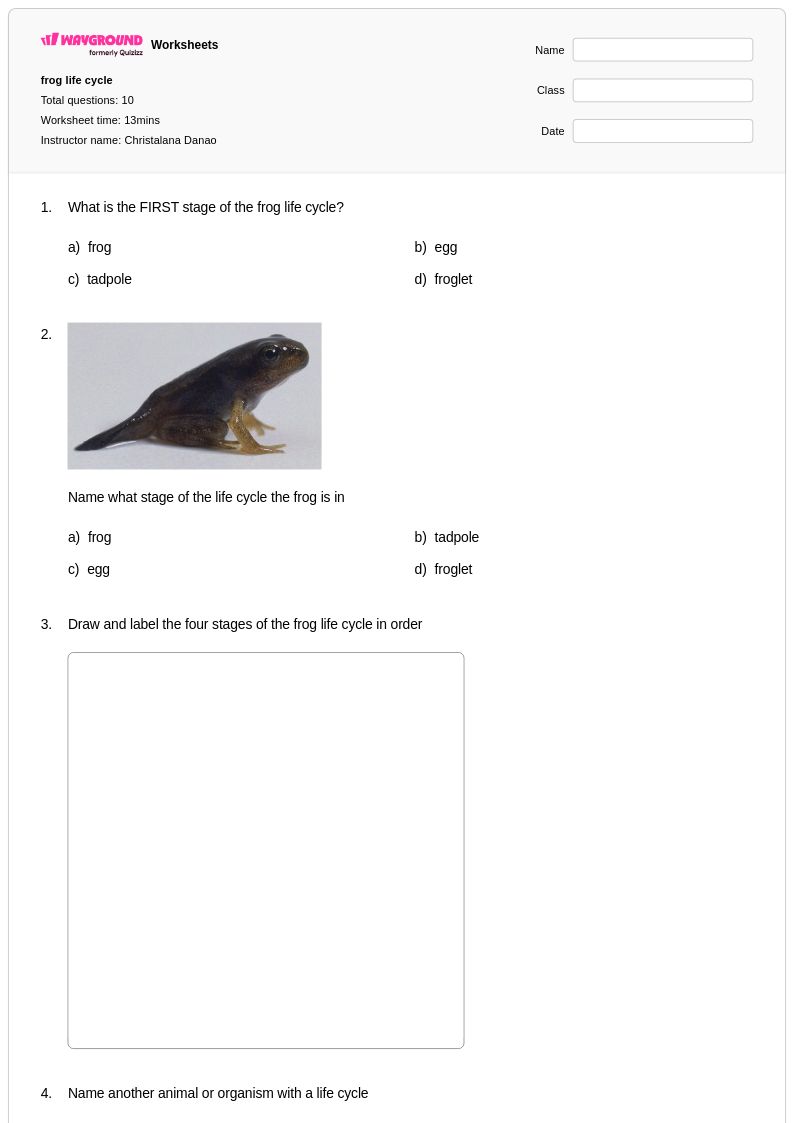
Class 3 chick life cycle worksheets available through Wayground (formerly Quizizz) provide young learners with engaging opportunities to explore the fascinating transformation from egg to adult chicken. These comprehensive educational resources strengthen students' understanding of biological sequences, scientific observation skills, and vocabulary development as they trace each stage of embryonic development and growth. The collection includes diverse practice problems that challenge students to identify, sequence, and describe the four main stages of the chick life cycle, while printable activities and free pdf resources offer hands-on learning experiences. Each worksheet comes with a detailed answer key to support accurate assessment and immediate feedback, ensuring students grasp fundamental concepts about animal development and life processes that form the foundation of elementary life science education.
Wayground (formerly Quizizz) supports educators with an extensive library of millions of teacher-created chick life cycle resources specifically designed for Class 3 science instruction. The platform's robust search and filtering capabilities enable teachers to quickly locate worksheets that align with specific learning standards and accommodate diverse classroom needs through built-in differentiation tools. These customizable materials are available in both printable and digital formats, including downloadable pdf versions that facilitate seamless integration into lesson planning and classroom instruction. Teachers can effectively utilize these resources for initial skill introduction, targeted remediation for struggling learners, enrichment activities for advanced students, and ongoing practice to reinforce understanding of life science concepts, making it simple to address varied learning objectives and student abilities within the same curriculum framework.
FAQs
How do I teach the chick life cycle to elementary students?
Start by anchoring instruction to a clear sequence: egg, embryo, hatching chick, juvenile, and adult bird. Use visual diagrams and labeling activities to help students connect vocabulary like fertilization, embryonic development, and incubation to each stage. Hands-on sequencing tasks, where students physically arrange stages in order, reinforce comprehension before students move to written or assessed work.
What activities help students practice sequencing the stages of a chick's life cycle?
Sequencing cut-and-paste activities are highly effective because they require students to make active decisions about the order of developmental stages rather than passively reading them. Labeling diagrams of an egg, embryo, and hatching chick builds scientific vocabulary alongside sequencing skills. Worksheets that include both visual diagrams and written descriptions help students cross-reference their understanding of each stage.
What vocabulary do students need to know for the chick life cycle?
Key terms include egg, fertilization, embryo, incubation, hatching, chick, and adult. Students should also understand process-related vocabulary such as development, growth, and reproduction in the context of avian biology. Building this vocabulary explicitly before assessments reduces the most common errors on labeling and fill-in-the-blank tasks.
What mistakes do students commonly make when learning about the chick life cycle?
Students frequently confuse the embryonic development stage with hatching, collapsing two distinct phases into one. Another common error is treating the life cycle as linear rather than cyclical, missing the point that the adult bird reproduces to begin the cycle again. Students also sometimes conflate the chick life cycle with metamorphosis-based cycles like butterflies, so direct comparison activities can help clarify the distinction.
How can I use chick life cycle worksheets in both print and digital classroom settings?
Chick life cycle worksheets on Wayground are available as printable PDFs for traditional classroom use and in digital formats for technology-integrated environments, giving teachers flexibility regardless of their classroom setup. Teachers can also host worksheets as a quiz directly on Wayground, making them suitable for independent practice, formative assessment, or whole-class review. Each worksheet includes a complete answer key, which reduces grading time whether you are using print copies or digital submissions.
How do I differentiate chick life cycle instruction for students with different learning needs?
Wayground allows teachers to apply individual accommodations directly to students, including Read Aloud for students who need questions and content read to them, reduced answer choices to lower cognitive load for struggling learners, and extended time per question. These settings can be saved and reused across future sessions, and other students receive default settings without any notification, making differentiation seamless and discreet.