Free Printable Homologous Structures Worksheets for Class 12
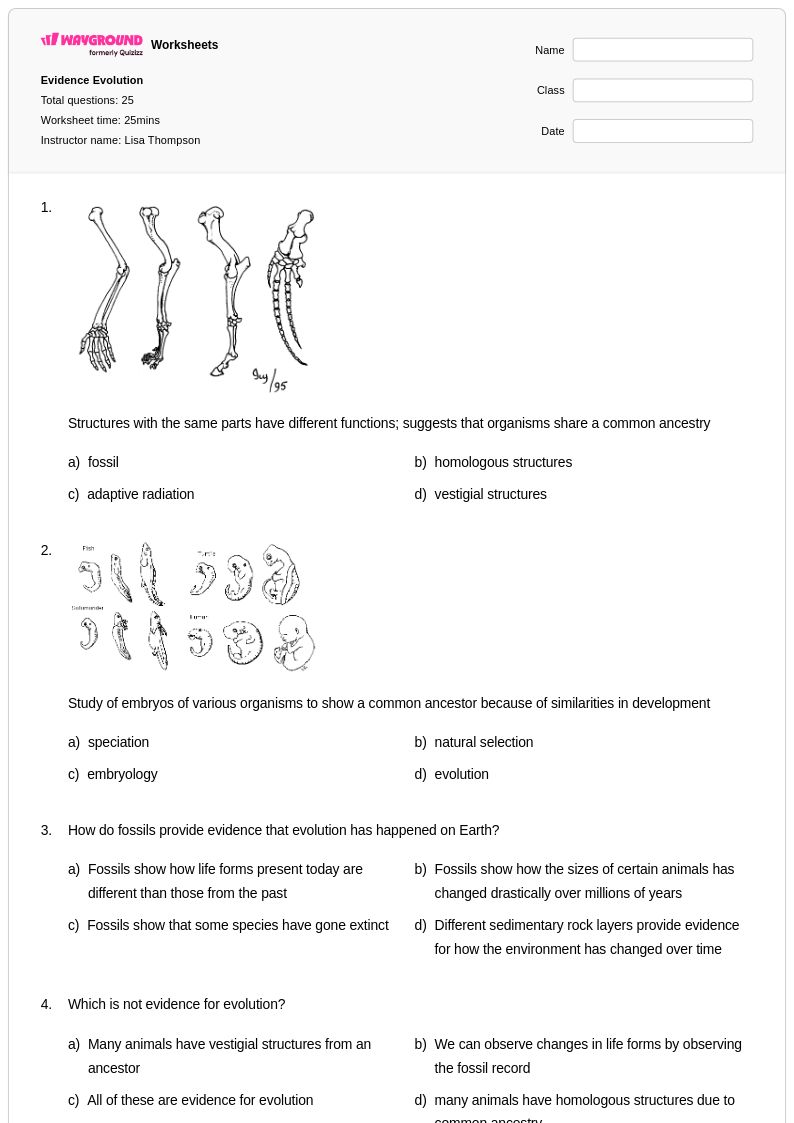
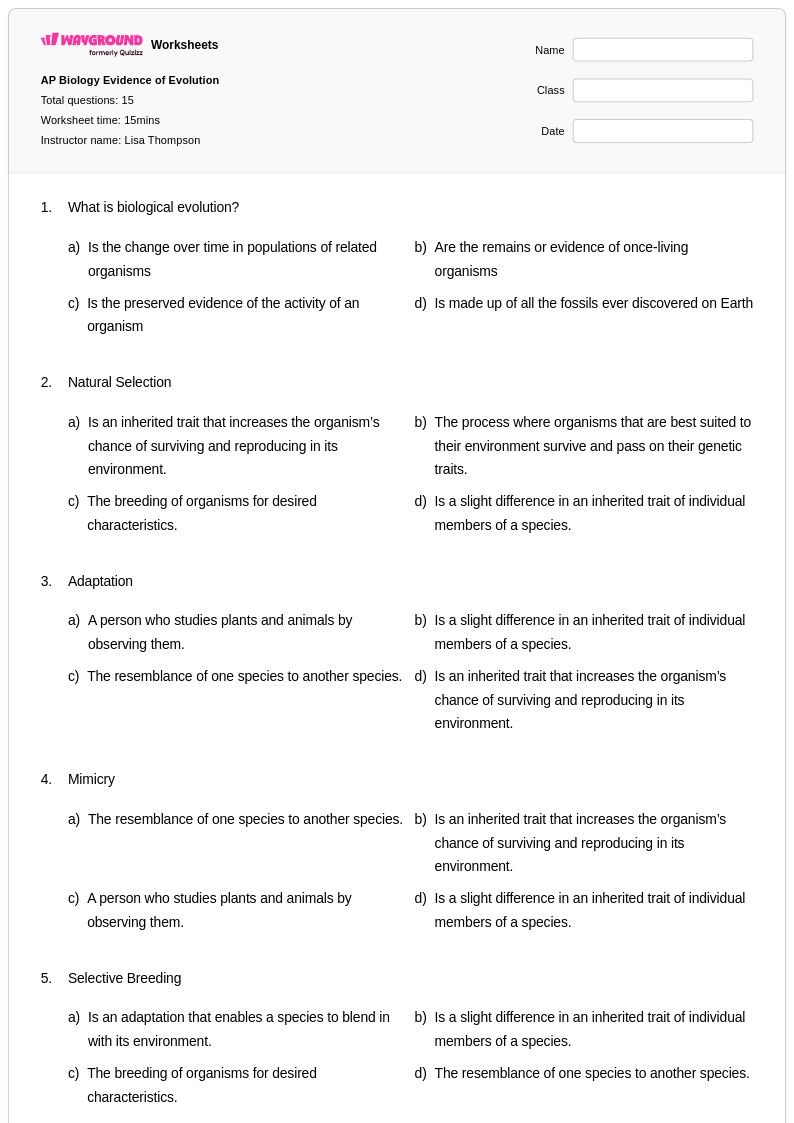
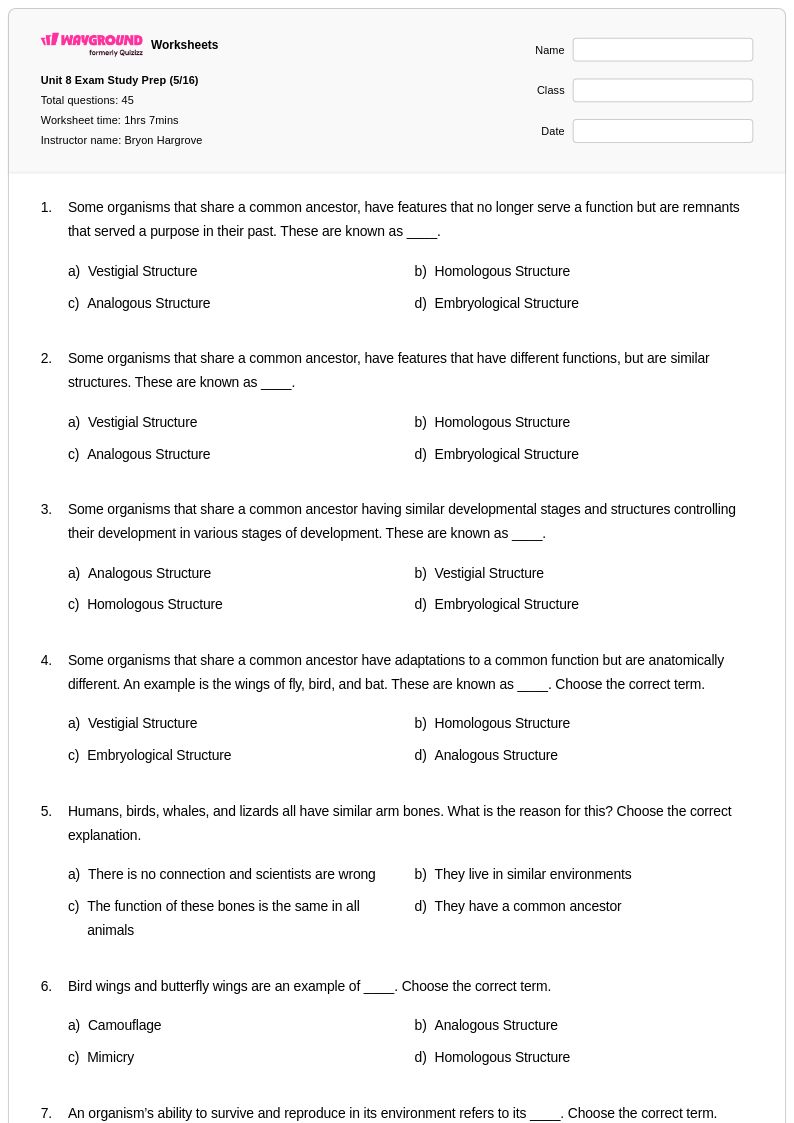
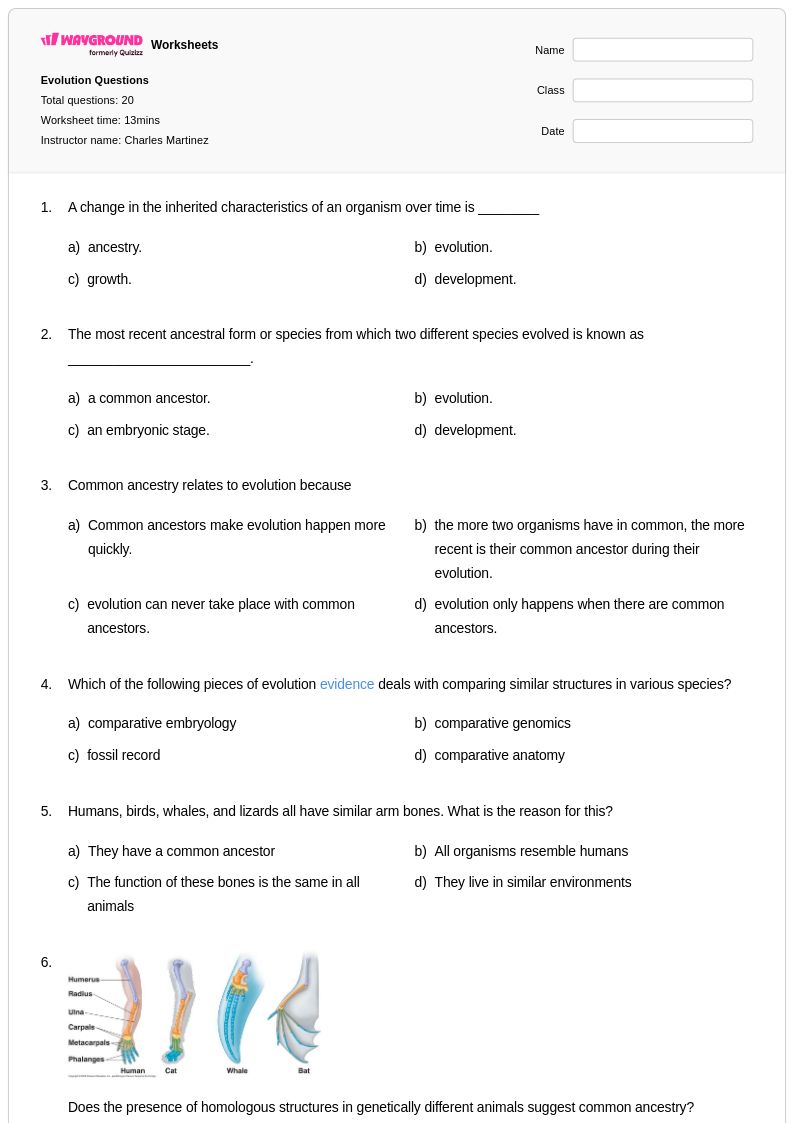
Class 12 Biology worksheets on homologous structures help students practice identifying evolutionary relationships through printable PDFs with answer keys, offering free practice problems to master comparative anatomy concepts.
Explore printable Homologous Structures worksheets for Class 12
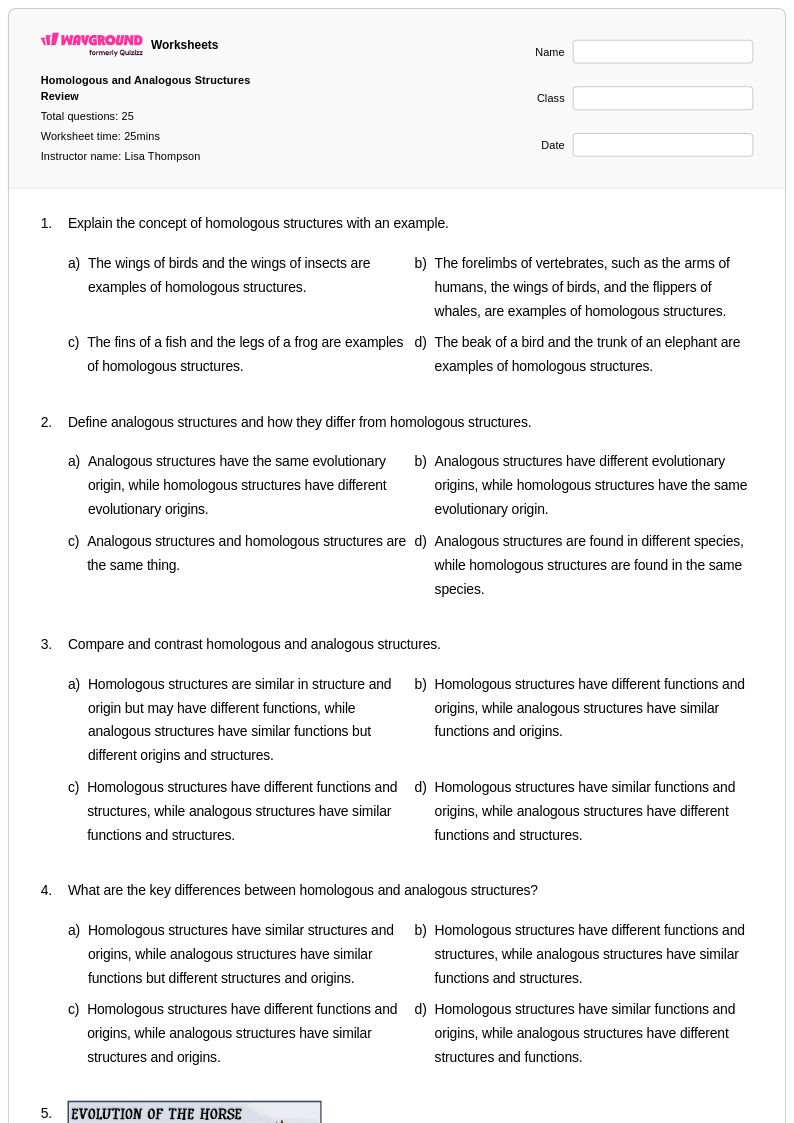
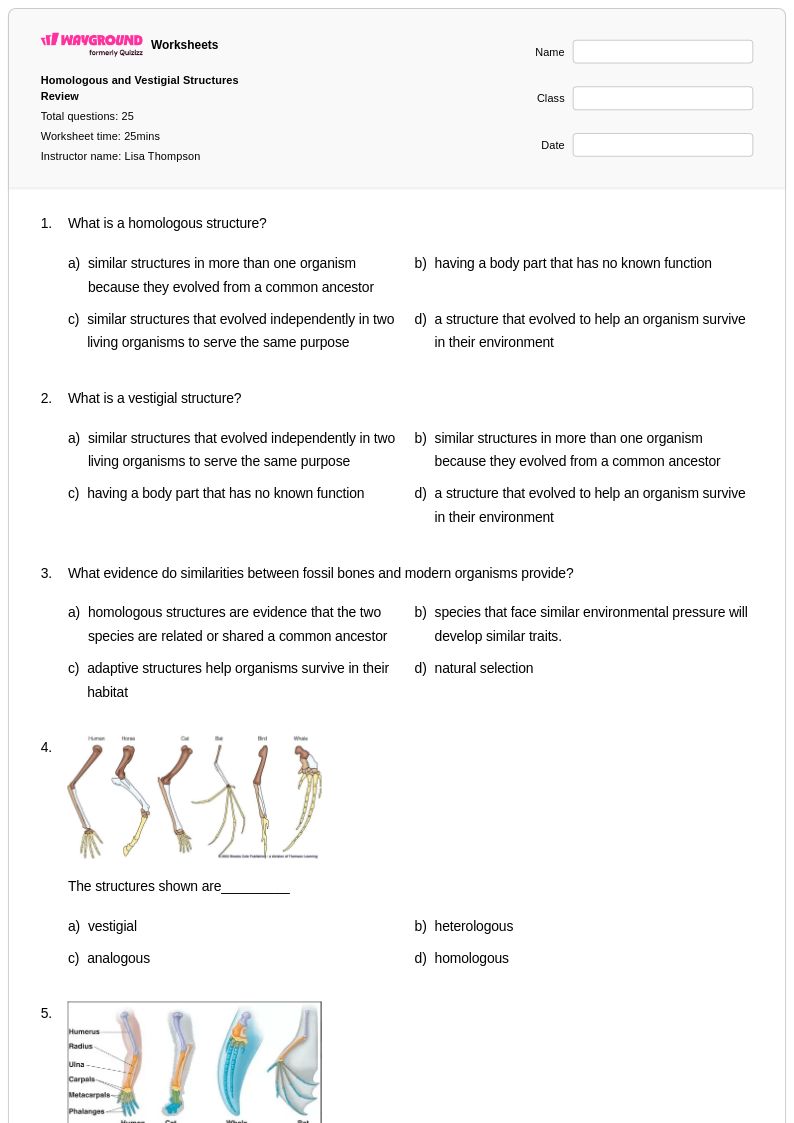
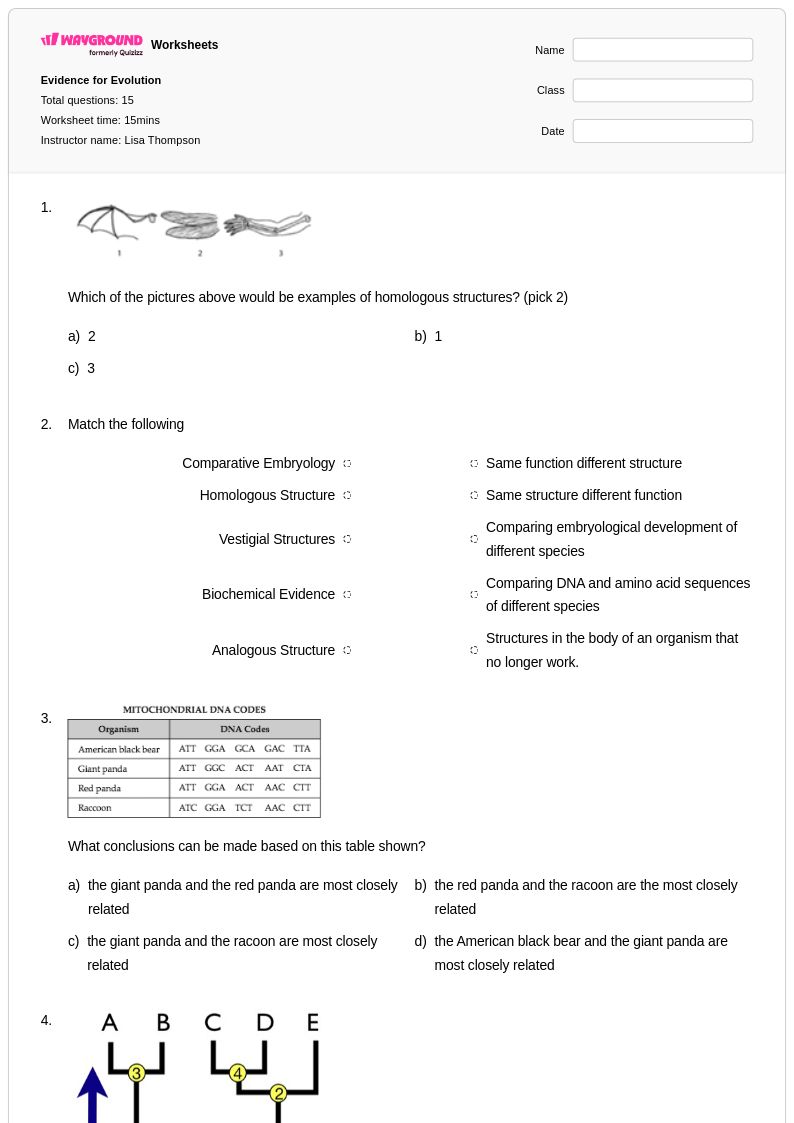
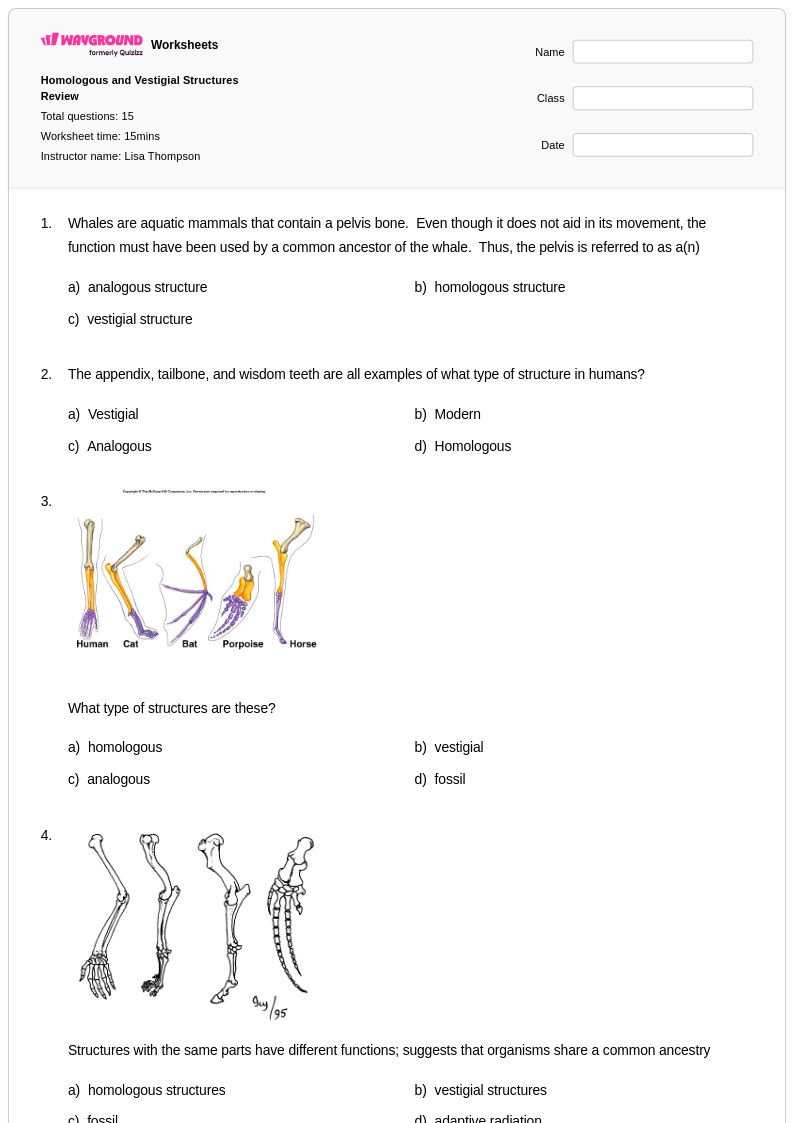
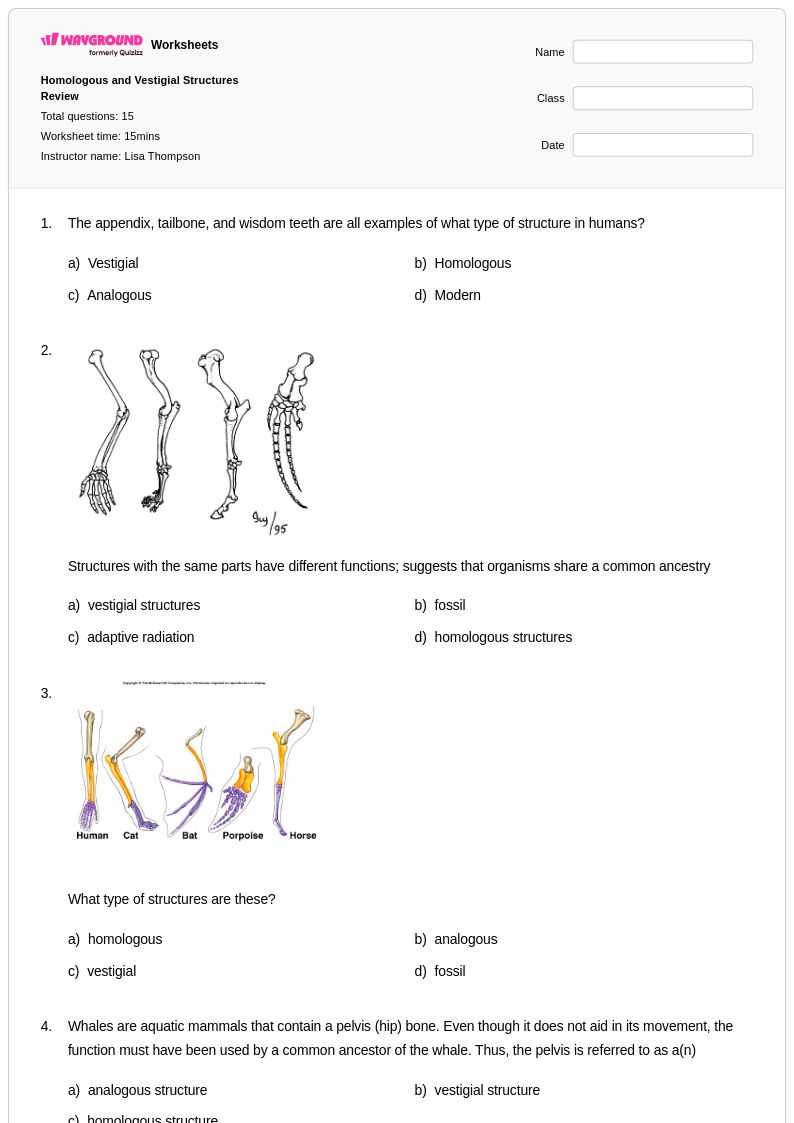
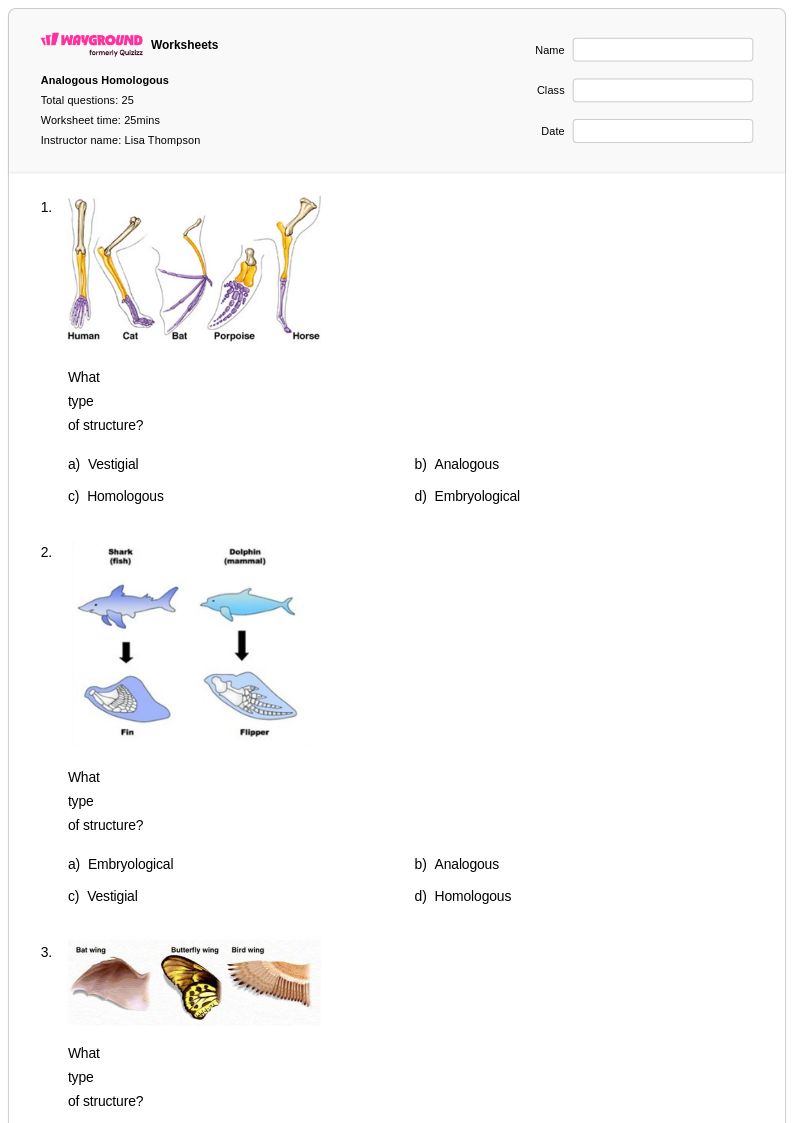
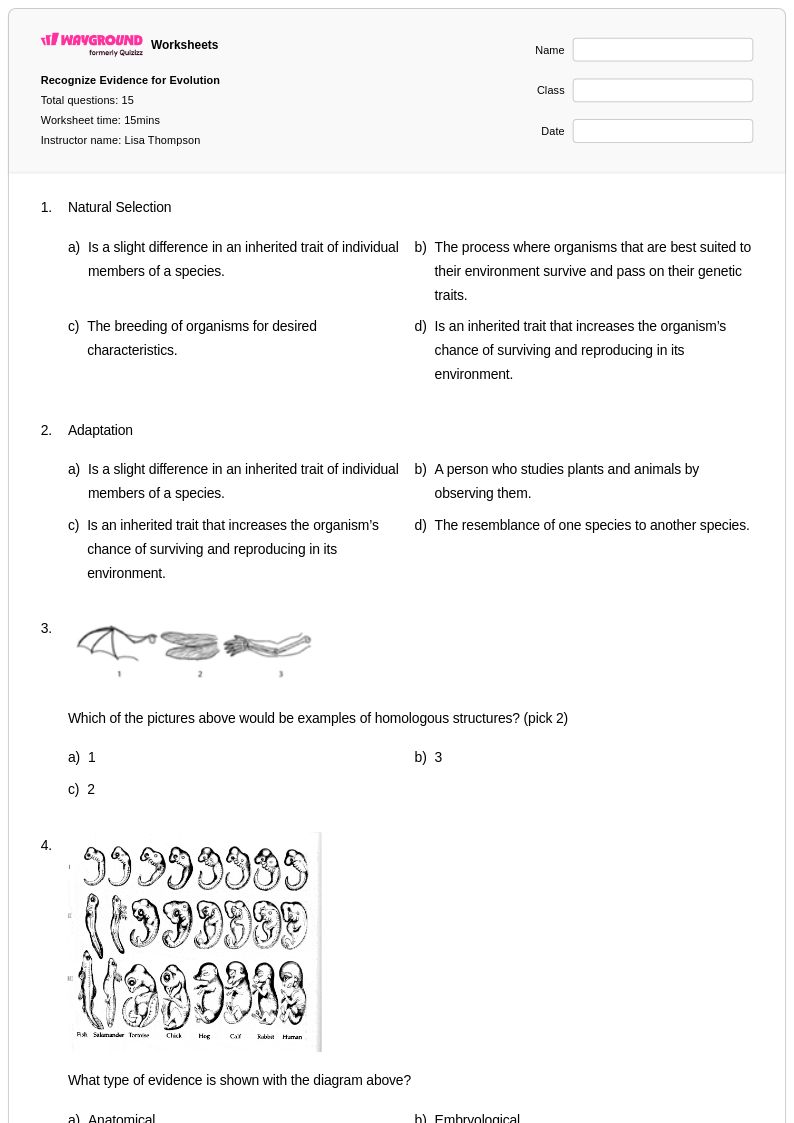
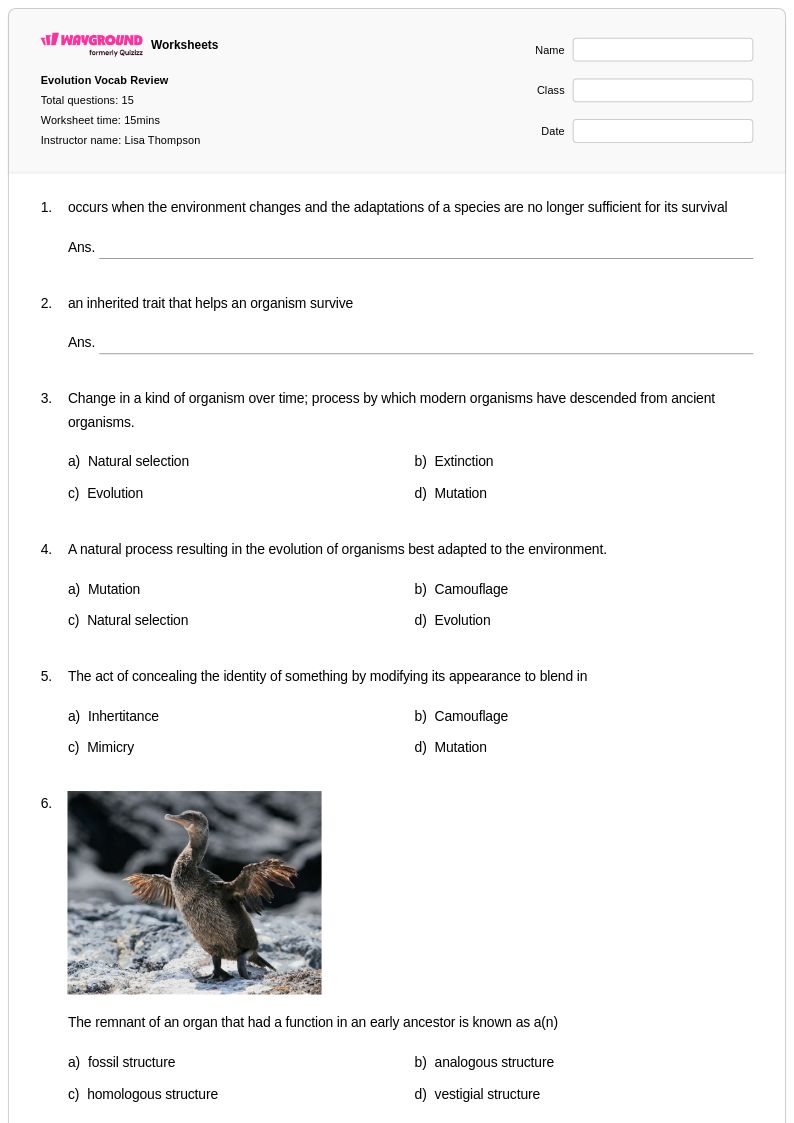
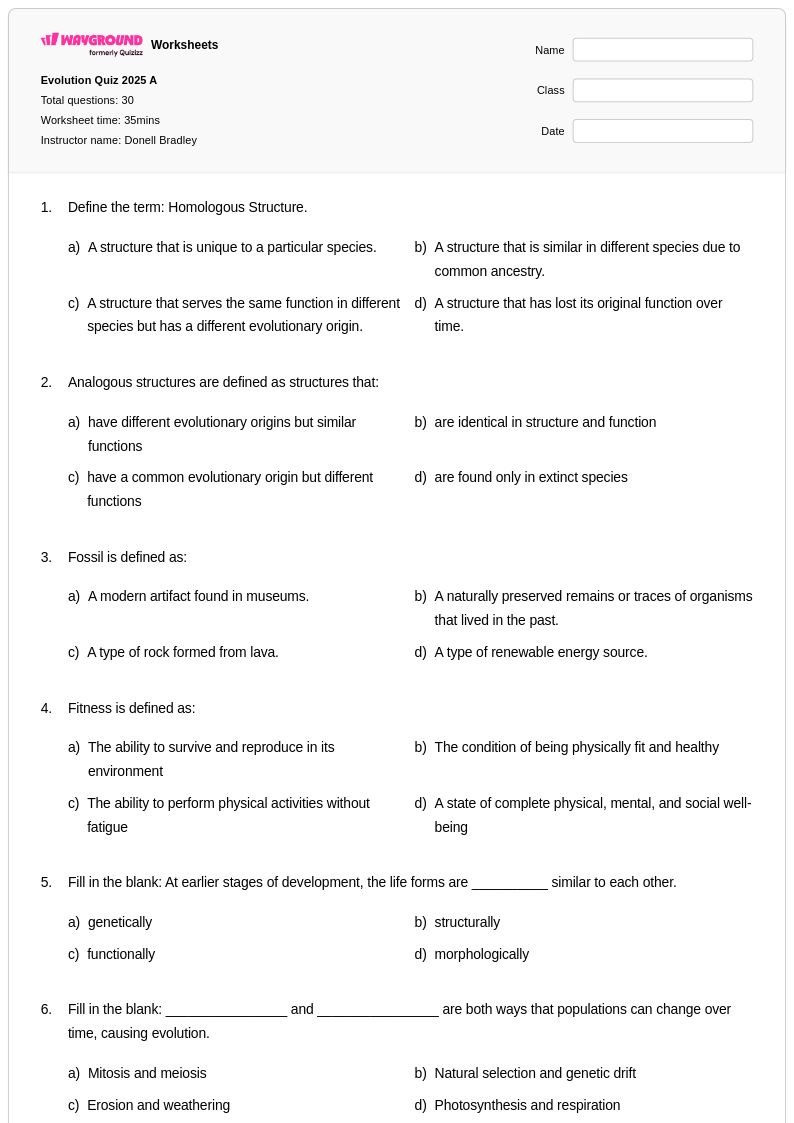
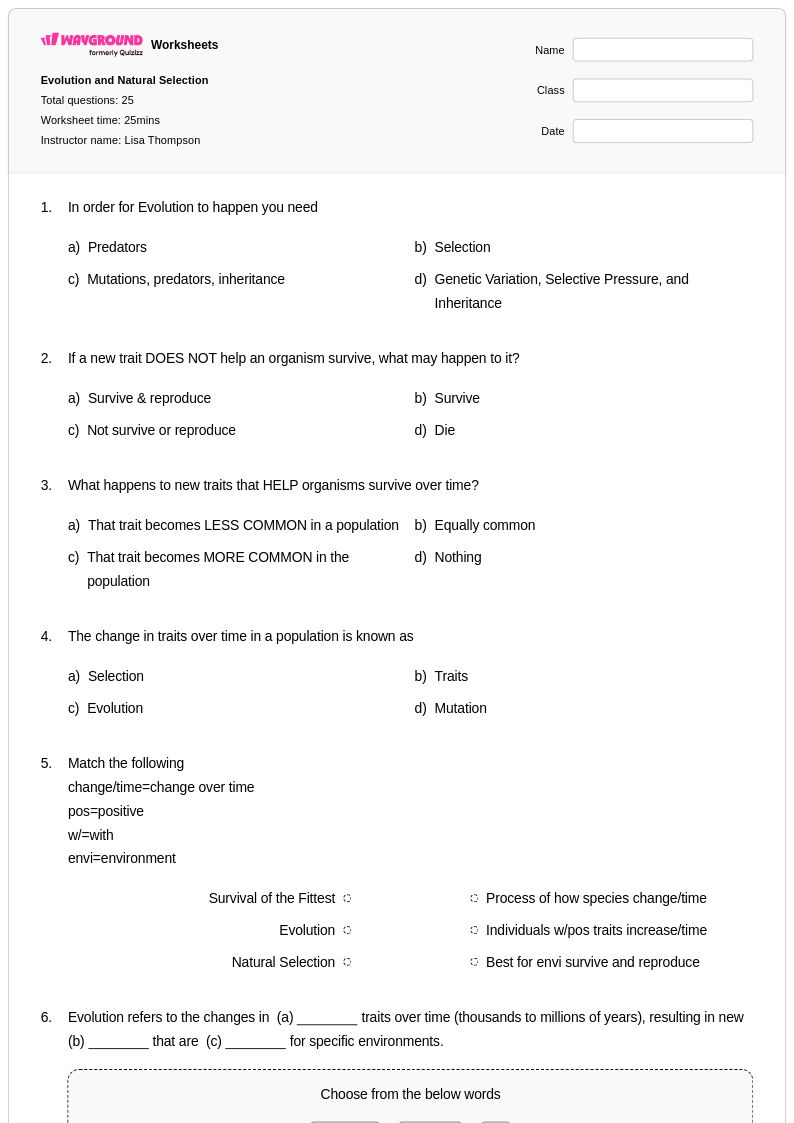
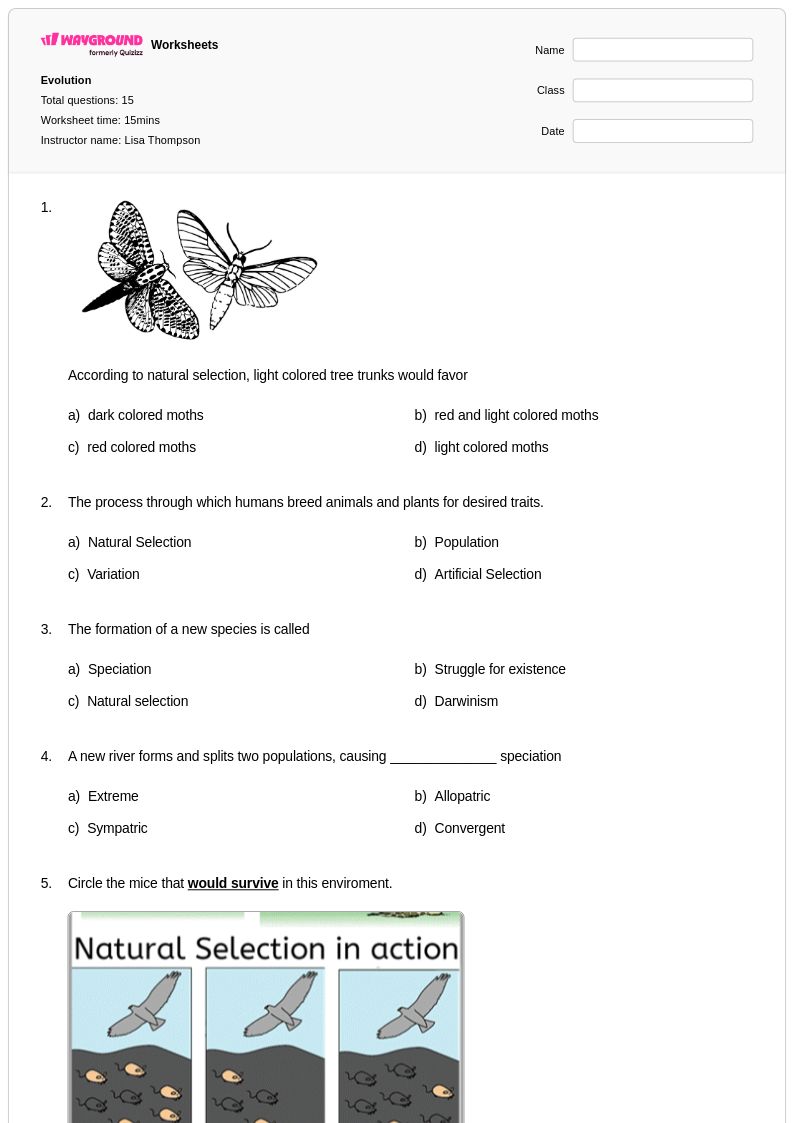
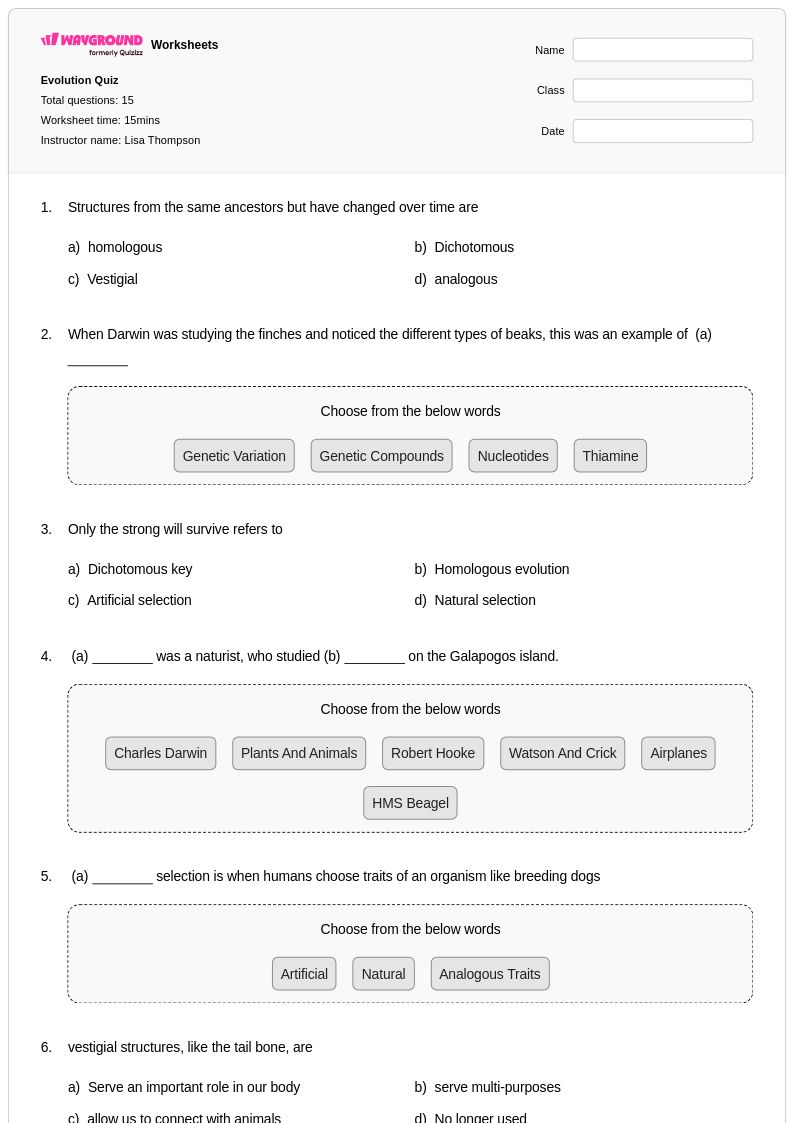
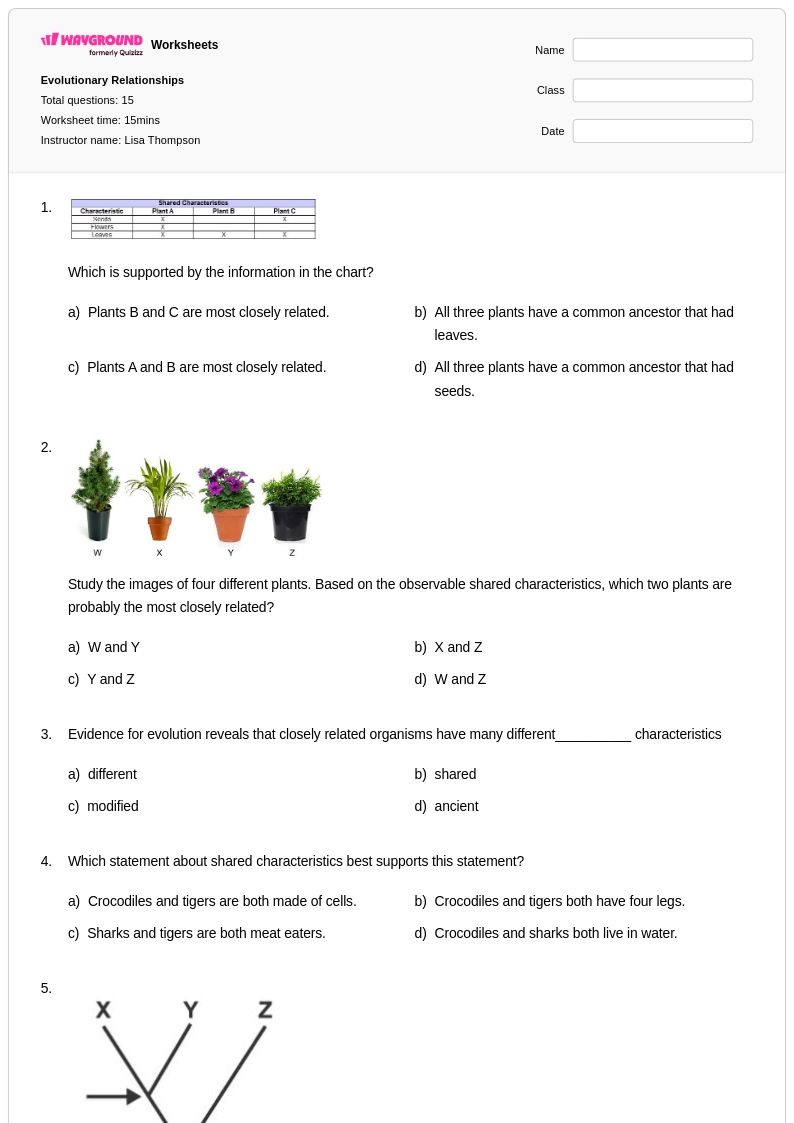
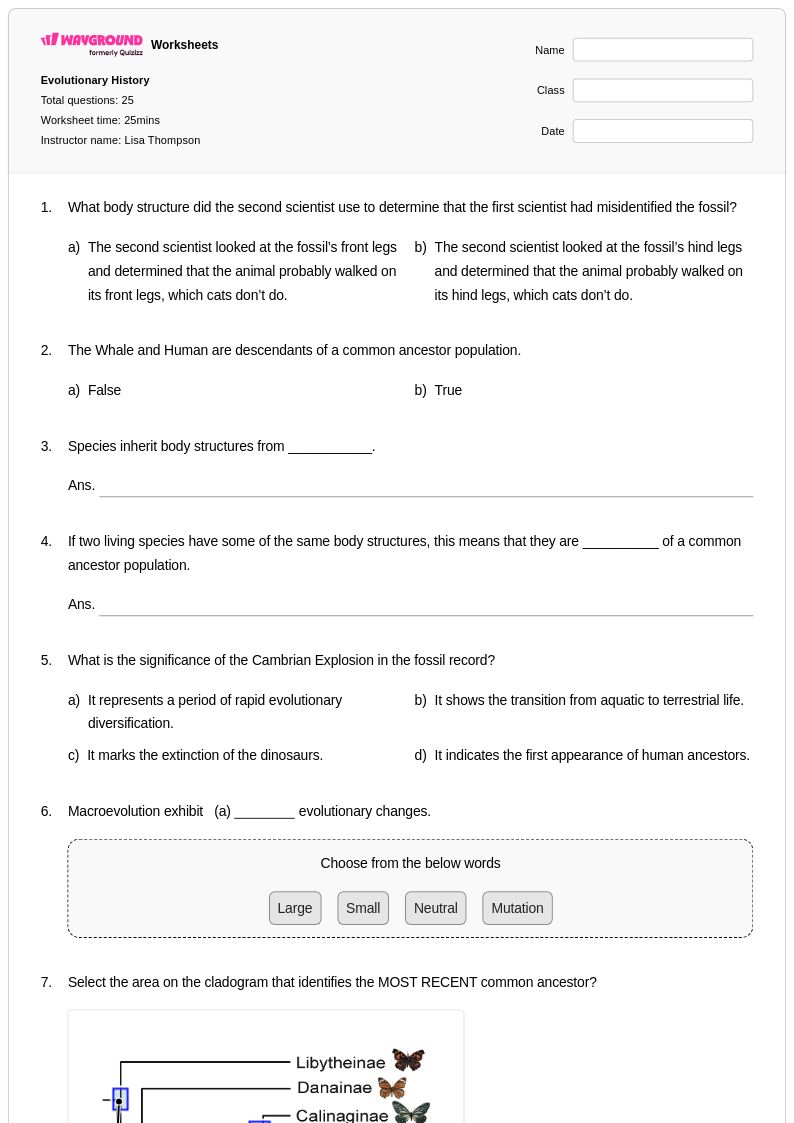
Homologous structures worksheets for Class 12 students available through Wayground (formerly Quizizz) provide comprehensive practice in identifying and analyzing anatomical similarities that reveal evolutionary relationships among organisms. These carefully designed worksheets strengthen critical thinking skills as students examine bone structures, organ systems, and developmental patterns across diverse species, learning to distinguish between homologous, analogous, and vestigial structures. Each worksheet collection includes detailed answer keys and explanatory materials that guide students through complex comparative anatomy concepts, while printable pdf formats ensure easy classroom distribution and individual study sessions. The practice problems progressively build from basic identification exercises to advanced evolutionary analysis, helping students master this fundamental concept in evolutionary biology through free, accessible resources that reinforce both observational skills and scientific reasoning.
Wayground (formerly Quizizz) supports biology educators with millions of teacher-created homologous structures worksheets that feature robust search and filtering capabilities, allowing instructors to quickly locate materials aligned with specific curriculum standards and learning objectives. The platform's differentiation tools enable teachers to customize worksheet difficulty levels and content focus, accommodating diverse learning needs within Class 12 classrooms while maintaining rigorous academic standards. Available in both printable and digital formats including downloadable pdf versions, these worksheet collections streamline lesson planning and provide flexible options for in-class instruction, homework assignments, and assessment preparation. Teachers utilize these resources for targeted remediation of struggling students, enrichment activities for advanced learners, and regular skill practice that reinforces the connection between anatomical evidence and evolutionary theory throughout their comparative biology units.
FAQs
How do I teach homologous structures in a biology class?
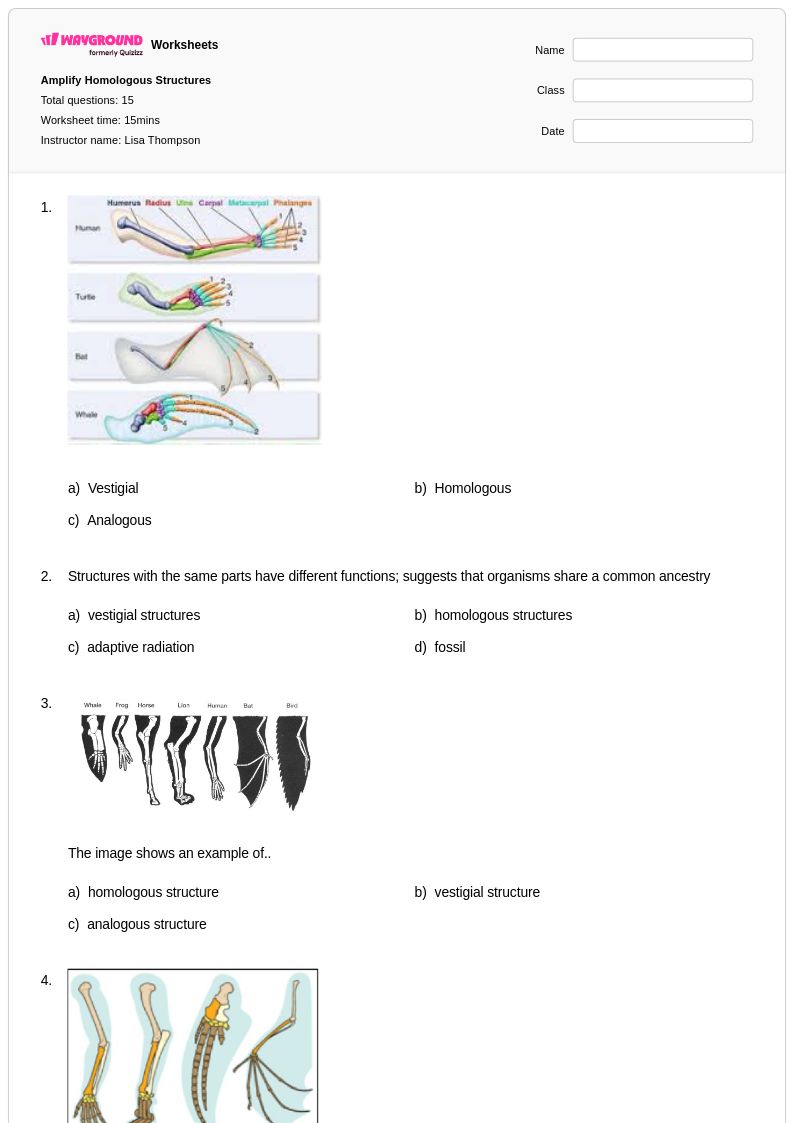
Start by having students compare actual skeletal diagrams of vertebrate limbs, such as the human arm, bat wing, whale flipper, and horse leg, to identify shared bone patterns before introducing the term 'pentadactyl limb.' Once students can see the structural similarities visually, connect those observations to the concept of common ancestry and divergent evolution. Using labeled anatomy diagrams alongside guided comparison activities helps students build the conceptual bridge between structural evidence and evolutionary inference.
What exercises help students practice identifying homologous structures?
Effective practice activities include labeling the bones of the pentadactyl limb across multiple vertebrate species, matching skeletal diagrams to their corresponding organism, and completing comparison charts that highlight structural similarities and functional differences. Worksheets that ask students to draw conclusions about common ancestry from bone arrangements reinforce both content knowledge and scientific reasoning skills. Mixing diagram-based tasks with short written explanation prompts strengthens retention and prepares students for assessments.
What is the difference between homologous structures and analogous structures?
Homologous structures share a common underlying anatomy inherited from a common ancestor, even if they now serve different functions, such as the forelimbs of a bat, whale, and human. Analogous structures, by contrast, perform similar functions but evolved independently in unrelated lineages, such as the wings of a bird and the wings of an insect. Teaching this distinction is critical because students frequently confuse similarity of function with similarity of origin, which leads to errors in reasoning about evolutionary relationships.
What mistakes do students commonly make when learning about homologous structures?
The most common misconception is equating homologous structures with identical structures, when in fact they can look and function very differently across species. Students also frequently conflate homologous and analogous structures, assuming that any functional similarity reflects shared ancestry. Another common error is failing to distinguish between homology as evidence of common descent and homology as proof of direct lineage, which requires explicit instructional reinforcement.
How can I use homologous structures worksheets in my classroom?
Homologous structures worksheets on Wayground are available as printable PDFs for traditional classroom use and in digital formats for technology-integrated learning environments, including the option to host them as a quiz directly on Wayground. Printable versions work well for guided note-taking, lab stations, or take-home review, while digital versions allow for immediate feedback and easier differentiation. Each worksheet includes a complete answer key, so teachers can use them for direct instruction, independent practice, or formative assessment without additional prep.
How do I differentiate homologous structures instruction for students at different levels?
For students who need additional support, reduce the number of species being compared at one time and provide pre-labeled skeletal diagrams before asking students to label independently. Advanced students can be challenged to research additional vertebrate limb adaptations and construct their own comparison charts or argue from evidence about specific evolutionary relationships. On Wayground, teachers can apply accommodations such as reduced answer choices, extended time, and read-aloud settings to individual students, allowing the same worksheet to serve diverse learners simultaneously without disrupting the rest of the class.