Free Printable Krebs Cycle Worksheets for Class 12
Class 12 Biology students can master the Krebs Cycle with Wayground's comprehensive collection of free worksheets, printables, and practice problems featuring detailed answer keys to reinforce cellular respiration concepts.
Explore printable Krebs Cycle worksheets for Class 12
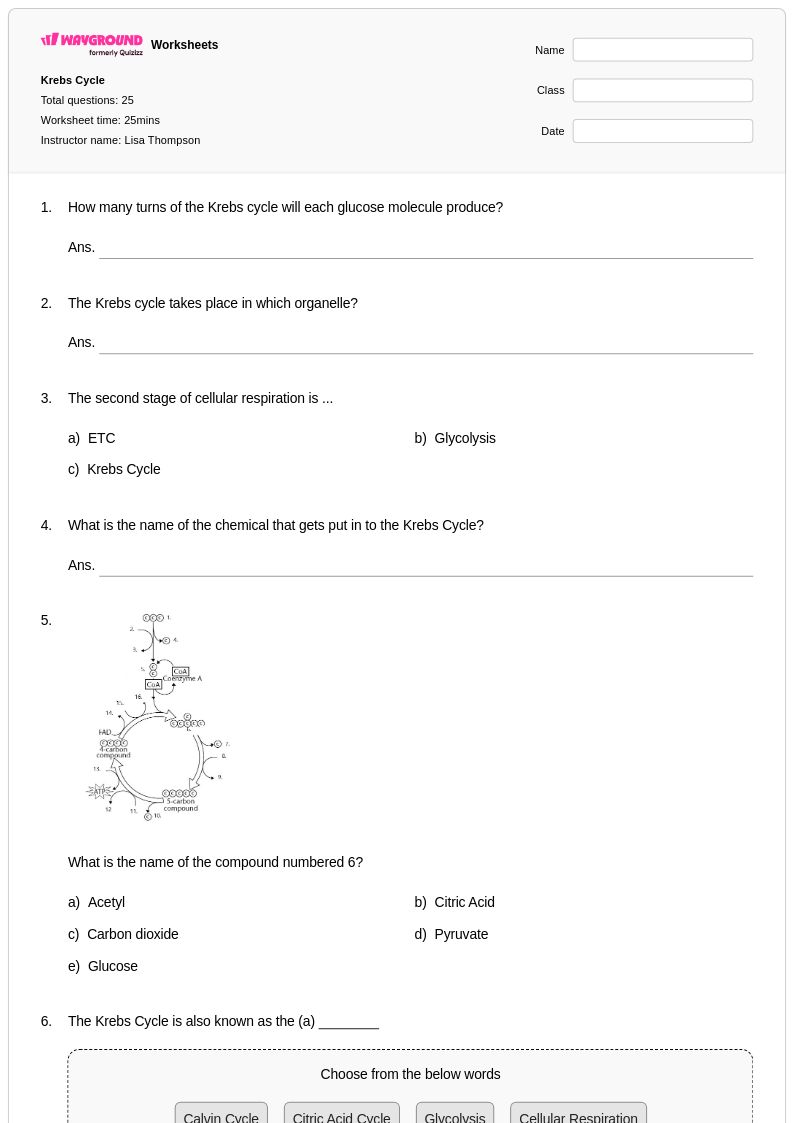
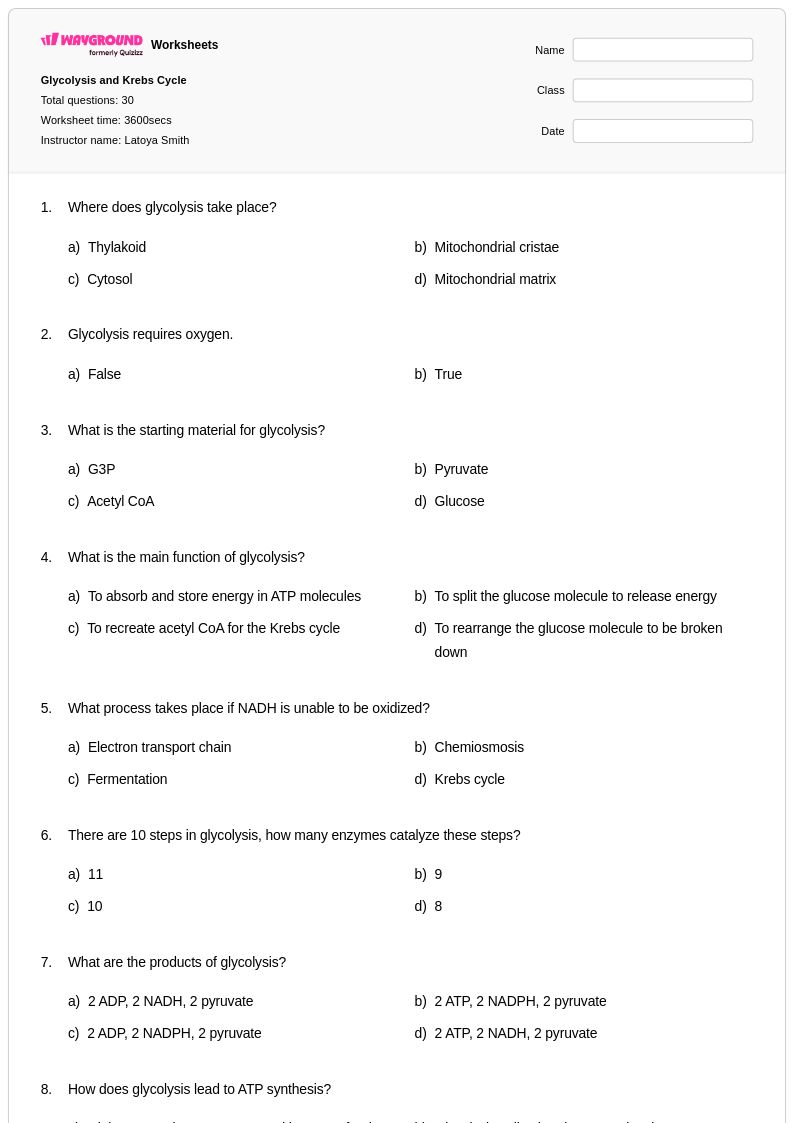
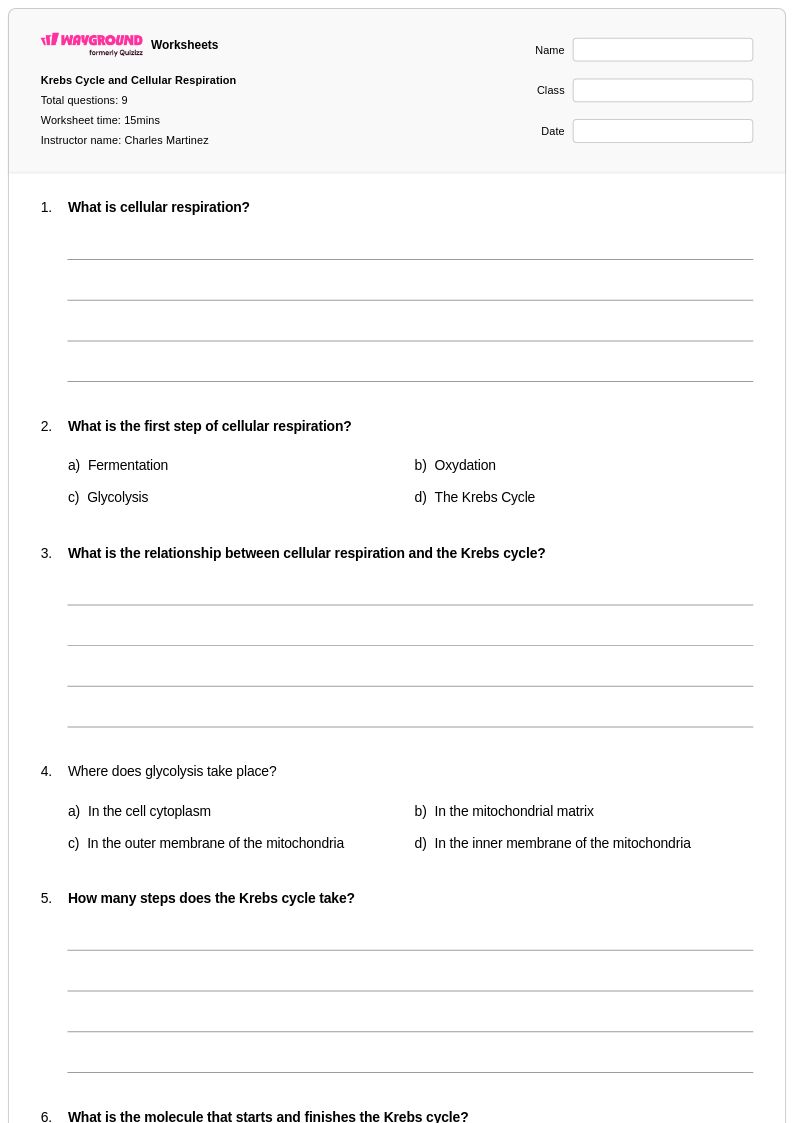
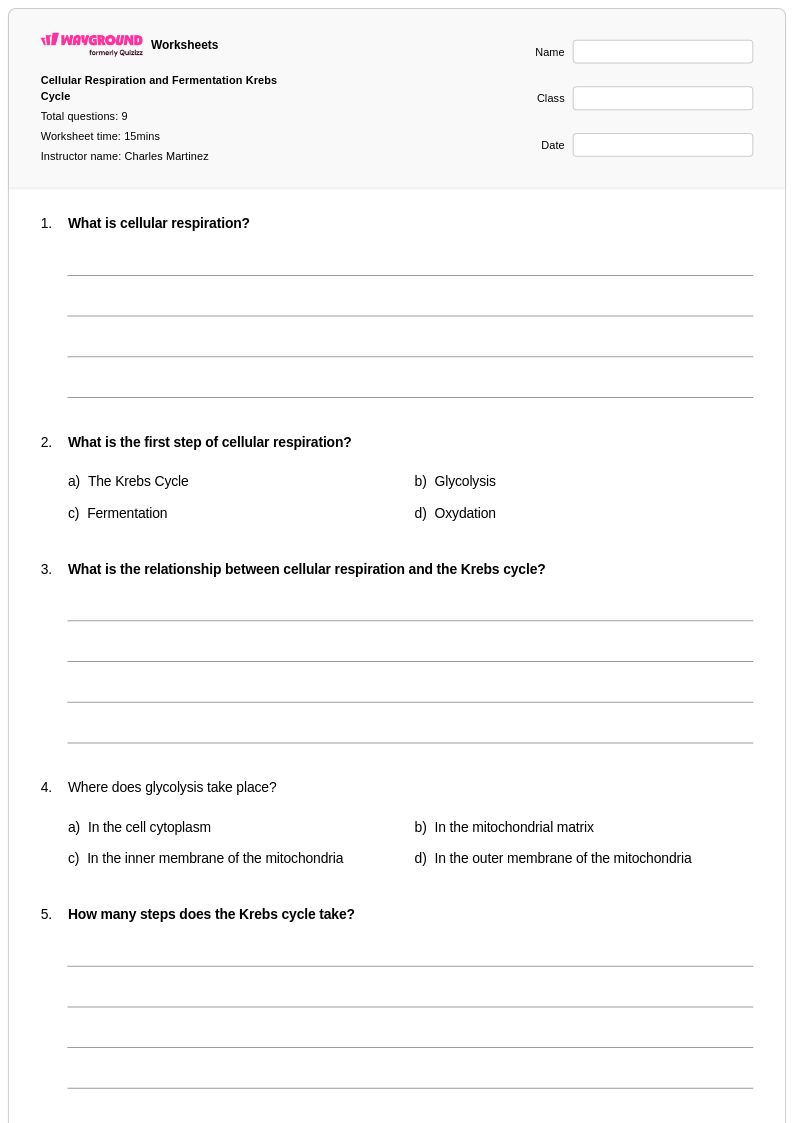
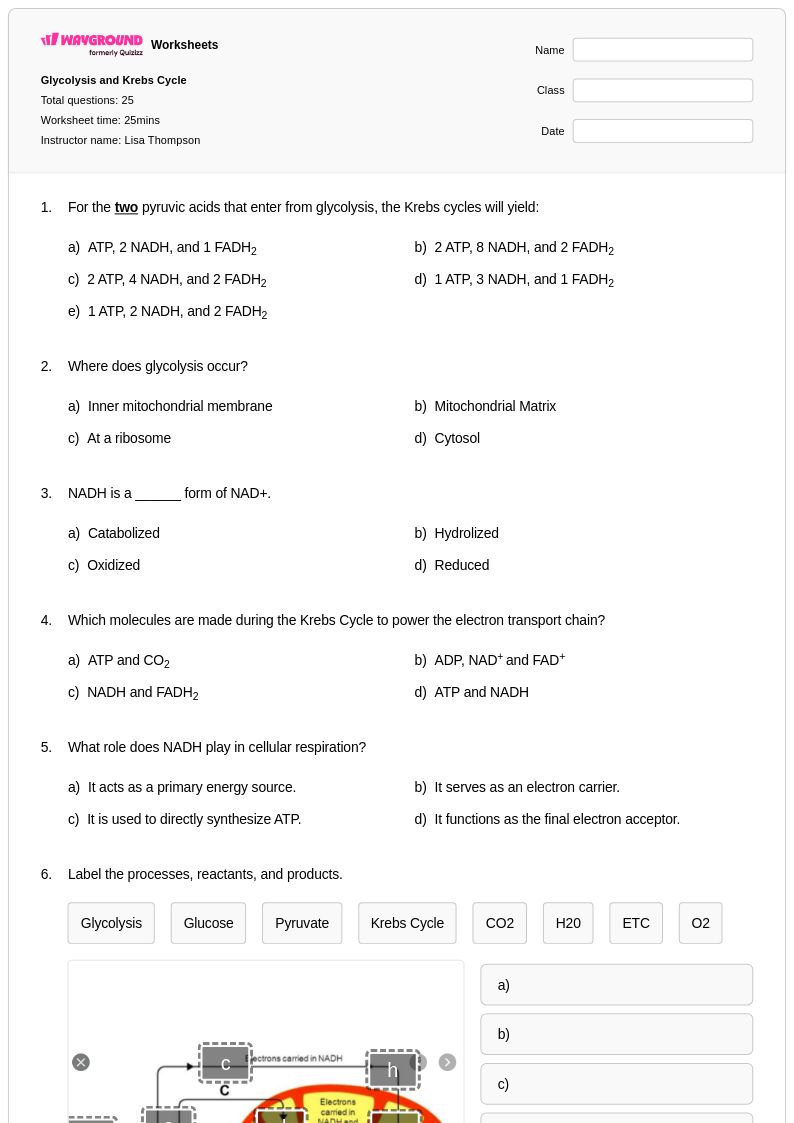
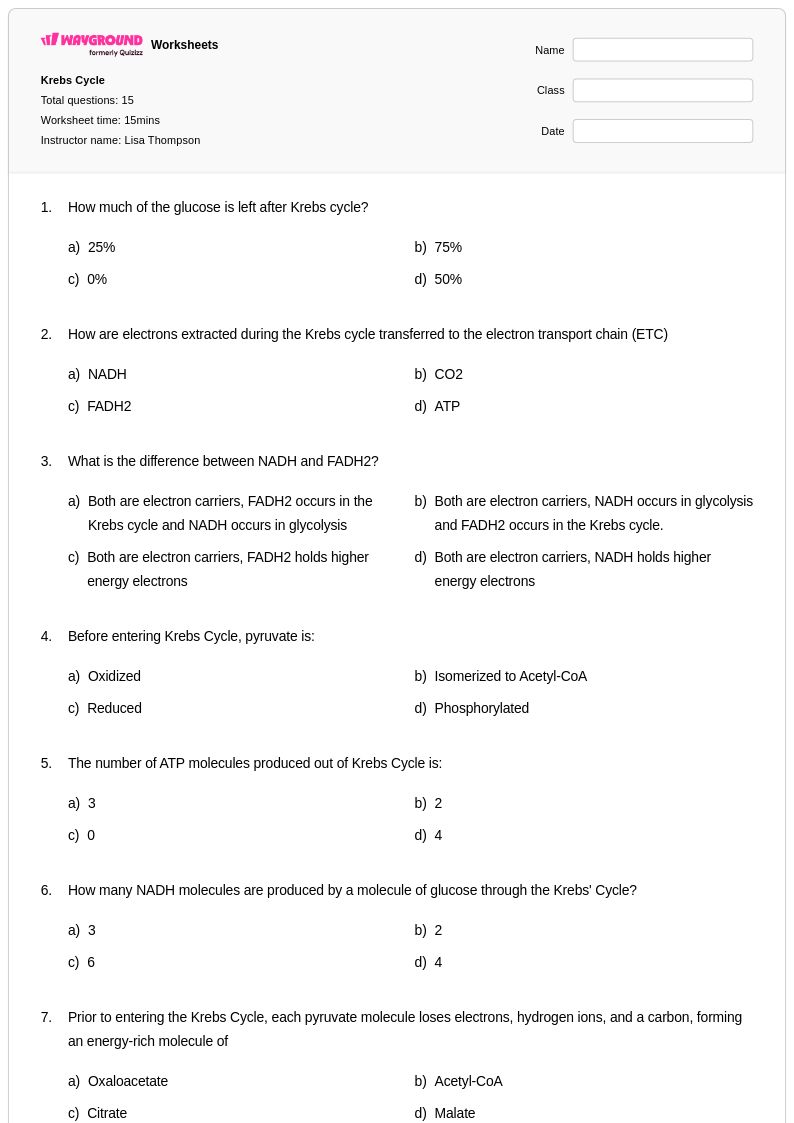
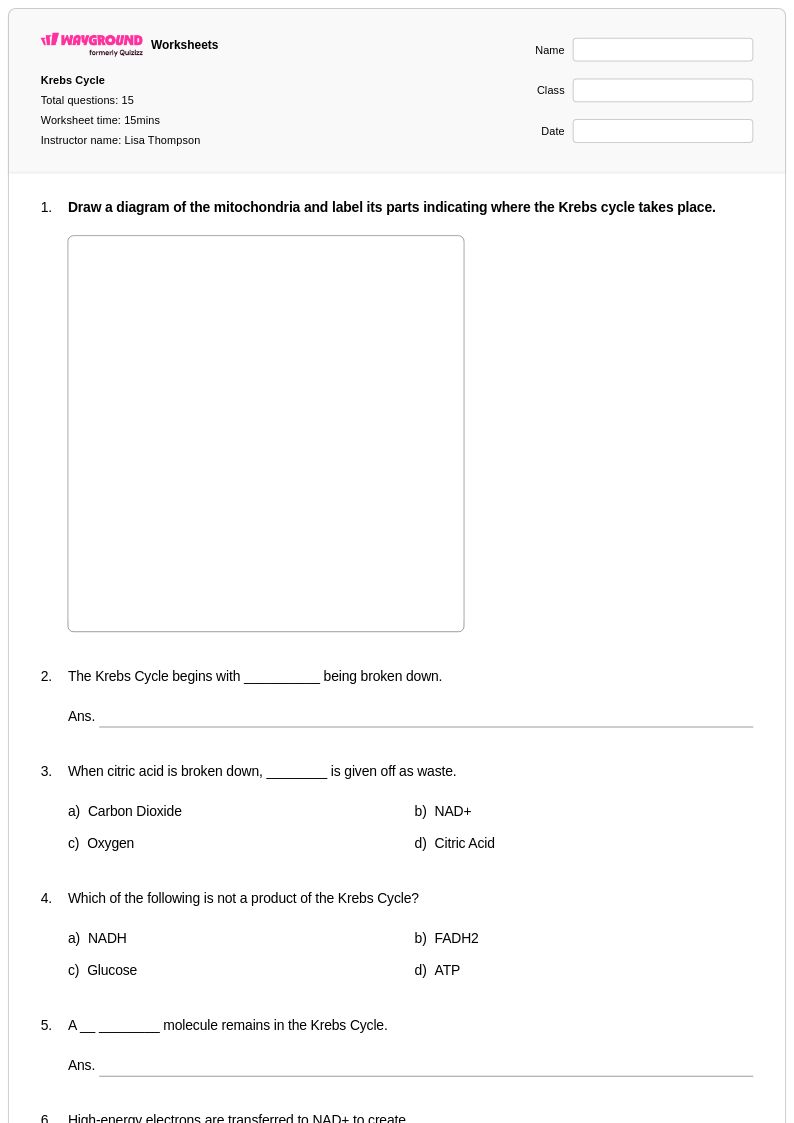
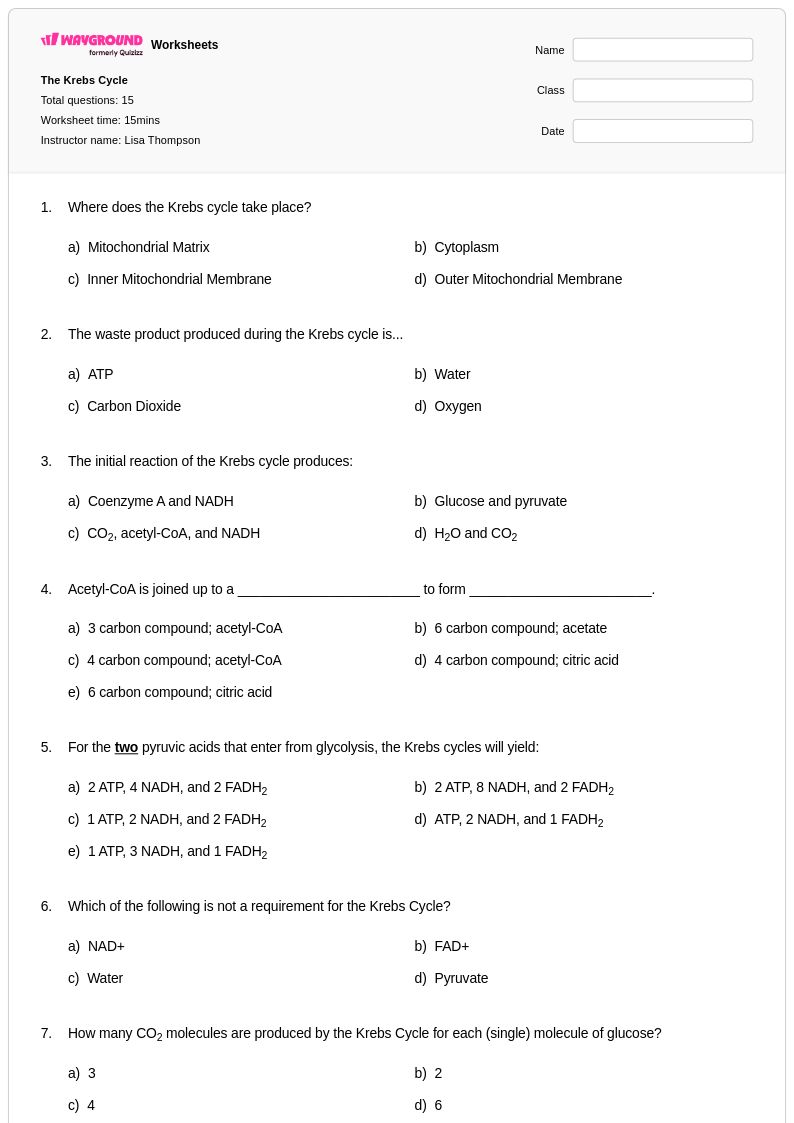
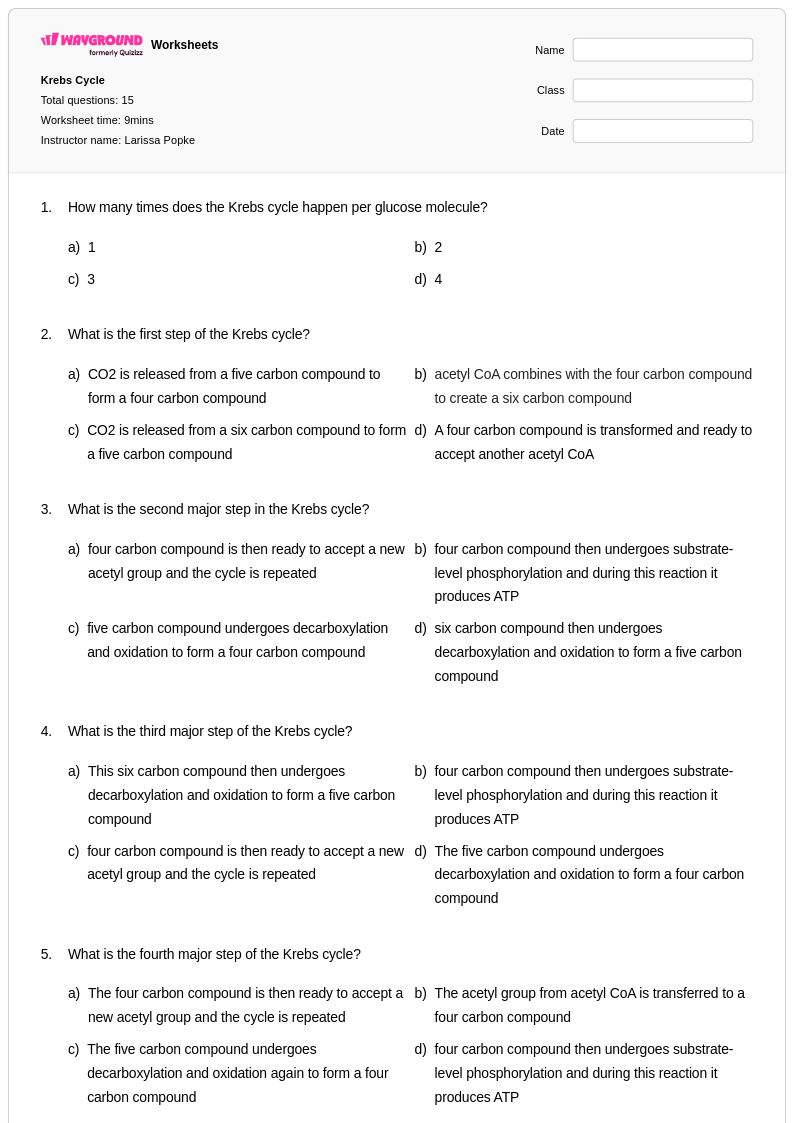
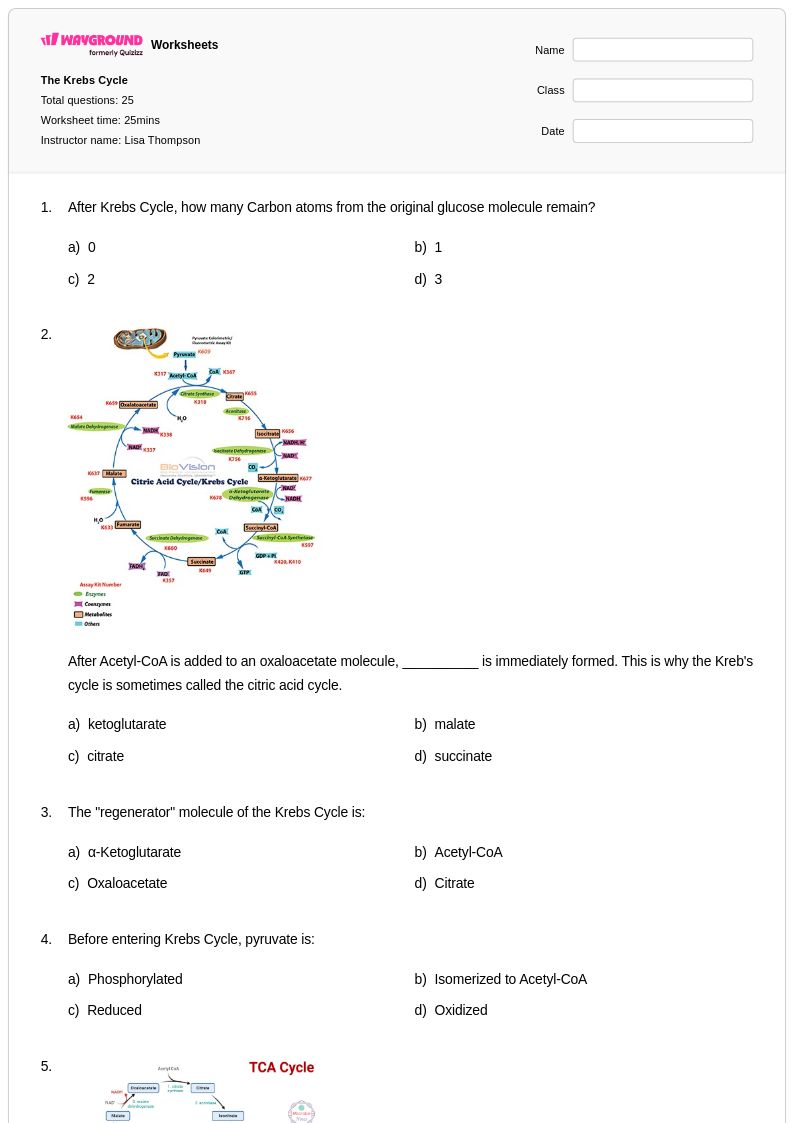
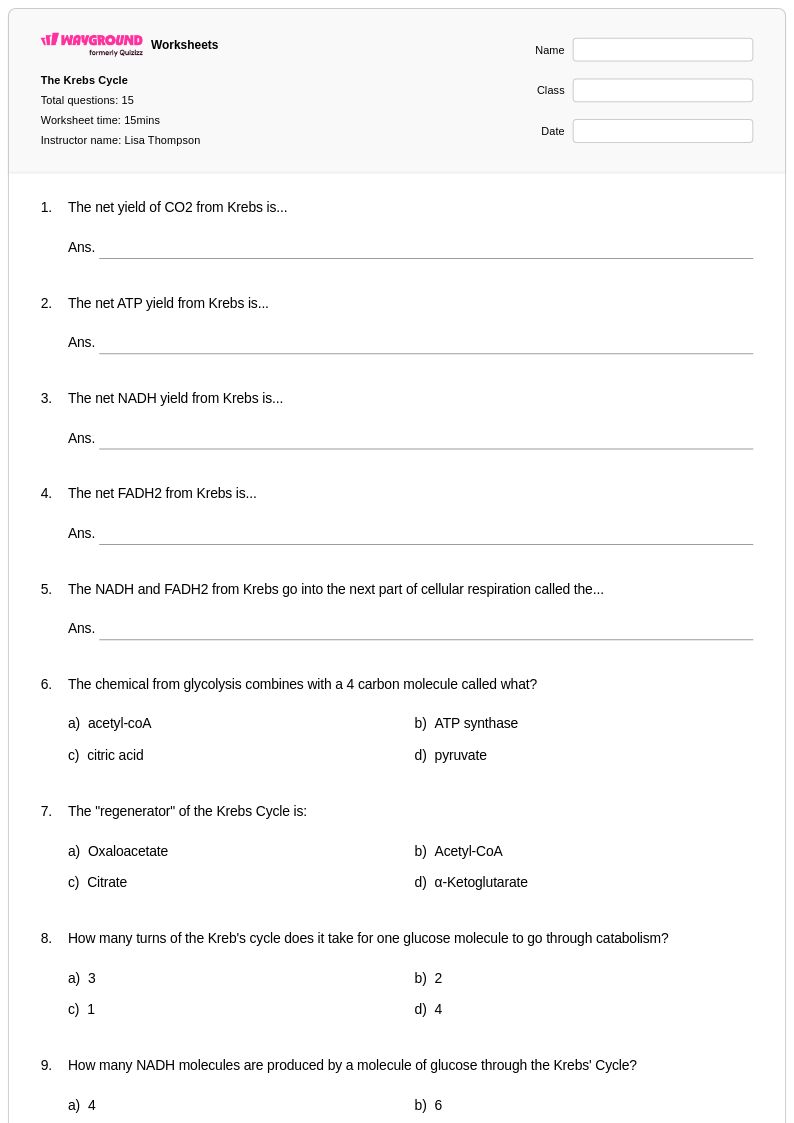
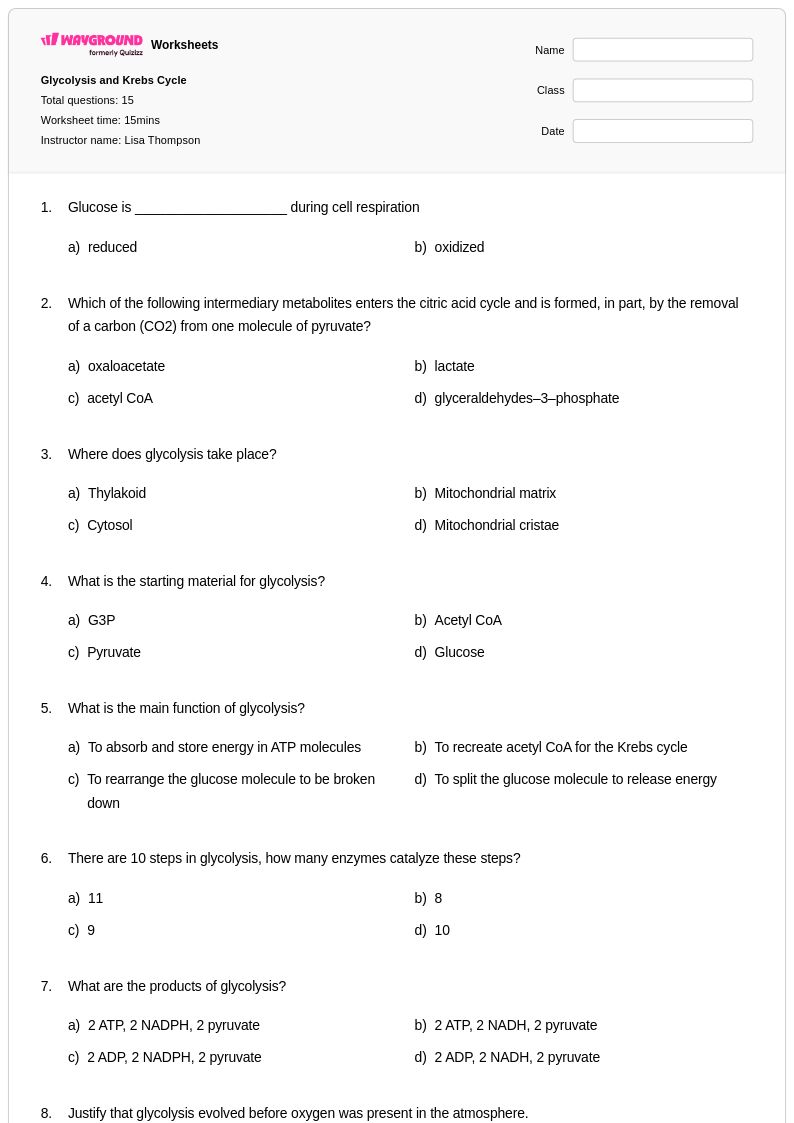
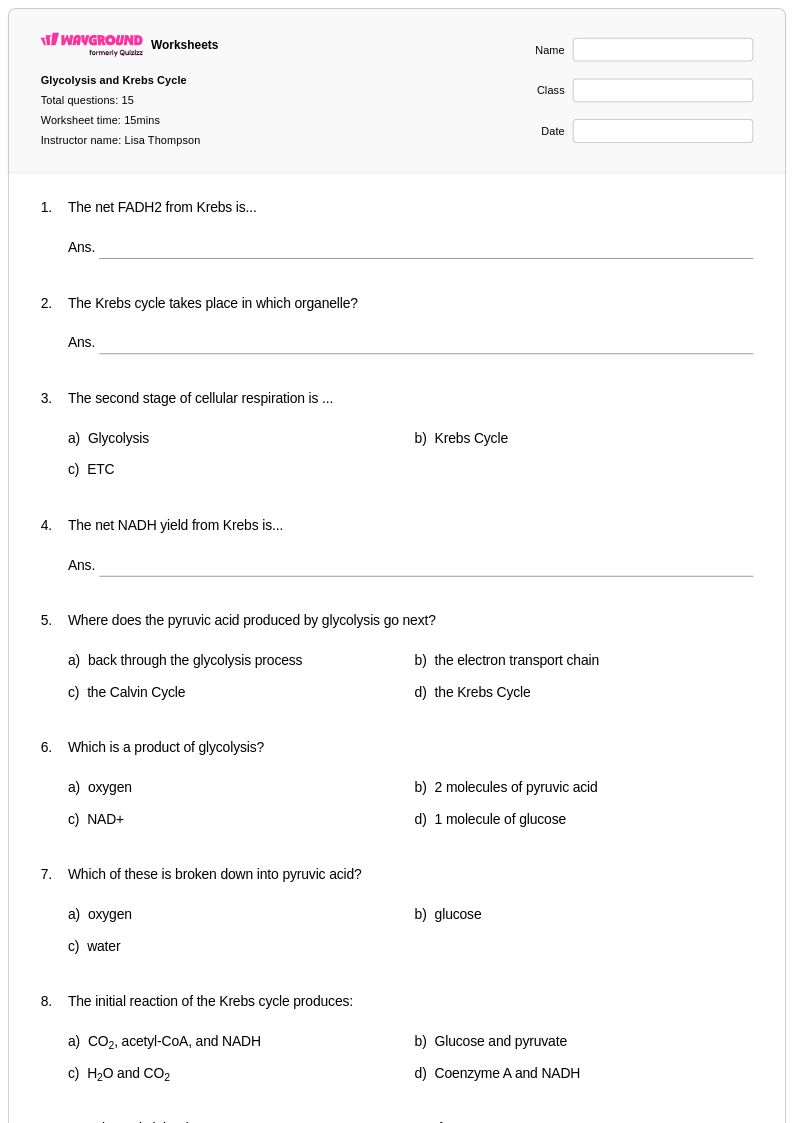
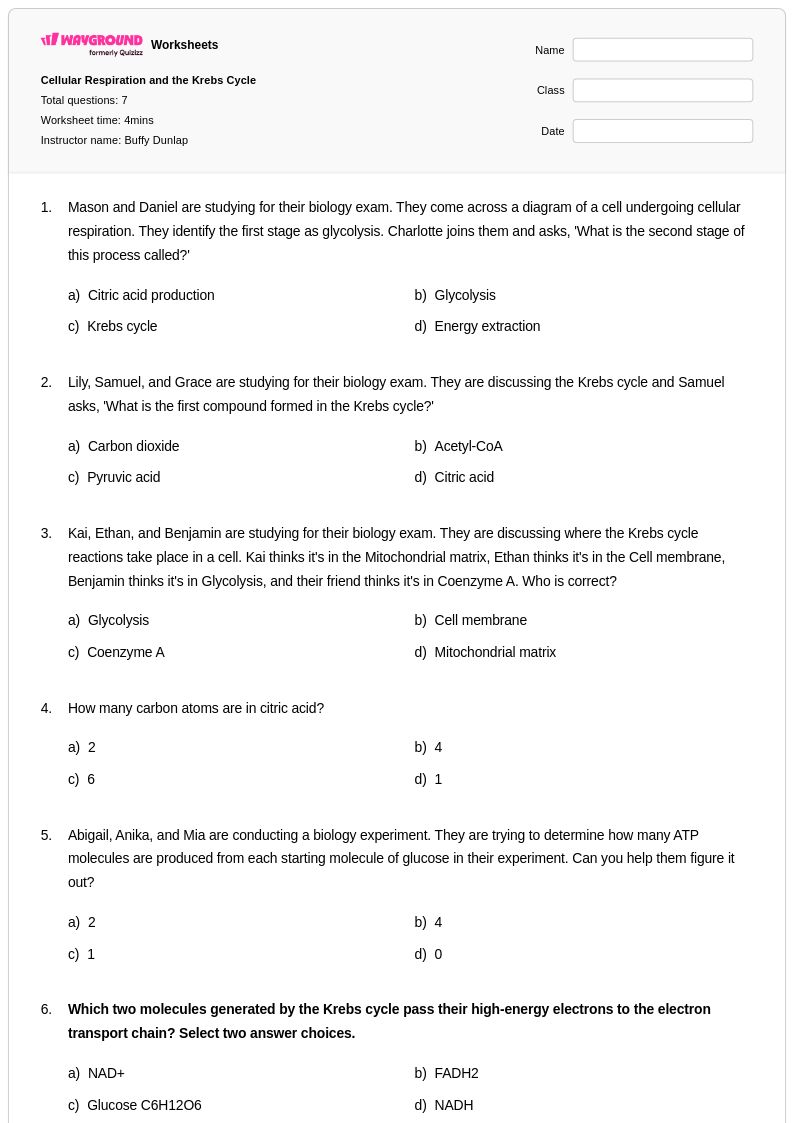
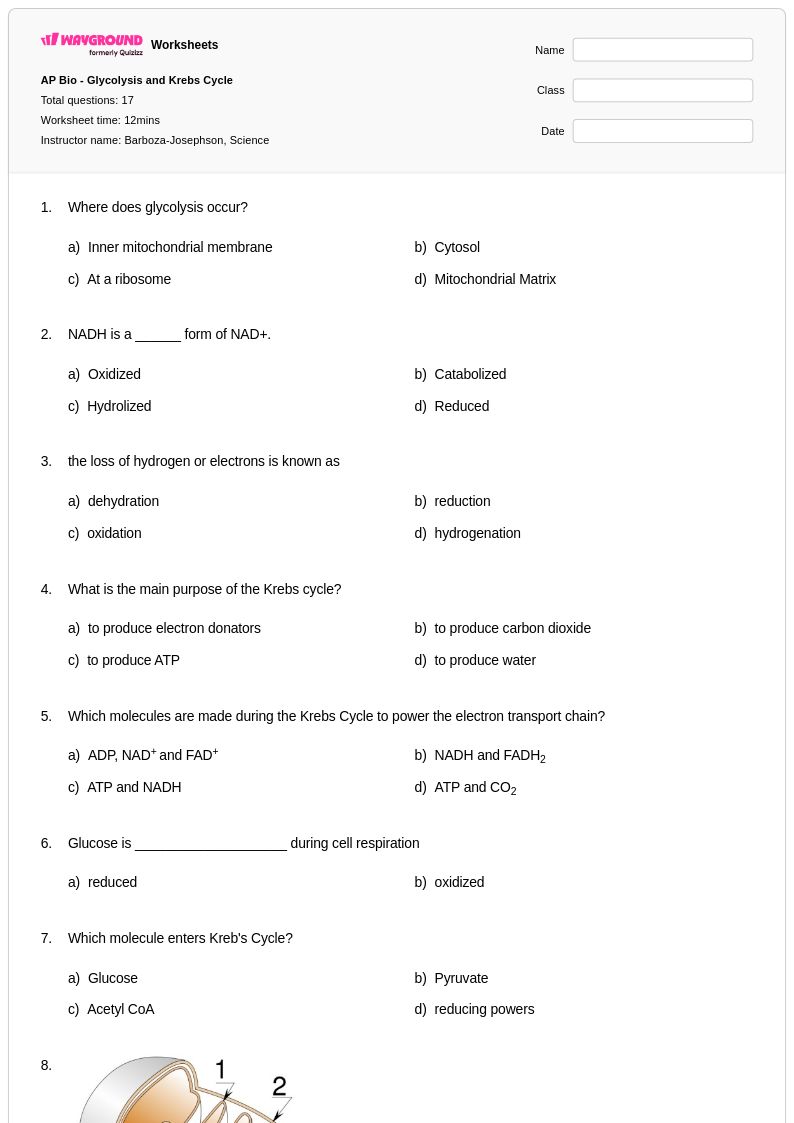
Krebs Cycle worksheets for Class 12 students available through Wayground (formerly Quizizz) provide comprehensive coverage of this fundamental cellular respiration process that transforms acetyl-CoA into ATP, NADH, FADH2, and carbon dioxide. These expertly designed practice problems strengthen students' understanding of the eight enzymatic steps within the citric acid cycle, helping them master the intricate biochemical pathways that occur in the mitochondrial matrix. The worksheet collection includes detailed answer keys that guide students through complex metabolic reactions, while free printable pdf formats ensure accessibility for both classroom instruction and independent study. Students develop critical analytical skills as they trace carbon atoms through each reaction, calculate energy yields, and connect the Krebs cycle to broader metabolic networks including glycolysis and the electron transport chain.
Wayground (formerly Quizizz) empowers educators with millions of teacher-created resources specifically designed for advanced biology instruction, featuring robust search and filtering capabilities that help locate precisely targeted Krebs cycle materials aligned with state and national science standards. The platform's differentiation tools enable teachers to customize worksheets for varying skill levels, supporting both remediation for struggling students and enrichment opportunities for advanced learners who need additional challenge in biochemistry concepts. Available in both printable and digital formats including downloadable pdf versions, these resources facilitate flexible lesson planning whether teachers need quick formative assessments, comprehensive review materials, or intensive skill practice sessions. The extensive customization options allow educators to modify existing worksheets or combine multiple resources to create targeted learning experiences that address specific gaps in student understanding of cellular respiration pathways.
FAQs
How do I teach the Krebs Cycle to high school biology students?
Start by ensuring students understand what enters the cycle — specifically that pyruvate from glycolysis is first converted to acetyl-CoA before entering the mitochondrial matrix. Use a step-by-step diagram approach, labeling each reaction, the enzymes involved, and the molecules produced (NADH, FADH2, ATP, and CO2) at each turn. Connecting the Krebs Cycle to the broader context of cellular respiration — showing where its products feed into the electron transport chain — helps students understand why the cycle matters rather than just memorizing its steps.
What are good practice exercises for students learning the Krebs Cycle?
Effective practice for the Krebs Cycle includes labeling blank pathway diagrams, identifying inputs and outputs at each step, and completing fill-in-the-blank problems that target specific molecules like acetyl-CoA, citrate, and oxaloacetate. Problems that ask students to calculate total ATP yield per glucose molecule — integrating glycolysis, the Krebs Cycle, and oxidative phosphorylation — push students toward deeper metabolic understanding. Varied problem formats, from basic cycle memorization to biochemical pathway analysis, ensure students build both recall and application skills.
What mistakes do students commonly make when learning the Krebs Cycle?
One of the most common errors is confusing the Krebs Cycle with the full process of cellular respiration — students often misattribute ATP production from the electron transport chain directly to the cycle itself. Many students also struggle to remember that the cycle turns twice per glucose molecule, leading to incorrect yield calculations for NADH and FADH2. Another frequent misconception is that the cycle produces large amounts of ATP directly, when in reality its primary output is the electron carriers that drive ATP synthesis downstream.
How can I use Krebs Cycle worksheets effectively in my classroom?
Krebs Cycle worksheets on Wayground are available as printable PDFs for traditional classroom use and in digital formats for technology-integrated environments, and can also be hosted as a quiz directly on Wayground. Printable versions work well for guided note-taking during instruction or as independent practice, while digital formats support homework assignments and self-paced review. Using worksheets that include answer keys allows students to self-check their understanding of each reaction step, enzyme function, and energy transfer mechanism as they work through the material.
How do I differentiate Krebs Cycle instruction for students at different skill levels?
For struggling students, start with simplified diagrams that focus on inputs and outputs of the cycle as a whole before introducing individual reaction steps. For advanced learners, assign problems that require integrating the Krebs Cycle with glycolysis and the electron transport chain, or that explore how cycle intermediates connect to other biosynthetic pathways. On Wayground, teachers can apply accommodations such as read aloud support, reduced answer choices, or extended time to individual students, allowing the same worksheet to serve diverse learners without requiring separate material preparation.
What prior knowledge do students need before learning the Krebs Cycle?
Students should understand the basic structure of a mitochondrion, the concept of cellular respiration as an energy-releasing process, and the role of glycolysis in producing pyruvate from glucose. Familiarity with coenzymes like NAD+ and FAD, and their roles as electron carriers, is also essential before students can meaningfully engage with Krebs Cycle reactions. Without this foundation, students tend to memorize the cycle as a disconnected sequence of names rather than understanding it as a coordinated metabolic process.