Free Printable Protein Synthesis Worksheets for Class 12
Master Class 12 protein synthesis with Wayground's comprehensive collection of free worksheets, printables, and practice problems featuring detailed answer keys to strengthen understanding of transcription and translation processes.
Explore printable Protein Synthesis worksheets for Class 12
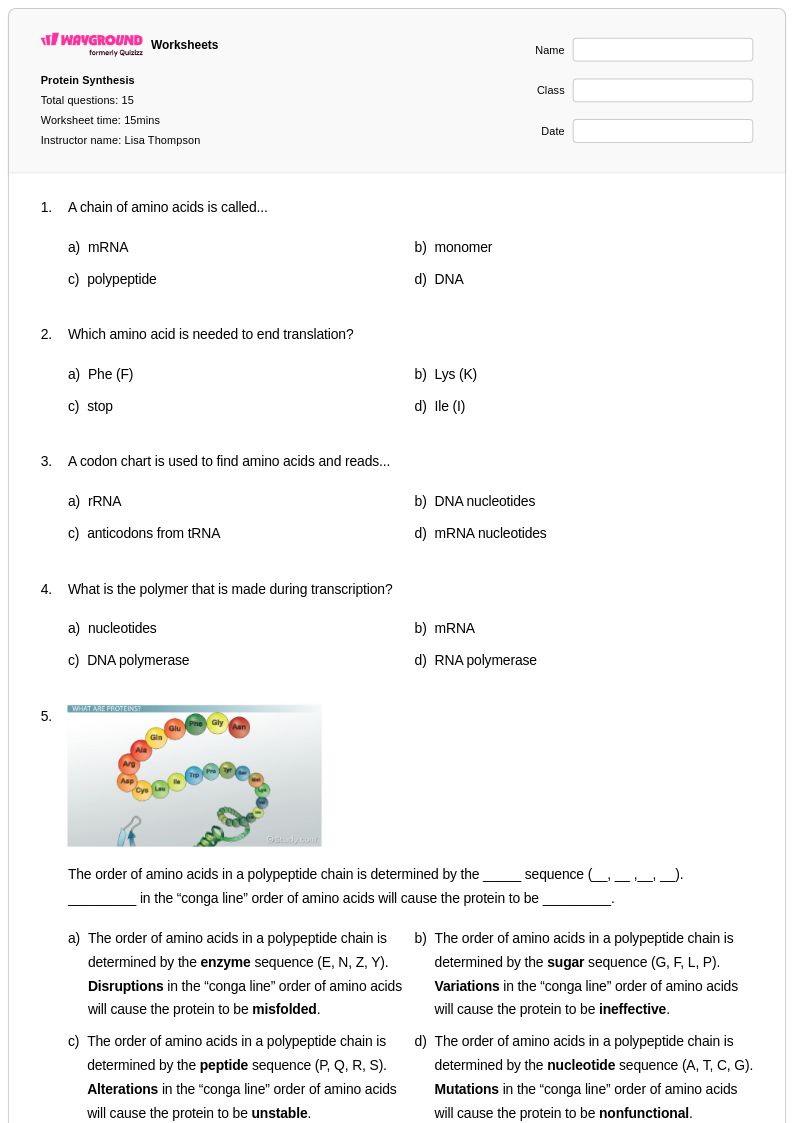
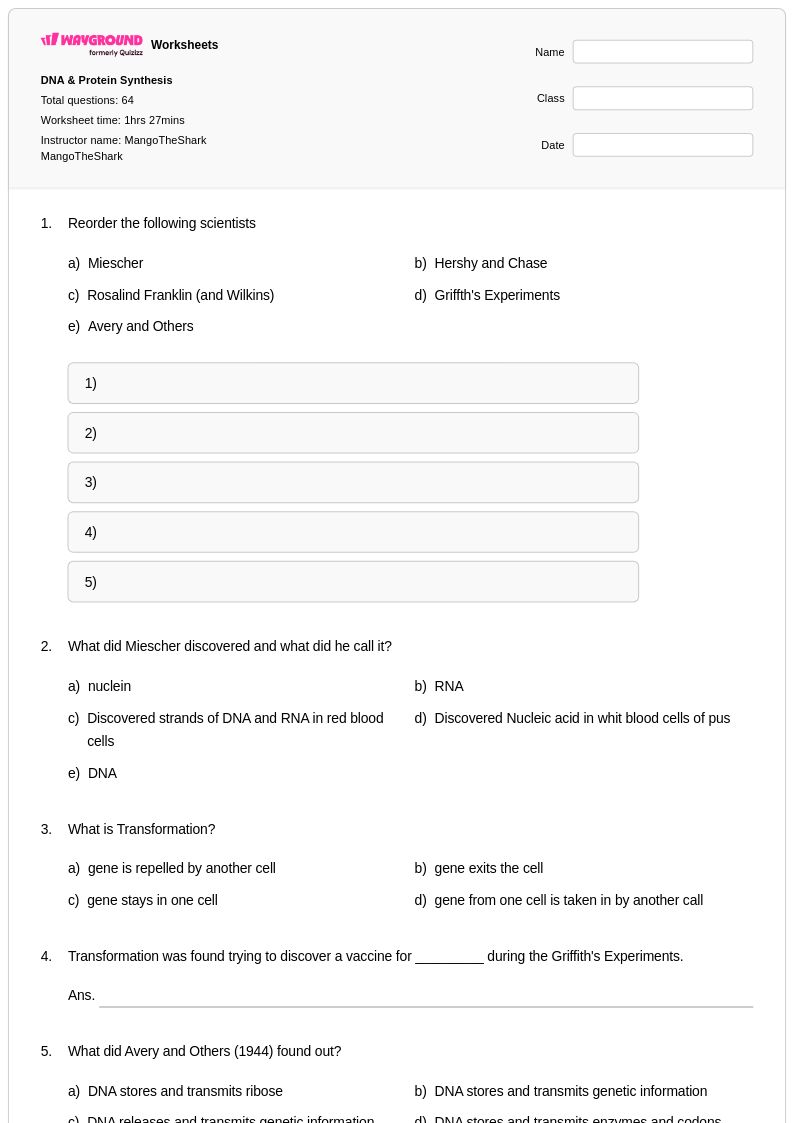
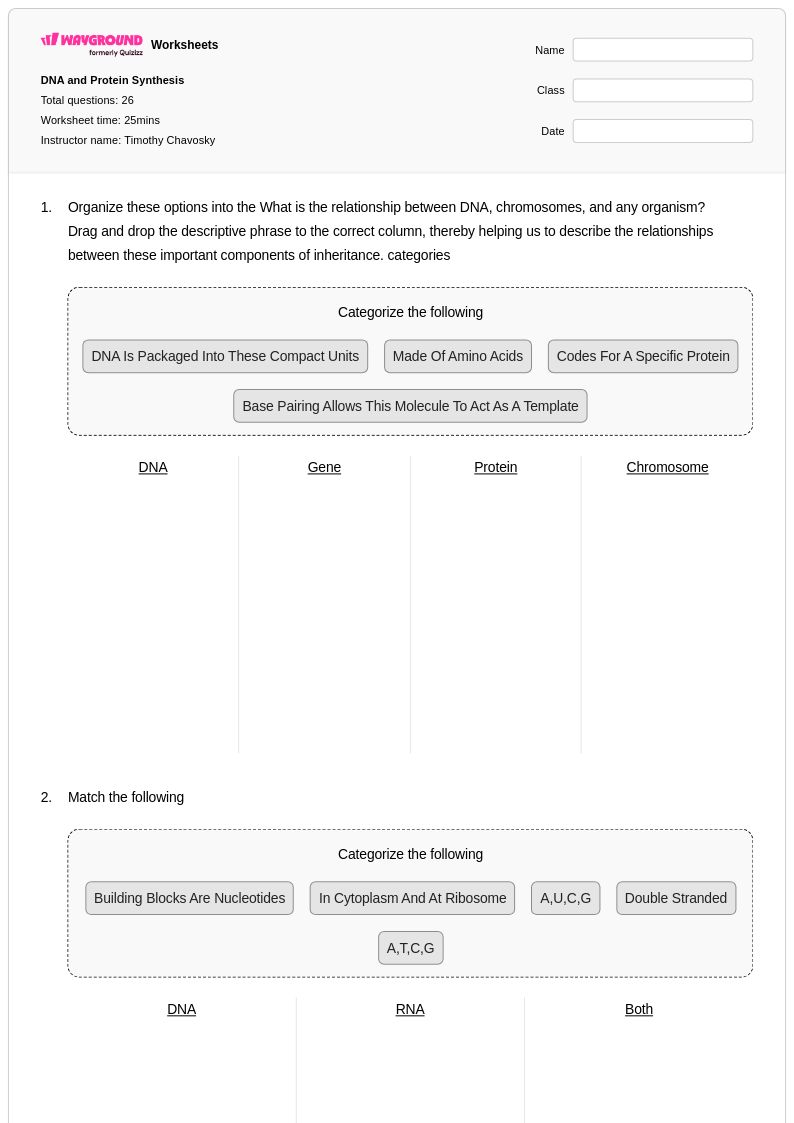
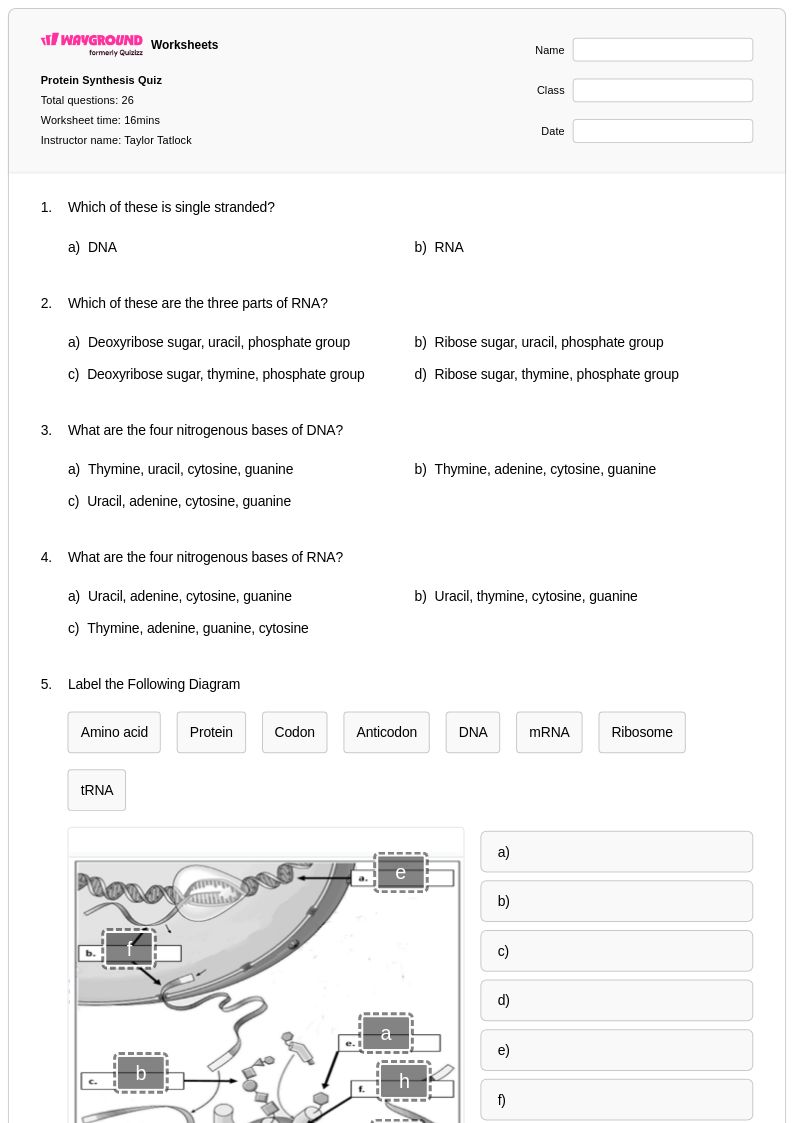
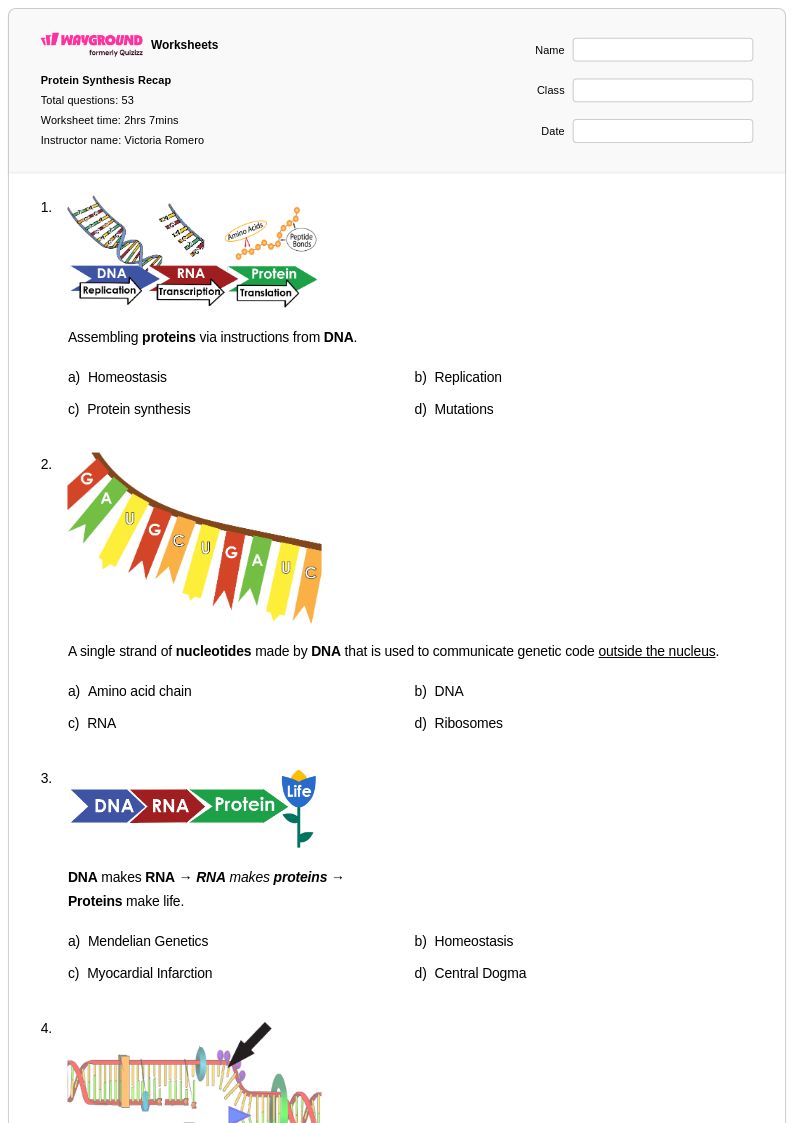
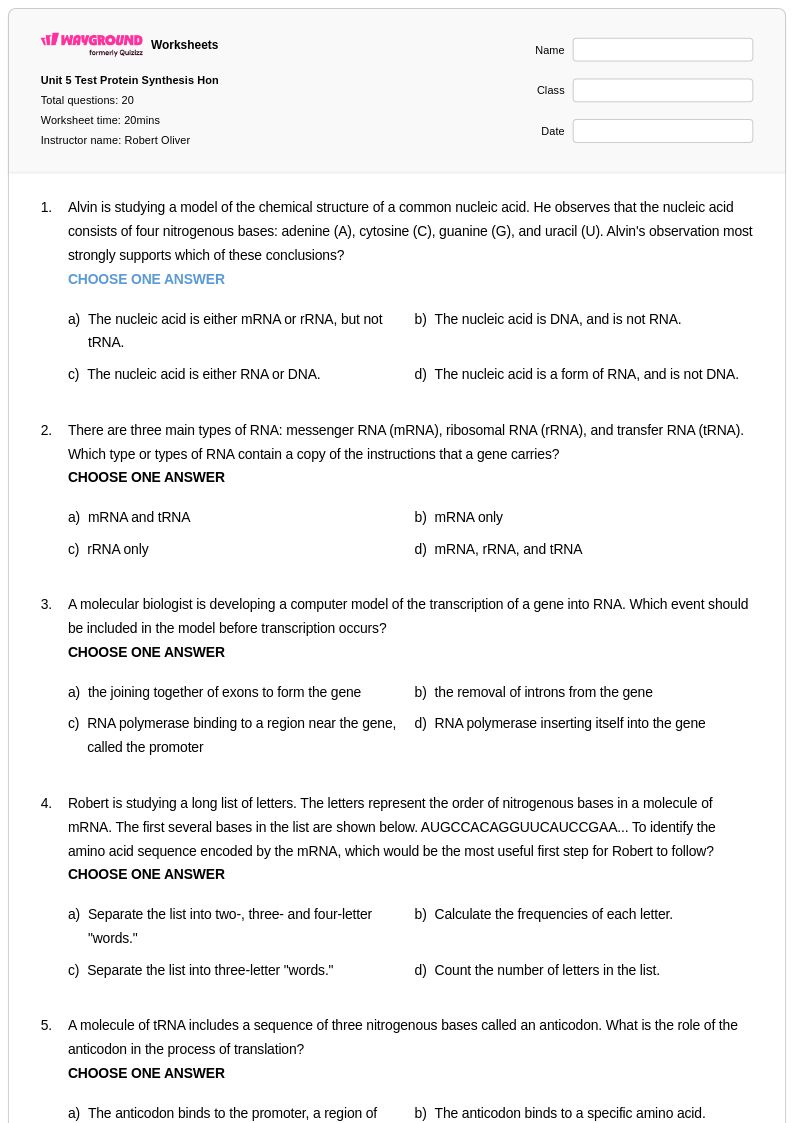
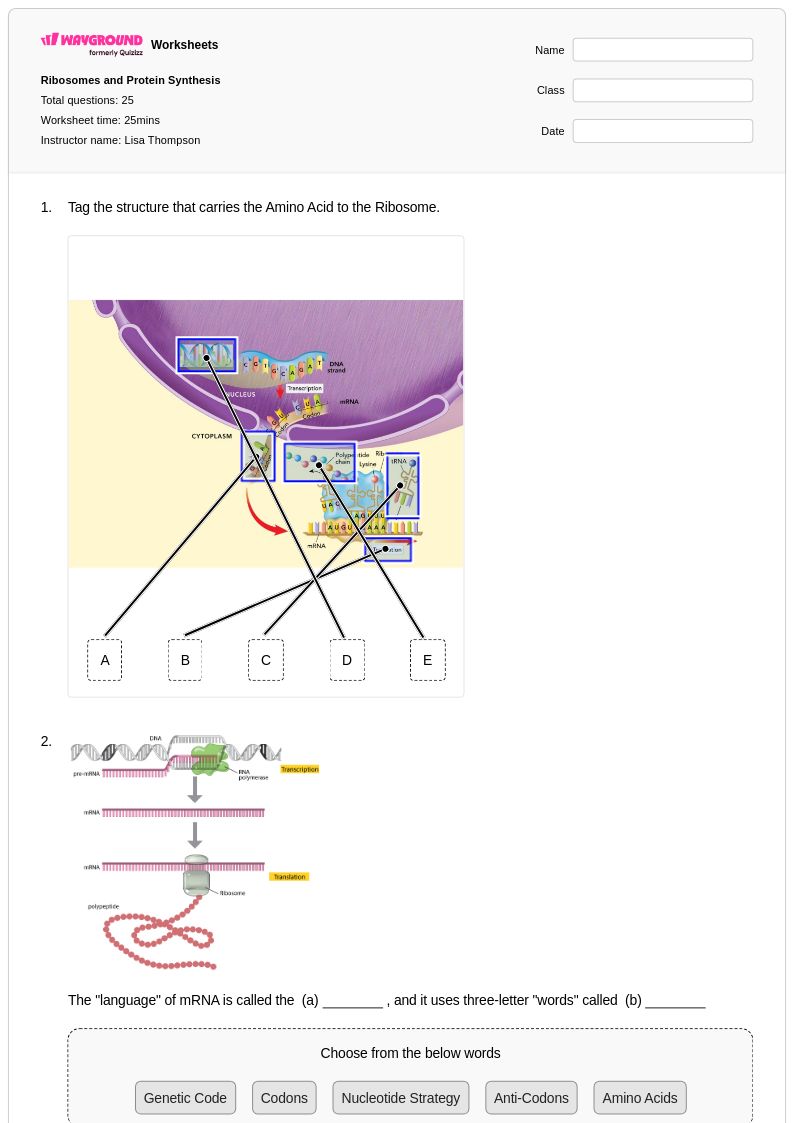
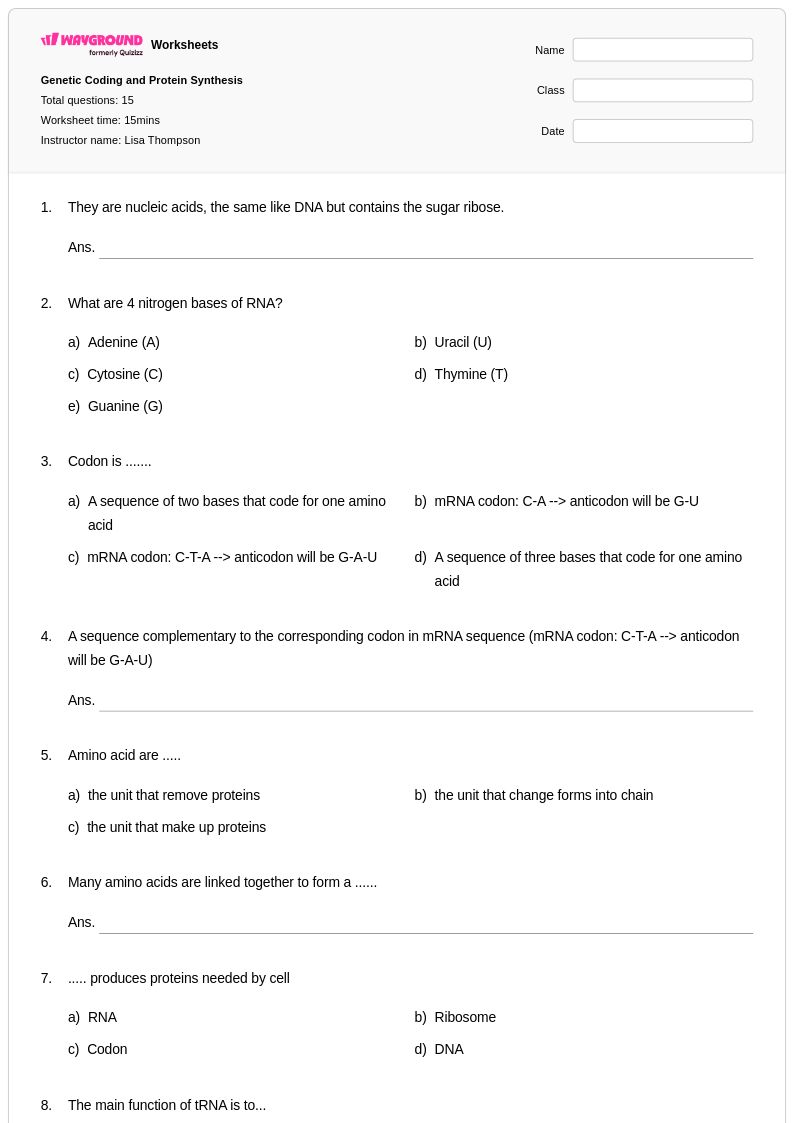
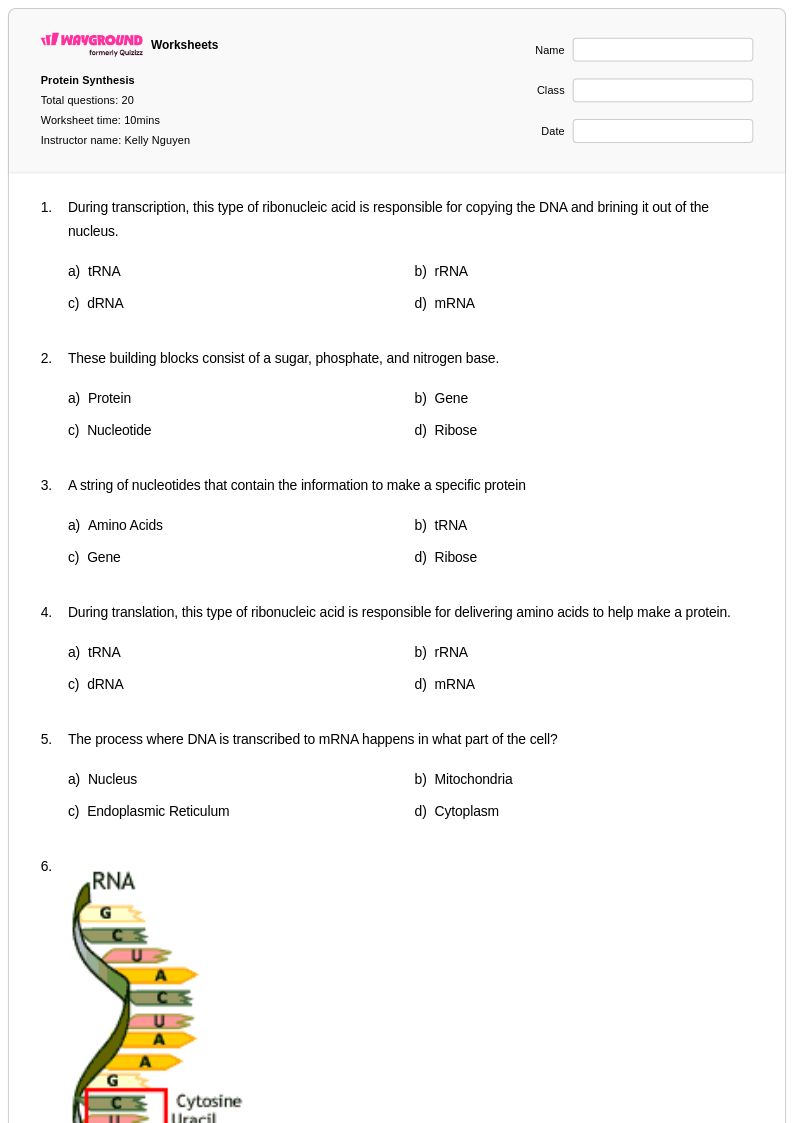
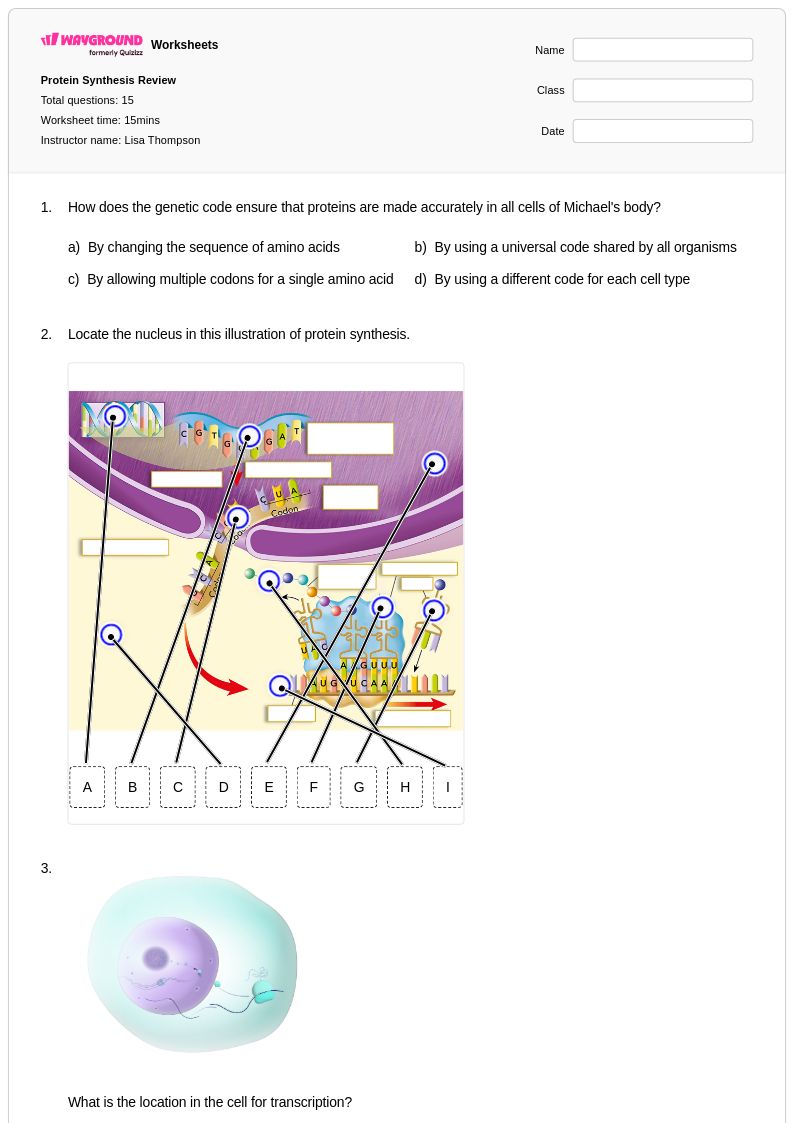
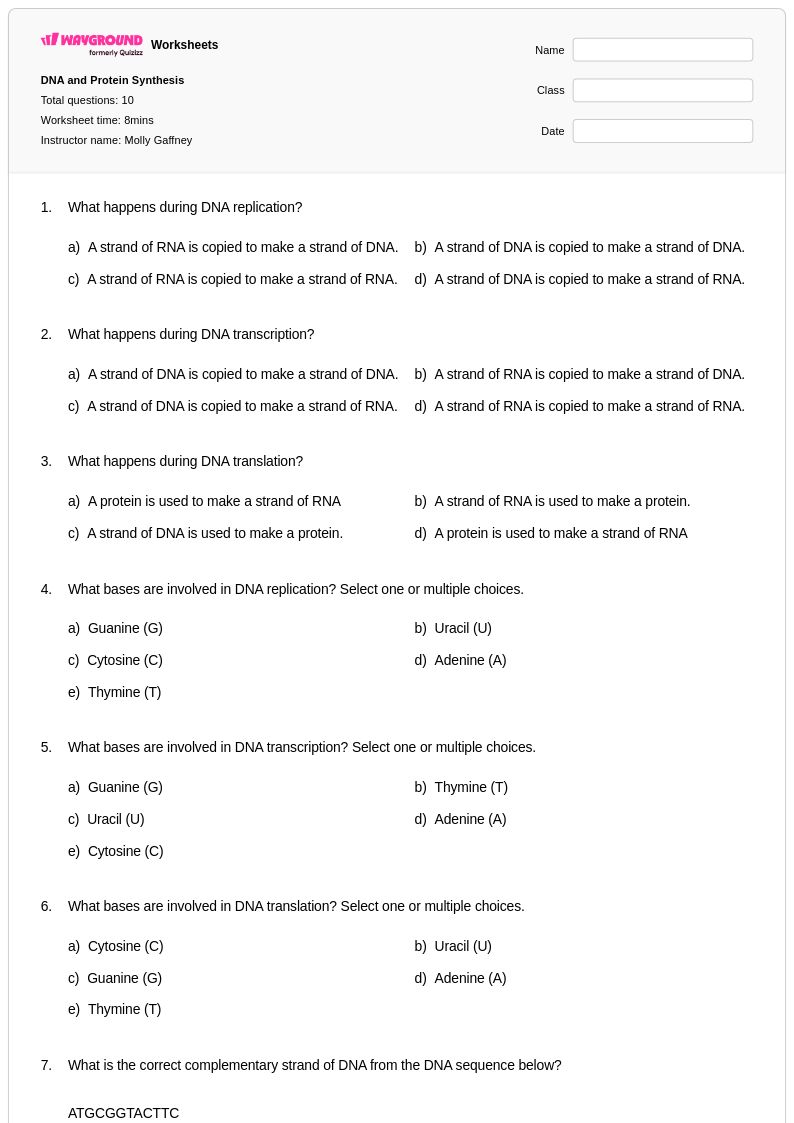
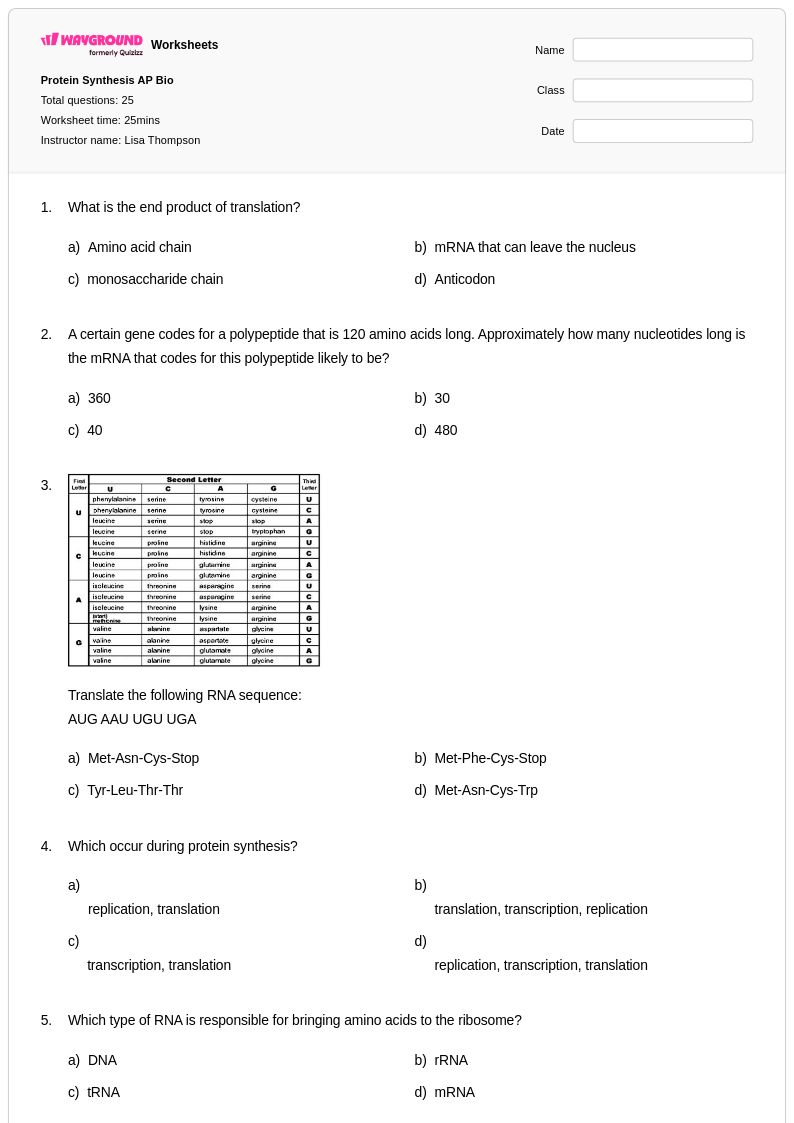
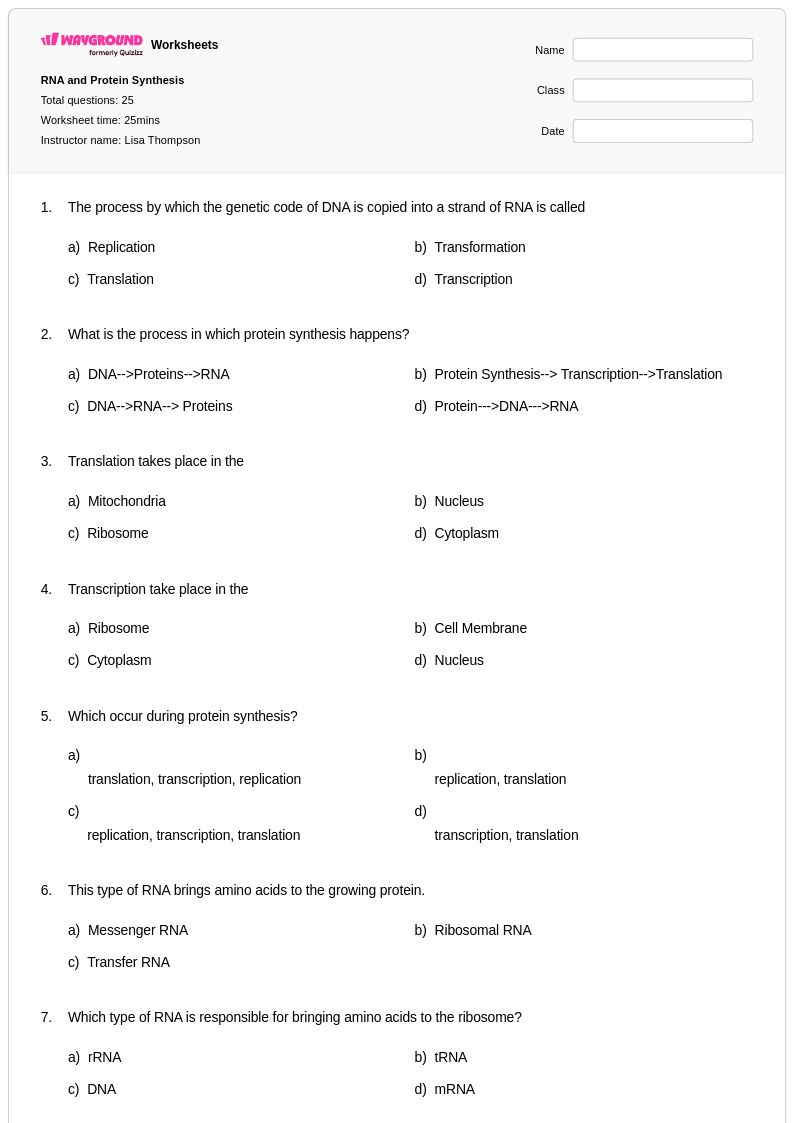
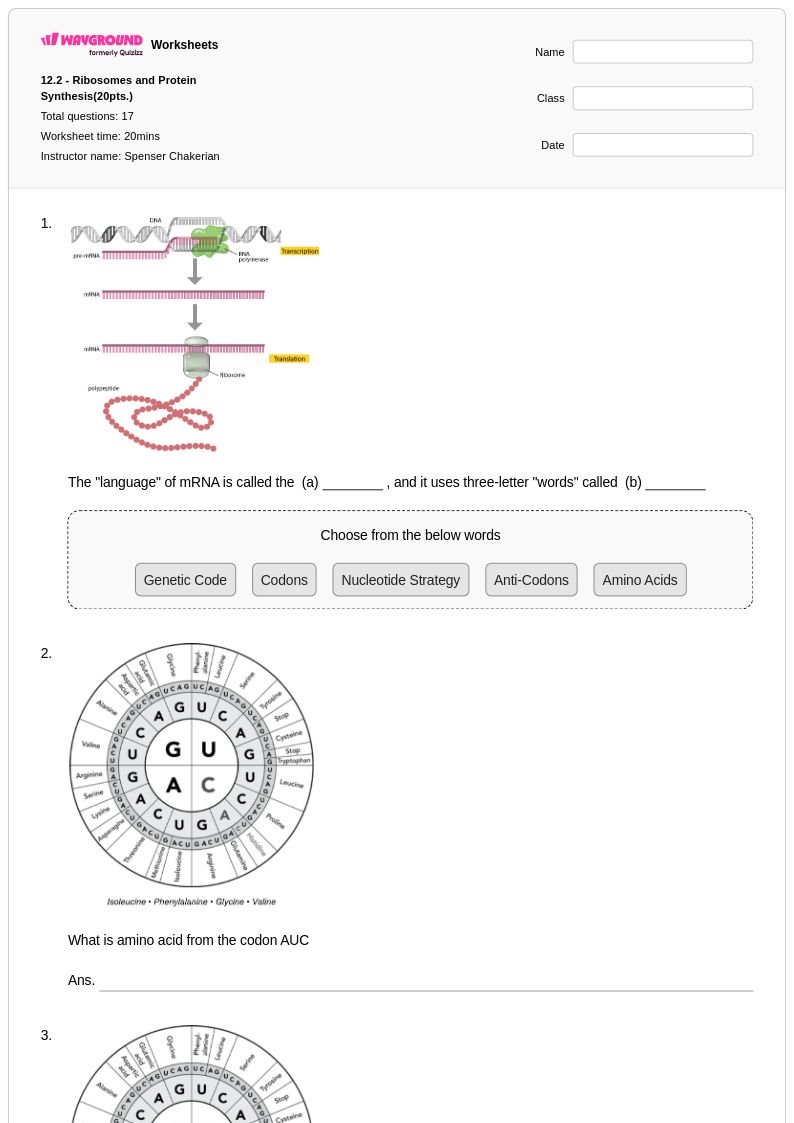
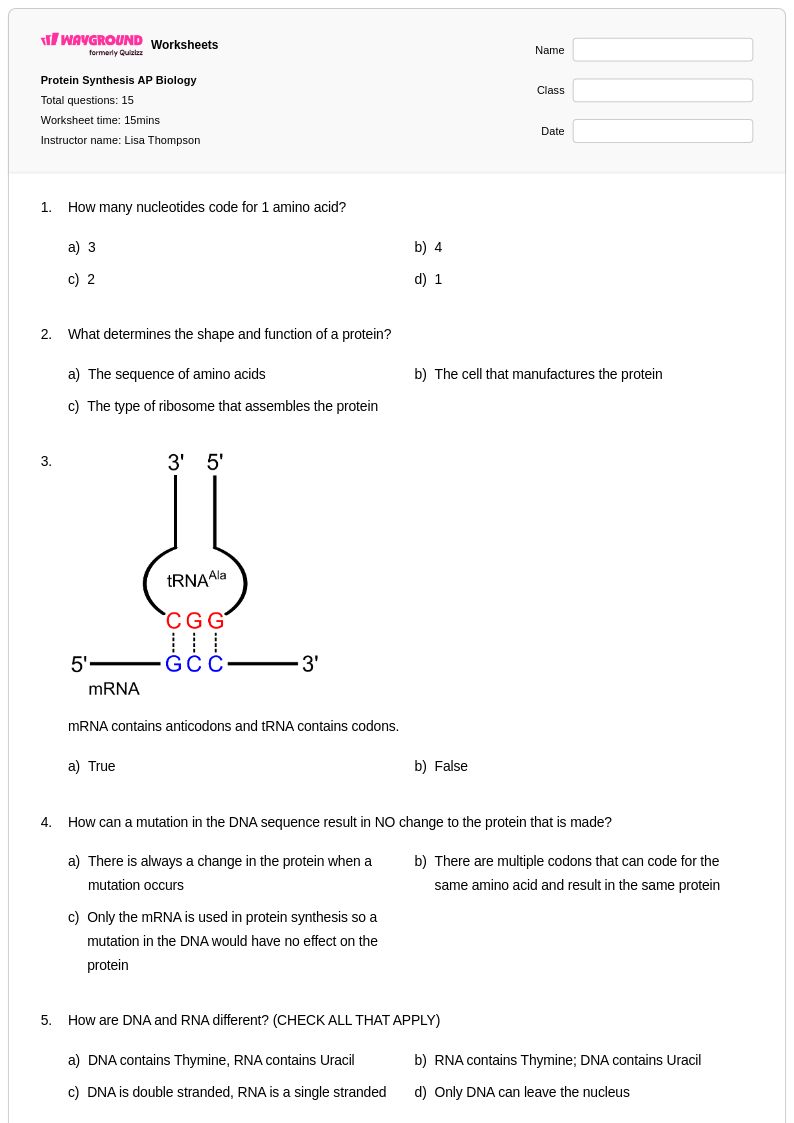
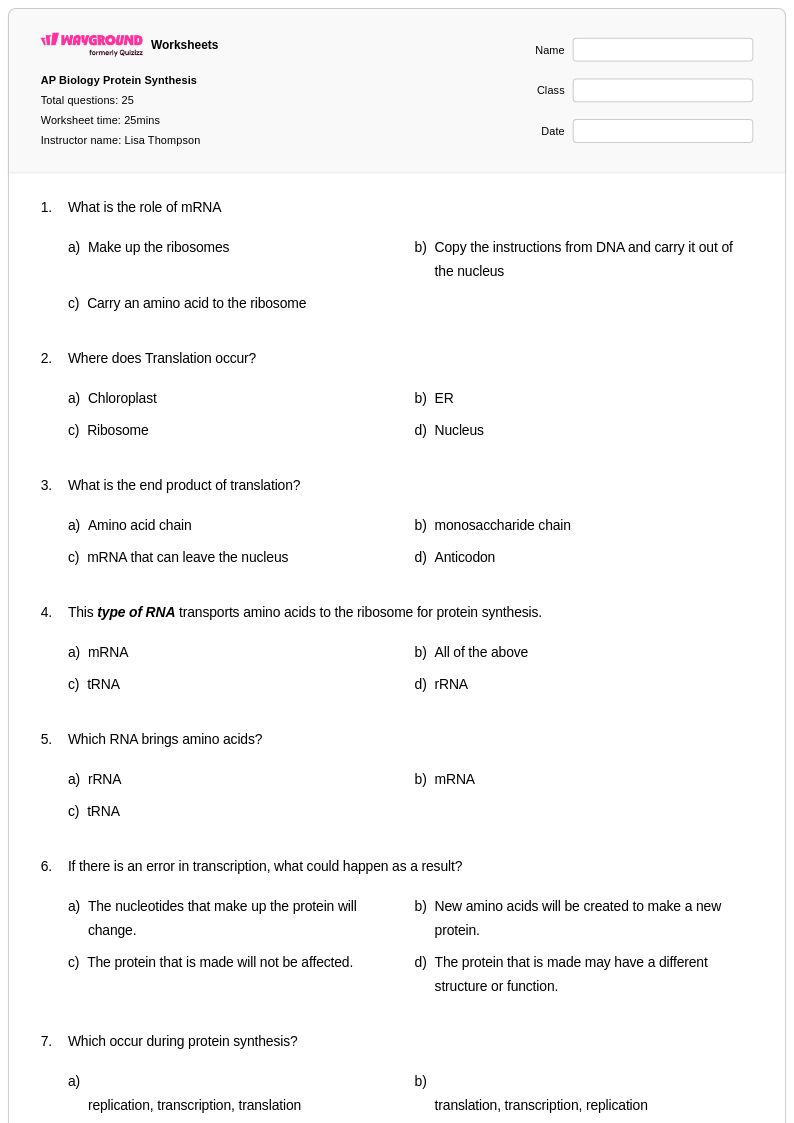
Protein synthesis worksheets for Class 12 students available through Wayground (formerly Quizizz) provide comprehensive coverage of transcription and translation processes that form the foundation of molecular biology understanding. These expertly designed resources guide advanced high school students through the complex mechanisms by which genetic information flows from DNA to RNA to proteins, strengthening critical skills in interpreting genetic codes, analyzing ribosomal function, and understanding post-translational modifications. The collection includes detailed practice problems that challenge students to trace the pathway from gene expression initiation through polypeptide formation, with accompanying answer keys that allow for independent study and self-assessment. These free printables and pdf resources enable students to master essential concepts including RNA polymerase activity, codon recognition, tRNA function, and the role of various cellular organelles in protein production.
Wayground (formerly Quizizz) supports biology educators with an extensive library of millions of teacher-created protein synthesis worksheets specifically curated for Class 12 instruction. The platform's advanced search and filtering capabilities allow instructors to locate resources that align with specific curriculum standards while offering differentiation tools to accommodate diverse learning needs within advanced biology classrooms. Teachers can customize existing materials or create targeted interventions that address common misconceptions about molecular processes, utilizing both printable pdf formats for traditional classroom use and digital versions for interactive learning environments. These versatile resources facilitate effective lesson planning while providing educators with flexible options for remediation, enrichment activities, and skill practice that reinforce understanding of this fundamental biological process across various instructional contexts.
FAQs
How do I teach protein synthesis to high school biology students?
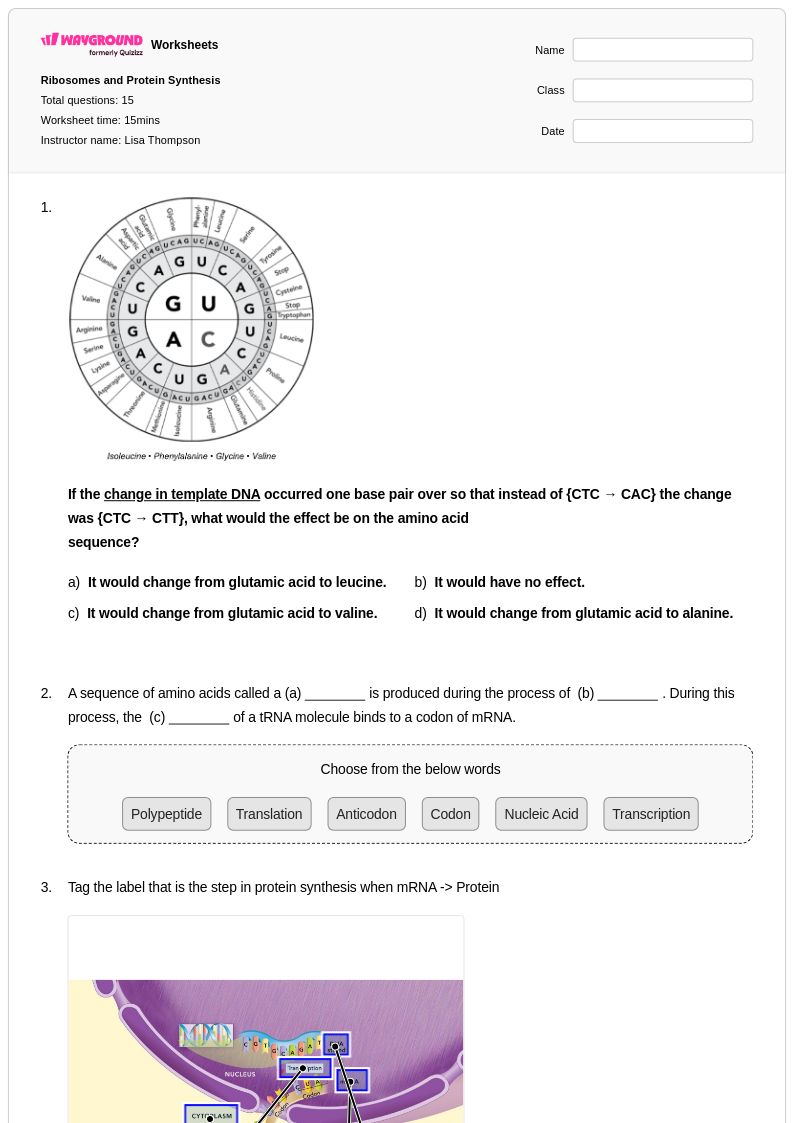
Teaching protein synthesis effectively requires breaking the process into two distinct stages: transcription (DNA to mRNA) and translation (mRNA to protein). Start with the central dogma as a framework, then walk students through each molecular player, including mRNA, tRNA, and ribosomes, before asking them to trace a sequence from DNA all the way to an amino acid chain. Using codon charts during guided practice helps students build fluency before working independently.
What exercises help students practice transcription and translation?
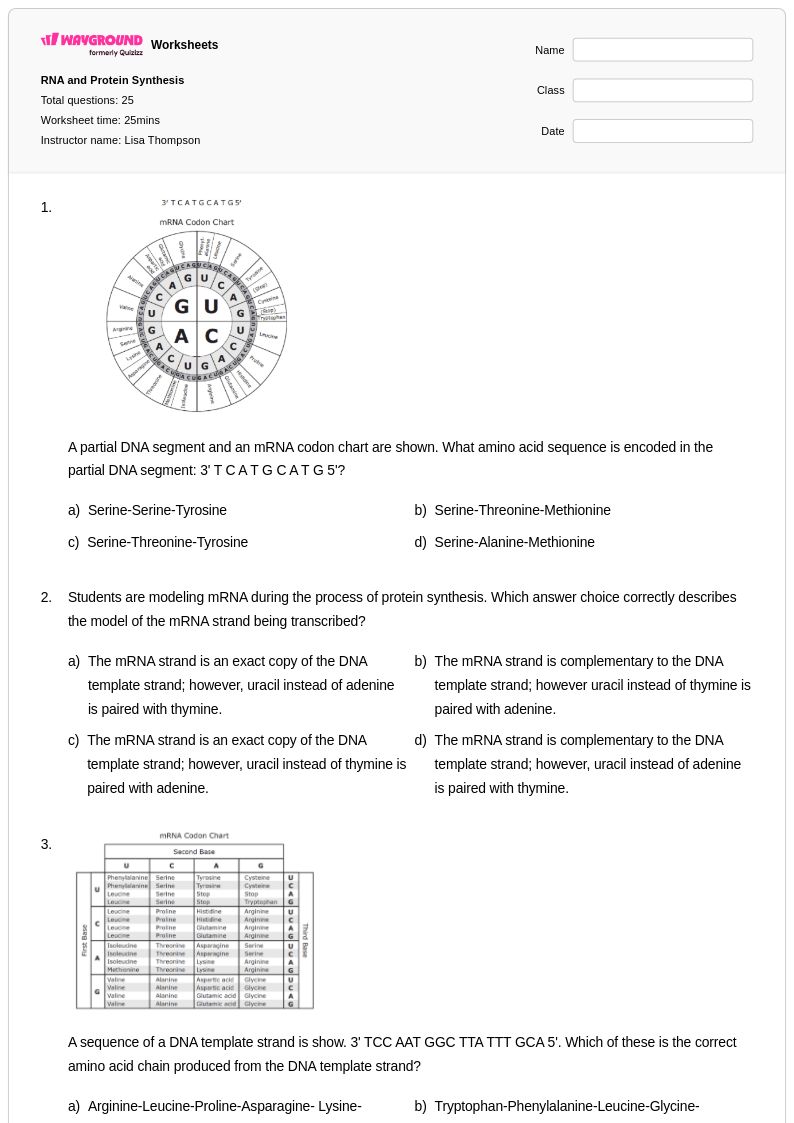
The most effective practice tasks for protein synthesis require students to convert a DNA template strand into mRNA, then use a codon table to identify the corresponding amino acid sequence. Exercises that embed stop codons, start codons, and point mutations push students beyond rote transcription and into analytical thinking. Sequencing problems that ask students to identify where transcription ends and translation begins are especially useful for reinforcing the distinction between the two processes.
What mistakes do students commonly make with protein synthesis?
The most common error is confusing the template strand with the coding strand during transcription, which causes students to produce the wrong mRNA sequence from the start. Students also frequently forget that RNA uses uracil instead of thymine, leading to errors that cascade through the entire amino acid sequence. A third persistent misconception is treating transcription and translation as a single continuous process rather than two spatially and mechanistically distinct events.
How do genetic mutations affect protein synthesis, and how do I teach that connection?
Point mutations, insertions, and deletions each affect protein synthesis differently, and students need to work through concrete sequence examples to internalize those differences. A substitution mutation may produce a missense or silent mutation depending on codon redundancy, while a frameshift from an insertion or deletion typically disrupts the entire downstream amino acid sequence. Having students manually translate both a normal and a mutated sequence side by side makes the functional consequences visible and memorable.
How can I use Wayground's protein synthesis worksheets in my classroom?
Wayground's protein synthesis worksheets are available as free printable PDFs for traditional classroom use and in digital formats for technology-integrated environments, including the option to host them as a quiz directly on Wayground. This flexibility means the same resource can be assigned as a printed bell-ringer, a self-paced digital activity, or a formally assessed quiz without any reformatting. Each worksheet includes a detailed answer key, making them practical for independent practice, targeted remediation, or summative review.
How do I support students who struggle with reading codon charts during protein synthesis activities?
Students who find codon charts cognitively overwhelming often benefit from reduced scaffolding, such as pre-highlighted start and stop codons or a simplified chart limited to the amino acids relevant to the exercise. On Wayground, teachers can apply accommodations like reduced answer choices and read-aloud support to individual students, lowering cognitive load without modifying the core content for the rest of the class. Pairing these accommodations with explicit instruction on how to navigate a codon chart column by column typically accelerates student independence.