
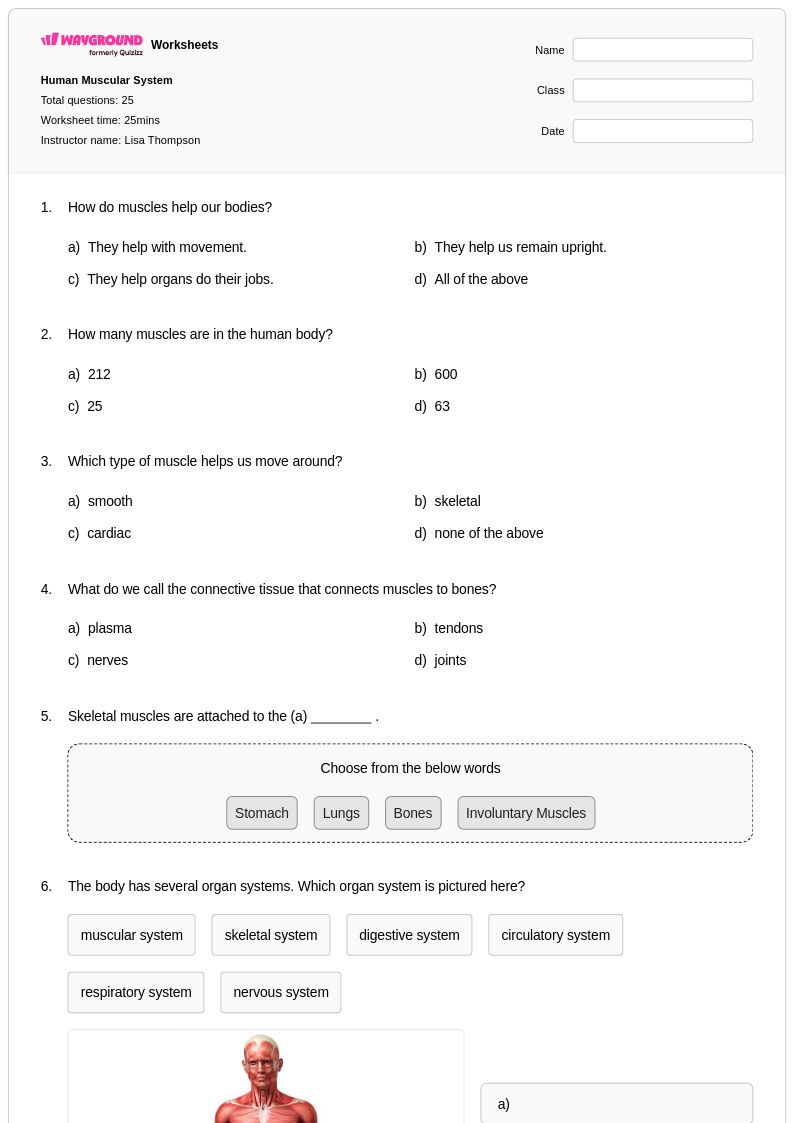
25 Q
5th - Uni
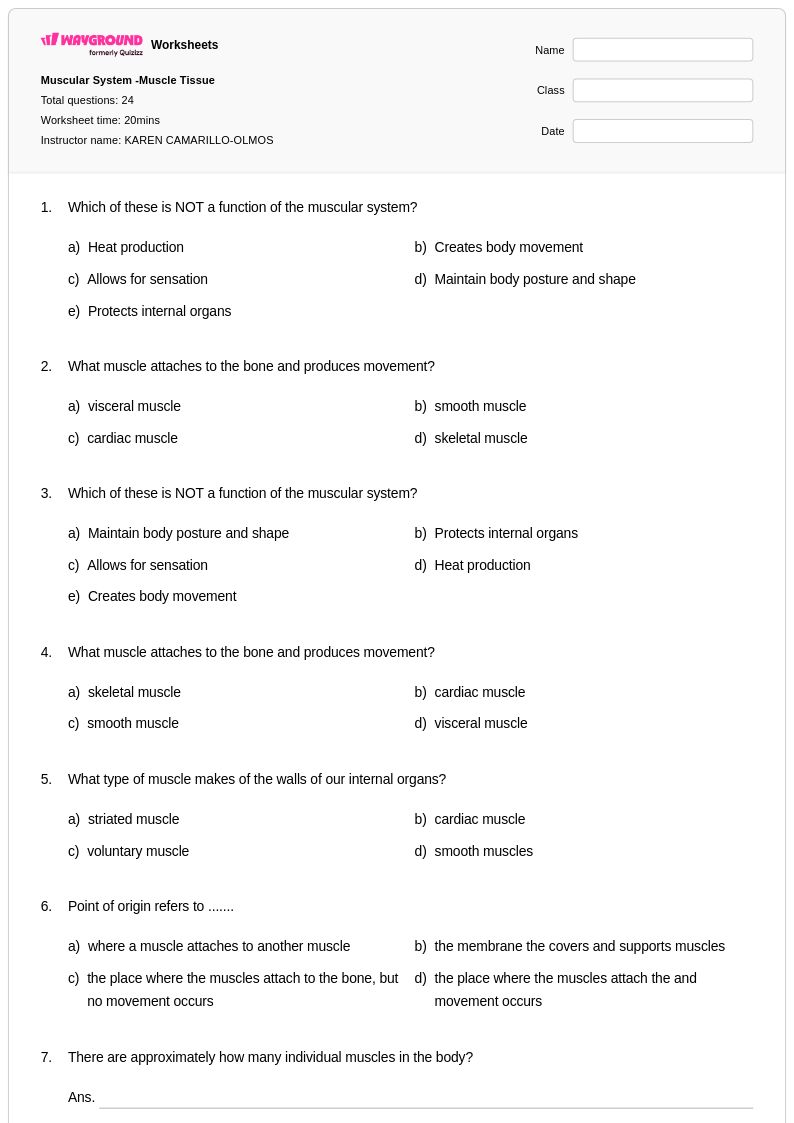
24 Q
12th
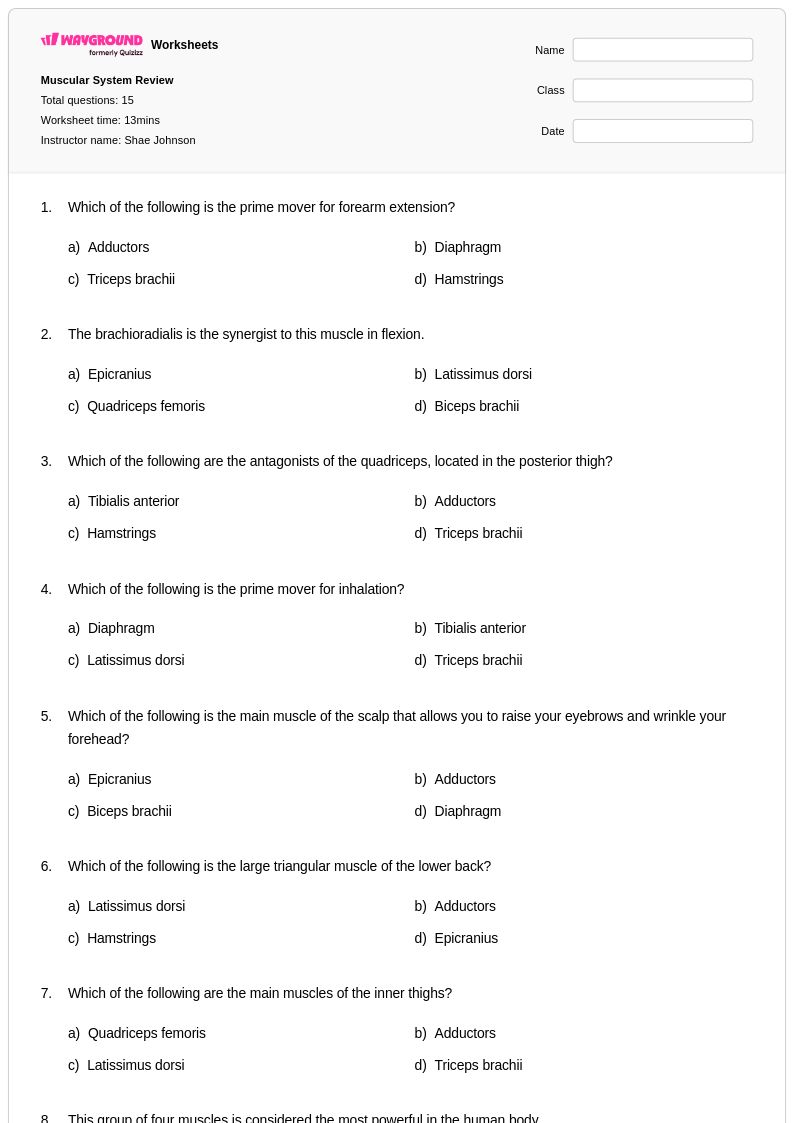
15 Q
11th - 12th
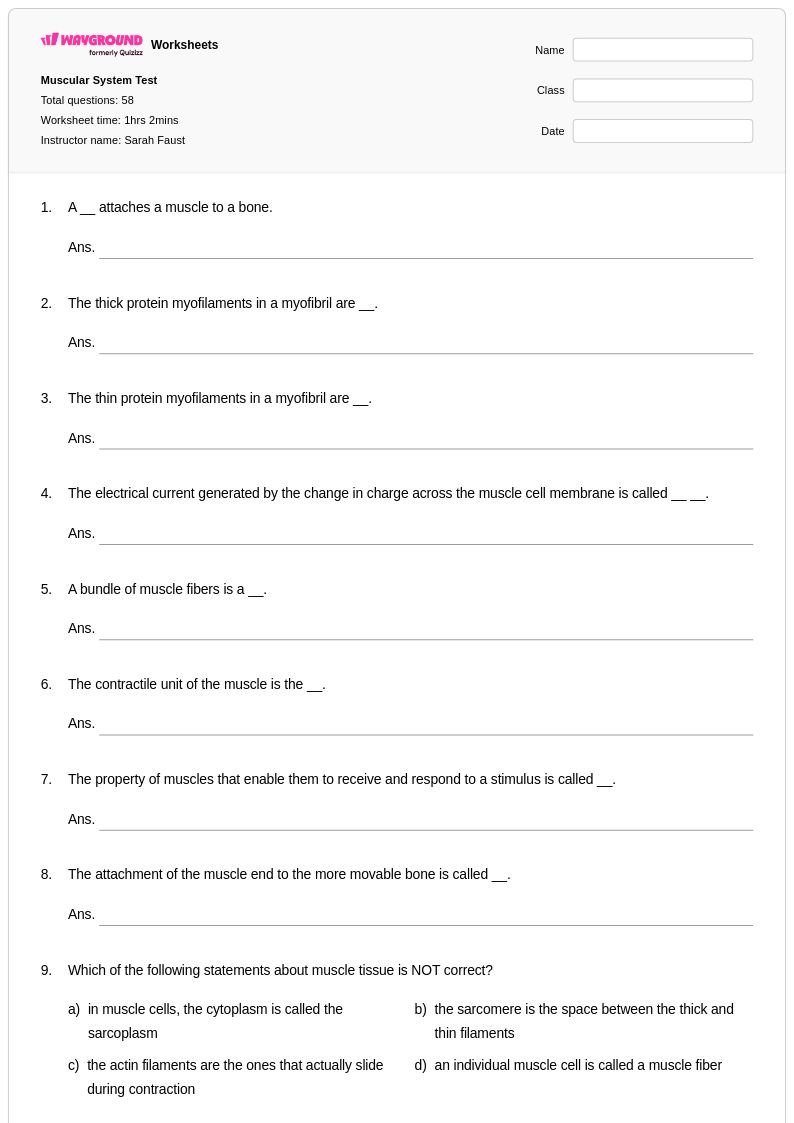
58 Q
9th - 12th
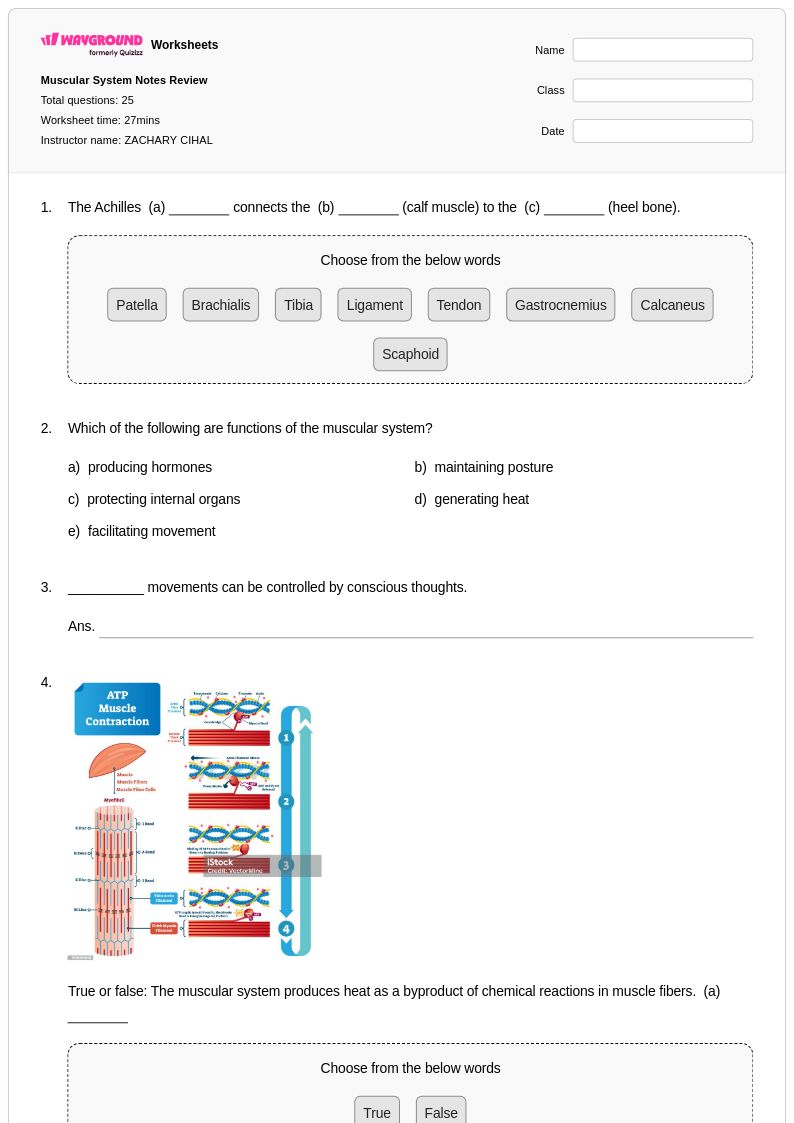
25 Q
9th - 12th
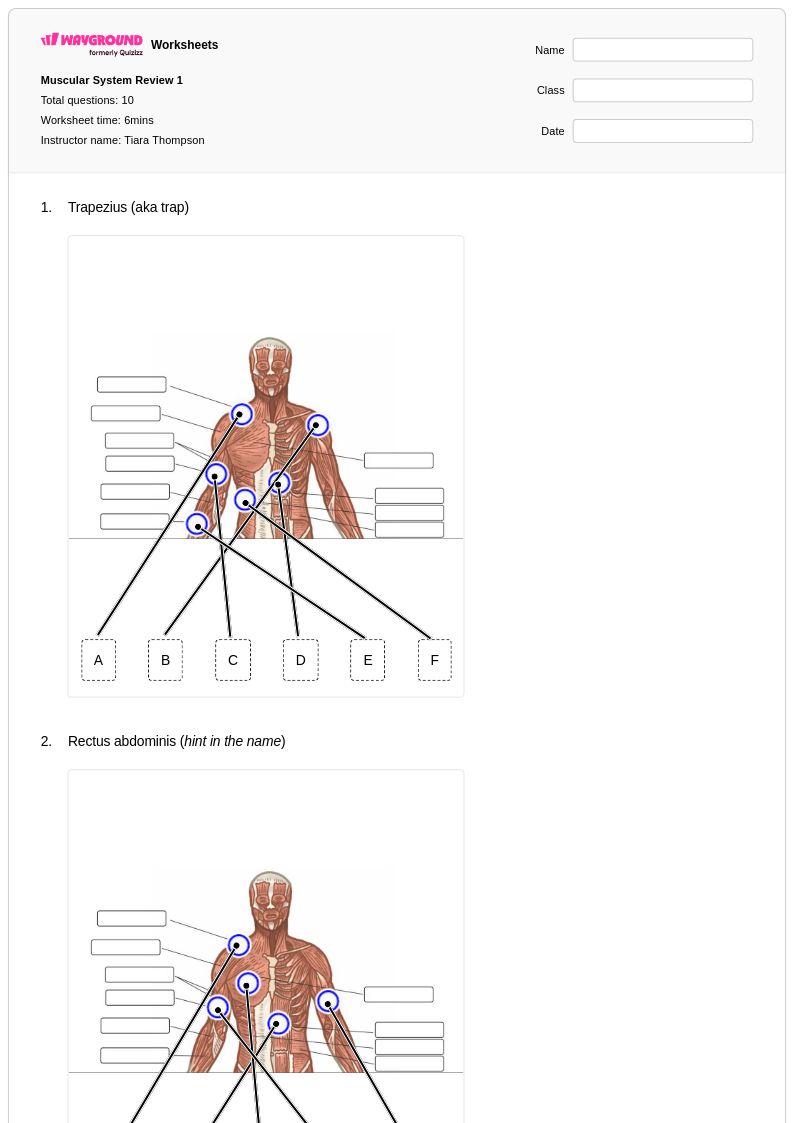
10 Q
10th - 12th
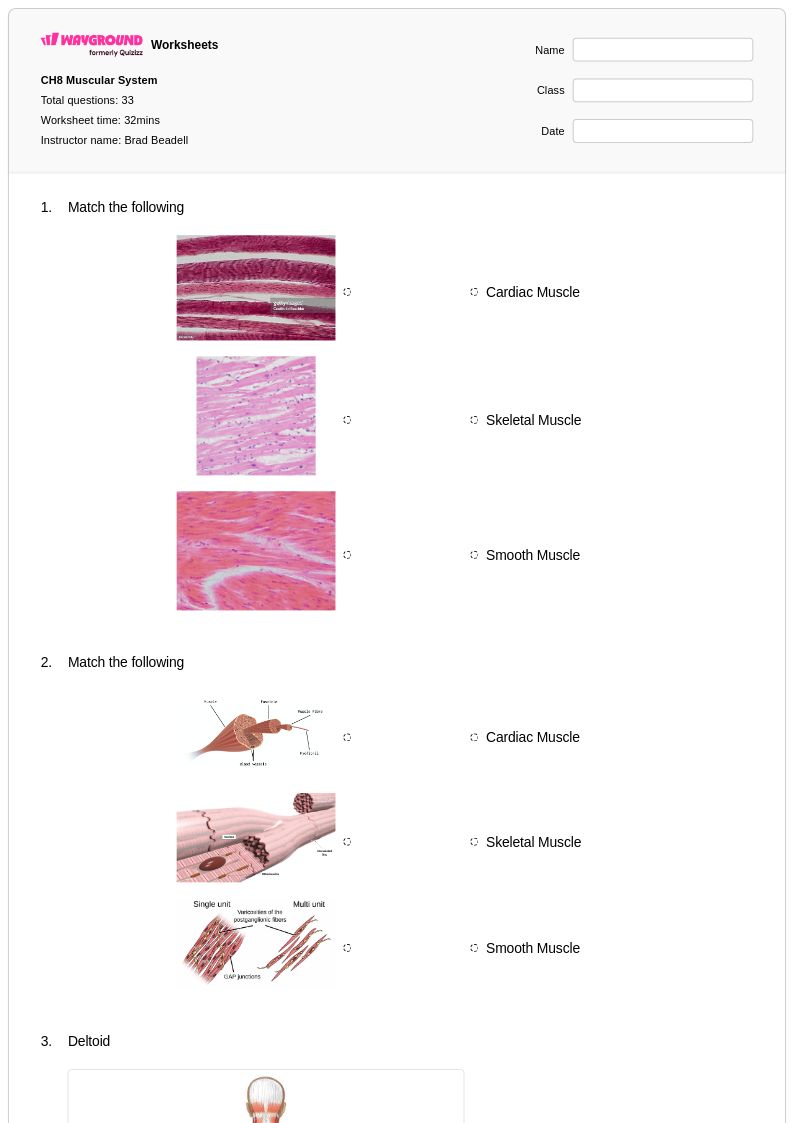
33 Q
12th
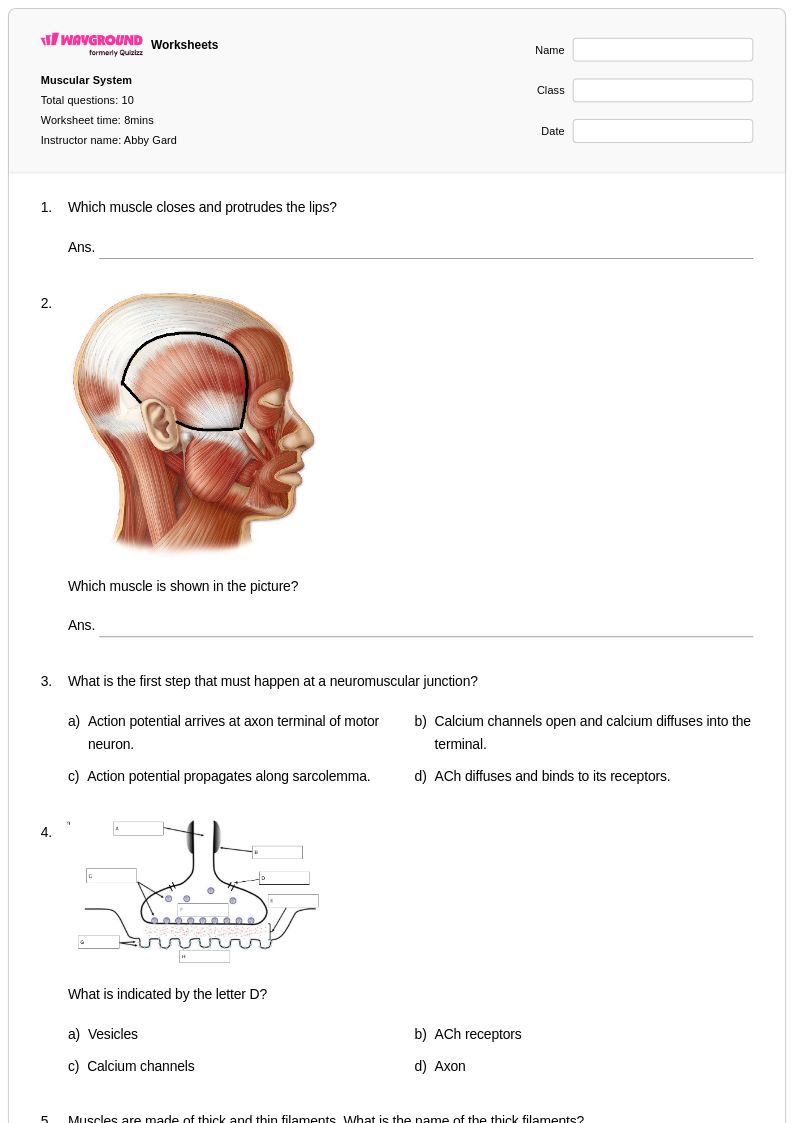
10 Q
10th - 12th
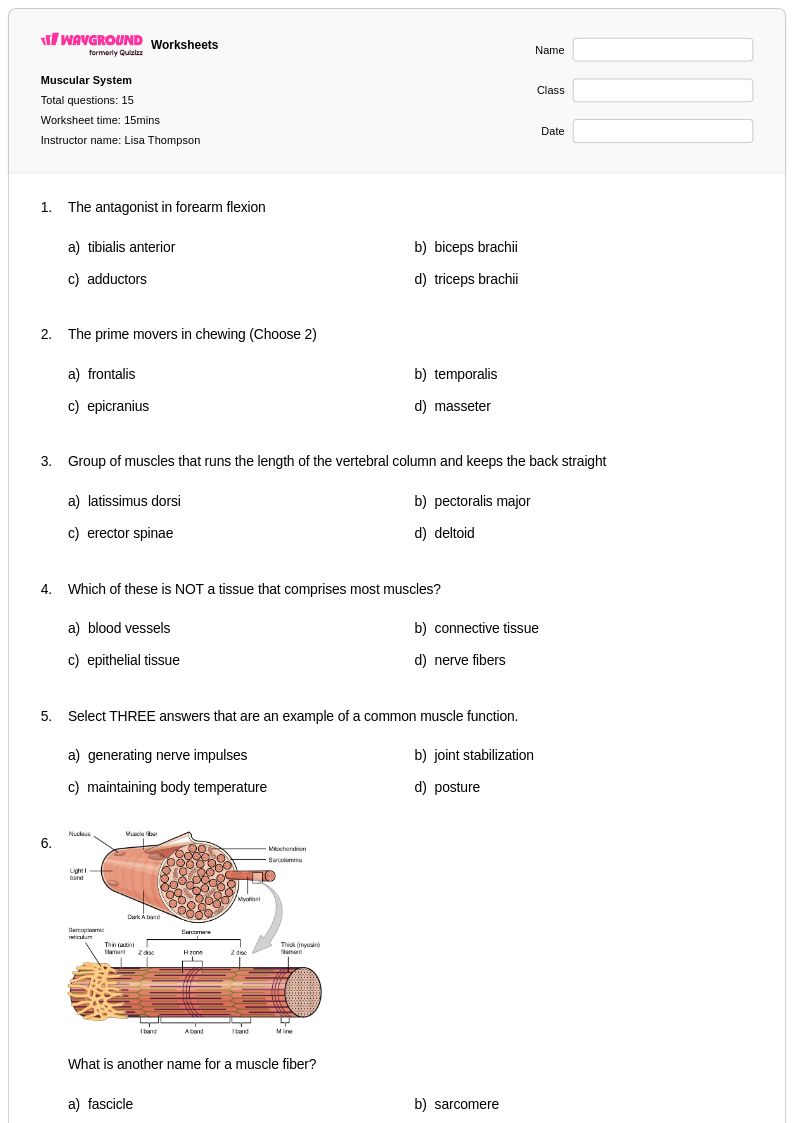
15 Q
12th - Uni
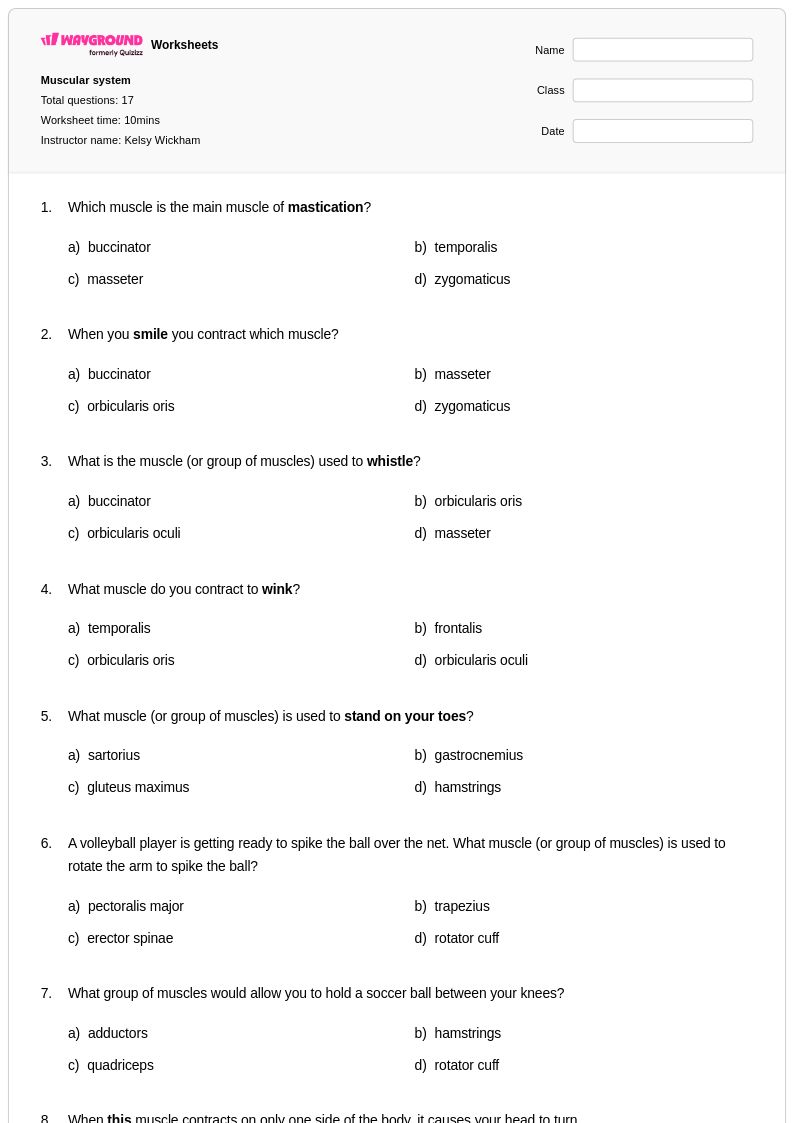
17 Q
9th - 12th
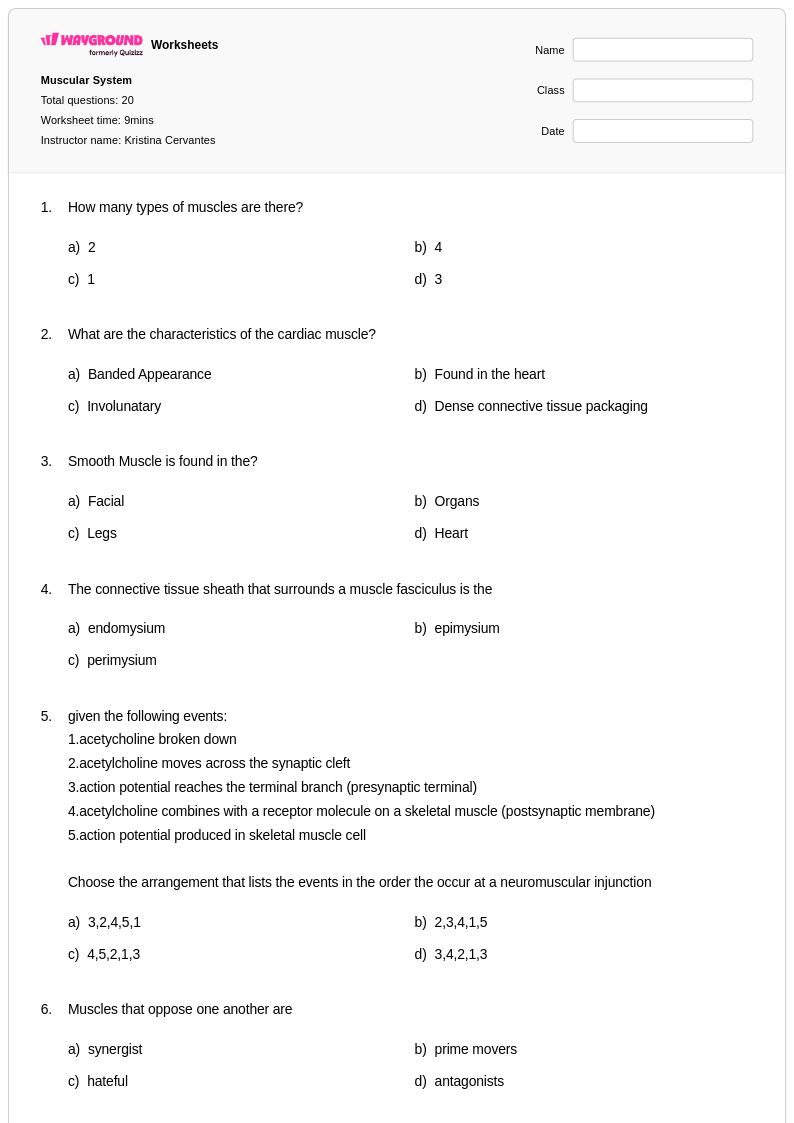
20 Q
11th - 12th
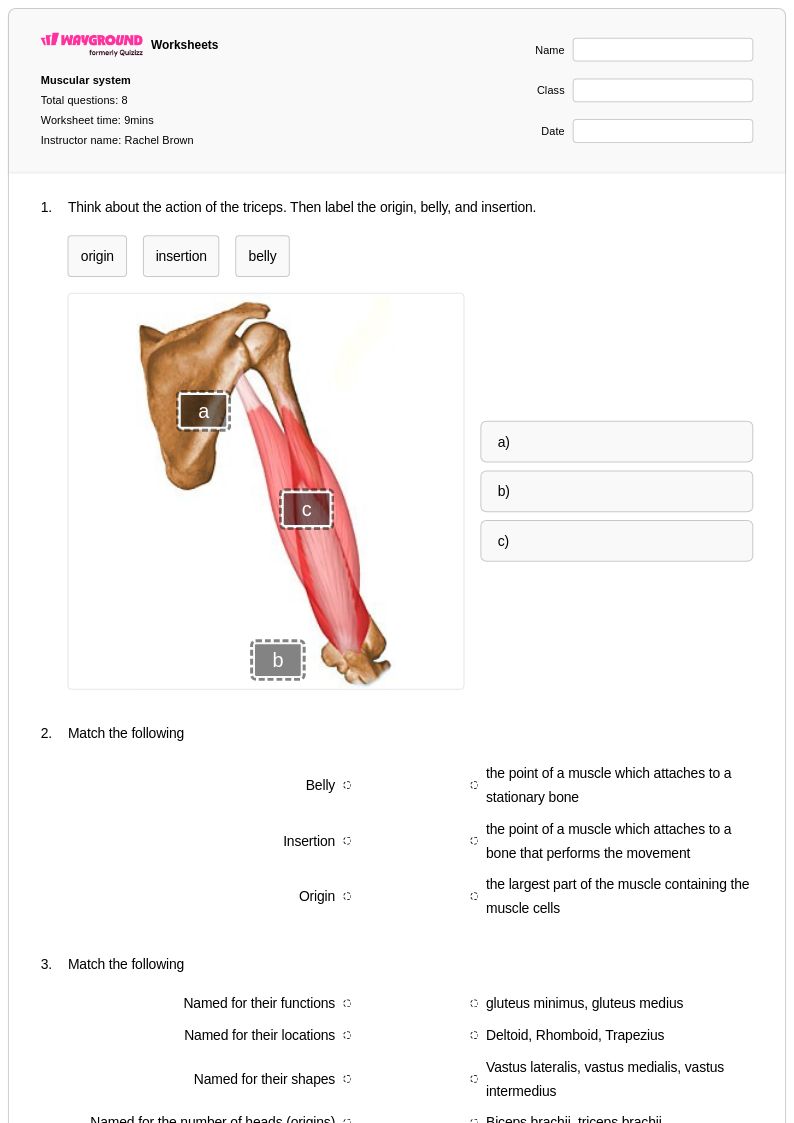
8 Q
9th - 12th
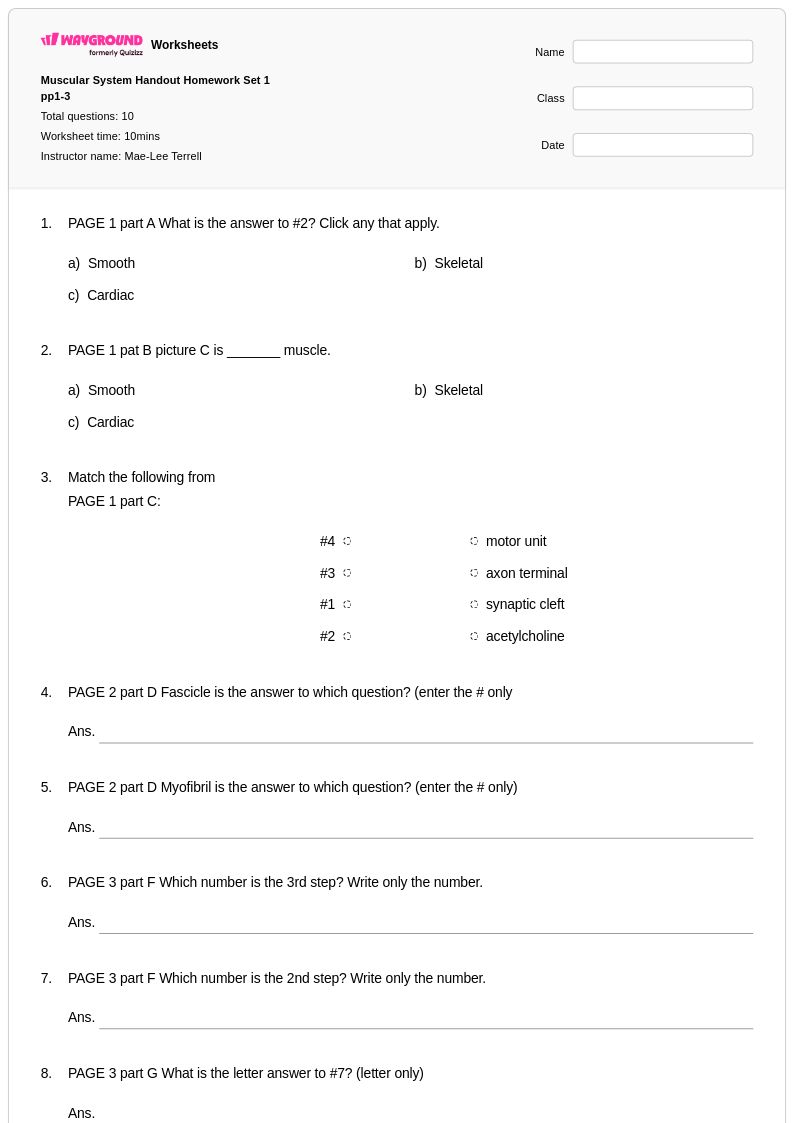
10 Q
12th
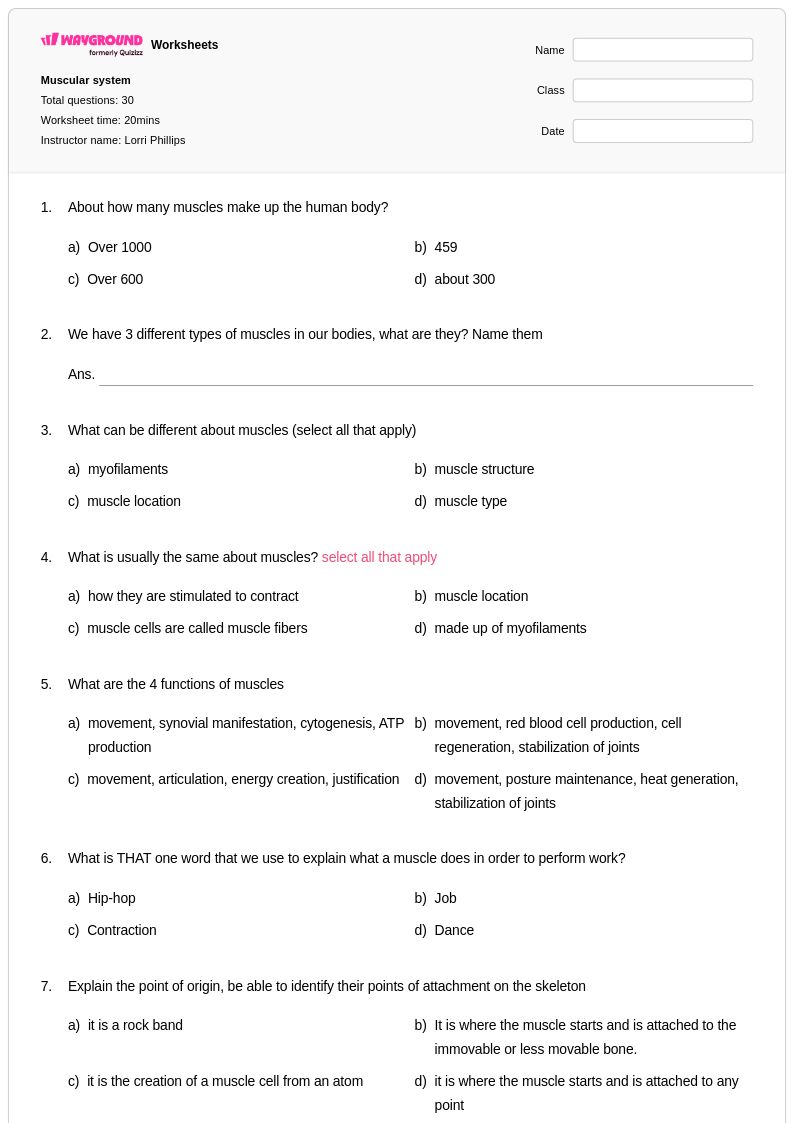
30 Q
9th - 12th
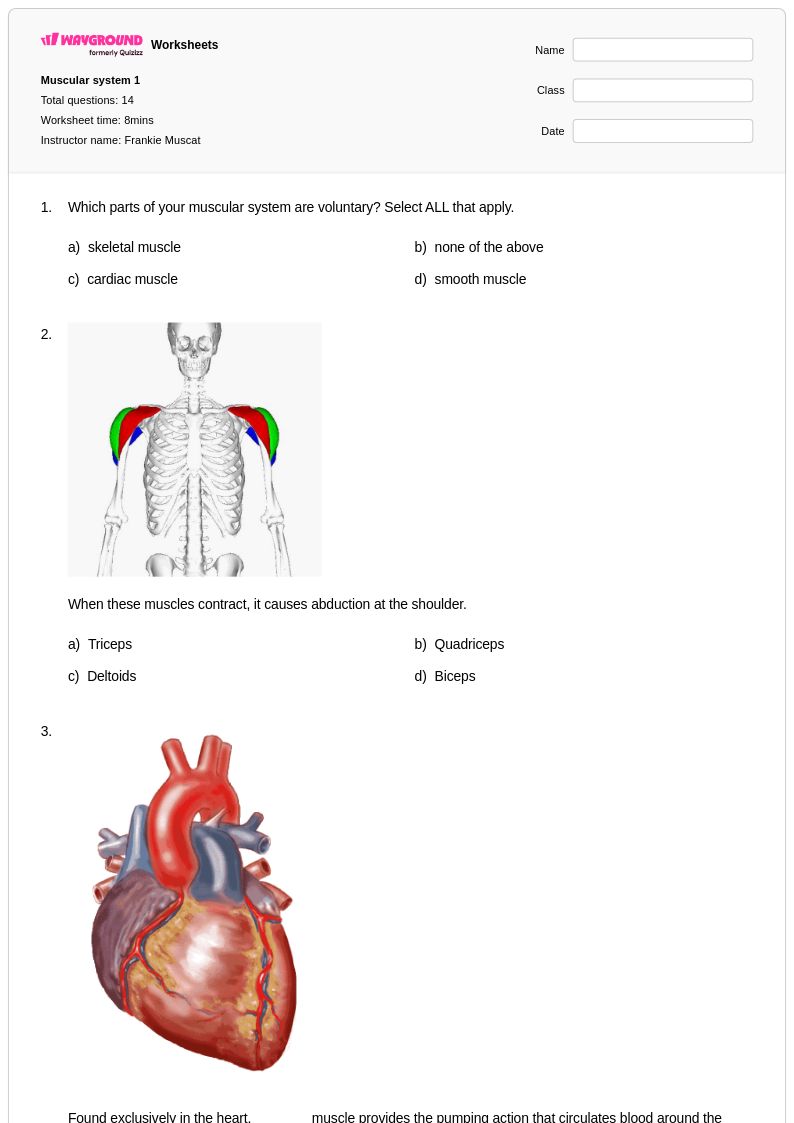
14 Q
12th
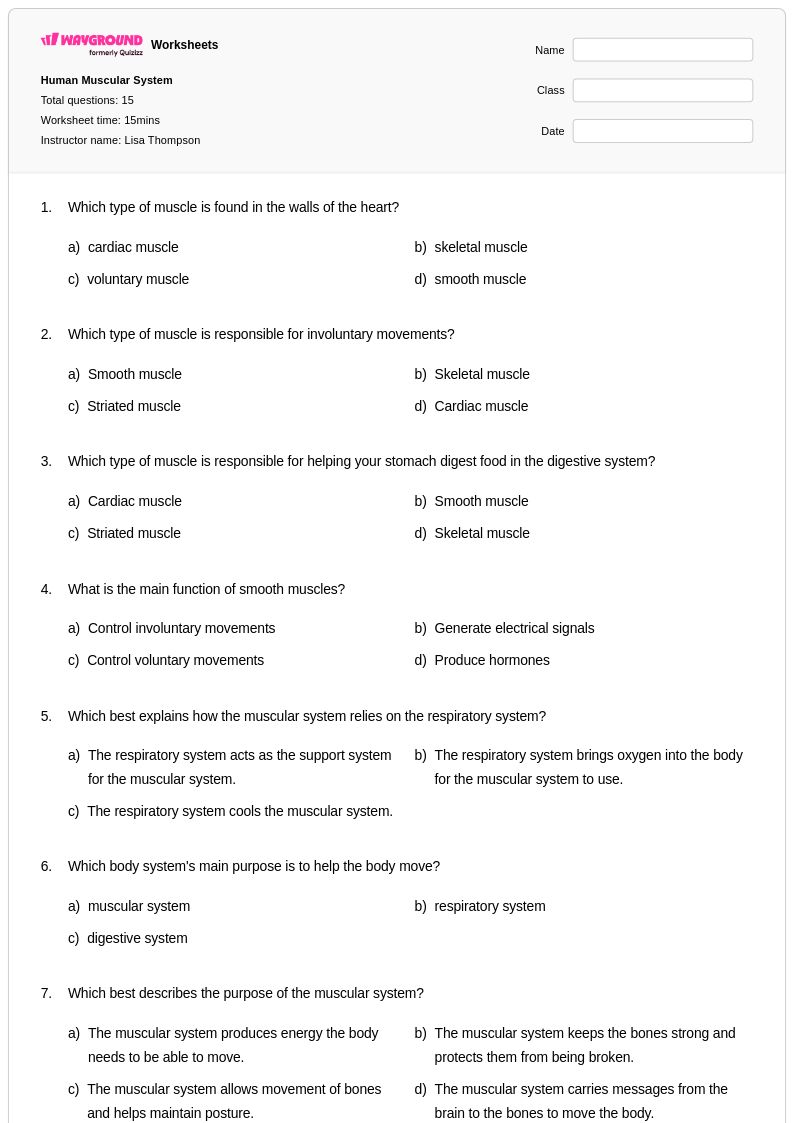
15 Q
5th - Uni
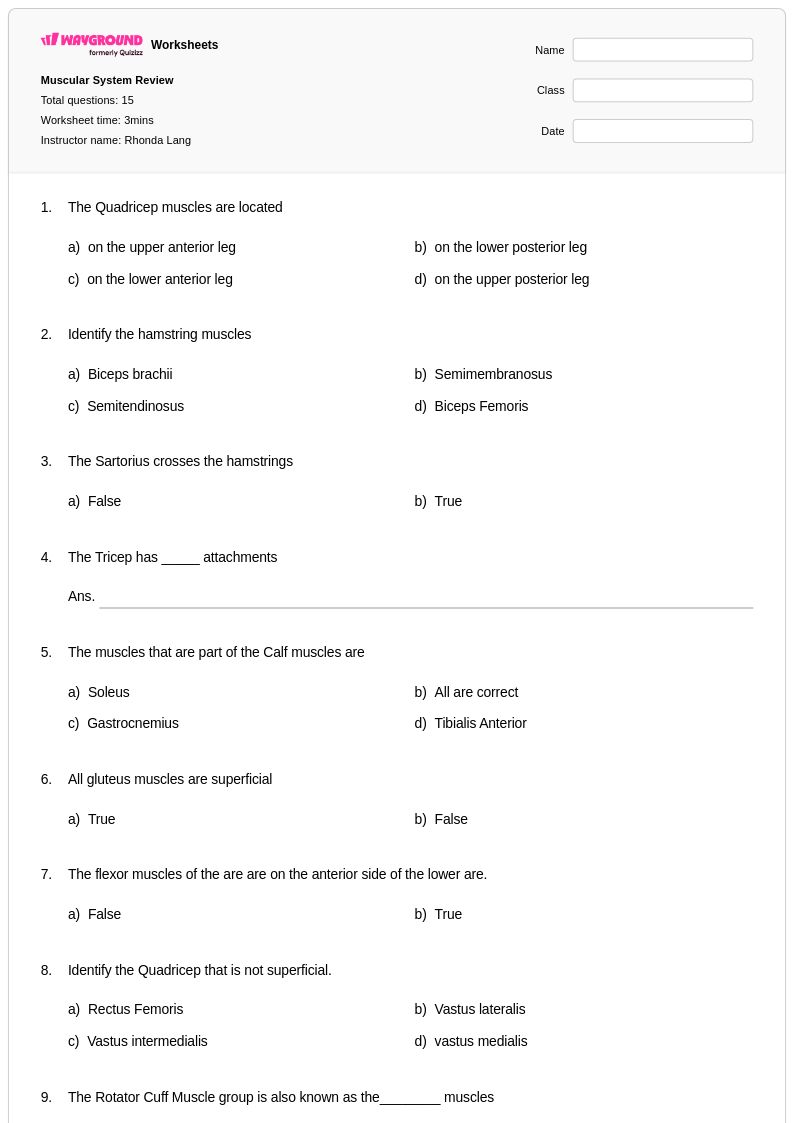
15 Q
10th - 12th
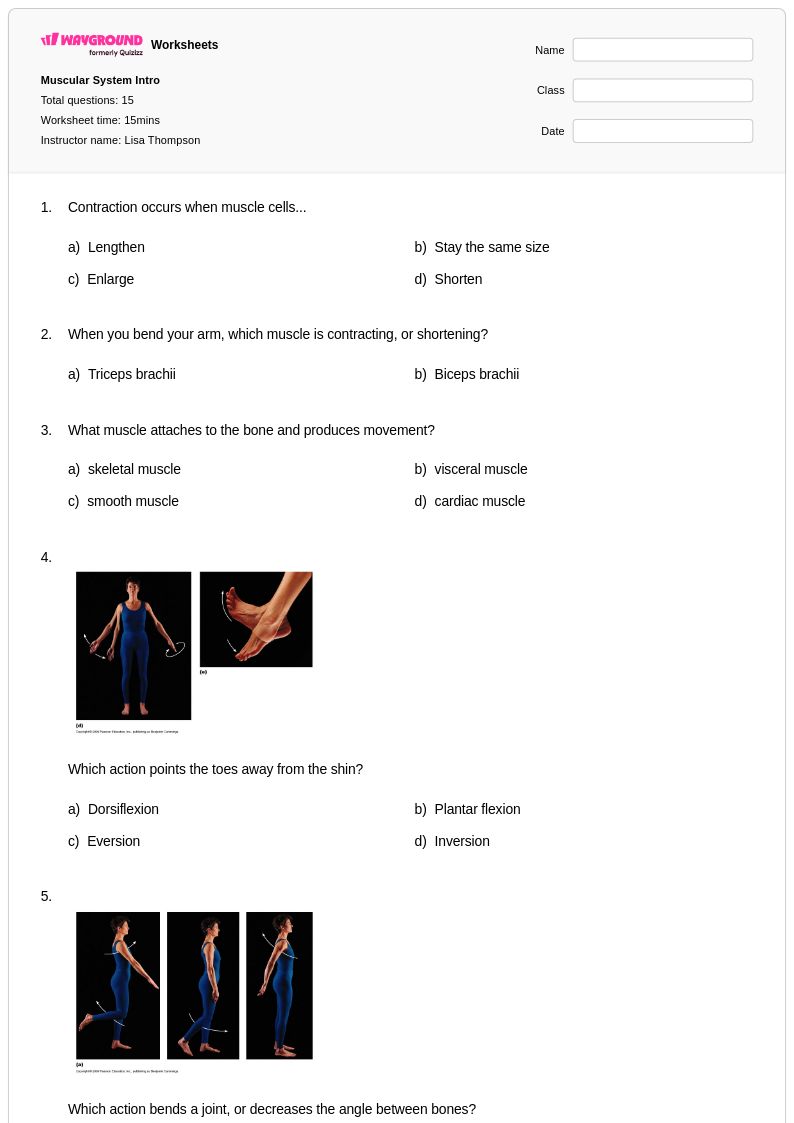
15 Q
12th - Uni
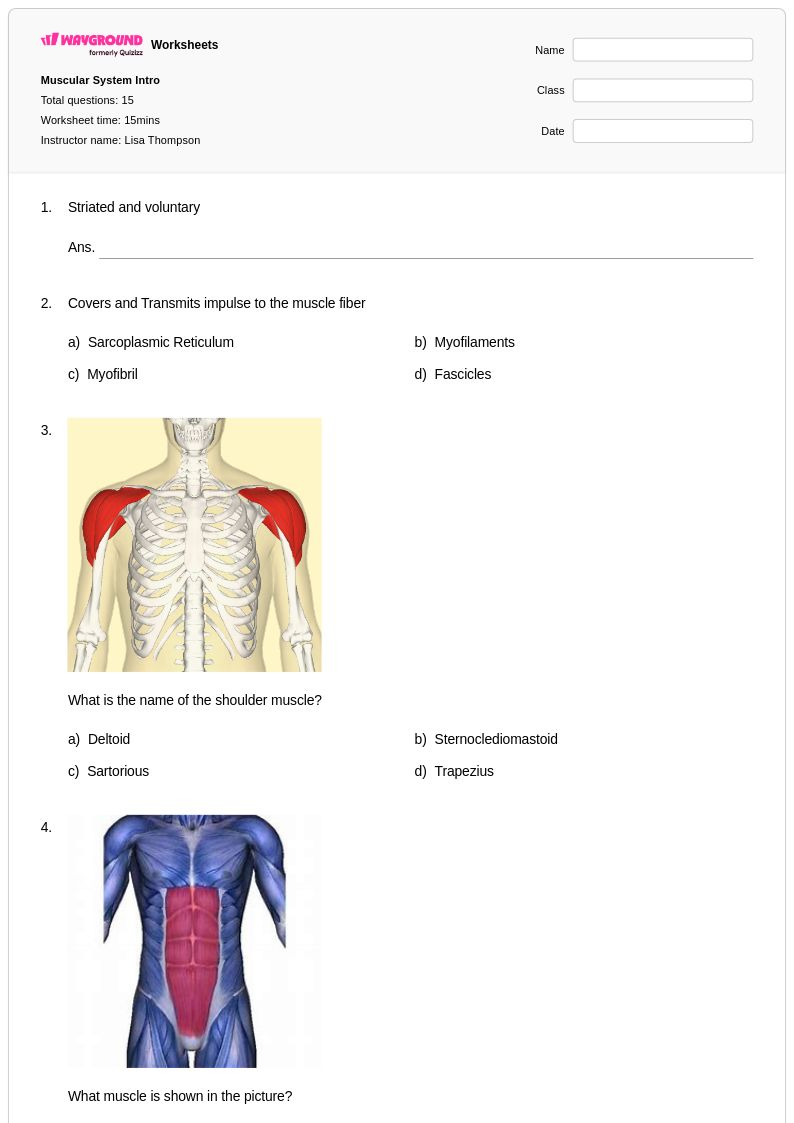
15 Q
12th - Uni
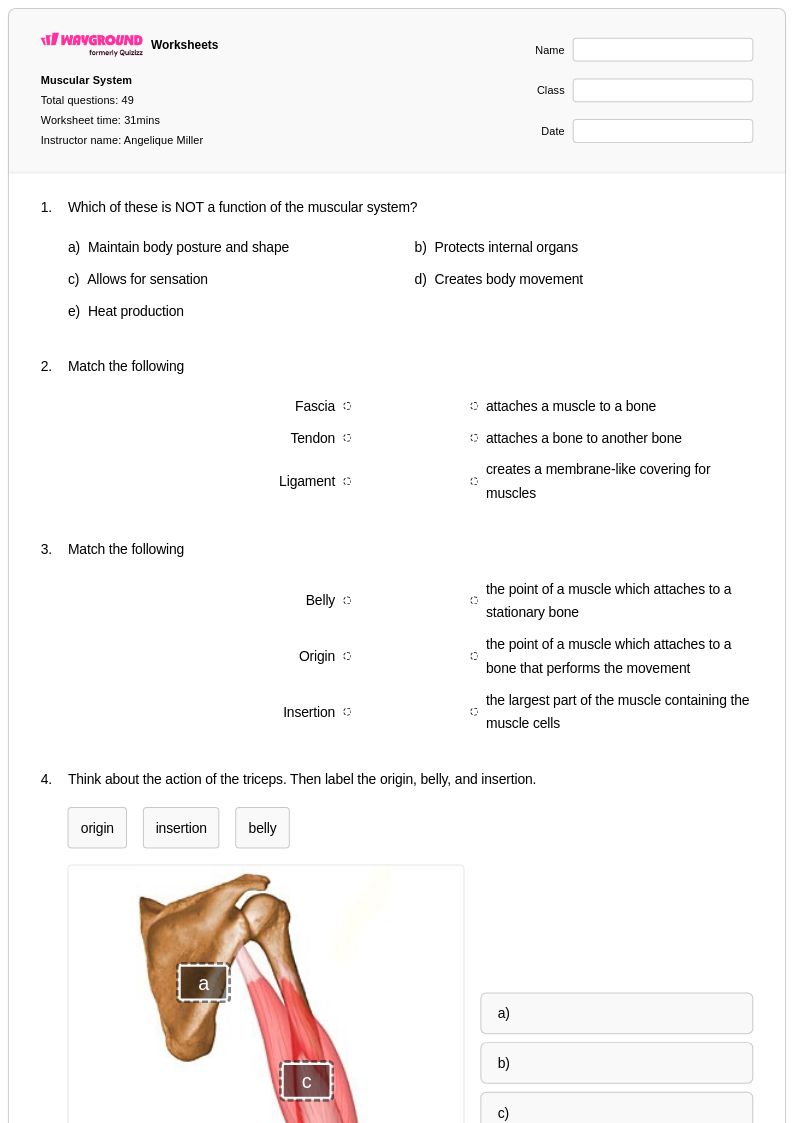
49 Q
12th
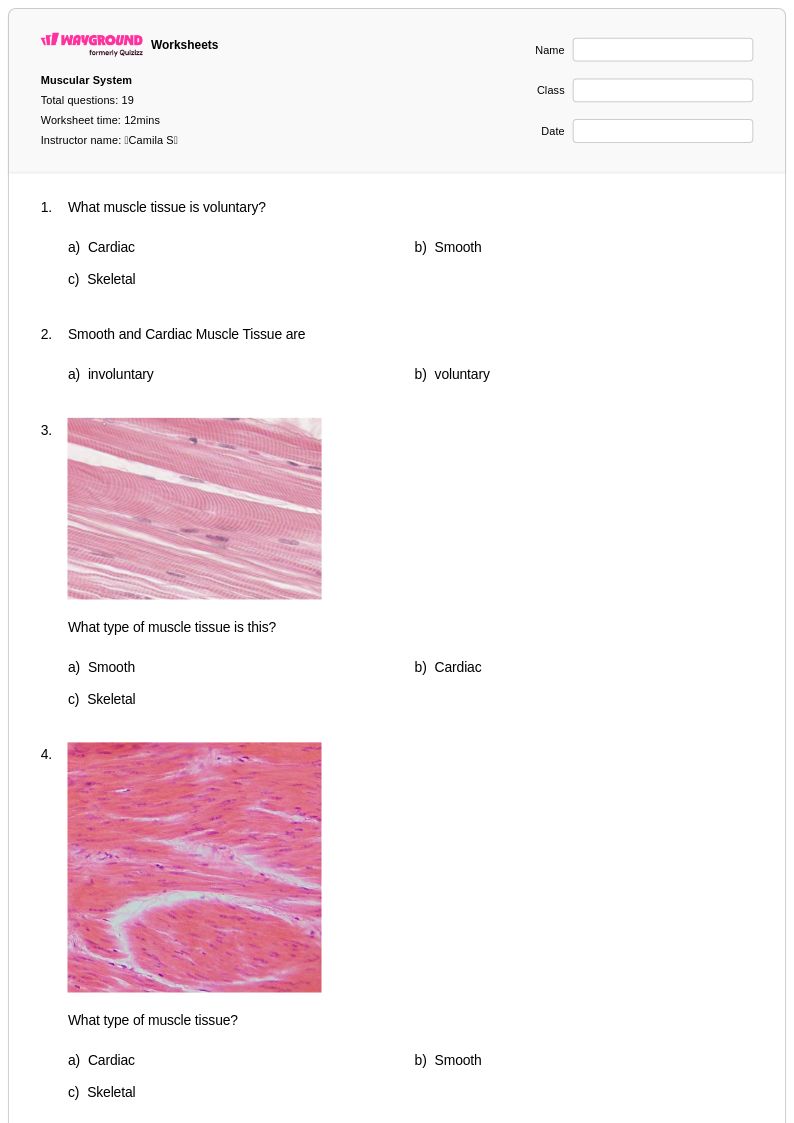
19 Q
12th
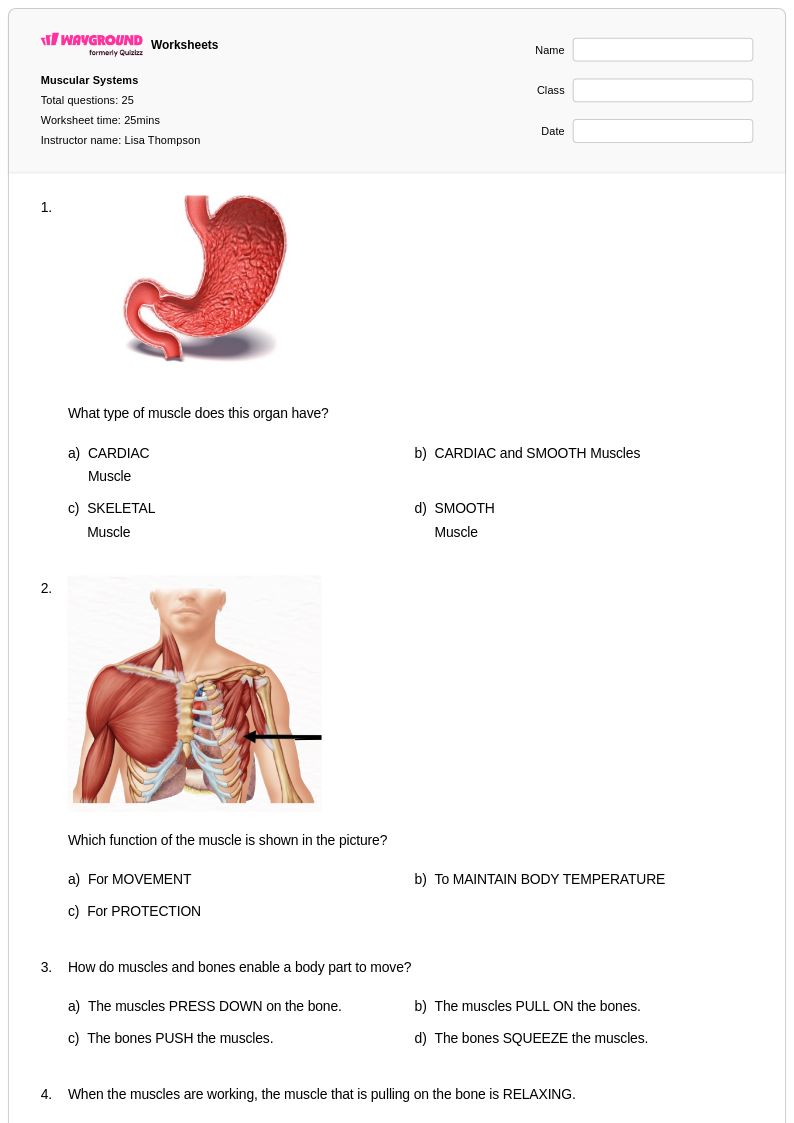
25 Q
5th - Uni
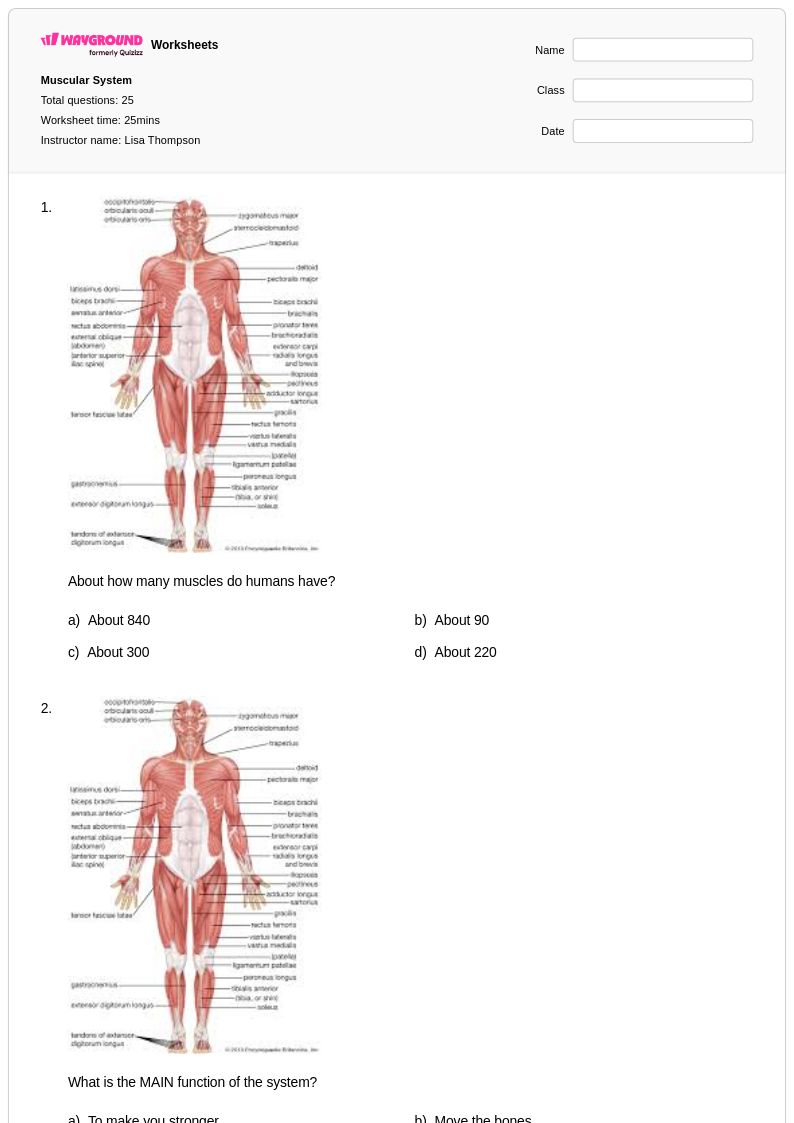
25 Q
7th - Uni
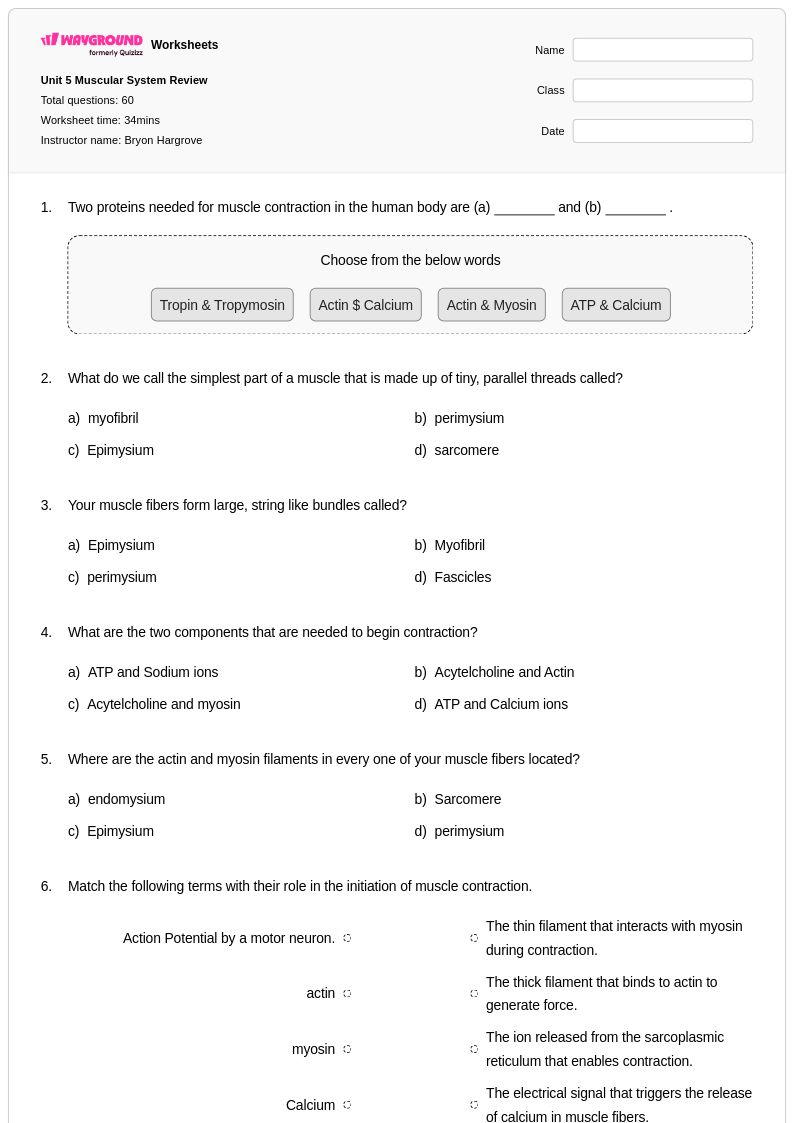
60 Q
9th - 12th
Explore Other Subject Worksheets for class 12
Explore printable Muscular System worksheets for Class 12
Class 12 muscular system worksheets available through Wayground (formerly Quizizz) provide comprehensive coverage of advanced muscle physiology, anatomy, and biomechanics essential for college-bound biology students. These expertly crafted resources strengthen critical thinking skills through detailed exploration of muscle fiber types, contraction mechanisms, neuromuscular junctions, and metabolic pathways that fuel muscle function. Students engage with complex practice problems involving sarcomere structure, sliding filament theory, and the molecular interactions between actin and myosin filaments. Each worksheet collection includes detailed answer keys that support independent learning and self-assessment, while printable pdf formats ensure accessibility for both classroom instruction and home study. These free educational resources challenge students to analyze muscle disorders, interpret electromyography data, and connect muscular system function to broader physiological processes including cardiovascular and nervous system integration.
Wayground (formerly Quizizz) empowers educators with millions of teacher-created muscular system resources specifically designed for Class 12 biology instruction, featuring robust search and filtering capabilities that allow precise targeting of specific learning objectives. The platform's standards alignment ensures worksheets meet rigorous academic requirements while differentiation tools enable teachers to customize content for diverse learning needs and ability levels. Teachers can seamlessly modify existing materials or create original assessments using flexible customization features, with all resources available in both printable and digital formats including downloadable pdfs for versatile classroom implementation. These comprehensive tools support effective lesson planning by providing ready-to-use materials for skill practice, targeted remediation of challenging concepts like muscle energetics and fatigue, and enrichment activities that explore cutting-edge research in muscle physiology and therapeutic interventions for muscular diseases.
FAQs
How do I teach the muscular system to middle or high school students?
What are the best exercises for helping students practice muscular system concepts?
What misconceptions do students commonly have about how muscles work?
How can I differentiate muscular system instruction for students at different skill levels?
How do I use Wayground's muscular system worksheets in my classroom?
How do I help students understand the difference between the three types of muscle tissue?