Free Printable Binomial Nomenclature Worksheets for Class 12
Master Class 12 binomial nomenclature with Wayground's comprehensive collection of free worksheets, printables, and practice problems featuring scientific naming conventions, taxonomy classification exercises, and detailed answer keys for biology students.
Explore printable Binomial Nomenclature worksheets for Class 12
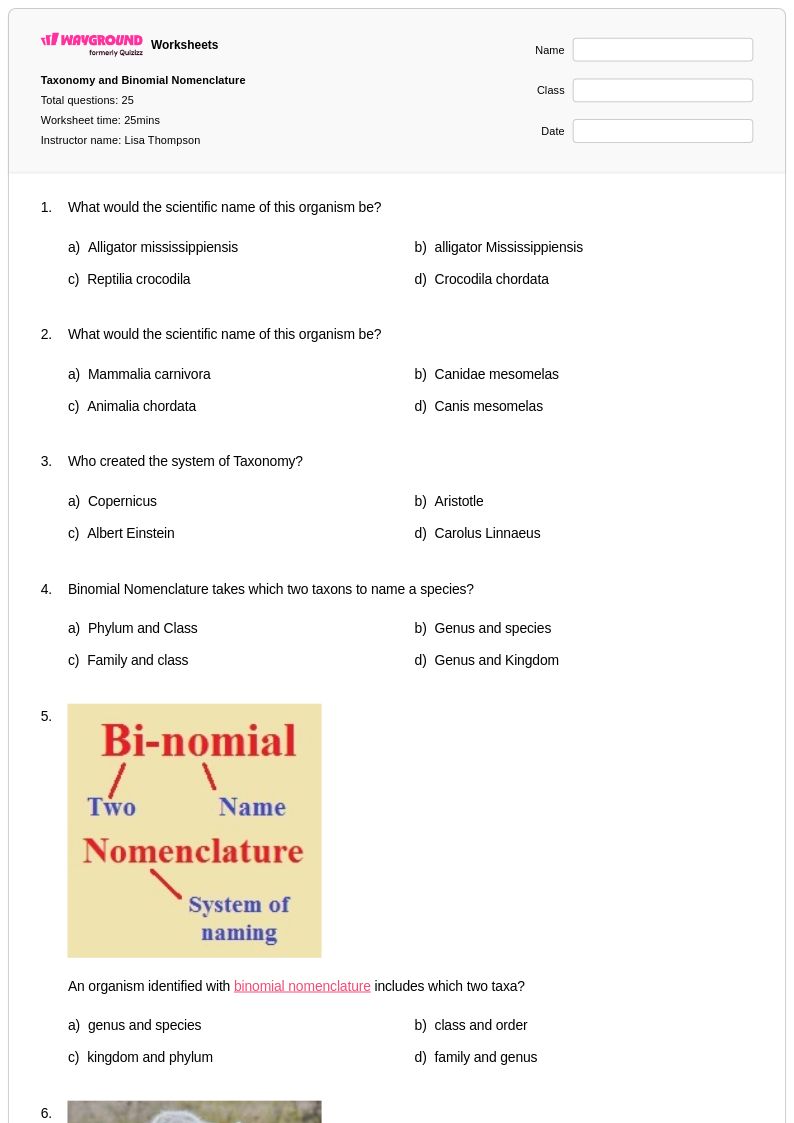
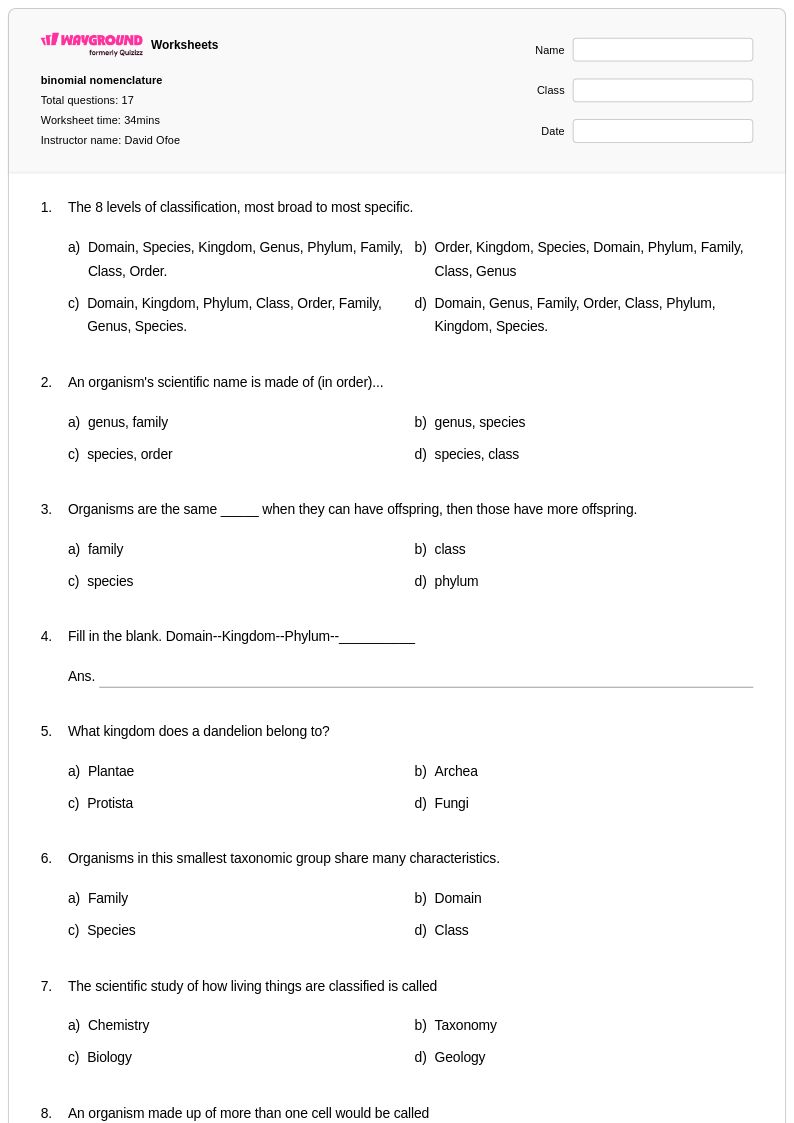
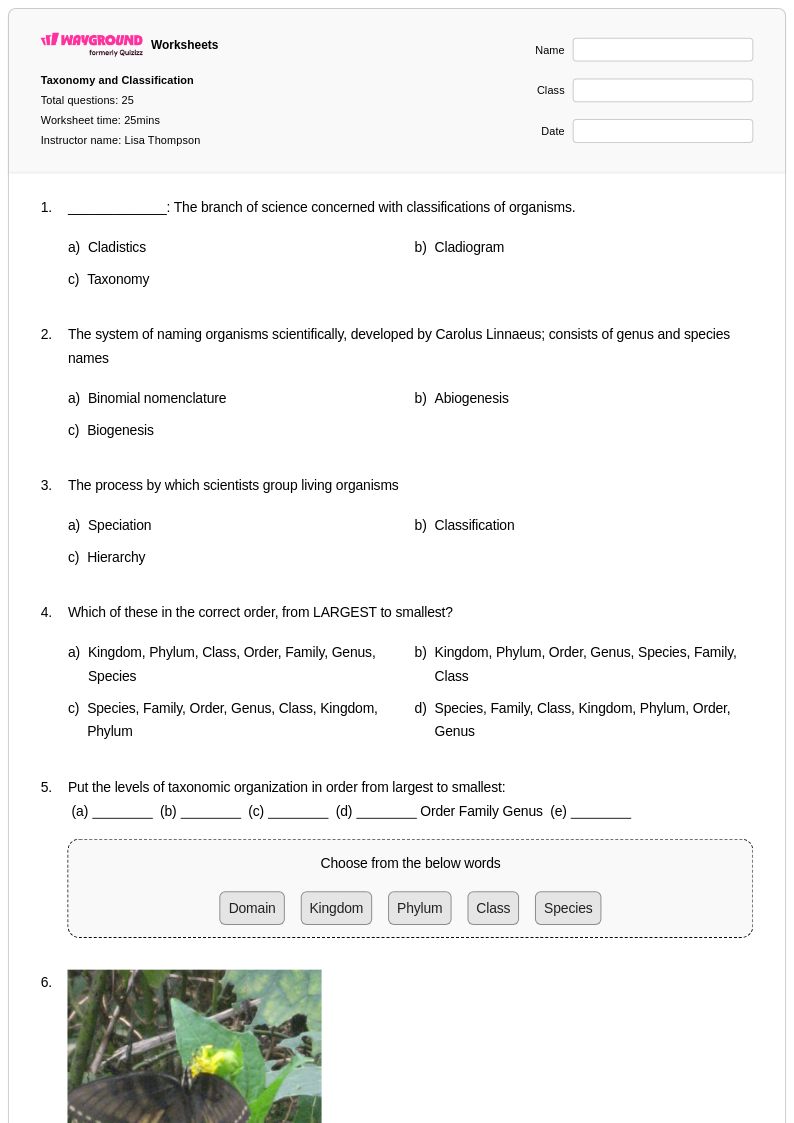
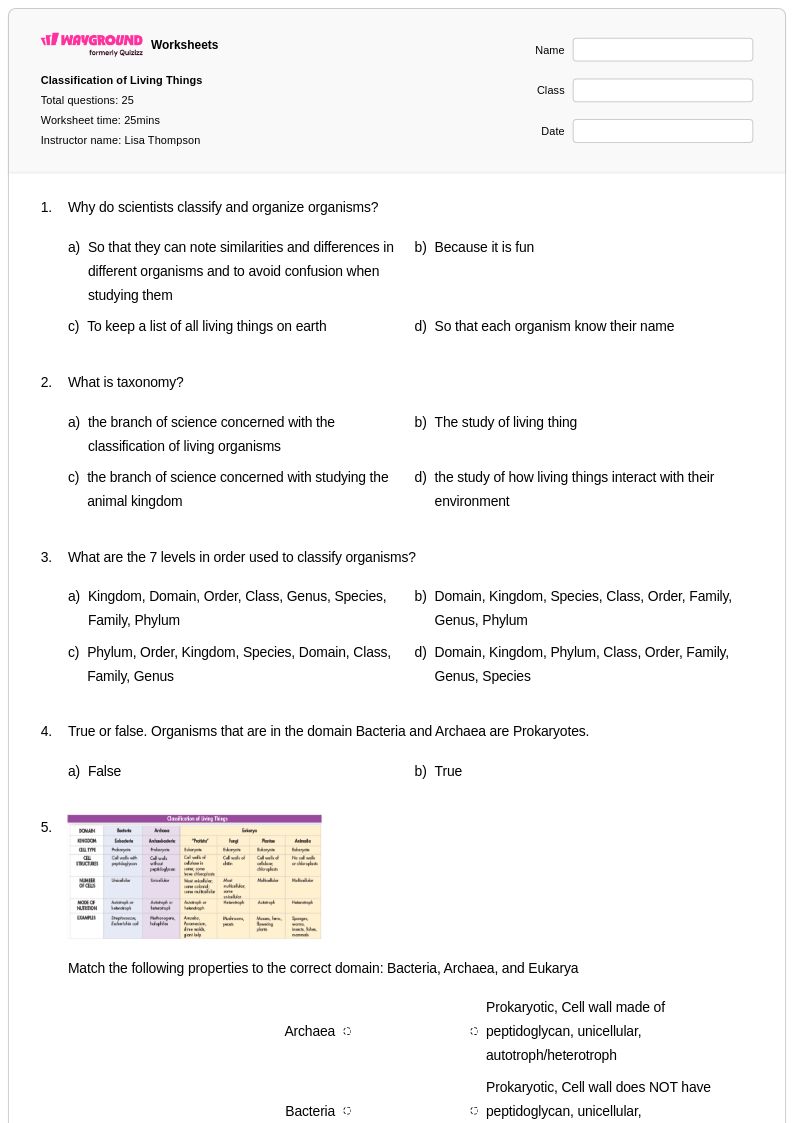
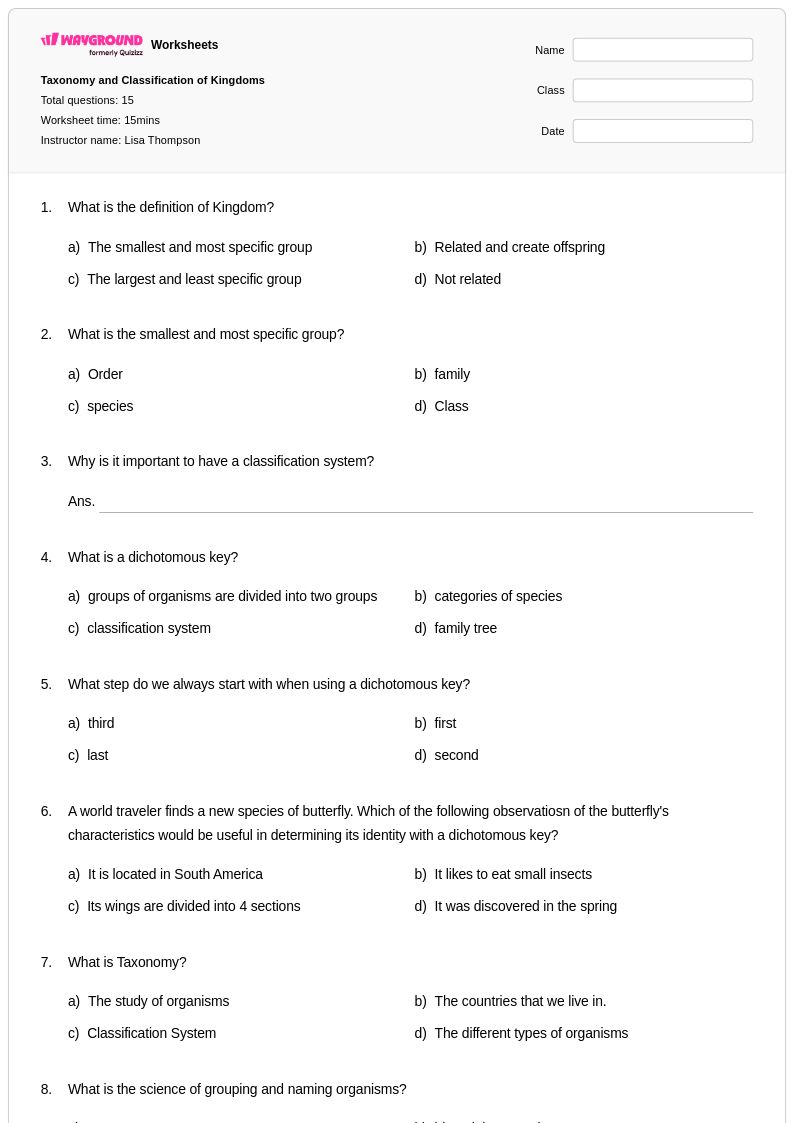
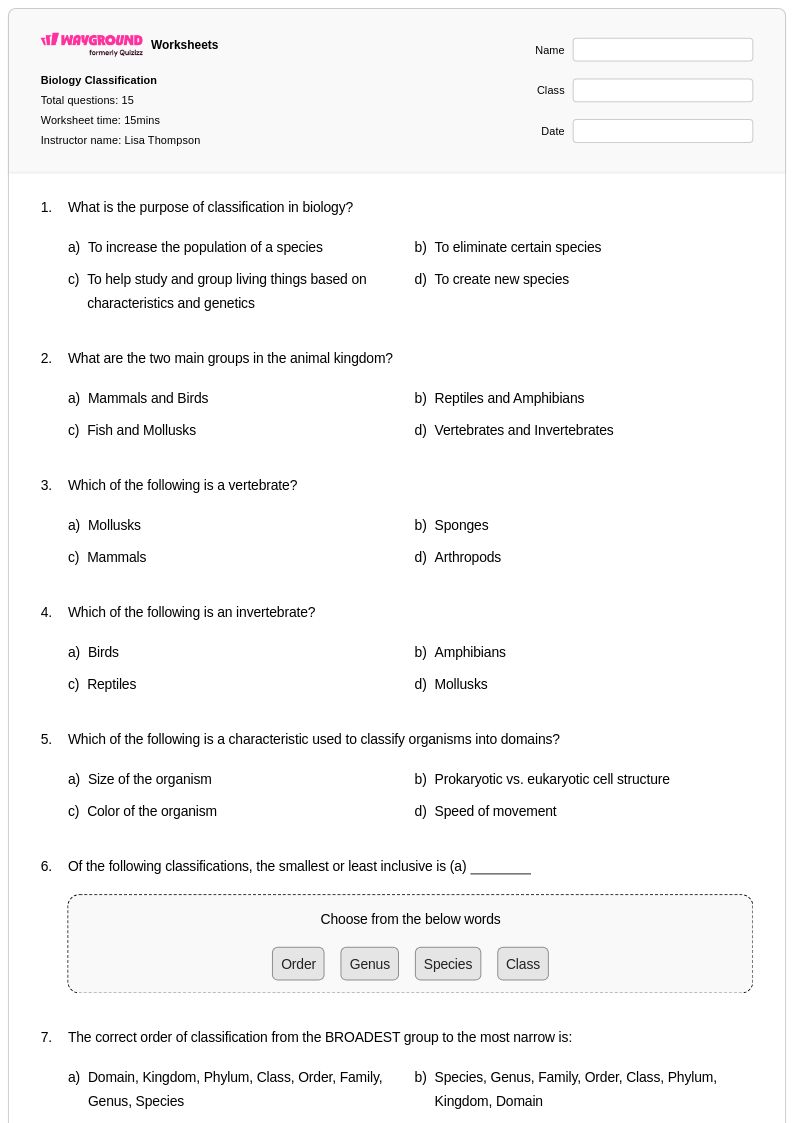
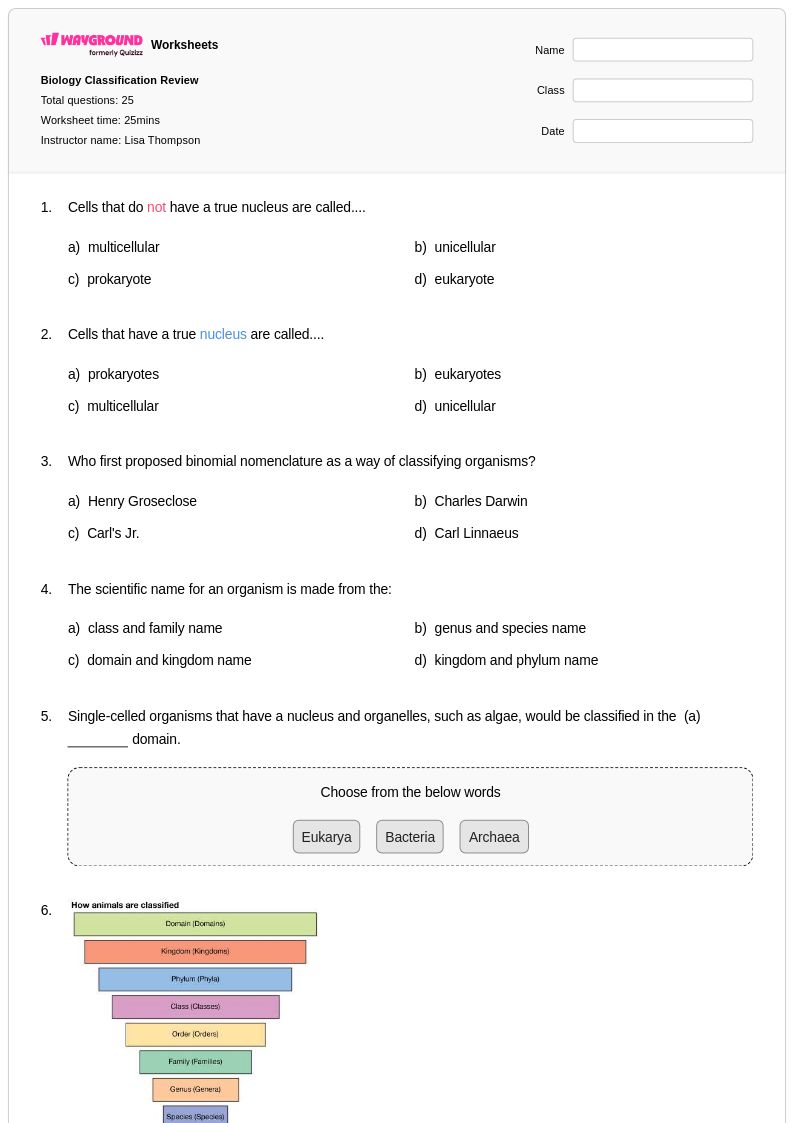
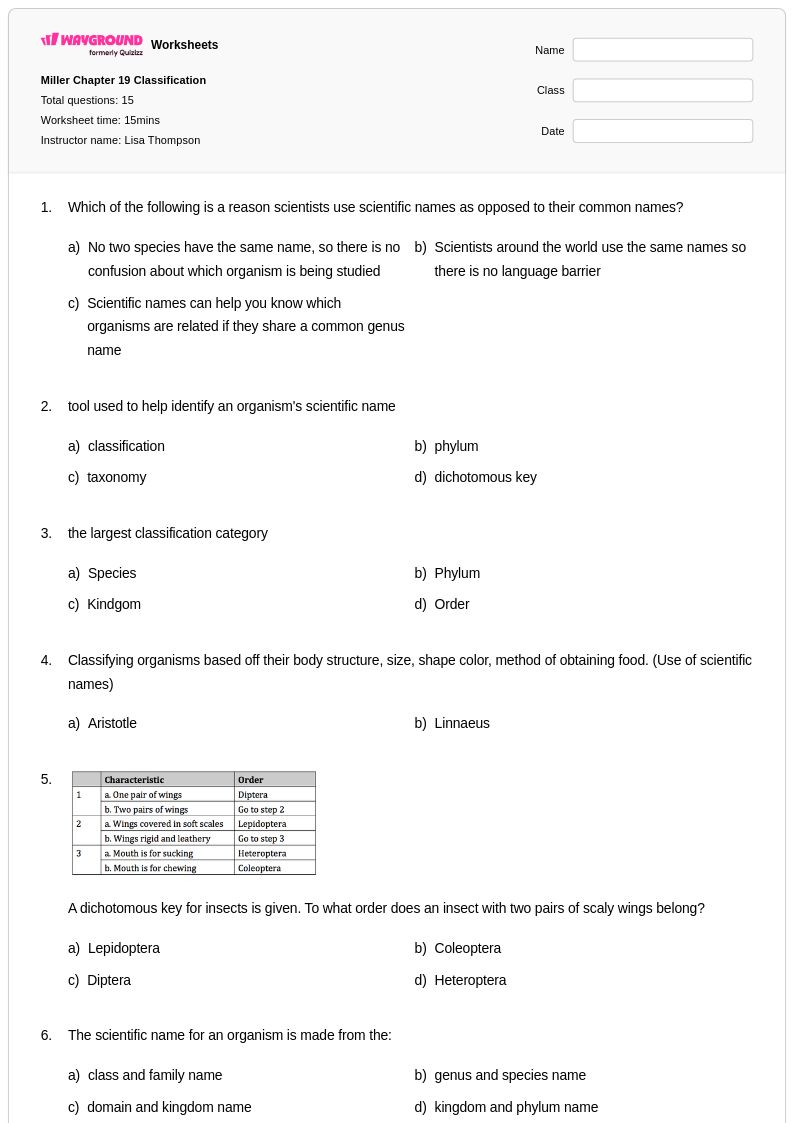
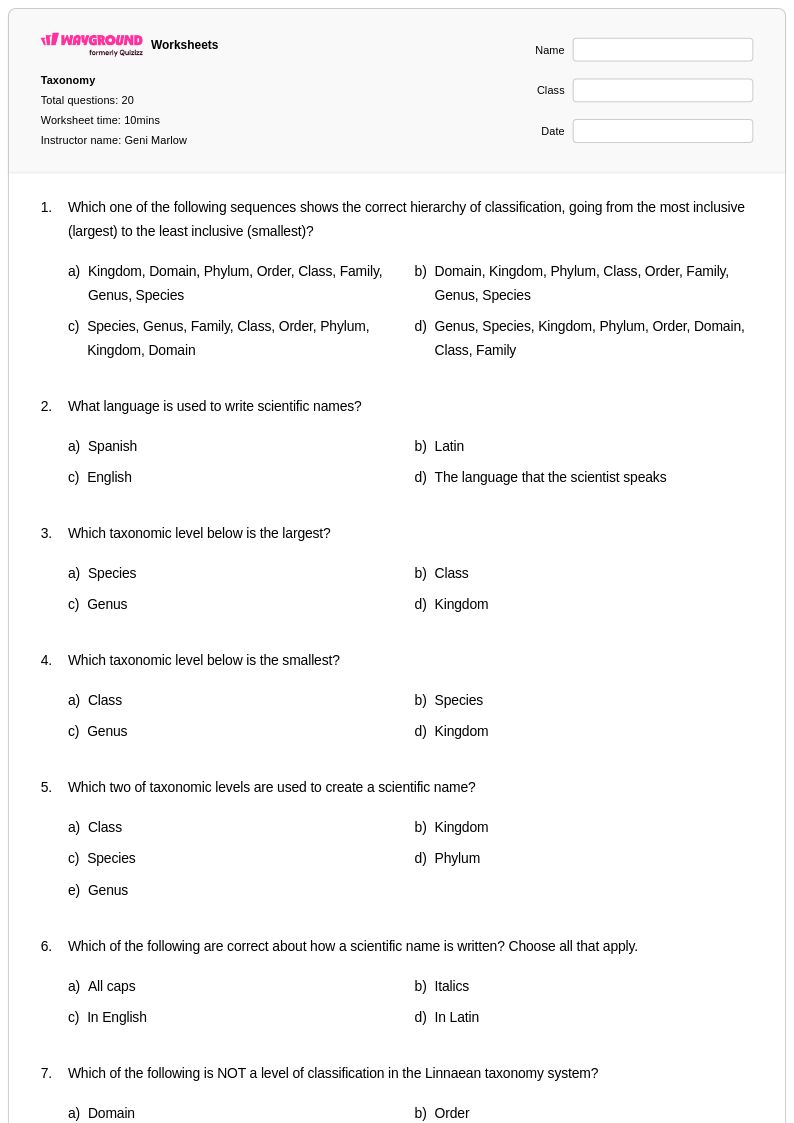
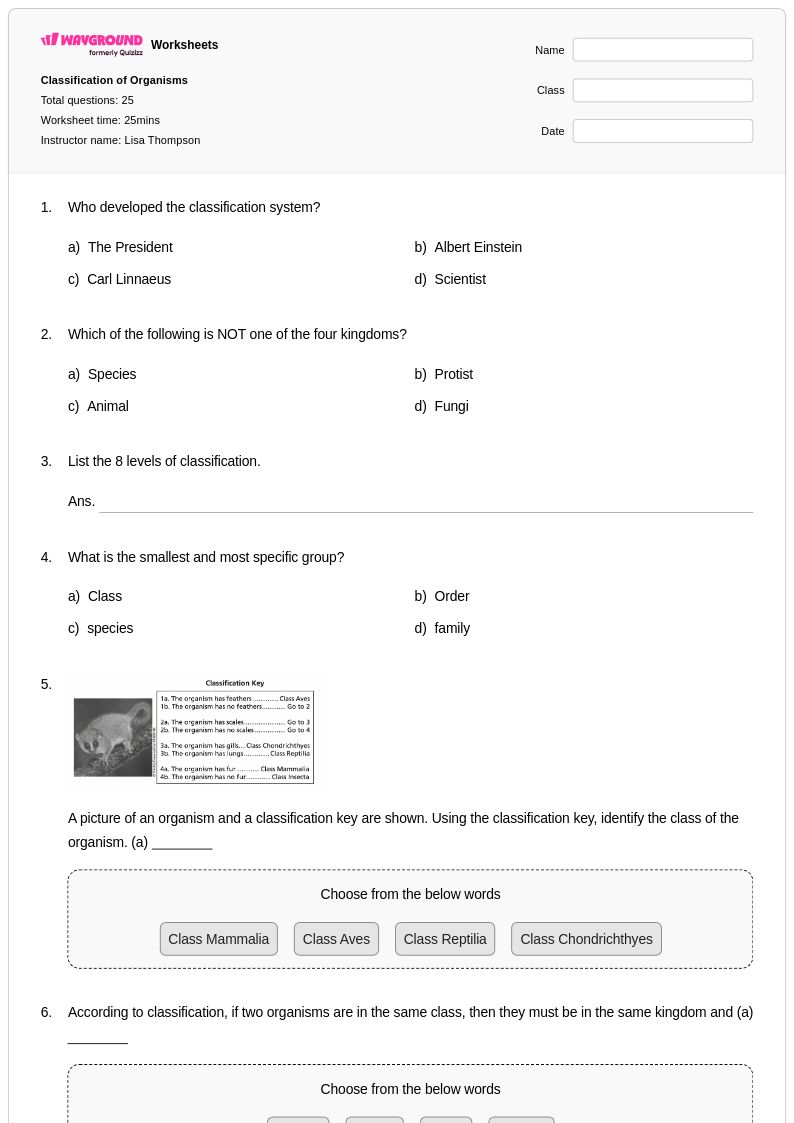
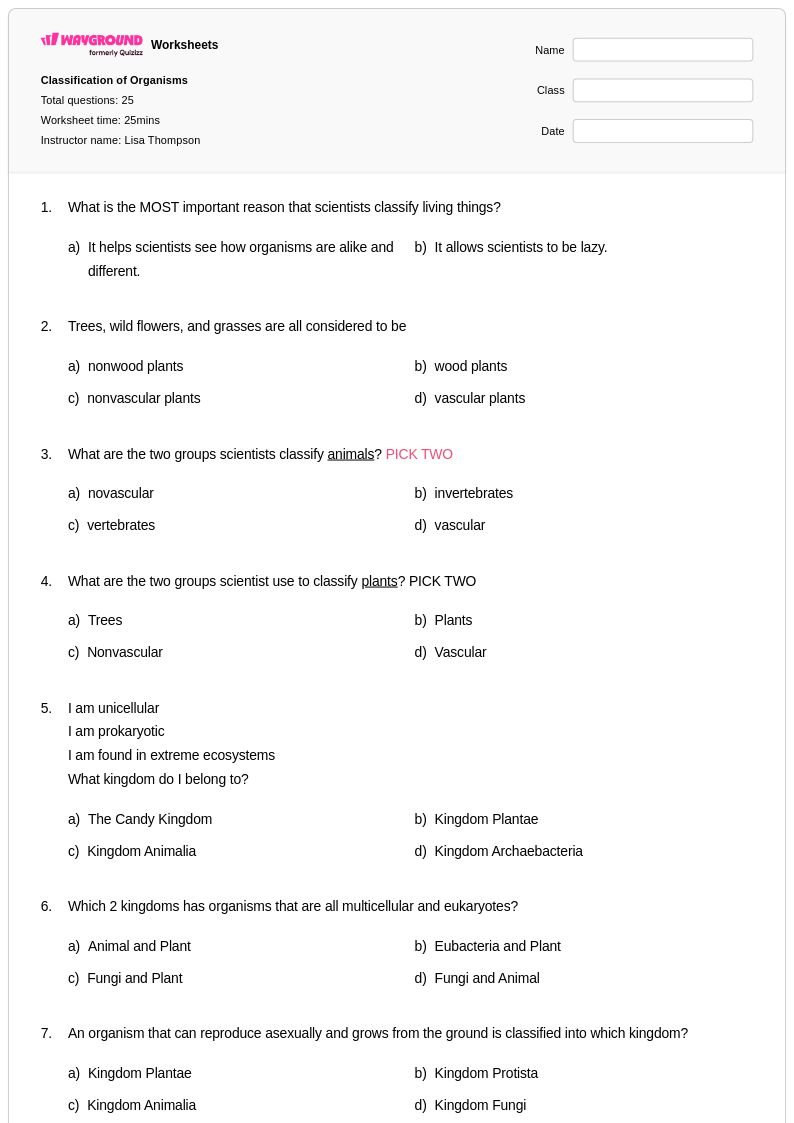
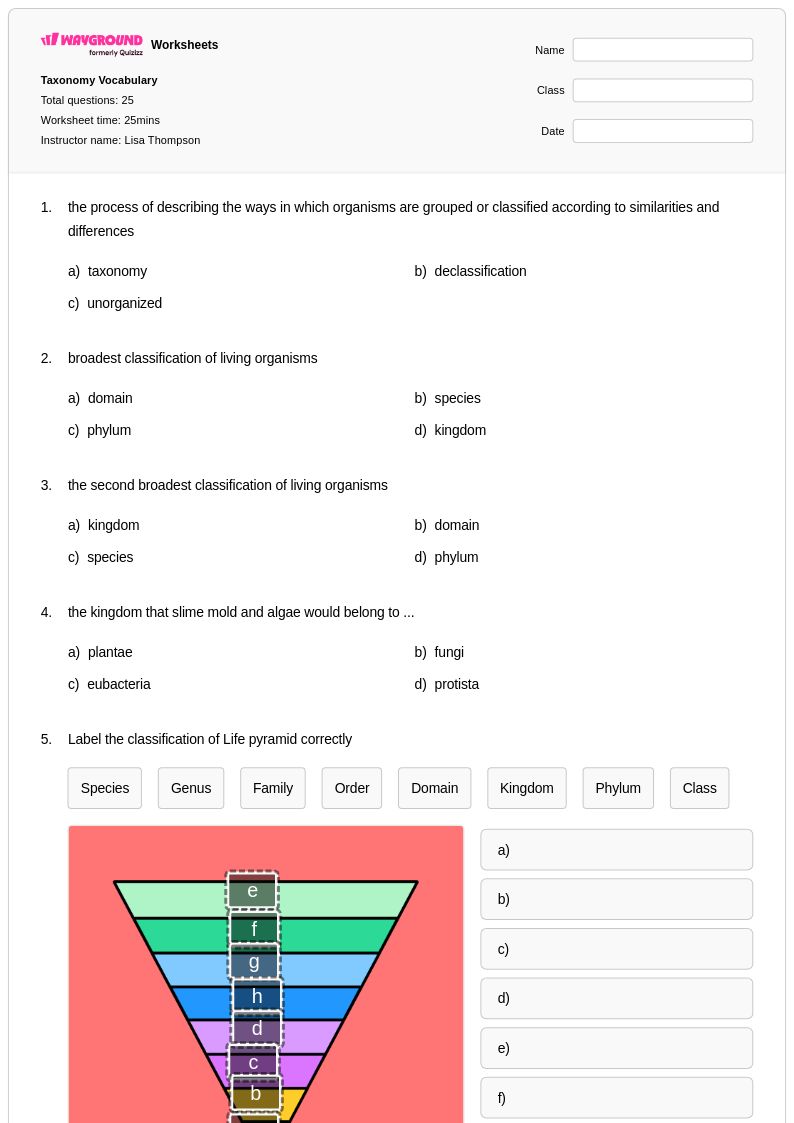
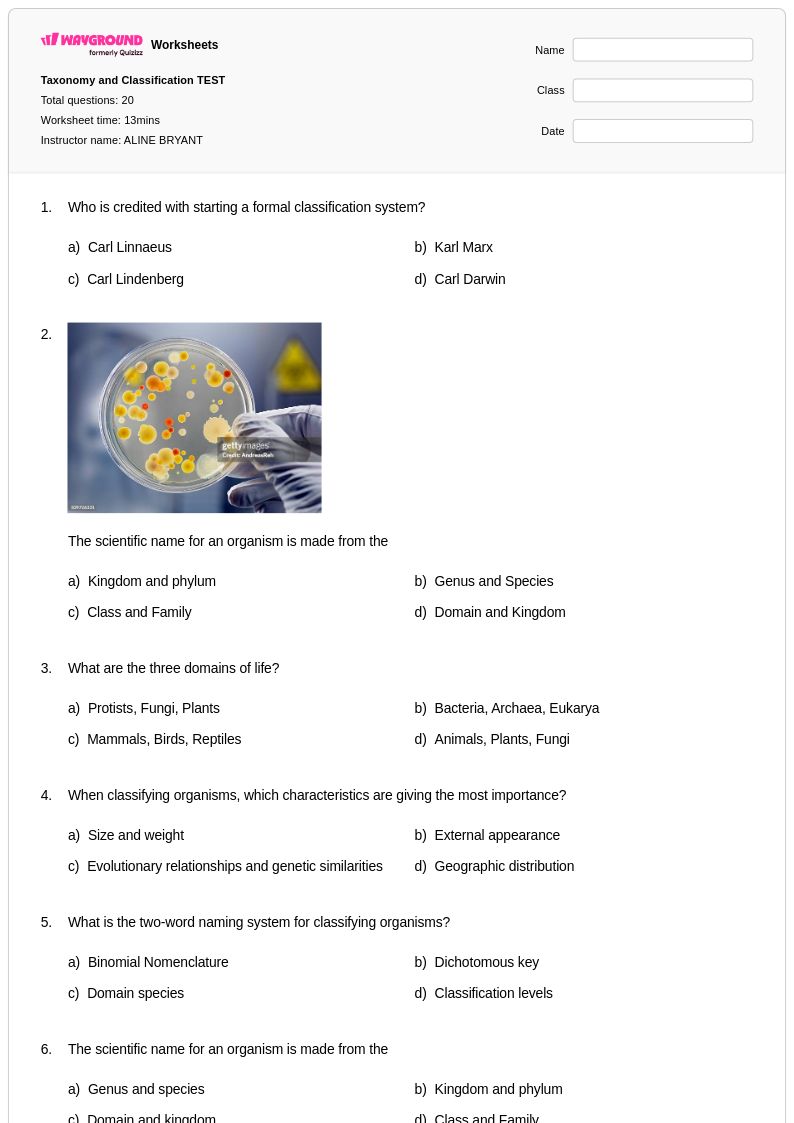
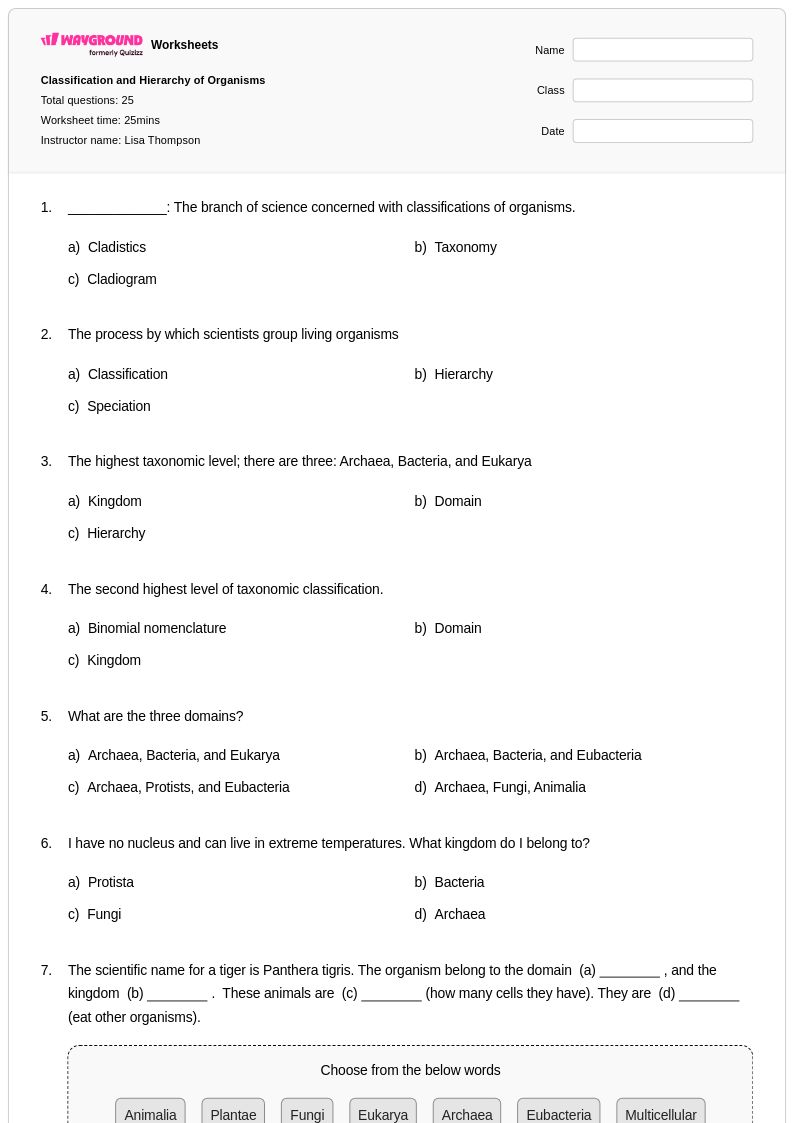
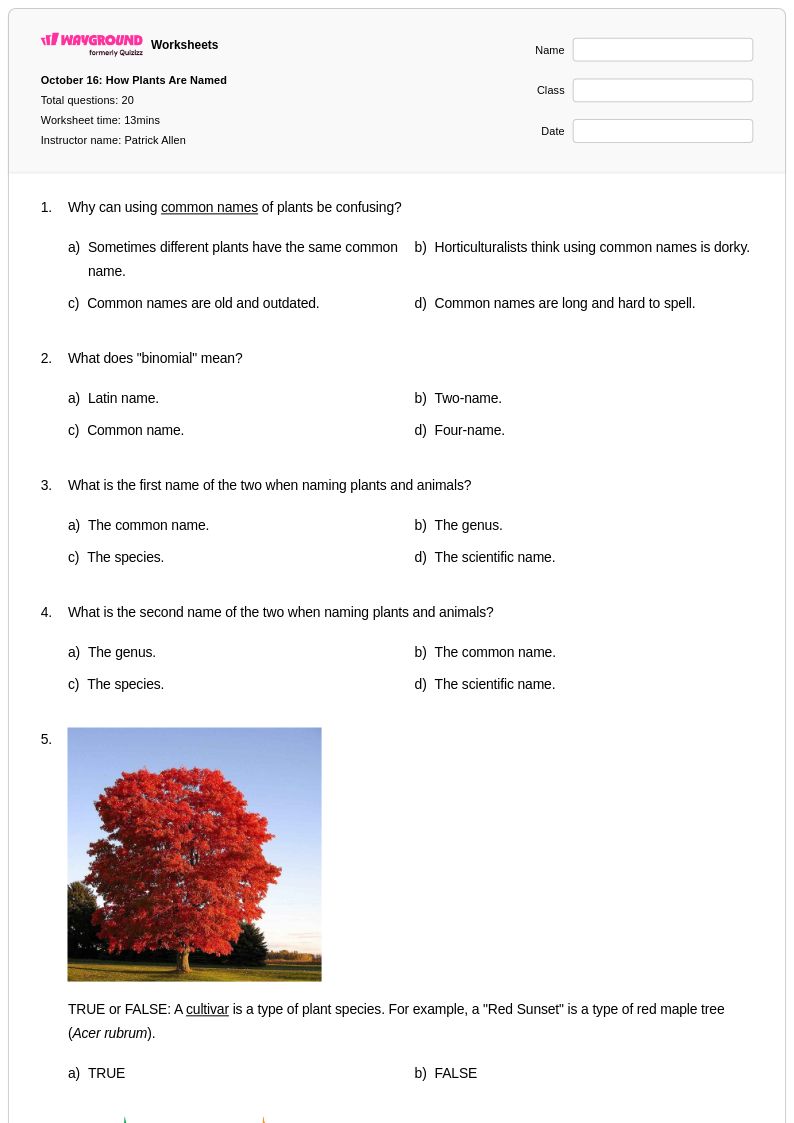
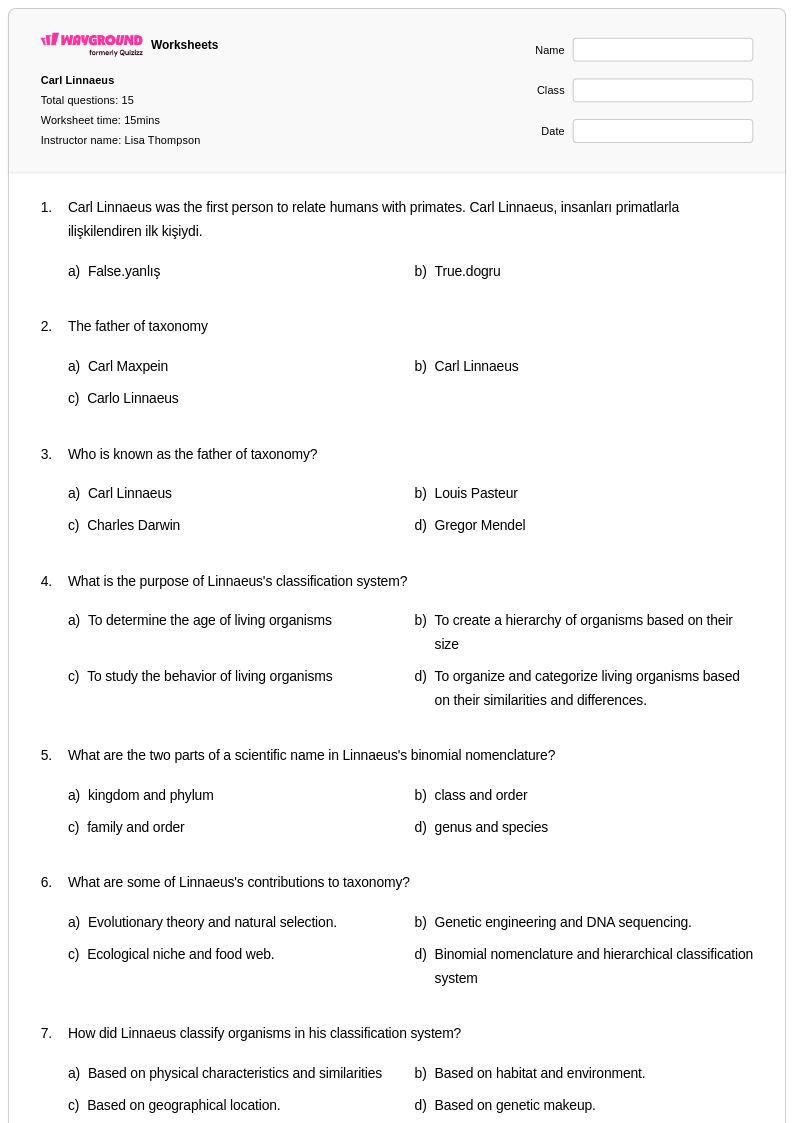
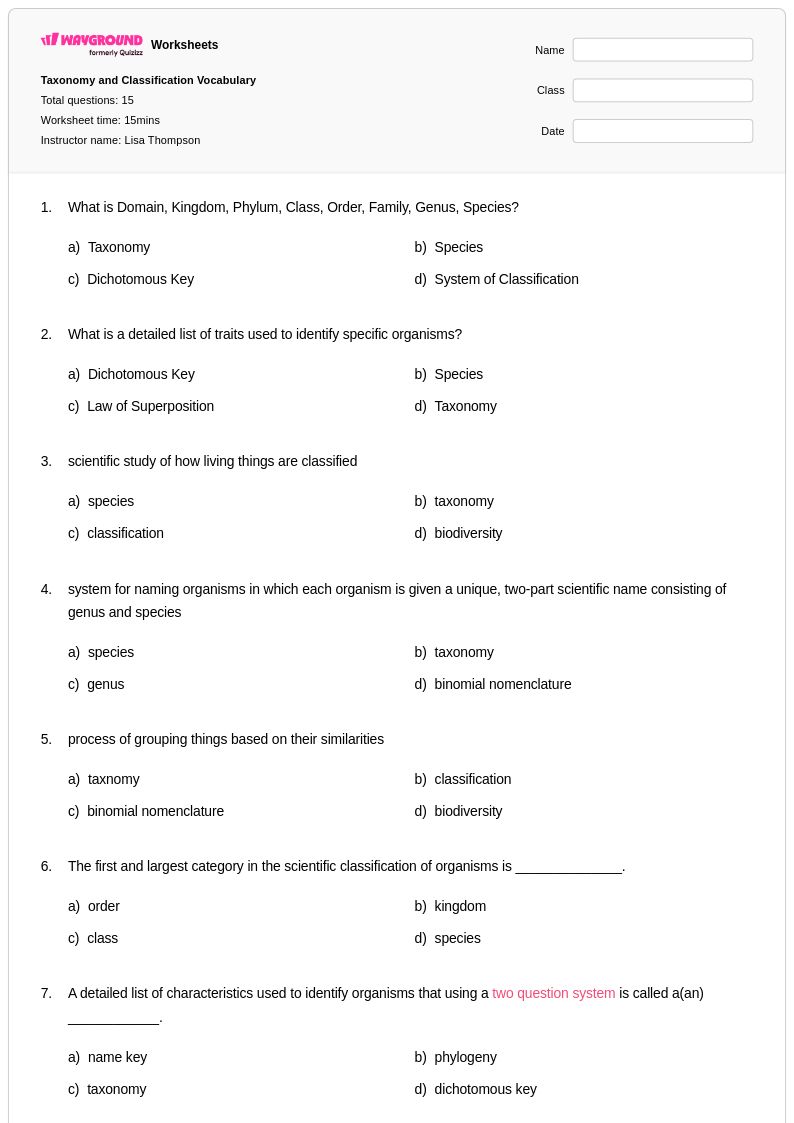
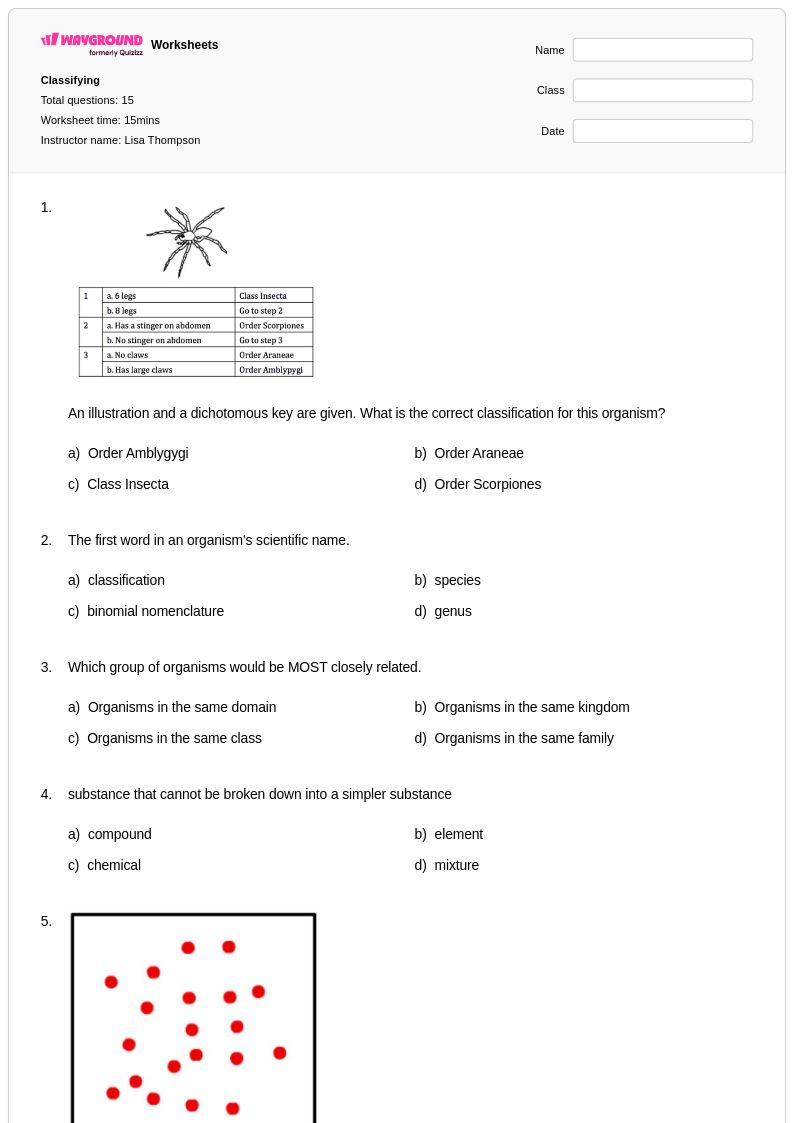
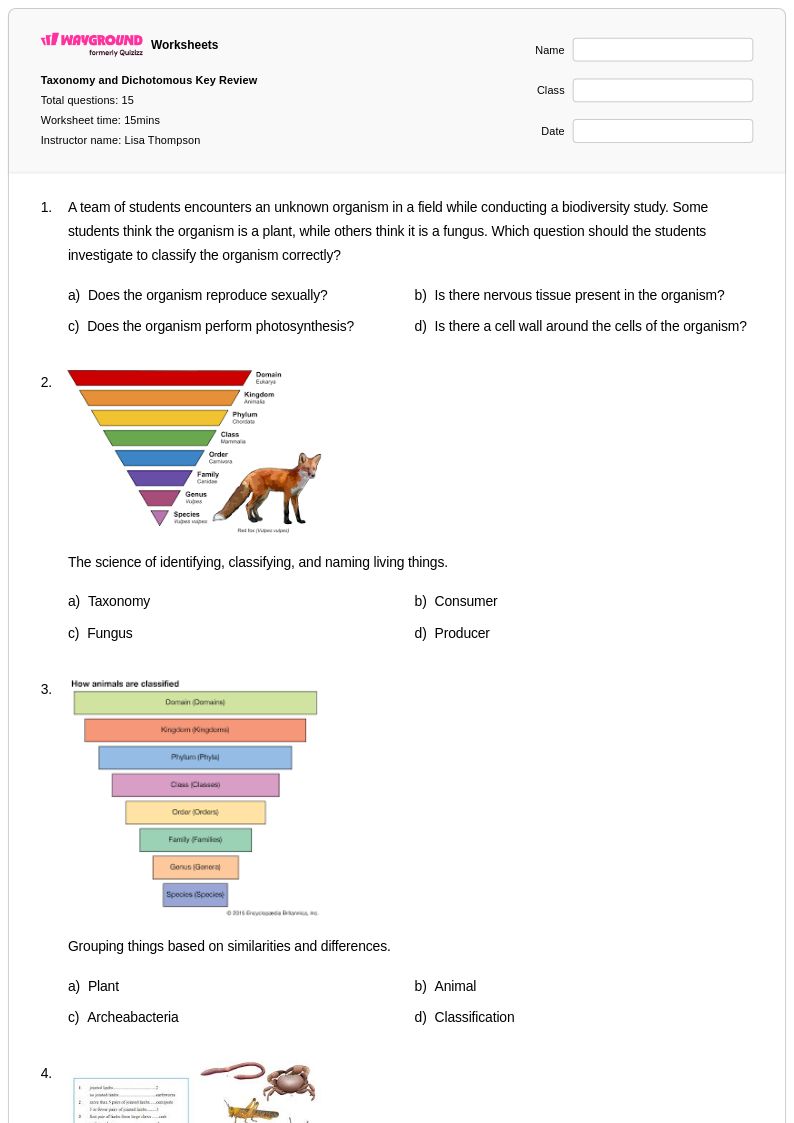
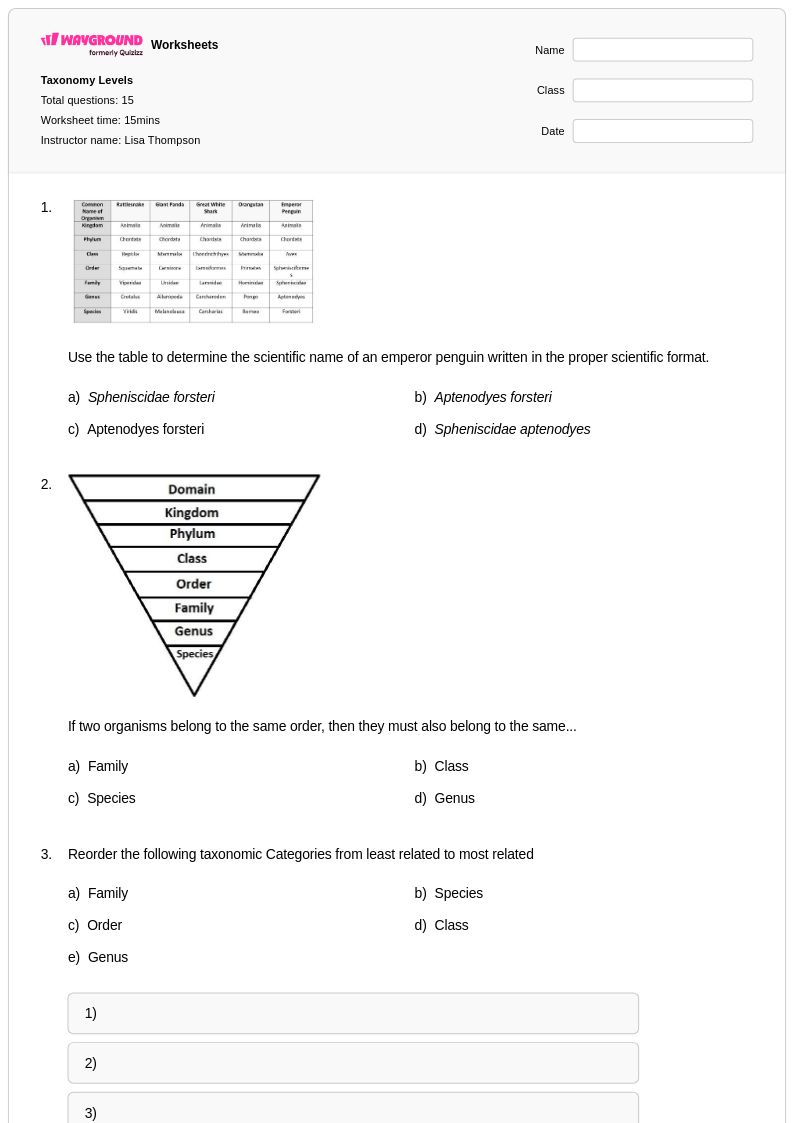
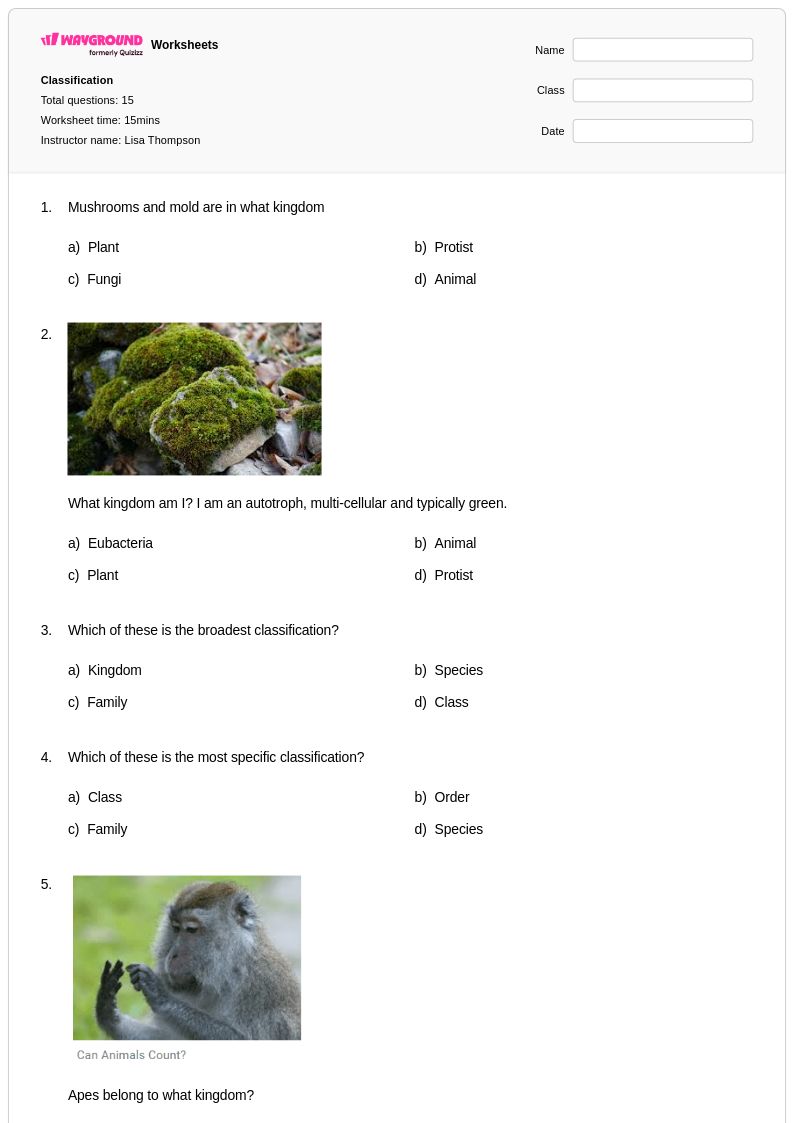
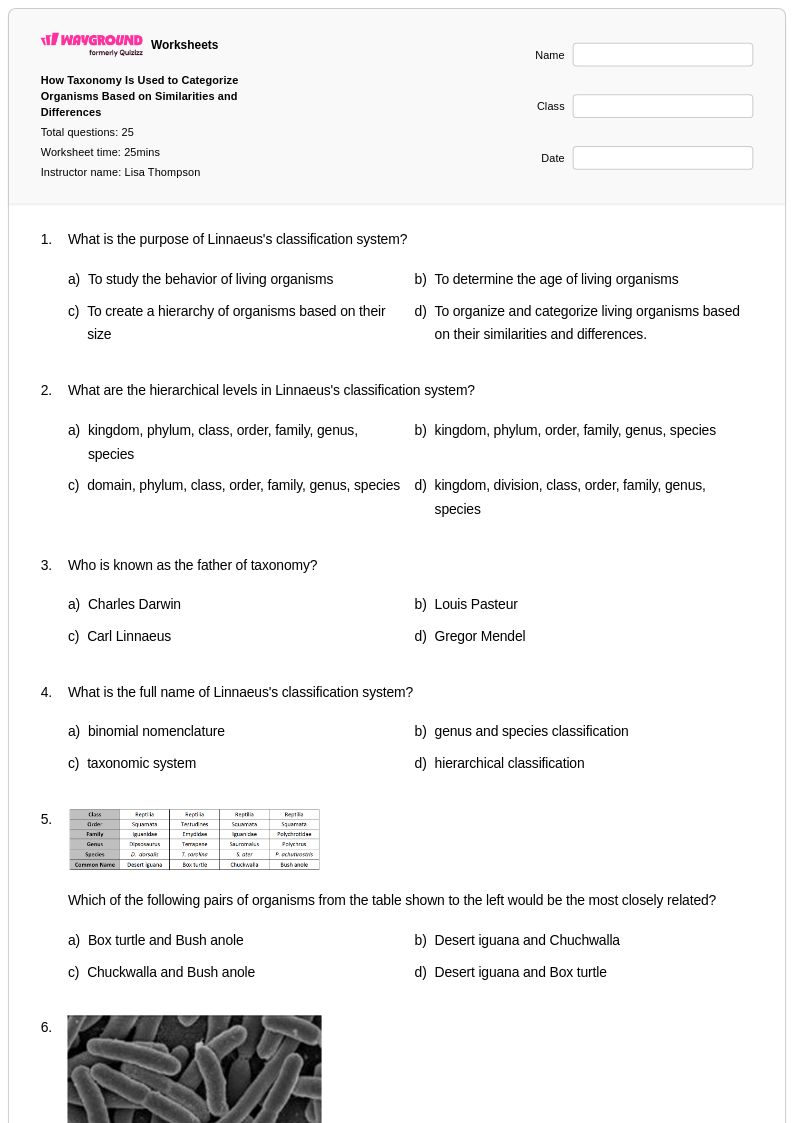
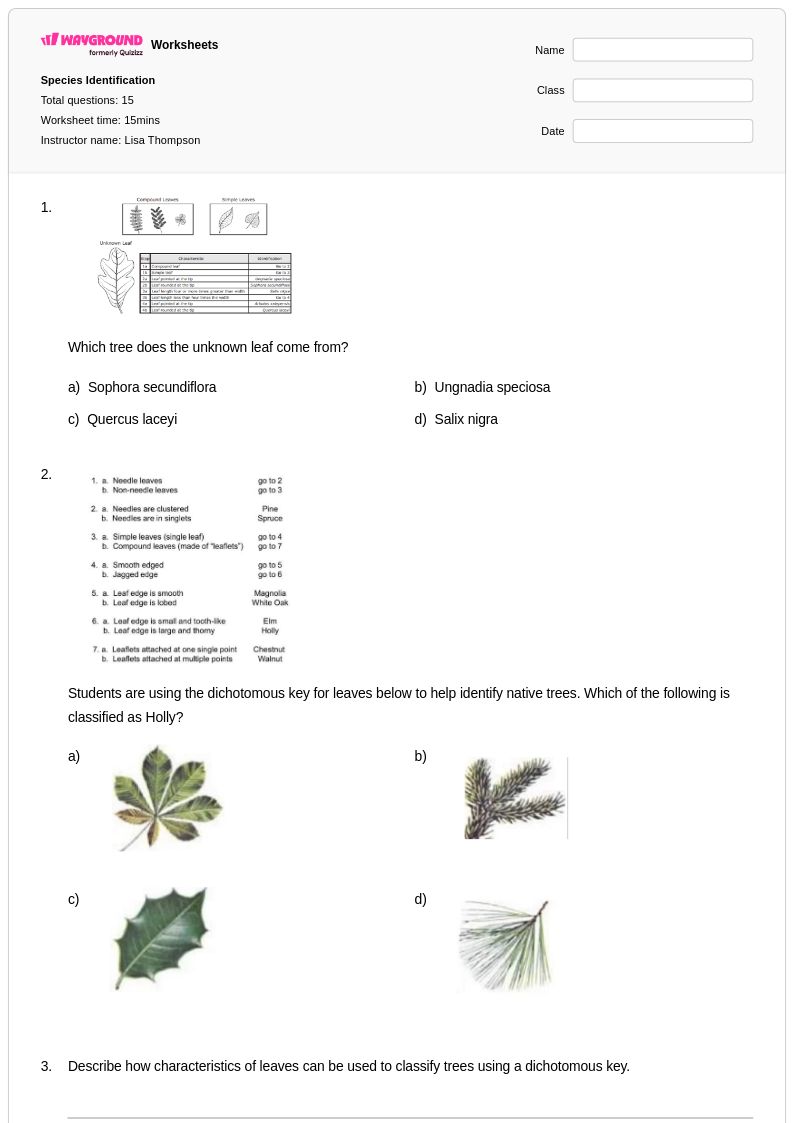
Class 12 binomial nomenclature worksheets available through Wayground (formerly Quizizz) provide comprehensive coverage of the systematic naming conventions that form the foundation of biological classification. These expertly designed resources strengthen students' understanding of the two-part scientific naming system developed by Carl Linnaeus, helping them master the proper formatting, pronunciation, and application of genus and species designations across diverse organisms. The worksheet collection includes practice problems that challenge students to correctly write scientific names in italics or underlined format, identify taxonomic errors in biological texts, and apply nomenclature rules to newly discovered or hypothetical species. Each worksheet comes with a detailed answer key that explains the reasoning behind correct binomial nomenclature usage, while pdf formats ensure easy distribution and printing for both classroom instruction and independent study sessions.
Wayground's extensive library supports biology educators with millions of teacher-created binomial nomenclature resources that can be easily located through robust search and filtering capabilities aligned with state and national science standards. Teachers can customize these worksheets to match their specific curriculum needs, adjusting difficulty levels and content focus to provide appropriate differentiation for diverse learning abilities within Class 12 classrooms. The platform's flexible format options allow educators to seamlessly integrate these materials into both traditional and digital learning environments, supporting everything from initial skill introduction to targeted remediation and advanced enrichment activities. This comprehensive approach to binomial nomenclature instruction helps teachers efficiently plan lessons that build students' confidence in scientific communication while preparing them for success in advanced biology coursework and standardized assessments.
FAQs
How do I teach binomial nomenclature to students?
Start by grounding students in the two-part structure: the genus name (capitalized) followed by the species name (lowercase), both written in italics or underlined when handwritten. Use familiar organisms like Homo sapiens or Canis lupus as anchors before moving to less recognizable species. Connecting the system to Carl Linnaeus and explaining why a universal naming convention matters helps students understand the real-world purpose behind the rules.
What exercises help students practice binomial nomenclature?
Effective practice activities include identifying formatting errors in incorrectly written scientific names, matching common names to their correct binomial equivalents, and classifying organisms from kingdom down to species level. Worksheets that ask students to write and correct scientific names reinforce both the structural rules and the italicization conventions, which are among the most commonly tested elements on assessments.
What mistakes do students commonly make when writing scientific names?
The most frequent errors include capitalizing the species epithet, failing to italicize or underline the full binomial name, and reversing the genus and species order. Students also commonly confuse the genus name with the common name or abbreviate the genus incorrectly after its first use. Targeted practice that isolates each formatting rule helps students internalize the conventions before applying them to unfamiliar organisms.
How do I differentiate binomial nomenclature instruction for students at different levels?
For struggling learners, focus on a small set of familiar organisms and use scaffolded worksheets that walk through formatting rules step by step. Advanced students can work with broader taxonomic classification tasks that require them to place organisms across all levels from kingdom to species. On Wayground, teachers can apply accommodations such as reduced answer choices or read-aloud support to individual students, while the rest of the class works through standard settings without disruption.
How can I use Wayground's binomial nomenclature worksheets in my classroom?
Wayground's binomial nomenclature worksheets are available as printable PDFs for traditional classroom use and in digital formats for technology-integrated environments, giving teachers flexibility for in-class practice, homework, or assessment prep. Teachers can also host the worksheets as a live quiz directly on Wayground, enabling real-time student responses and immediate feedback. Both formats include complete answer keys, so grading and review require minimal additional preparation.
Why is binomial nomenclature important for biology students to learn?
Binomial nomenclature provides the universal language scientists use to identify and communicate about living organisms across languages and disciplines, making it a foundational literacy skill in biology. Without it, the same organism might be referred to by dozens of different common names depending on region or language, creating confusion in scientific literature and research. Understanding this system also introduces students to the broader logic of taxonomic classification and hierarchical biological organization.