
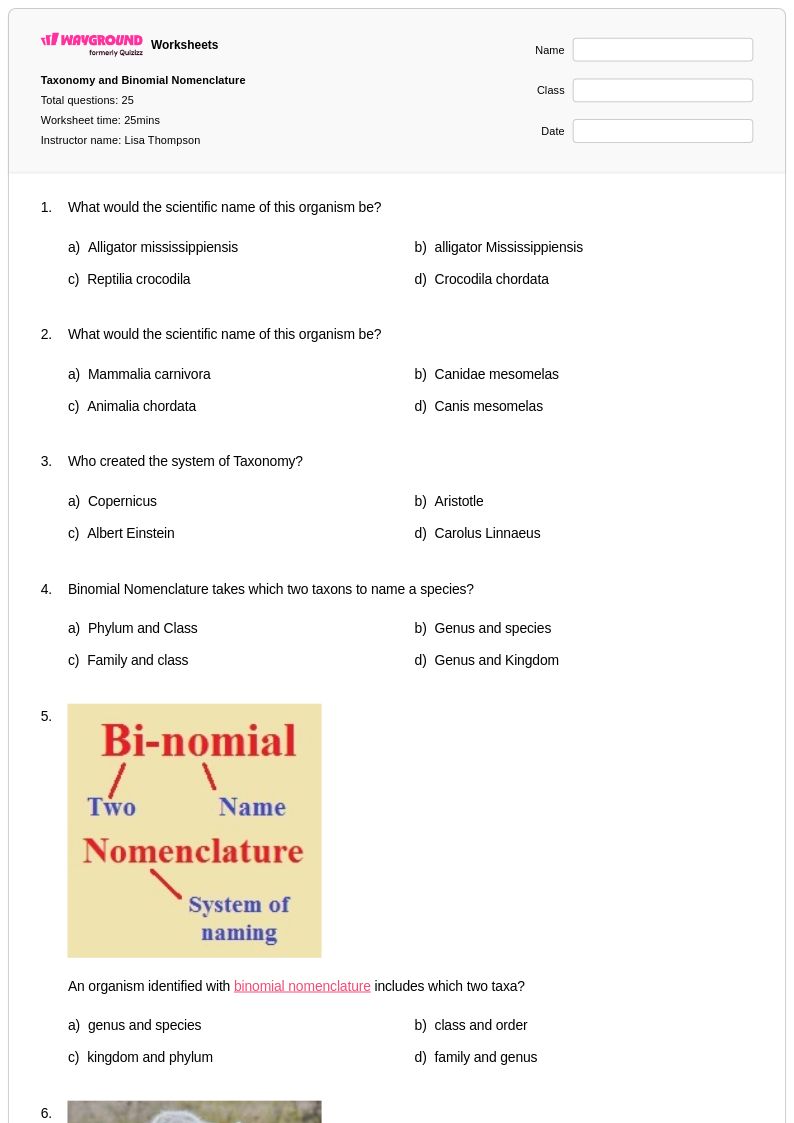
25 Q
7th - Uni
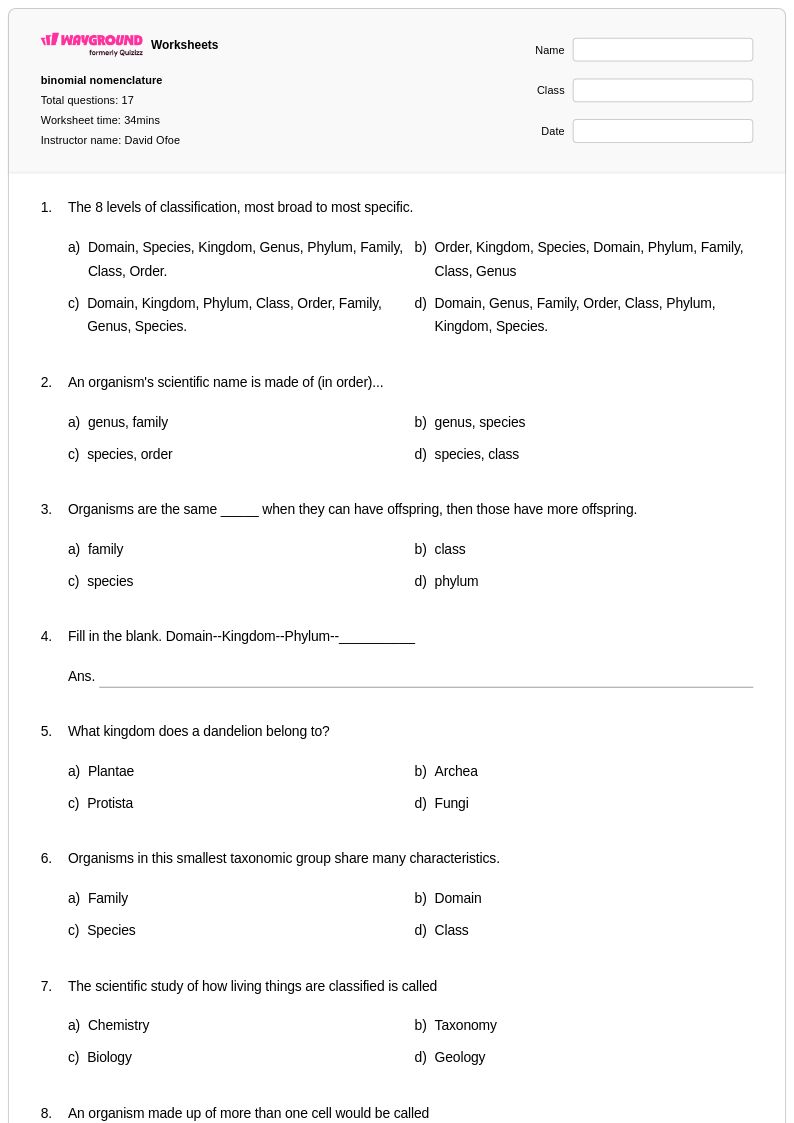
17 Q
7th - Uni
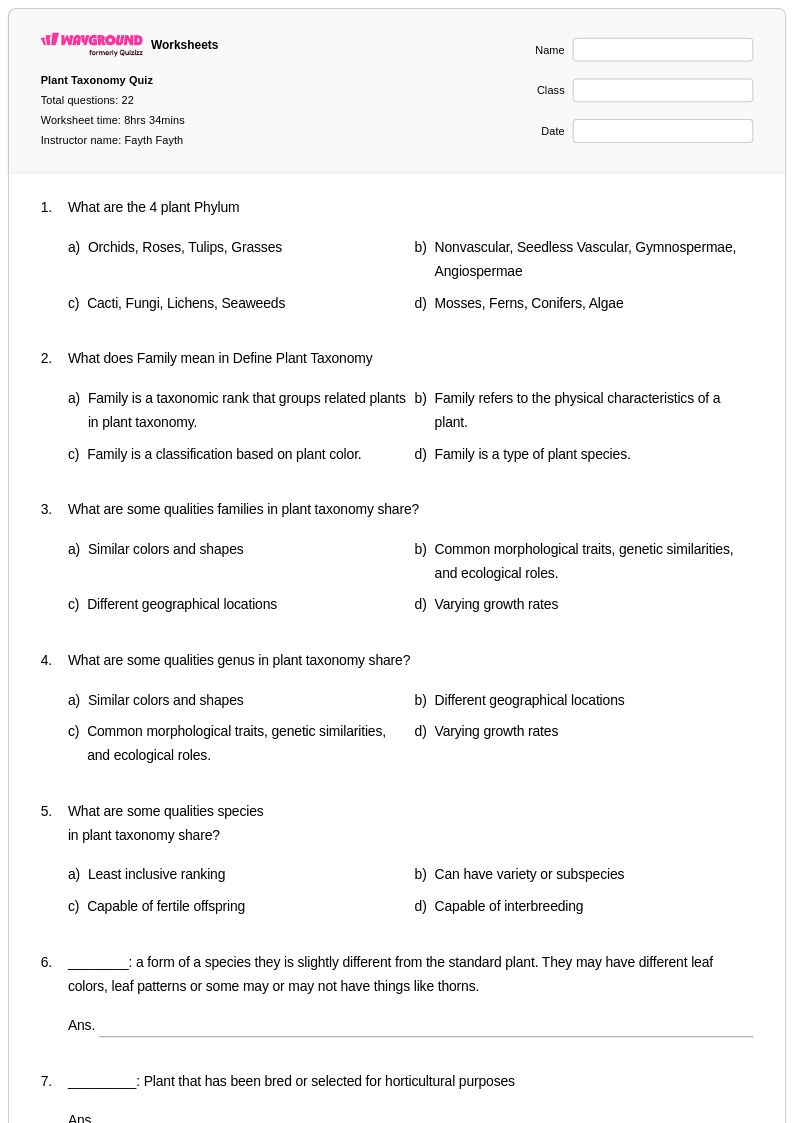
22 Q
9th - 12th
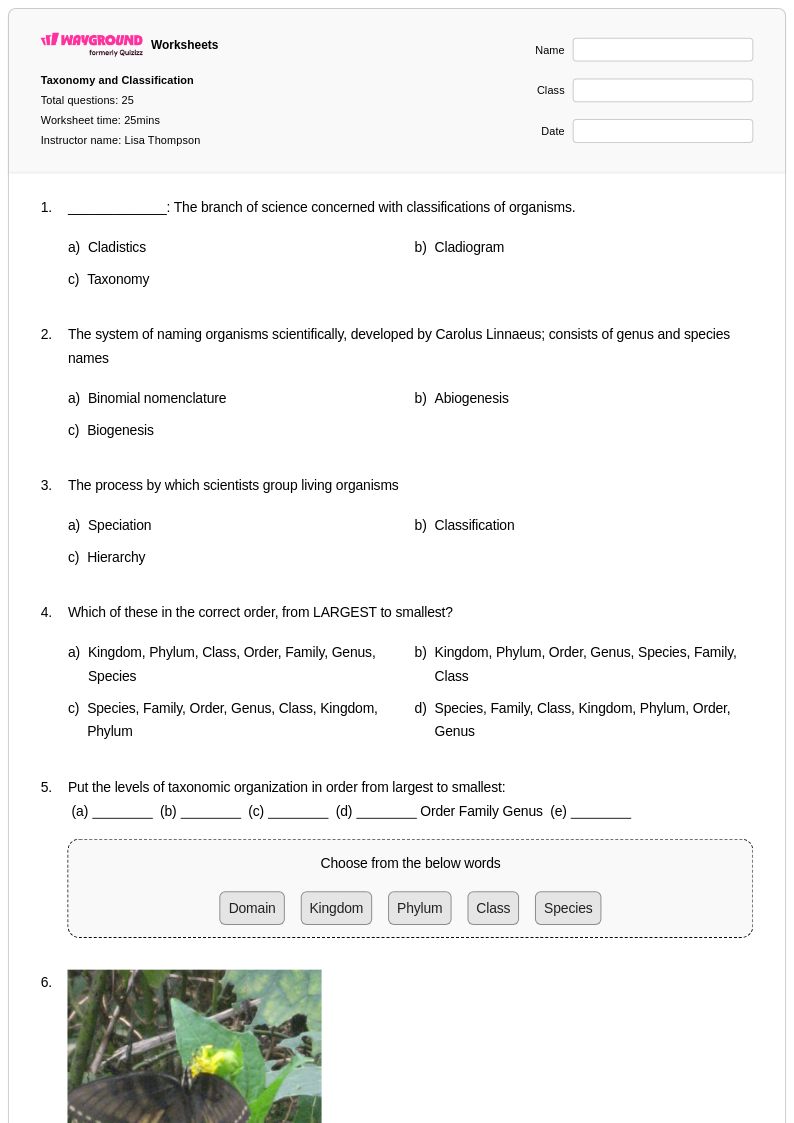
25 Q
7th - Uni
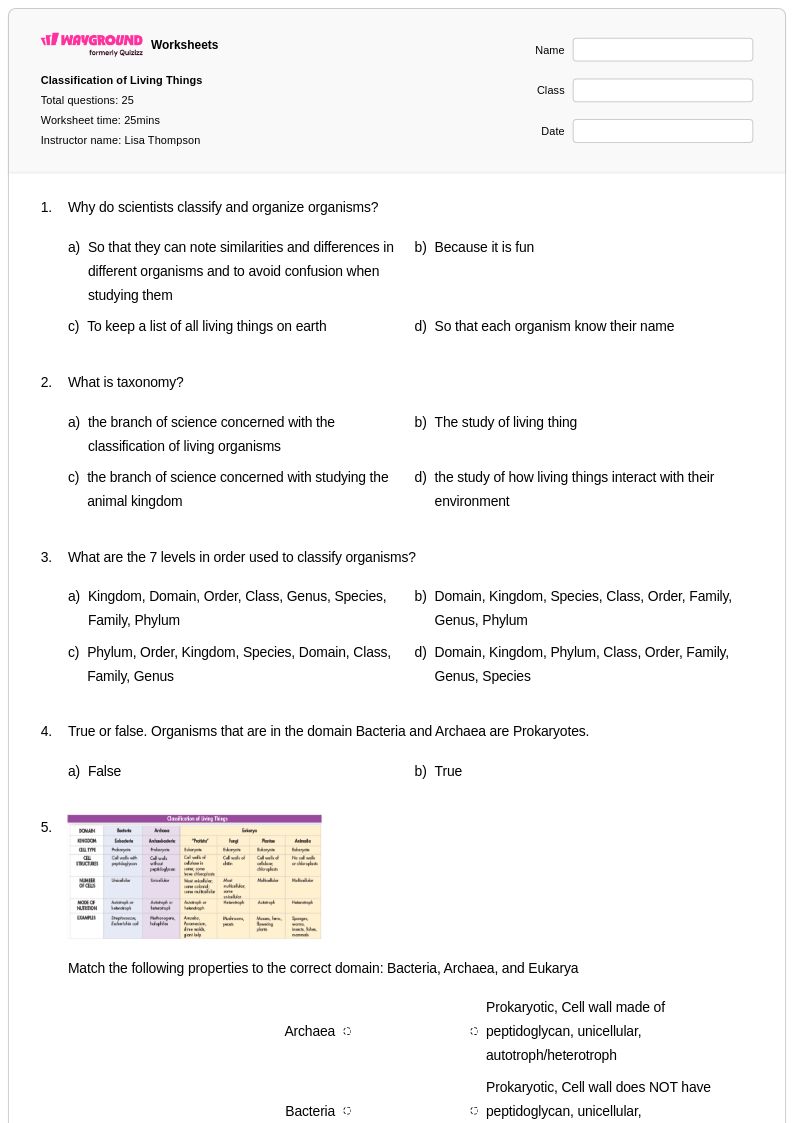
25 Q
6th - Uni
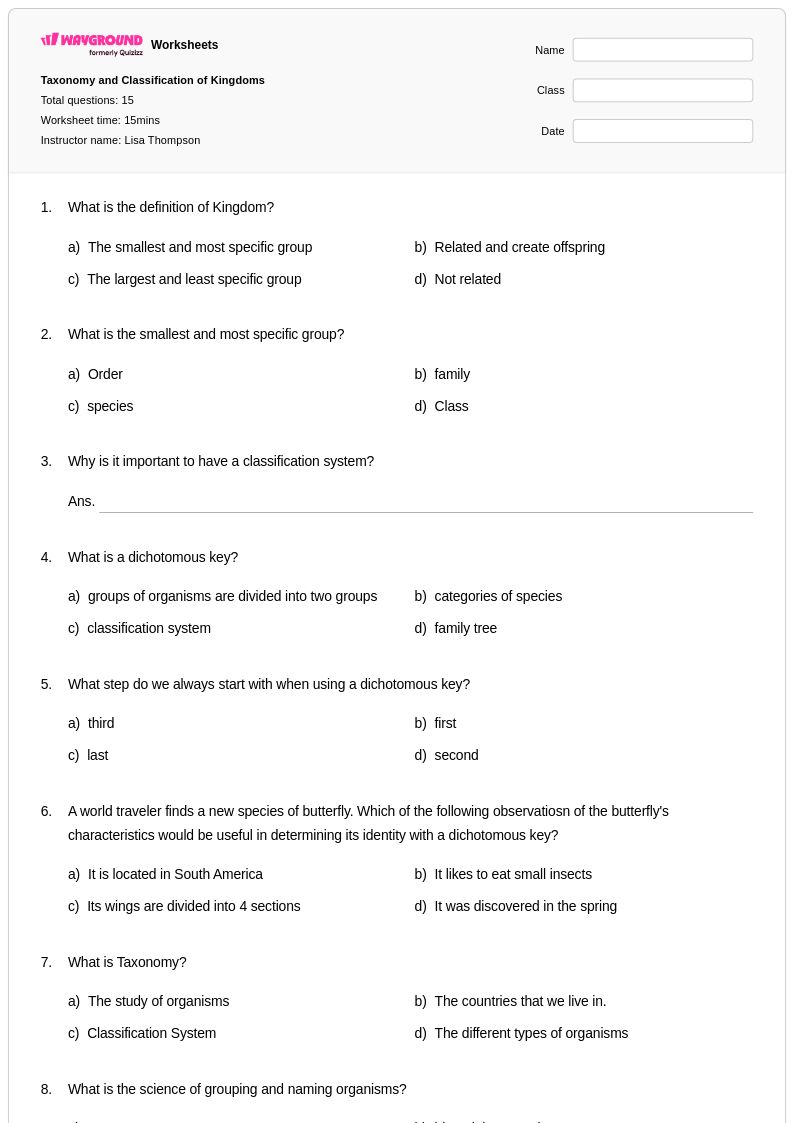
15 Q
7th - Uni
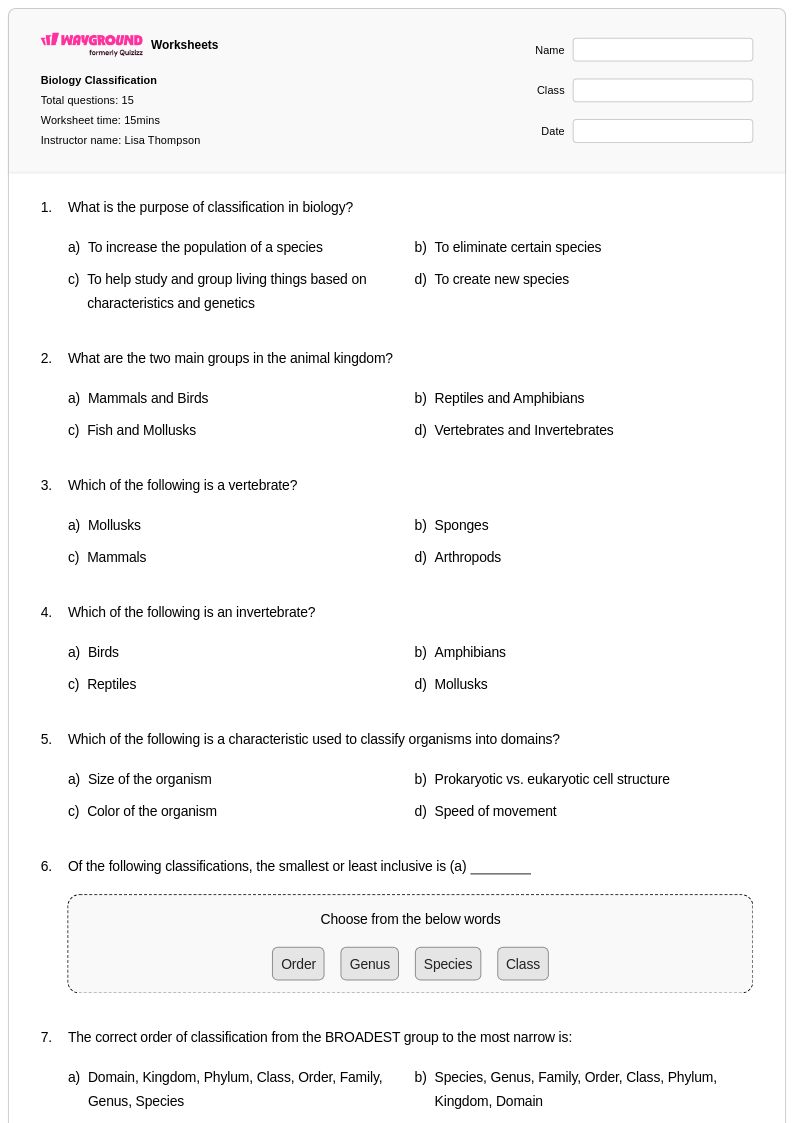
15 Q
10th - Uni
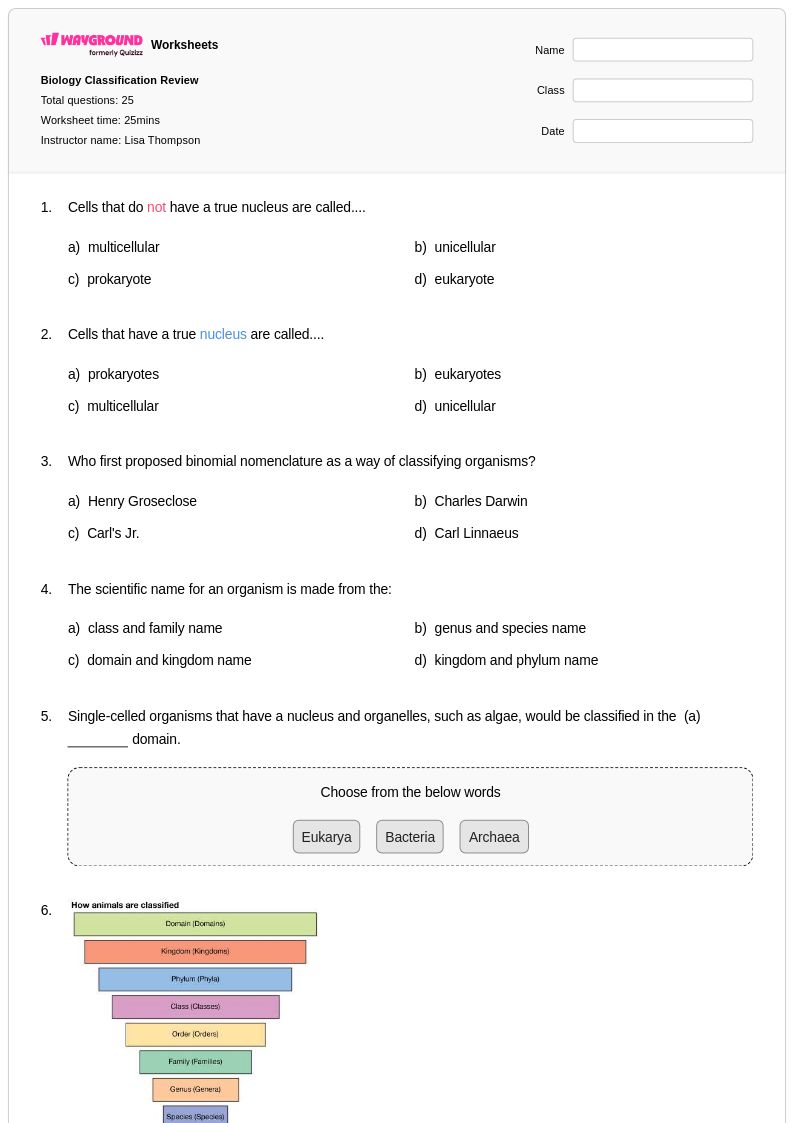
25 Q
9th - Uni
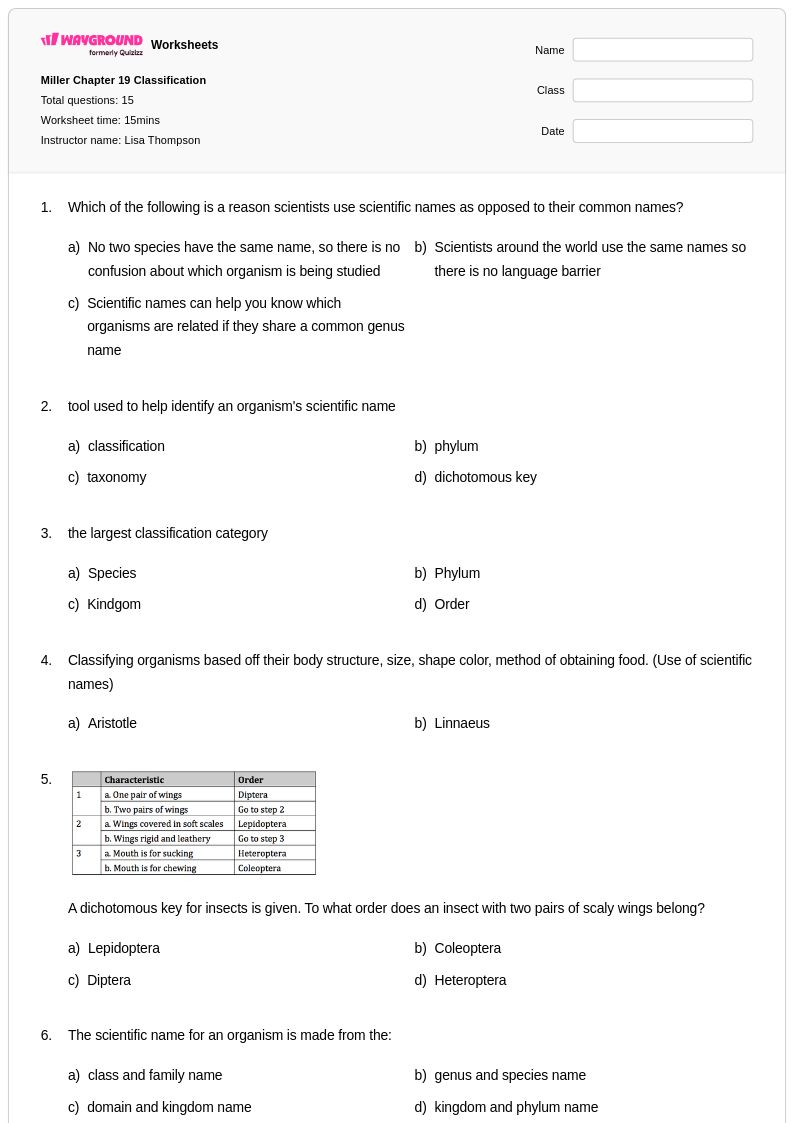
15 Q
7th - Uni
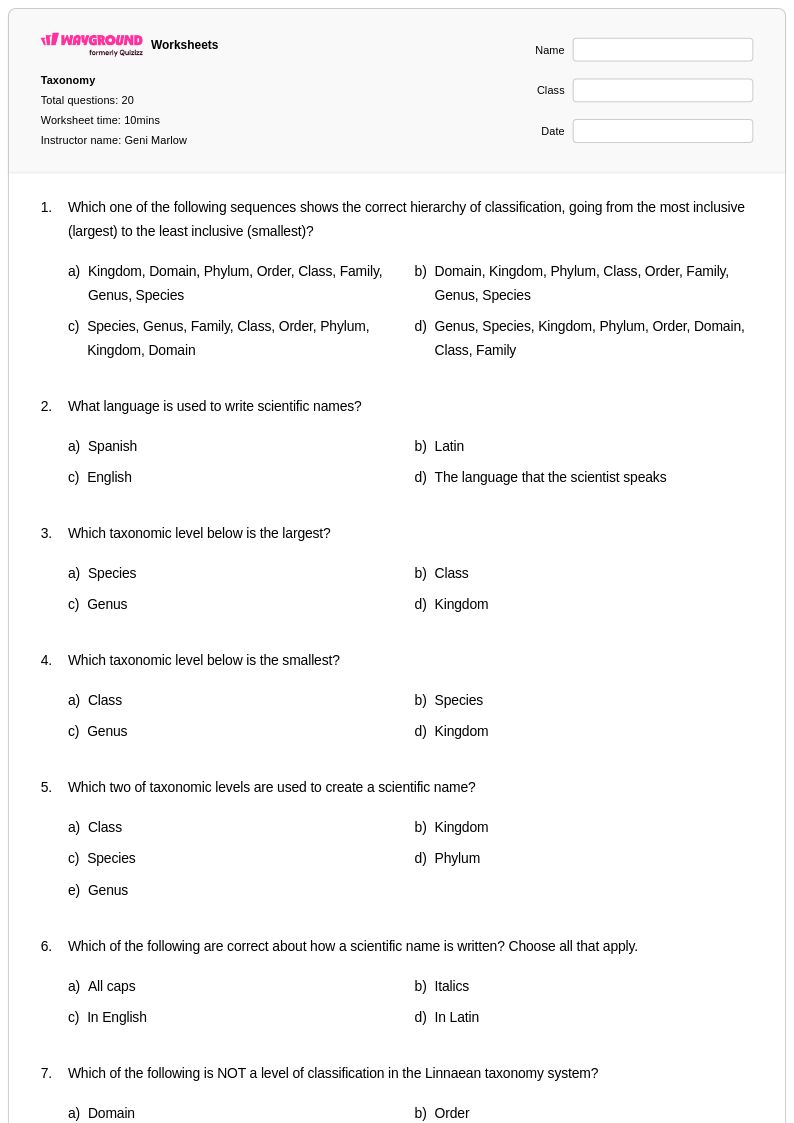
20 Q
9th - 12th
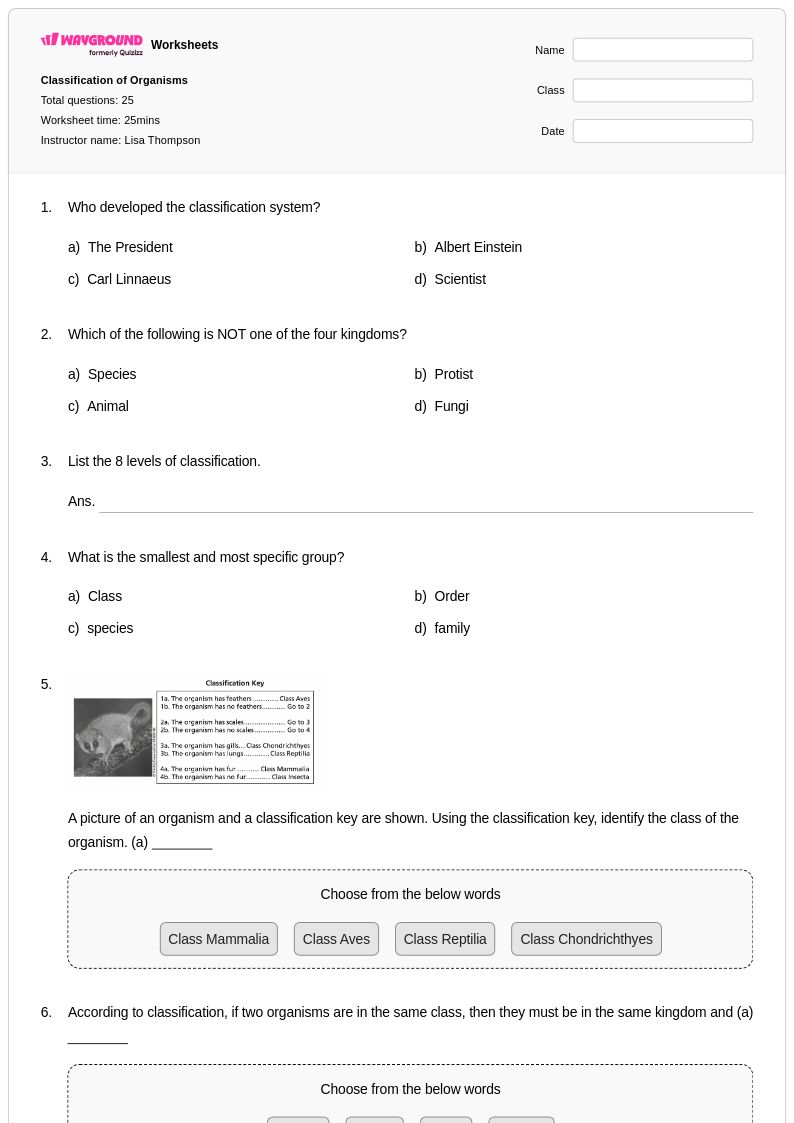
25 Q
7th - Uni
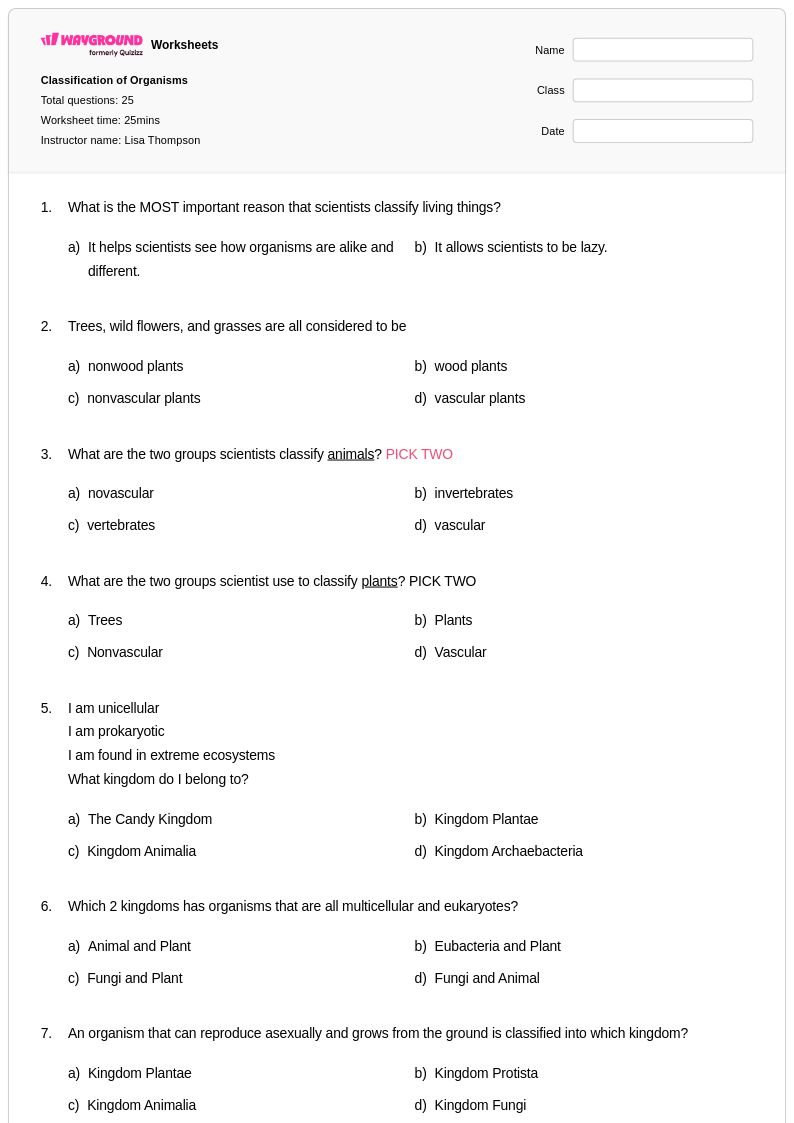
25 Q
6th - Uni
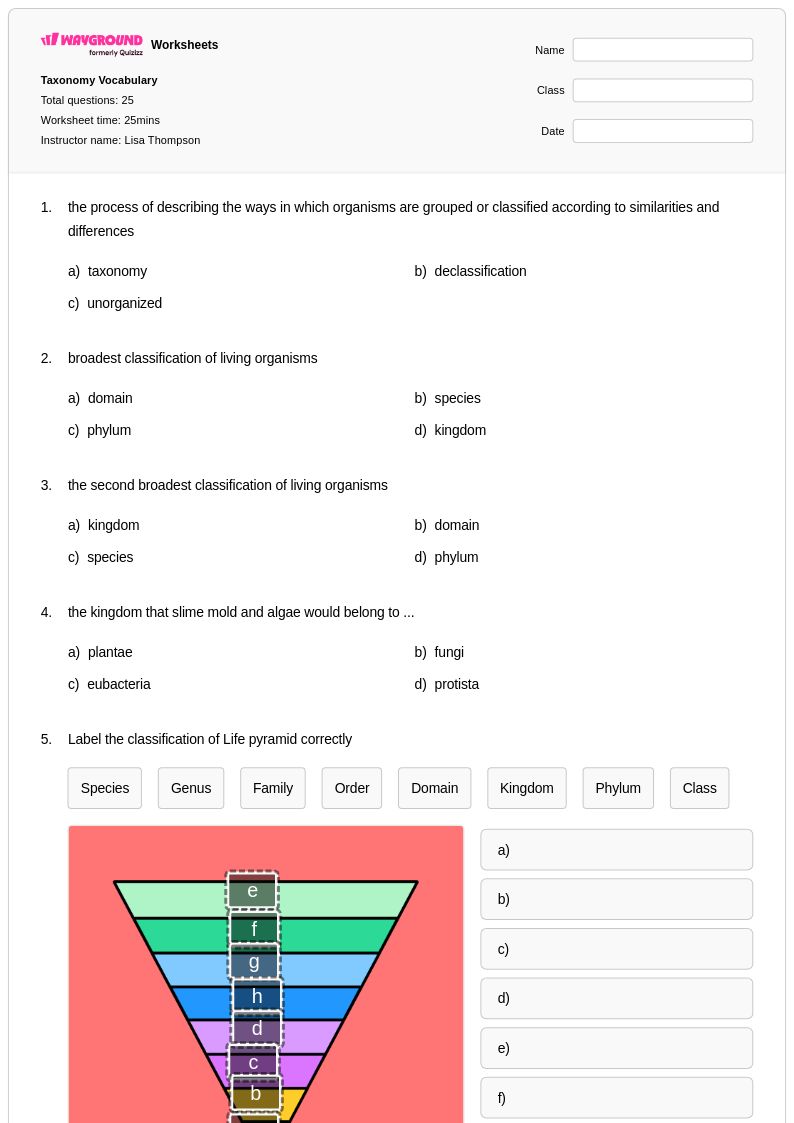
25 Q
6th - Uni
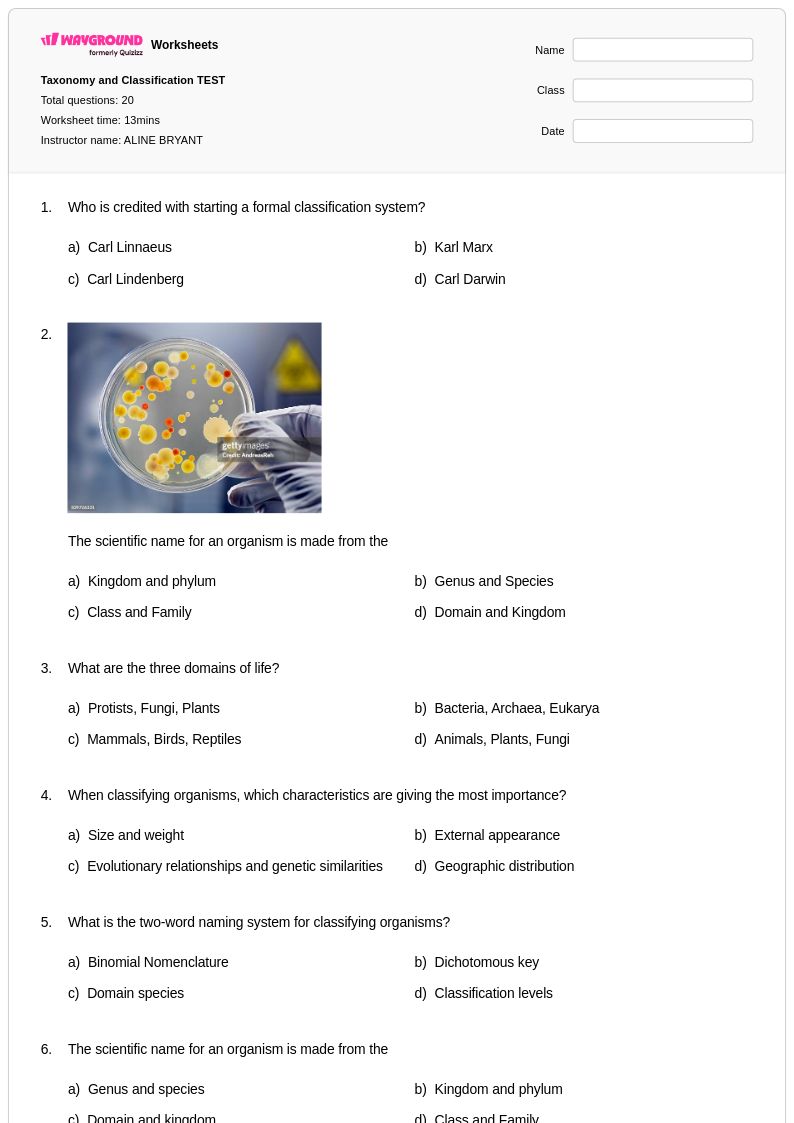
20 Q
6th - Uni
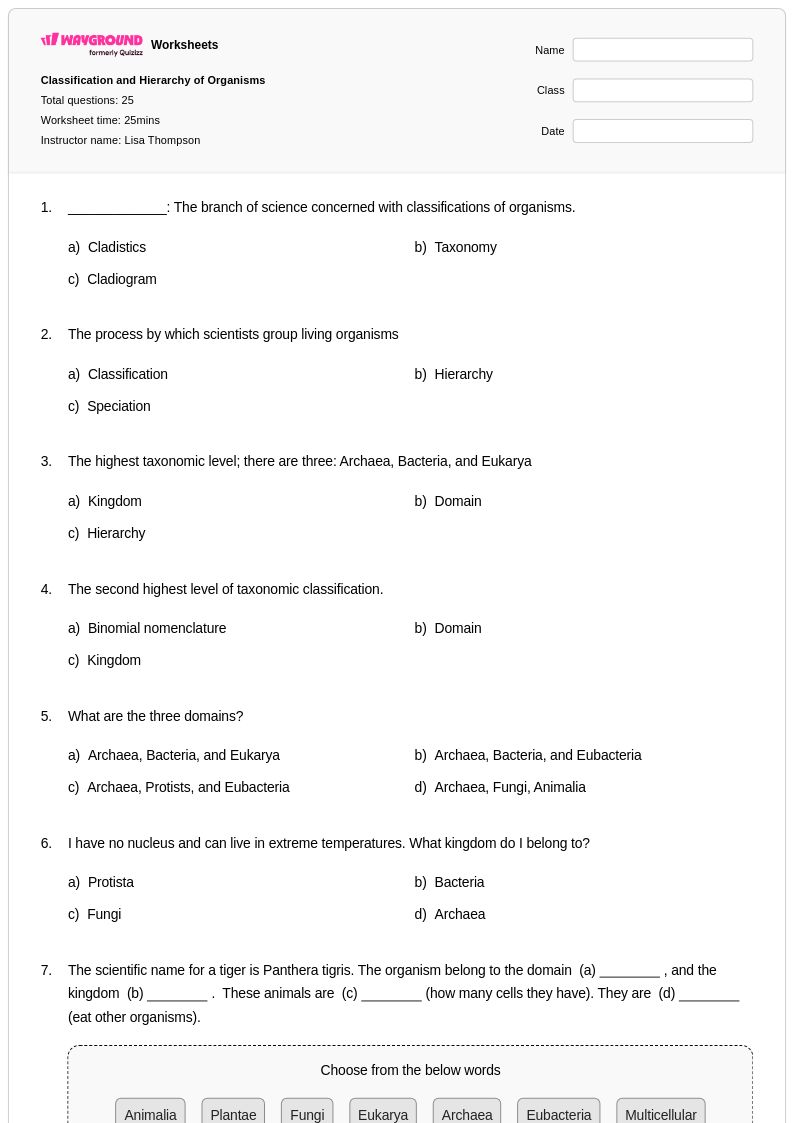
25 Q
7th - Uni
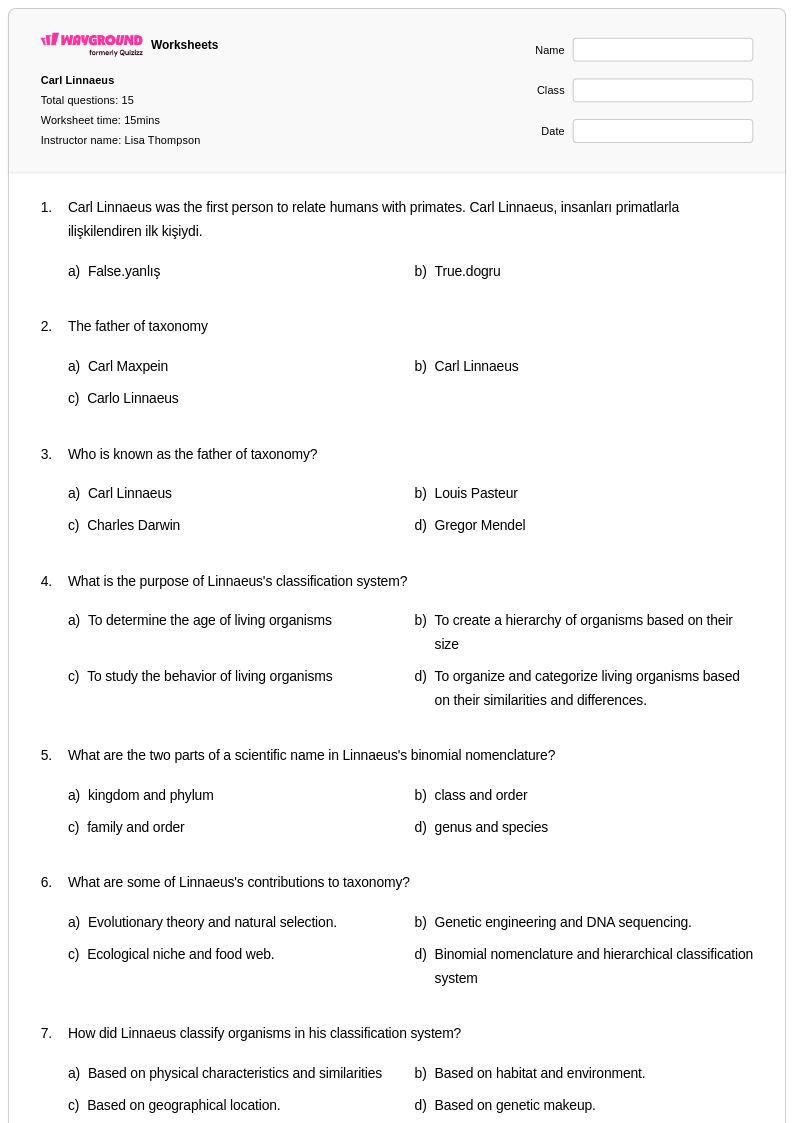
15 Q
7th - Uni
15 Q
7th - Uni
15 Q
7th - Uni
15 Q
7th - Uni
15 Q
8th - Uni
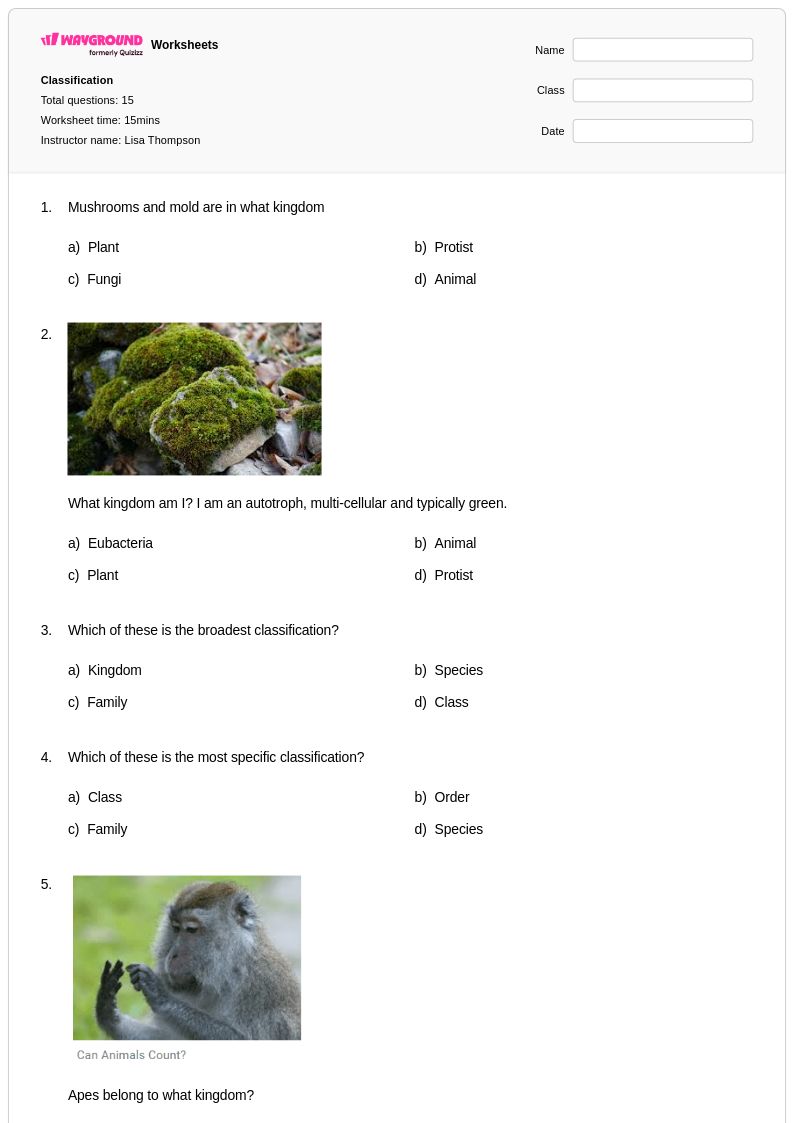
15 Q
7th - Uni
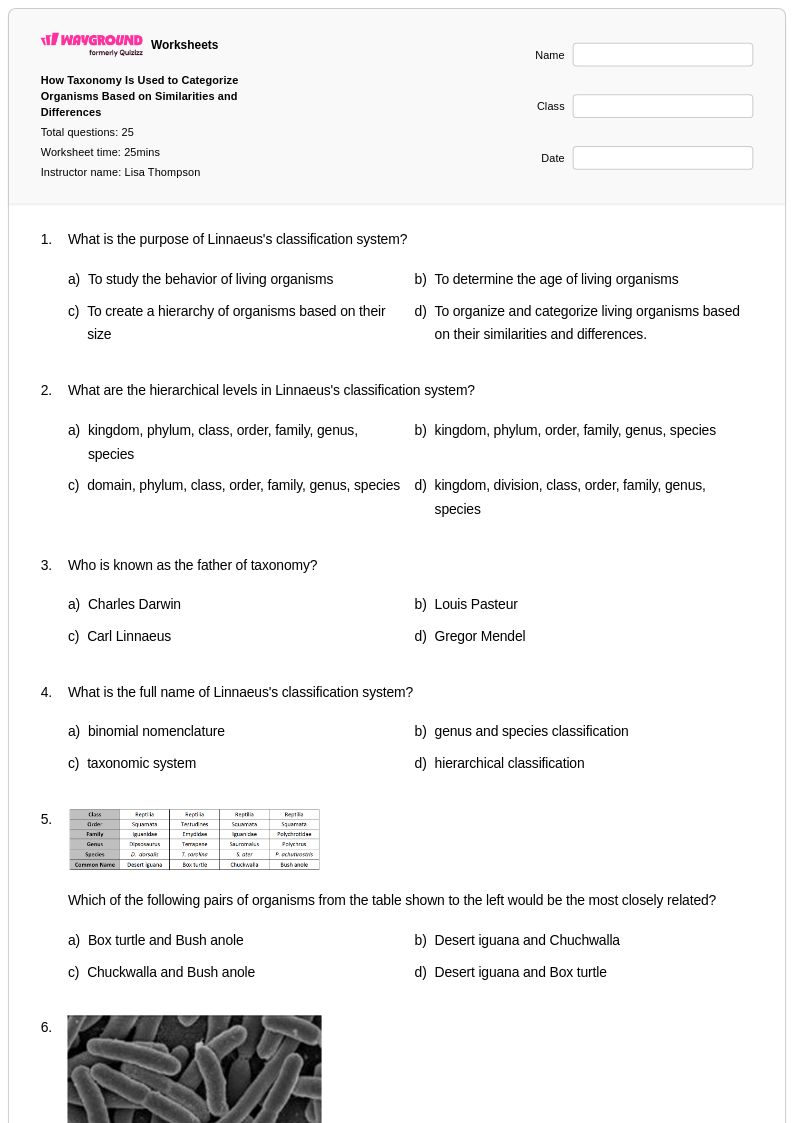
25 Q
7th - Uni
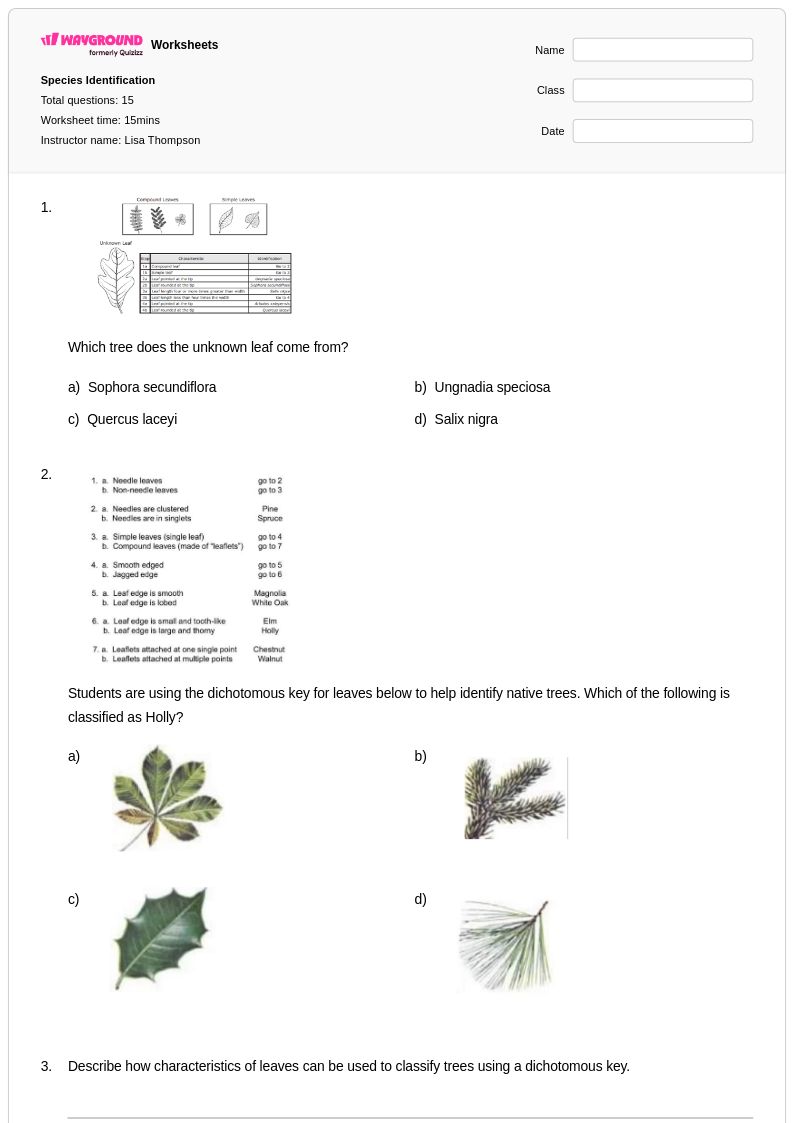
15 Q
7th - Uni
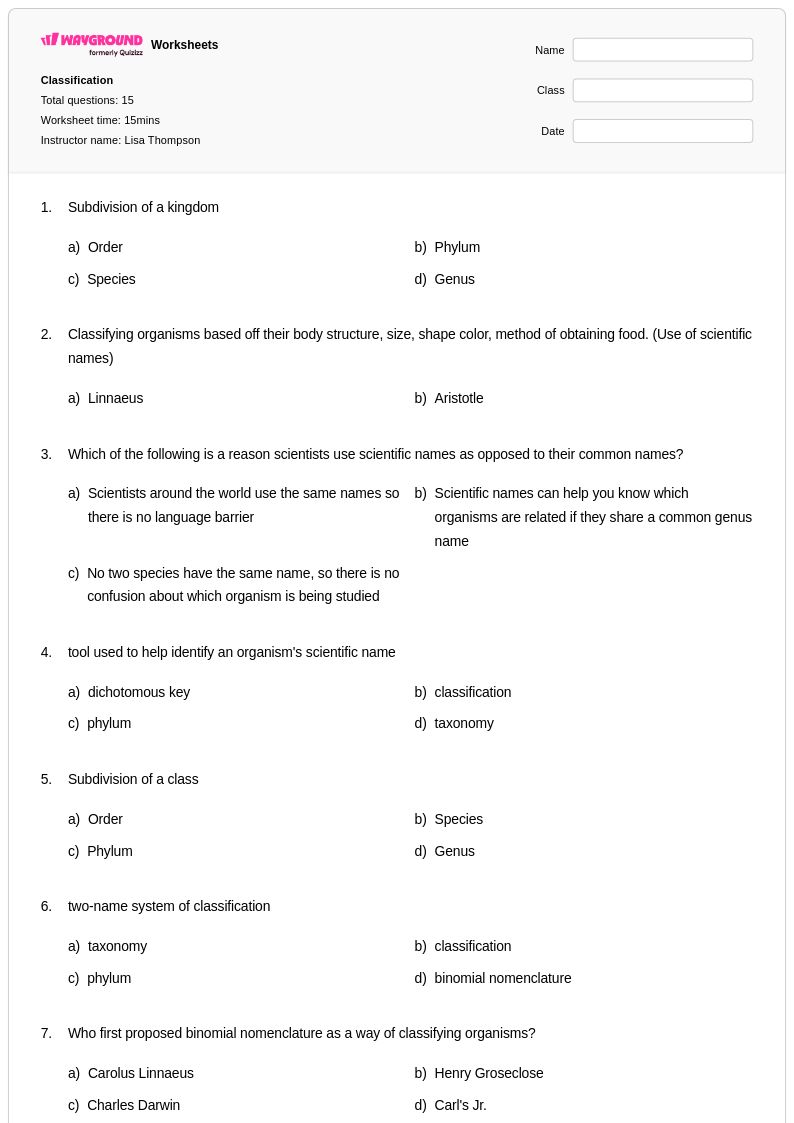
15 Q
7th - Uni
Explore Binomial Nomenclature Worksheets by Grades
Explore Other Subject Worksheets for class 11
Explore printable Binomial Nomenclature worksheets for Class 11
Binomial nomenclature worksheets for Class 11 students available through Wayground provide comprehensive practice with the scientific naming system that forms the foundation of biological classification. These educational resources help students master the two-part Latin naming convention developed by Carl Linnaeus, strengthening their ability to correctly write, interpret, and apply species names in proper format. The worksheets include practice problems that cover genus and species identification, proper capitalization and italicization rules, and the hierarchical relationship between taxonomic categories. Students work through exercises involving real organism examples, learning to distinguish between common names and scientific names while developing proficiency in using binomial nomenclature across different biological contexts. Each worksheet collection includes answer keys and is available as free printables in pdf format, making them accessible for both classroom instruction and independent study.
Wayground supports biology educators with an extensive collection of teacher-created binomial nomenclature resources that streamline lesson planning and enhance student learning outcomes. The platform's millions of educational materials include worksheets that align with state and national science standards, offering robust search and filtering capabilities that allow teachers to quickly locate resources matching their specific curriculum requirements. These differentiation tools enable educators to customize worksheets for varying skill levels within Class 11 classrooms, supporting both remediation for struggling students and enrichment opportunities for advanced learners. Available in both printable and digital formats including downloadable pdfs, these resources provide flexibility for in-person and remote instruction while facilitating targeted skill practice in scientific naming conventions. Teachers can efficiently adapt these materials for formative assessments, homework assignments, or comprehensive review sessions that reinforce proper binomial nomenclature usage across diverse biological specimens and classification scenarios.
FAQs
How do I teach binomial nomenclature to students?
What exercises help students practice binomial nomenclature?
What mistakes do students commonly make when writing scientific names?
How do I differentiate binomial nomenclature instruction for students at different levels?
How can I use Wayground's binomial nomenclature worksheets in my classroom?
Why is binomial nomenclature important for biology students to learn?