Free Printable Muscle Contraction Worksheets for Class 11
Explore Class 11 muscle contraction worksheets and printables from Wayground that help students master the mechanisms of skeletal muscle movement through practice problems, free PDFs, and comprehensive answer keys.
Explore printable Muscle Contraction worksheets for Class 11
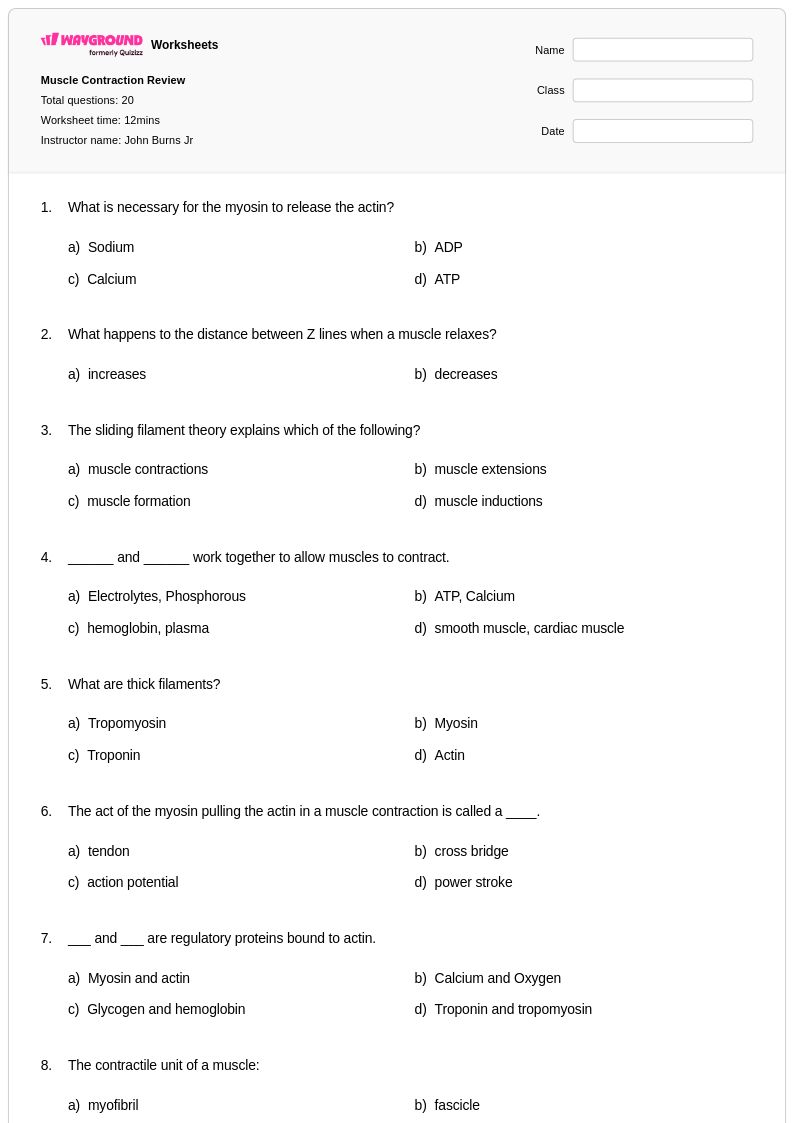
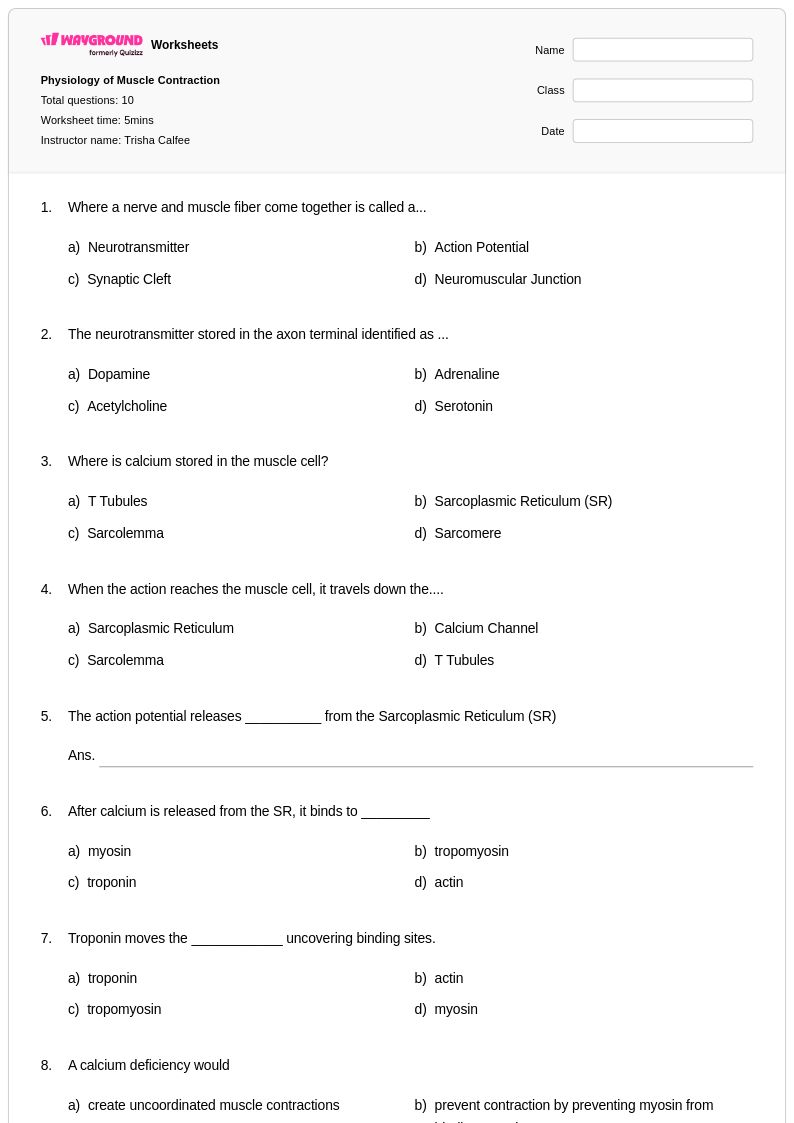
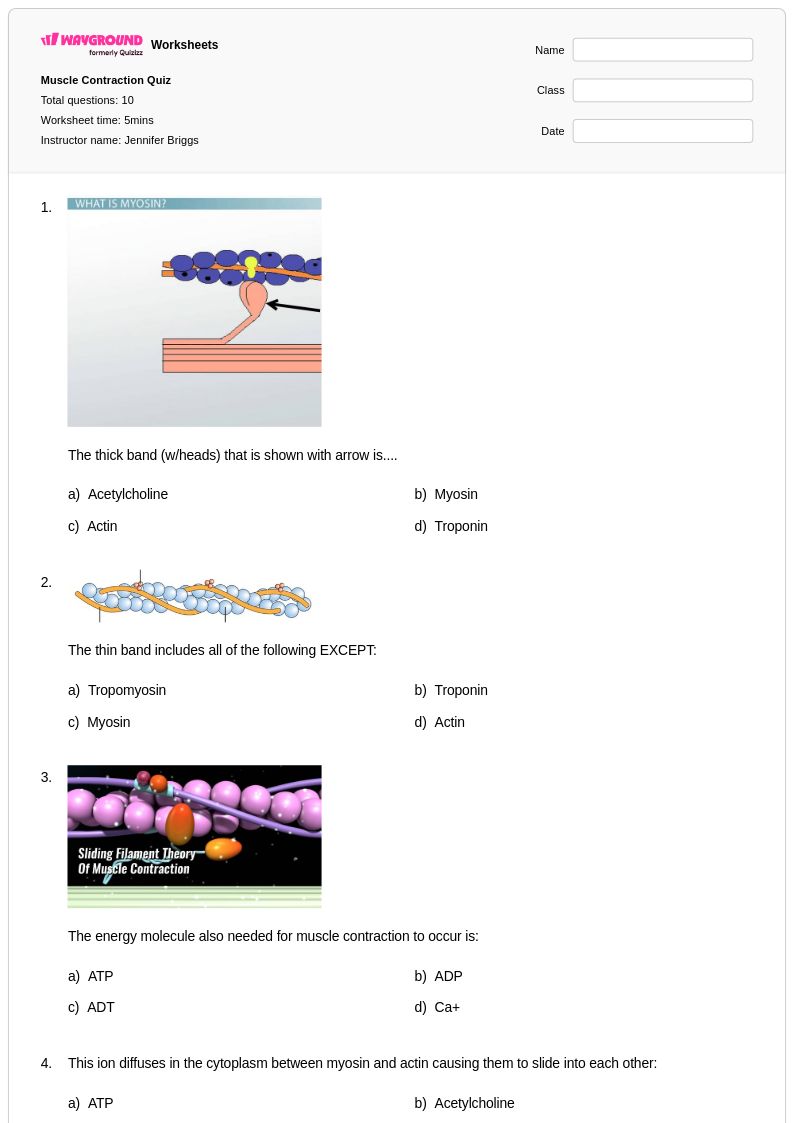
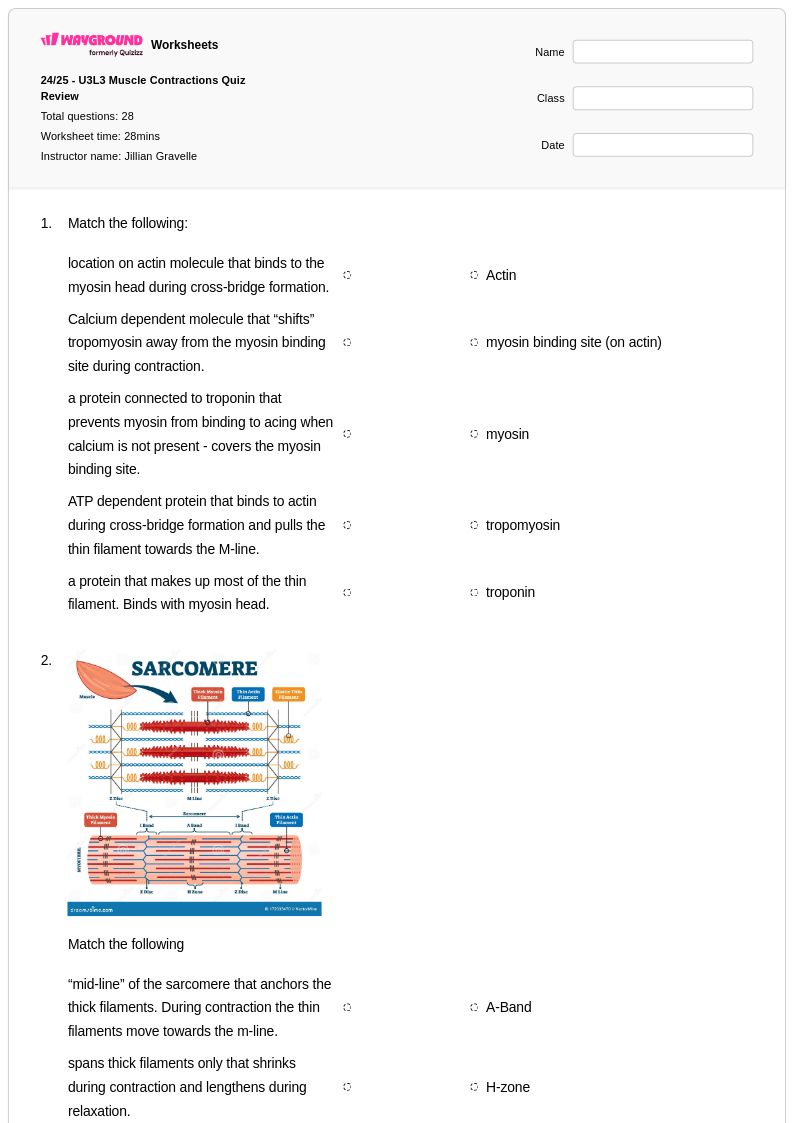
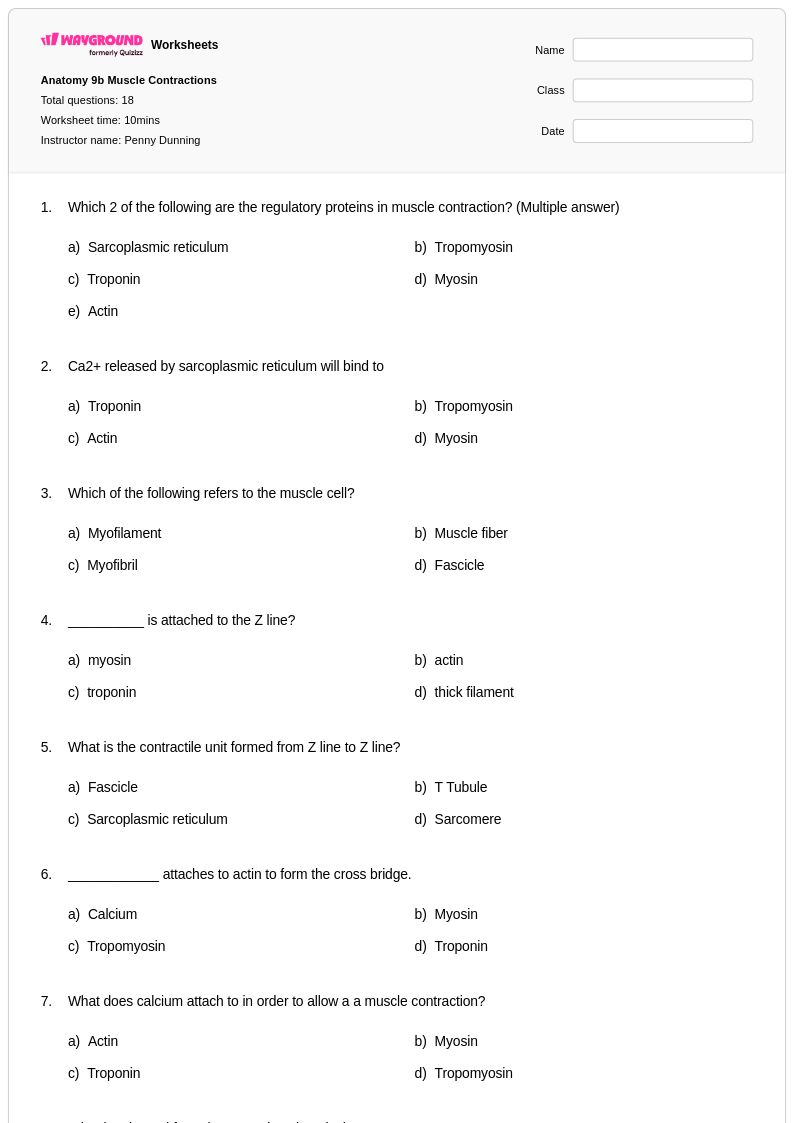
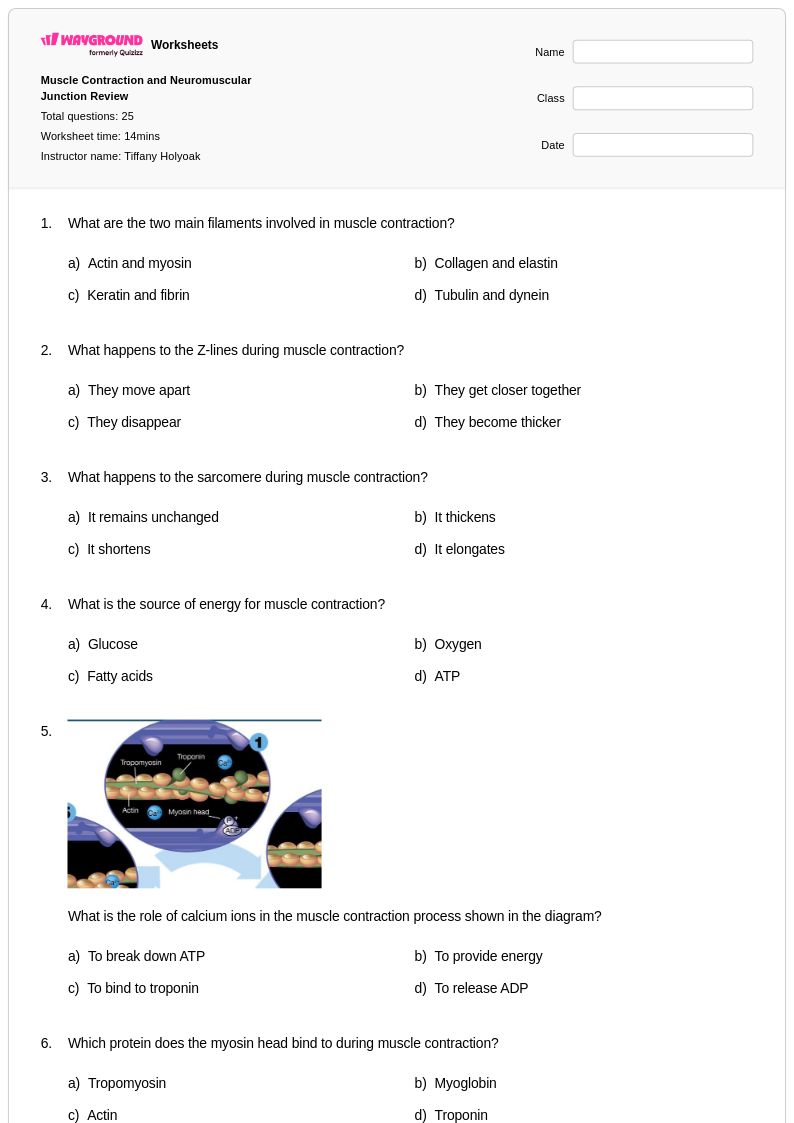
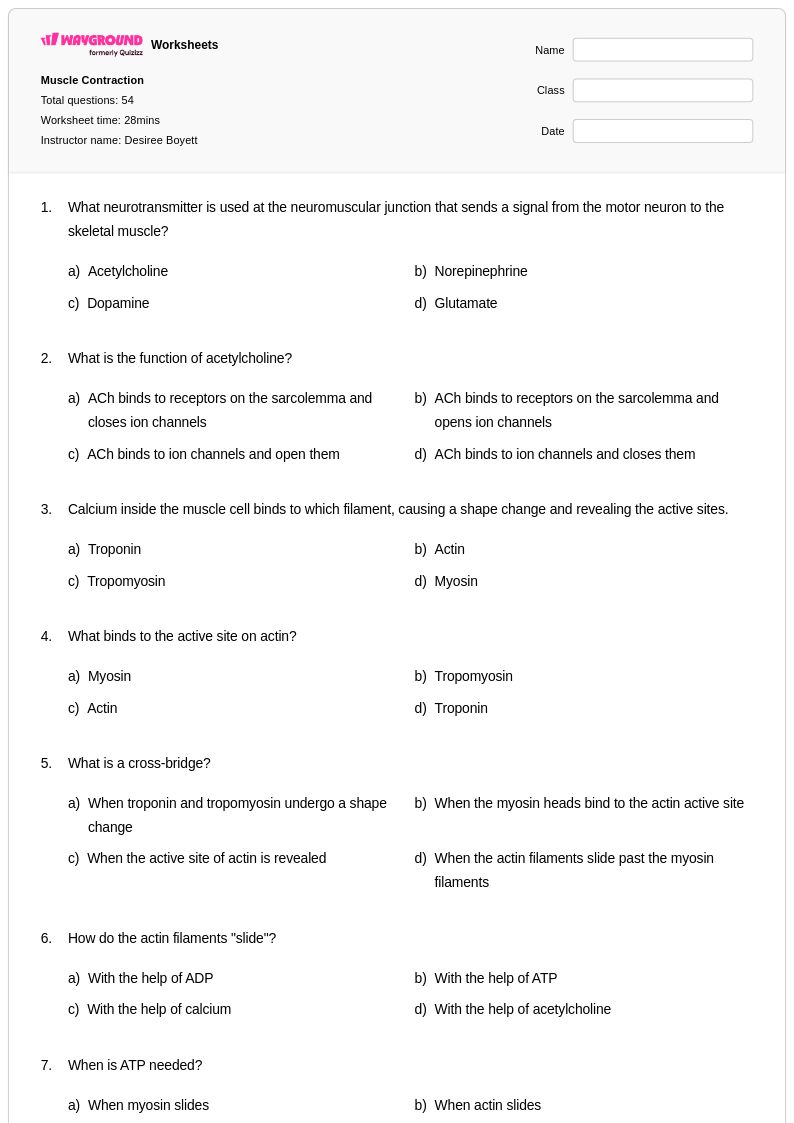
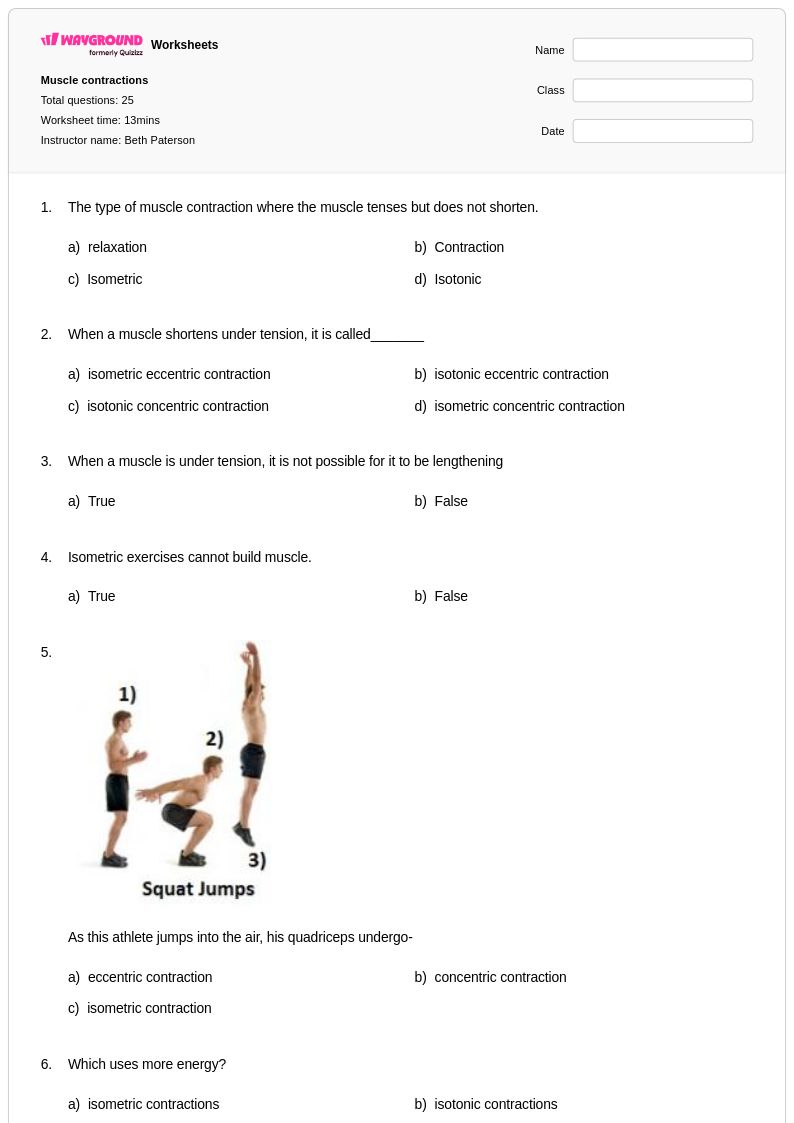
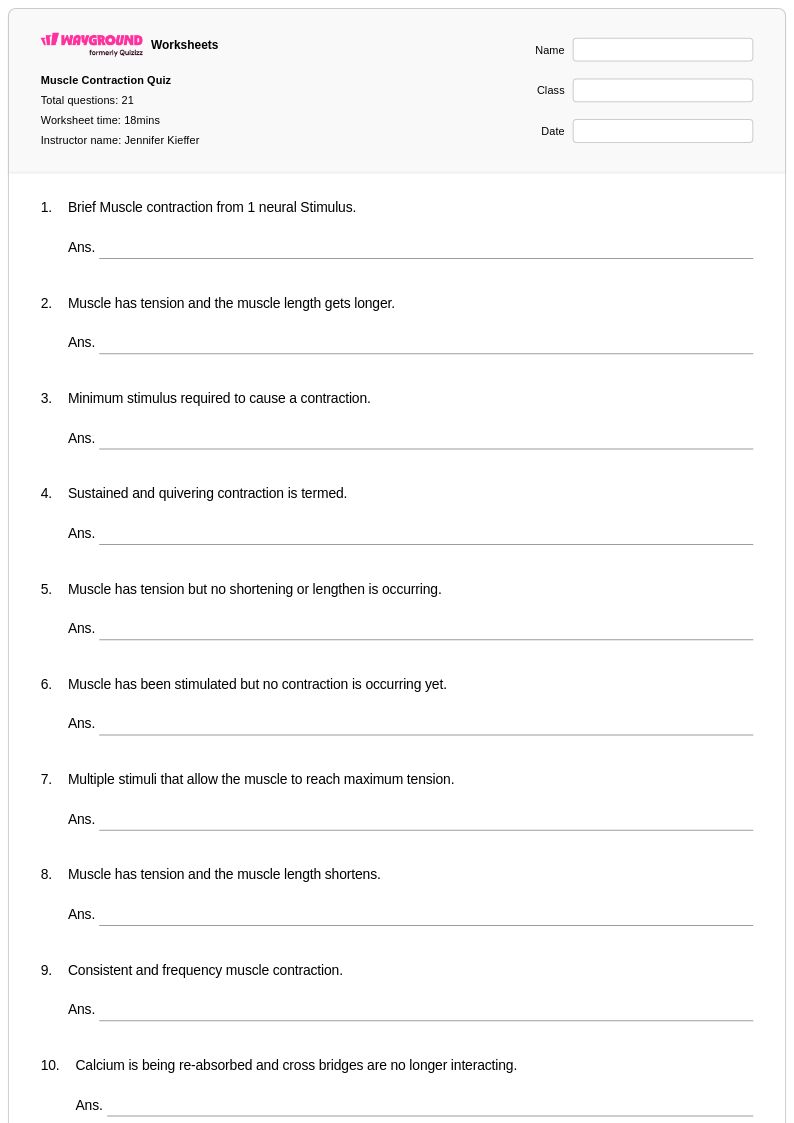
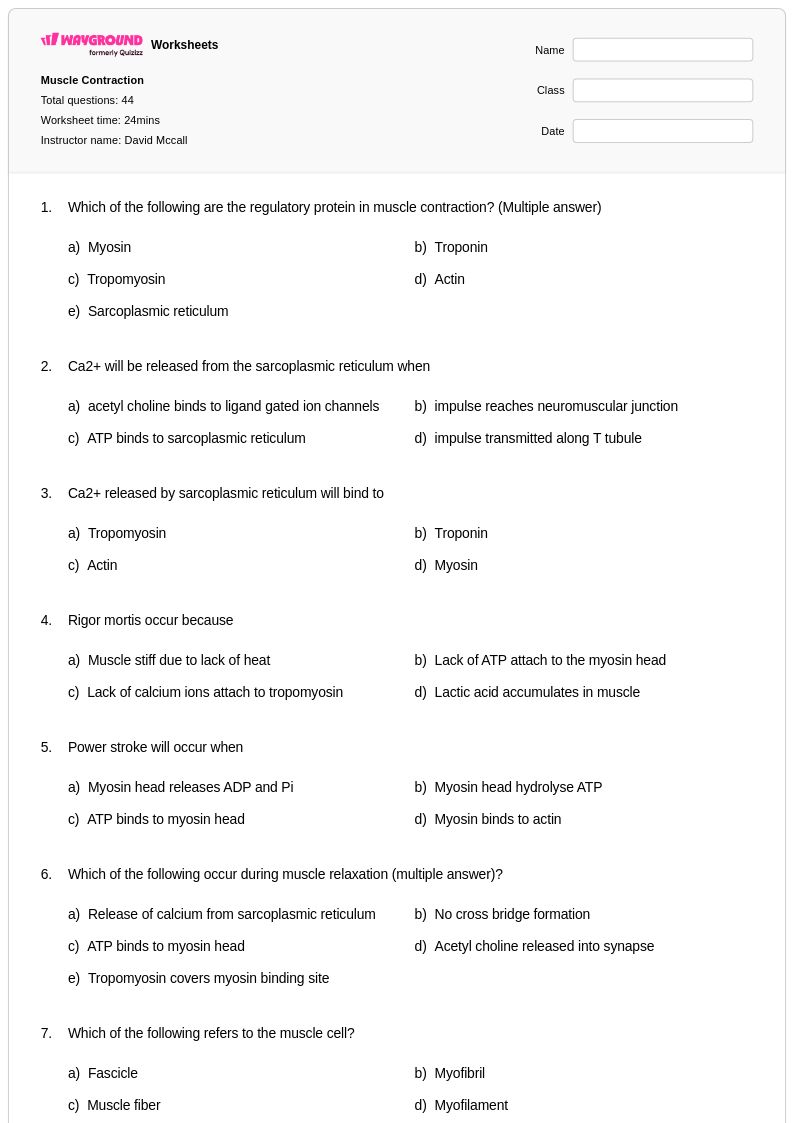
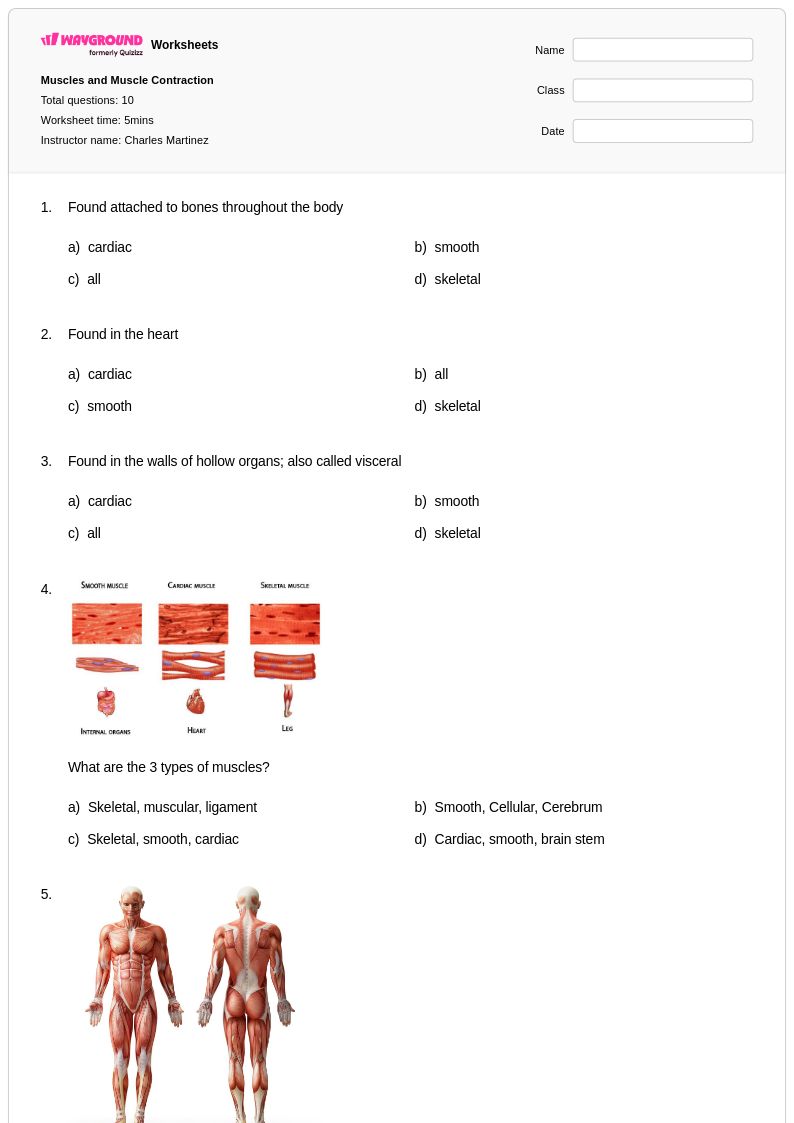
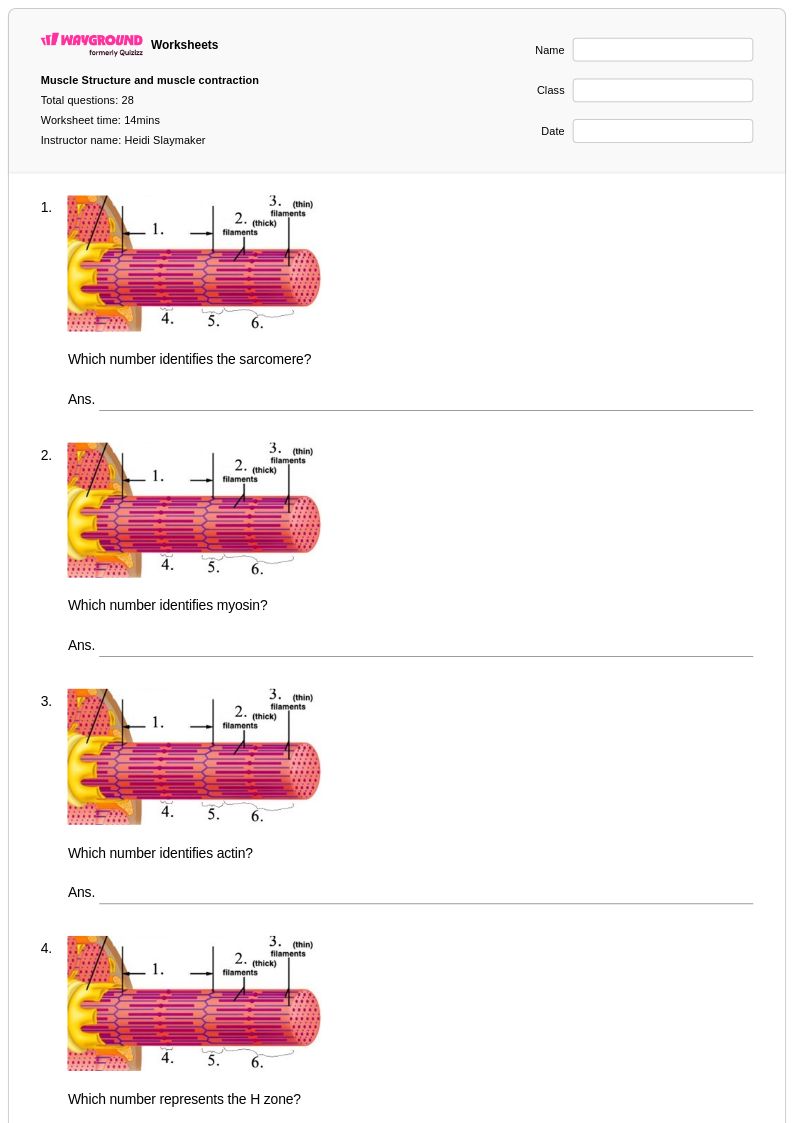
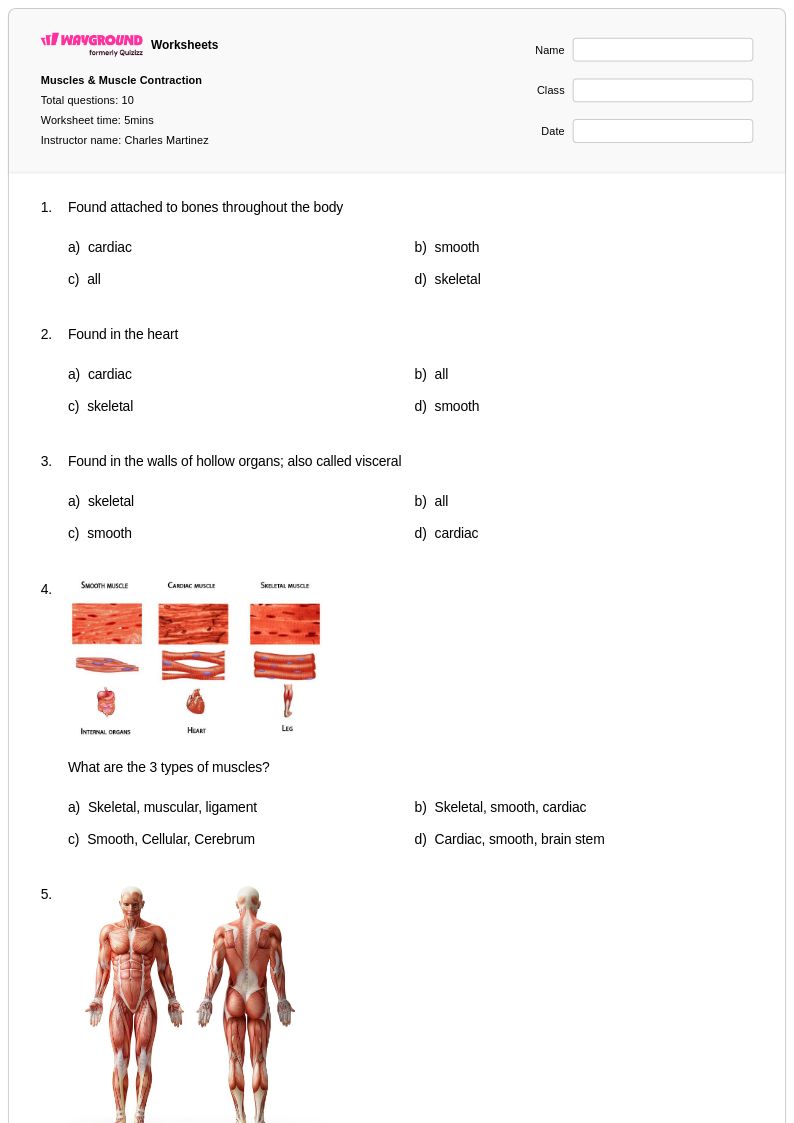
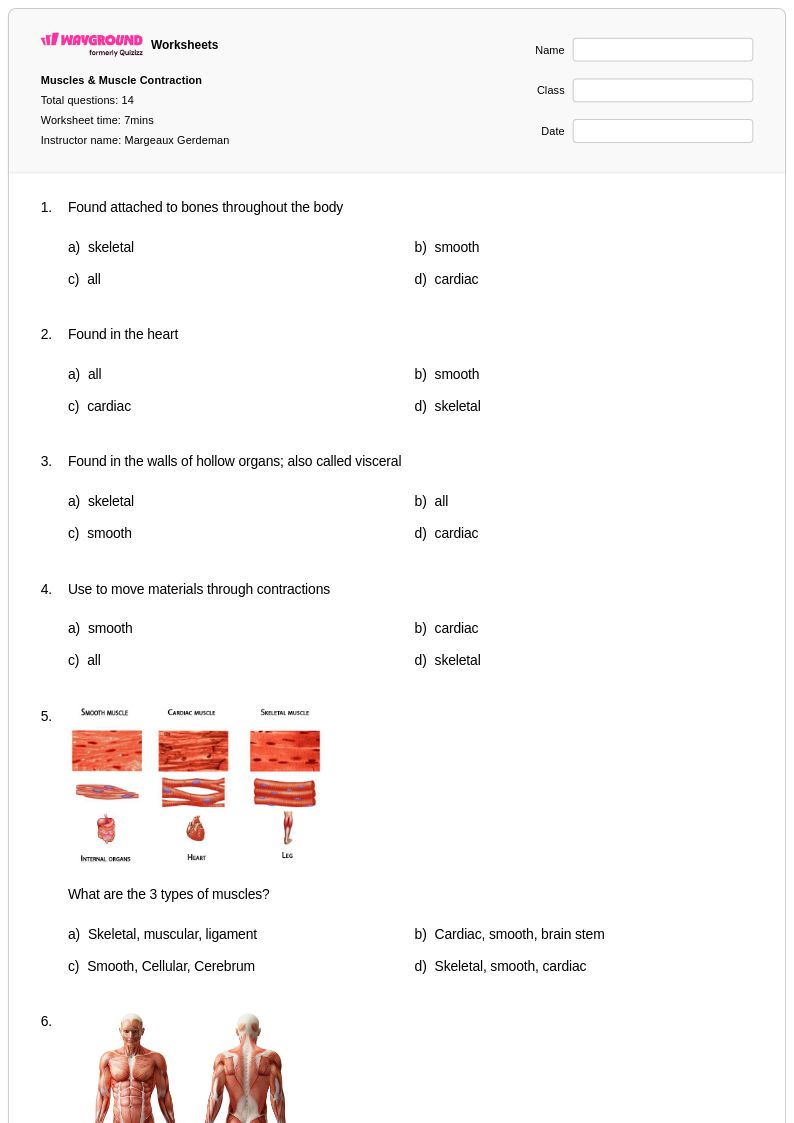
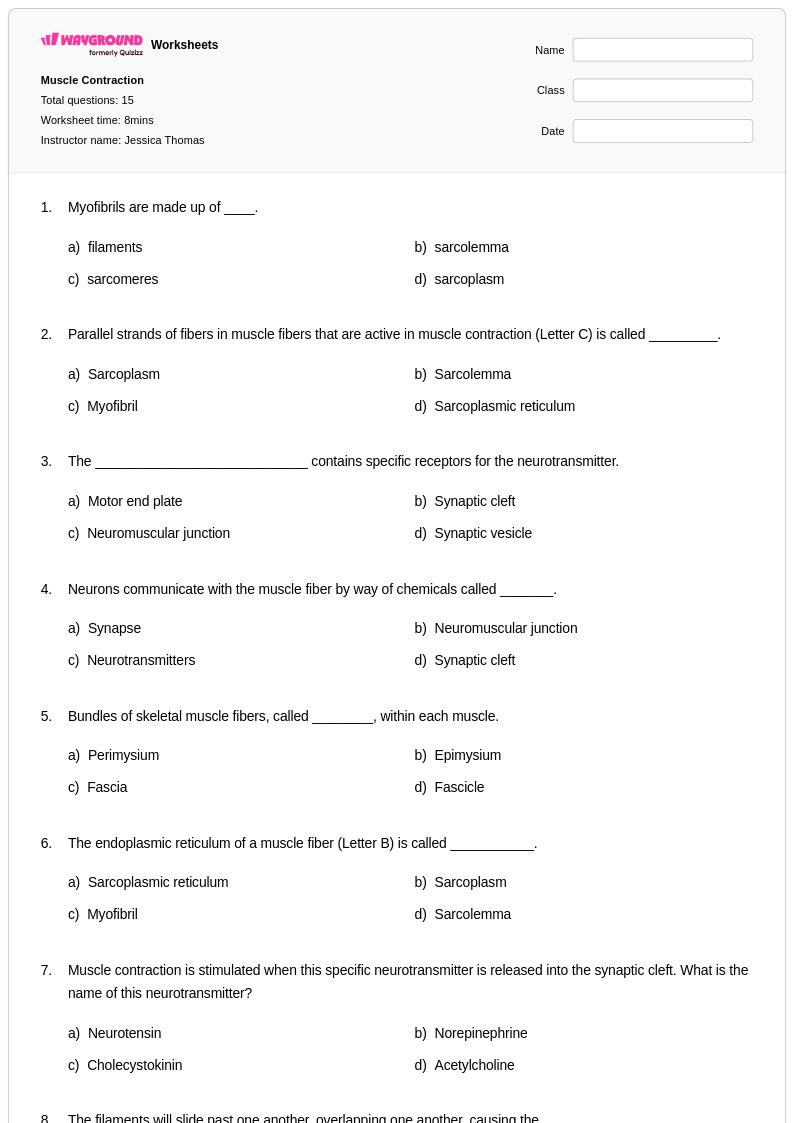
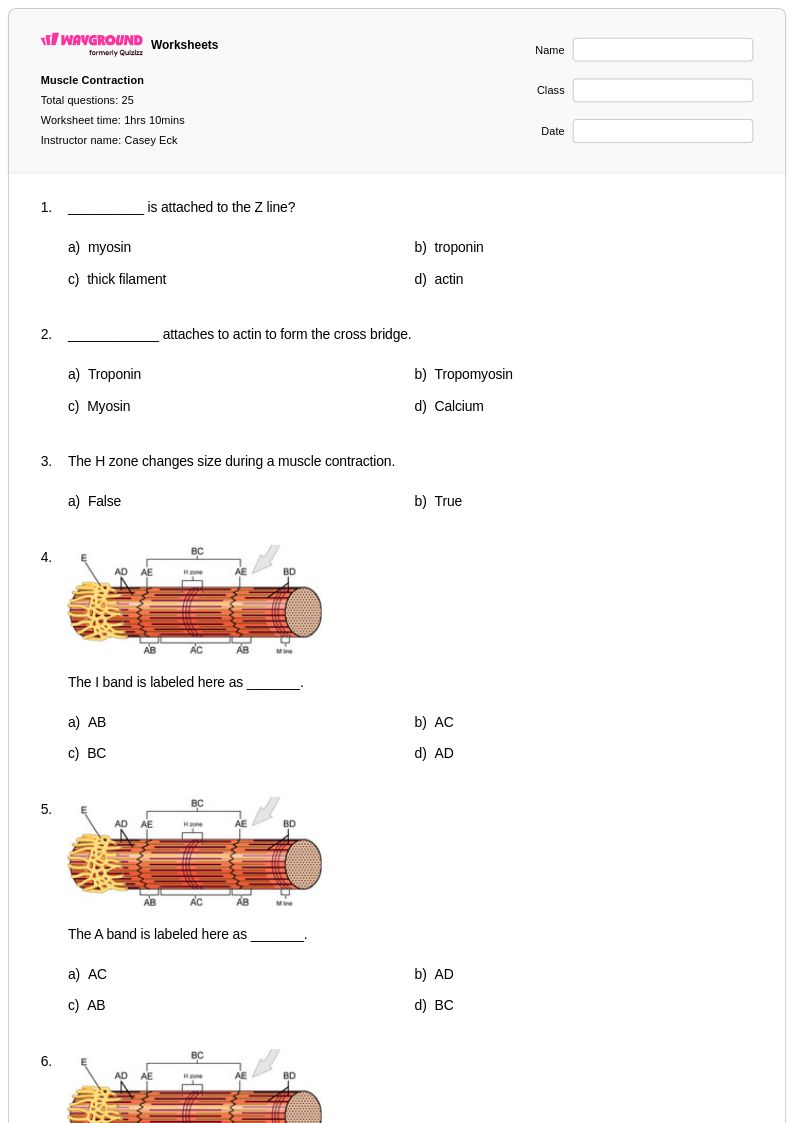
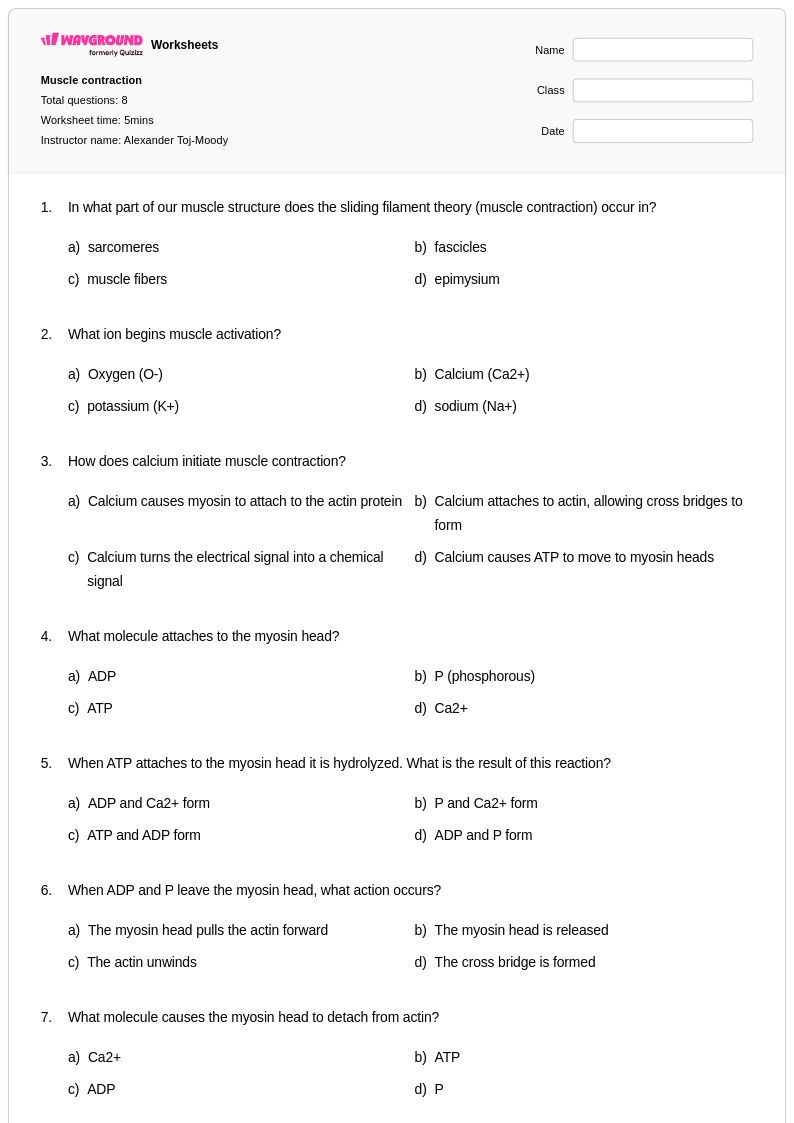
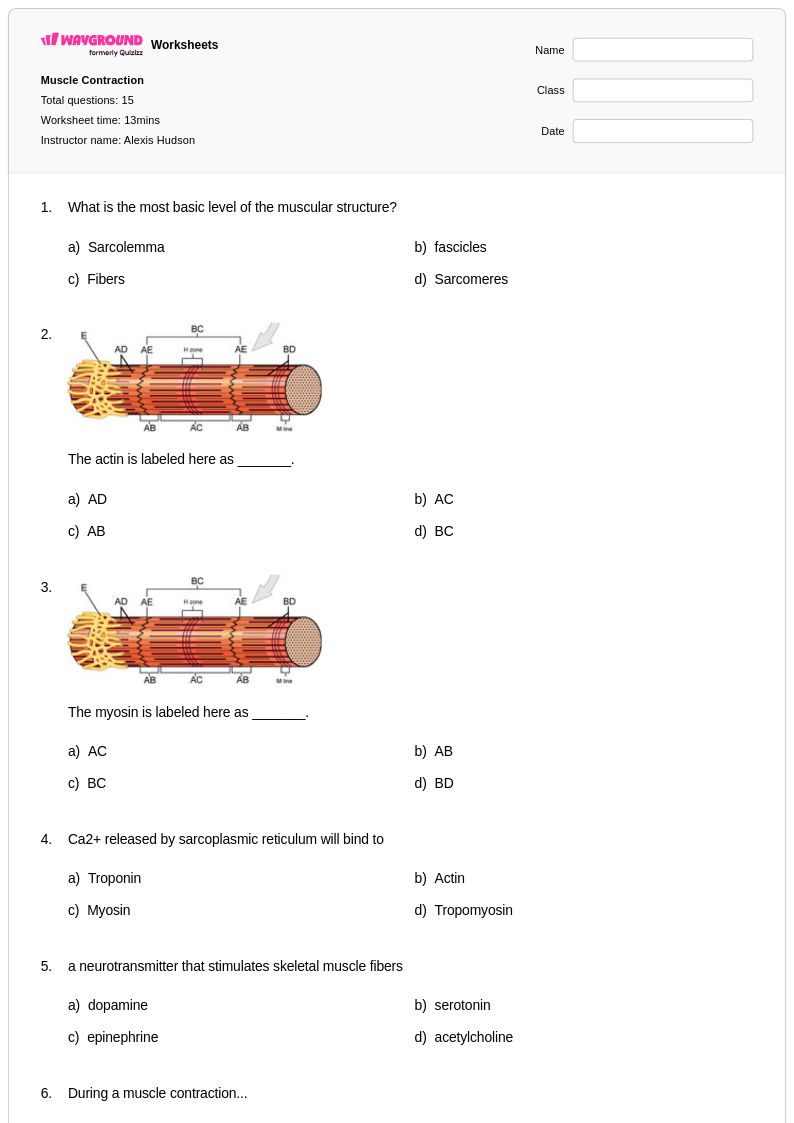
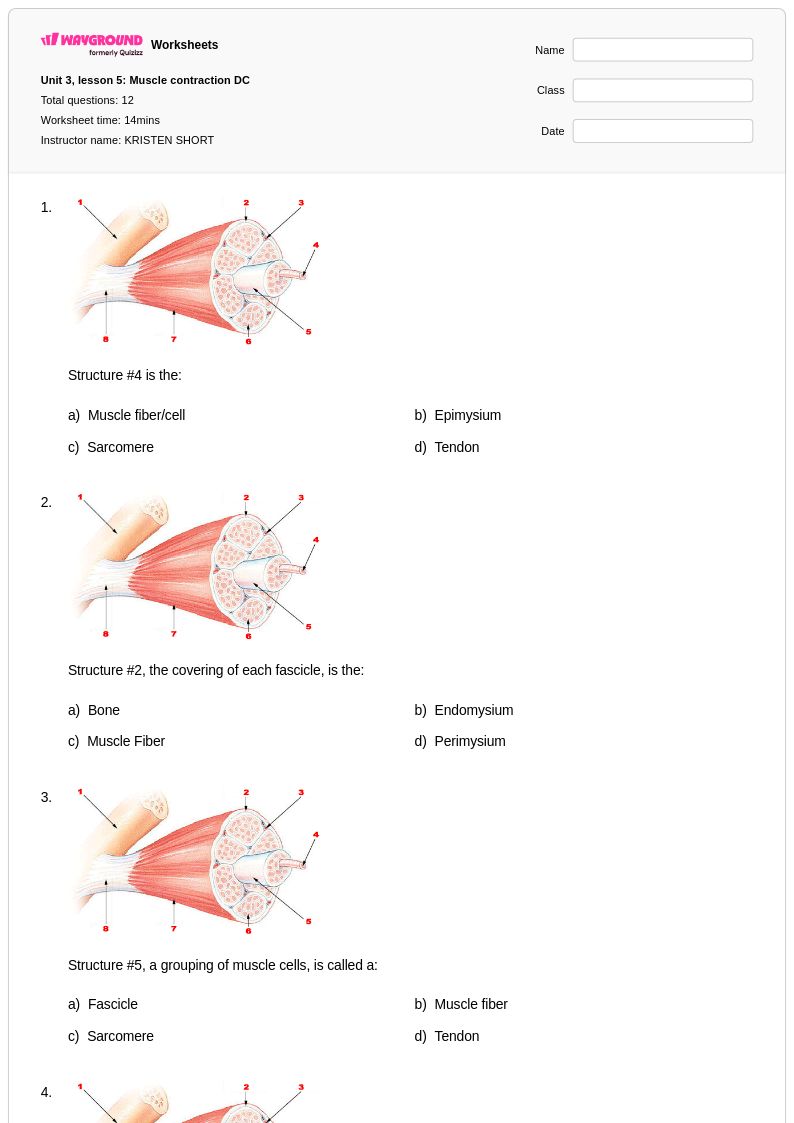
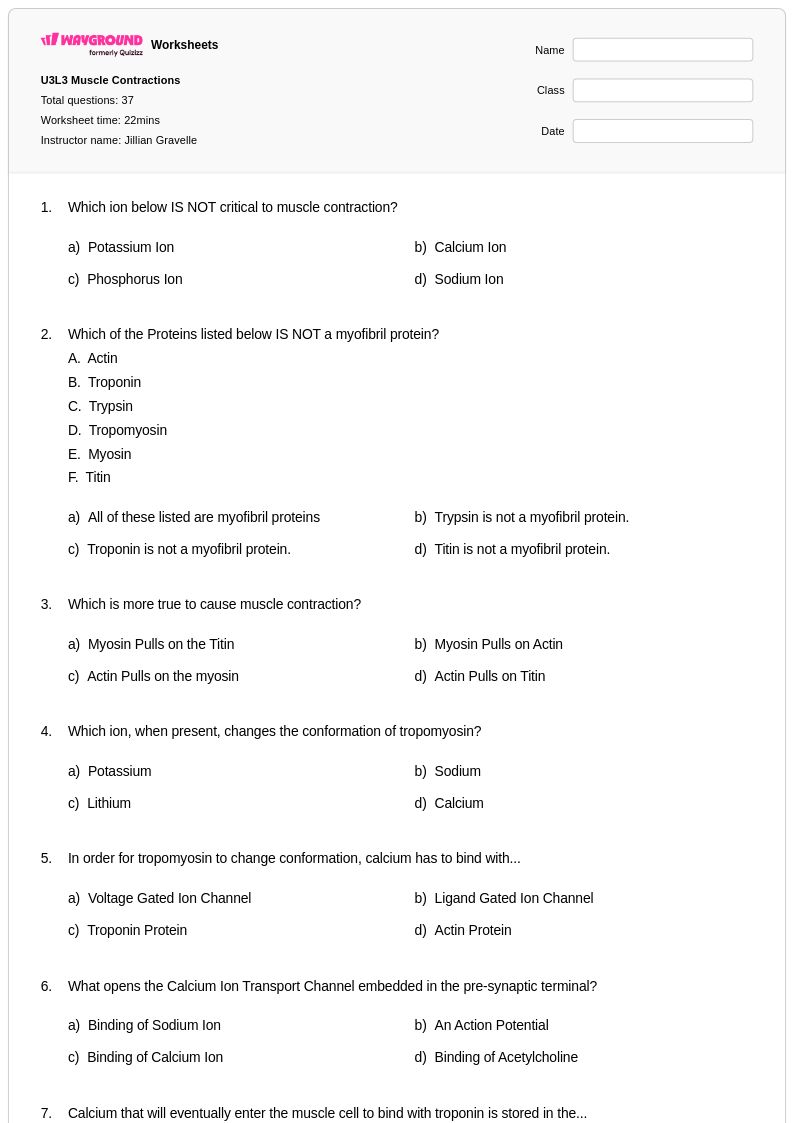
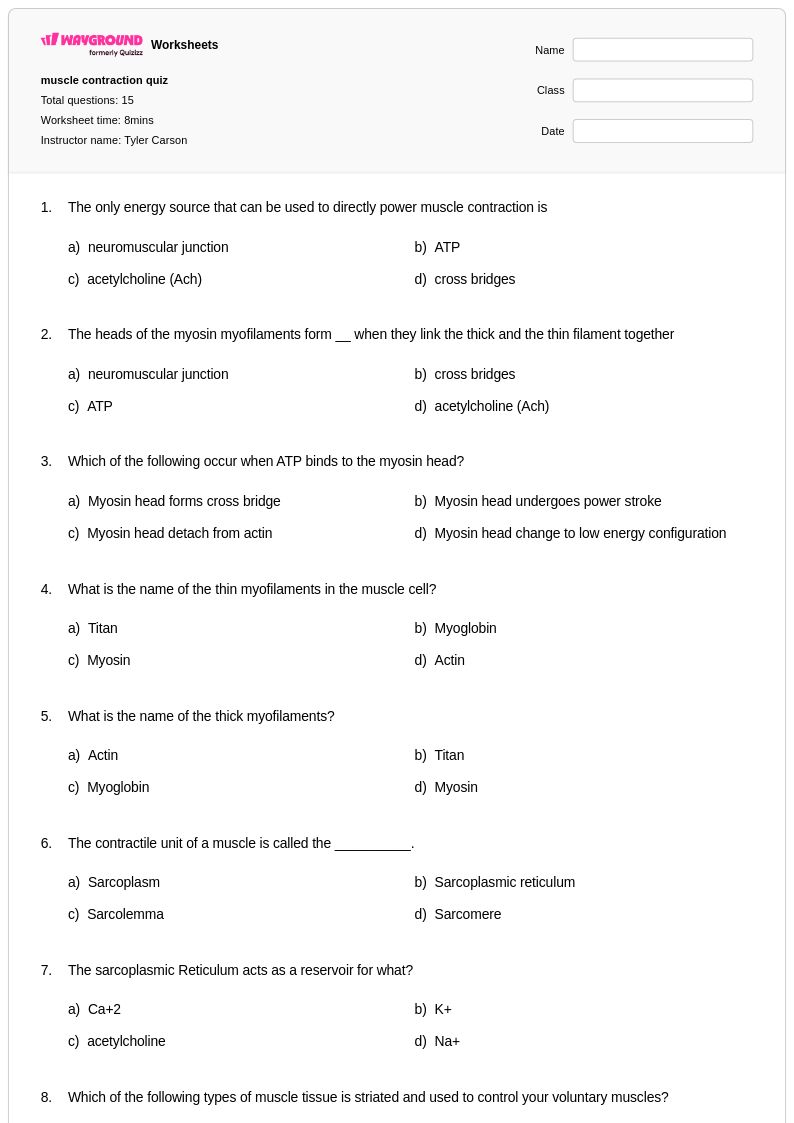
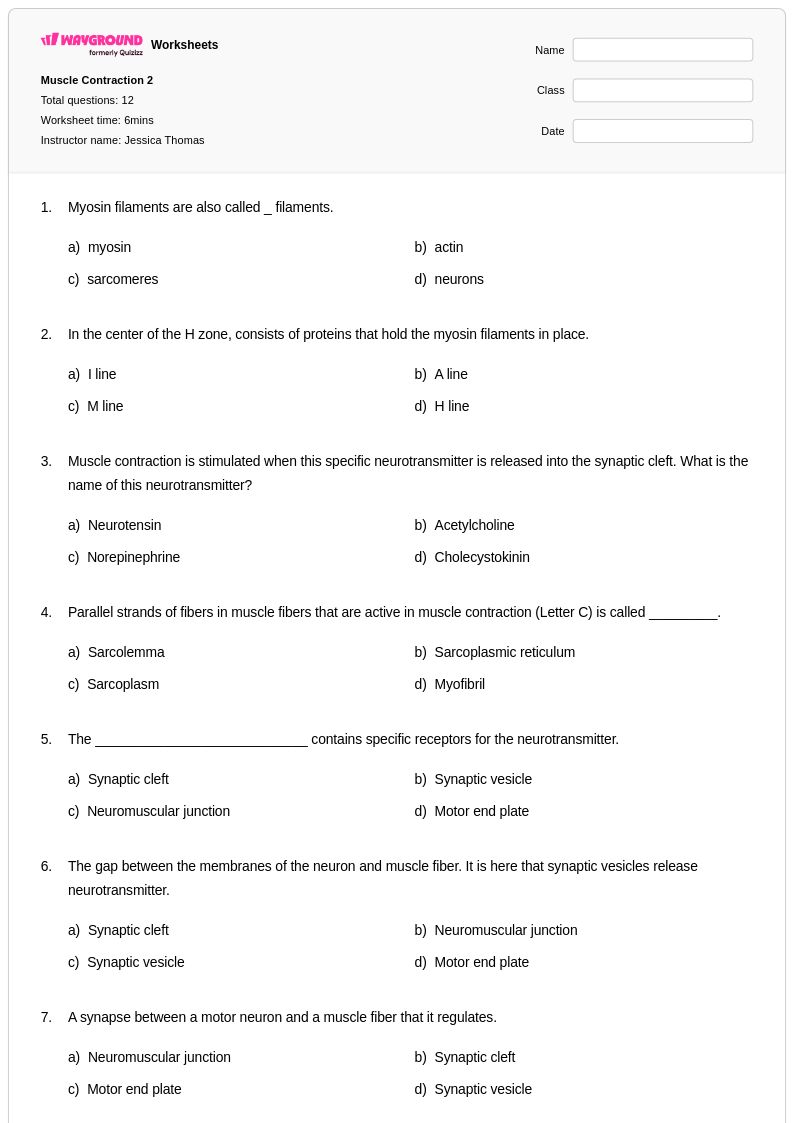
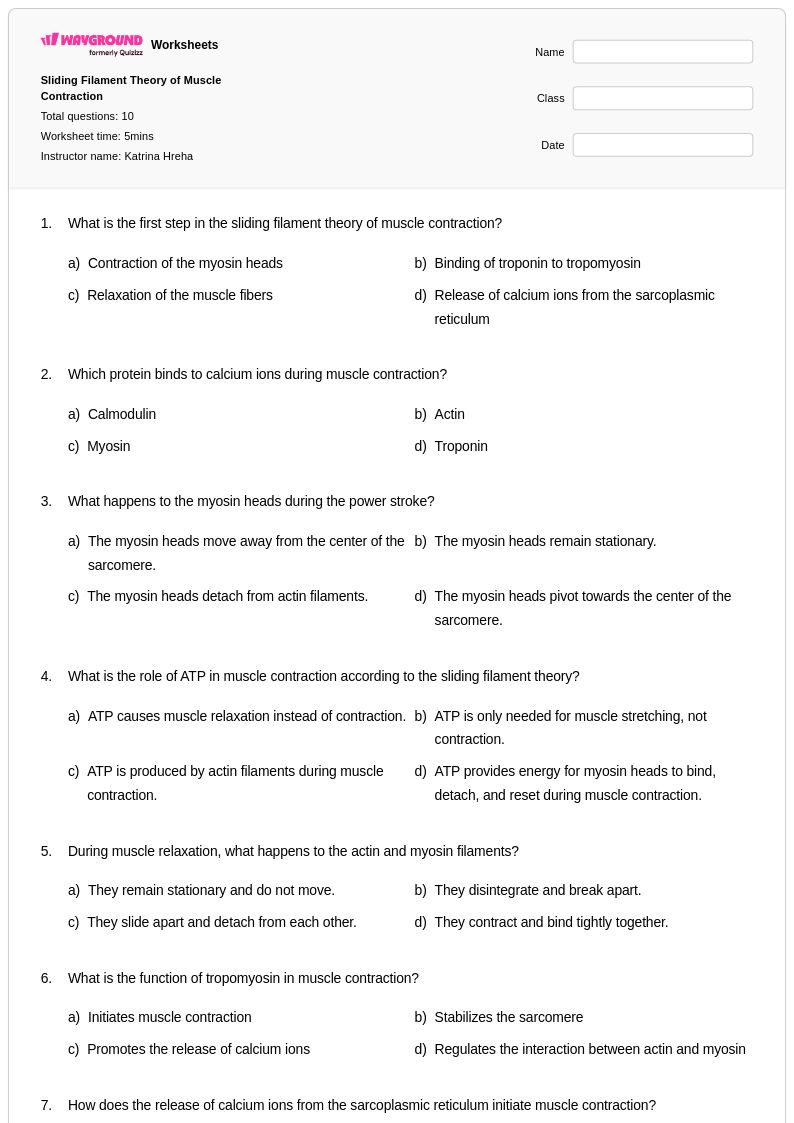
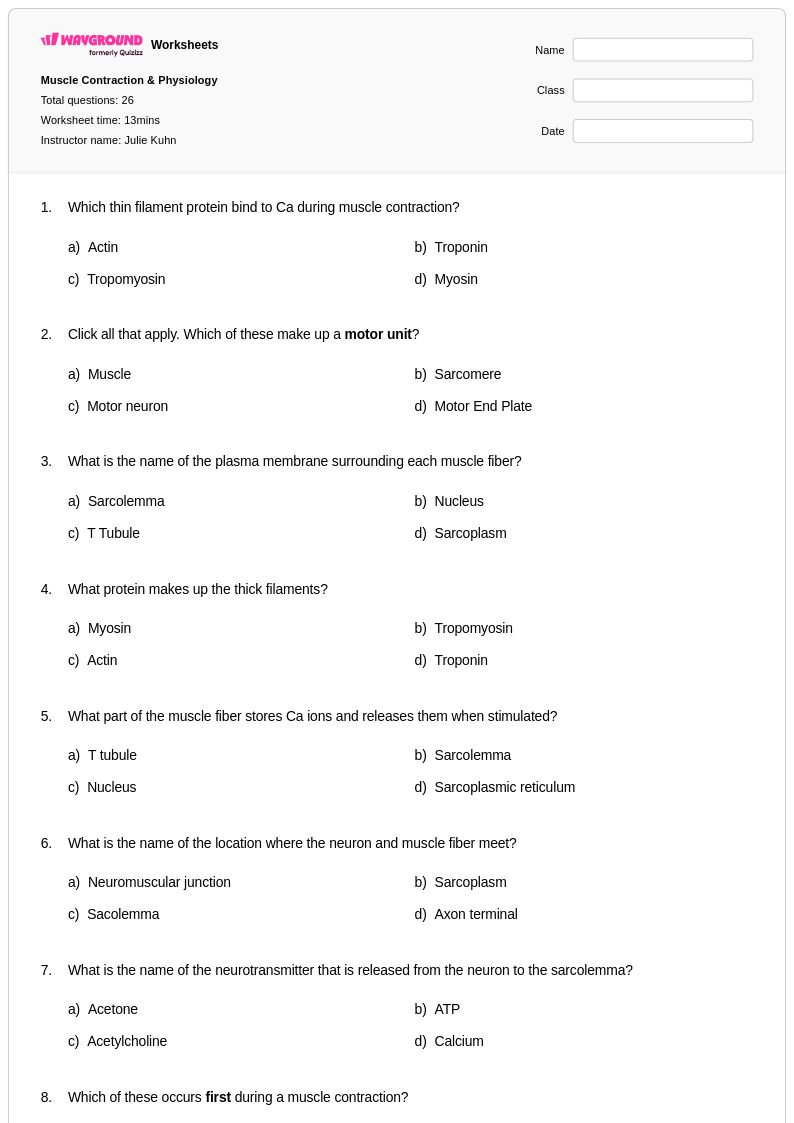
Class 11 muscle contraction worksheets available through Wayground (formerly Quizizz) provide comprehensive coverage of the complex molecular mechanisms underlying skeletal, cardiac, and smooth muscle function. These expertly designed resources strengthen students' understanding of the sliding filament theory, calcium regulation, cross-bridge cycling, and energy requirements for muscle contraction and relaxation. Students engage with detailed practice problems that explore actin-myosin interactions, the role of troponin and tropomyosin in contraction regulation, and the differences between muscle fiber types. Each worksheet includes a comprehensive answer key to support independent learning, and the materials are available as free printables in convenient pdf format, making them accessible for both classroom instruction and home study.
Wayground (formerly Quizizz) empowers educators with millions of teacher-created resources specifically focused on advanced biology concepts like muscle contraction, supported by robust search and filtering capabilities that align with state and national science standards. Teachers can efficiently locate materials that match their specific curriculum requirements and differentiate instruction through flexible customization options that accommodate diverse learning needs and ability levels. The platform's dual format availability allows seamless integration of both printable worksheets and digital resources, enabling educators to design comprehensive lesson plans that support remediation for struggling students while providing enrichment opportunities for advanced learners. These tools facilitate targeted skill practice in cellular biology and human physiology, helping students master the intricate processes that govern muscle function at the molecular level.
FAQs
How do I teach muscle contraction to high school biology students?
Start by grounding students in the structural relationship between actin and myosin filaments before introducing the sliding filament theory as a dynamic process. Walking students through the sequence of events — from motor neuron stimulation to calcium ion release and cross-bridge cycling — helps build a mechanistic understanding rather than isolated vocabulary. Using diagrams that students label and annotate at each stage is especially effective for making the molecular choreography visible and memorable.
What exercises help students practice the sliding filament theory?
Diagramming exercises that require students to draw and label the positions of actin, myosin, and troponin-tropomyosin complexes at each stage of contraction are highly effective for reinforcing the sliding filament theory. Practice problems involving excitation-contraction coupling — where students trace the signal from an action potential through calcium release to cross-bridge formation — push beyond recall into genuine mechanistic reasoning. Interpreting experimental data on muscle physiology, such as force-velocity graphs or fatigue curves, adds an analytical layer that prepares students for AP Biology and college-level coursework.
What mistakes do students commonly make when learning about muscle contraction?
One of the most frequent misconceptions is that myosin filaments shorten during contraction — students often miss that it is the sarcomere that shortens because the filaments slide past each other, not compress. Students also commonly confuse the roles of calcium ions and ATP, either omitting calcium's role in exposing actin binding sites or misattributing ATP's function to initiating the power stroke rather than detaching the myosin head. A third common error is conflating the three muscle types, leading students to incorrectly apply cardiac or smooth muscle mechanisms to skeletal muscle contraction questions.
How can I differentiate muscle contraction instruction for students at different readiness levels?
For students who need additional support, reducing the complexity of diagrams — such as providing partially completed sarcomere labels — lowers cognitive load while keeping the core concept intact. More advanced students can be challenged with data interpretation tasks involving twitch summation, tetanus, or the effect of temperature on contractile force. On Wayground, teachers can apply individual accommodations such as reduced answer choices or read-aloud support to specific students without disrupting the rest of the class, making differentiation manageable within a single assignment.
How do I use Wayground's muscle contraction worksheets in my classroom?
Wayground's muscle contraction worksheets are available as printable PDFs for traditional classroom use and in interactive digital formats for technology-integrated environments, including the option to host them as a live quiz on Wayground. Teachers can use the platform's search and filtering tools to find materials aligned to specific learning standards, then assign them for direct instruction, independent practice, or remediation. Each worksheet includes a detailed answer key, so students can self-check their work and teachers can use results to identify gaps in understanding across the actin-myosin cycle, calcium regulation, or energy systems.
How does muscle contraction differ across skeletal, cardiac, and smooth muscle?
All three muscle types rely on actin-myosin interactions and calcium signaling, but they differ significantly in their control mechanisms and structural organization. Skeletal muscle contraction is voluntary and triggered by somatic motor neurons releasing acetylcholine, while cardiac muscle contracts involuntarily with inherent rhythmicity regulated by the sinoatrial node. Smooth muscle, found in organ walls and blood vessels, contracts more slowly and is controlled by the autonomic nervous system and local chemical signals, making it the most adaptable but least forceful of the three types.