Free Printable Origin of Life Worksheets for Class 11
Explore Wayground's comprehensive collection of Class 11 Origin of Life biology worksheets, featuring free printables and practice problems with answer keys to help students master evolutionary theories and early Earth conditions.
Explore printable Origin of Life worksheets for Class 11
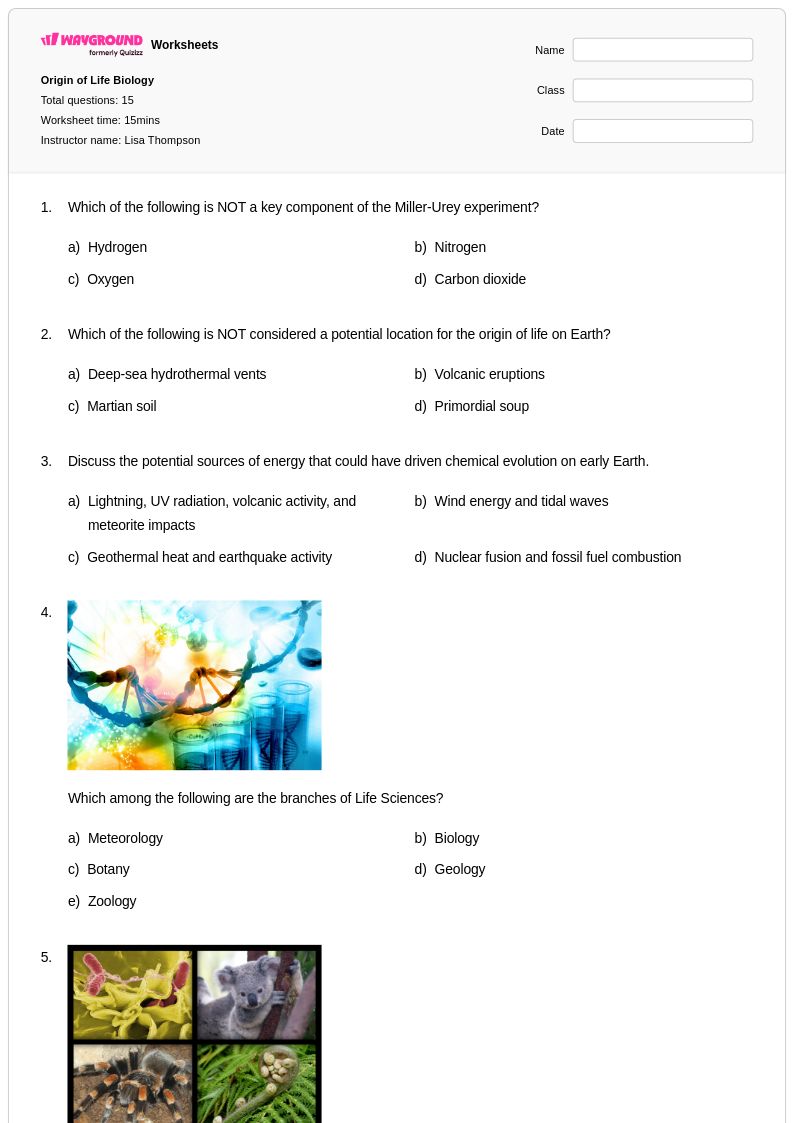
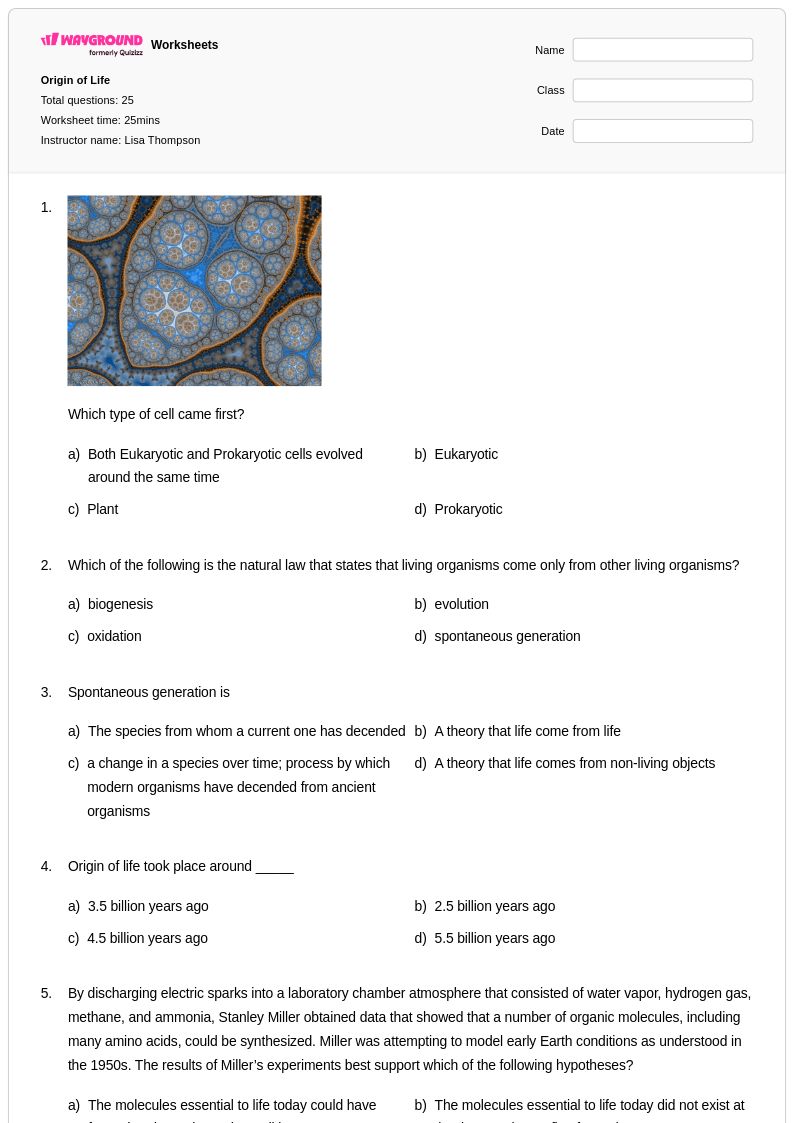
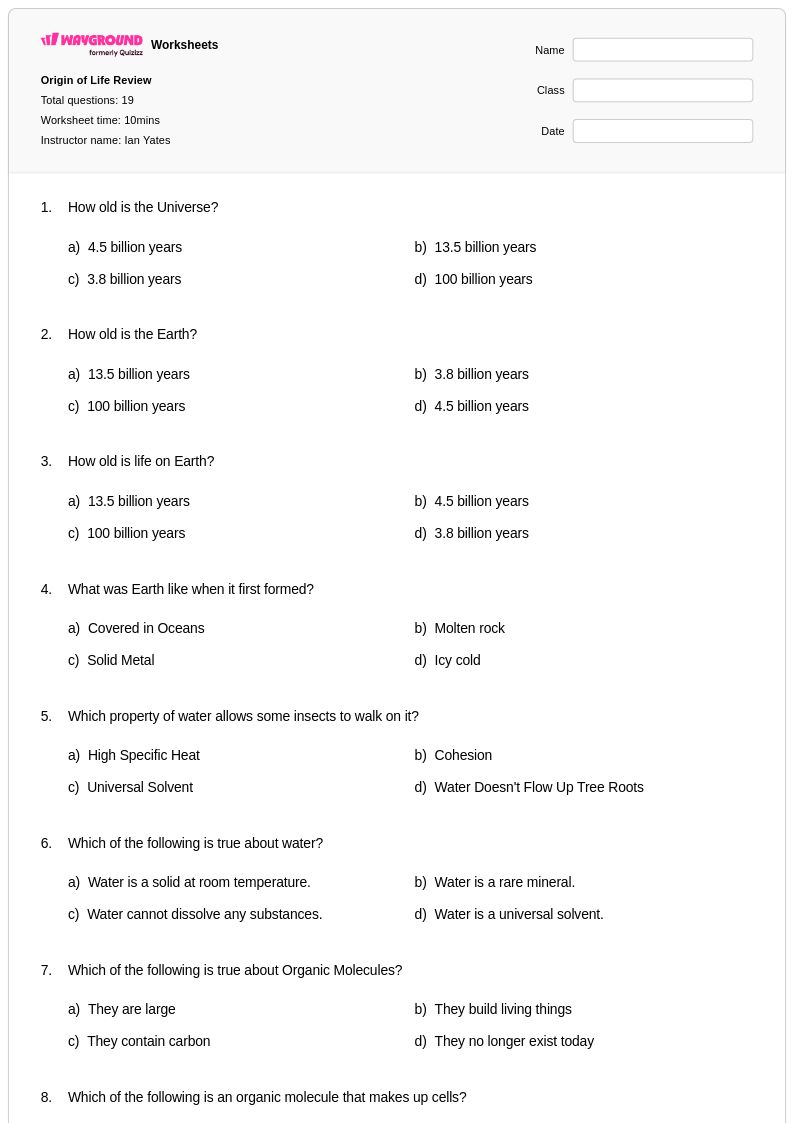
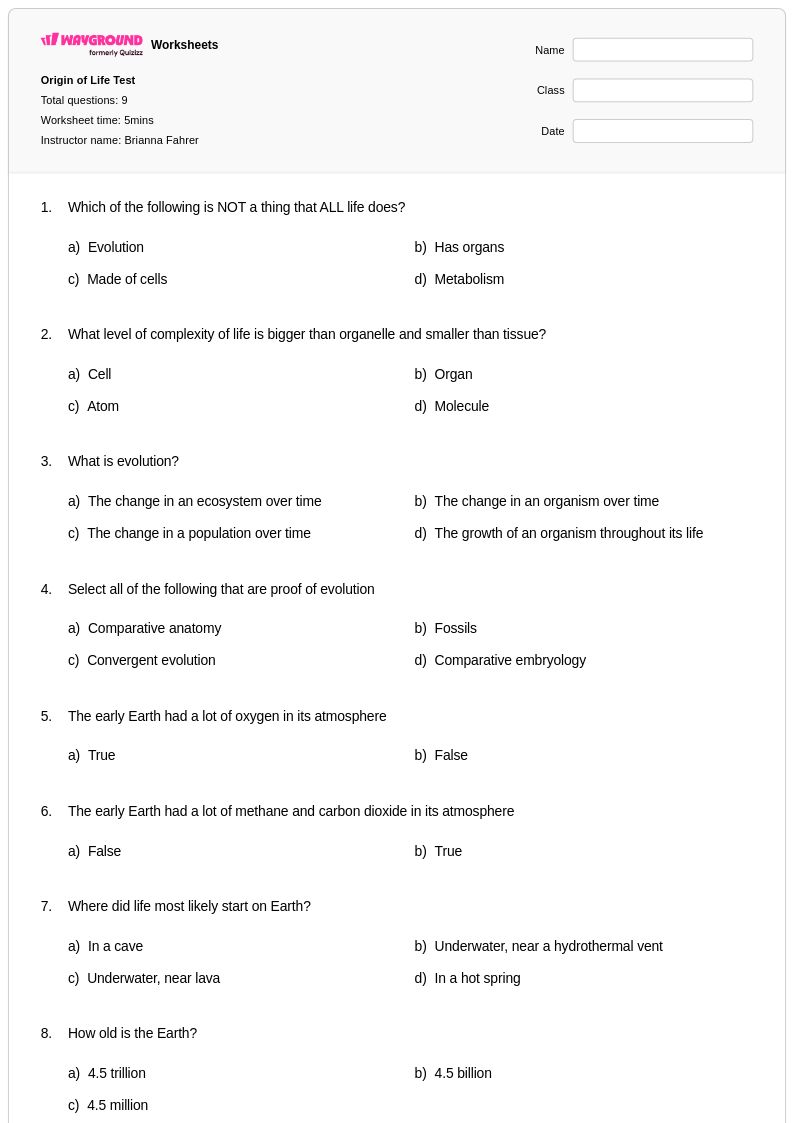
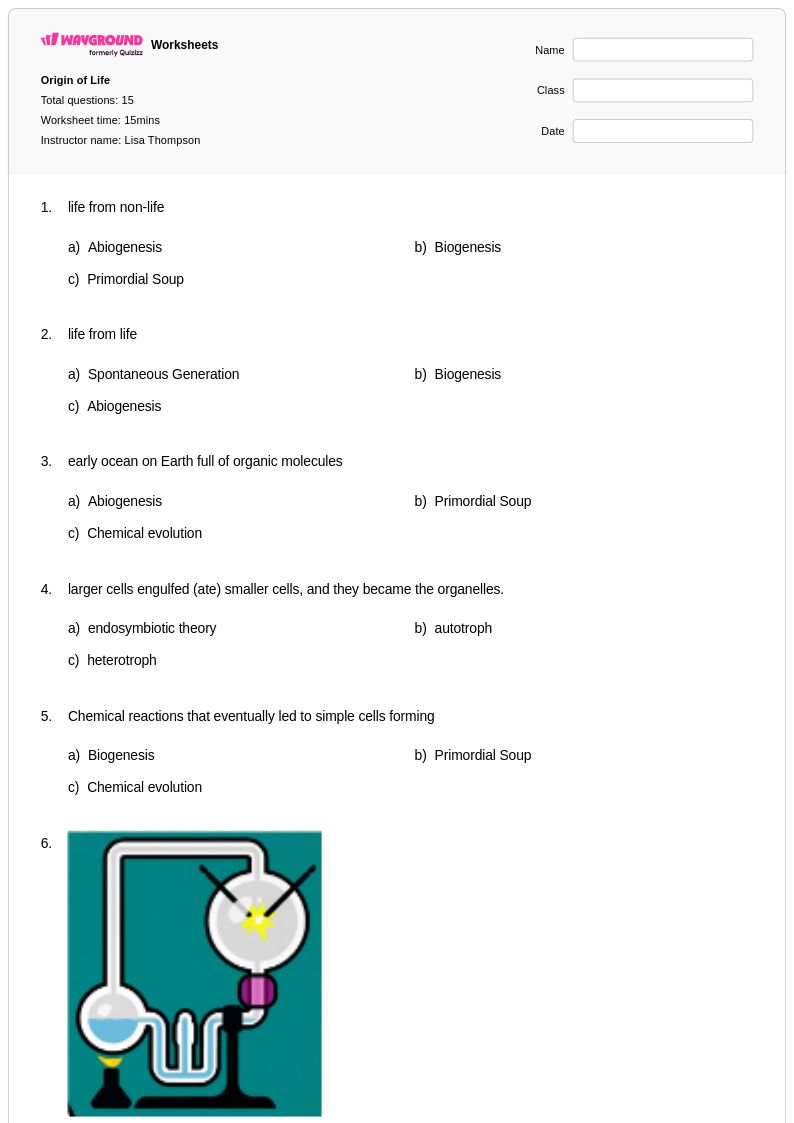
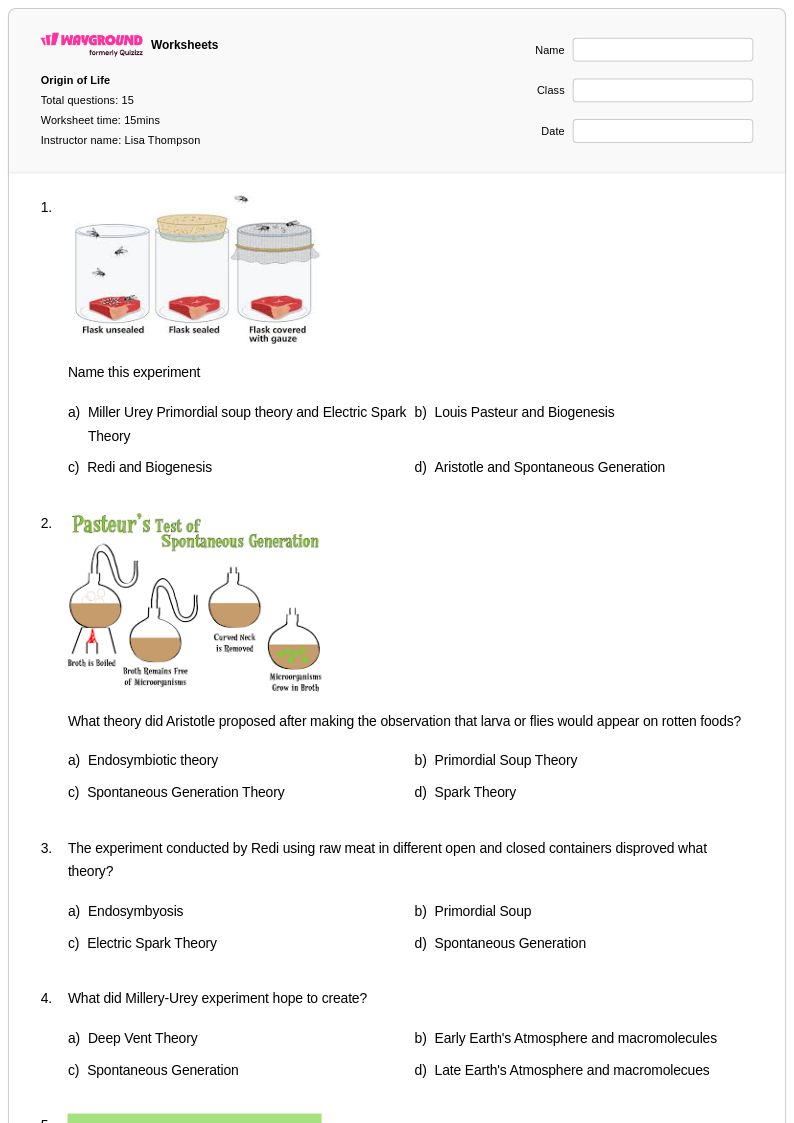
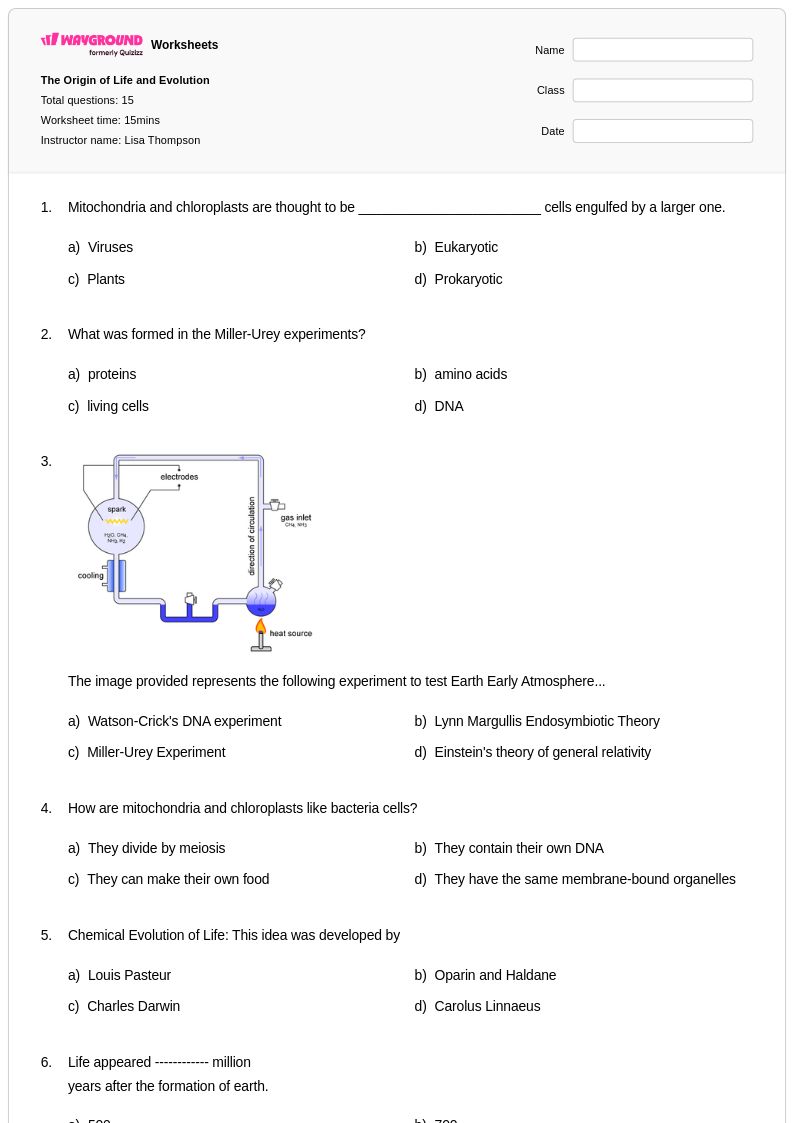
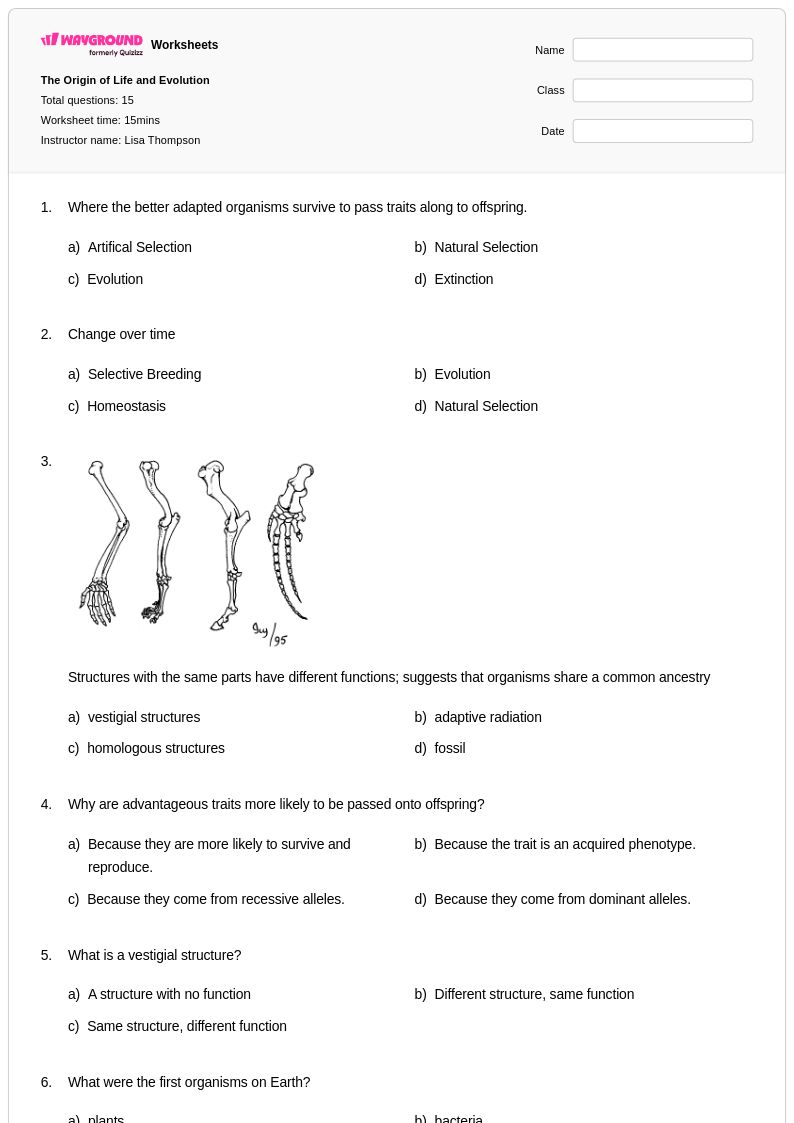
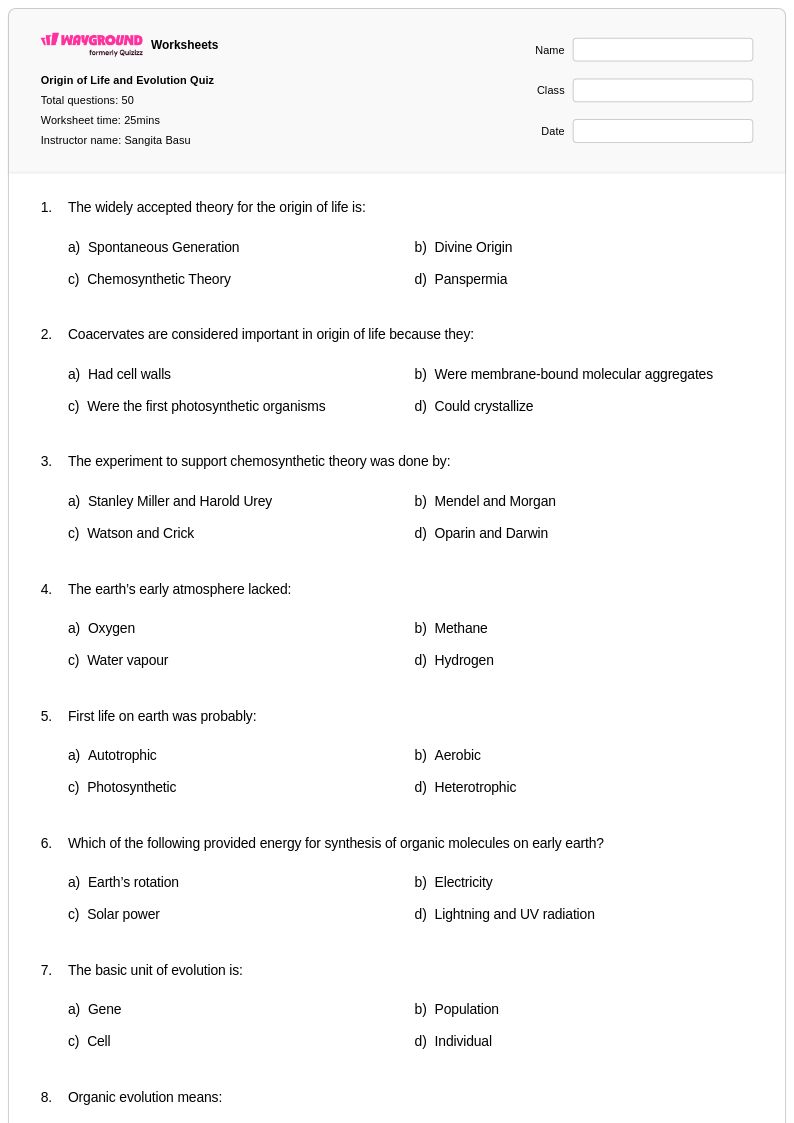
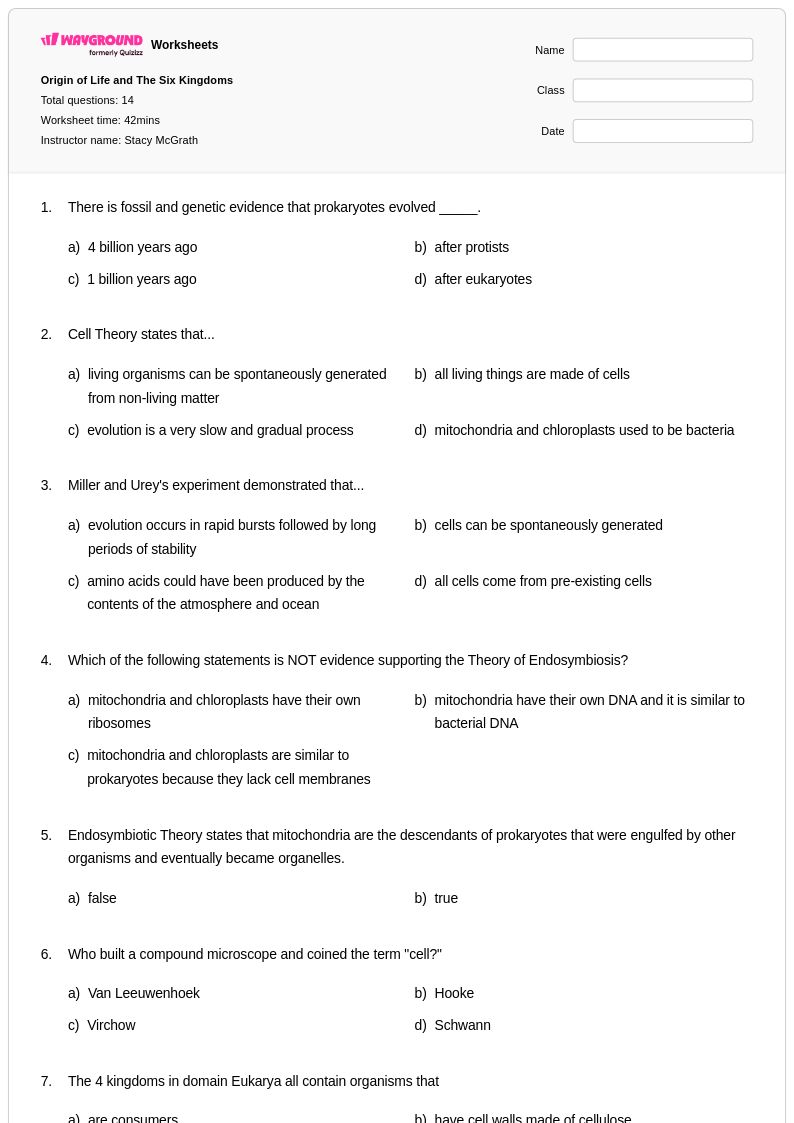
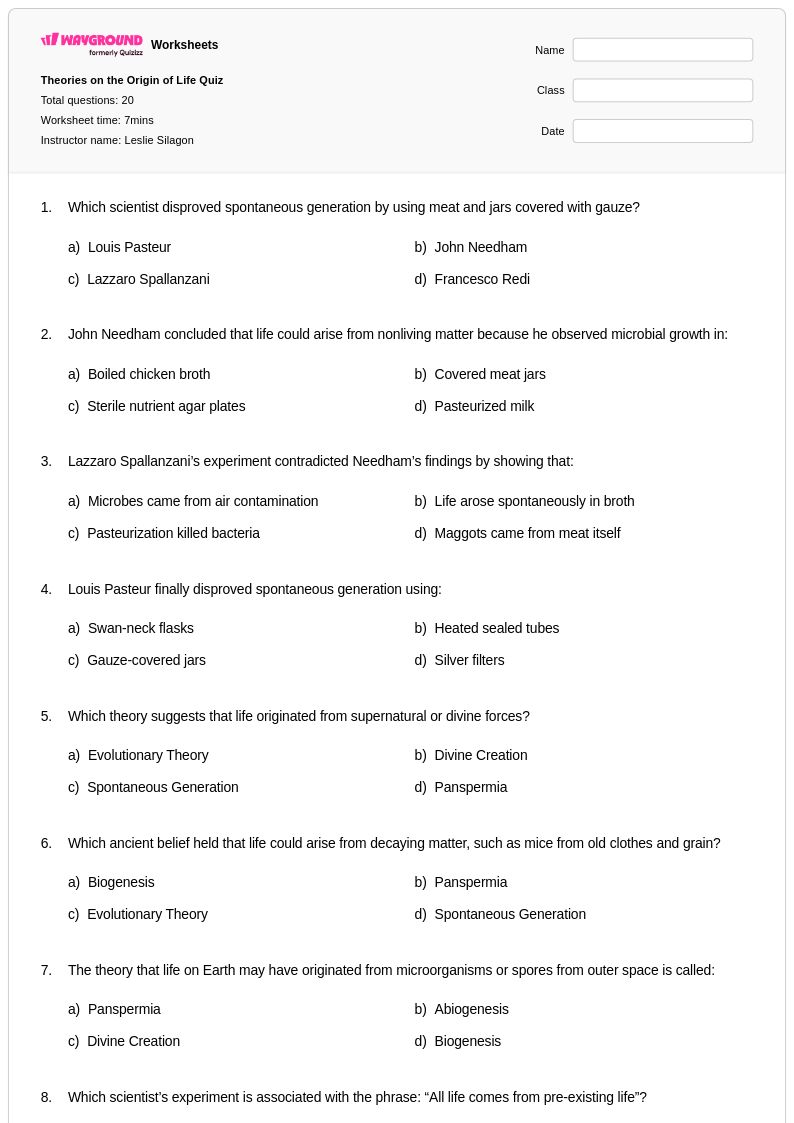
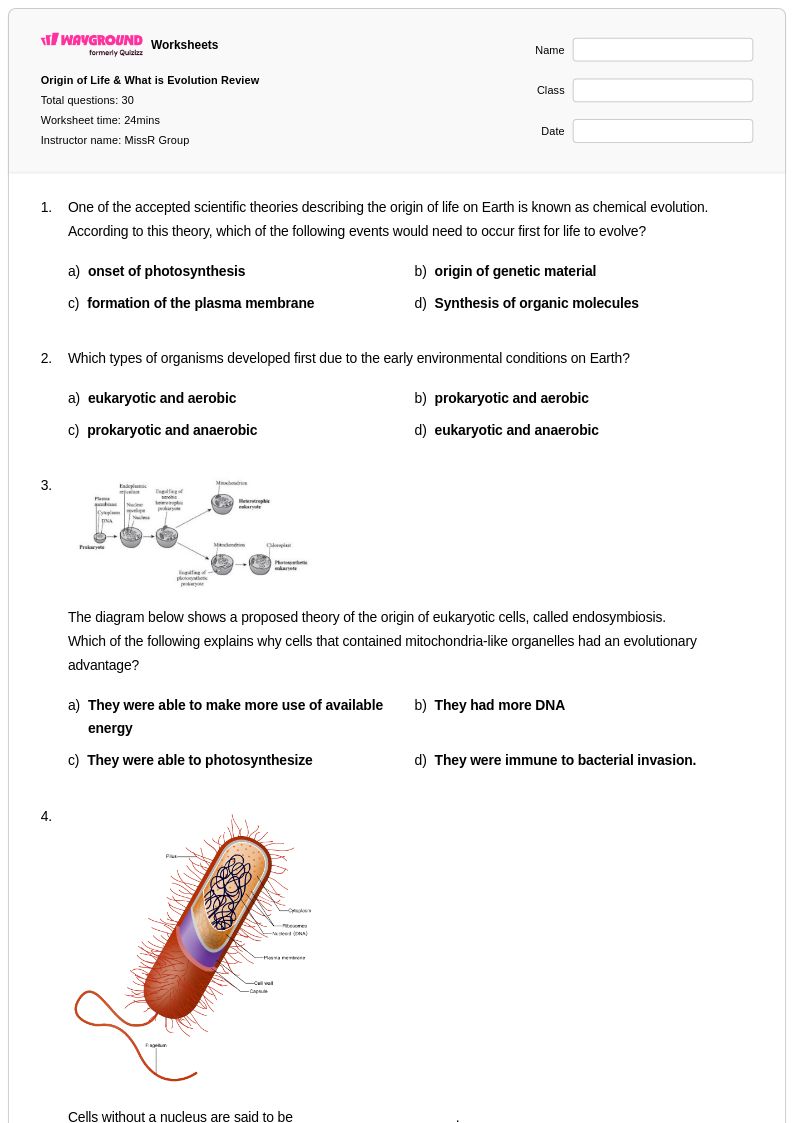
Origin of life worksheets for Class 11 students available through Wayground (formerly Quizizz) provide comprehensive coverage of the fundamental theories and scientific evidence surrounding how life began on Earth. These expertly crafted resources strengthen students' understanding of key concepts including abiogenesis, the primordial soup hypothesis, RNA world theory, and the role of organic compounds in early biological systems. Students engage with practice problems that examine the conditions of early Earth, analyze experimental evidence from scientists like Stanley Miller and Harold Urey, and evaluate competing hypotheses about the transition from non-living matter to living organisms. The worksheets include detailed answer keys that guide students through complex reasoning processes, and many are available as free printables in convenient pdf format for both classroom instruction and independent study.
Wayground (formerly Quizizz) empowers educators with access to millions of teacher-created resources specifically designed to support Class 11 biology instruction on the origin of life. The platform's robust search and filtering capabilities enable teachers to quickly locate worksheets that align with specific curriculum standards and match their students' academic needs. Advanced differentiation tools allow educators to customize content difficulty levels and modify assignments for diverse learners, while flexible formatting options provide both printable pdf versions for traditional classroom use and digital formats for modern learning environments. These comprehensive worksheet collections support effective lesson planning by offering materials suitable for initial concept introduction, targeted skill practice, remediation for struggling students, and enrichment activities for advanced learners exploring the fascinating intersection of chemistry, geology, and biology that characterizes origin of life studies.
FAQs
How do I teach the origin of life in a biology class?
Teaching the origin of life is most effective when students examine the progression from early Earth conditions to the first primitive cells, using primary evidence from paleontology, biochemistry, and molecular biology. Start by grounding students in the chemical building blocks — how organic molecules can form from inorganic compounds — before introducing competing hypotheses such as abiogenesis, panspermia, and RNA world theory. Framing these as evidence-based scientific models rather than settled fact helps students develop the critical thinking skills this topic demands.
What exercises help students practice origin of life concepts?
Effective practice exercises for the origin of life include analyzing experimental evidence from landmark studies like the Miller-Urey experiment, comparing and contrasting competing hypotheses, and tracing the chemical steps from simple inorganic molecules to the first self-replicating structures. Structured practice problems that walk students through the role of early atmospheric conditions and the emergence of primitive cell membranes are particularly useful for building conceptual understanding. Worksheets that ask students to evaluate evidence and construct written arguments help reinforce scientific reasoning alongside content knowledge.
What mistakes do students commonly make when learning about the origin of life?
A common misconception is that scientists have a single, universally accepted explanation for how life began — students often conflate hypothesis with proven fact, or assume abiogenesis and evolution are the same concept. Another frequent error is misunderstanding the distinction between the origin of life and the origin of the universe, which can muddle their analysis of scientific evidence. Students also tend to struggle with the idea that organic molecules can arise spontaneously from inorganic precursors under the right chemical and atmospheric conditions, often because it contradicts everyday intuition about how matter behaves.
How do I use Wayground's origin of life worksheets in my classroom?
Wayground's origin of life worksheets are available as printable PDFs for traditional classroom use and in digital formats for technology-integrated learning environments, including the option to host them as a quiz directly on Wayground. Teachers can assign them as guided practice during a unit introduction, as homework following direct instruction, or as review material before assessments. Each worksheet includes a complete answer key, so facilitating follow-up discussions or self-checking activities requires minimal additional preparation.
How can I differentiate origin of life instruction for students at different skill levels?
For students who need additional scaffolding, breaking the topic into discrete steps — from atmospheric chemistry to organic molecule formation to the first cells — reduces cognitive overload and builds understanding incrementally. Advanced learners can be extended into astrobiology, the RNA world hypothesis in greater depth, or the implications of extremophile research for understanding life's origins. On Wayground, teachers can apply accommodations such as reduced answer choices, read aloud support, and extended time to individual students, allowing the same worksheet to serve a range of learners without disrupting the rest of the class.
What scientific evidence should students understand when studying the origin of life?
Students should be able to interpret evidence from multiple disciplines, including fossil records of early microbial life, the biochemical similarities across all living organisms that suggest a common origin, and experimental findings showing that amino acids and nucleotides can form under simulated early Earth conditions. Understanding how molecular biology — particularly the behavior of RNA — informs hypotheses about the first self-replicating molecules is also essential. Connecting these lines of evidence helps students see the origin of life not as a single event to memorize, but as a scientific question approached through converging data from chemistry, physics, and biology.