Enhance Class 11 biology learning with Wayground's comprehensive cladistics worksheets featuring printable PDFs, practice problems, and answer keys to help students master evolutionary relationships and phylogenetic tree construction.
Explore printable Cladistics worksheets for Class 11
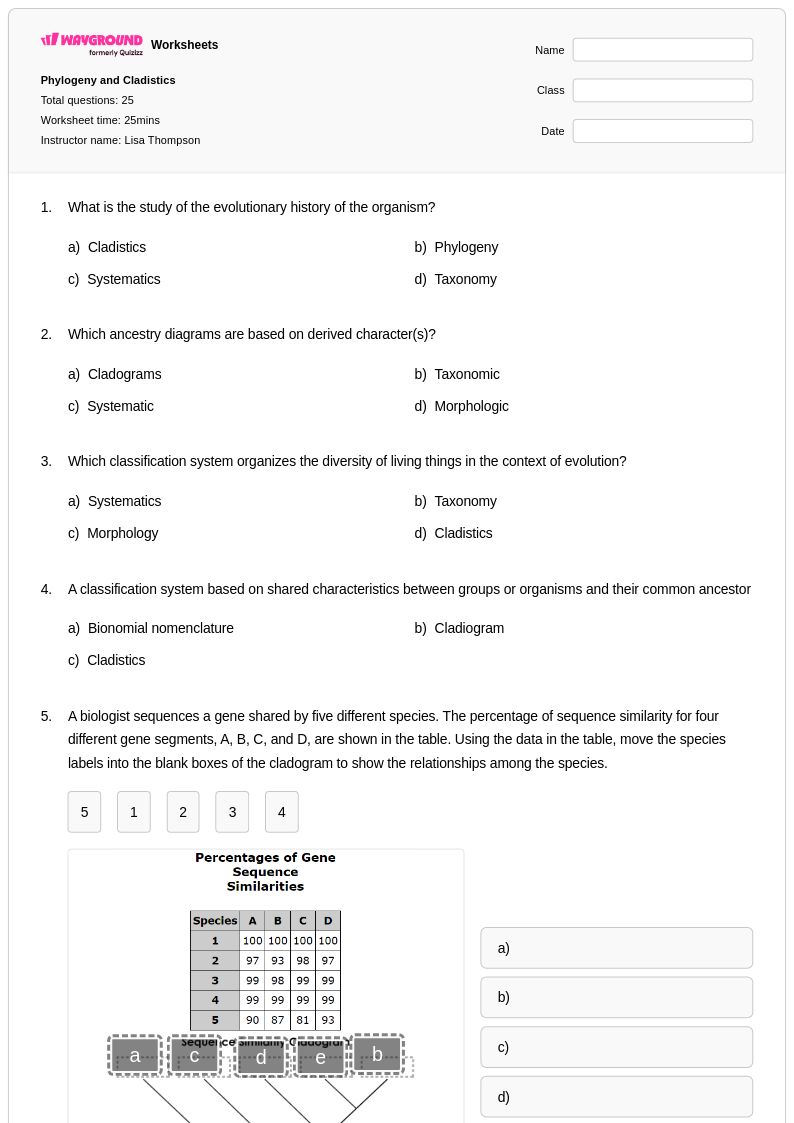
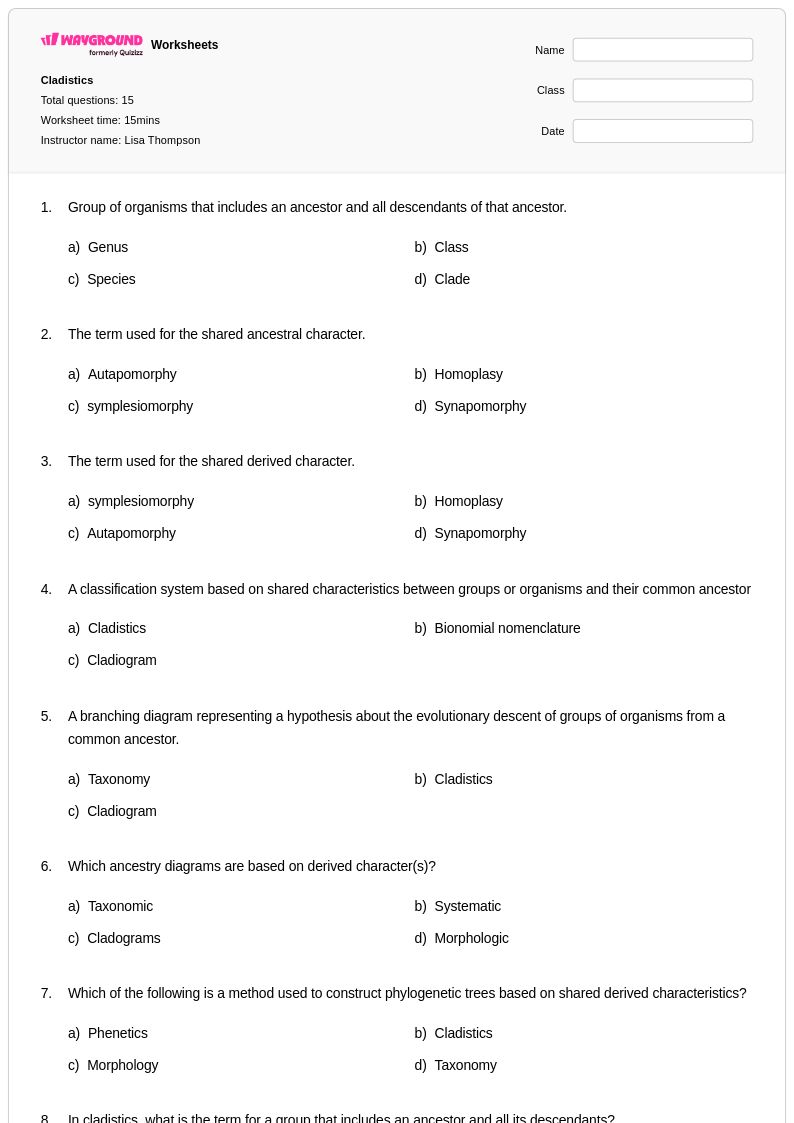
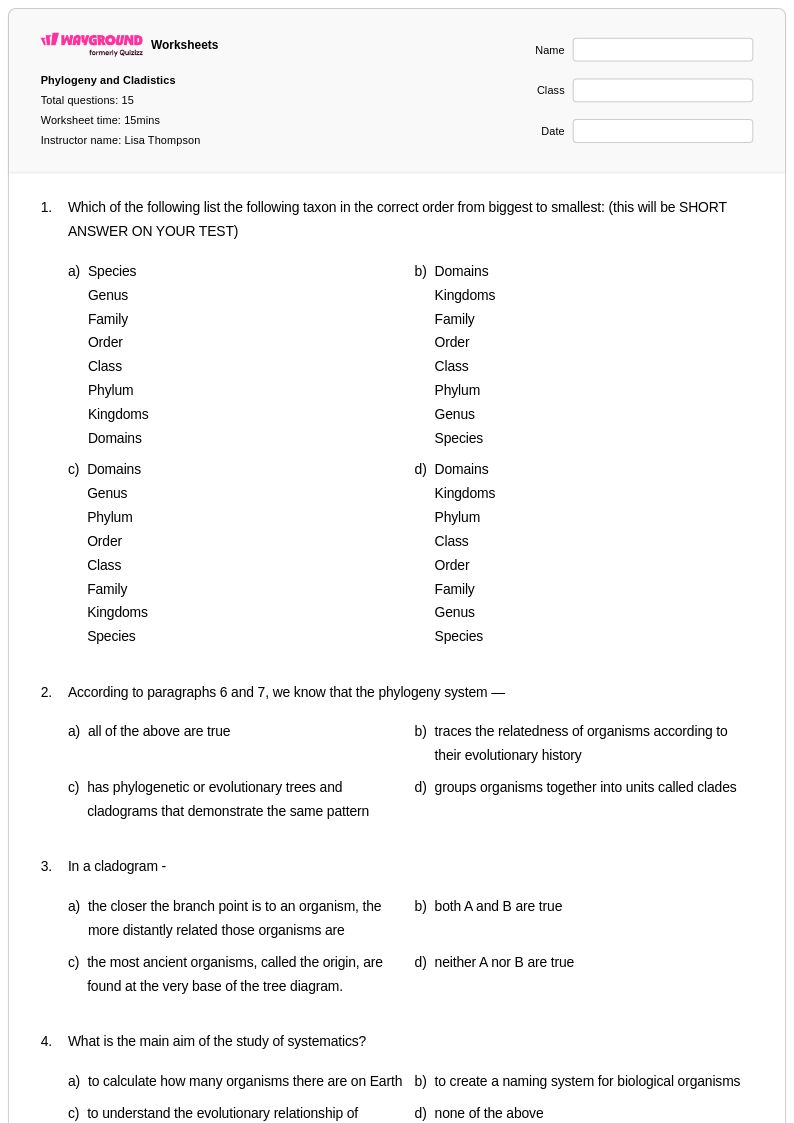
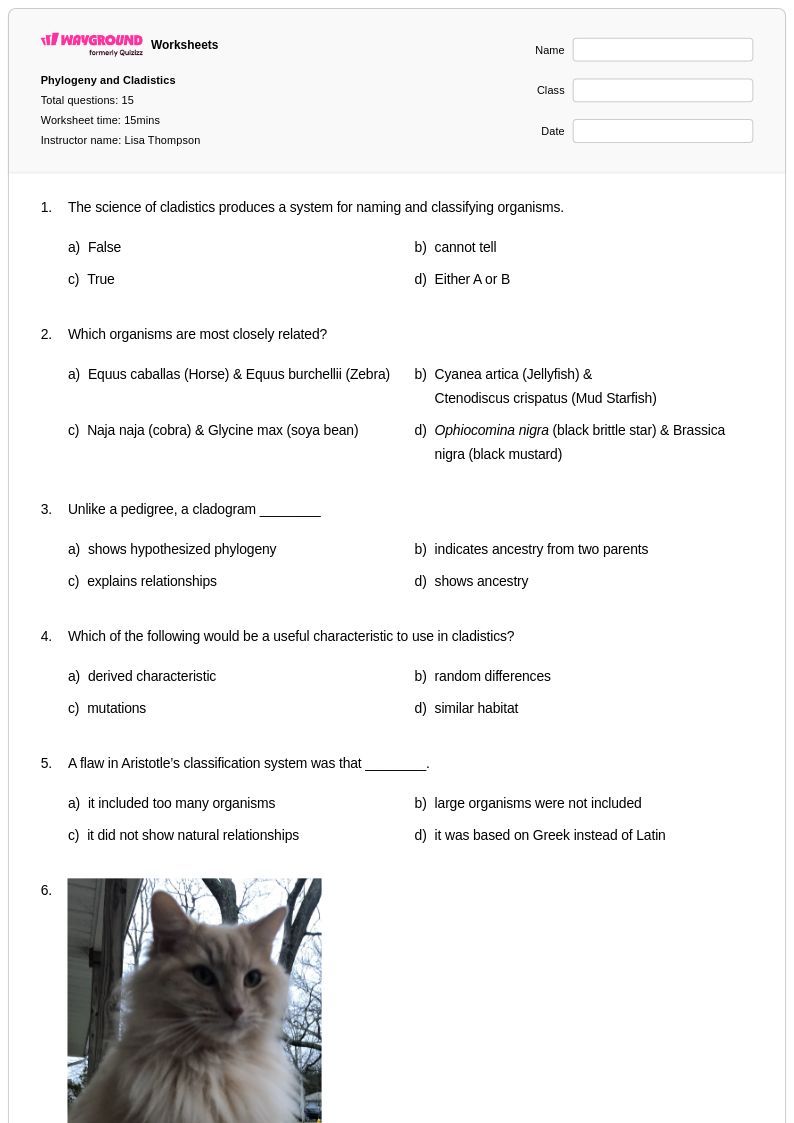
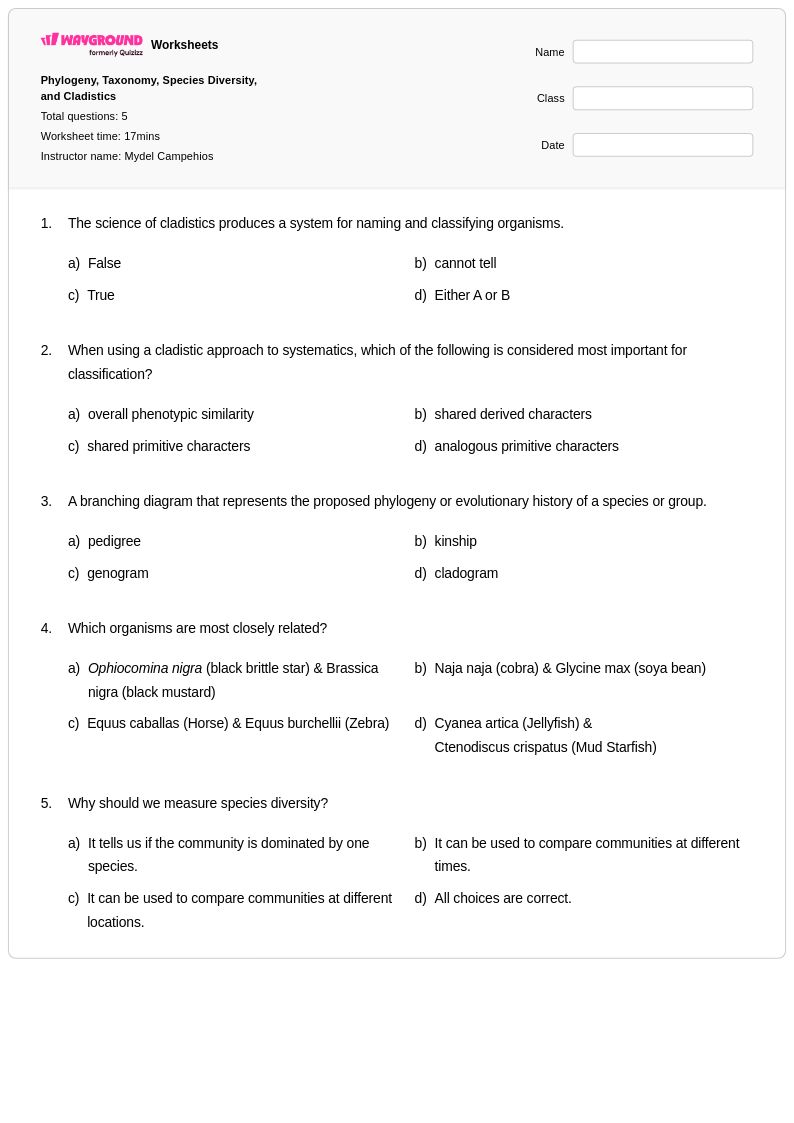
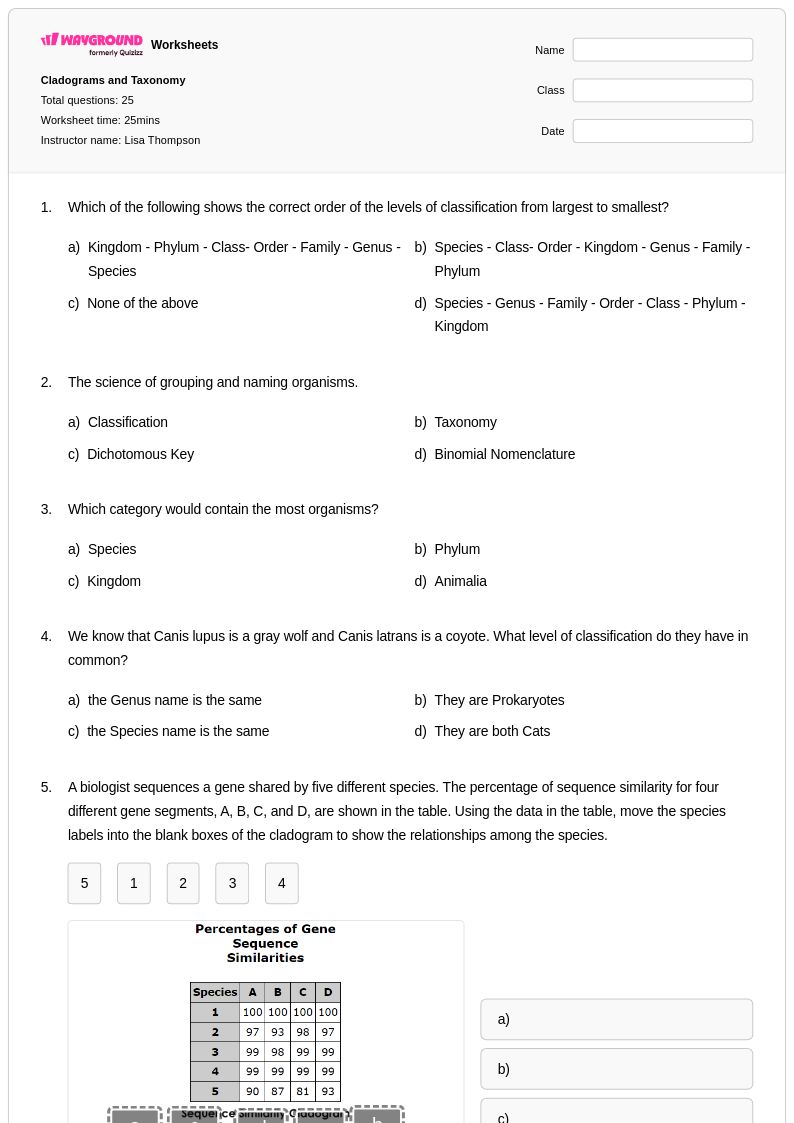
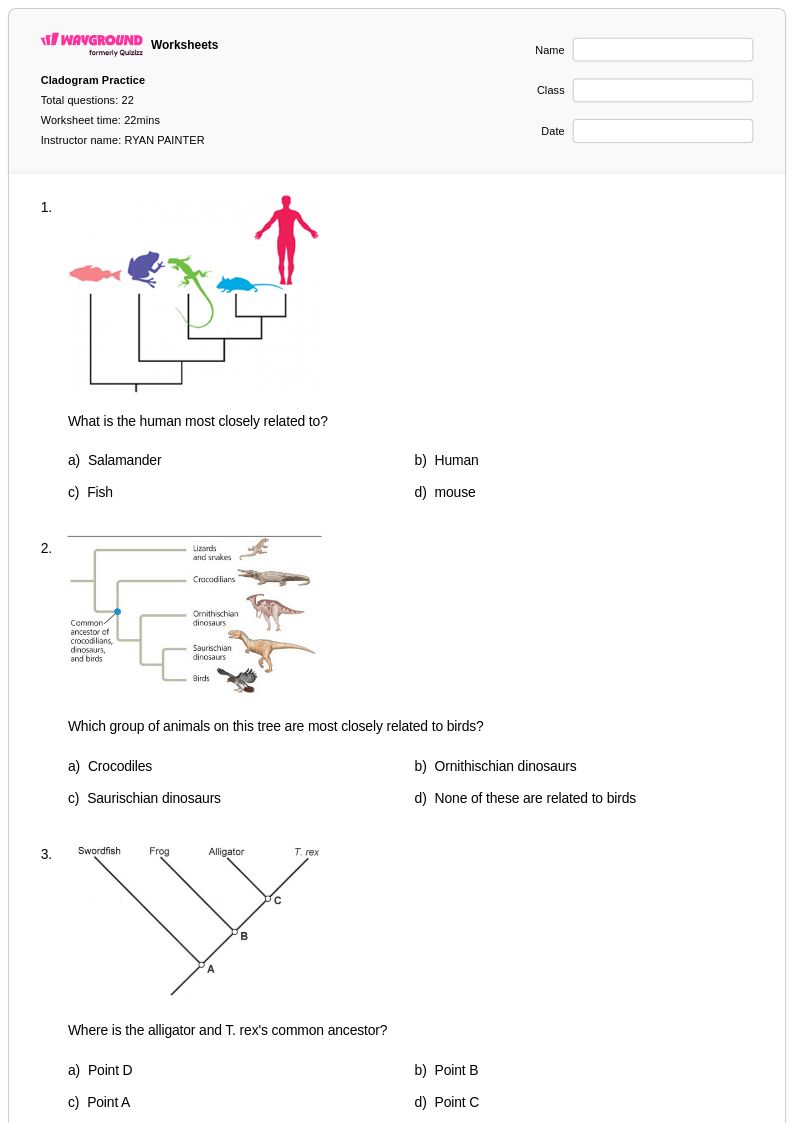
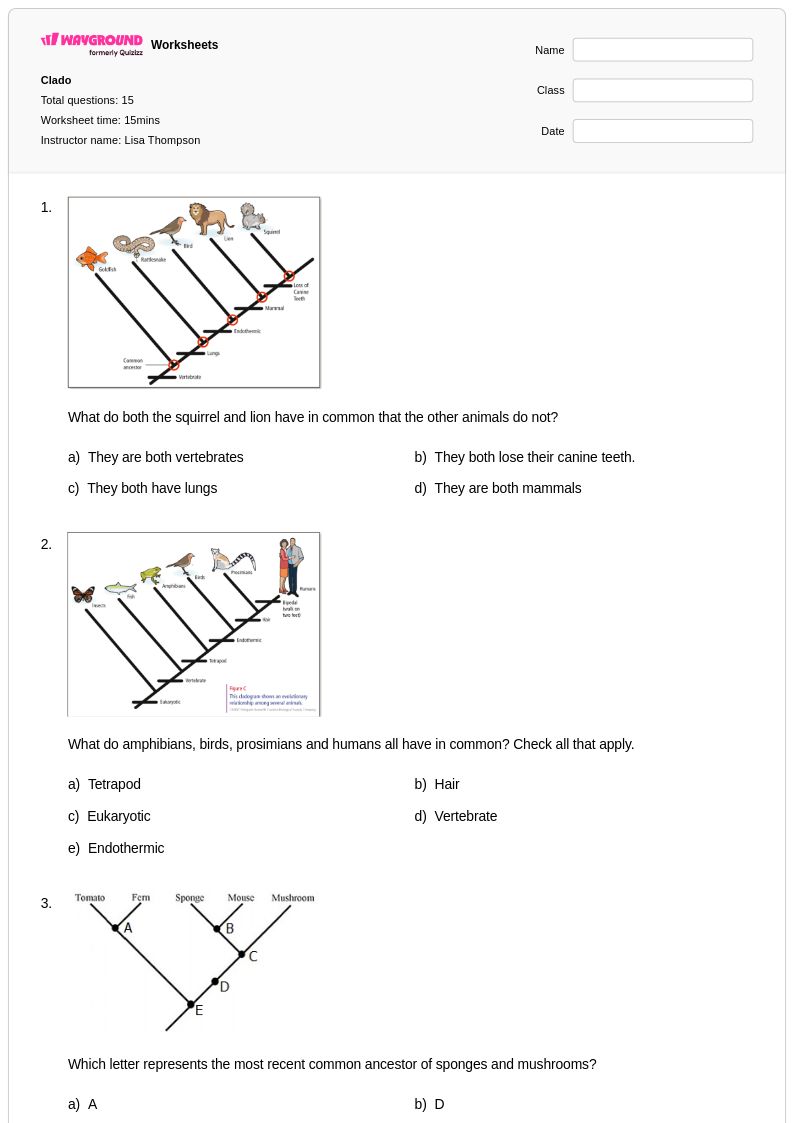
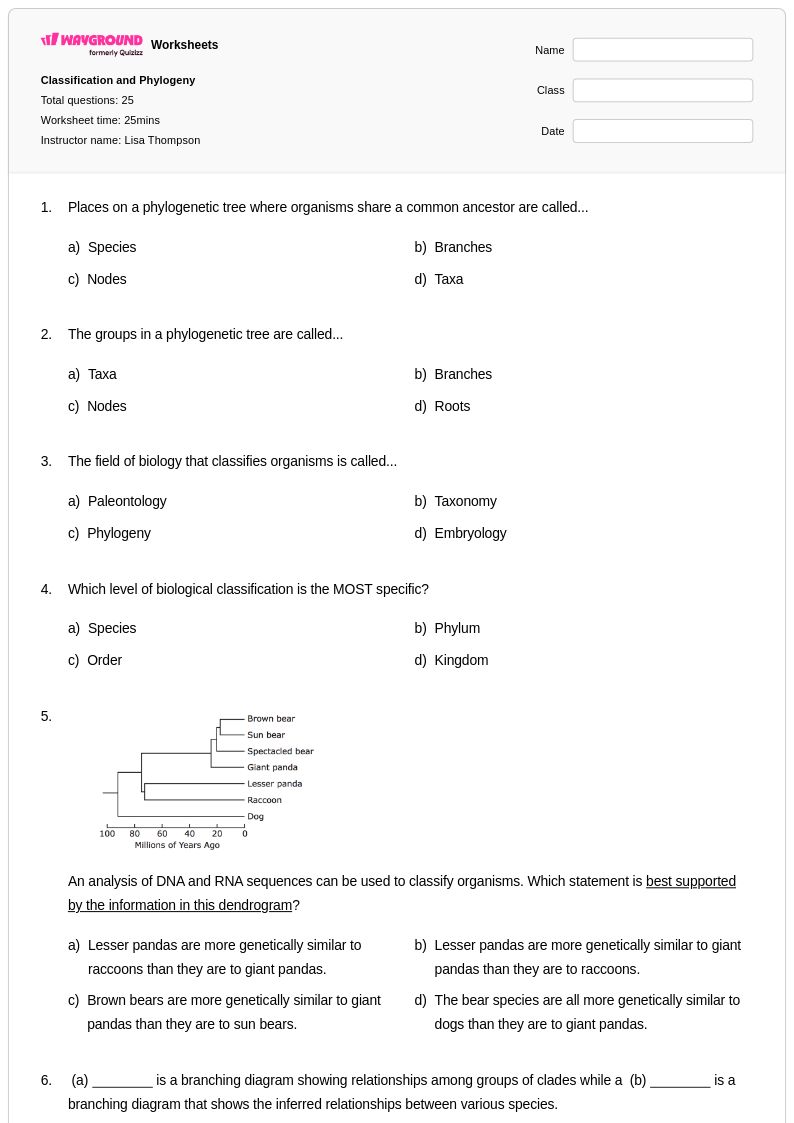
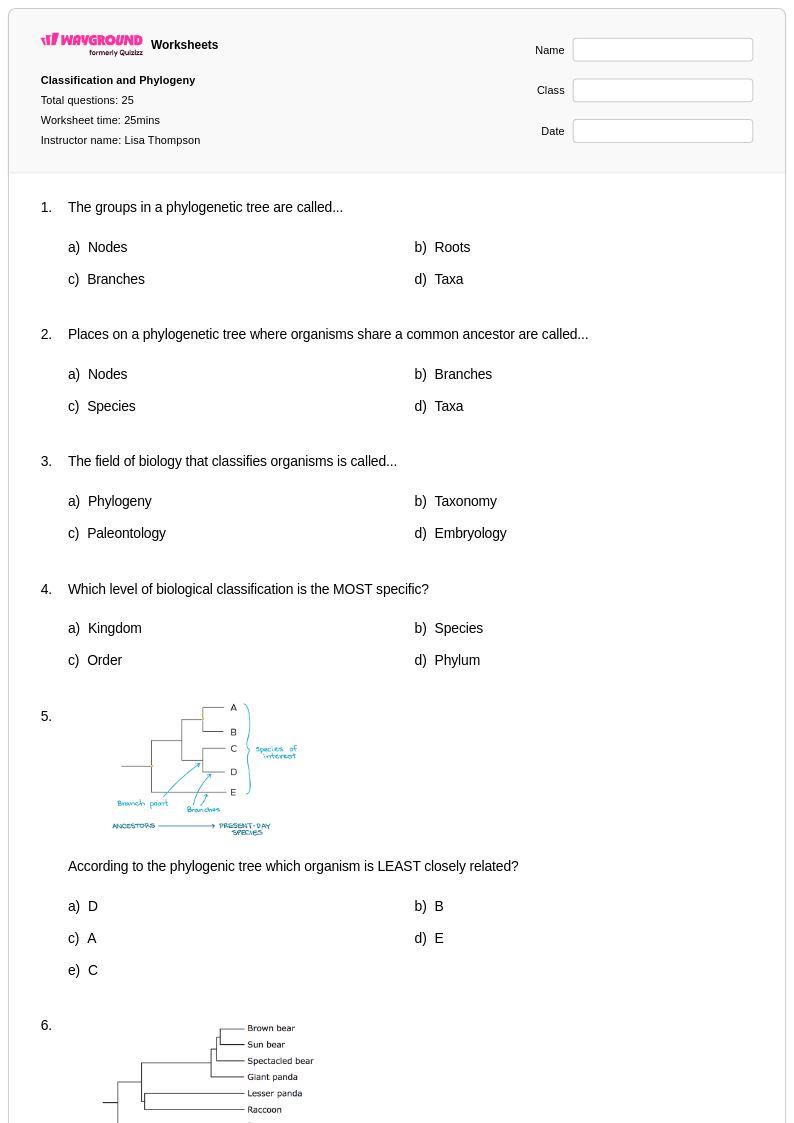
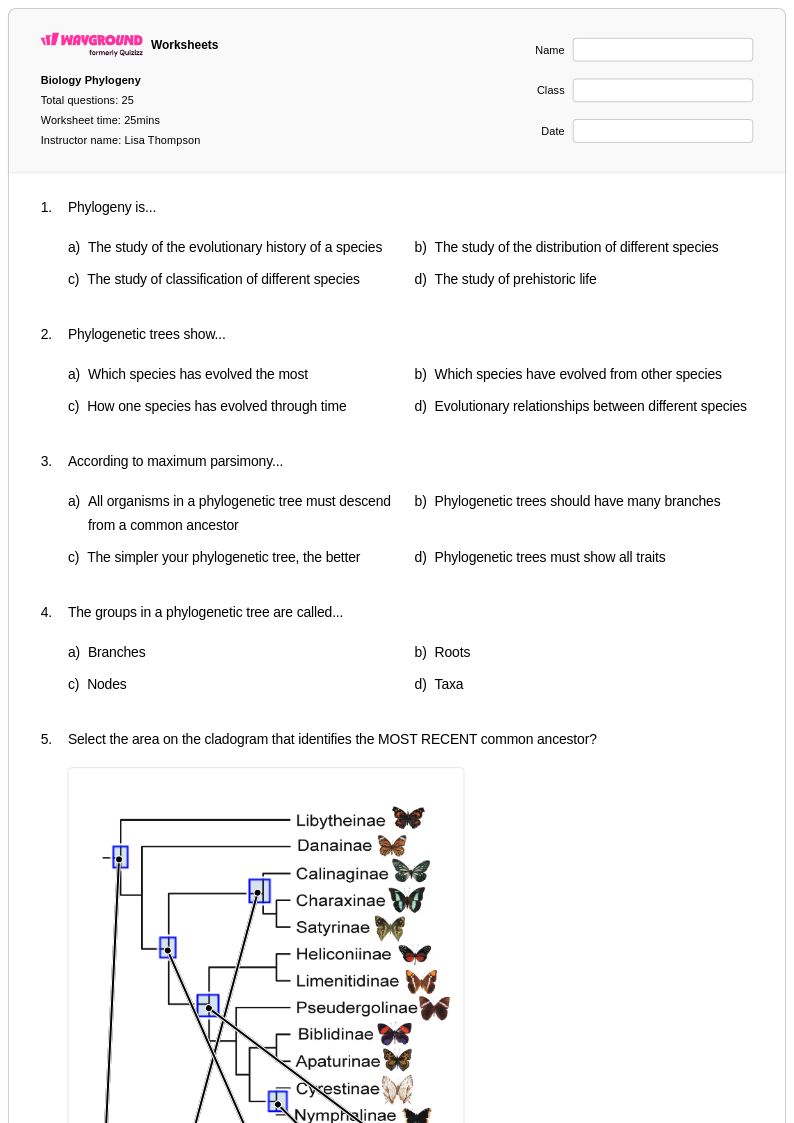
Class 11 cladistics worksheets available through Wayground (formerly Quizizz) provide students with comprehensive practice in phylogenetic analysis and evolutionary tree construction. These carefully designed educational resources strengthen critical thinking skills in biological classification, helping students master the interpretation of morphological and molecular data to determine evolutionary relationships among organisms. The worksheets feature diverse practice problems that guide students through the process of identifying shared derived characteristics, constructing cladograms, and analyzing branching patterns that represent evolutionary history. Each worksheet collection includes detailed answer keys and is available as free printables in pdf format, allowing students to work through complex scenarios involving character matrices, outgroup analysis, and the principle of parsimony that forms the foundation of modern systematic biology.
Wayground (formerly Quizizz) supports biology educators with an extensive collection of millions of teacher-created cladistics resources that streamline lesson planning and enhance student understanding of phylogenetic concepts. The platform's robust search and filtering capabilities allow teachers to quickly locate worksheets aligned with specific curriculum standards, while differentiation tools enable customization for varying skill levels within Class 11 classrooms. These versatile materials are available in both printable pdf format and interactive digital versions, providing flexibility for in-class activities, homework assignments, and assessment preparation. Teachers can effectively use these resources for targeted remediation of challenging concepts like monophyletic groups and synapomorphies, while also providing enrichment opportunities for advanced students to explore complex evolutionary scenarios and develop mastery in reading and constructing phylogenetic trees across diverse taxonomic groups.
FAQs
How do I teach cladistics to high school biology students?
Start by grounding students in the concept of shared derived characteristics (synapomorphies) before introducing cladogram construction. Use simple, familiar organisms — such as vertebrates — so students can focus on the logic of branching diagrams rather than unfamiliar taxa. Gradually increase complexity by introducing molecular data alongside morphological evidence, which helps students understand why modern cladistics often revises older classification systems.
What practice exercises help students get better at reading and building cladograms?
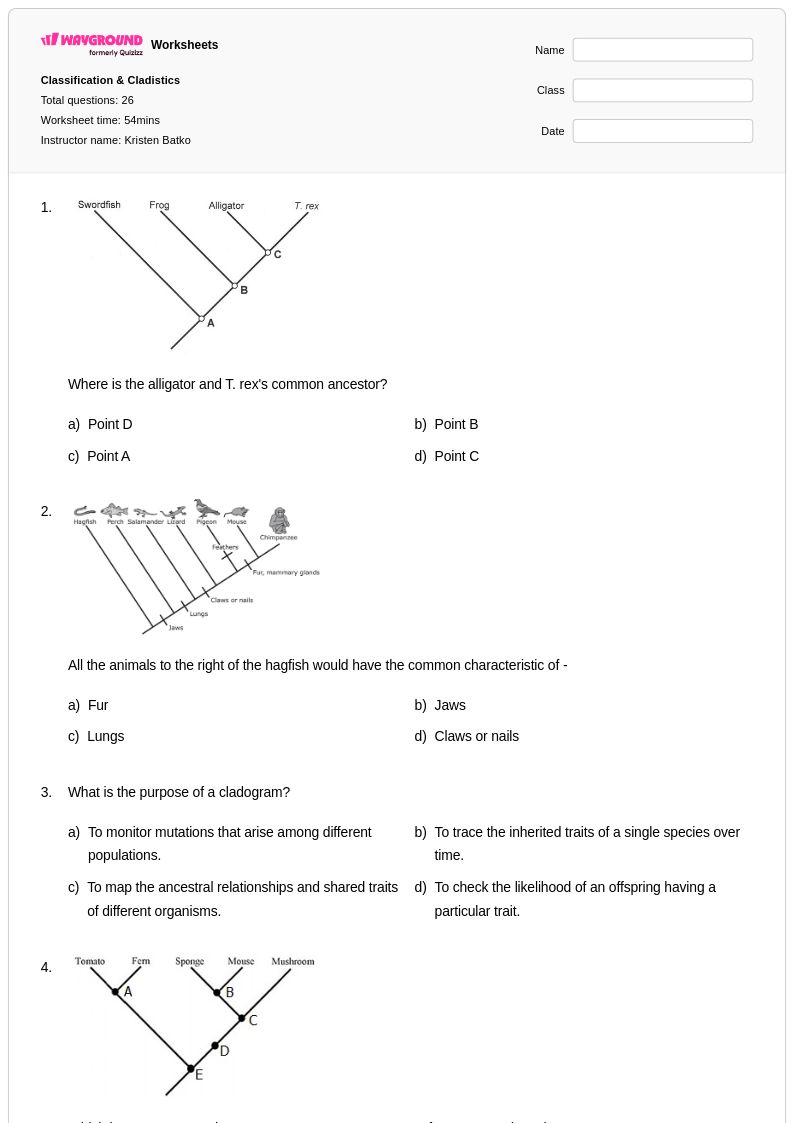
Effective practice focuses on two distinct skills: interpreting existing cladograms and constructing new ones from a data matrix of traits. Students benefit from exercises that require them to identify the most recent common ancestor of two taxa, determine which organisms share a synapomorphy, and justify classification decisions using evolutionary evidence. Repeated exposure to both morphological and molecular data sets builds the analytical flexibility students need for assessments.
What mistakes do students commonly make when constructing cladograms?
The most common error is confusing ancestral traits (plesiomorphies) with shared derived traits (synapomorphies) — students frequently group organisms based on features that are ancient and widespread rather than features that indicate recent common ancestry. A second common mistake is misreading branch points, where students treat the position of a taxon on a branch as indicating it is 'more evolved' than others. Targeted practice with annotated answer keys helps students self-correct both types of errors.
How do I use Wayground's cladistics worksheets in my classroom?
Wayground's cladistics worksheets are available as printable PDFs for traditional classroom use and in digital formats for technology-integrated environments, making them flexible for in-class work, homework, or remote learning. Teachers can also host any worksheet as a quiz directly on Wayground, enabling real-time student responses and immediate feedback. Both printable and digital versions include comprehensive answer keys, so teachers can use them for guided practice, independent work, or formative assessment without additional prep.
How does cladistics differ from traditional Linnaean classification, and how do I explain this to students?
Linnaean classification groups organisms primarily by overall physical similarity, while cladistics groups them exclusively by shared evolutionary history — specifically, by shared derived characteristics inherited from a common ancestor. This means cladistic analysis can overturn traditional groupings; for example, birds are classified within reptiles in a cladistic framework because they share a more recent common ancestor with crocodilians than crocodilians do with other reptiles. A side-by-side comparison exercise showing the same organisms classified both ways is an effective way to make this distinction concrete for students.
How can I differentiate cladistics instruction for students at different skill levels in the same class?
Provide foundational-level students with partially completed cladograms and a limited trait matrix so they can focus on the logic of branching without being overwhelmed by data. Advanced students can work from raw morphological or molecular data sets to construct cladograms independently and then evaluate competing hypotheses. On Wayground, teachers can apply accommodations such as reduced answer choices or read-aloud settings to individual students, ensuring every learner engages with the material at an appropriate level of challenge.