Free Printable Photosynthesis and Cellular Respiration Worksheets for Class 11
Explore Class 11 photosynthesis and cellular respiration worksheets from Wayground with free printables, practice problems, and answer keys to help students master energy conversion processes in living organisms.
Explore printable Photosynthesis and Cellular Respiration worksheets for Class 11
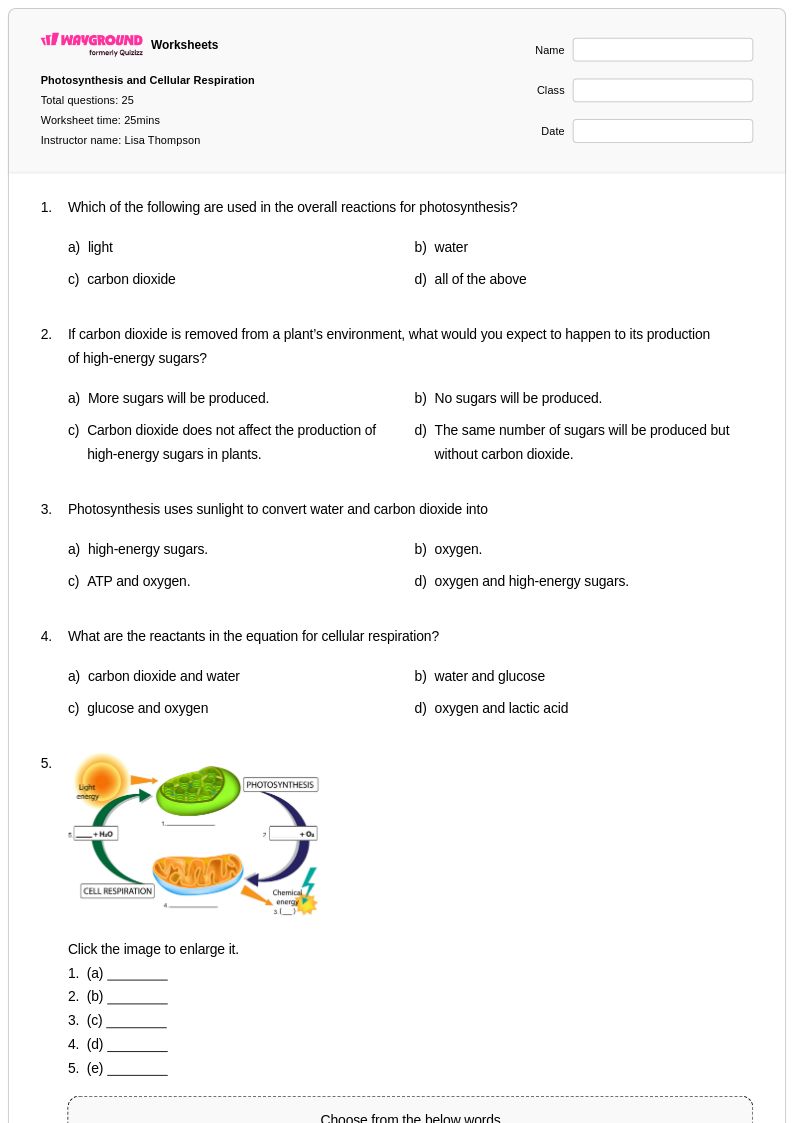
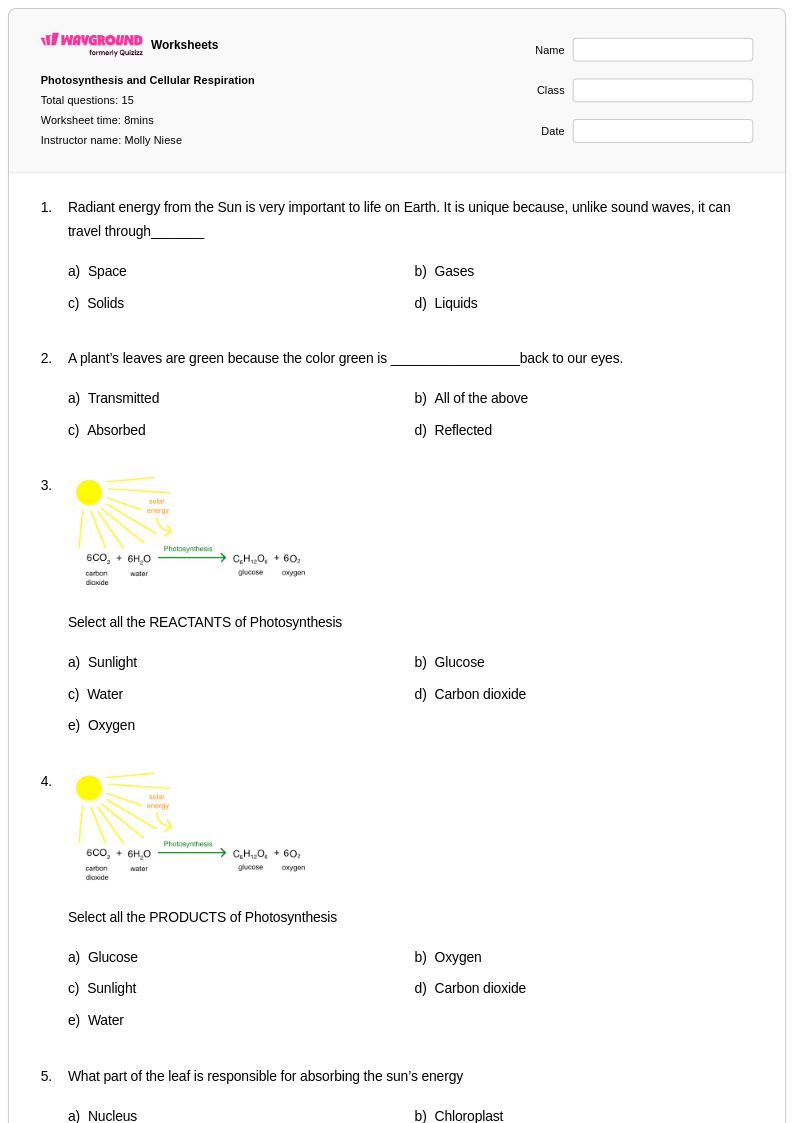
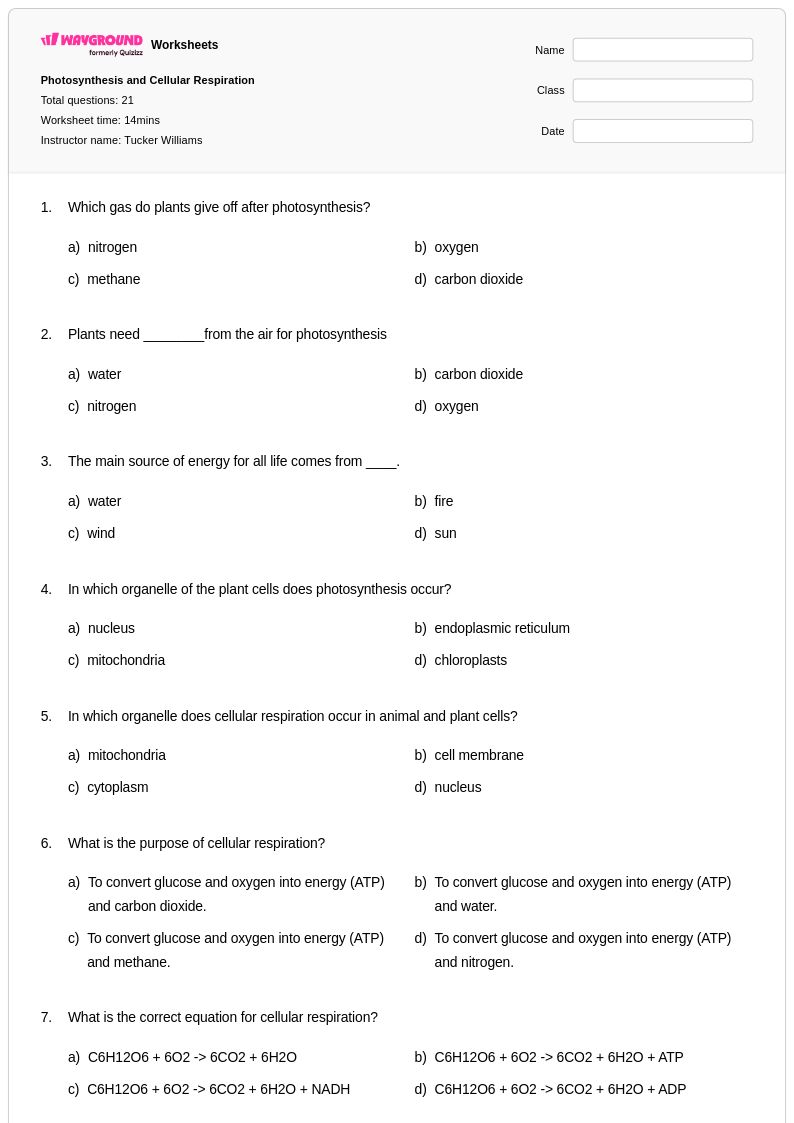
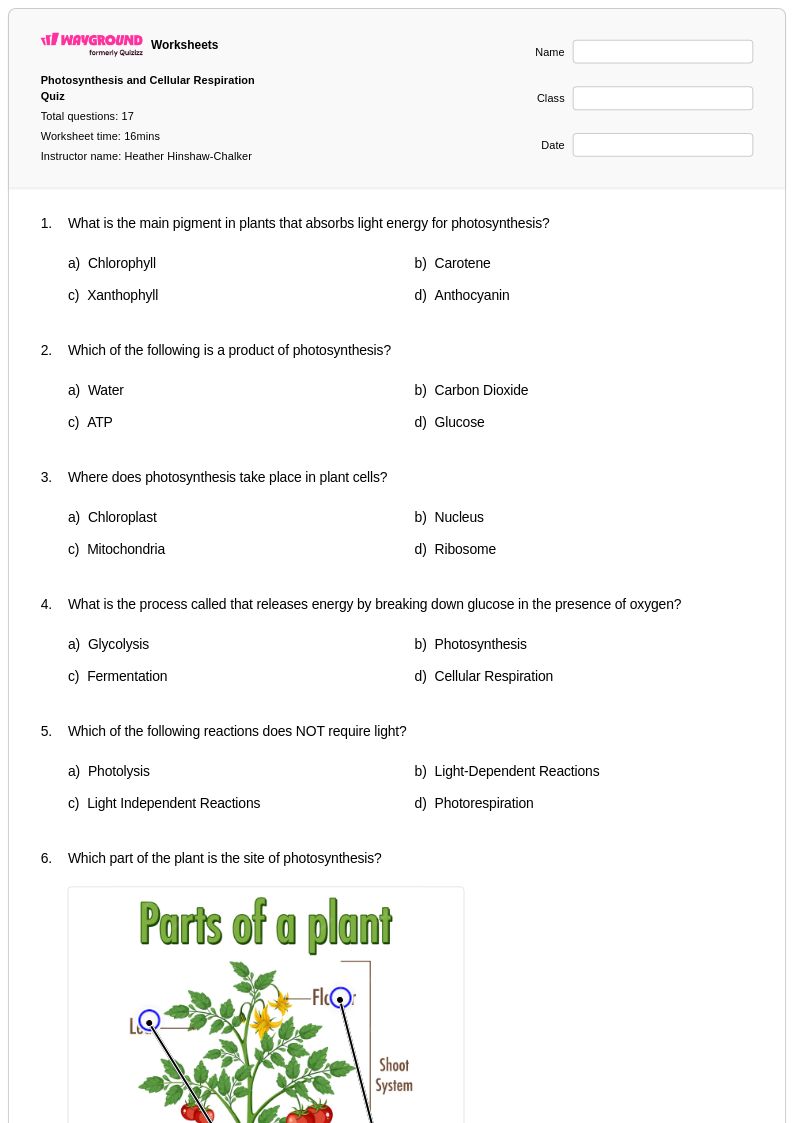
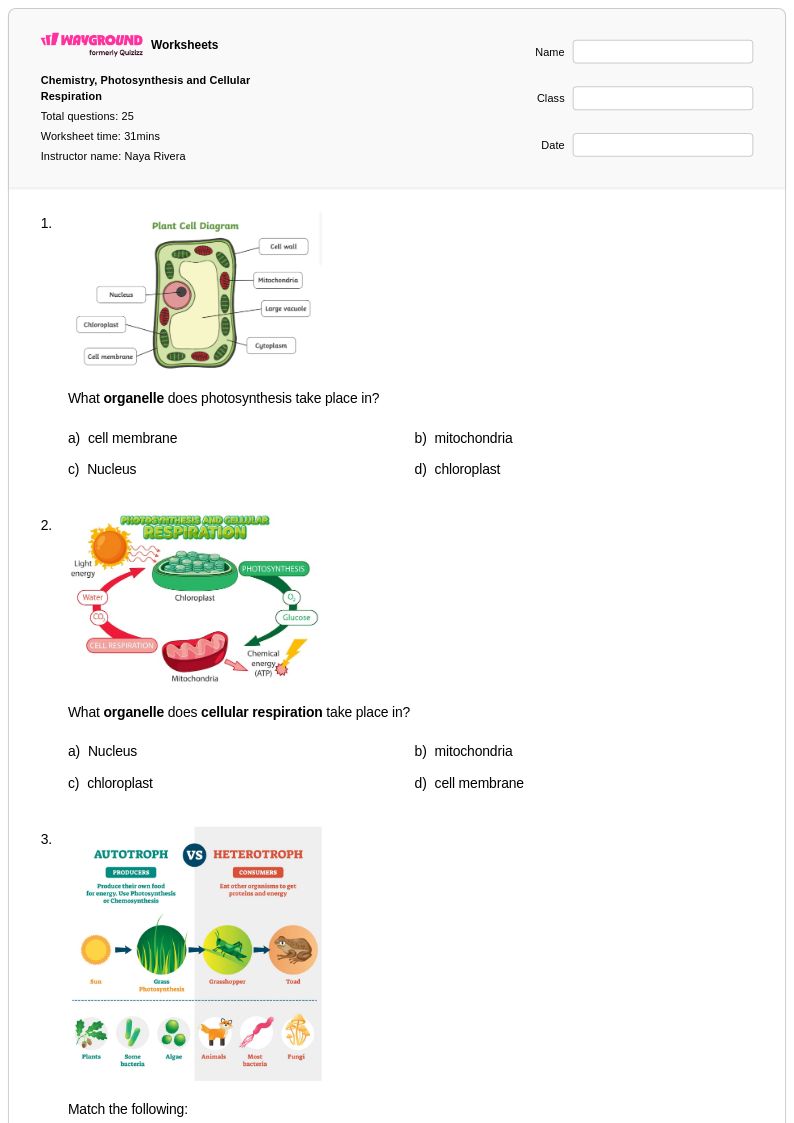
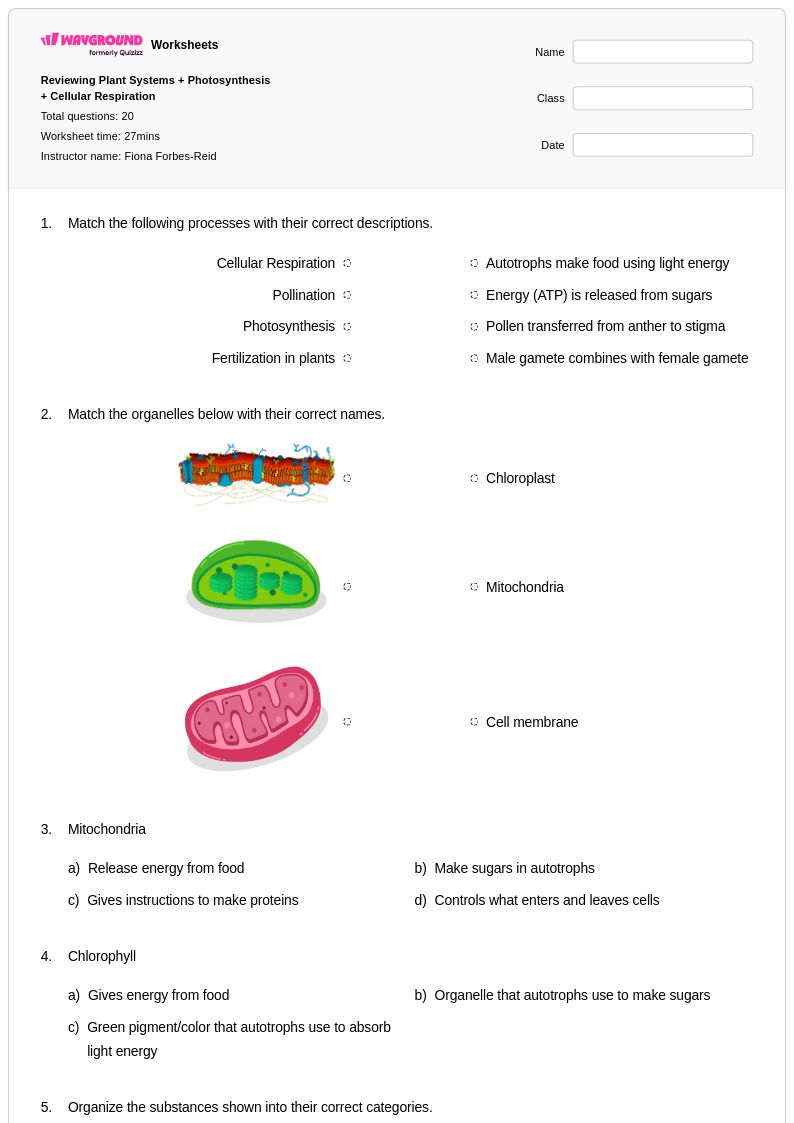
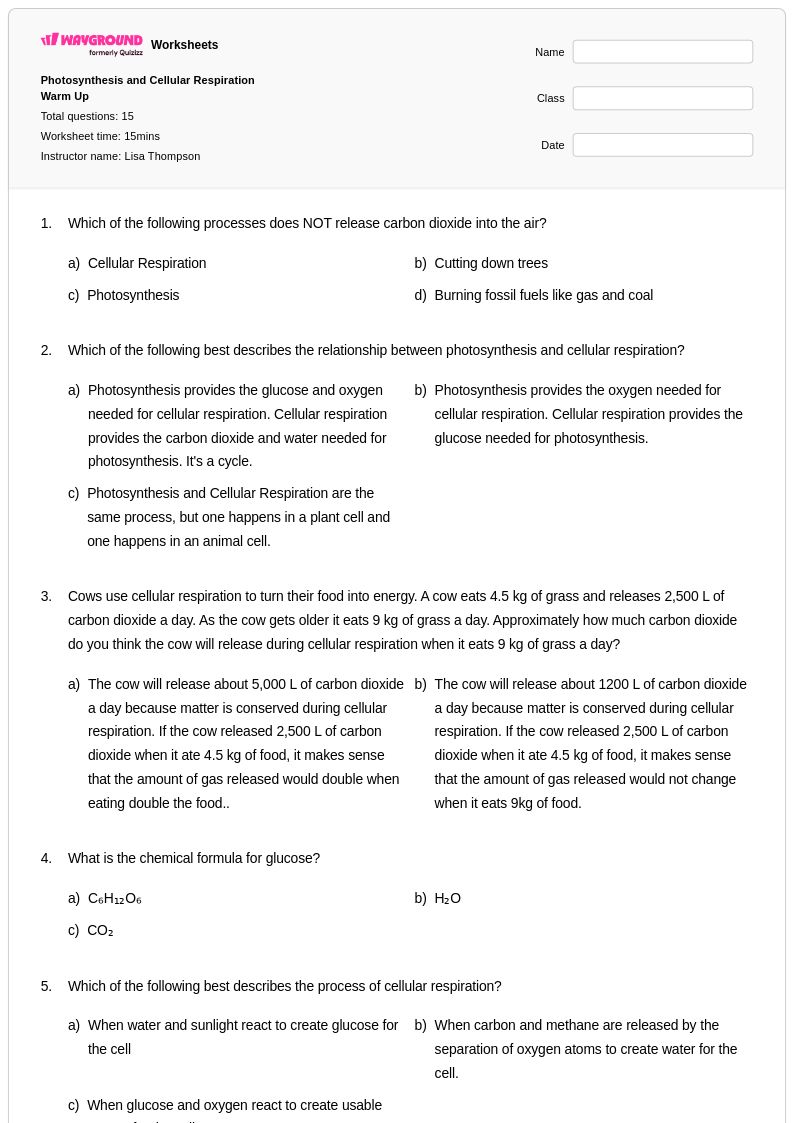
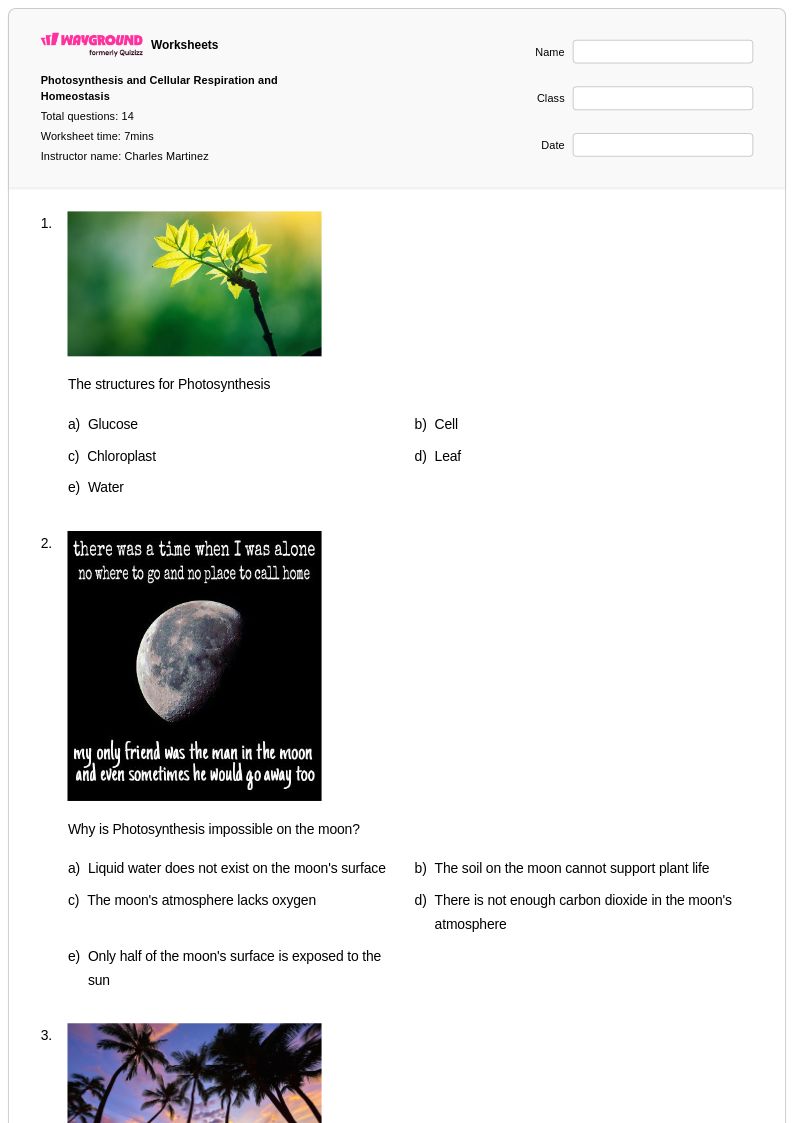
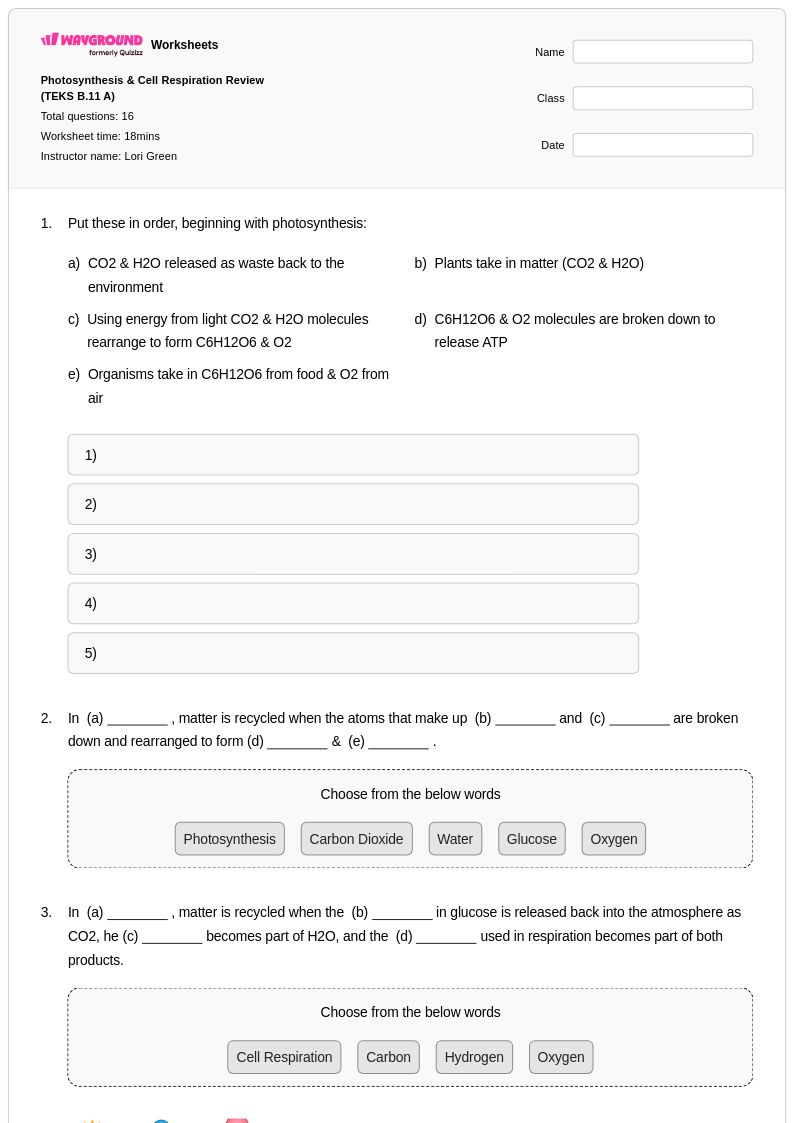
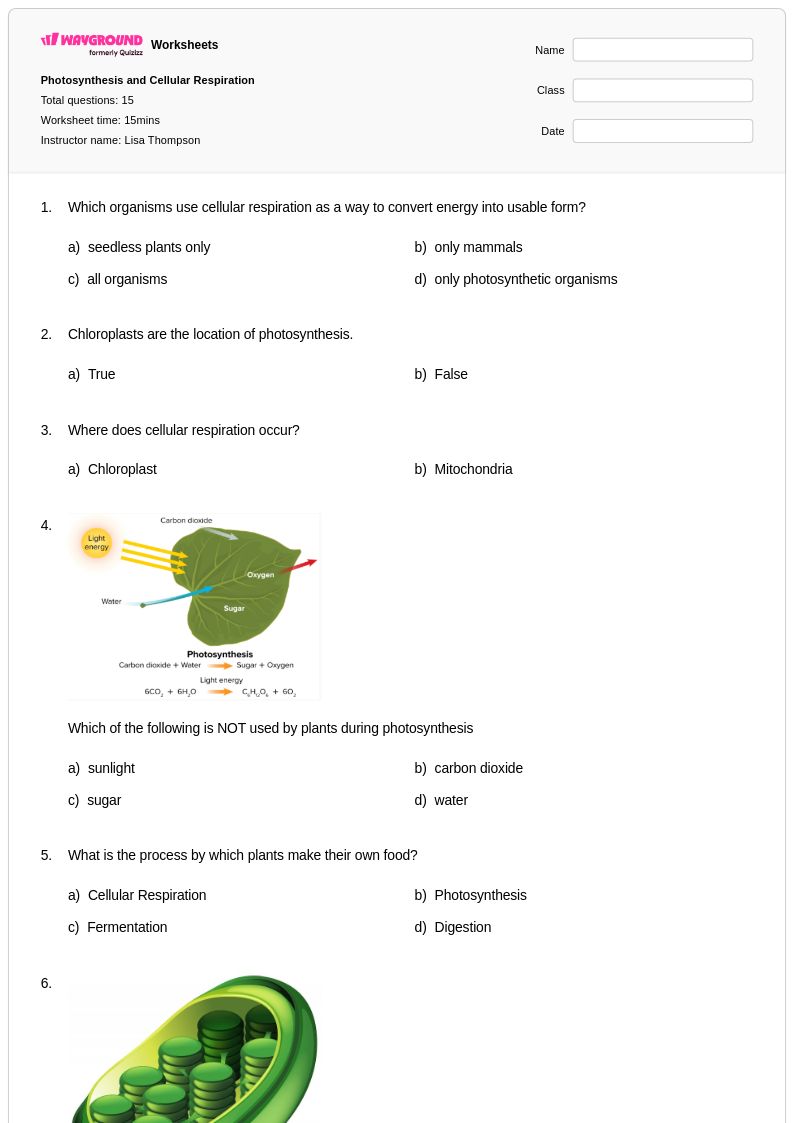
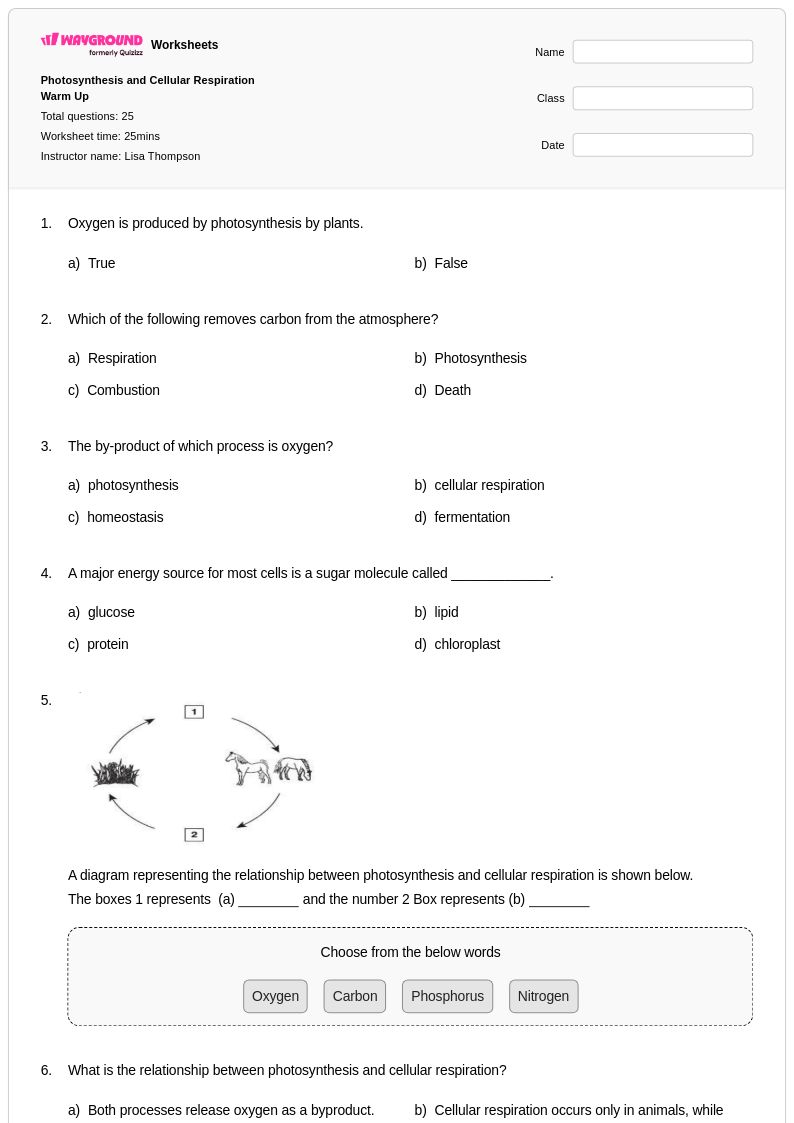
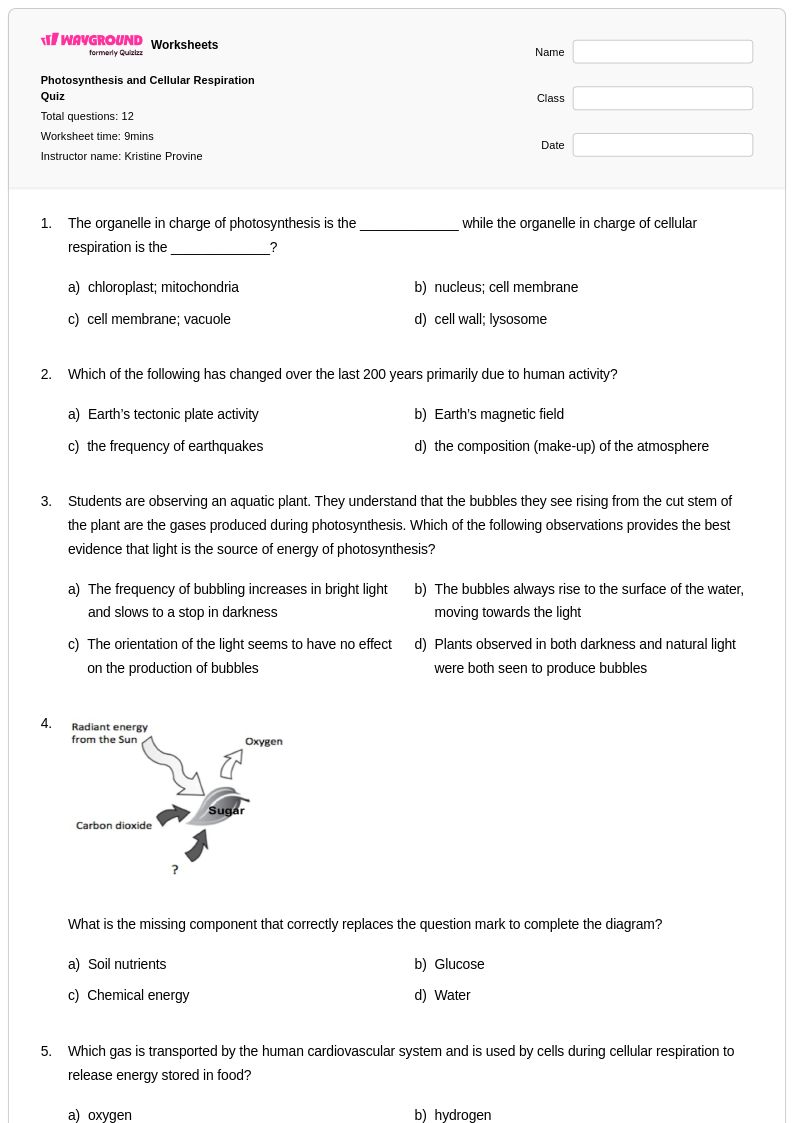
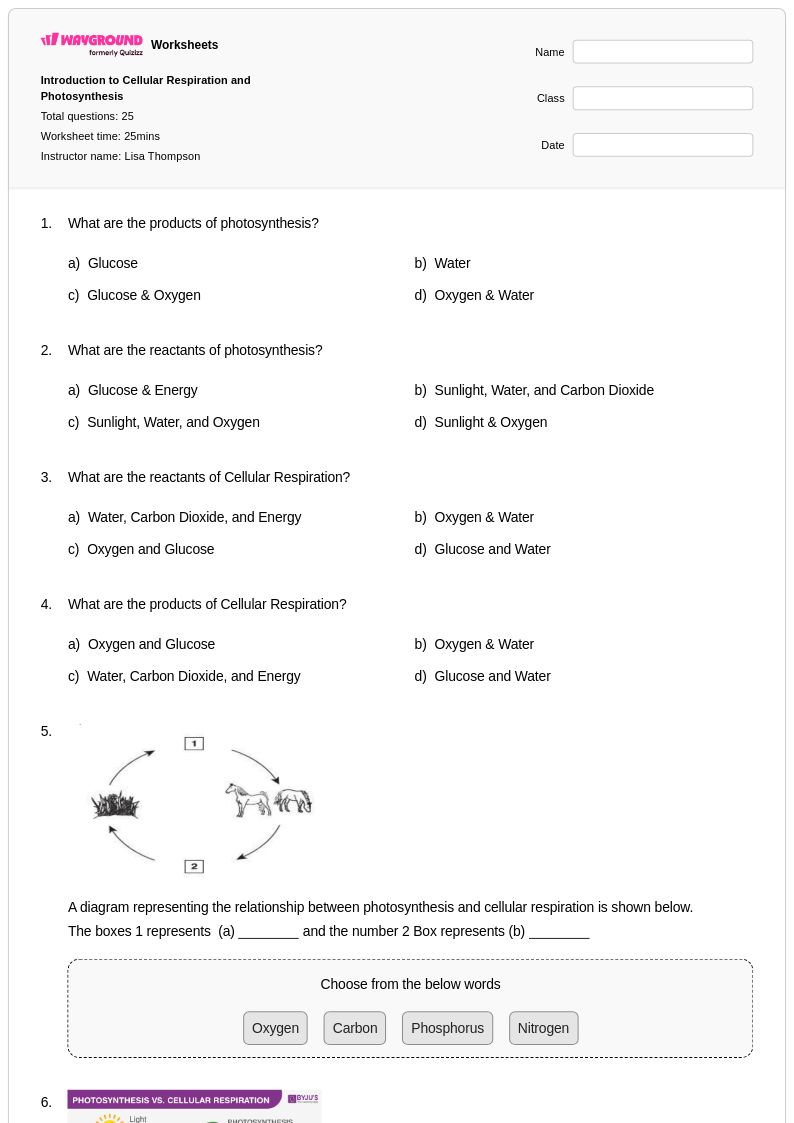
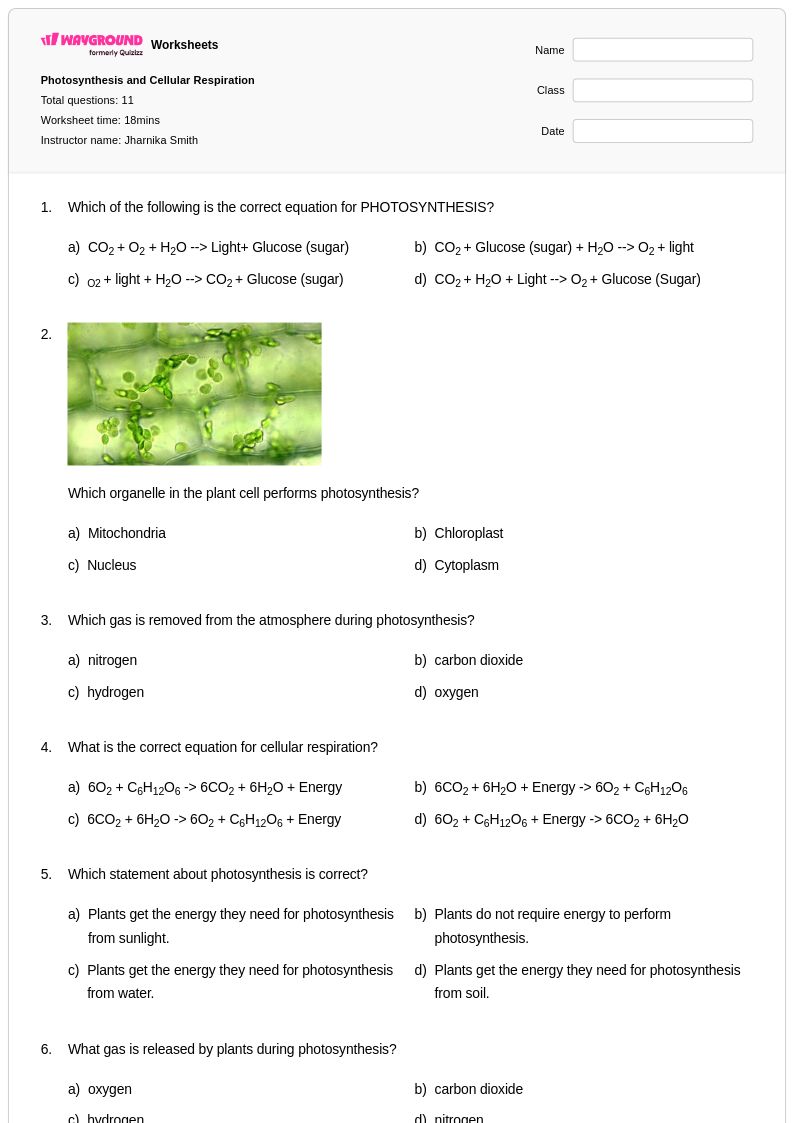
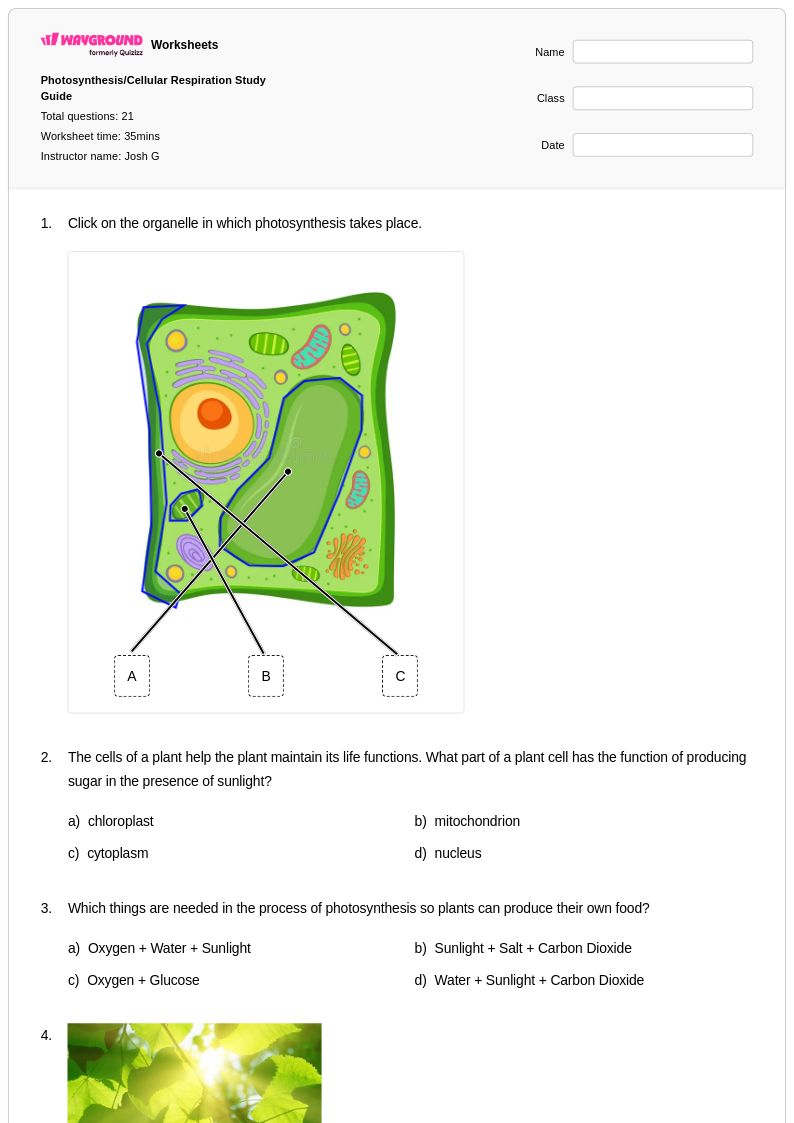
Photosynthesis and cellular respiration worksheets for Class 11 students available through Wayground (formerly Quizizz) provide comprehensive coverage of these fundamental biological processes that sustain life on Earth. These educational resources strengthen students' understanding of how plants convert light energy into chemical energy through photosynthesis, and how both plants and animals extract energy from glucose through cellular respiration. The worksheets include detailed practice problems that guide students through the complex chemical equations, energy transformations, and interconnected cycles that occur within chloroplasts and mitochondria. Each worksheet comes with a complete answer key to support independent learning and self-assessment, and teachers can access these materials as free printables or downloadable pdf files that accommodate various classroom needs and learning preferences.
Wayground (formerly Quizizz) empowers educators with an extensive collection of millions of teacher-created resources specifically designed for Class 11 photosynthesis and cellular respiration instruction. The platform's robust search and filtering capabilities allow teachers to quickly locate worksheets that align with specific curriculum standards and match their students' skill levels. These differentiation tools enable educators to customize content for diverse learners, providing both remediation support for struggling students and enrichment opportunities for advanced learners. The flexible format options, including printable worksheets and digital pdf versions, seamlessly integrate into lesson planning while supporting various teaching methods, from traditional classroom instruction to hybrid learning environments. Teachers can efficiently organize skill practice sessions, create targeted review materials, and develop comprehensive assessment strategies using these carefully curated photosynthesis and cellular respiration resources.
FAQs
How do I teach photosynthesis and cellular respiration together in a biology class?
Teaching photosynthesis and cellular respiration as complementary processes helps students see how energy flows through living systems. Start by establishing each process independently, then use comparative diagrams or tables to show how the outputs of photosynthesis (glucose and oxygen) become the inputs of cellular respiration, and vice versa. Anchoring instruction around the chemical equations for each process gives students a concrete reference point as they work through the interconnected relationship between chloroplasts and mitochondria.
What are the most common mistakes students make when learning photosynthesis and cellular respiration?
One of the most persistent misconceptions is that plants only photosynthesize and animals only respire — students frequently forget that plants perform cellular respiration too. Another common error is confusing the reactants and products of each process, particularly misidentifying where oxygen is released versus consumed. Students also tend to conflate ATP with food or energy storage, rather than understanding it as the immediate energy currency produced during these processes.
What worksheet activities help students practice the stages of cellular respiration?
Effective practice activities include fill-in-the-blank diagrams that trace electrons through glycolysis, the Krebs cycle, and the electron transport chain, as well as sequencing exercises that ask students to order the stages and identify where ATP is produced. Comparing ATP yield at each stage reinforces why the electron transport chain is the most productive step. Questions that ask students to identify the reactants and products at each stage, and where each stage occurs in the cell, are especially useful for building accurate conceptual maps.
How can I use photosynthesis and cellular respiration worksheets in my classroom?
These worksheets are available as printable PDFs for traditional classroom use and in digital formats for technology-integrated environments, accommodating different teaching setups and student preferences. Teachers can assign them as guided practice during a lesson, independent review after direct instruction, or formative assessments before a unit exam. On Wayground, digital versions can also be hosted as a quiz, allowing teachers to track student performance and identify gaps in understanding across the class.
How do I help students understand the light-dependent reactions versus the Calvin cycle?
Students often struggle to distinguish what happens in the thylakoid membrane versus the stroma of the chloroplast. Frame the light-dependent reactions as the energy-capturing stage where water is split and ATP and NADPH are produced, then present the Calvin cycle as the sugar-building stage that uses those energy carriers to fix carbon dioxide into glucose. Diagram-labeling and process-sequencing exercises are particularly effective for reinforcing where each set of reactions occurs and what each stage requires as inputs.
How do I differentiate photosynthesis and cellular respiration instruction for students at different levels?
For struggling students, simplify the focus to the overall inputs and outputs of each process before introducing multi-step pathways like the Krebs cycle or electron transport chain. Advanced learners can be challenged with questions about ATP synthesis mechanisms, the chemiosmosis gradient, or the biochemical reasons why aerobic respiration yields far more ATP than glycolysis alone. On Wayground, teachers can apply accommodations such as reduced answer choices or read-aloud settings to individual students, ensuring that differentiated support is delivered without disrupting the rest of the class.