Free Printable Transcription and Translation Worksheets for Class 11
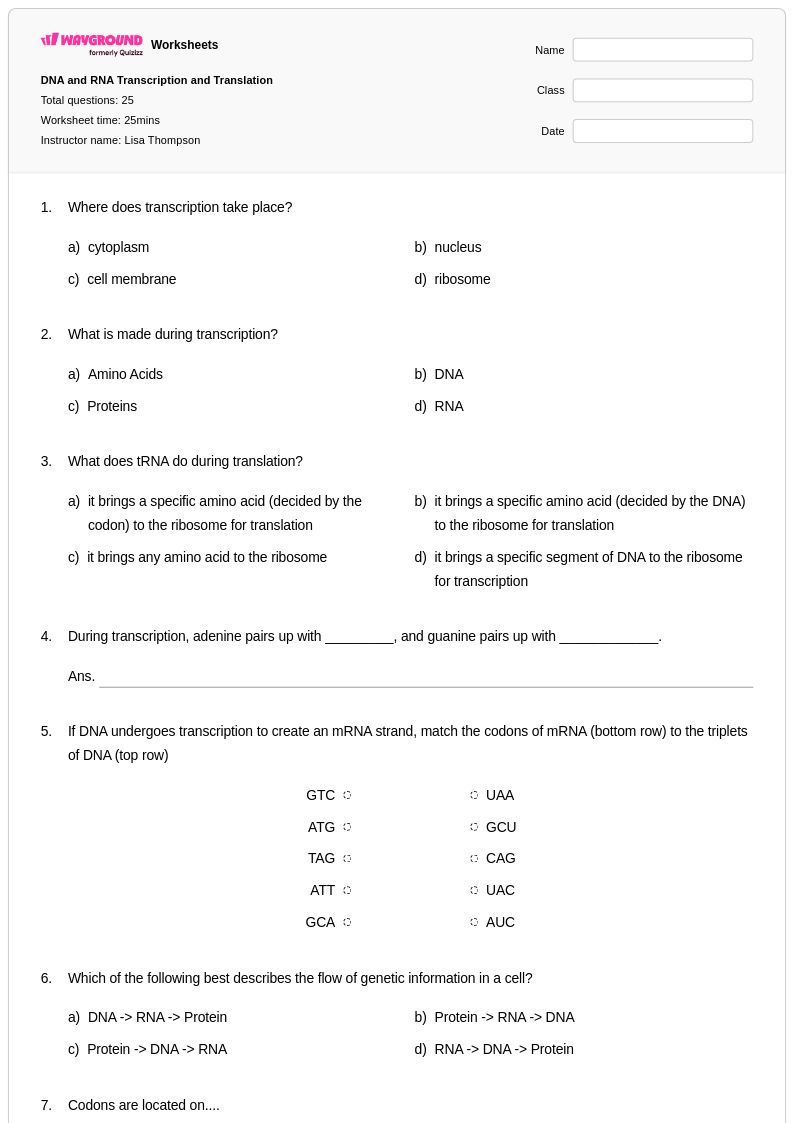
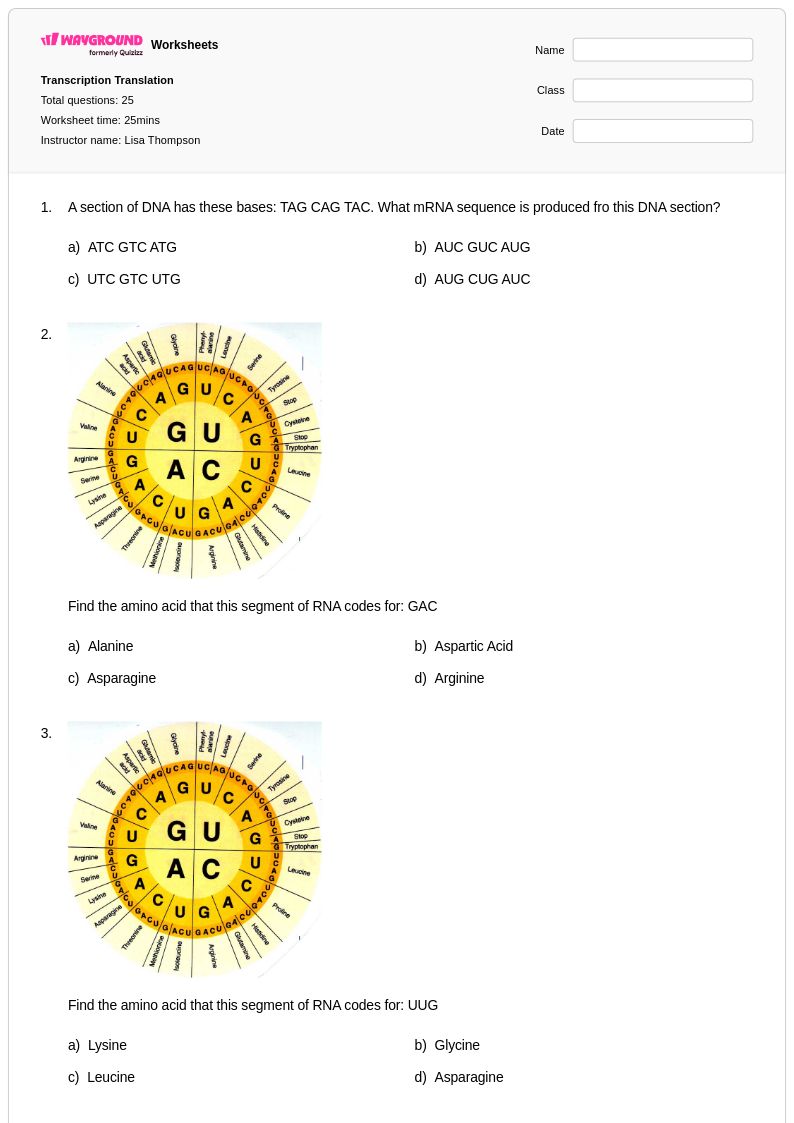
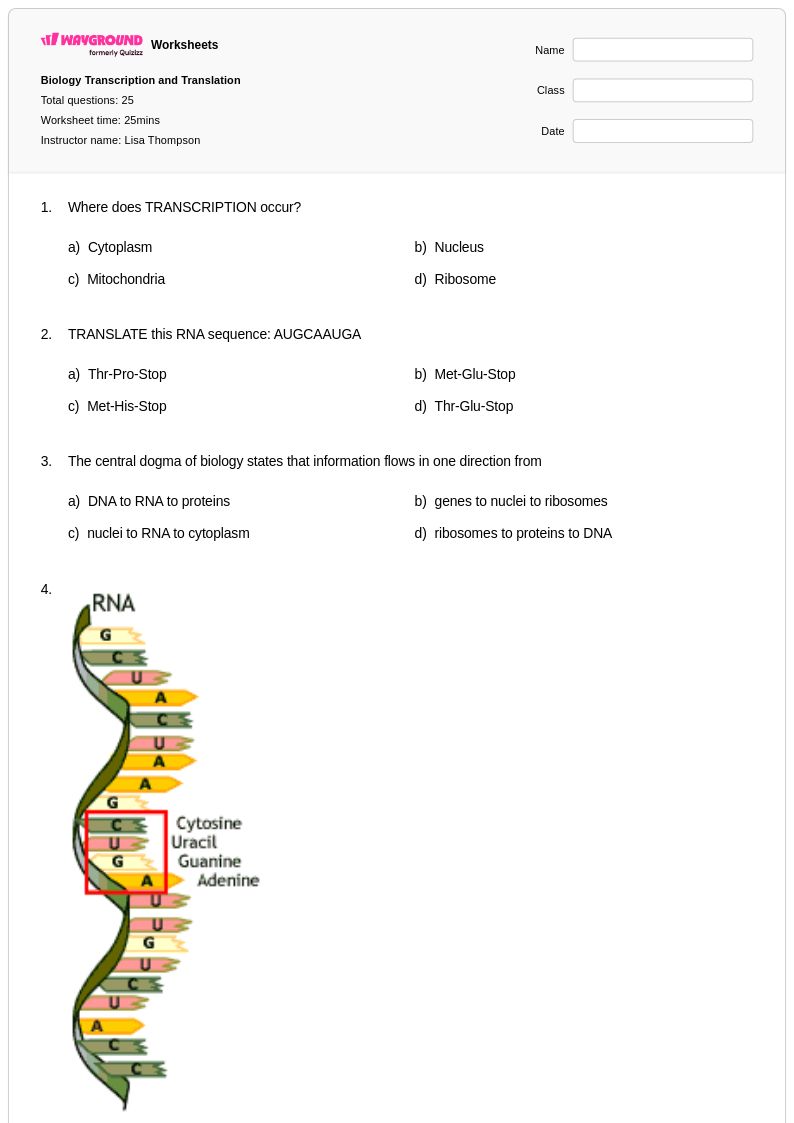
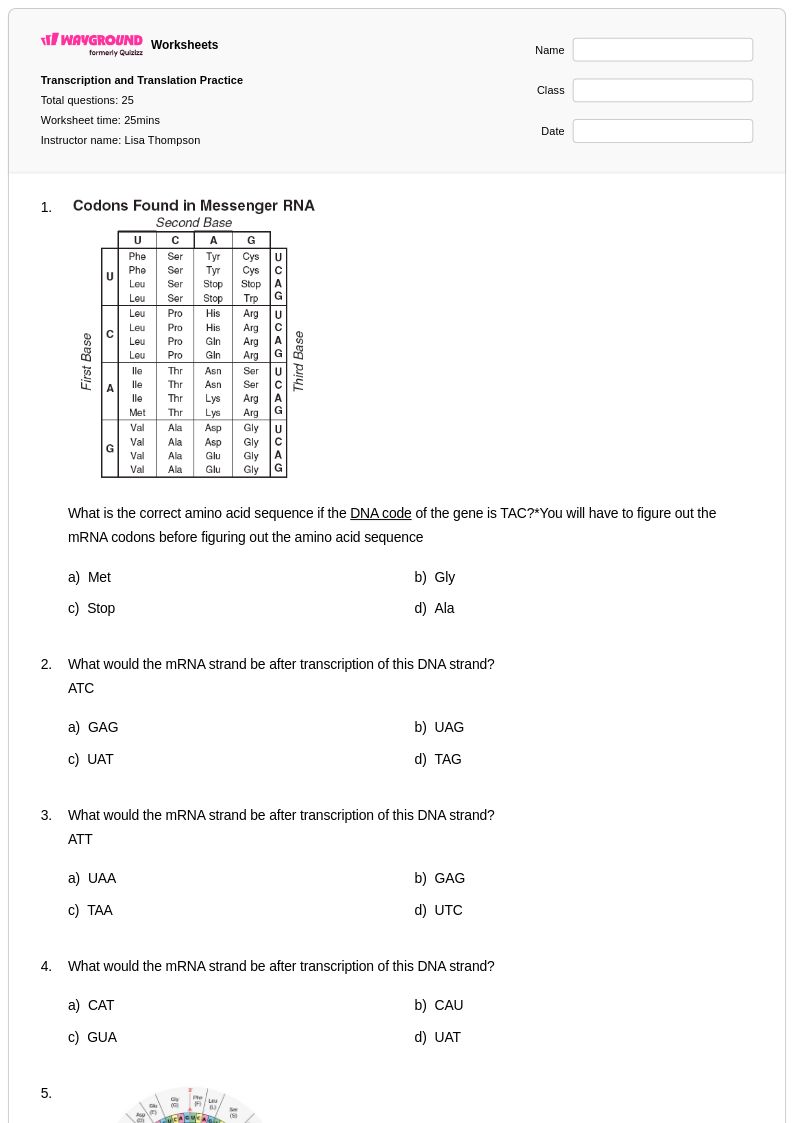
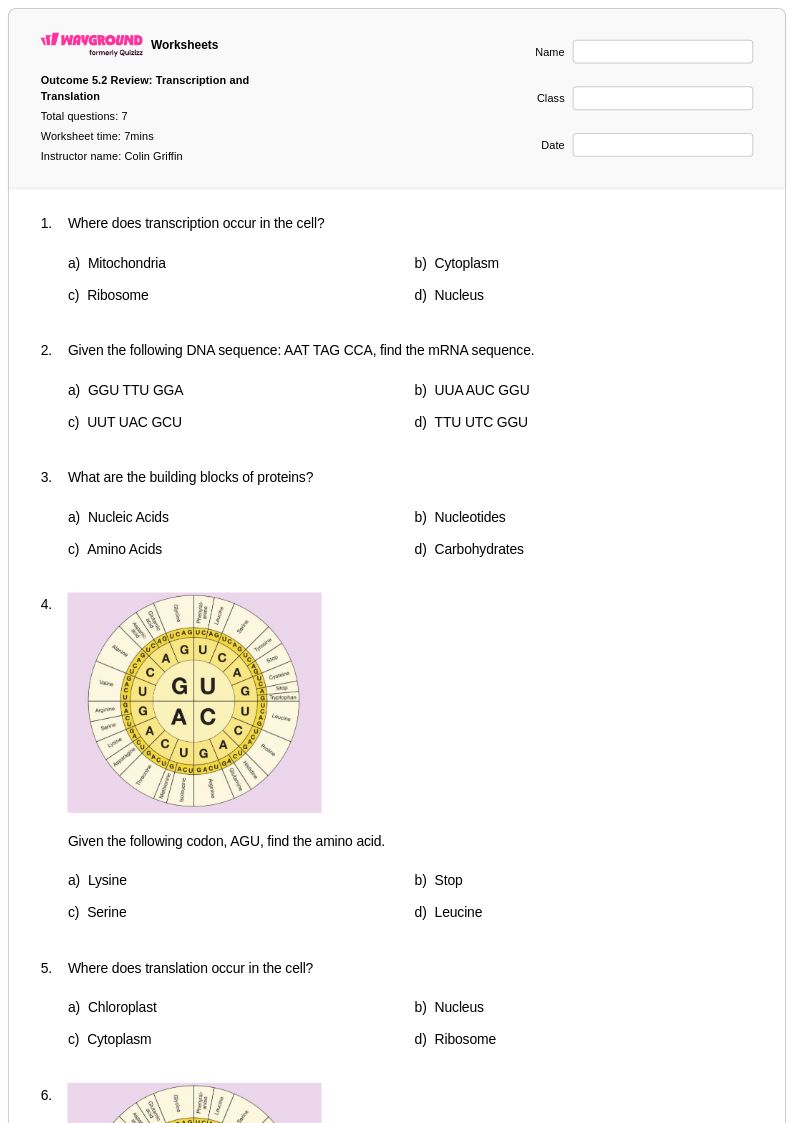
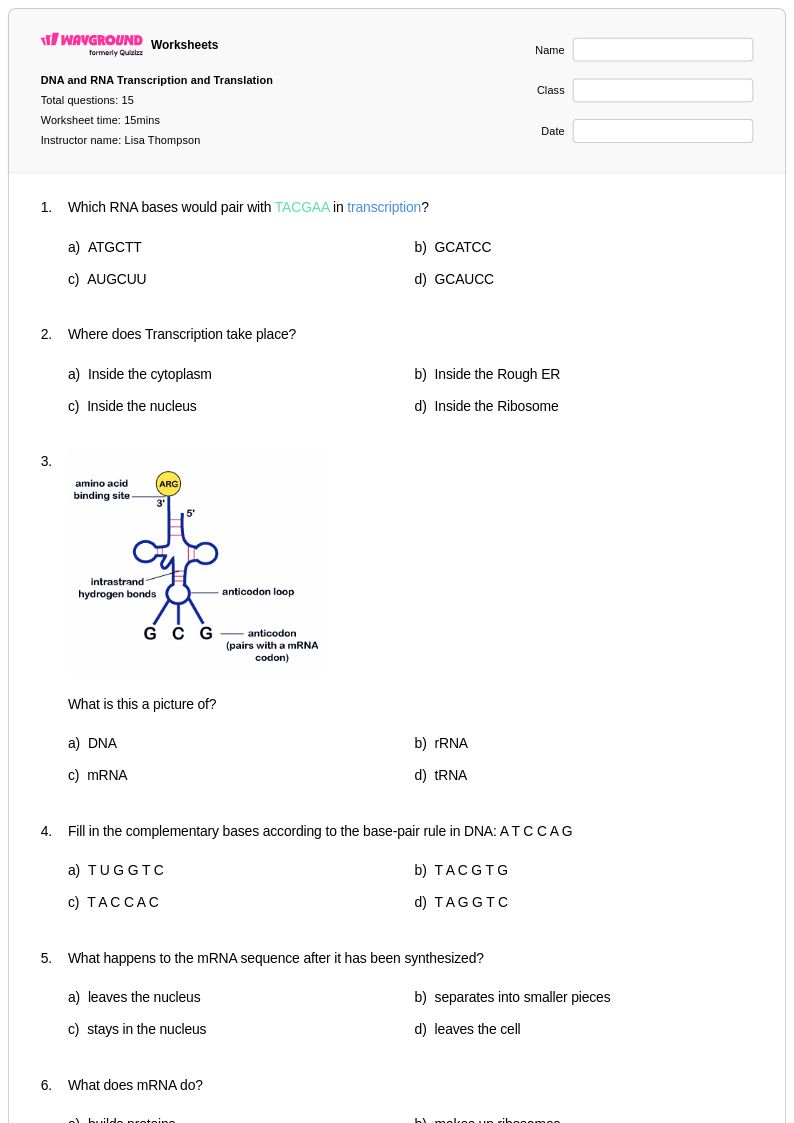
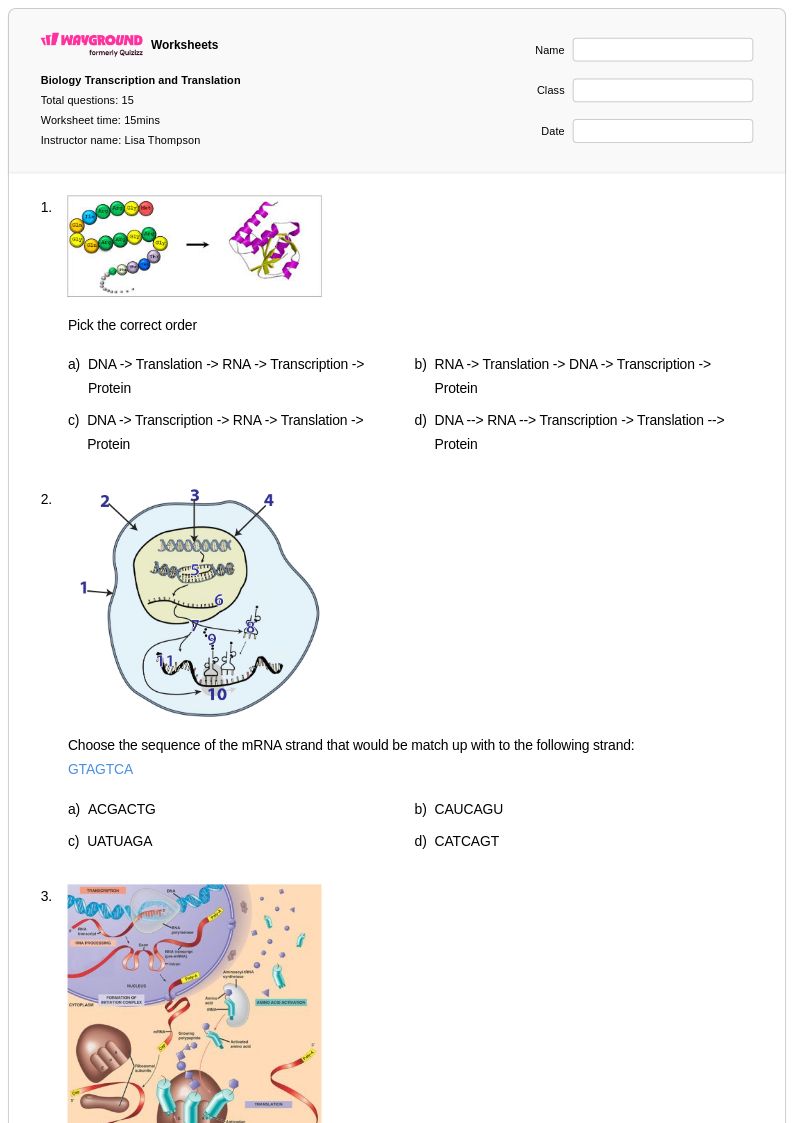
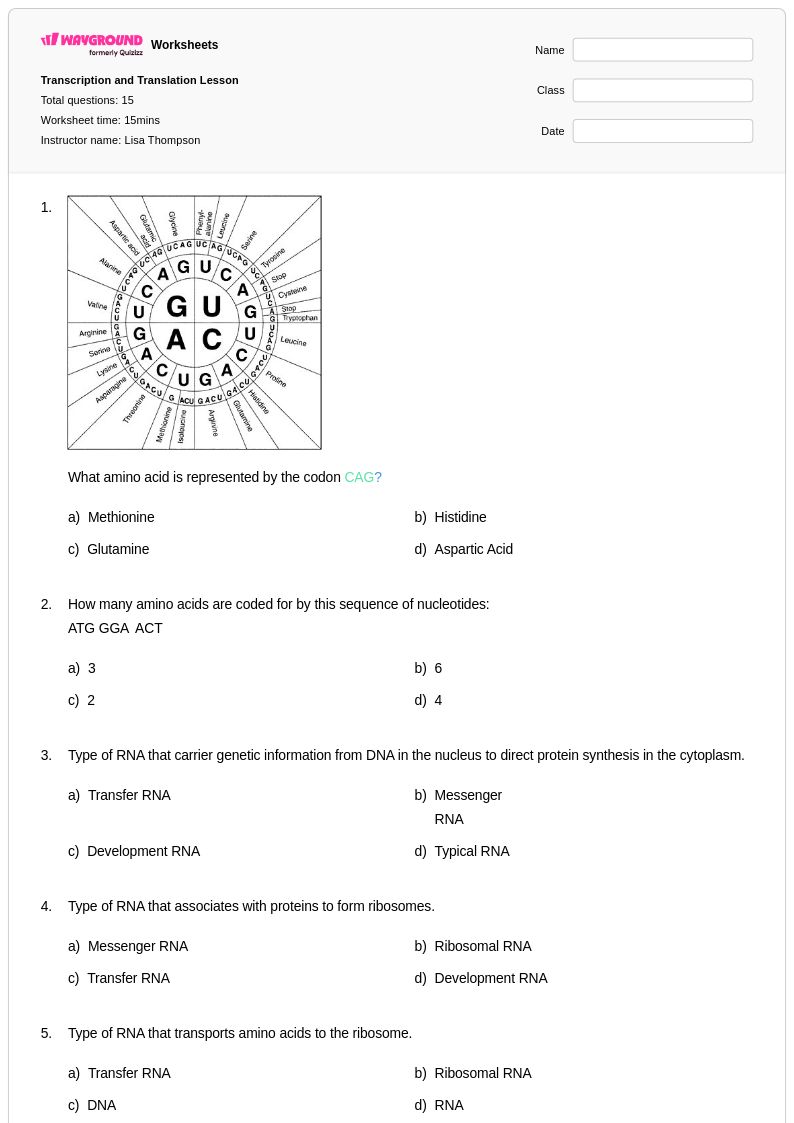
Class 11 transcription and translation worksheets from Wayground provide comprehensive printables and practice problems with answer keys to help students master protein synthesis processes in molecular biology.
Explore printable Transcription and Translation worksheets for Class 11
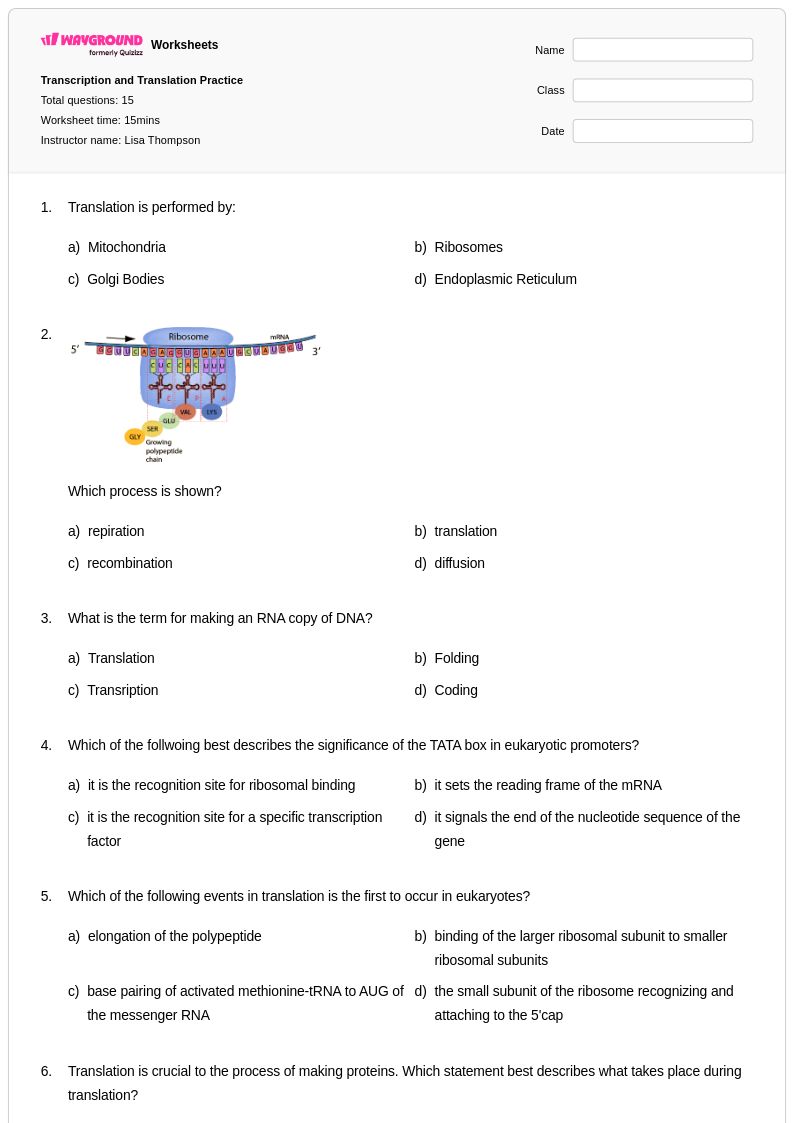
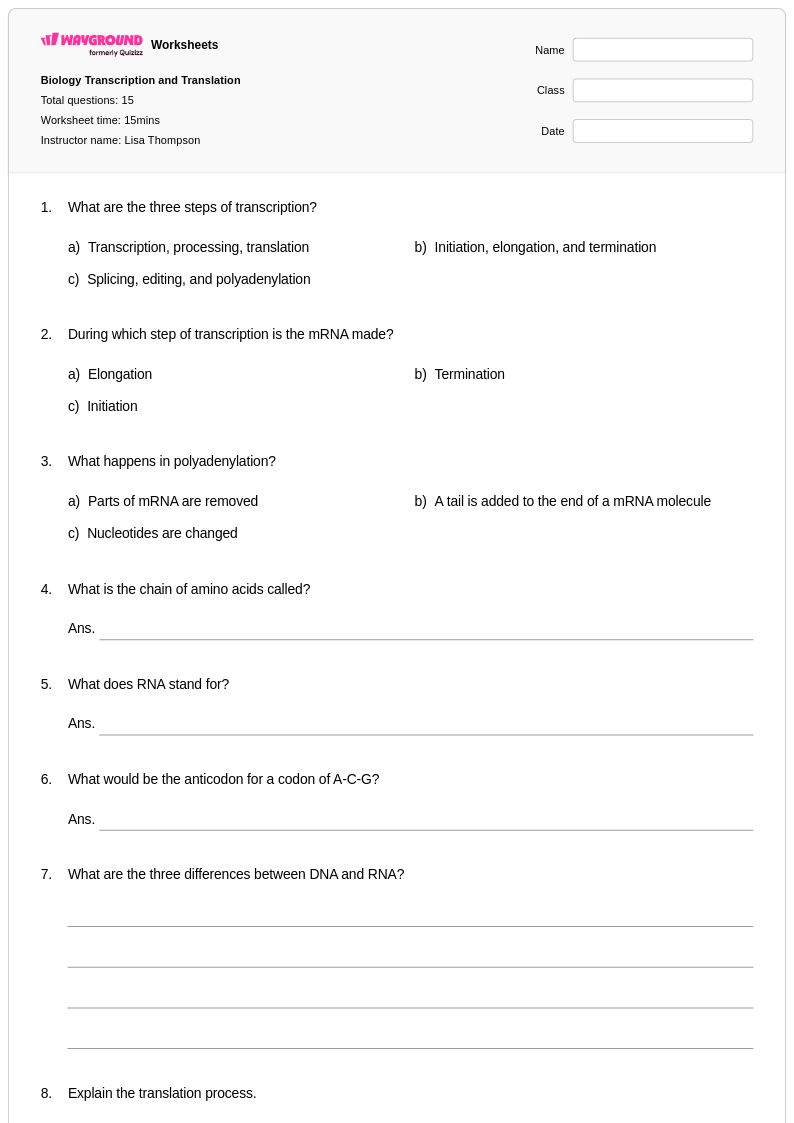
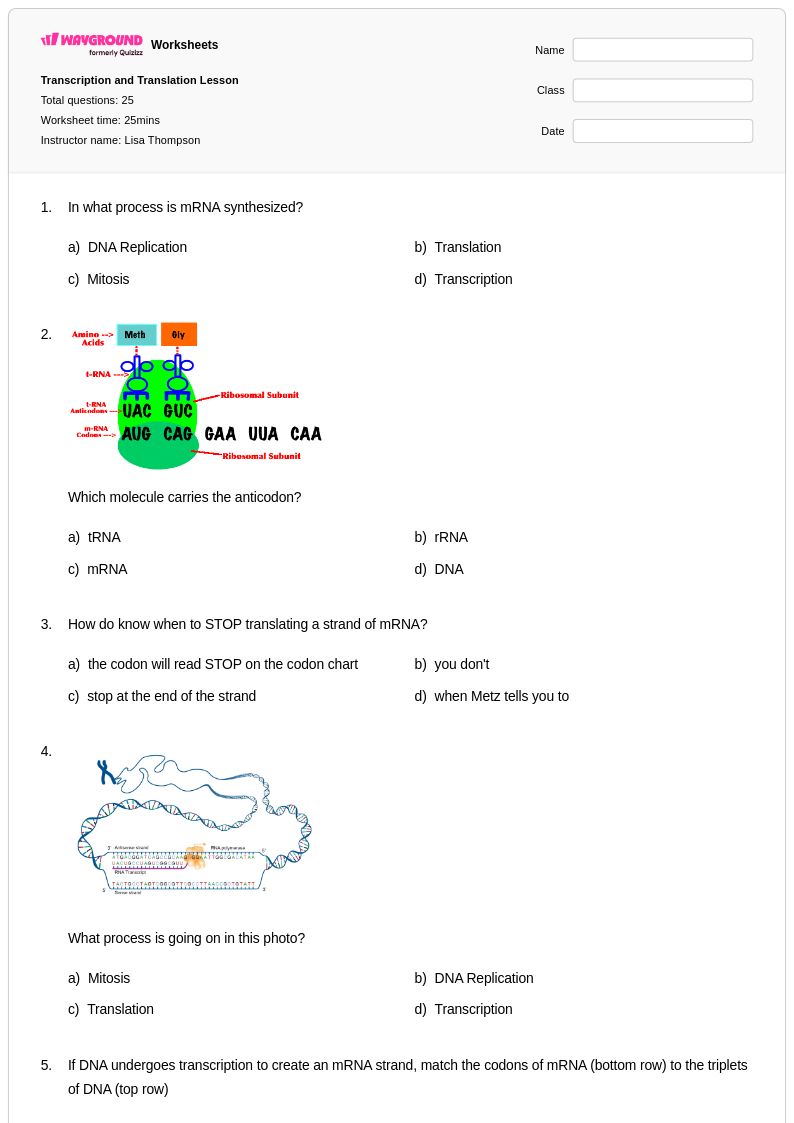
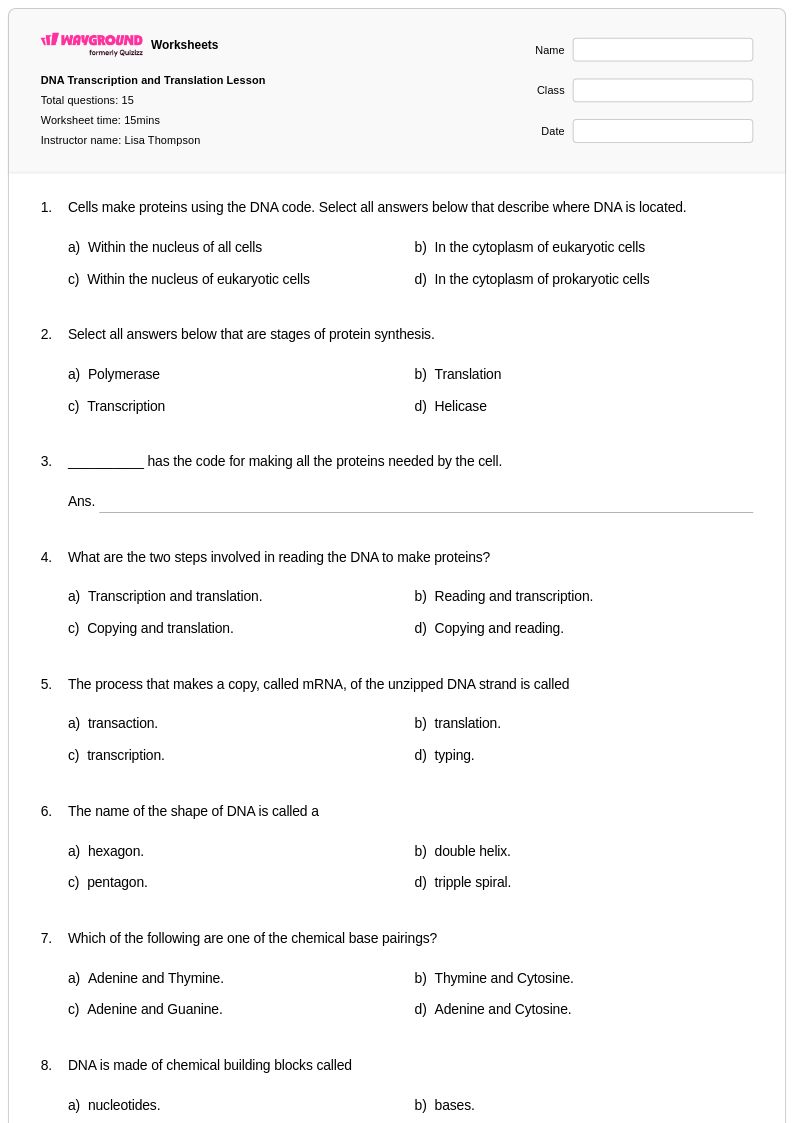
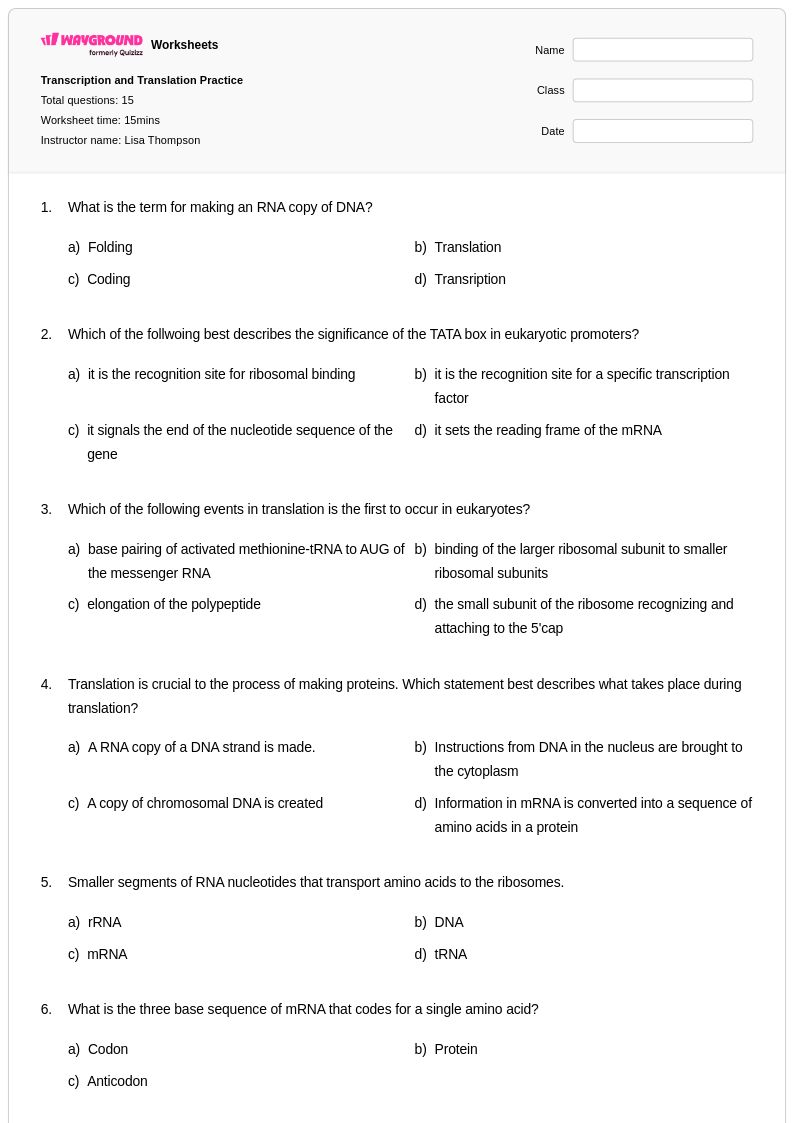
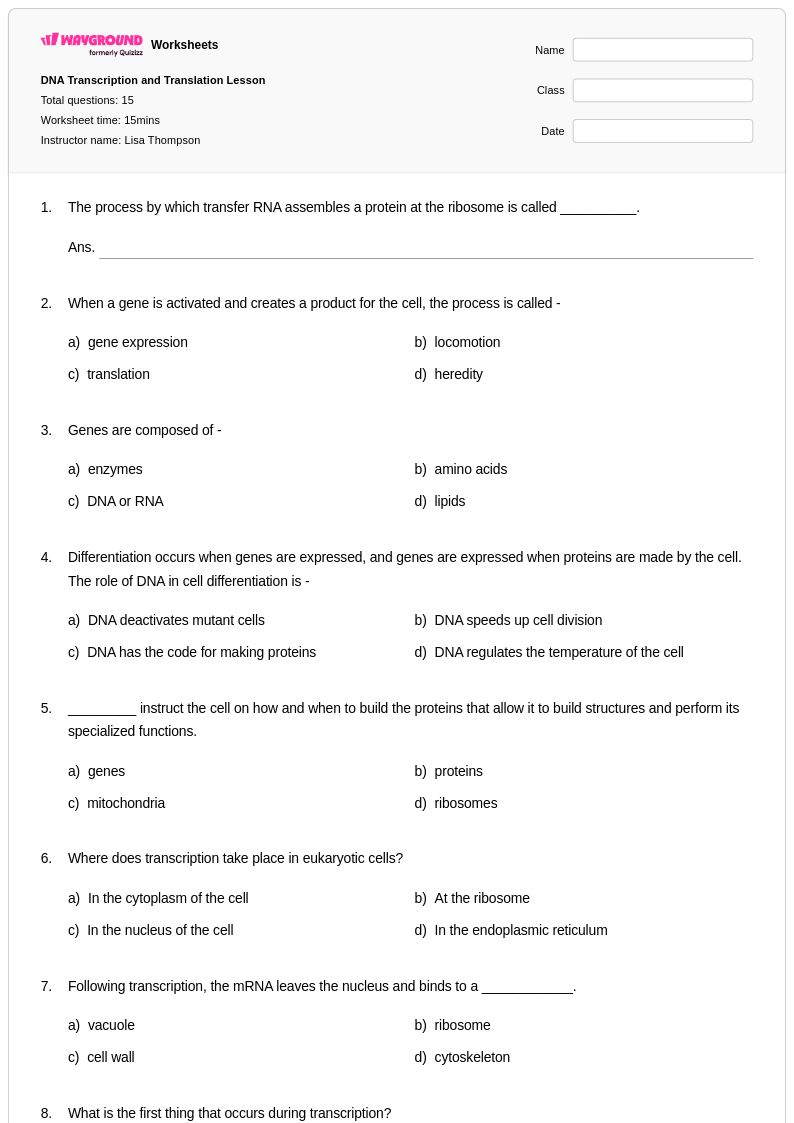
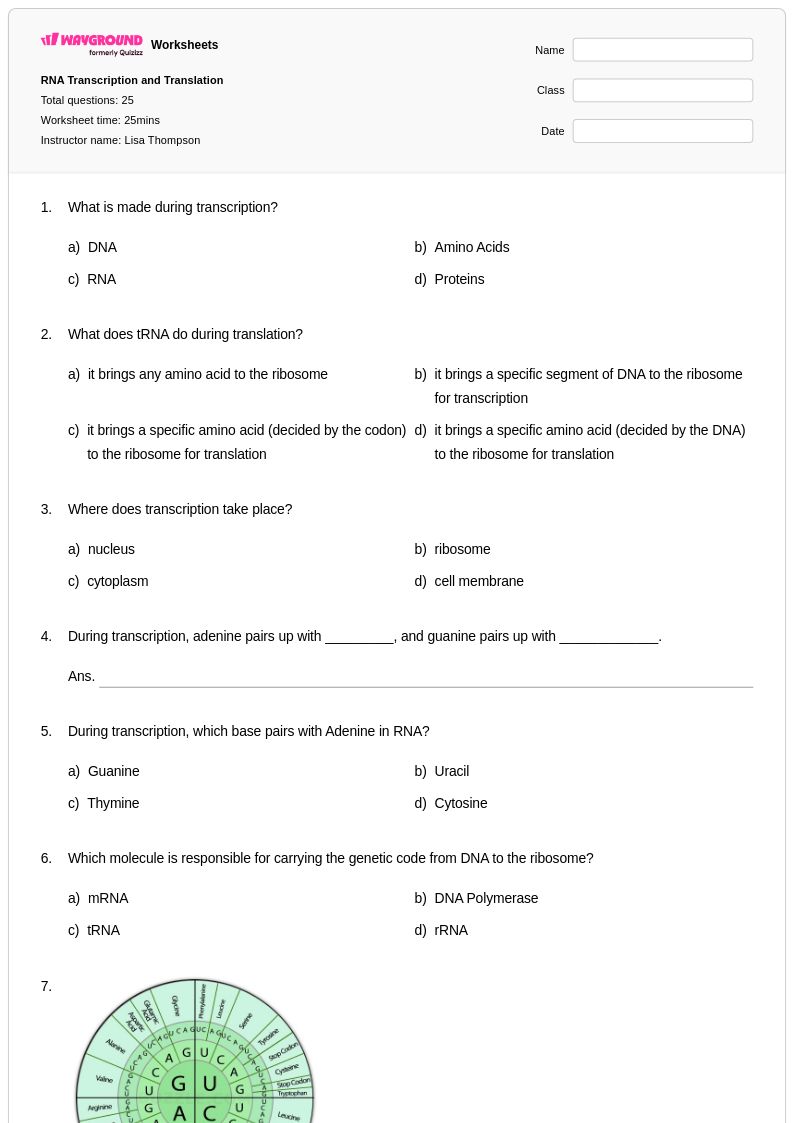
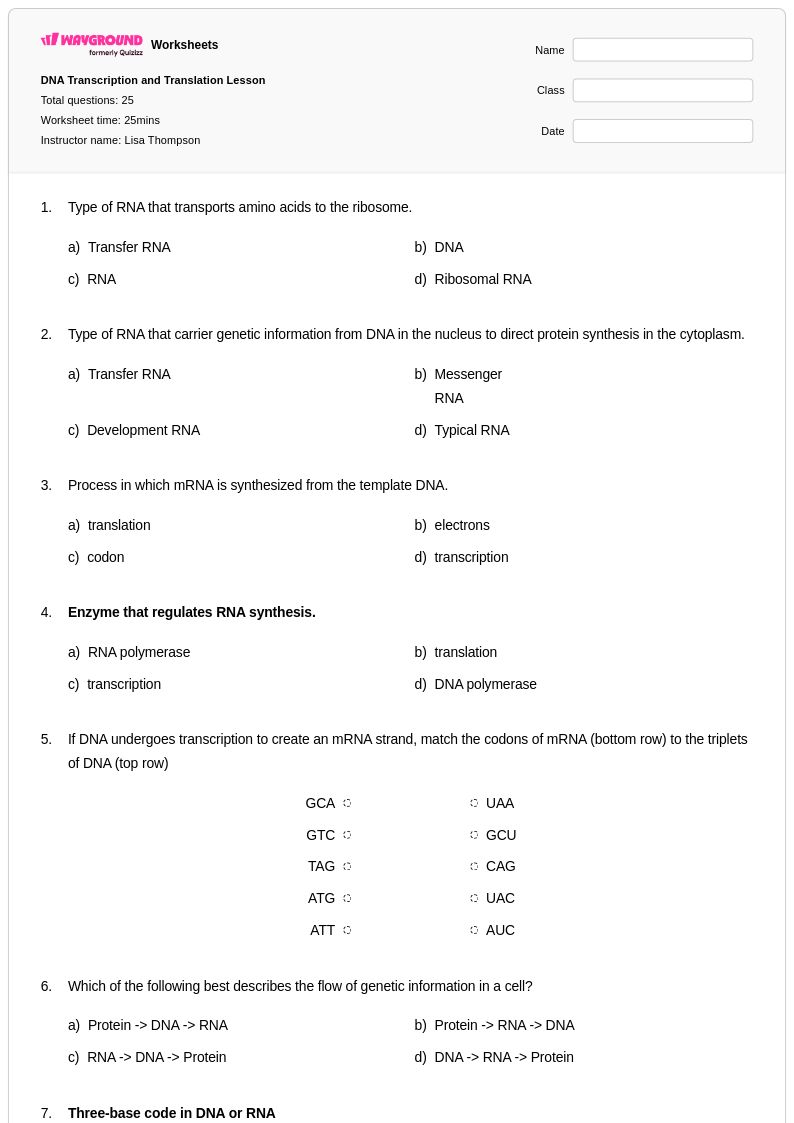
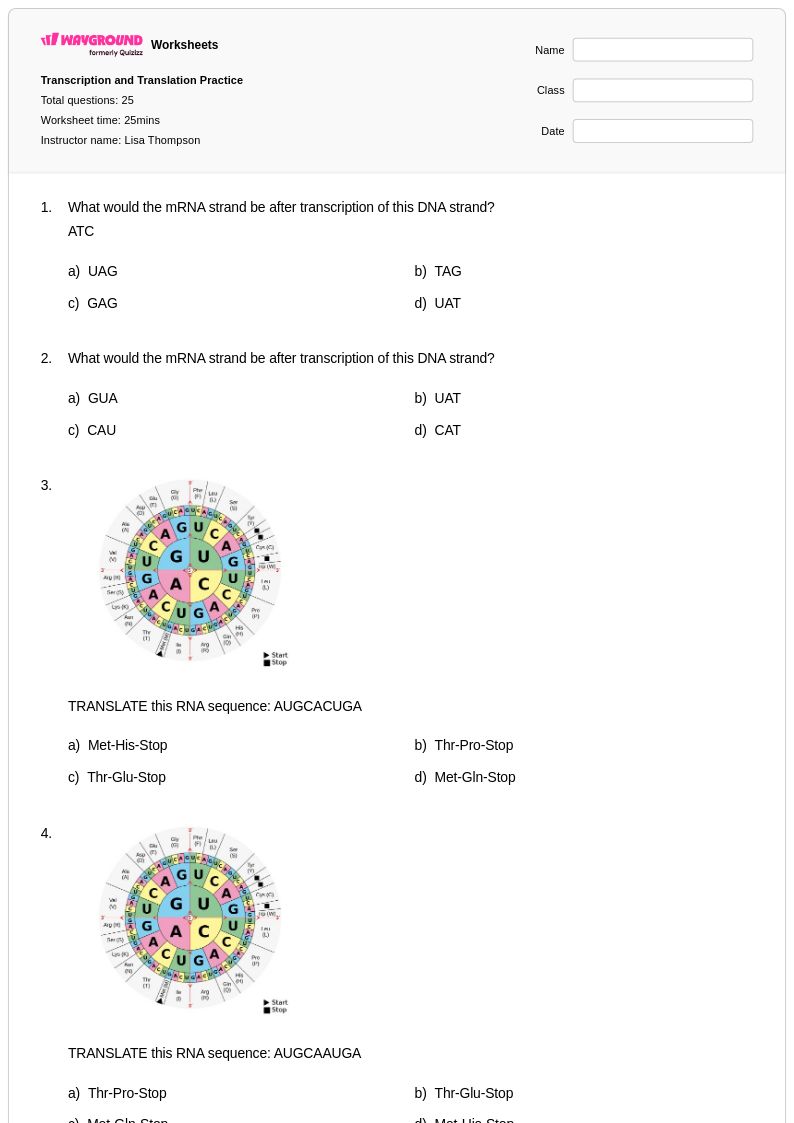
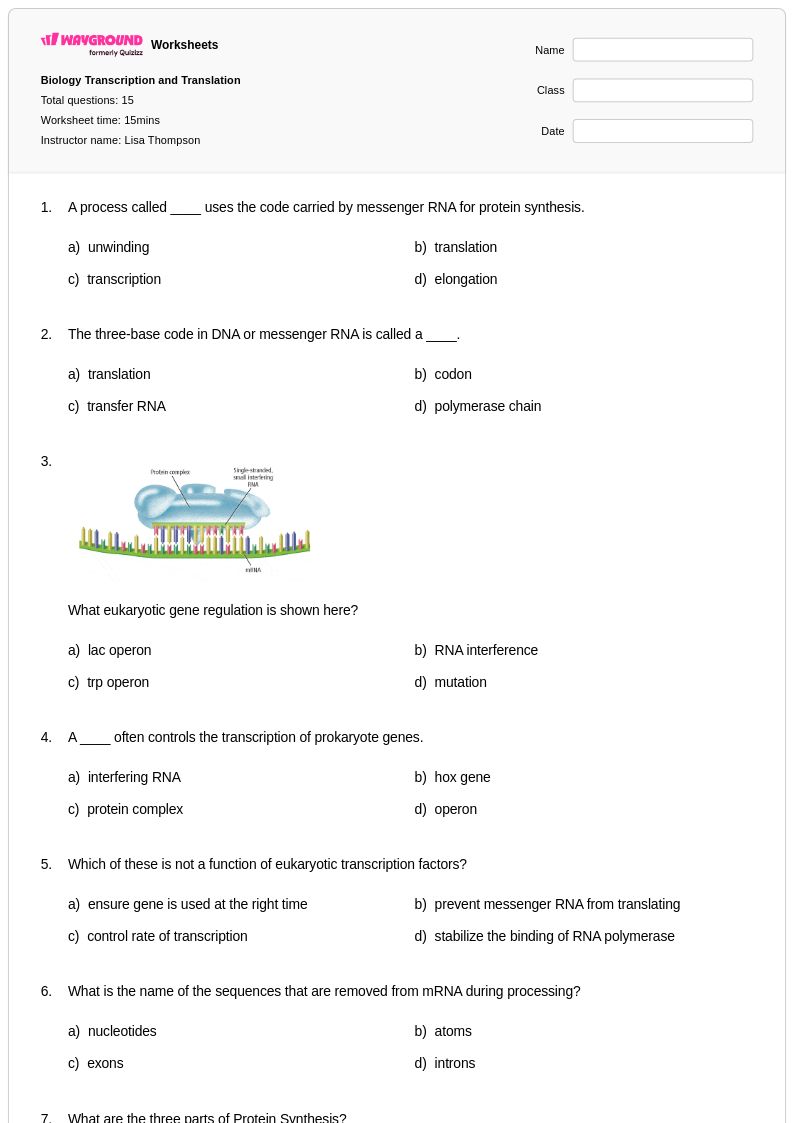
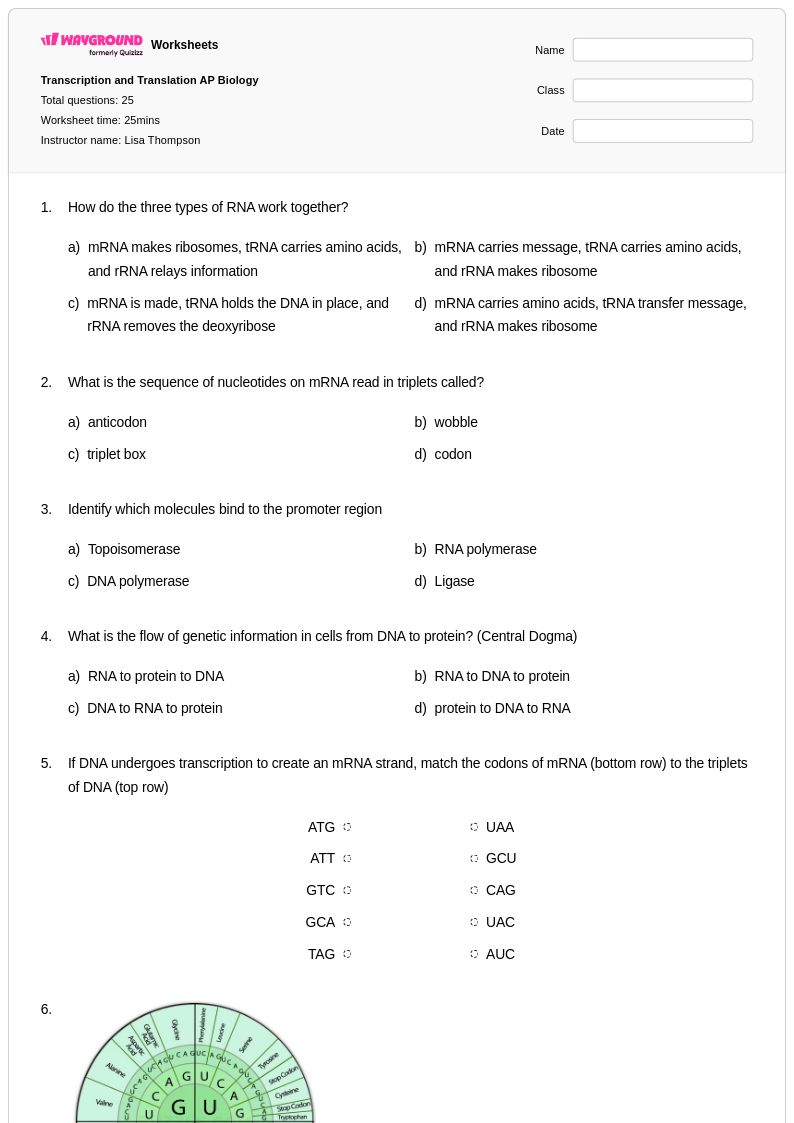
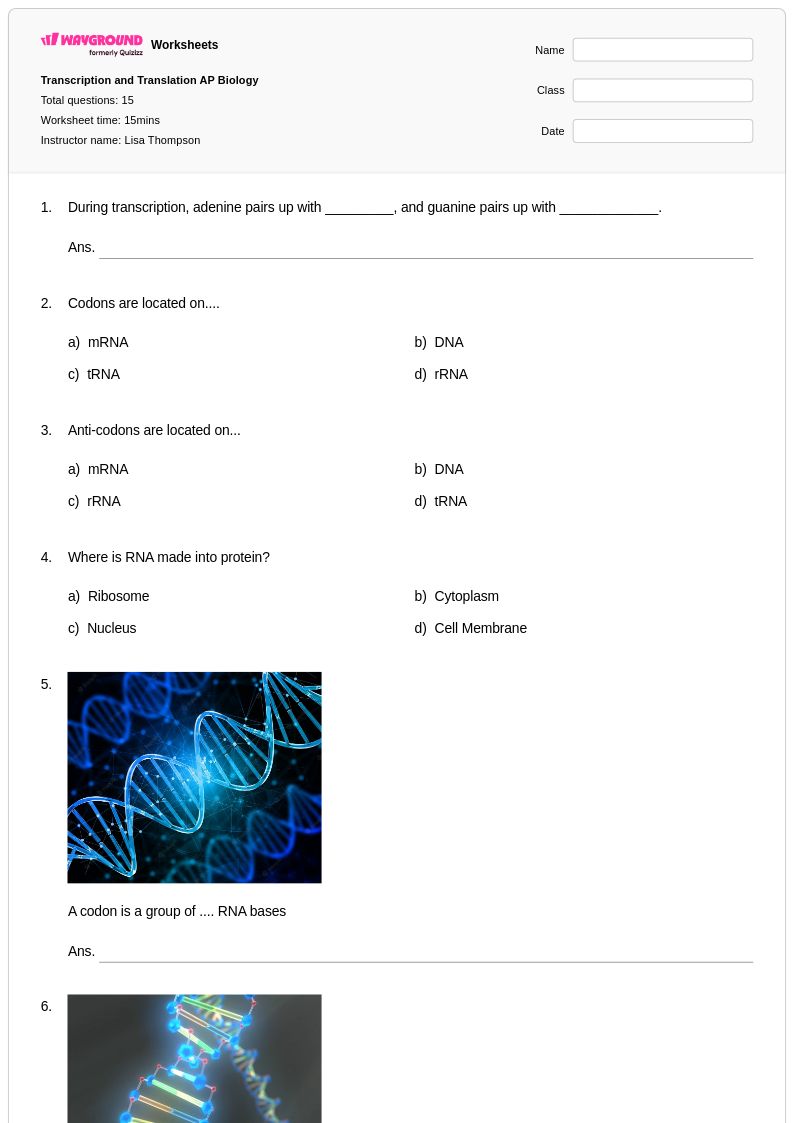
Transcription and translation worksheets for Class 11 biology students available through Wayground (formerly Quizizz) provide comprehensive practice with the central dogma of molecular biology, focusing on how genetic information flows from DNA to RNA to proteins. These expertly designed worksheets strengthen students' understanding of the intricate processes that occur within cells, including the synthesis of messenger RNA during transcription and the subsequent protein synthesis during translation. Students work through detailed practice problems that cover RNA polymerase function, codon recognition, amino acid sequencing, and the roles of various RNA types including mRNA, tRNA, and rRNA. Each worksheet includes a complete answer key and is available as a free printable pdf, allowing students to master complex concepts such as the genetic code, start and stop codons, and the differences between prokaryotic and eukaryotic gene expression.
Wayground (formerly Quizizz) supports biology educators with an extensive collection of millions of teacher-created transcription and translation resources that can be easily accessed through powerful search and filtering capabilities. Teachers can locate worksheets that align with specific curriculum standards and customize content to meet diverse classroom needs, whether for initial skill practice, targeted remediation, or advanced enrichment activities. The platform's differentiation tools enable educators to modify worksheets for varying ability levels, while the availability of both printable pdf formats and interactive digital versions provides flexibility for different learning environments. These comprehensive resources streamline lesson planning by offering ready-to-use materials that help students build proficiency in understanding how cells convert genetic information into functional proteins, supporting both classroom instruction and independent study.
FAQs
How do I teach transcription and translation in a biology class?
Start by grounding students in the central dogma — DNA to RNA to protein — before separating transcription and translation into distinct lessons. Teach transcription first, focusing on RNA polymerase binding to the promoter, template strand reading, and mRNA synthesis in the nucleus. Then move to translation, walking students through codon-anticodon pairing, ribosome function, and how amino acids are assembled into a polypeptide chain. Using visual diagrams alongside guided practice problems helps students track the flow of genetic information across both processes before asking them to work independently.
What exercises help students practice transcription and translation?
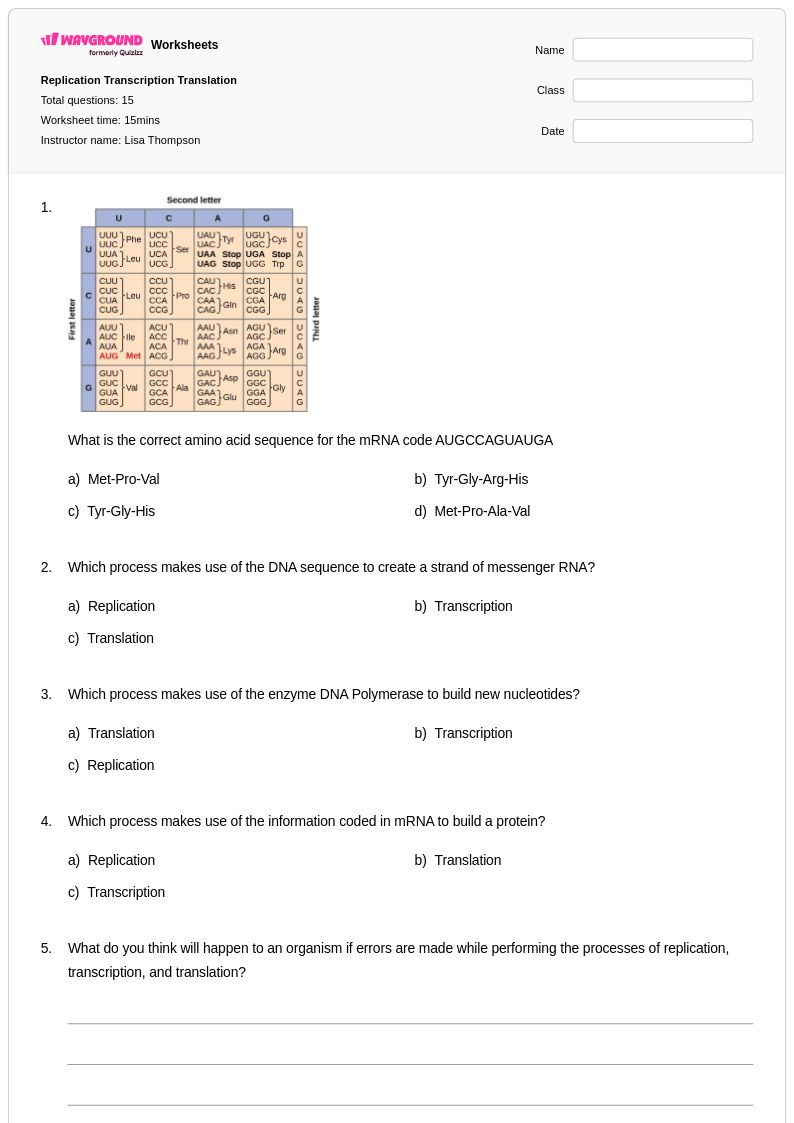
The most effective practice exercises ask students to work through the full sequence from a DNA template: transcribing the coding strand into mRNA, identifying codons, using a codon chart to determine amino acids, and writing out the resulting polypeptide. Tracing error-based scenarios — such as a point mutation in the DNA — also deepens understanding by showing students how changes at the molecular level affect the final protein. Transcription and translation worksheets on Wayground include structured problems that guide students through each step, with answer keys for self-checking.
What mistakes do students commonly make when learning transcription and translation?
One of the most persistent errors is confusing the template strand with the coding strand during transcription, which leads to incorrect mRNA sequences. Students also frequently mix up the directionality of synthesis, forgetting that mRNA is read 5' to 3' and that the ribosome moves in a specific direction. Another common misconception is treating transcription and translation as a single continuous process rather than two spatially and mechanically distinct steps — particularly important in eukaryotes where mRNA processing occurs before translation begins.
How do I use Wayground's transcription and translation worksheets in my classroom?
Wayground's transcription and translation worksheets are available as printable PDFs for traditional classroom use and in digital formats for technology-integrated learning environments, including the option to host them as a quiz directly on Wayground. Teachers can assign them as guided in-class practice, independent homework, or assessment preparation. For students who need additional support, Wayground's built-in accommodation tools allow teachers to enable read-aloud, extended time, or reduced answer choices on a per-student basis, so the same worksheet can serve a range of learners without requiring separate materials.
How do I differentiate transcription and translation instruction for struggling students?
Breaking the process into smaller, scaffolded steps is key — give struggling students a partially completed mRNA strand before asking them to finish the translation stage, rather than starting from raw DNA. Visual supports like labeled ribosome diagrams and color-coded codon charts reduce cognitive load significantly. On Wayground, teachers can apply individual accommodations such as read-aloud, reduced answer choices, and extended time for specific students, allowing everyone to work on the same core material while receiving the level of support they need.
How does transcription differ from translation, and how should I explain this to students?
Transcription is the process by which RNA polymerase reads a DNA template strand and synthesizes a complementary mRNA molecule, occurring in the nucleus of eukaryotic cells. Translation is a separate process that takes place at the ribosome, where the mRNA sequence is read in three-nucleotide codons and tRNA molecules deliver the corresponding amino acids to build a protein. A useful framing for students is to describe transcription as 'copying the message' and translation as 'building from the instructions' — this distinction helps them avoid conflating the two when working through practice problems.