Free Printable Biological Molecules Worksheets for Class 11
Class 11 biology worksheets and printables help students master biological molecules through comprehensive practice problems, free PDF resources, and detailed answer keys for effective learning.
Explore printable Biological Molecules worksheets for Class 11
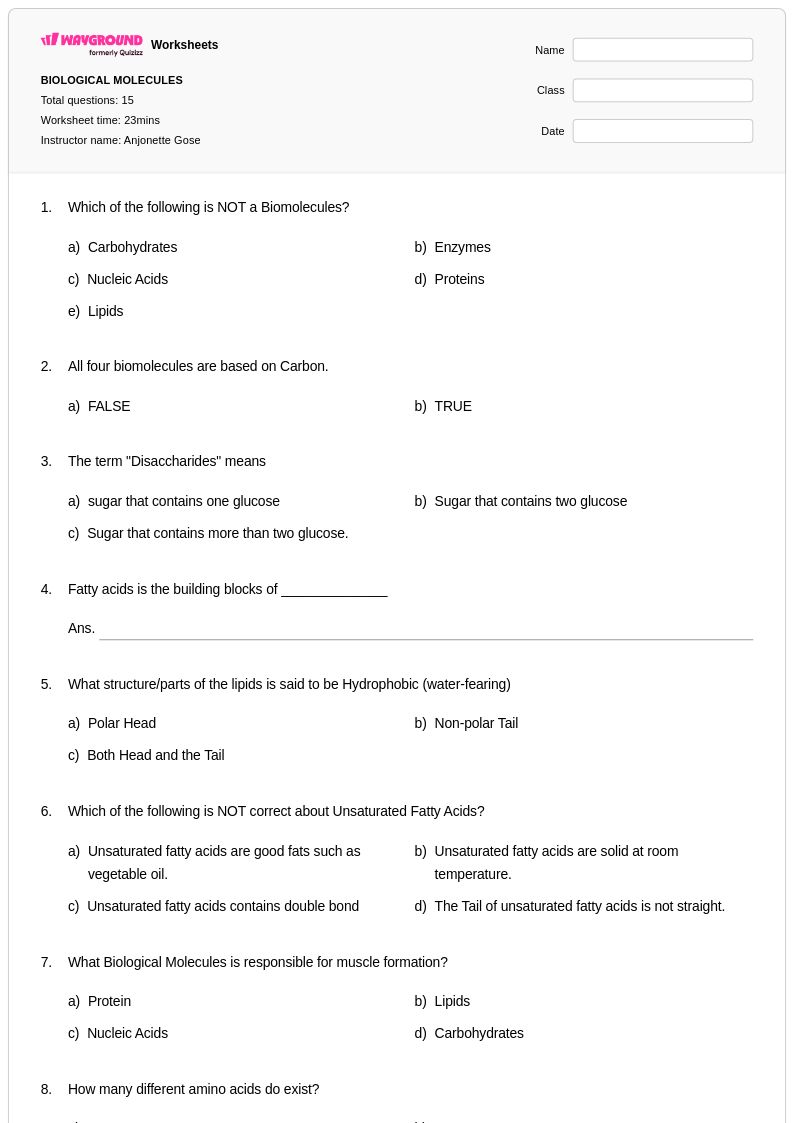
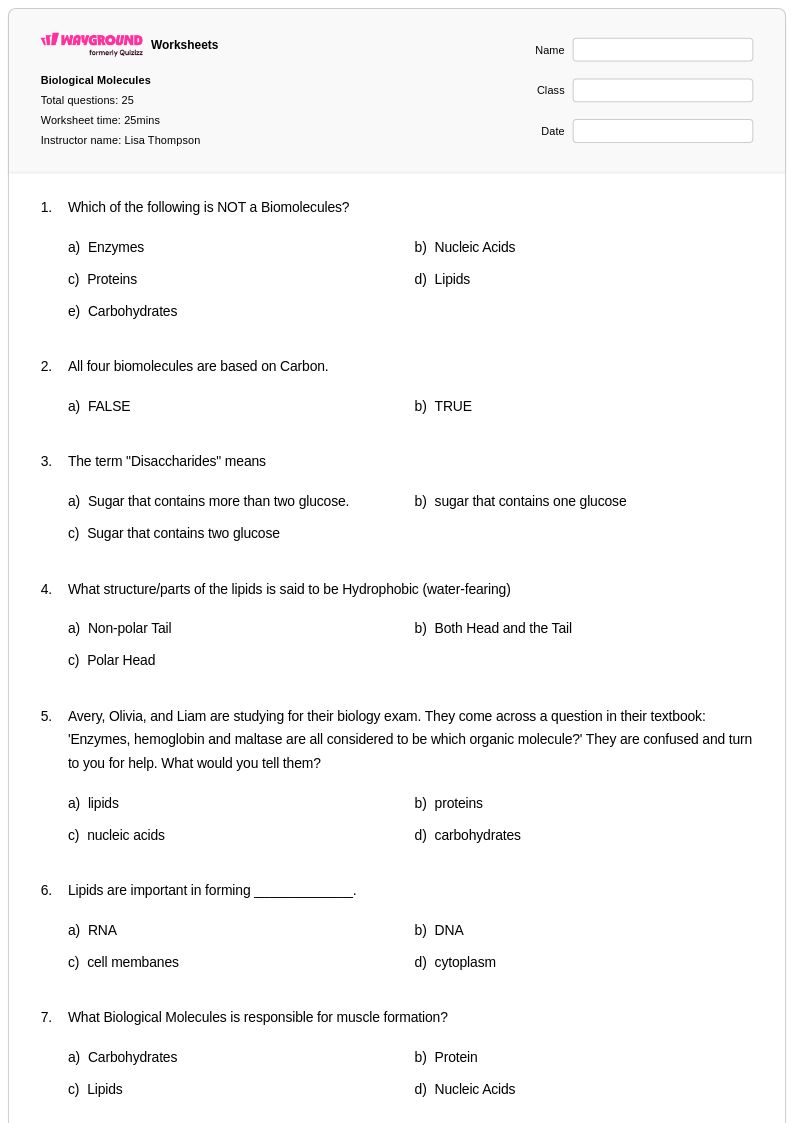
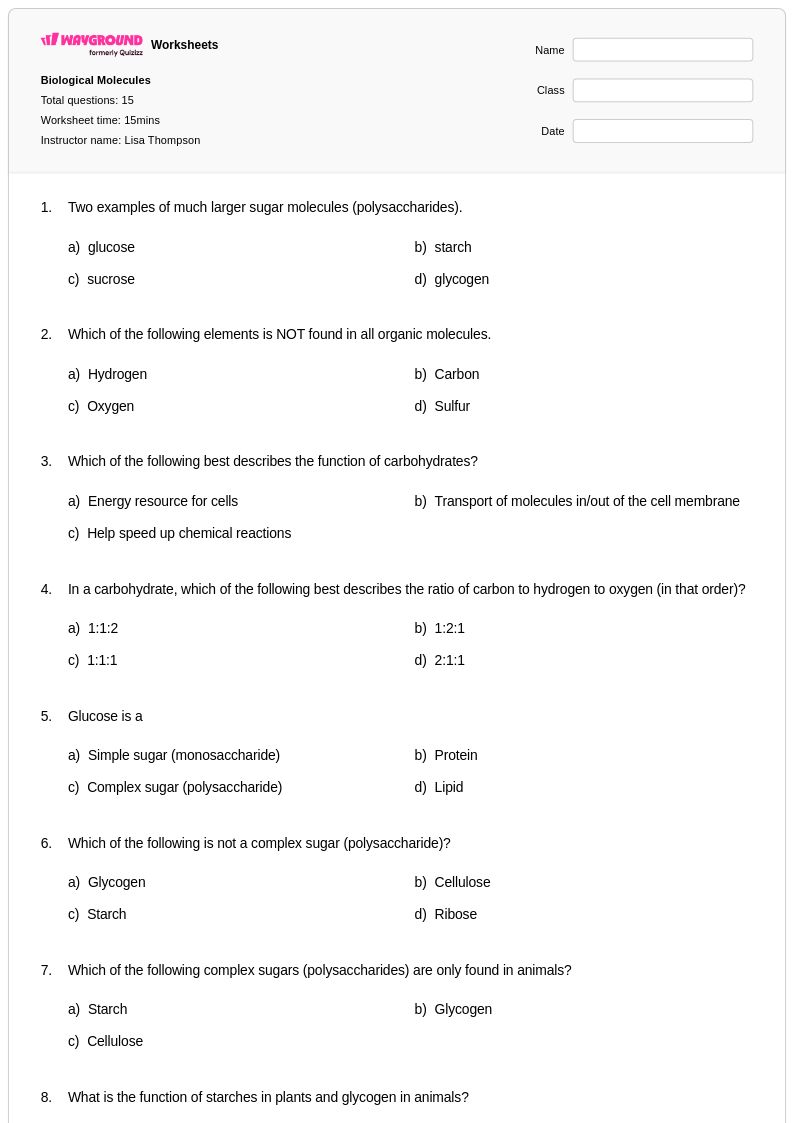
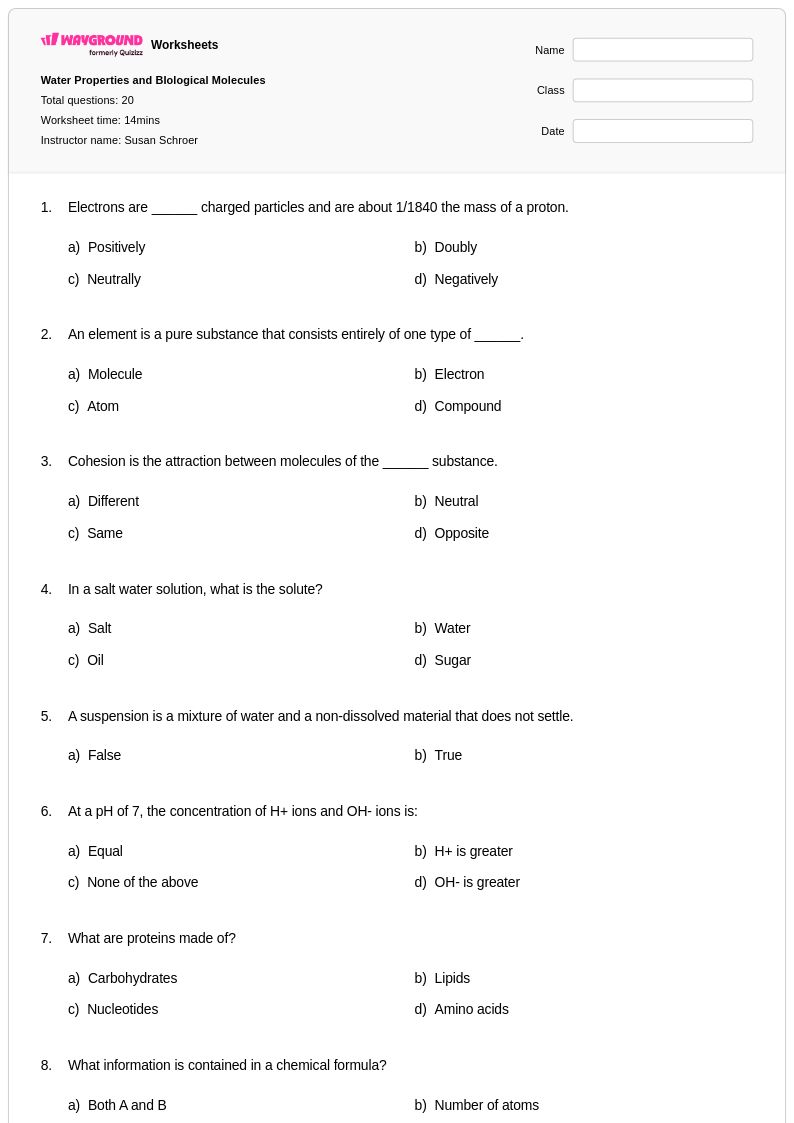
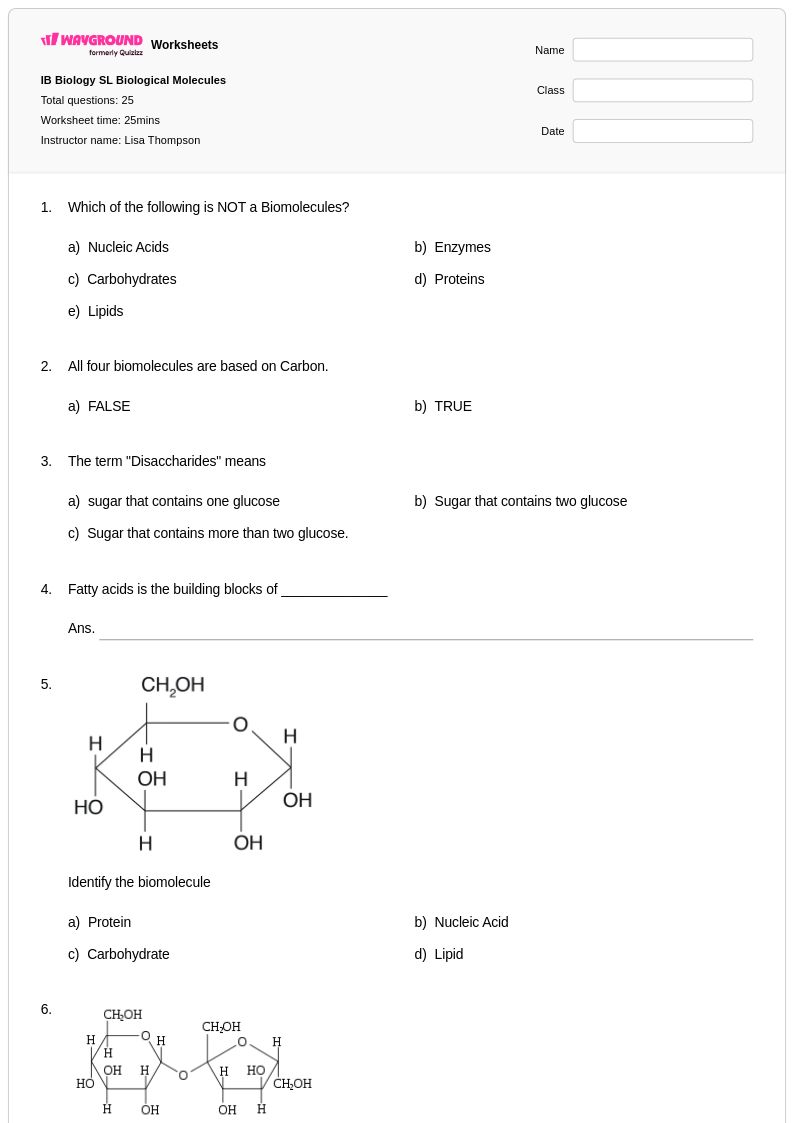
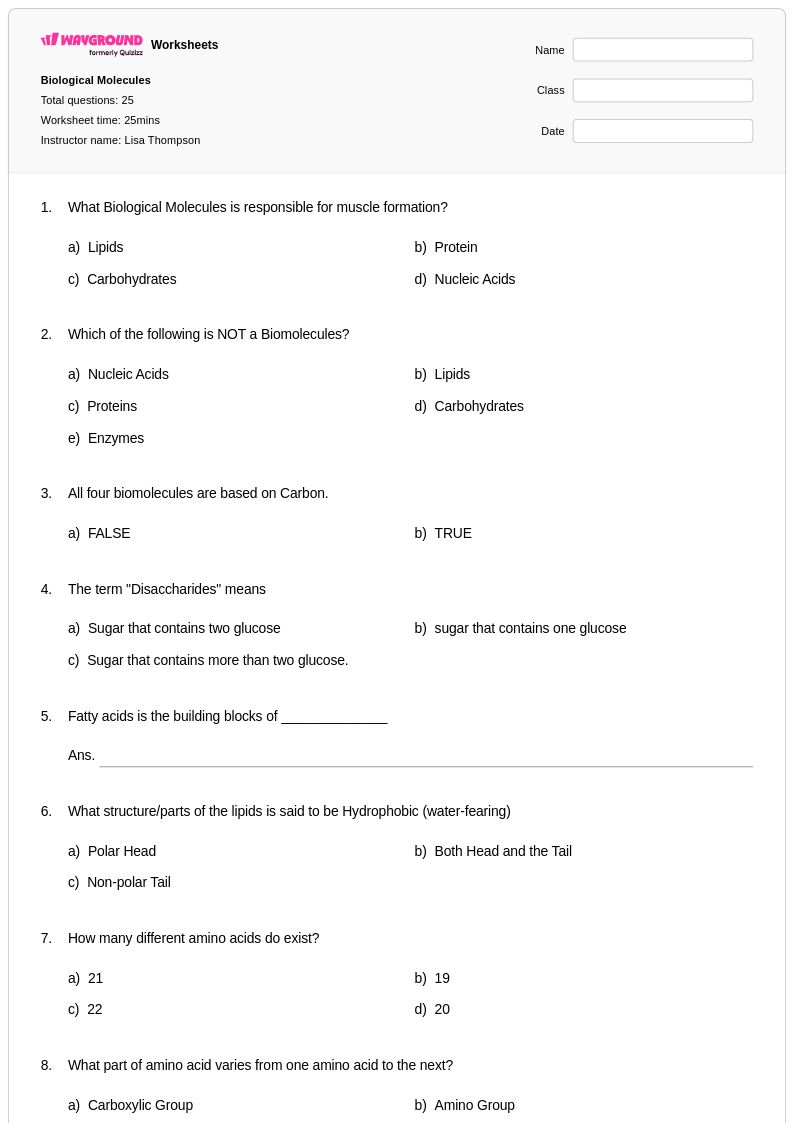
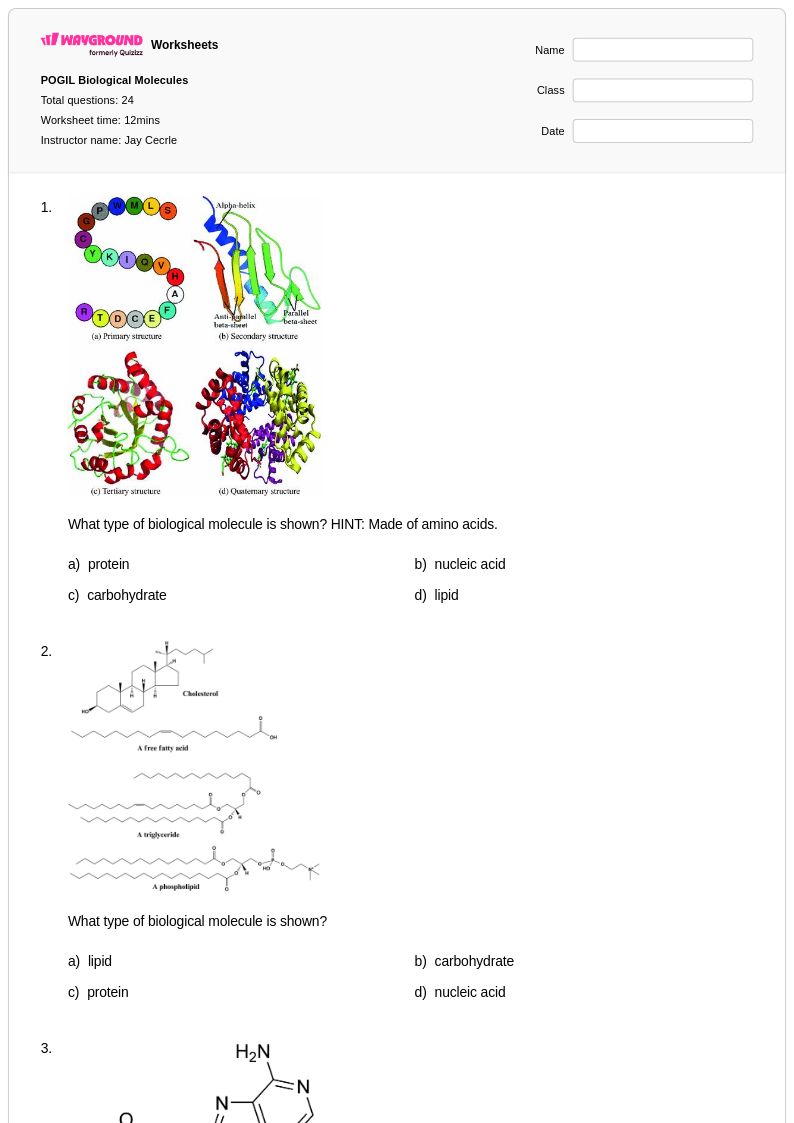
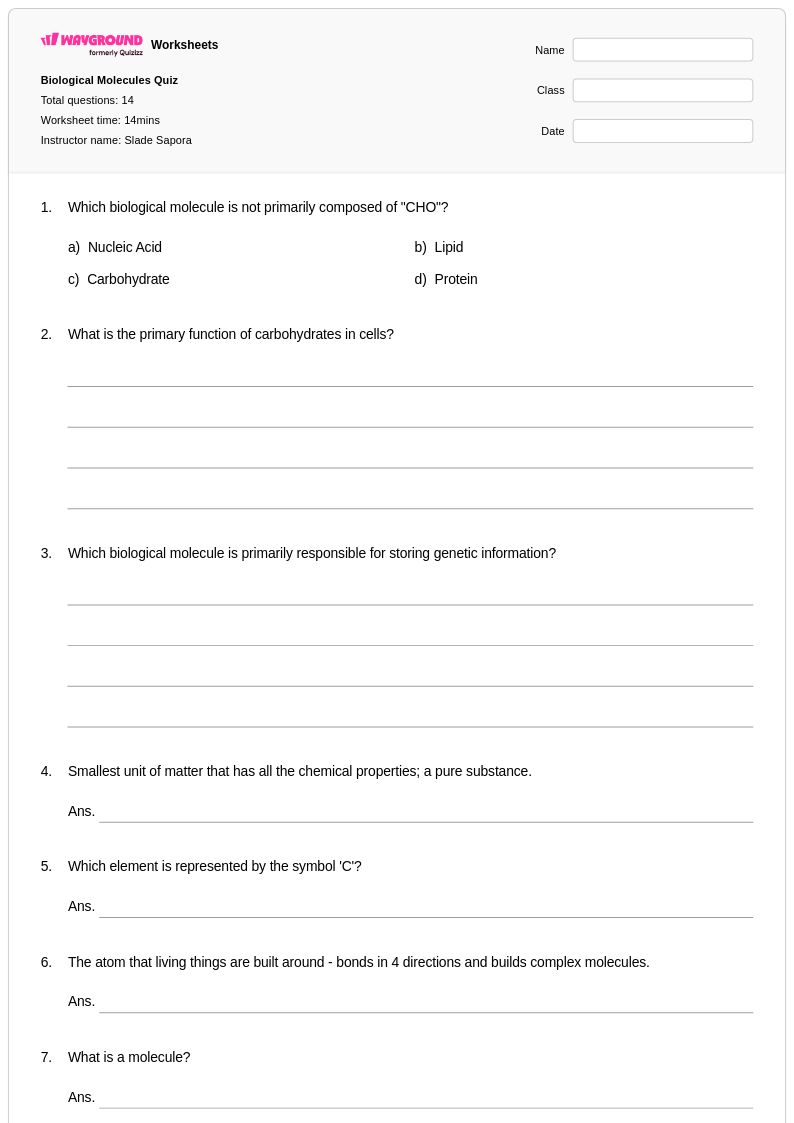
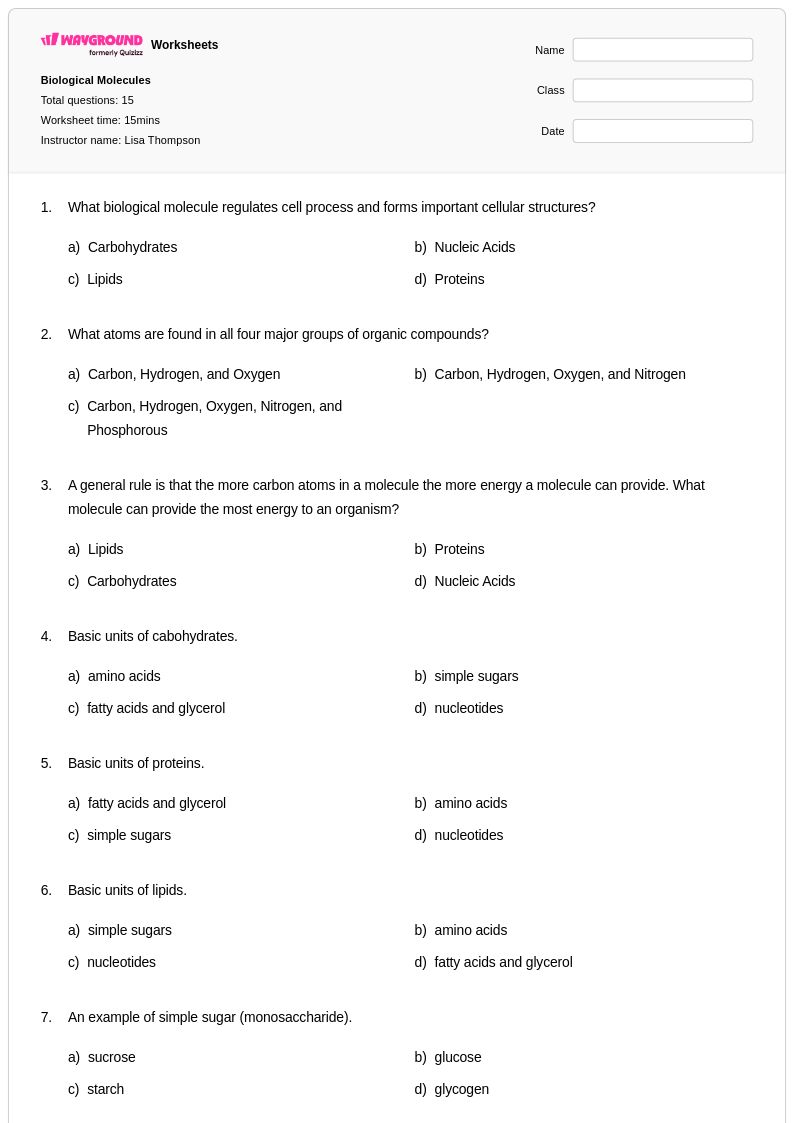
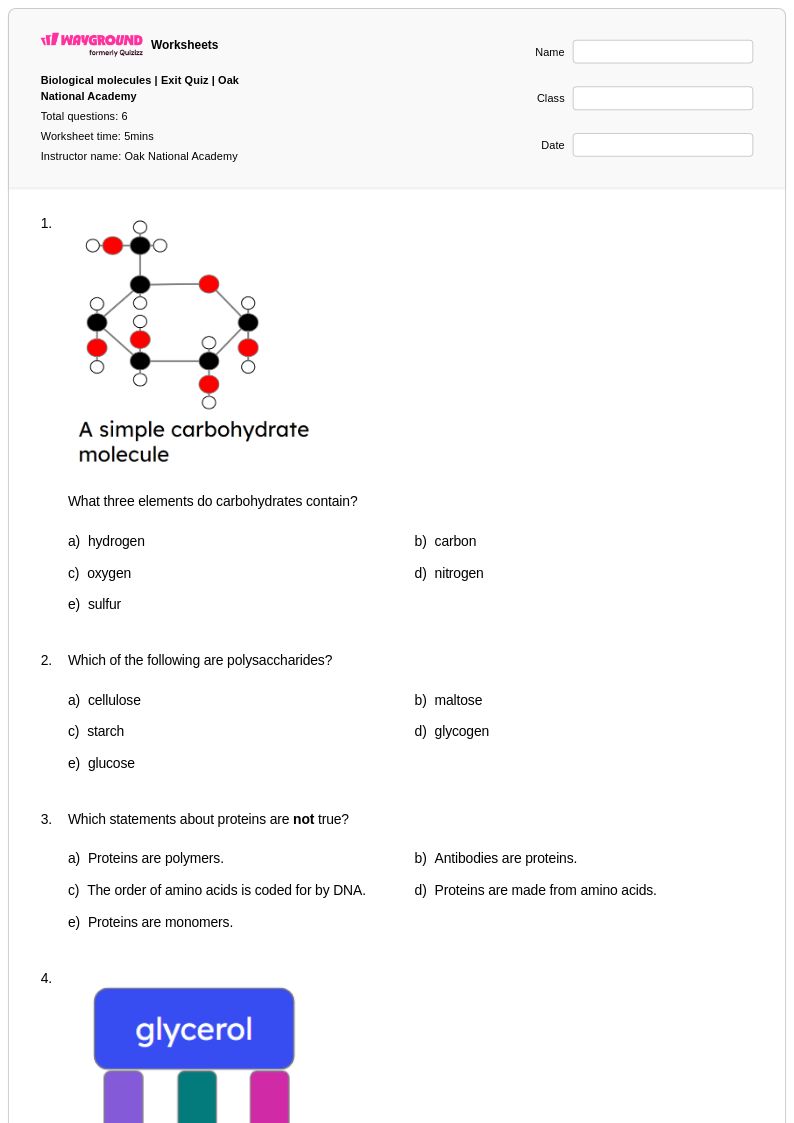
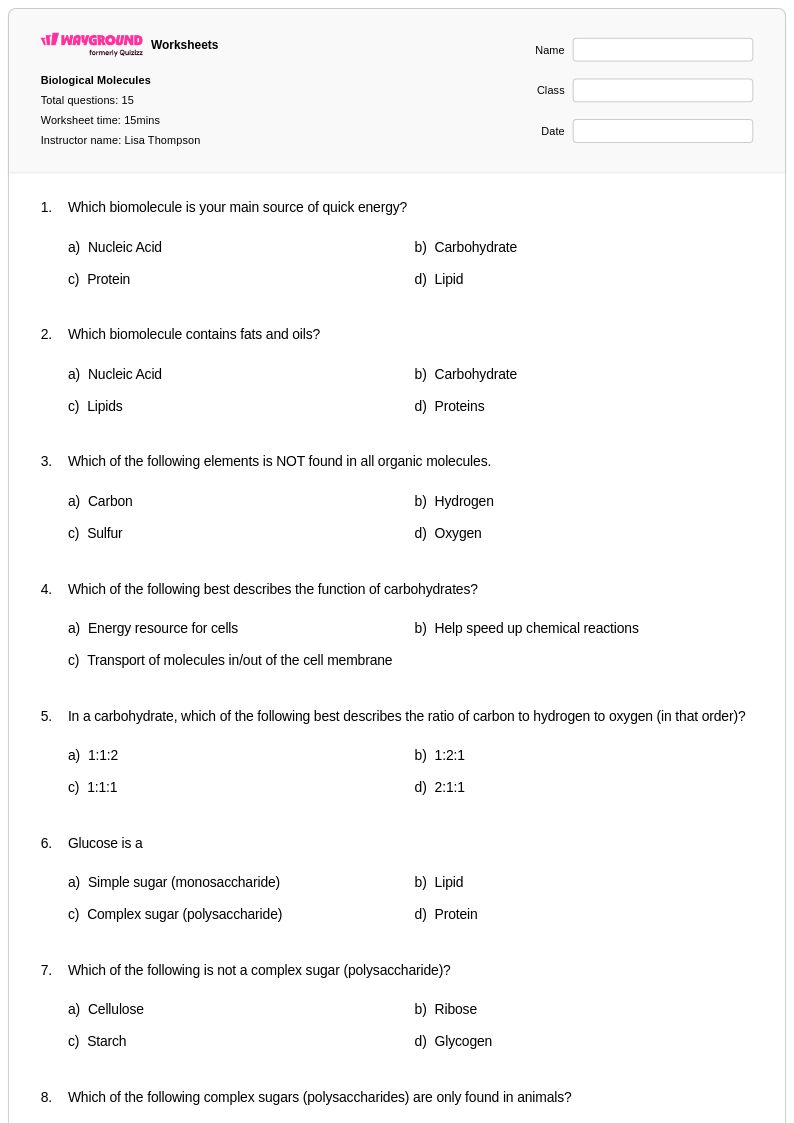
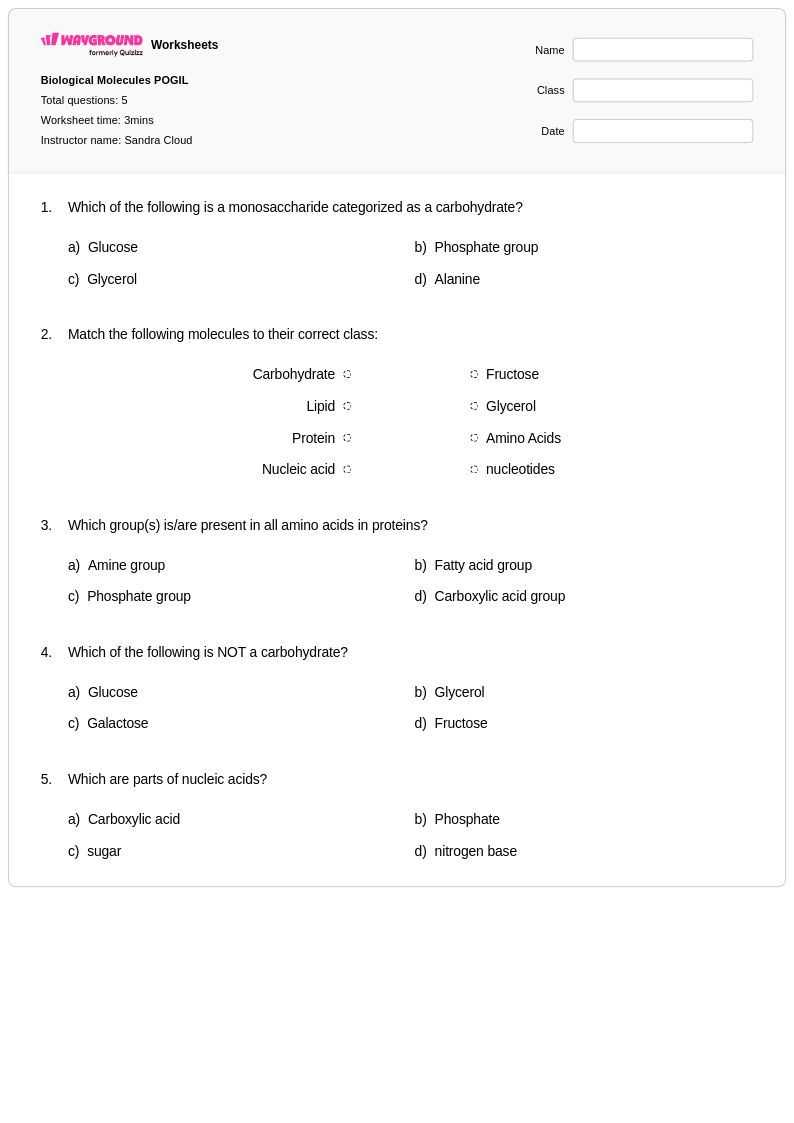
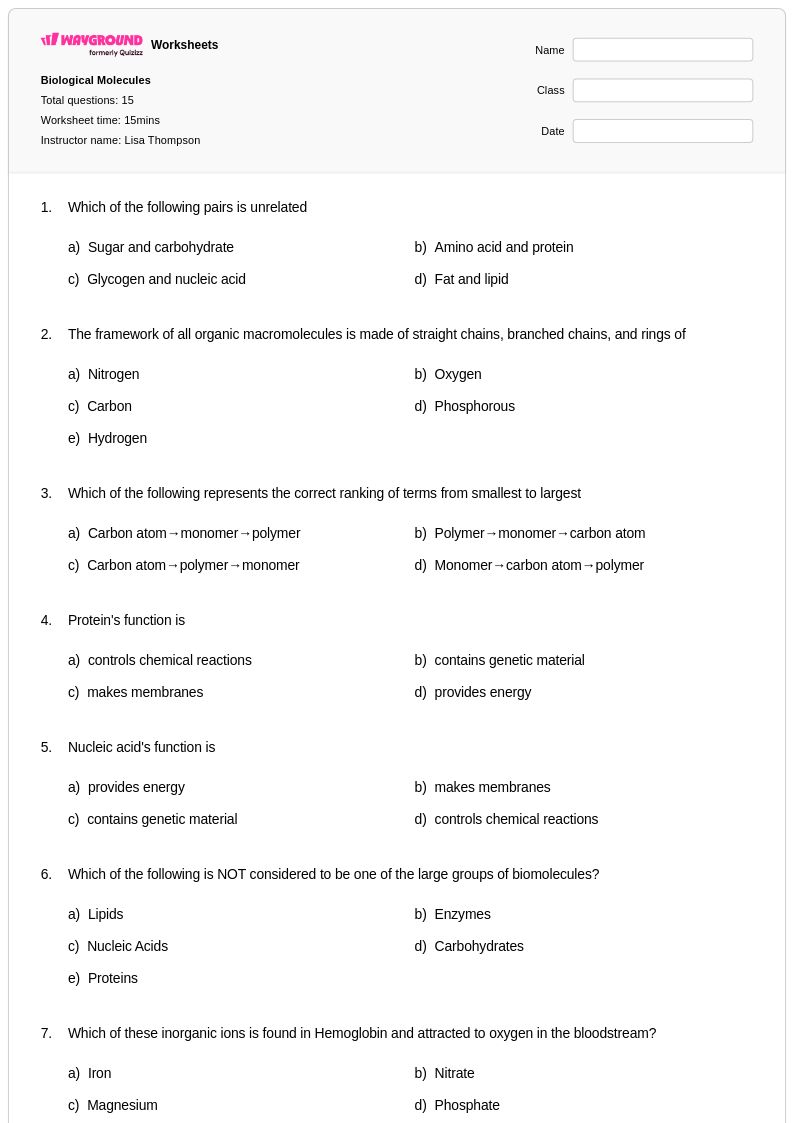
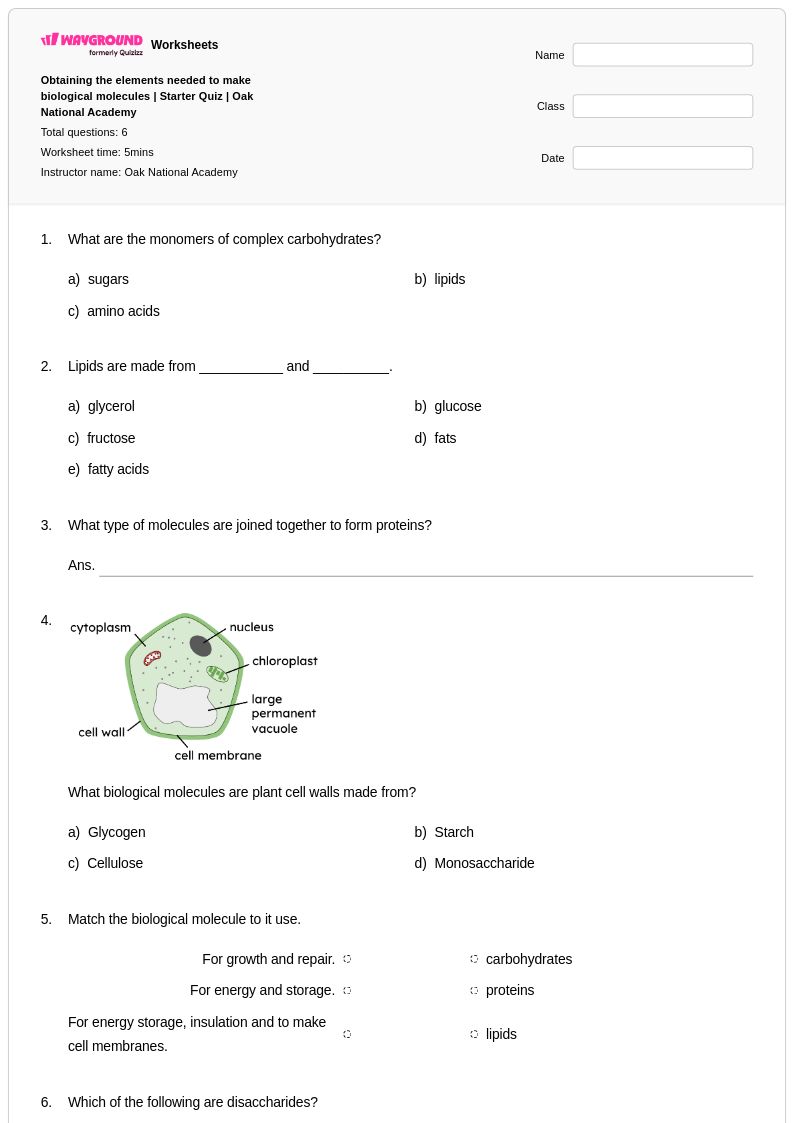
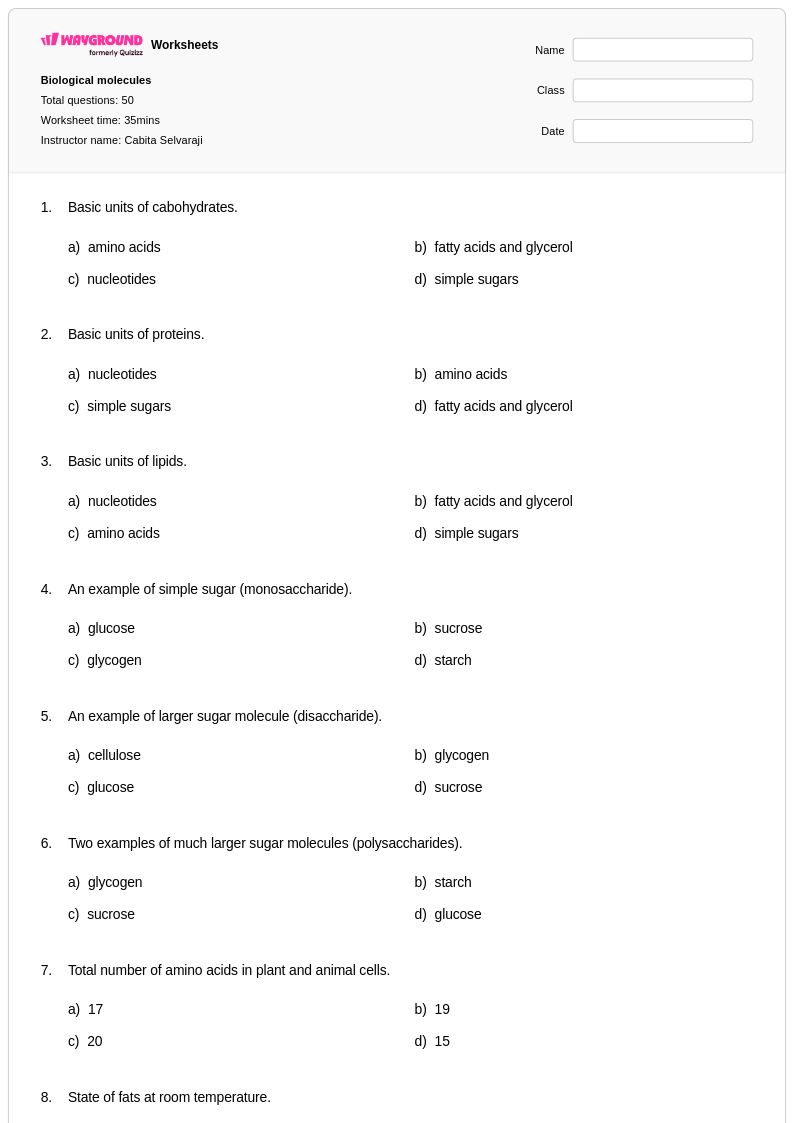
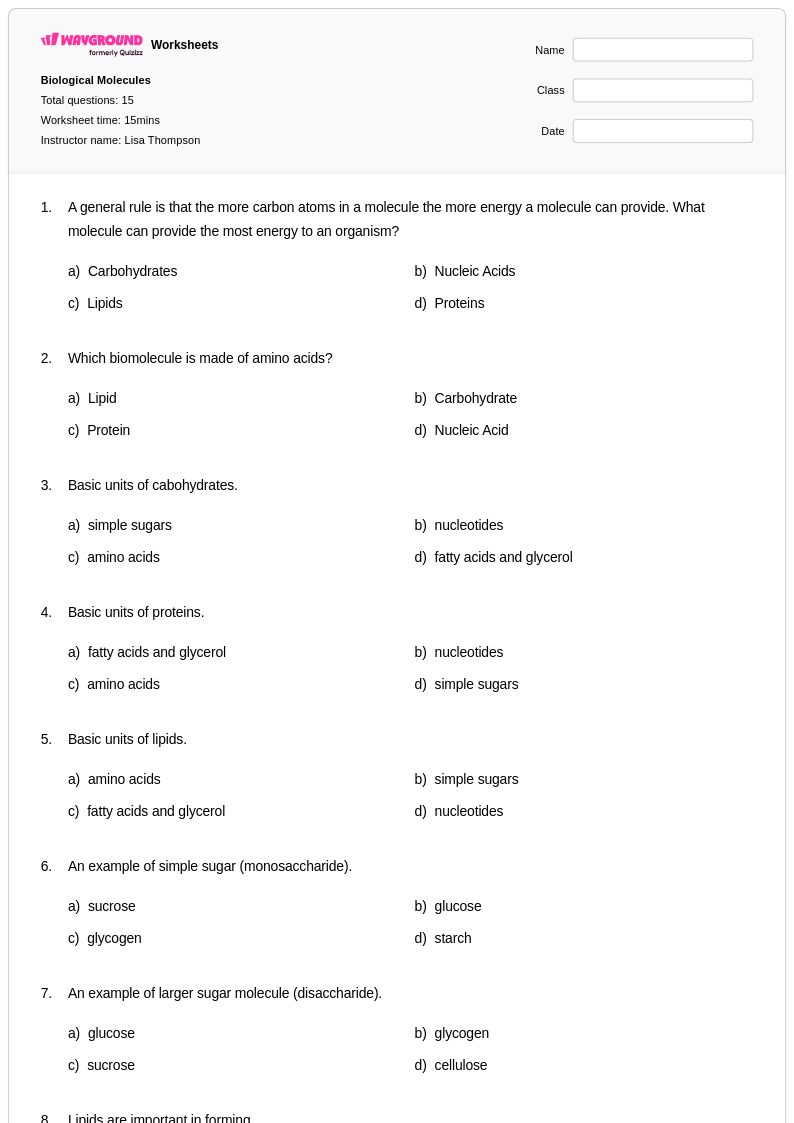
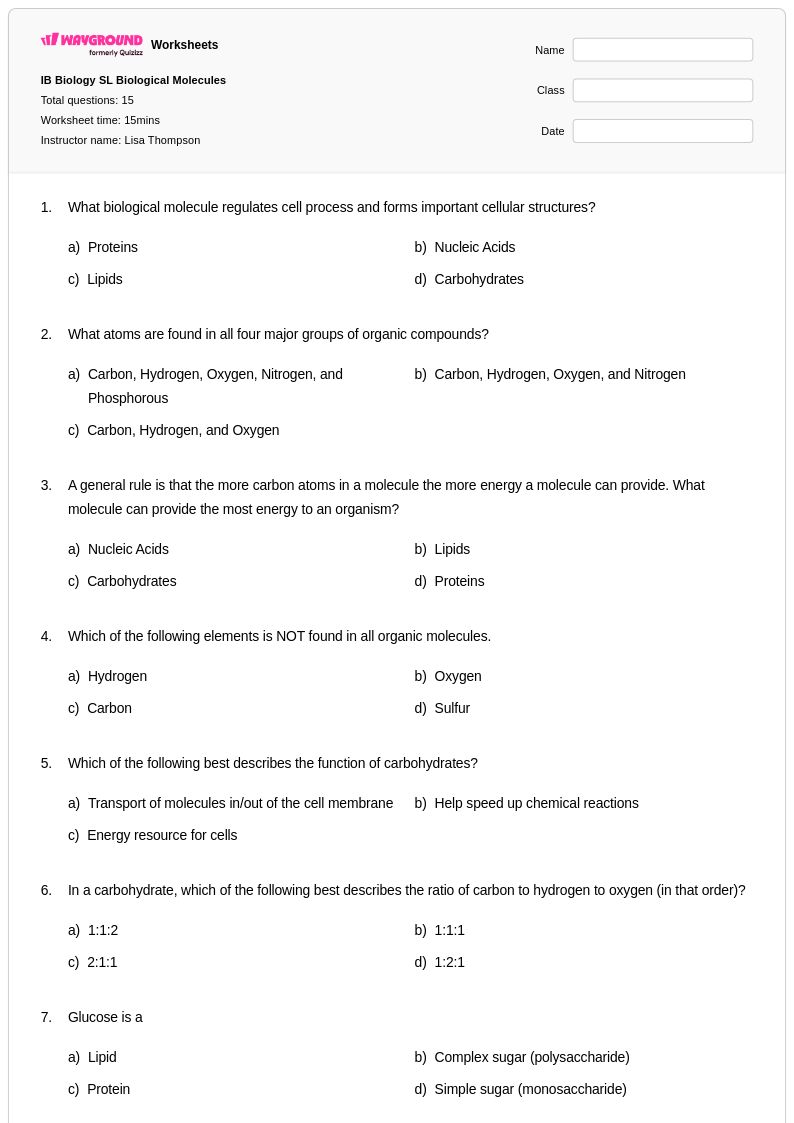
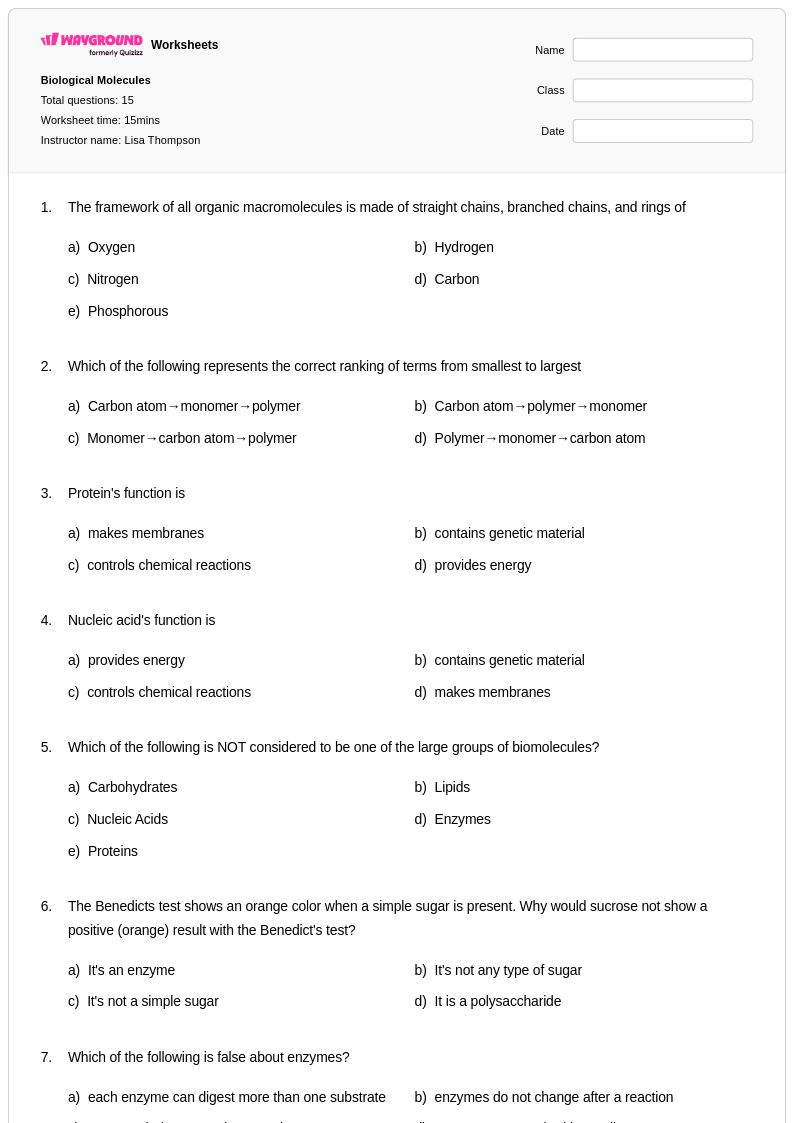
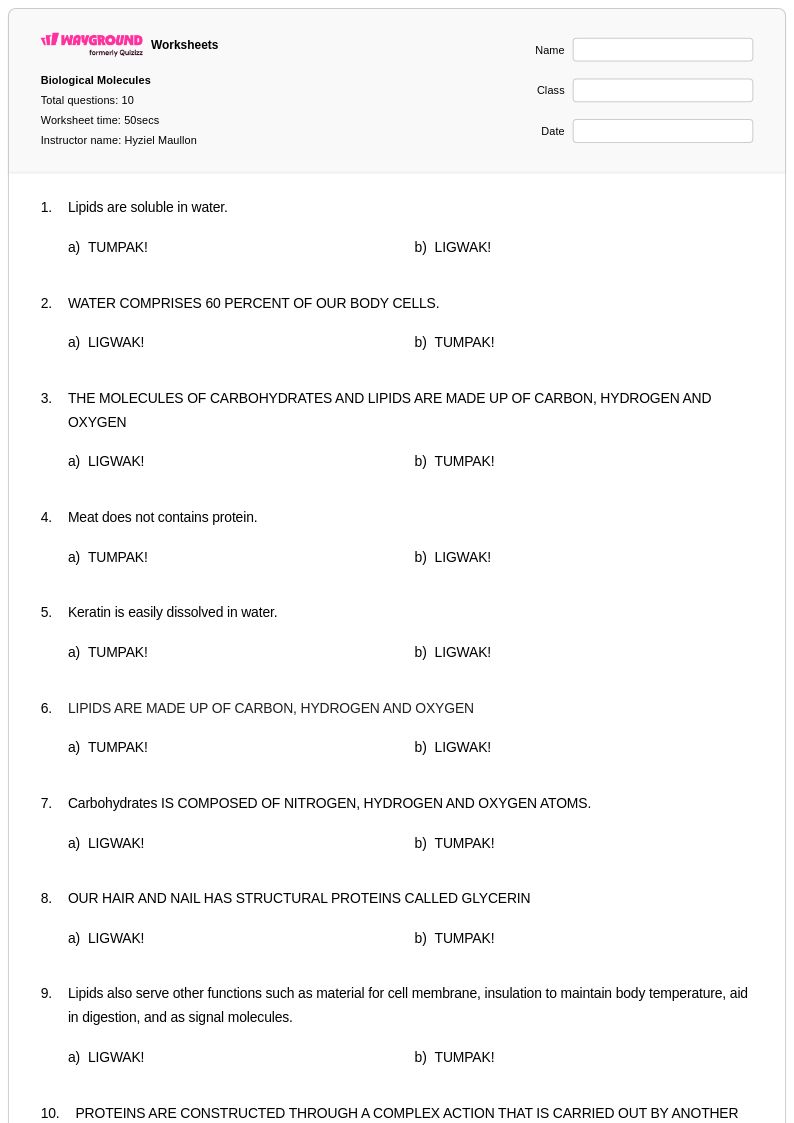
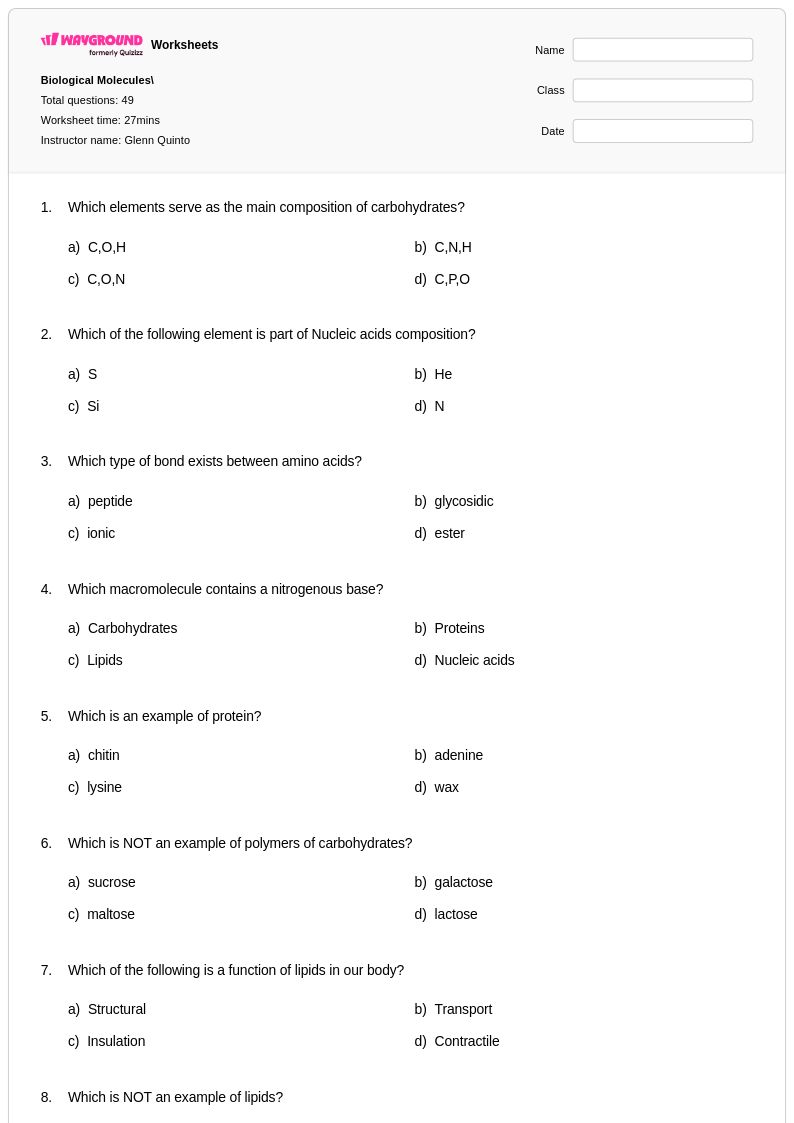
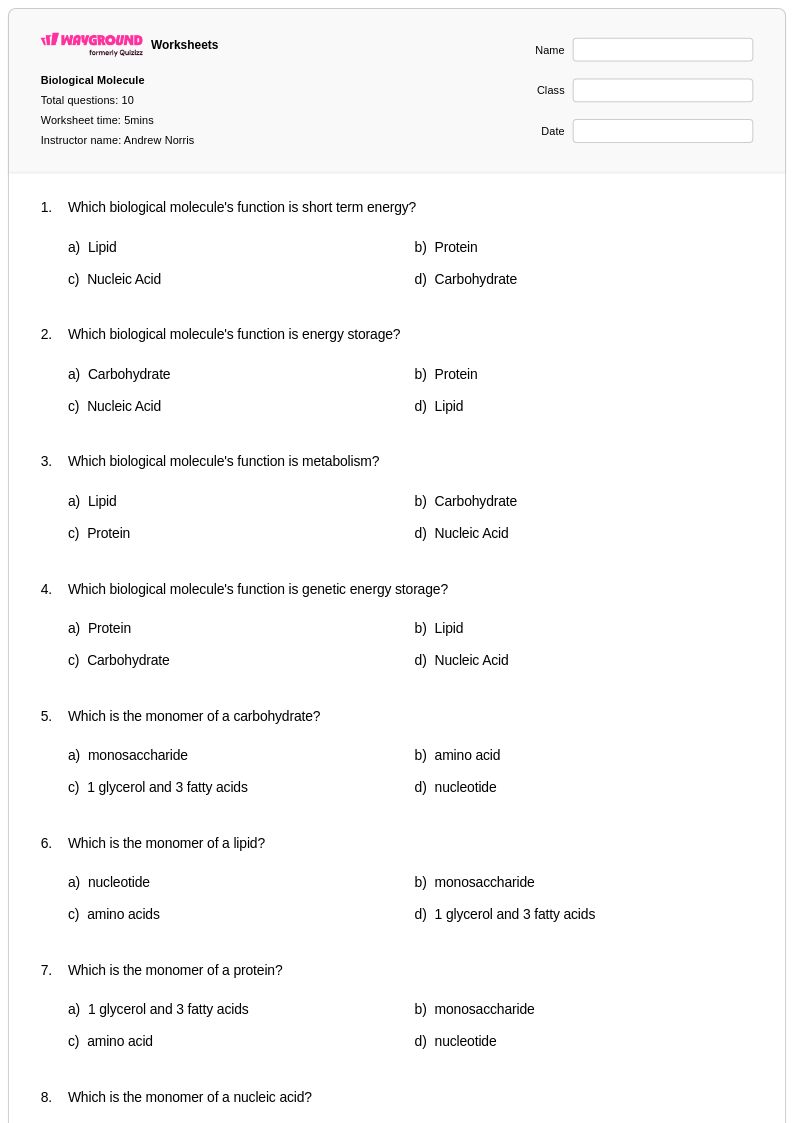
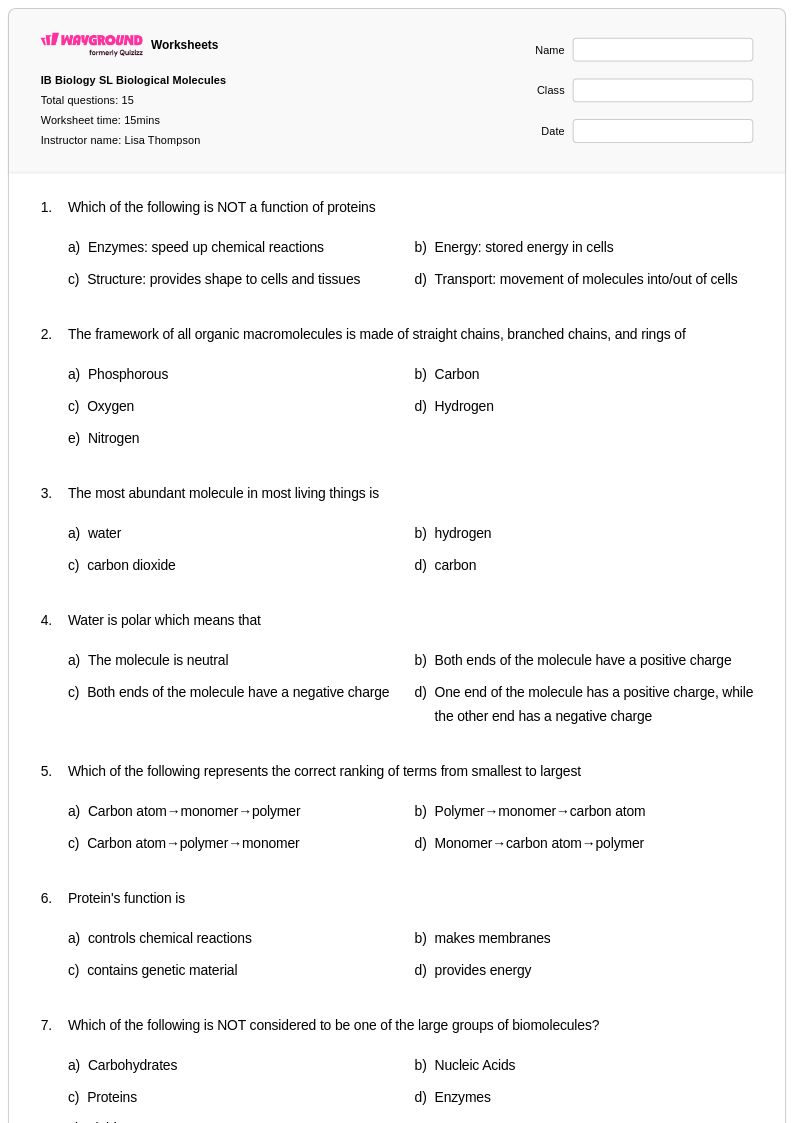
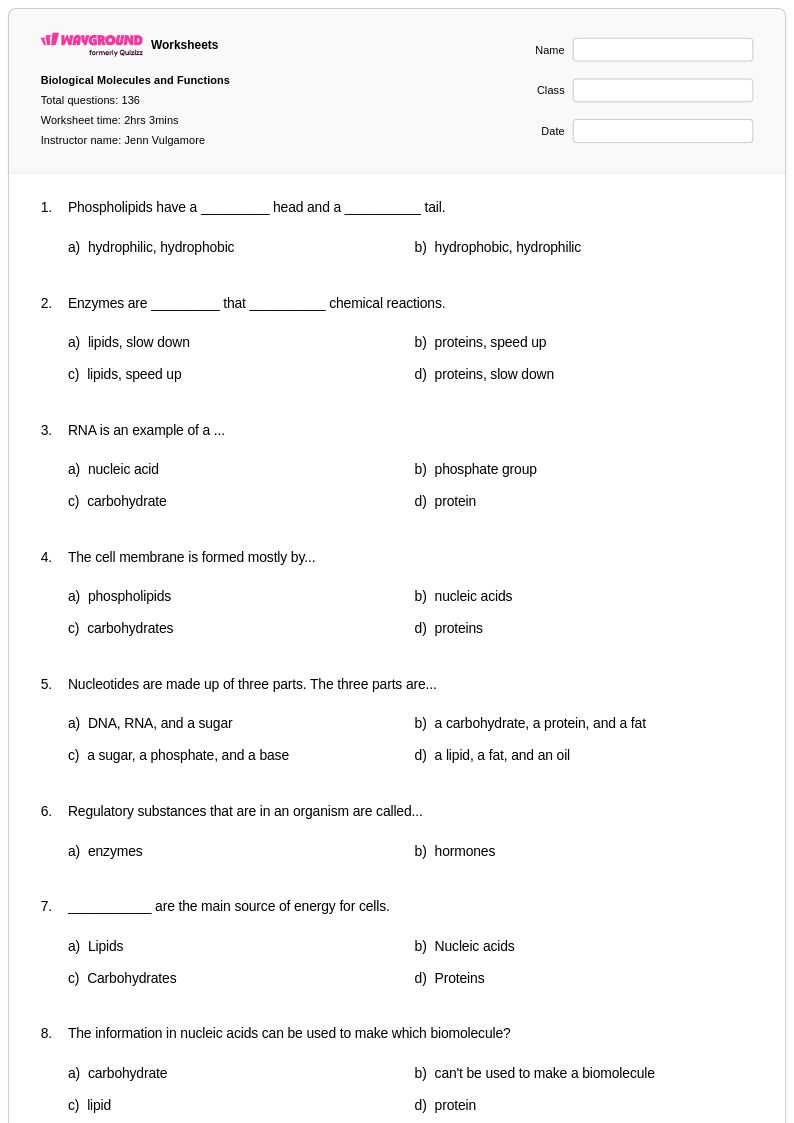
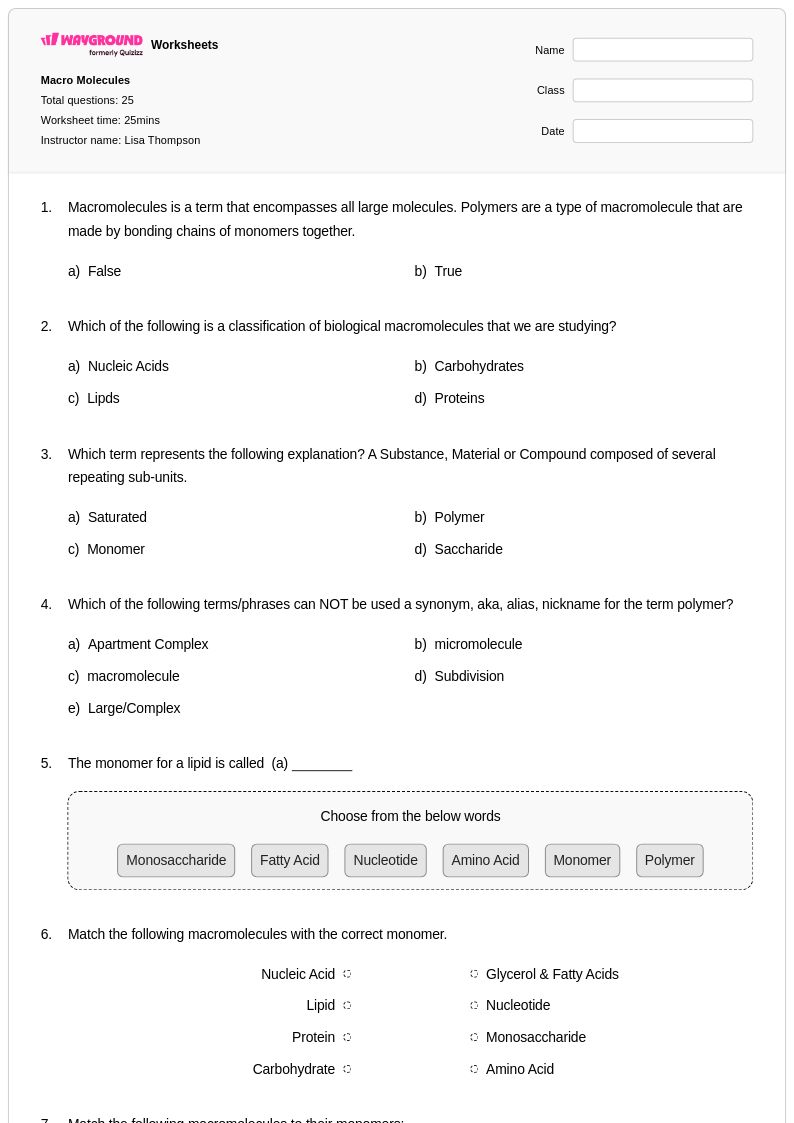
Biological molecules worksheets for Class 11 students available through Wayground (formerly Quizizz) provide comprehensive coverage of the fundamental building blocks of life, including carbohydrates, lipids, proteins, and nucleic acids. These expertly designed resources strengthen students' understanding of molecular structure, chemical properties, and biological functions while developing critical analytical skills needed for advanced biology coursework. The collection includes detailed practice problems that challenge students to identify functional groups, predict molecular behavior, and analyze the relationship between structure and function across different biomolecule categories. Each worksheet comes with a complete answer key and is available as free printable pdf downloads, making them accessible for both classroom instruction and independent study sessions.
Wayground (formerly Quizizz) empowers educators with millions of teacher-created biological molecules resources that can be easily discovered through robust search and filtering capabilities aligned to curriculum standards. The platform's differentiation tools allow teachers to customize worksheets based on individual student needs, while flexible formatting options support both traditional printable assignments and interactive digital activities delivered as pdf documents or online exercises. These comprehensive worksheet collections streamline lesson planning by providing ready-to-use materials for skill practice, targeted remediation of challenging concepts like enzyme kinetics and protein folding, and enrichment opportunities for advanced learners exploring complex topics such as allosteric regulation and molecular recognition patterns.
FAQs
How do I teach biological molecules to high school biology students?
Start by grounding students in the four major macromolecule classes — carbohydrates, lipids, proteins, and nucleic acids — before moving into structure-function relationships. Use visual models and molecular diagrams to help students connect monomer units to polymer structures, then layer in concepts like enzyme catalysis and DNA replication once the foundational vocabulary is secure. Anchoring each macromolecule to a concrete biological role (e.g., glucose as cellular fuel, DNA as genetic storage) helps students retain distinctions between classes.
What are common student mistakes when learning about biological molecules?
Students frequently confuse the structural and functional differences between the four macromolecule types, particularly conflating lipids and carbohydrates as energy sources without understanding their distinct chemical properties. Another common error is misidentifying monomers — for example, assuming all proteins are structurally similar rather than recognizing how amino acid sequence determines protein folding and function. Students also tend to treat enzyme catalysis as a one-step process, overlooking how pH, temperature, and substrate concentration affect reaction rates.
What types of practice problems help students understand macromolecule structure and function?
Effective practice includes labeling monomer-polymer diagrams, matching macromolecules to their biological functions, and analyzing how changes in molecular structure affect function — such as how a misfolded protein leads to disease. Metabolic pathway mapping exercises that connect carbohydrates, lipids, and proteins to cellular respiration help students see macromolecules as dynamic participants in living systems rather than isolated categories. Practice problems that require students to predict function from structure are especially valuable for building analytical reasoning.
How do I use biological molecules worksheets in my classroom?
Biological molecules worksheets on Wayground are available as printable PDFs for traditional classroom use and in digital formats for technology-integrated environments, including the option to host them as a quiz directly on Wayground. Printable versions work well for guided notes or homework assignments, while digital formats support self-paced review and immediate feedback. Each worksheet includes a complete answer key, making them suitable for independent practice, small-group work, or quick formative checks after a lecture.
How can I differentiate biological molecules instruction for students with different learning needs?
For students who need additional support, reduce the complexity of practice problems by focusing on single macromolecule identification before introducing comparative tasks across all four classes. Wayground's platform allows teachers to apply student-level accommodations including Read Aloud for students who benefit from audio support, reduced answer choices to lower cognitive load, and extended time per question — all configurable individually so other students are unaffected. For advanced learners, problems involving enzyme kinetics, protein folding pathways, or DNA replication mechanisms provide meaningful enrichment.
How do I assess whether students truly understand biological molecules versus just memorizing terms?
Move beyond definition recall by using application-based questions that ask students to explain why a structural change in a protein affects its function, or to predict how a cell would respond to a deficiency in a specific macromolecule. Error analysis tasks — where students identify and correct a flawed description of a biochemical process — are particularly effective at exposing surface-level memorization. Asking students to connect macromolecule concepts to real biological contexts, such as metabolic disorders or enzyme deficiencies, reveals the depth of their understanding.