
10 Q
3rd
5 Q
3rd
8 Q
3rd - 4th
23 Q
3rd
19 Q
3rd - 5th
10 Q
3rd
10 Q
3rd - 4th
15 Q
3rd
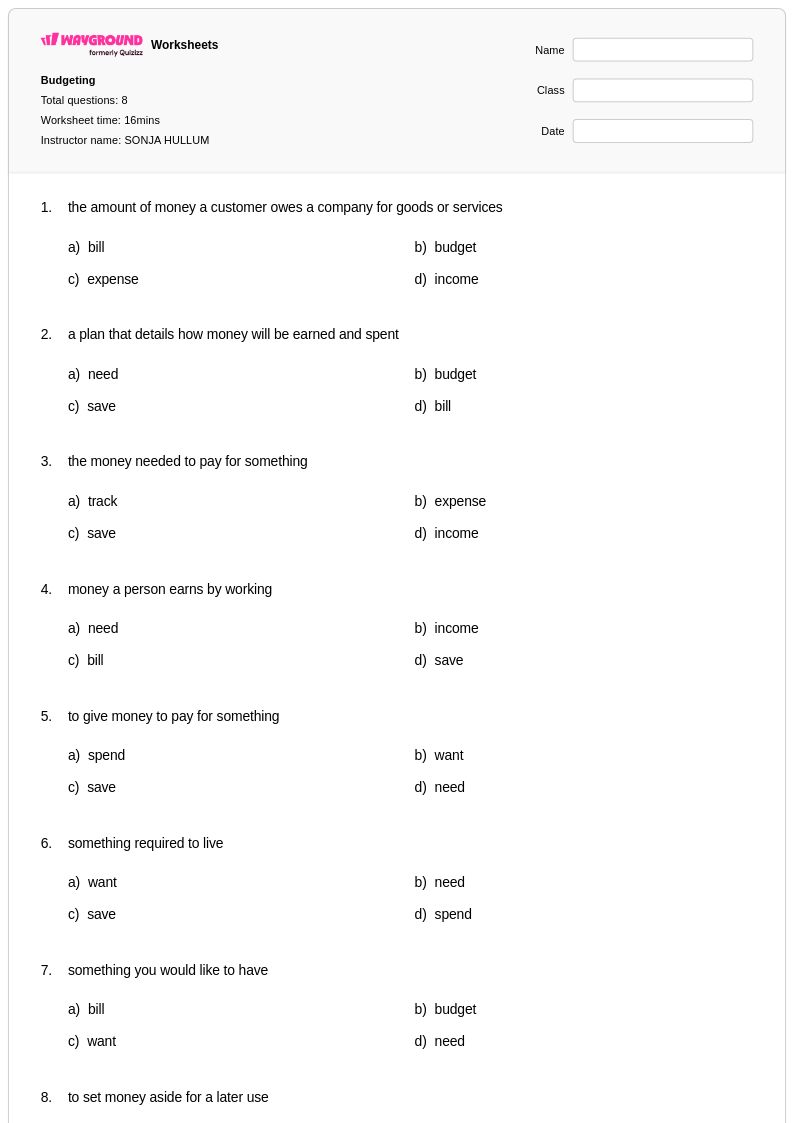
8 Q
2nd - 5th
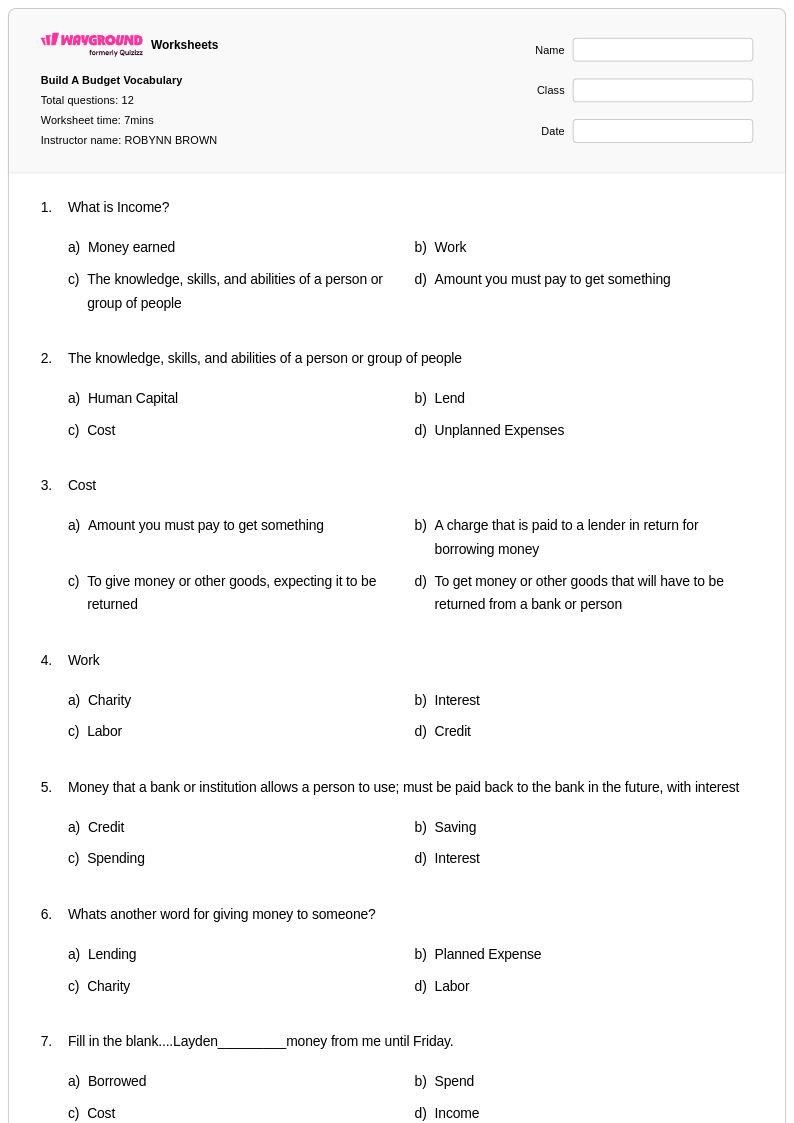
12 Q
3rd
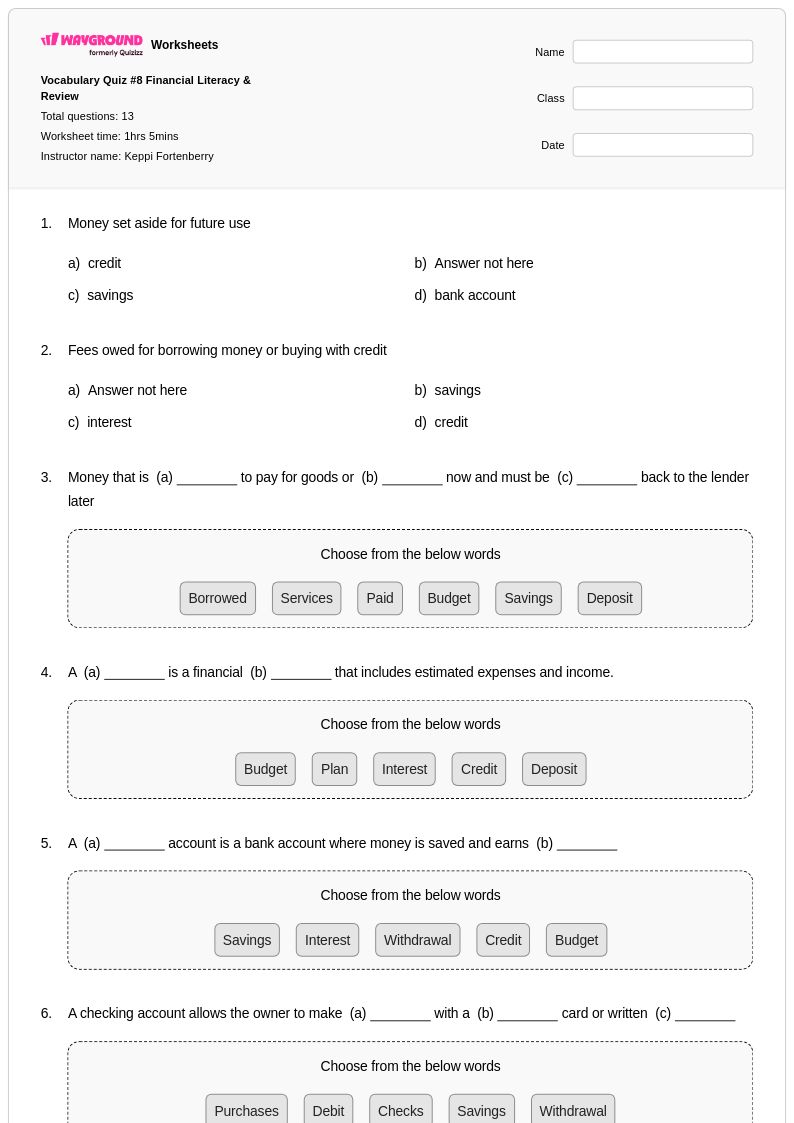
13 Q
3rd
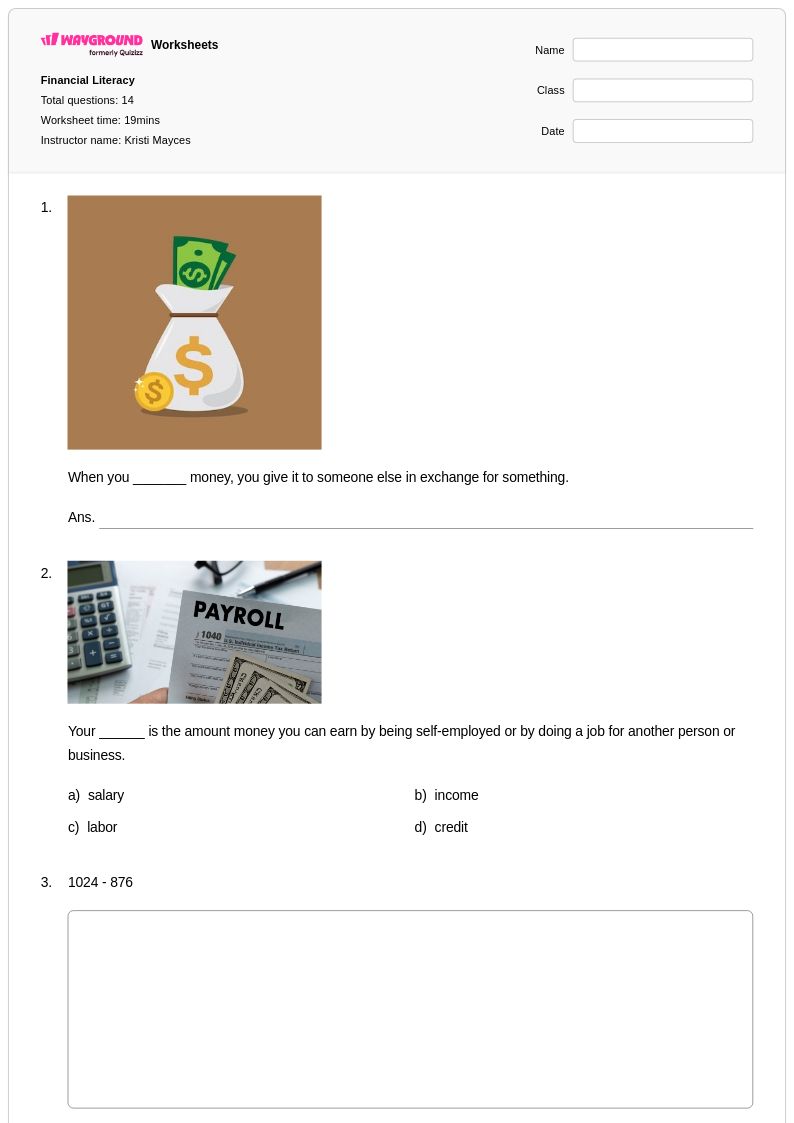
14 Q
3rd
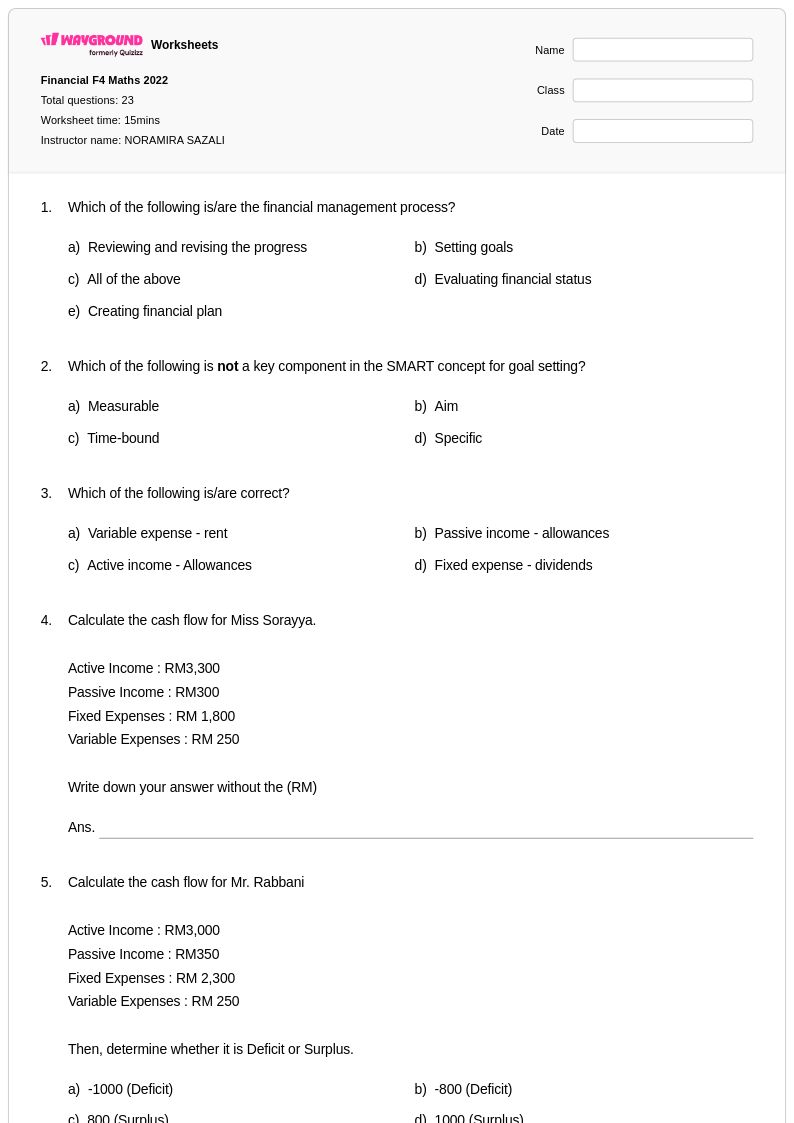
23 Q
3rd
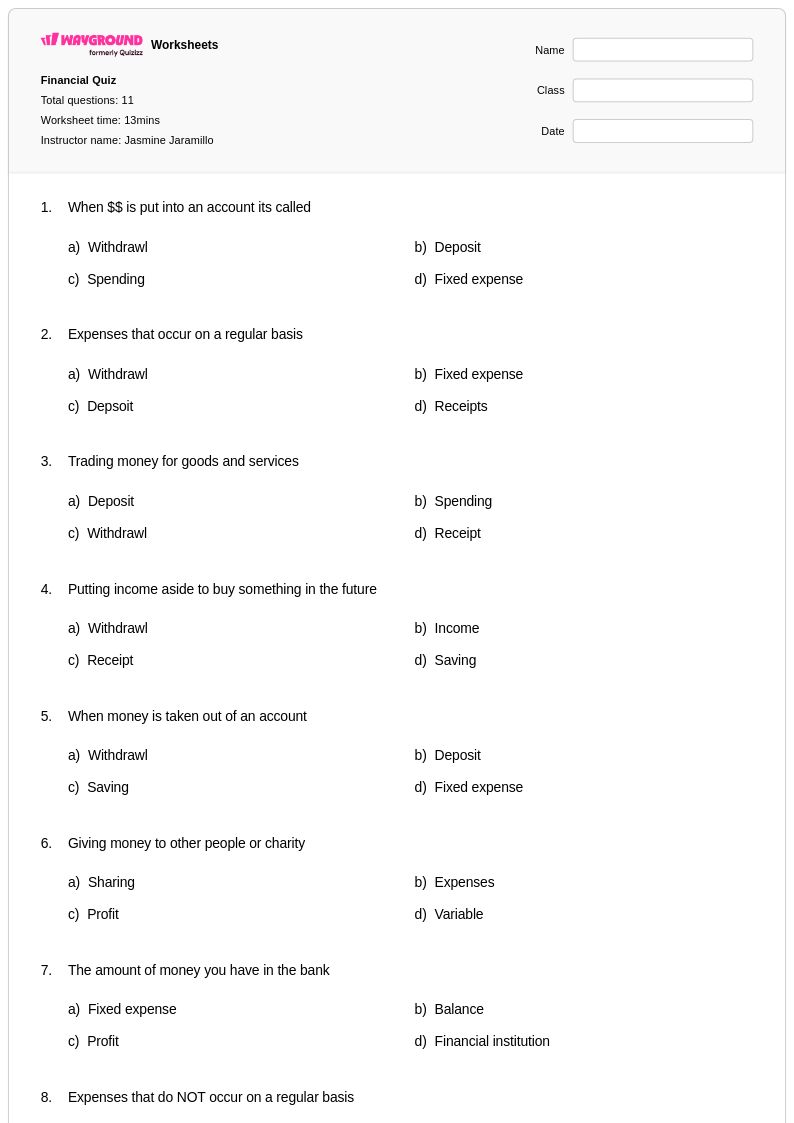
11 Q
2nd - 5th
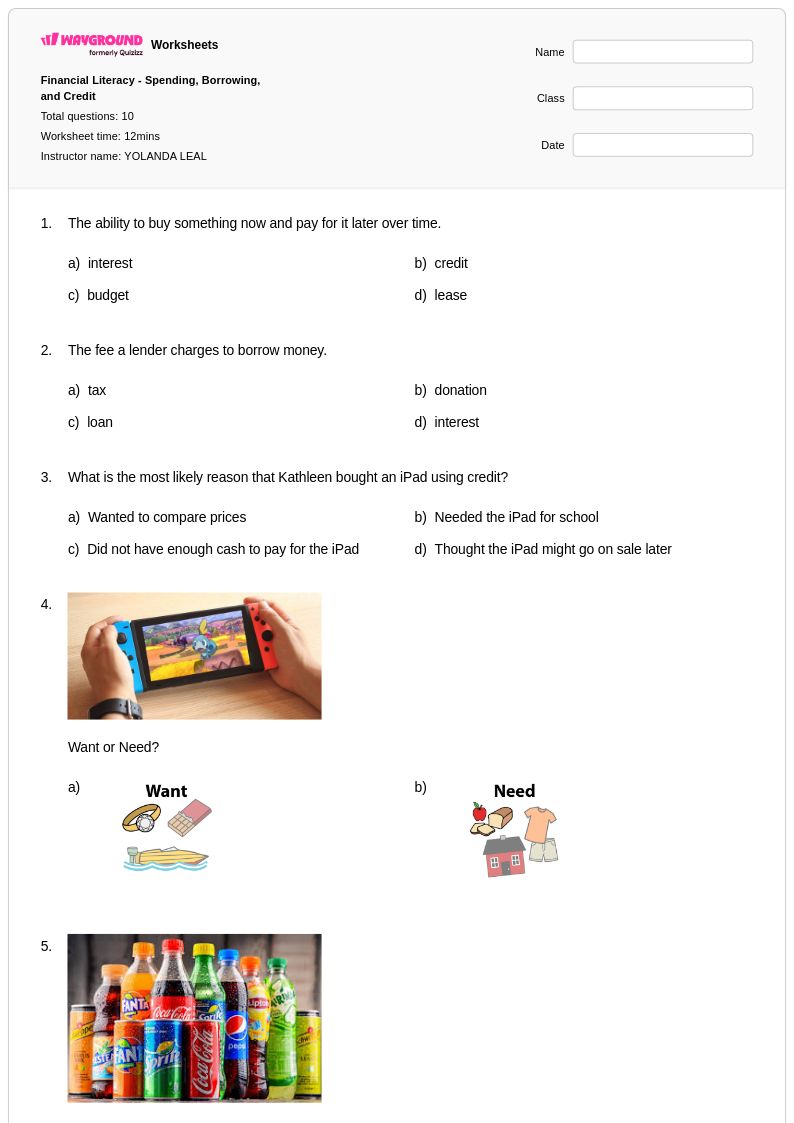
10 Q
1st - 5th
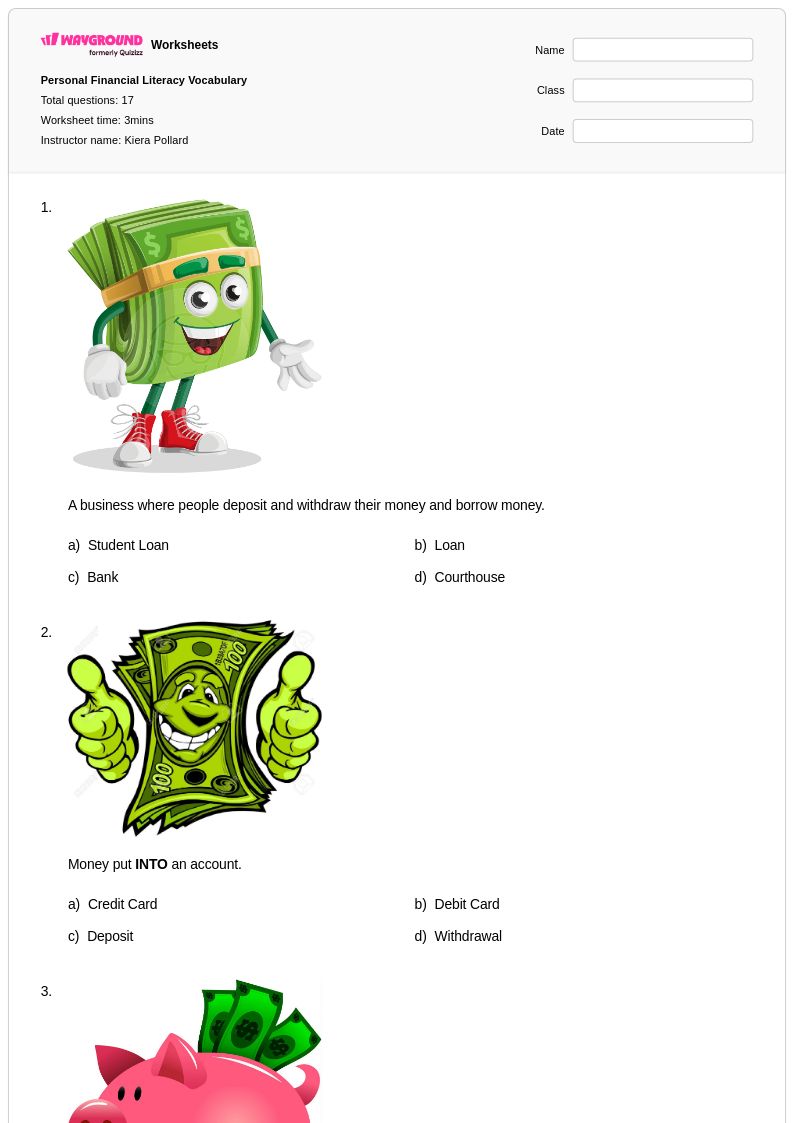
17 Q
3rd - 4th

17 Q
3rd
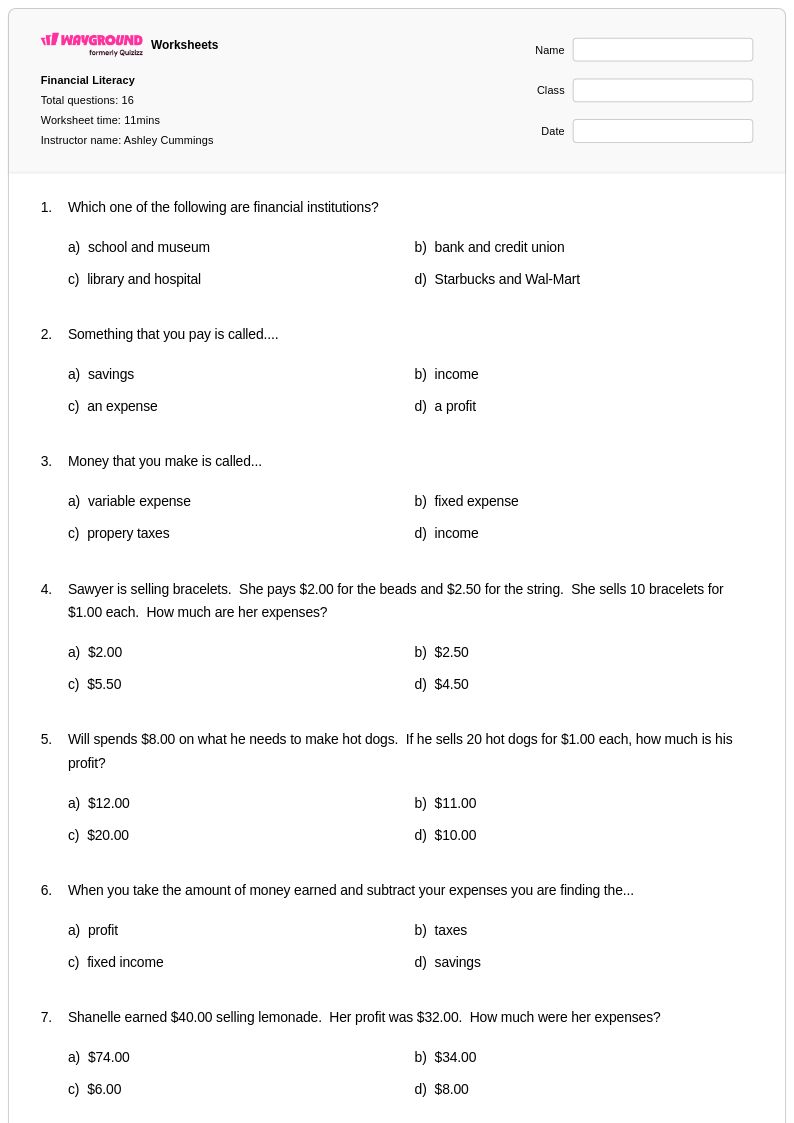
16 Q
3rd - 4th
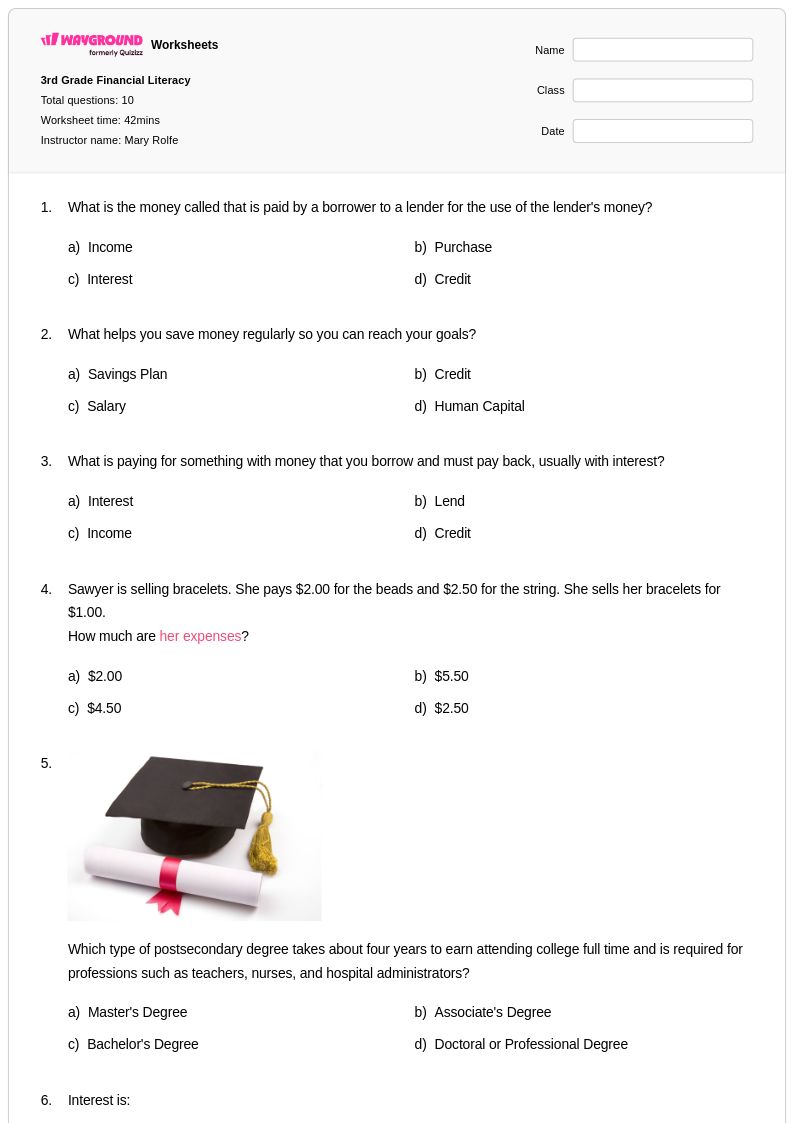
10 Q
3rd
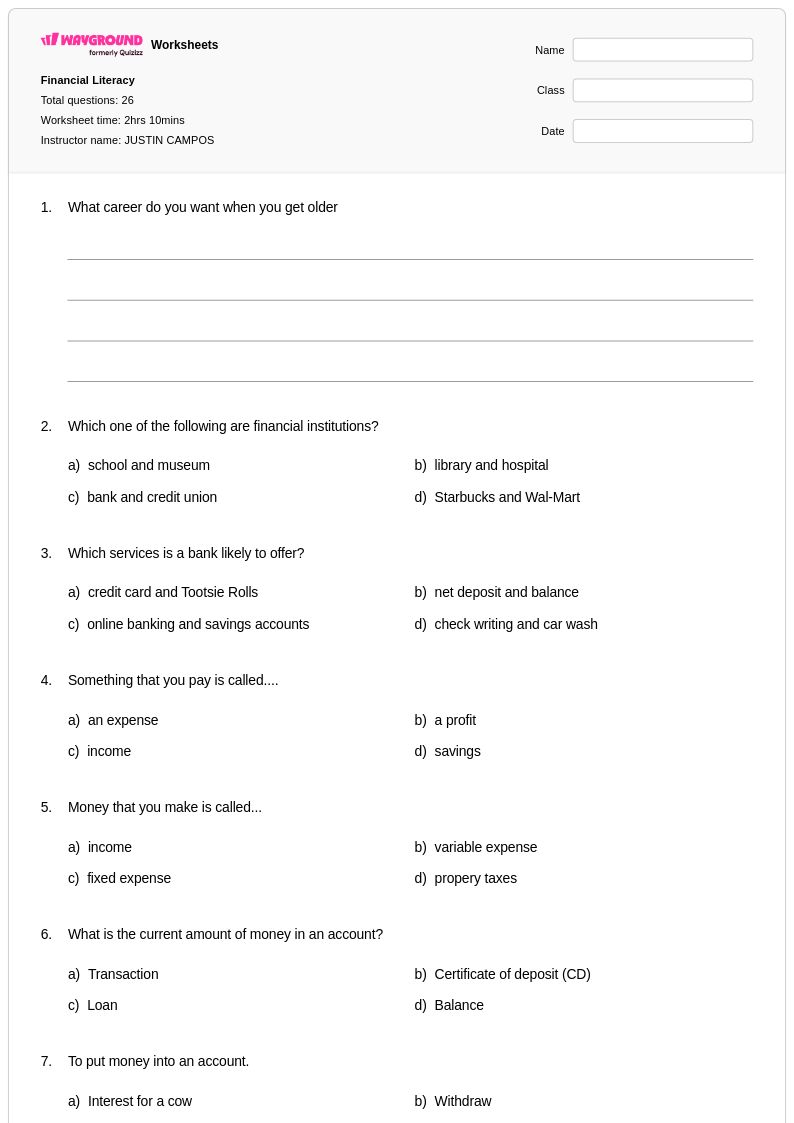
26 Q
3rd - 4th
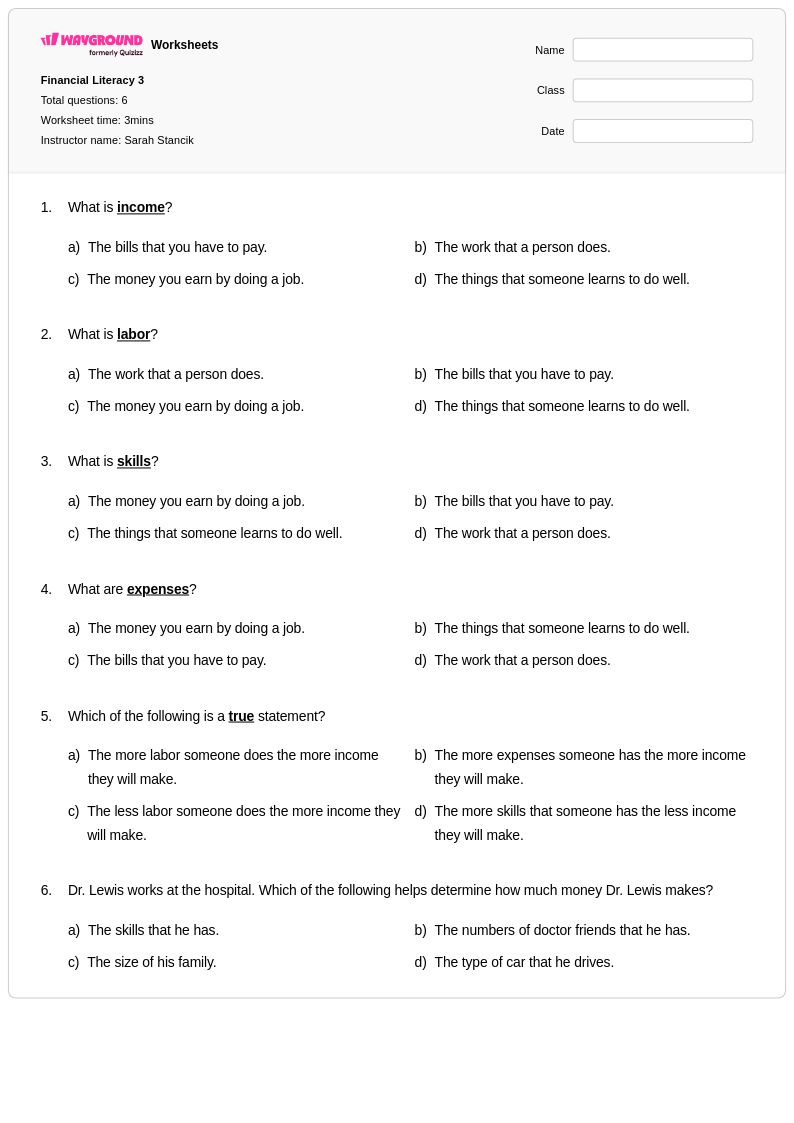
6 Q
3rd
22 Q
3rd
9 Q
3rd
15 Q
3rd - 5th
Explore Income and Expenses Worksheets by Grades
Explore Other Subject Worksheets for class 3
Explore printable Income and Expenses worksheets for Class 3
Income and expenses worksheets for Class 3 students available through Wayground (formerly Quizizz) provide young learners with essential foundational skills in financial literacy through age-appropriate mathematical applications. These comprehensive printables introduce third graders to the fundamental concepts of money coming in and money going out, helping students distinguish between different types of income such as allowances, gifts, and earnings from simple tasks, while exploring various expense categories including needs like food and clothing versus wants like toys and entertainment. The practice problems incorporated throughout these free resources strengthen critical thinking skills as students learn to categorize financial transactions, compare amounts, and understand basic budgeting concepts through engaging scenarios and real-world examples. Each worksheet collection includes detailed answer keys that support both independent learning and guided instruction, allowing educators to assess student comprehension while building confidence in mathematical reasoning and financial decision-making skills.
Wayground (formerly Quizizz) empowers educators with millions of teacher-created resources specifically designed to support Class 3 income and expenses instruction through robust search and filtering capabilities that align with state mathematics and financial literacy standards. The platform's differentiation tools enable teachers to customize worksheets according to individual student needs, providing multiple difficulty levels and varied problem types that accommodate diverse learning styles within the same classroom. These flexible resources are available in both printable PDF formats for traditional paper-based activities and digital formats for interactive learning experiences, making lesson planning efficient while supporting remediation for struggling learners and enrichment opportunities for advanced students. The comprehensive collection facilitates systematic skill practice through carefully scaffolded problems that progress from simple identification tasks to more complex scenarios requiring students to analyze spending decisions and create basic budgets, ensuring thorough mastery of foundational financial concepts that will serve as building blocks for future economic understanding.
FAQs
What do 3rd graders learn about personal finance?
How do you teach the difference between needs and wants to third graders?
What exercises help 3rd graders practice basic budgeting?
What's a common point of confusion for students learning about needs and wants?
How can I use these Grade 3 income and expenses worksheets?
How does this topic align with 3rd-grade math standards?
How can I support diverse learners with these financial literacy worksheets?