Free printable lab equipment worksheets and practice problems help students master essential chemistry tools and safety procedures through engaging PDF activities with comprehensive answer keys.
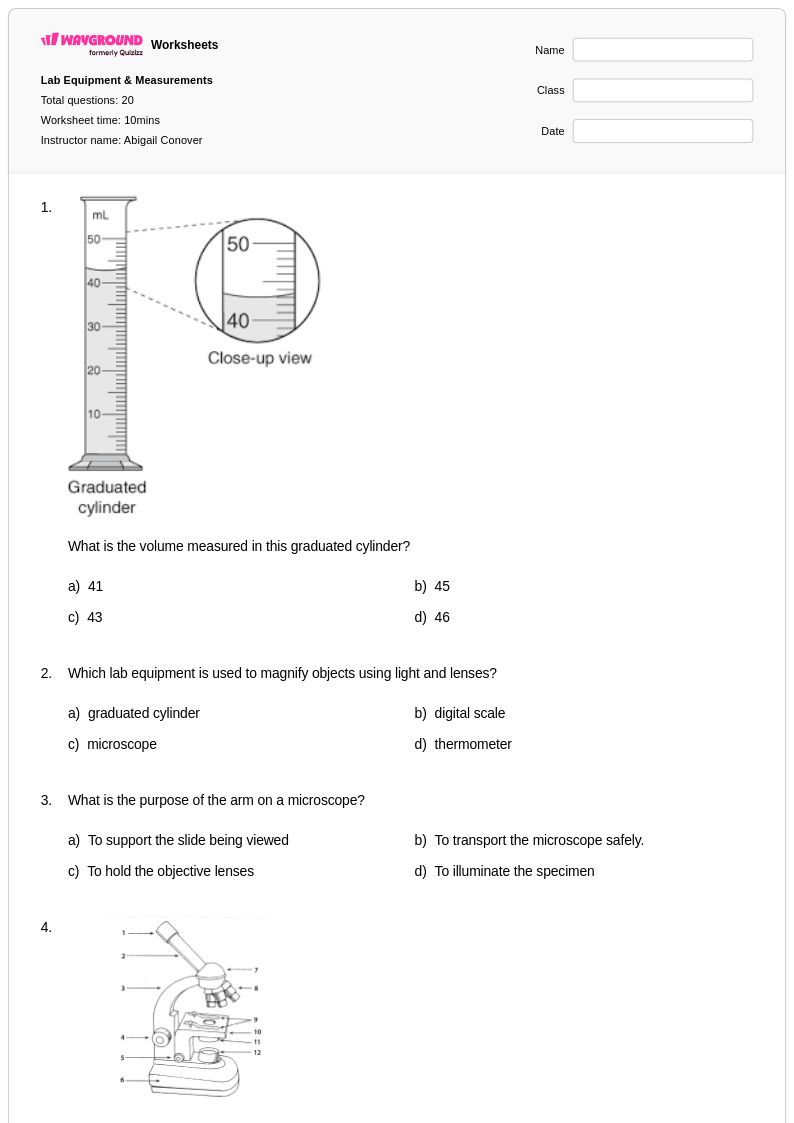
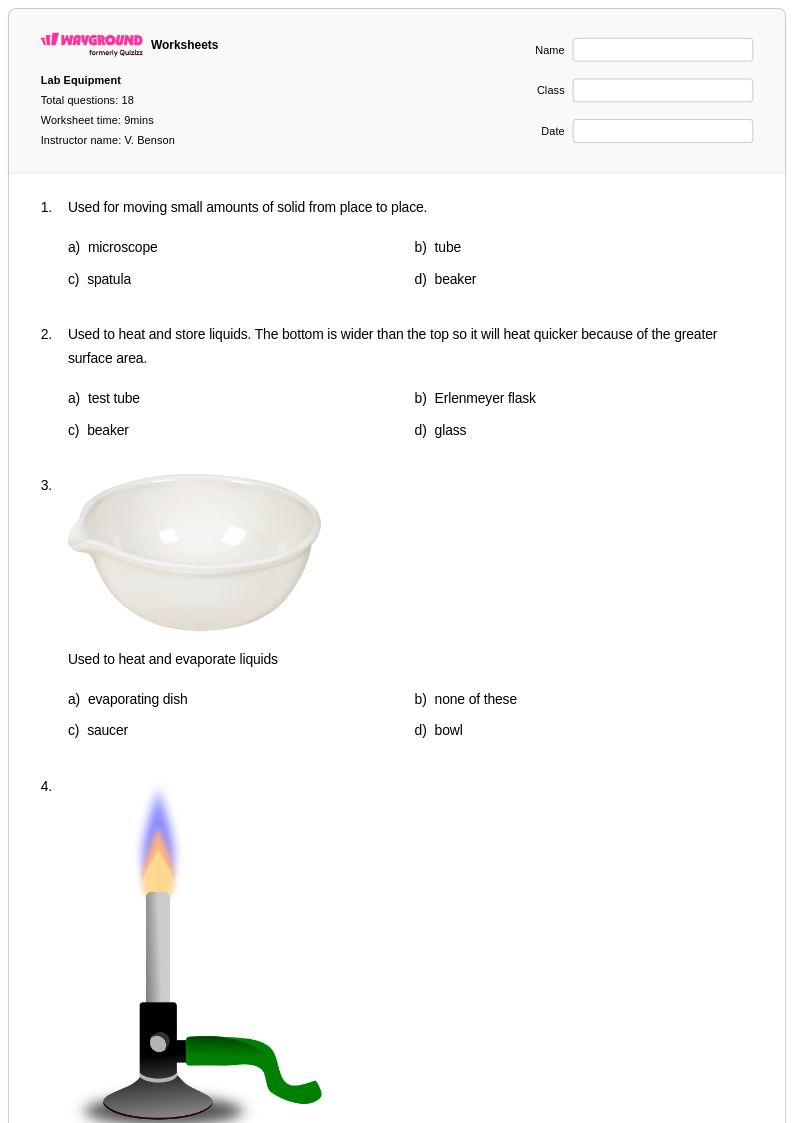
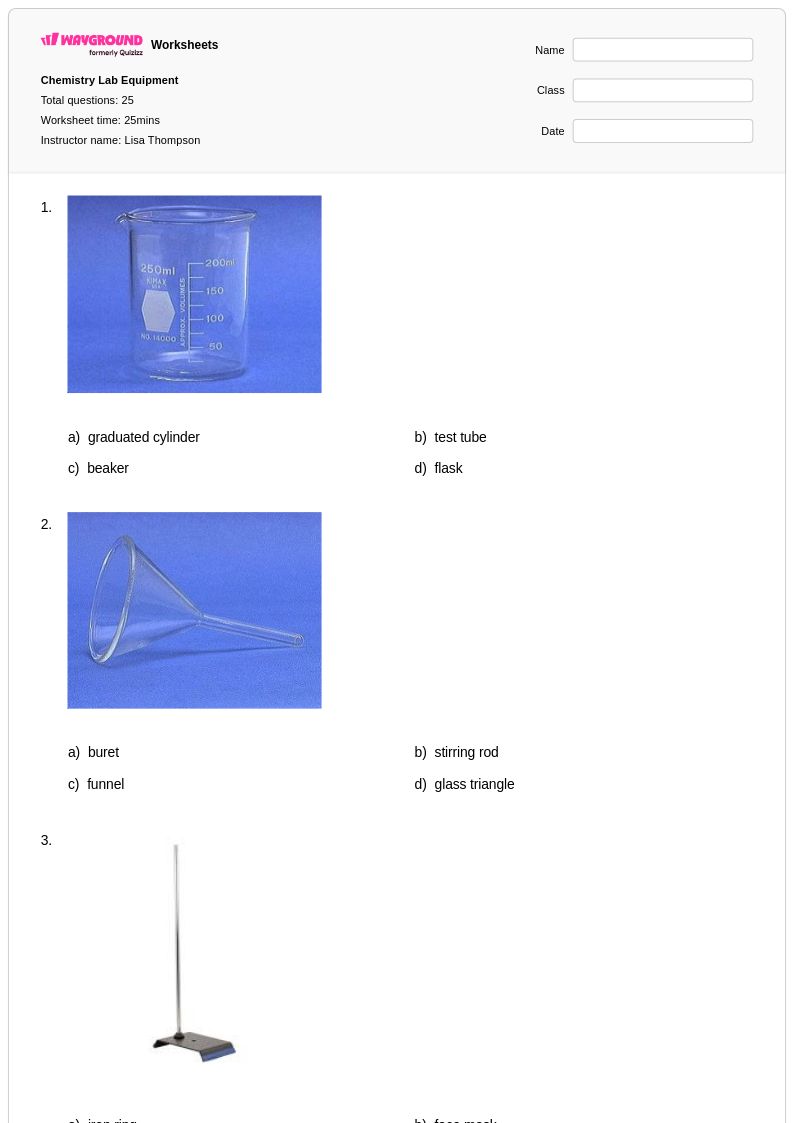
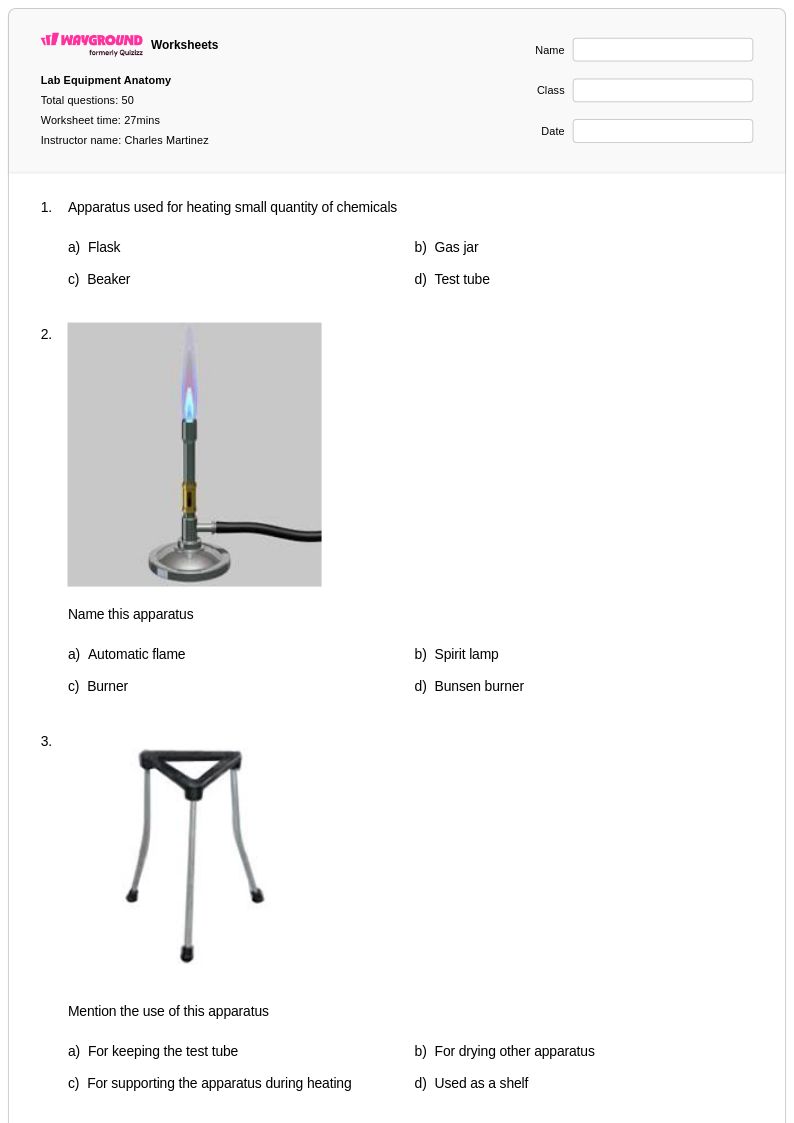
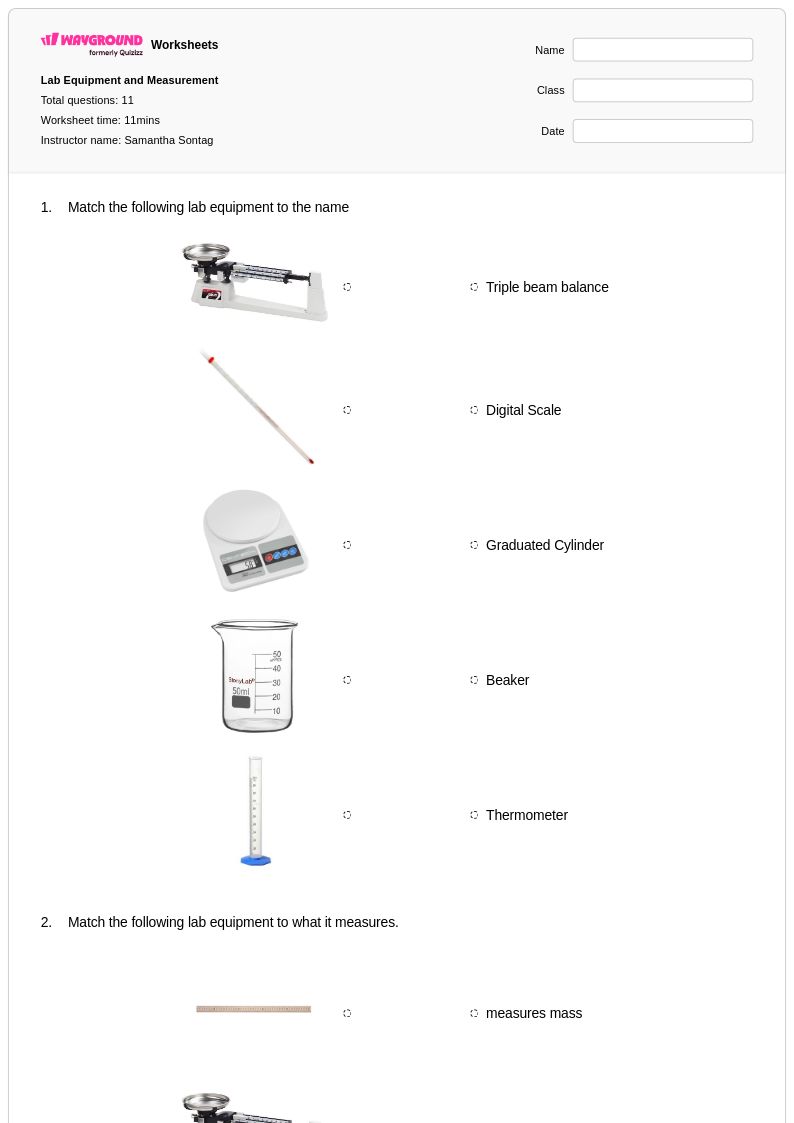
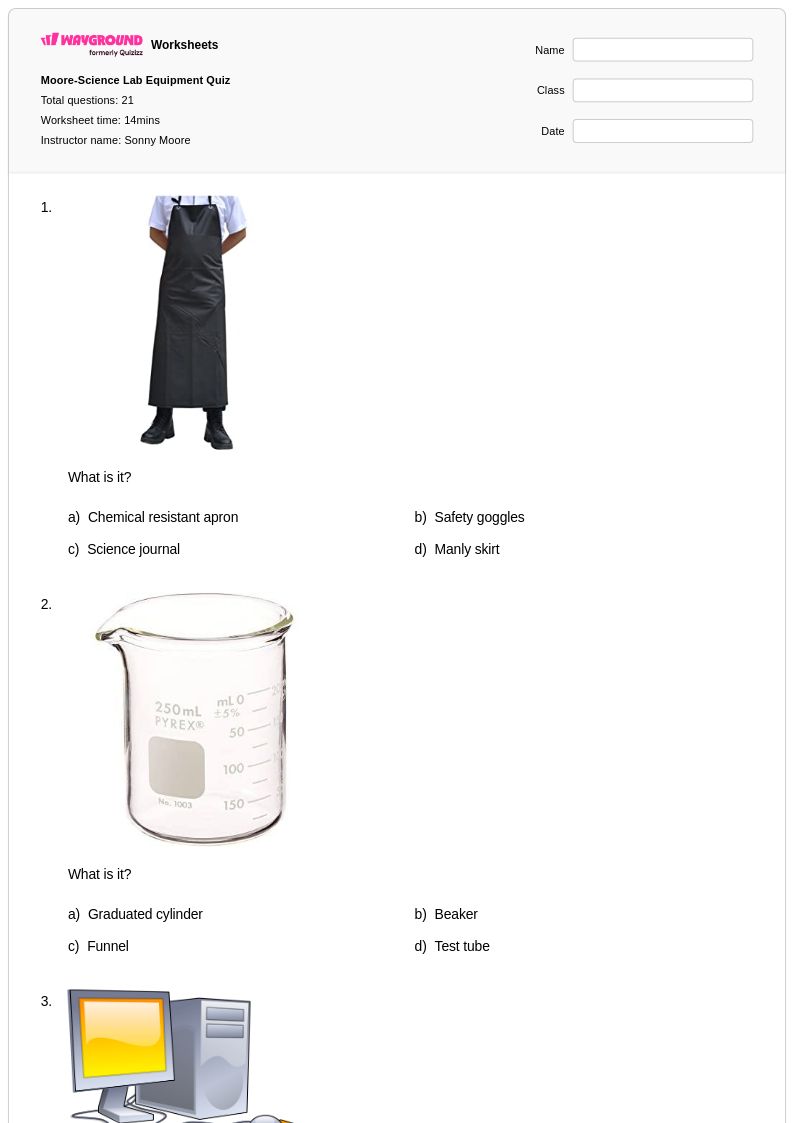
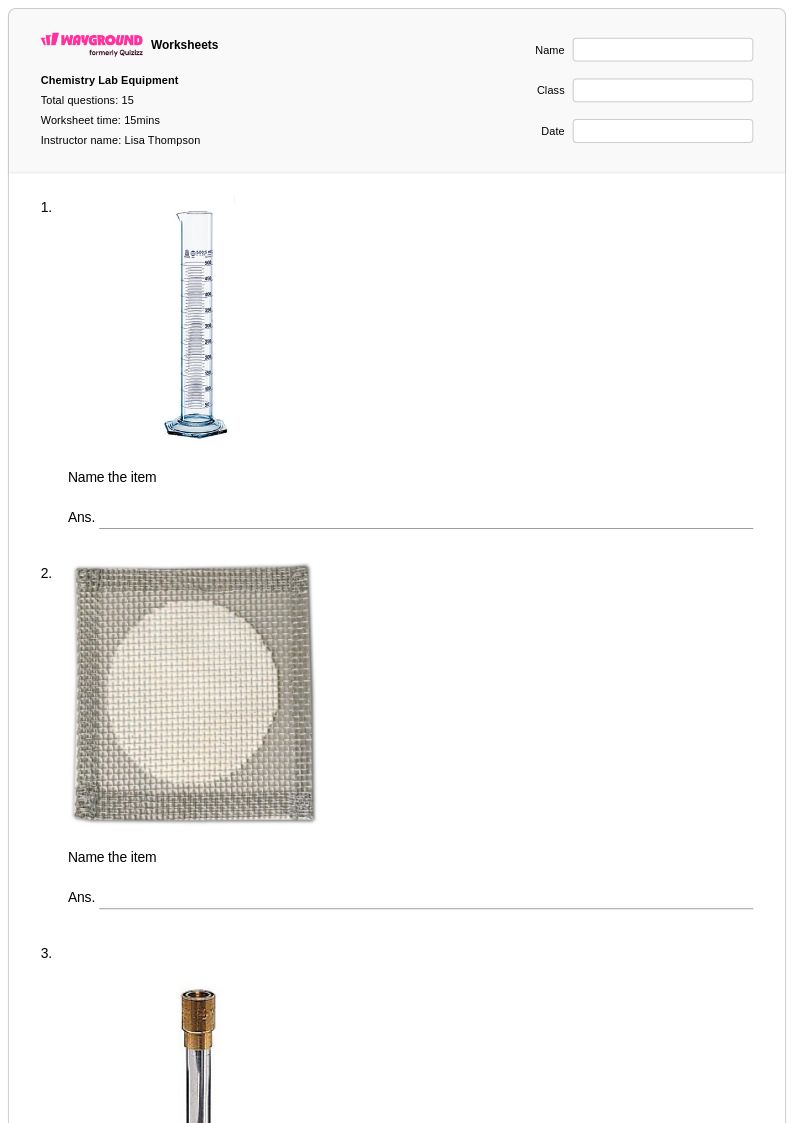
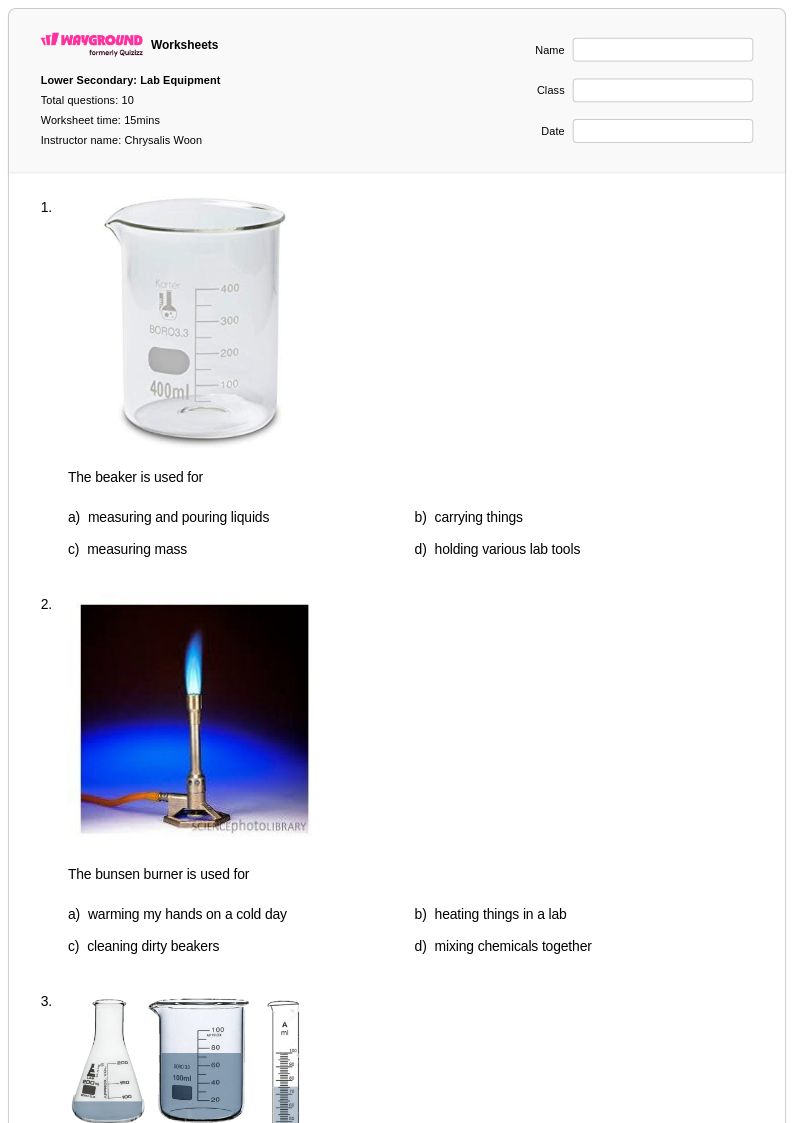
Lab equipment worksheets available through Wayground (formerly Quizizz) provide comprehensive coverage of essential laboratory tools and their proper applications in scientific investigations. These expertly designed resources strengthen students' ability to identify, classify, and utilize fundamental laboratory instruments including beakers, graduated cylinders, microscopes, balances, thermometers, and safety equipment. The worksheets feature detailed diagrams, measurement activities, and practical scenarios that develop critical laboratory skills through structured practice problems. Students engage with content that reinforces proper equipment selection, accurate measurement techniques, and laboratory safety protocols. Each worksheet includes a complete answer key and is available as a free printable pdf, ensuring teachers have reliable assessment tools for evaluating student comprehension of laboratory fundamentals.
Wayground (formerly Quizizz) supports science educators with an extensive collection of millions of teacher-created lab equipment resources that streamline lesson planning and enhance student learning outcomes. The platform's robust search and filtering capabilities enable teachers to quickly locate worksheets aligned with specific curriculum standards and learning objectives. Differentiation tools allow educators to customize content difficulty levels, making these resources suitable for diverse learning needs and abilities. The flexibility of both printable and digital formats, including downloadable pdf versions, accommodates various classroom environments and teaching preferences. These comprehensive worksheet collections serve multiple instructional purposes, from introducing new laboratory concepts to providing targeted remediation for struggling students and enrichment opportunities for advanced learners, ultimately building the foundational knowledge necessary for successful laboratory work across all scientific disciplines.
FAQs
How do I teach students to identify and use lab equipment correctly?
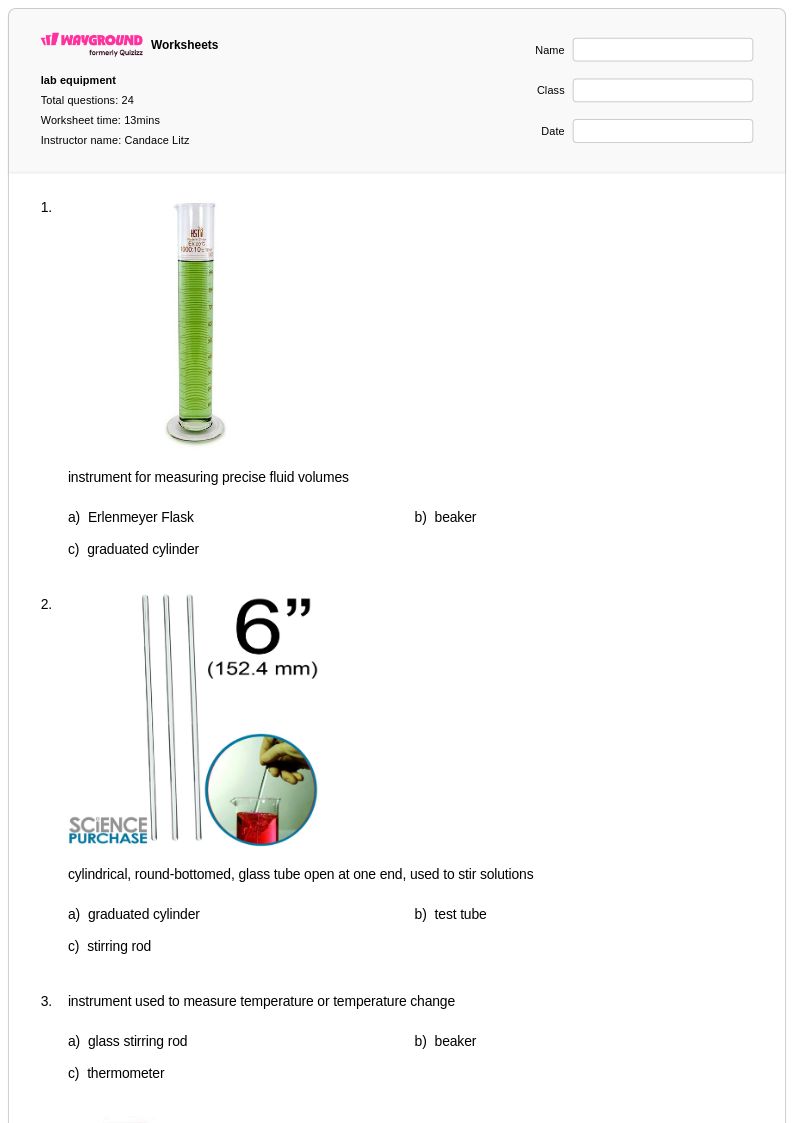
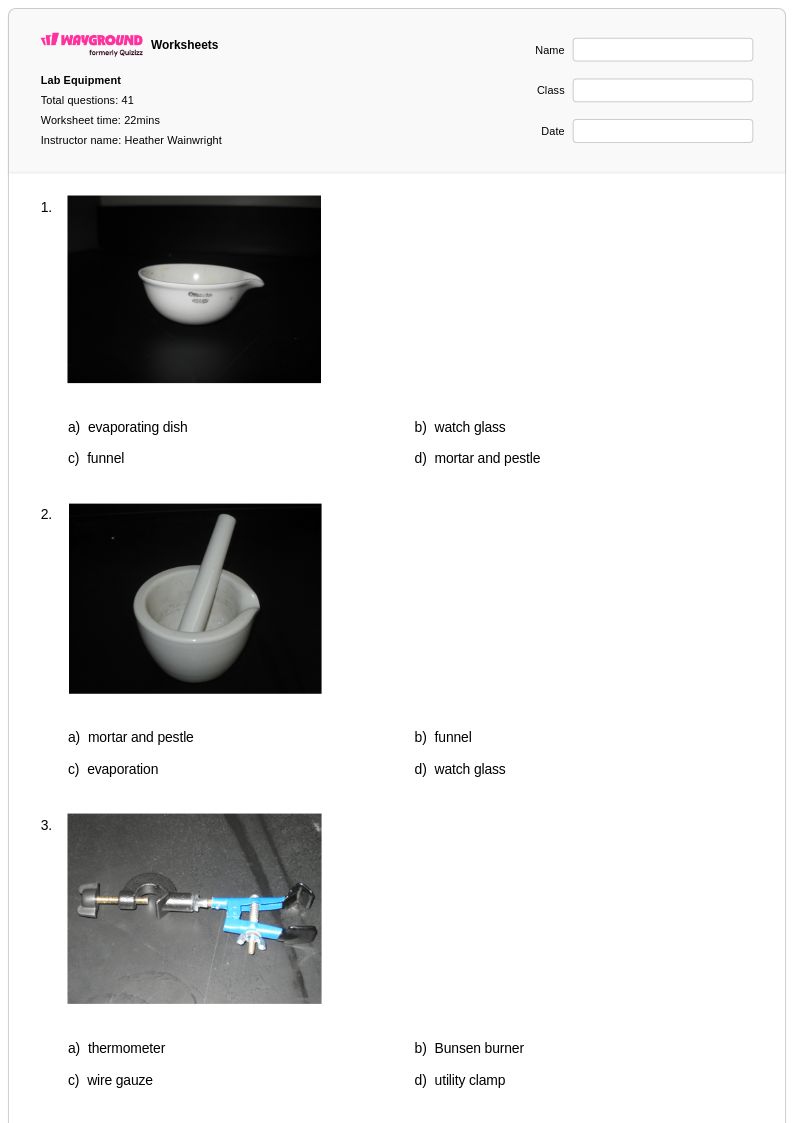
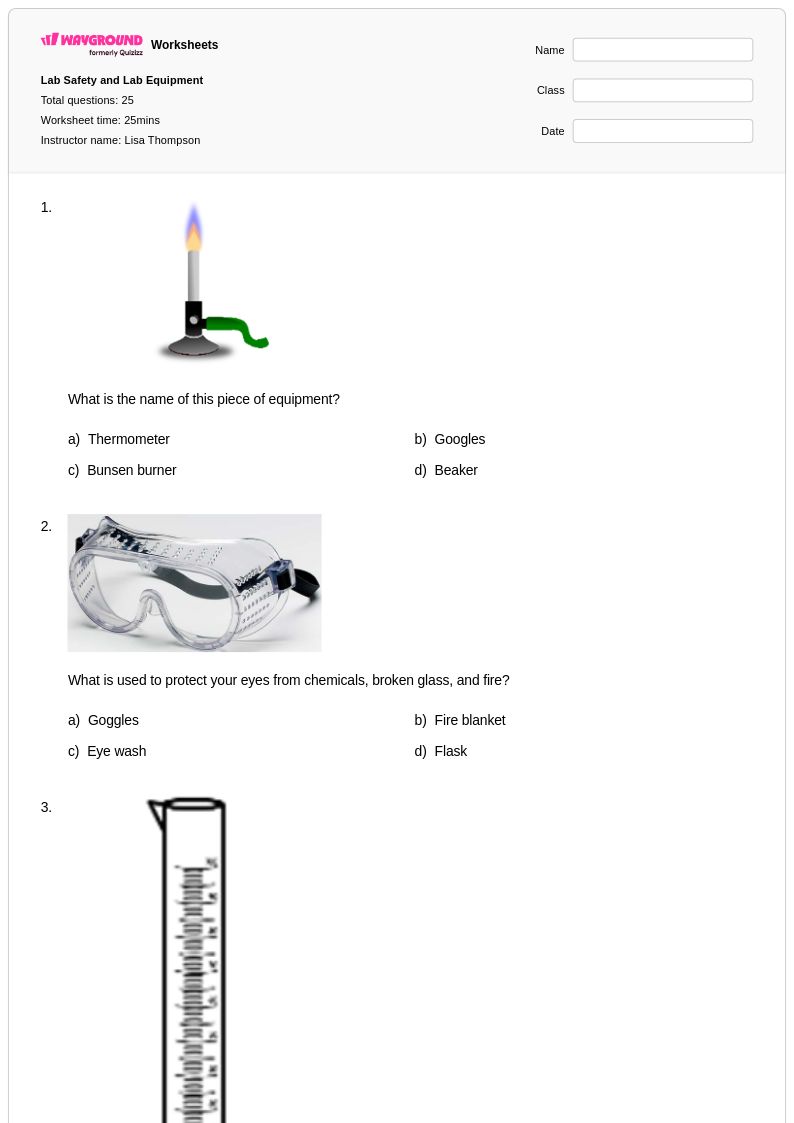
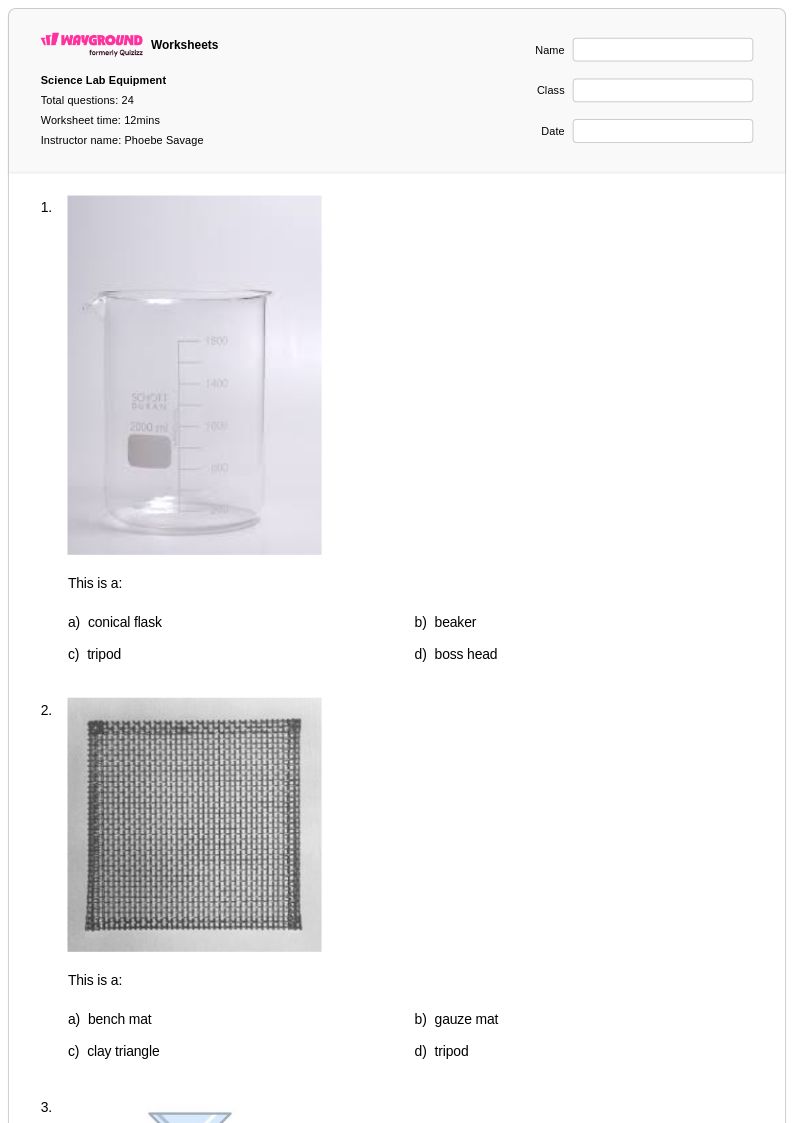
Start by introducing equipment in functional categories: measuring tools (graduated cylinders, balances, thermometers), observation tools (microscopes, hand lenses), and containment tools (beakers, flasks, test tubes). Pair direct instruction with hands-on identification activities where students match equipment names to diagrams and describe each tool's purpose. Reinforcing proper technique alongside identification helps students connect what a tool looks like to how and when it is used in an actual investigation.
What exercises help students practice recognizing and selecting the right lab equipment?
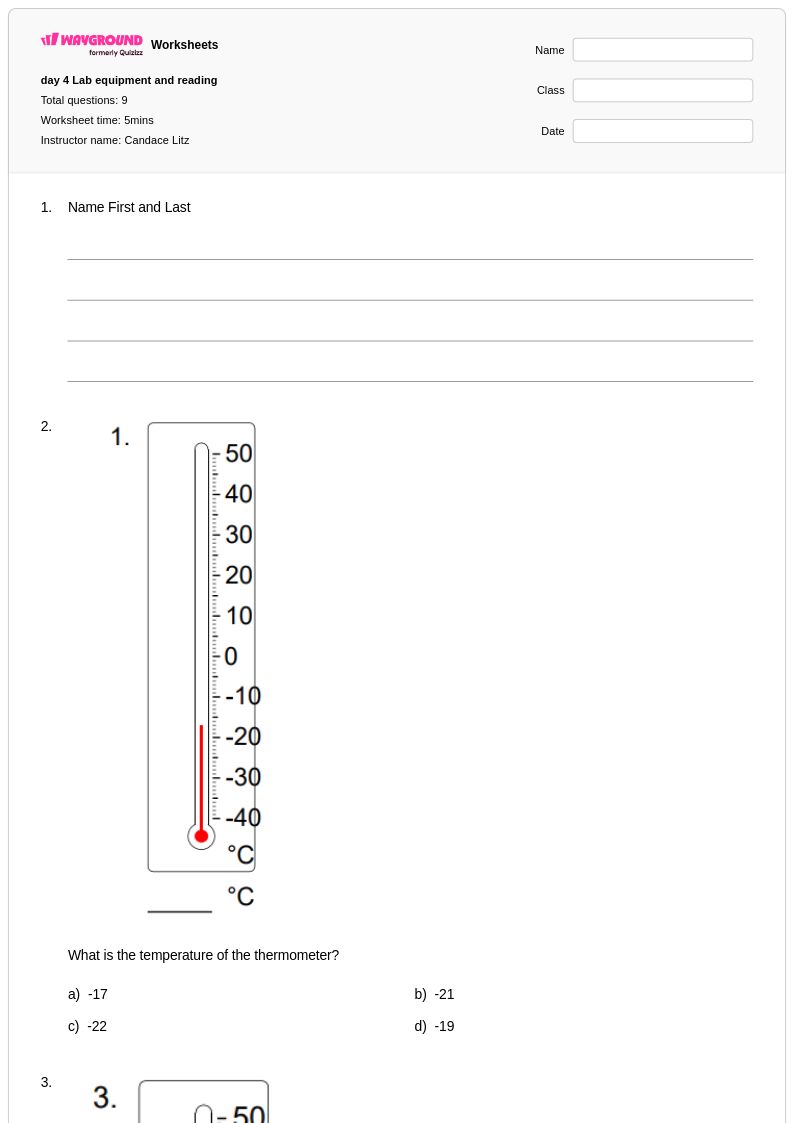
Effective practice activities include labeled-diagram identification tasks, equipment-selection scenarios where students choose the correct tool for a given measurement or procedure, and matching exercises that pair equipment names with their functions. Measurement activities using graduated cylinders and balances reinforce accuracy alongside recognition. Structured practice problems that present realistic lab situations push students to apply their knowledge rather than simply recall definitions.
What mistakes do students commonly make when identifying or using lab equipment?
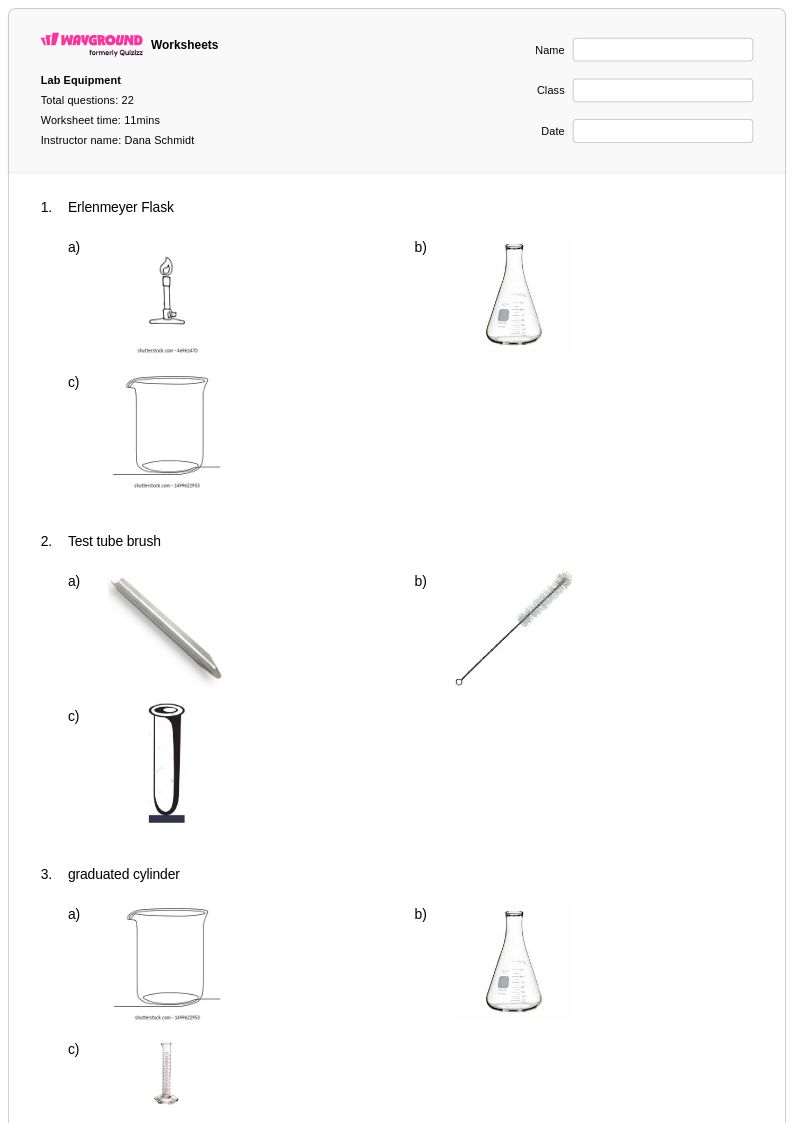
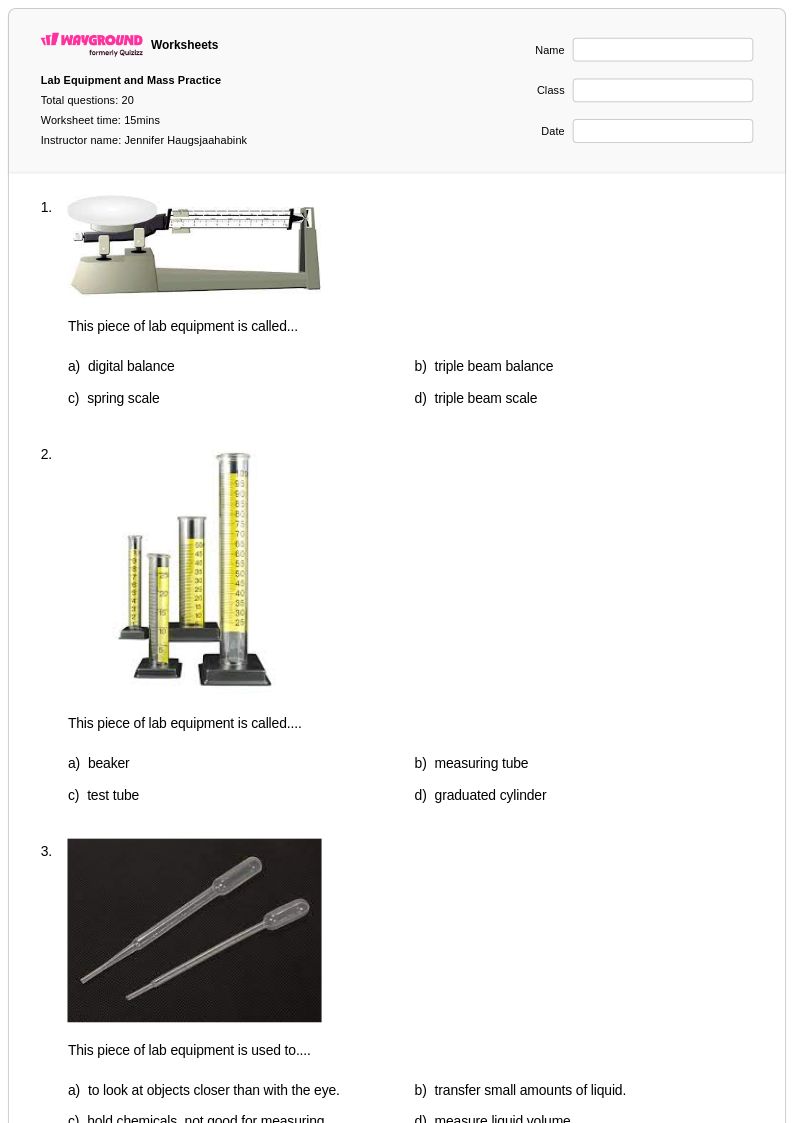
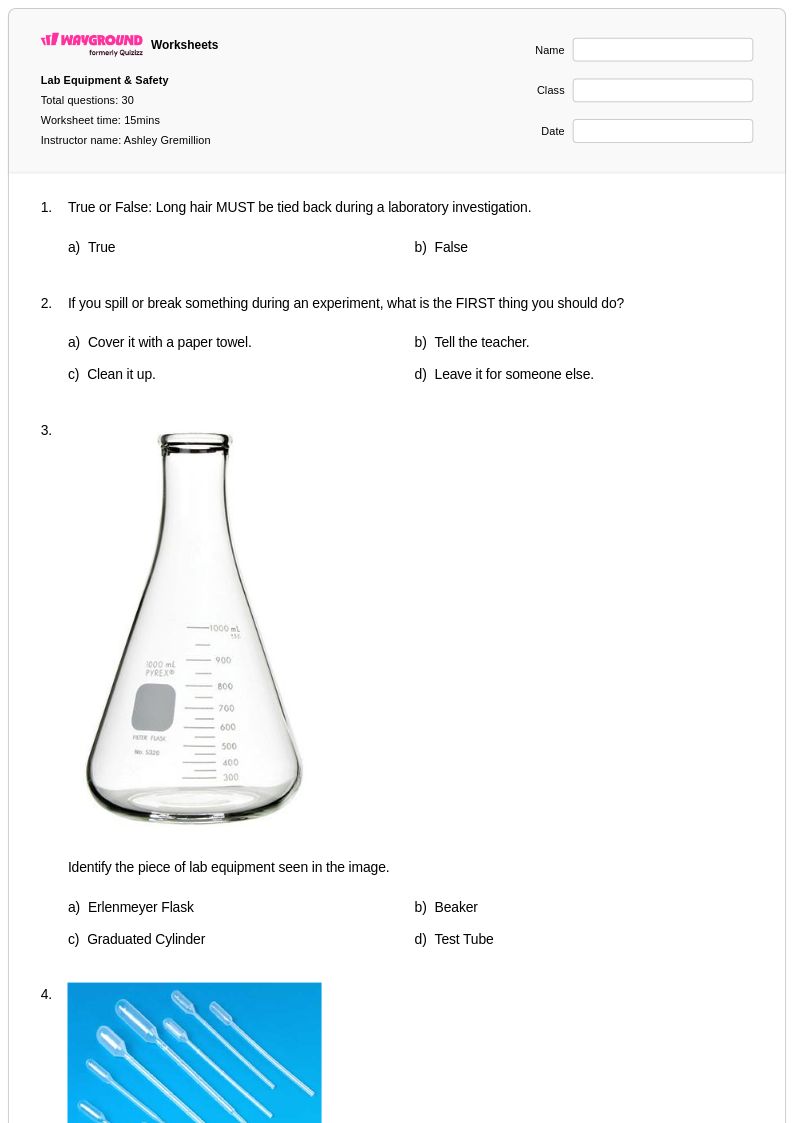
A frequent error is confusing similarly shaped glassware, such as beakers and Erlenmeyer flasks, or assuming a beaker is precise enough for accurate liquid measurement when a graduated cylinder is required. Students also routinely misread graduated cylinders by ignoring the meniscus, reading from the top of the curve rather than the bottom. Another common misconception is treating all balances as interchangeable, without recognizing differences in precision between triple-beam and digital balances.
How do lab equipment worksheets connect to laboratory safety instruction?
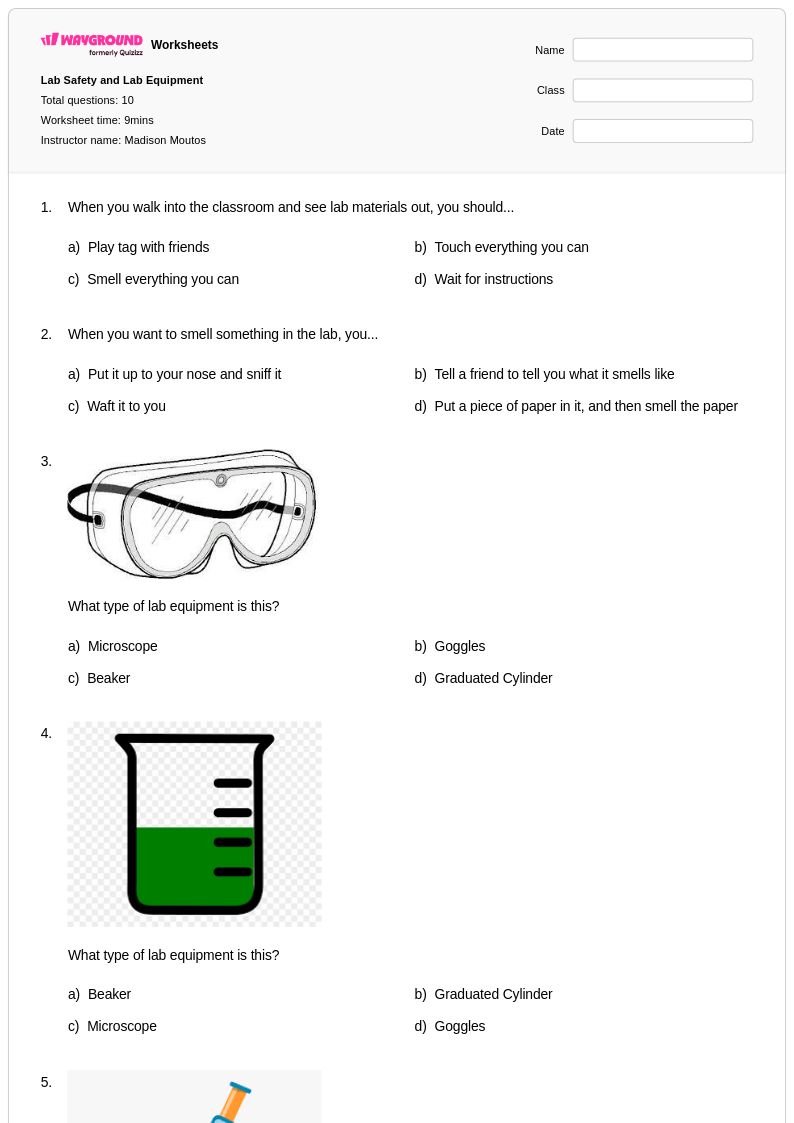
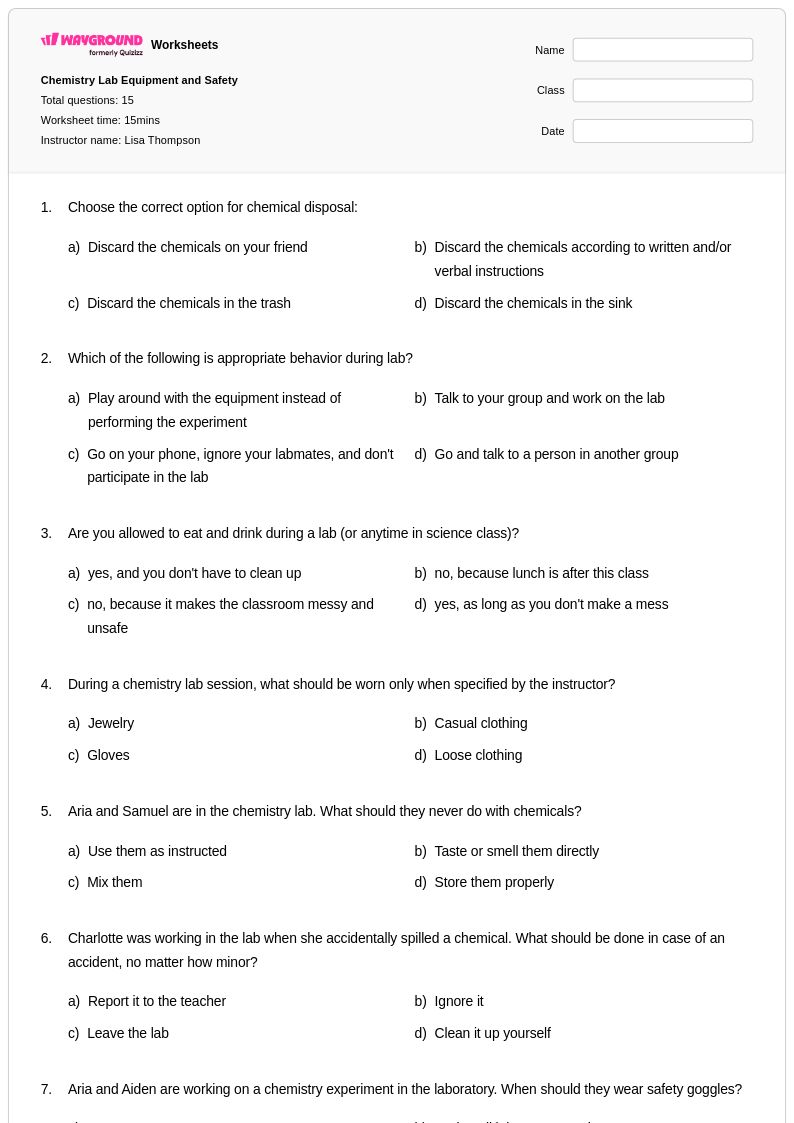
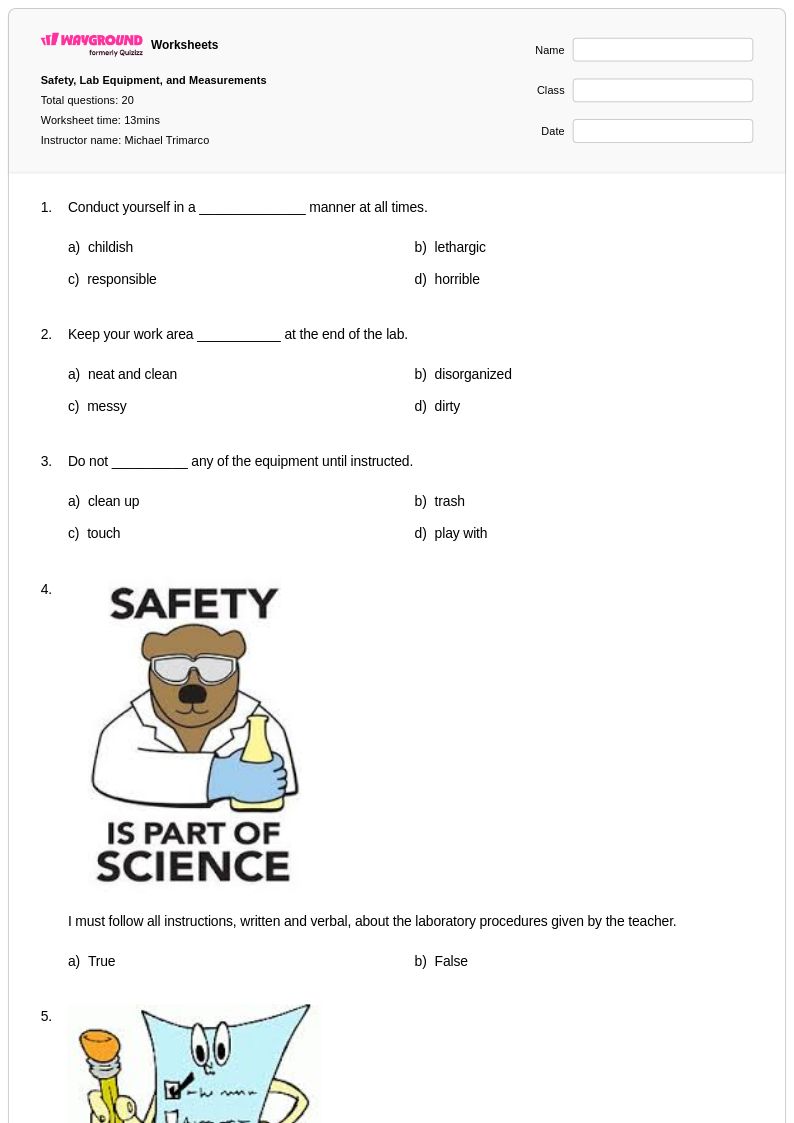
Lab equipment worksheets often integrate safety protocols directly alongside tool identification, reinforcing that knowing a piece of equipment includes knowing its safe handling procedures. Activities may require students to identify personal protective equipment, recognize hazard symbols, or select the correct safety response for a given scenario. Combining equipment knowledge with safety expectations from the start builds the habits students need before they ever enter a live lab setting.
How do I use Wayground's lab equipment worksheets in my classroom?
Wayground's lab equipment worksheets are available as printable PDFs for traditional classroom use and in digital formats for technology-integrated environments, including the option to host them as a quiz directly on Wayground. Teachers can assign worksheets as pre-lab preparation, formative checks during a unit, or review activities before a practical assessment. Each worksheet includes a complete answer key, so scoring and feedback require minimal additional preparation time.
How can I differentiate lab equipment instruction for students with different learning needs?
For students who need additional support, reduce the number of equipment options presented at one time and use heavily illustrated diagrams to build visual recognition before introducing technical vocabulary. Wayground supports individual student accommodations including Read Aloud for students who benefit from audio delivery of questions, reduced answer choices to lower cognitive load, and extended time settings that can be configured per student. These accommodations can be assigned individually while the rest of the class works under default settings, making differentiation unobtrusive and manageable.