
Recommended Topics for you
15 Q
5th
10 Q
3rd - Uni
10 Q
3rd
16 Q
5th
15 Q
3rd - Uni
8 Q
5th
9 Q
5th - Uni
20 Q
5th - Uni
10 Q
5th
19 Q
3rd - Uni
10 Q
3rd
16 Q
3rd
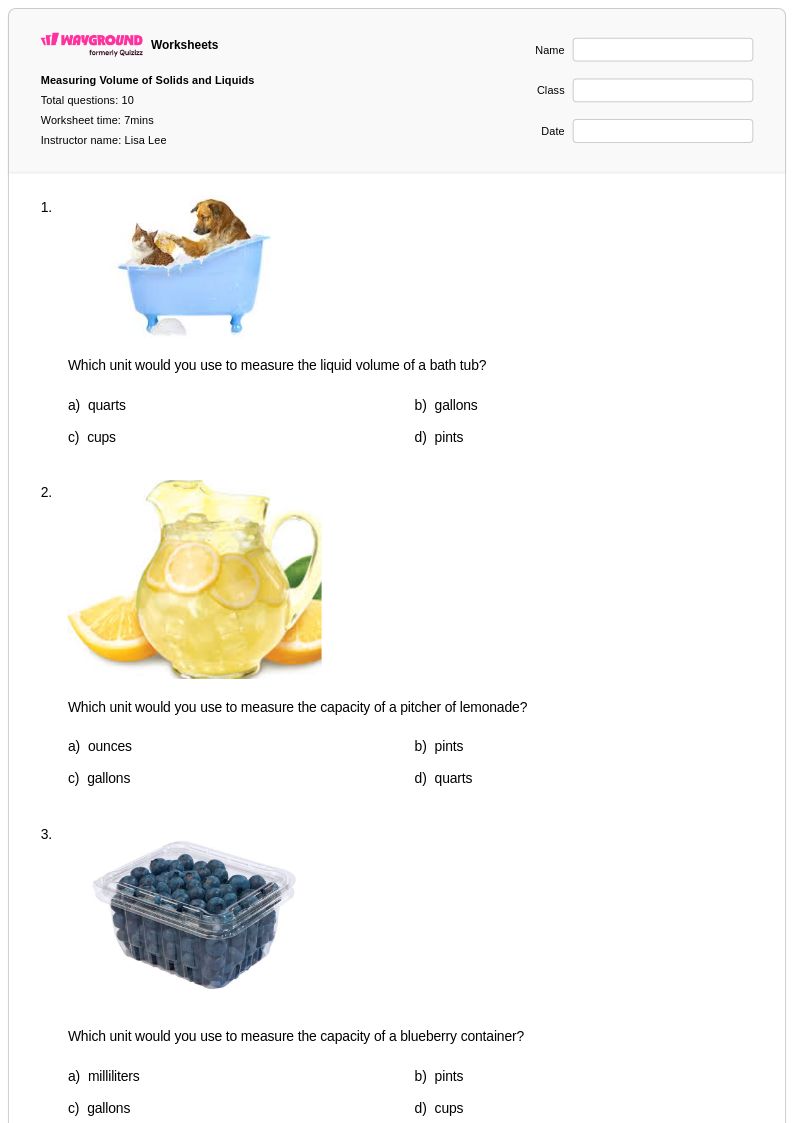
10 Q
KG - Uni
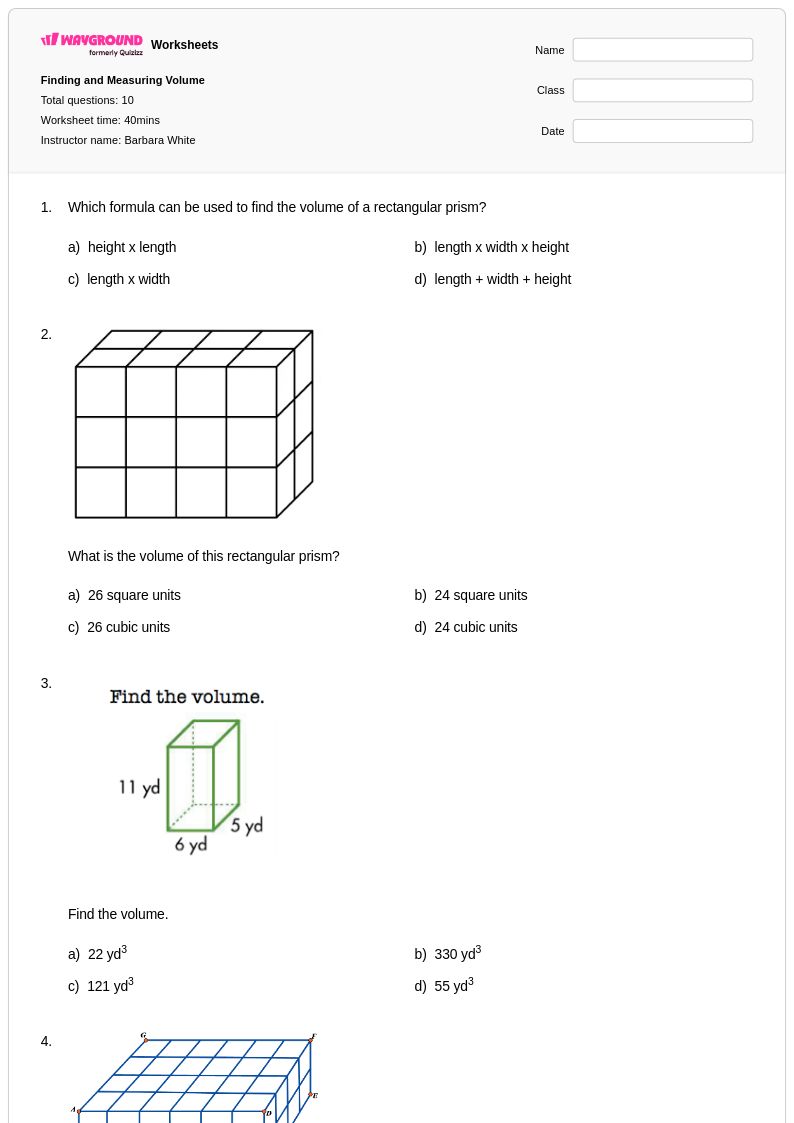
10 Q
5th
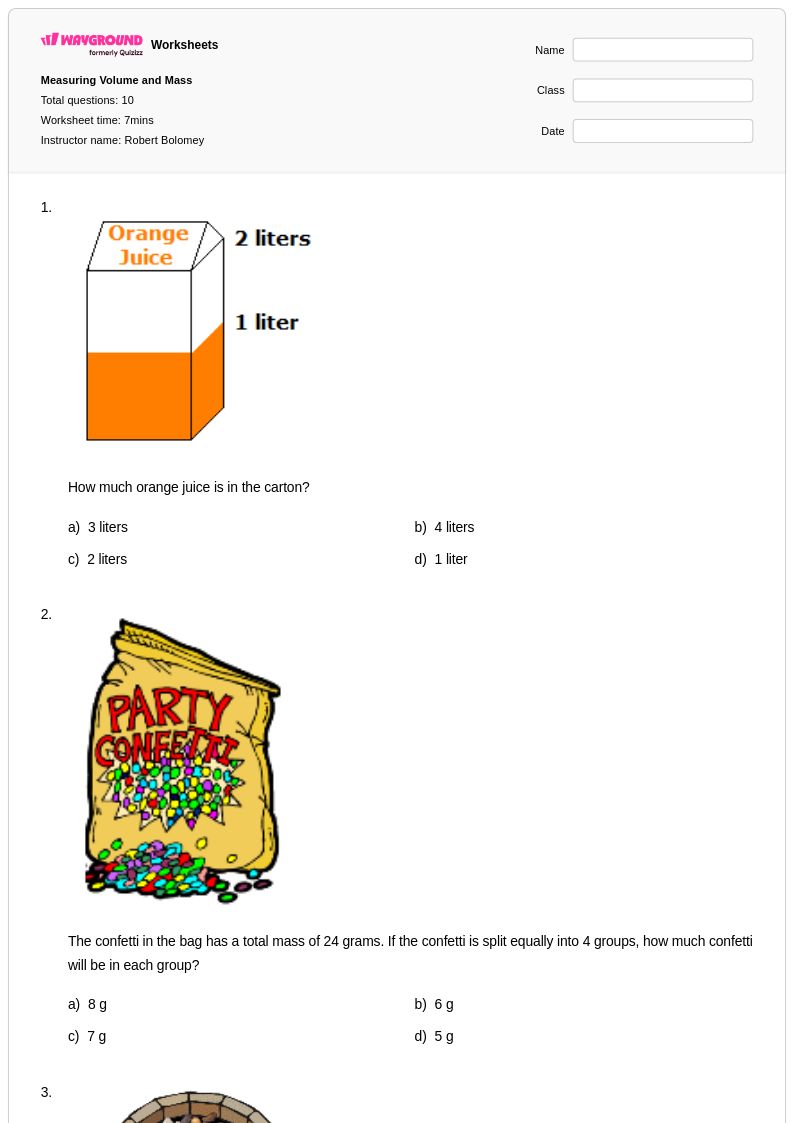
10 Q
3rd
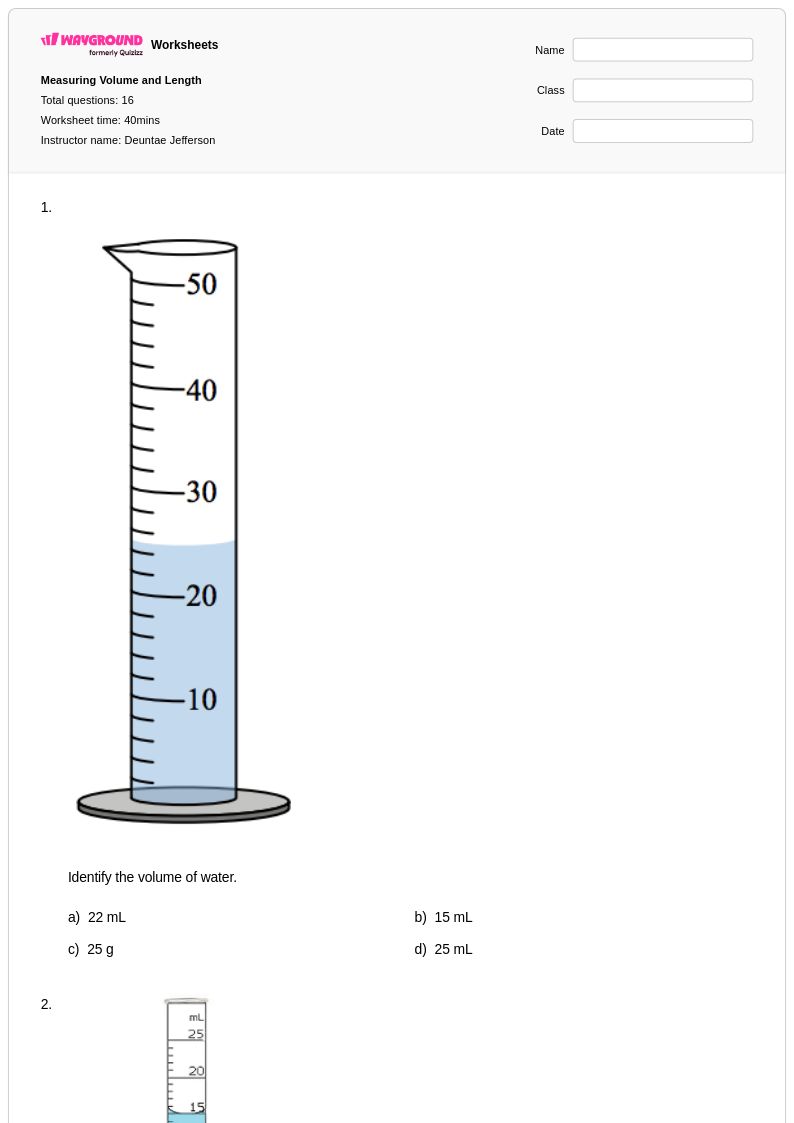
16 Q
3rd
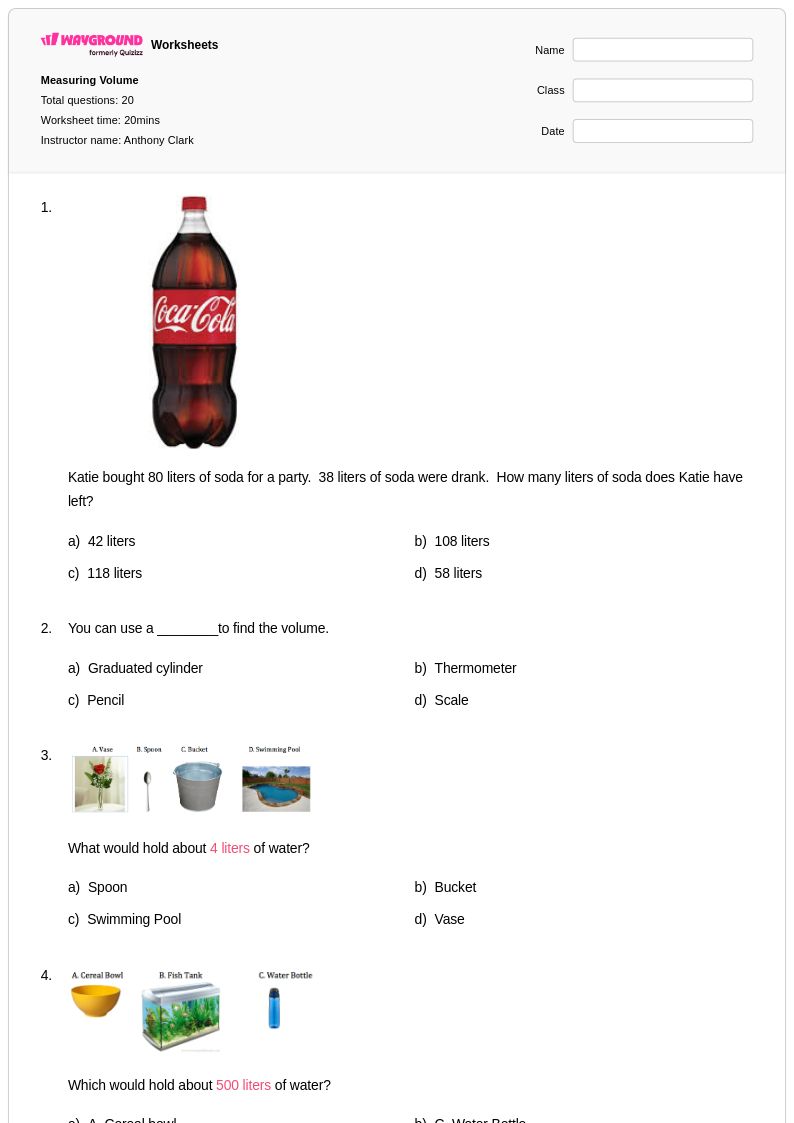
20 Q
3rd - Uni
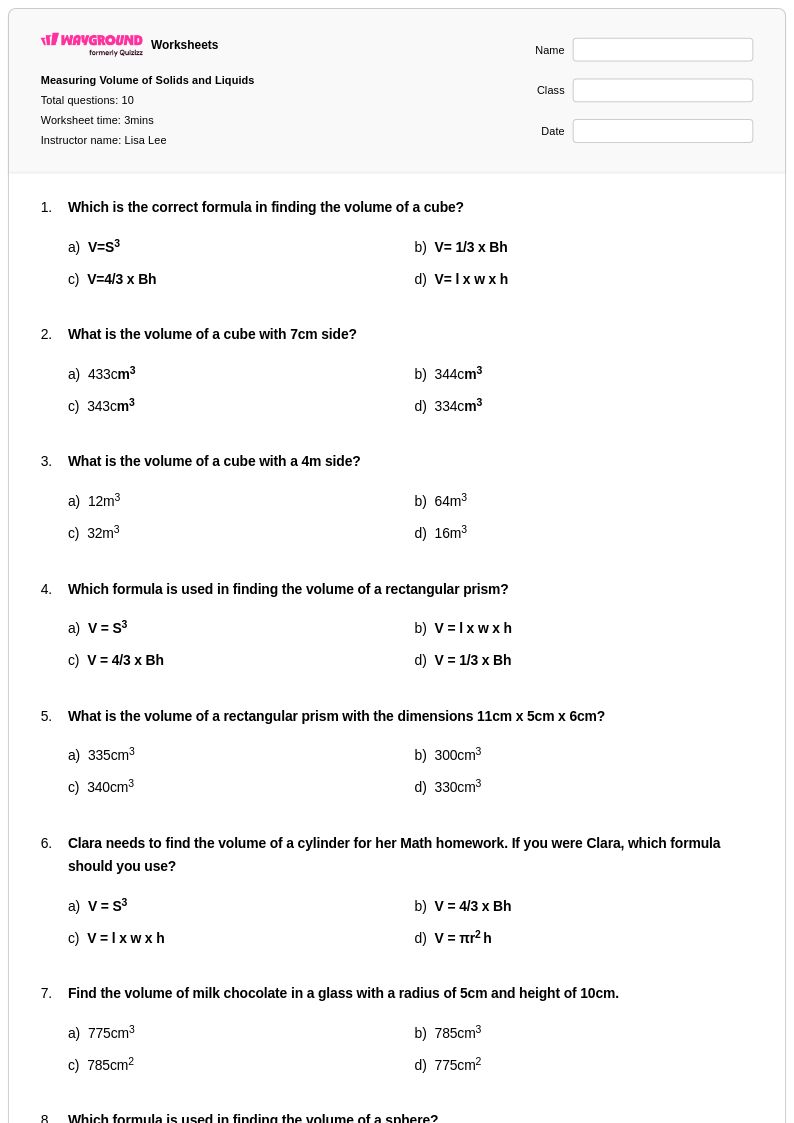
10 Q
6th
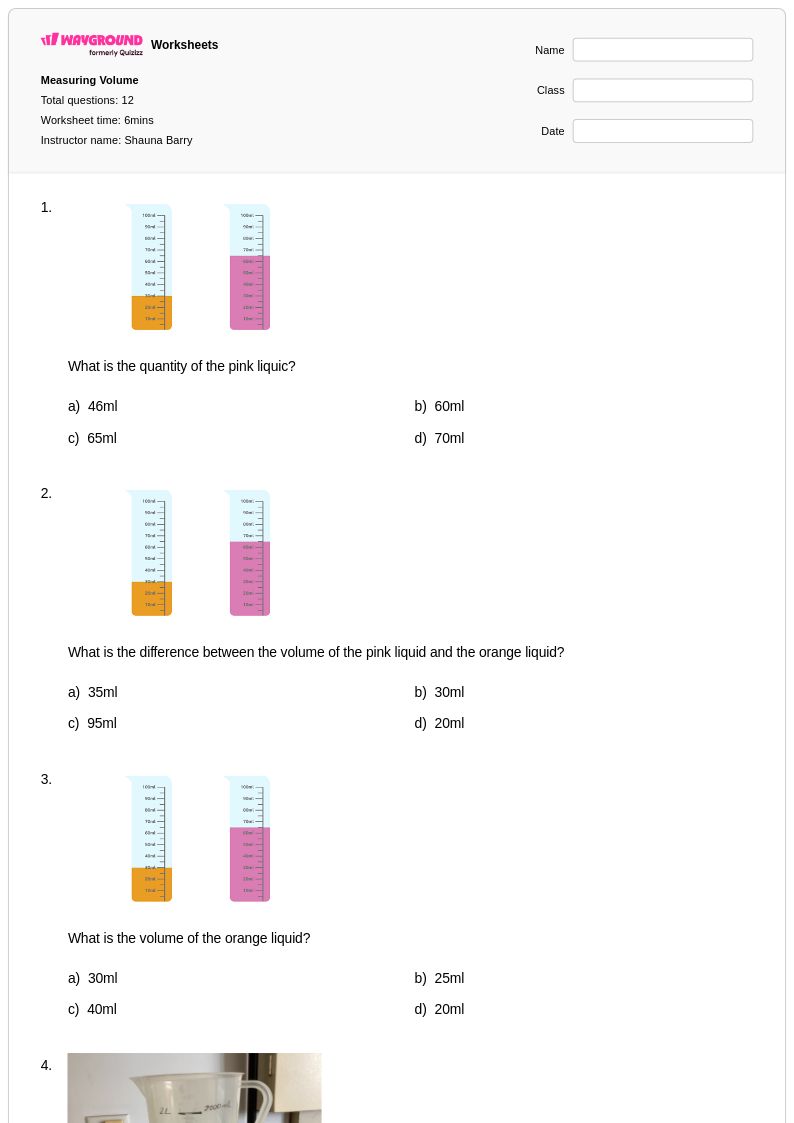
12 Q
4th
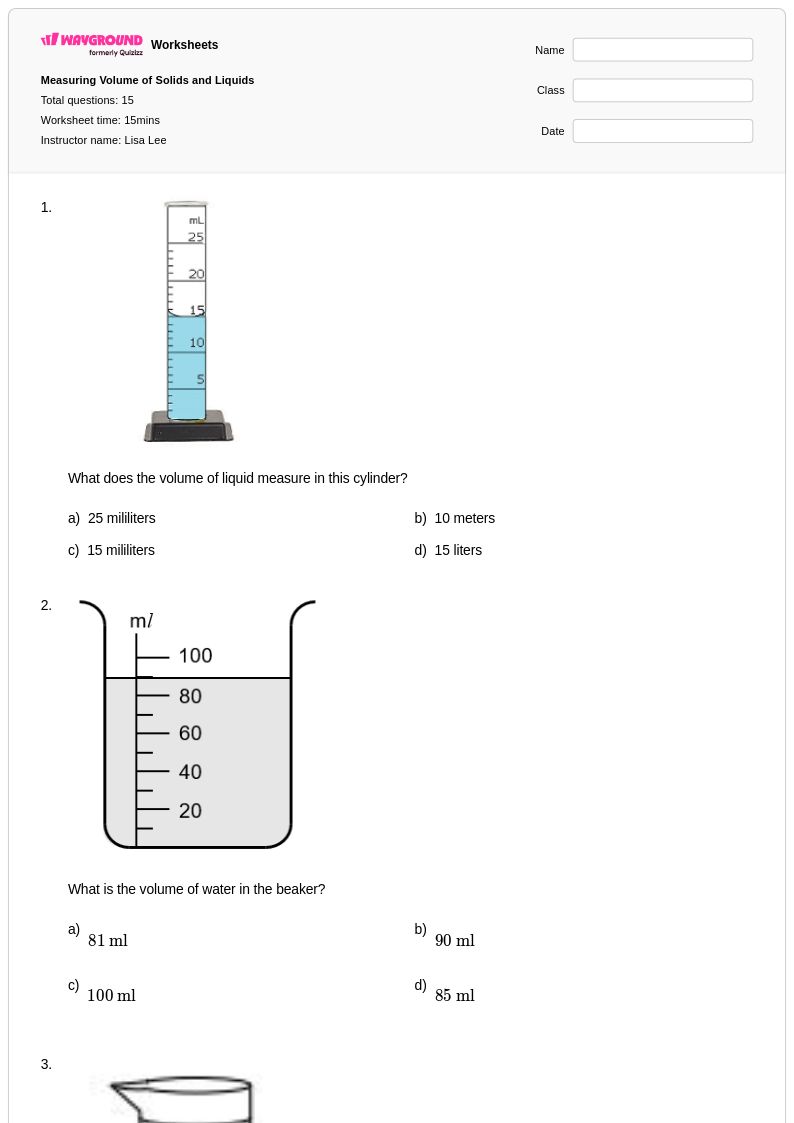
15 Q
2nd
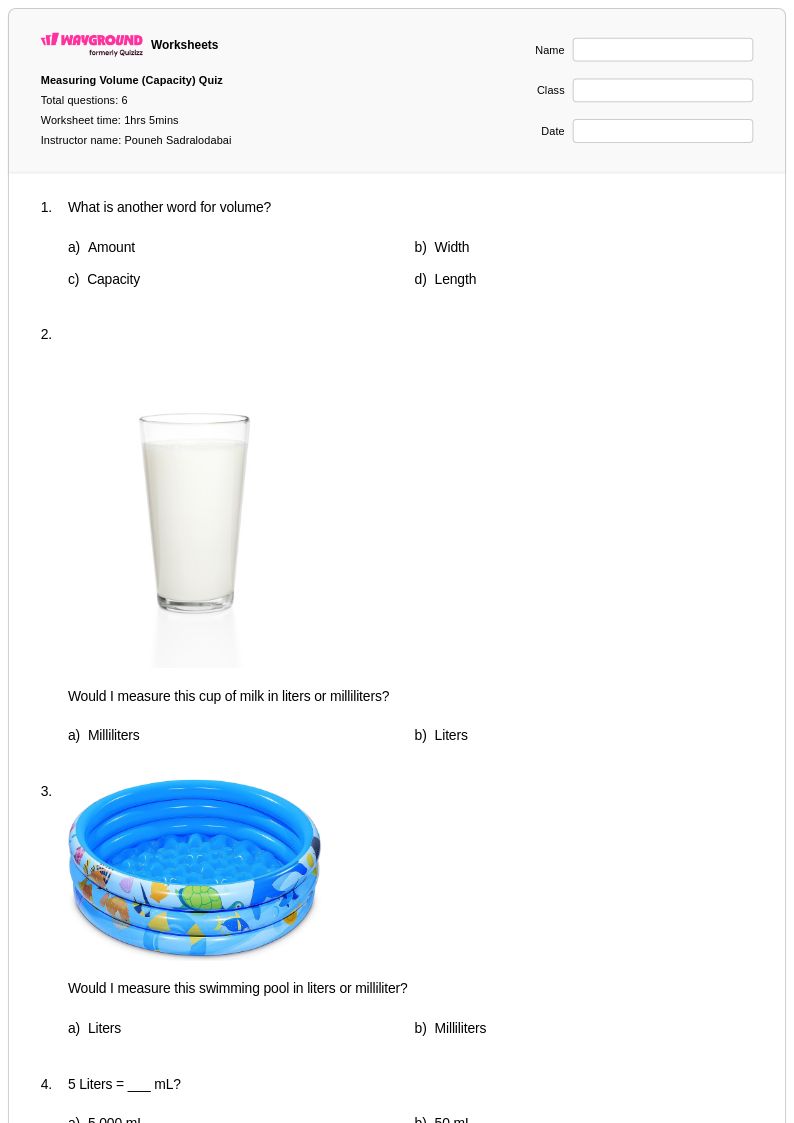
6 Q
4th
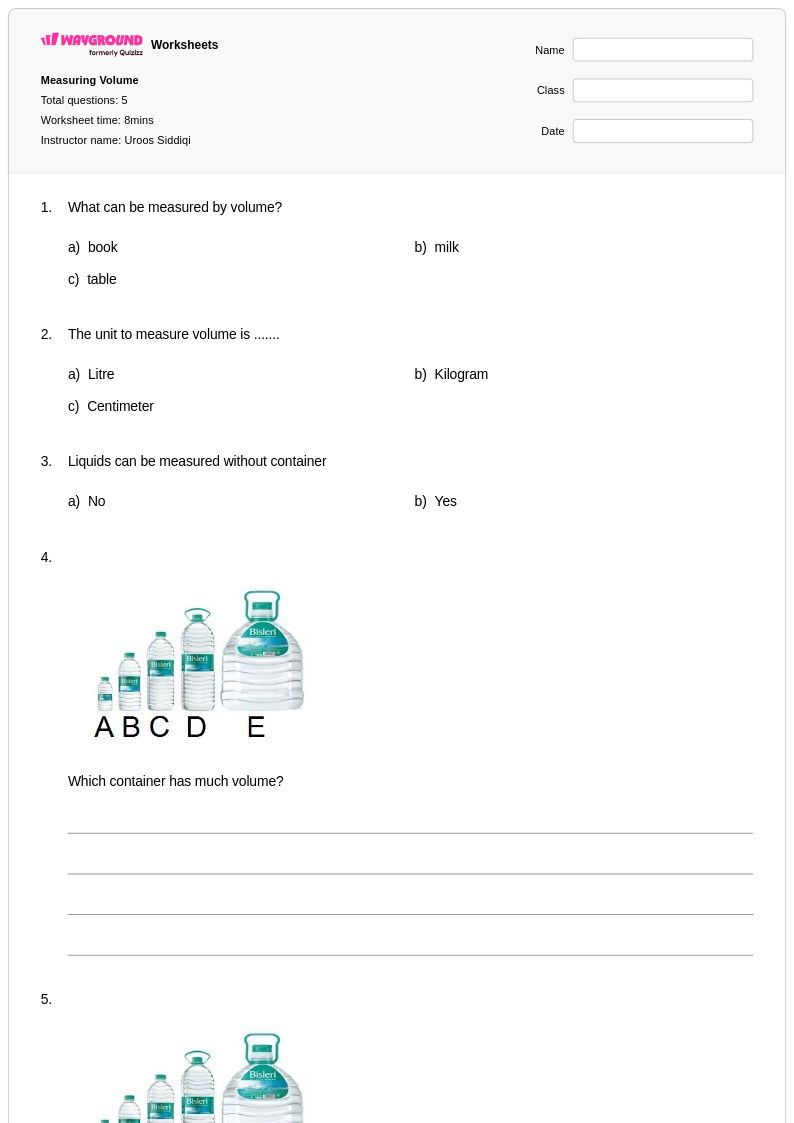
5 Q
2nd
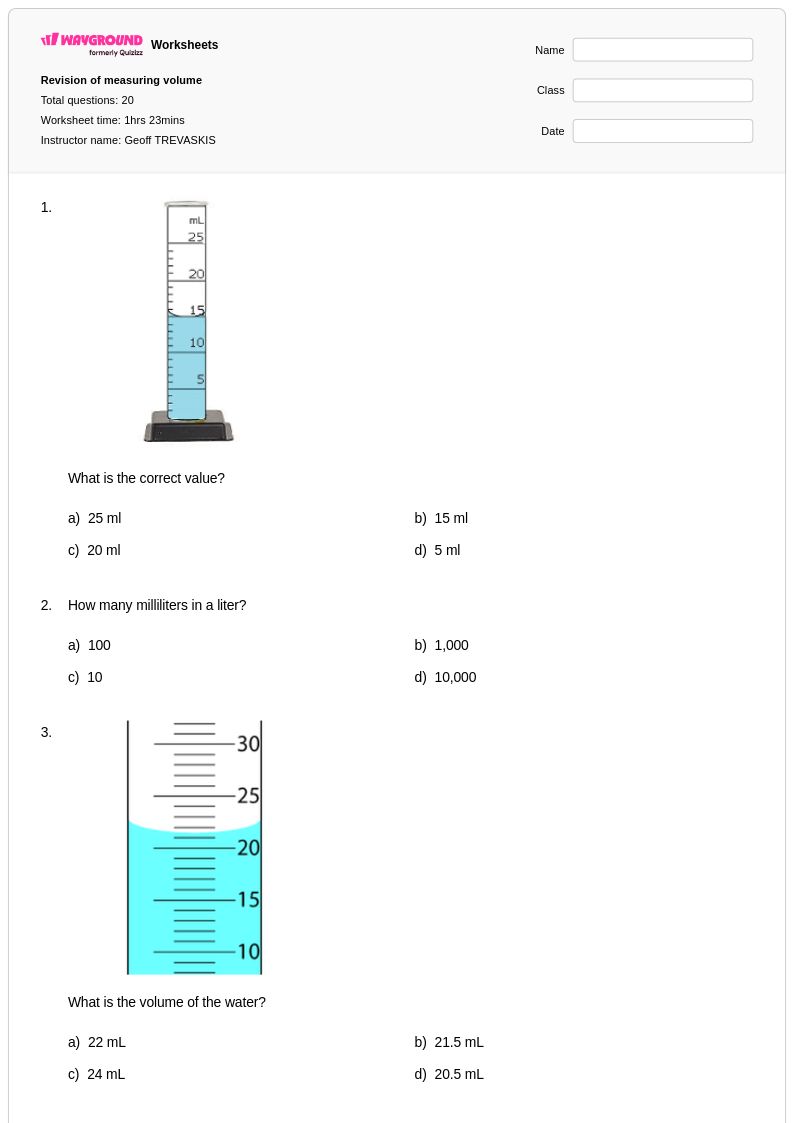
20 Q
4th - 7th
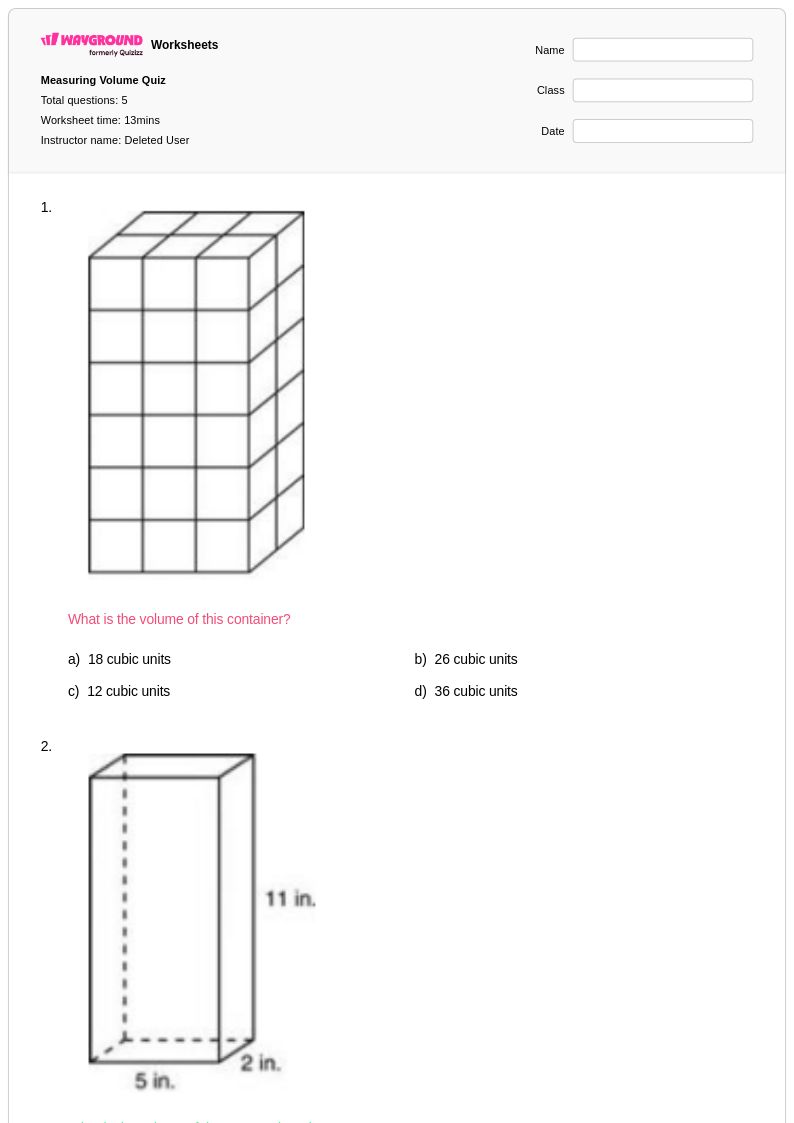
5 Q
5th
Explore Measuring Volume Worksheets by Grades
Explore Measuring Volume Worksheets for kindergarten by Topic
Explore Other Subject Worksheets for kindergarten
Explore printable Measuring Volume worksheets for Kindergarten
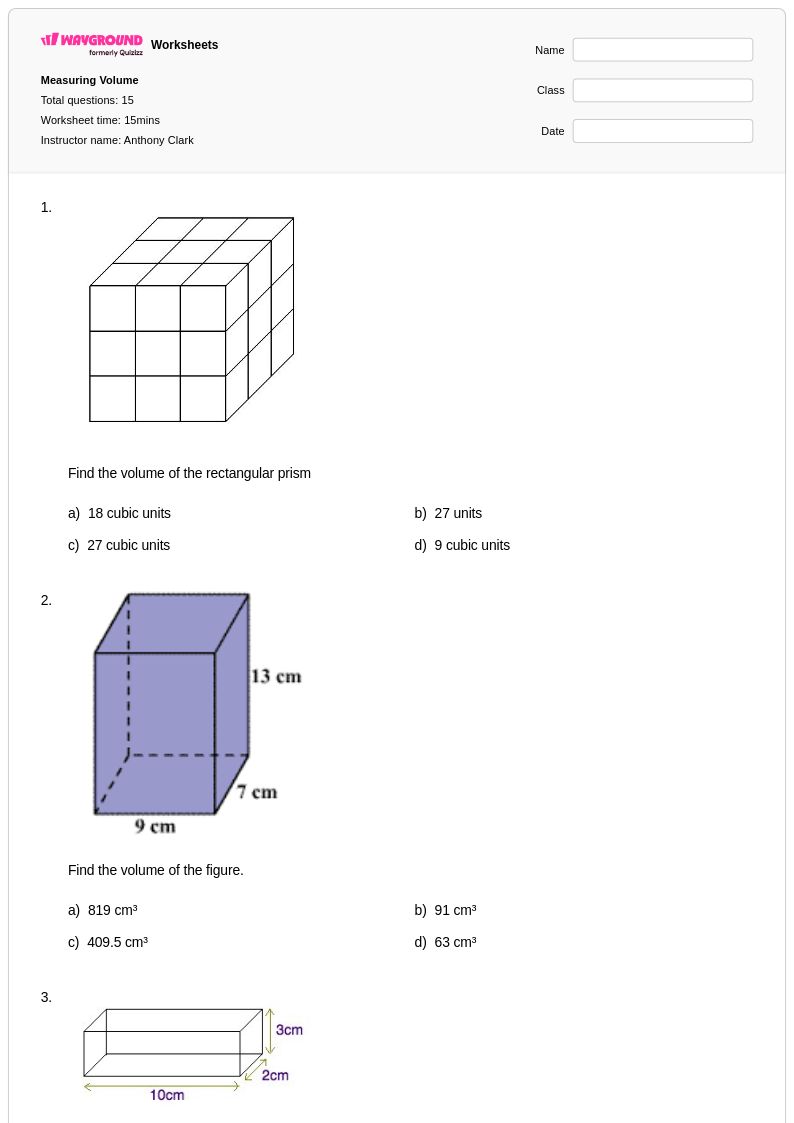
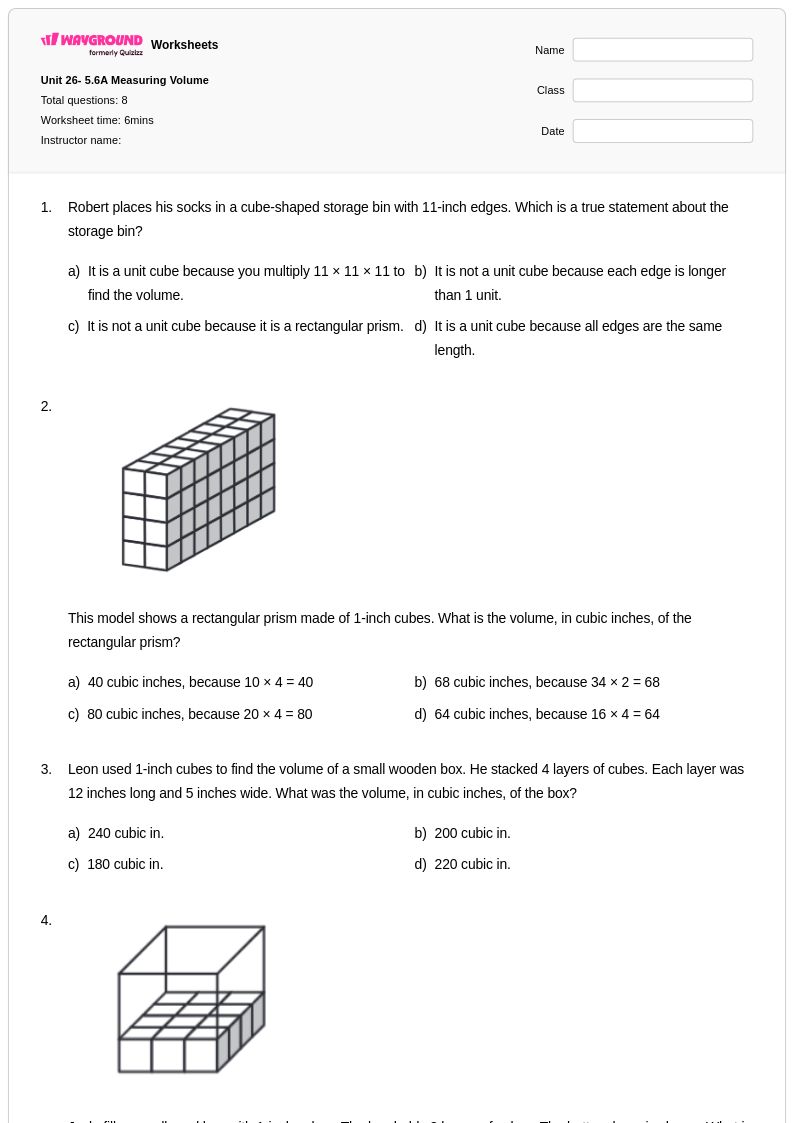
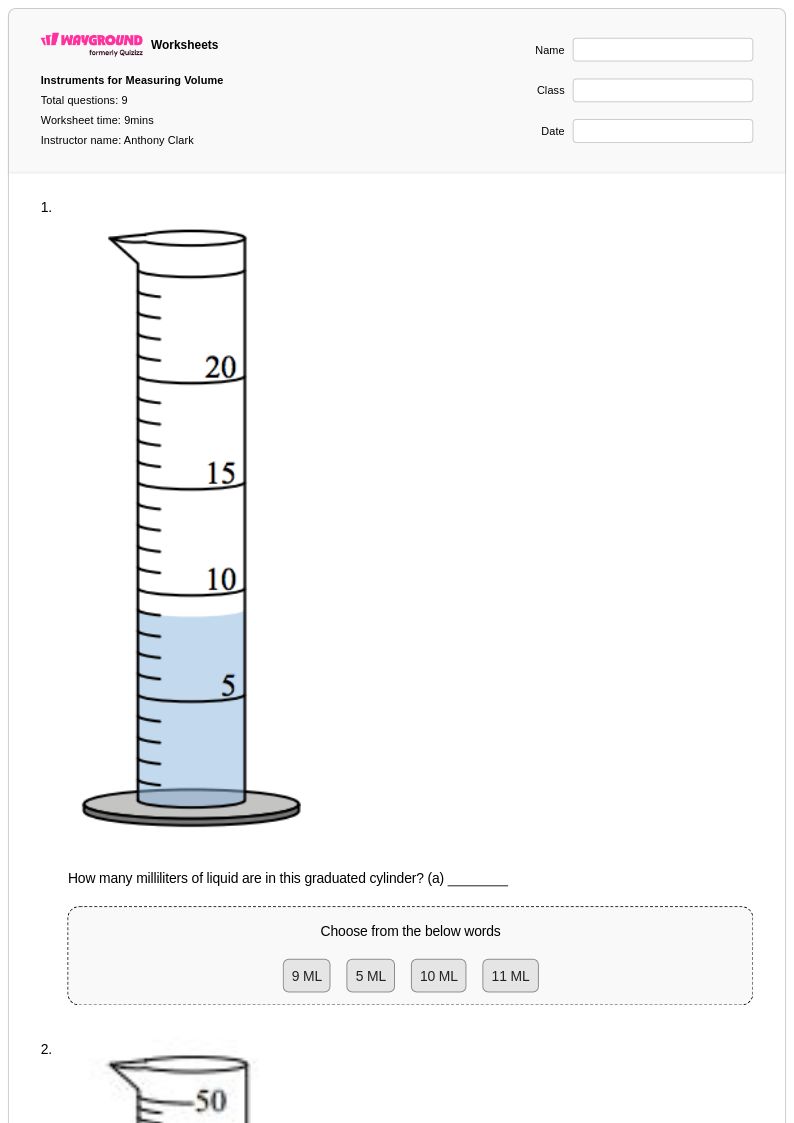
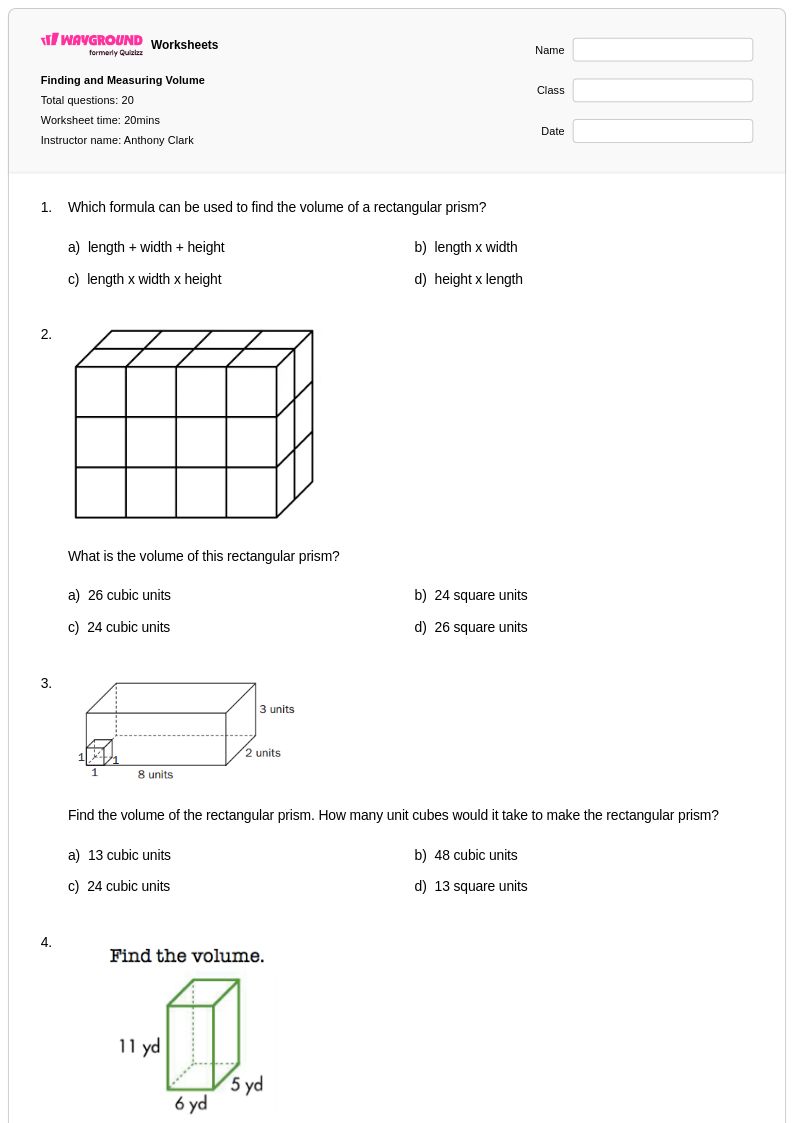
Measuring volume worksheets for kindergarten students available through Wayground (formerly Quizizz) introduce young learners to fundamental concepts of capacity and spatial reasoning through engaging, age-appropriate activities. These educational resources help kindergarten students develop essential measurement skills by exploring how much space objects occupy and comparing the capacity of different containers using non-standard units like blocks, cups, or scoops. The worksheets strengthen critical thinking abilities as children learn to estimate, compare, and order objects by volume while building mathematical vocabulary related to measurement concepts. Teachers can access comprehensive practice problems that progress from basic volume comparisons to more complex sorting activities, with each worksheet including a detailed answer key to support instruction and assessment. These free printables are designed to make abstract measurement concepts concrete and accessible for early elementary students.
Wayground (formerly Quizizz) empowers educators with millions of teacher-created resources specifically designed for kindergarten measurement instruction, featuring robust search and filtering capabilities that allow teachers to quickly locate volume-focused materials aligned with early learning standards. The platform's differentiation tools enable instructors to customize worksheets based on individual student needs, supporting both remediation for struggling learners and enrichment opportunities for advanced students. Teachers can seamlessly integrate these resources into their lesson planning through flexible formatting options, including downloadable pdf versions for traditional classroom use and digital formats for interactive learning experiences. The extensive collection supports systematic skill practice and assessment, helping educators track student progress in volume measurement while providing multiple opportunities for hands-on exploration of mathematical concepts that form the foundation for more advanced measurement studies.
FAQs
What do kindergarteners learn about volume?
How do I introduce the concept of volume to young children?
What kinds of activities are on these kindergarten volume worksheets?
How can I tell if a kindergartener understands volume?
How can I use this kindergarten worksheet in my classroom?
How does teaching volume in kindergarten align with math standards?