Free Printable Mechanical Energy Worksheets for Class 11
Class 11 mechanical energy worksheets from Wayground offer free printables and practice problems with answer keys to help students master kinetic energy, potential energy, and conservation of mechanical energy concepts.
Explore printable Mechanical Energy worksheets for Class 11
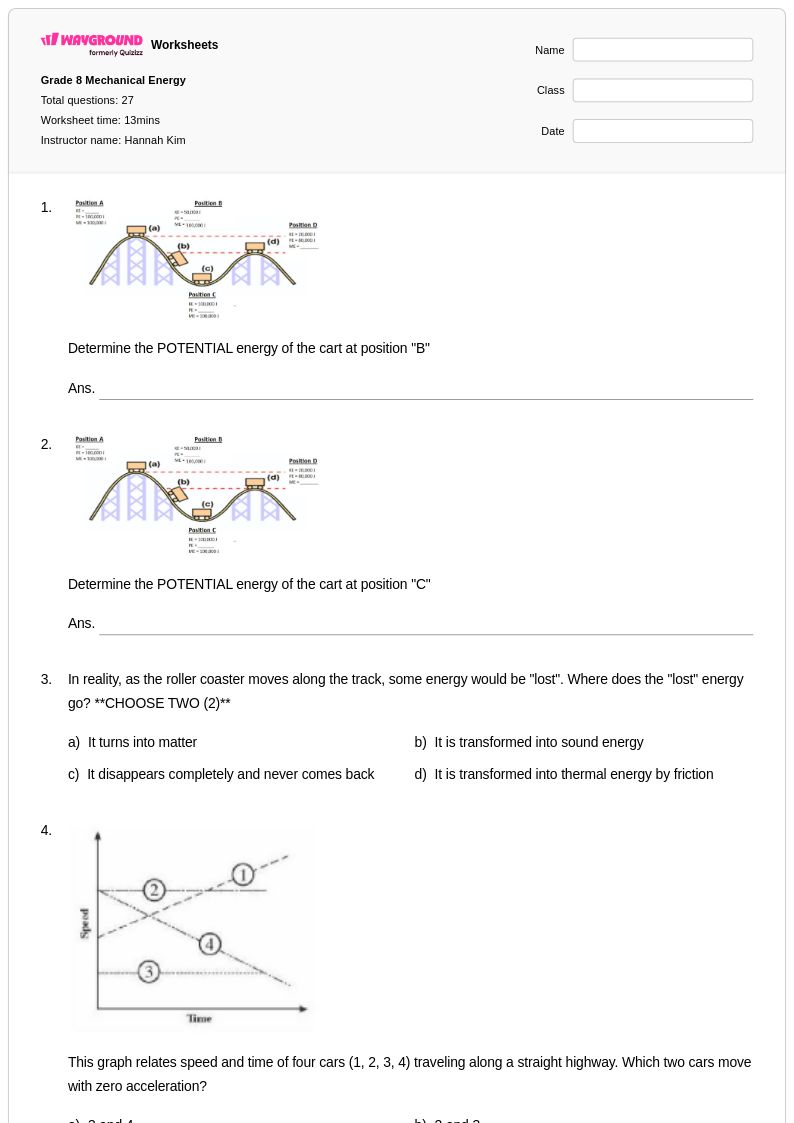
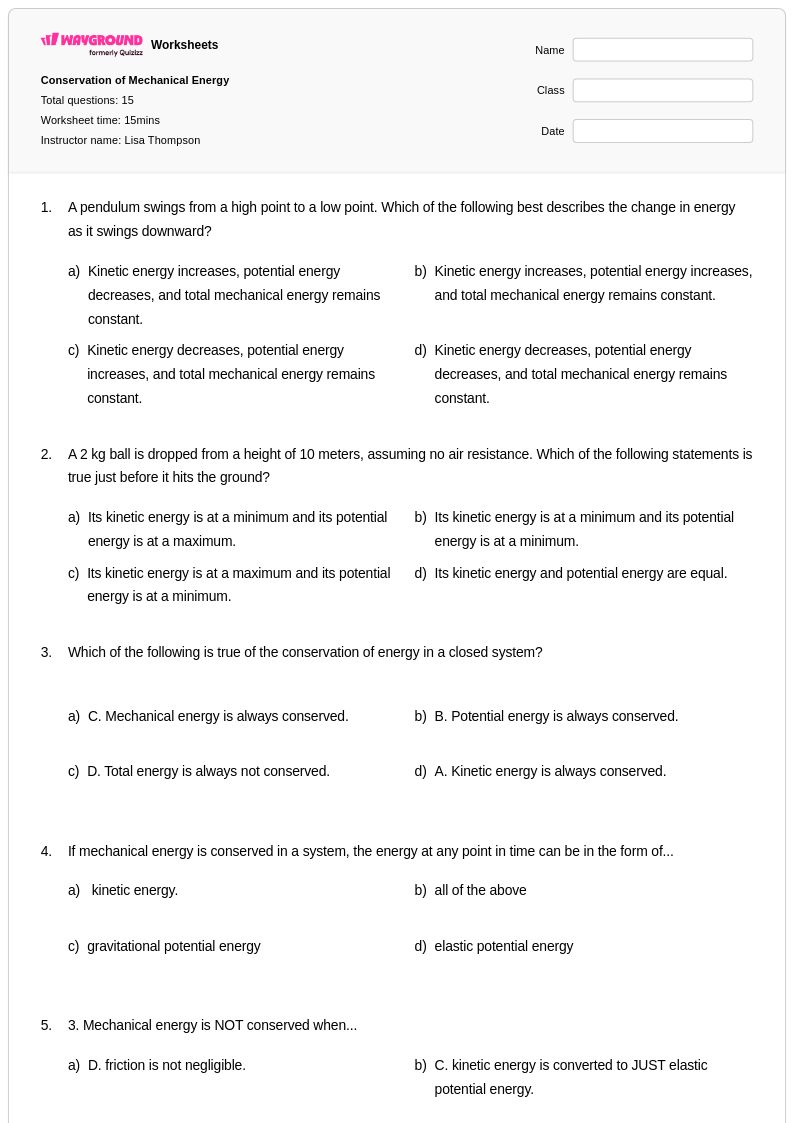
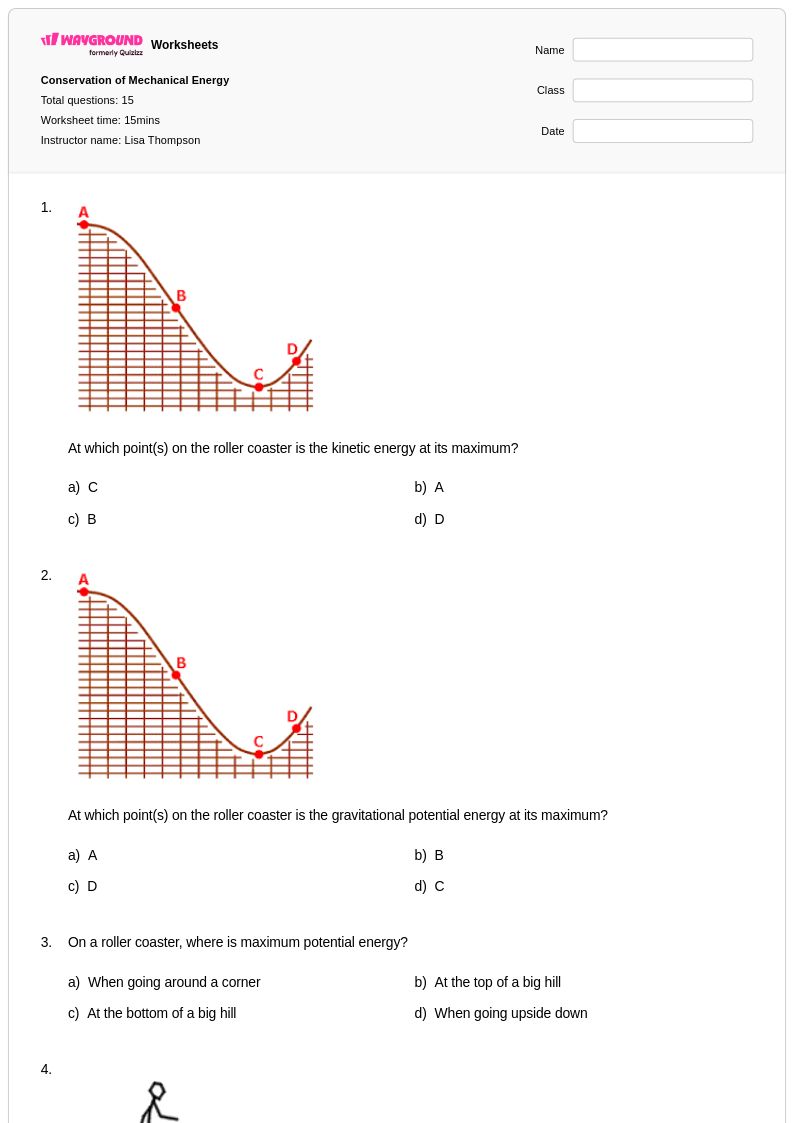
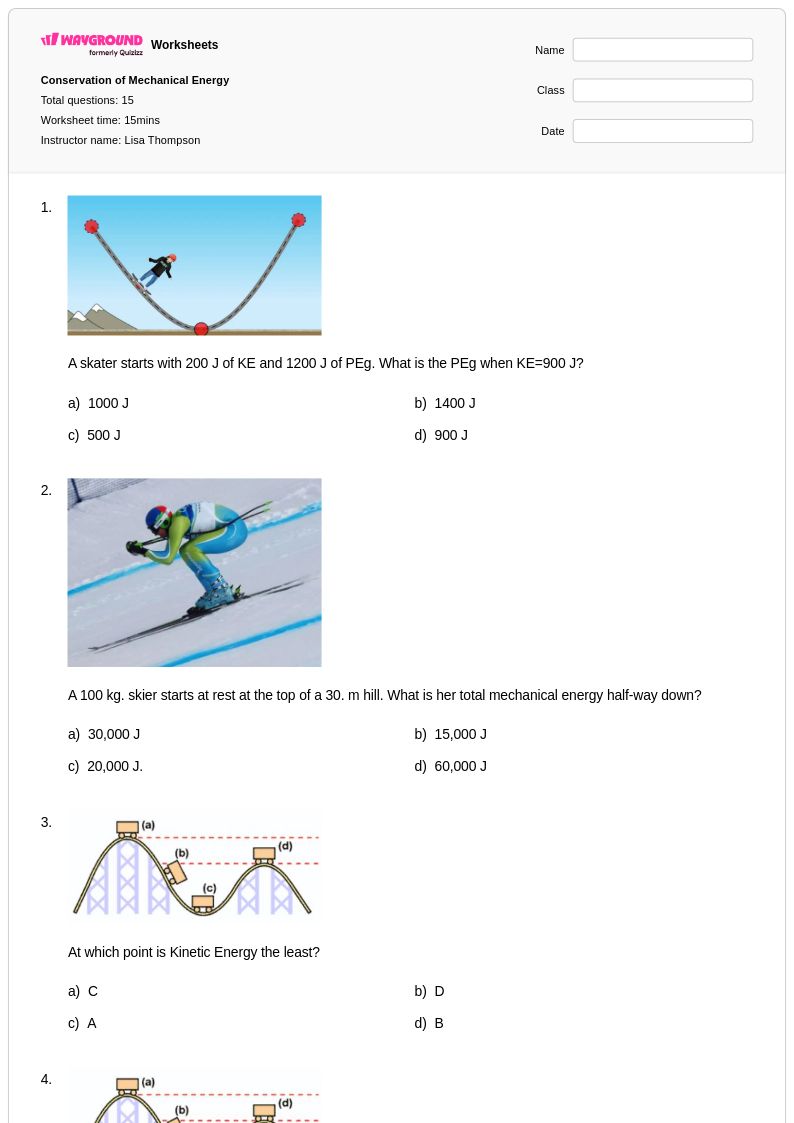
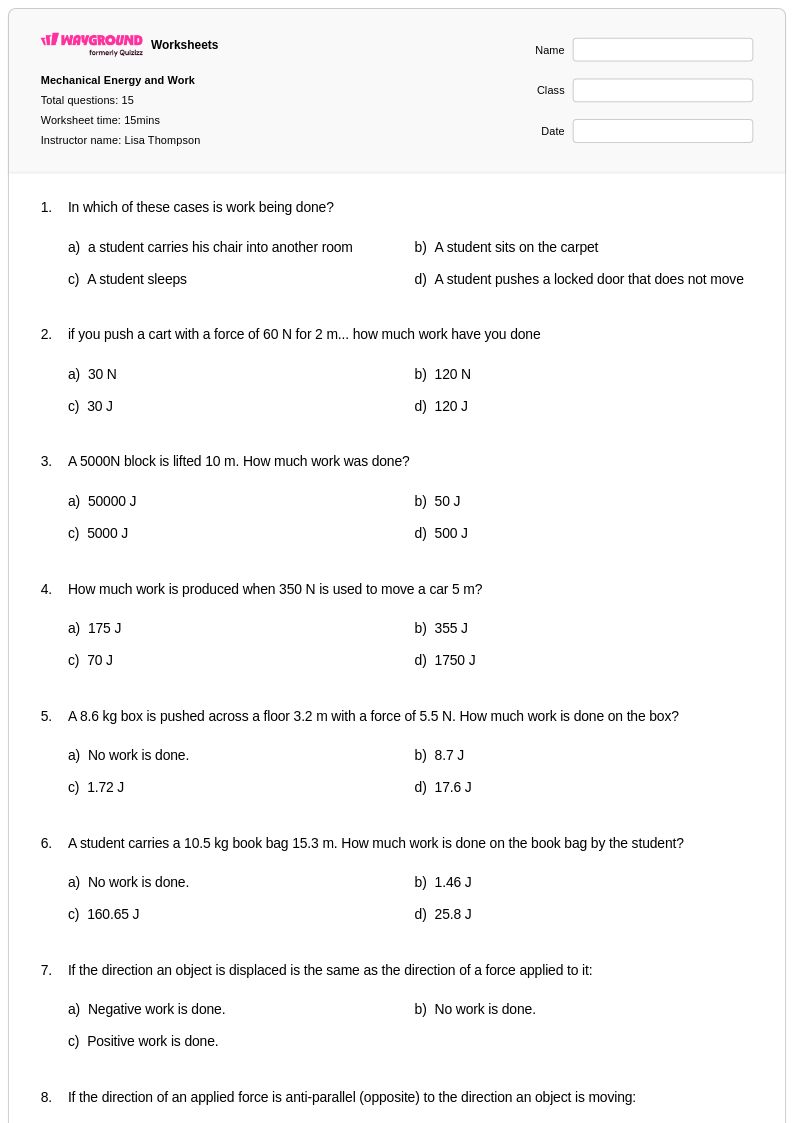
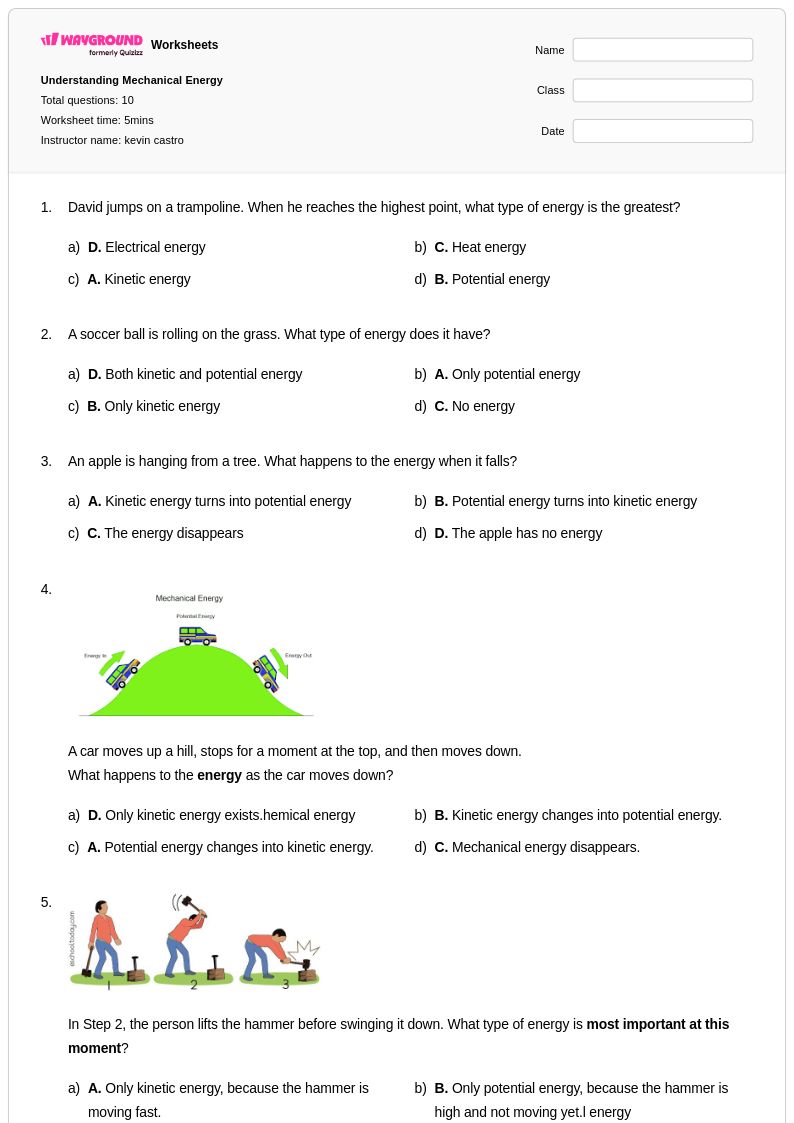
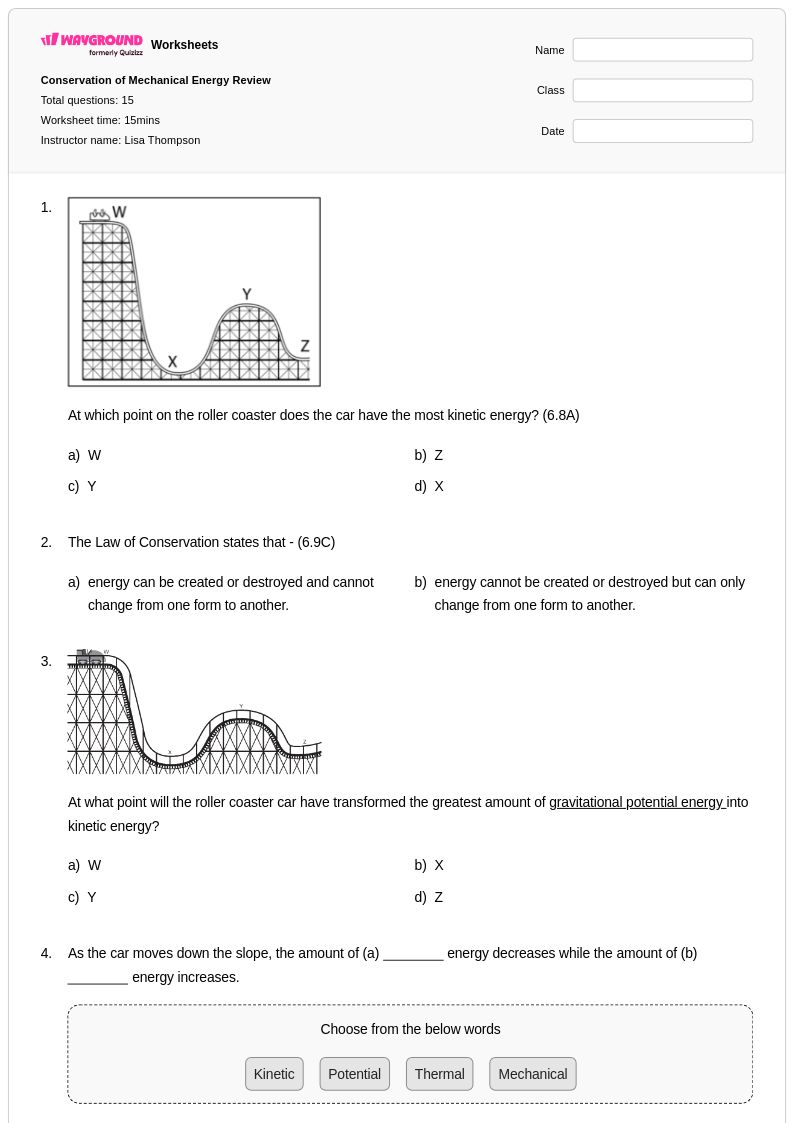
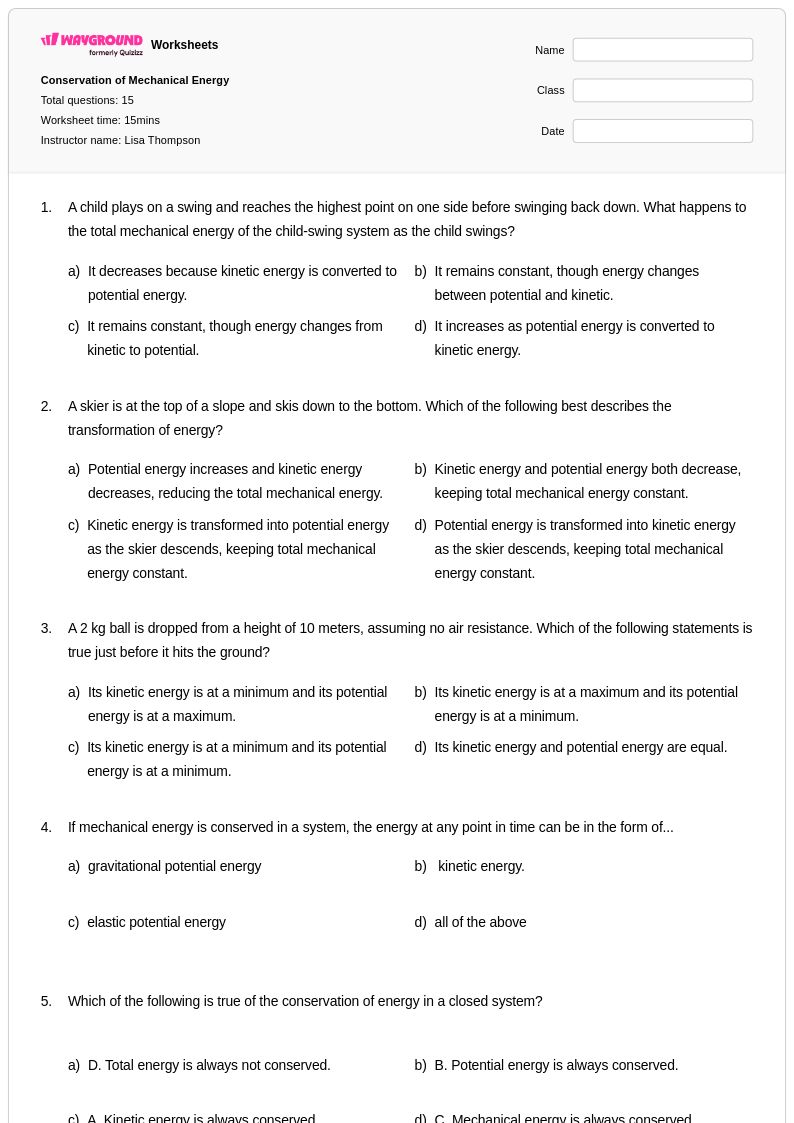
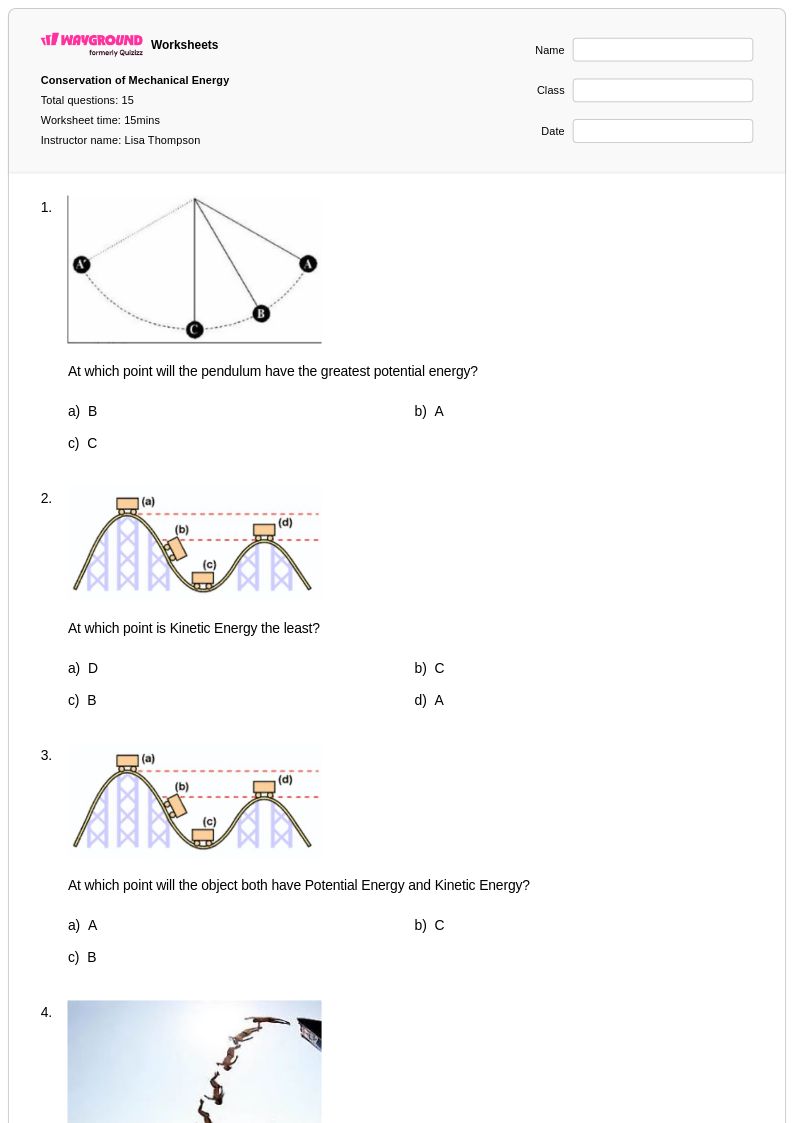
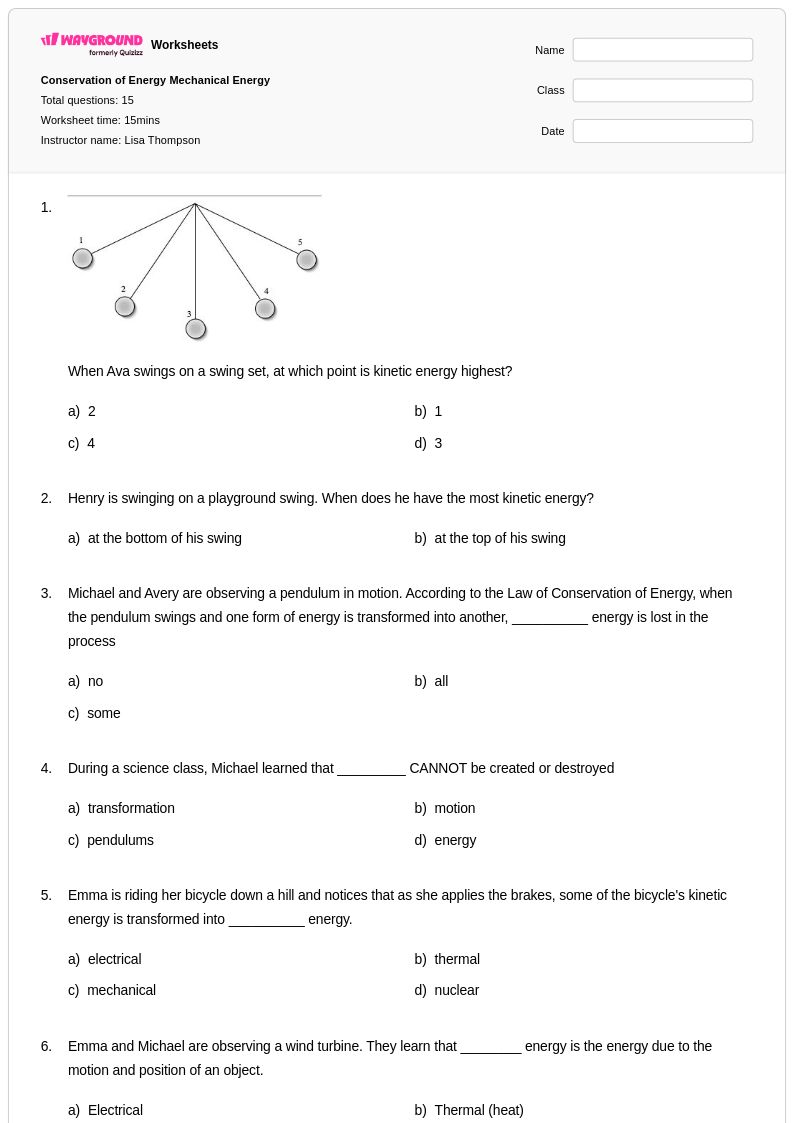
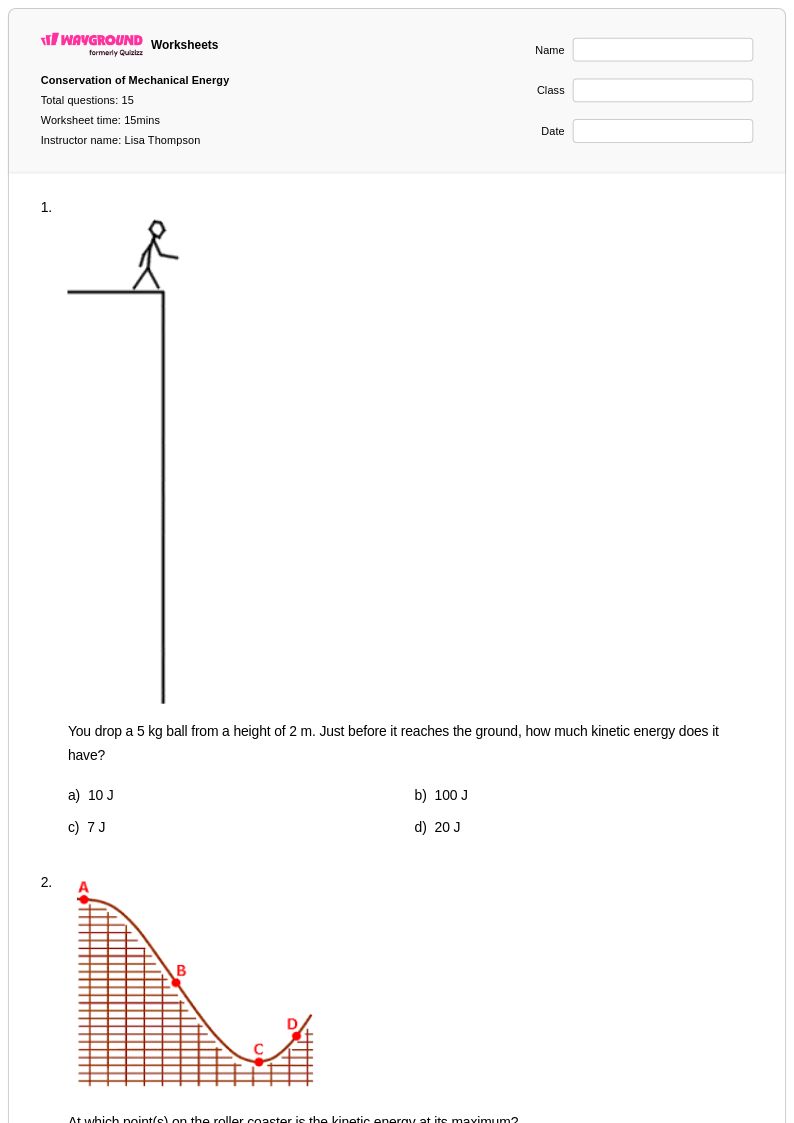
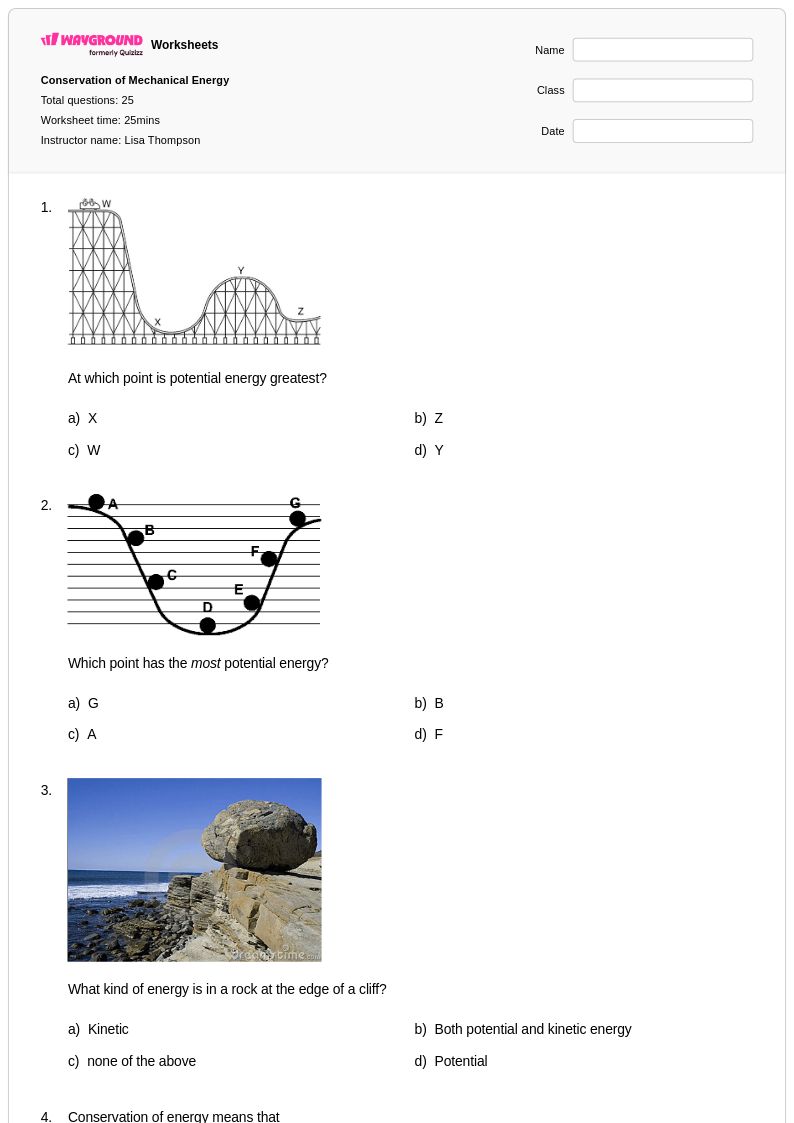
Class 11 mechanical energy worksheets available through Wayground (formerly Quizizz) provide comprehensive coverage of this fundamental physics concept, helping students master the relationship between kinetic and potential energy systems. These educational resources strengthen critical analytical skills by guiding students through complex problem-solving scenarios involving energy transformations, conservation principles, and real-world applications such as pendulum motion, roller coaster dynamics, and projectile trajectories. Each worksheet collection includes detailed answer keys that support independent learning and self-assessment, while the free printable format ensures accessibility for all classroom environments. Students engage with practice problems that progressively build understanding from basic energy calculations to advanced mechanical systems analysis, developing the mathematical reasoning and conceptual knowledge essential for advanced physics coursework.
Wayground's extensive library supports physics educators with millions of teacher-created mechanical energy resources that can be easily located through sophisticated search and filtering capabilities aligned with state and national science standards. Teachers benefit from robust differentiation tools that allow customization of worksheet difficulty levels, problem types, and assessment formats to meet diverse student needs within Class 11 physics classrooms. The platform's flexible delivery options include both printable pdf versions for traditional paper-based instruction and digital formats that integrate seamlessly with modern classroom technology. These comprehensive worksheet collections enable educators to efficiently plan targeted skill practice sessions, implement remediation strategies for struggling learners, and provide enrichment opportunities for advanced students, all while maintaining rigorous academic standards that prepare students for higher-level physics concepts and standardized assessments.
FAQs
How do I teach mechanical energy to students?
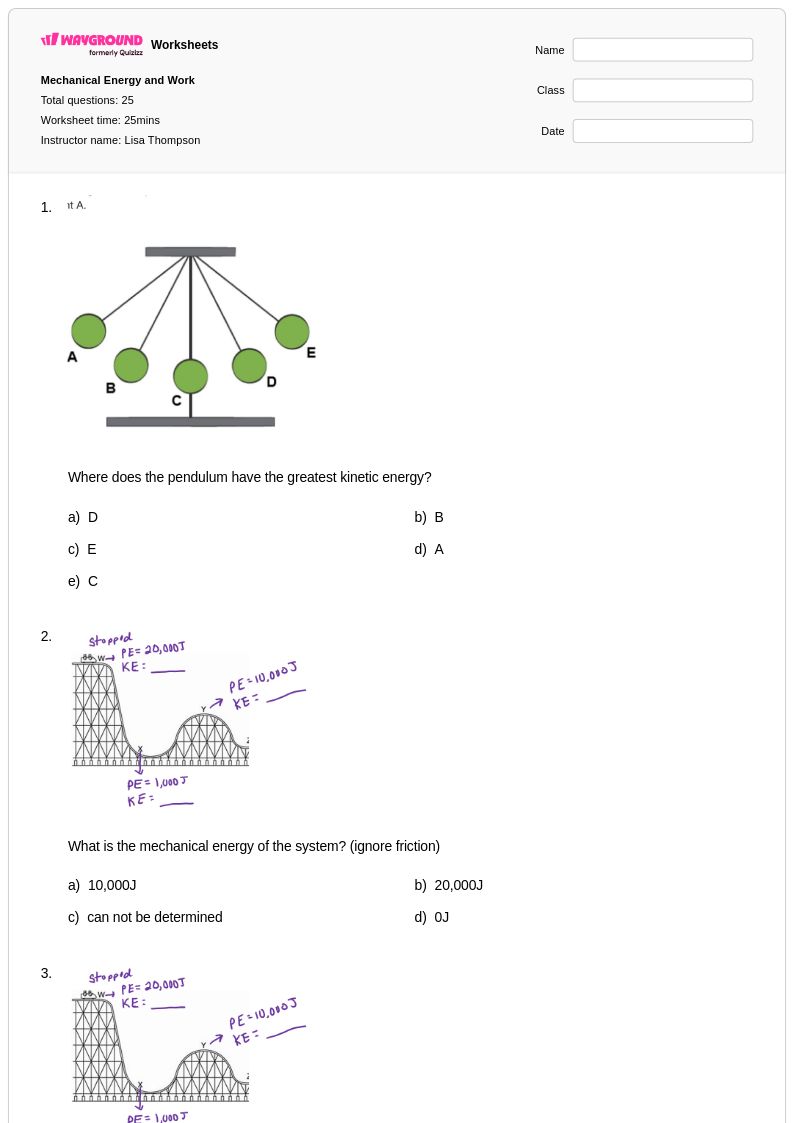
Start by establishing the two components of mechanical energy — kinetic energy (energy of motion) and potential energy (stored energy due to position) — before showing how they interconvert within a closed system. Use concrete examples like a swinging pendulum or a roller coaster to illustrate conservation of mechanical energy, where the total energy remains constant even as kinetic and potential energy exchange. Once students grasp the conceptual framework, move into quantitative practice with calculations using KE = ½mv² and PE = mgh to solidify their understanding.
What exercises help students practice mechanical energy concepts?
Students benefit most from practice problems that require them to calculate kinetic and potential energy separately and then apply conservation of mechanical energy to find unknown variables such as speed or height. Worked examples that walk through energy transformations step by step — such as an object falling from a known height — help students see how to set up and solve these problems systematically. Mechanical energy worksheets that include a mix of conceptual questions and numerical calculations give students practice with both the reasoning and the math.
What mistakes do students commonly make when solving mechanical energy problems?
One of the most common errors is forgetting to account for both kinetic and potential energy when calculating total mechanical energy, leading students to treat energy as only one form at a time. Students also frequently misapply the conservation of mechanical energy principle to systems involving friction or air resistance, where energy is not actually conserved in mechanical form. Another common mistake is using incorrect units or failing to convert mass and height values before substituting them into energy formulas.
How can I differentiate mechanical energy instruction for students at different ability levels?
For struggling learners, scaffold problems by providing the energy formulas and breaking calculations into explicit steps before asking students to work independently. Advanced students can be challenged with multi-step problems involving energy transformations across several stages, or with real-world scenarios where they must identify and justify assumptions. On Wayground, teachers can apply accommodations such as reduced answer choices to lower cognitive load for individual students, while the rest of the class receives the standard version, all without drawing attention to the difference.
How do I use Wayground's mechanical energy worksheets in my classroom?
Wayground's mechanical energy worksheets are available as printable PDFs for traditional classroom distribution and in digital formats for technology-integrated environments, giving teachers flexibility based on their setup. Teachers can also host the worksheets as a quiz directly on Wayground, enabling live or asynchronous student completion with built-in answer key support. This makes them suitable for direct instruction reinforcement, independent practice, homework assignments, or targeted remediation sessions.
How does conservation of mechanical energy help students understand real-world physics?
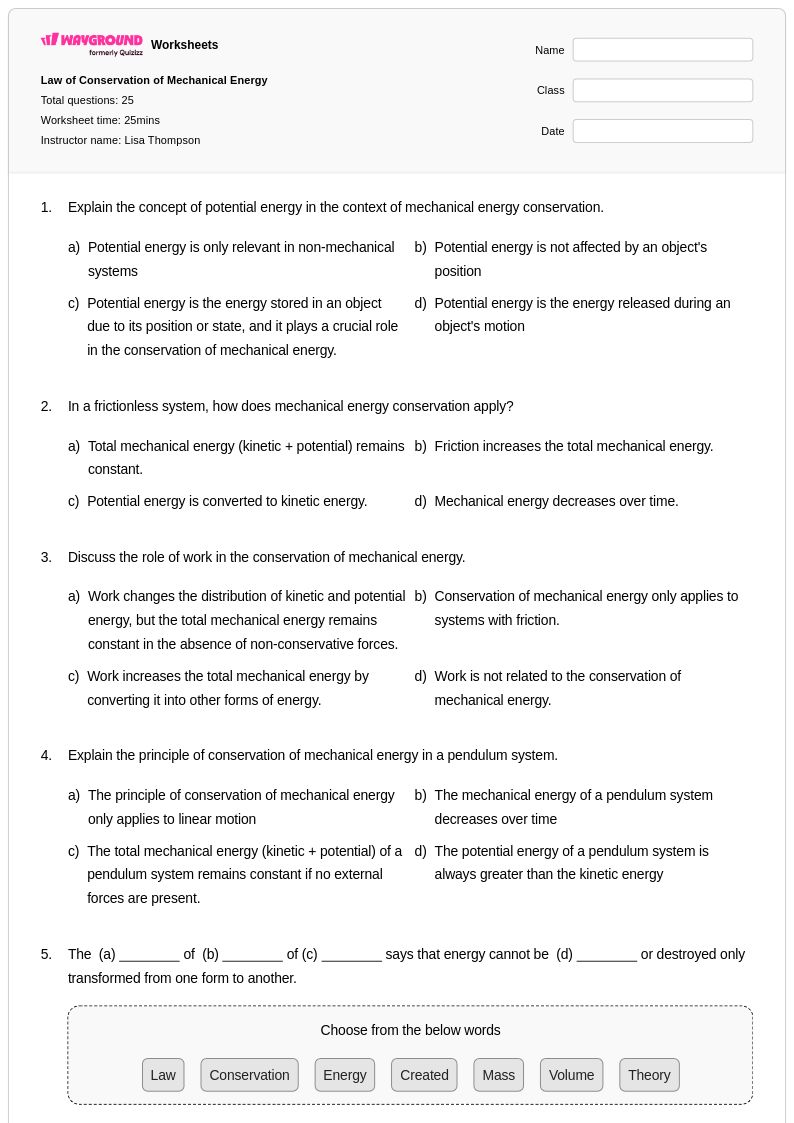
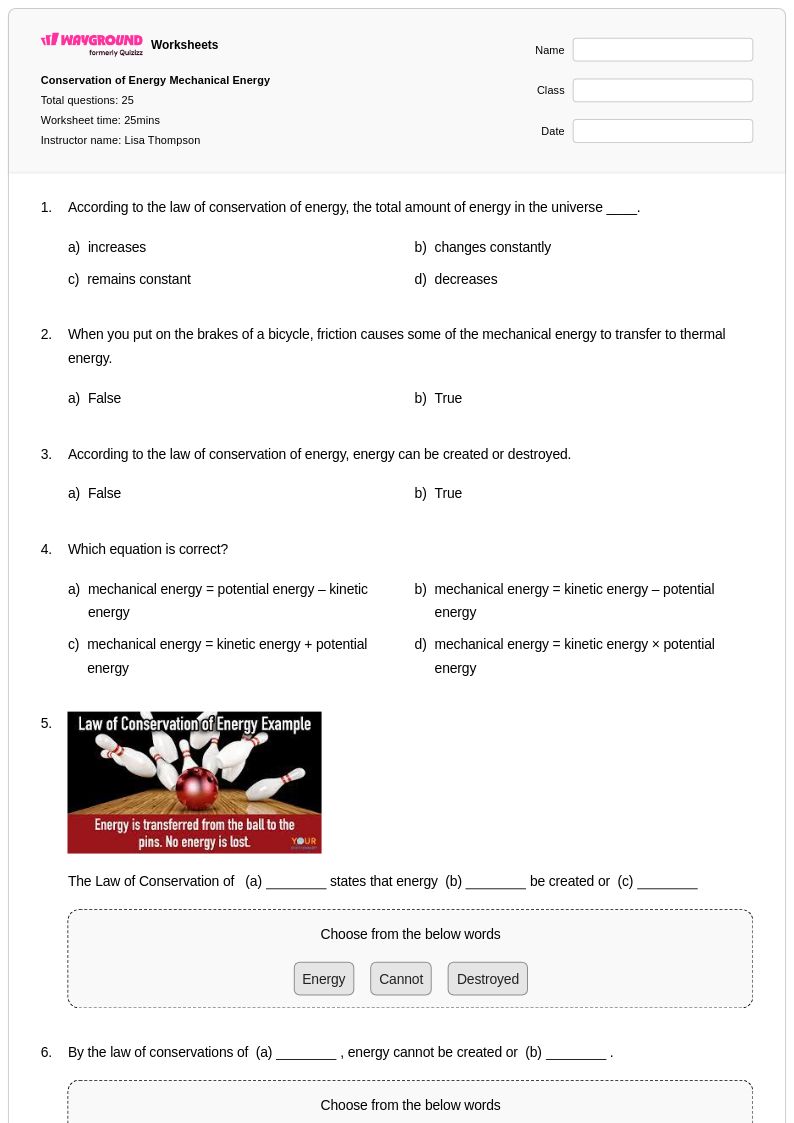
Conservation of mechanical energy provides students with a predictive tool — if they know an object's total mechanical energy at one point in a system, they can calculate its speed or height at any other point without tracking every force involved. This principle connects classroom calculations to real phenomena like rollercoasters, projectiles, and pendulums, making physics tangible and applicable. Teaching students to apply this principle builds the analytical habits they need for more advanced topics such as work-energy theorem and energy transfer in collisions.