Free Printable Potential Energy Diagrams Worksheets for Class 11
Class 11 potential energy diagrams worksheets and printables help students master analyzing energy transformations, interpreting graphical representations, and solving practice problems with comprehensive PDF resources and answer keys available free through Wayground.
Explore printable Potential Energy Diagrams worksheets for Class 11
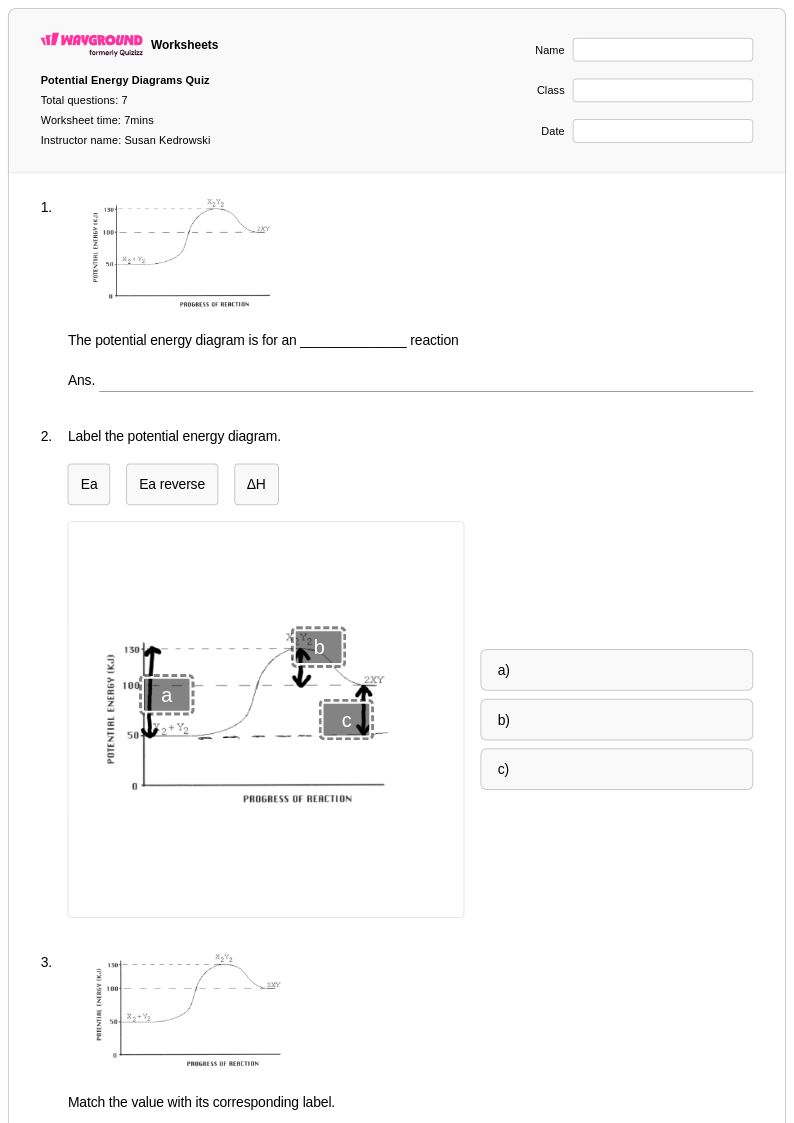
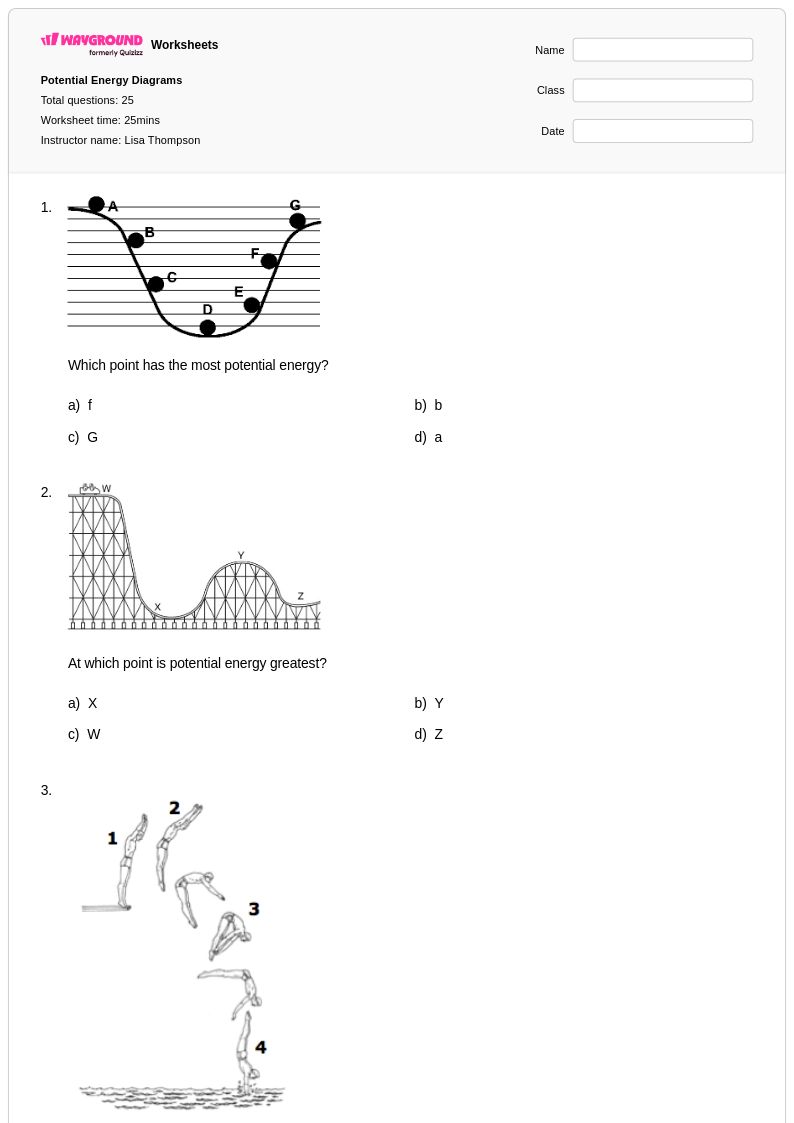
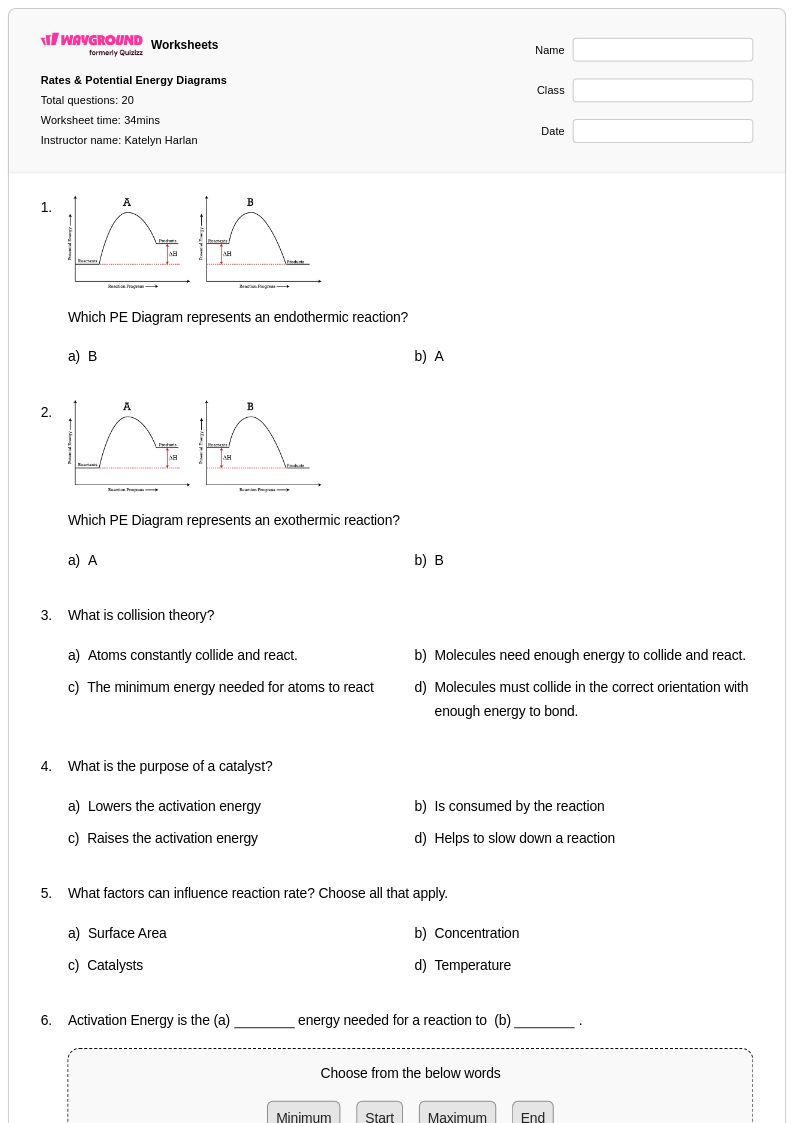
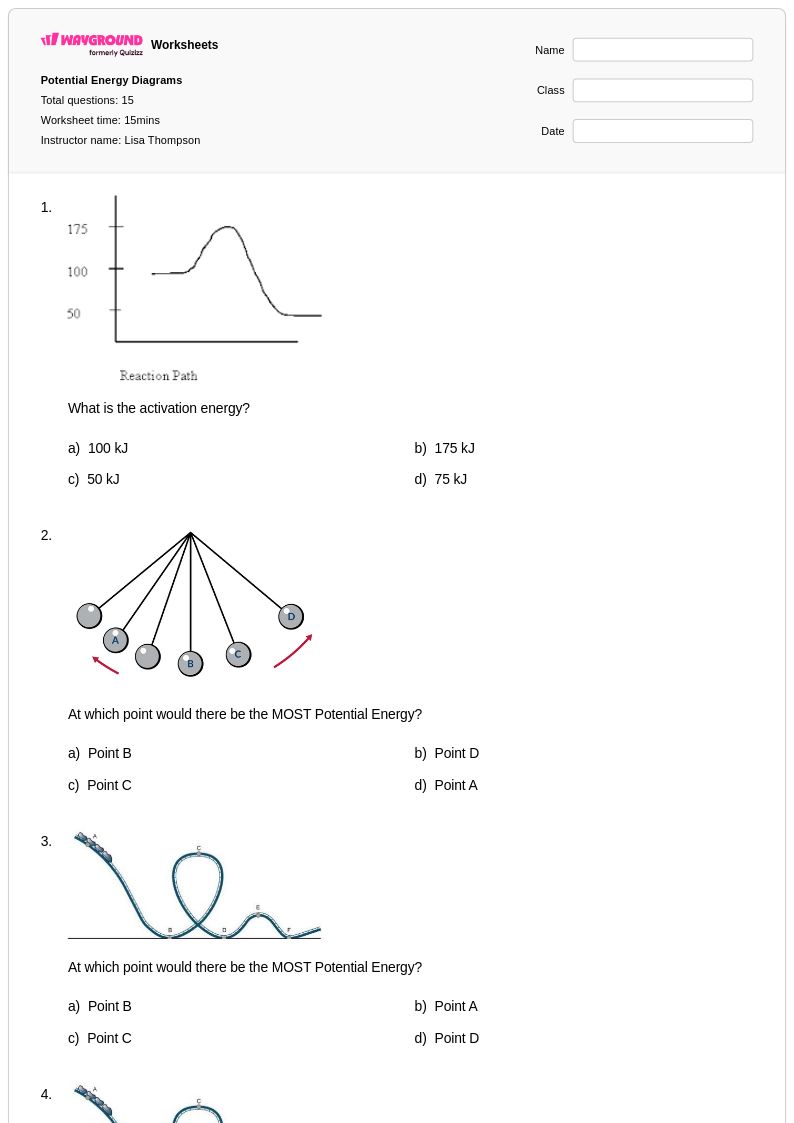
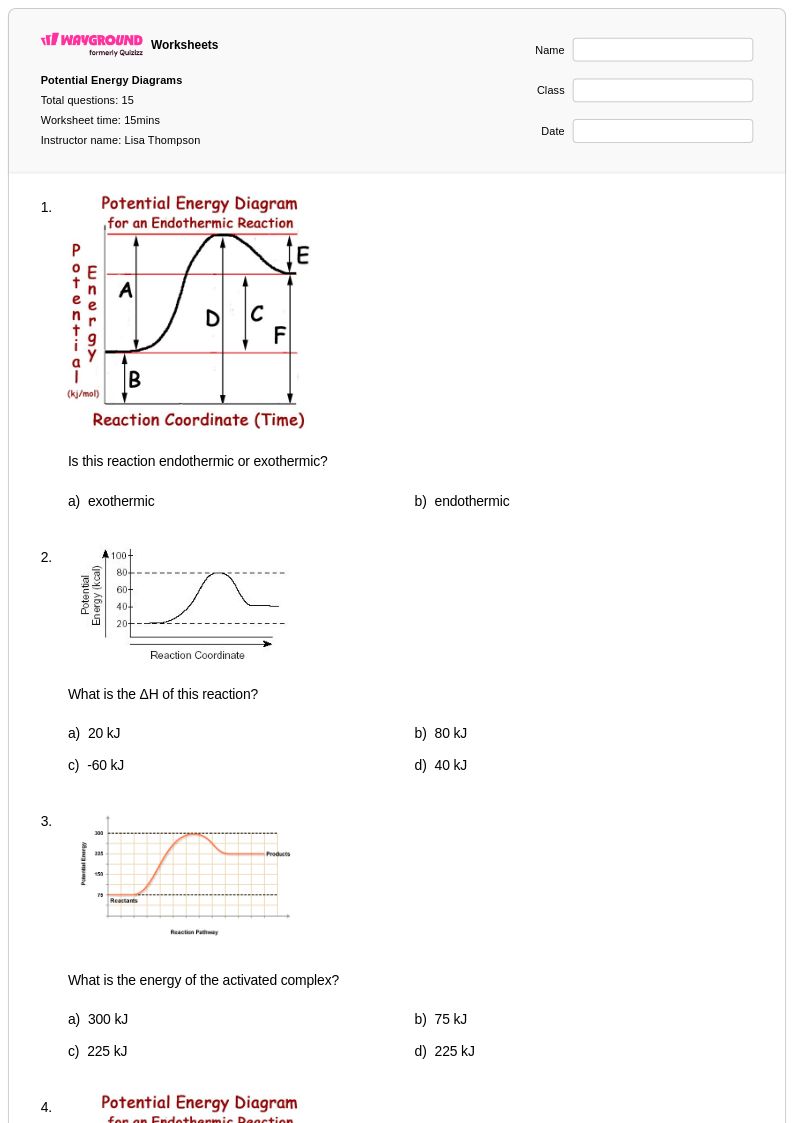
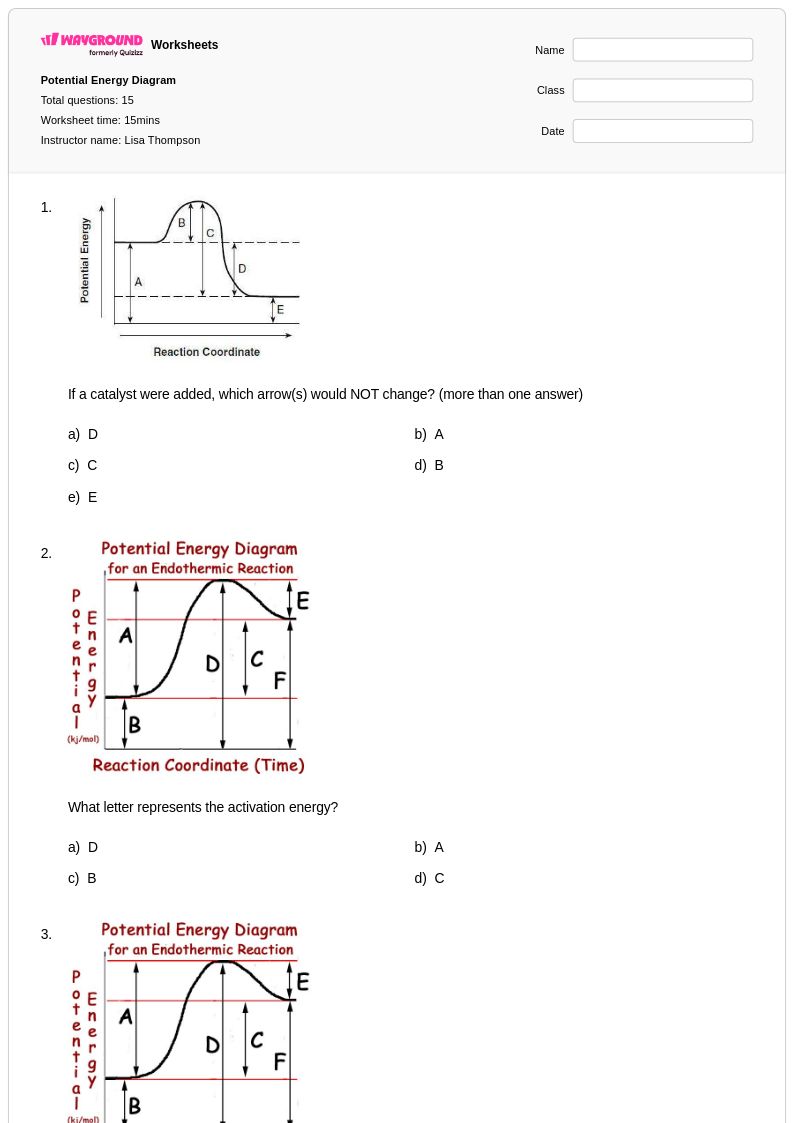
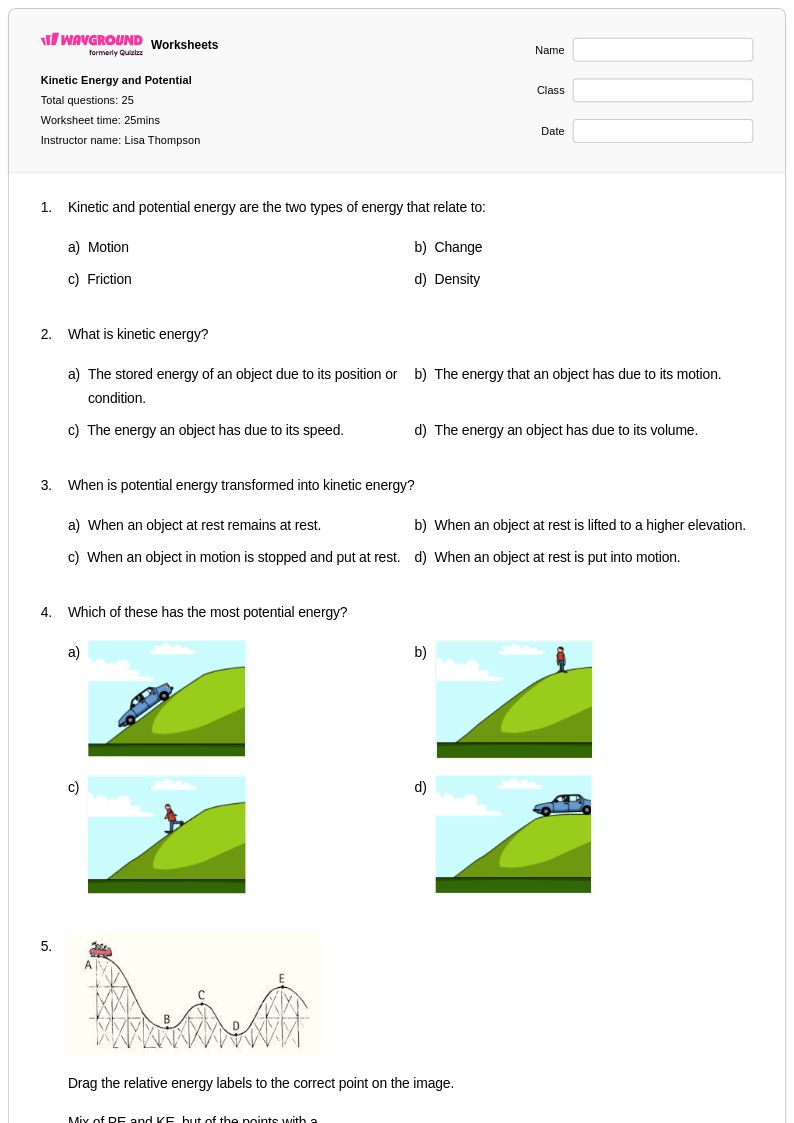
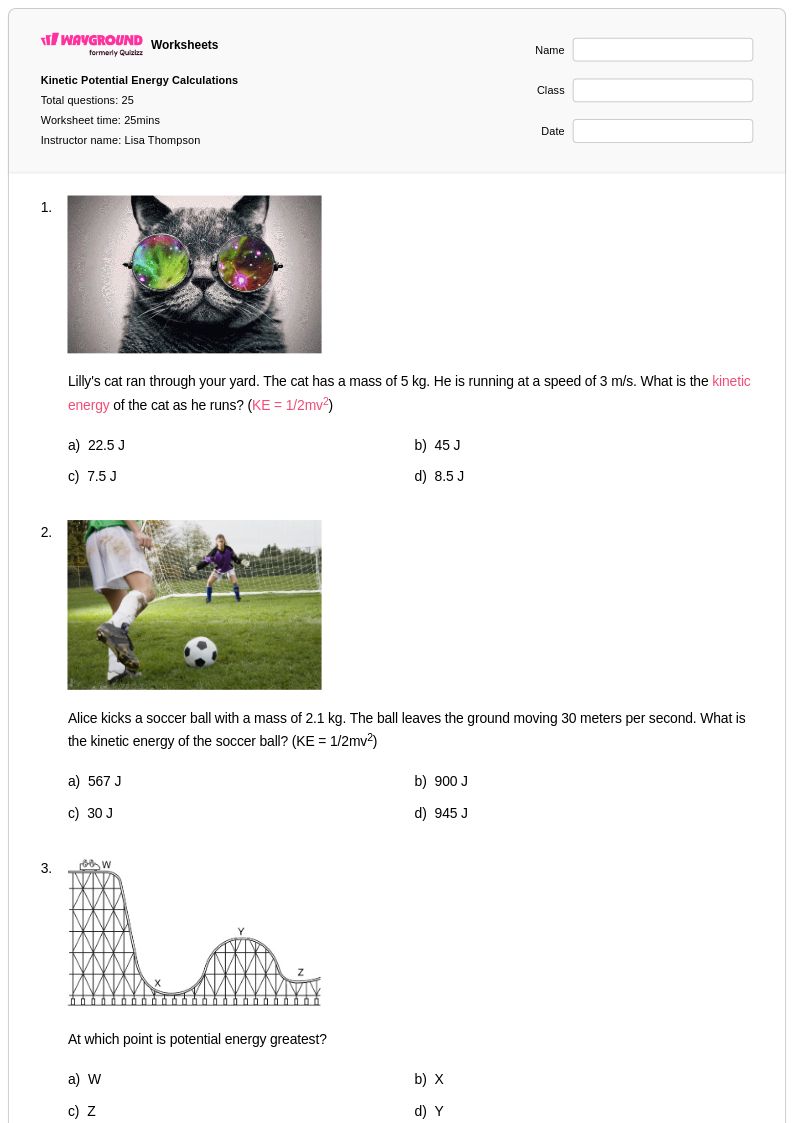
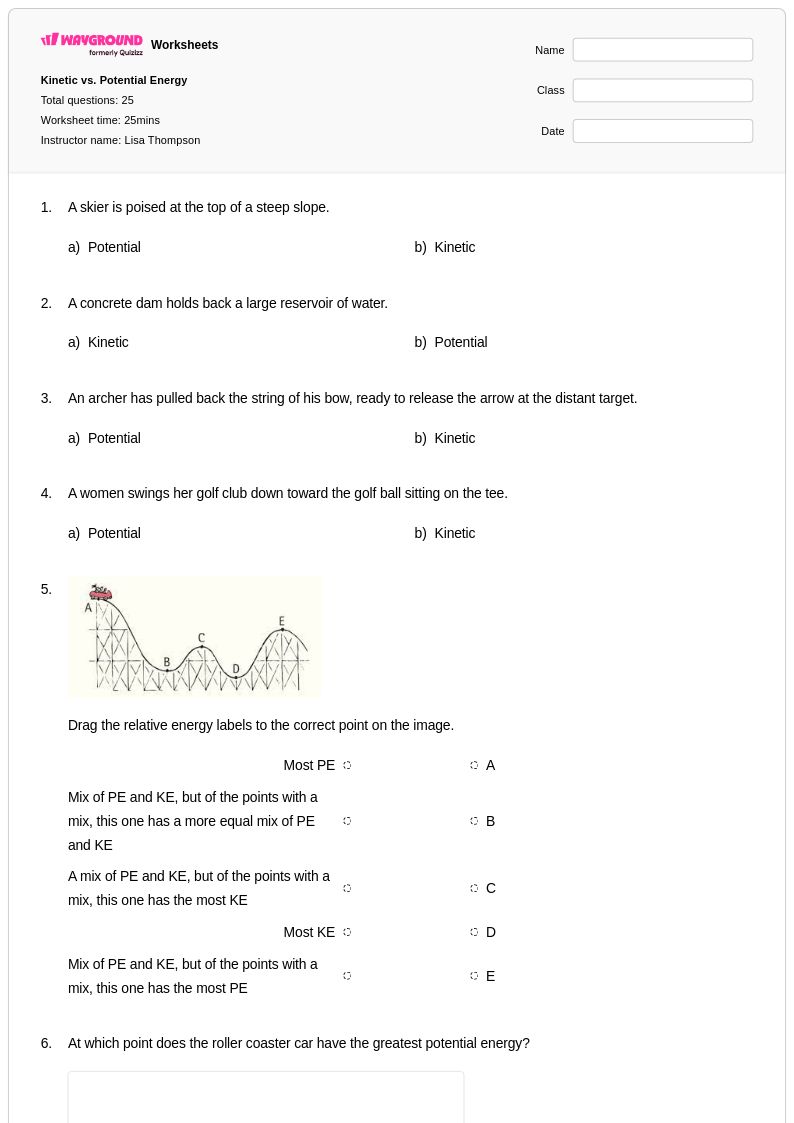
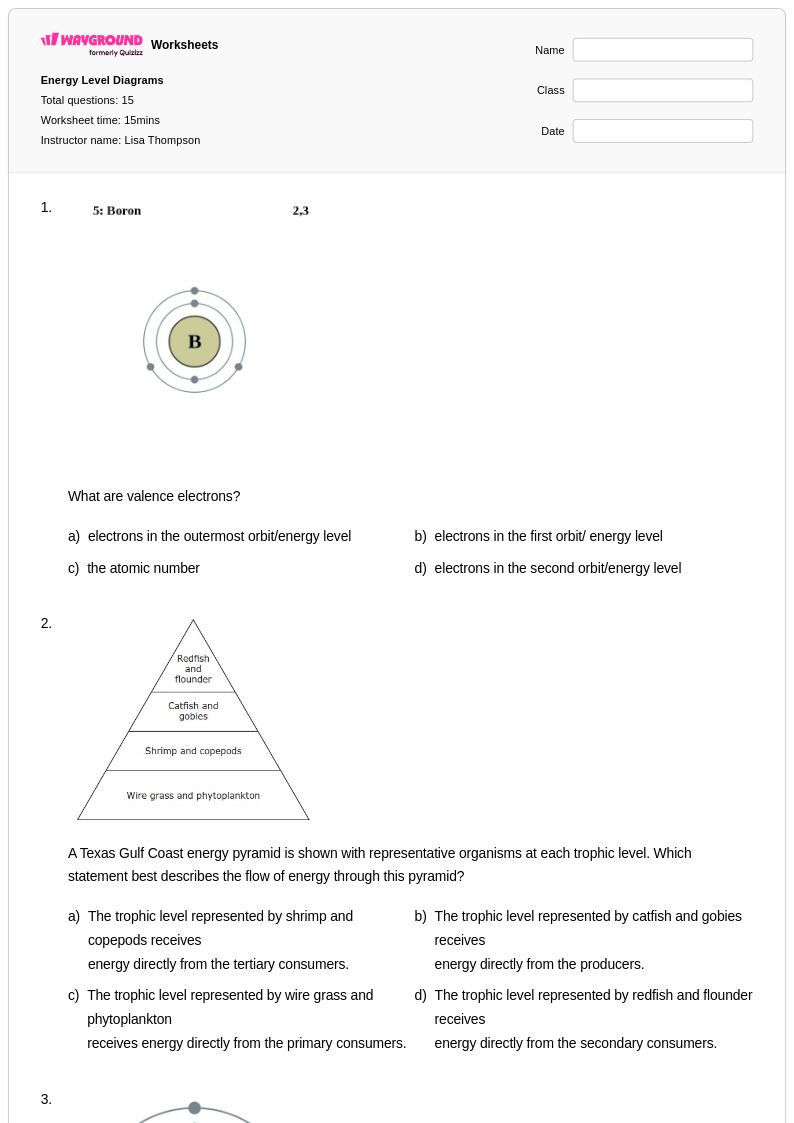
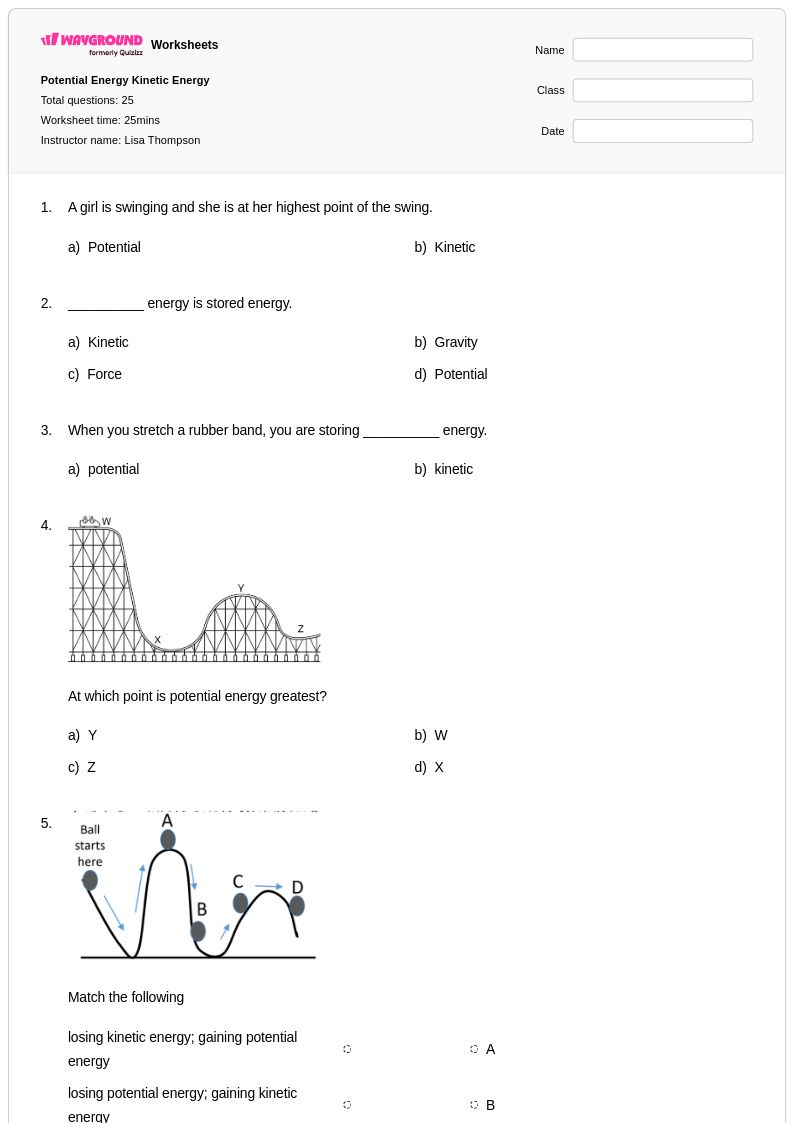
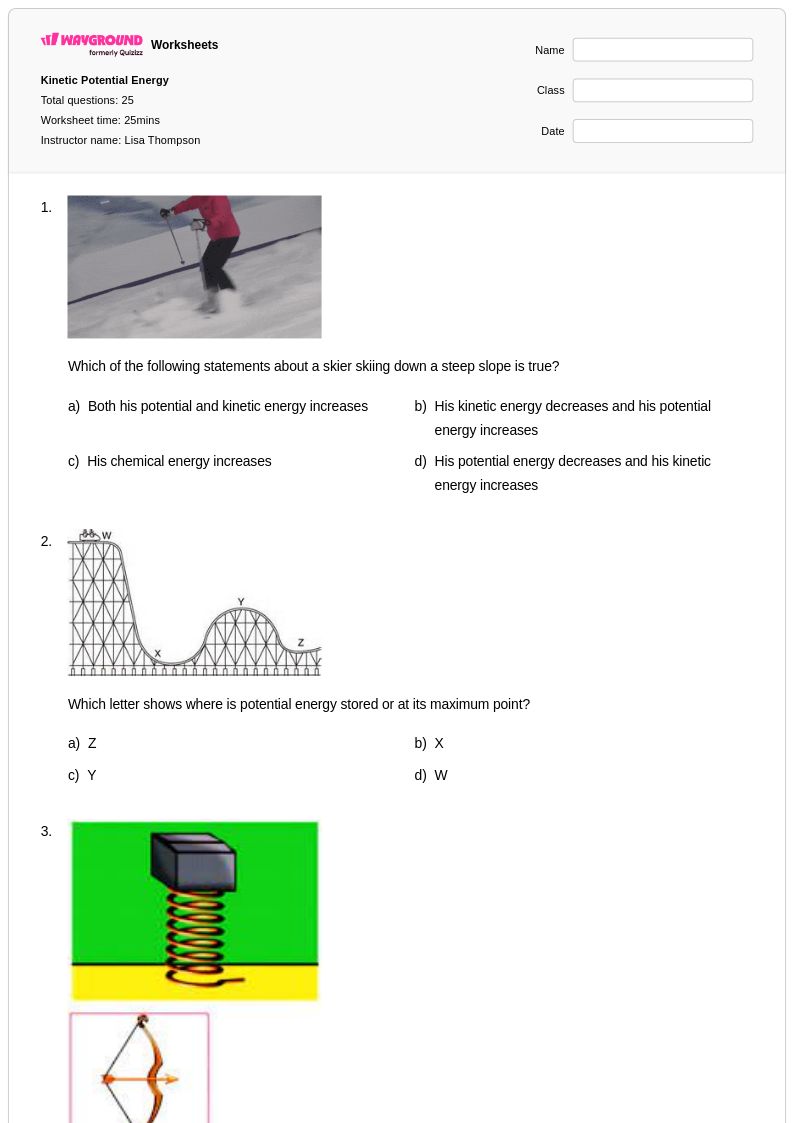
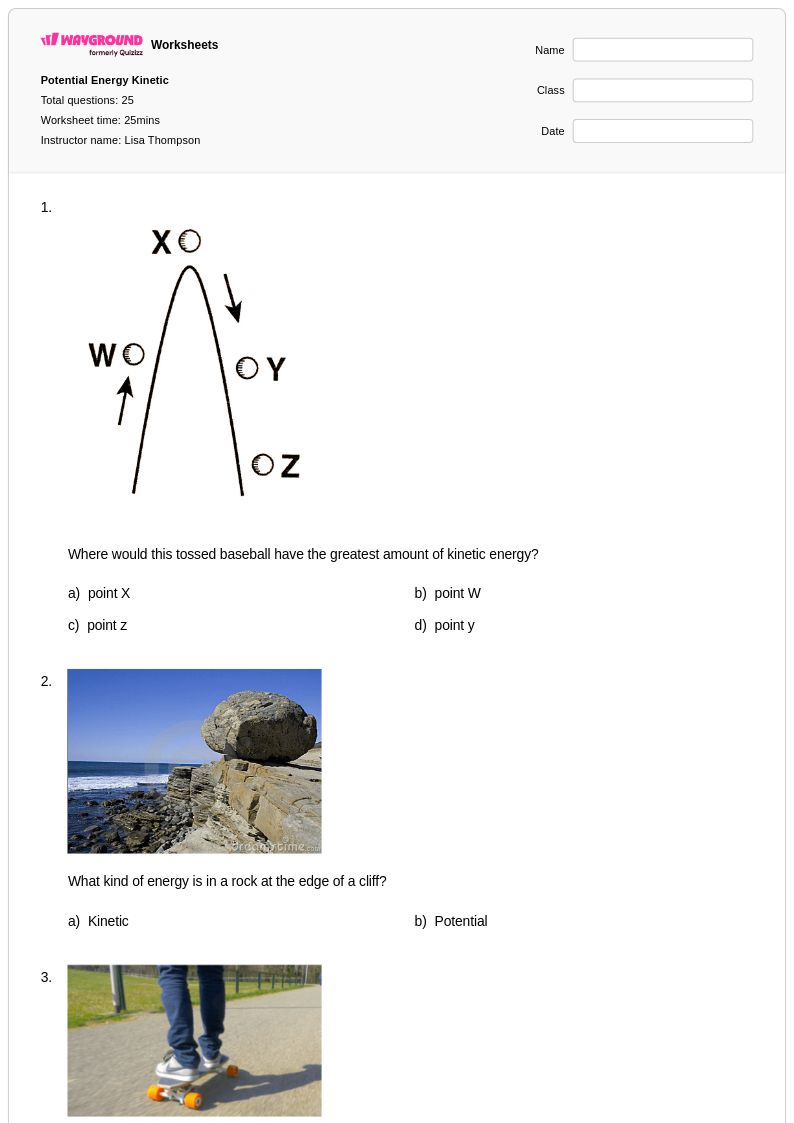
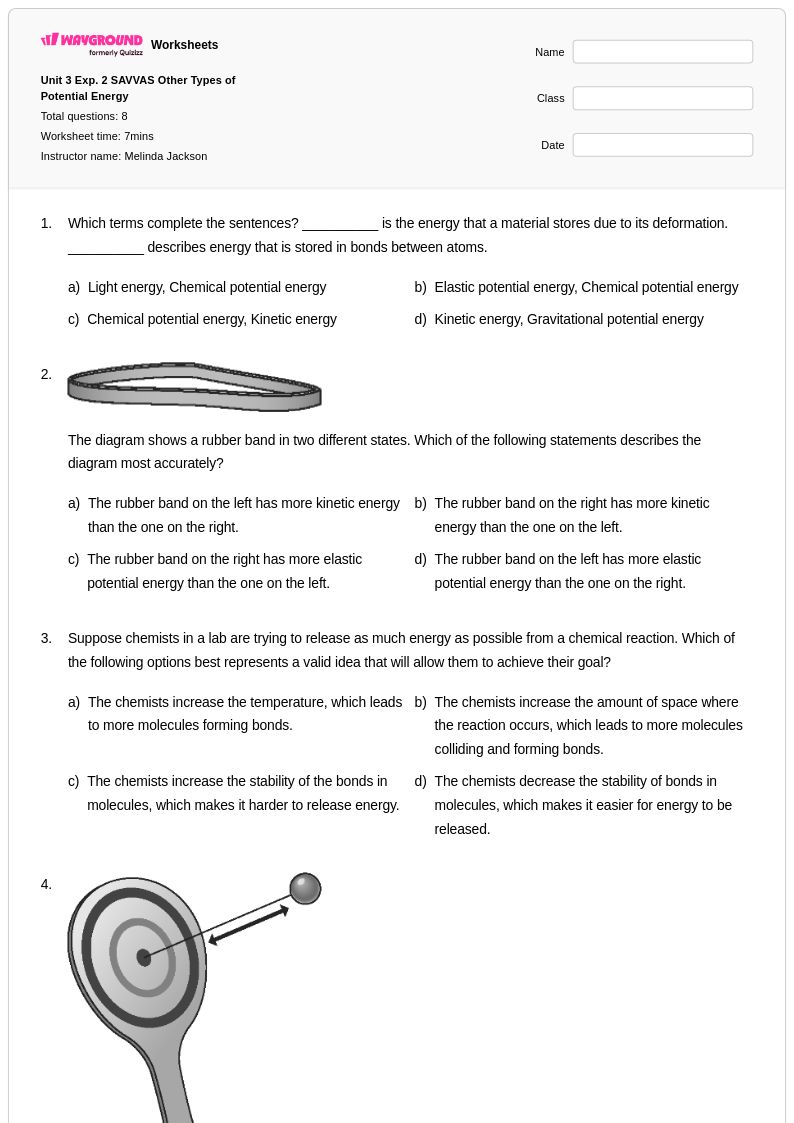
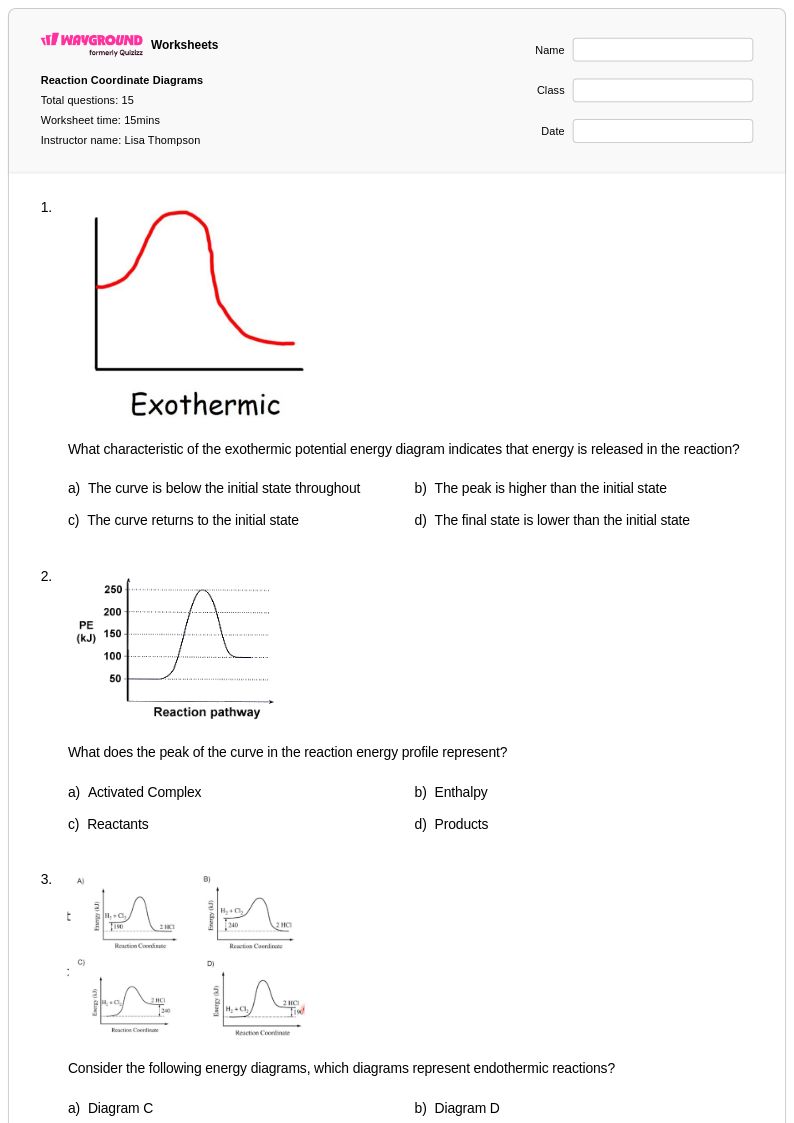
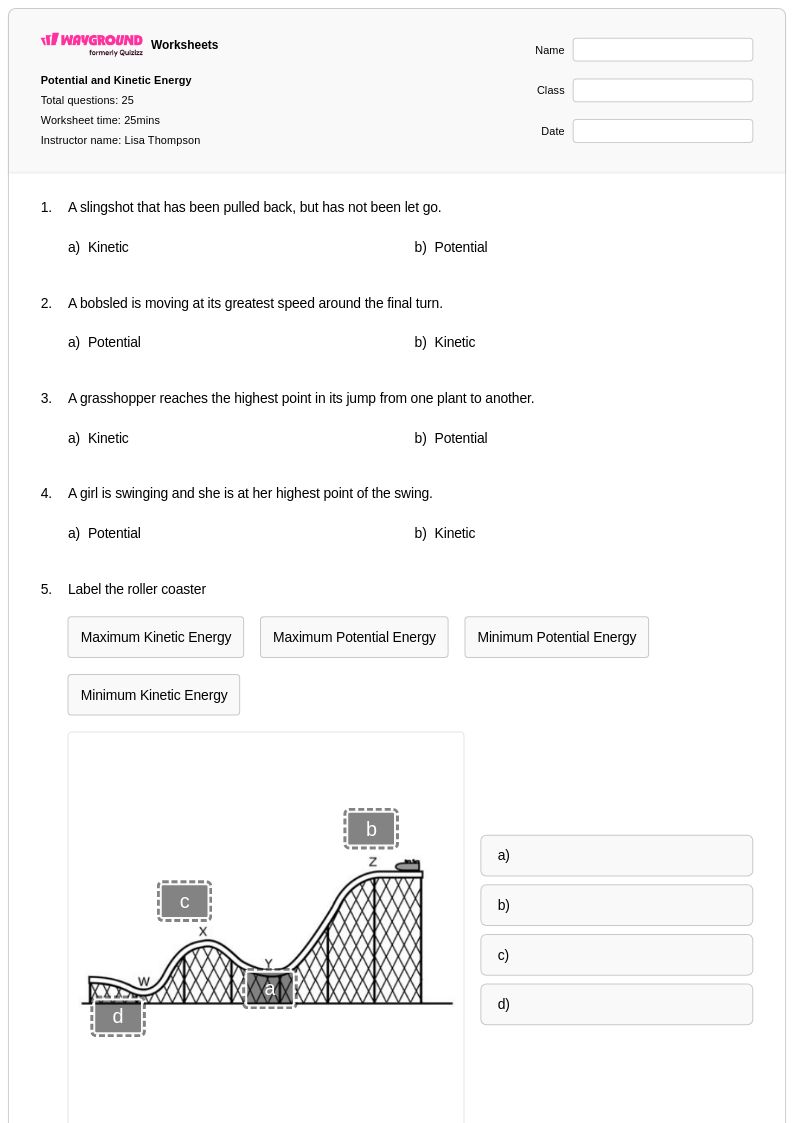
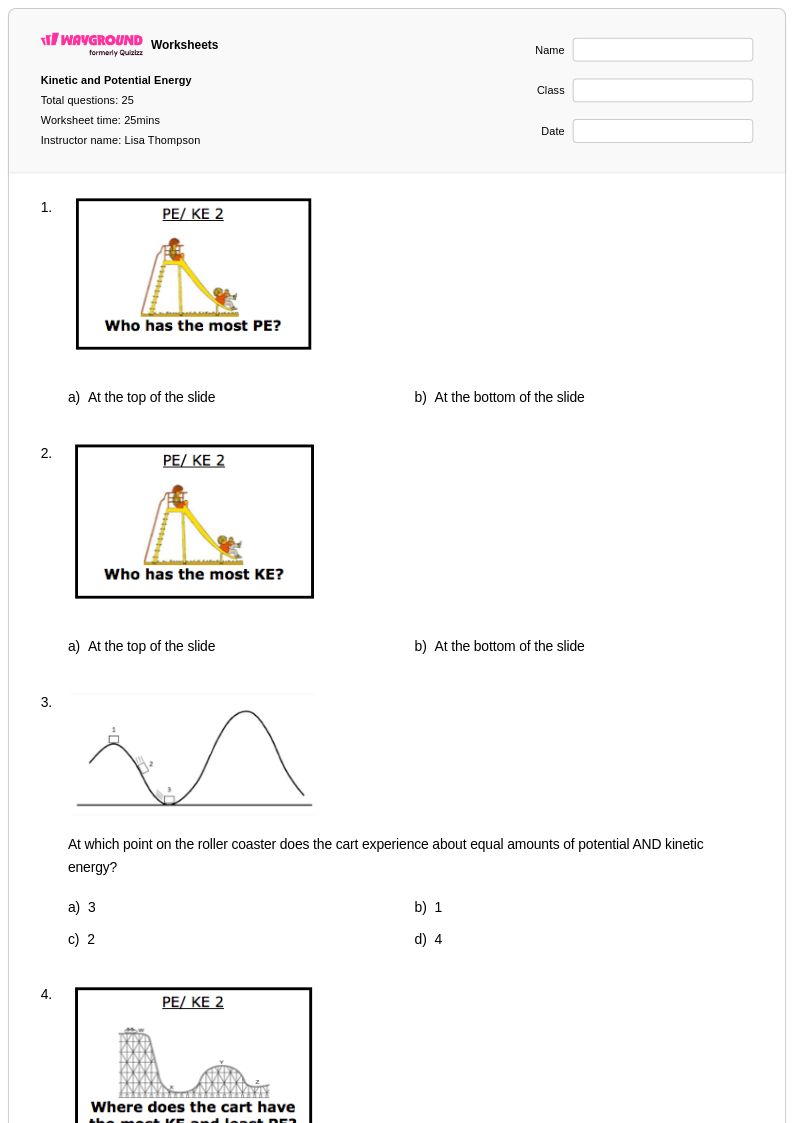
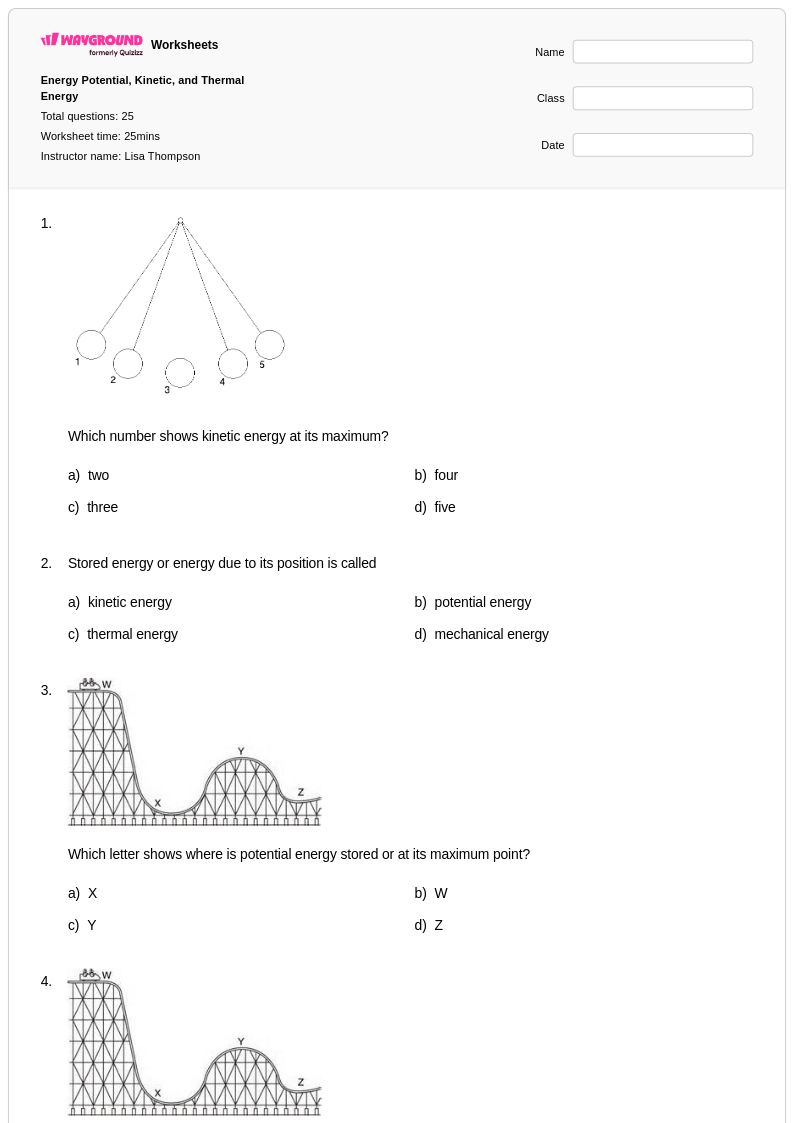
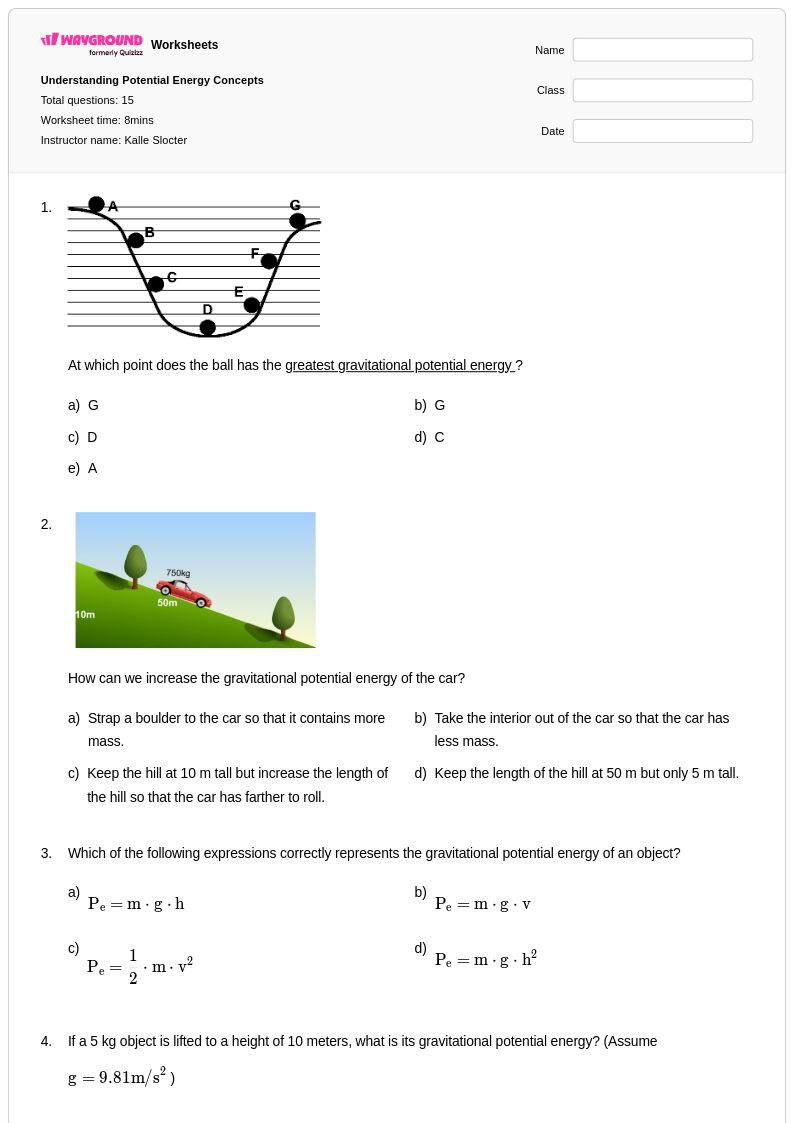
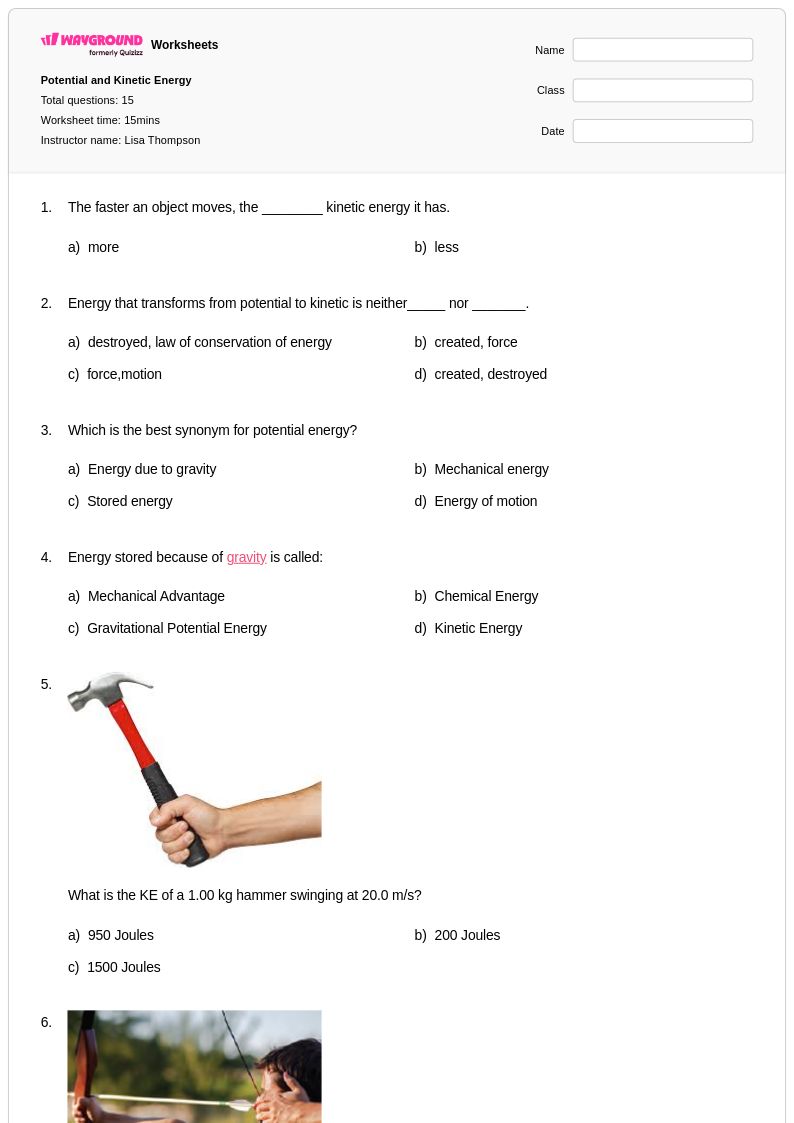
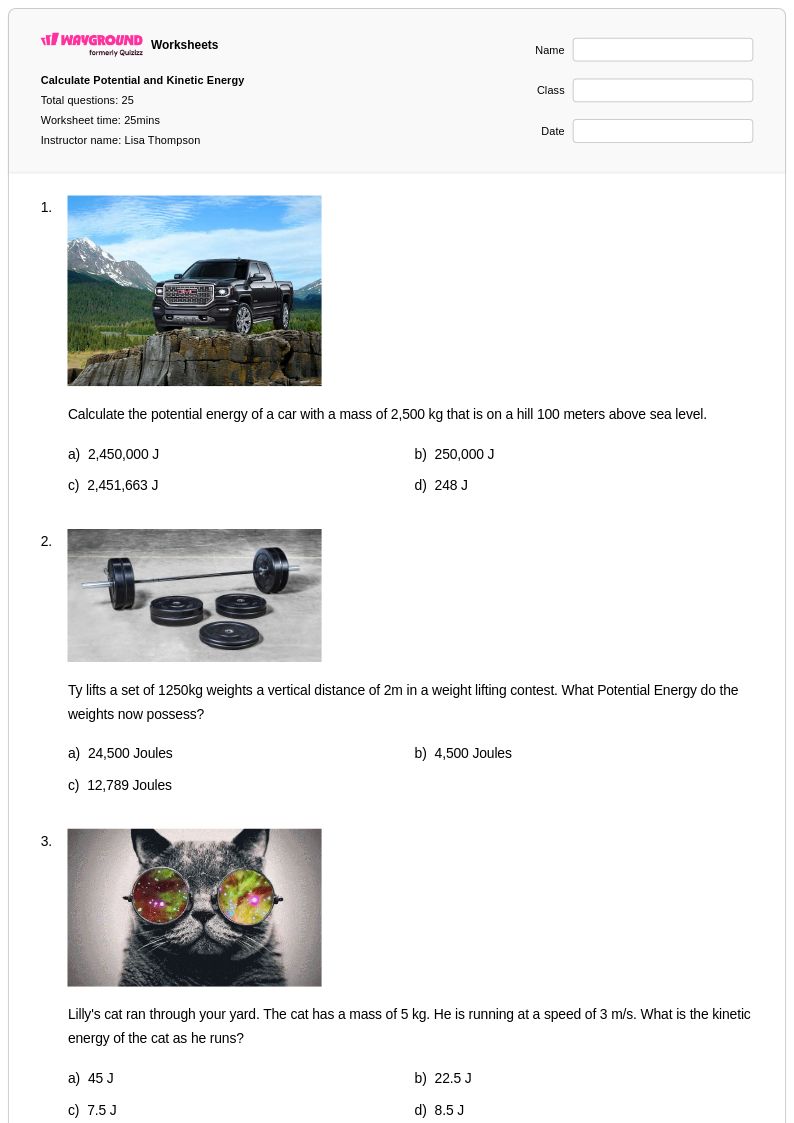
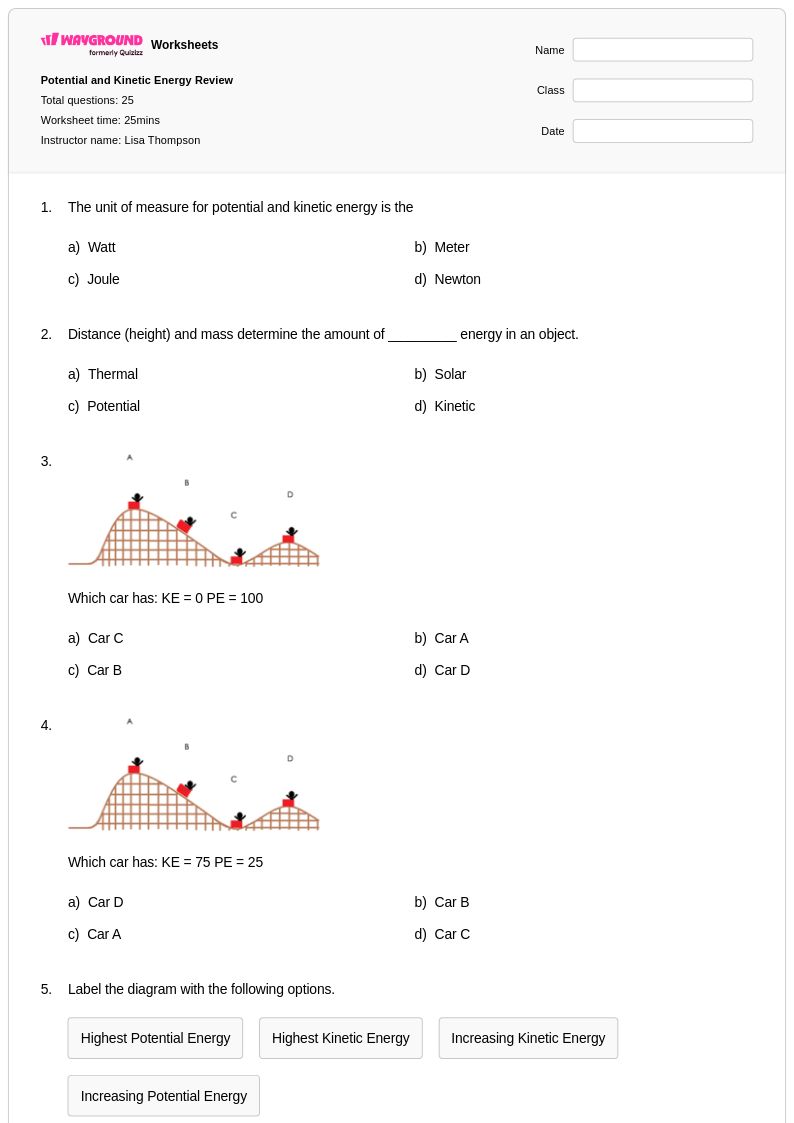
Potential Energy Diagrams for Class 11 students represent a crucial visualization tool in physics that helps students understand energy transformations and molecular interactions. Wayground's comprehensive worksheet collection focuses on developing students' ability to interpret and construct these fundamental diagrams, which illustrate how potential energy varies with position or molecular separation. These practice problems strengthen essential skills including identifying equilibrium positions, calculating activation energies, determining bond dissociation energies, and predicting molecular behavior during chemical reactions. The worksheets feature detailed answer keys that guide students through step-by-step solutions, while the free printable pdf format ensures accessibility for both classroom instruction and independent study, allowing students to master the interpretation of energy barriers and stability relationships.
Wayground's extensive library, built from millions of teacher-created resources, provides educators with powerful search and filtering capabilities to locate precisely targeted potential energy diagram worksheets that align with Class 11 physics curriculum standards. Teachers can efficiently differentiate instruction by selecting from various complexity levels, from basic energy well interpretations to advanced multi-step reaction coordinate diagrams, while the platform's customization tools allow for modifications that address specific learning objectives or remediation needs. The dual availability in both printable and digital pdf formats supports flexible lesson planning, whether for traditional worksheet-based practice, homework assignments, or technology-integrated classroom activities, enabling educators to provide comprehensive skill practice that builds student confidence in analyzing energy relationships and predicting molecular behavior through graphical interpretation.
FAQs
How do I teach potential energy diagrams in physics class?
Start by grounding students in the relationship between position and stored energy using simple gravitational examples before introducing curved energy landscapes. Have students sketch and label diagrams by hand first, identifying equilibrium points and regions where kinetic energy is highest or lowest. Once students can interpret pre-drawn diagrams accurately, move to analysis tasks that require them to predict particle behavior and connect energy graphs to real force interactions.
What exercises help students practice reading potential energy diagrams?
Effective practice includes identifying stable and unstable equilibrium points on a curve, determining where a particle would accelerate or decelerate, and comparing potential and kinetic energy at specific positions. Problems that ask students to sketch the corresponding force diagram or motion profile alongside the energy curve reinforce the connection between force and the slope of the potential energy graph. Ranging practice from simple gravitational wells to molecular interaction curves builds the analytical fluency students need for more advanced physics.
What common mistakes do students make when interpreting potential energy diagrams?
The most frequent misconception is that a higher point on a potential energy curve always means the particle is moving faster, when in fact higher potential energy corresponds to lower kinetic energy for a particle with fixed total energy. Students also commonly confuse equilibrium points with turning points, failing to distinguish between stable minima, unstable maxima, and the positions where a particle momentarily stops. Another persistent error is misreading the slope of the curve as speed rather than force, which leads to incorrect predictions about particle motion.
How do I use potential energy diagram worksheets effectively in my classroom?
Potential energy diagram worksheets work well as guided practice during instruction, independent problem sets, or review material before assessments. Each worksheet includes detailed answer keys and step-by-step solutions, so students can self-check and identify where their reasoning broke down. Wayground's potential energy diagram worksheets are available as printable PDFs for traditional classroom use and in digital formats for technology-integrated environments, including the option to host them as a quiz directly on Wayground, making them adaptable for in-class work, homework, or test preparation.
How do I differentiate potential energy diagram instruction for students at different skill levels?
For students who are struggling, begin with diagrams that have only one well or peak and provide sentence frames to scaffold their written interpretations. Advanced students benefit from multi-well diagrams, problems involving total mechanical energy lines, and prompts that connect energy landscapes to real molecular or nuclear systems. On Wayground, teachers can apply individual accommodations such as reduced answer choices to lower cognitive load for specific students, or enable Read Aloud for those who need question text read to them, while the rest of the class works under default settings.
How does potential energy relate to force on an energy diagram?
On a potential energy diagram, force at any position is equal to the negative slope of the energy curve at that point. Where the curve slopes downward in the direction of motion, the force acts in that same direction, accelerating the particle. Where the curve is flat, the net force is zero and the particle is at equilibrium. Teaching students to read slope as force is one of the most transferable skills they can develop from working with these diagrams.