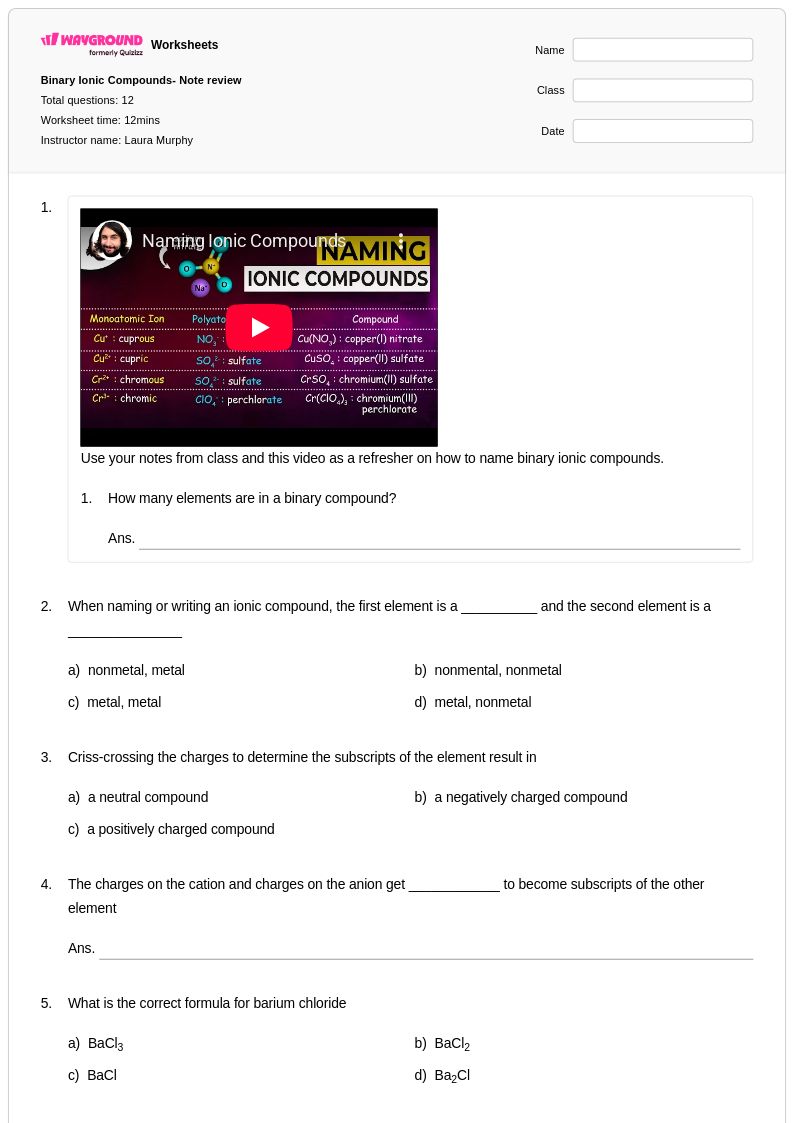
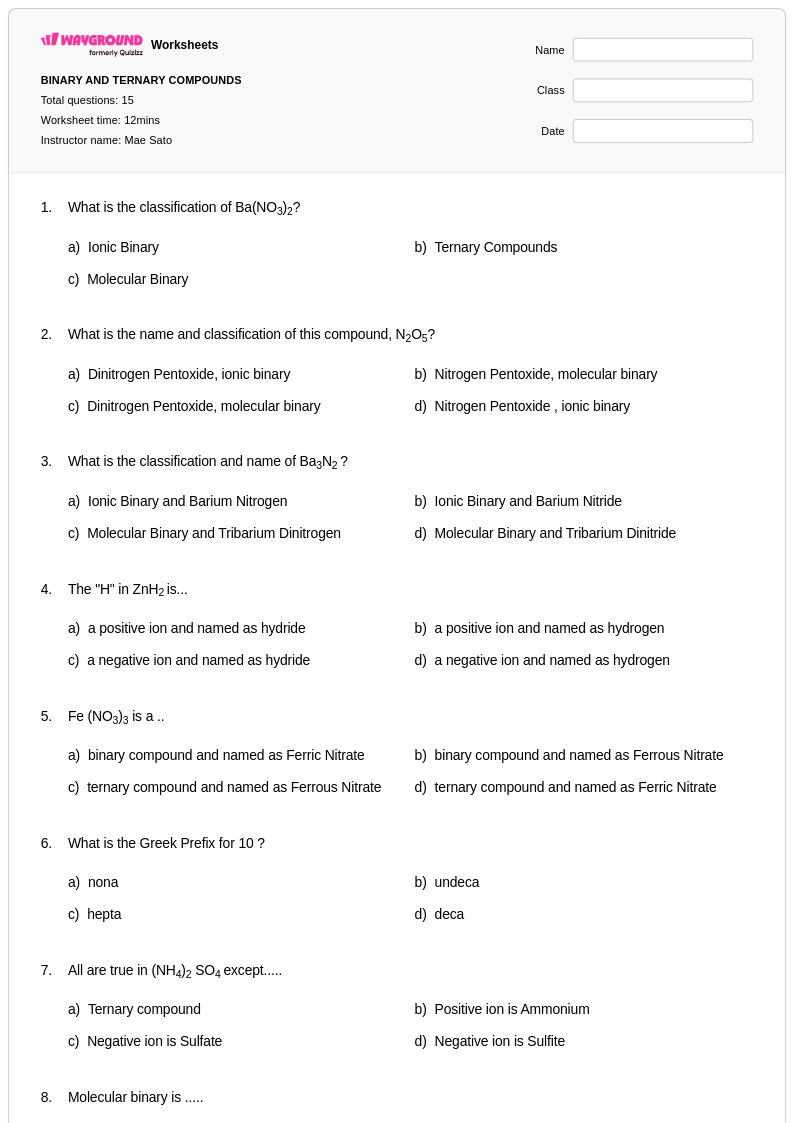
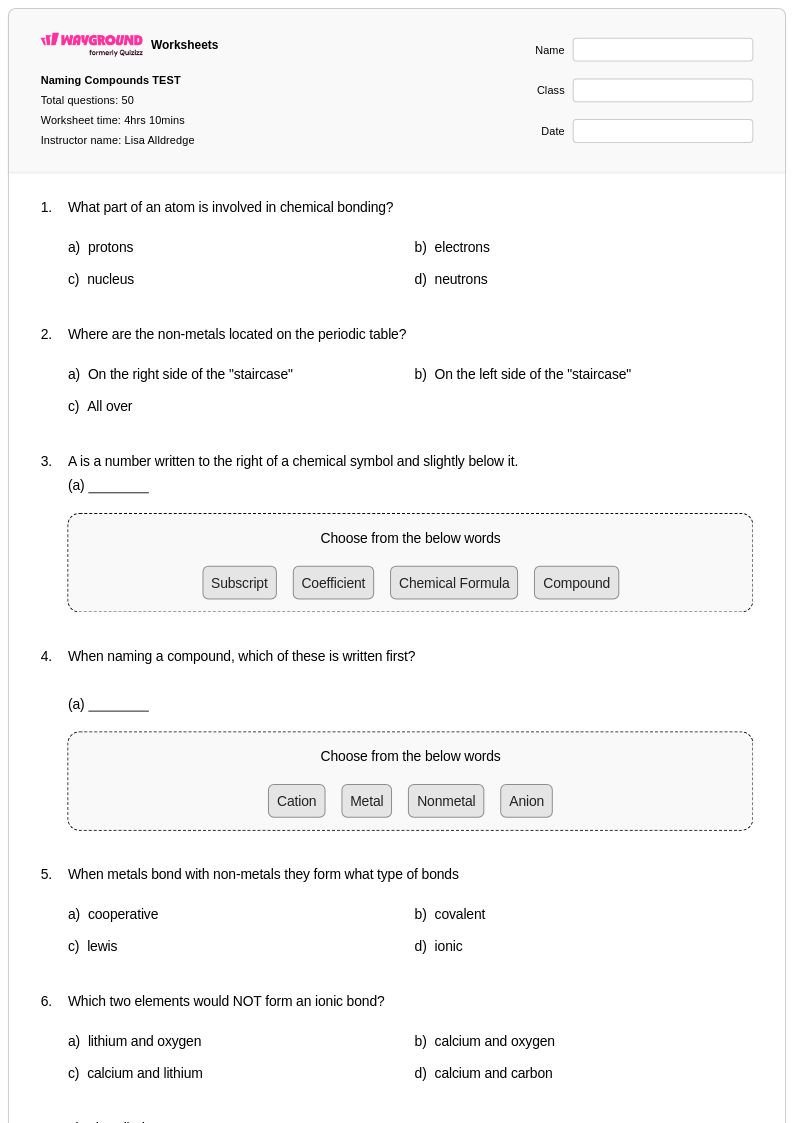
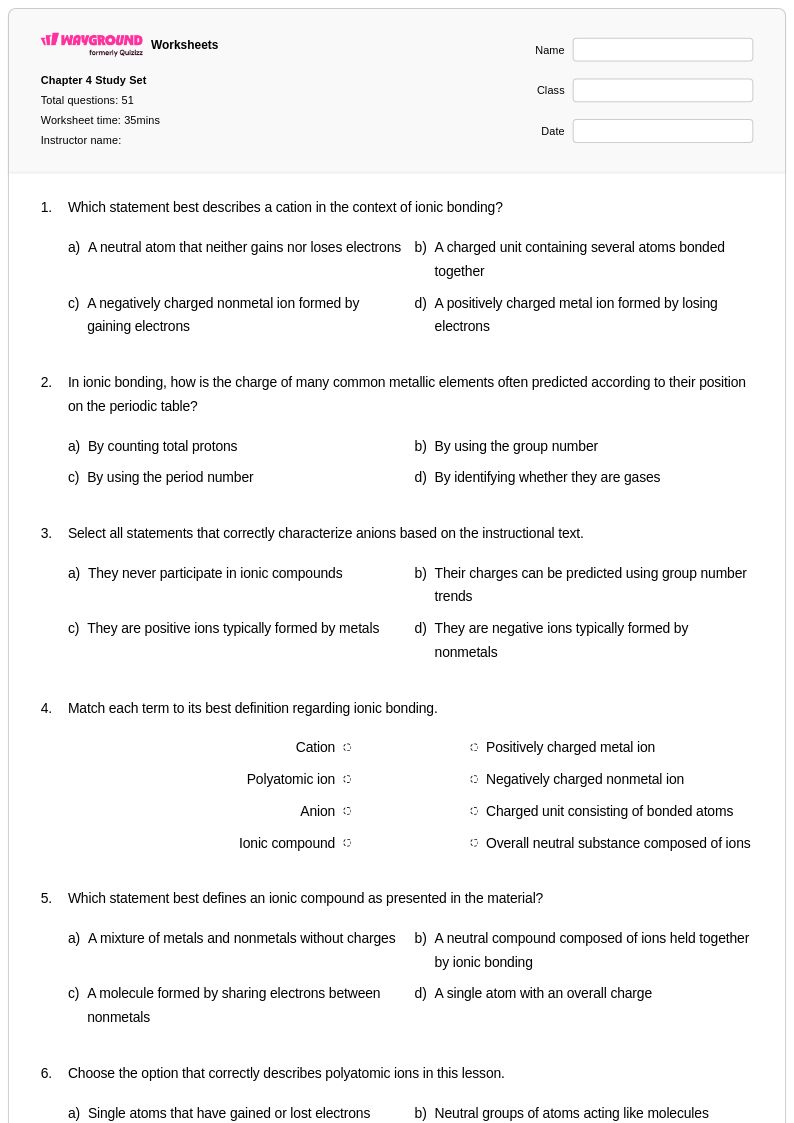
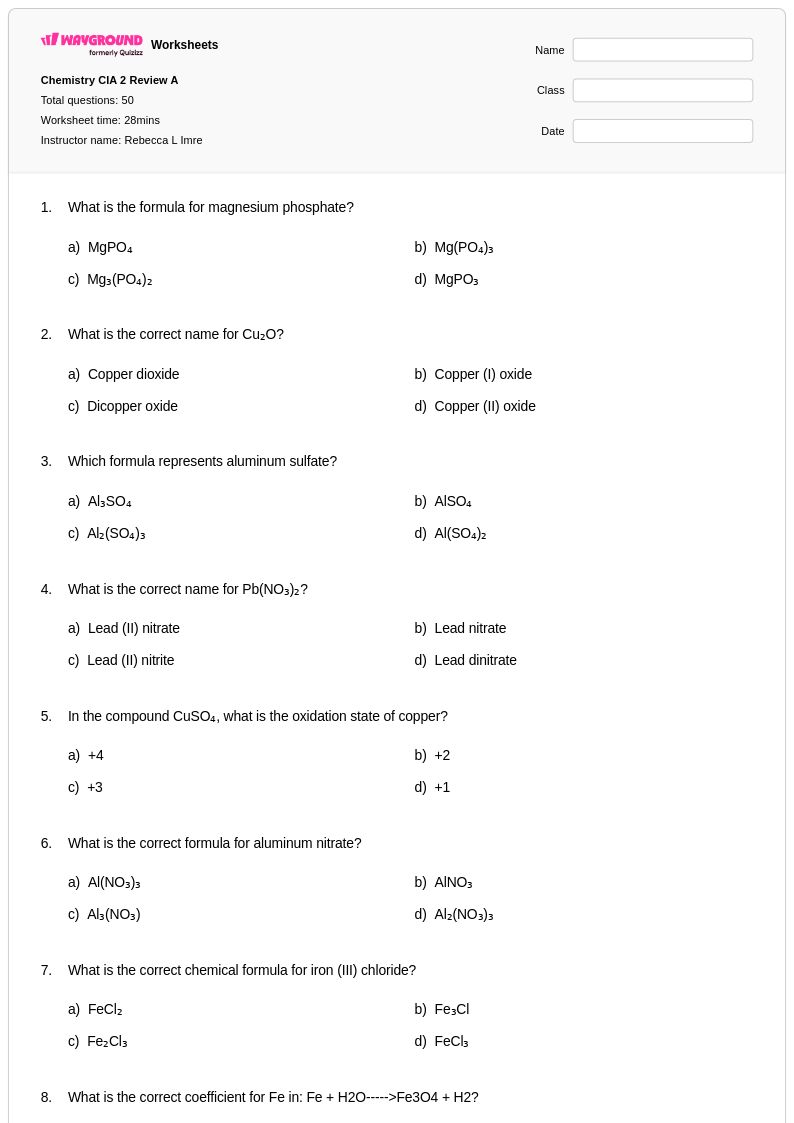
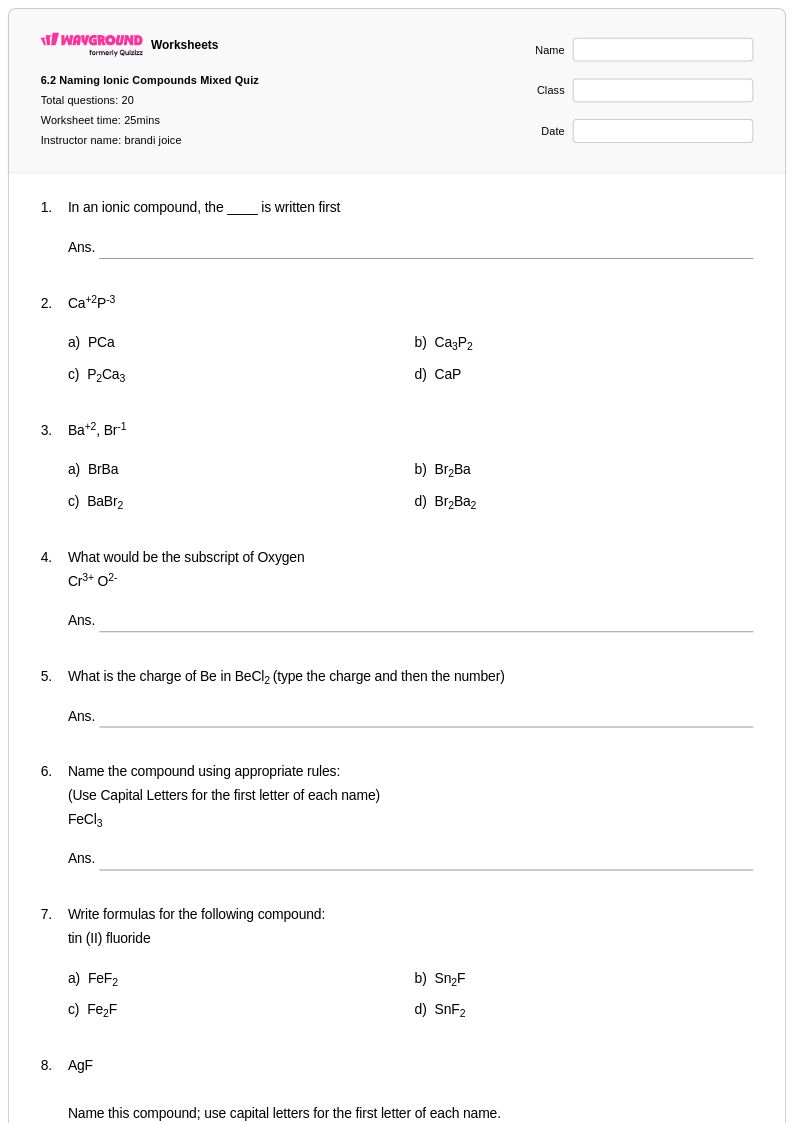
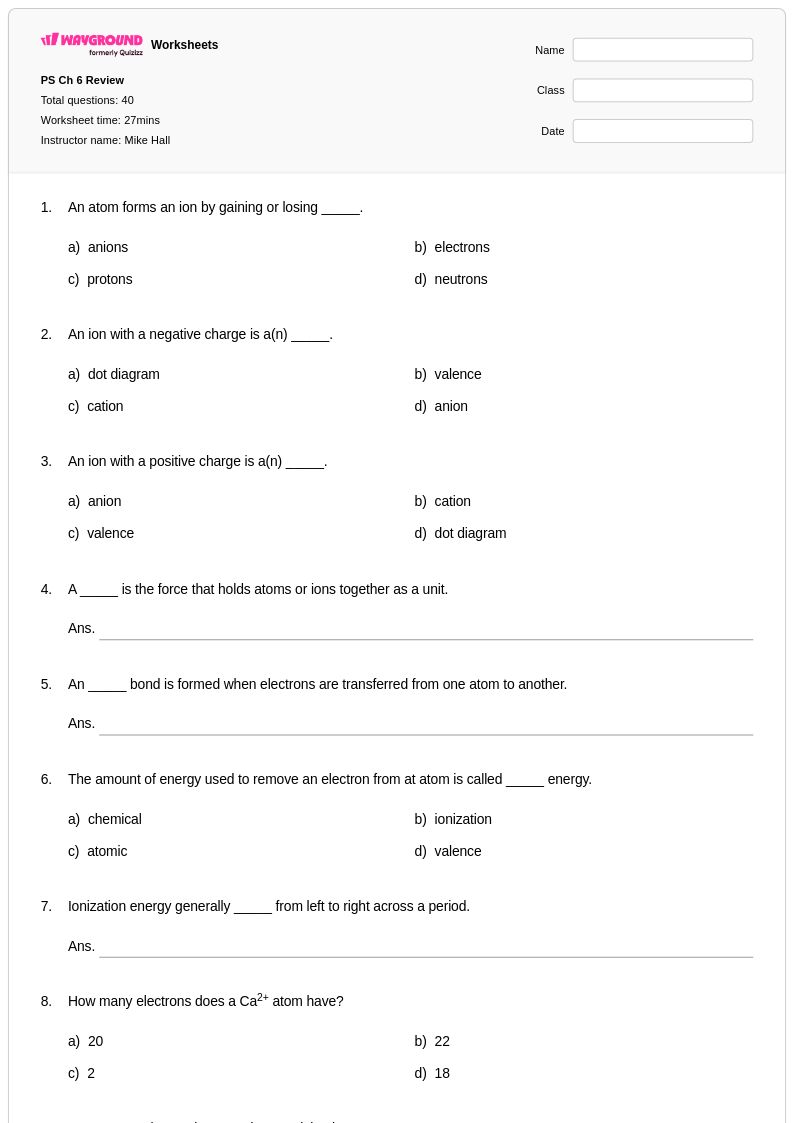
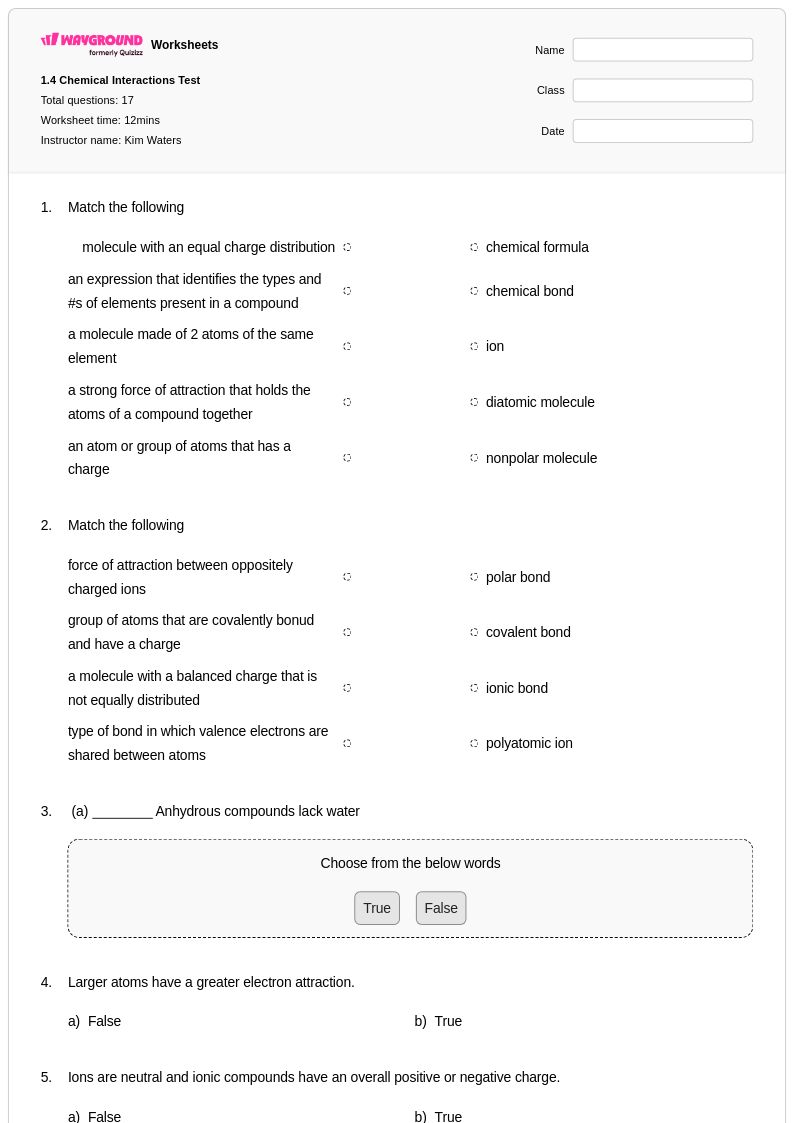
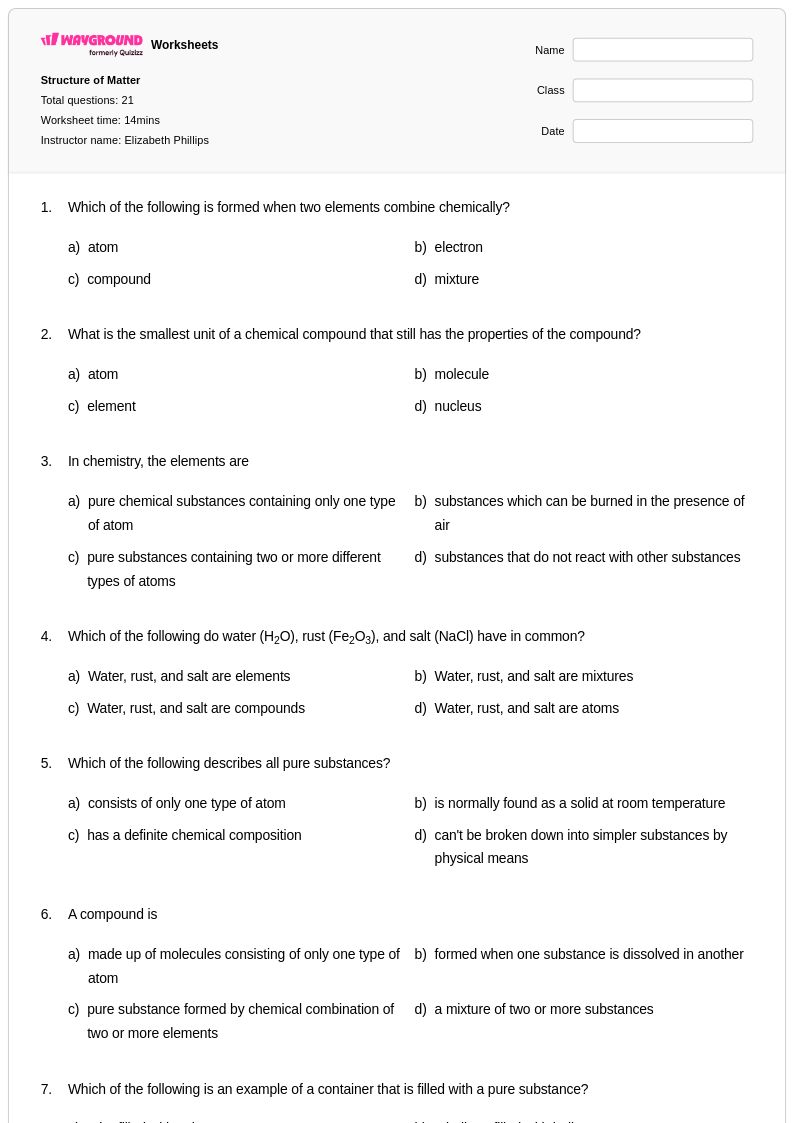
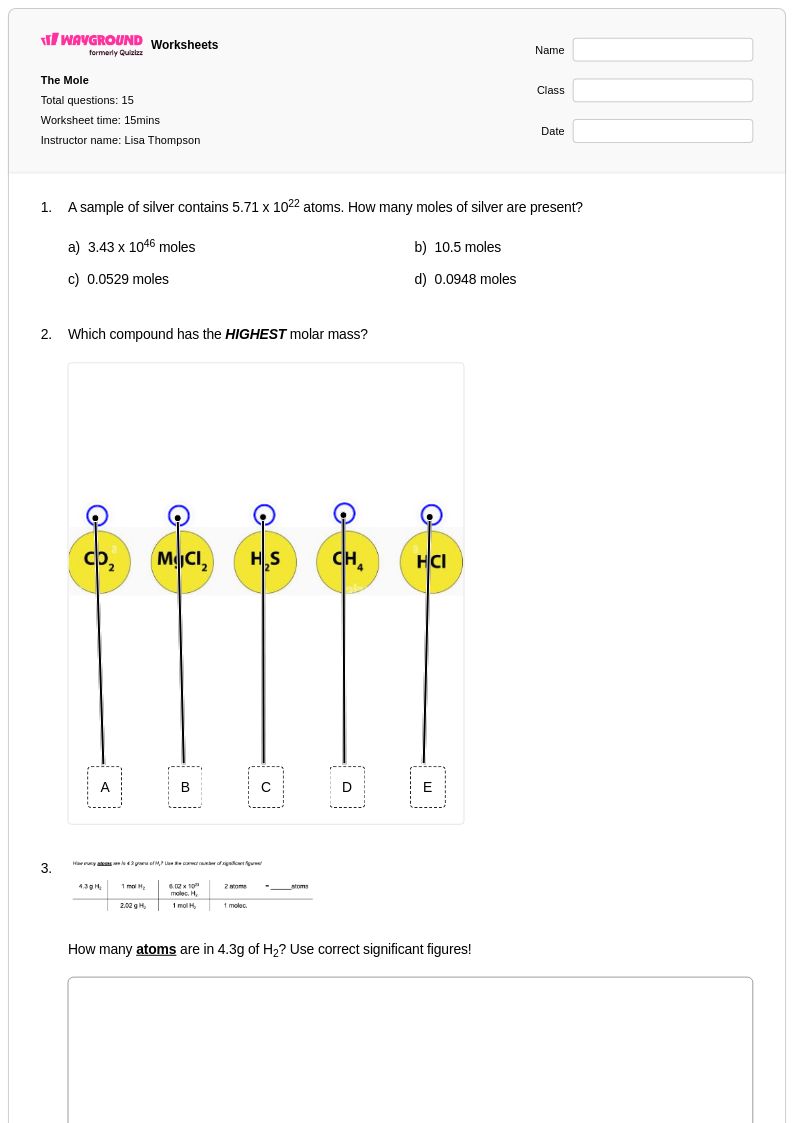
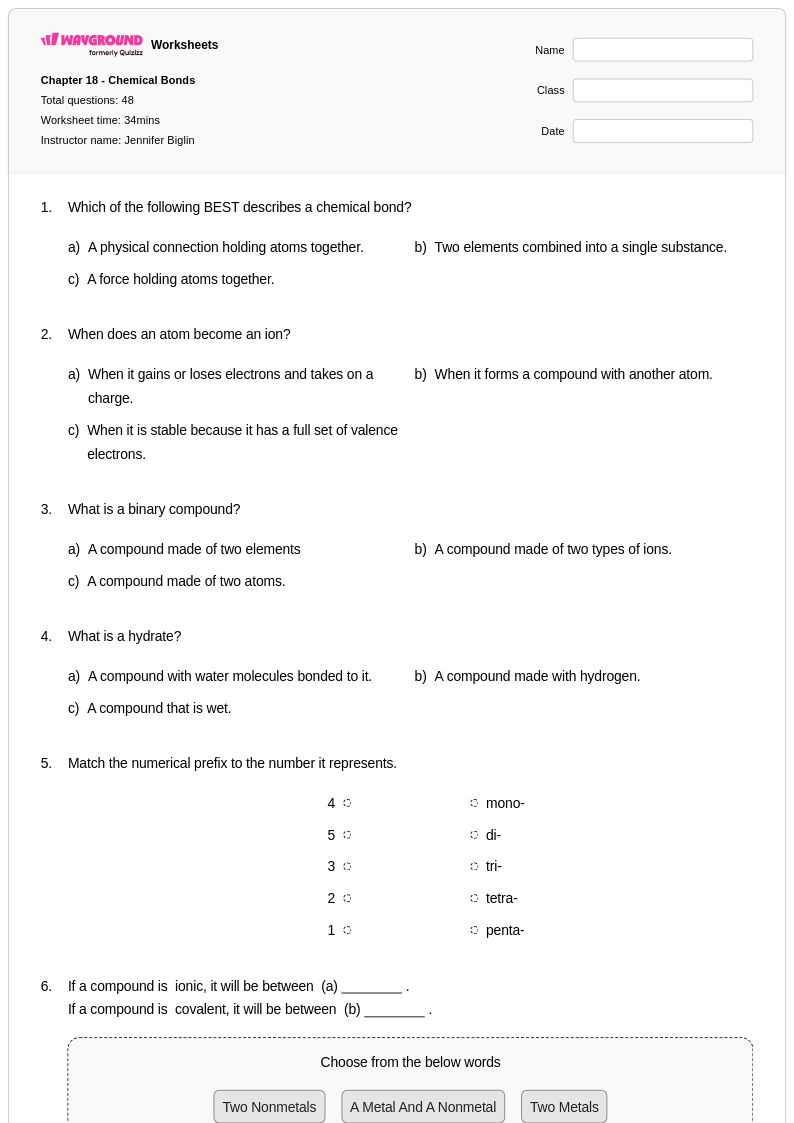
Master naming binary molecular compounds with Wayground's comprehensive collection of free chemistry worksheets, featuring printable PDFs with practice problems and answer keys to help students learn systematic nomenclature rules.
Naming binary molecular compounds represents a fundamental skill in chemistry that requires students to master systematic nomenclature rules and understand molecular composition. Wayground's comprehensive worksheet collection focuses specifically on this critical topic, providing extensive practice problems that guide students through the step-by-step process of identifying and naming compounds formed between two nonmetals. These carefully designed worksheets strengthen essential skills including recognizing molecular formulas, applying proper prefix systems, and understanding the relationship between chemical composition and systematic naming conventions. Each worksheet includes detailed answer keys and is available as free printable pdf resources, allowing students to work through progressively challenging examples that reinforce proper nomenclature techniques and build confidence in chemical naming protocols.
Wayground, formerly Quizizz, empowers educators with millions of teacher-created resources specifically designed to support chemistry instruction and binary molecular compound nomenclature mastery. The platform's robust search and filtering capabilities enable teachers to quickly locate worksheets that align with specific curriculum standards and match their students' skill levels, while built-in differentiation tools allow for seamless customization of practice problems to meet diverse learning needs. Whether delivered in printable pdf format for traditional classroom use or through digital interfaces for interactive learning experiences, these worksheet collections provide flexible options for lesson planning, targeted remediation sessions, and enrichment activities. Teachers can efficiently adapt content difficulty levels, incorporate additional practice problems, and utilize comprehensive answer keys to streamline assessment processes while ensuring students develop strong foundational skills in chemical nomenclature.
FAQs
How do I teach students to name binary molecular compounds?
Start by establishing that binary molecular compounds form between two nonmetals, then introduce the Greek prefix system (mono-, di-, tri-, tetra-, etc.) as the core naming tool. Teach students to always name the first element without a prefix unless more than one atom is present, and always apply a prefix to the second element. Consistent, sequential practice with molecular formulas helps students internalize the pattern before moving to more complex examples.
What exercises help students practice naming binary molecular compounds?
The most effective practice combines formula-to-name and name-to-formula exercises so students work the skill in both directions. Worksheets that present progressively harder molecular formulas — starting with simple two-atom compounds and advancing to those with larger subscripts — build fluency systematically. Timed drills and answer-key-supported practice allow students to self-correct and identify gaps in their prefix knowledge.
What mistakes do students commonly make when naming binary molecular compounds?
The most frequent error is omitting the 'mono-' prefix on the second element when only one atom is present (e.g., writing 'carbon oxide' instead of 'carbon monoxide'). Students also confuse binary molecular nomenclature with ionic compound naming and incorrectly drop prefixes on both elements. Another common mistake is misapplying prefixes to subscripts, particularly with compounds containing four or five atoms of an element.
How do I differentiate naming binary molecular compounds practice for students at different skill levels?
Begin struggling students with a prefix reference chart so cognitive load stays focused on the naming process rather than memorization. More advanced students can work without the chart and tackle reverse-naming exercises where they must write the correct molecular formula from a given name. On Wayground, teachers can apply reduced answer choices for students who need support and assign extended time per question for those who need additional processing time, with each accommodation set individually without notifying other students.
How do I use Wayground's naming binary molecular compounds worksheets in my classroom?
Wayground's naming binary molecular compounds worksheets are available as printable PDFs for traditional classroom use and in digital formats for technology-integrated environments. Teachers can also host the content as a live quiz on Wayground for real-time practice and instant feedback. Each worksheet includes a complete answer key, making them efficient tools for independent practice, homework assignments, or targeted remediation sessions.
How do I help students who keep mixing up ionic and molecular compound naming rules?
The key distinction to reinforce is element type: binary molecular compounds always form between two nonmetals, while ionic compounds involve a metal and a nonmetal. Create side-by-side comparison exercises where students must first classify the compound before naming it, forcing them to apply the identification step as a prerequisite to naming. Regular exposure to mixed compound sets — where students must decide which ruleset applies — builds the discriminatory skill more reliably than isolated practice alone.