
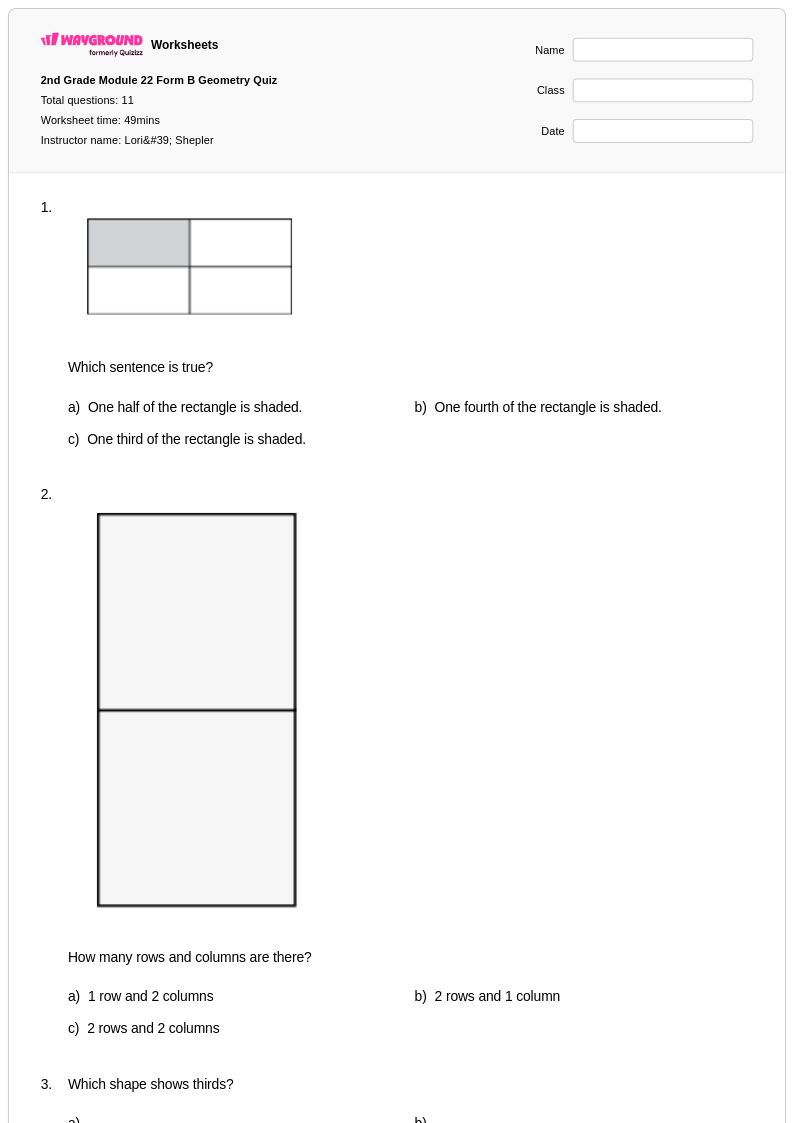
11 Q
2nd
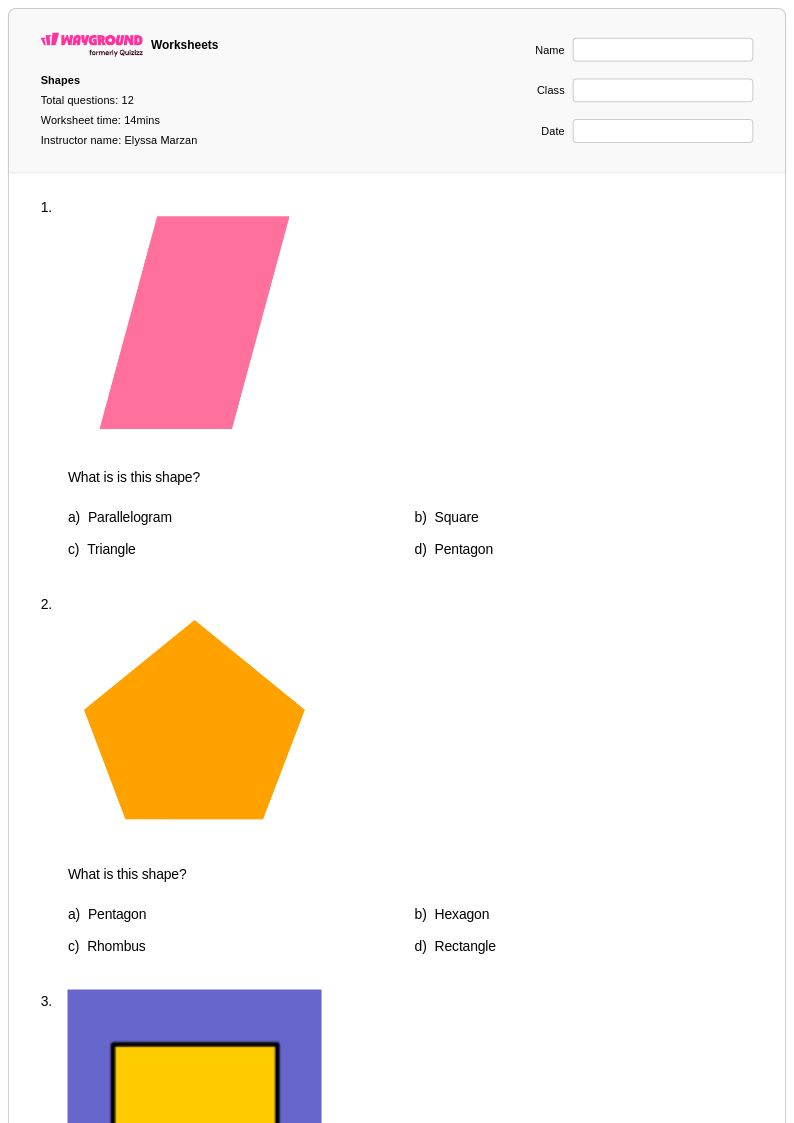
12 Q
2nd
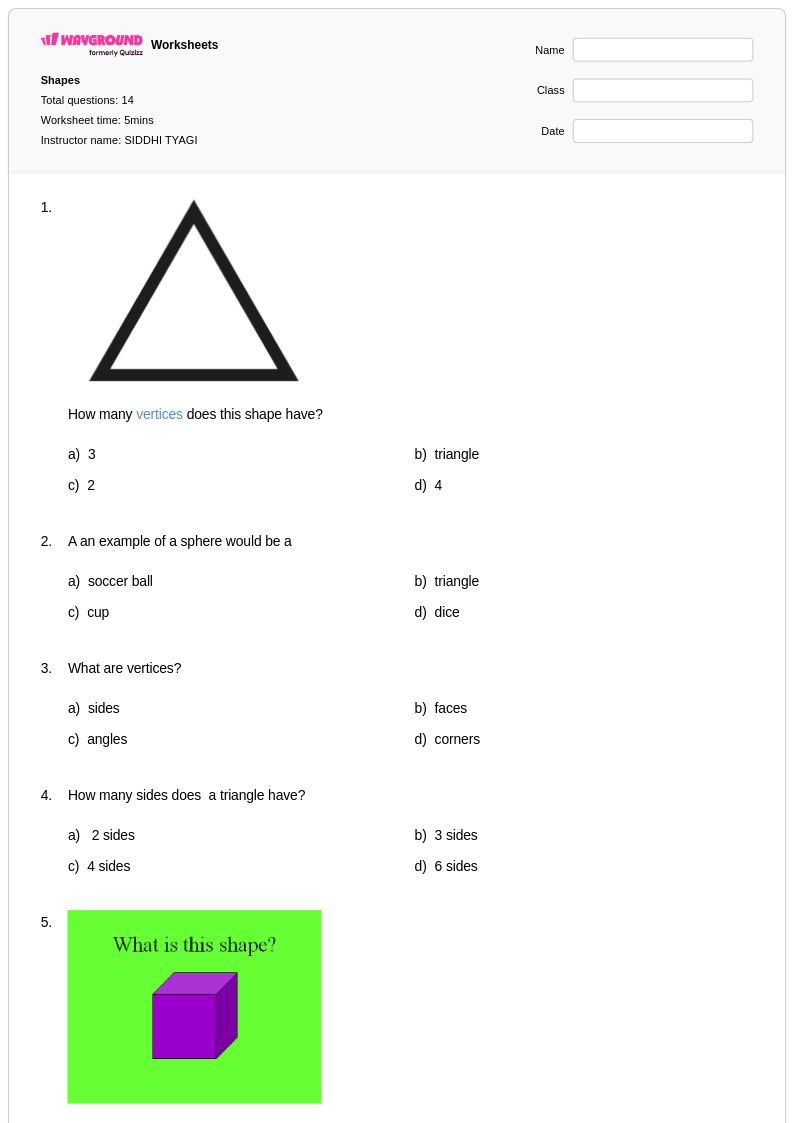
14 Q
1st - 12th
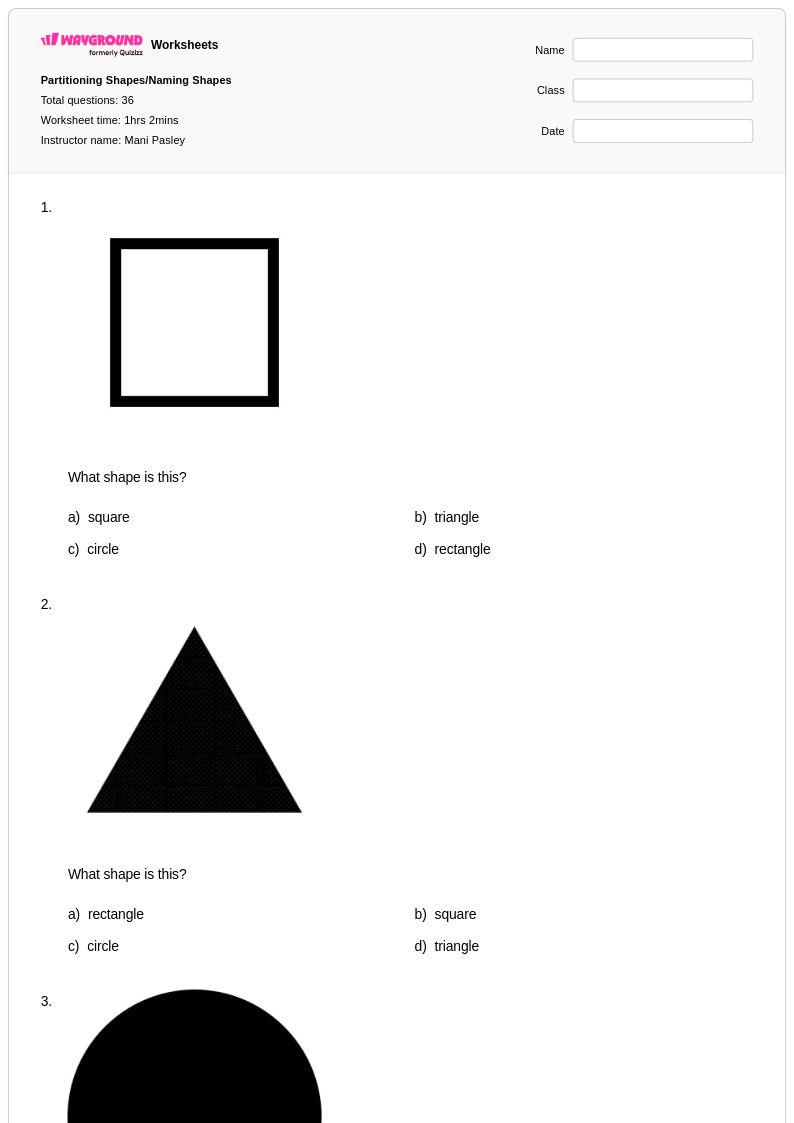
36 Q
2nd
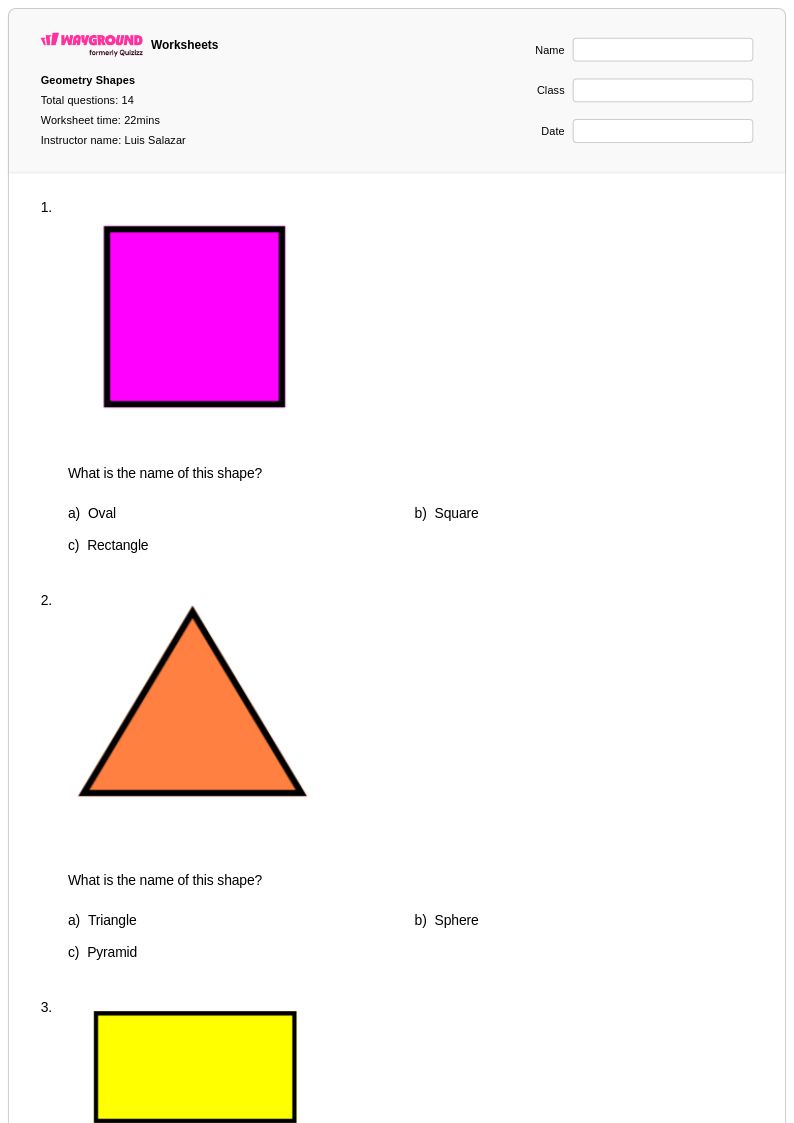
14 Q
1st - 5th
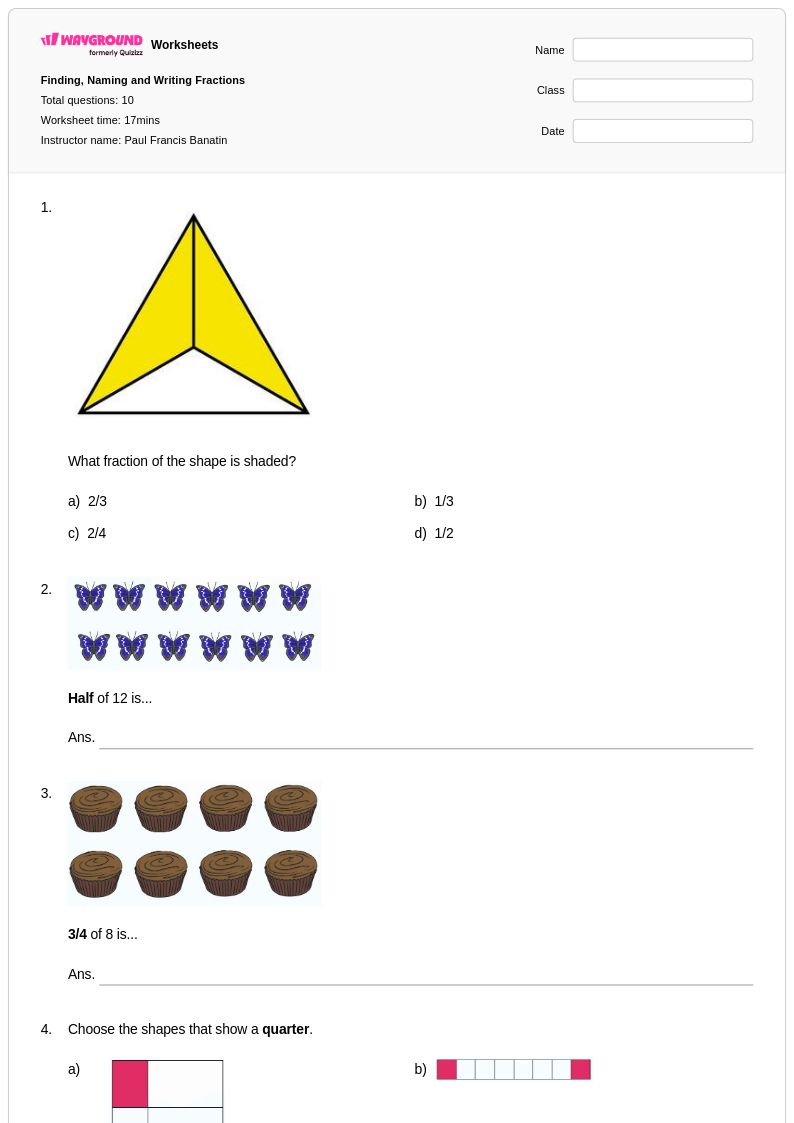
10 Q
2nd - 3rd
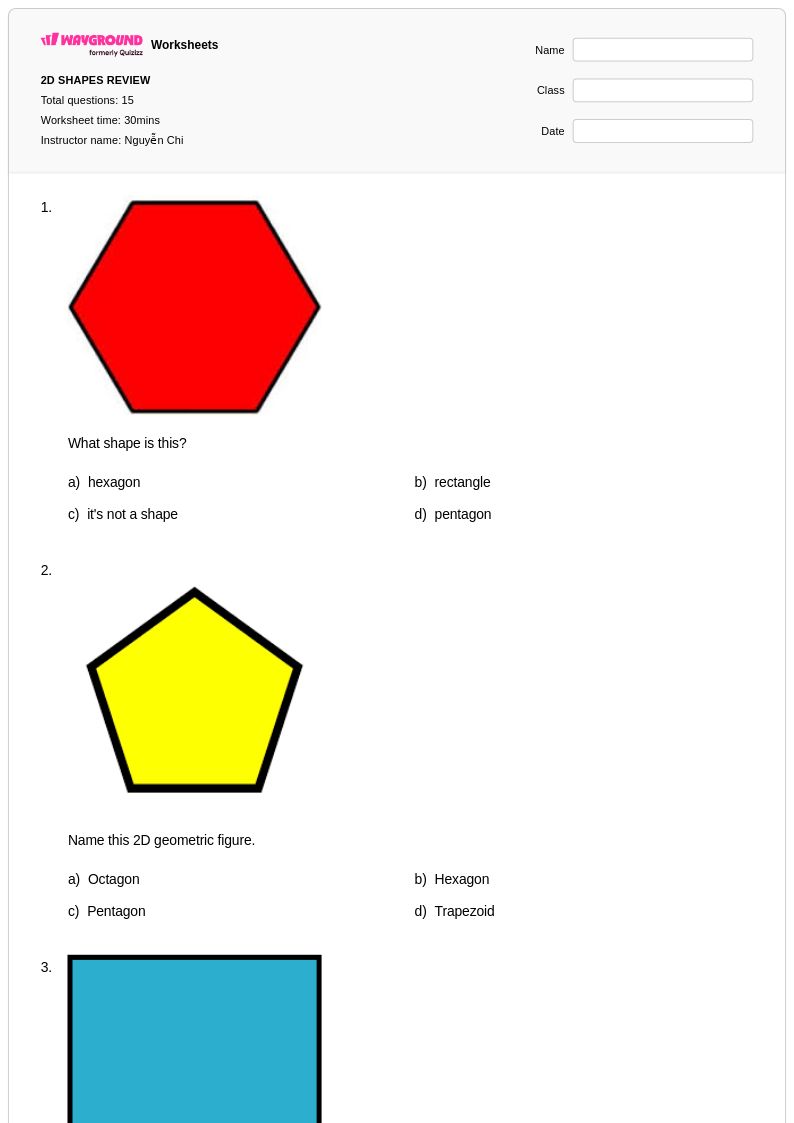
15 Q
1st - 3rd
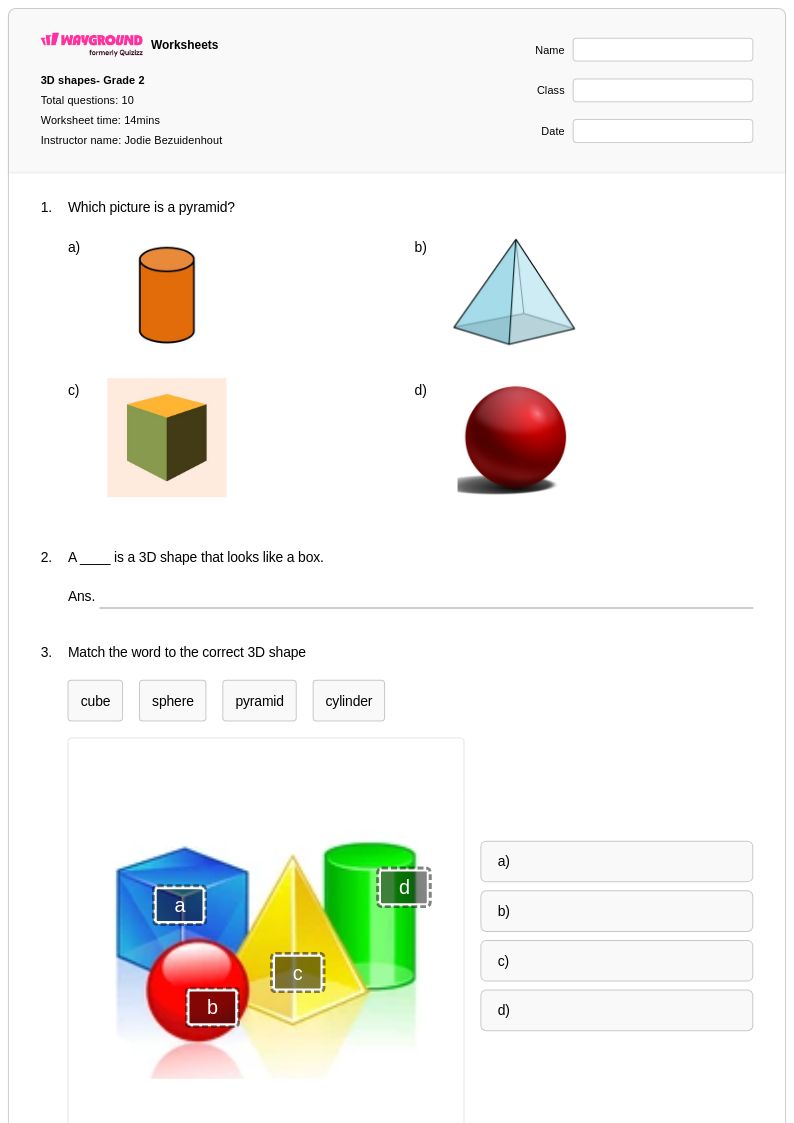
10 Q
2nd - Uni
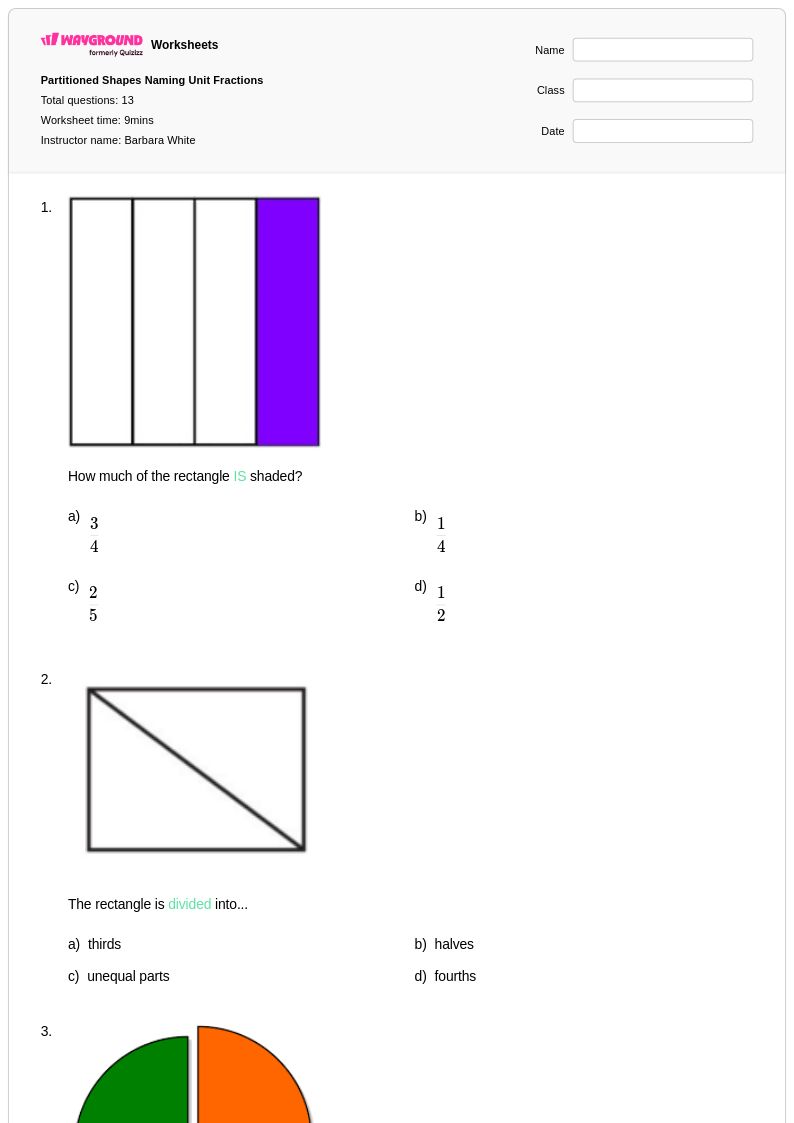
13 Q
1st - 2nd
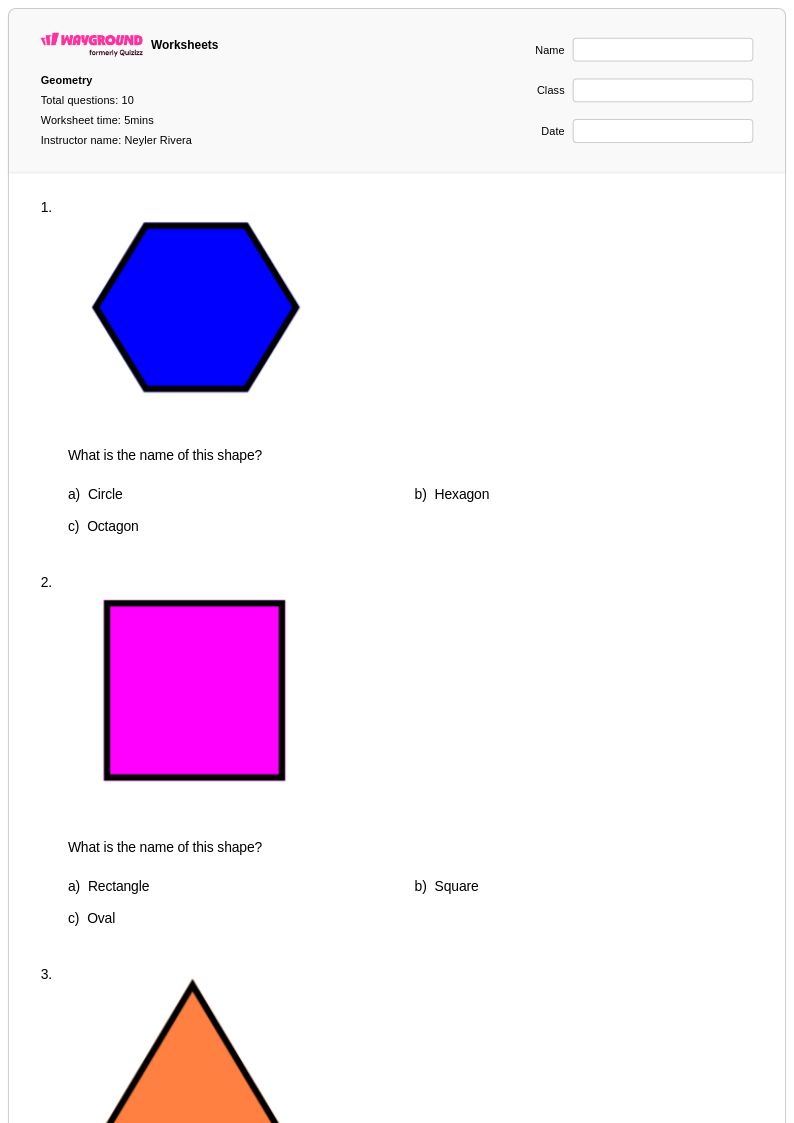
10 Q
2nd - 3rd
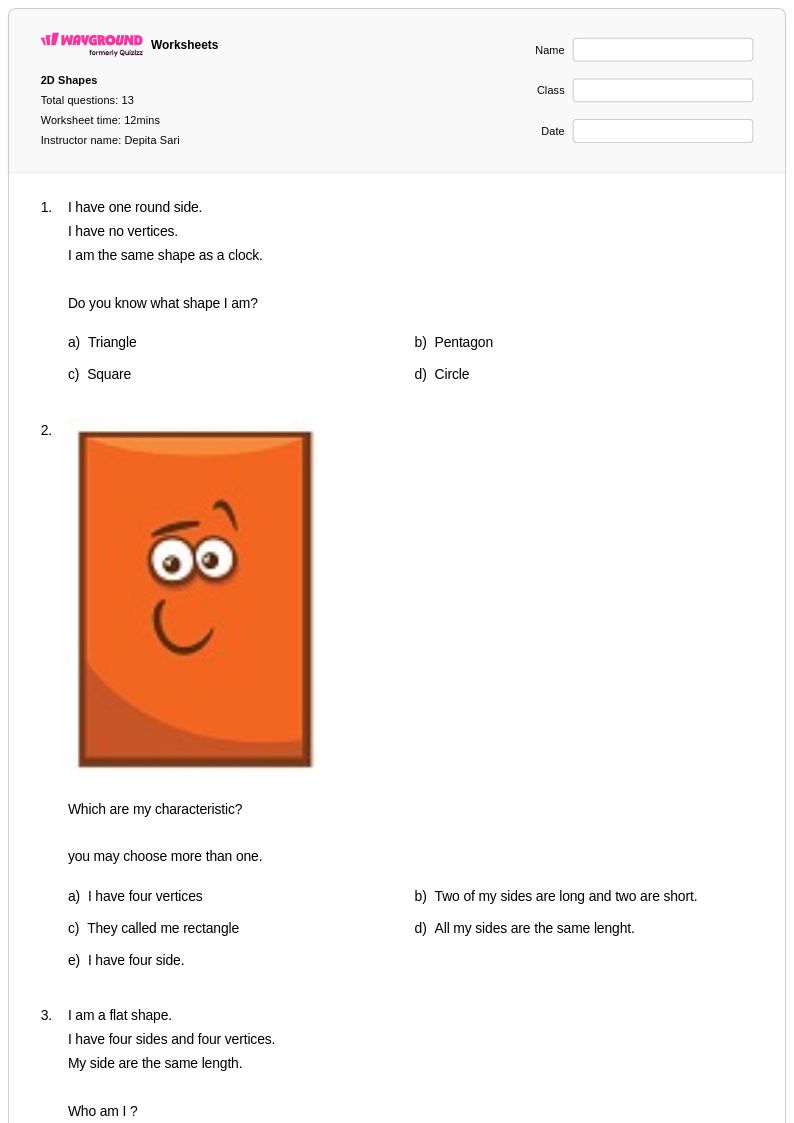
13 Q
2nd
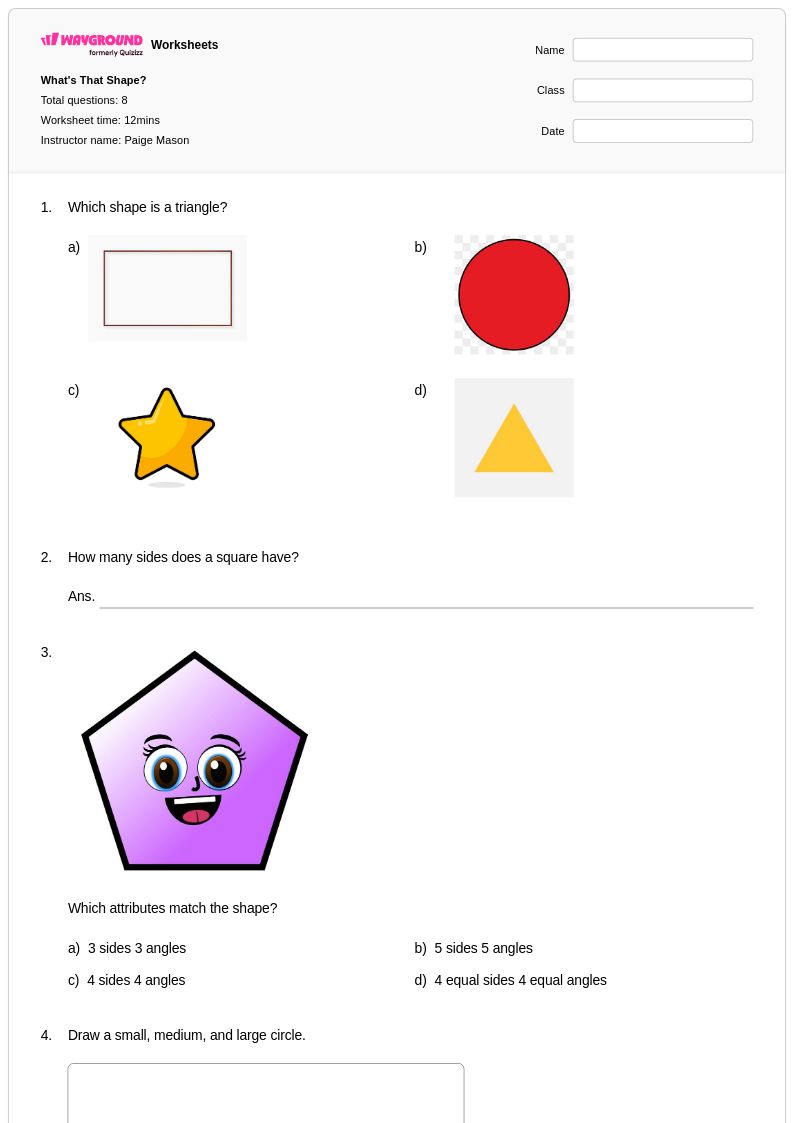
8 Q
2nd
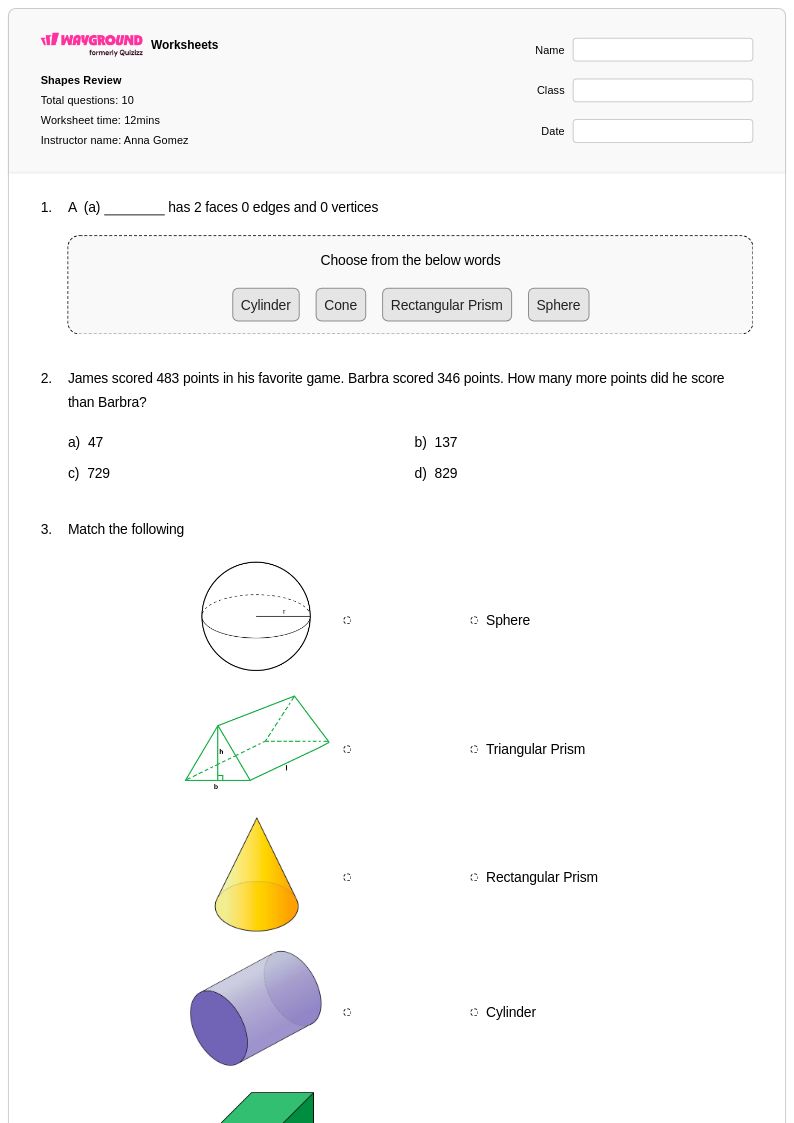
10 Q
2nd
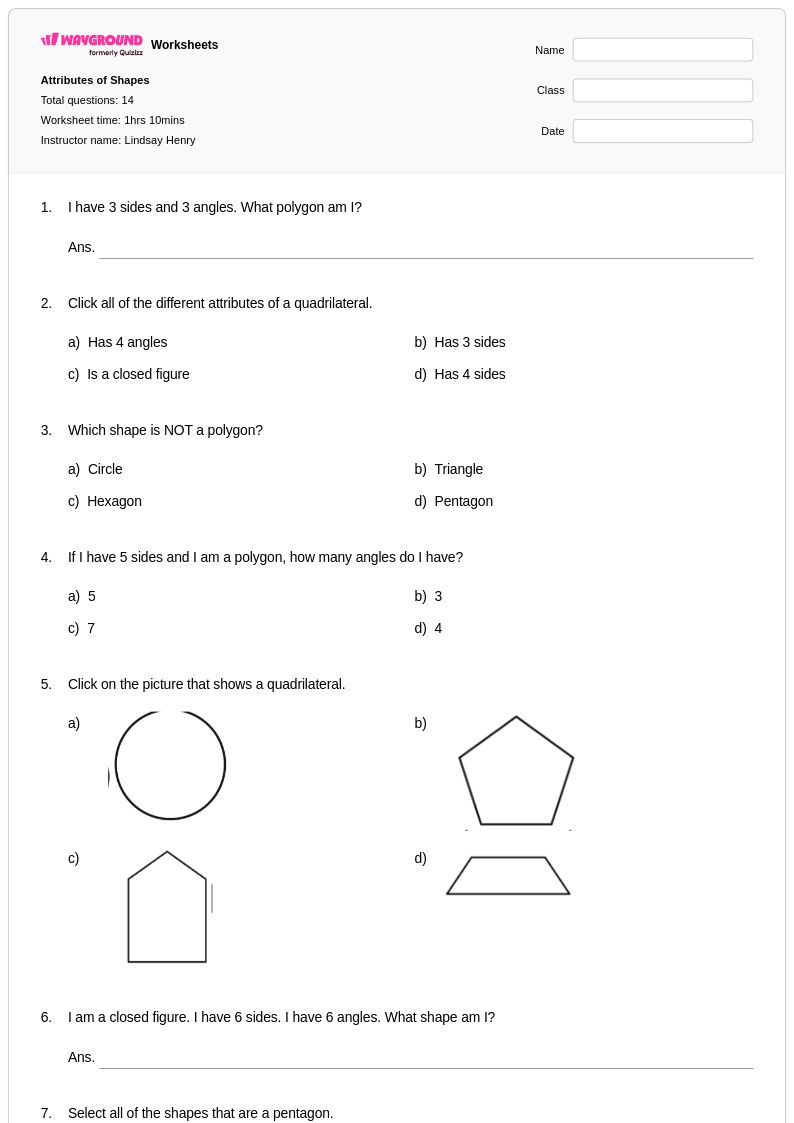
14 Q
2nd
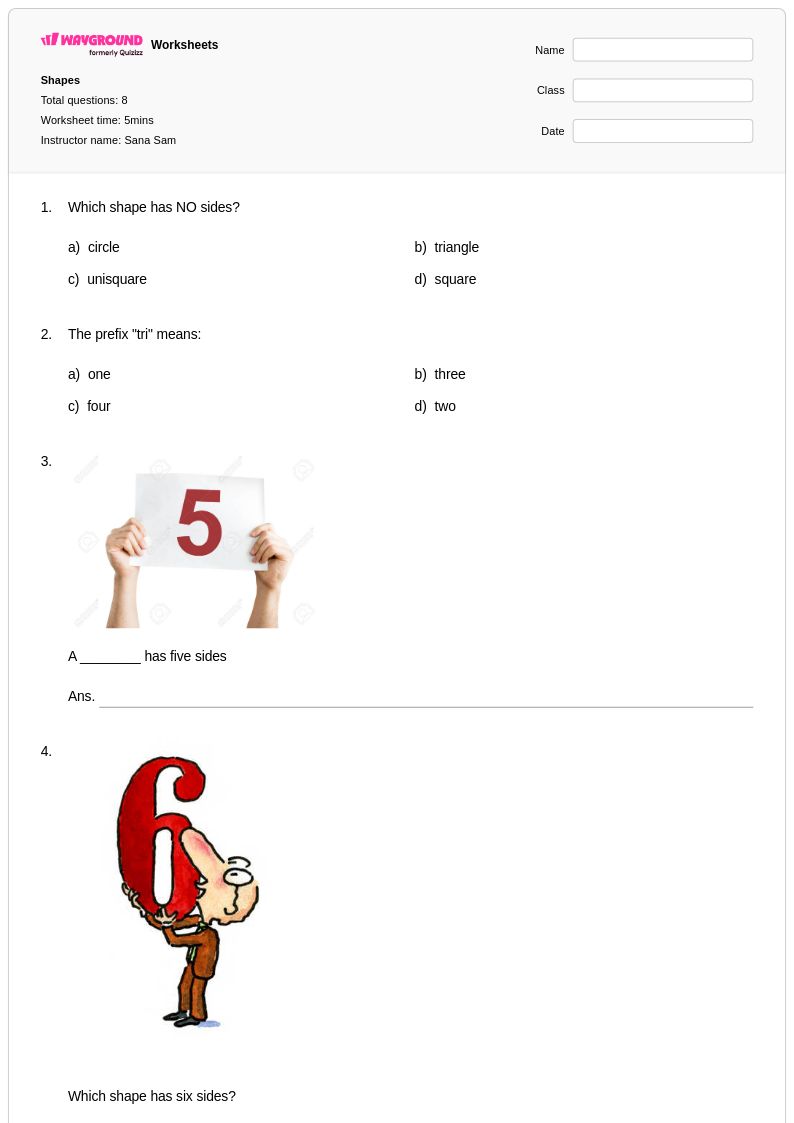
8 Q
1st - 3rd
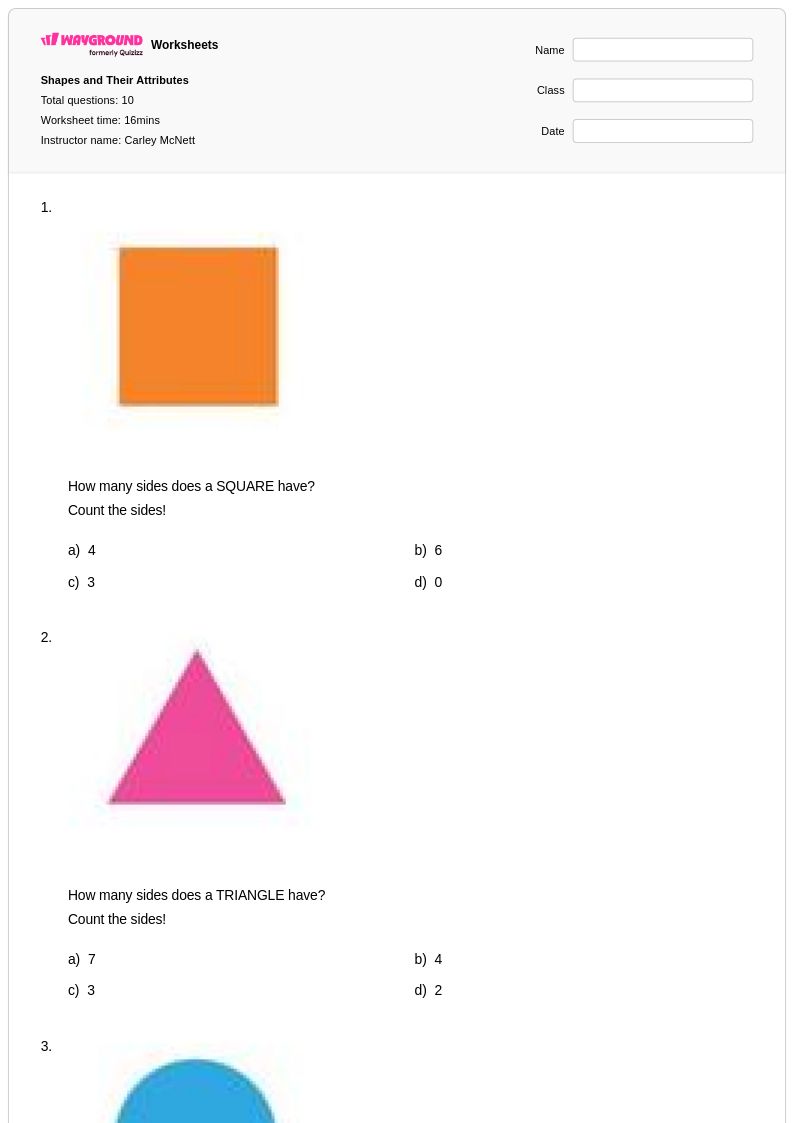
10 Q
2nd
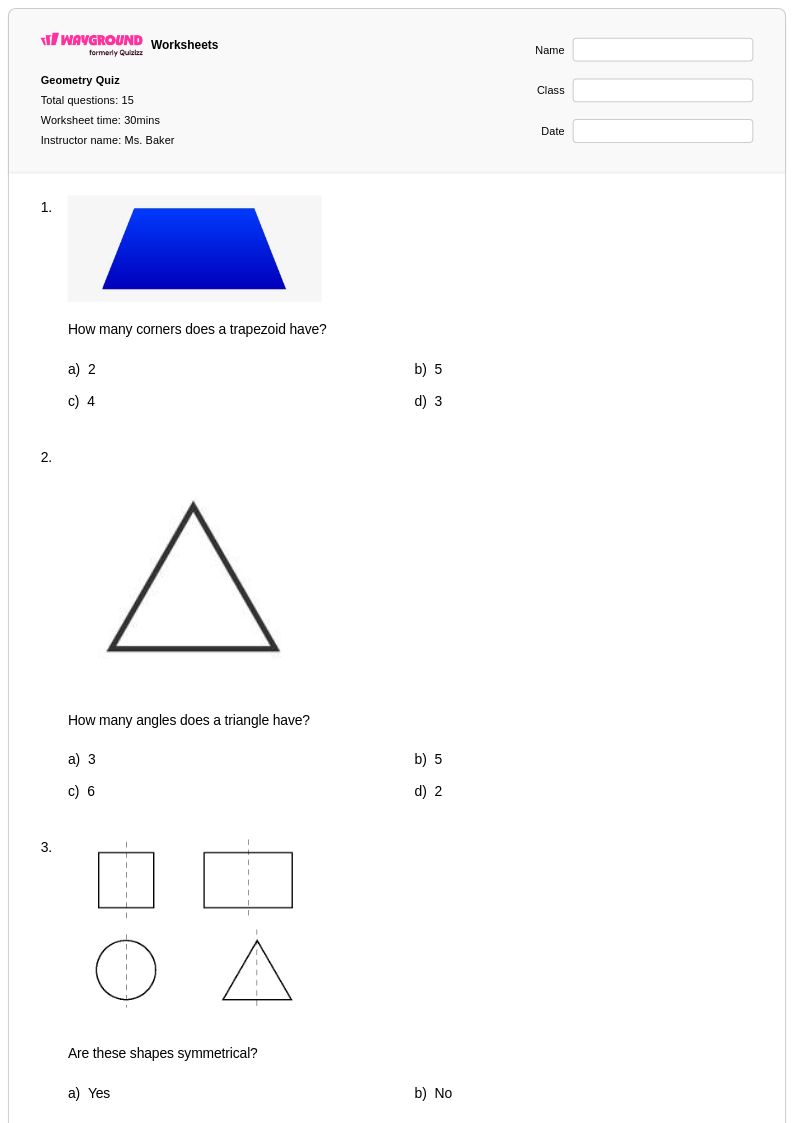
15 Q
2nd
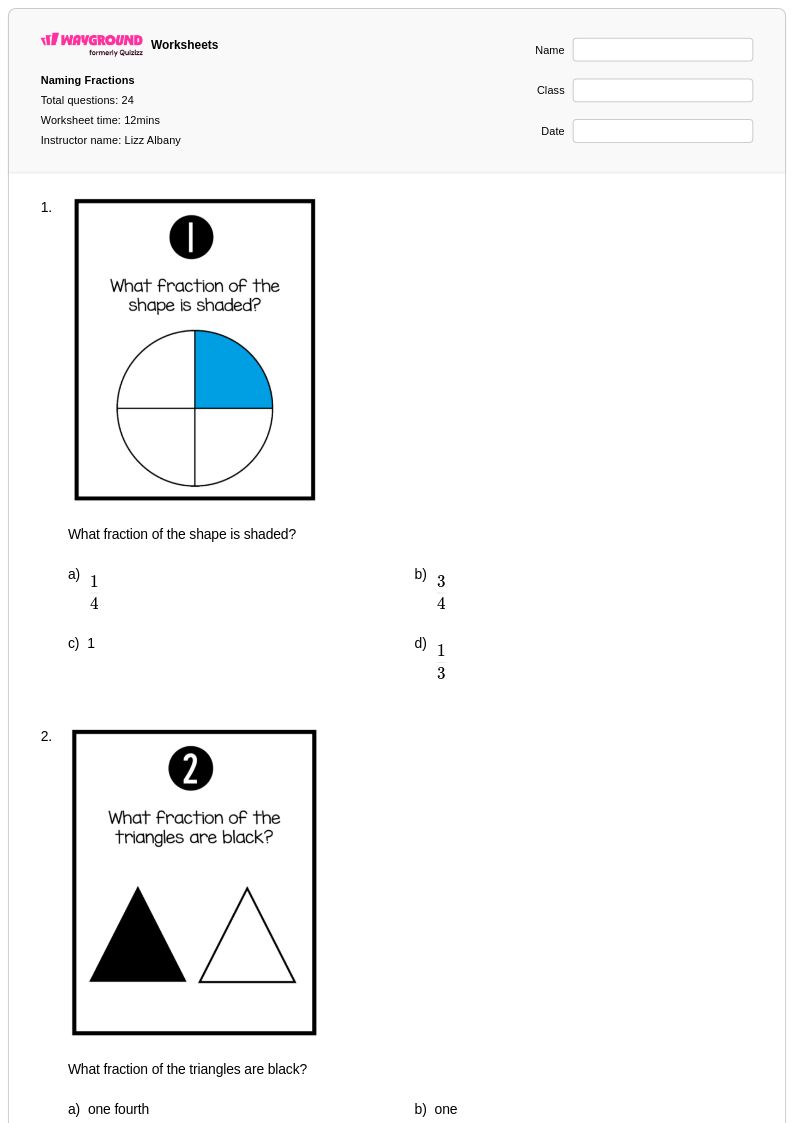
24 Q
2nd - 3rd
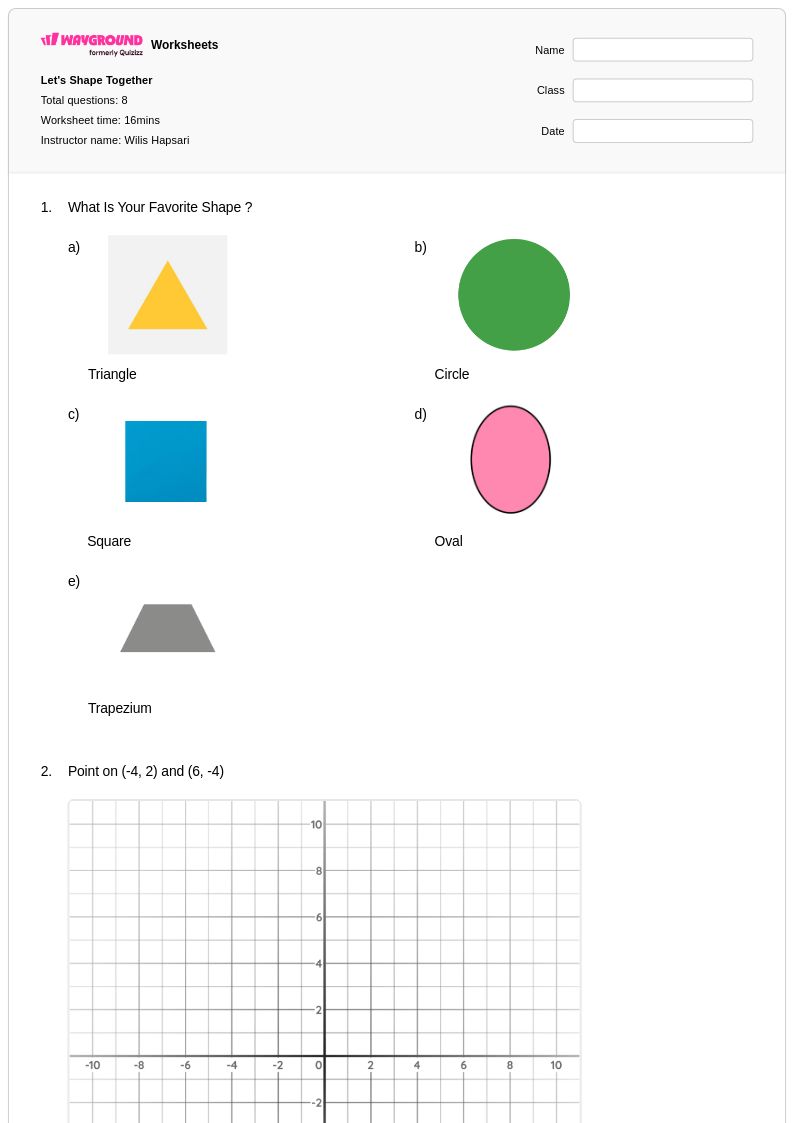
8 Q
1st - 5th
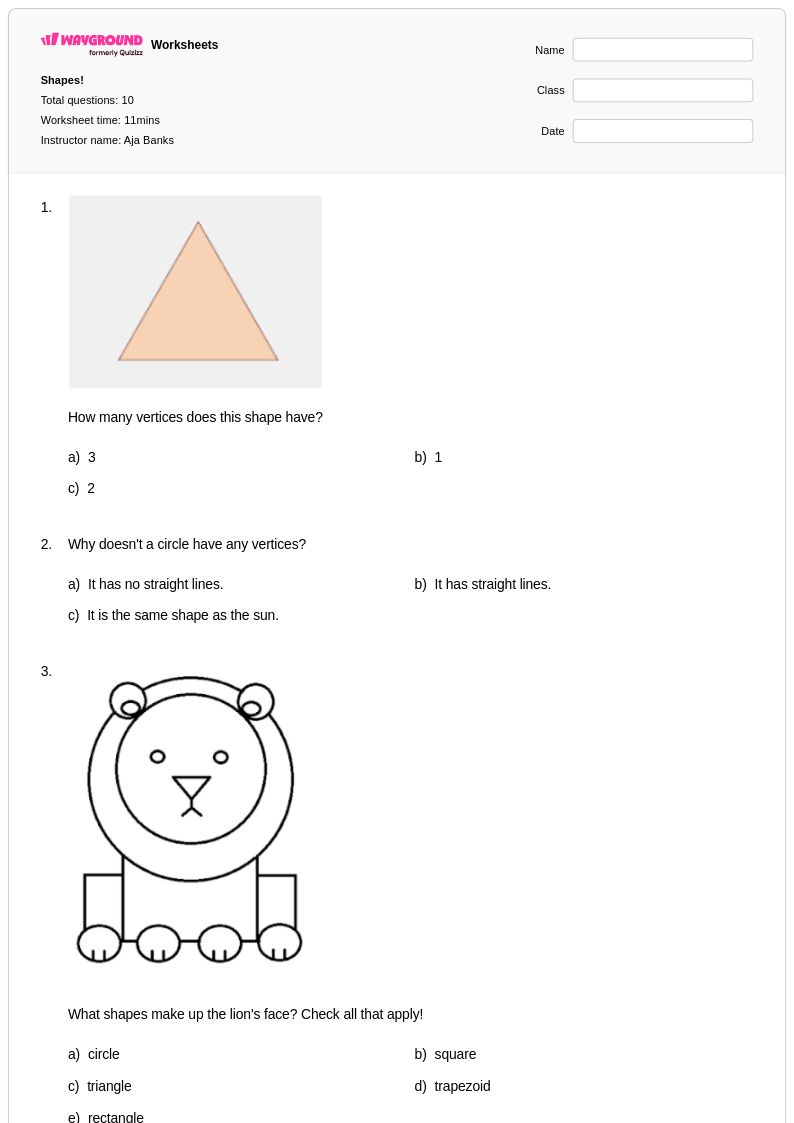
10 Q
1st - 2nd
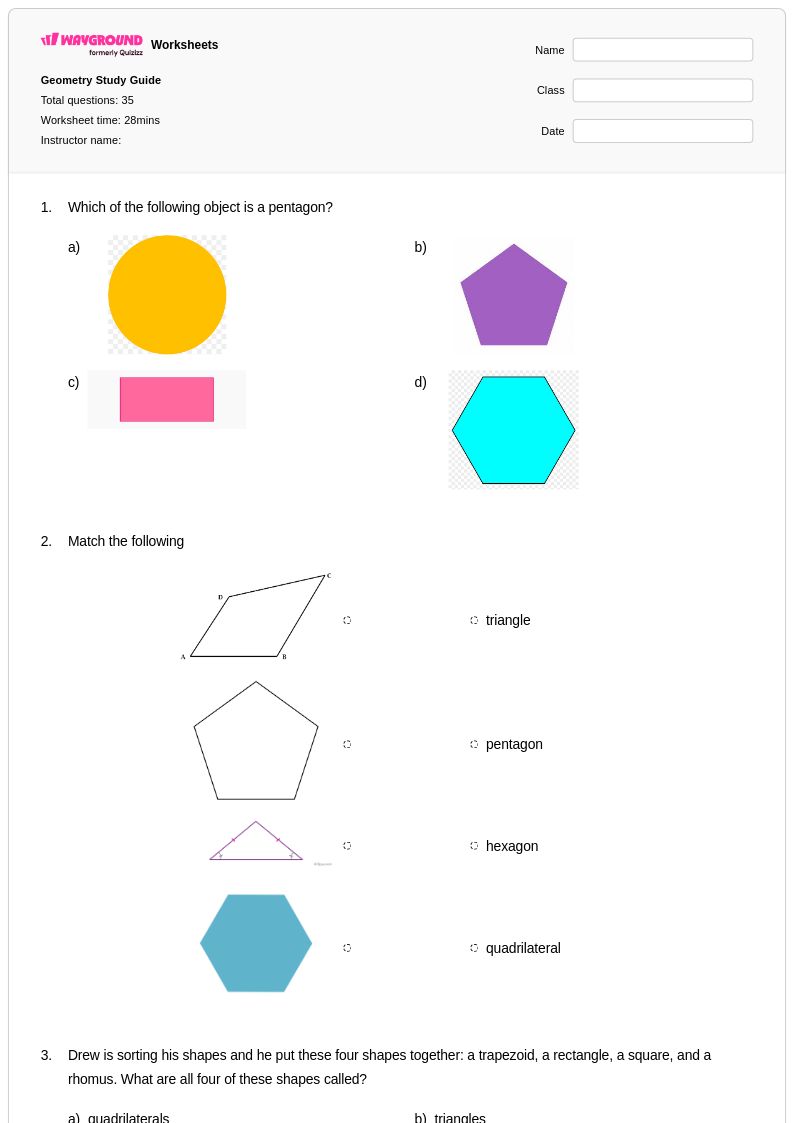
35 Q
2nd
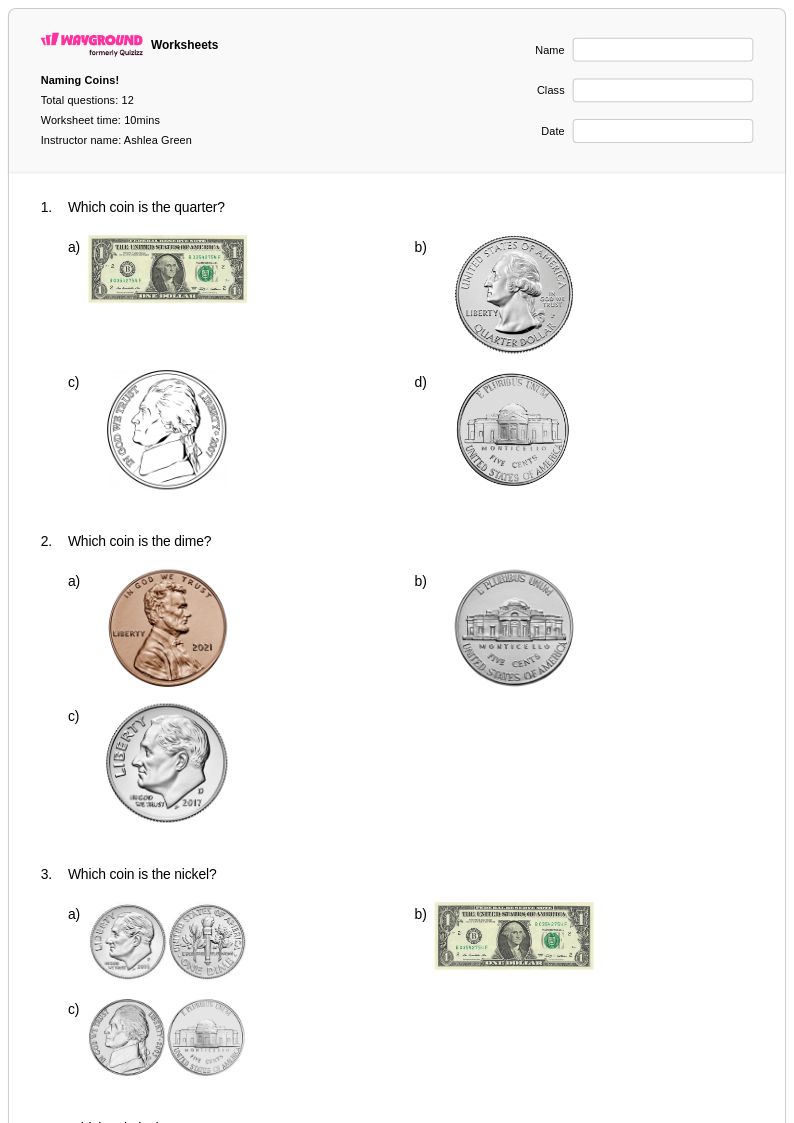
12 Q
2nd
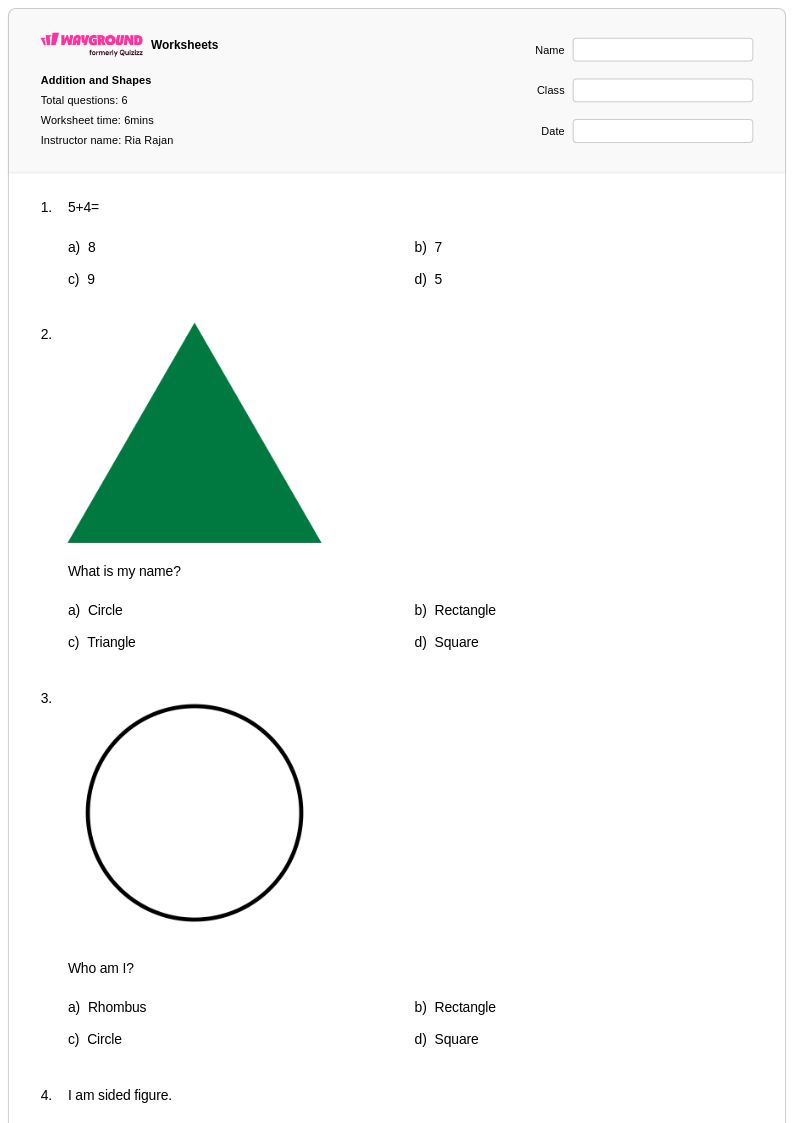
6 Q
1st - 3rd
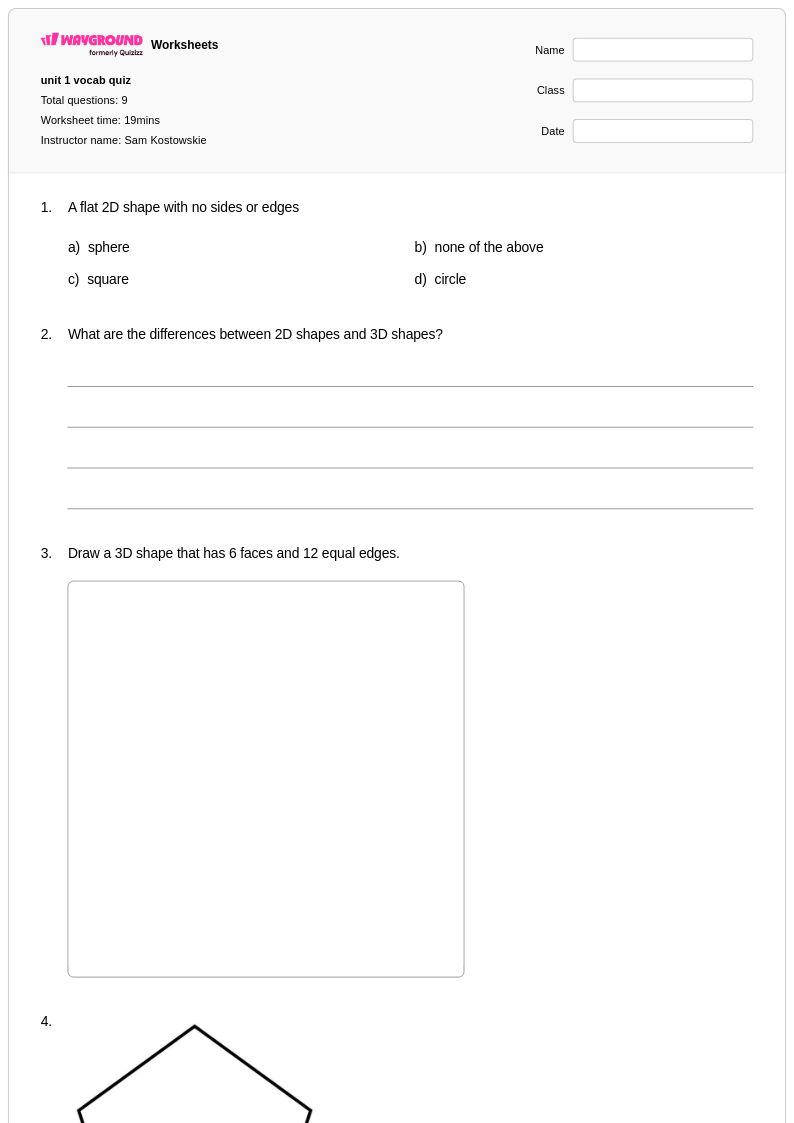
12 Q
2nd
Explore Naming Shapes Worksheets by Grades
Explore Other Subject Worksheets for class 2
Explore printable Naming Shapes worksheets for Class 2
Naming shapes worksheets for Class 2 students available through Wayground (formerly Quizizz) provide essential foundational practice in geometric recognition and vocabulary development. These carefully crafted resources help young learners identify, classify, and correctly name basic two-dimensional and three-dimensional shapes including circles, squares, rectangles, triangles, diamonds, ovals, cubes, spheres, and cylinders. The worksheets strengthen critical visual discrimination skills and mathematical language acquisition through engaging practice problems that progress from simple shape identification to more complex sorting and categorization tasks. Each worksheet collection includes comprehensive answer keys and is available as free printables in convenient PDF format, allowing students to develop confidence in geometric reasoning while building the vocabulary necessary for advanced mathematical concepts.
Wayground (formerly Quizizz) empowers educators with an extensive library of millions of teacher-created naming shapes resources specifically designed for Class 2 mathematics instruction. The platform's robust search and filtering capabilities enable teachers to quickly locate worksheets that align with curriculum standards and match their students' specific learning needs. Advanced differentiation tools allow instructors to customize difficulty levels, modify content, and create targeted interventions for remediation or enrichment purposes. These naming shapes worksheets are available in both printable PDF format and interactive digital versions, providing flexibility for classroom instruction, homework assignments, and independent practice sessions. Teachers can efficiently plan comprehensive geometry lessons while ensuring students receive appropriate skill practice through these professionally developed, standards-aligned resources that support diverse learning styles and academic goals.
FAQs
What is the focus when teaching shapes in second grade?
What kinds of practice problems are best for second-grade geometry?
What are common misconceptions second graders have about shapes?
How can I use these Grade 2 shape worksheets with my students?
How does second-grade geometry build on previous learning?