Free Printable Nonfiction Text Features Worksheets for Class 4
Explore Class 4 nonfiction text features with Wayground's free worksheets and printables, helping students identify and analyze headers, captions, diagrams, and other informational text elements through engaging practice problems and answer keys.
Explore printable Nonfiction Text Features worksheets for Class 4
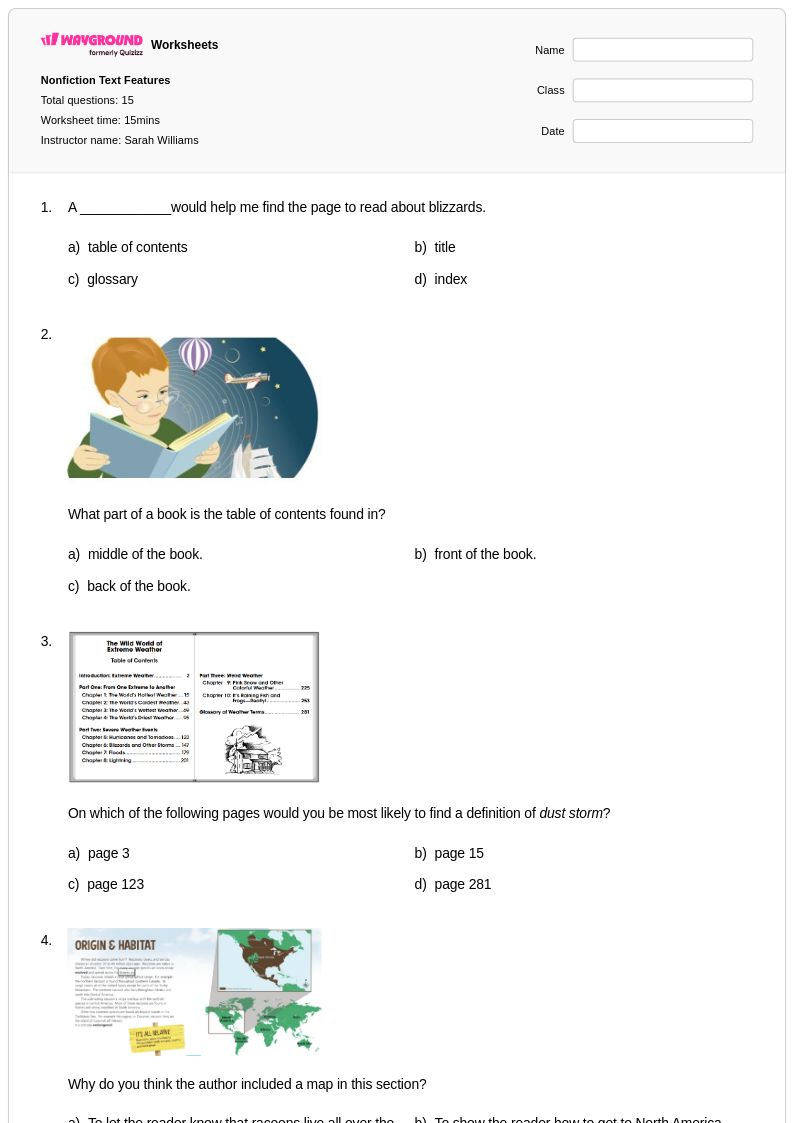
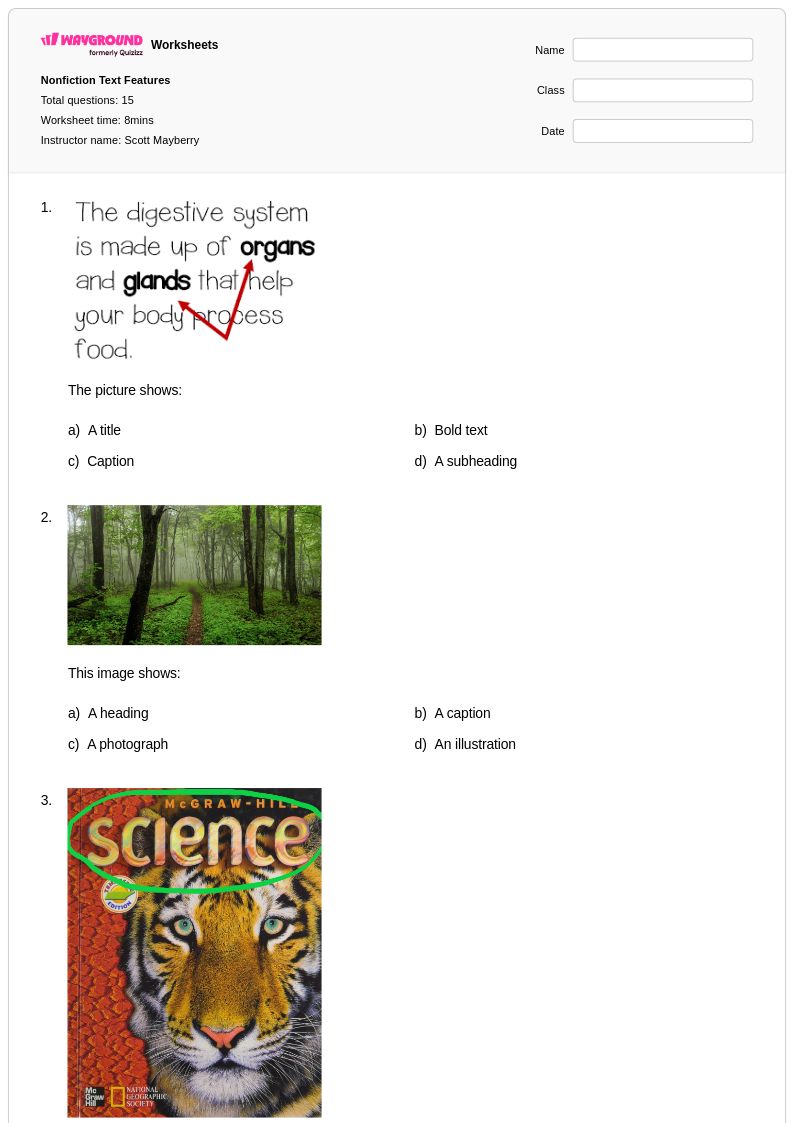
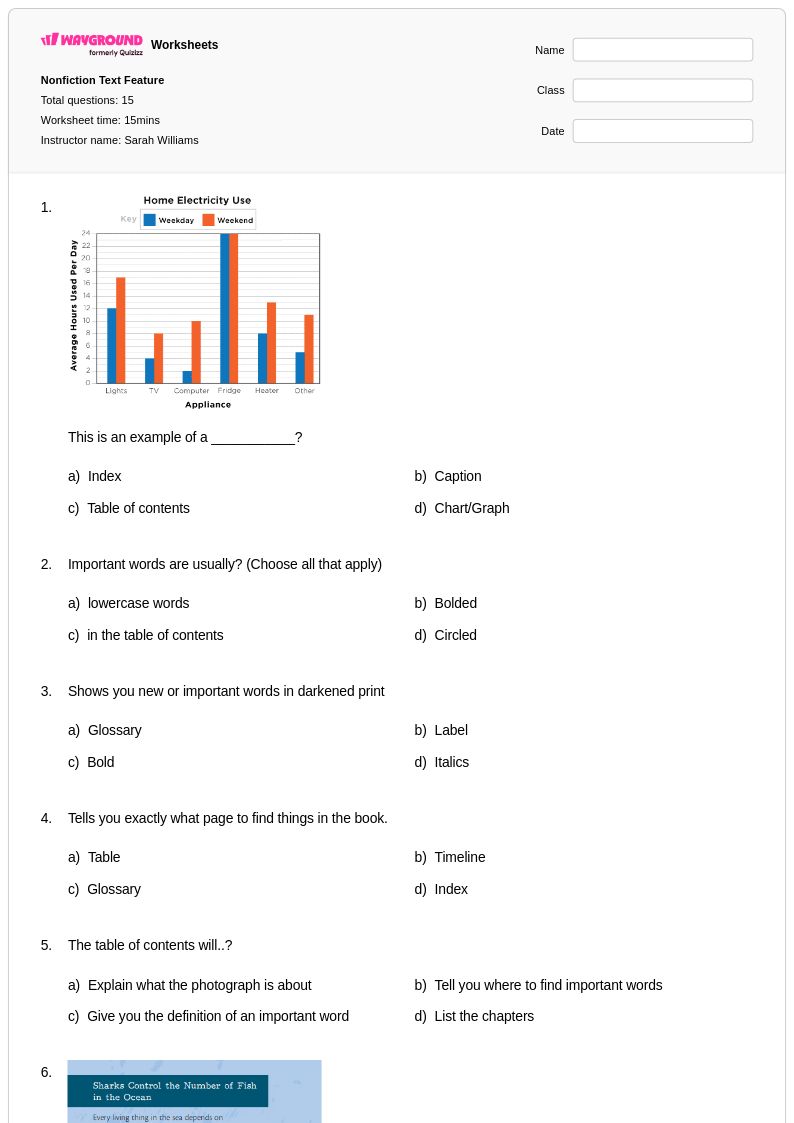
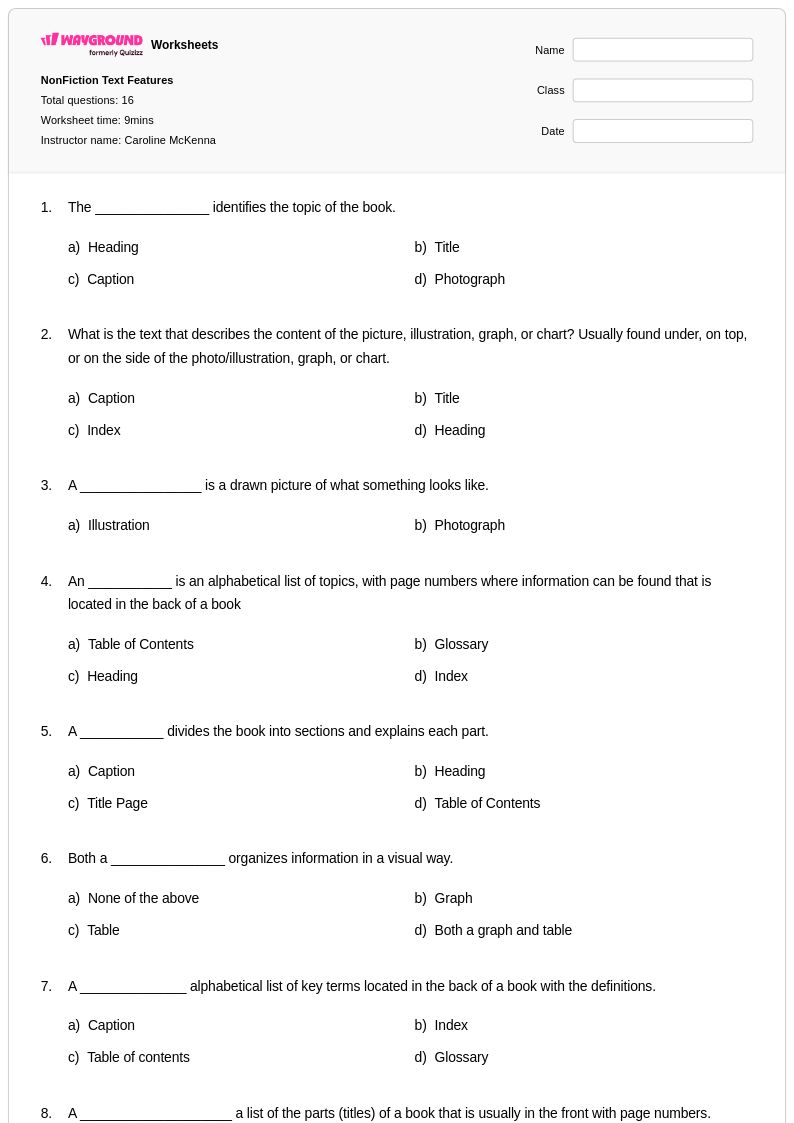
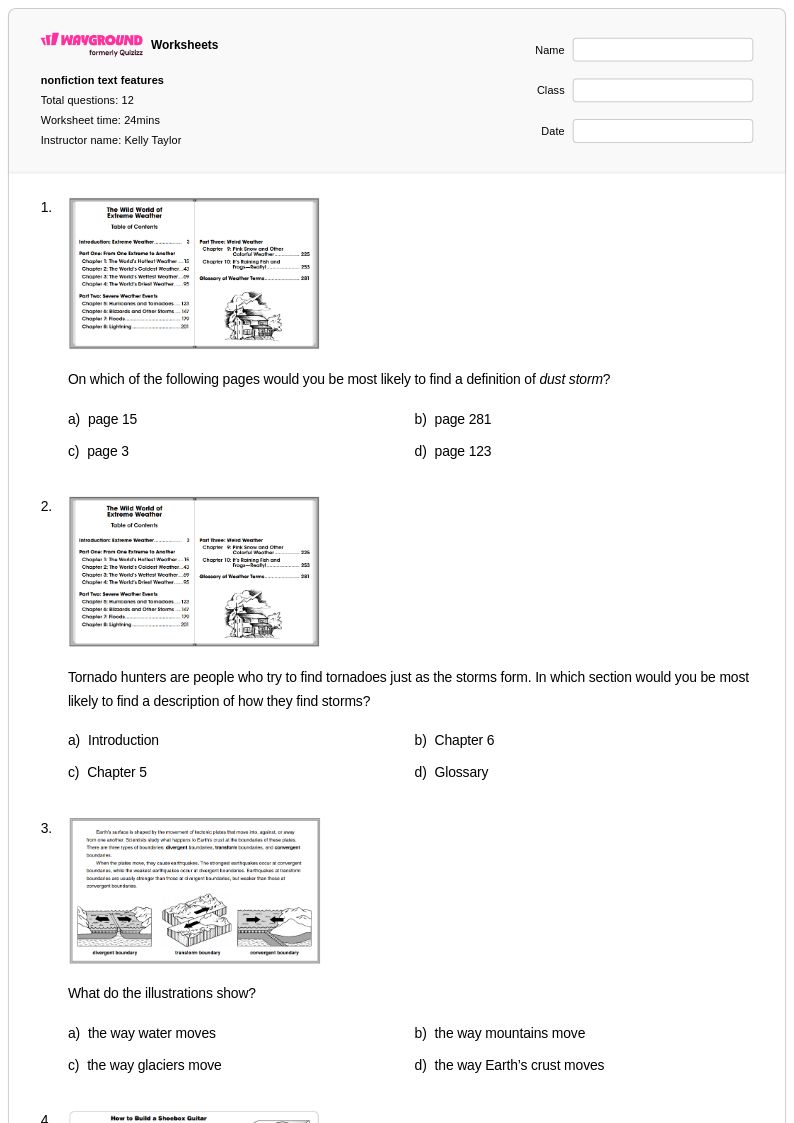
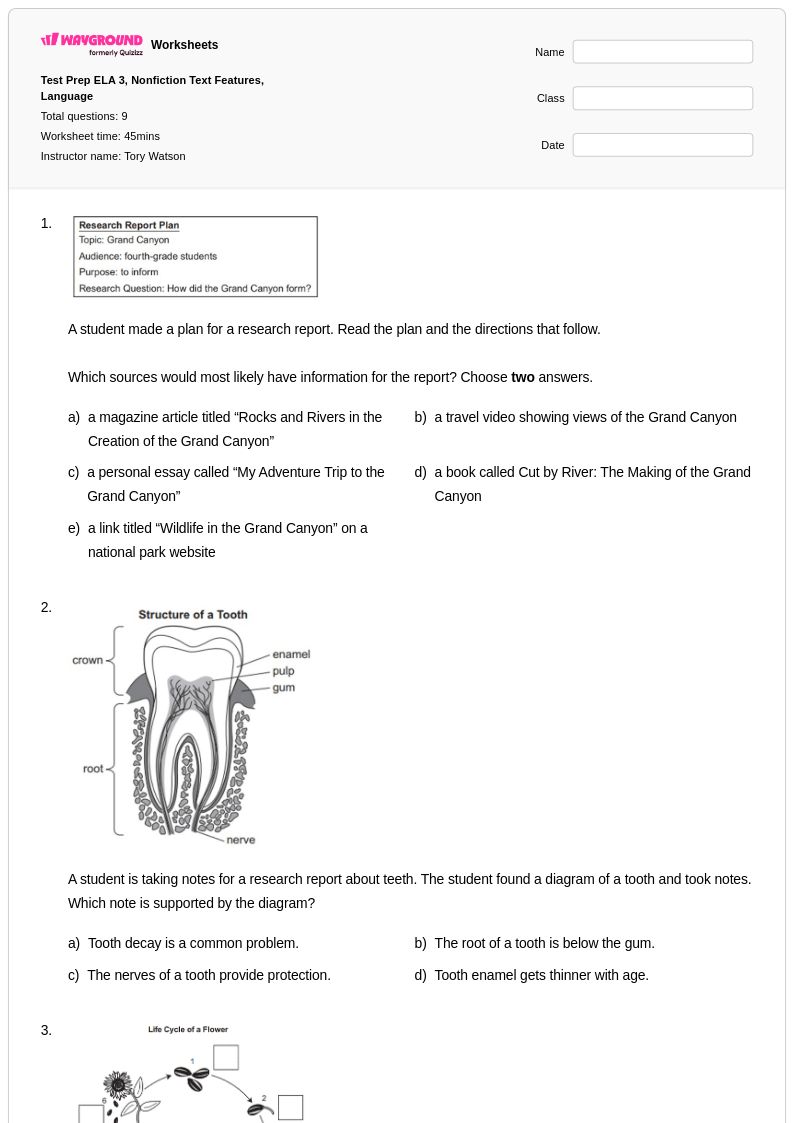
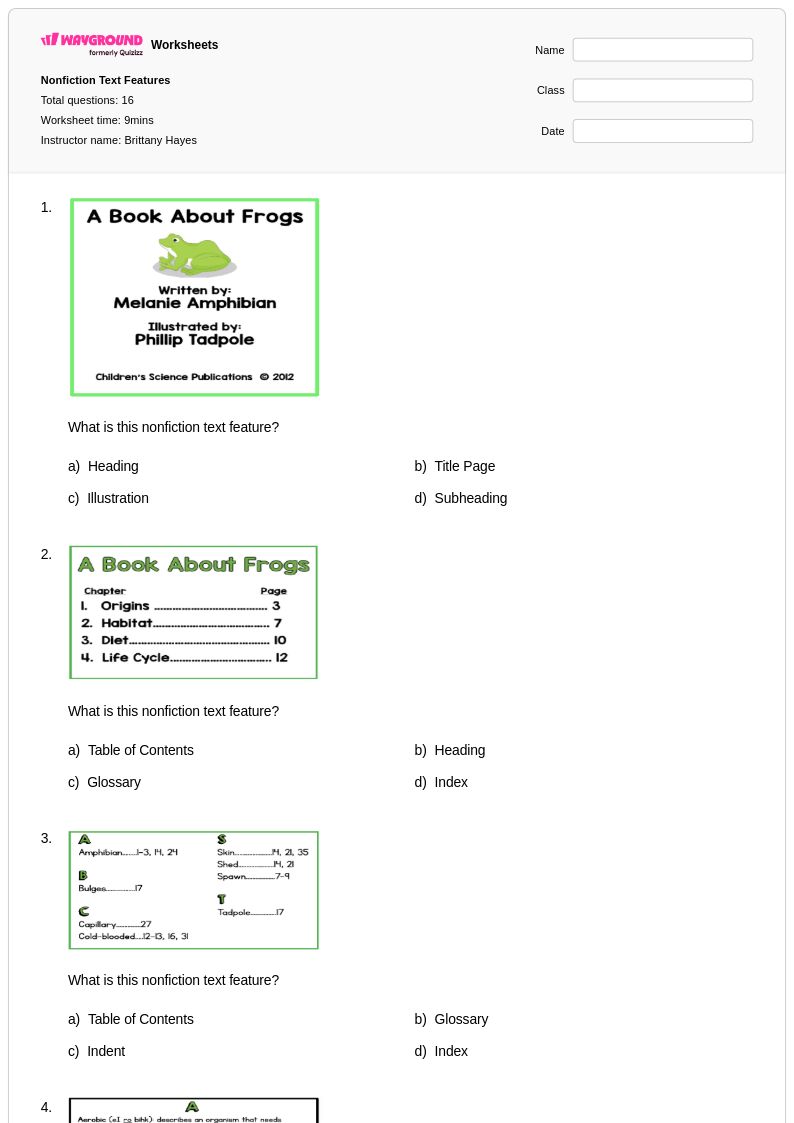
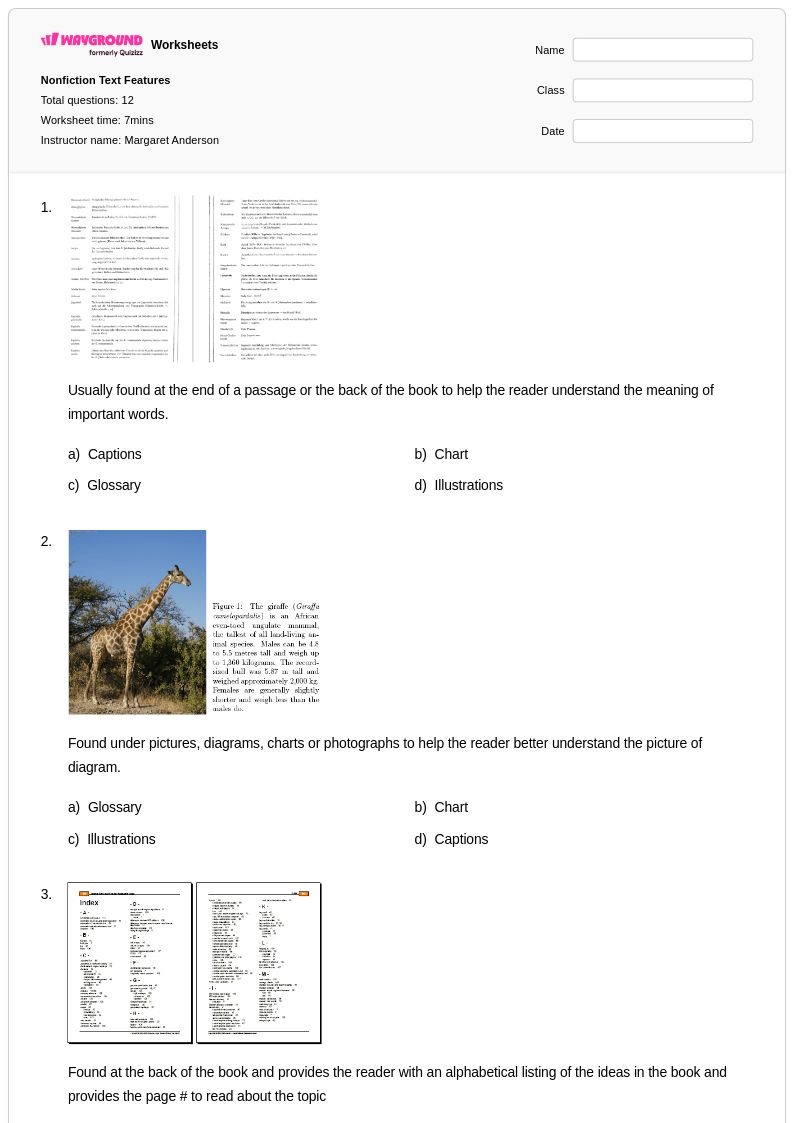
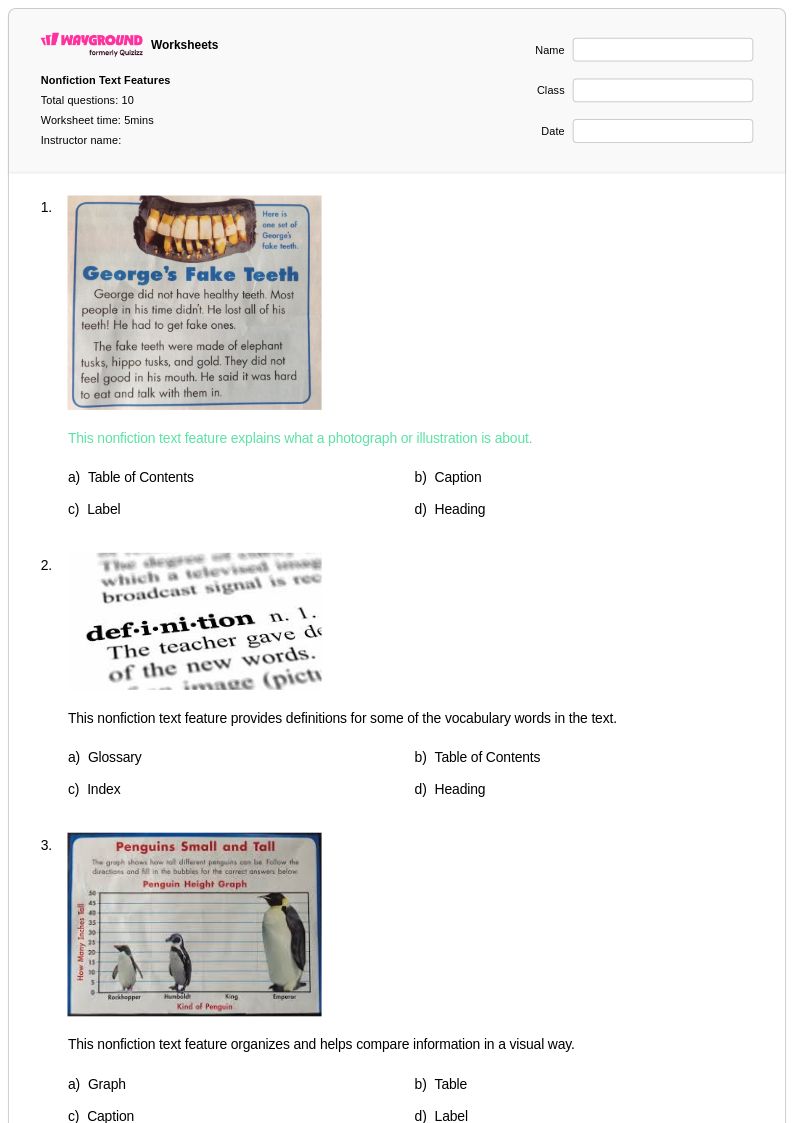
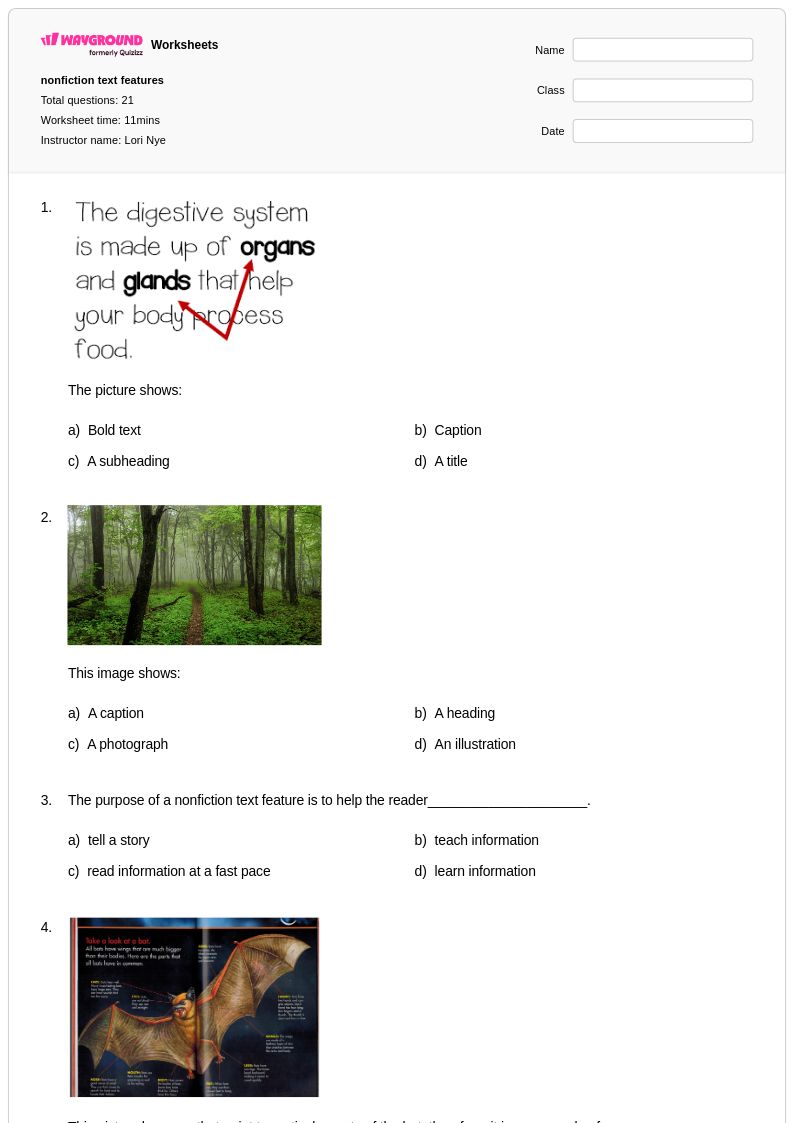
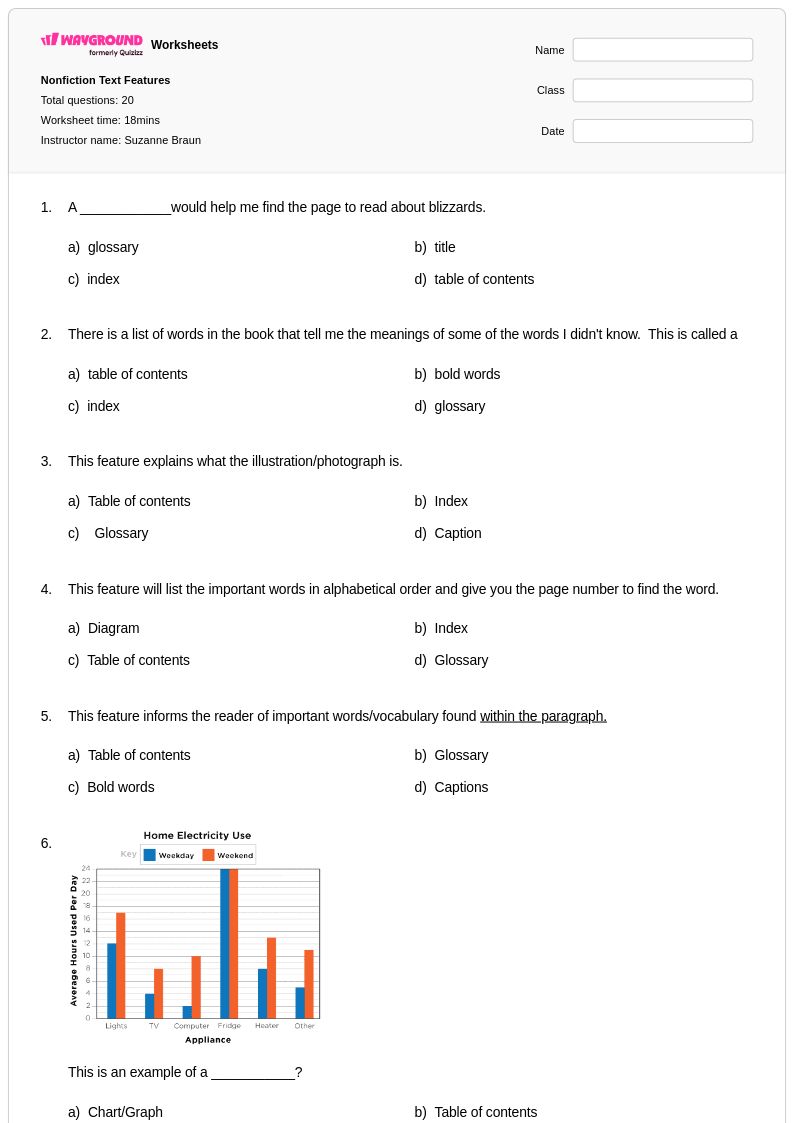
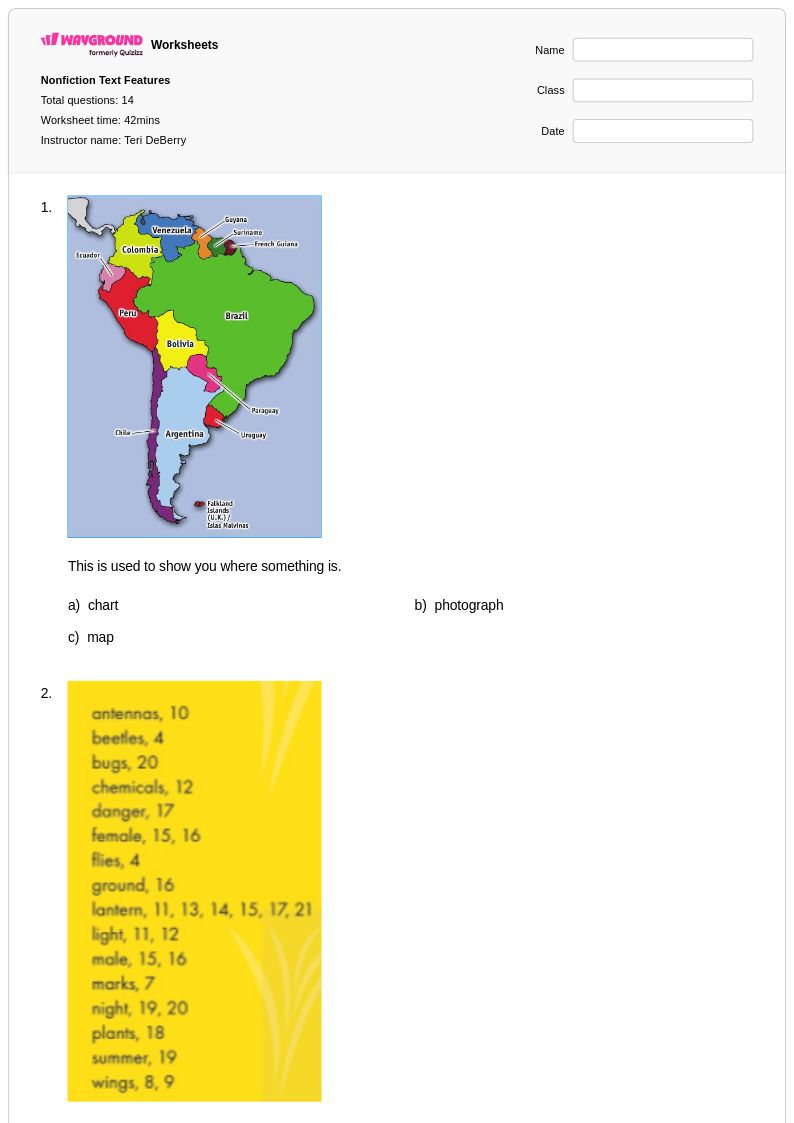
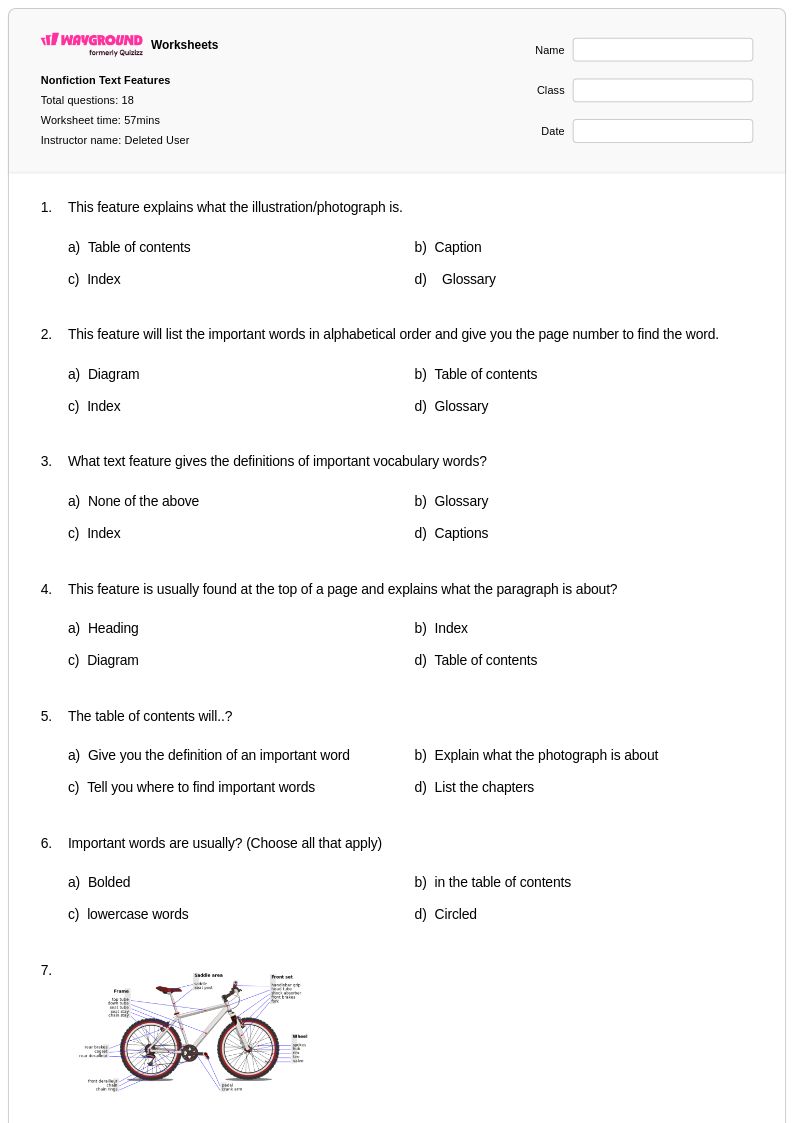
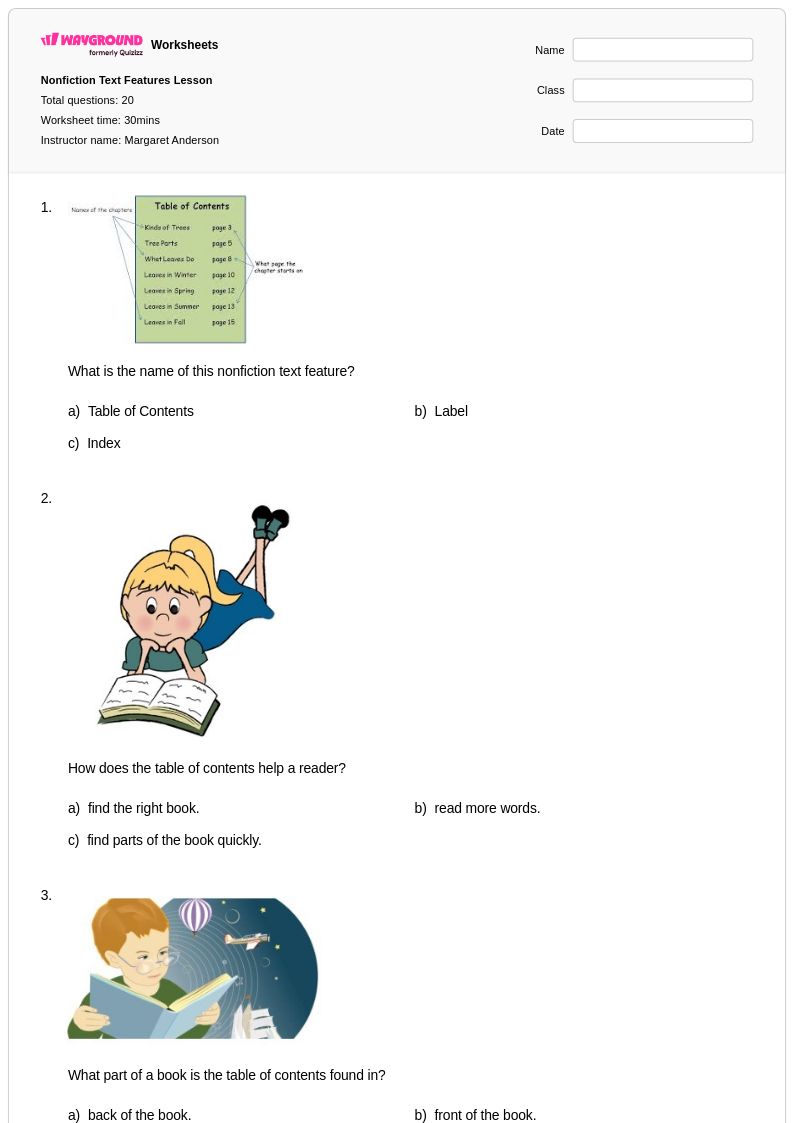
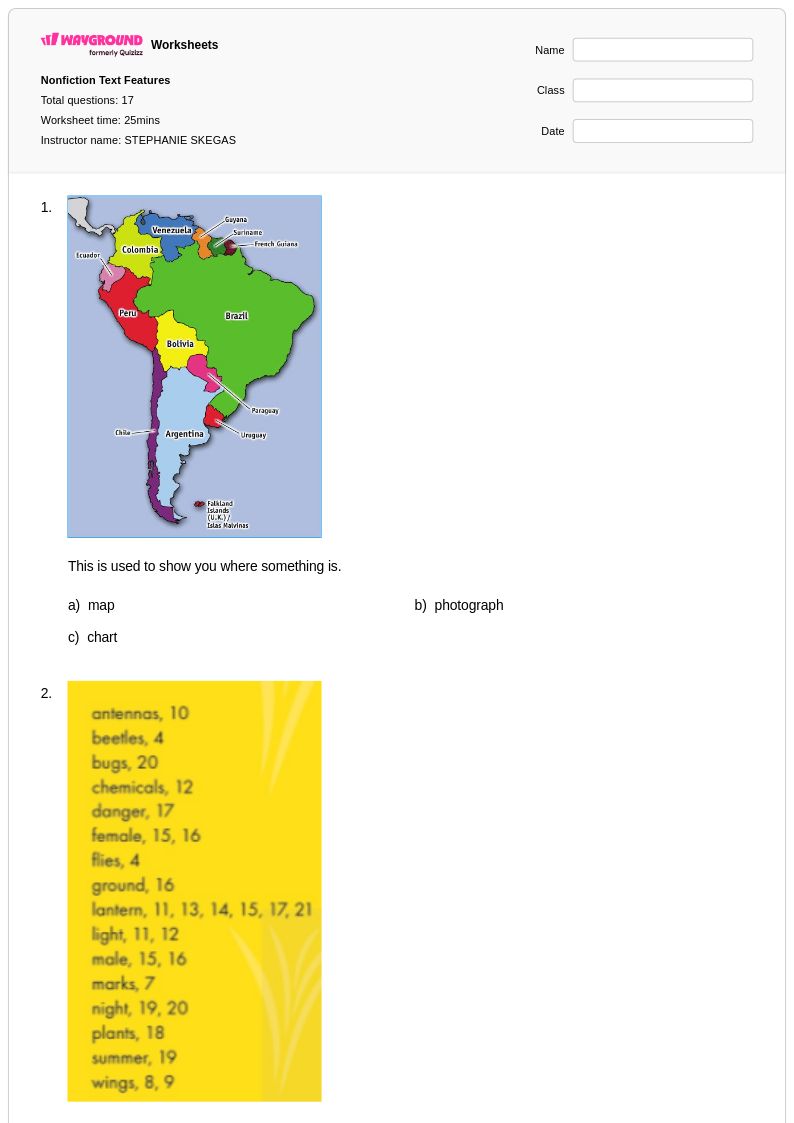
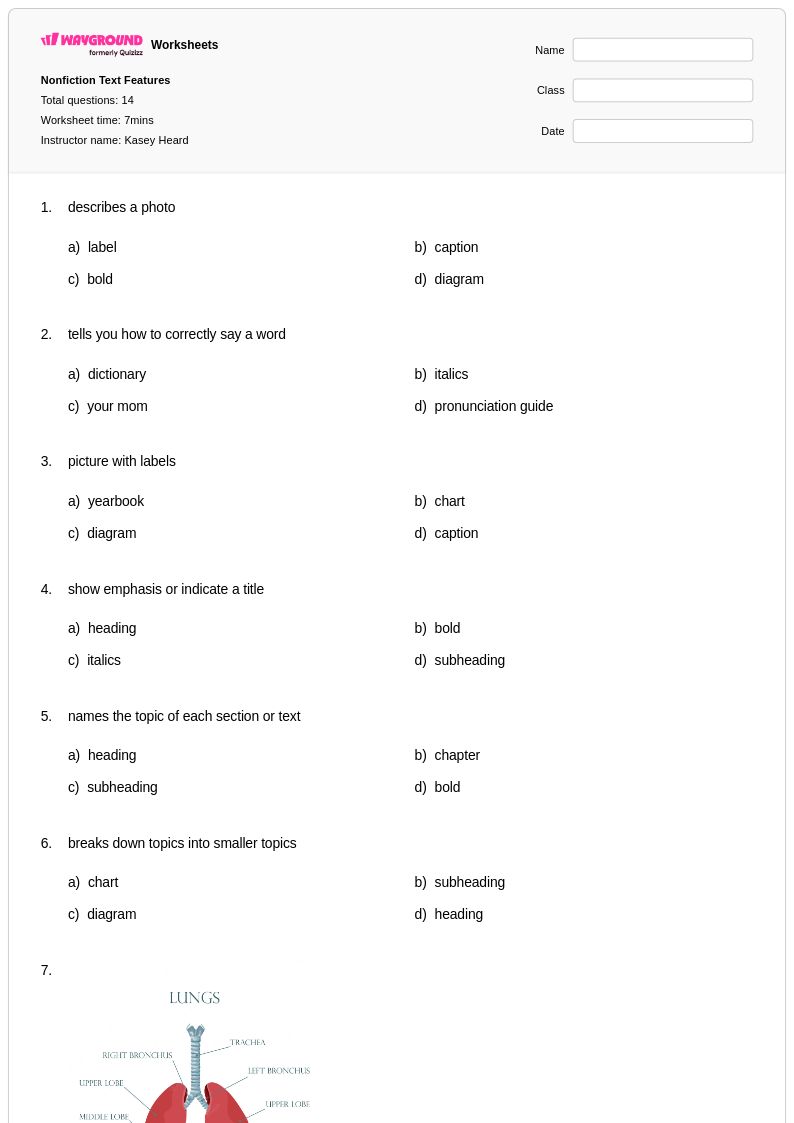
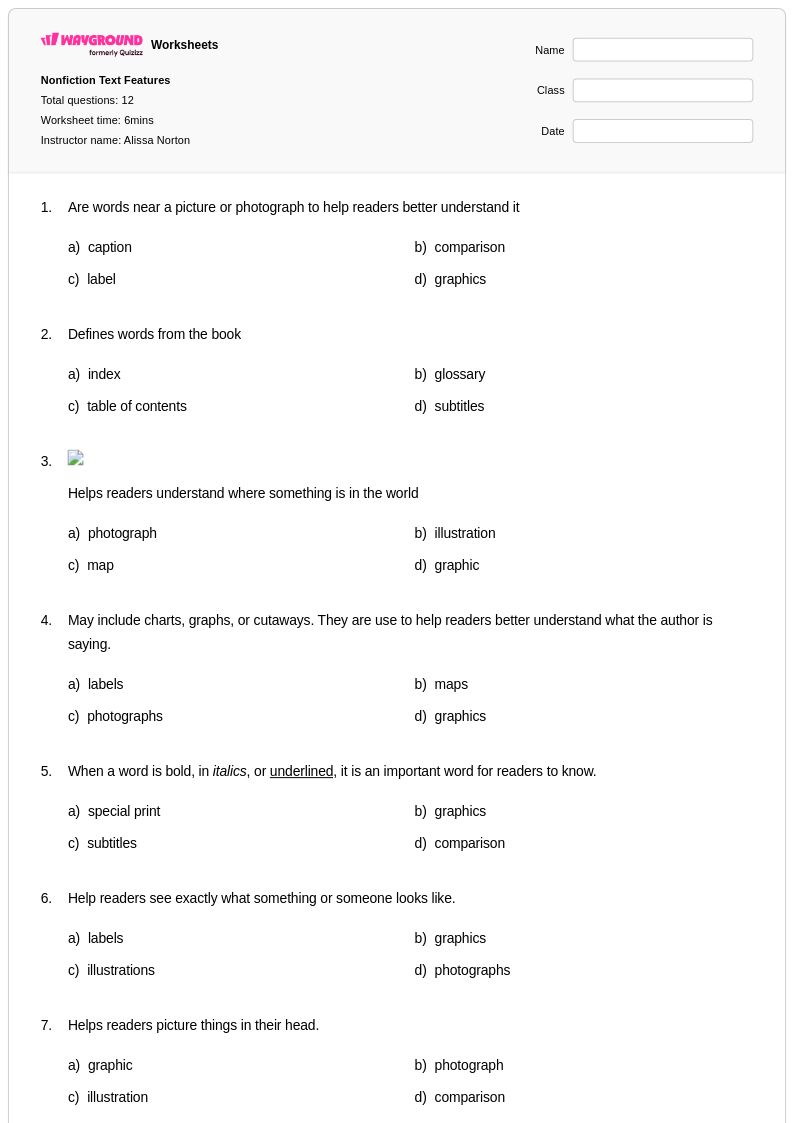
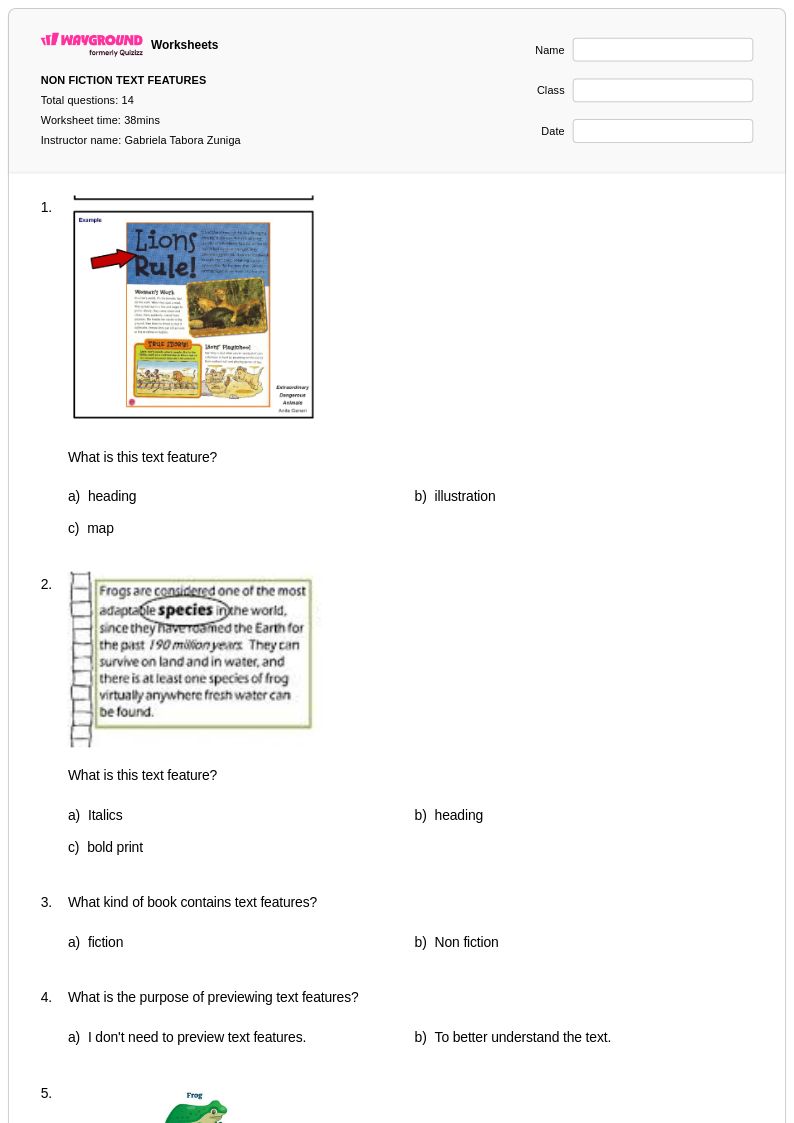
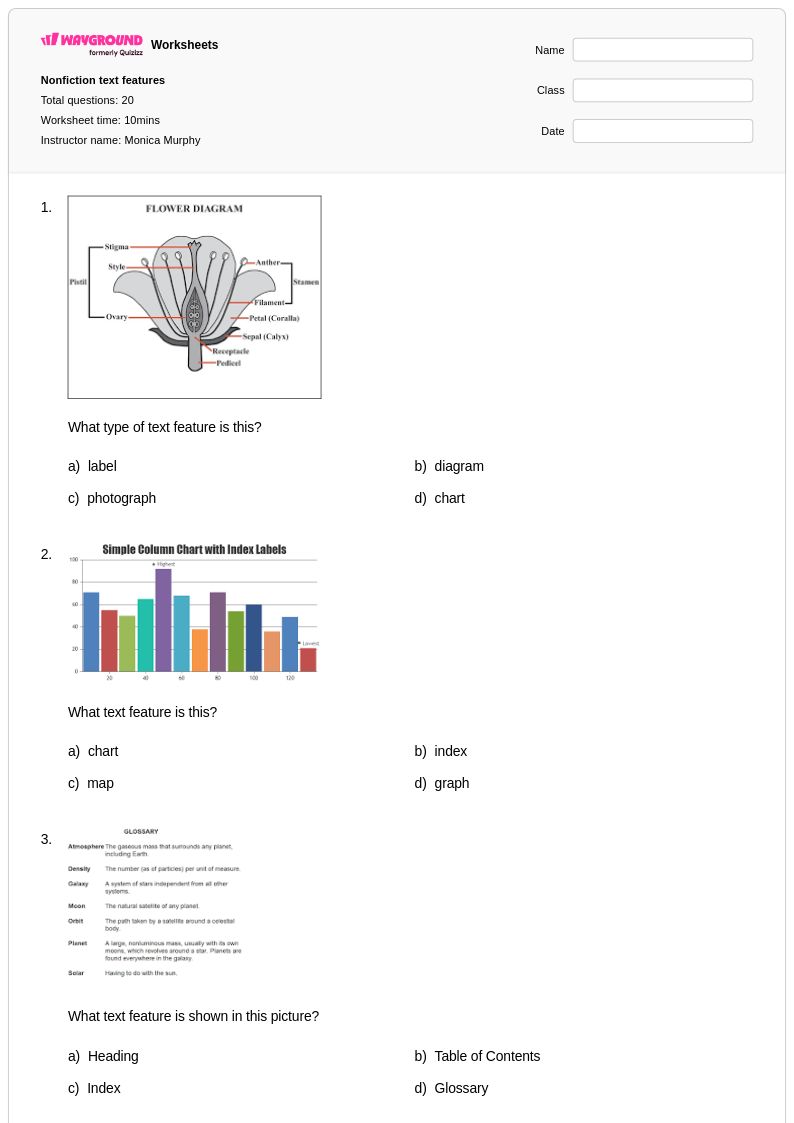
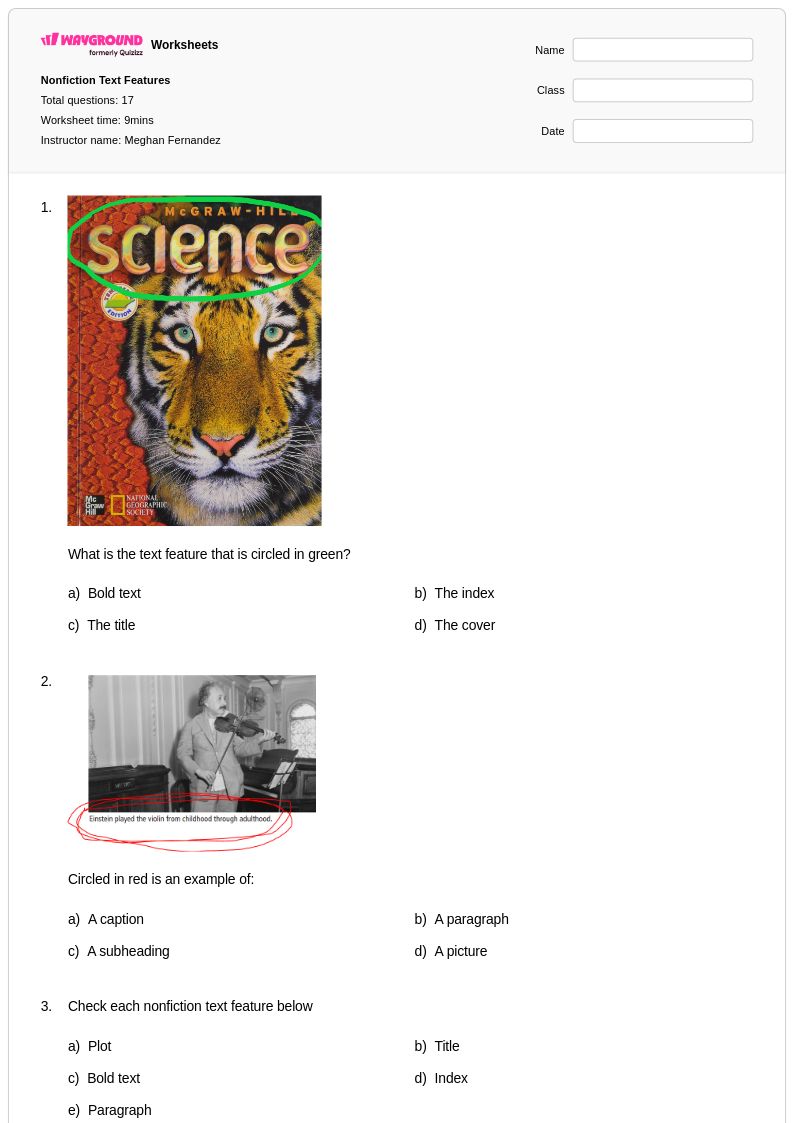
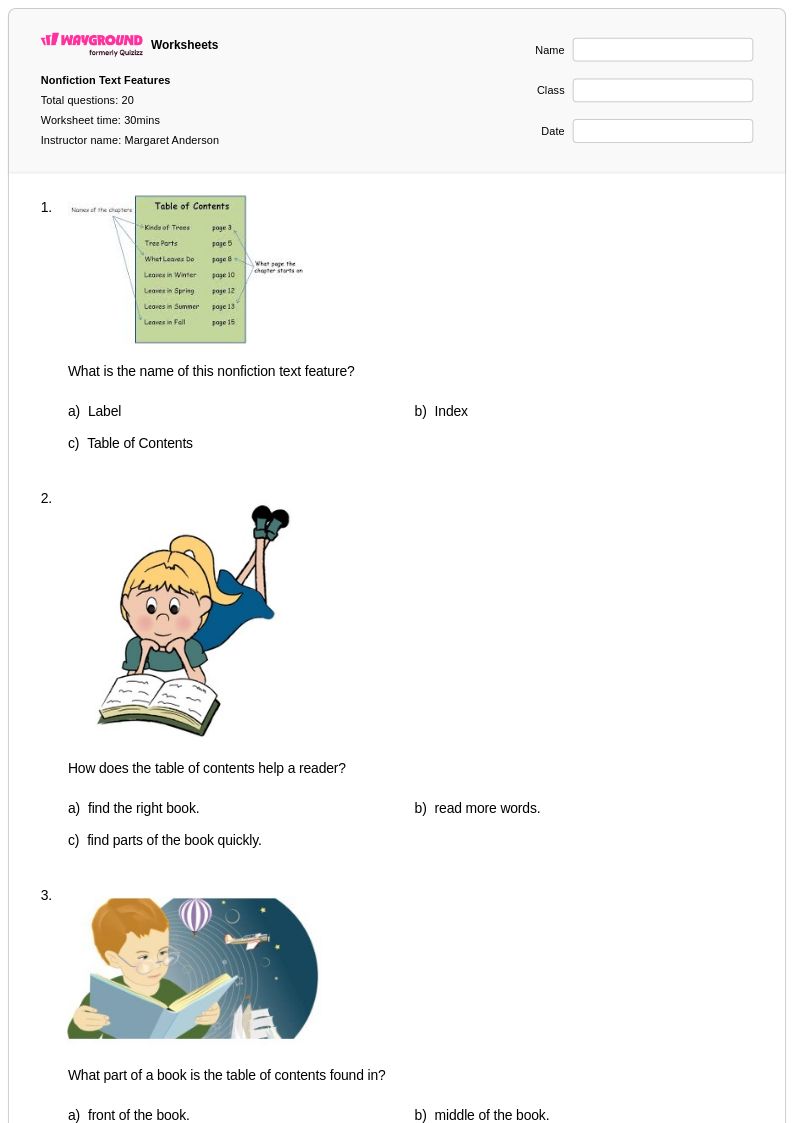
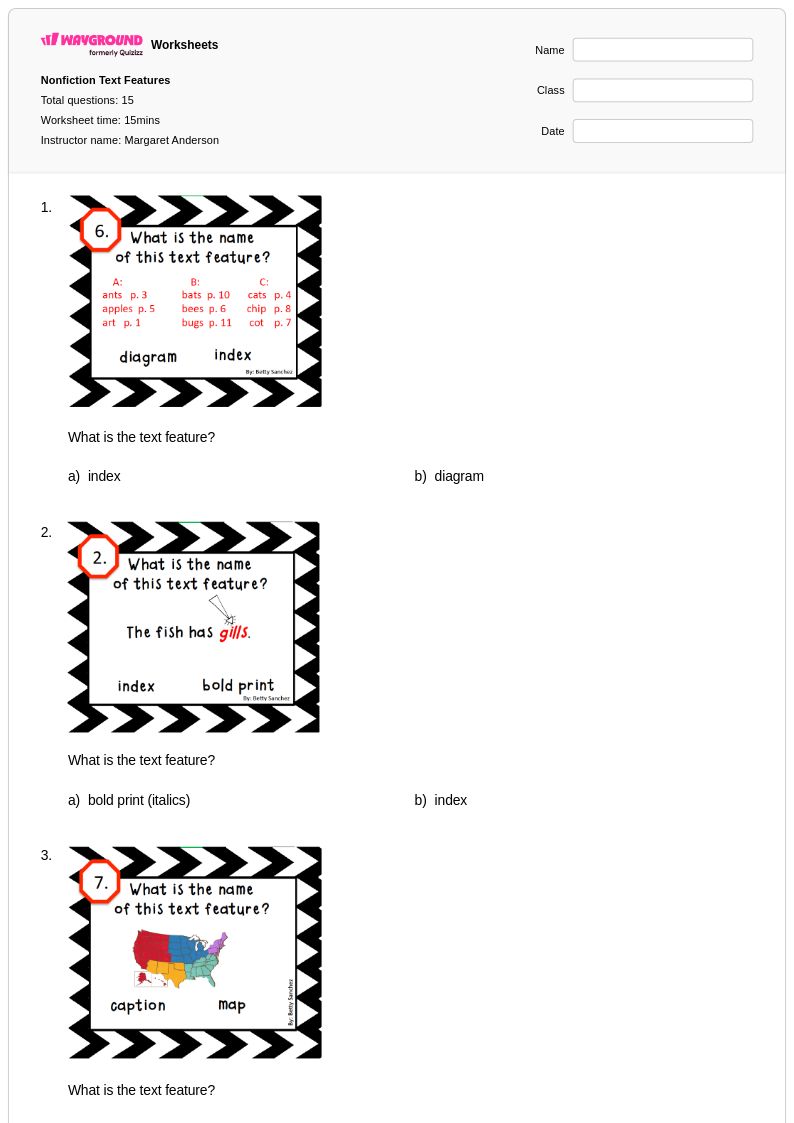
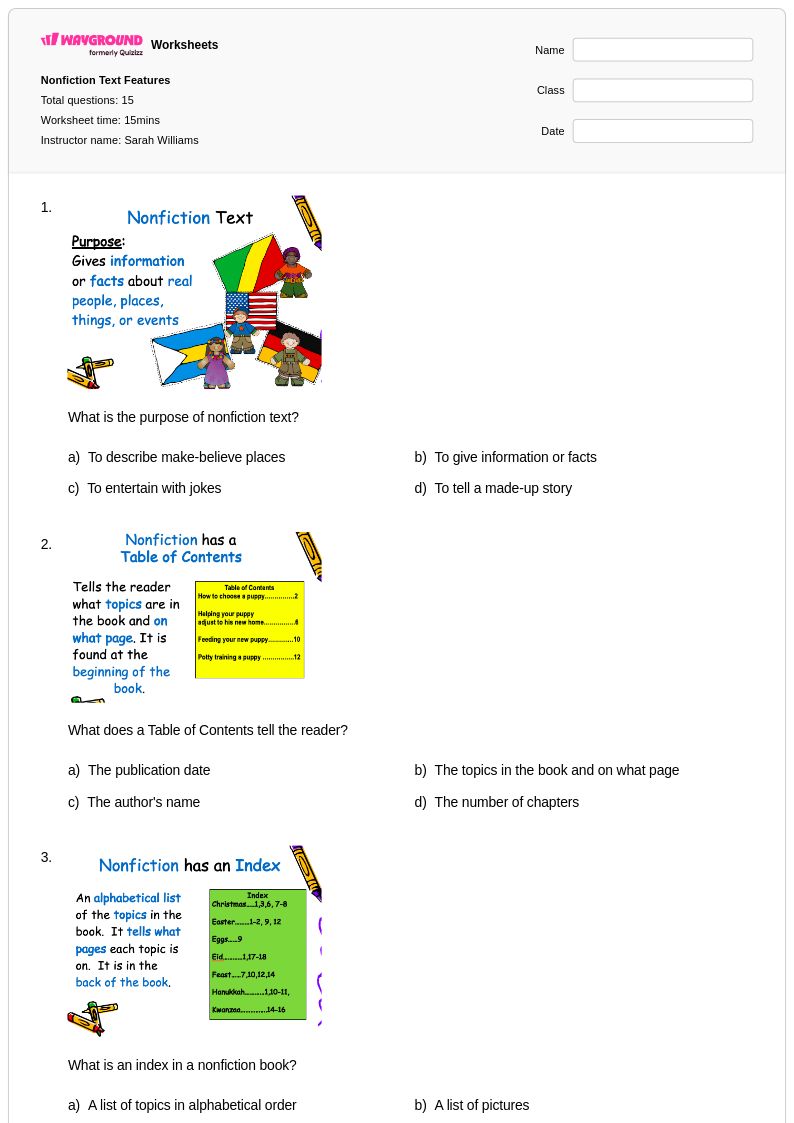
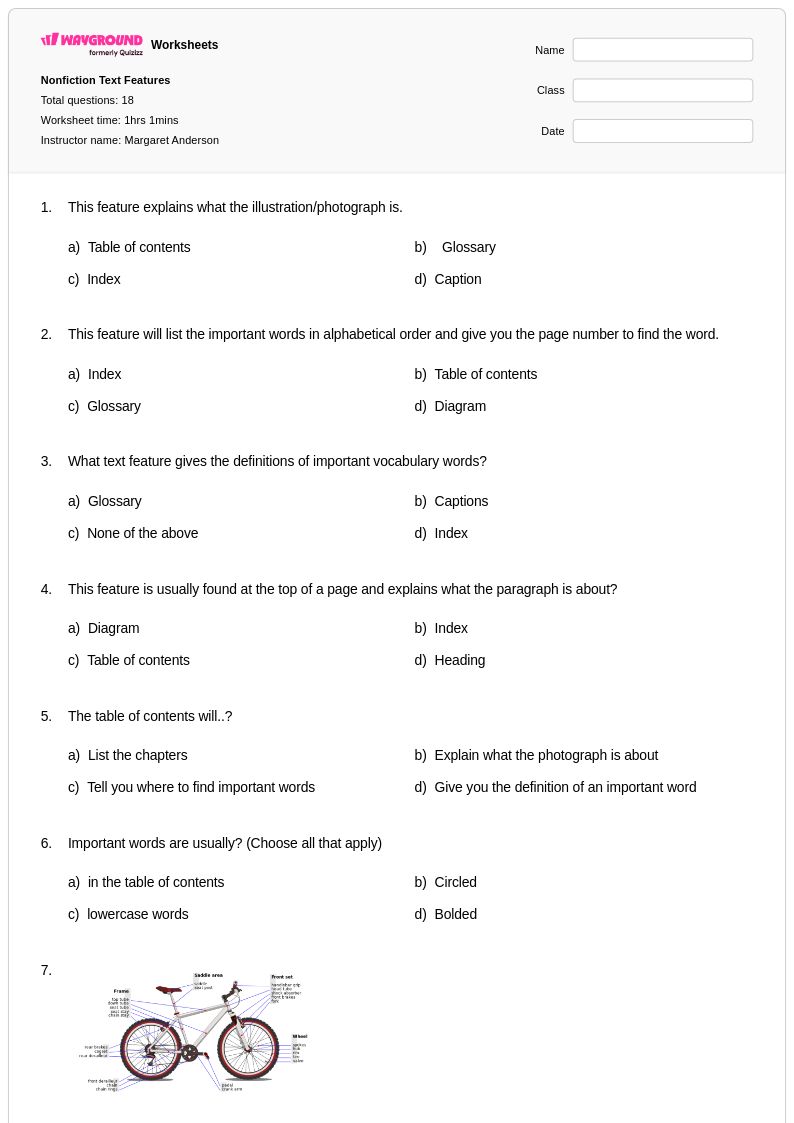
Nonfiction text features worksheets for Class 4 students available through Wayground help young learners develop essential reading comprehension skills by teaching them to identify and utilize various organizational elements found in informational texts. These carefully designed practice problems guide students through recognizing headings, subheadings, captions, diagrams, glossaries, indexes, and table of contents while understanding how each feature supports their understanding of the material. The comprehensive worksheet collection includes diverse activities that strengthen students' ability to navigate nonfiction texts effectively, with each printable resource featuring detailed answer keys that enable teachers to provide immediate feedback and support independent learning. Students work through free exercises that demonstrate how text features serve as roadmaps for readers, helping them locate specific information, understand text organization, and make connections between visual and written content.
Wayground's extensive library of teacher-created nonfiction text features resources provides educators with millions of high-quality materials specifically designed to meet diverse classroom needs and support differentiated instruction. The platform's robust search and filtering capabilities allow teachers to quickly locate worksheets aligned with specific learning standards while accessing both printable pdf versions and interactive digital formats that accommodate various teaching preferences and technology integration goals. These customizable resources enable educators to modify content difficulty levels, select specific text features for targeted instruction, and create personalized learning experiences that address individual student needs through remediation and enrichment opportunities. Teachers can seamlessly incorporate these materials into lesson planning, small group instruction, and independent practice sessions, ensuring students receive comprehensive exposure to the critical thinking skills necessary for successful nonfiction text analysis and comprehension.
FAQs
How do I teach nonfiction text features to students?
Start by introducing one text feature at a time using real informational texts students are already reading in science or social studies. Anchor instruction around the purpose of each feature — for example, headings help readers predict content, while captions provide context that the main text may not. Once students can identify features in isolation, move to whole-text analysis where they explain how multiple features work together to support comprehension.
What exercises help students practice identifying nonfiction text features?
Effective practice includes labeling exercises where students identify and name text features within a sample passage, as well as tasks that ask students to explain the function of a specific feature rather than just its name. Comparing two versions of the same text — one with features and one without — helps students articulate why features like glossaries, indexes, and diagrams matter for comprehension. Worksheets that combine identification with short-answer analysis build both recognition and interpretive skills.
What mistakes do students commonly make when working with nonfiction text features?
A common error is treating text features as decorative rather than functional — students often skip over captions, sidebars, and diagrams instead of reading them as integral parts of the text. Another frequent misconception is confusing text features with text structures; students may conflate how a feature looks with how an author has organized ideas. Teachers should explicitly prompt students to explain what a feature tells them that the body text alone does not.
How can I use nonfiction text features worksheets across subject areas?
Nonfiction text features are embedded in science textbooks, social studies readings, news articles, and research materials, making these worksheets transferable across the curriculum. Using the same feature-identification skills in a science unit on ecosystems and a social studies unit on government reinforces that these are reading tools, not isolated literacy tasks. Cross-curricular application is one of the most effective ways to build fluency with informational text navigation.
How do I use Wayground's nonfiction text features worksheets in my classroom?
Wayground's nonfiction text features worksheets are available as printable PDFs for traditional classroom use and in digital formats for technology-integrated learning environments, so teachers can deploy them however their classroom is set up. You can also host worksheets as a quiz directly on Wayground, which allows for real-time student response tracking. Each worksheet includes a complete answer key, reducing prep time and supporting consistent grading.
How do I support students who struggle with nonfiction text features?
Students who struggle often need repeated exposure to the same feature type before encountering mixed-feature practice. Reducing the number of features introduced at once and pairing visual examples with explicit vocabulary instruction can lower the cognitive load. On Wayground, teachers can apply accommodations such as read aloud support and reduced answer choices for individual students, which is particularly helpful for English language learners or students with reading difficulties working on informational text skills.