
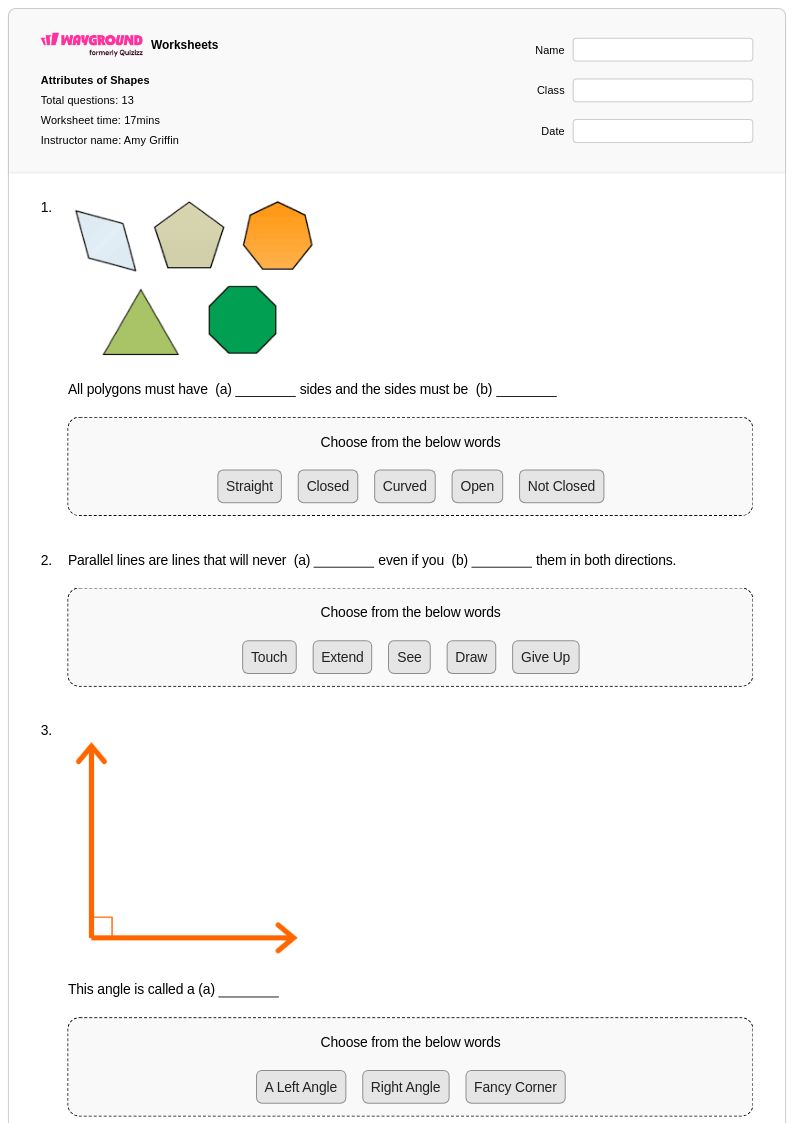
13 Q
3rd
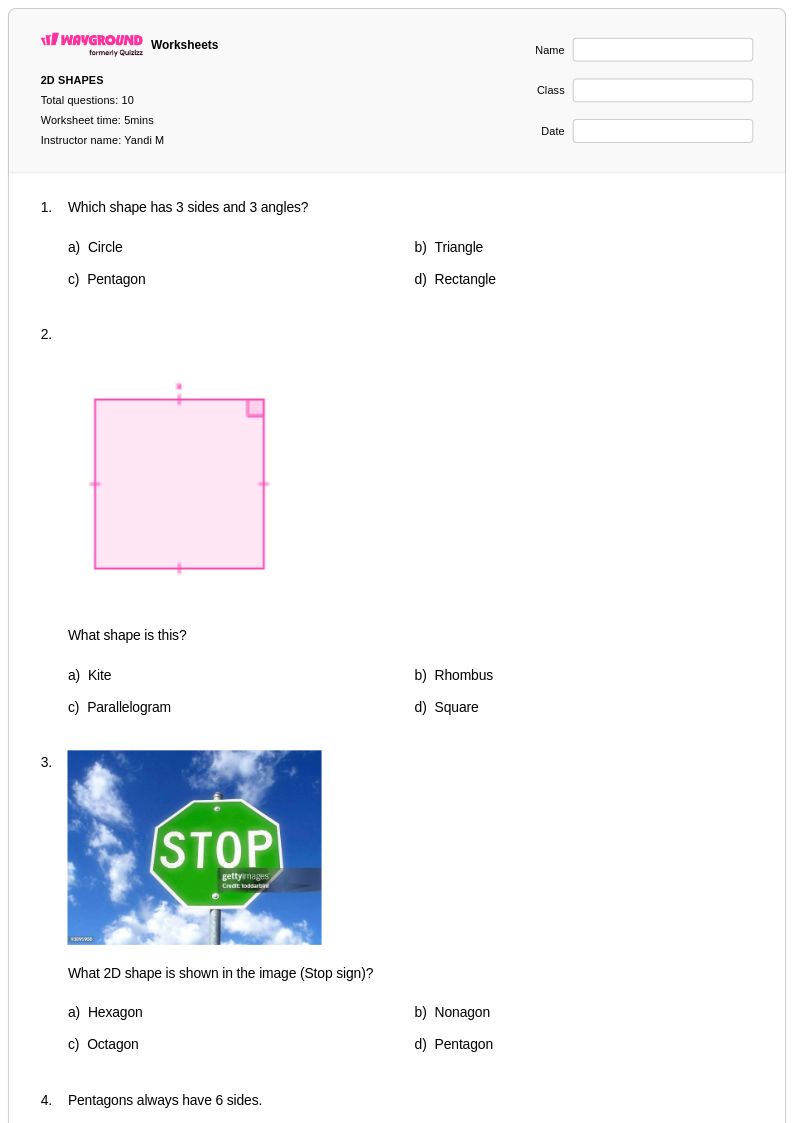
10 Q
1st - Uni
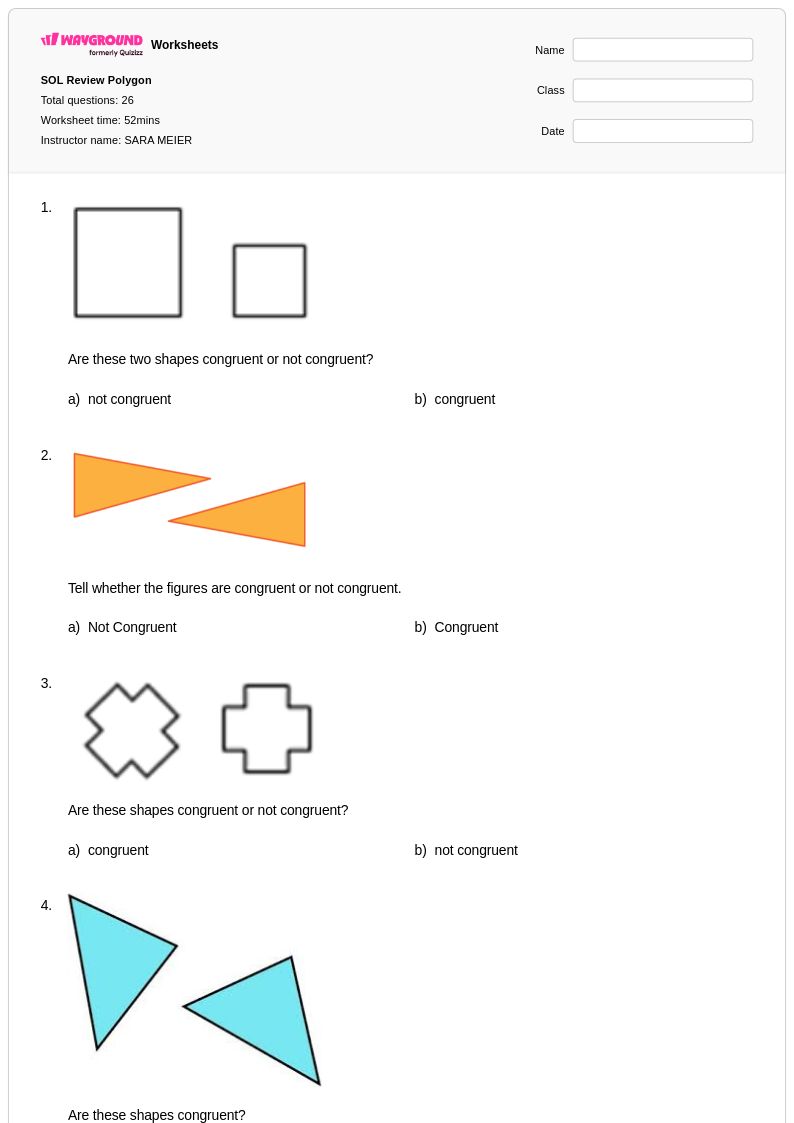
26 Q
3rd
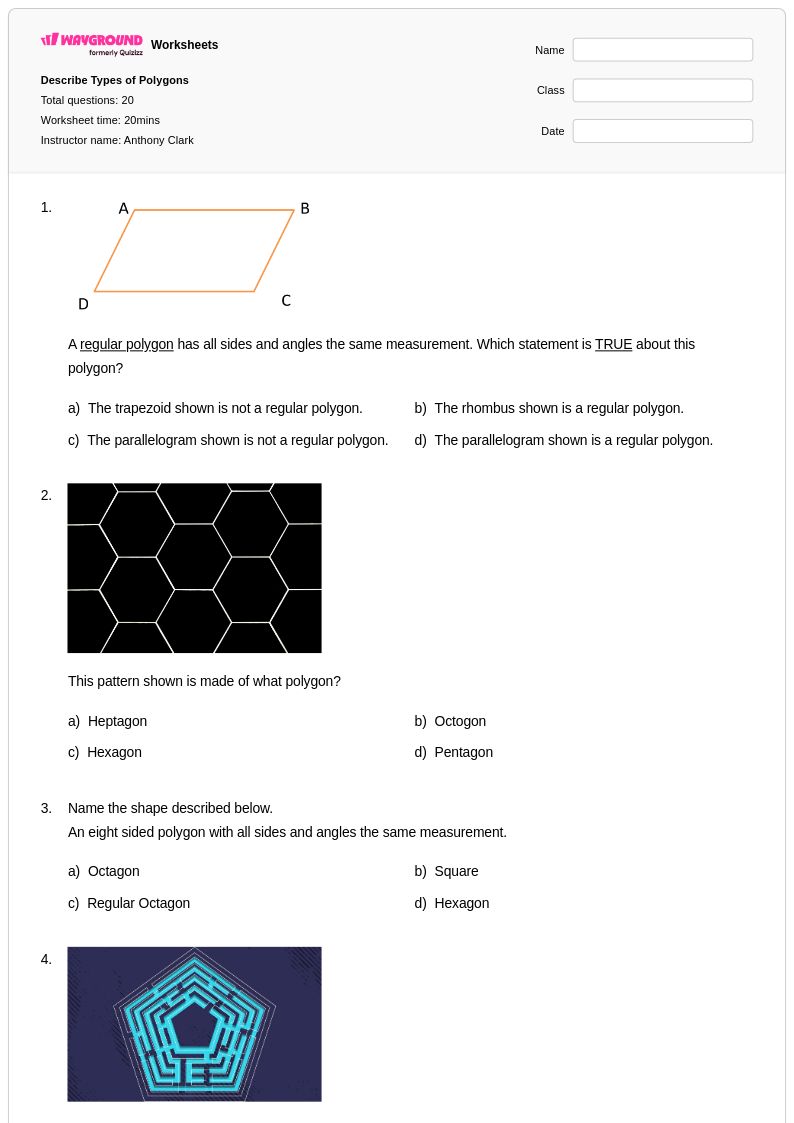
20 Q
3rd - Uni
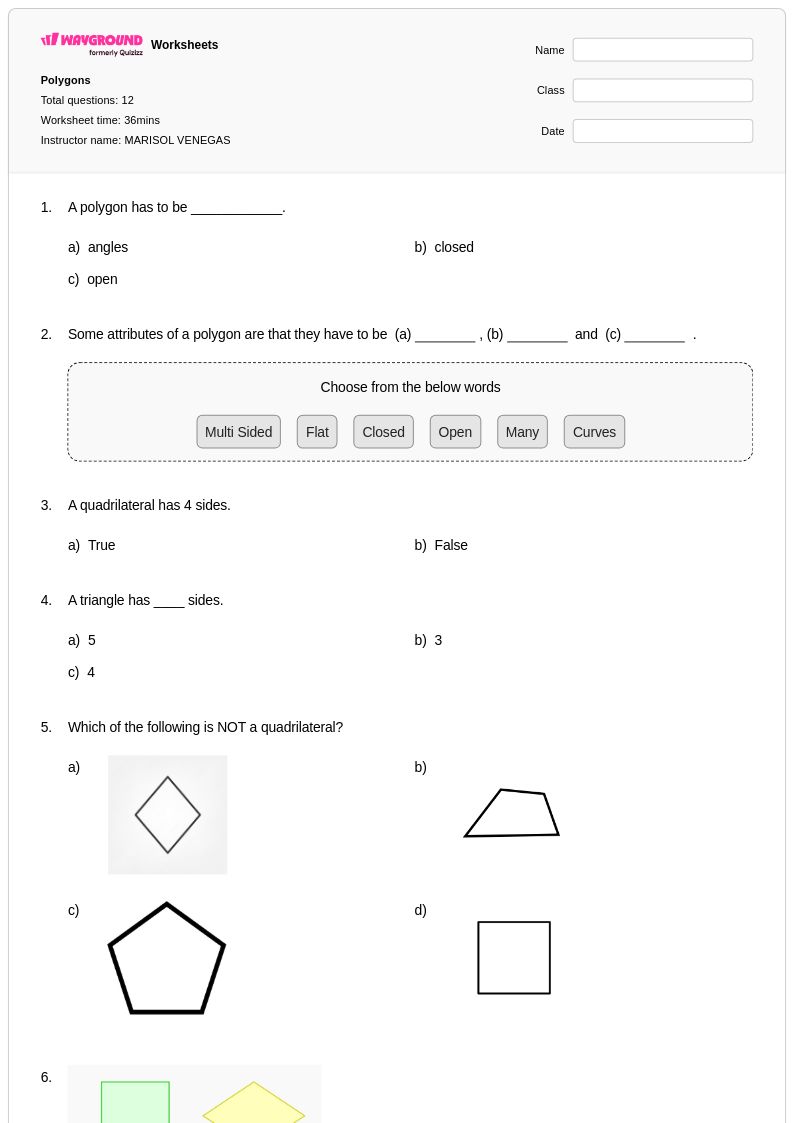
12 Q
3rd
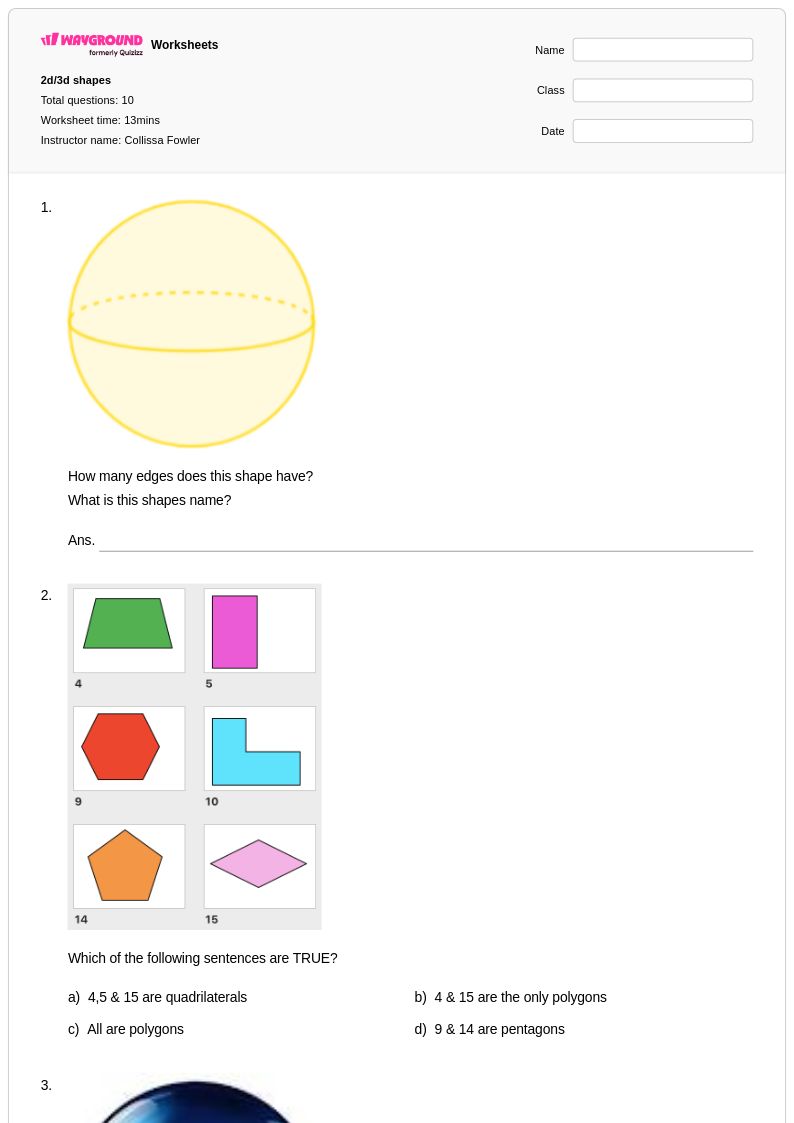
10 Q
3rd
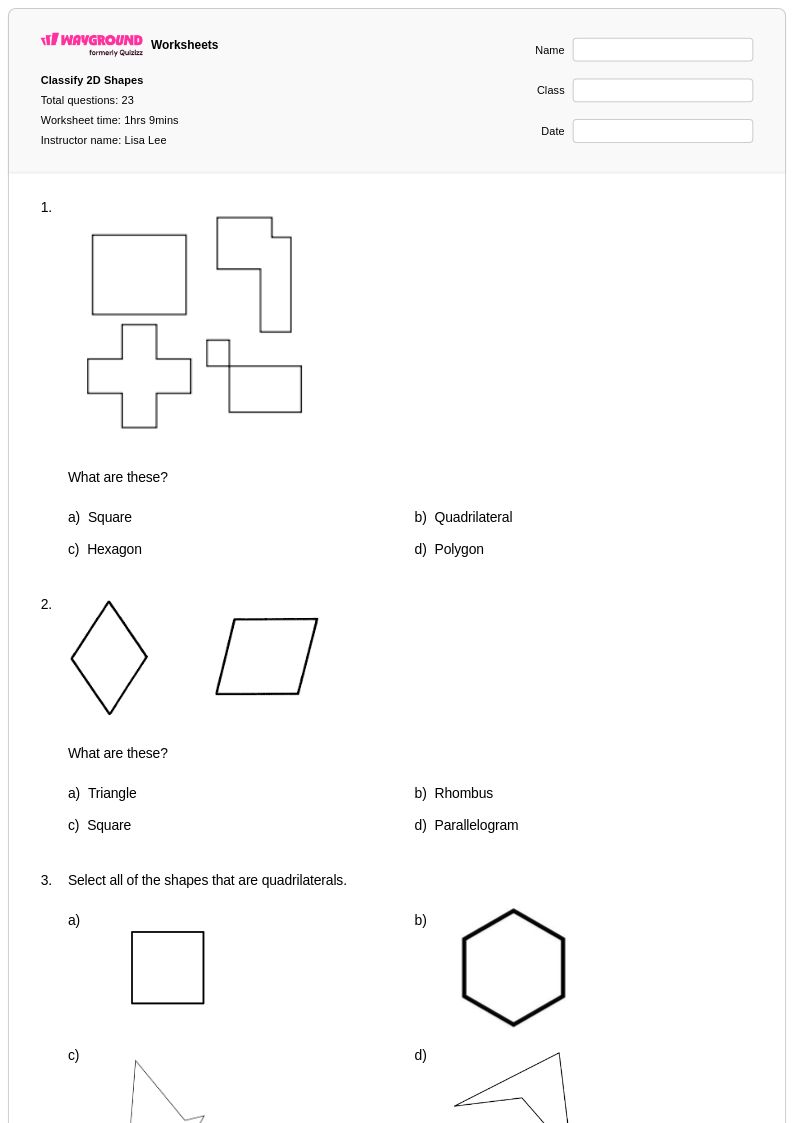
23 Q
3rd
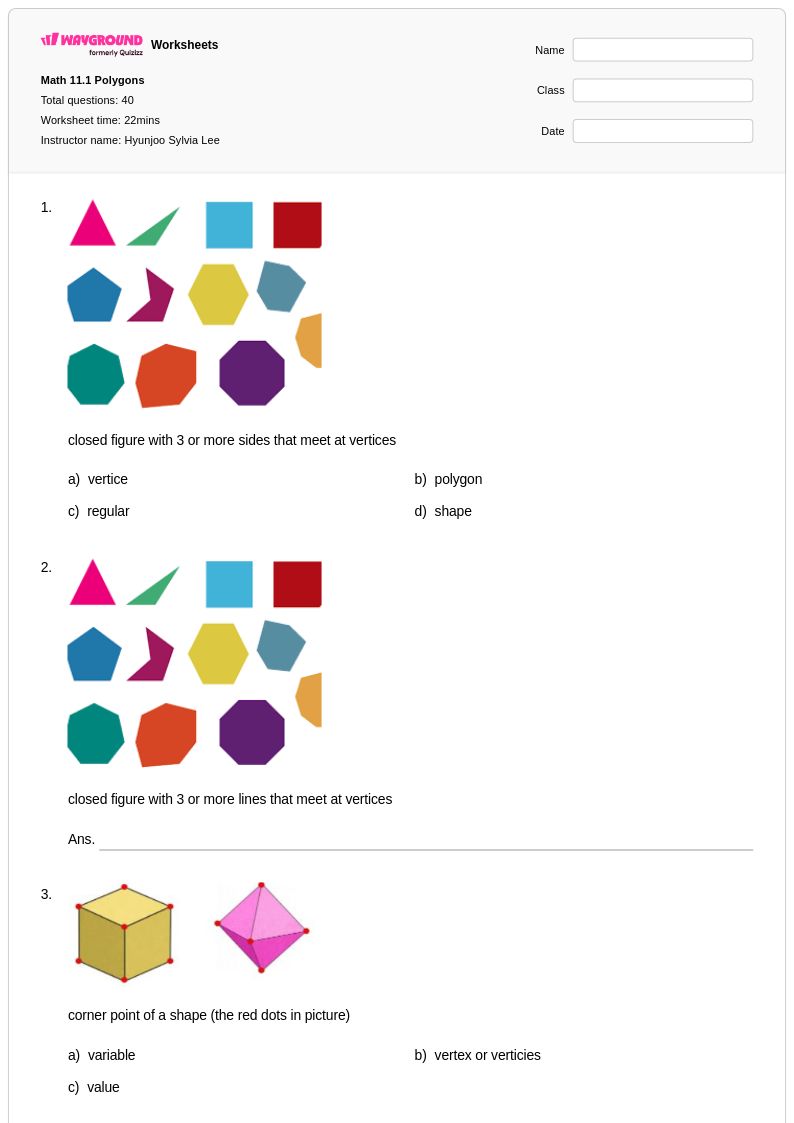
54 Q
3rd - 5th
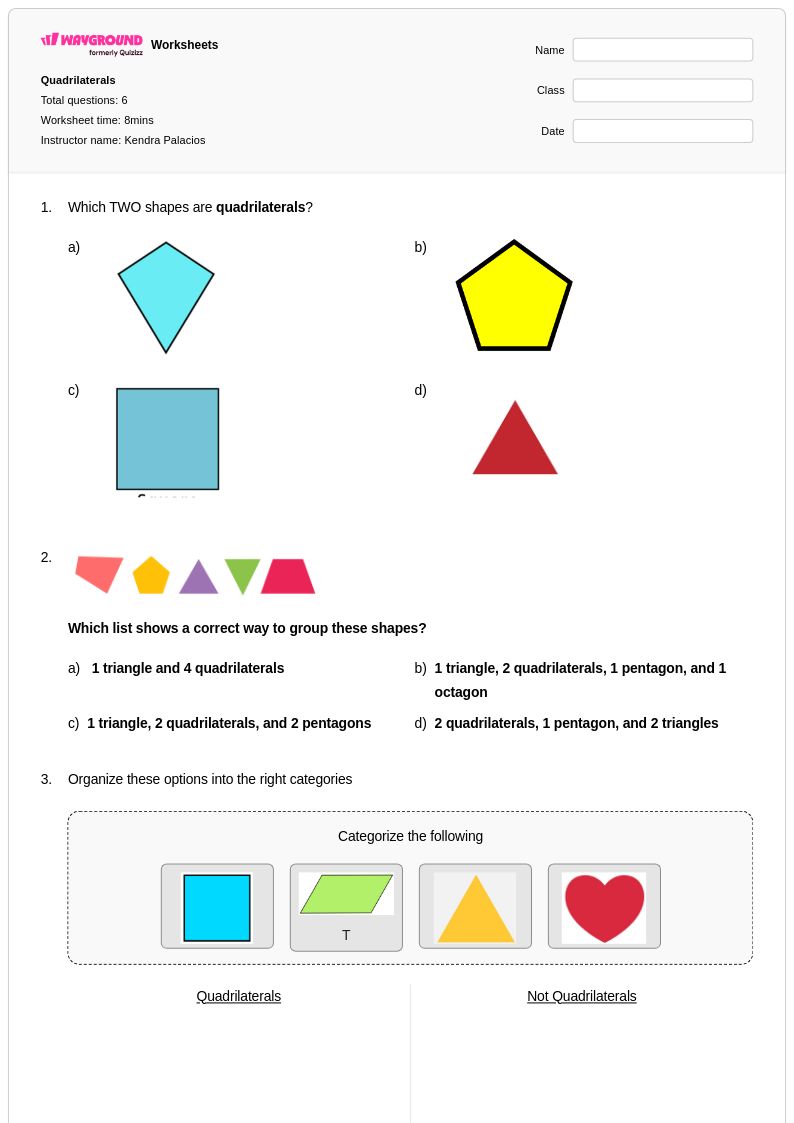
6 Q
3rd
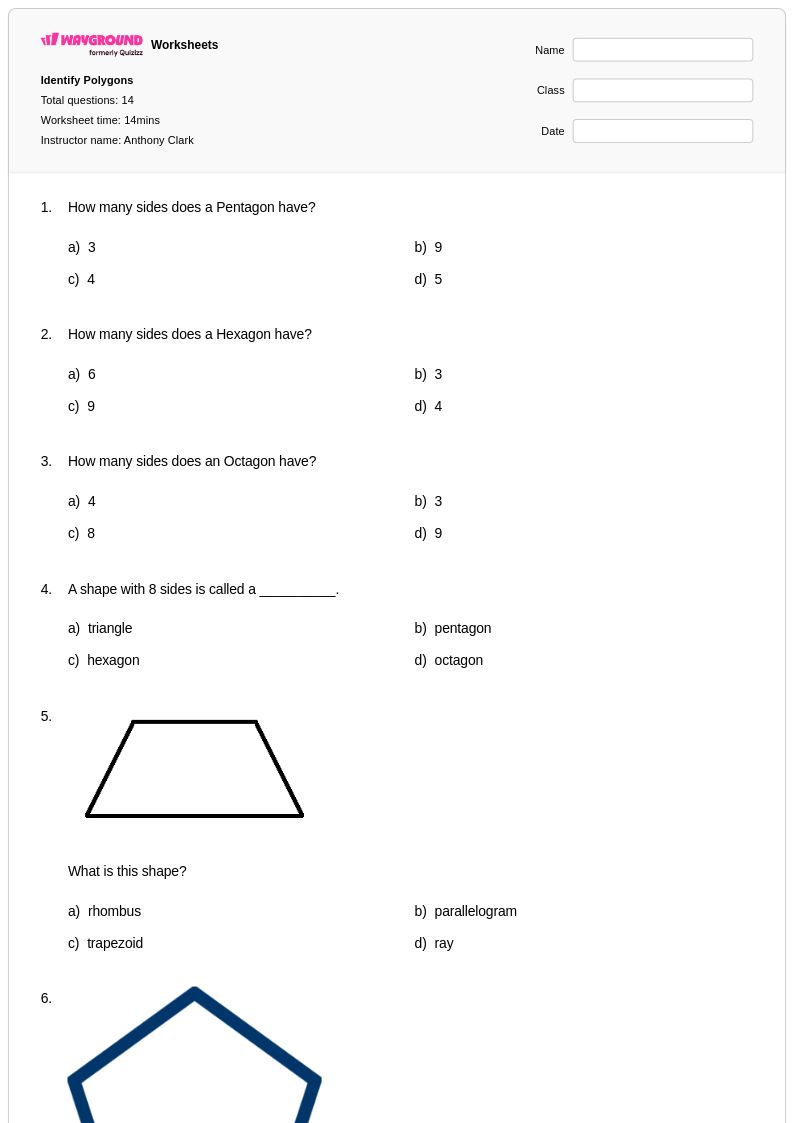
14 Q
3rd - Uni
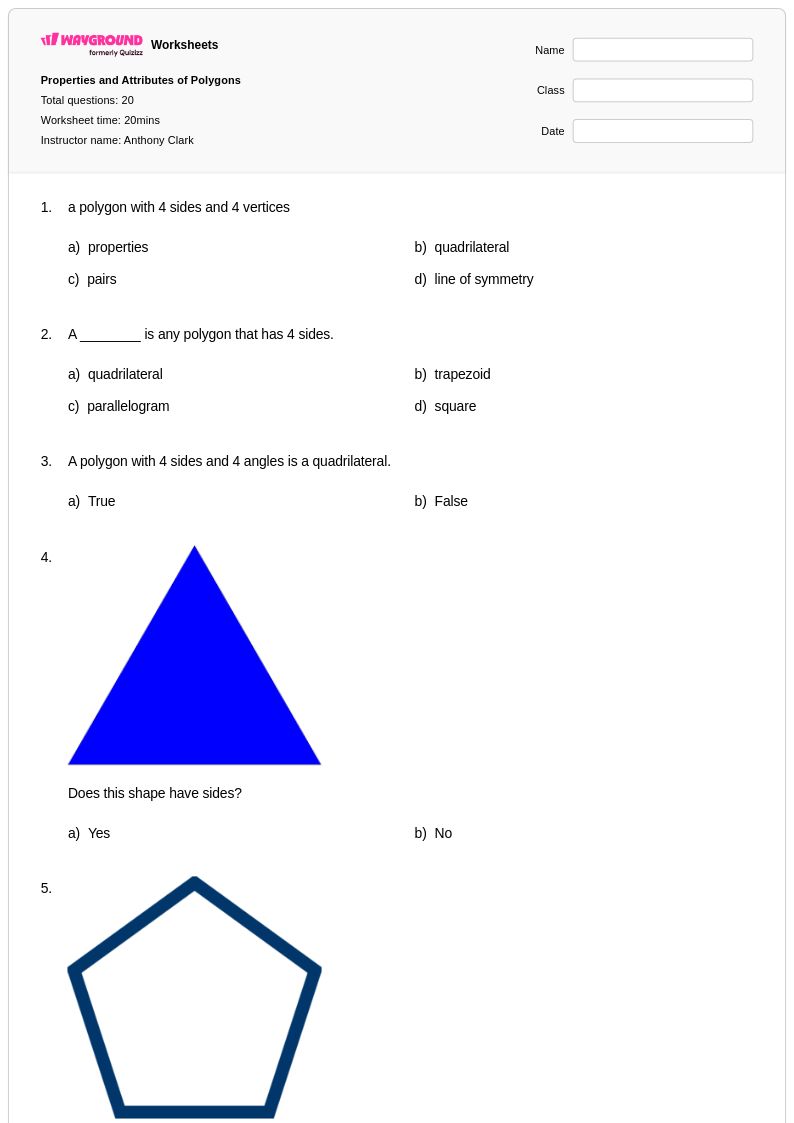
20 Q
3rd - Uni
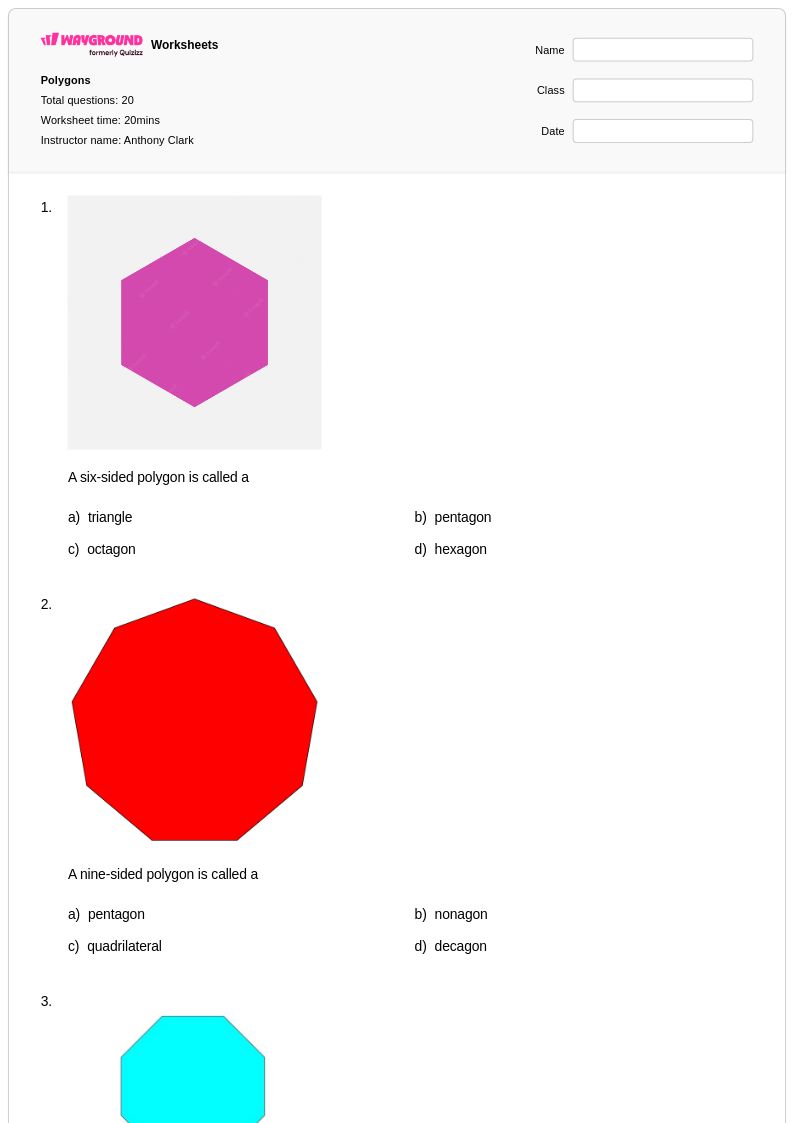
20 Q
3rd - Uni
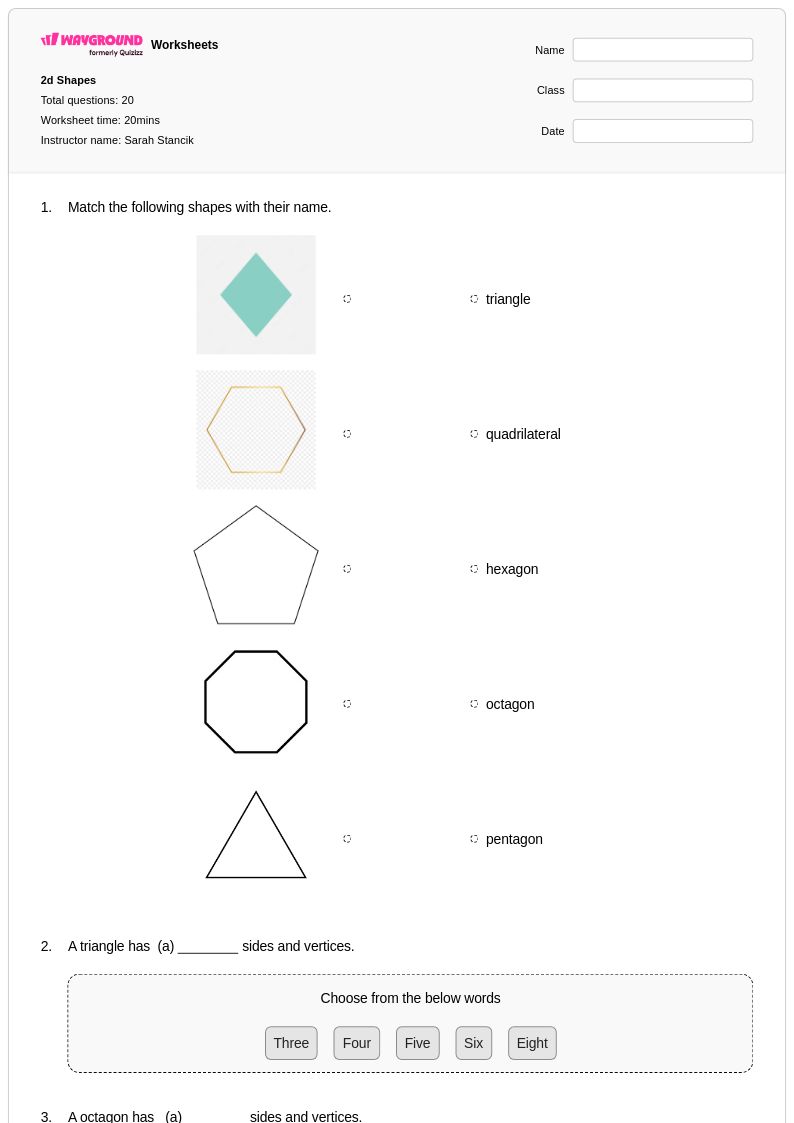
20 Q
3rd
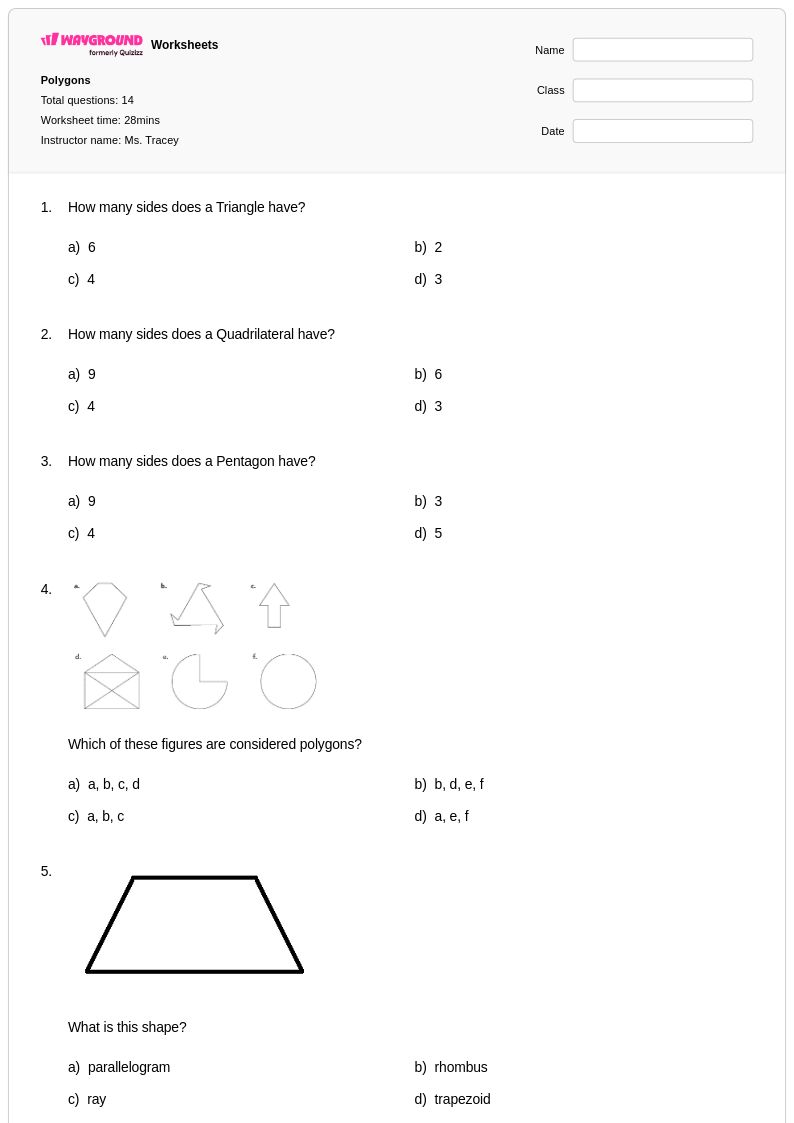
14 Q
3rd - 5th
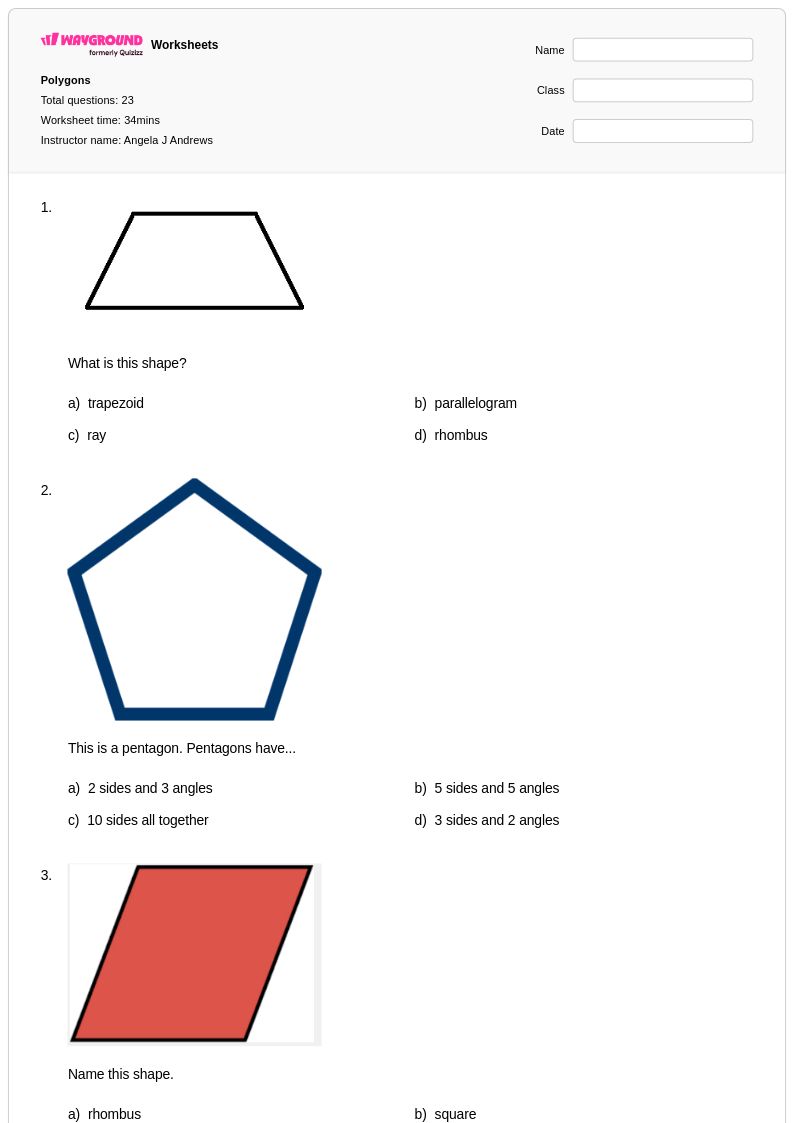
23 Q
1st - 3rd
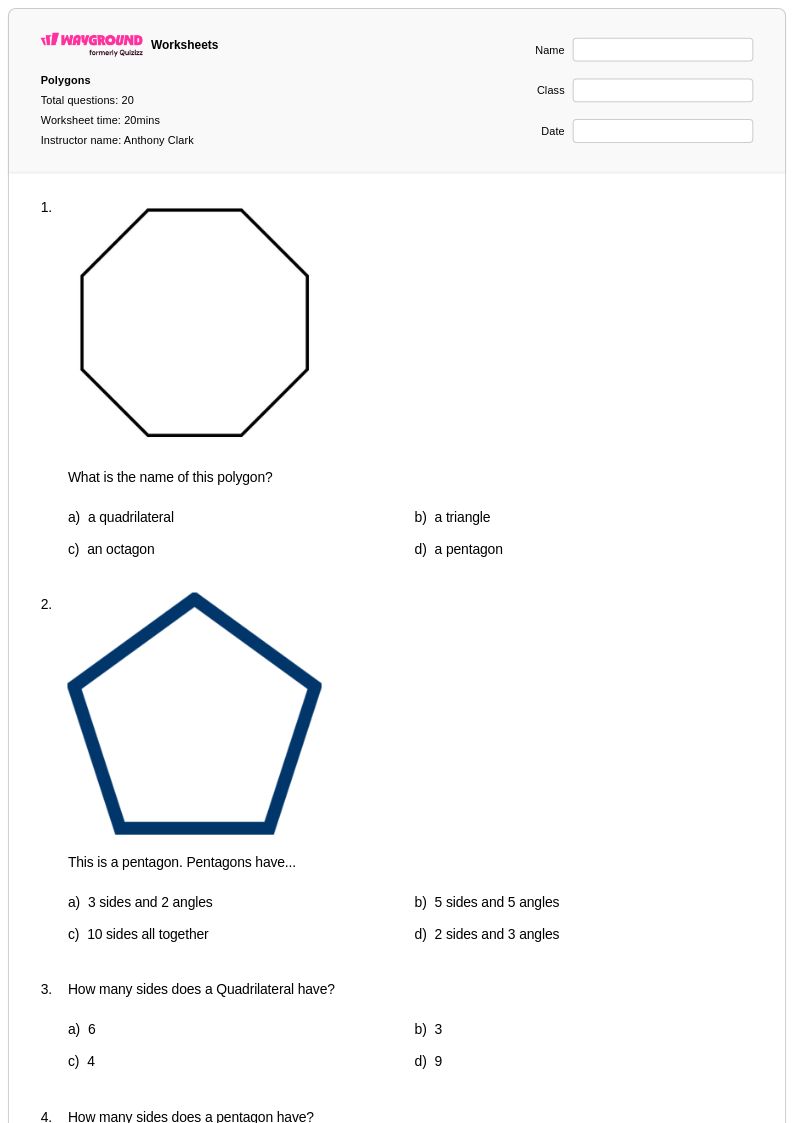
20 Q
3rd - Uni
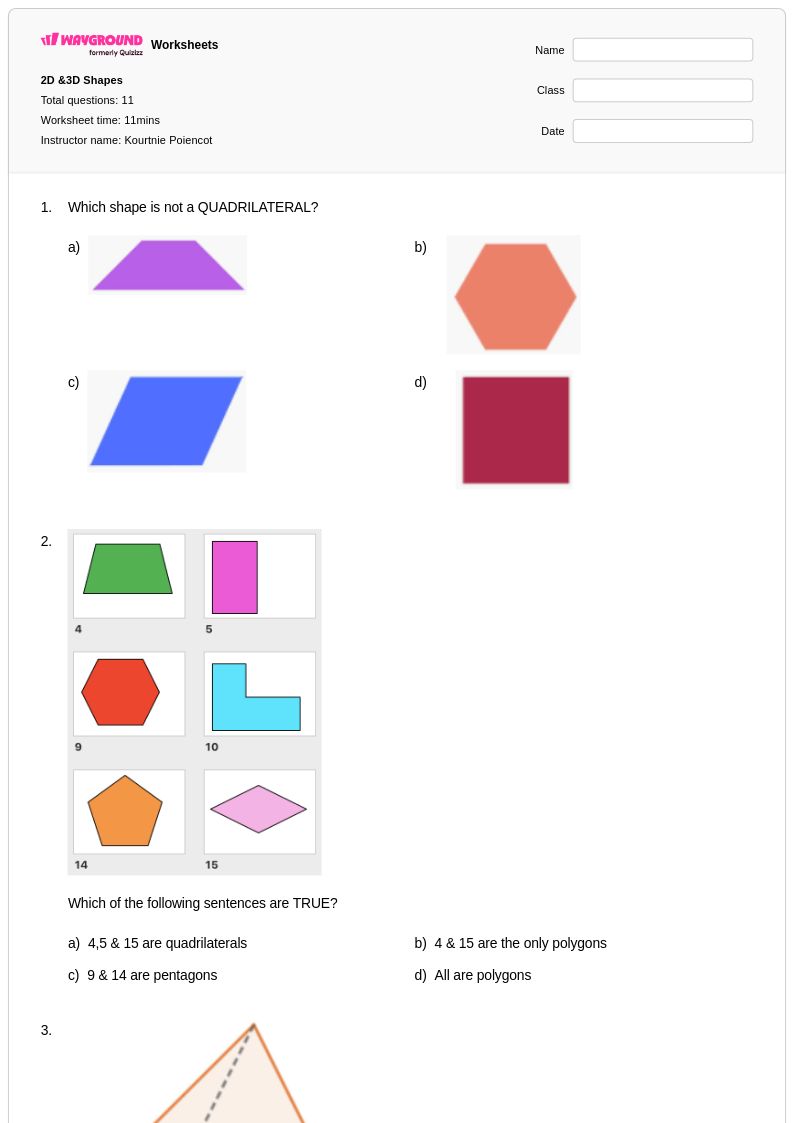
11 Q
3rd
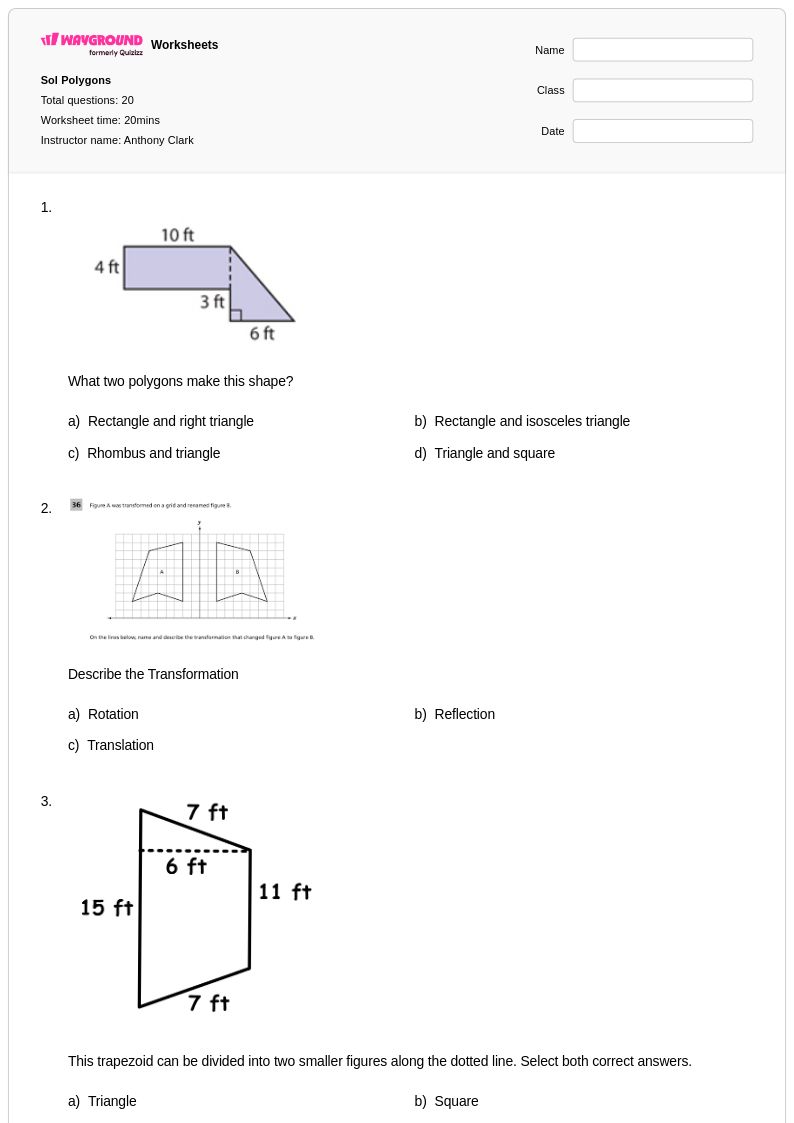
20 Q
3rd - Uni
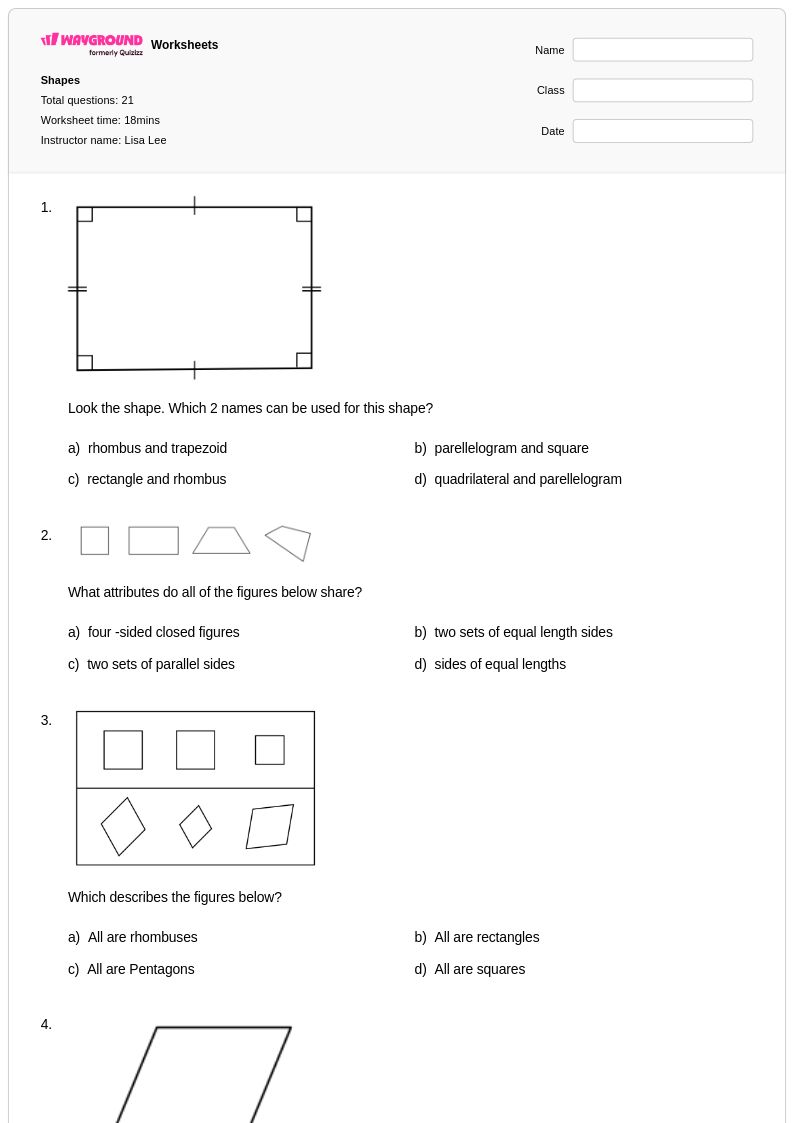
21 Q
3rd
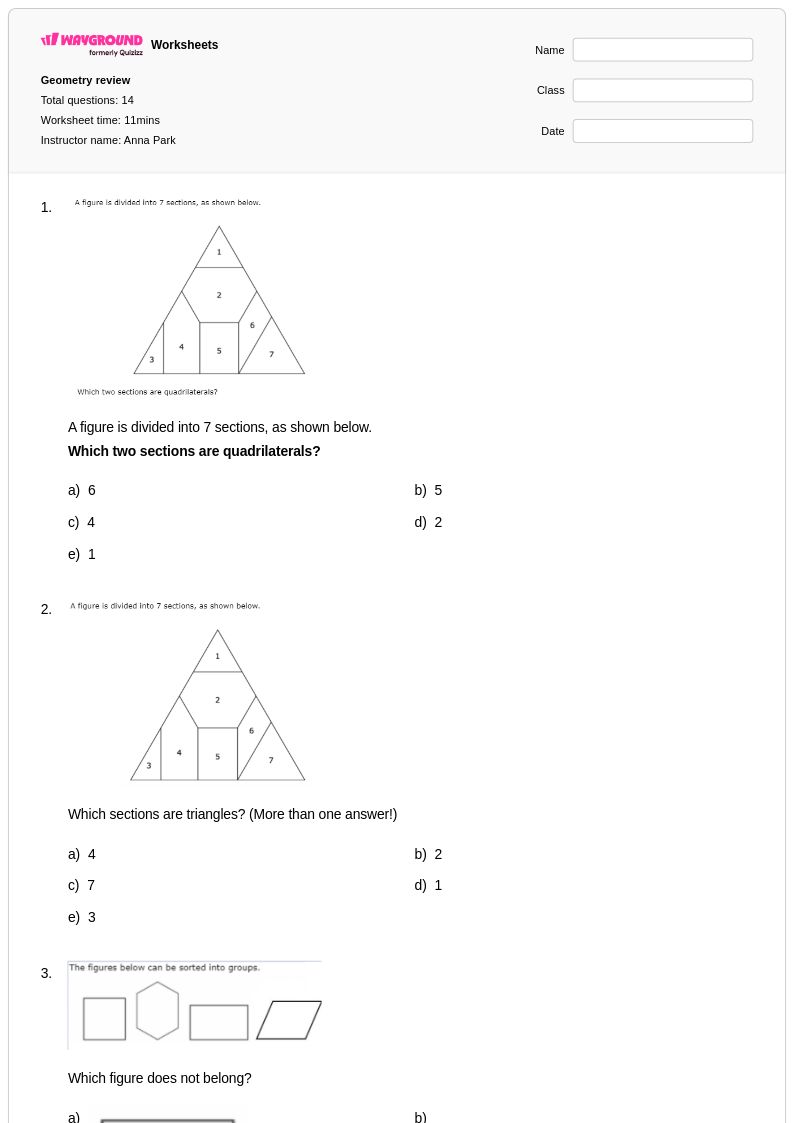
14 Q
3rd
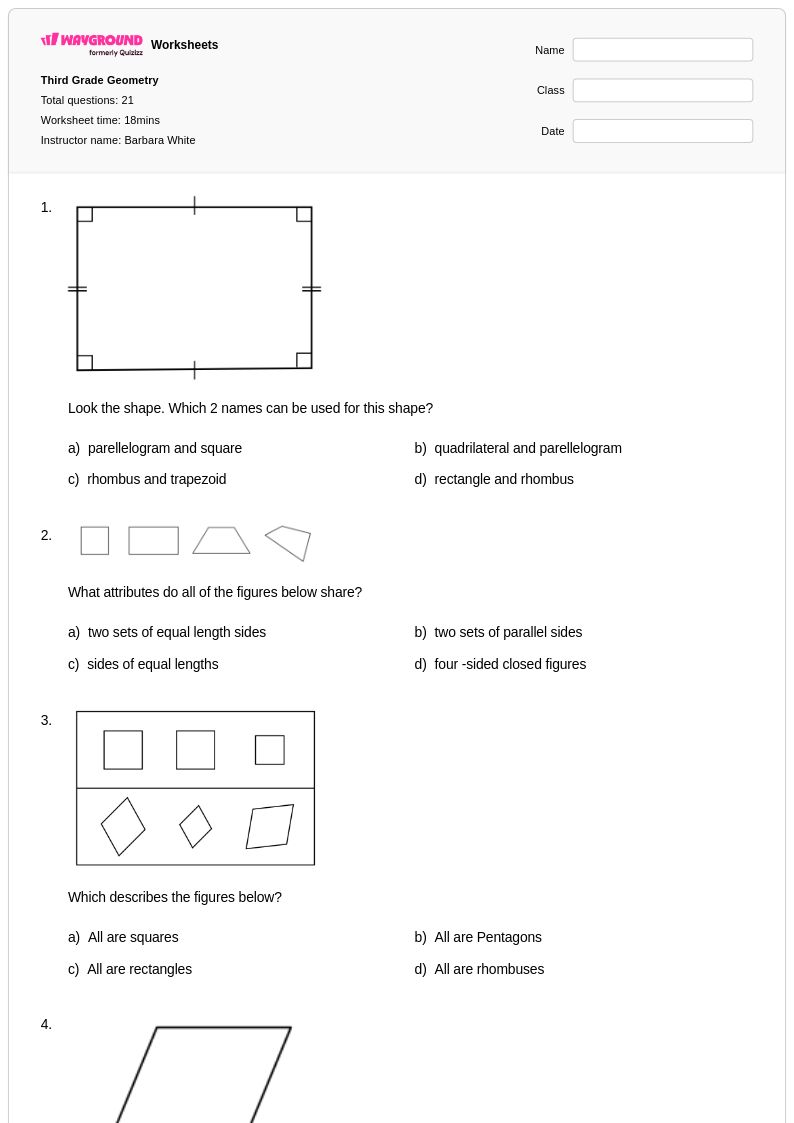
21 Q
3rd

15 Q
3rd
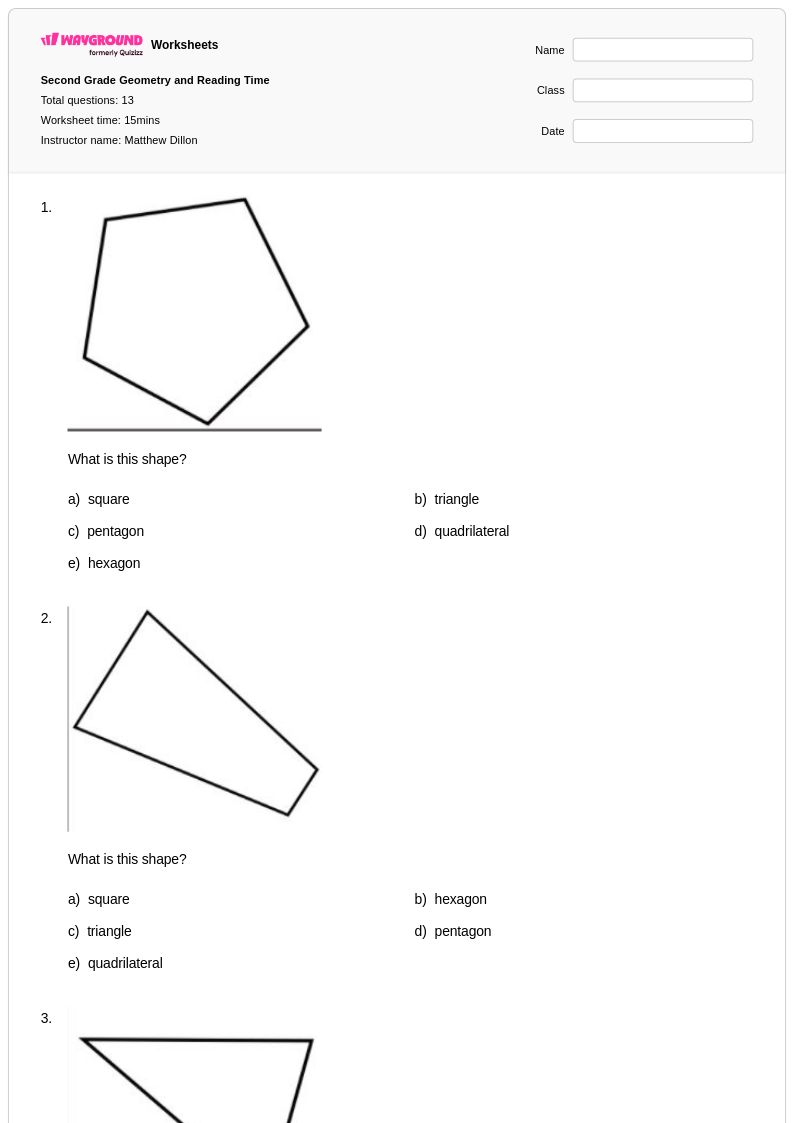
13 Q
2nd - 3rd
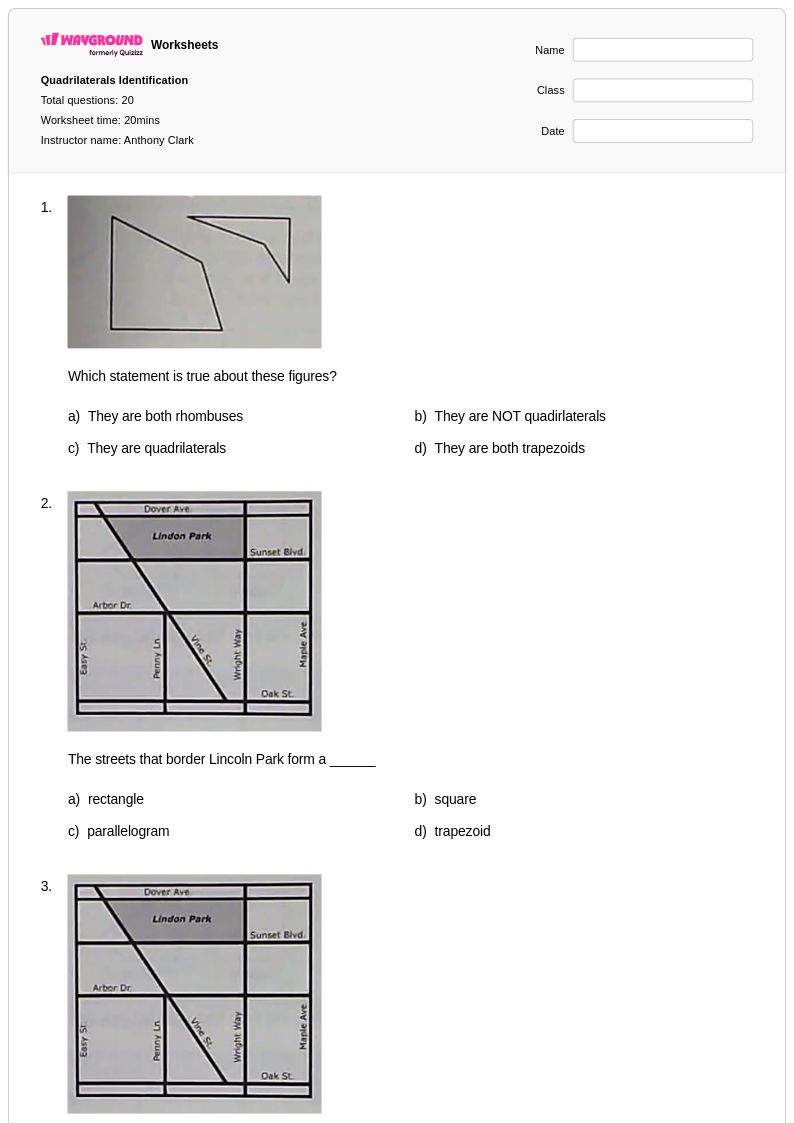
20 Q
3rd - Uni
Explore Other Subject Worksheets for class 3
Explore printable Pentagons worksheets for Class 3
Pentagon worksheets for Class 3 students available through Wayground (formerly Quizizz) provide essential foundation work in geometric shape recognition and analysis. These carefully designed practice problems help young learners identify the defining characteristics of pentagons, including counting their five sides and five vertices, while distinguishing them from other polygons in their mathematical toolkit. The comprehensive worksheet collection strengthens spatial reasoning skills and geometric vocabulary through engaging activities that range from basic shape identification to more complex sorting and classification exercises. Teachers can access these free printables with complete answer keys, ensuring efficient grading and immediate feedback opportunities that support student understanding of this fundamental 2D shape concept.
Wayground's extensive library of teacher-created pentagon worksheets draws from millions of educational resources, providing Class 3 educators with robust search and filtering capabilities to locate materials perfectly aligned with their curriculum standards and student needs. The platform's differentiation tools enable teachers to customize worksheet difficulty levels, ensuring both remediation support for struggling learners and enrichment opportunities for advanced students ready to explore pentagon properties in greater depth. Available in both printable pdf format and interactive digital versions, these pentagon resources seamlessly integrate into lesson planning workflows while supporting diverse learning environments. The flexible customization options allow educators to modify existing worksheets or combine multiple resources, creating targeted skill practice sessions that address specific learning objectives within their 2D shapes geometry unit.
FAQs
What do third graders learn about pentagons?
How should I teach pentagons in a third-grade geometry unit?
What kinds of problems help third graders with pentagons?
What shows a third grader understands pentagons in context?
How can I use this third-grade pentagon worksheet?
How does this topic connect to third-grade Common Core math?