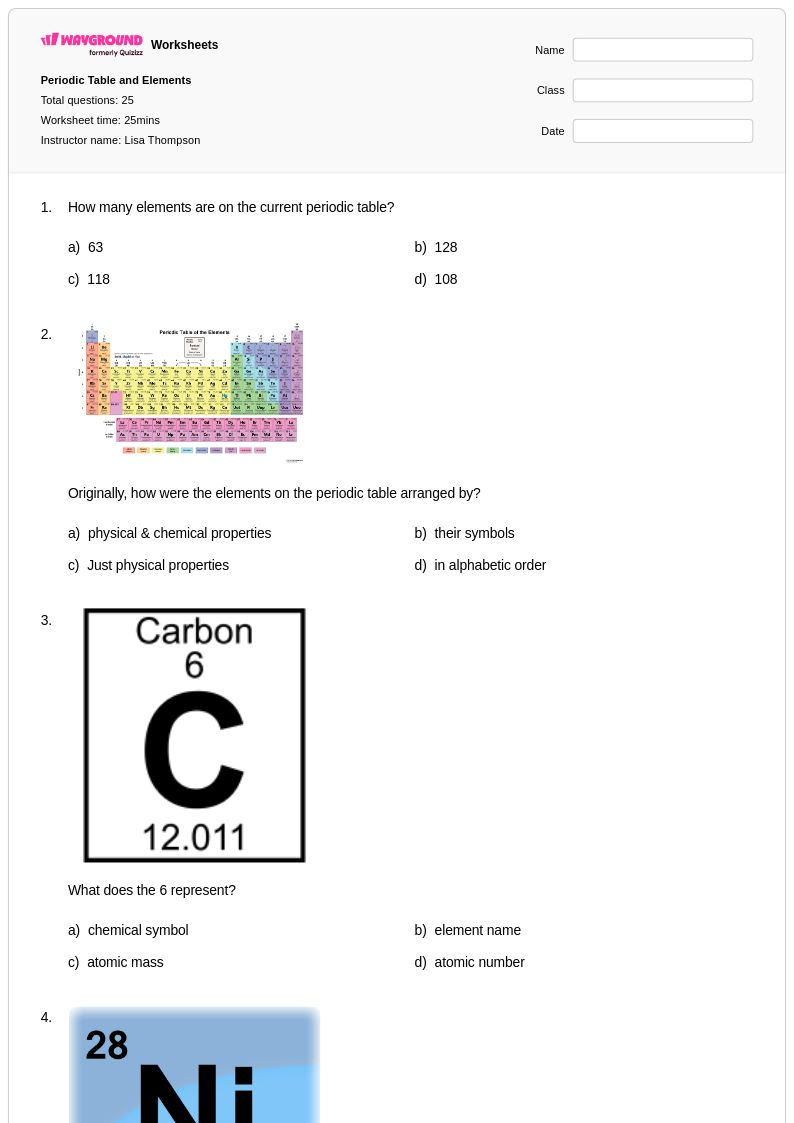
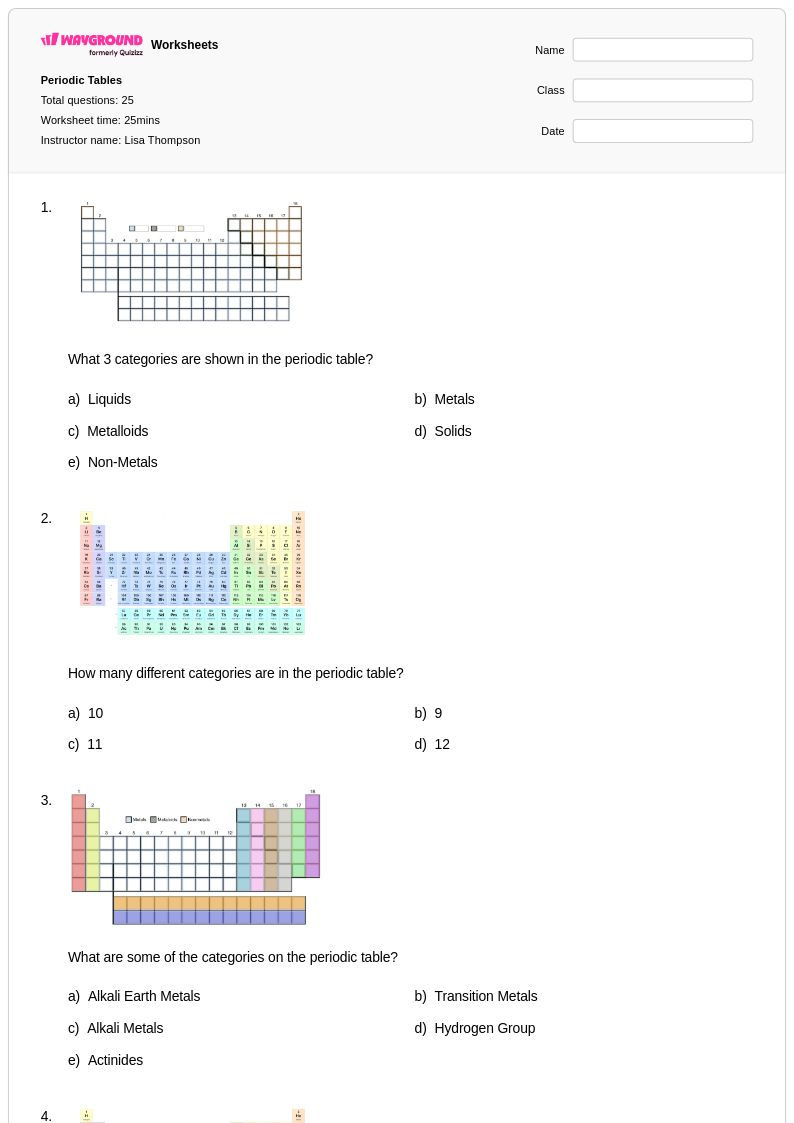
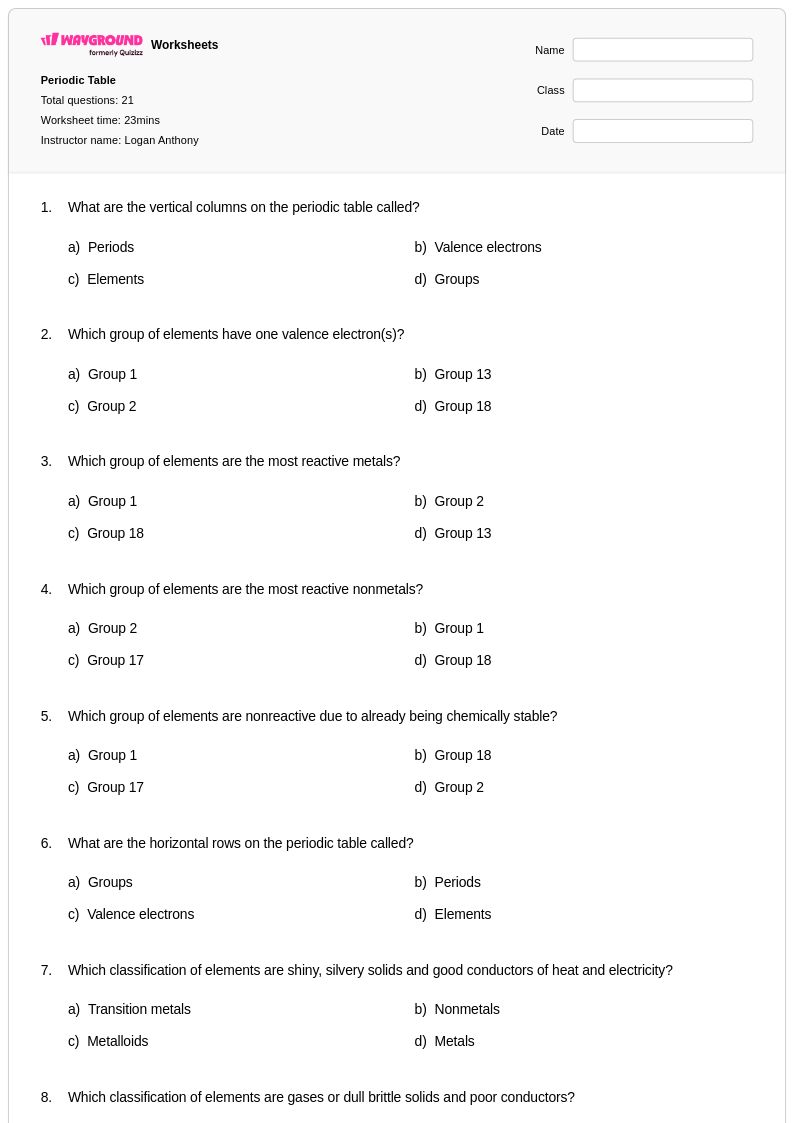
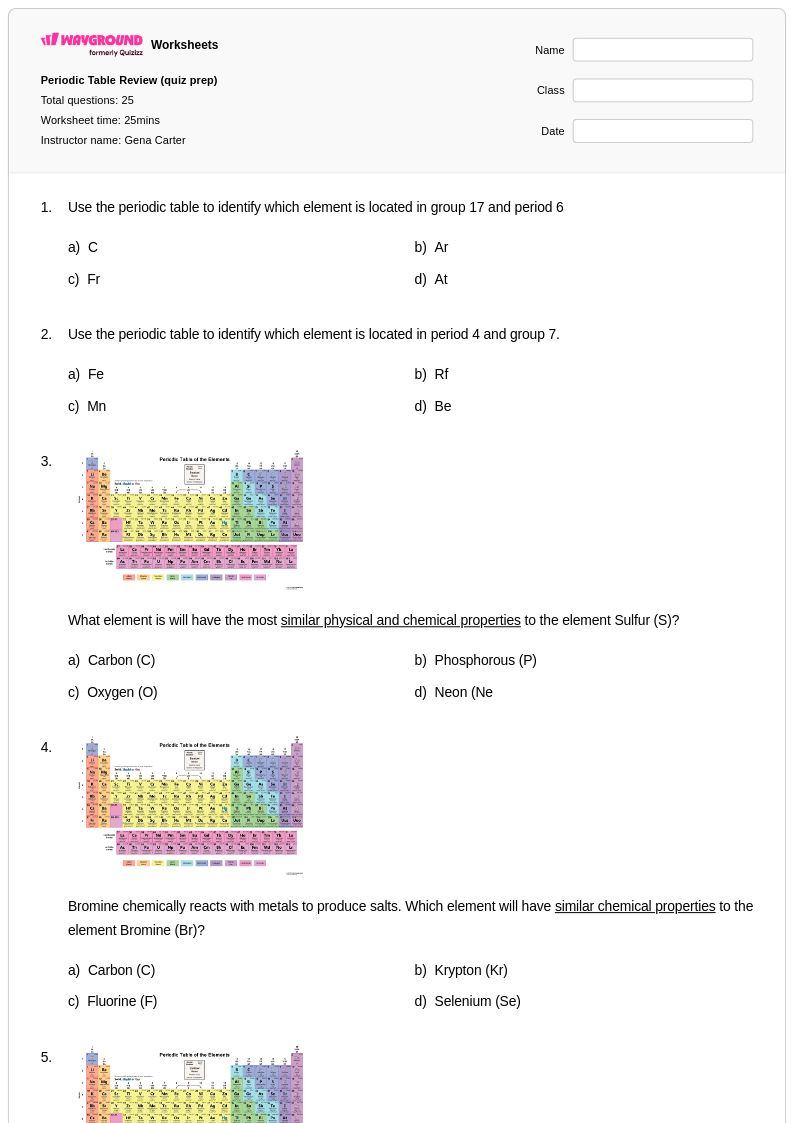
Discover free periodic table organization worksheets and printables that help students master element classification, atomic structure patterns, and chemical properties through engaging practice problems with comprehensive answer keys.
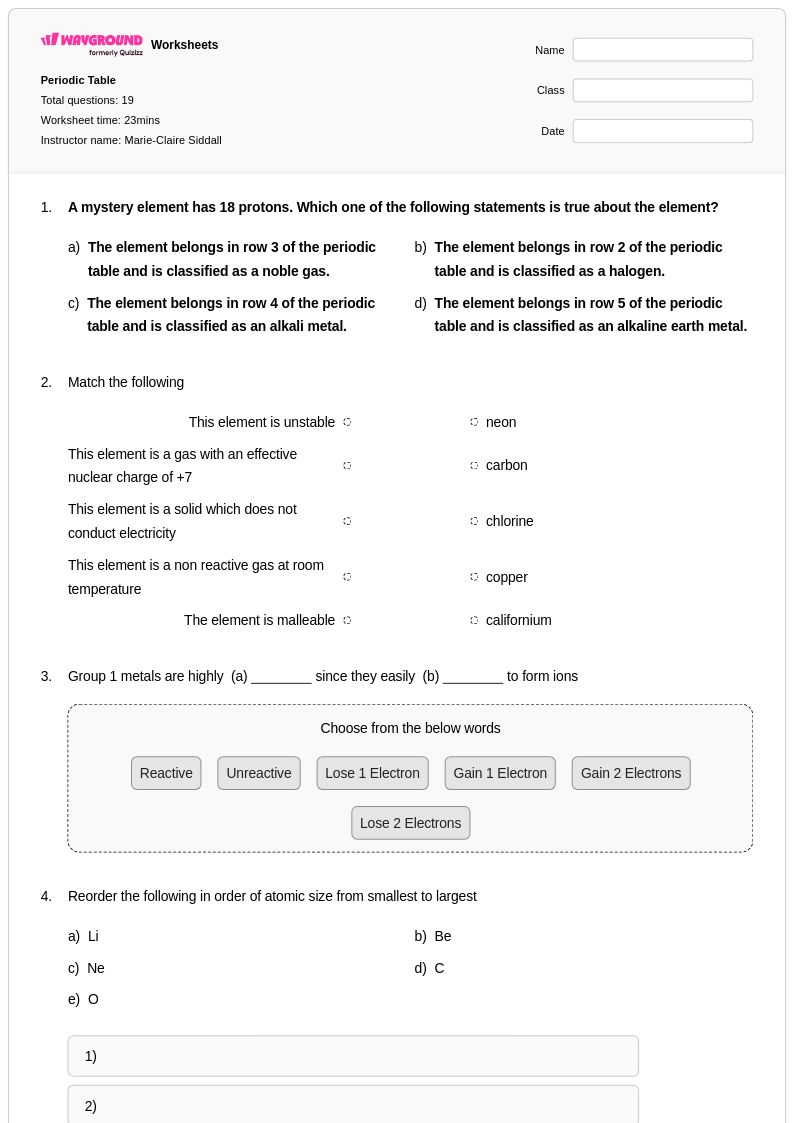
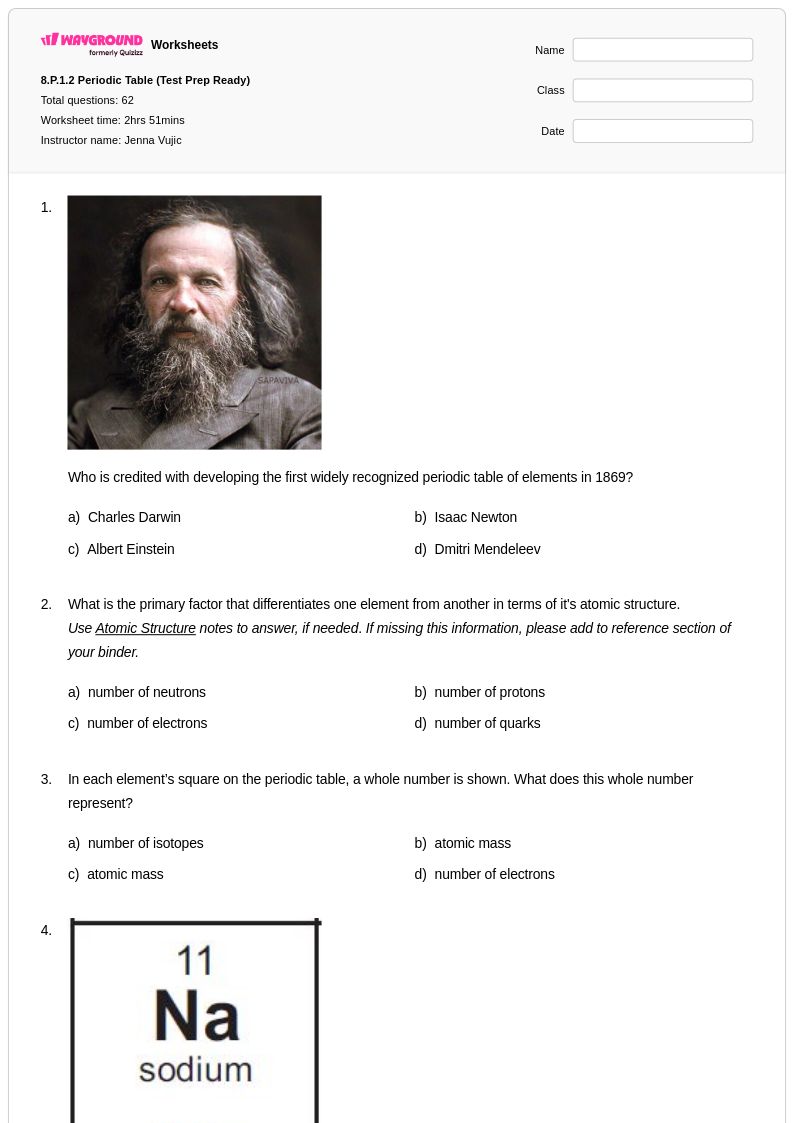
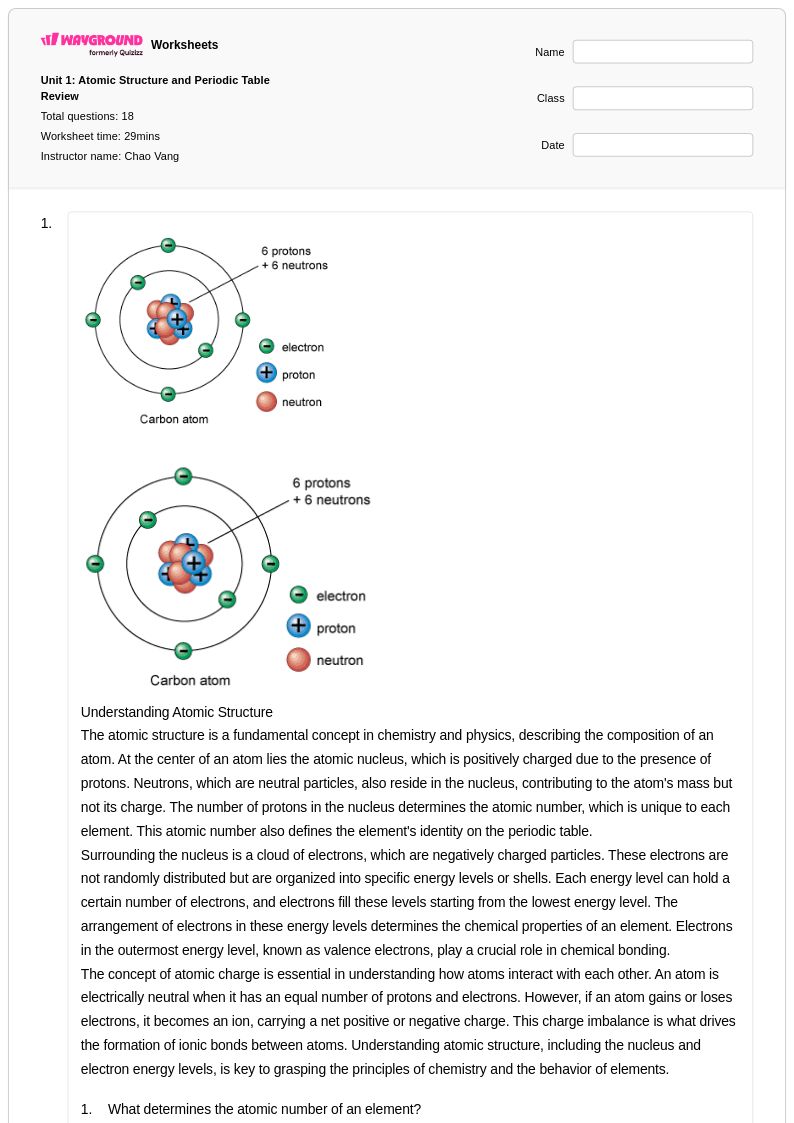
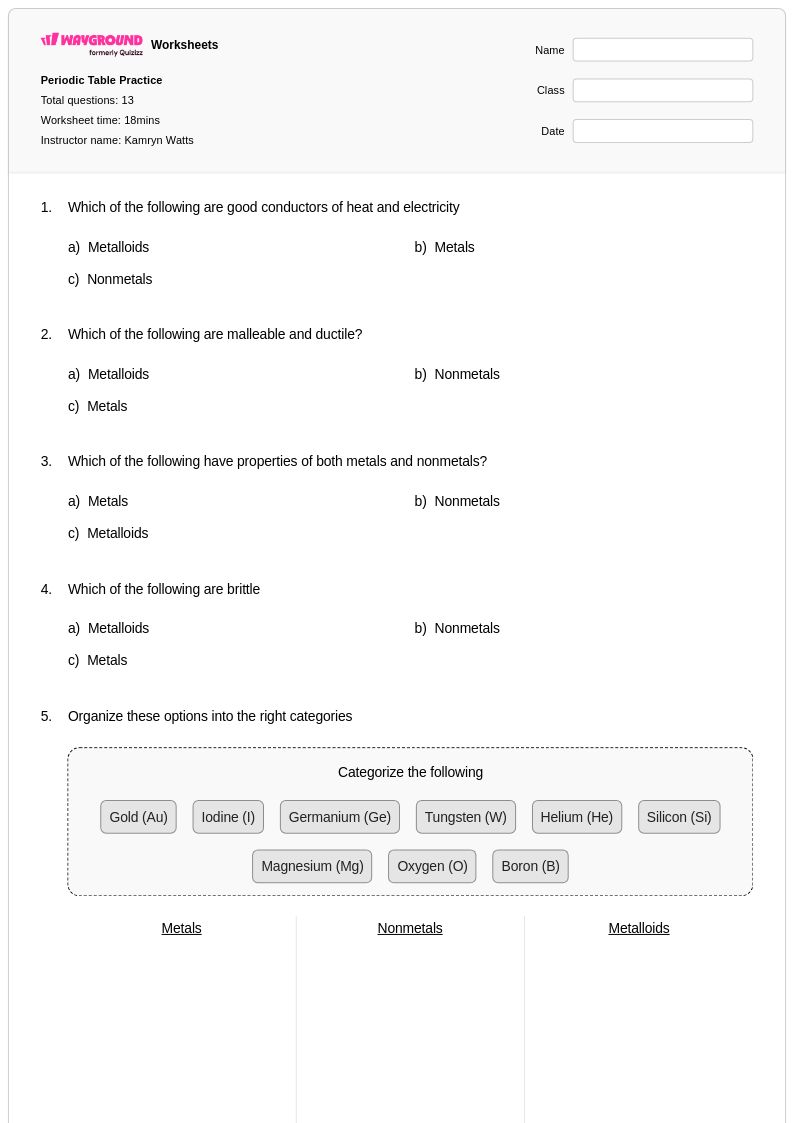
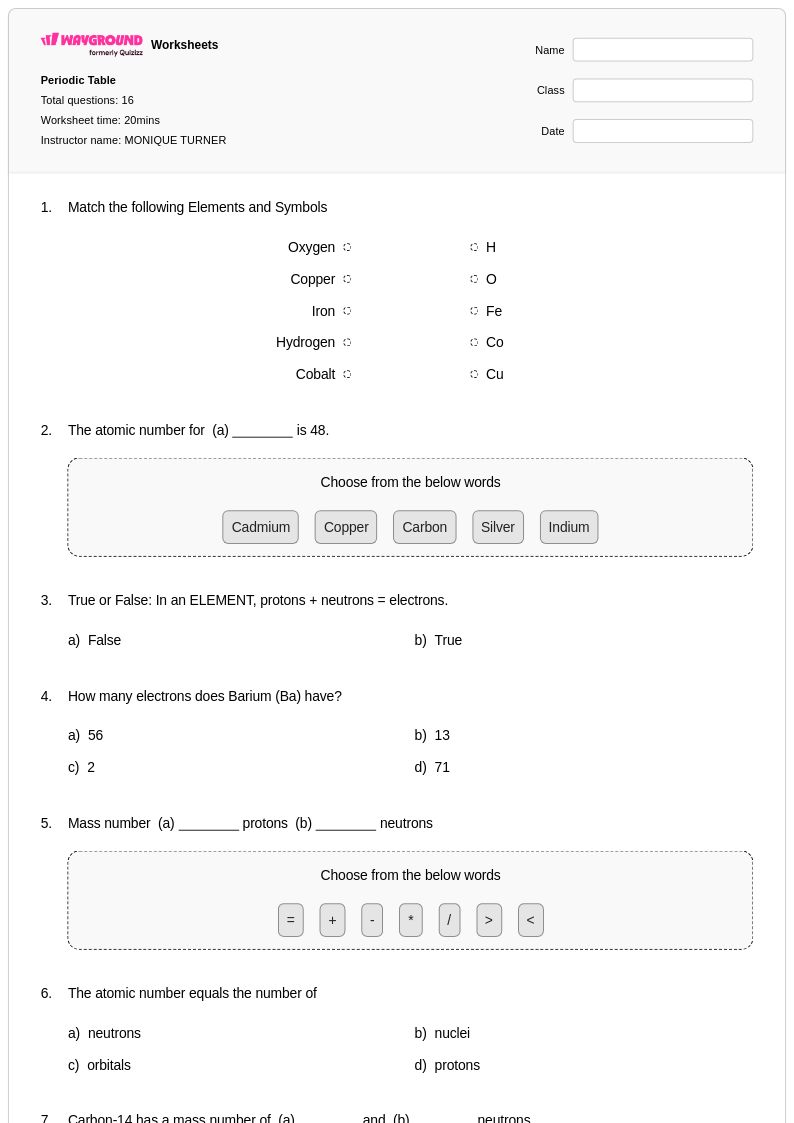
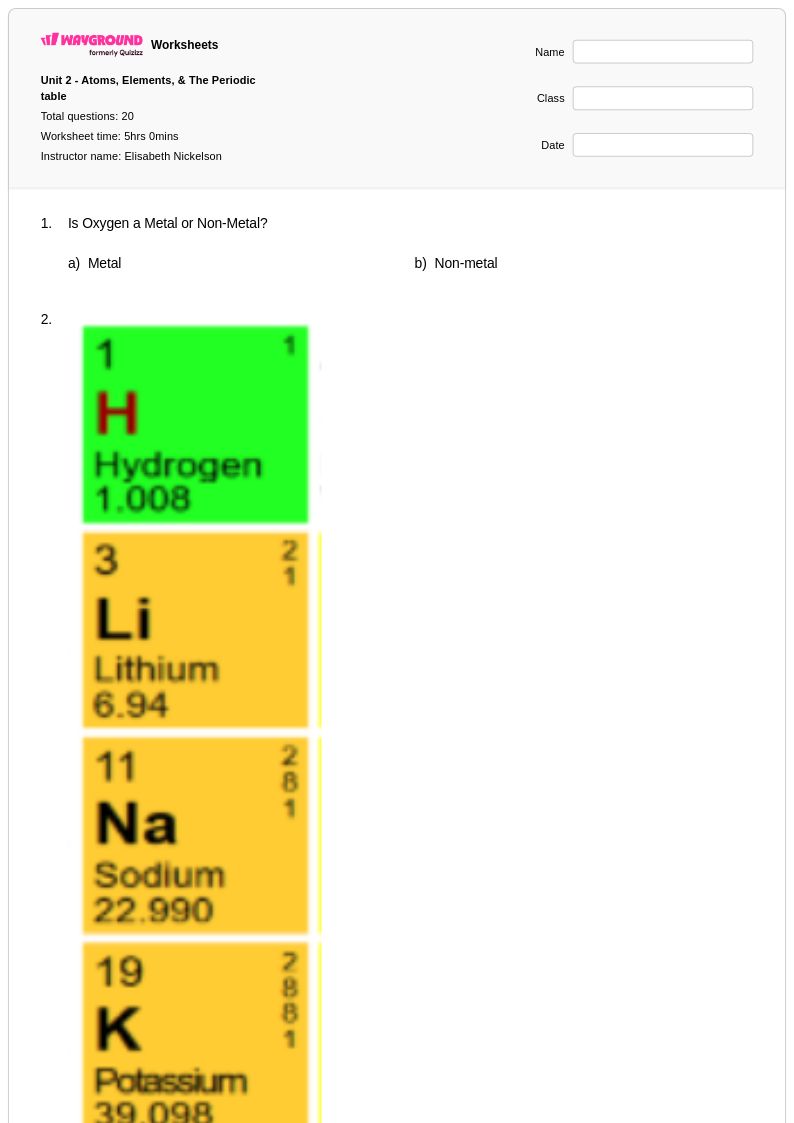
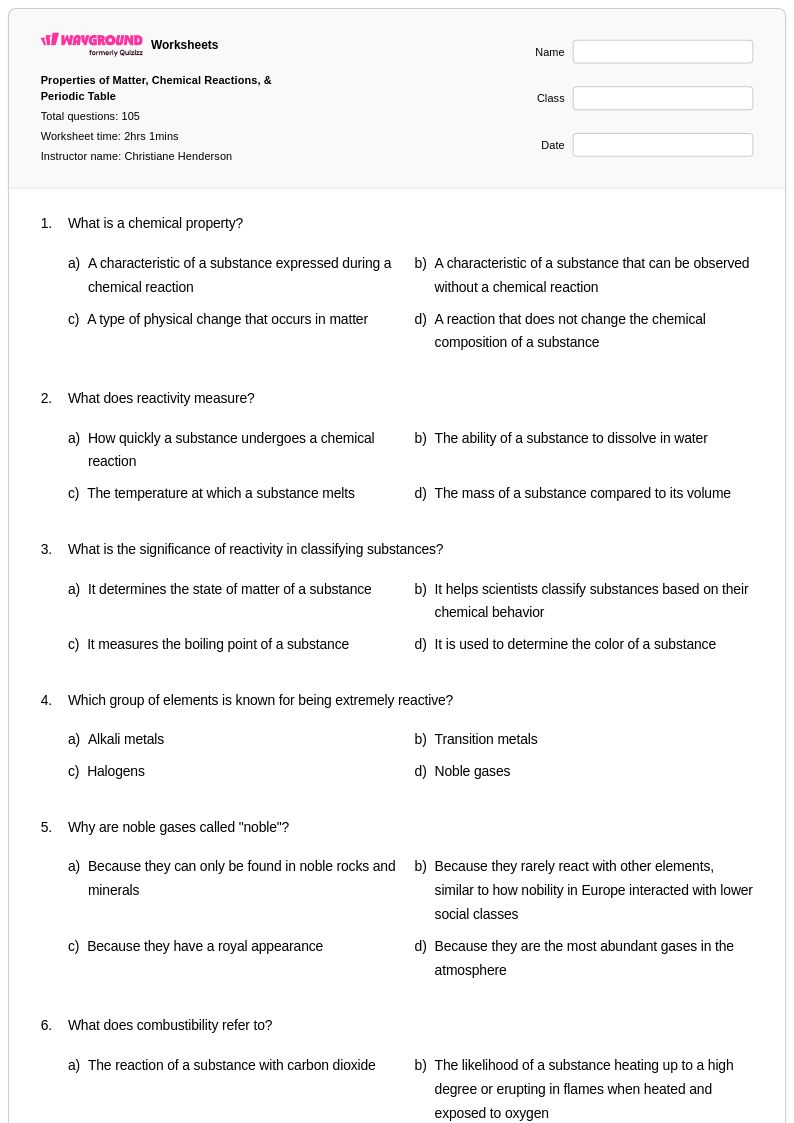
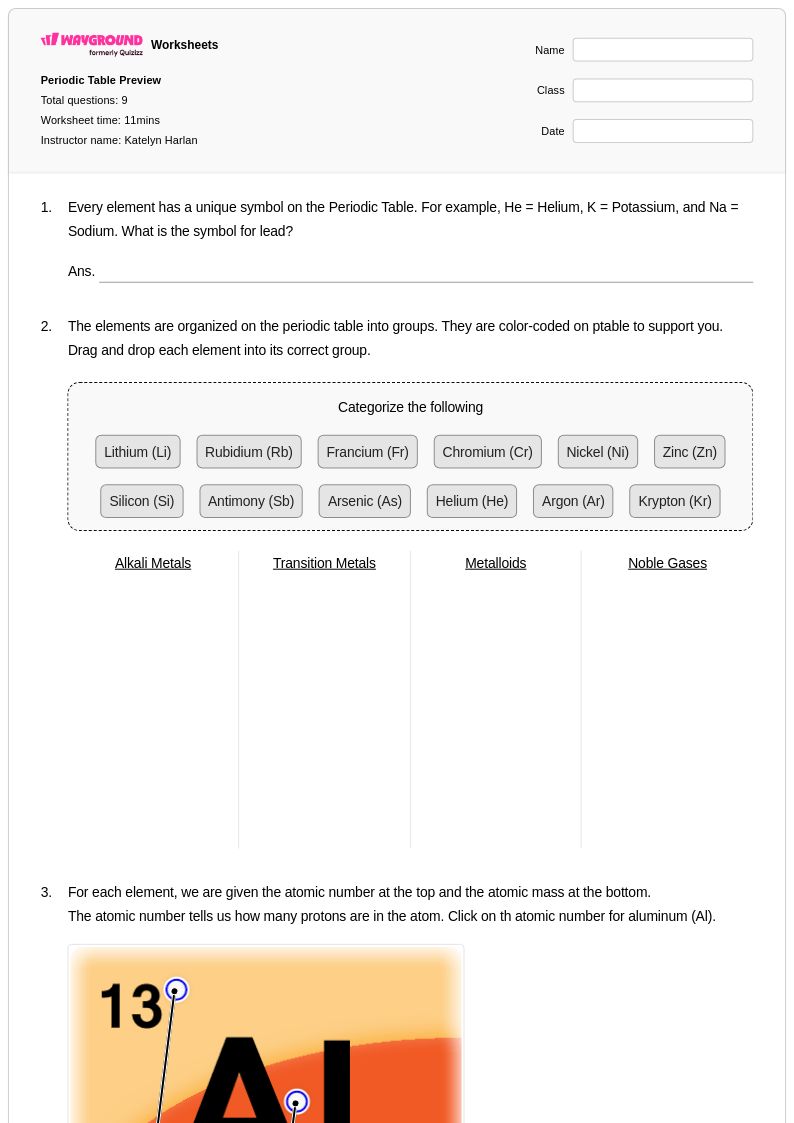
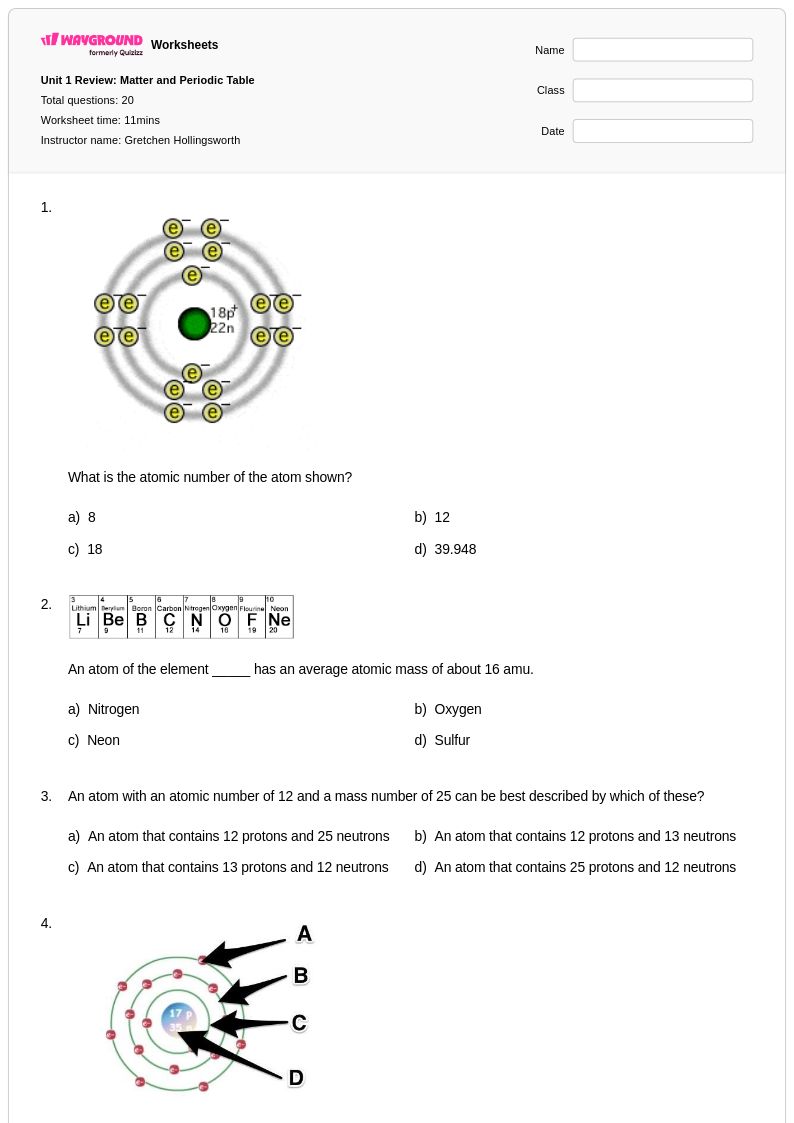
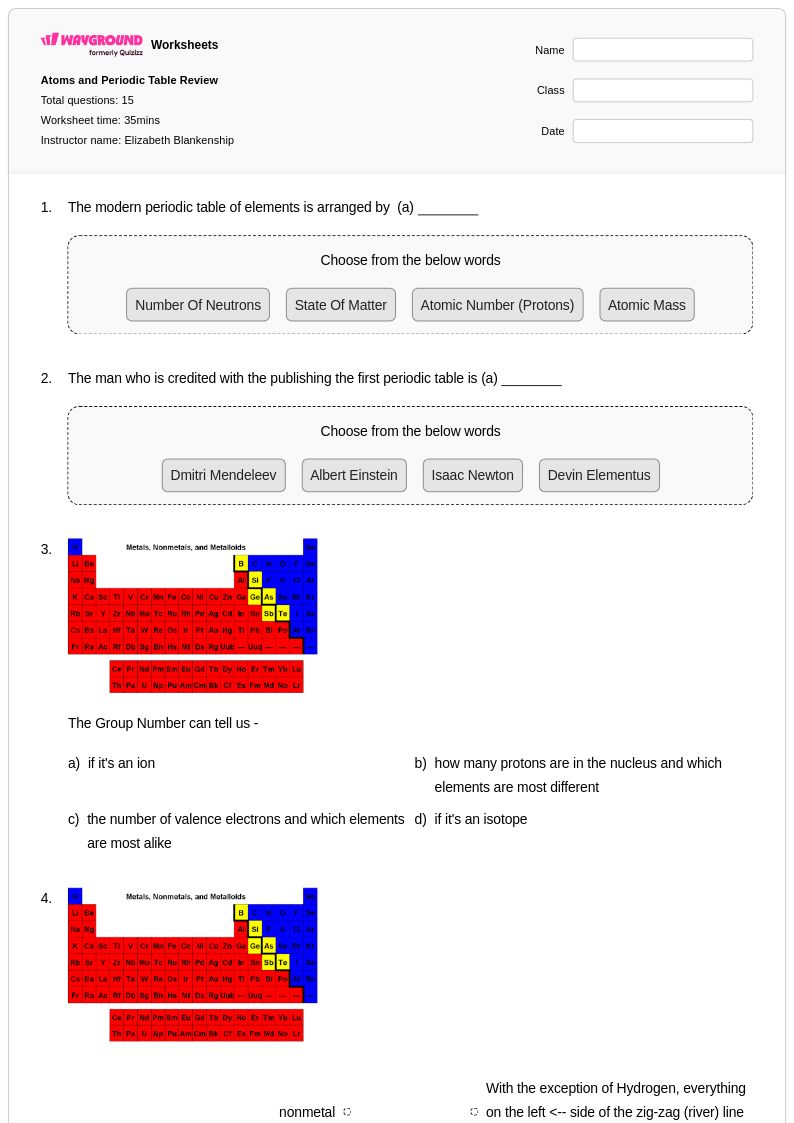
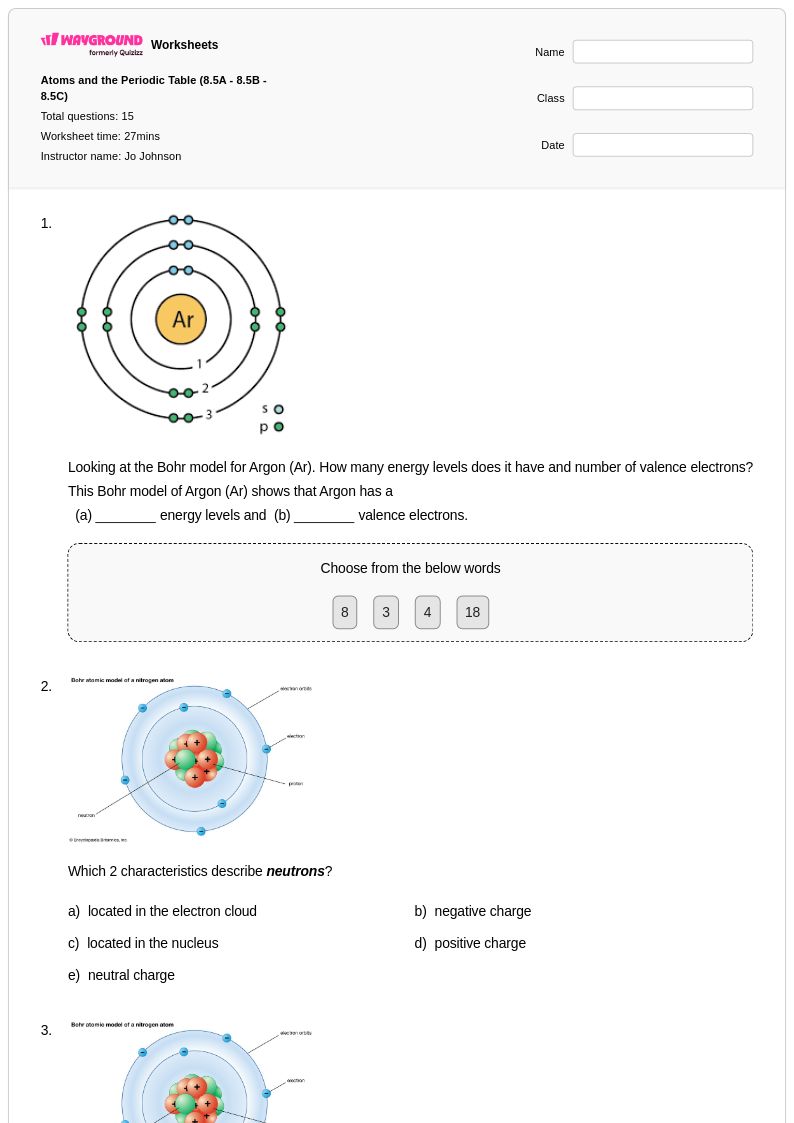
Periodic table organization worksheets available through Wayground (formerly Quizizz) provide comprehensive practice materials that help students master the fundamental structure and patterns within the periodic table of elements. These expertly designed resources strengthen critical chemistry skills including identifying element groups and periods, understanding atomic number progression, recognizing periodic trends, and analyzing electron configuration patterns. Students engage with practice problems that cover essential concepts such as metal, nonmetal, and metalloid classification, alkali and alkaline earth metal properties, halogen and noble gas characteristics, and transition element organization. The collection includes detailed answer keys and free printable pdf formats that support both independent study and classroom instruction, enabling students to build confidence in navigating this cornerstone tool of chemistry.
Wayground (formerly Quizizz) empowers educators with millions of teacher-created periodic table organization resources that feature robust search and filtering capabilities aligned with chemistry standards at multiple levels. The platform's differentiation tools allow teachers to customize worksheets based on individual student needs, whether providing remediation for struggling learners or enrichment challenges for advanced students. These flexible materials are available in both printable and digital formats, including downloadable pdfs that facilitate seamless lesson planning and implementation. Teachers can efficiently identify resources that target specific periodic trends, element properties, or organizational patterns, making it simple to create targeted practice sessions that reinforce classroom instruction and support skill development across diverse learning environments.
FAQs
How do I teach periodic table organization to my chemistry students?
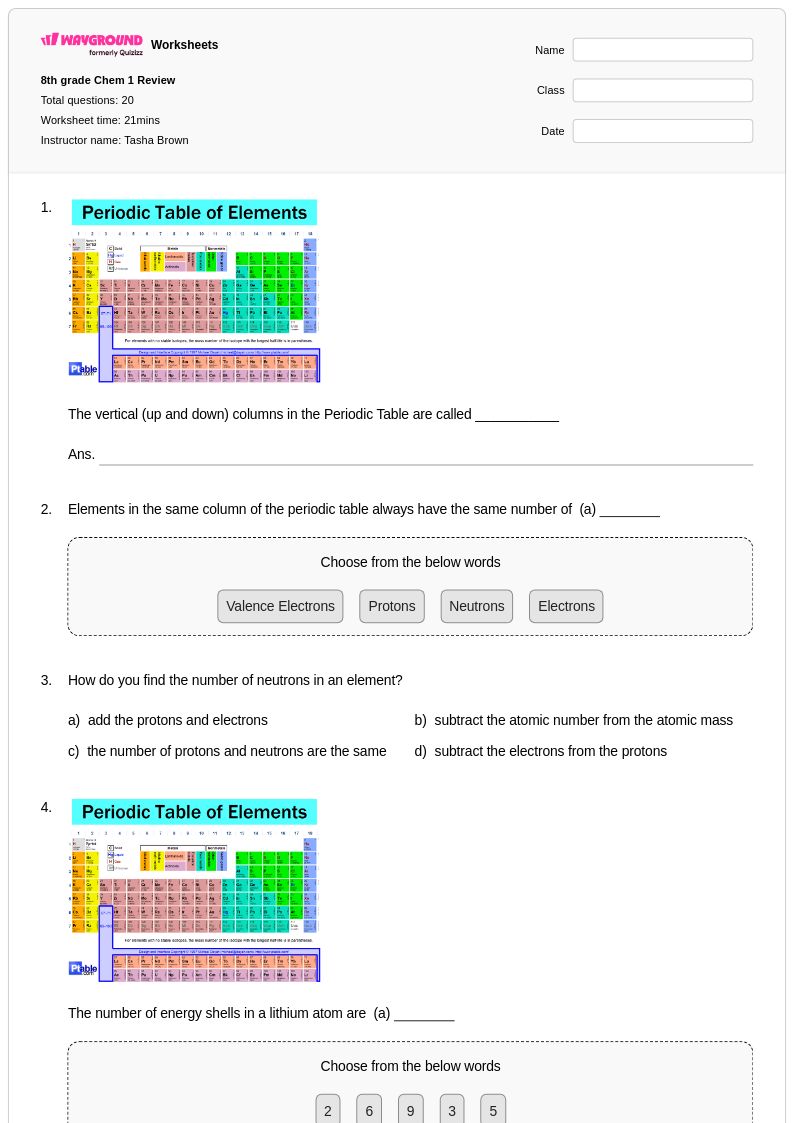
Start by helping students understand the two organizing axes of the periodic table: periods (horizontal rows) represent increasing atomic number, while groups (vertical columns) share similar electron configurations and chemical properties. Introduce element classification in stages — metals, nonmetals, and metalloids first, then move into specific groups like alkali metals, halogens, and noble gases. Visual mapping activities where students color-code regions of the table by property type are especially effective for building spatial familiarity before moving into periodic trends.
What exercises help students practice reading and navigating the periodic table?
Practice exercises that ask students to identify an element's group and period, classify it as a metal, nonmetal, or metalloid, and predict its properties based on its position are among the most effective for building fluency. Trend-analysis tasks — such as comparing atomic radius or electronegativity across a period or down a group — push students to apply organizational logic rather than just recall facts. Pairing these exercises with answer keys allows students to self-check and identify gaps in their reasoning.
What mistakes do students commonly make when learning periodic table organization?
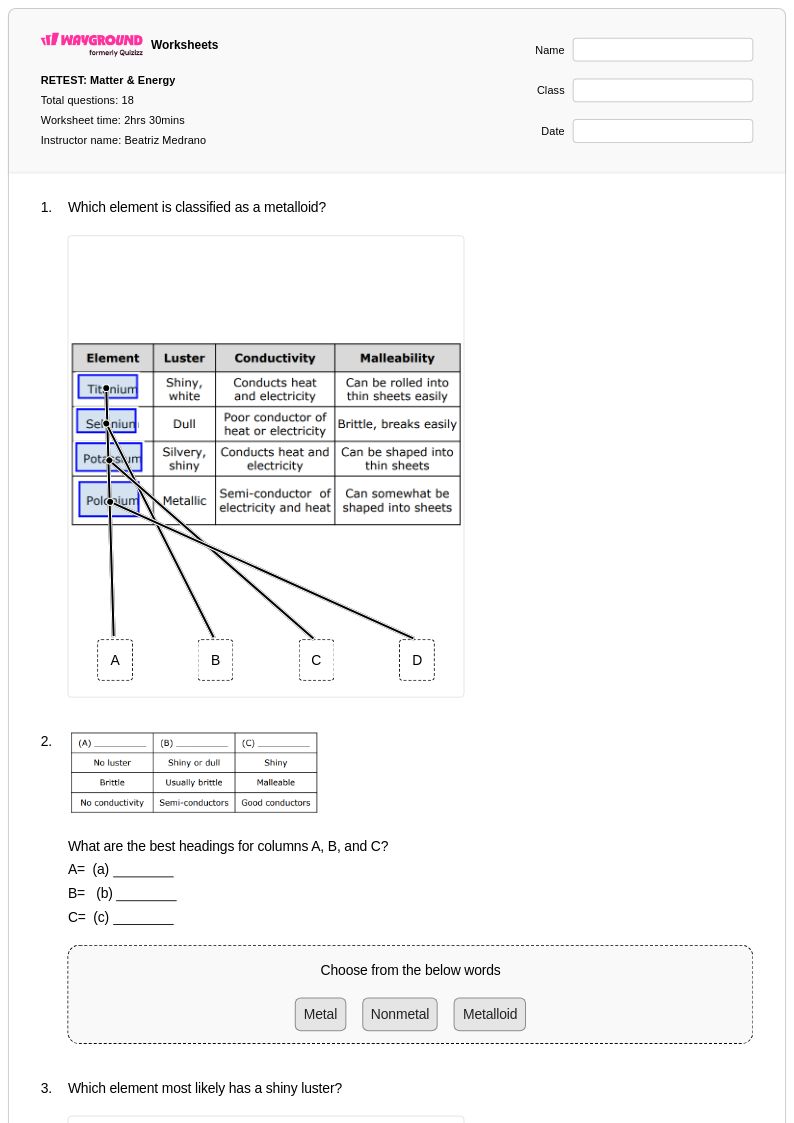
One of the most persistent errors is confusing groups with periods — students often mix up which axis represents which organizational principle. Another common misconception is assuming that all metals behave identically, when in fact transition metals differ significantly from alkali and alkaline earth metals in reactivity and bonding behavior. Students also frequently struggle with the metalloid boundary, unsure which elements (like silicon or arsenic) sit in that intermediate category. Targeted practice problems that force students to justify their classifications help surface and correct these misunderstandings.
How do I differentiate periodic table worksheets for students at different skill levels?
For students who are still building foundational knowledge, reduce the scope to element classification and basic group identification before introducing periodic trends. Advanced students can be challenged with electron configuration analysis and predicting chemical behavior based on position. On Wayground, teachers can apply student-level accommodations such as reduced answer choices to lower cognitive load for struggling learners, or enable Read Aloud for students who benefit from audio support — both settings can be configured individually without affecting other students' experience.
How do I use Wayground's periodic table organization worksheets in my classroom?
Wayground's periodic table organization worksheets are available as printable PDFs for traditional classroom use and in digital formats for technology-integrated environments, giving teachers flexibility regardless of their setup. Teachers can also host worksheets directly as a quiz on Wayground, enabling real-time student engagement and automated scoring. Each worksheet includes a complete answer key, making them practical for independent practice, homework assignments, or in-class review sessions.
How do I help students understand periodic trends like atomic radius and electronegativity?
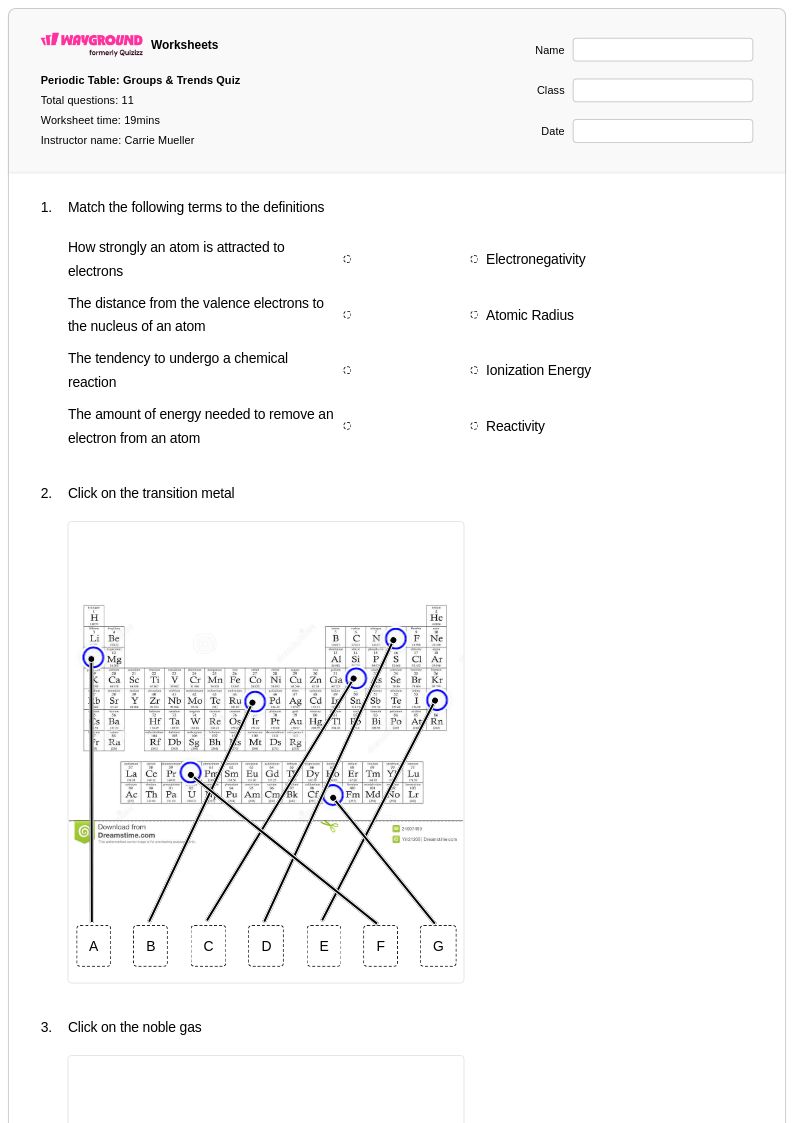
Periodic trends are best introduced after students have a solid grasp of group and period structure, since the trends only make sense in relation to position on the table. Use comparative exercises where students rank a set of elements by atomic radius or electronegativity across a period and down a group, then explain the underlying reason (nuclear charge, shielding, energy levels). Connecting the trend to a real chemical behavior — such as why fluorine is the most electronegative element and how that affects bonding — helps students see trends as predictive tools rather than isolated facts to memorize.