Free Printable Physical Property Worksheets for Class 8
Enhance Class 8 students' understanding of physical properties in chemistry with Wayground's comprehensive collection of free worksheets, printables, and practice problems featuring detailed answer keys.
Explore printable Physical Property worksheets for Class 8
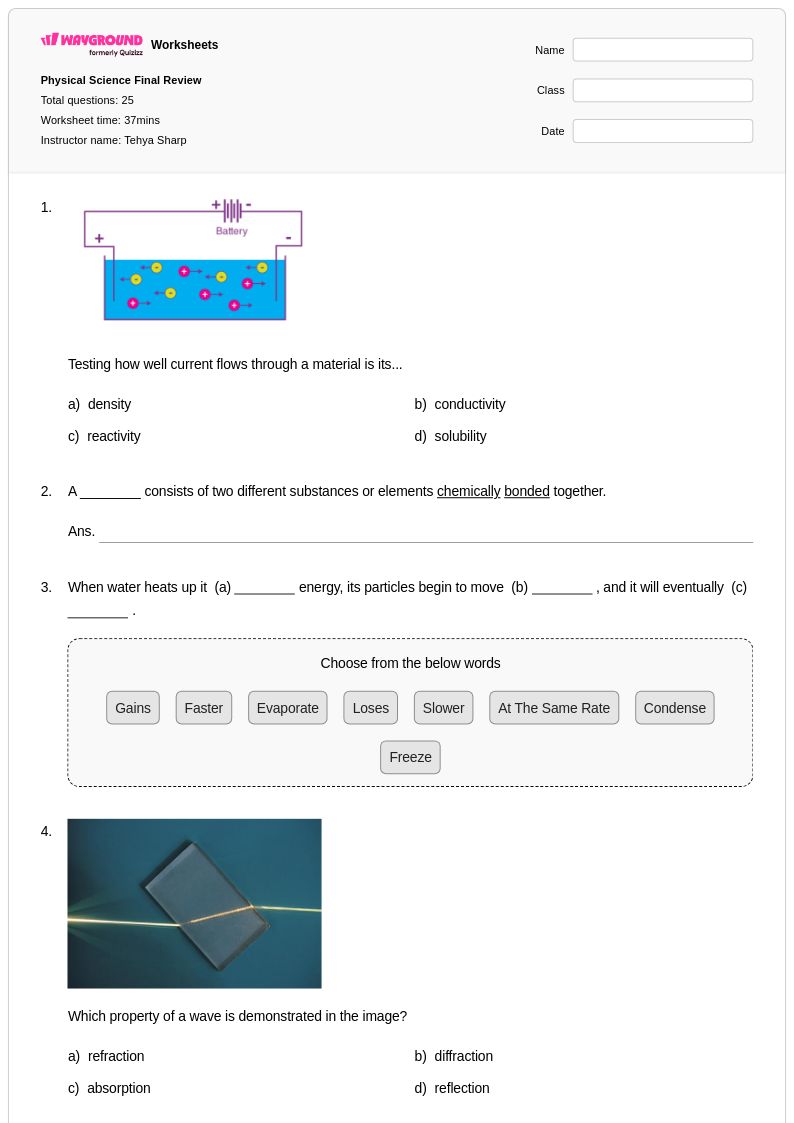
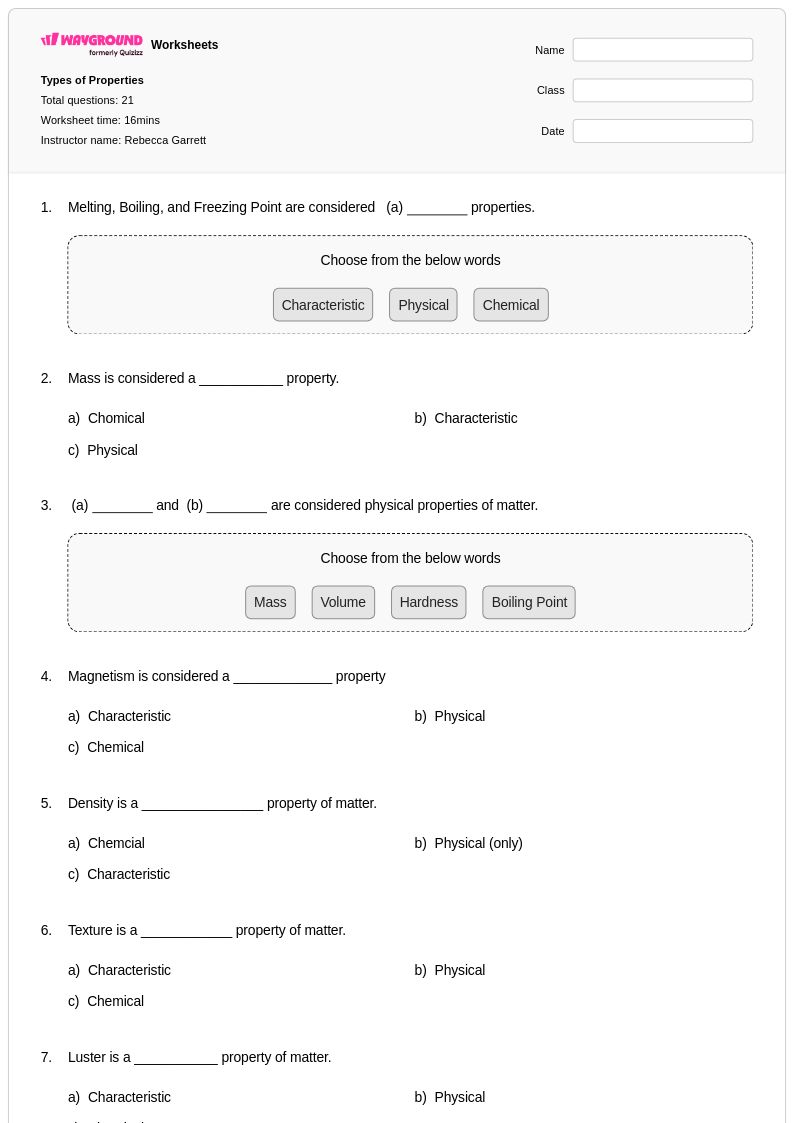
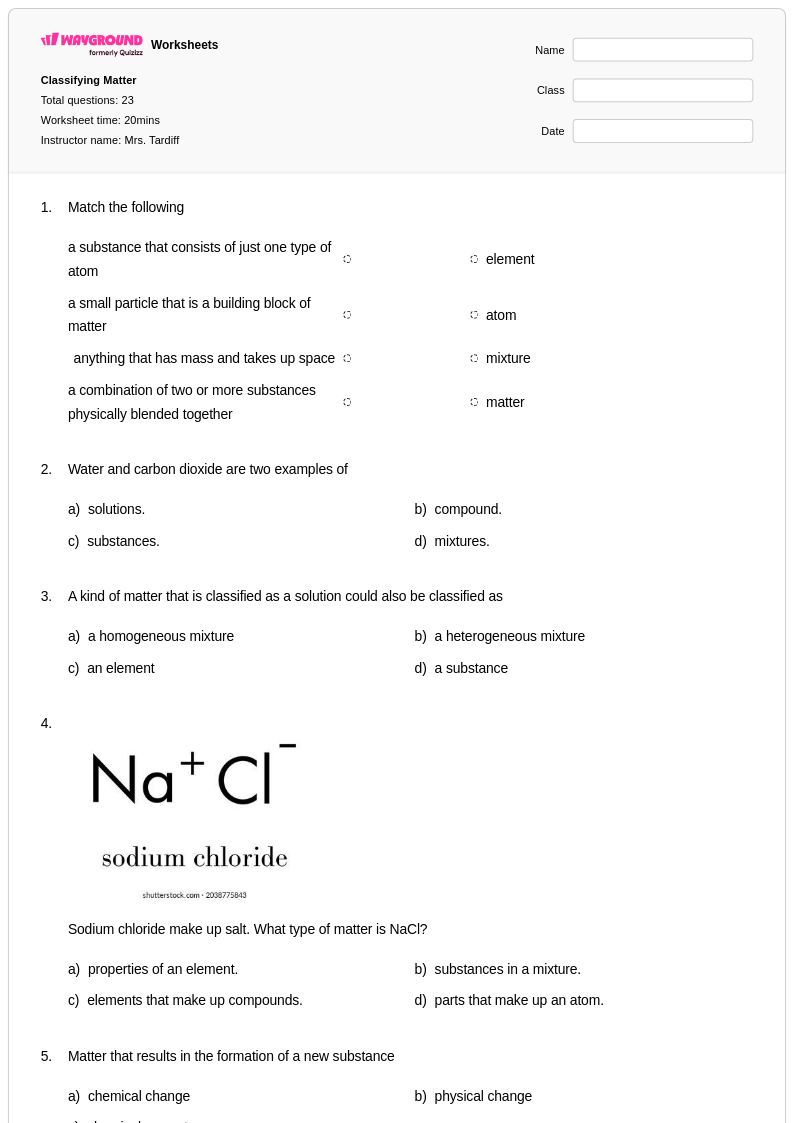
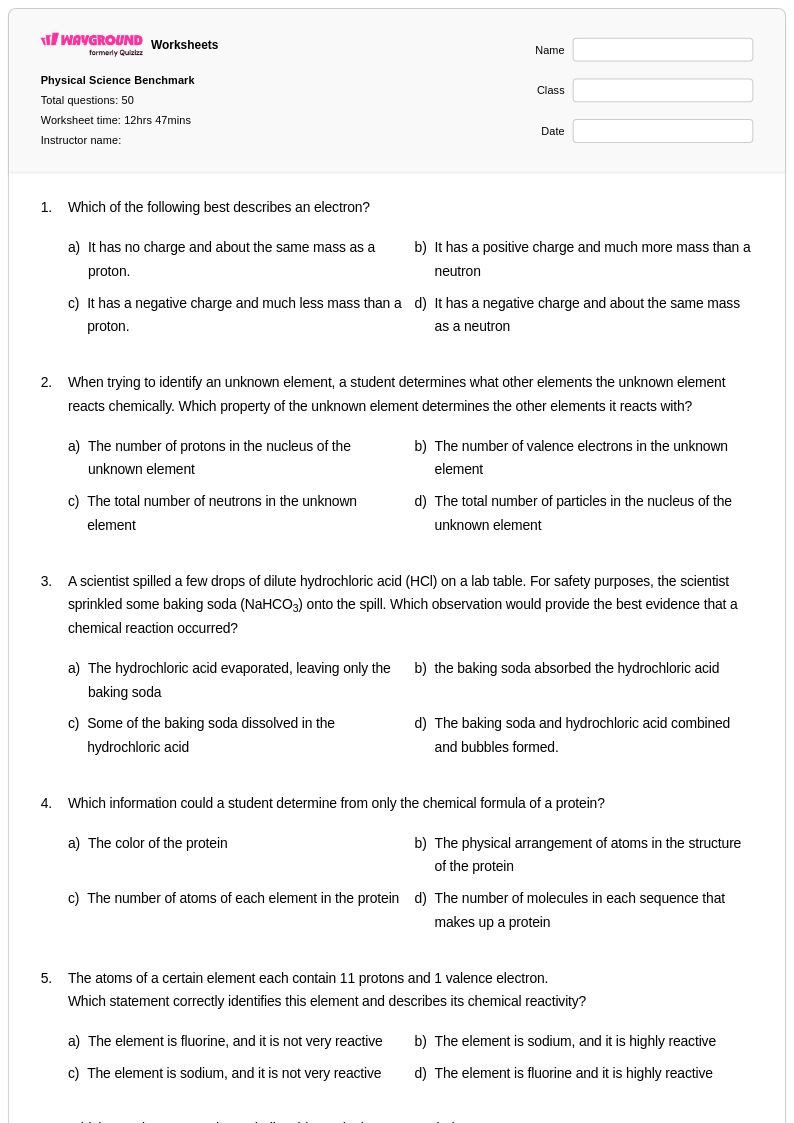
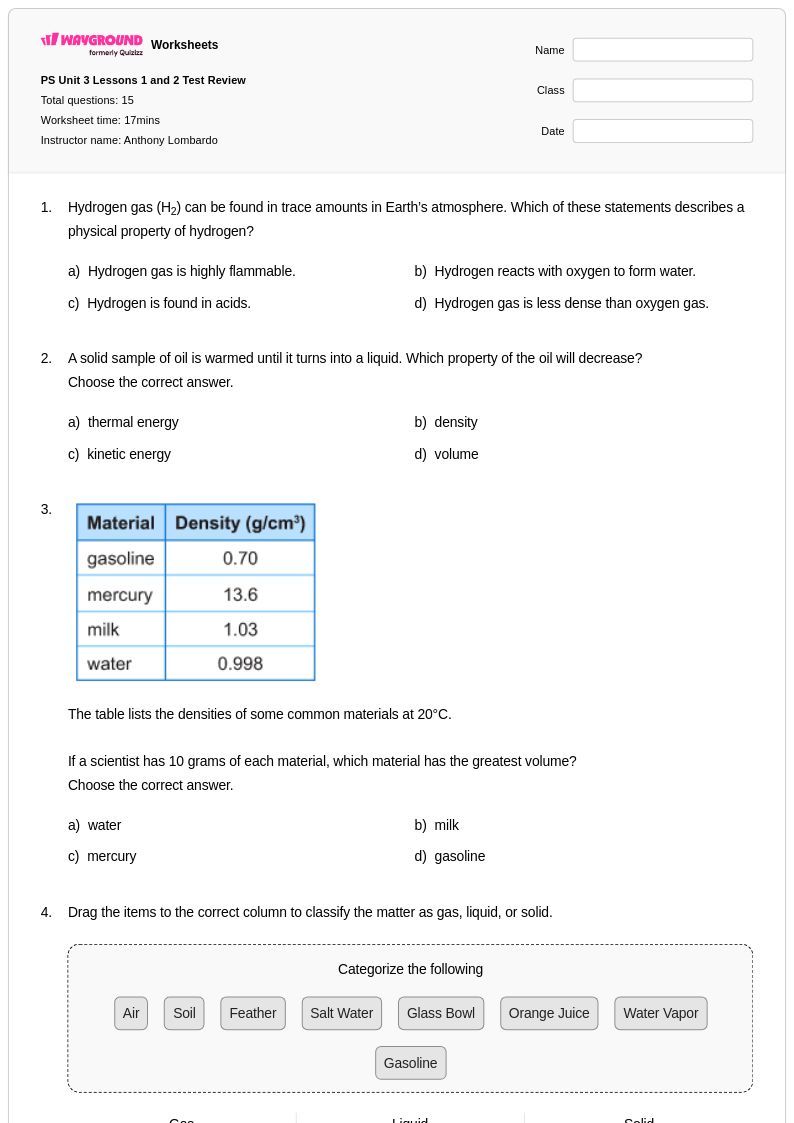
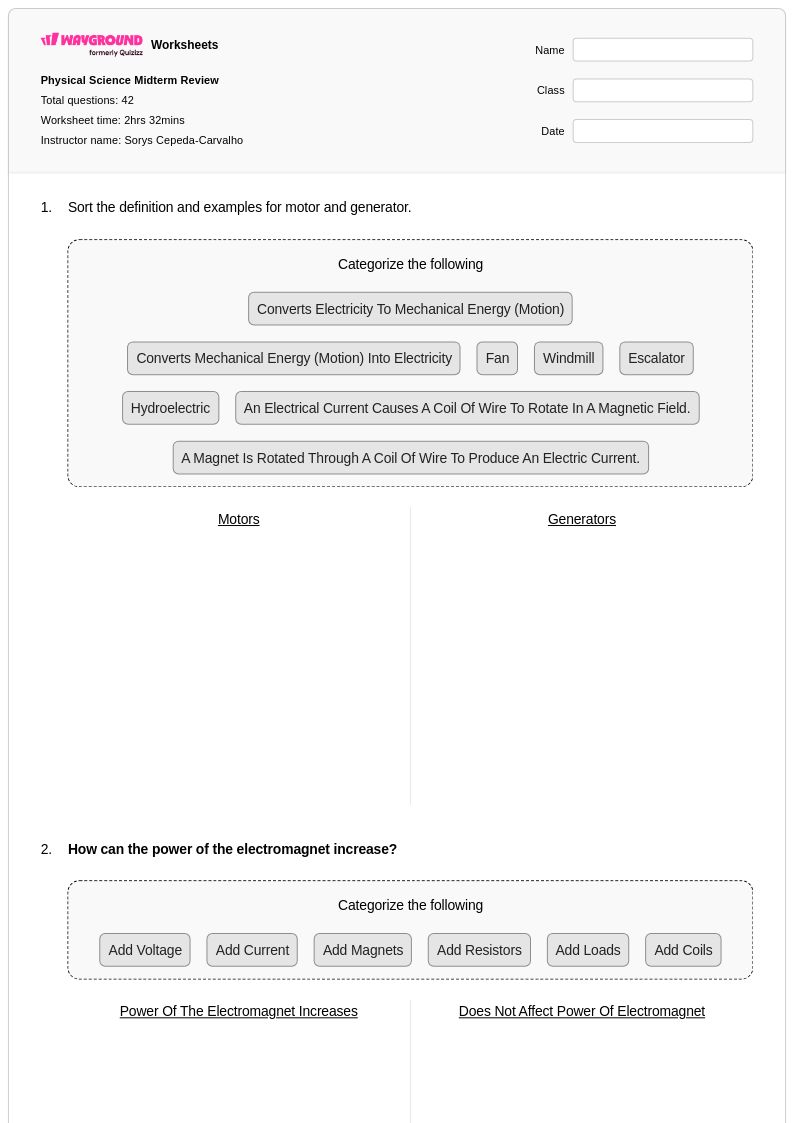
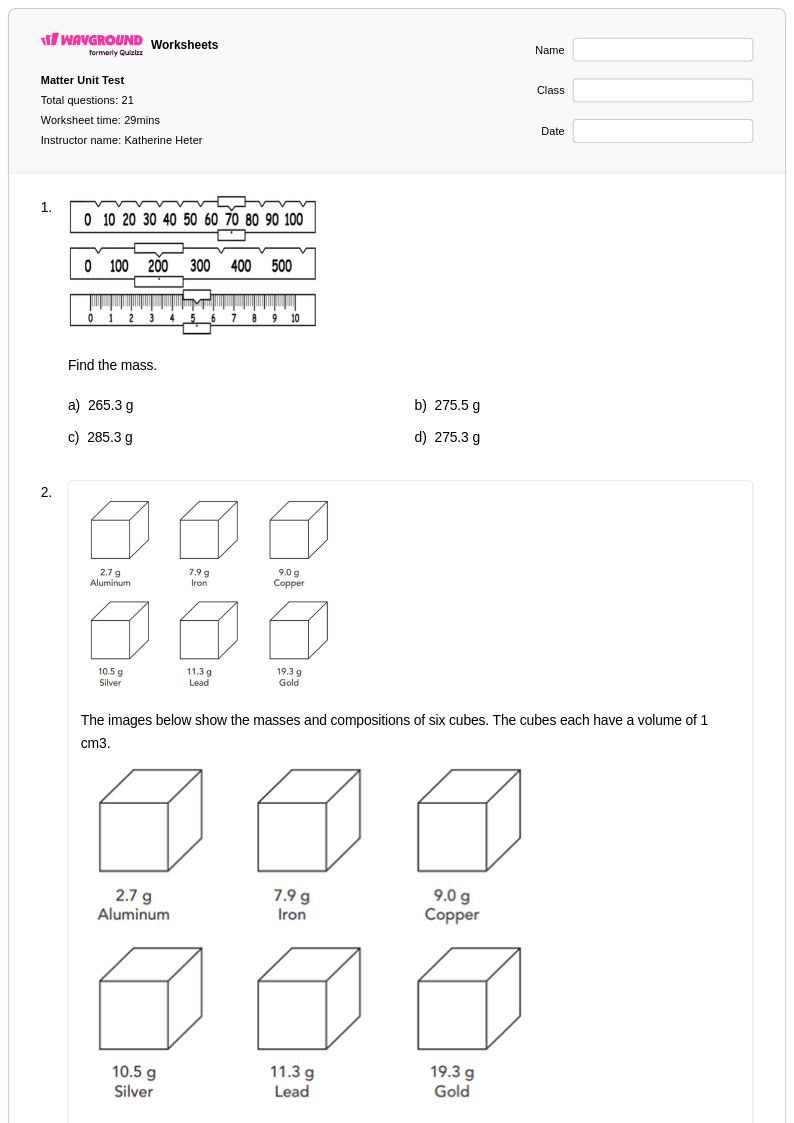
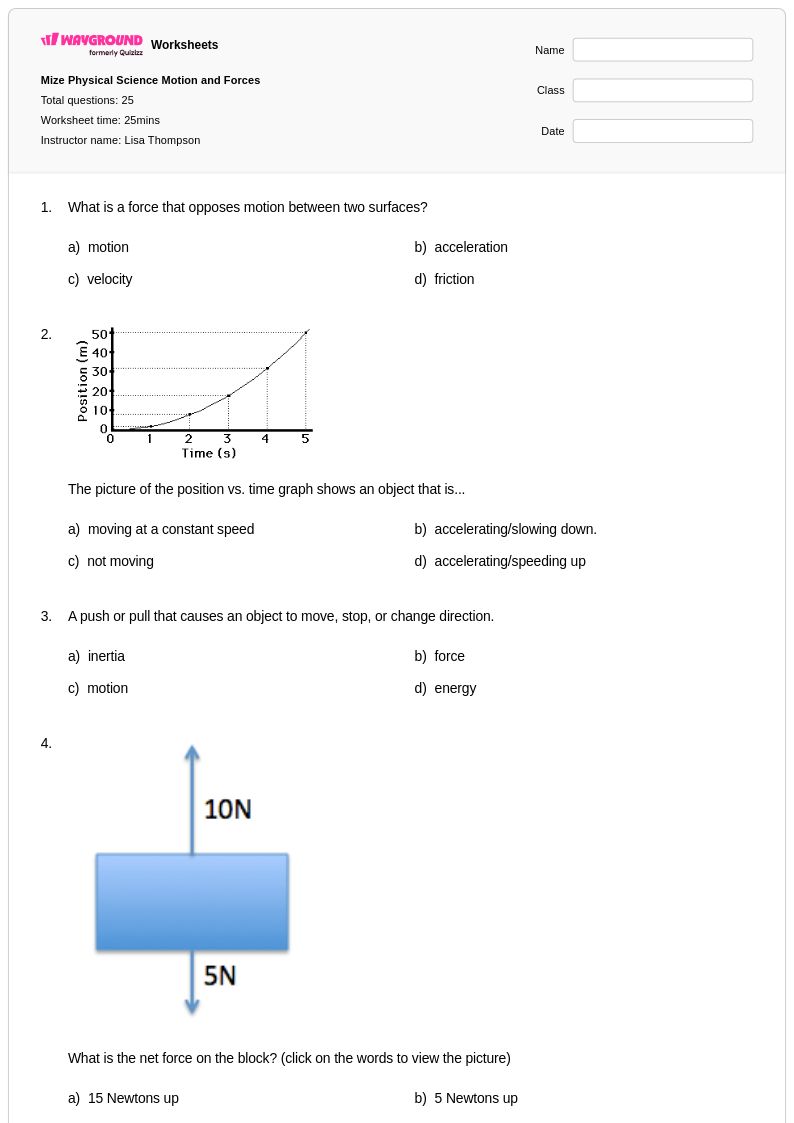
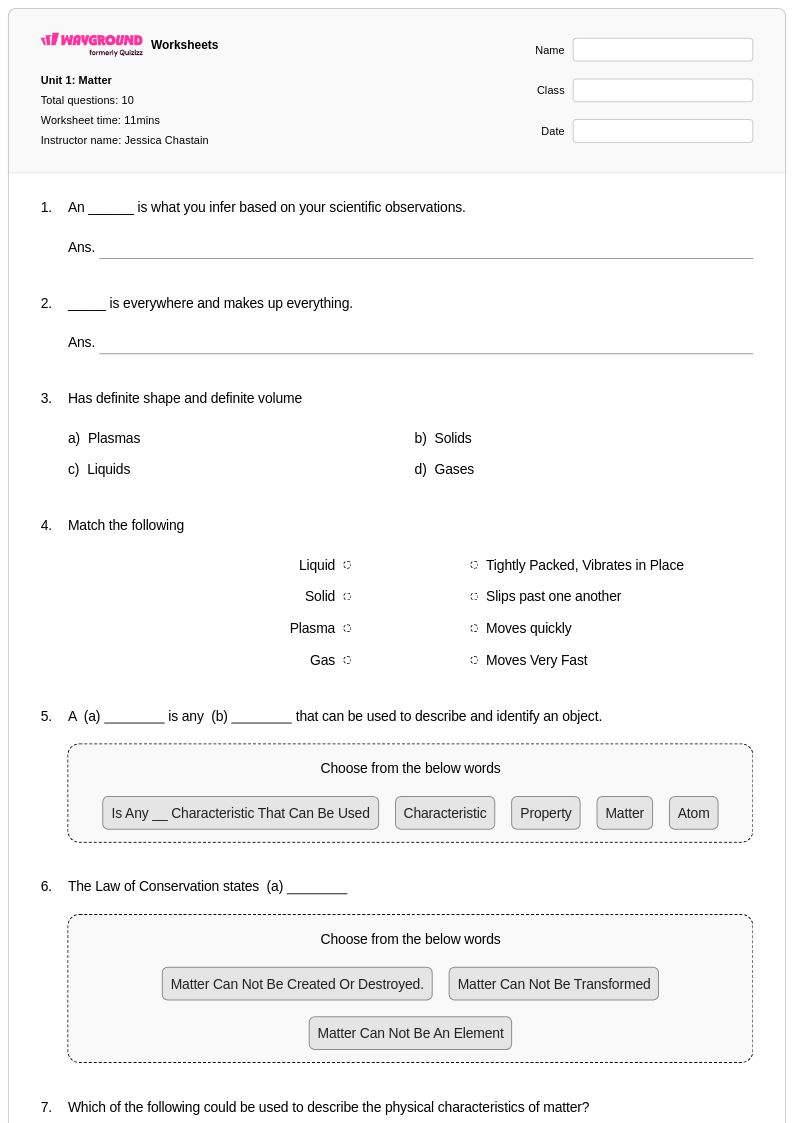
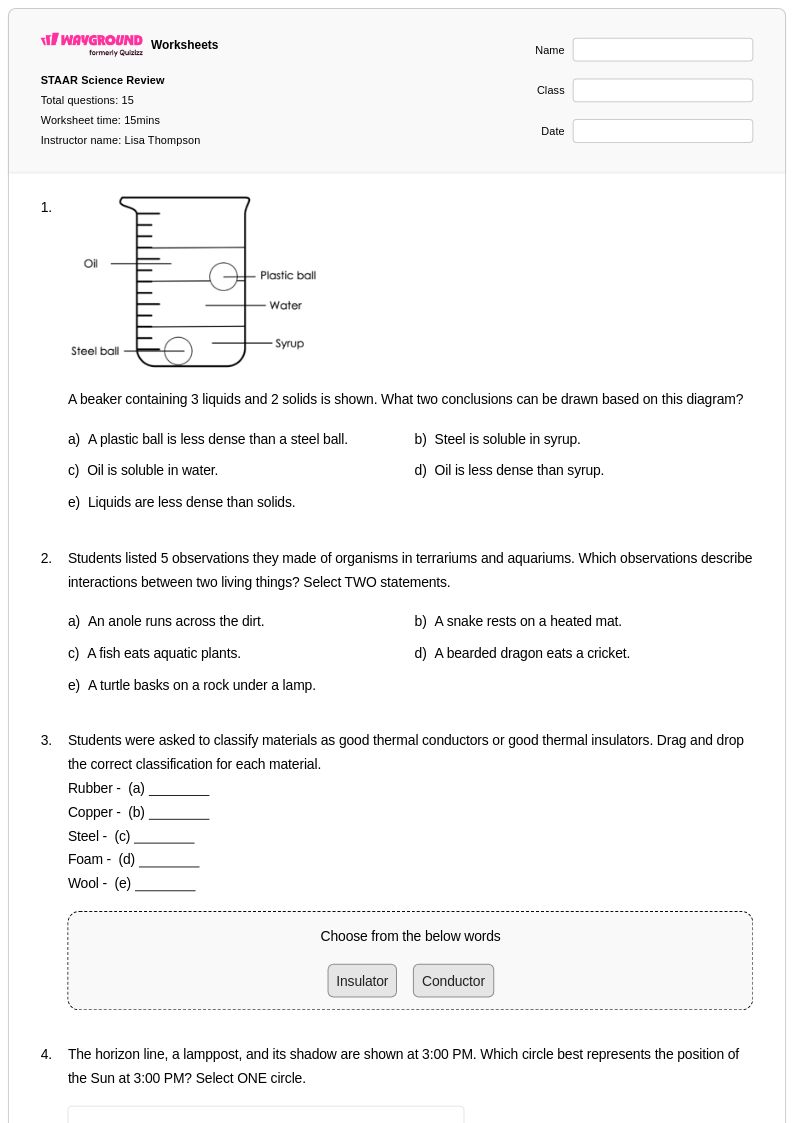
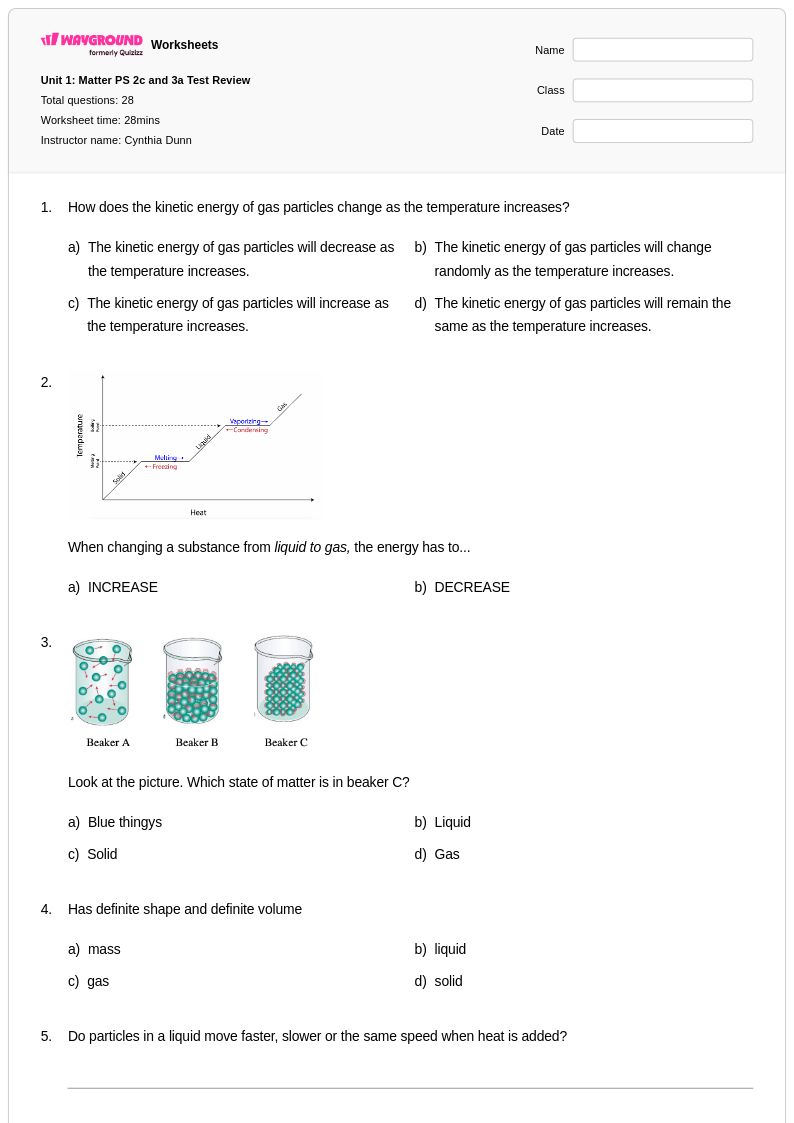
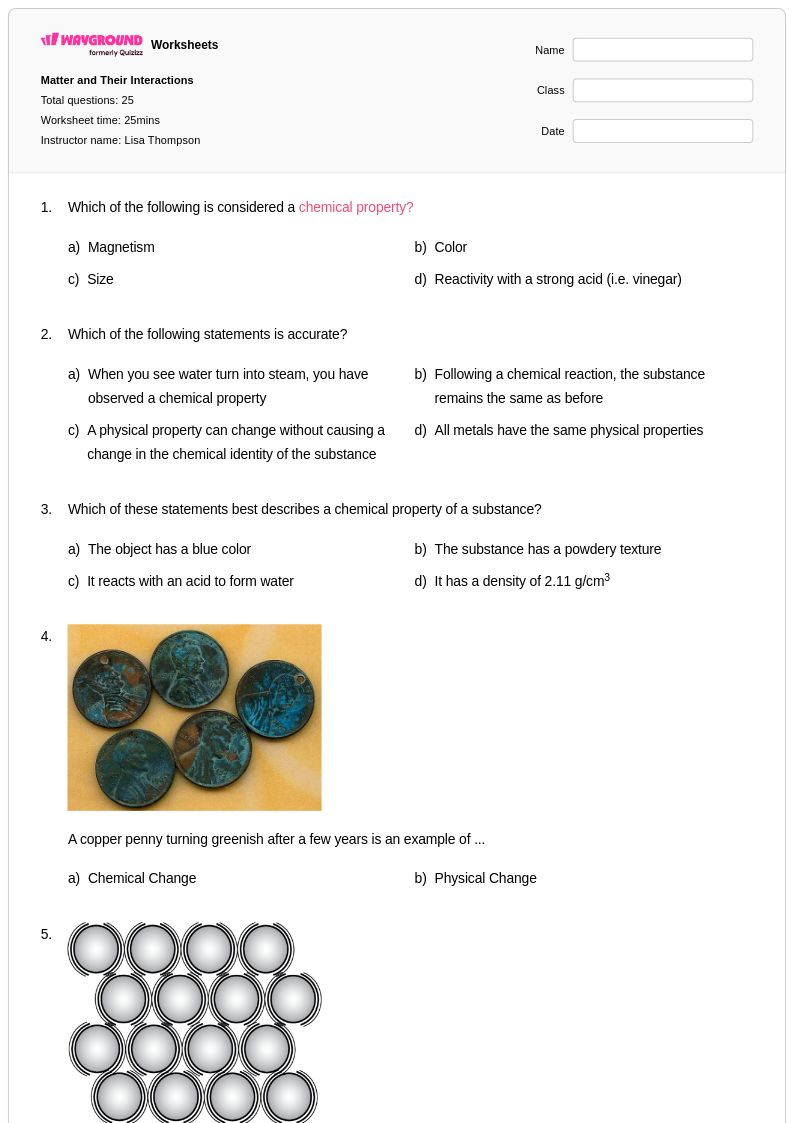
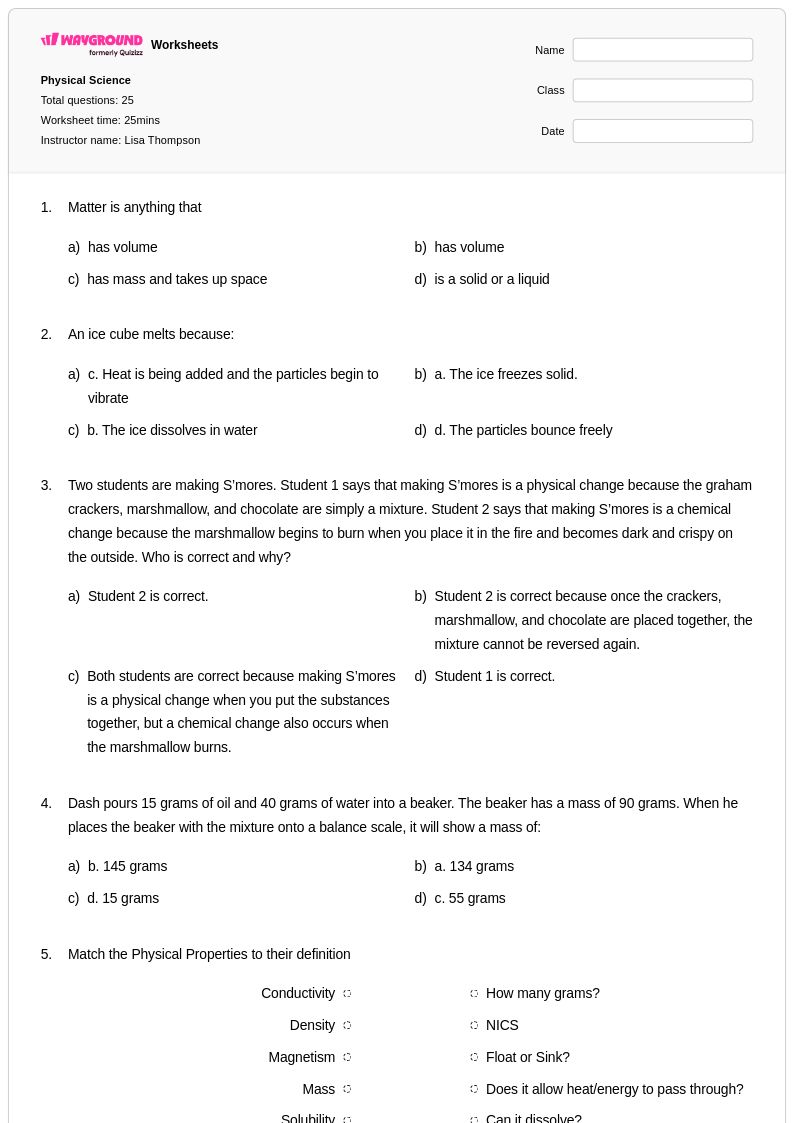
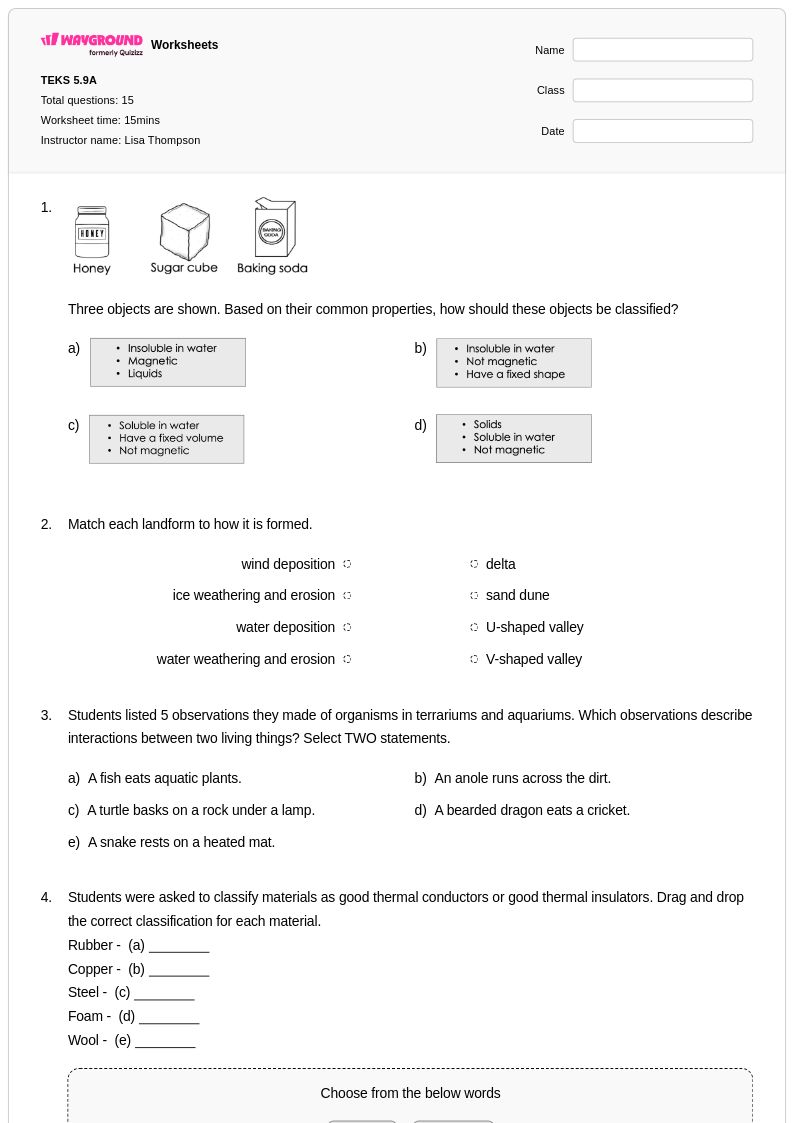
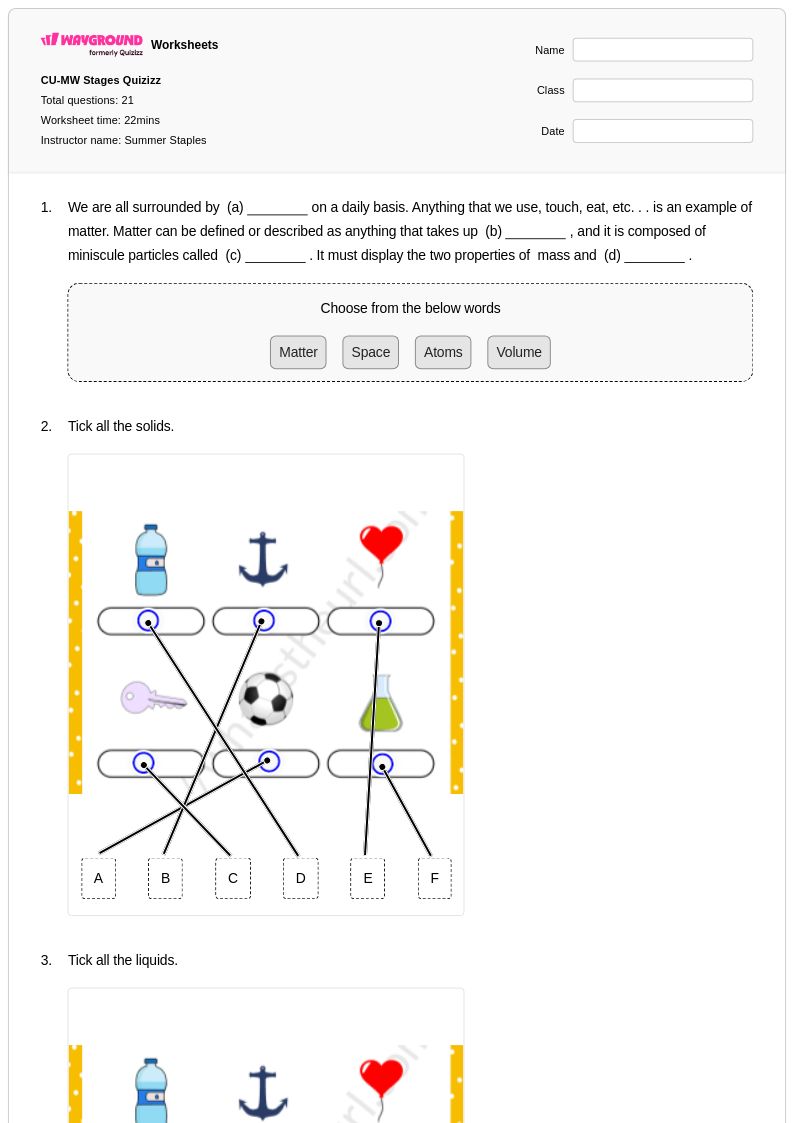
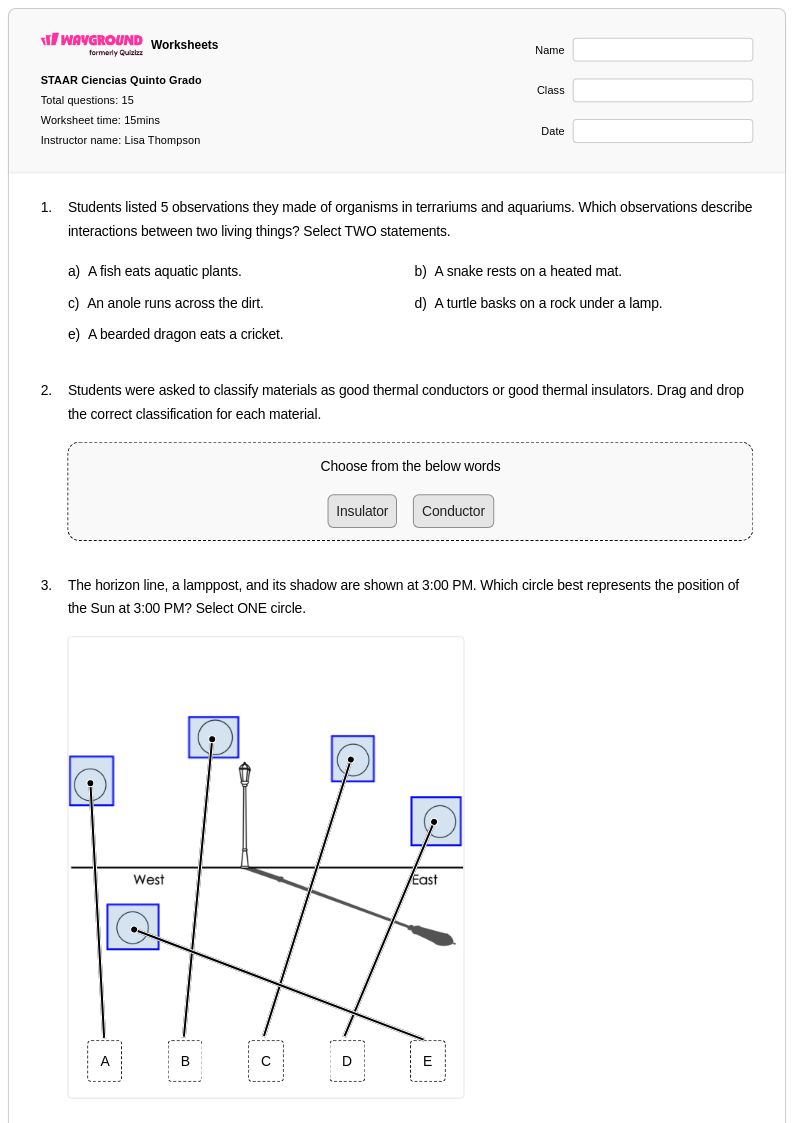
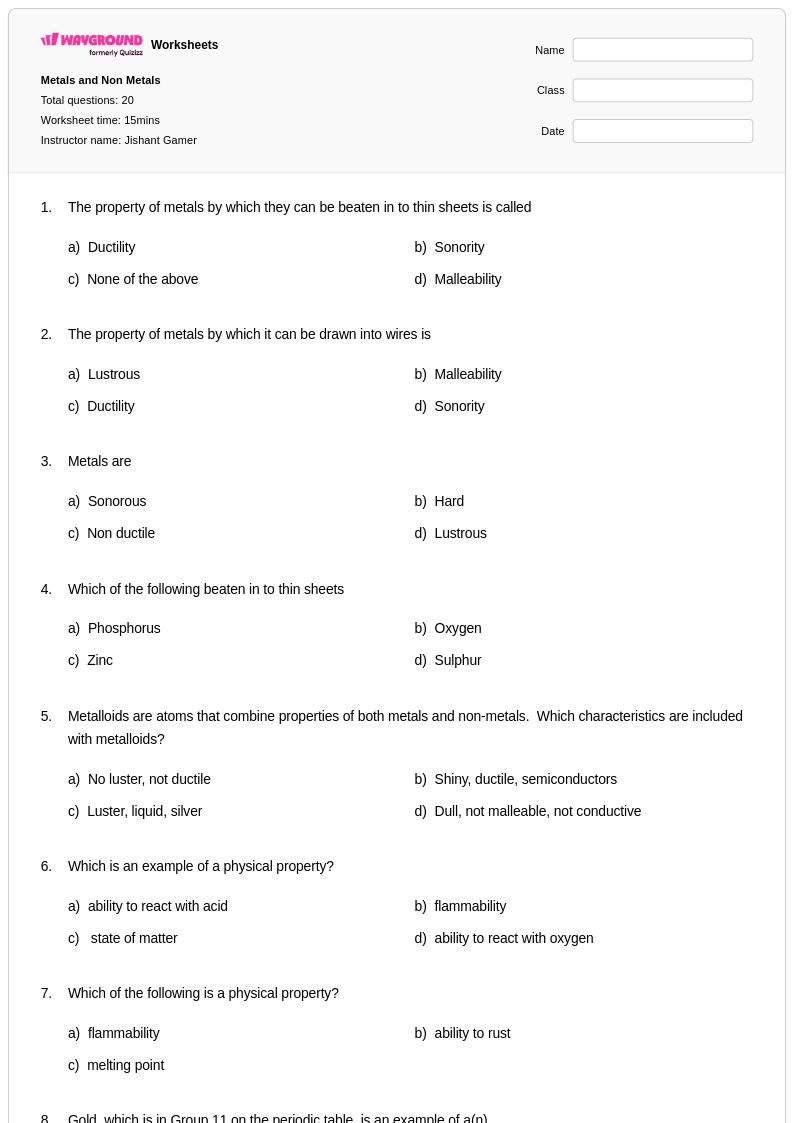
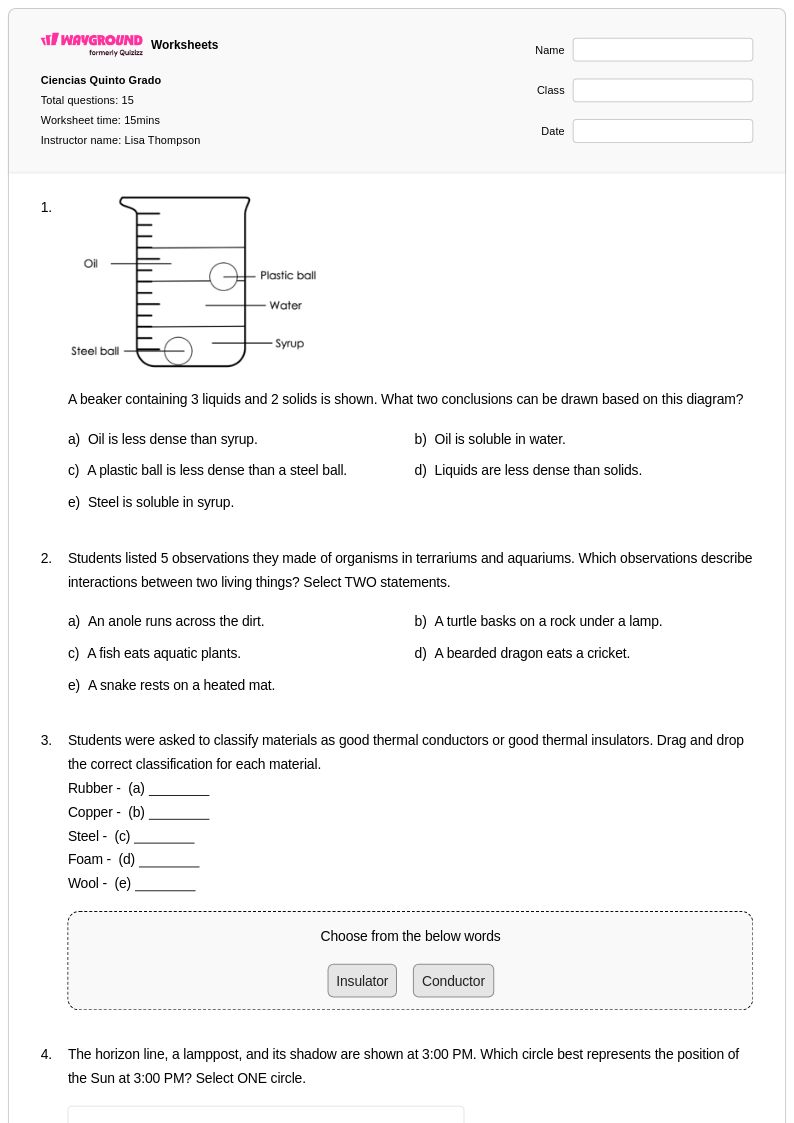
Physical property worksheets for Class 8 students available through Wayground (formerly Quizizz) provide comprehensive practice opportunities for mastering this fundamental chemistry concept. These educational resources focus on helping students identify, classify, and analyze the observable characteristics of matter that can be measured or detected without changing the substance's chemical composition. Students work through practice problems covering density, melting point, boiling point, color, texture, conductivity, and magnetism while developing critical thinking skills essential for advanced chemistry studies. The worksheets include detailed answer keys that support independent learning and self-assessment, with many resources available as free printables in convenient pdf format for classroom and home use.
Wayground (formerly Quizizz) empowers educators with millions of teacher-created physical property worksheet collections that streamline lesson planning and enhance student engagement. The platform's robust search and filtering capabilities allow teachers to quickly locate grade-appropriate materials aligned with state and national science standards, while differentiation tools enable customization for diverse learning needs and ability levels. Teachers can access both printable pdf versions for traditional classroom activities and digital formats that support interactive learning environments, making these resources invaluable for initial concept introduction, skill reinforcement, remediation support, and enrichment opportunities. The extensive collection ensures that educators have multiple worksheet options to address various learning styles and provide targeted practice that builds student confidence in identifying and analyzing the physical properties of matter.
FAQs
How do I teach physical properties of matter to students?
Start by grounding students in observable, measurable characteristics such as density, color, melting point, boiling point, solubility, conductivity, and magnetism before introducing chemical properties. Use concrete comparisons — for example, explaining that cutting a piece of iron changes its shape but not its chemical identity — to reinforce that physical properties do not alter a substance's chemical composition. Hands-on observations and structured practice problems help students move from recognition to analysis.
What exercises help students practice identifying physical properties?
Practice exercises that ask students to classify a list of observations as physical or chemical properties are particularly effective, as they force students to apply definitions rather than recall them. Problems involving density calculations, solubility comparisons, and conductivity identification build quantitative reasoning alongside conceptual understanding. Worksheets that pair examples with answer keys allow students to self-check and correct misconceptions in real time.
What mistakes do students commonly make when learning about physical properties?
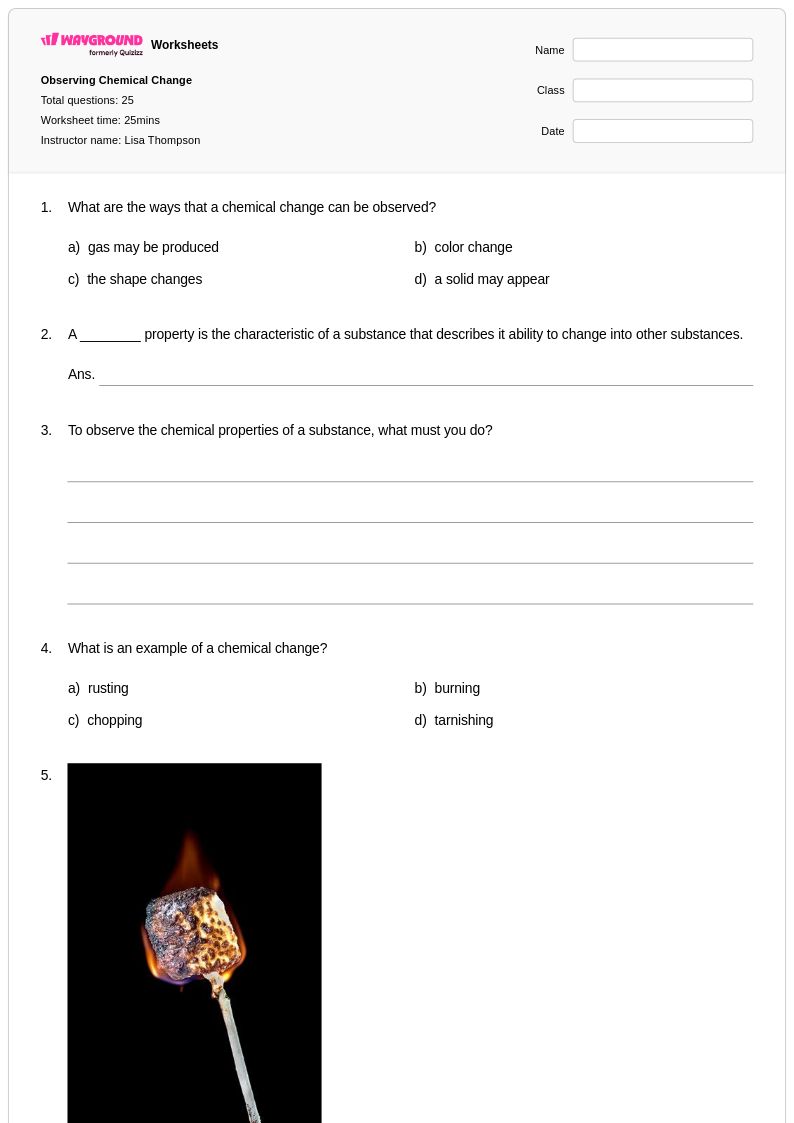
The most common error is confusing physical changes with chemical changes — students often assume that any dramatic observable change, such as melting or dissolving, must alter the substance's chemical composition. Another frequent misconception is treating all measurable properties as physical, without recognizing that properties like flammability or reactivity are chemical in nature. Targeted practice distinguishing between the two categories, with immediate feedback, is the most reliable way to address these errors.
How do I differentiate physical property instruction for students at different ability levels?
For students who need additional support, reducing the number of answer choices on identification tasks lowers cognitive load while keeping the core concept intact. Advanced learners benefit from open-ended problems that require them to explain why a property is physical rather than simply label it. Wayground's accommodation tools allow teachers to assign reduced answer choices or extended time to individual students without signaling those adjustments to the rest of the class.
How can I use Wayground's physical property worksheets in my classroom?
Wayground's physical property worksheets are available as printable PDFs for traditional classroom use and in digital formats for technology-integrated environments, giving teachers flexibility regardless of their classroom setup. Teachers can also host worksheets directly as a quiz on Wayground, enabling real-time tracking of student responses. Each worksheet includes a complete answer key, making them practical for independent practice, guided instruction, or targeted remediation sessions.