
12 Q
5th
15 Q
4th
15 Q
7th - Uni
12 Q
3rd
26 Q
6th
12 Q
2nd - Uni
15 Q
3rd
37 Q
6th - Uni
10 Q
6th
8 Q
7th - 10th
10 Q
2nd
10 Q
6th - 8th
20 Q
9th
30 Q
8th
19 Q
7th
20 Q
8th - 10th
10 Q
2nd - Uni
16 Q
3rd
12 Q
3rd
20 Q
9th
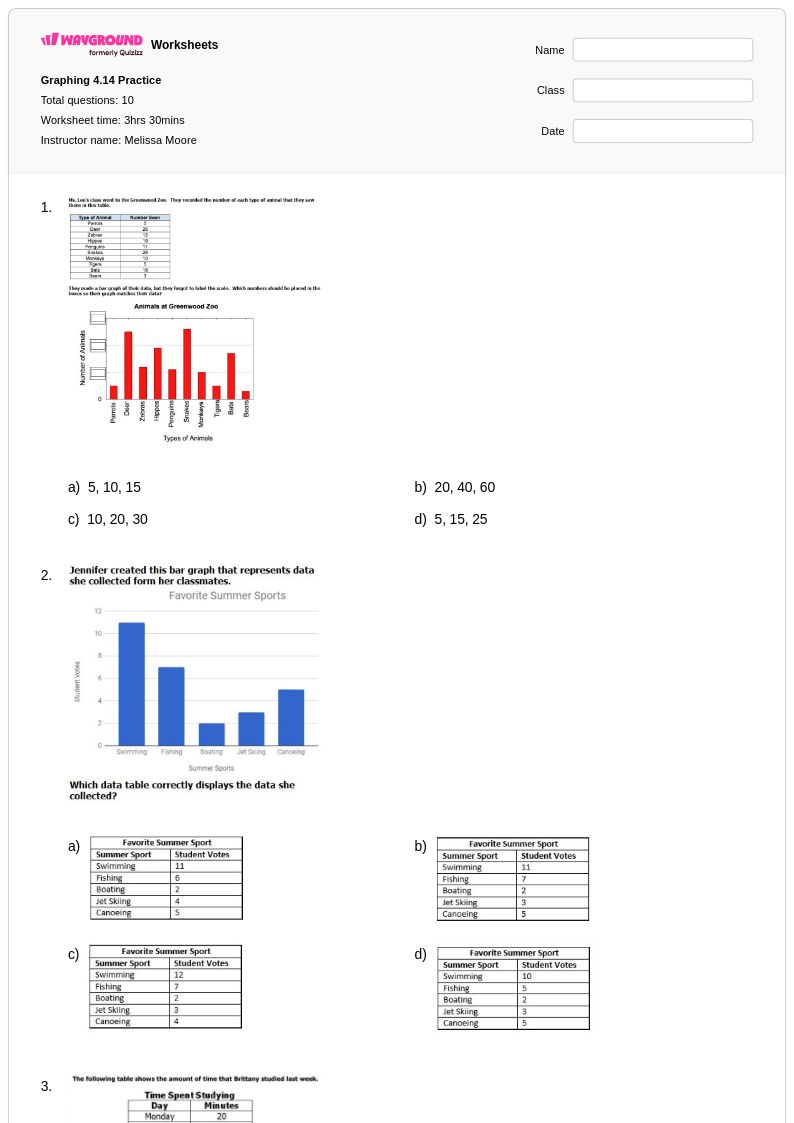
10 Q
4th
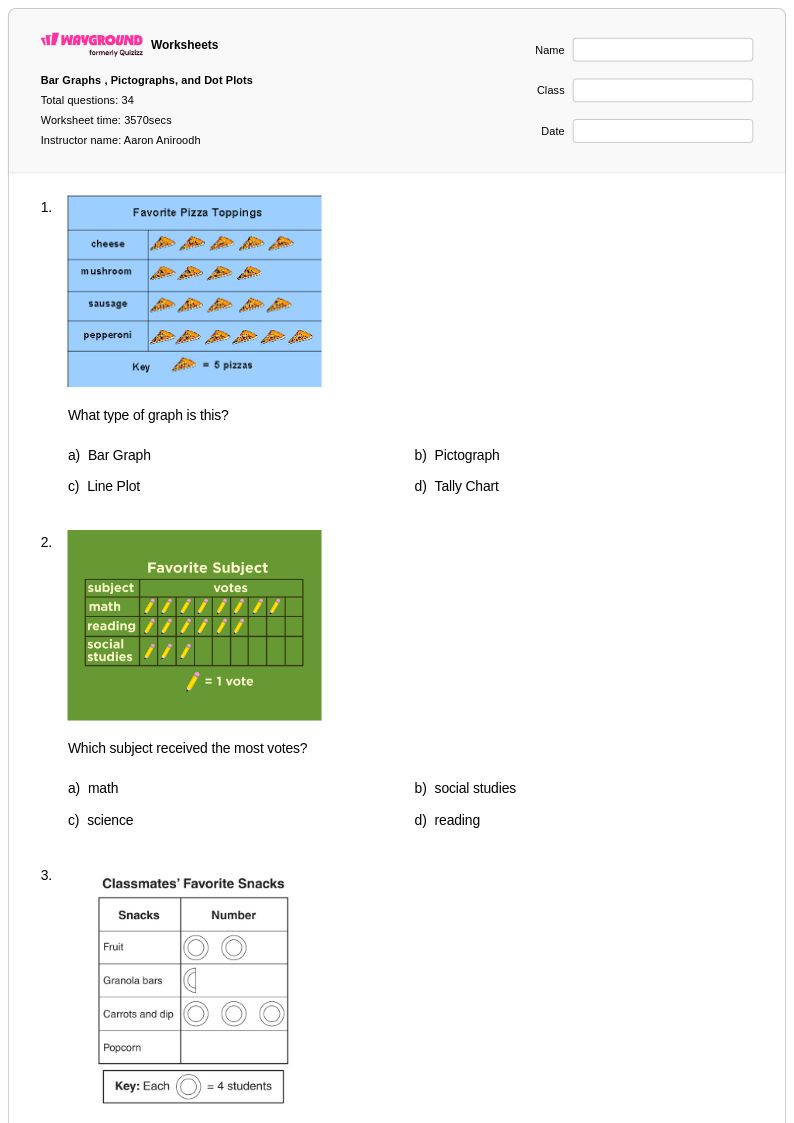
34 Q
3rd
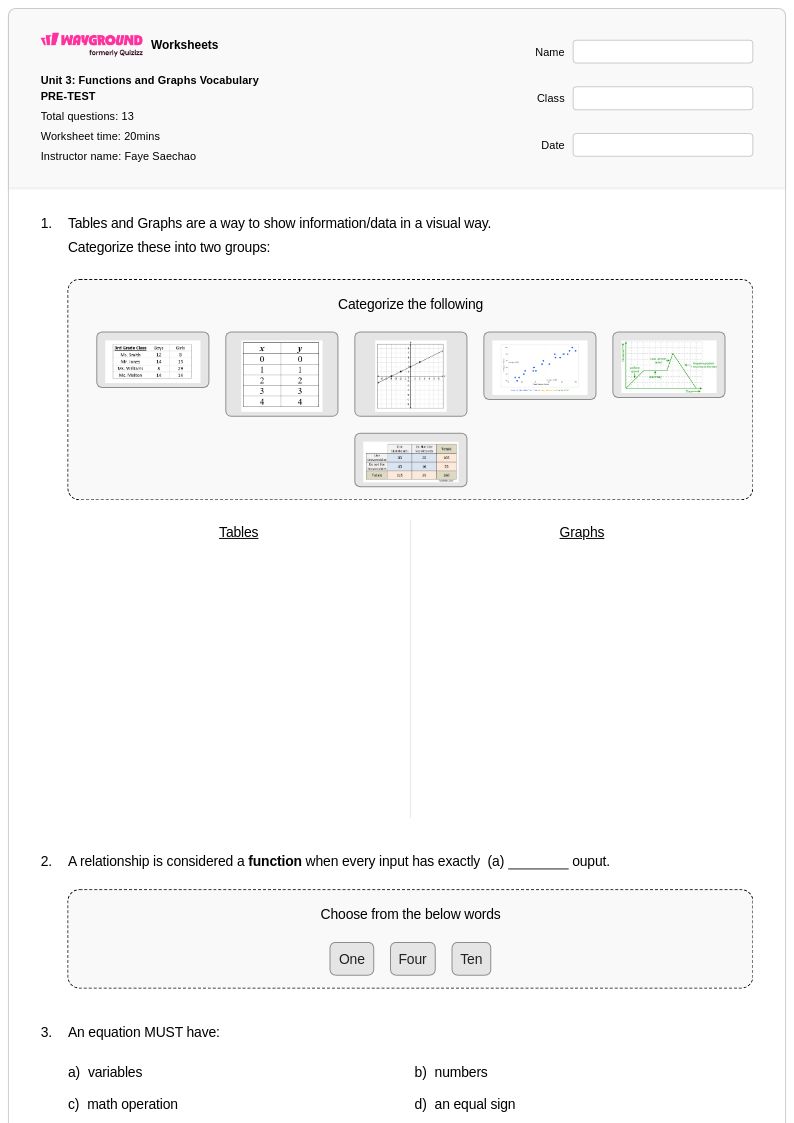
13 Q
8th
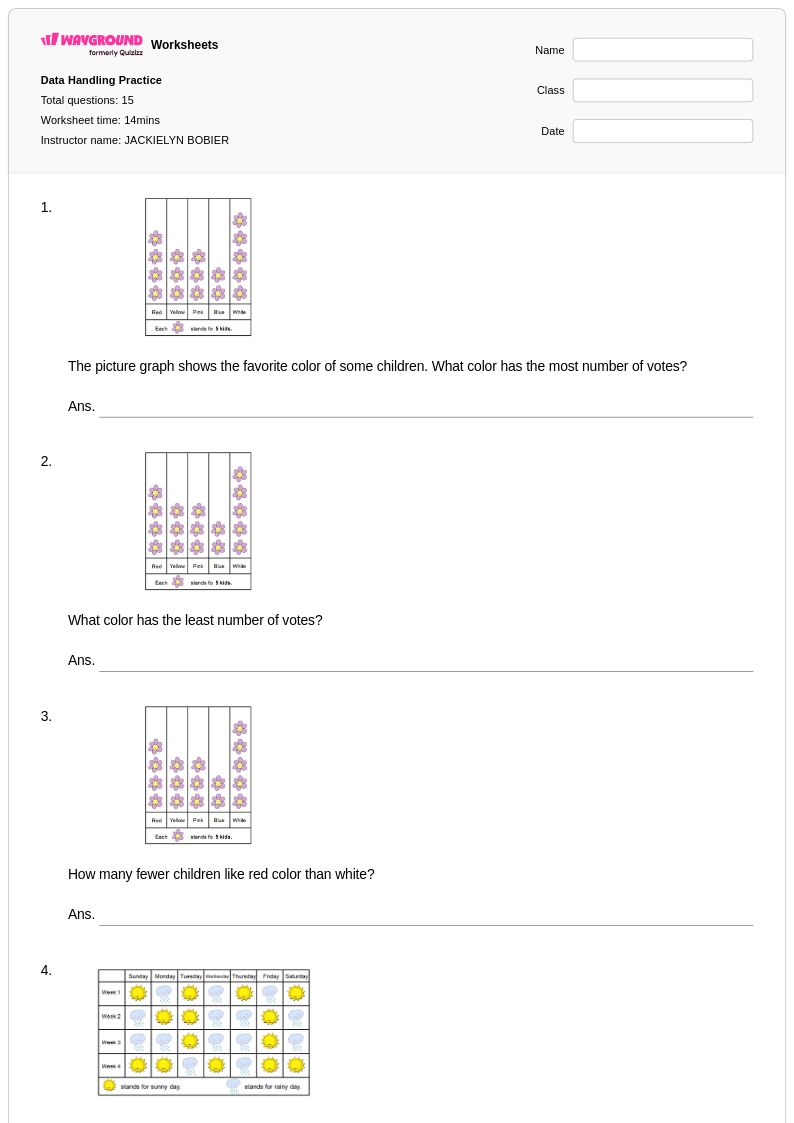
15 Q
2nd
Explore Reading Graphs Worksheets by Grades
Explore Other Subject Worksheets for kindergarten
Explore printable Reading Graphs worksheets for Kindergarten
Reading graphs worksheets for kindergarten from Wayground (formerly Quizizz) provide young learners with essential foundational skills for interpreting visual data representations. These carefully designed printable resources help kindergarten students develop critical thinking abilities as they learn to extract information from simple pictographs, bar graphs, and tally charts. The practice problems focus on fundamental graph reading concepts such as counting objects, identifying which category has more or fewer items, and answering basic questions about the data presented. Each worksheet includes an answer key to support accurate assessment and comes in convenient pdf format for easy classroom distribution, making these free educational materials accessible for both in-person and remote learning environments.
Wayground (formerly Quizizz) empowers educators with millions of teacher-created graph reading resources specifically tailored for kindergarten mathematics instruction. The platform's robust search and filtering capabilities allow teachers to quickly locate worksheets that align with specific learning standards and match their students' developmental needs. These differentiation tools enable instructors to customize content for varied skill levels within their classrooms, supporting both remediation for struggling learners and enrichment opportunities for advanced students. Available in both printable and digital formats including downloadable pdf versions, these comprehensive worksheet collections streamline lesson planning while providing flexible options for skill practice, formative assessment, and targeted intervention in early data interpretation concepts.
FAQs
What kind of graphs can kindergarteners understand?
How do I introduce graphs to kindergarteners?
What skills do these kindergarten graph worksheets practice?
What challenges do kindergarteners face with graphs?
How can I use this kindergarten worksheet?
How does this align with early math standards?