
10 Q
2nd
20 Q
1st - 2nd
22 Q
1st - 5th
10 Q
2nd
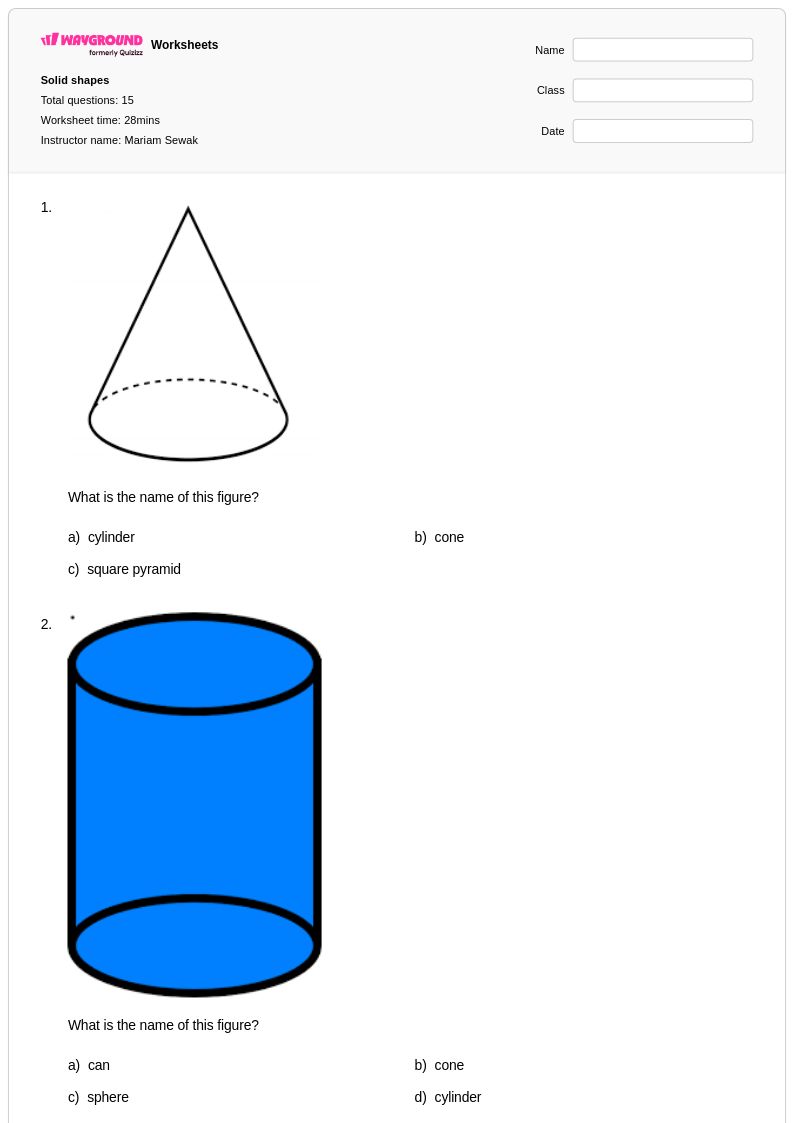
15 Q
2nd
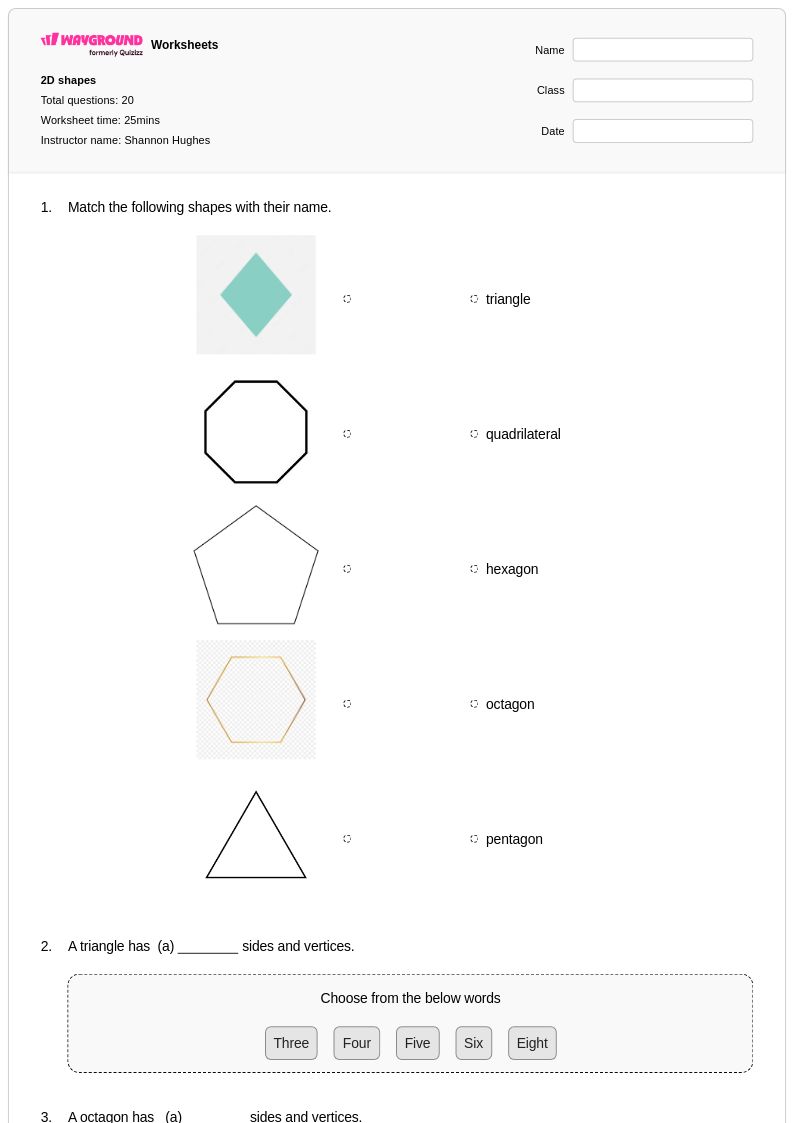
20 Q
2nd
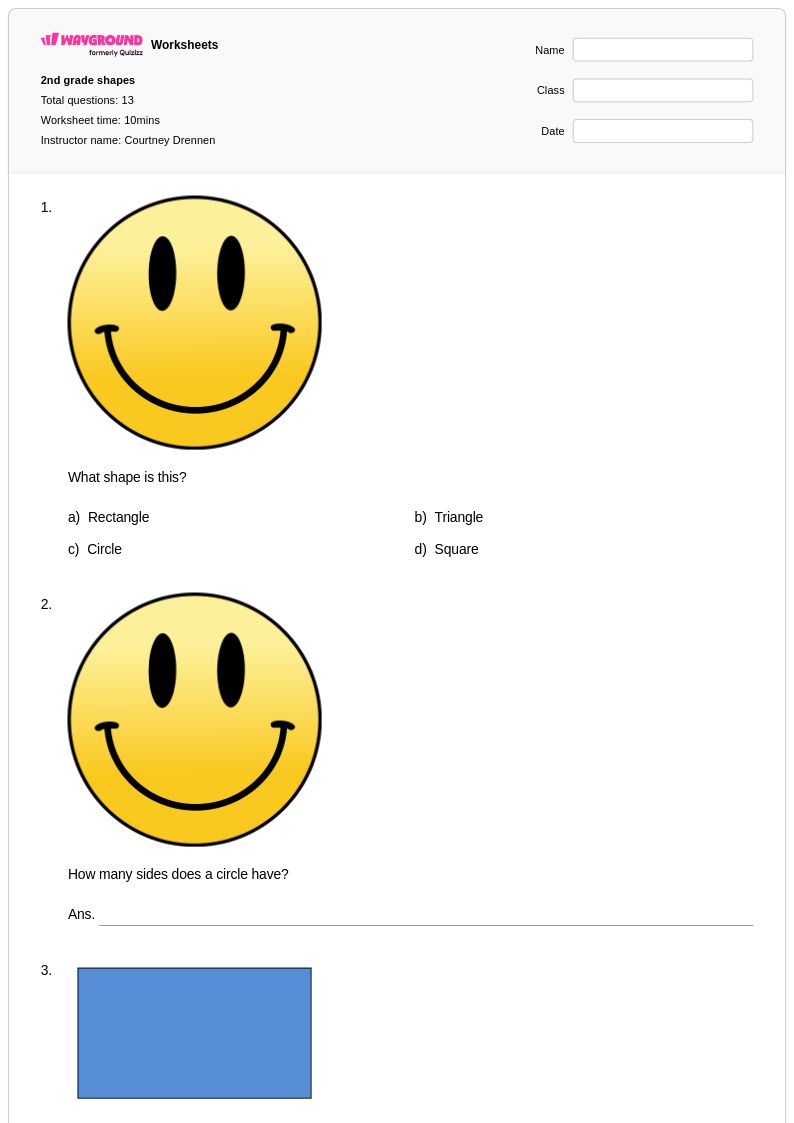
13 Q
2nd
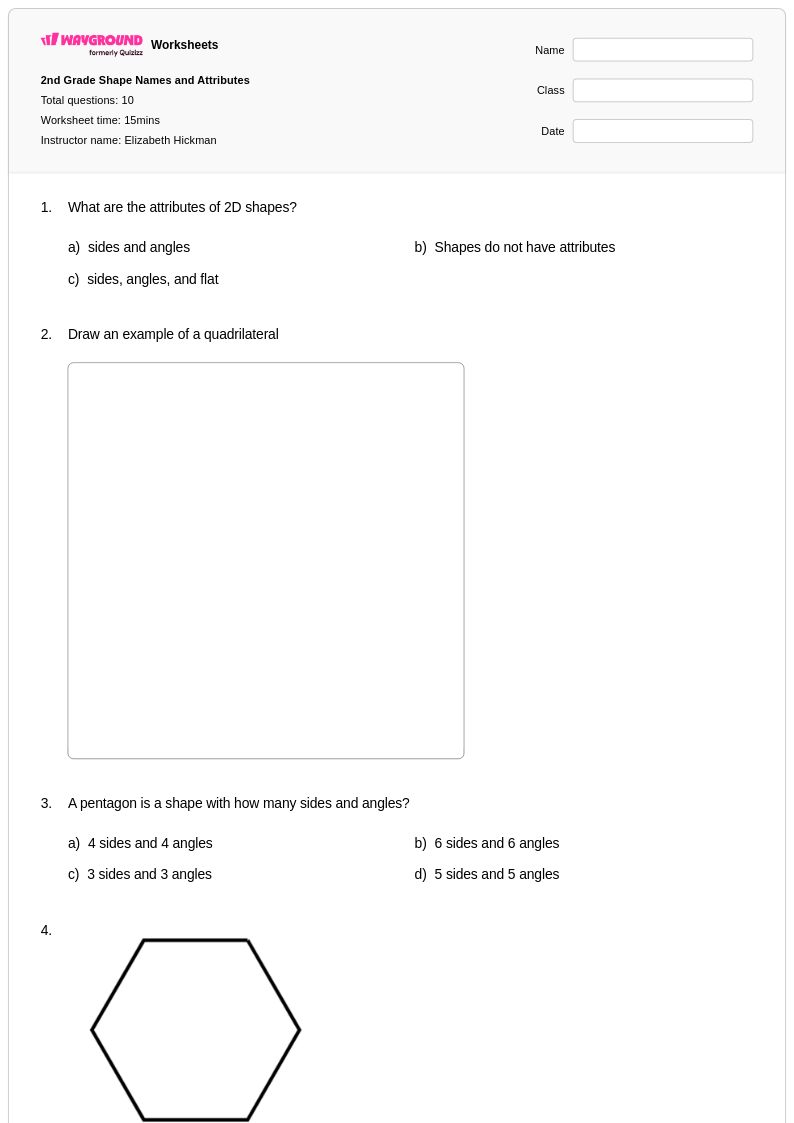
10 Q
2nd
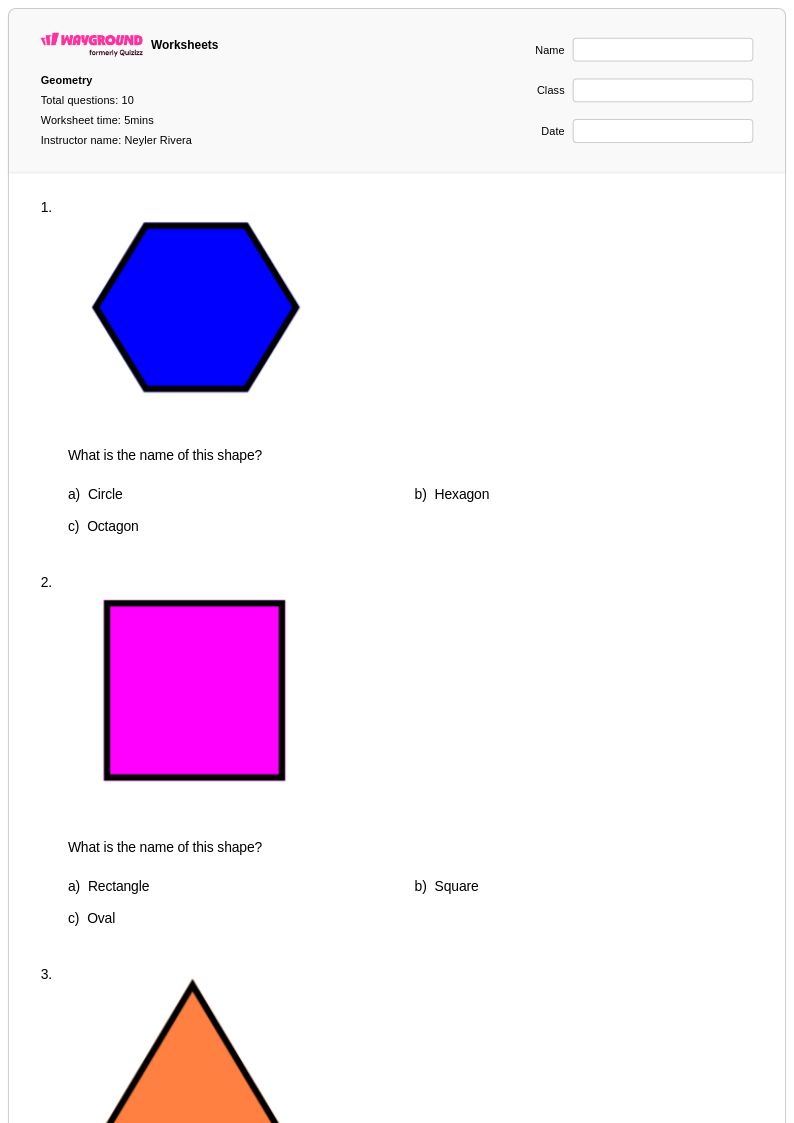
10 Q
2nd - 3rd
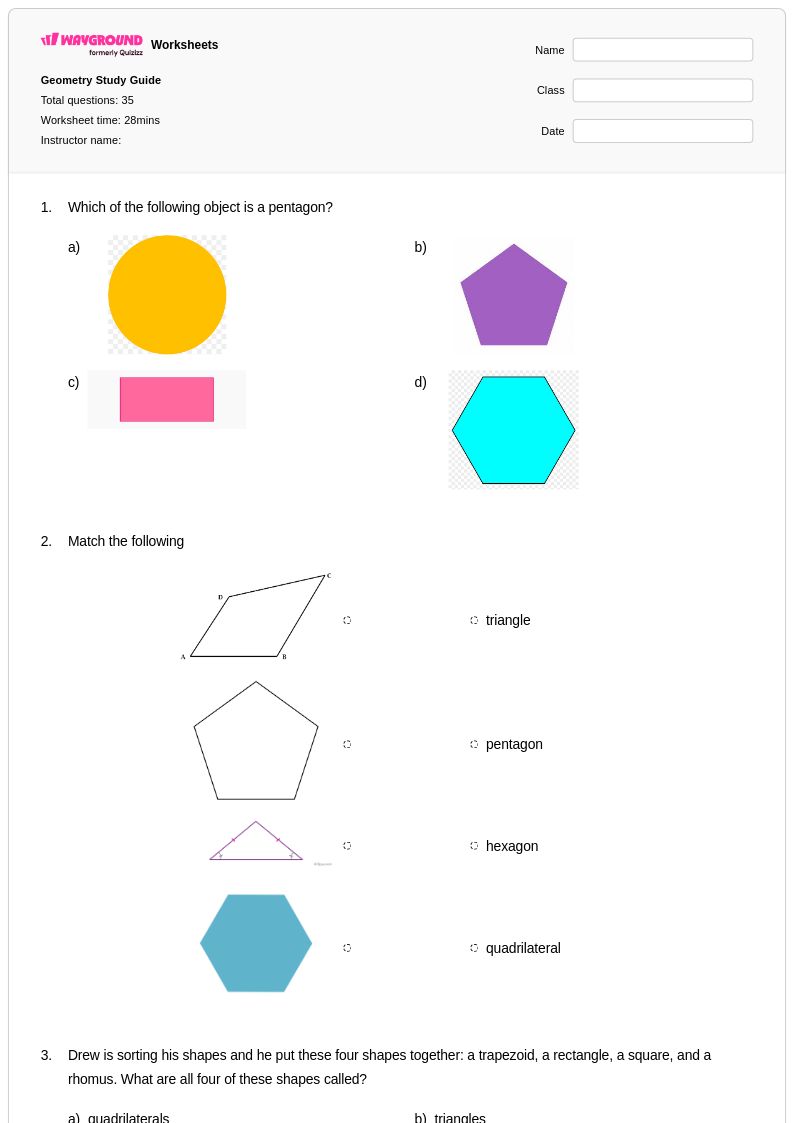
35 Q
2nd
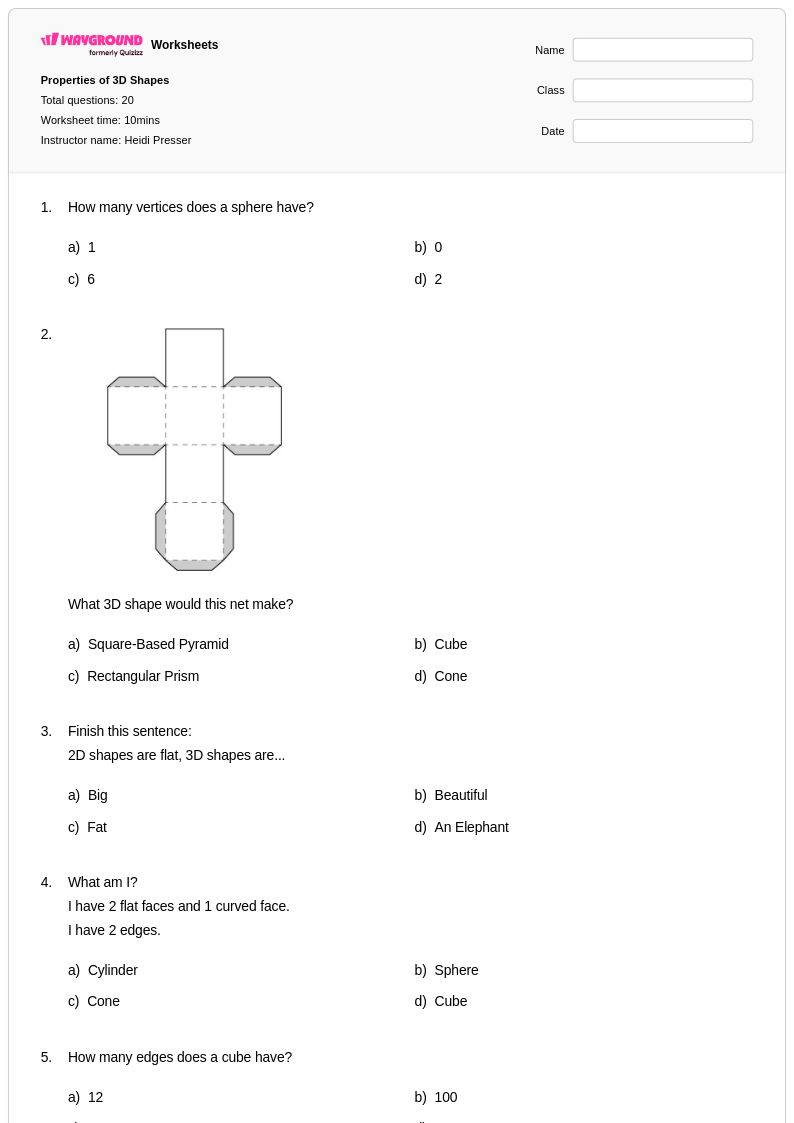
20 Q
2nd
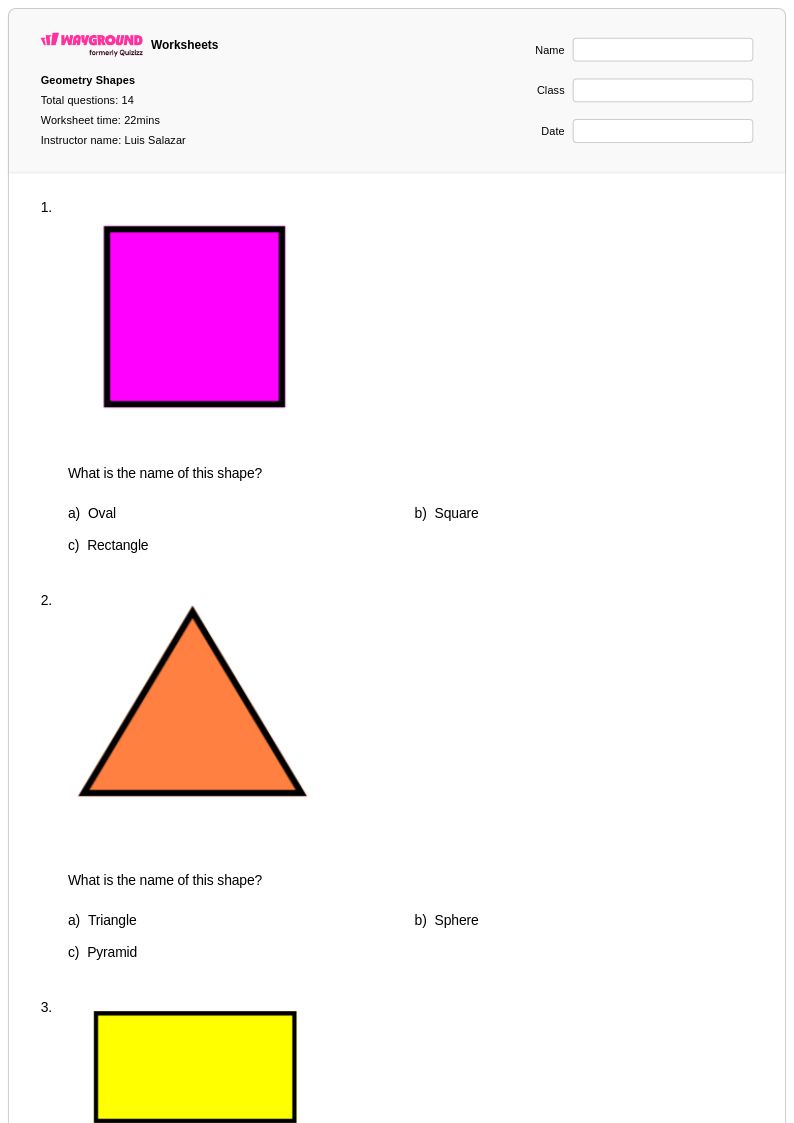
14 Q
1st - 5th
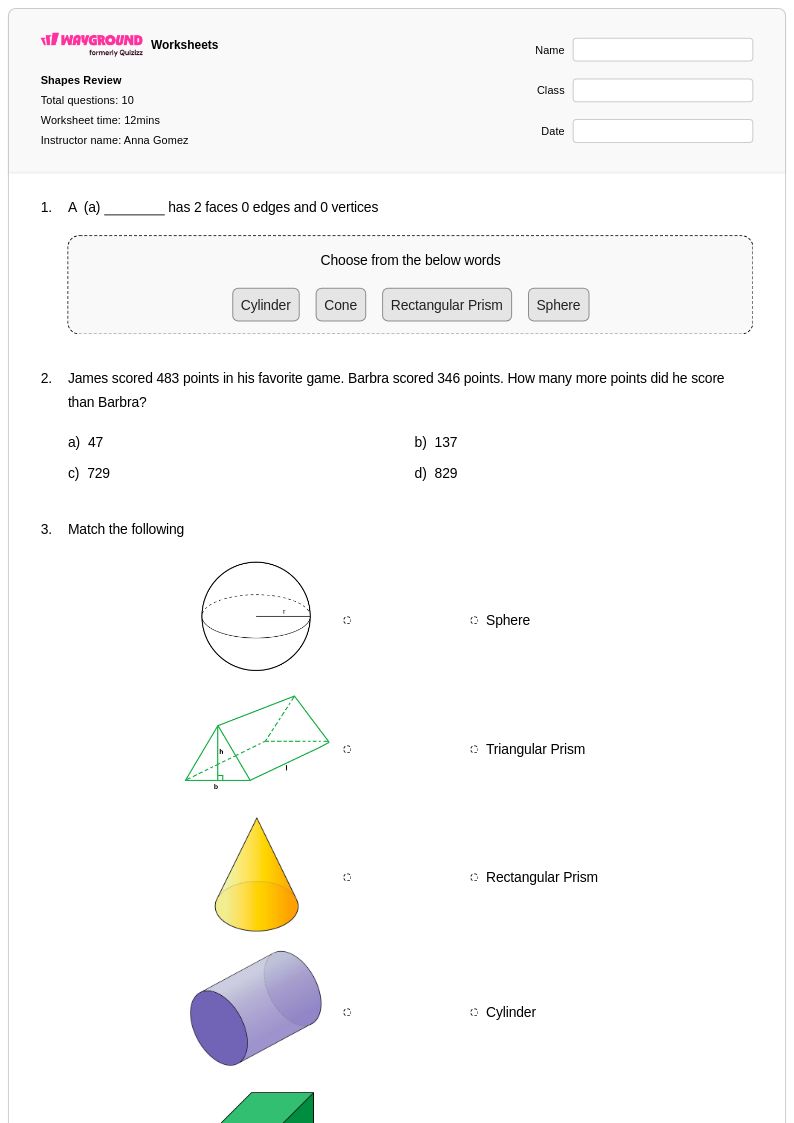
10 Q
2nd
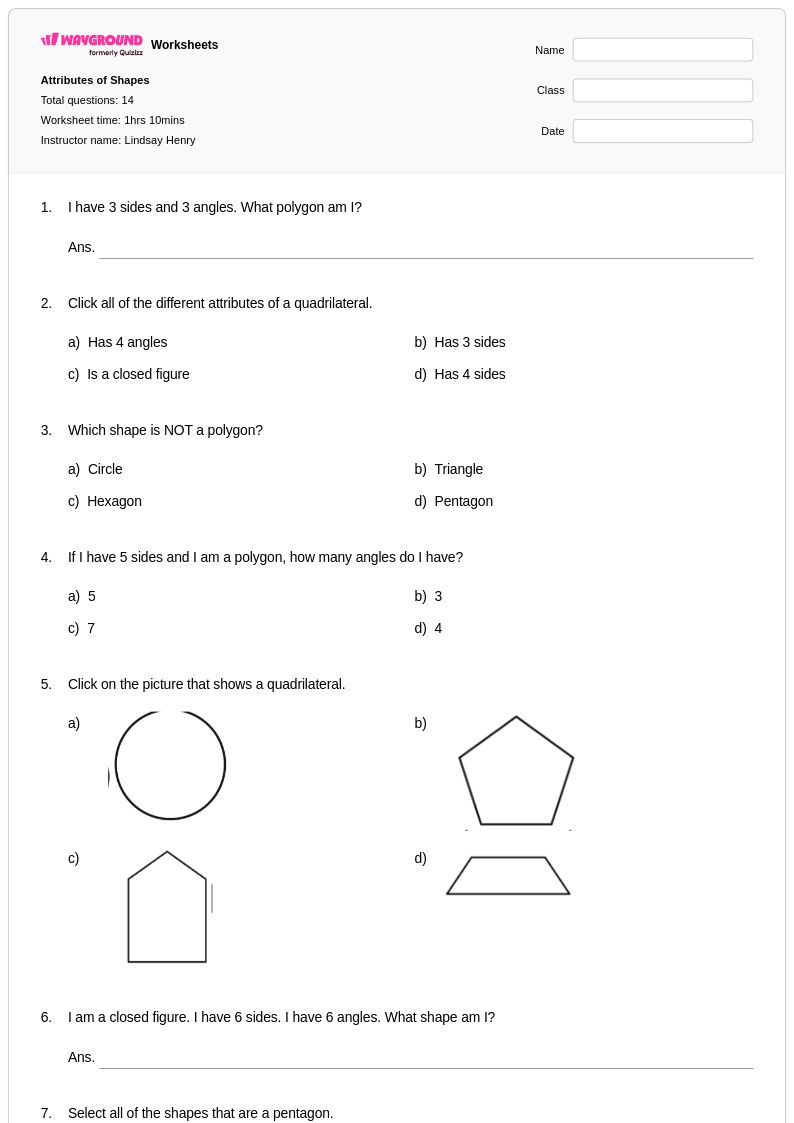
14 Q
2nd
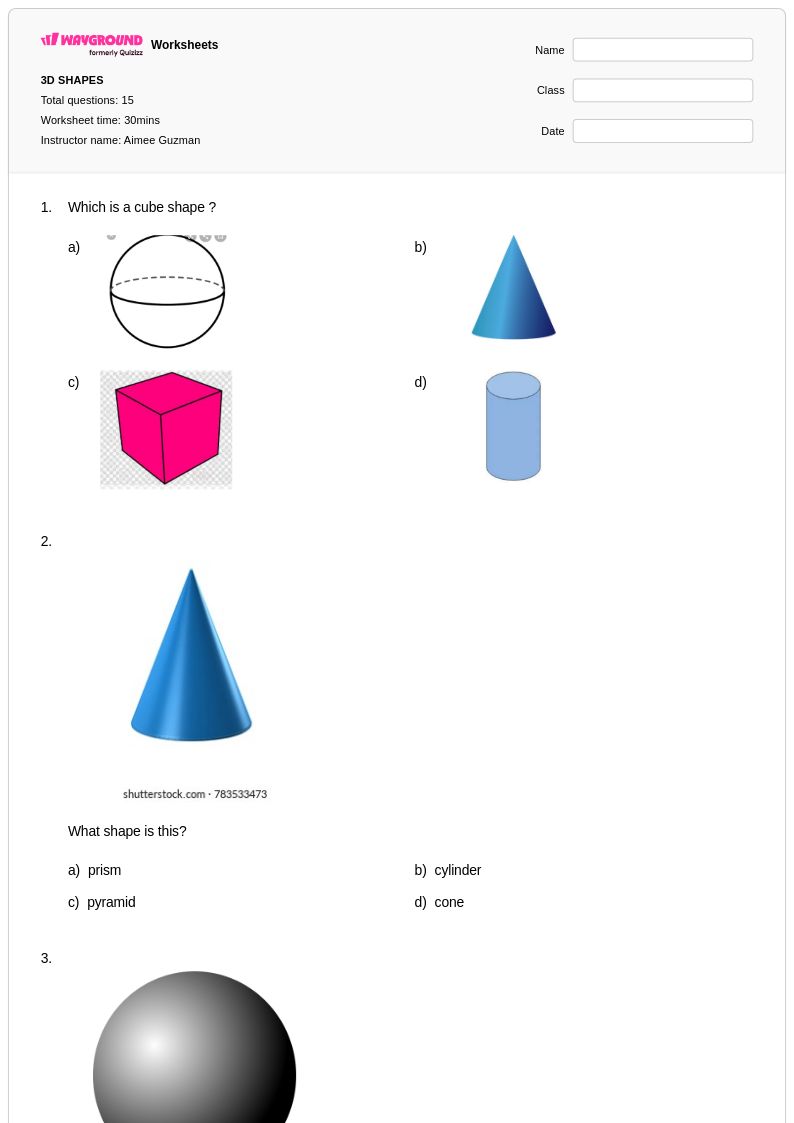
15 Q
1st - 3rd
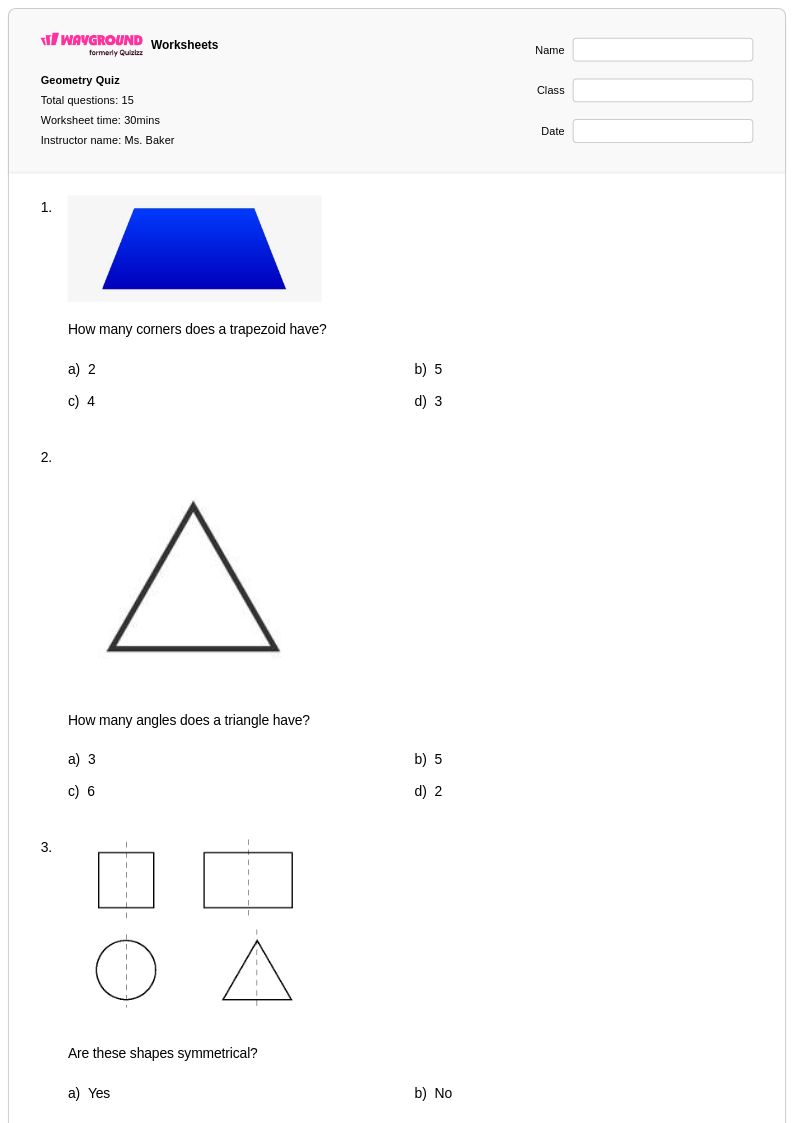
15 Q
2nd
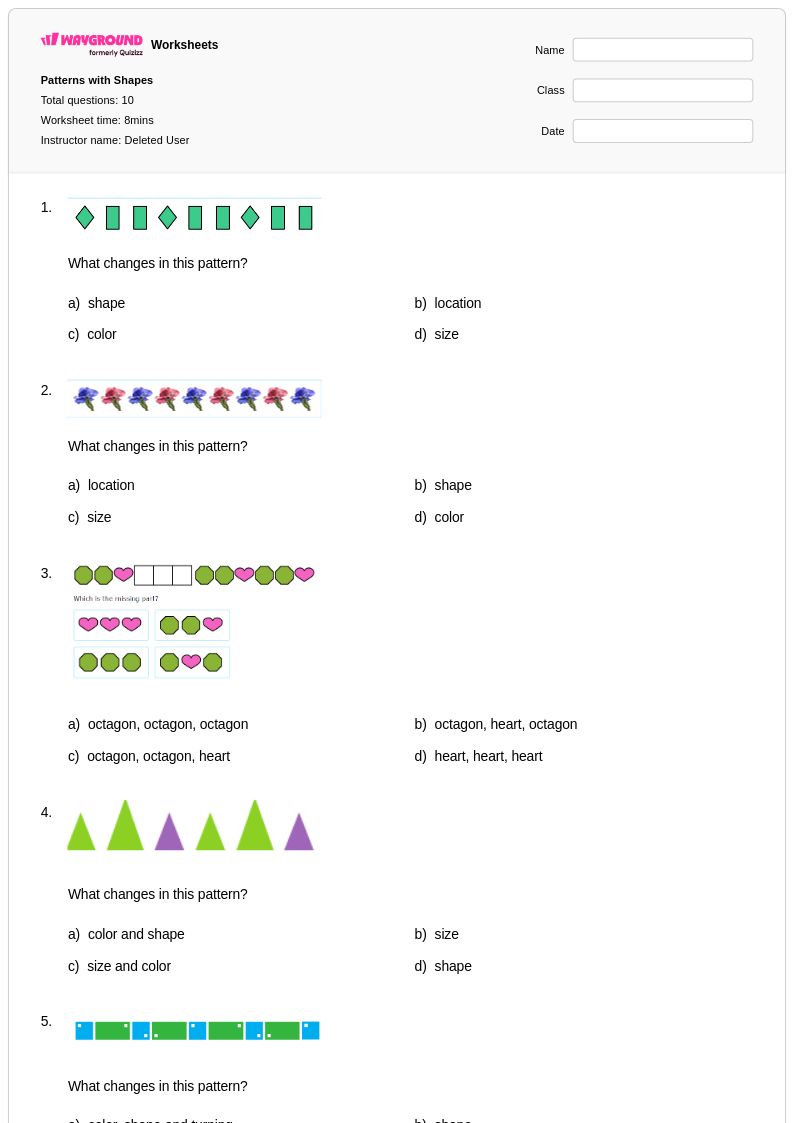
10 Q
KG - 3rd
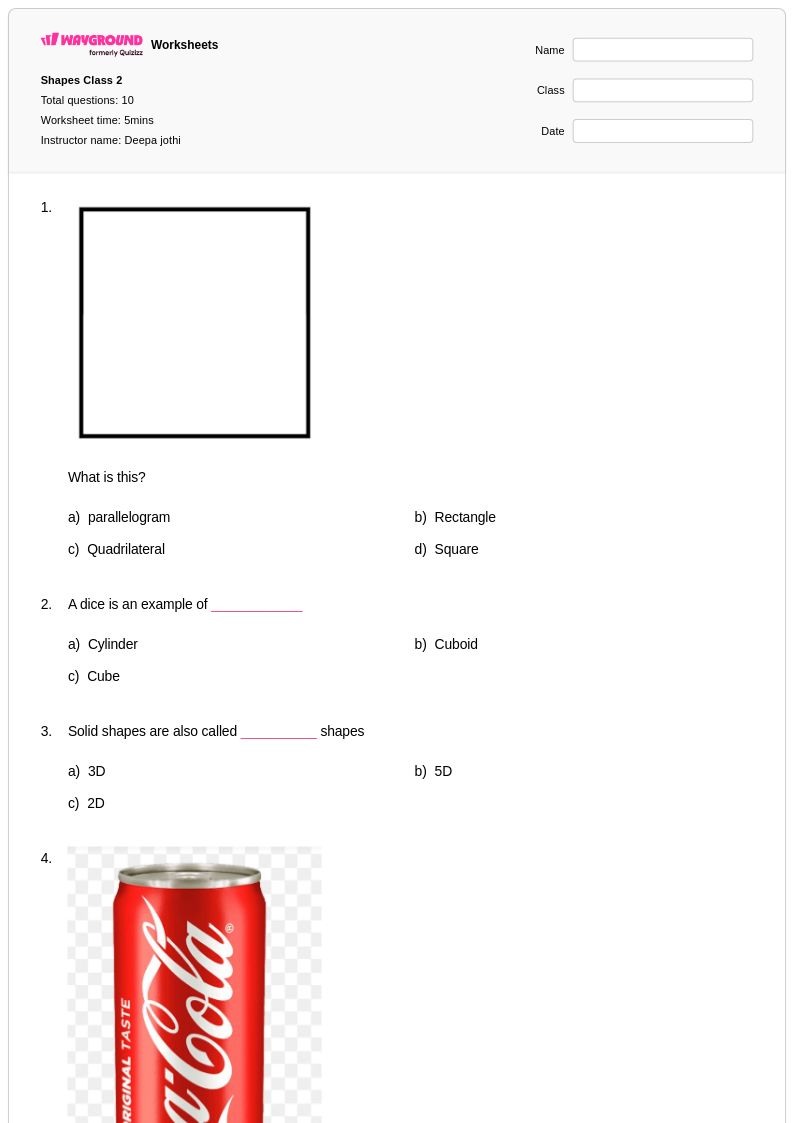
10 Q
2nd
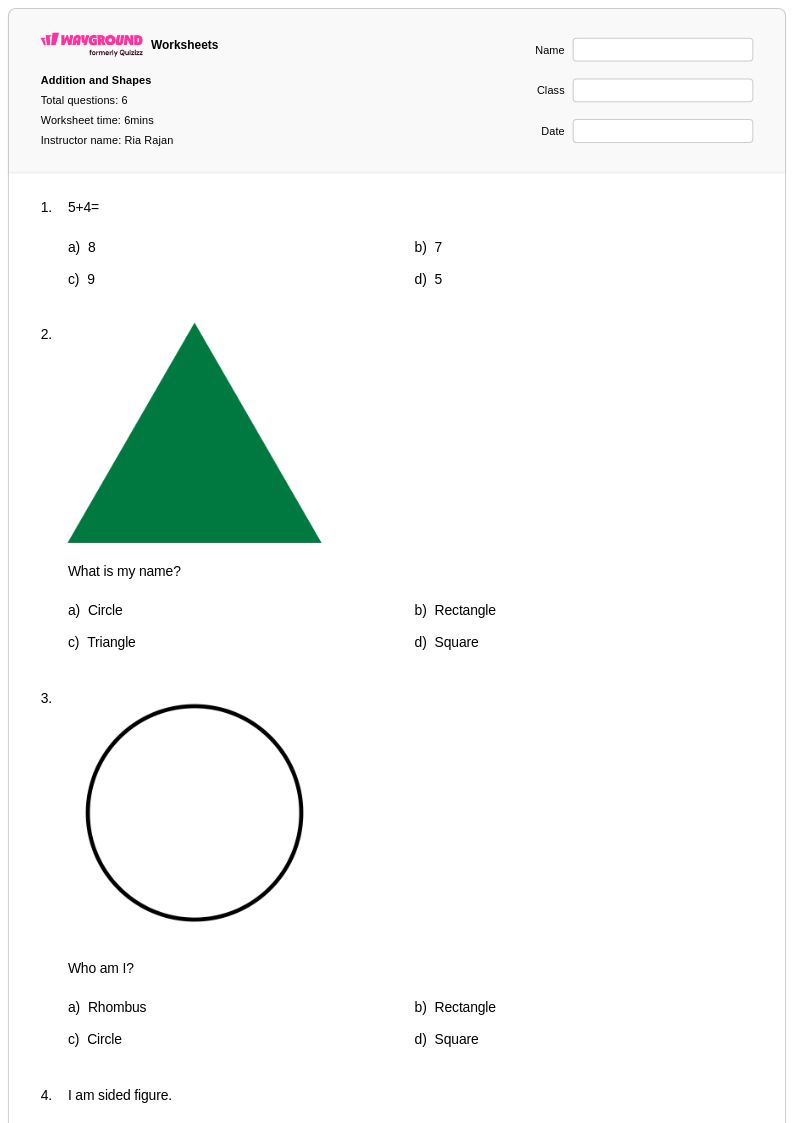
6 Q
1st - 3rd
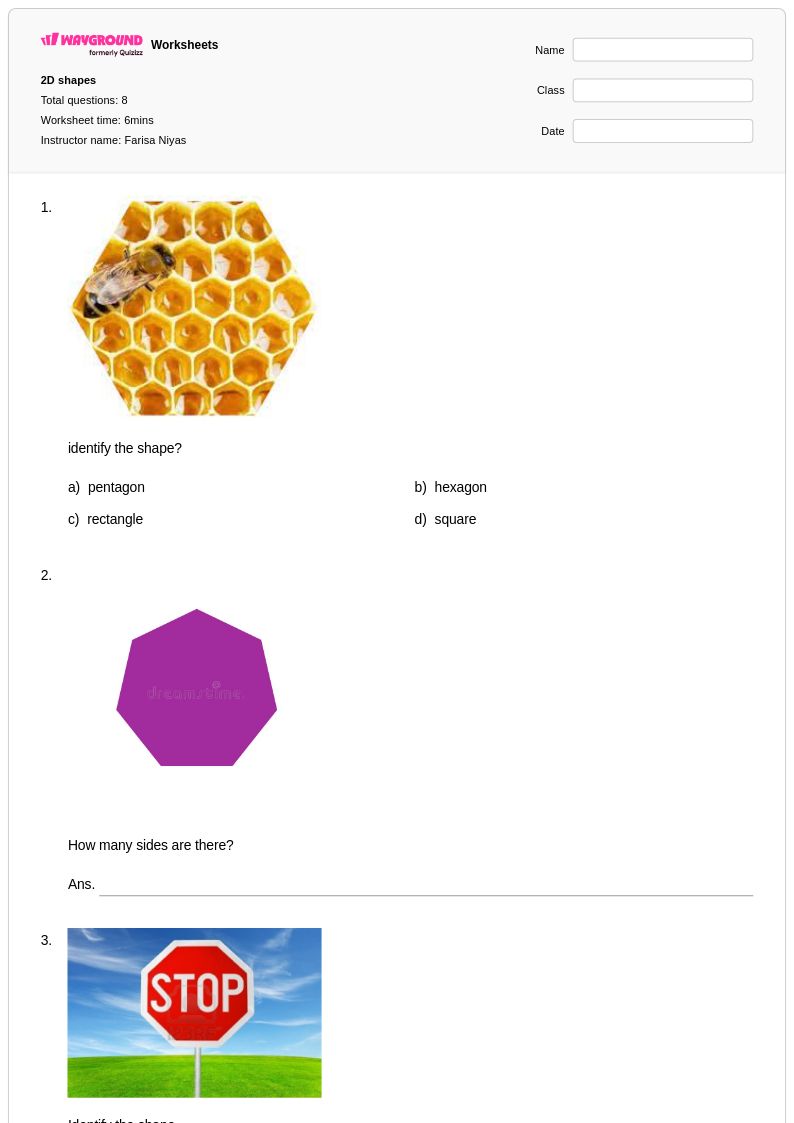
8 Q
1st - 2nd
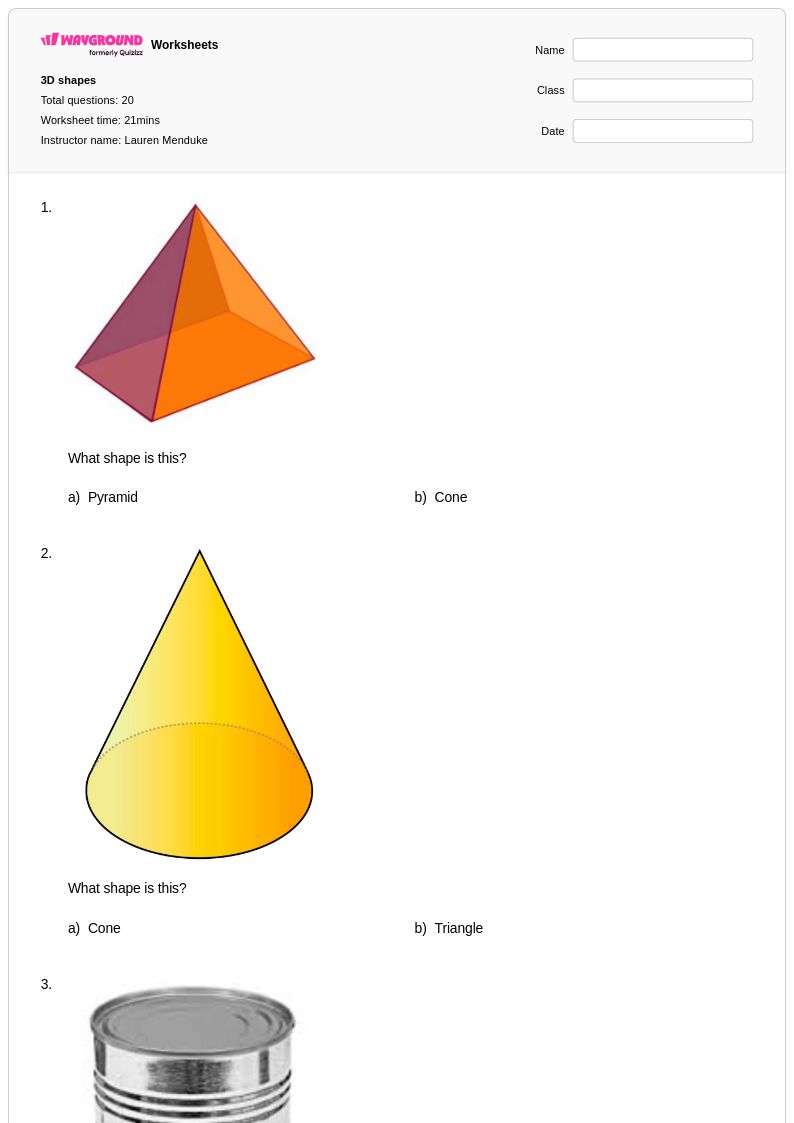
20 Q
1st - 2nd
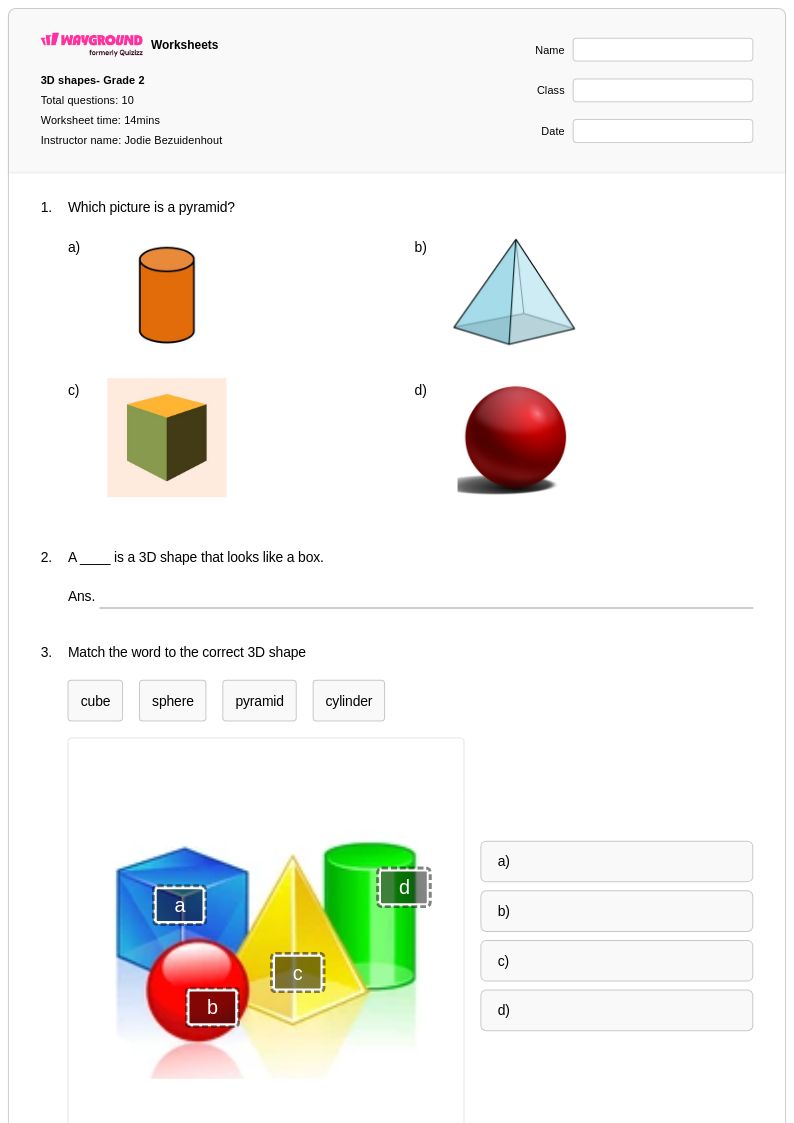
10 Q
2nd - Uni
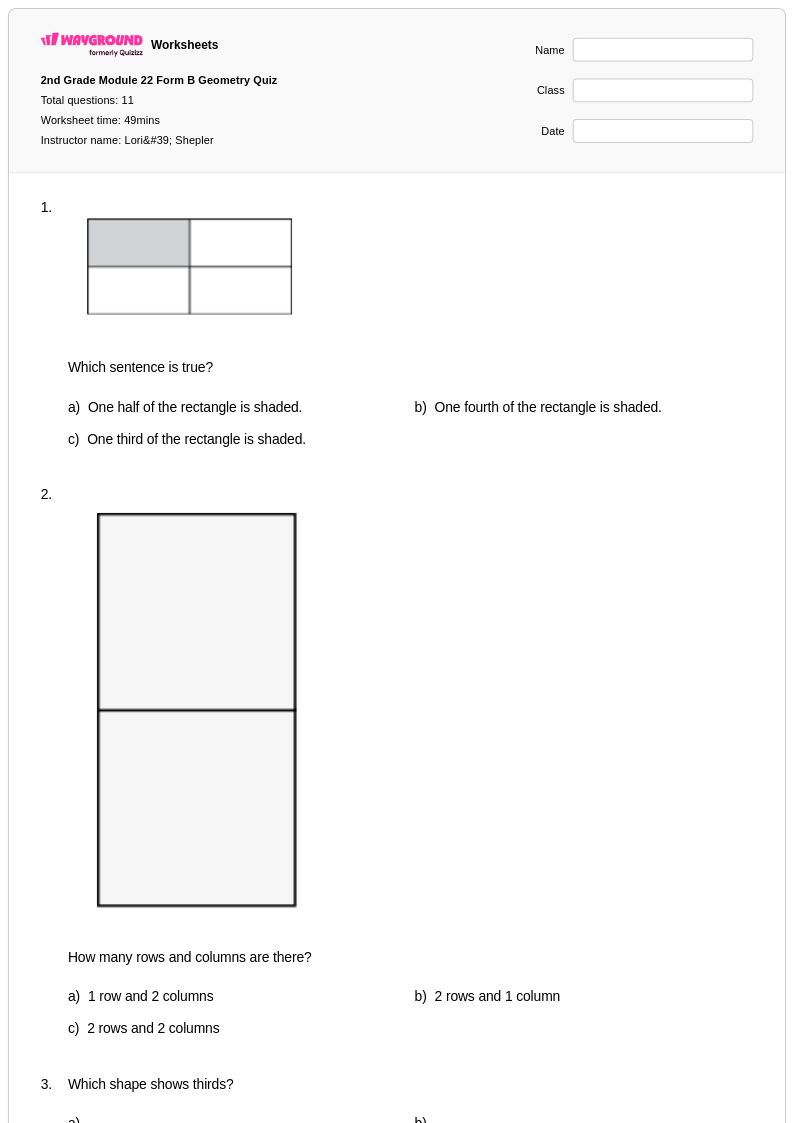
11 Q
2nd
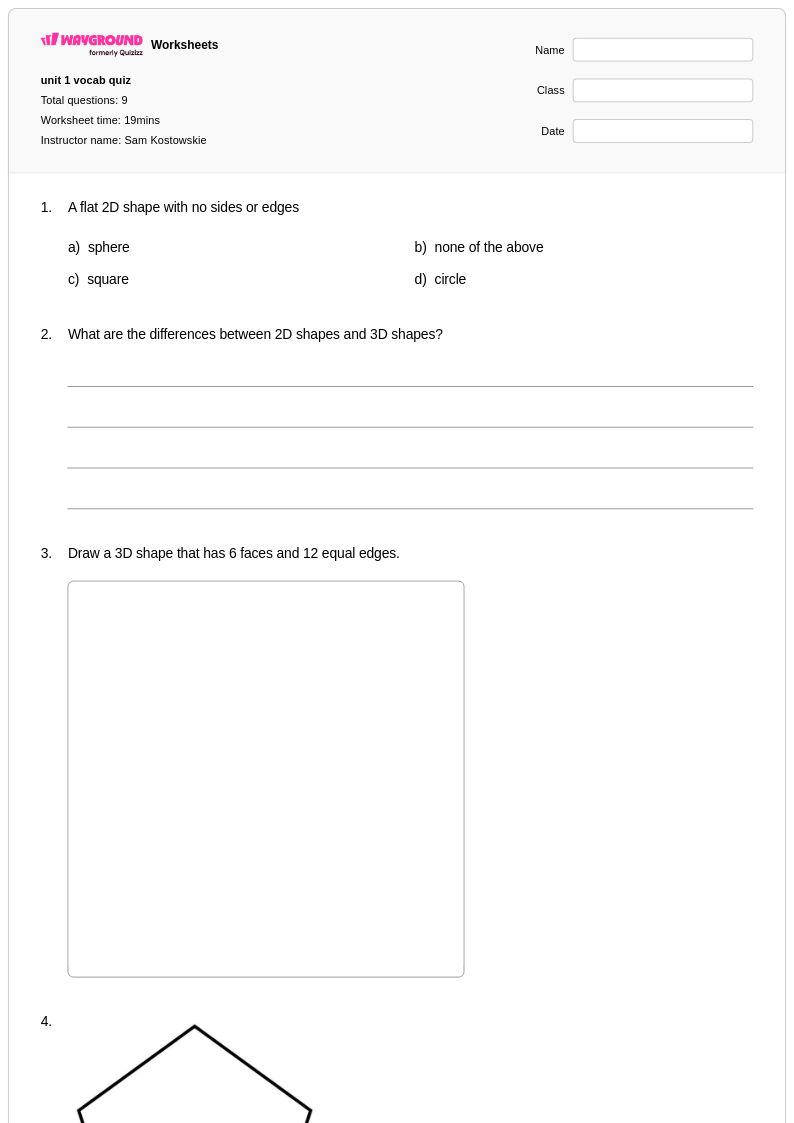
12 Q
2nd
Explore Other Subject Worksheets for class 2
Explore printable Recognizing Shapes worksheets for Class 2
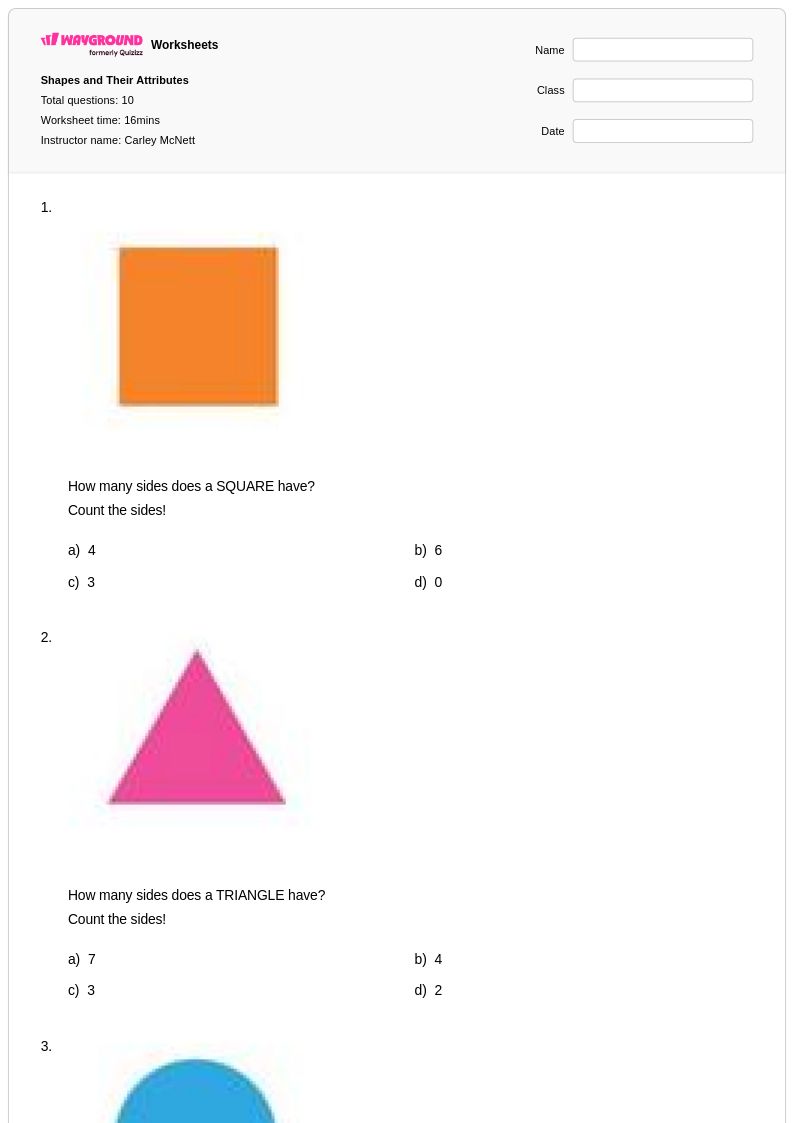
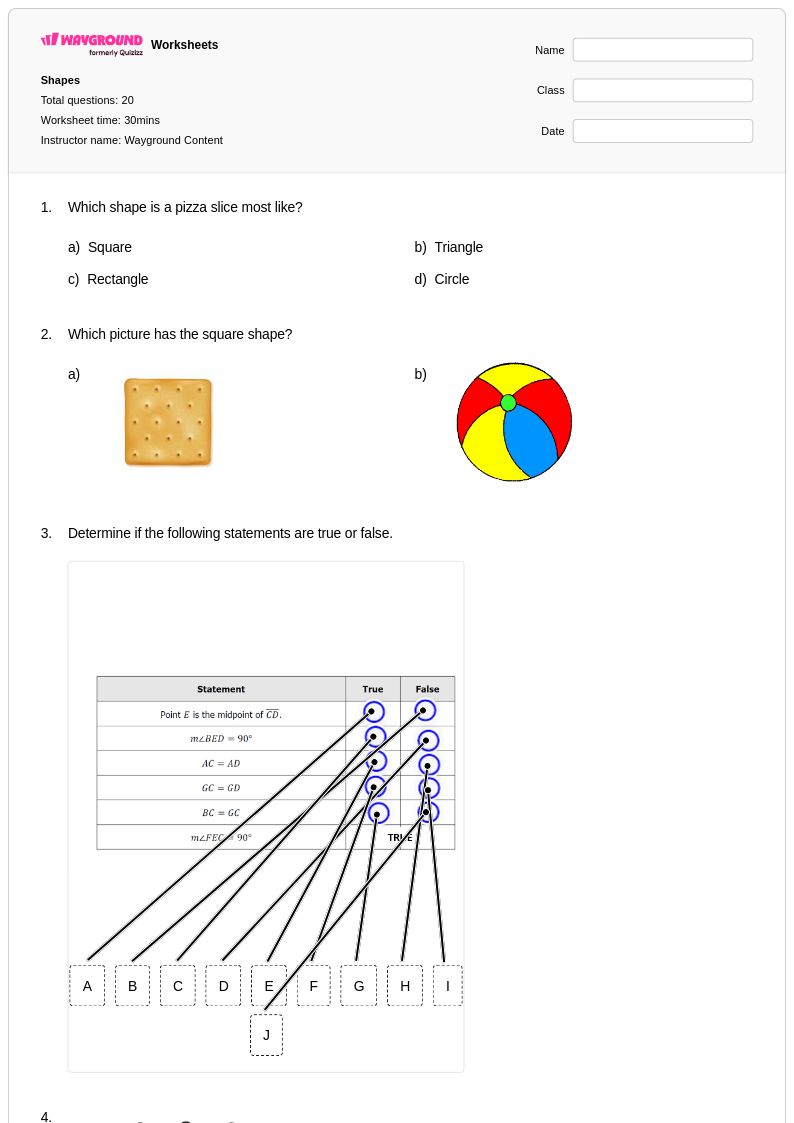
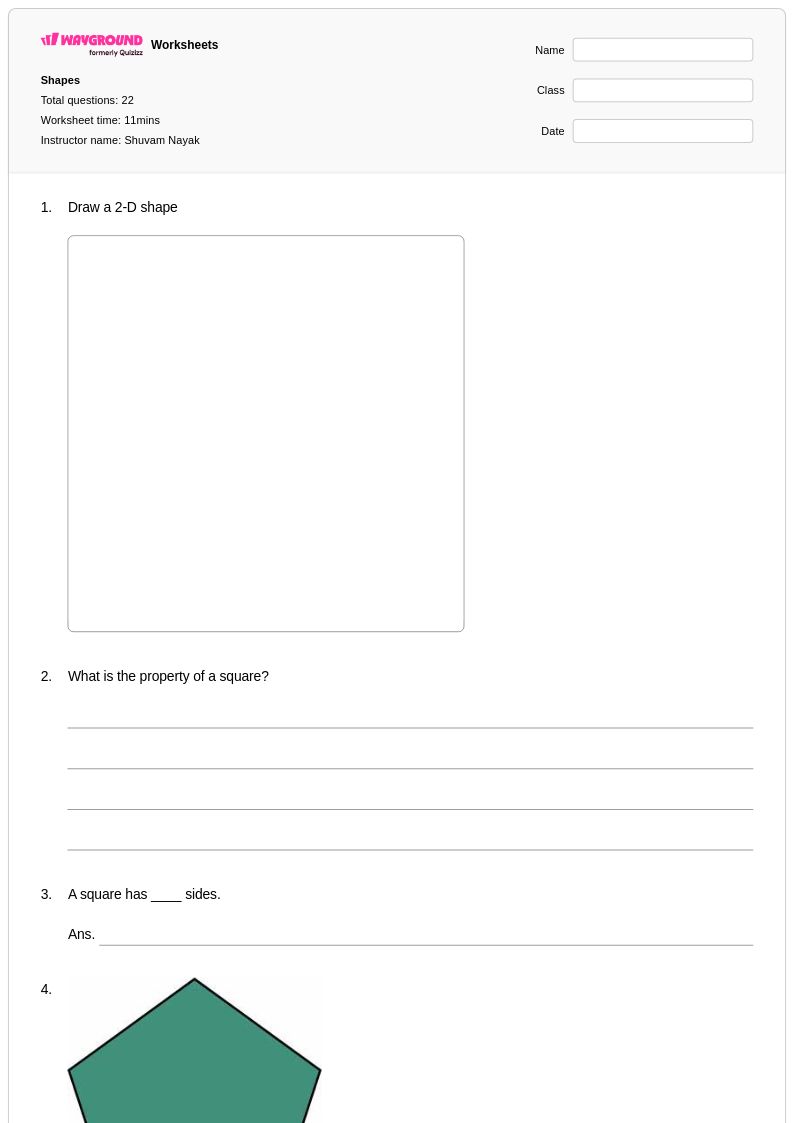
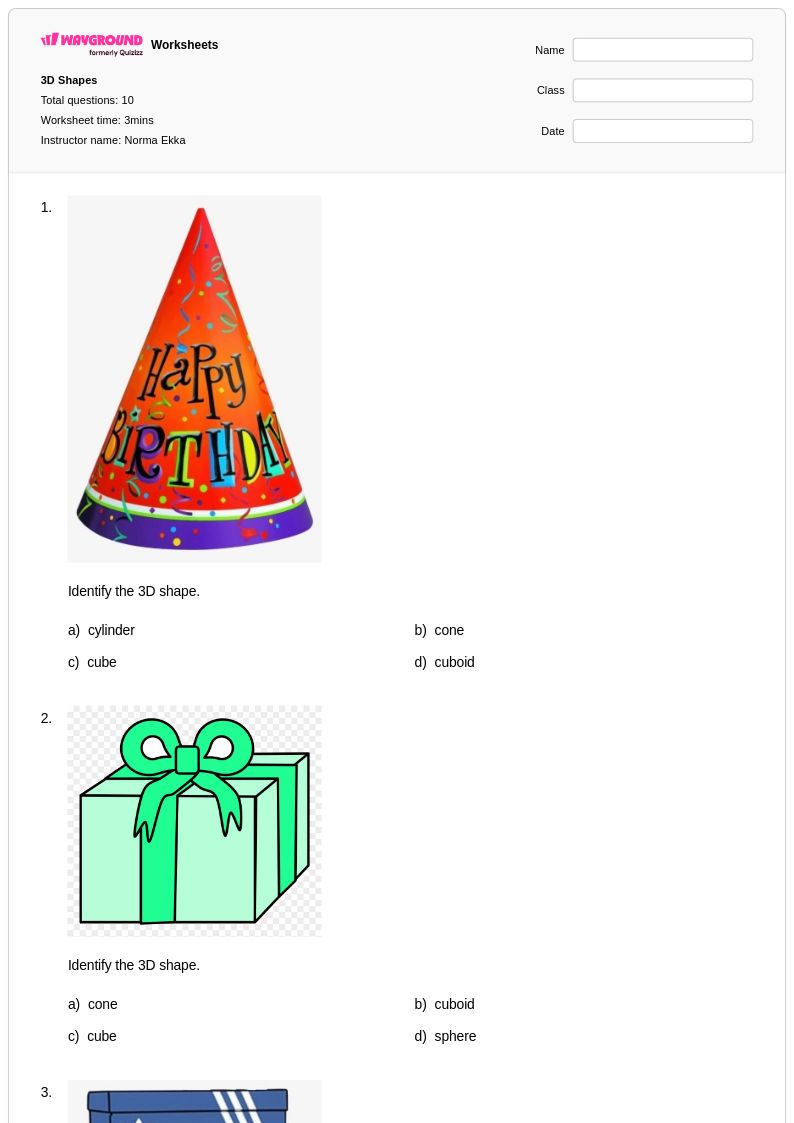
Recognizing shapes forms a fundamental cornerstone of Class 2 geometry education, and Wayground's comprehensive worksheet collection provides young learners with engaging opportunities to identify, classify, and understand basic geometric forms. These carefully crafted worksheets help second-grade students develop essential spatial reasoning skills as they learn to distinguish between circles, squares, rectangles, triangles, and other common shapes found in their everyday environment. The practice problems guide students through systematic shape recognition exercises that strengthen visual discrimination abilities and build foundational geometry vocabulary. Each worksheet includes a complete answer key to support accurate assessment, and the free printable pdf format ensures teachers can easily access and distribute materials for both classroom instruction and independent practice sessions.
Wayground's extensive library of teacher-created resources empowers educators with millions of high-quality worksheets specifically designed for Class 2 shape recognition instruction. The platform's advanced search and filtering capabilities allow teachers to quickly locate materials that align with specific learning standards and accommodate diverse student needs through built-in differentiation tools. These flexible worksheets can be customized to match individual classroom requirements and are available in both printable pdf format for traditional paper-based activities and digital formats for technology-integrated lessons. This versatility supports comprehensive lesson planning while providing teachers with reliable resources for targeted skill practice, remediation for struggling learners, and enrichment opportunities for students ready to advance their geometric understanding beyond basic shape identification.
FAQs
What specific shapes should a 2nd grader be able to recognize?
How do I teach 2nd graders to classify shapes by their attributes?
What kind of practice helps 2nd graders master shape attributes?
What are common errors when 2nd graders classify polygons?
How can I use these 2nd grade shape worksheets?
How does the 2nd grade curriculum advance students' understanding of shapes?