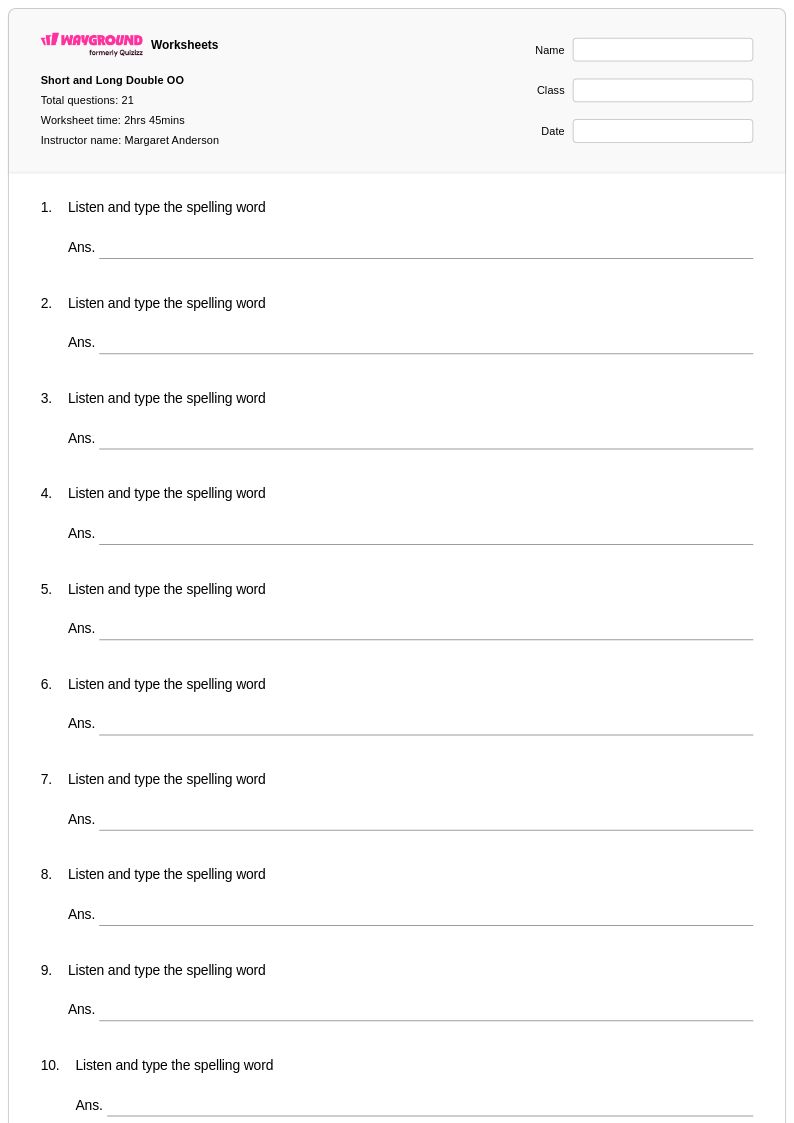
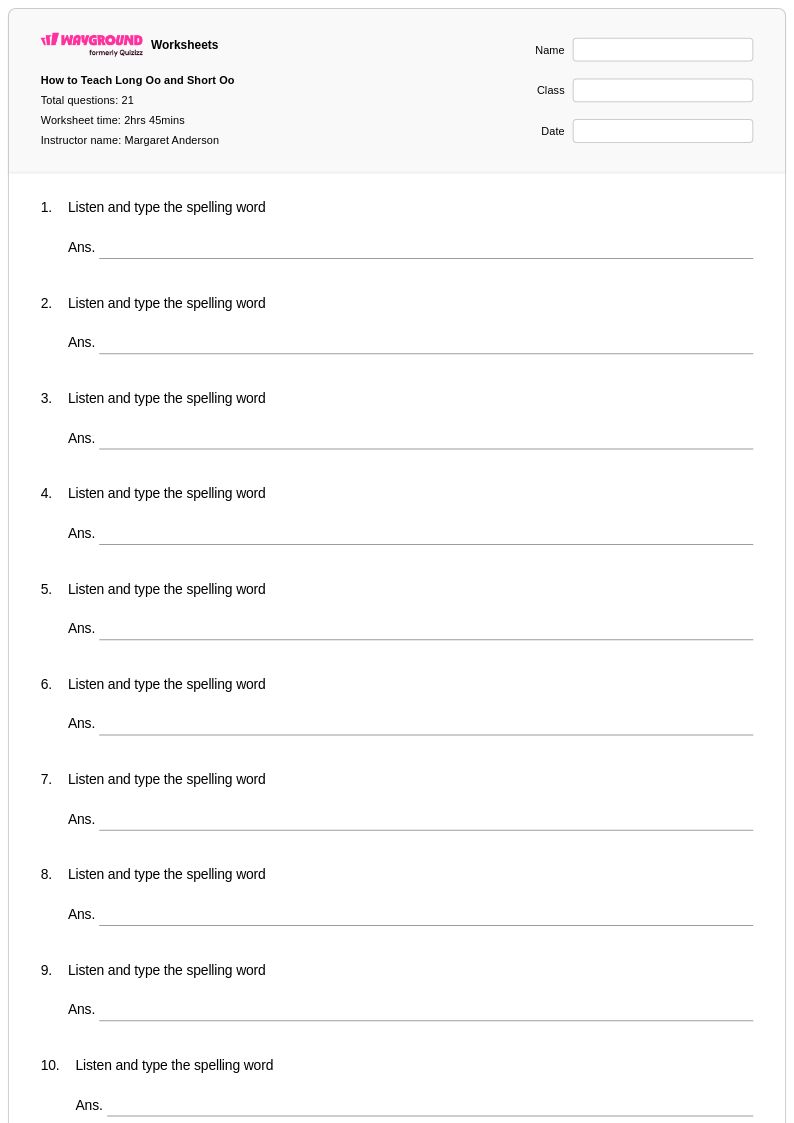
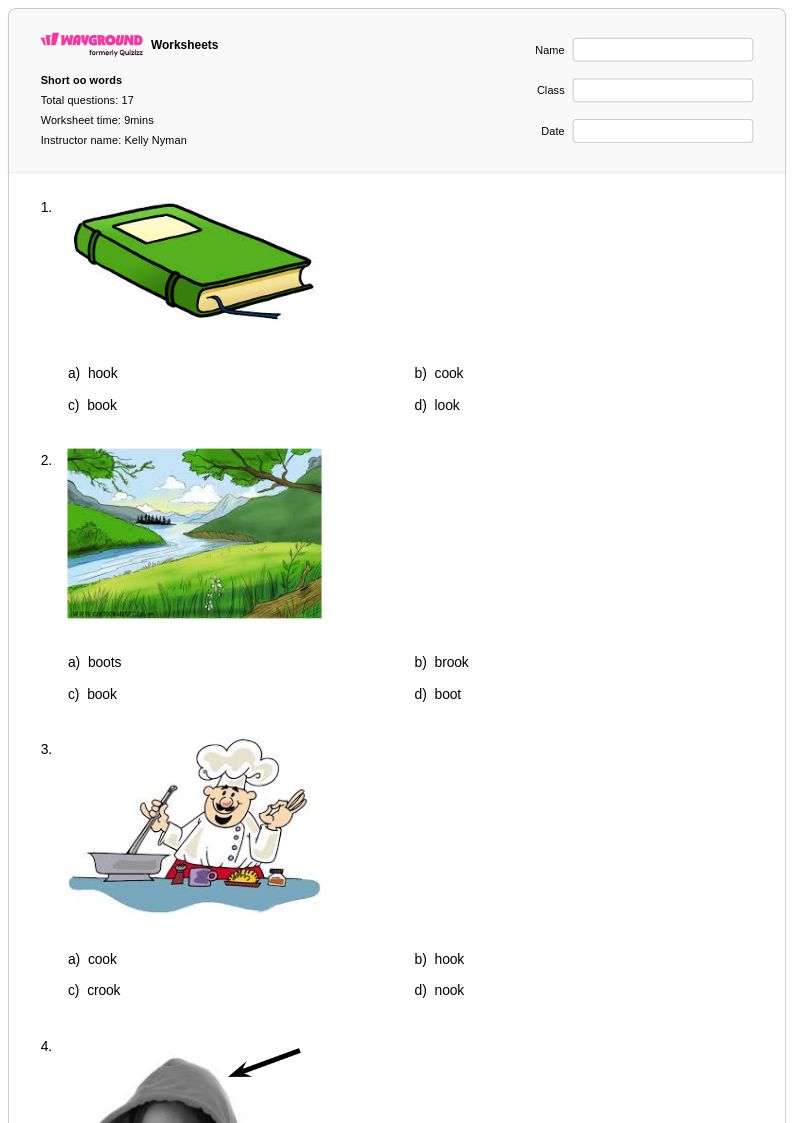
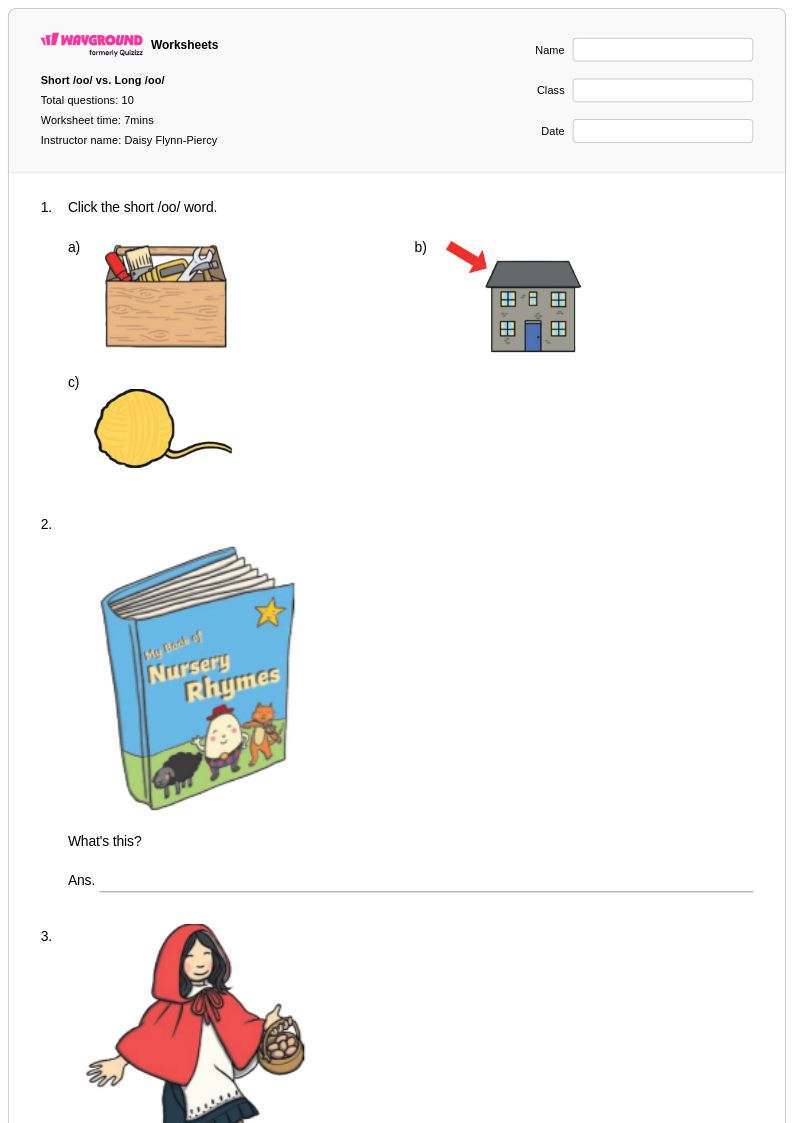
Explore Wayground's free short oo sound phonics worksheets and printables with answer keys to help students master this essential vowel pattern through engaging practice problems and PDF exercises.
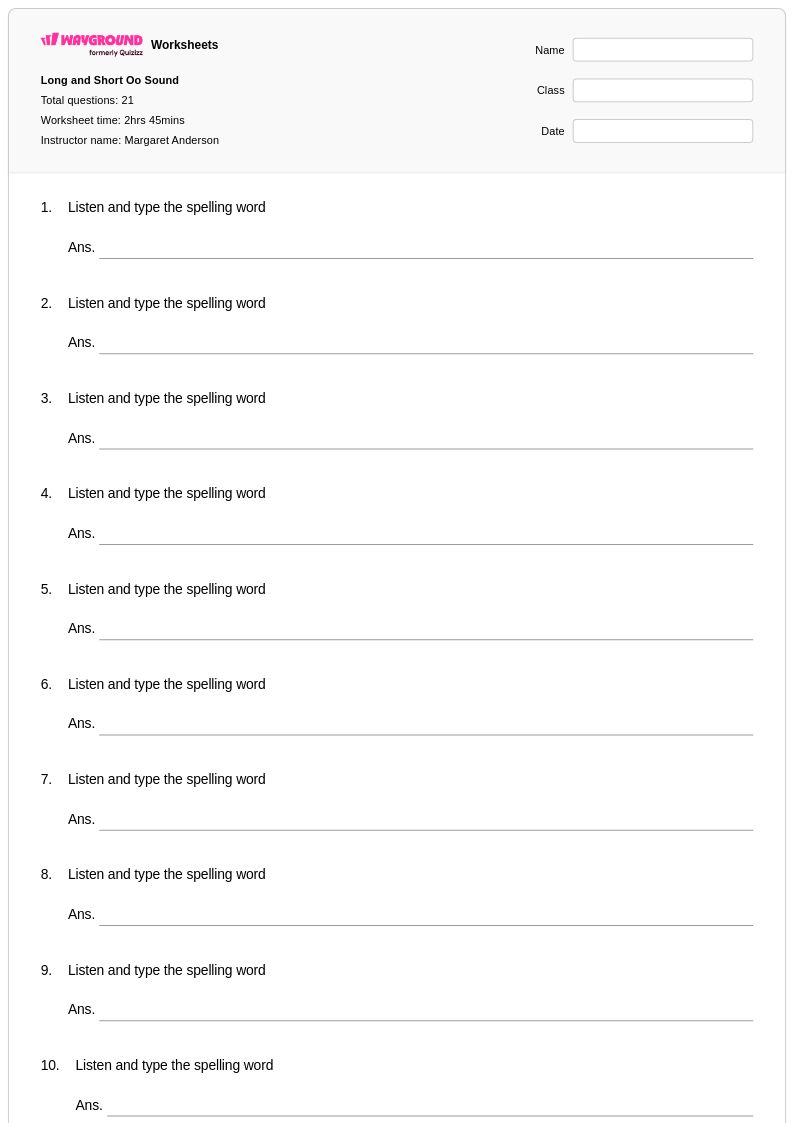
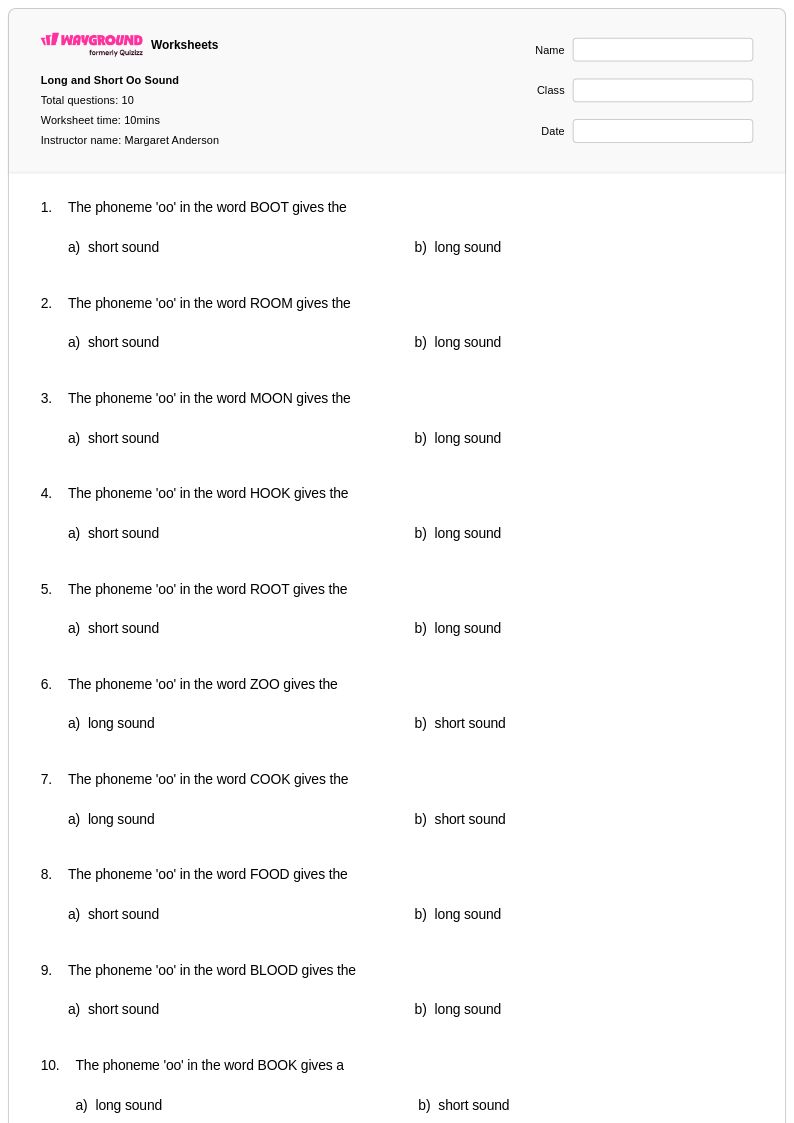
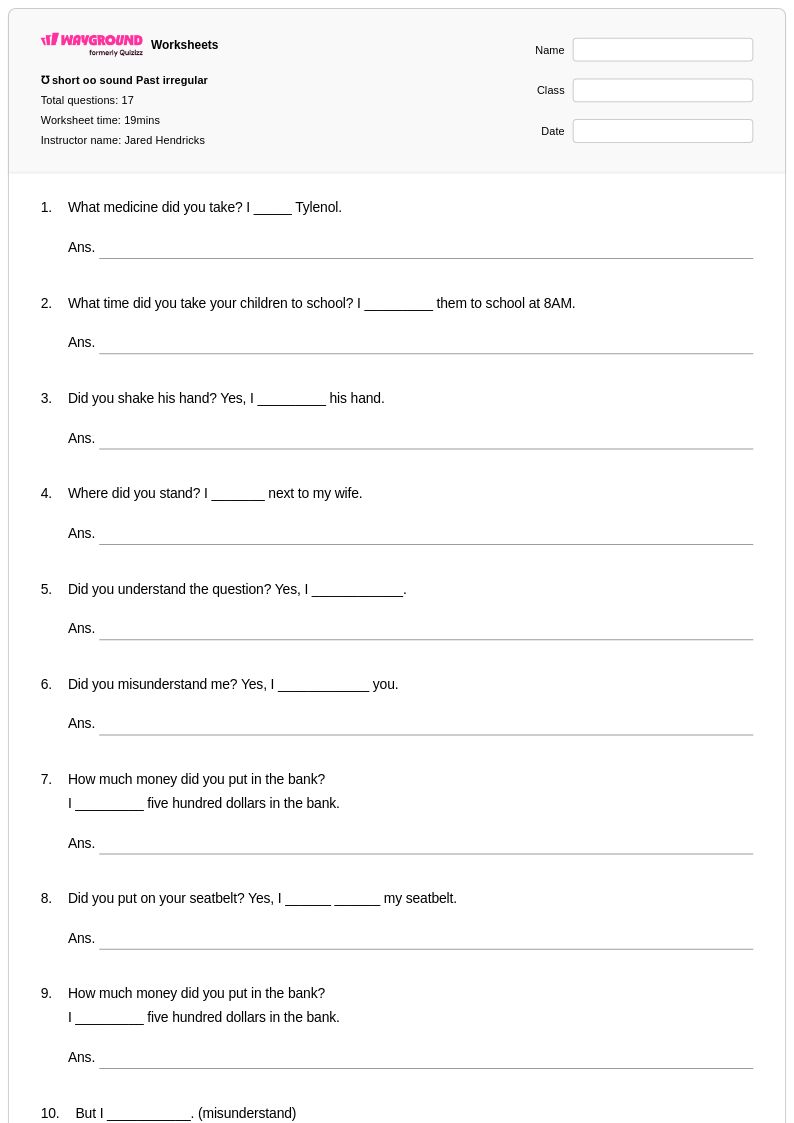
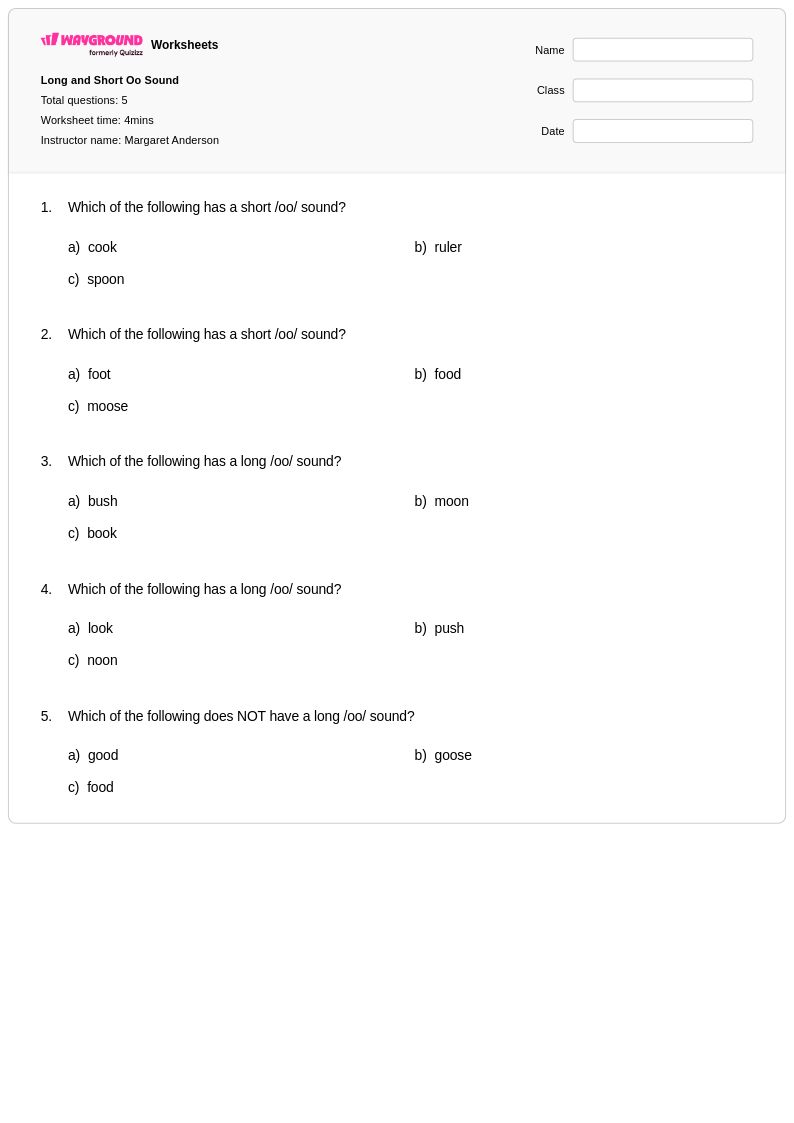
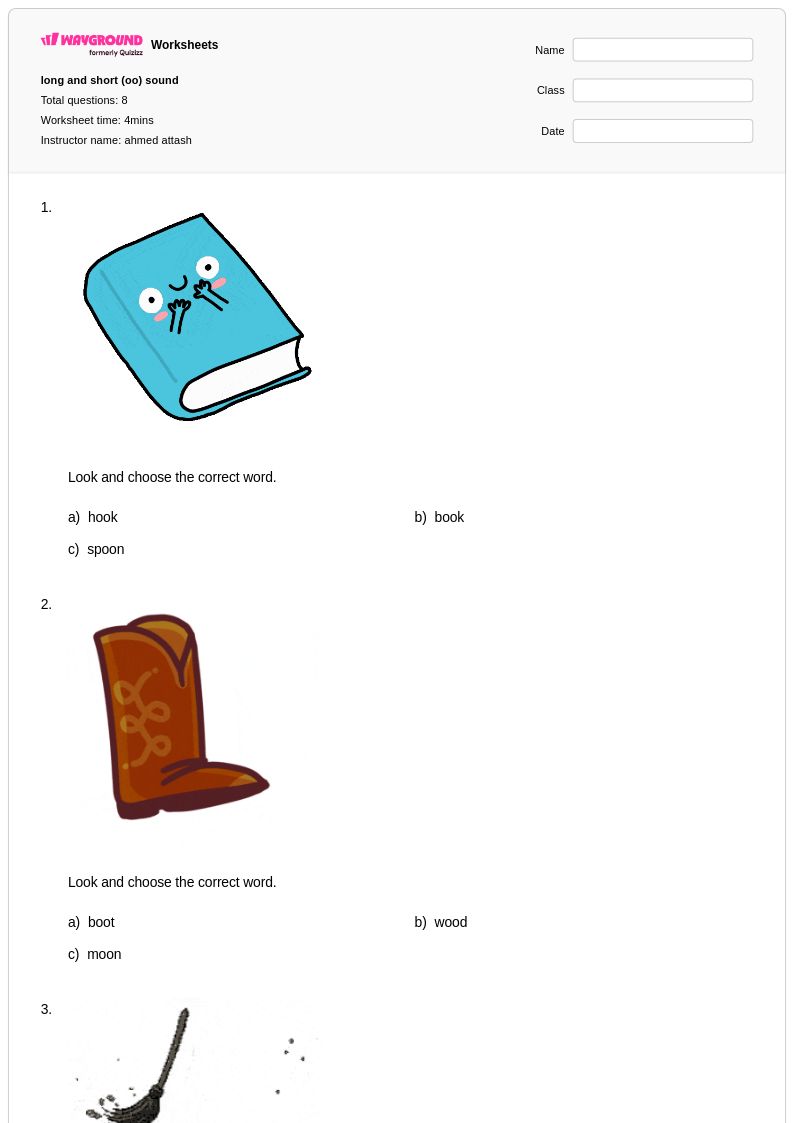
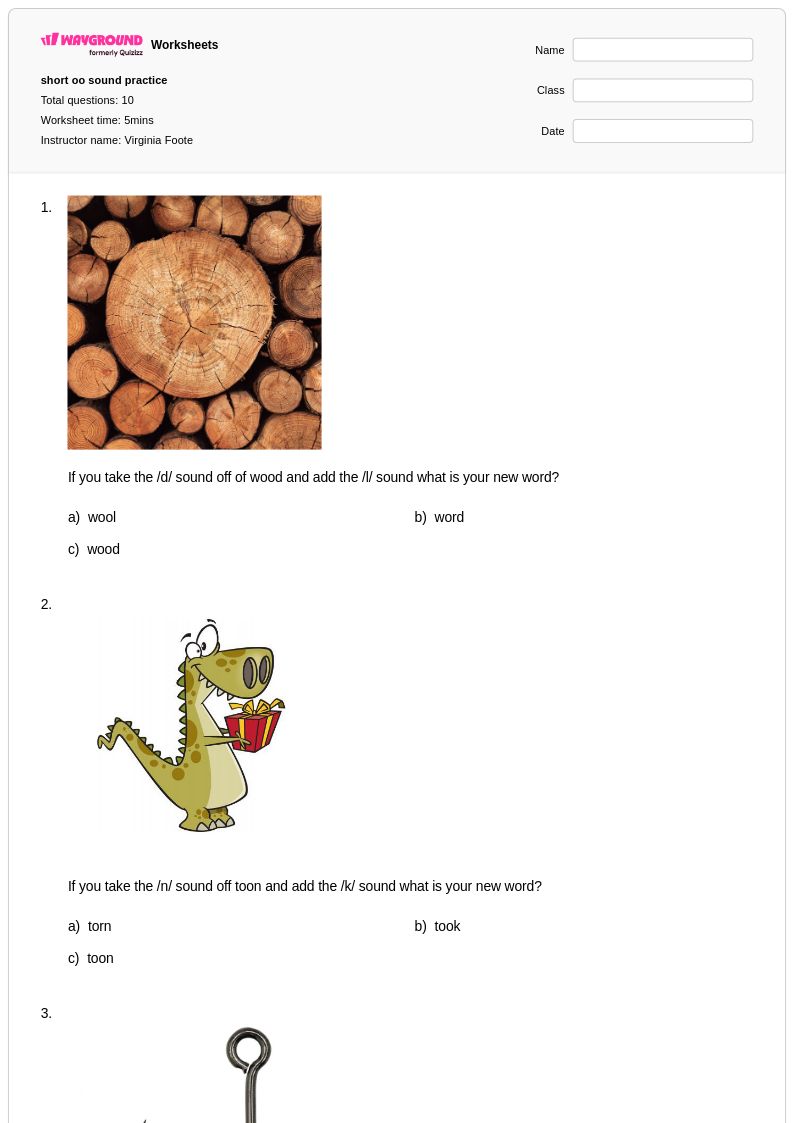
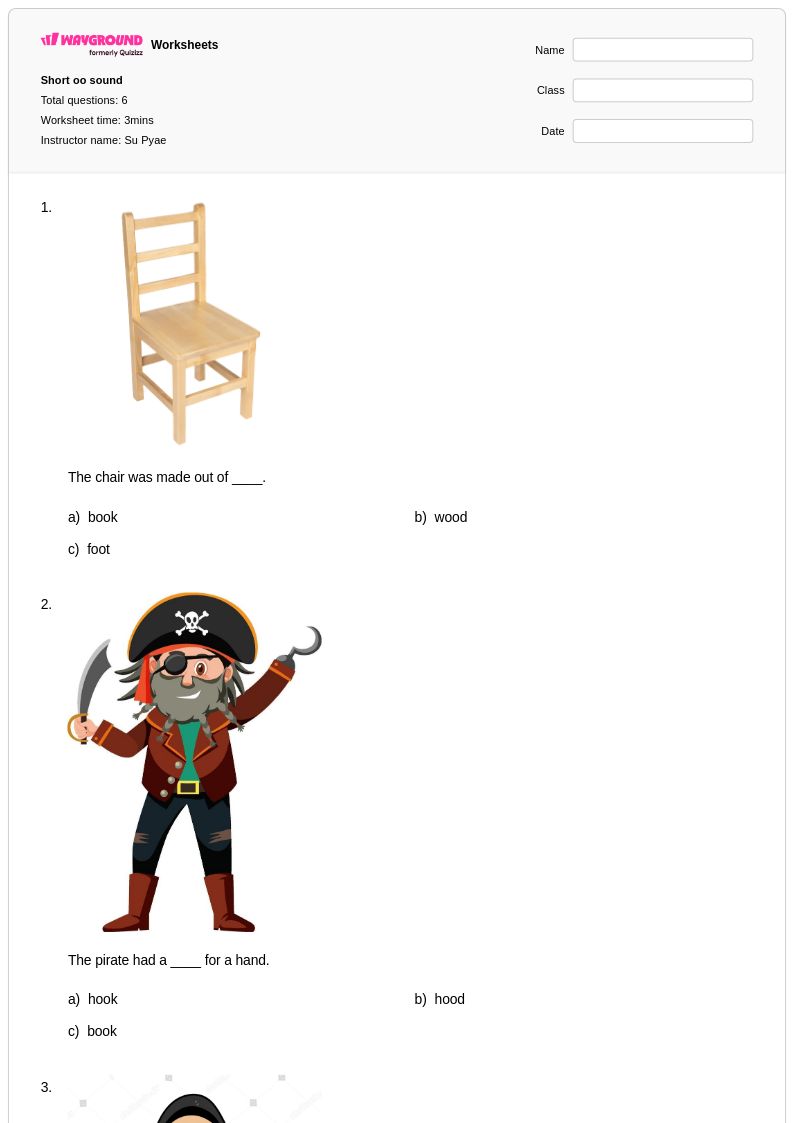
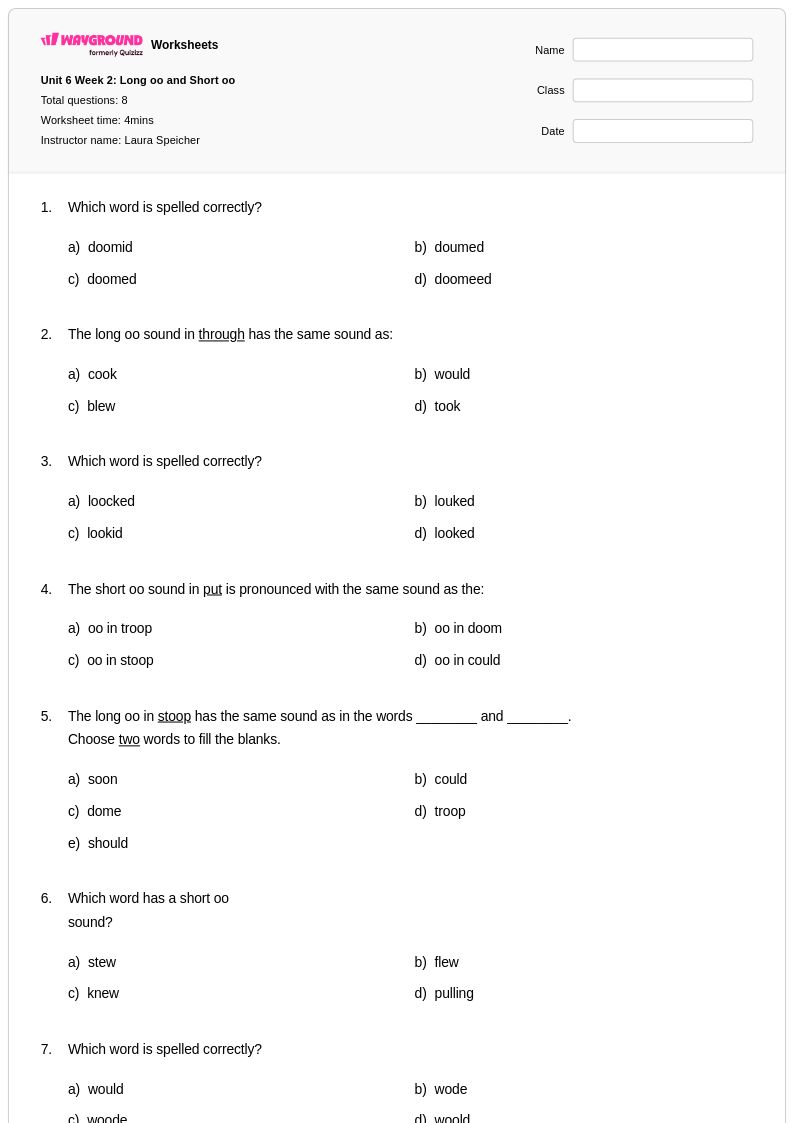
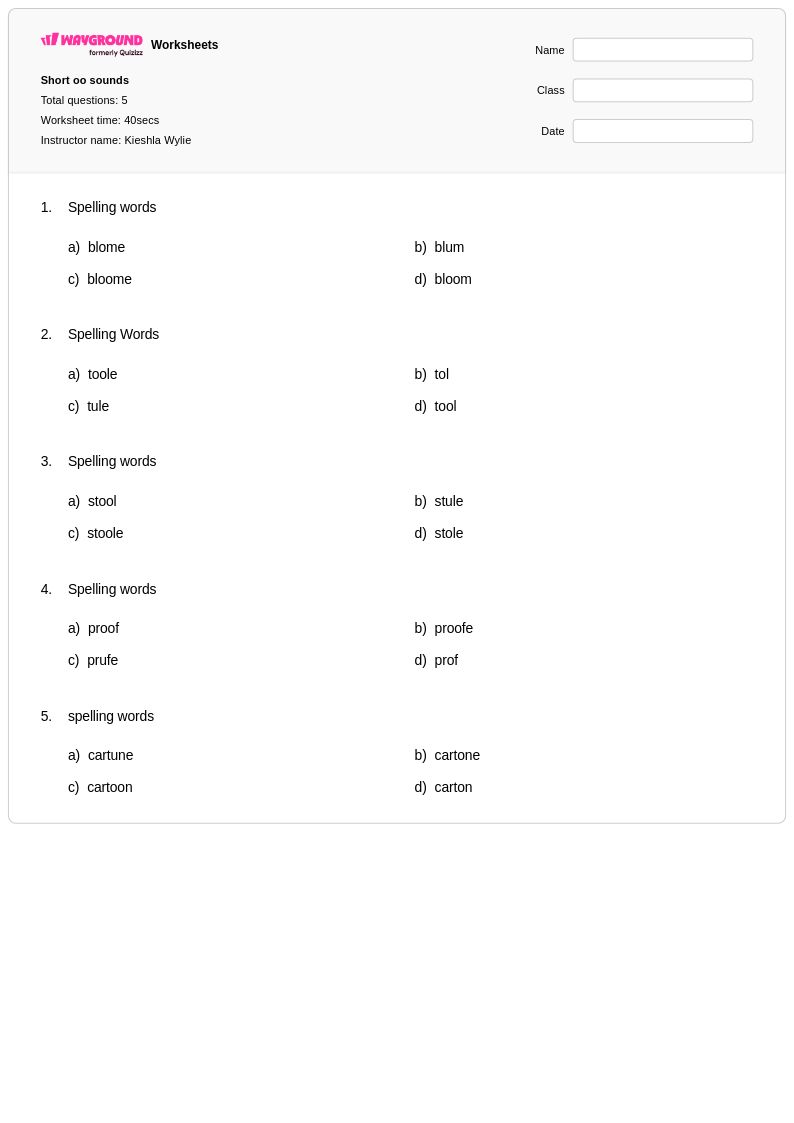
Short Oo Sound worksheets available through Wayground (formerly Quizizz) provide comprehensive phonics instruction designed to help students master this fundamental vowel pattern. These educational resources focus on developing decoding skills through systematic practice with words containing the short "oo" sound as found in "book," "look," "good," and "took." The worksheets strengthen phonemic awareness and reading fluency through varied exercise formats including word sorting activities, fill-in-the-blank sentences, picture-to-word matching, and reading comprehension passages. Each printable resource includes a complete answer key for efficient assessment and self-checking, while the free pdf format ensures easy distribution and accessibility for both classroom and home learning environments. These practice problems systematically build students' ability to recognize, pronounce, and spell words with the short Oo phonogram pattern.
Wayground (formerly Quizizz) supports educators with an extensive collection of teacher-created Short Oo Sound worksheets drawn from millions of high-quality phonics resources. The platform's robust search and filtering capabilities enable teachers to quickly locate materials that align with specific learning standards and match their students' developmental needs. Advanced differentiation tools allow educators to customize worksheet difficulty levels, font sizes, and exercise types to accommodate diverse learners within the same classroom. These flexible resources are available in both printable pdf formats for traditional instruction and digital formats for interactive learning experiences. Teachers can efficiently plan phonics lessons, provide targeted remediation for struggling readers, offer enrichment opportunities for advanced students, and deliver consistent skill practice that reinforces the short Oo sound pattern across multiple learning contexts.
FAQs
How do I teach the short oo sound to early readers?
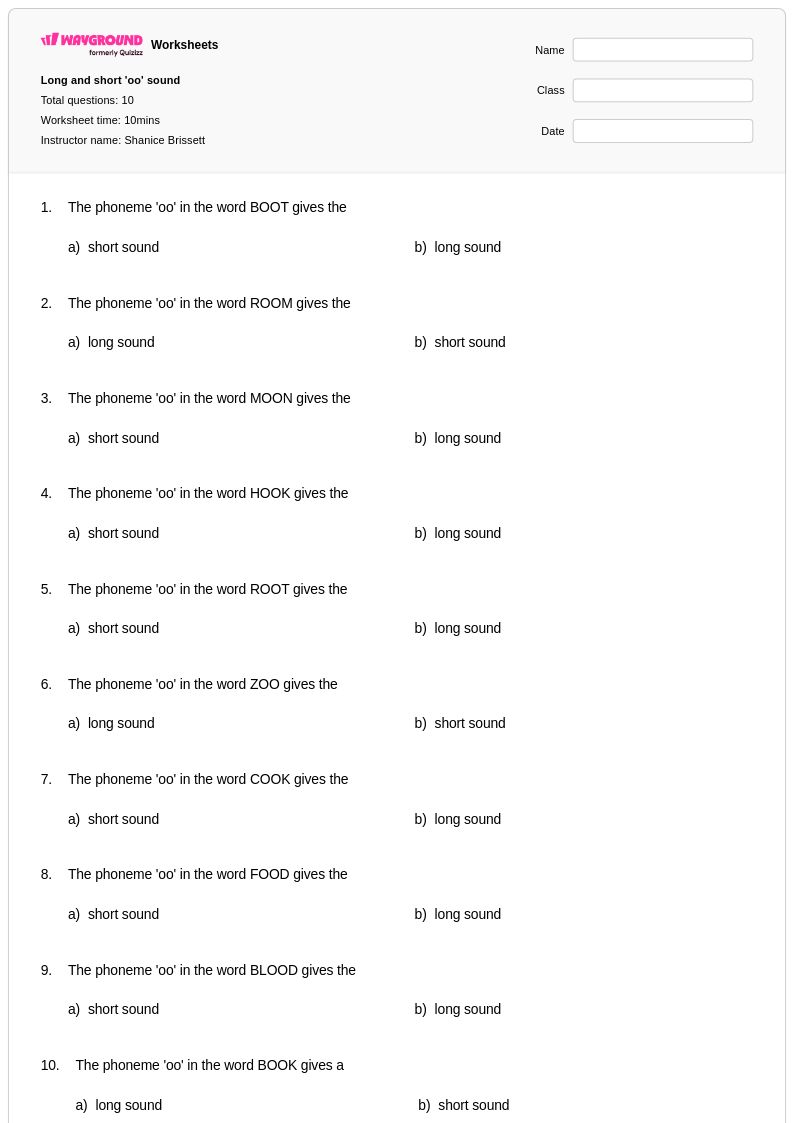
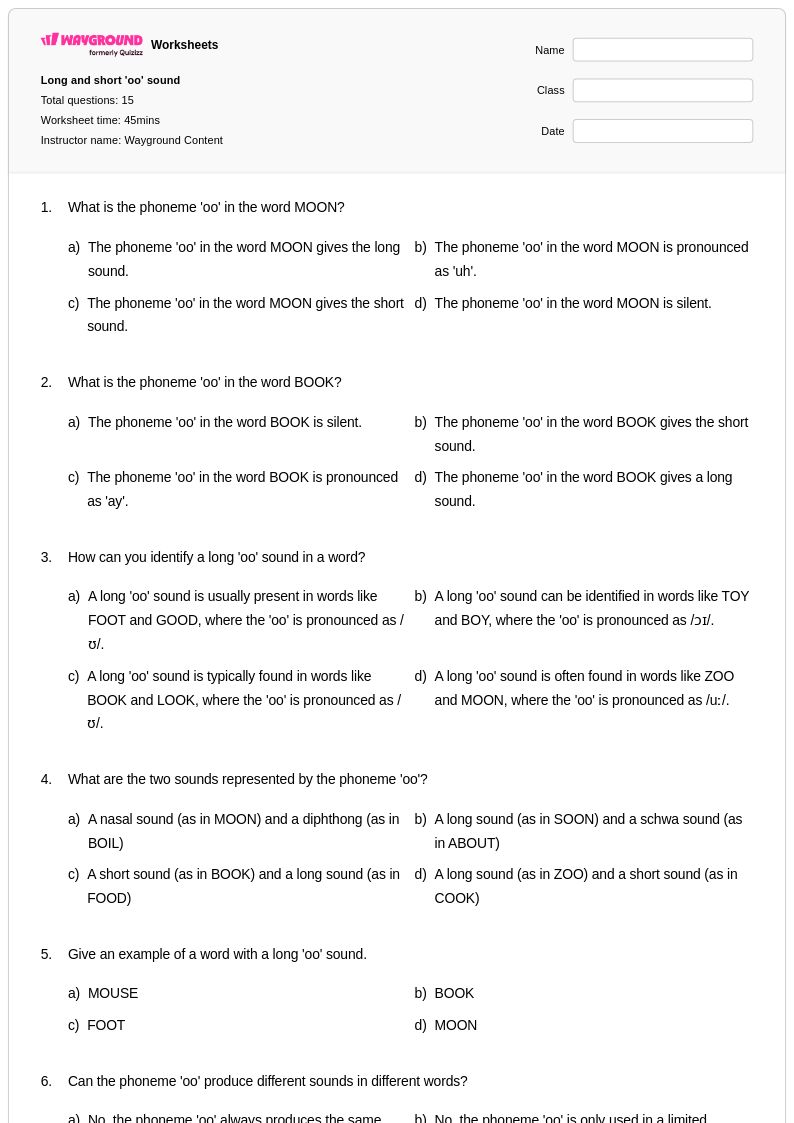
The short 'oo' sound, as heard in words like 'book,' 'look,' and 'good,' is best introduced through explicit phonics instruction that contrasts it with the long 'oo' sound in words like 'moon' and 'food.' Start by building a word bank of common short oo words, then use word sorting activities to help students hear and categorize the difference. Repeated exposure through decodable texts and targeted practice helps students internalize this vowel pattern before applying it independently in reading and writing.
What exercises help students practice the short oo sound?
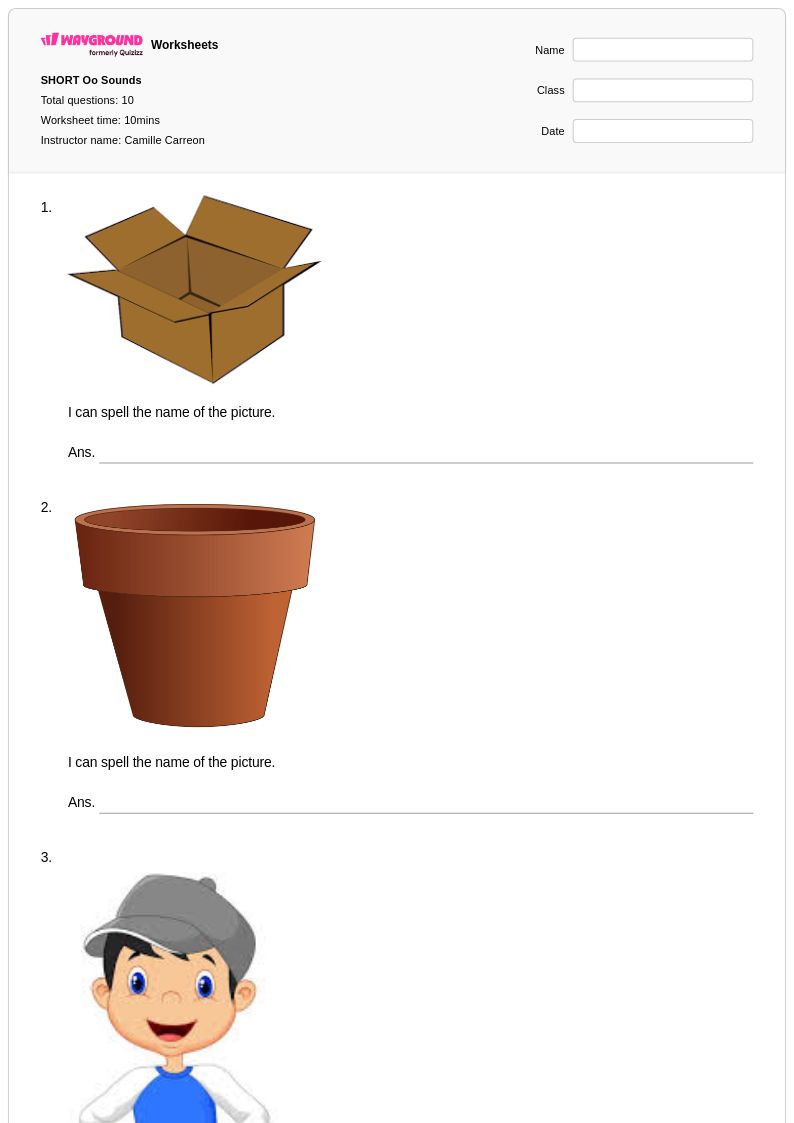
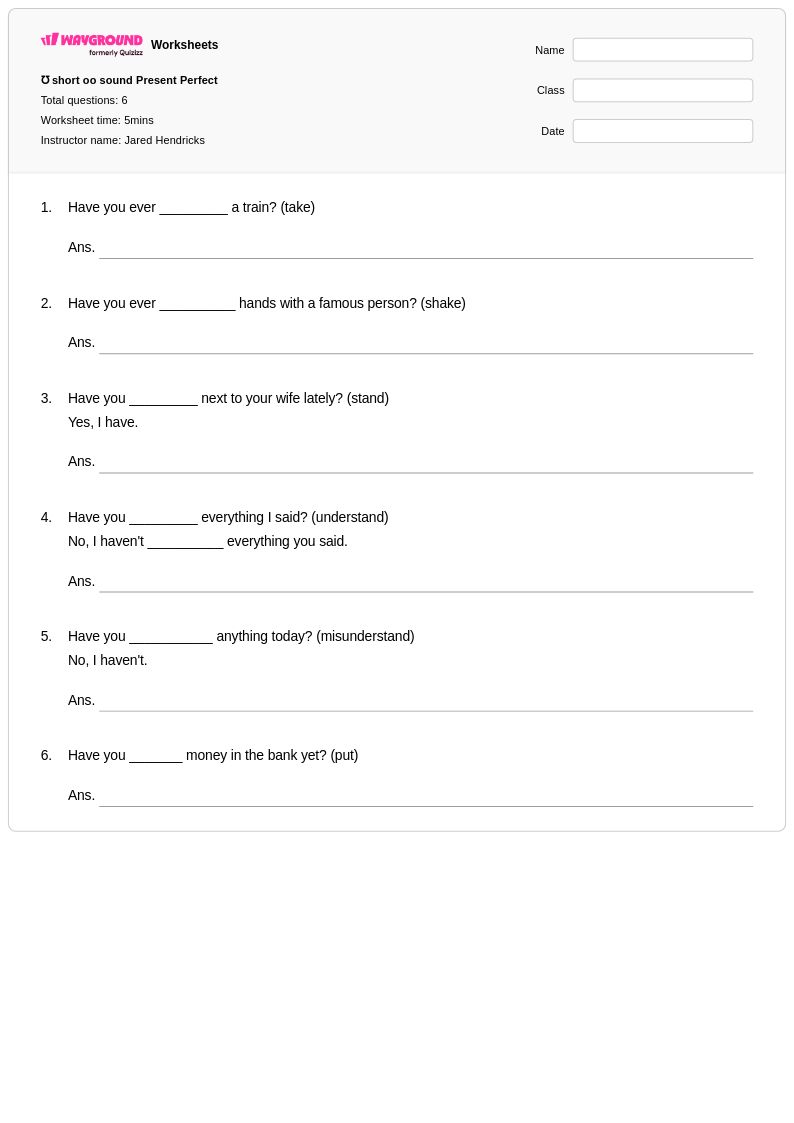
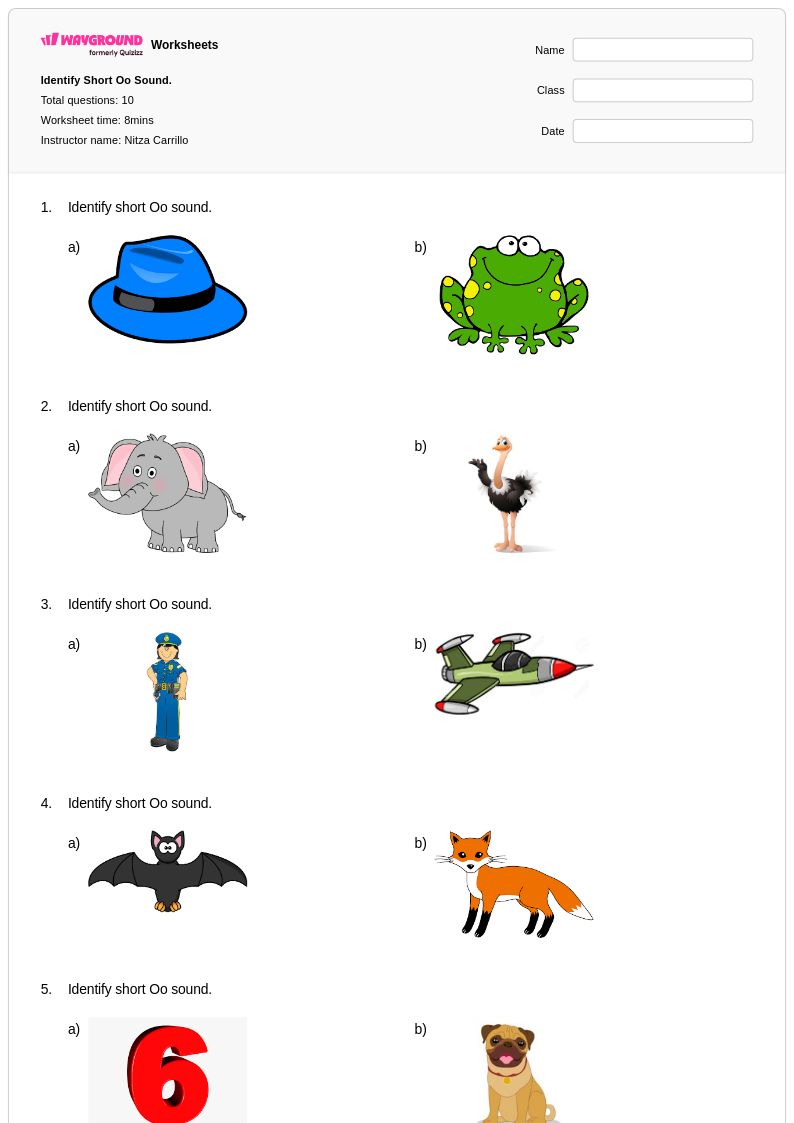
Effective practice exercises for the short oo sound include word sorting activities that distinguish it from the long oo sound, picture-to-word matching tasks, and fill-in-the-blank sentences using high-frequency short oo words. Reading comprehension passages that embed short oo words in context help students move from isolated decoding to fluent reading. Varied formats keep practice engaging while ensuring students encounter the pattern across multiple skill types.
What mistakes do students commonly make with the short oo sound?
The most common error students make is confusing the short oo sound with the long oo sound, since both are spelled with the digraph 'oo' but sound different, as in 'book' versus 'moon.' Students also frequently mispronounce short oo words by substituting a short 'u' sound, saying 'buk' instead of 'book.' Explicit comparison activities and word sorting tasks that group short oo and long oo words side by side are particularly effective at addressing this confusion.
How can I use short oo sound worksheets in my classroom?
Short oo sound worksheets on Wayground are available as printable PDFs for traditional classroom use and in digital formats for technology-integrated learning environments, making them flexible for whole-class instruction, small group work, or independent centers. Teachers can also host worksheets as a quiz directly on Wayground, allowing for immediate feedback and easy progress monitoring. Using multiple worksheet formats within the same lesson reinforces the phonics pattern across reading, writing, and word recognition tasks.
How do I support struggling readers who can't distinguish the short oo sound?
For students who consistently confuse or mispronounce the short oo sound, targeted remediation should begin with auditory discrimination activities before moving to print. Wayground's accommodation tools allow teachers to enable Read Aloud so students can hear questions and words read to them, and Reduced Answer Choices to lower cognitive load during practice. These settings can be assigned to individual students while the rest of the class continues with standard materials, allowing differentiated instruction without disrupting lesson flow.
At what reading level should students be introduced to the short oo sound?
The short oo sound is typically introduced in early elementary phonics instruction, often in kindergarten or first grade, after students have a solid foundation in basic CVC patterns and common vowel sounds. Because the 'oo' digraph represents two distinct sounds, the short oo pattern is usually taught after students have encountered the long oo sound, so they can learn to distinguish between them. Students who are working through a systematic phonics sequence will generally encounter this pattern as part of vowel digraph instruction.