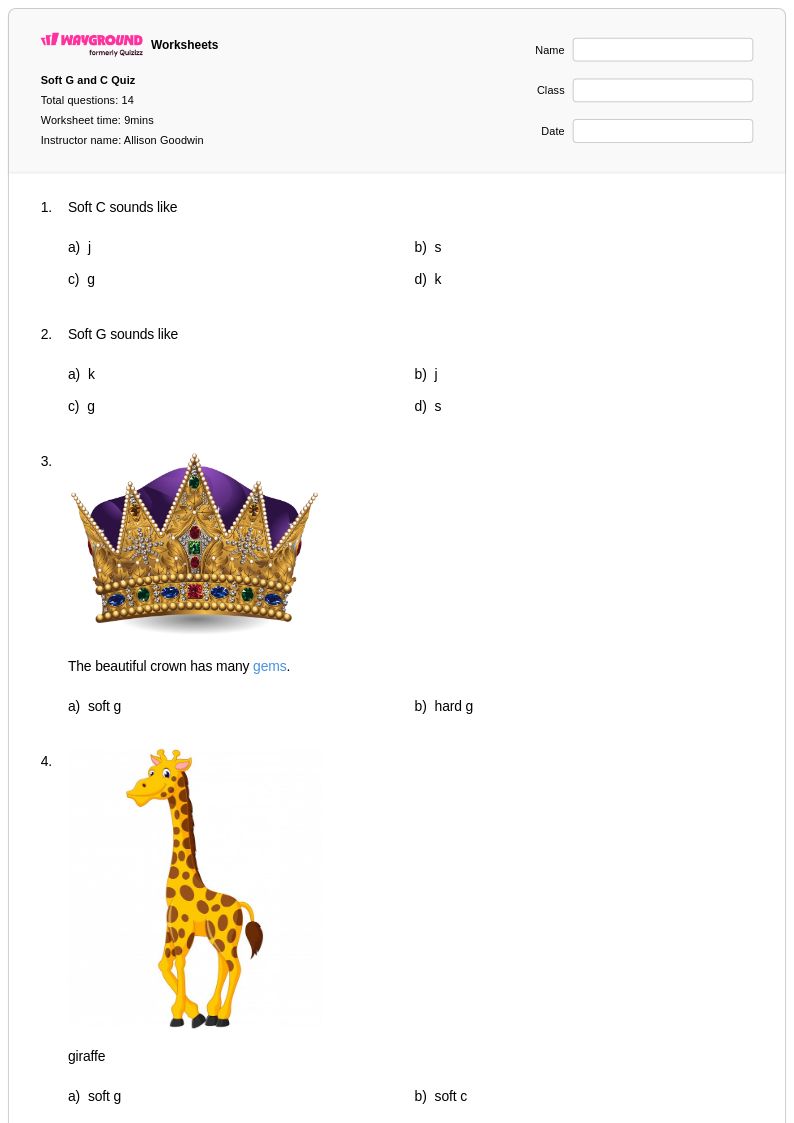
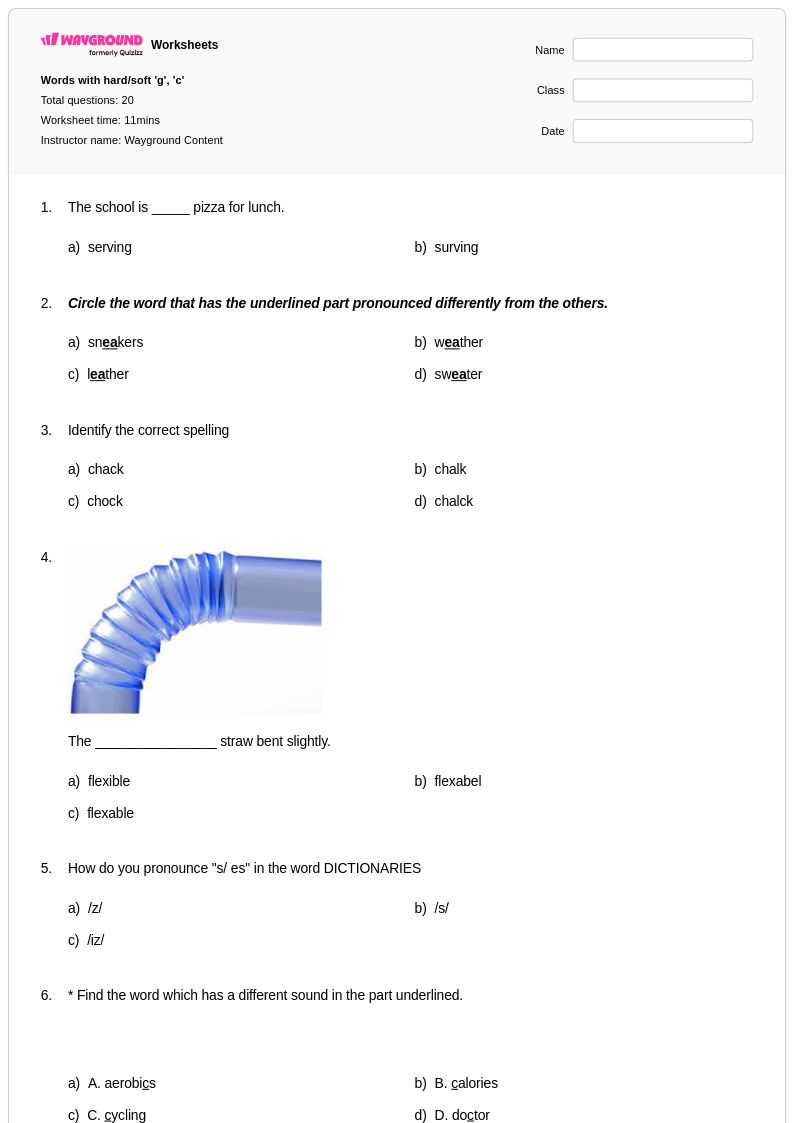
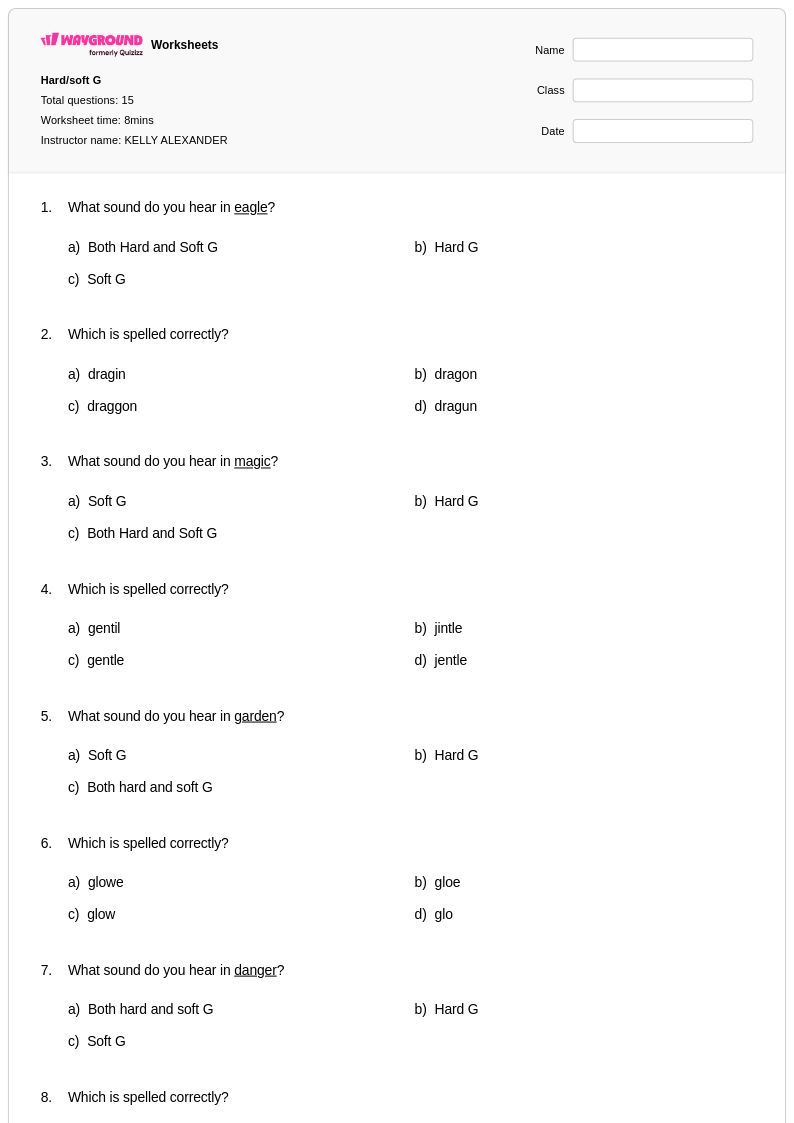
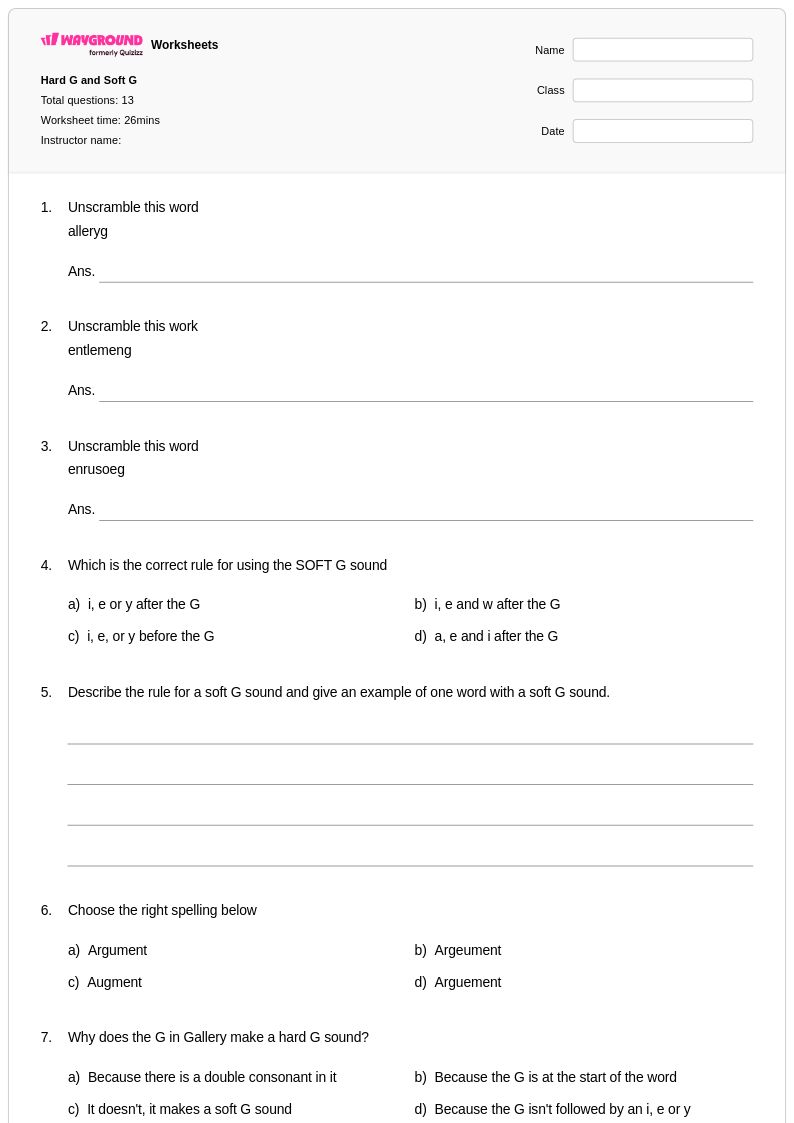
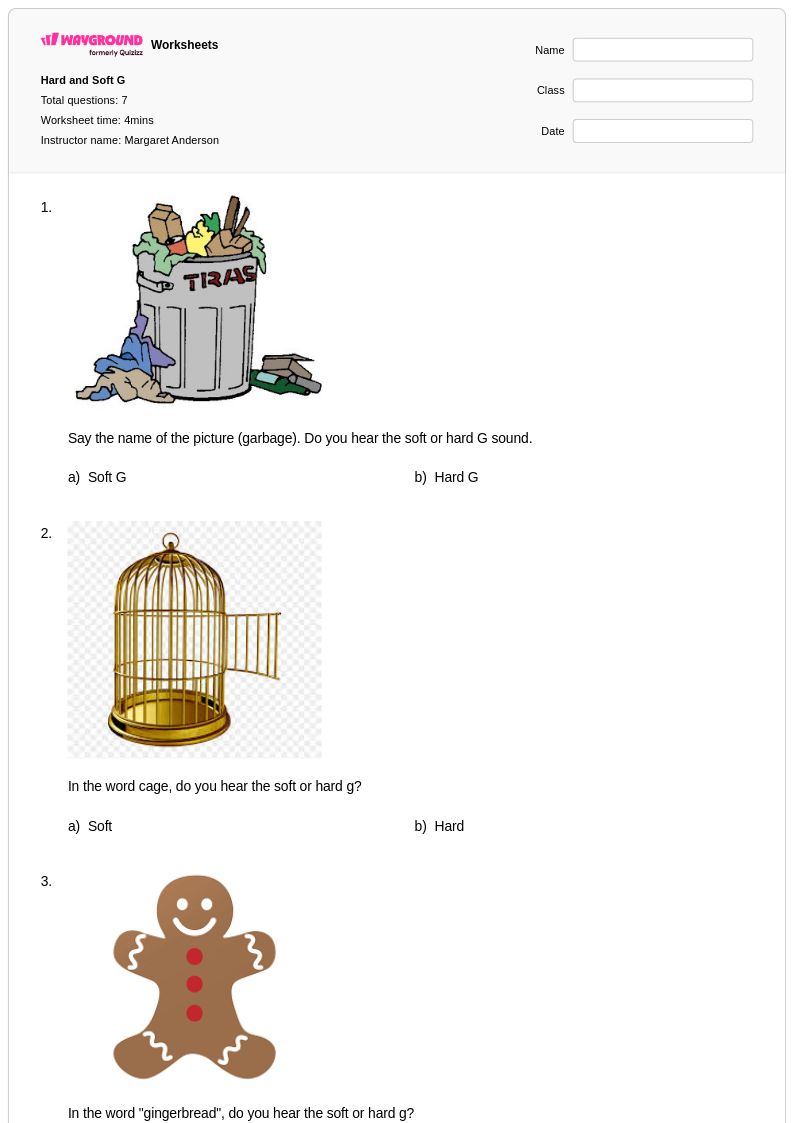
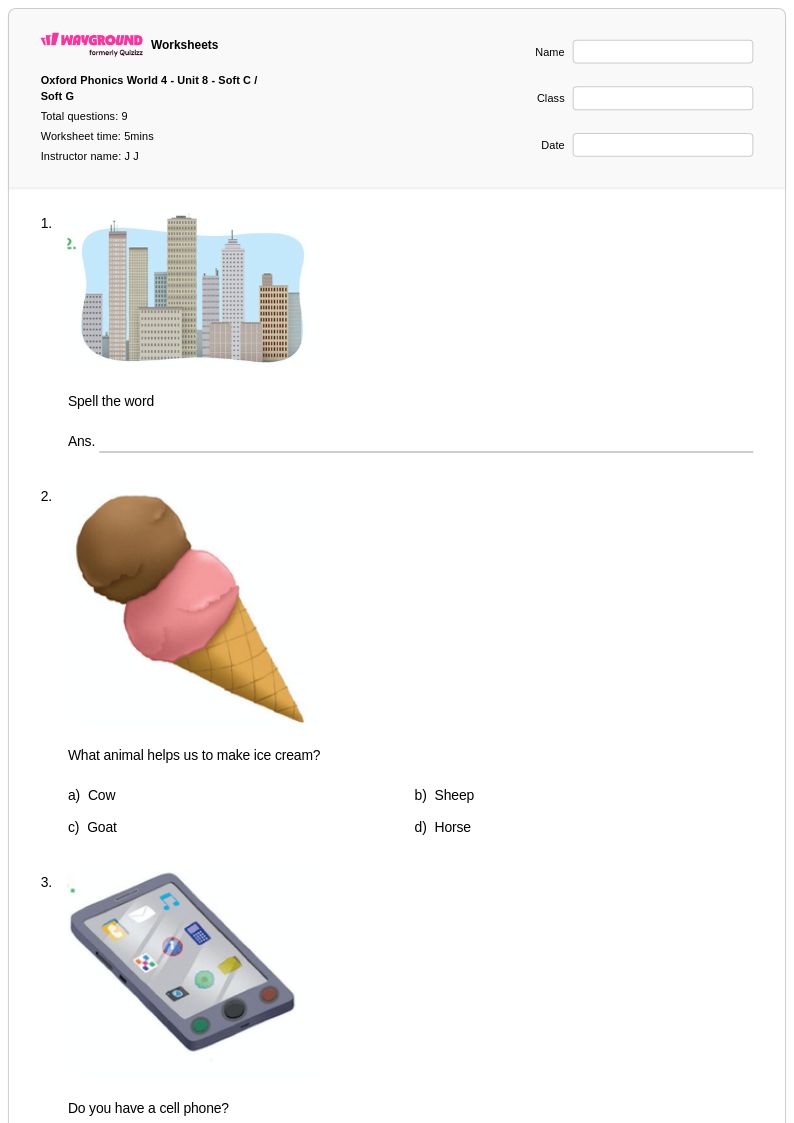
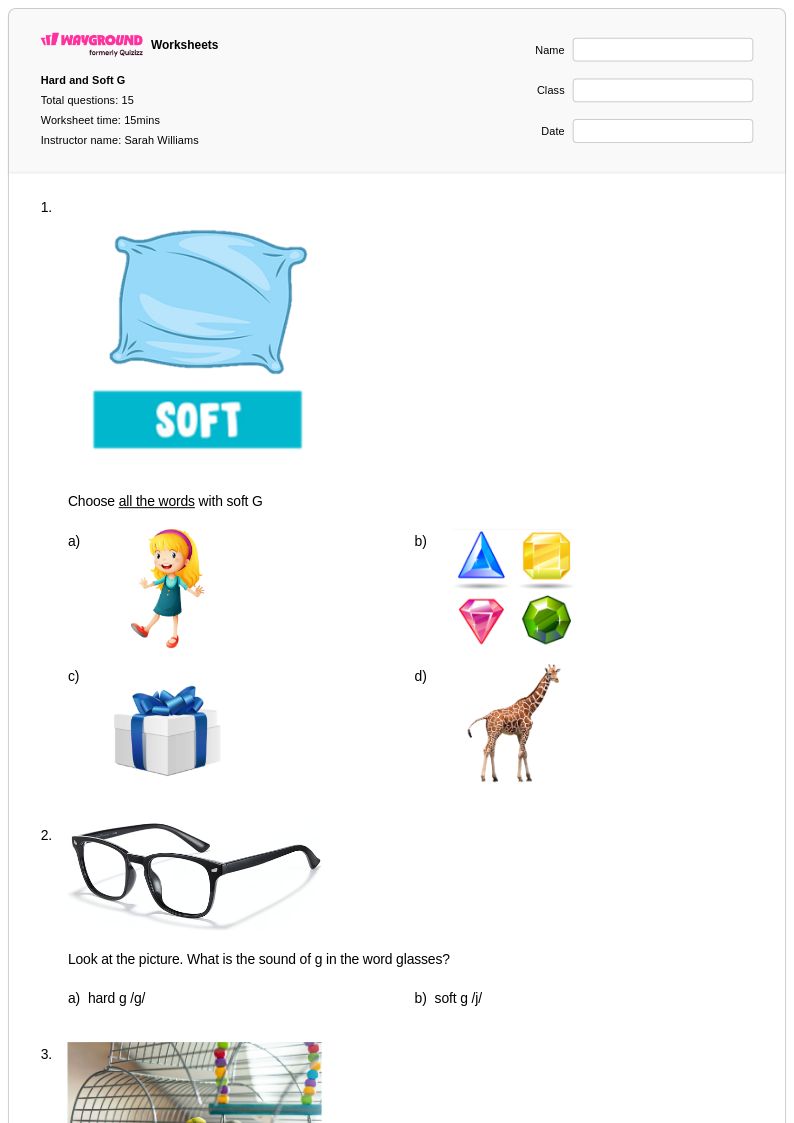
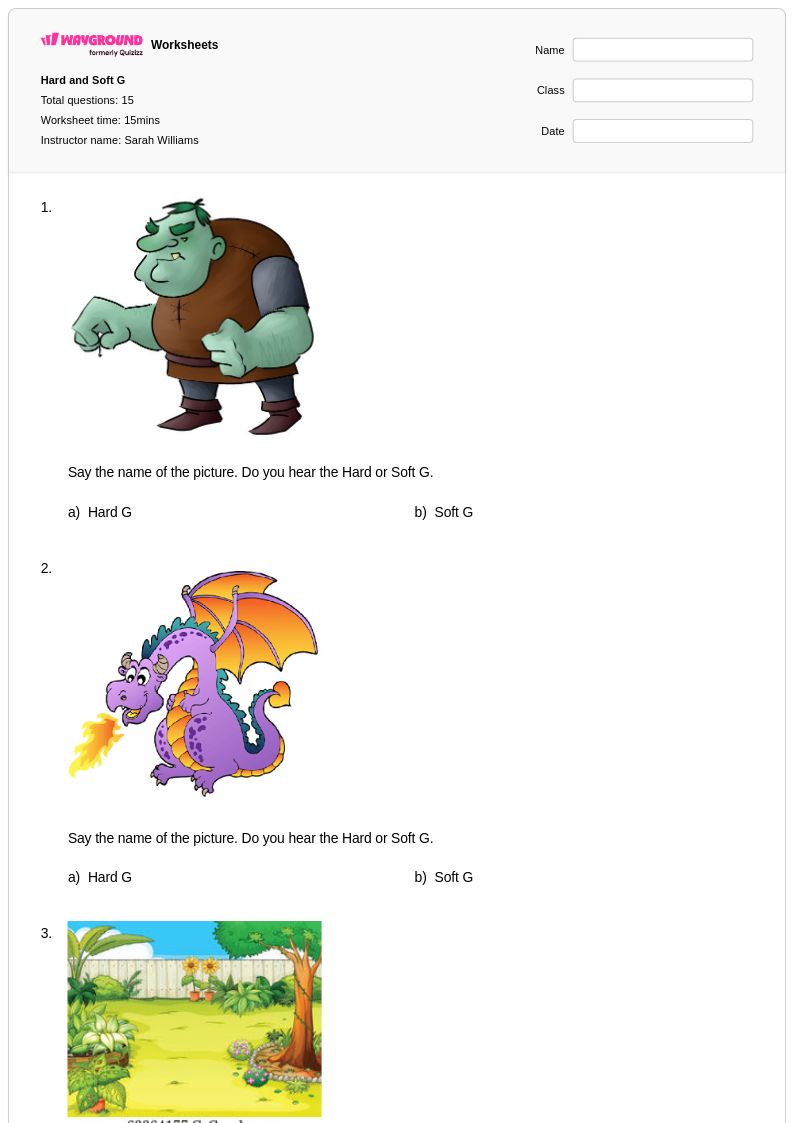
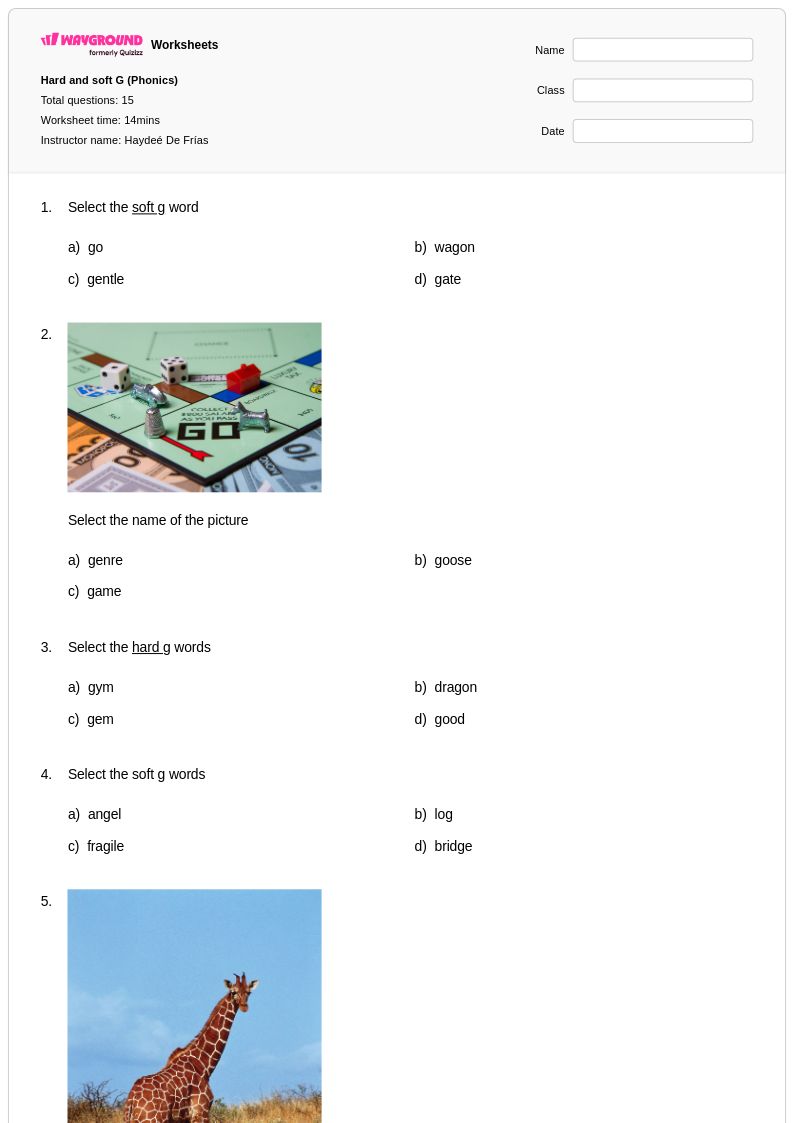
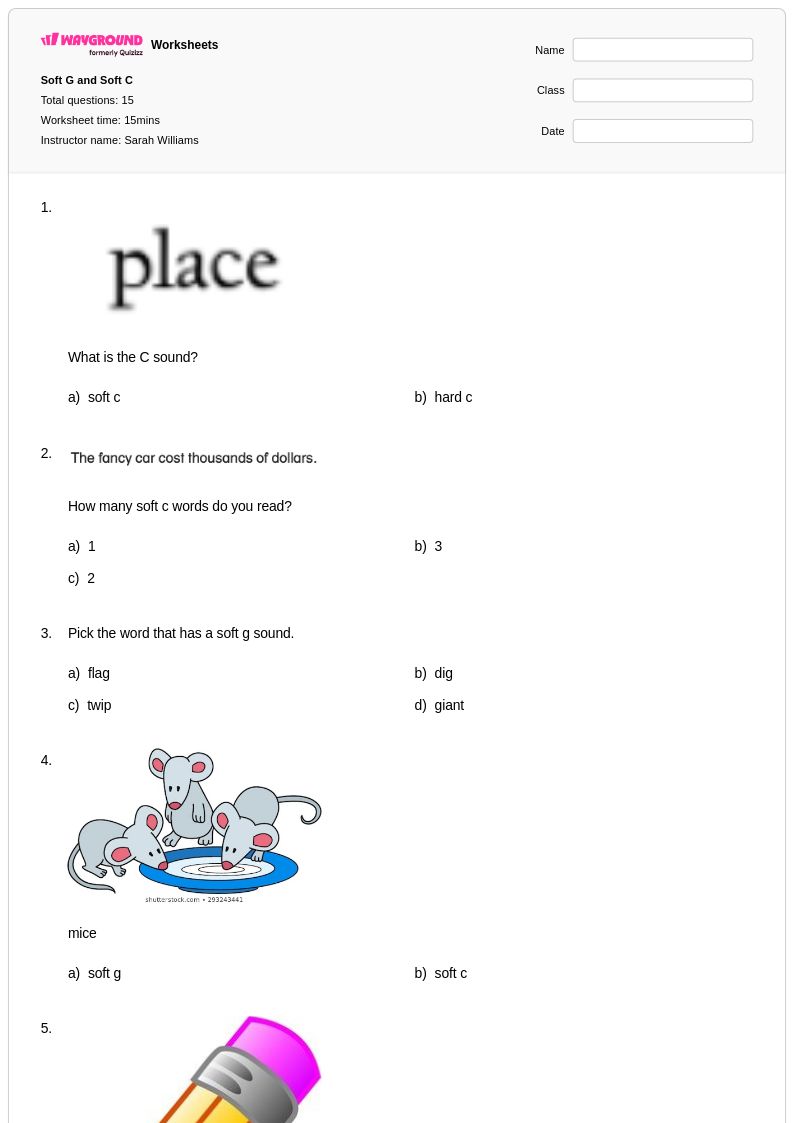
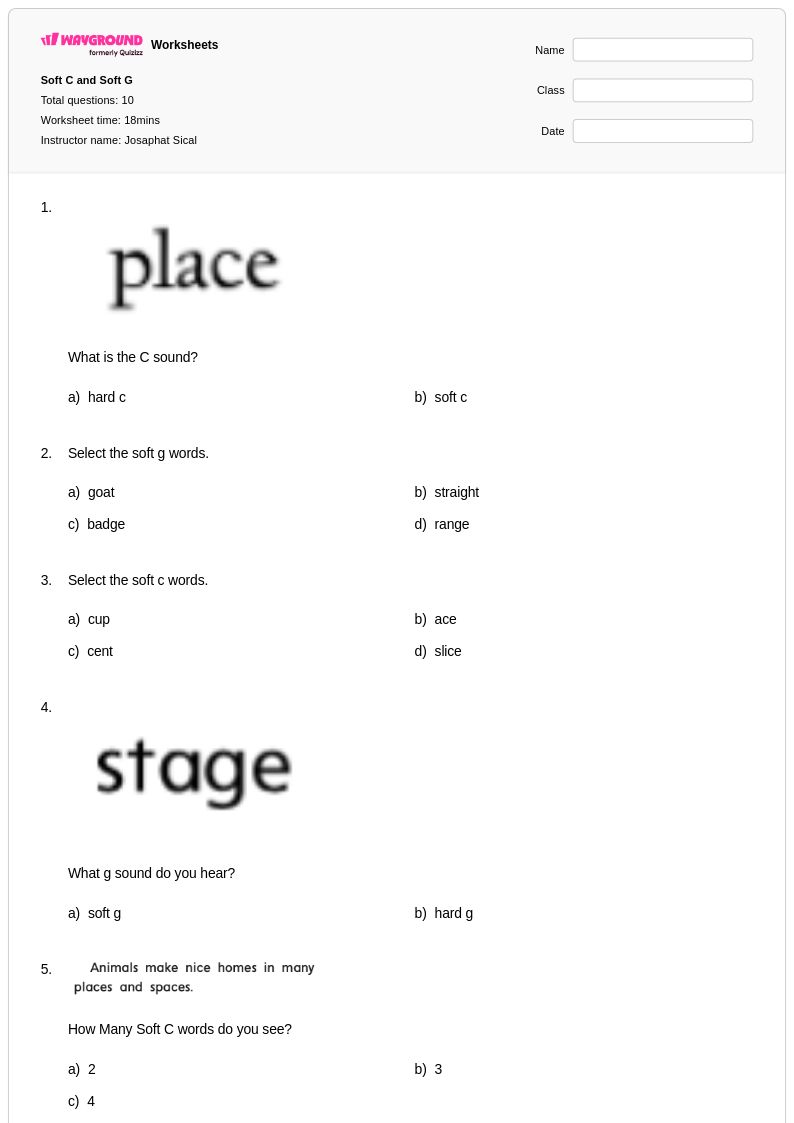
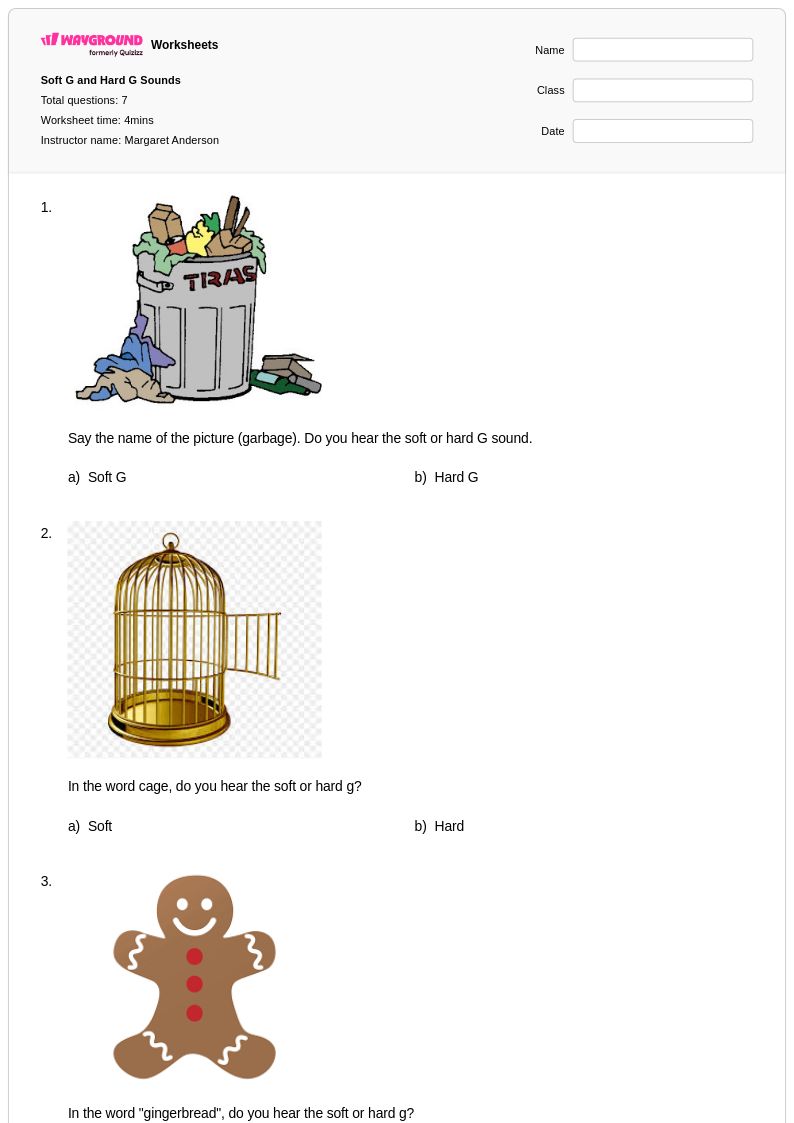
Discover free soft G phonics worksheets and printables from Wayground that help students master the gentle sound of G through engaging practice problems and comprehensive answer keys.
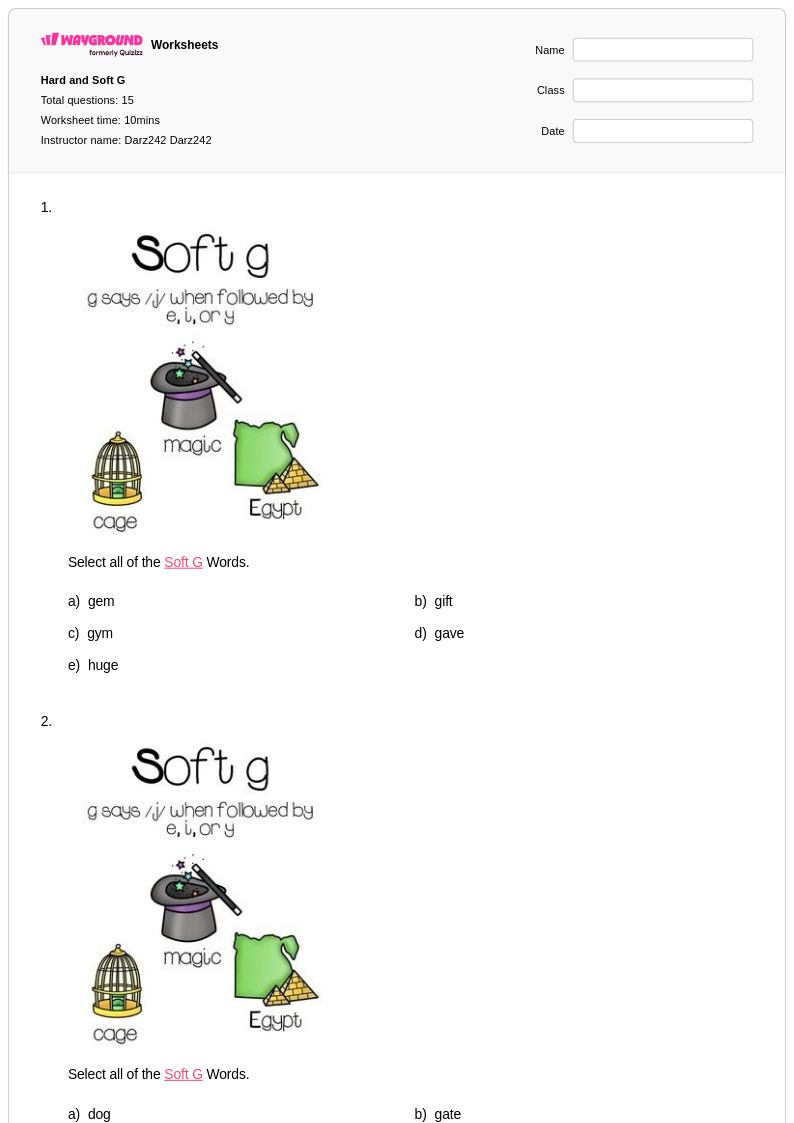
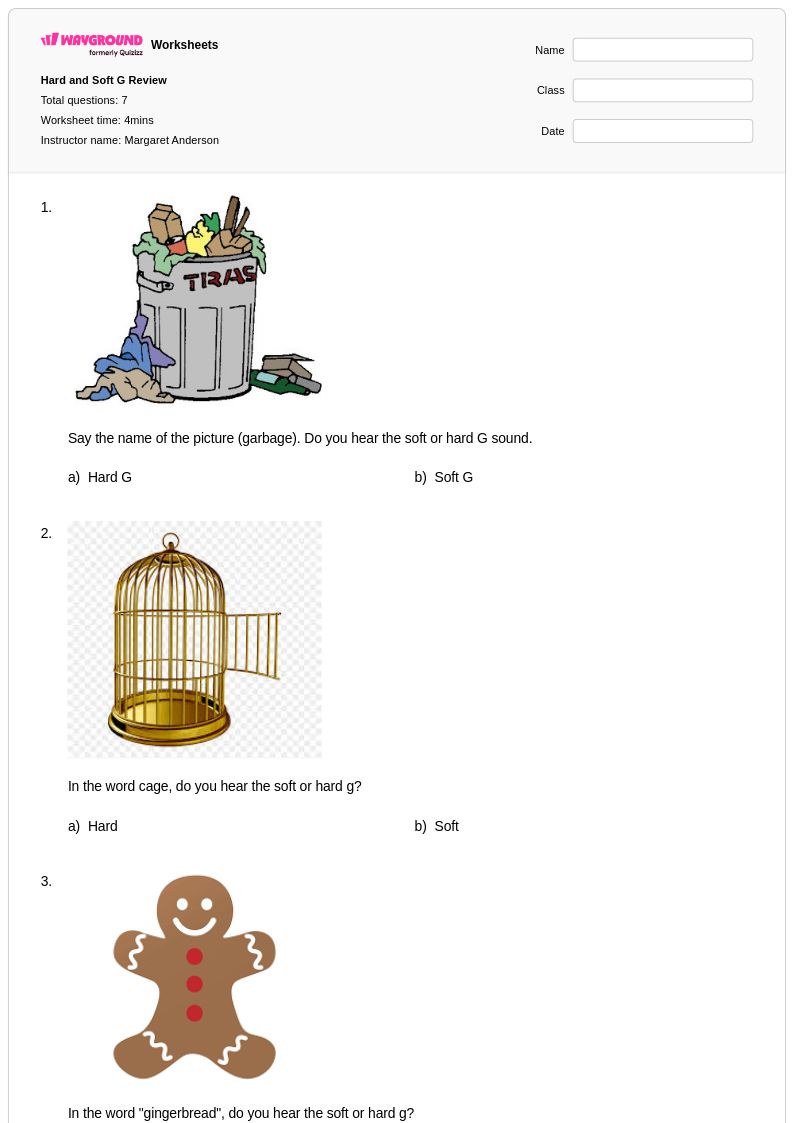
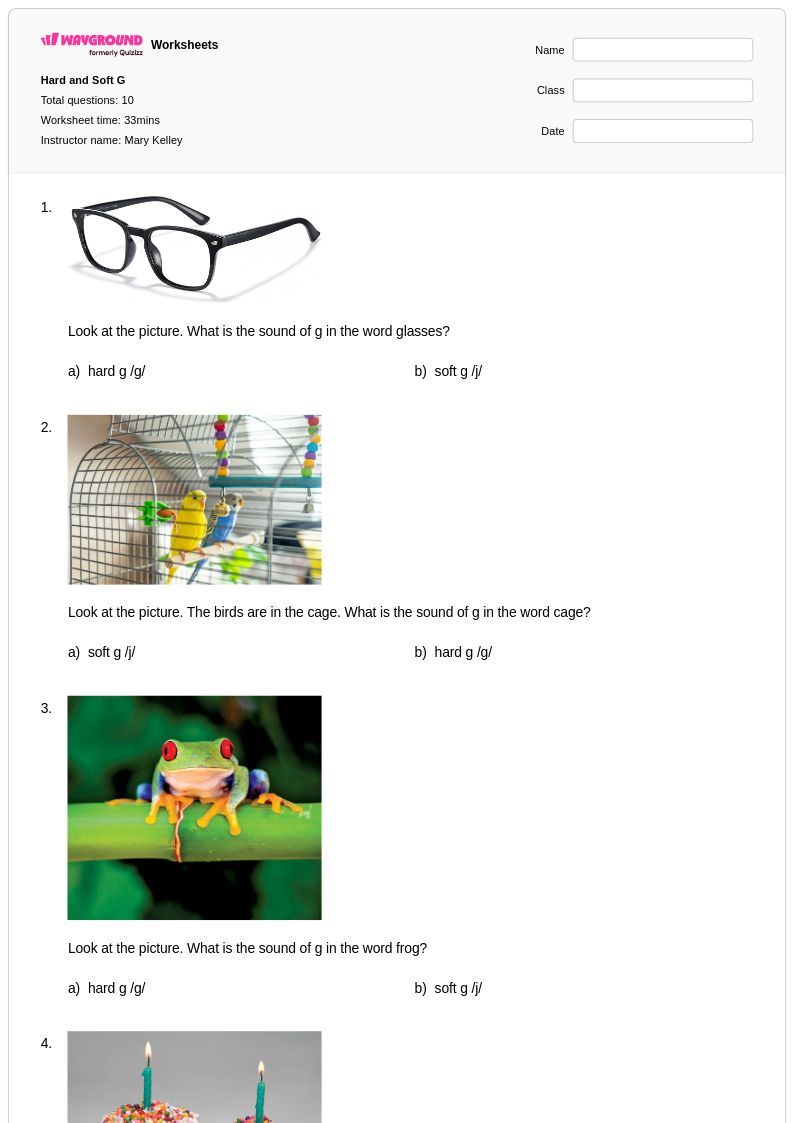
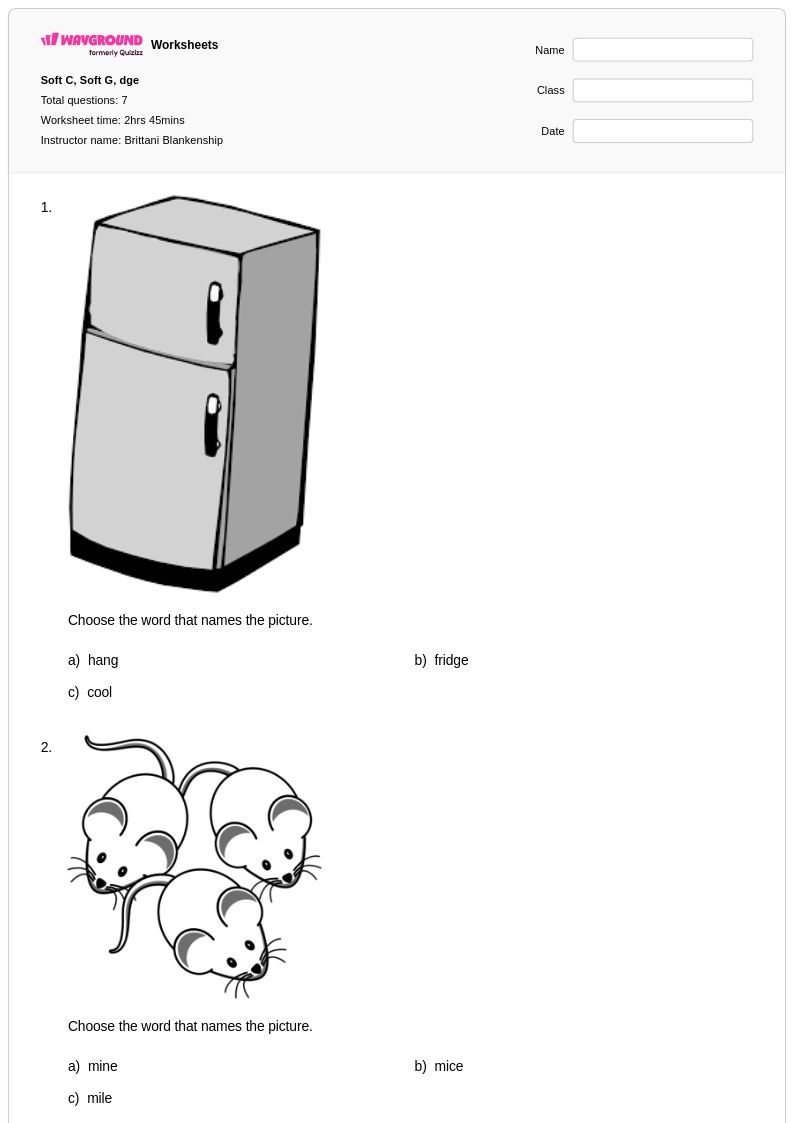
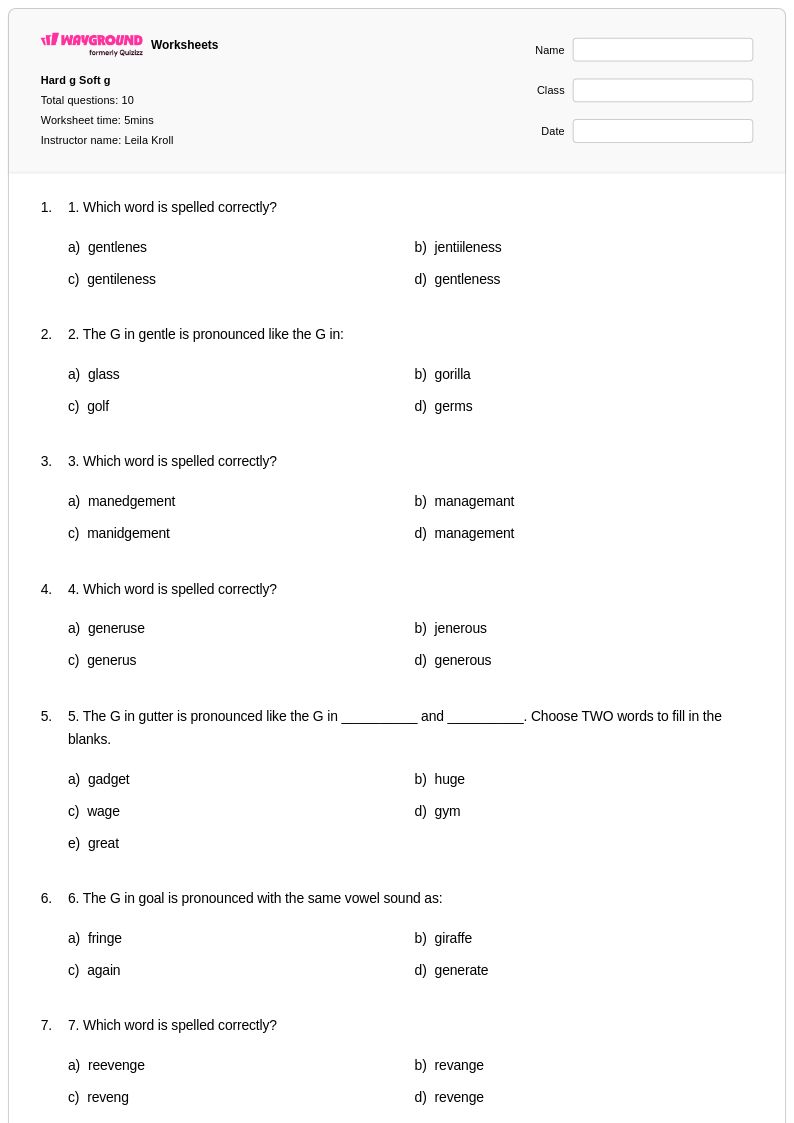
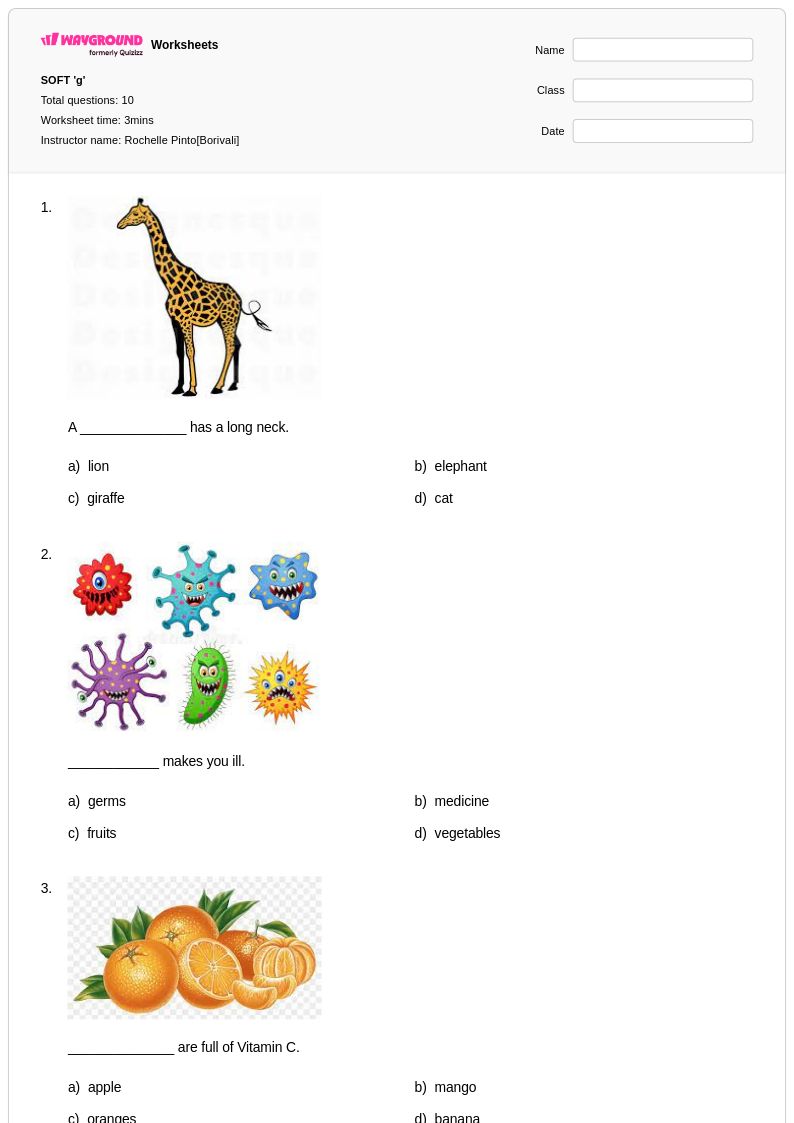
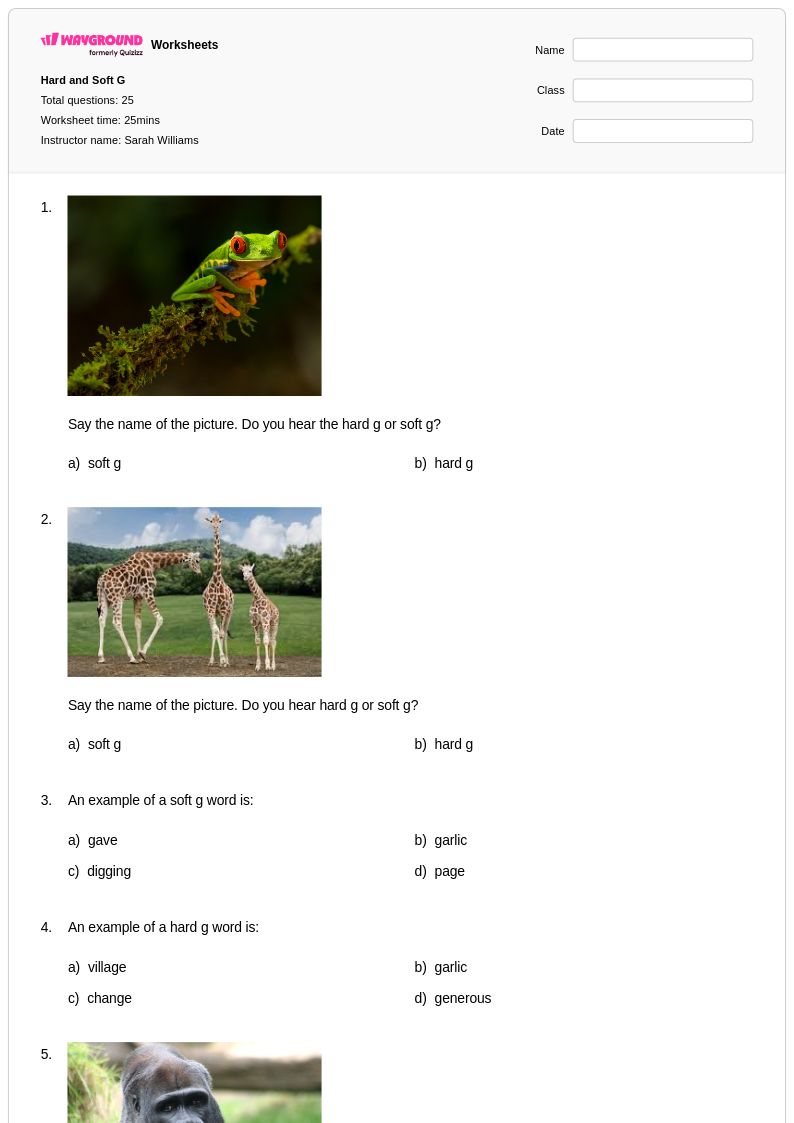
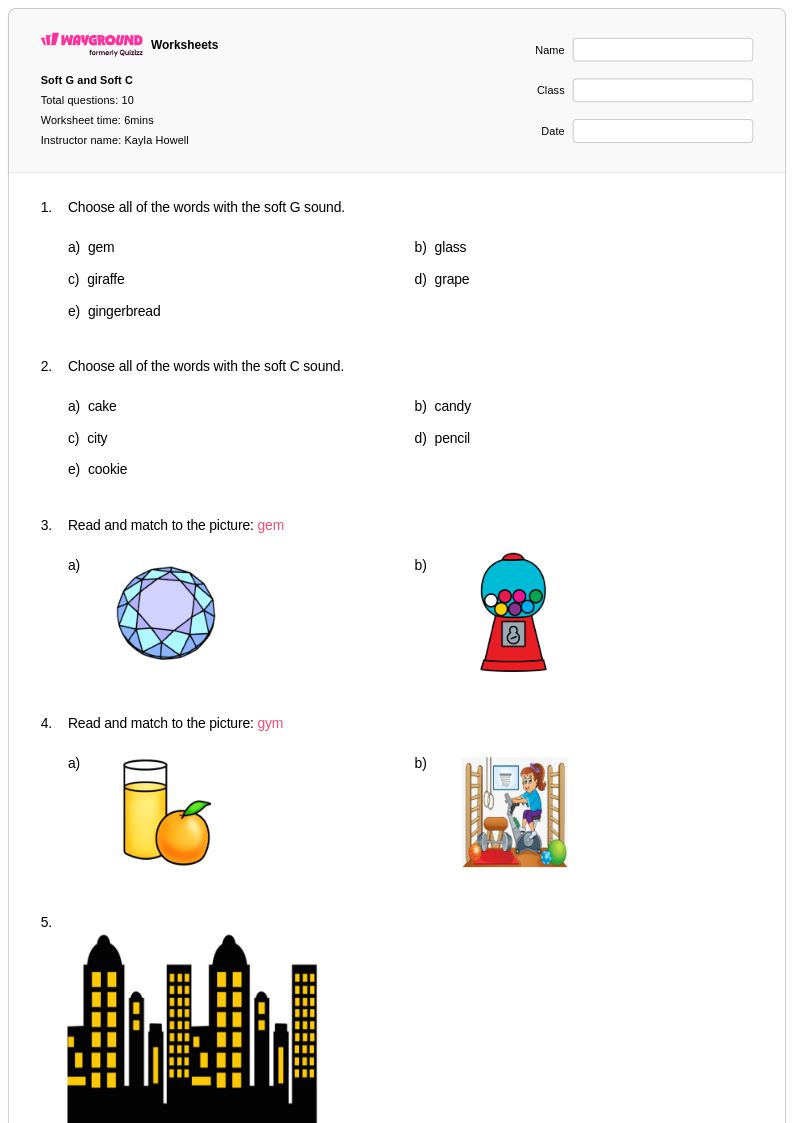
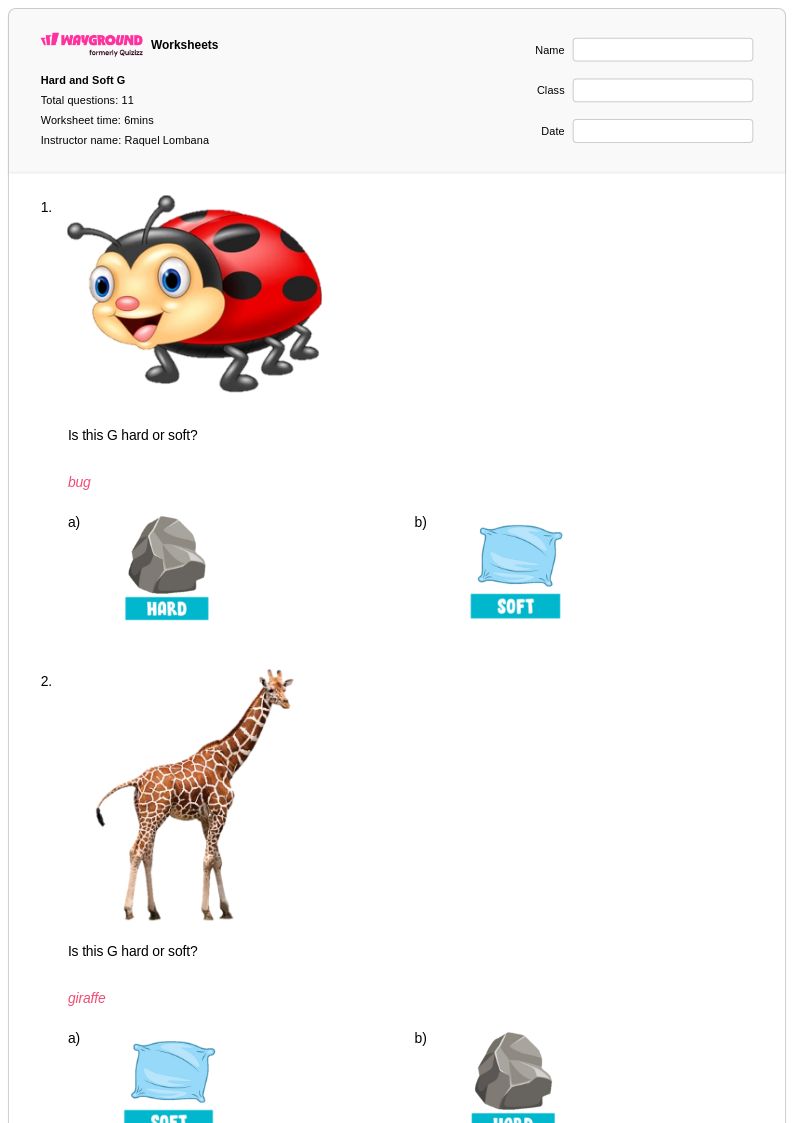
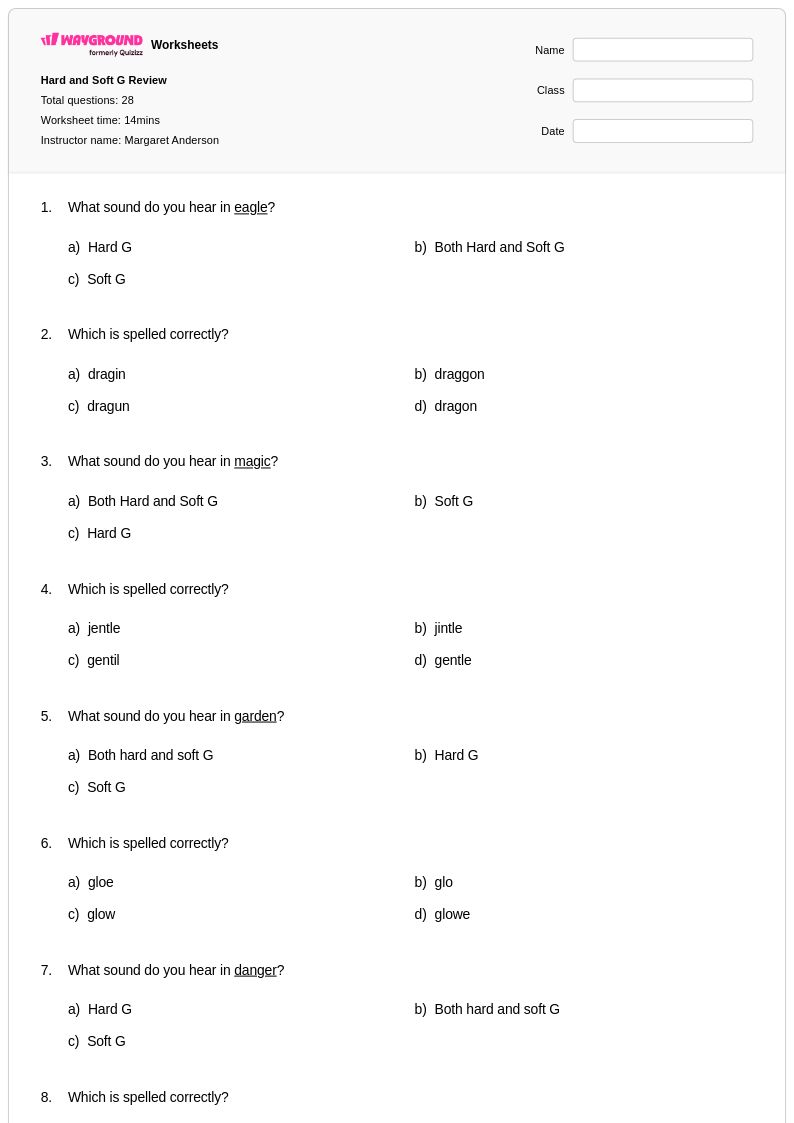
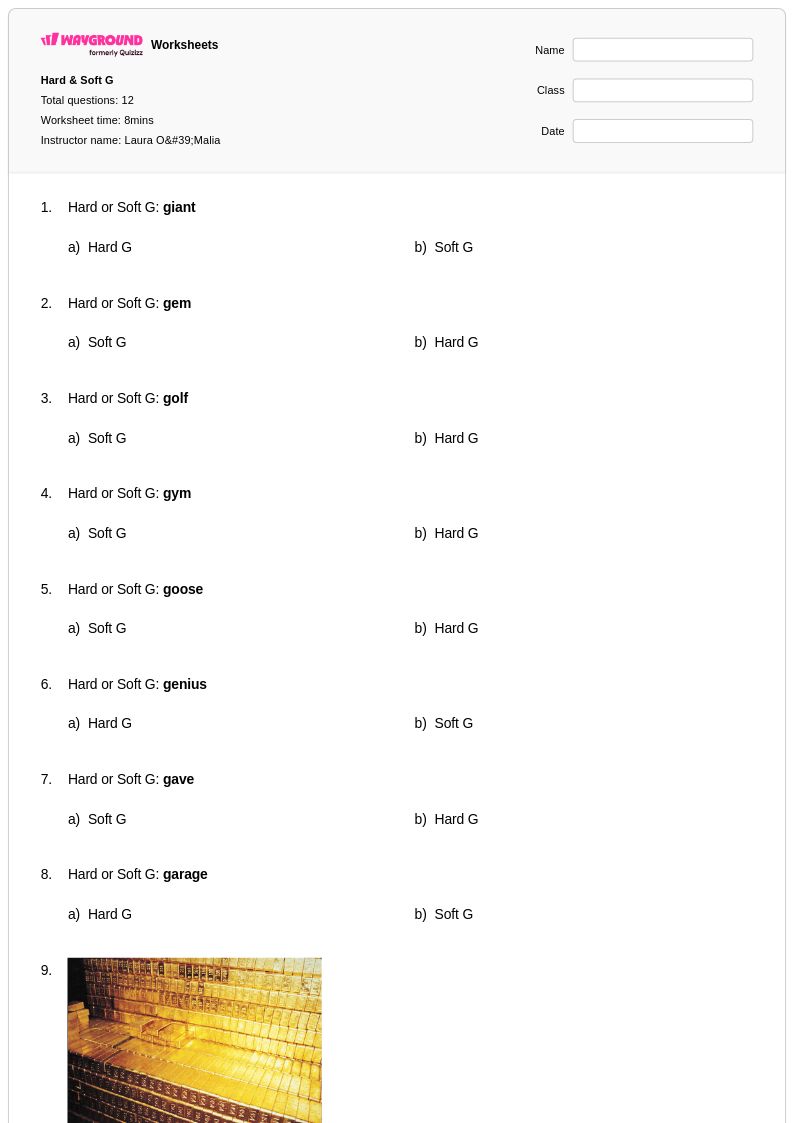
Soft G worksheets available through Wayground (formerly Quizizz) provide comprehensive practice with one of English phonics' most challenging consonant sounds. These educational resources help students master the pronunciation and recognition of the soft G sound, which occurs when the letter G is followed by E, I, or Y, producing a /j/ sound as heard in words like "gentle," "giraffe," and "gym." The worksheets strengthen essential decoding skills through systematic practice problems that include word sorting activities, reading passages, and spelling exercises. Teachers can access complete answer keys for efficient grading, and all materials are available as free printables in convenient PDF format, making them perfect for both classroom instruction and independent practice at home.
Wayground's extensive collection draws from millions of teacher-created resources, ensuring educators have access to high-quality soft G phonics materials that align with established literacy standards. The platform's robust search and filtering capabilities allow teachers to quickly locate worksheets that match their specific instructional needs, whether for initial skill introduction, remediation, or enrichment activities. Flexible customization tools enable educators to modify content difficulty levels and focus areas, supporting differentiated instruction for diverse learners. Available in both printable PDF format and interactive digital versions, these worksheets seamlessly integrate into lesson planning while providing valuable opportunities for targeted skill practice that builds students' confidence with this complex phonetic pattern.
FAQs
How do I teach the soft G sound to early readers?
Teaching the soft G sound works best when students first understand the rule: G typically makes a /j/ sound when followed by E, I, or Y, as in 'gem,' 'giraffe,' and 'gym.' Introduce the pattern explicitly with anchor words students already know, then build recognition through word sorting activities that contrast soft G and hard G words. Consistent exposure through reading and spelling practice reinforces the rule across contexts.
What exercises help students practice the soft G phonics pattern?
Word sorting activities are especially effective for soft G practice because they require students to actively apply the spelling rule rather than passively recognize it. Spelling exercises, cloze sentences, and reading passages that embed soft G words in context also build both decoding and encoding skills. Repeated exposure across multiple exercise types helps students internalize the pattern rather than memorize isolated words.
What mistakes do students commonly make with the soft G rule?
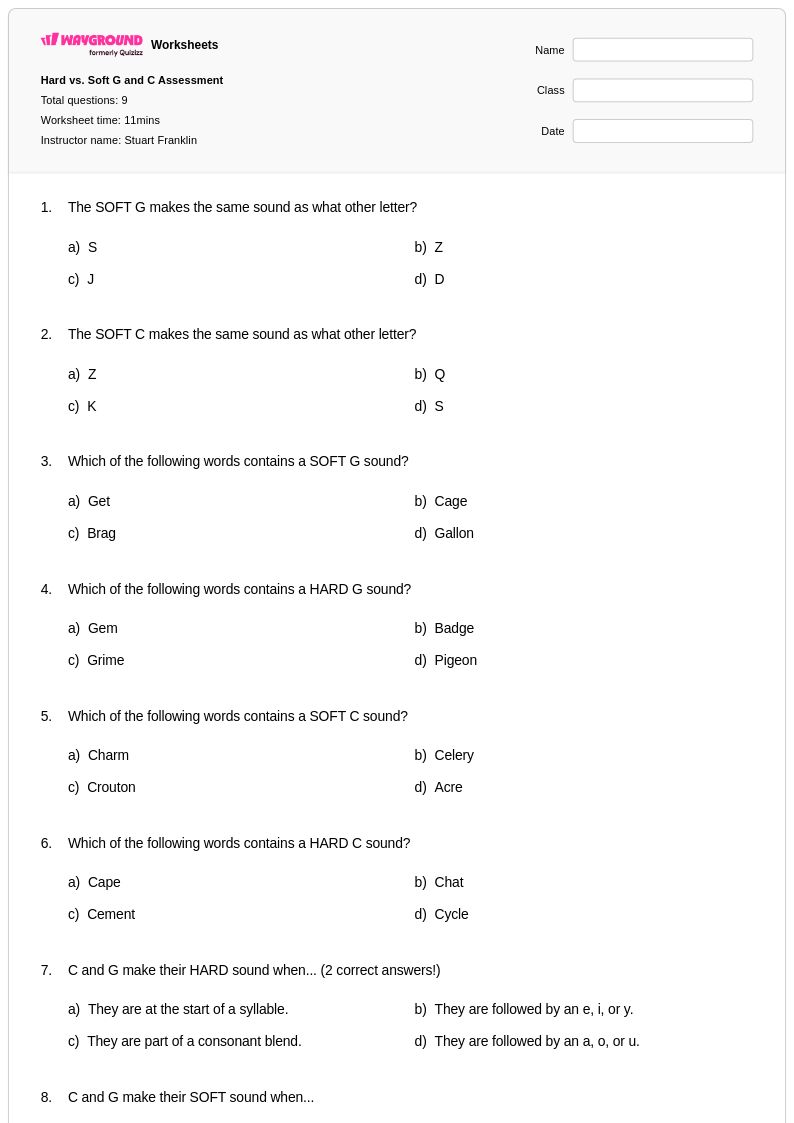
The most common error is overgeneralizing: students often assume G always makes a /j/ sound before E, I, or Y, but English has exceptions like 'get,' 'give,' and 'girl' where G remains hard. Students also frequently confuse soft G with the letter J, which produces the same sound, leading to spelling errors. Pointing out exceptions explicitly and practicing them alongside rule-following words helps students build more accurate phoneme-grapheme mapping.
How do I differentiate soft G instruction for struggling readers?
For students who struggle with soft G, reduce the cognitive load by focusing on a small set of high-frequency soft G words before expanding to broader pattern recognition. Wayground supports individual student accommodations including Read Aloud, which allows the platform to read questions aloud for students who need auditory support, and reduced answer choices to lower the difficulty of recognition tasks. These settings can be applied to specific students without affecting the rest of the class.
How do I use Wayground's soft G worksheets in my classroom?
Wayground's soft G worksheets are available as printable PDFs for traditional classroom use and in digital formats for technology-integrated environments, giving teachers flexibility to assign them for in-class instruction, independent practice, or homework. Teachers can also host the worksheets as a live quiz on Wayground, making them suitable for whole-class review or formative assessment. Complete answer keys are included with every worksheet, reducing grading time.