
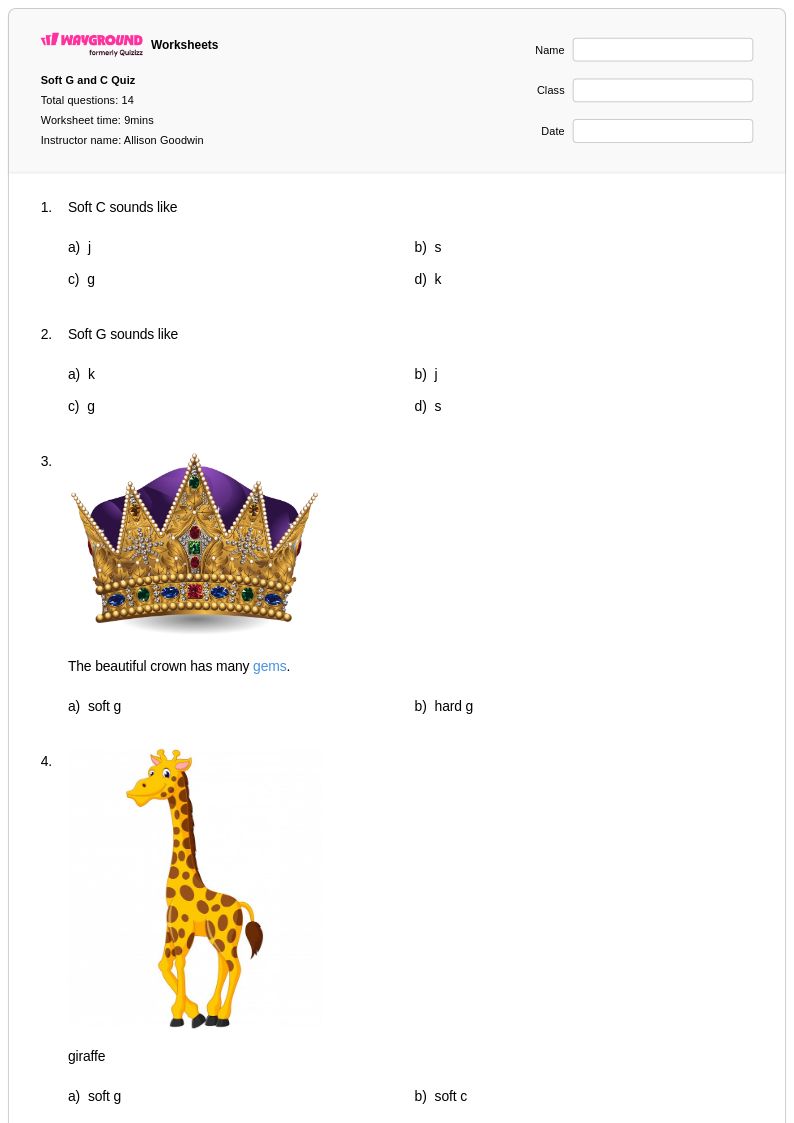
14 Q
2nd
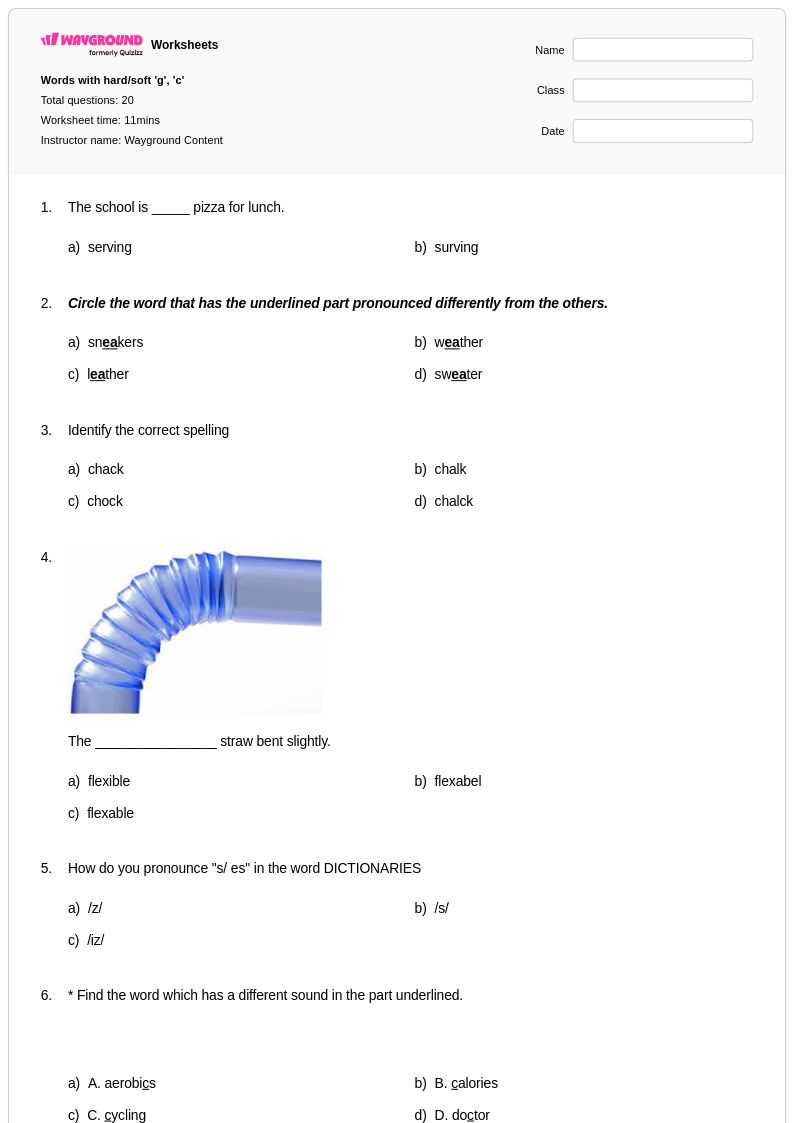
20 Q
3rd
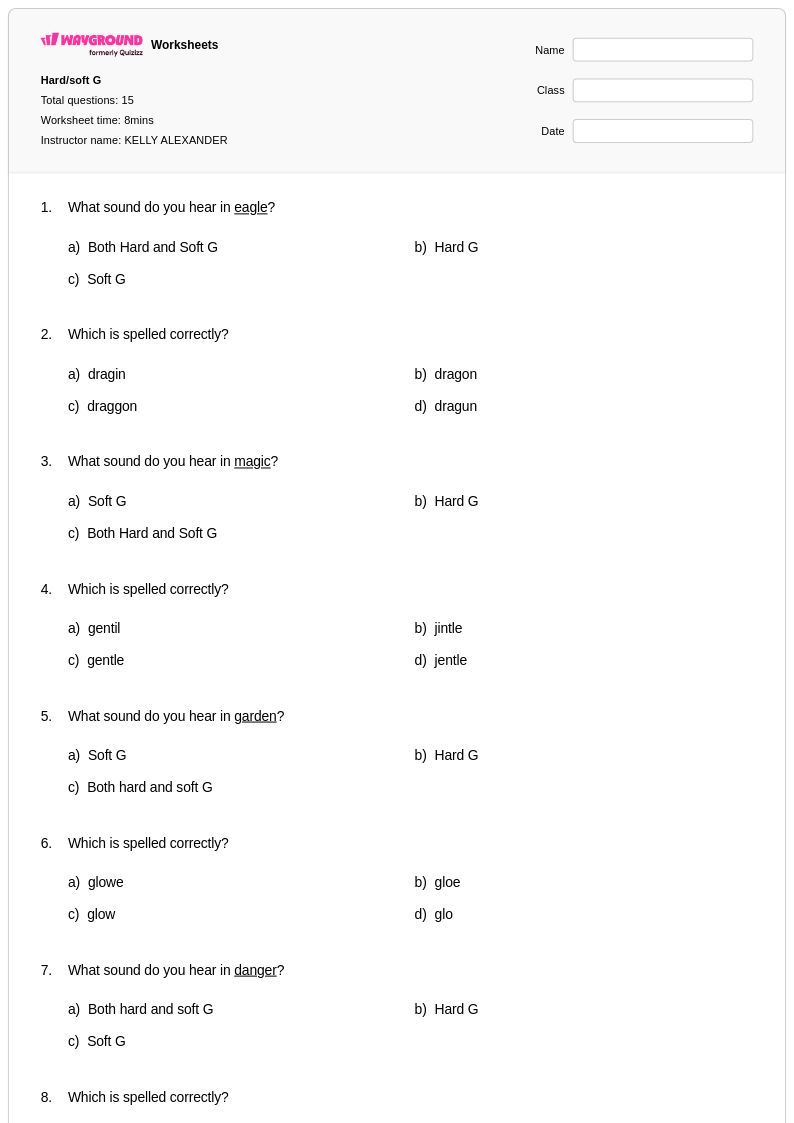
15 Q
2nd
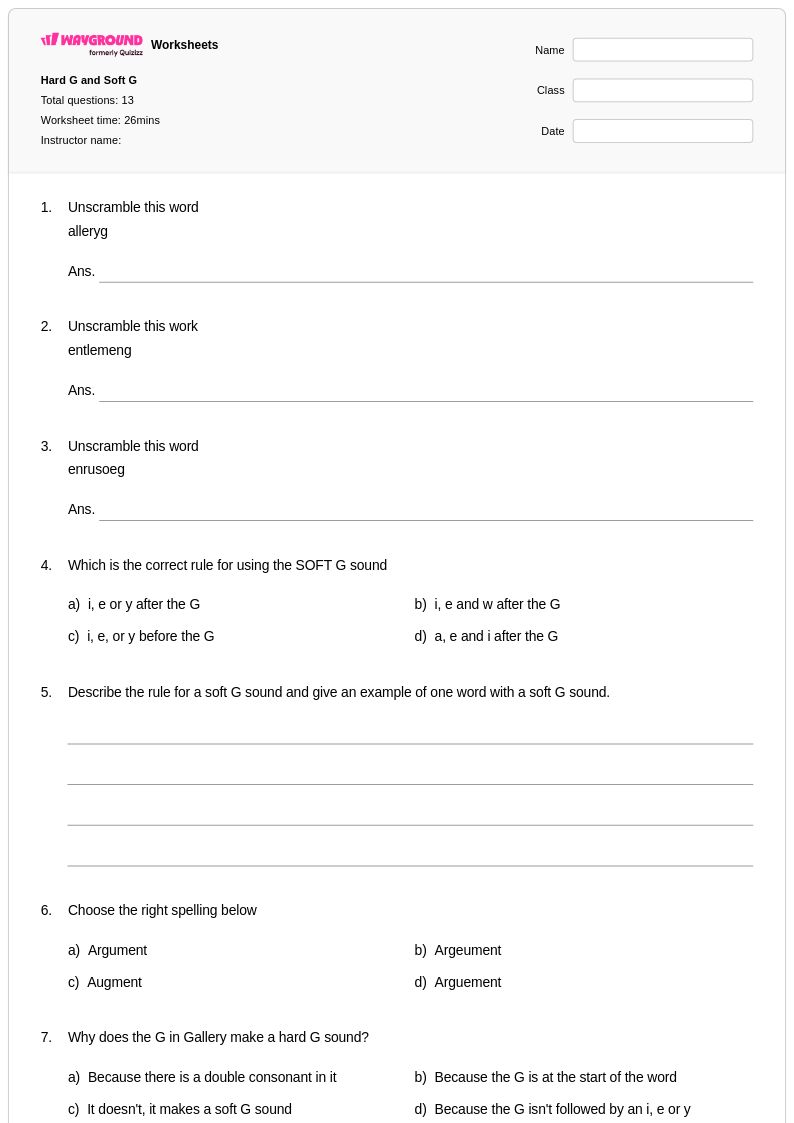
13 Q
5th
7 Q
2nd
9 Q
2nd
15 Q
2nd - Uni
15 Q
2nd - Uni
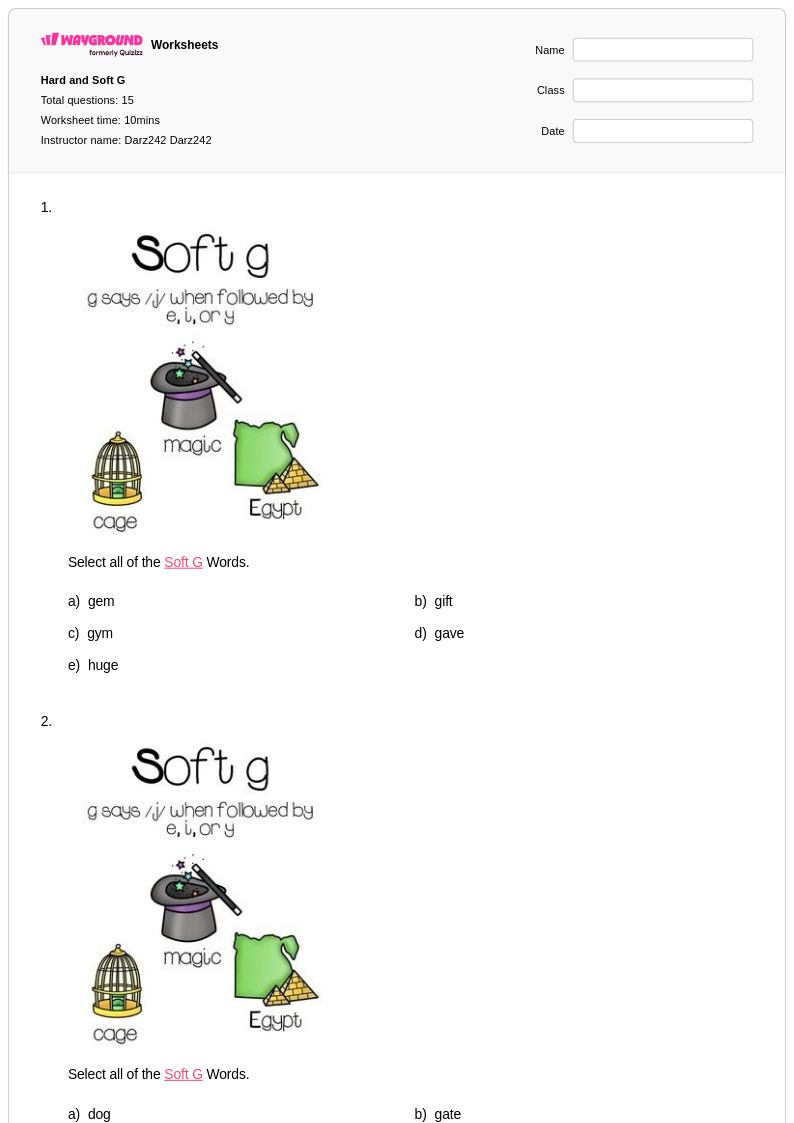
15 Q
2nd - 3rd
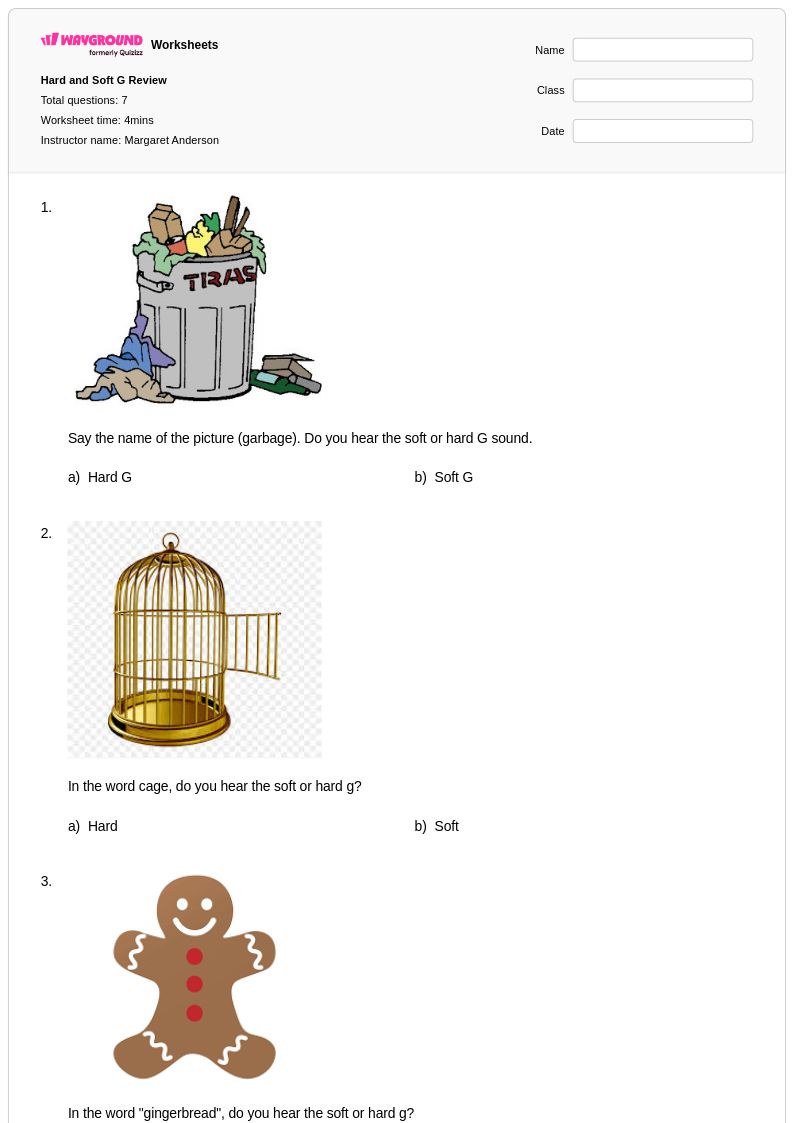
7 Q
2nd
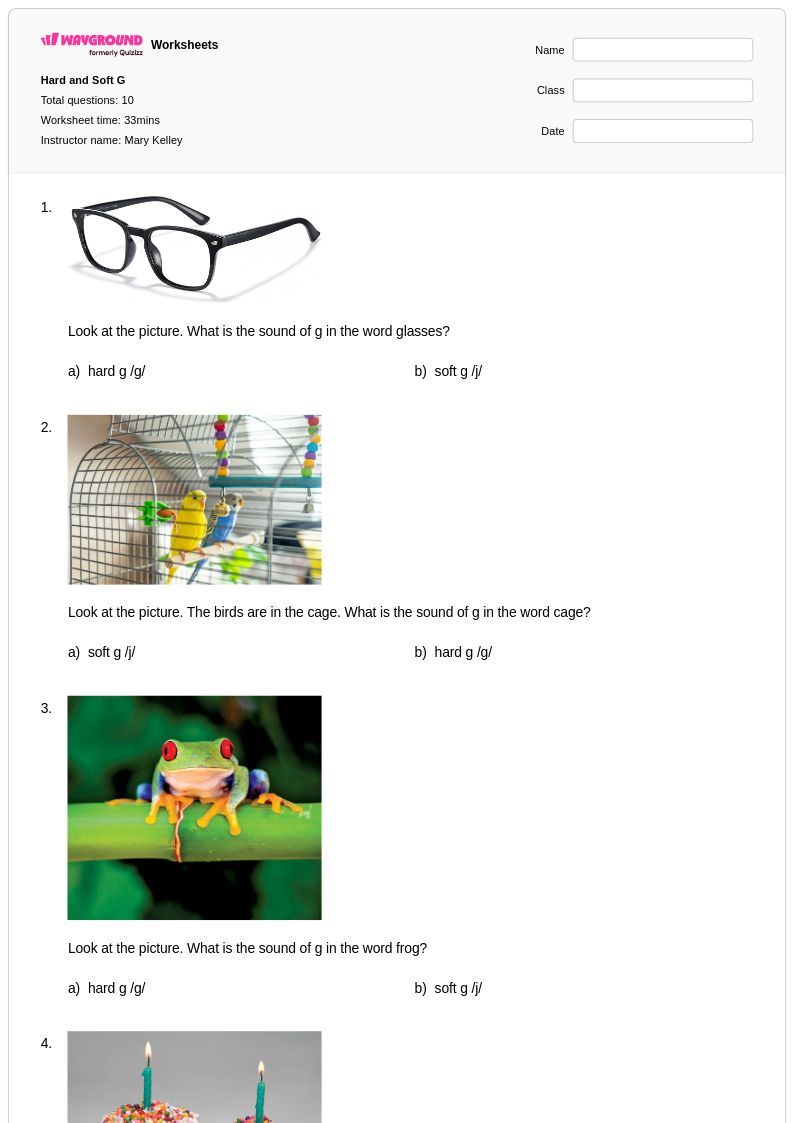
10 Q
1st
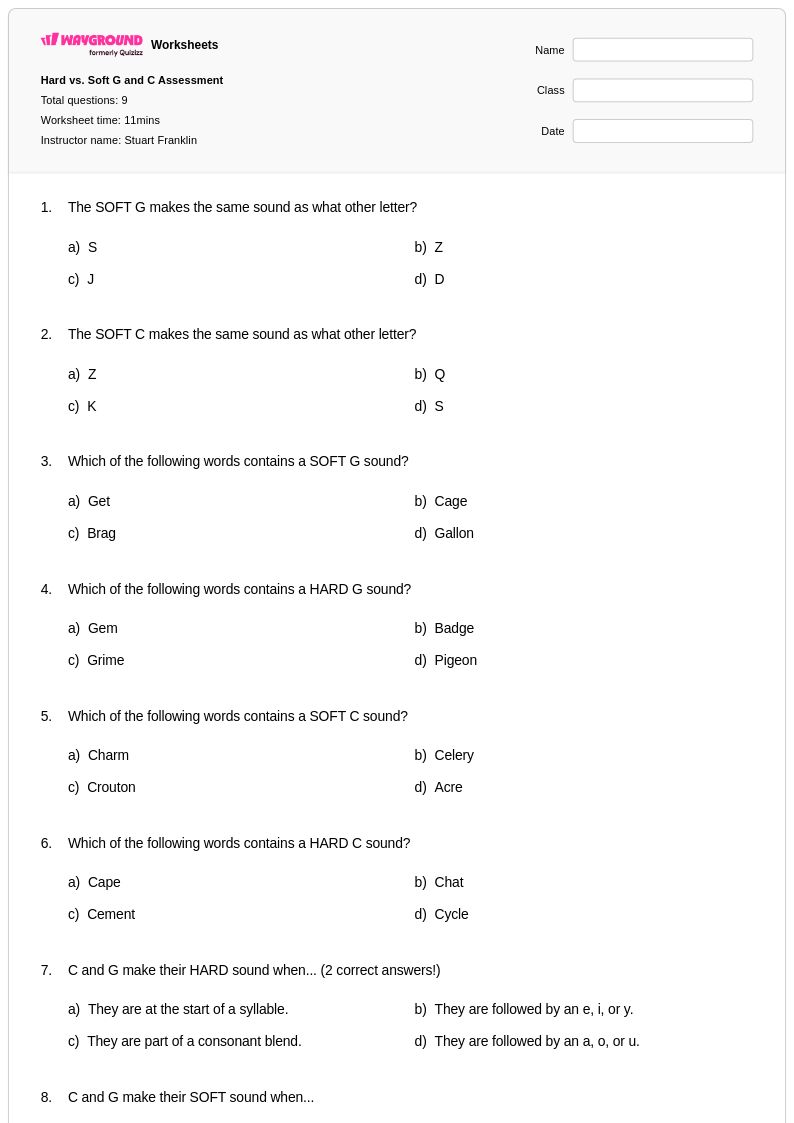
9 Q
2nd
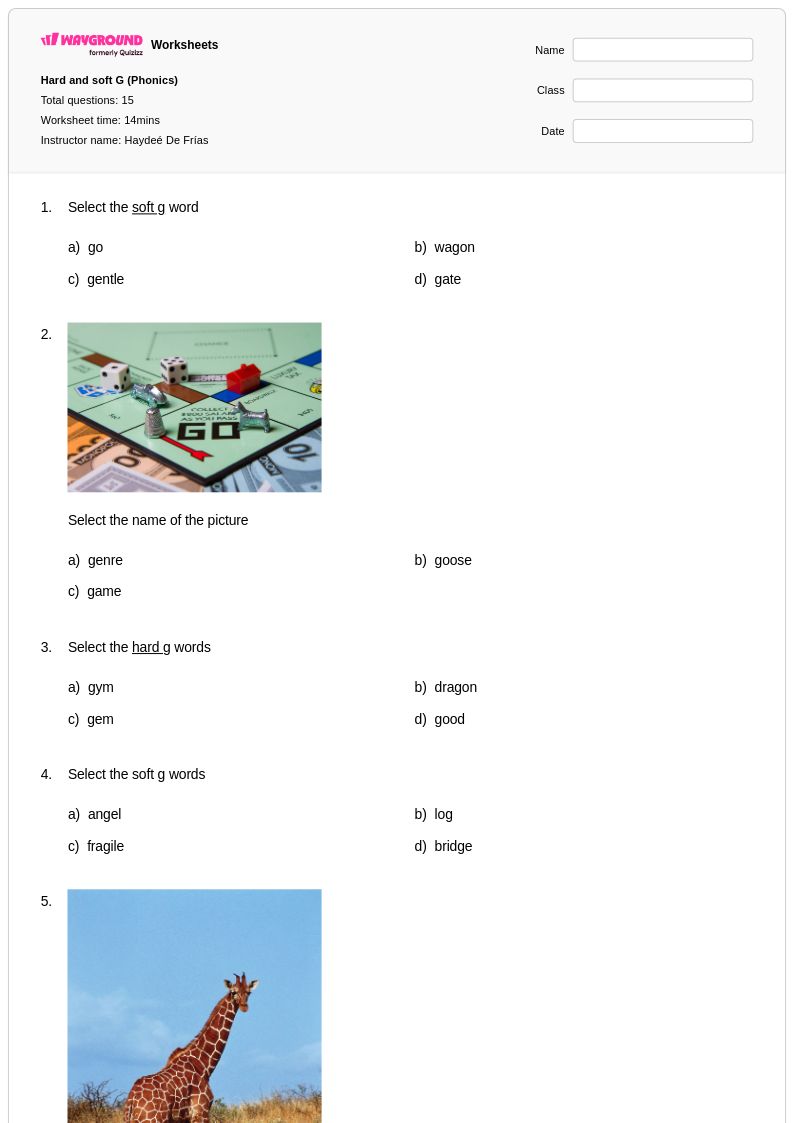
15 Q
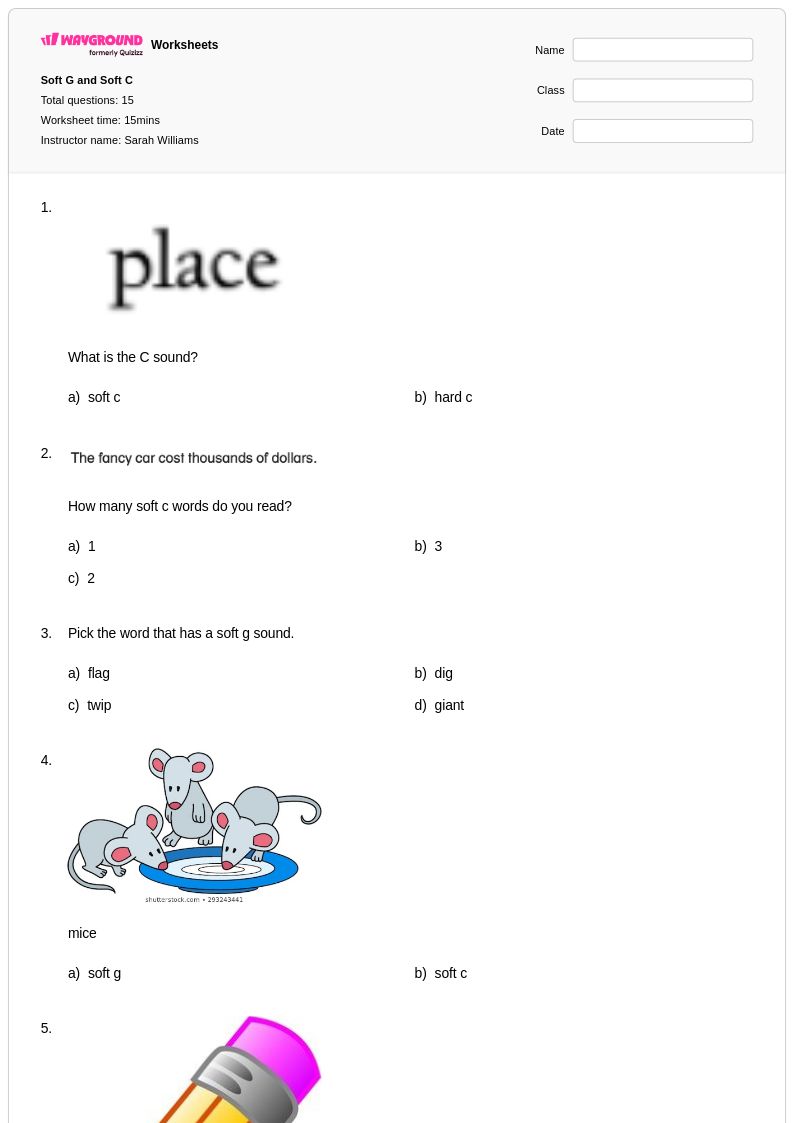
15 Q
1st - Uni
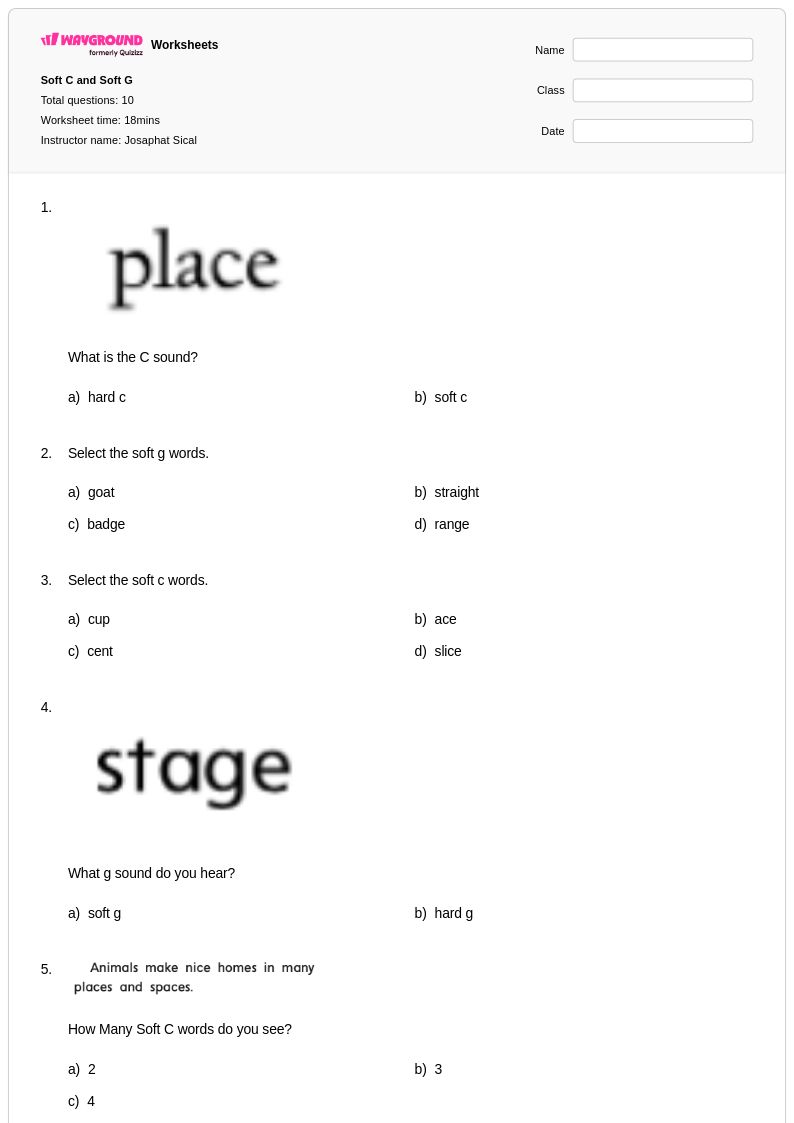
10 Q
KG - 2nd
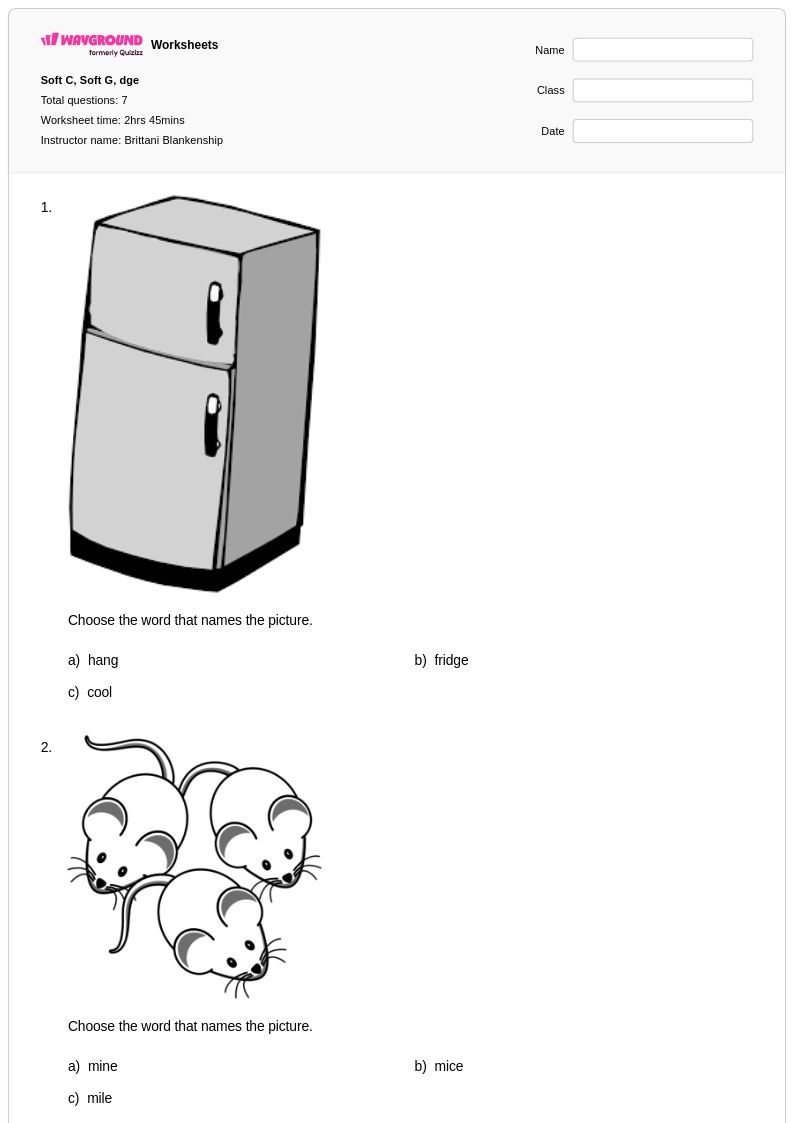
7 Q
1st
7 Q
2nd
10 Q
3rd
10 Q
1st
25 Q
2nd - Uni
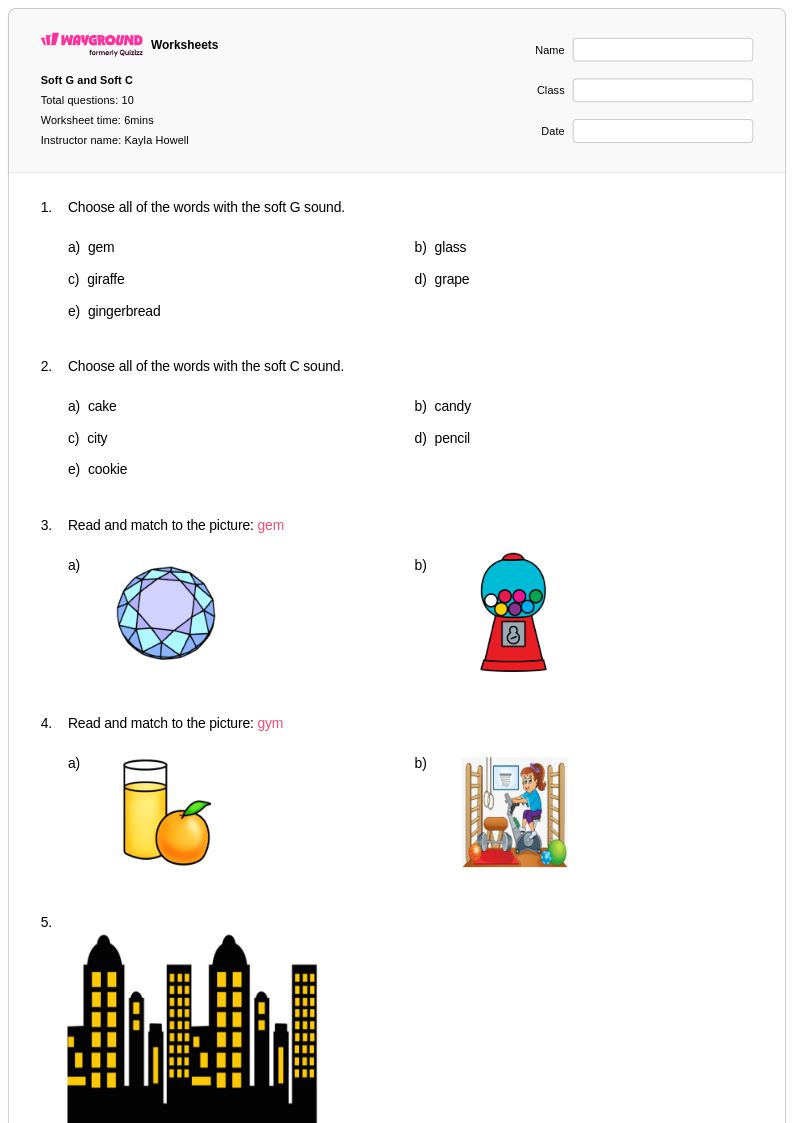
10 Q
1st
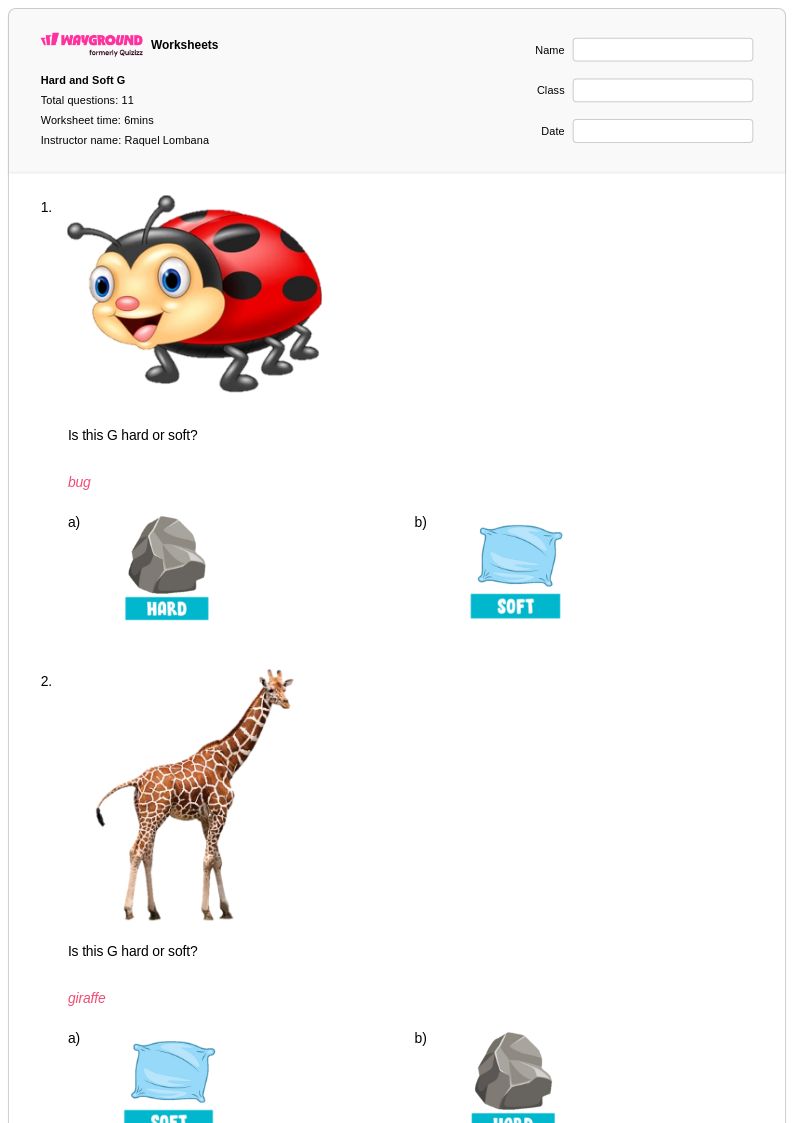
11 Q
1st - 2nd
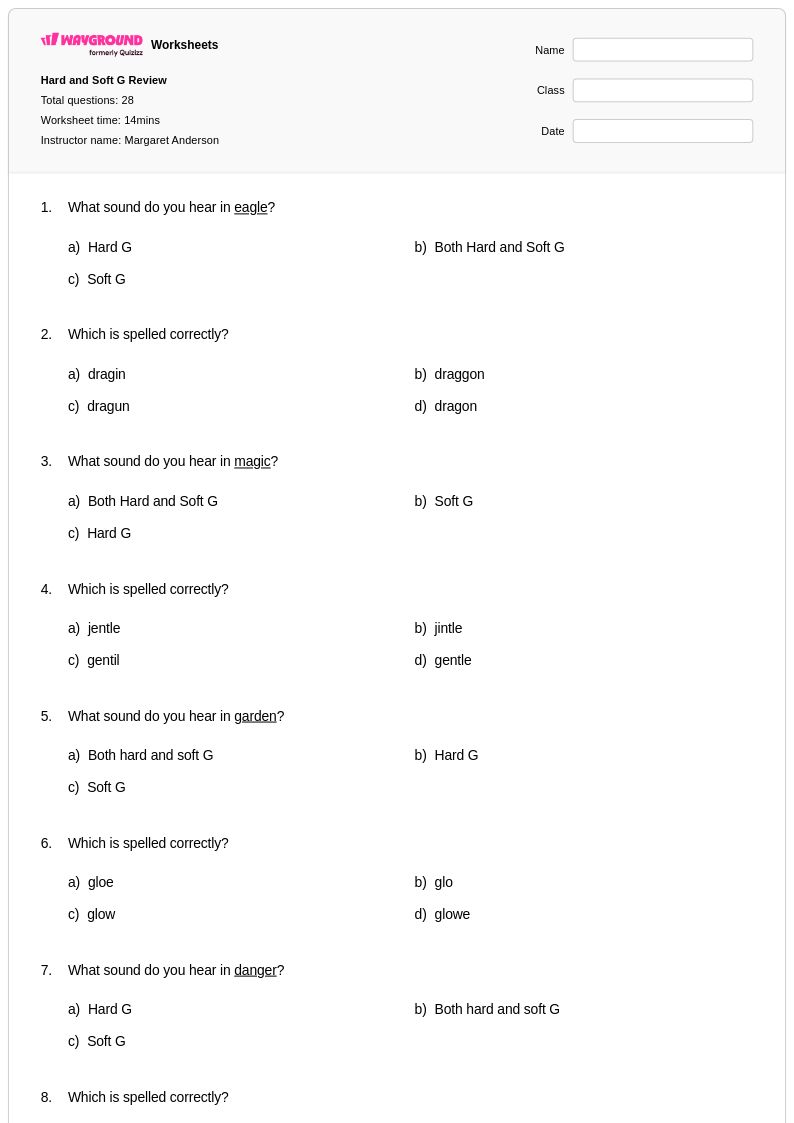
28 Q
2nd
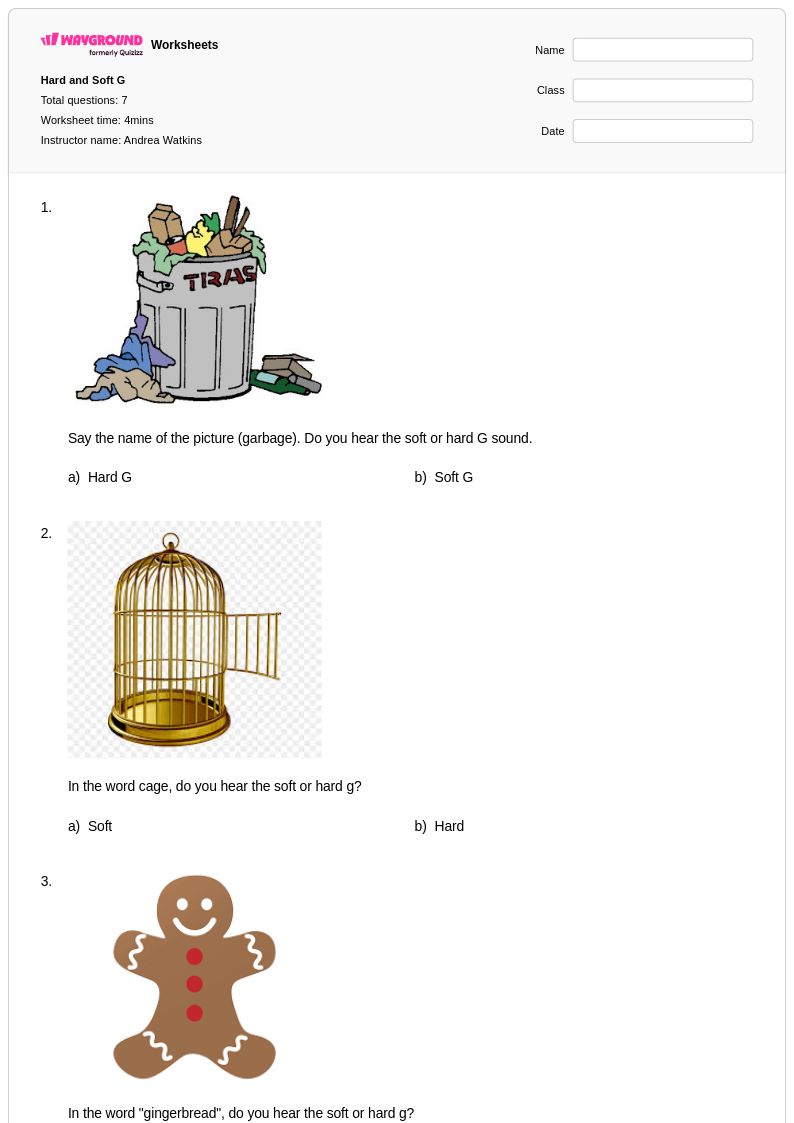
7 Q
2nd
Explore Soft G Worksheets by Grades
Explore Other Subject Worksheets for kindergarten
Explore printable Soft G worksheets for Kindergarten
Soft G worksheets for kindergarten students through Wayground (formerly Quizizz) provide essential phonics instruction that helps young learners distinguish between hard and soft G sounds in beginning reading development. These carefully designed printables focus on teaching kindergarteners to recognize when the letter G makes the soft /j/ sound, typically occurring before the vowels E, I, and Y in words like "gem," "giraffe," and "gym." Each worksheet collection includes systematic practice problems that guide students through identifying, reading, and writing soft G words, with comprehensive answer keys provided to support both independent learning and teacher assessment. The free pdf resources emphasize visual recognition patterns and auditory discrimination skills that form the foundation for successful phonetic decoding in early literacy development.
Wayground (formerly Quizizz) empowers teachers with millions of educator-created soft G phonics resources that streamline kindergarten lesson planning and provide targeted skill reinforcement. The platform's advanced search and filtering capabilities enable teachers to quickly locate standards-aligned worksheets that match their specific curriculum requirements and student ability levels. These differentiation tools support both remediation for struggling readers and enrichment opportunities for advanced learners, while flexible customization options allow educators to modify content difficulty and focus areas. Available in both printable and digital pdf formats, these comprehensive worksheet collections facilitate seamless integration into classroom instruction, homework assignments, and intervention programs, ensuring that kindergarten students receive consistent practice with soft G sound recognition across multiple learning environments.
FAQs
How do I teach the soft G sound to early readers?
What exercises help students practice the soft G phonics pattern?
What mistakes do students commonly make with the soft G rule?
How do I differentiate soft G instruction for struggling readers?
How do I use Wayground's soft G worksheets in my classroom?