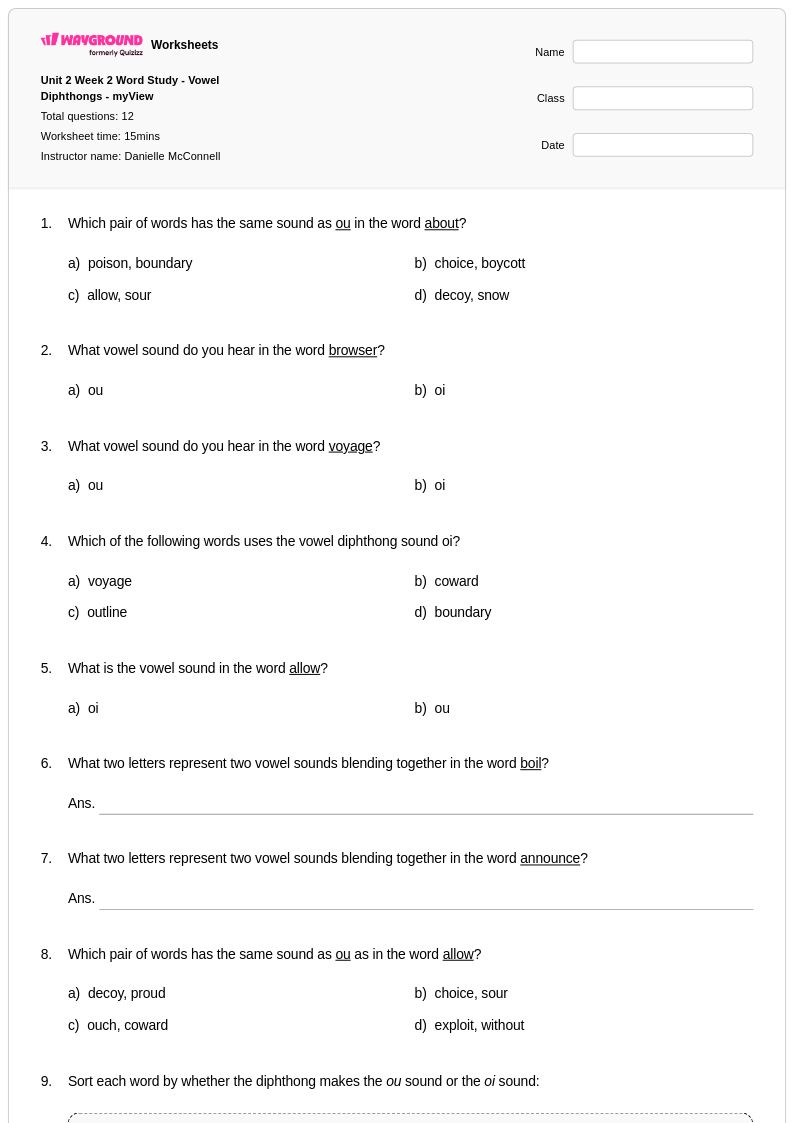
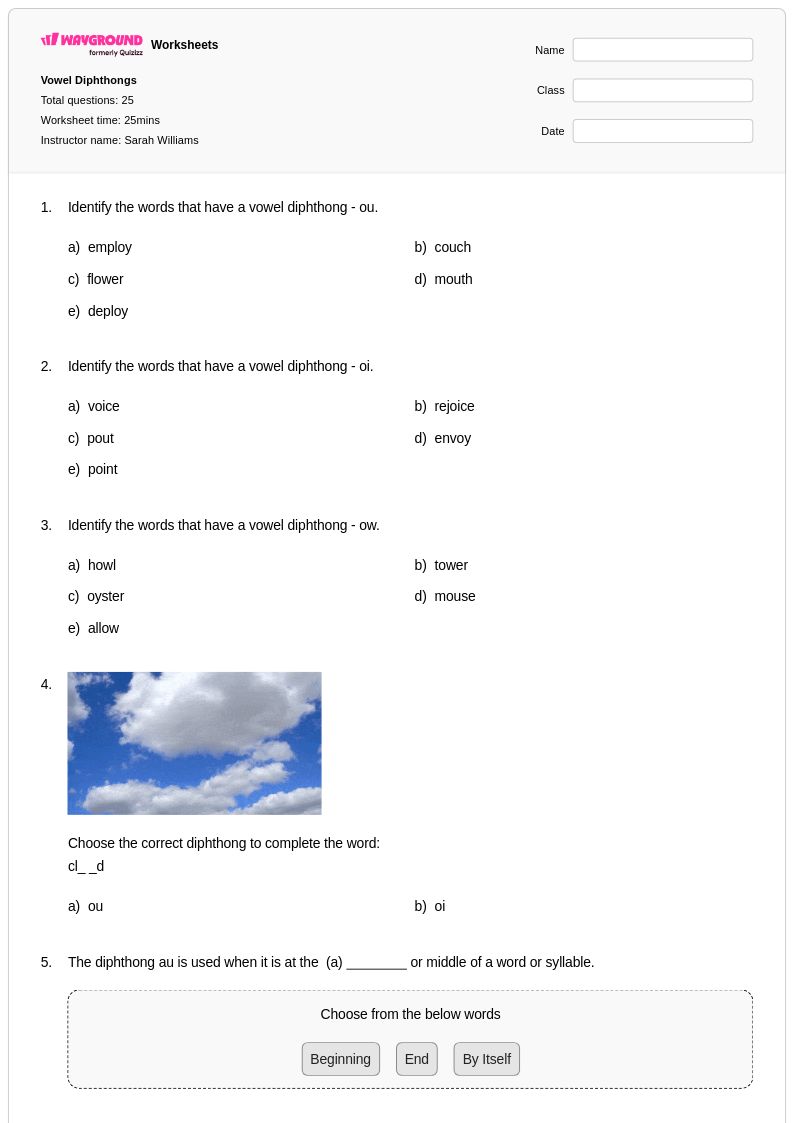
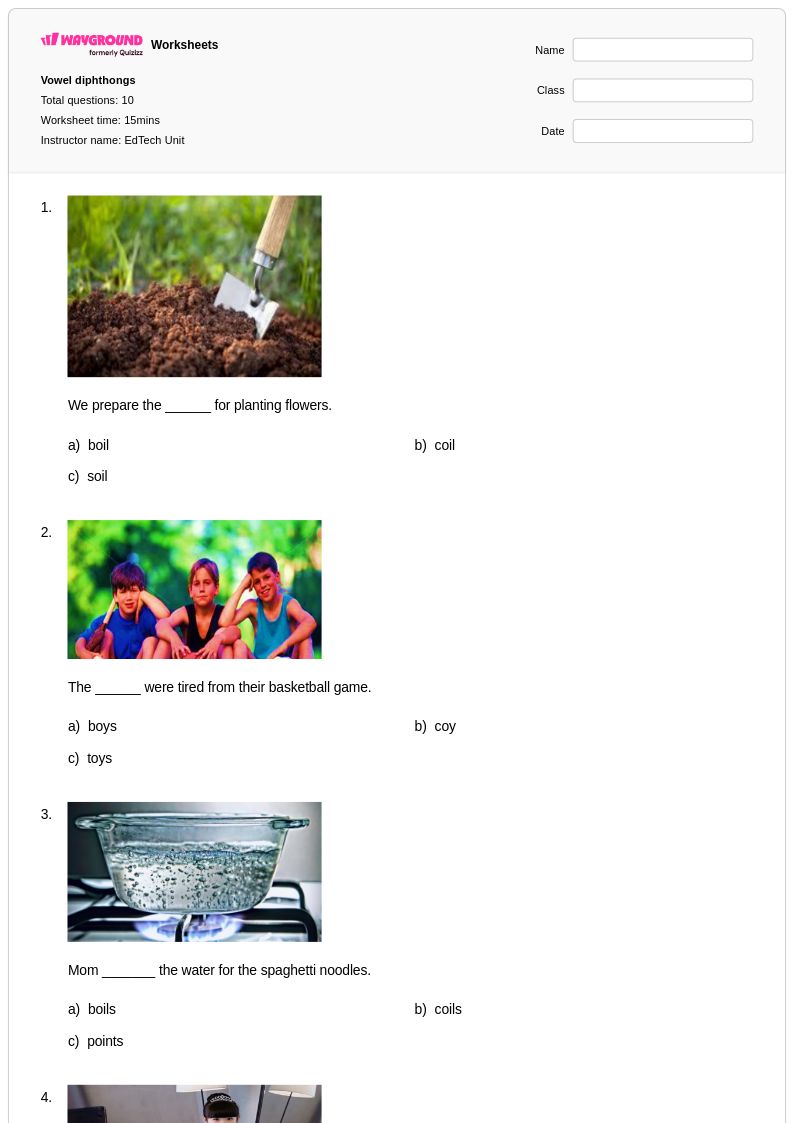
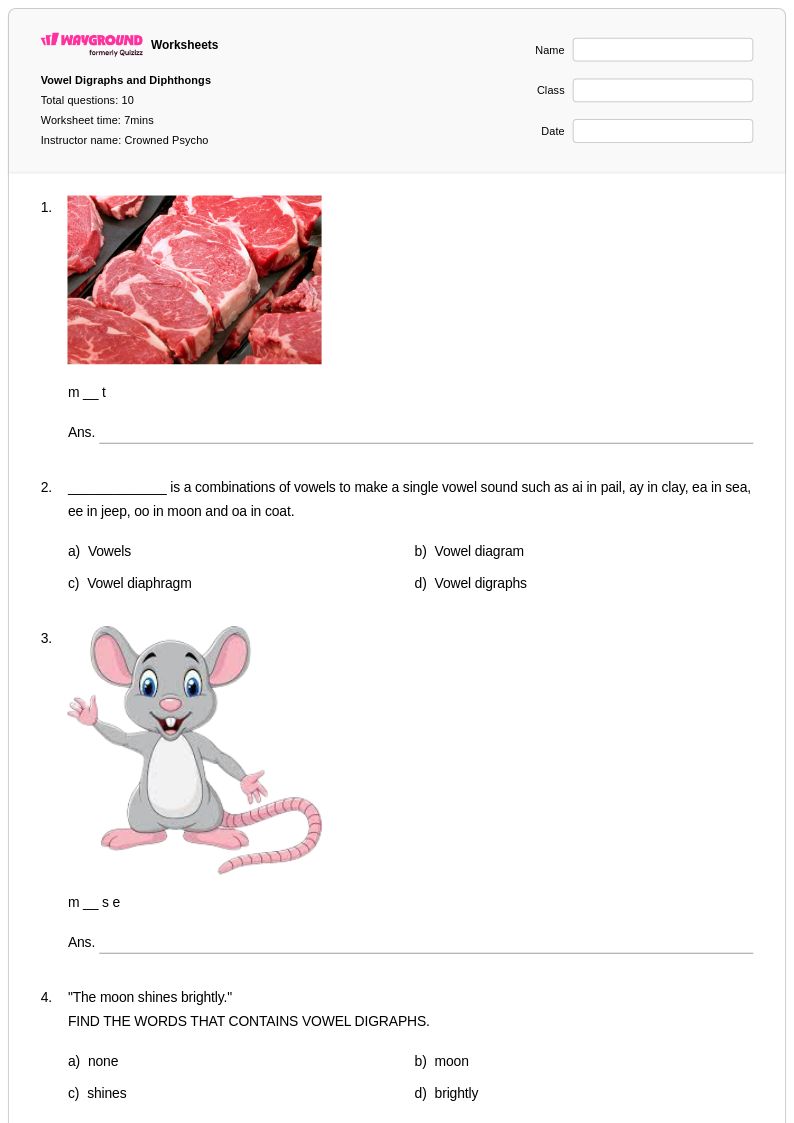
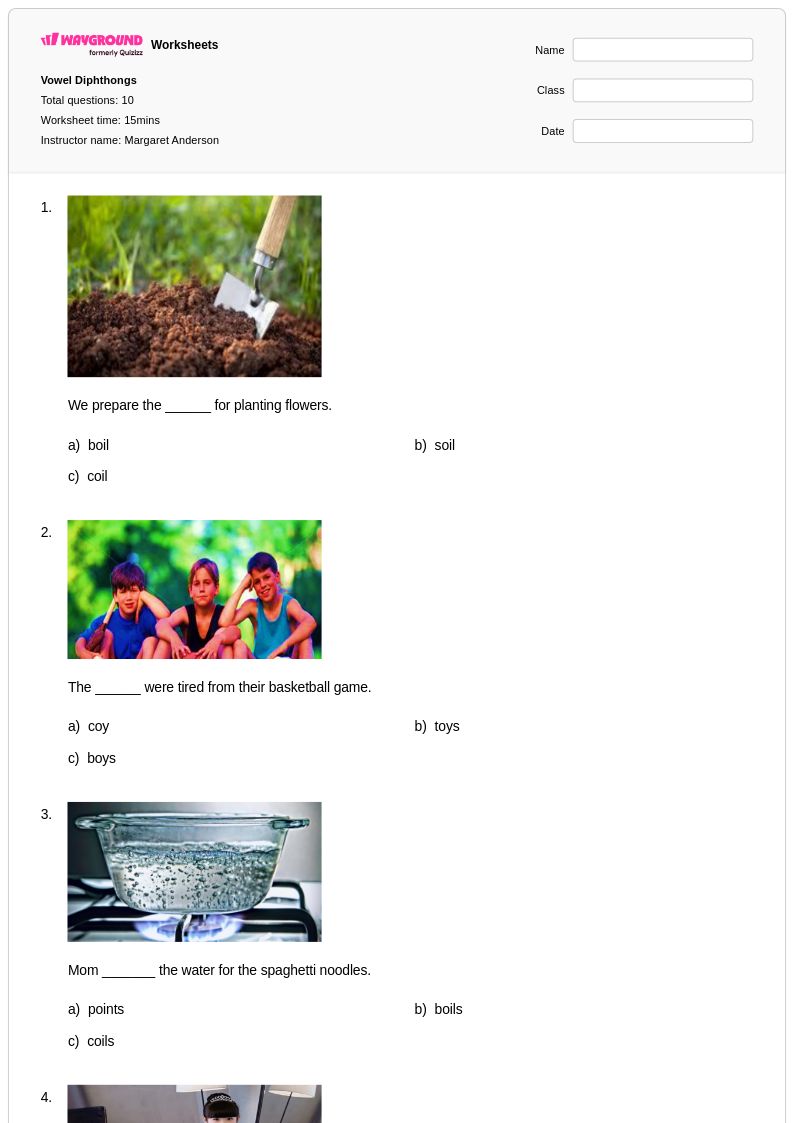
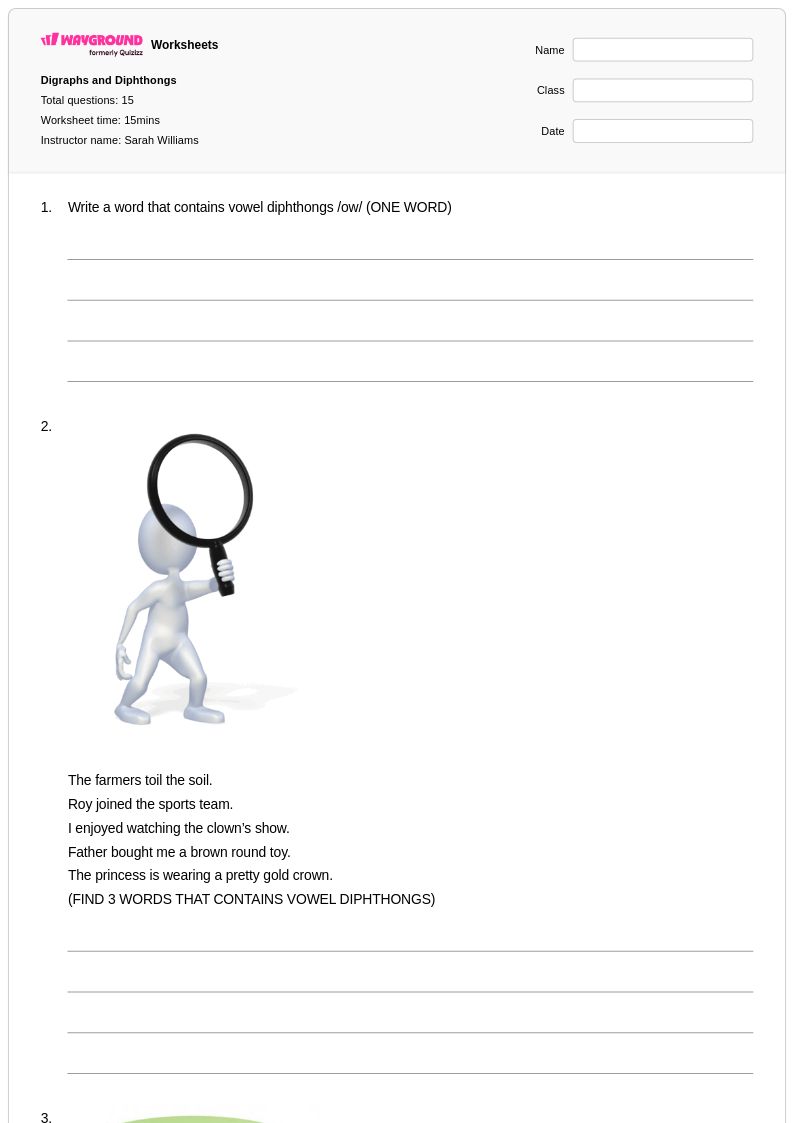
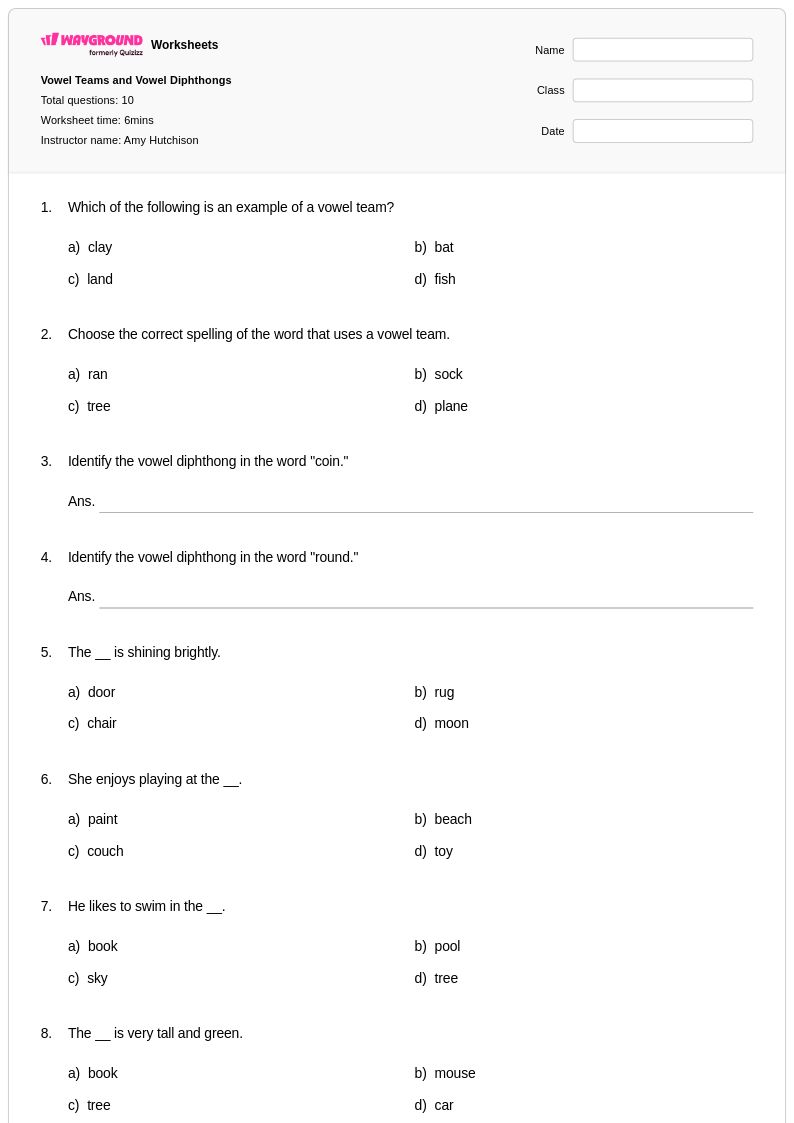
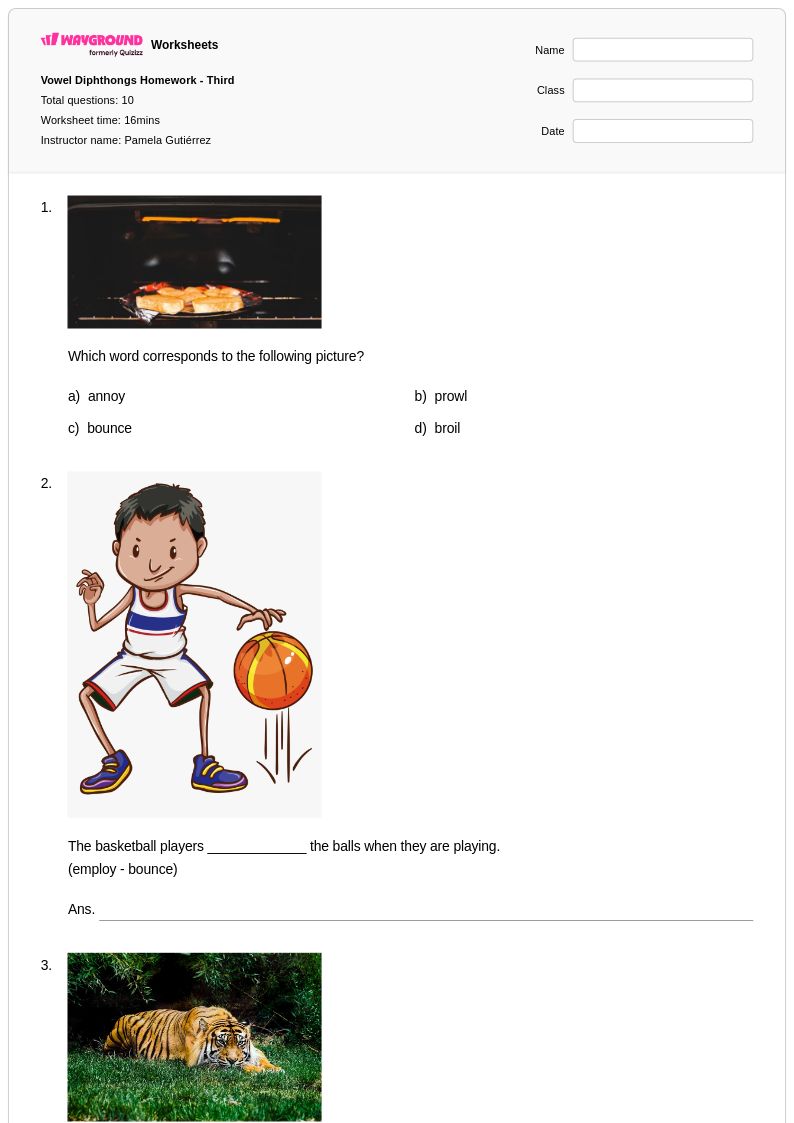
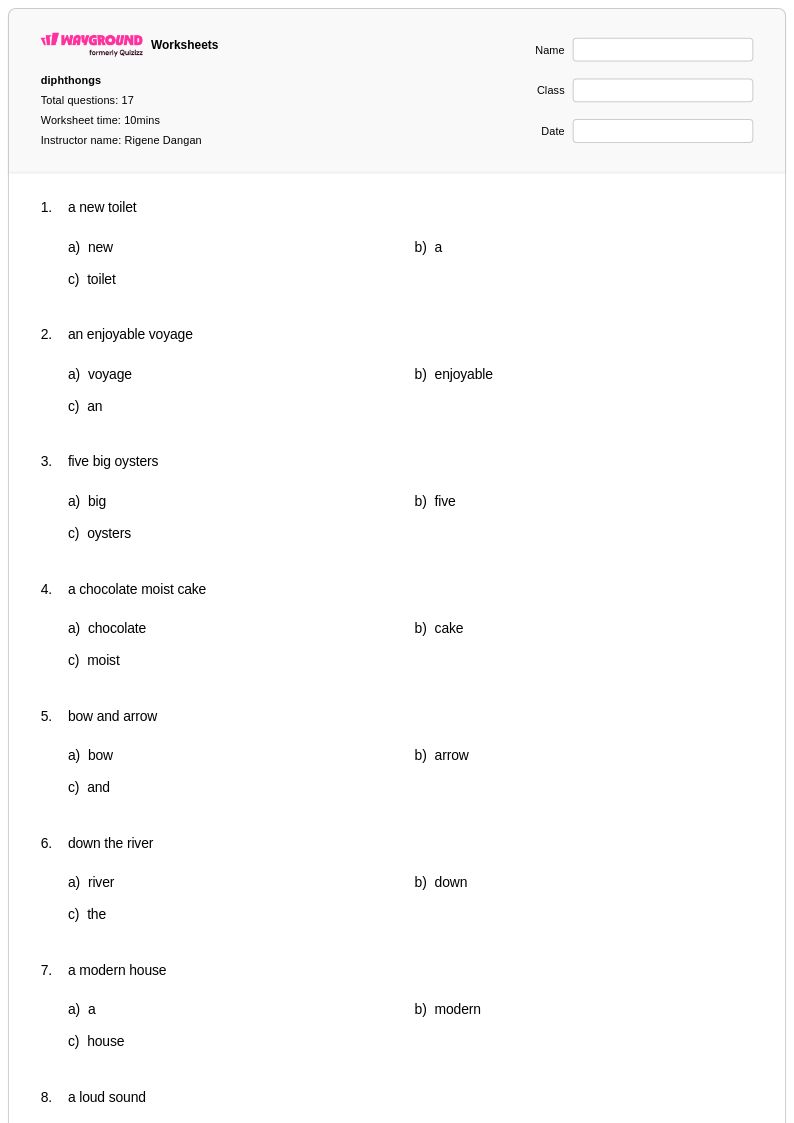
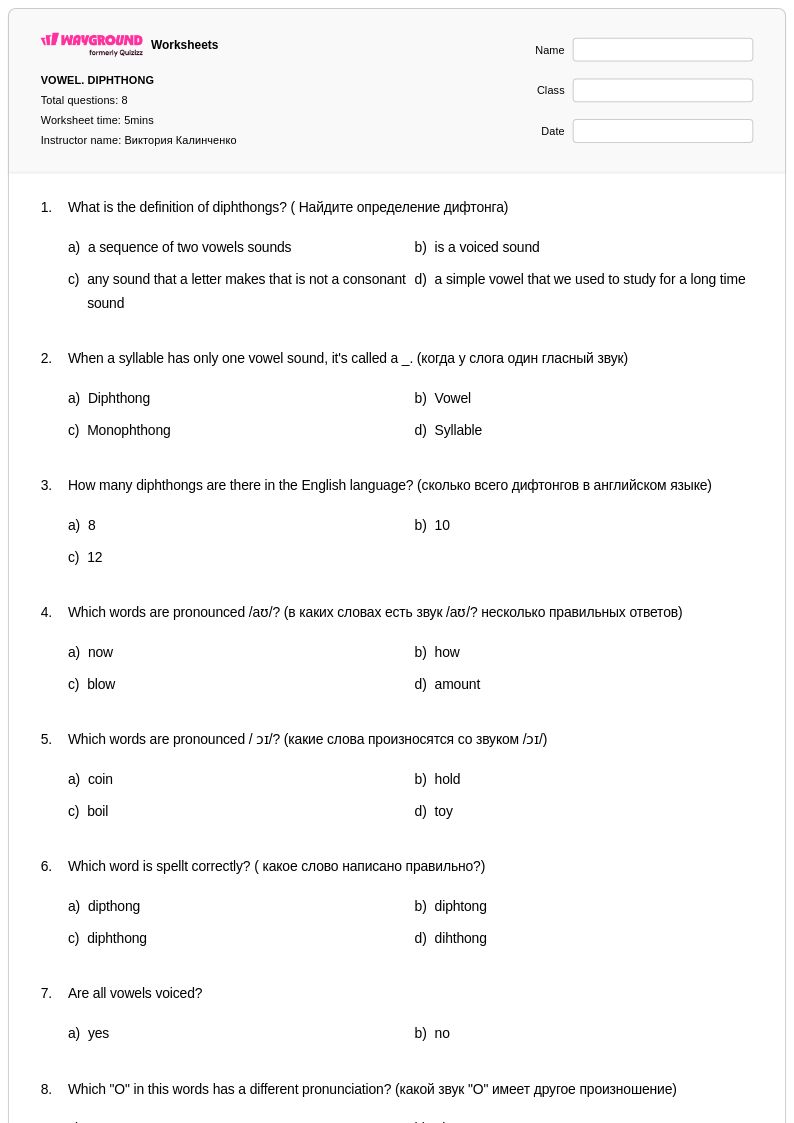
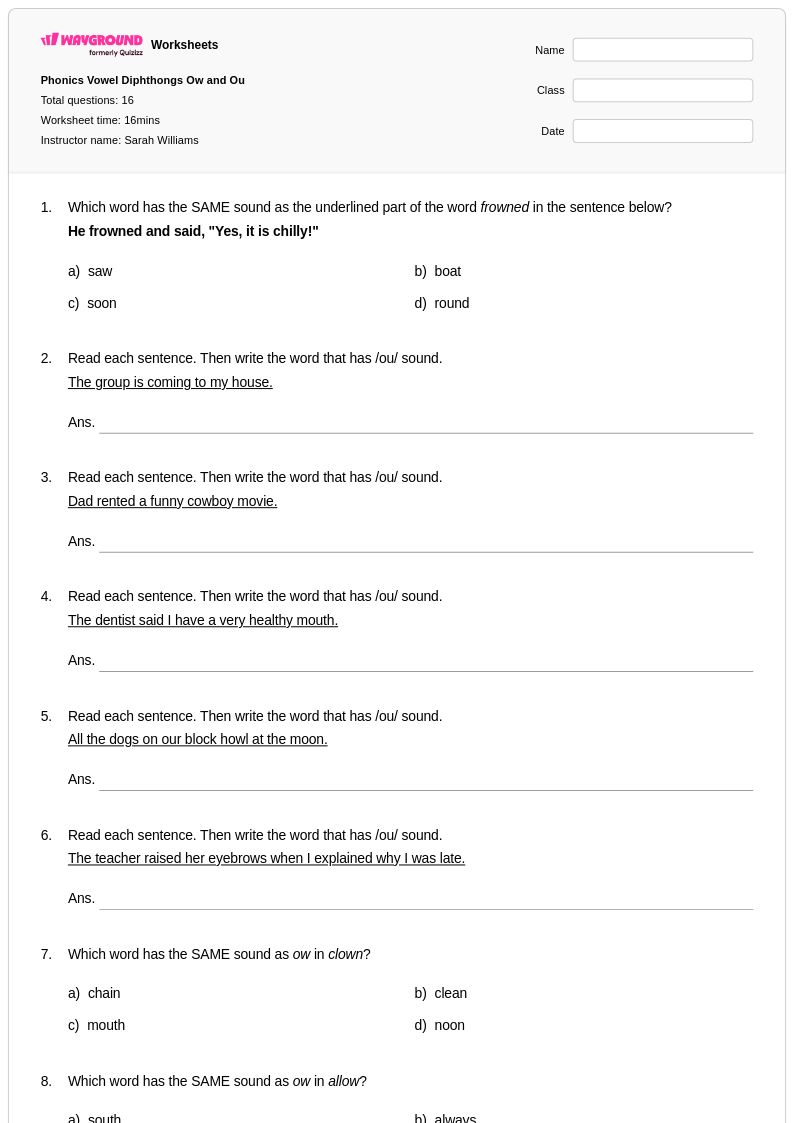
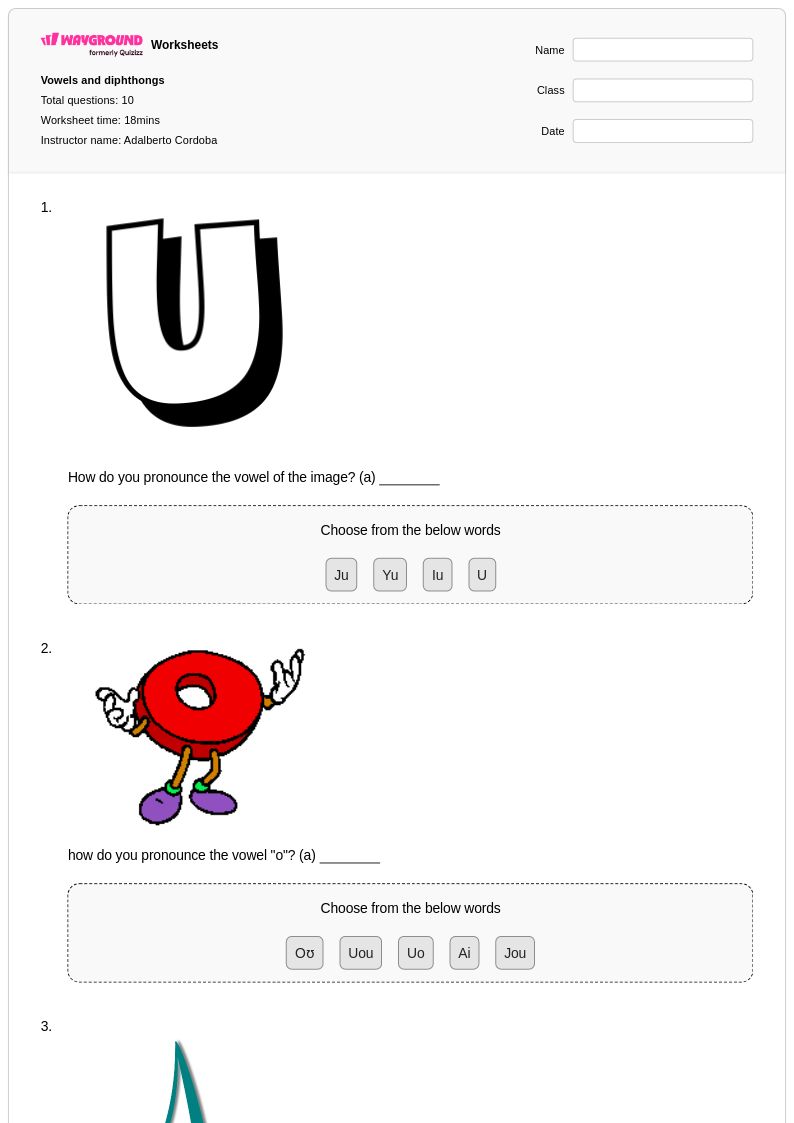
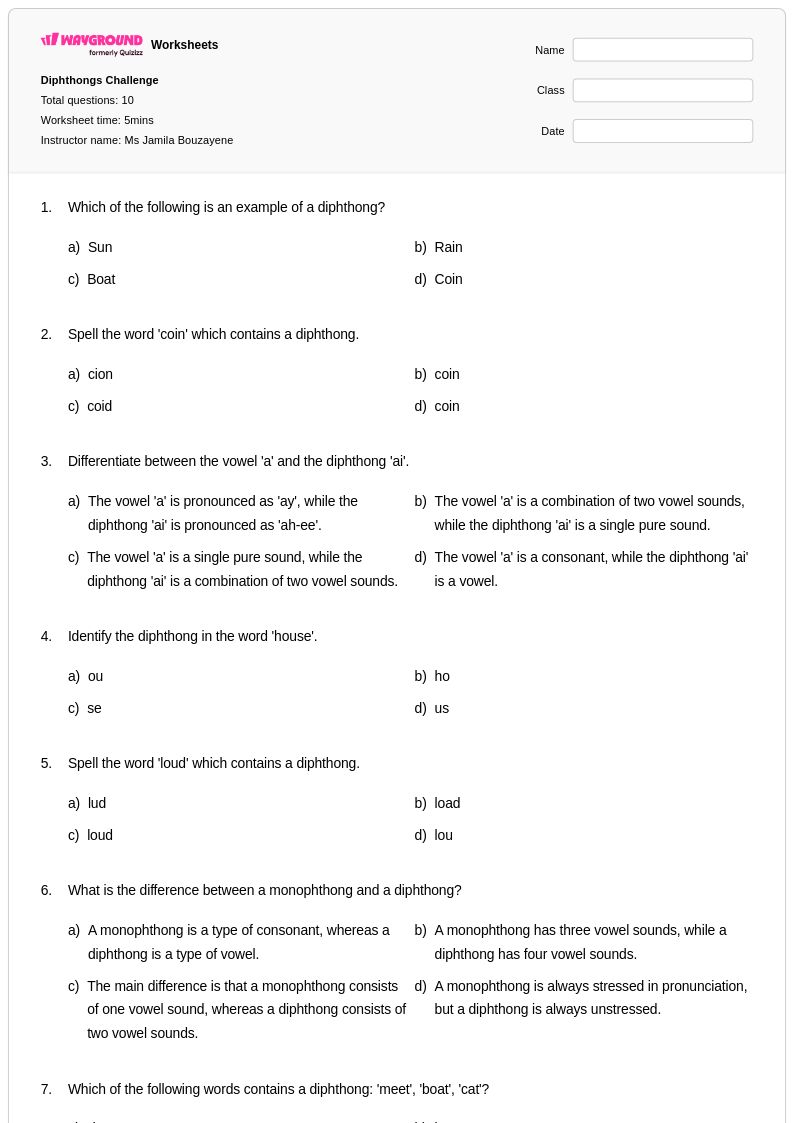
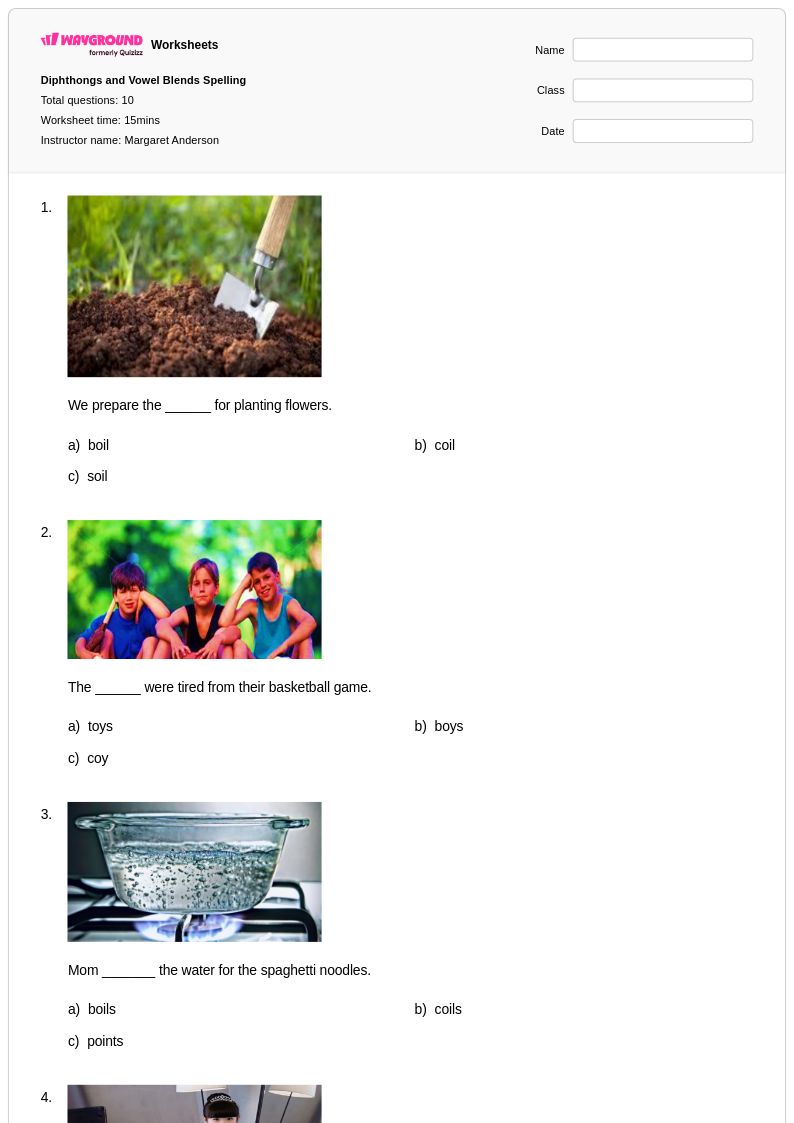
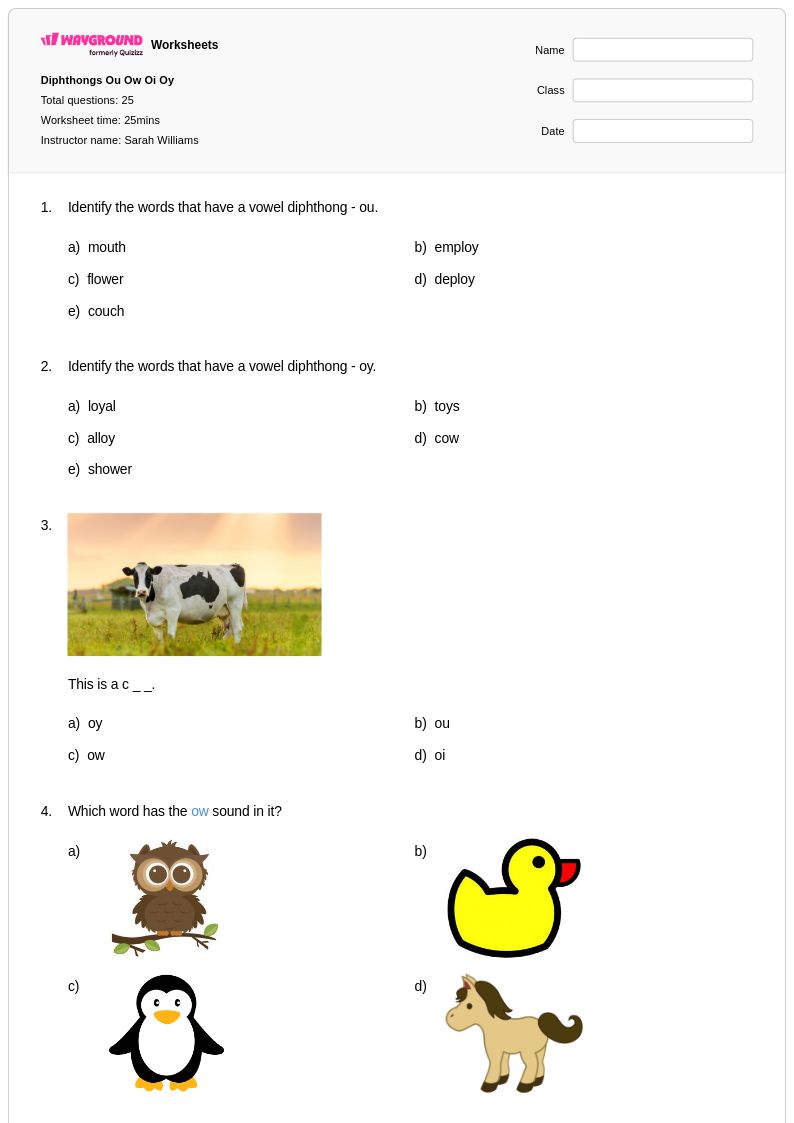
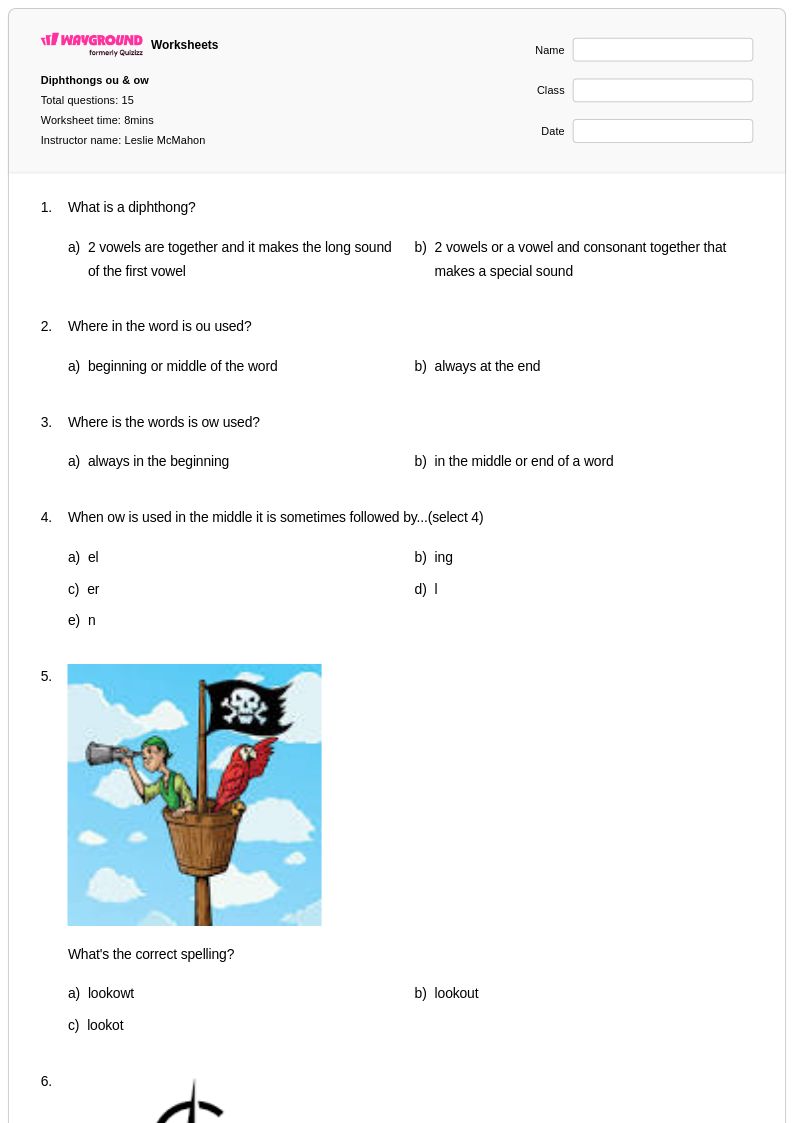
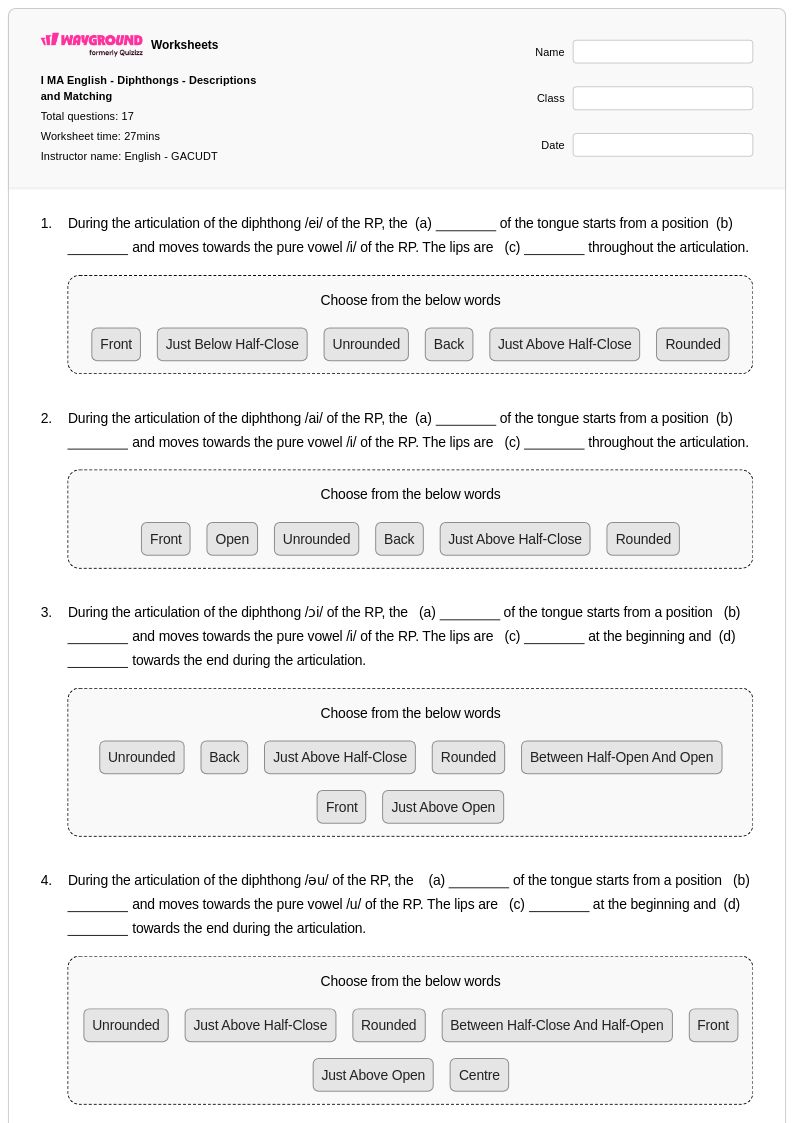
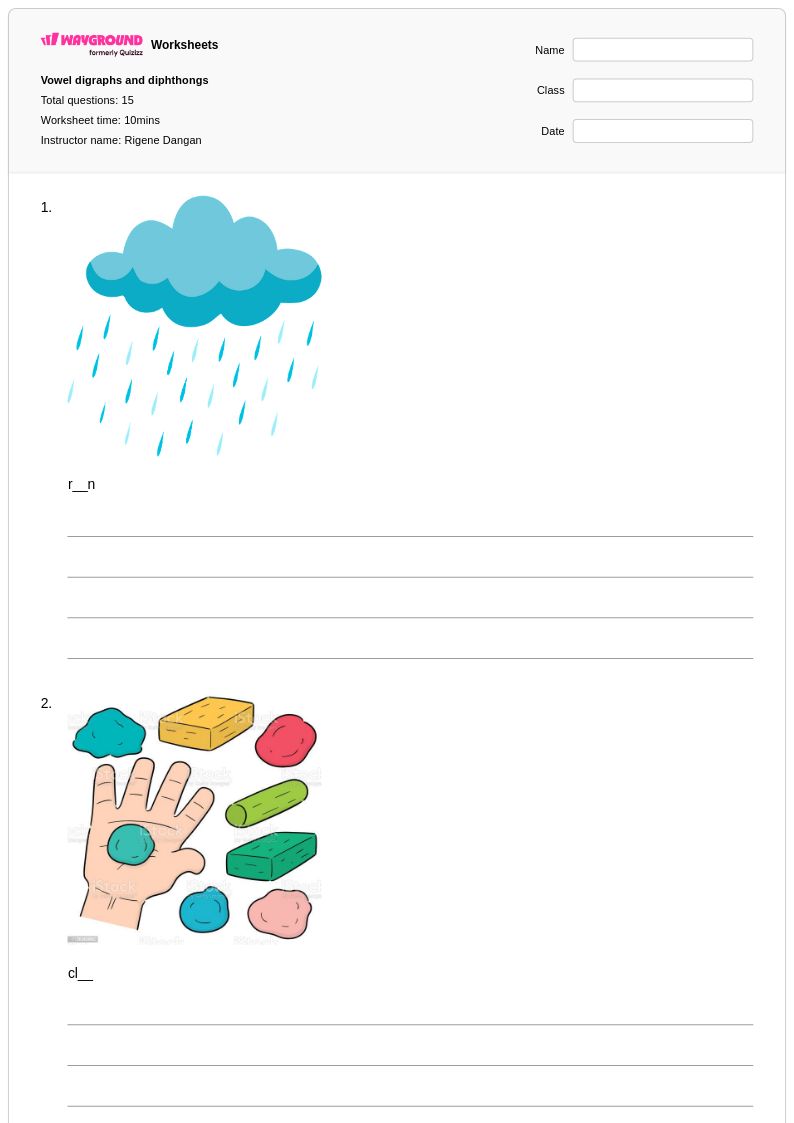
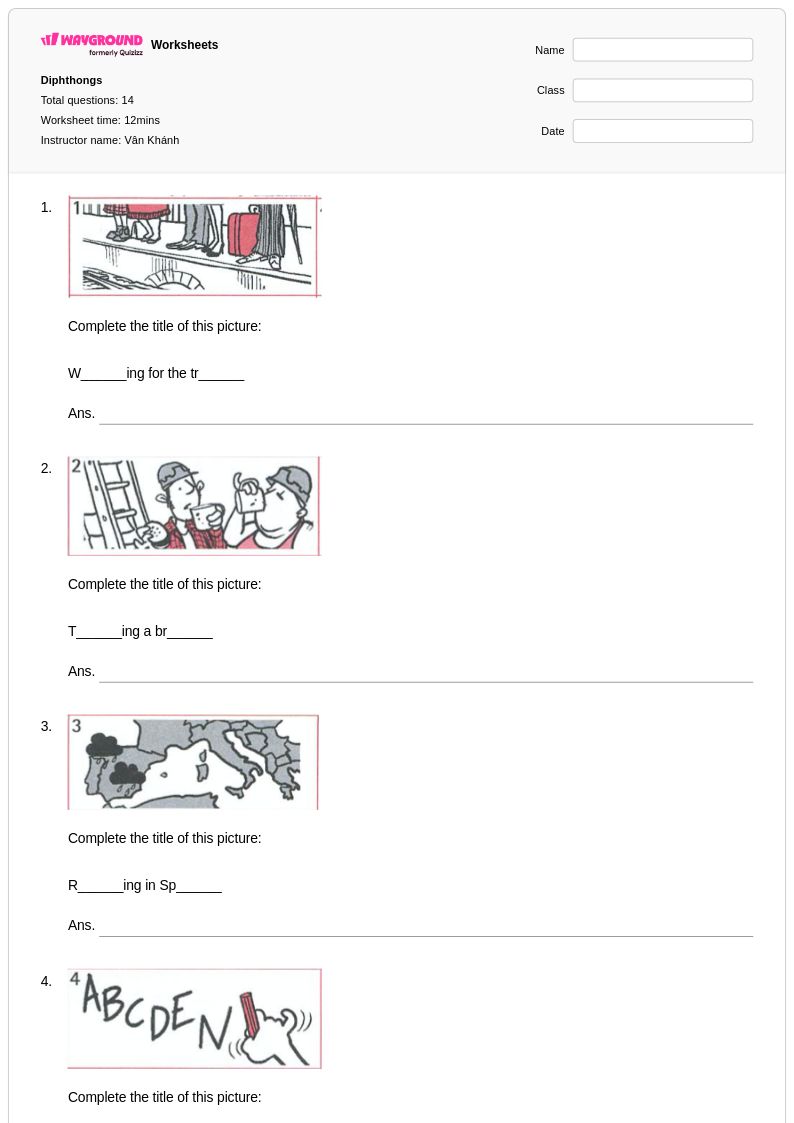
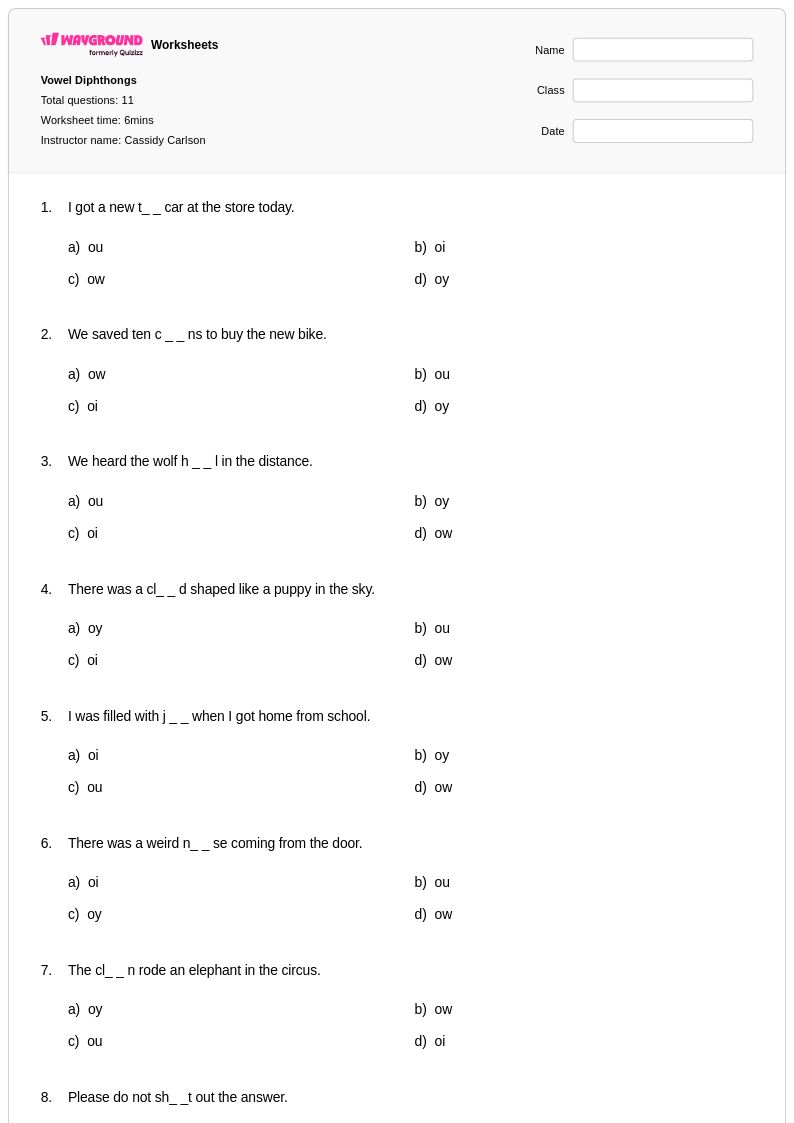
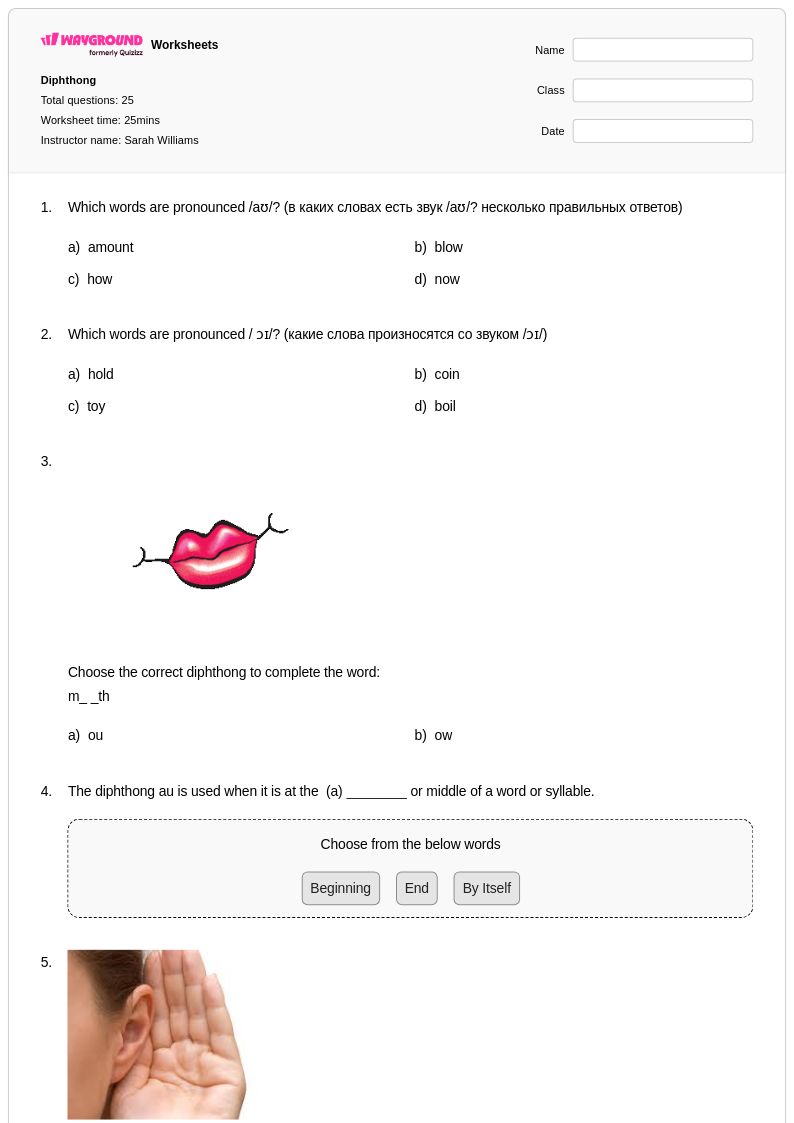
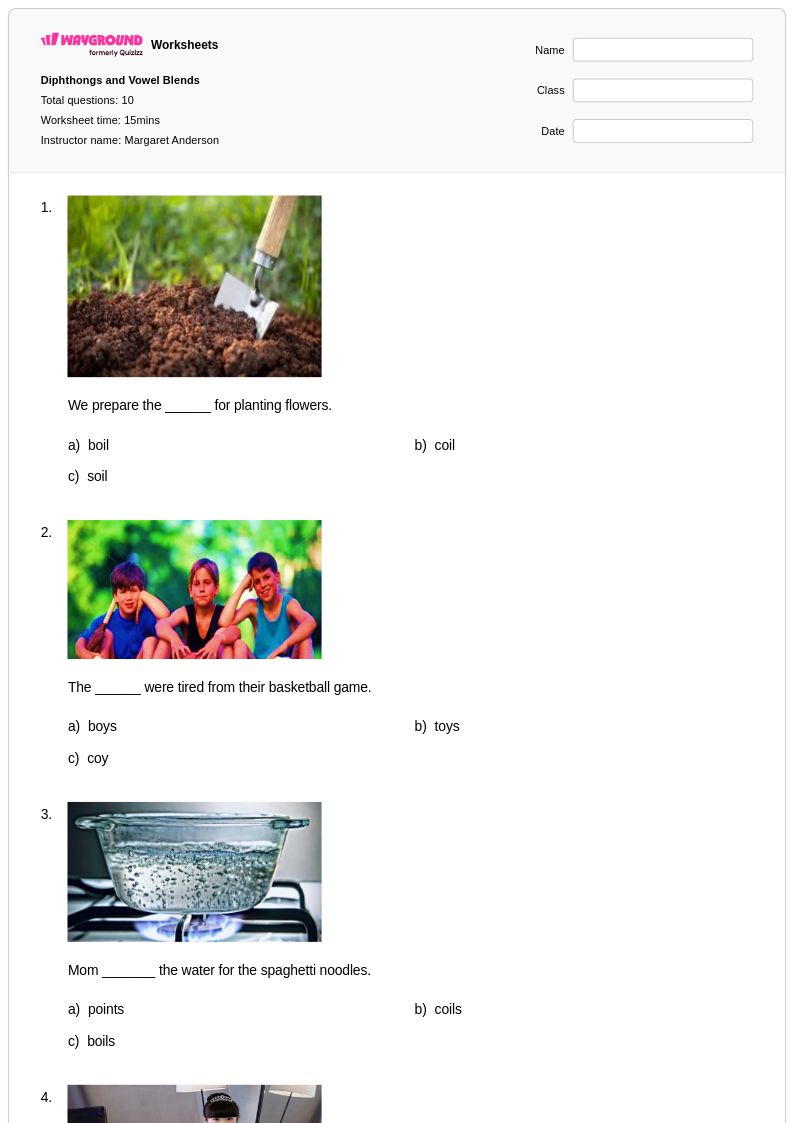
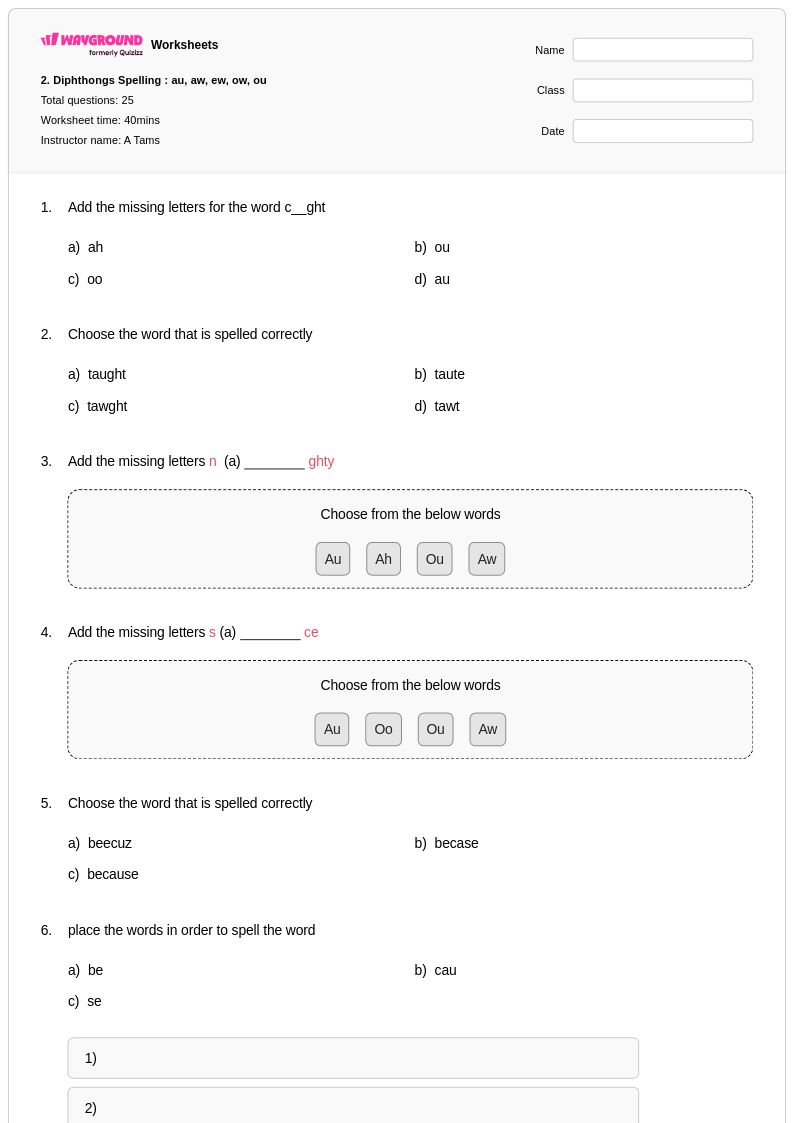
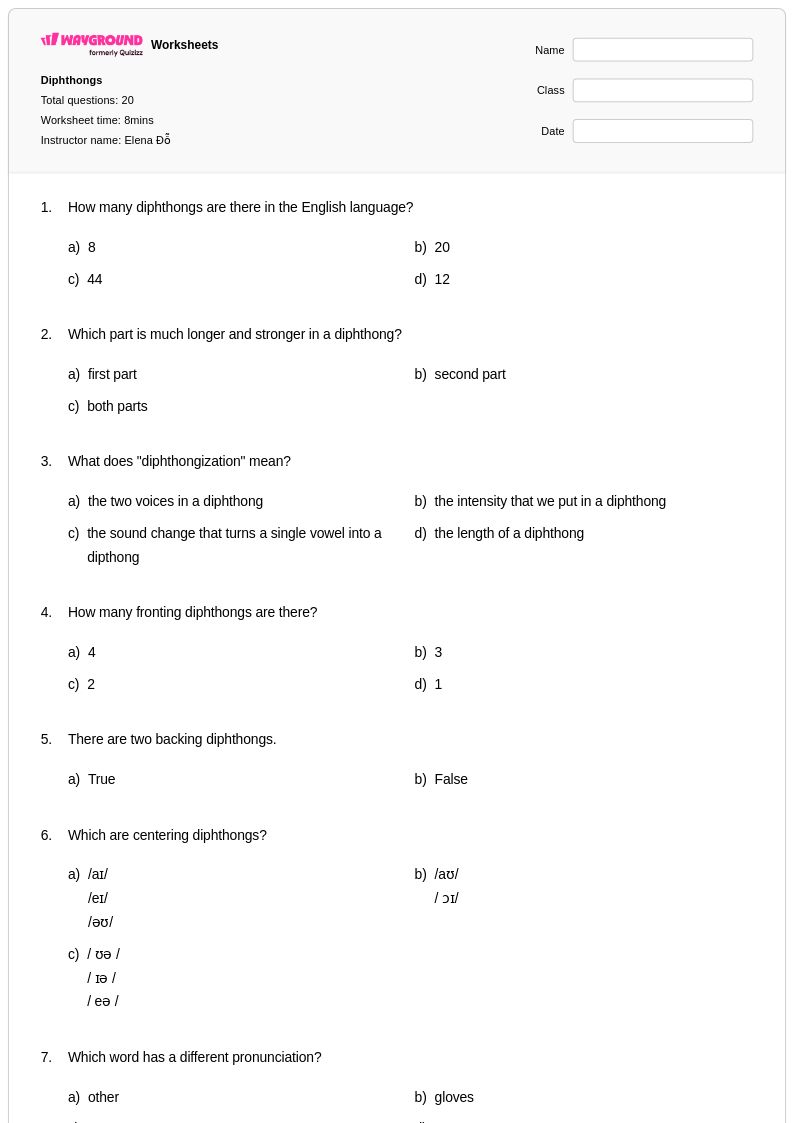
Wayground's free vowel diphthongs worksheets and printables help students master complex vowel sounds through engaging practice problems, with downloadable PDFs and comprehensive answer keys included.
Vowel diphthongs represent a crucial phonics concept where students learn to recognize and pronounce complex vowel sounds formed by combining two vowel sounds within a single syllable. Wayground's extensive collection of vowel diphthong worksheets provides comprehensive practice with common diphthongs such as "oi" in "coin," "ou" in "house," "ay" in "play," and "ew" in "grew." These carefully crafted resources strengthen students' decoding abilities, pronunciation skills, and reading fluency through systematic practice problems that progress from basic sound recognition to advanced application in multisyllabic words. Each worksheet comes complete with an answer key and is available as free printables in convenient PDF format, making them ideal for both classroom instruction and independent practice sessions that reinforce phonemic awareness and spelling patterns.
Wayground's platform, formerly known as Quizizz, empowers educators with access to millions of teacher-created vowel diphthong resources that streamline lesson planning and differentiated instruction. The robust search and filtering capabilities allow teachers to quickly locate worksheets aligned with specific phonics standards and customize content difficulty levels to meet diverse learning needs within their classrooms. These digital and printable materials support effective remediation for struggling readers, enrichment opportunities for advanced students, and consistent skill practice across various learning environments. The platform's flexible format options enable seamless integration into both traditional and digital learning spaces, while comprehensive customization tools help teachers adapt existing worksheets or create targeted assessments that address specific phonics gaps and accelerate reading development.
FAQs
How do I teach vowel diphthongs to early readers?
Start by building on students' existing knowledge of individual vowel sounds before introducing the concept that two vowel sounds can blend within a single syllable. Use auditory discrimination activities where students listen for the "gliding" quality of diphthong sounds like "oi" in "coin" or "ou" in "house" before connecting those sounds to their spellings. Gradually progress from isolated sound recognition to reading and spelling diphthongs in single-syllable words, then in multisyllabic words, so students develop both decoding and encoding skills systematically.
What are the most common vowel diphthongs students need to learn?
The most frequently taught vowel diphthongs in phonics instruction include "oi" and "oy" (as in "coin" and "boy"), "ou" and "ow" (as in "house" and "cow"), "au" and "aw" (as in "haul" and "saw"), and "ew" (as in "grew"). Students also encounter "ay" in words like "play" as part of broader vowel team instruction. Mastery of these patterns significantly strengthens decoding ability and spelling accuracy across a wide range of high-frequency and content words.
What exercises help students practice vowel diphthongs?
Effective practice exercises include word sorting activities where students group words by their diphthong spelling pattern, fill-in-the-blank sentences that require selecting the correct diphthong, and picture-word matching tasks that reinforce sound-symbol correspondence. Moving from recognition to application, students benefit from activities that require them to write original sentences or identify diphthongs within connected text, which builds both spelling accuracy and reading fluency.
What mistakes do students commonly make with vowel diphthongs?
One of the most frequent errors is confusing diphthongs that share similar sounds but use different spellings, such as mixing up "oi" and "oy" or "ou" and "ow," without understanding that spelling choice is often position-based (e.g., "oy" typically appears at the end of a word). Students also commonly omit one of the vowels when spelling diphthong words, writing "hose" instead of "house" or "con" instead of "coin." Targeted practice with minimal pairs and explicit spelling rule instruction helps address these persistent error patterns.
How can I use vowel diphthong worksheets in my classroom?
Vowel diphthong worksheets on Wayground are available as printable PDFs for traditional classroom use and in digital formats for technology-integrated learning environments, including the option to host them as a quiz directly on Wayground. Printable versions work well for independent seatwork, small group instruction, or homework reinforcement, while digital formats support remote learning, centers rotations, or one-to-one device settings. Both formats include comprehensive answer keys, making it straightforward to check student work or provide immediate feedback.
How do I differentiate vowel diphthong instruction for struggling readers?
For struggling readers, begin with just one or two diphthong patterns at a time rather than introducing the full set simultaneously, and provide ample repetition before moving on. Wayground's platform supports individual student accommodations including Read Aloud, which allows questions and content to be read to students who need audio support, and Reduced Answer Choices, which lowers cognitive load for students who are still building confidence with these patterns. Extended time settings can also be applied per student so that pacing expectations are appropriate without affecting the rest of the class.