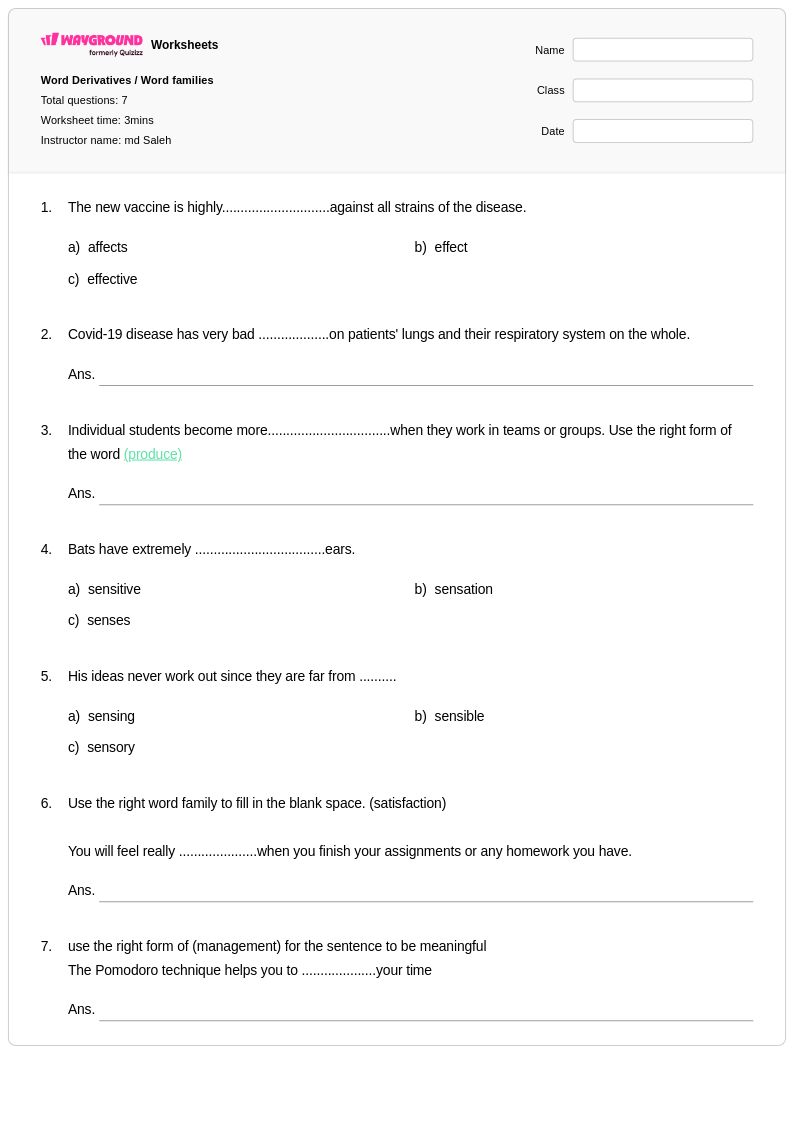
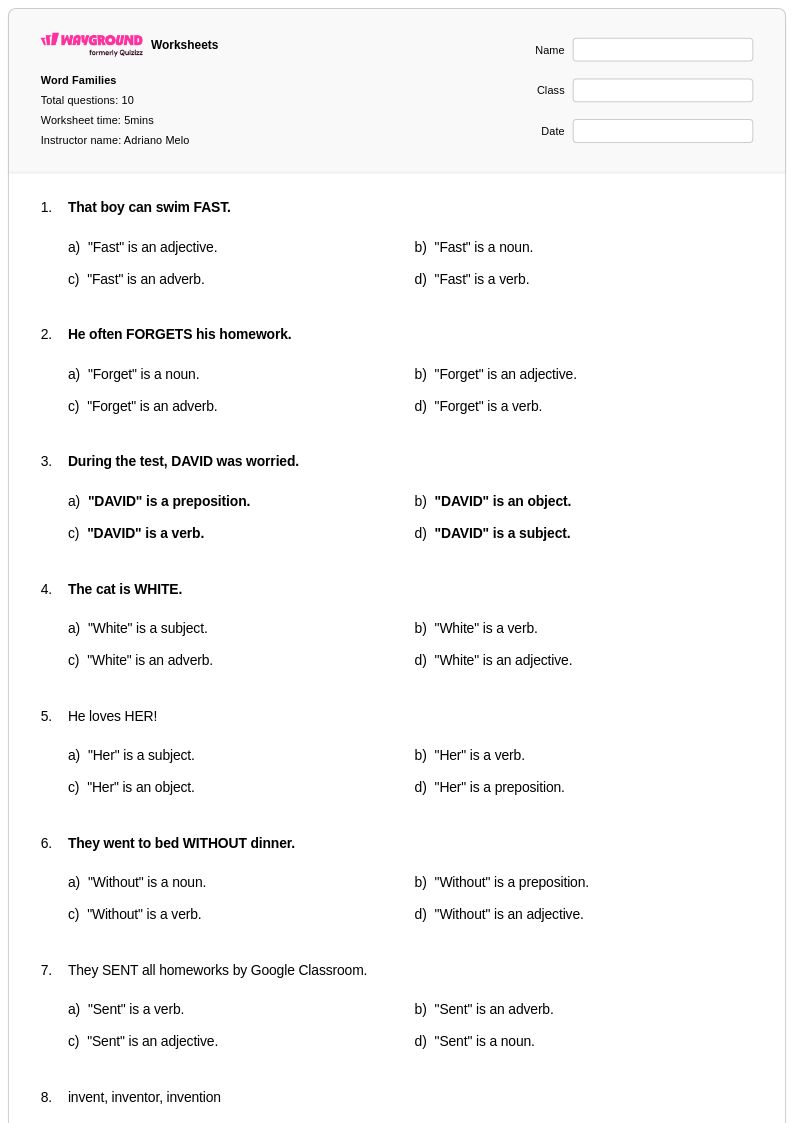
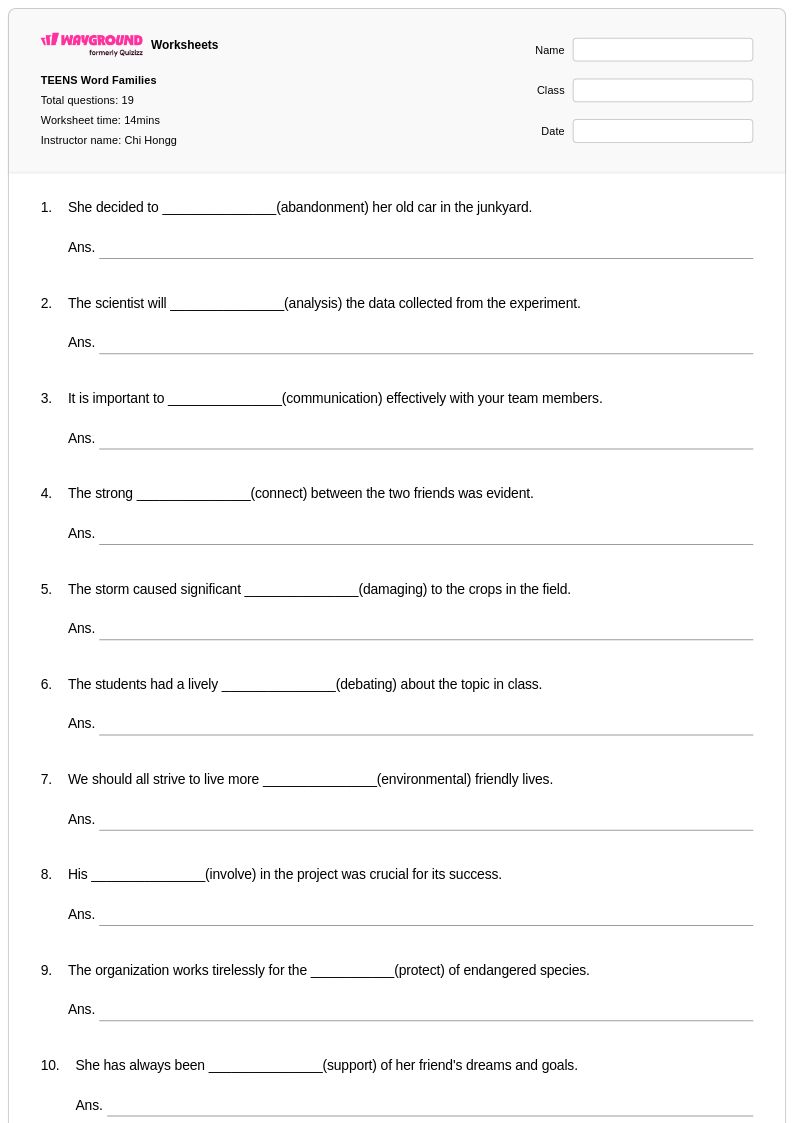
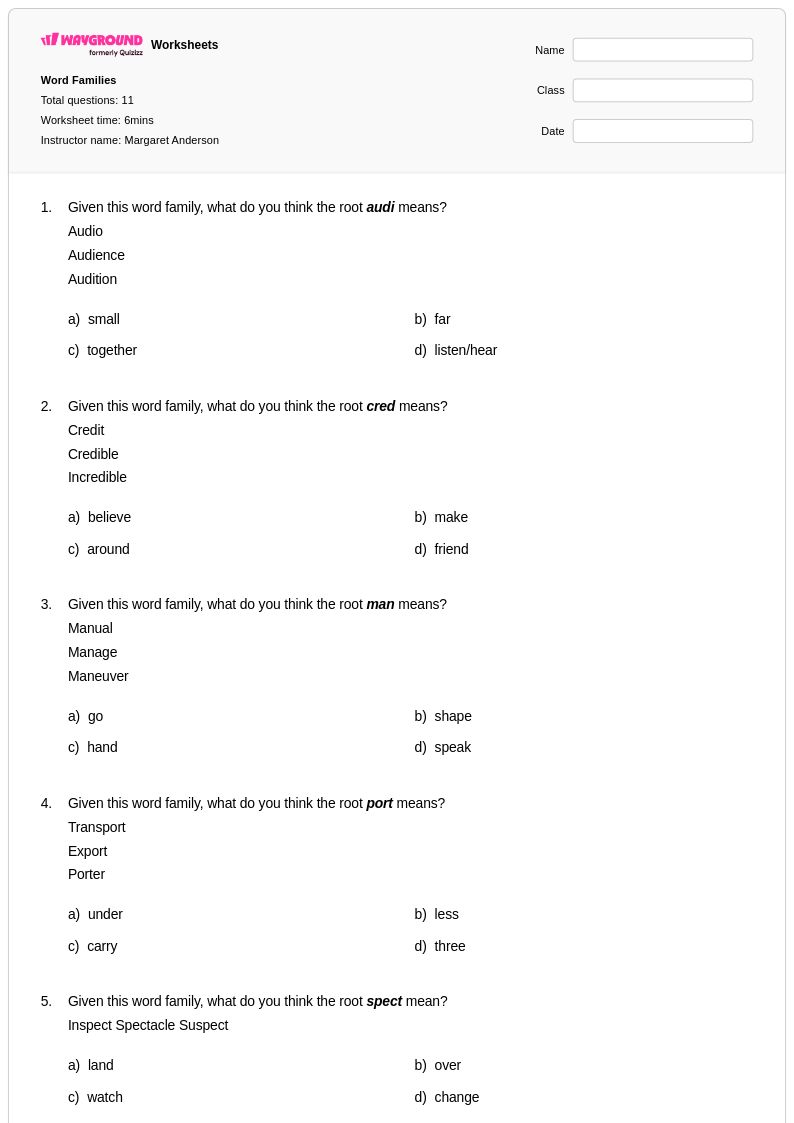
Discover free word families worksheets and printables from Wayground that help students master phonetic patterns through engaging practice problems, complete with answer keys for effective learning assessment.
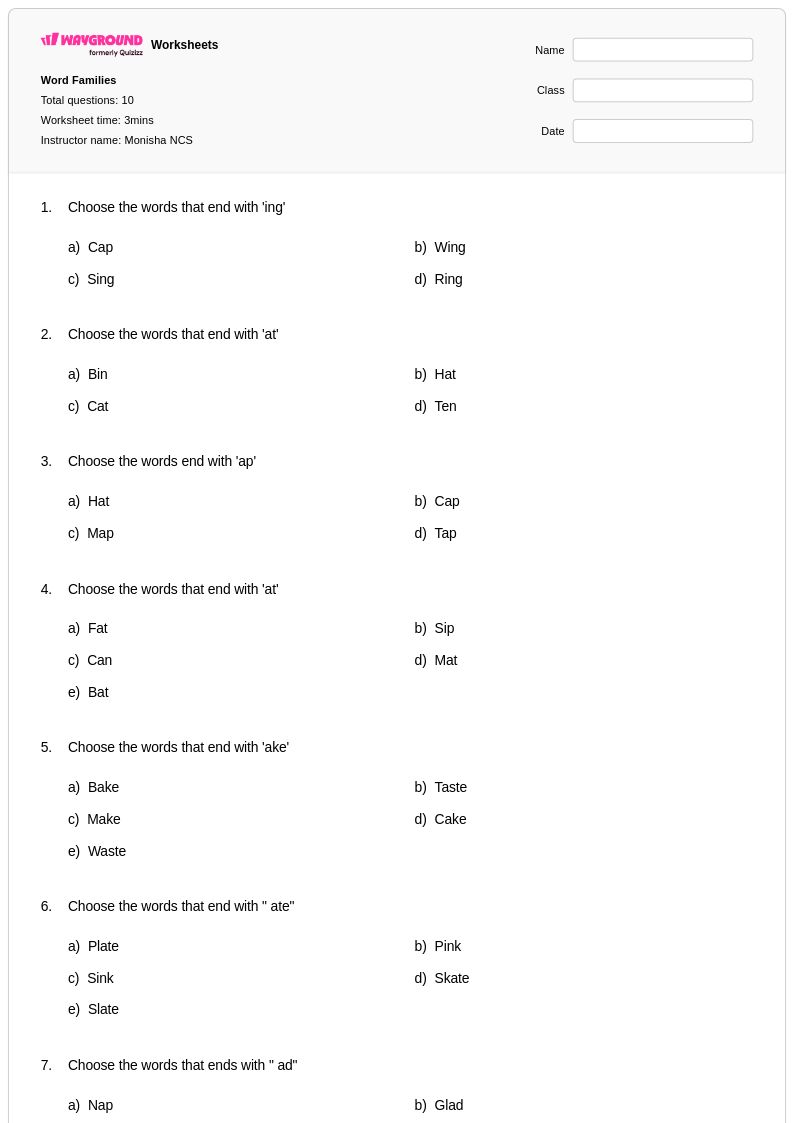
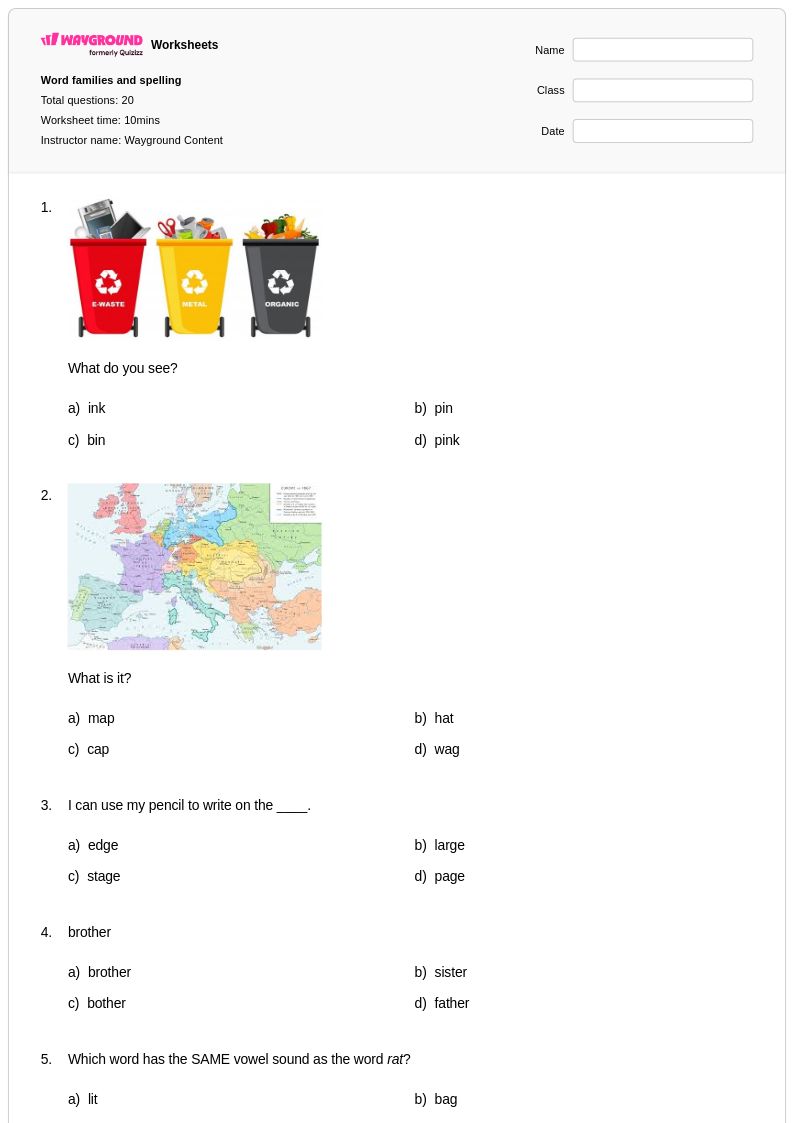
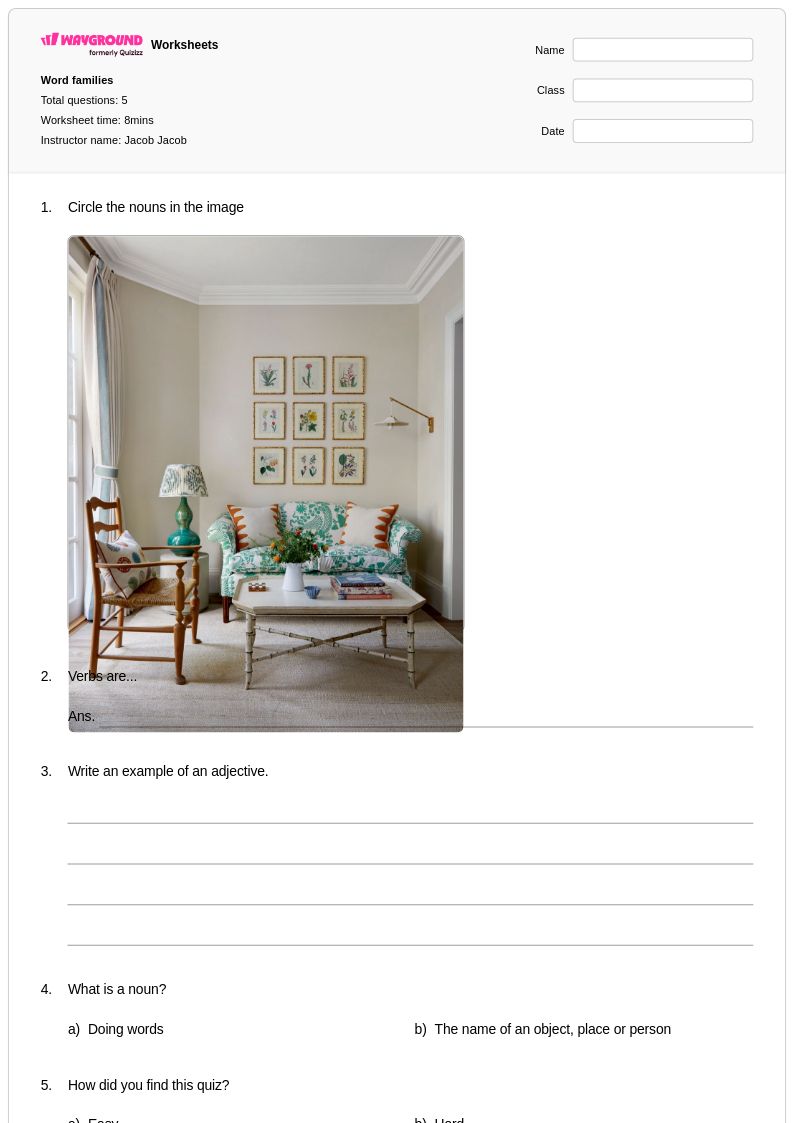
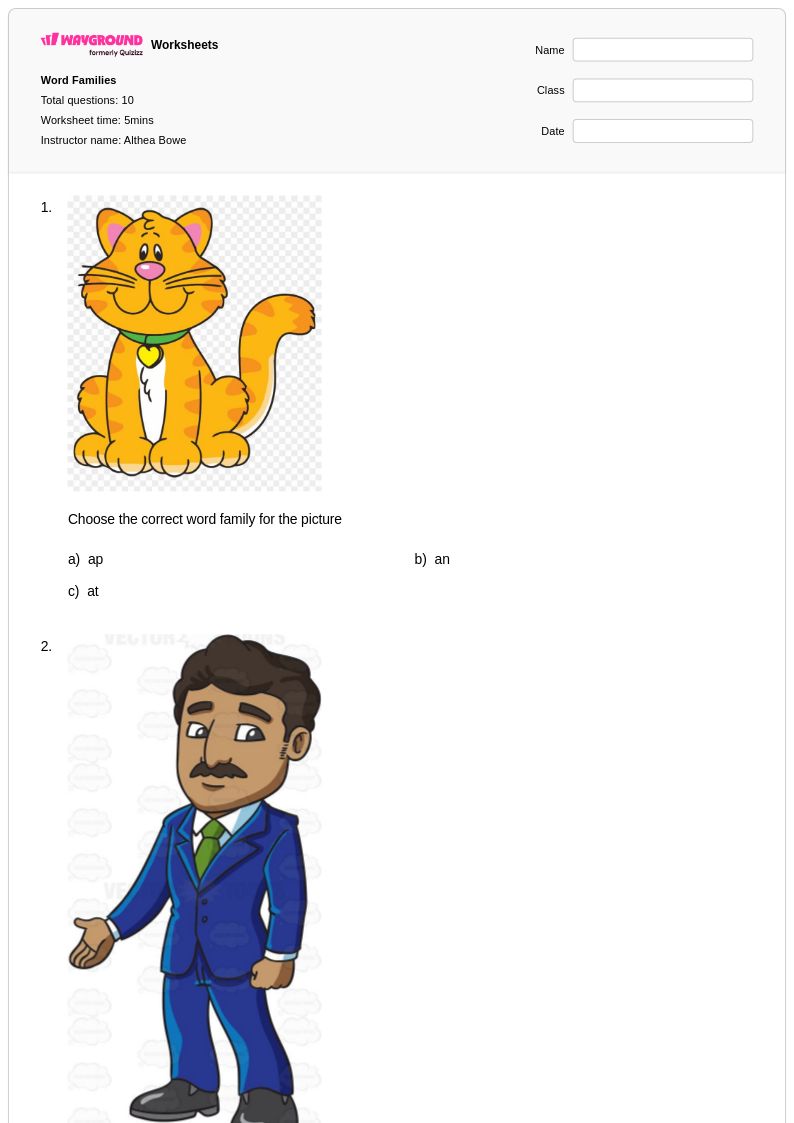
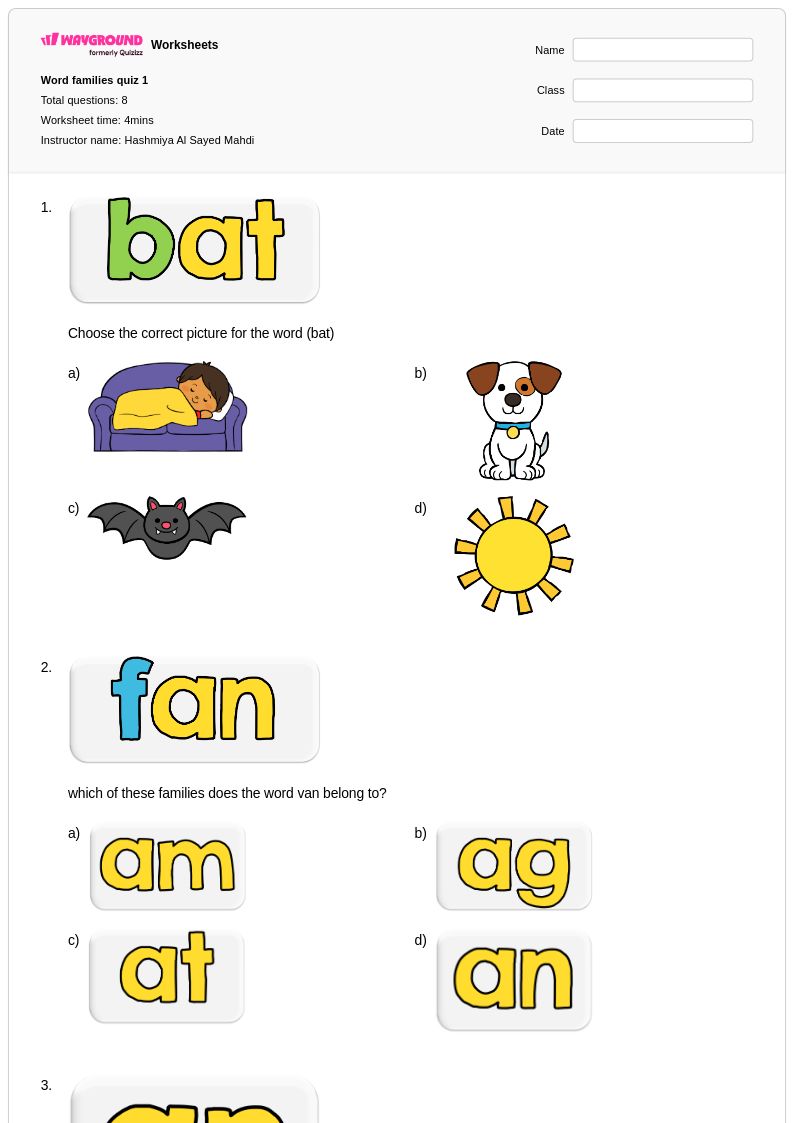
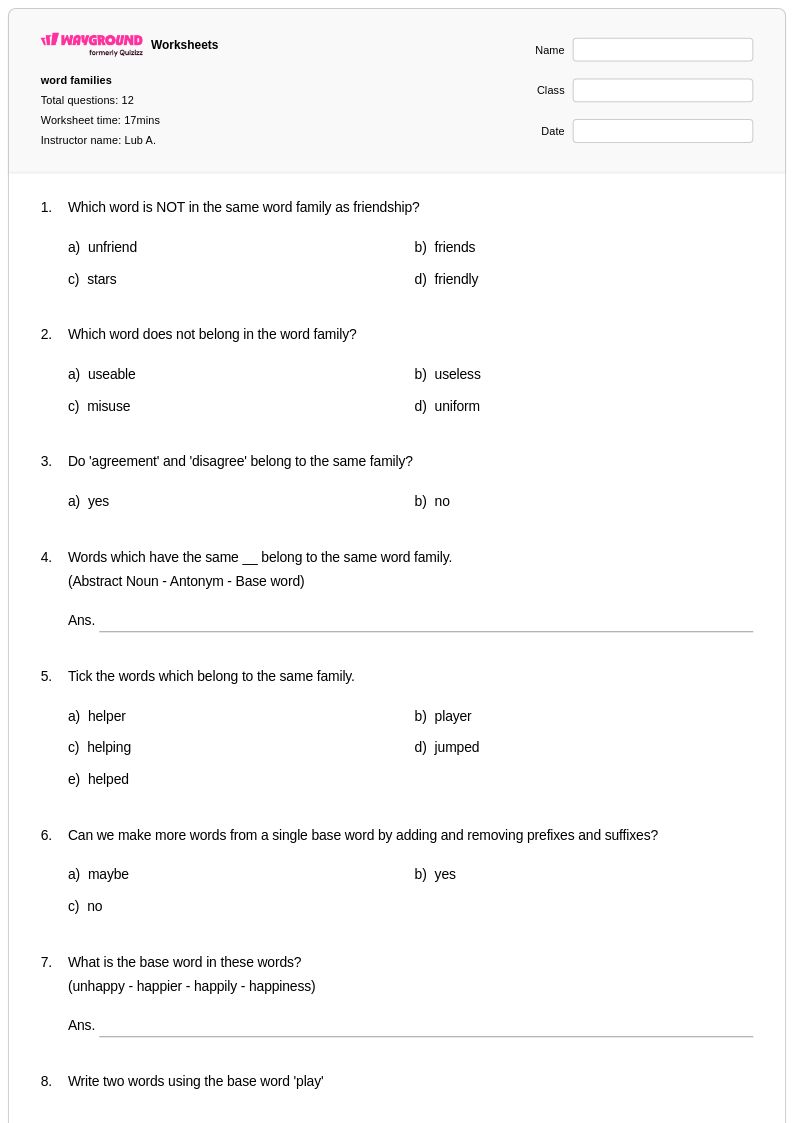
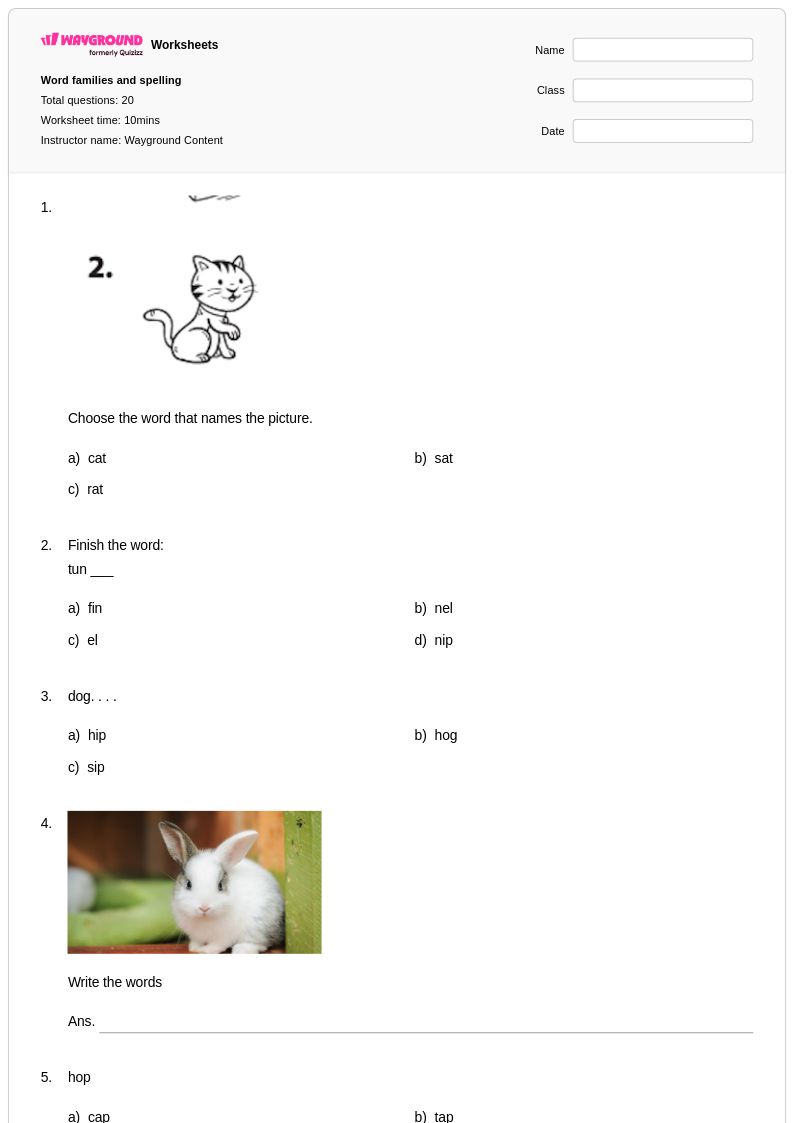
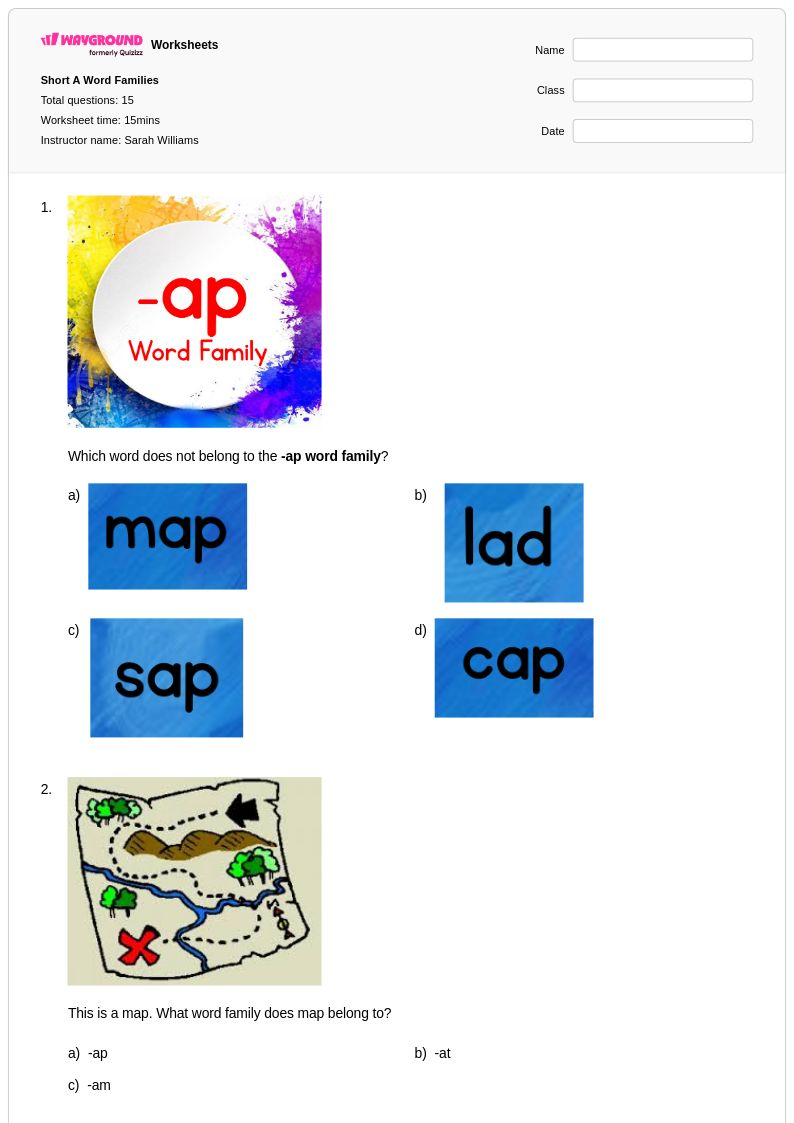
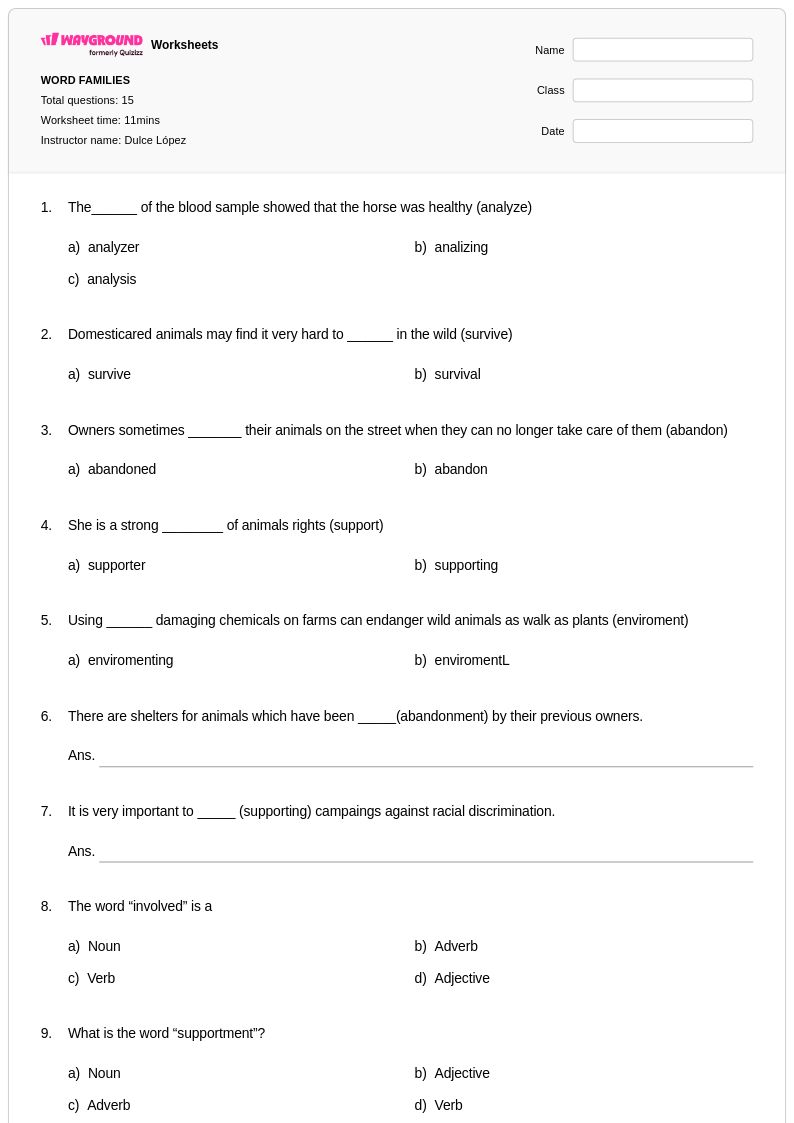
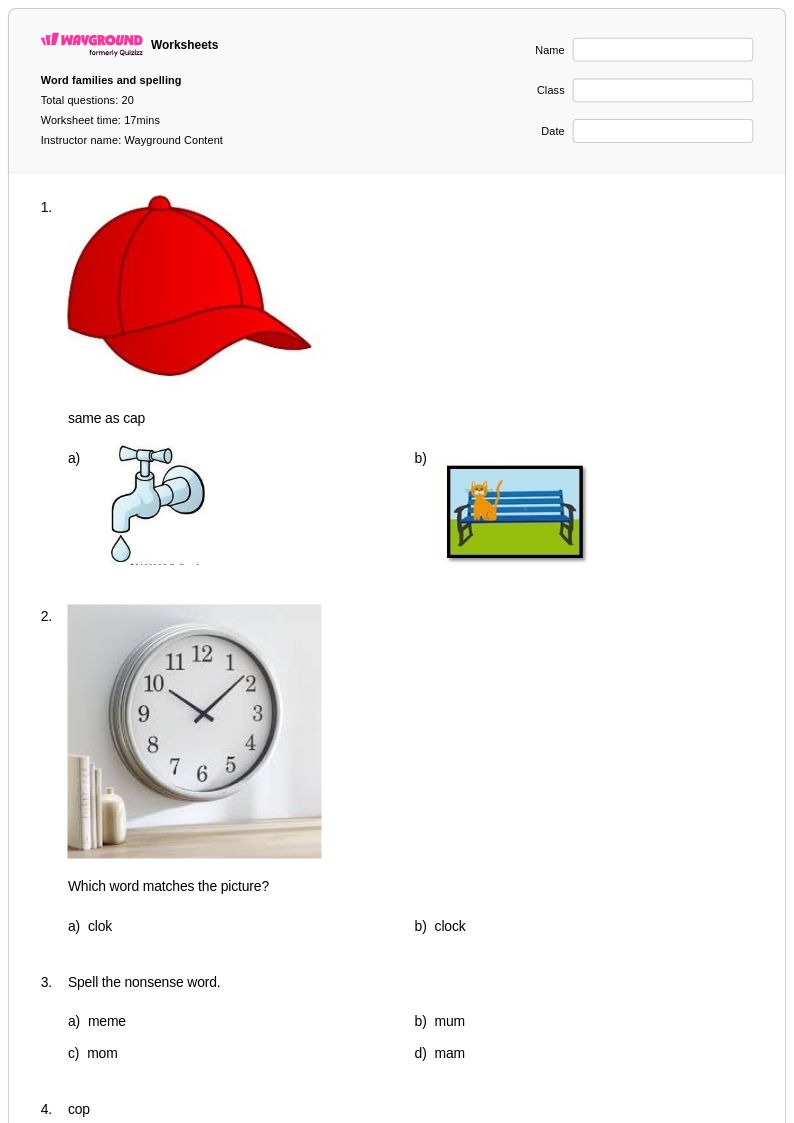
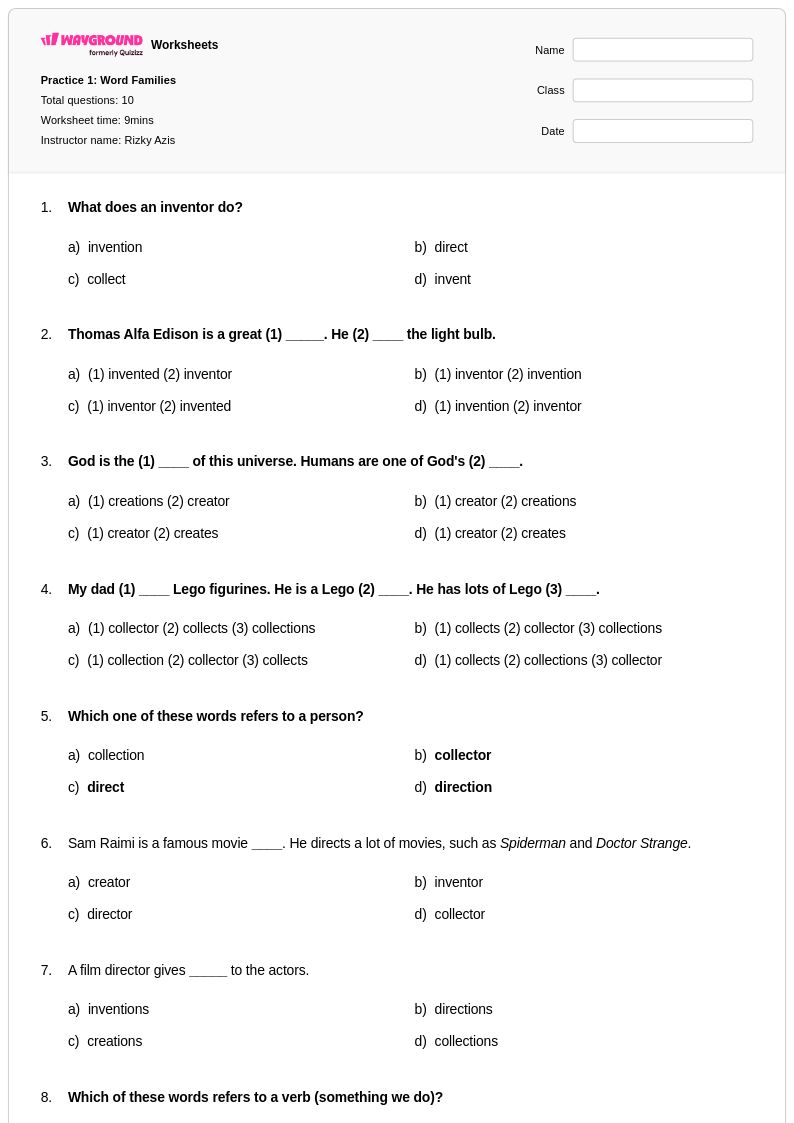
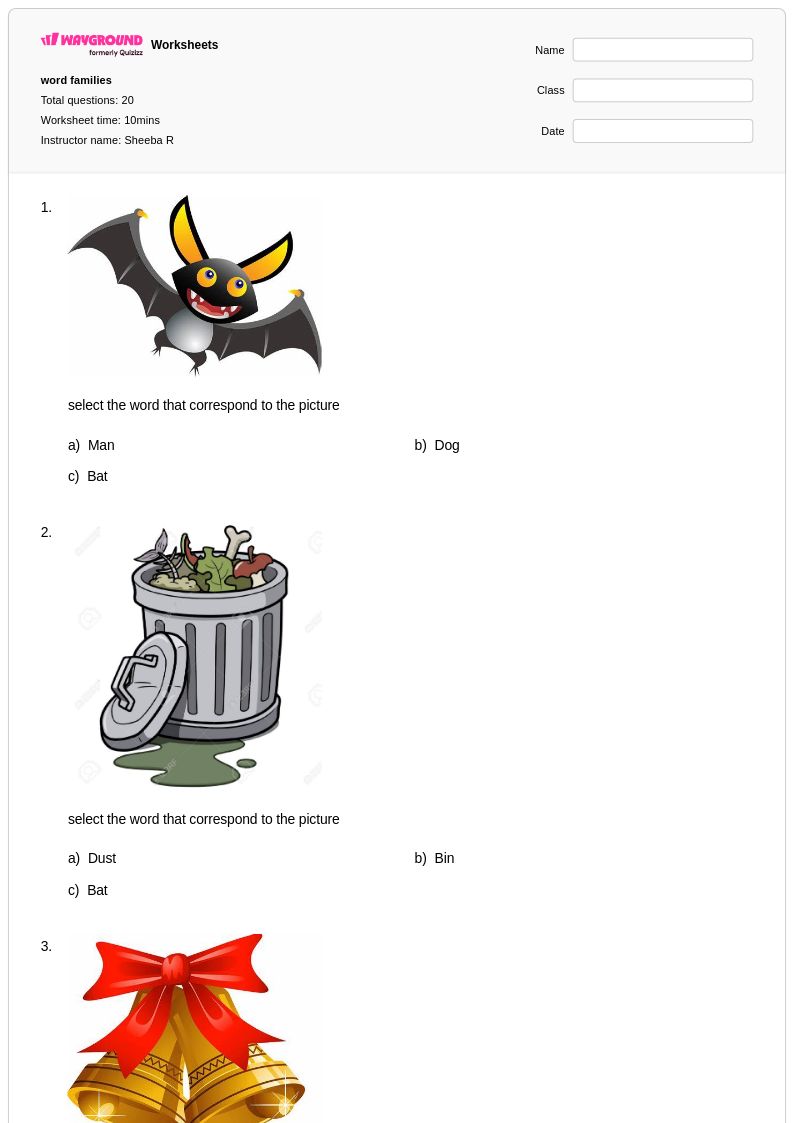
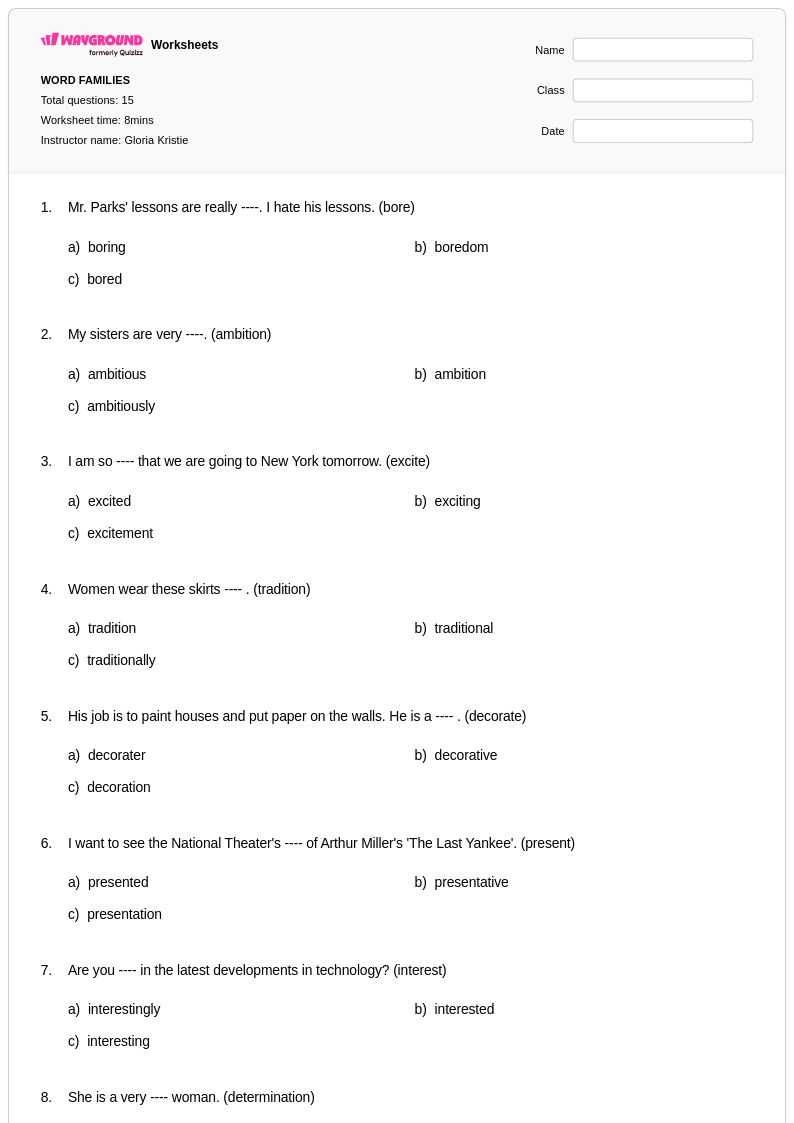
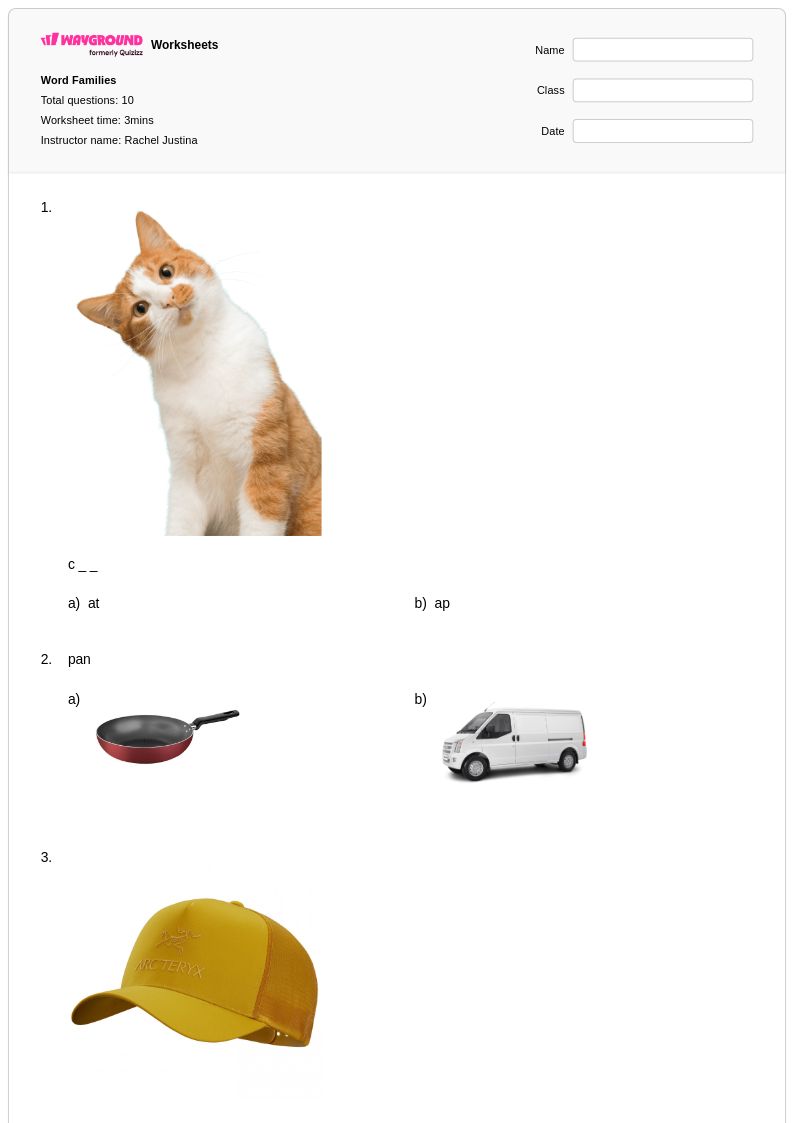
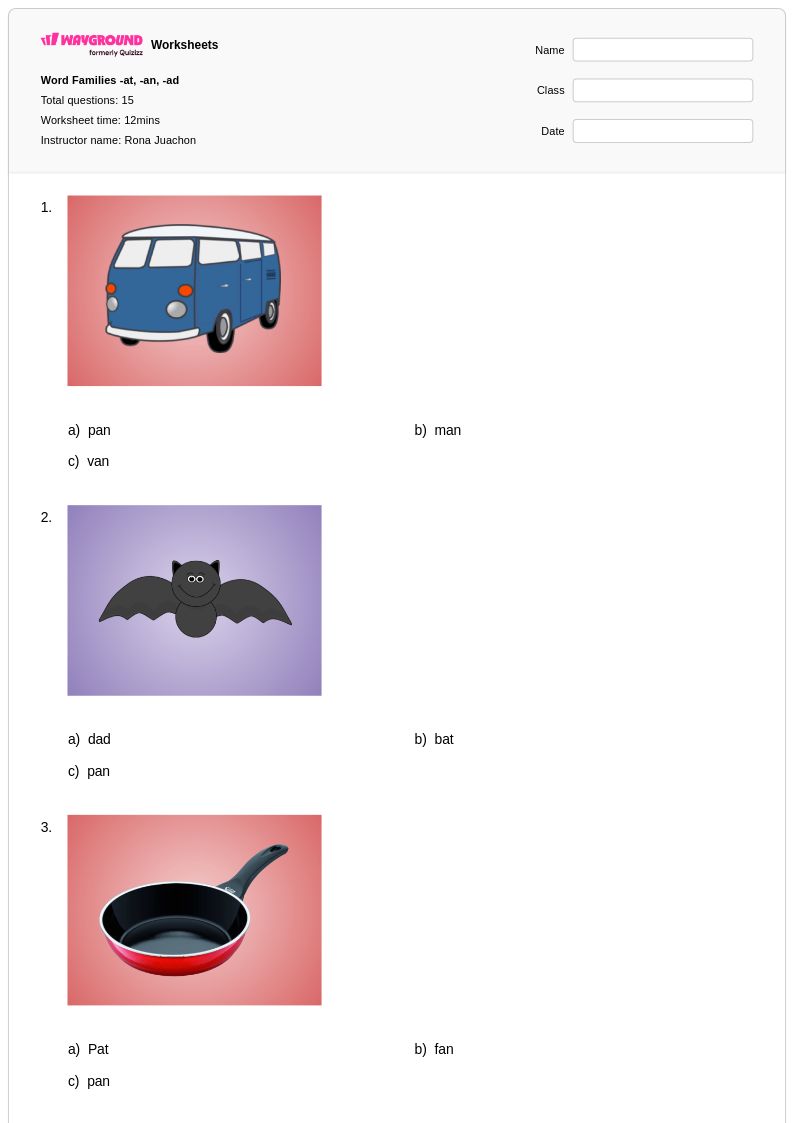
Word families worksheets available through Wayground (formerly Quizizz) provide essential phonetic foundation practice by grouping words that share common spelling patterns and sounds. These comprehensive resources help students recognize phonetic relationships between words like "cat," "hat," and "bat" within the -at family, or "ring," "sing," and "king" within the -ing family, strengthening both decoding and encoding skills crucial for reading fluency and spelling accuracy. The worksheets include varied practice problems that engage learners in identifying, sorting, and creating words within specific families, while accompanying answer keys enable immediate feedback and self-assessment. Available as free printables in convenient pdf format, these resources systematically build phonemic awareness and pattern recognition skills that serve as building blocks for more advanced literacy development.
Wayground (formerly Quizizz) supports educators with an extensive collection of millions of teacher-created word families resources that streamline lesson planning and differentiated instruction. The platform's robust search and filtering capabilities allow teachers to quickly locate materials aligned with specific phonetic patterns and educational standards, while built-in customization tools enable adaptation of worksheets to meet diverse student needs and ability levels. These versatile resources are available in both printable pdf formats for traditional classroom use and digital formats for interactive learning experiences, making them ideal for whole-group instruction, small group remediation, individual skill practice, and enrichment activities. The comprehensive nature of these collections empowers teachers to provide consistent, scaffolded phonics instruction that builds students' confidence in recognizing spelling patterns and applying phonetic knowledge across various reading and writing contexts.
FAQs
How do I teach word families to early readers?
Start by anchoring instruction on a single rime pattern, such as -at or -ing, and build a word wall of examples students can see and touch throughout the week. Use blending practice where students swap out the onset (the initial consonant) while keeping the rime constant, reinforcing that changing one sound changes the whole word. Once students are comfortable generating words within one family, introduce a second family and practice sorting activities to build pattern discrimination. Consistent, pattern-focused repetition is the most effective method for making word family recognition automatic.
What kinds of activities help students practice word families?
Effective practice includes word sorting, where students categorize words by their shared spelling pattern, and word building tasks, where they use letter cards or write-in exercises to construct new words within a family. Identifying, sorting, and creating words within specific families are all high-value activities because they require students to apply pattern knowledge rather than just recall it. These exercises simultaneously strengthen decoding skills for reading and encoding skills for spelling, making them efficient for literacy instruction.
What mistakes do students commonly make when learning word families?
A frequent error is over-generalizing a phonetic pattern to words where it does not apply, such as assuming all -ight words follow the same pronunciation when encountered in less common contexts. Students also commonly confuse visually similar families, such as -an and -an versus -in and -an, because they are processing letter shapes rather than sounds. Prompting students to say each word aloud before writing it helps them rely on phonemic awareness rather than visual memory alone.
How can I use word family worksheets to support students at different skill levels?
For students still developing phonemic awareness, begin with high-frequency, short-vowel families such as -at, -an, and -it before moving to more complex patterns. More advanced students can work with long-vowel families or multisyllabic patterns, while struggling readers benefit from reduced word sets that keep cognitive load manageable. On Wayground, teachers can apply accommodations such as read-aloud support and reduced answer choices to individual students, allowing the same worksheet to serve multiple ability levels within a single class session.
How do I use Wayground's word families worksheets in my classroom?
Wayground's word families worksheets are available as free printable PDFs for traditional classroom use and in digital formats for technology-integrated or remote learning environments, and teachers can also host them as a live quiz directly on Wayground. Each worksheet includes a complete answer key, which allows for efficient self-assessment or teacher-led review after independent practice. The digital format is well-suited for individual skill practice or small group remediation, while the printable version works effectively for whole-group instruction or homework.
How do word families build broader literacy skills beyond phonics?
Recognizing word families strengthens reading fluency because students can decode unfamiliar words by analogy rather than sounding out each letter individually. This pattern recognition also supports spelling accuracy, since a student who knows the -ing family can correctly spell ring, king, and bring without memorizing each word in isolation. Over time, these phonetic building blocks transfer to more advanced literacy tasks such as reading multisyllabic words and applying spelling rules in writing.