
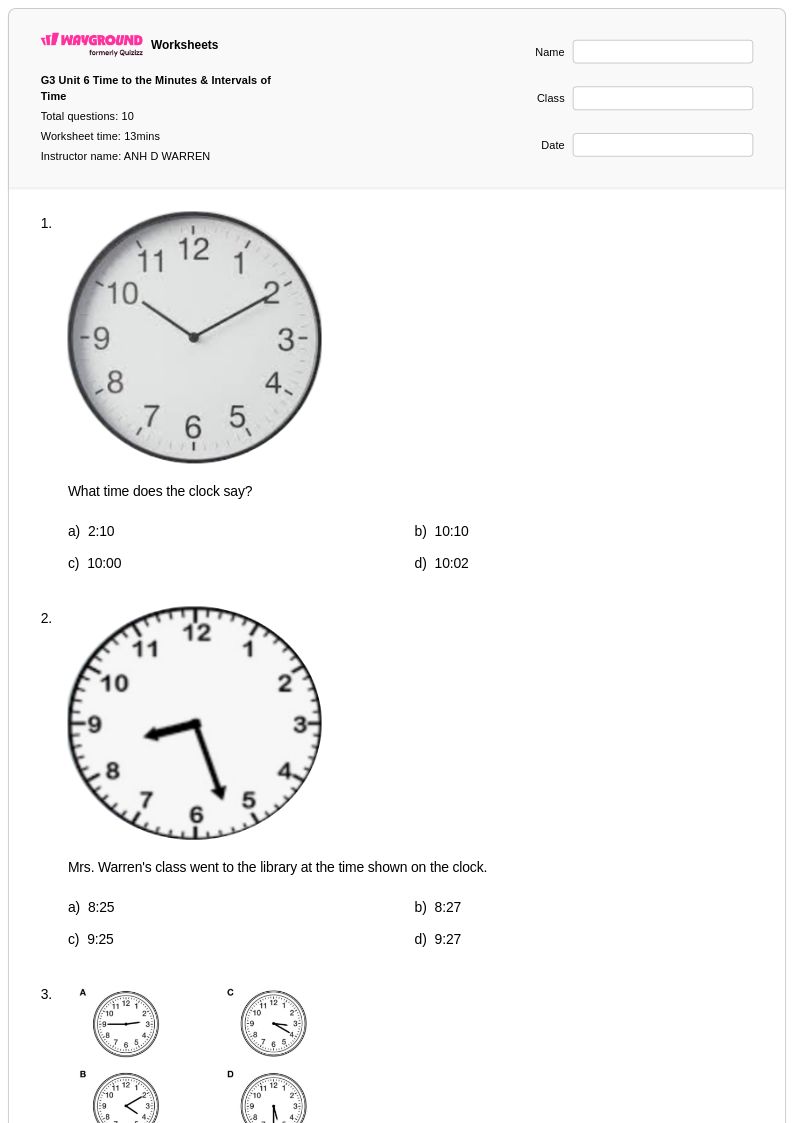
10 Q
3rd
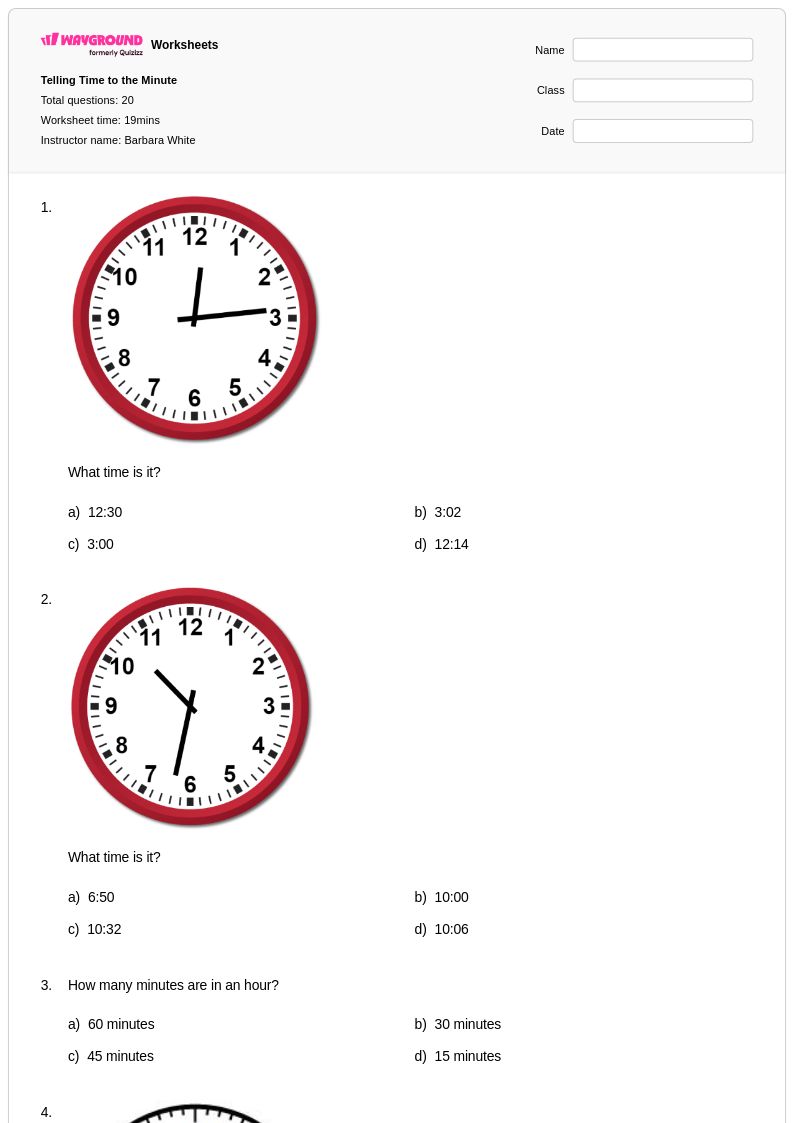
20 Q
3rd
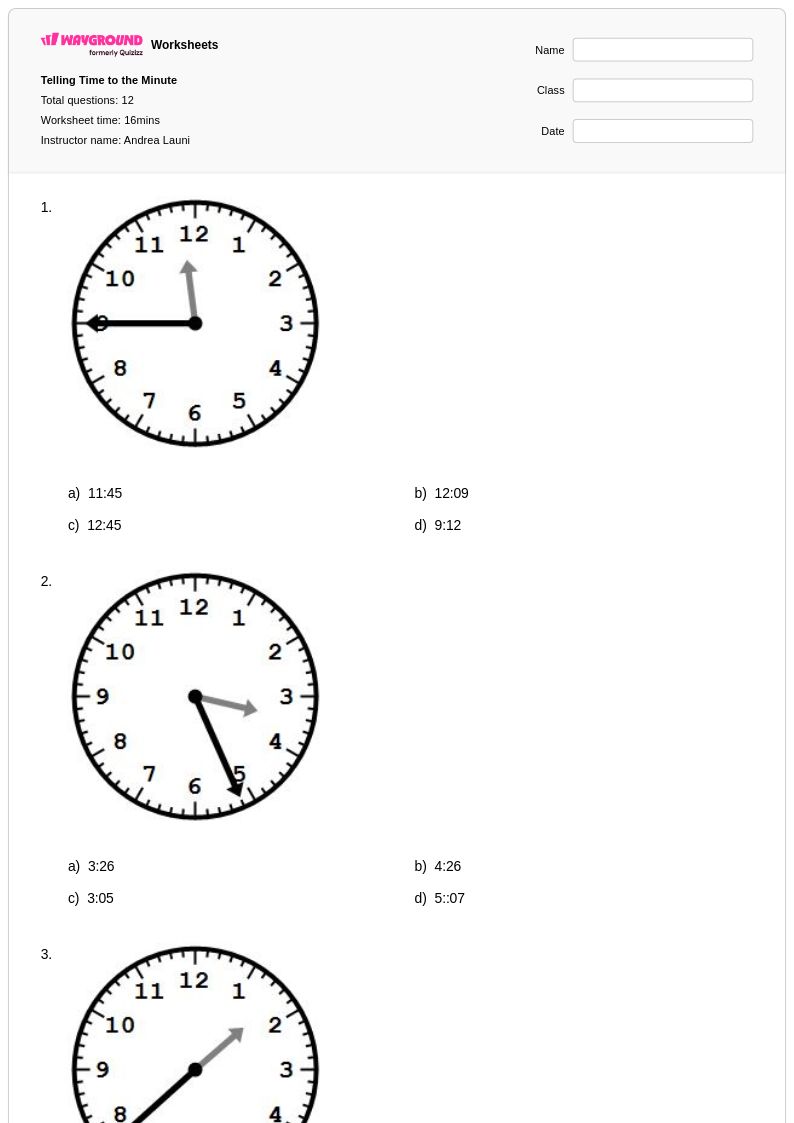
12 Q
2nd - 5th
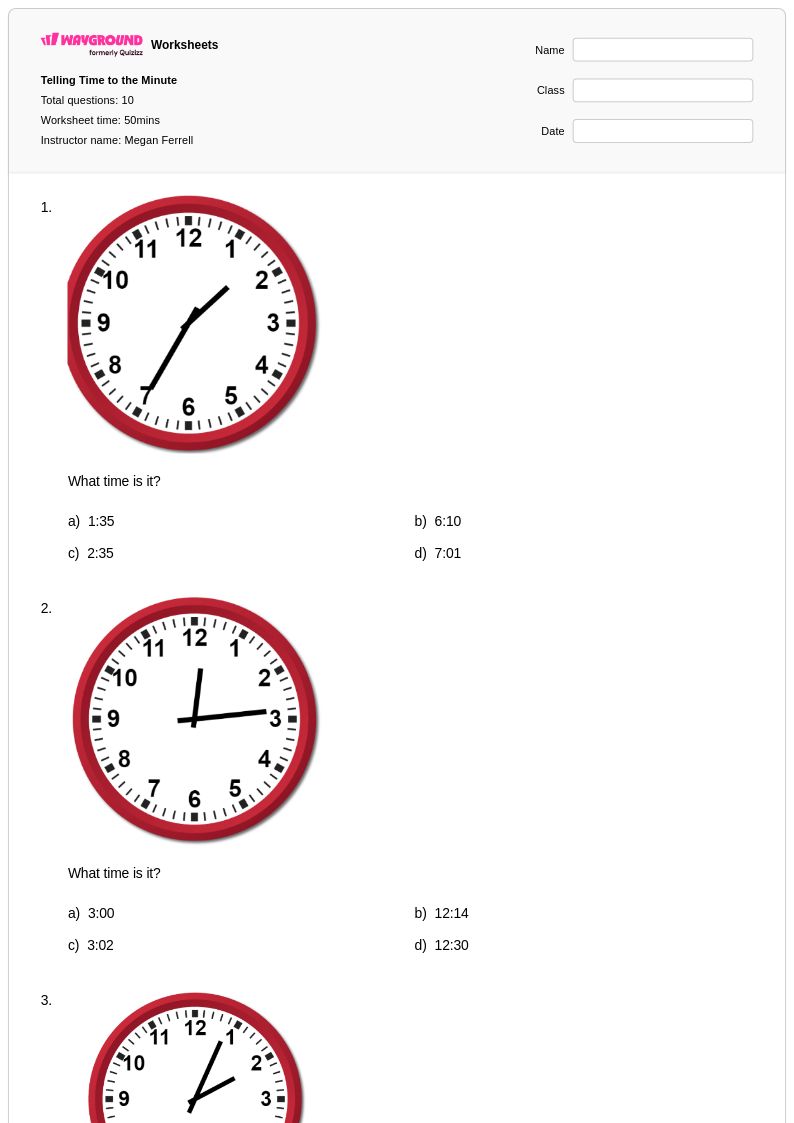
10 Q
3rd
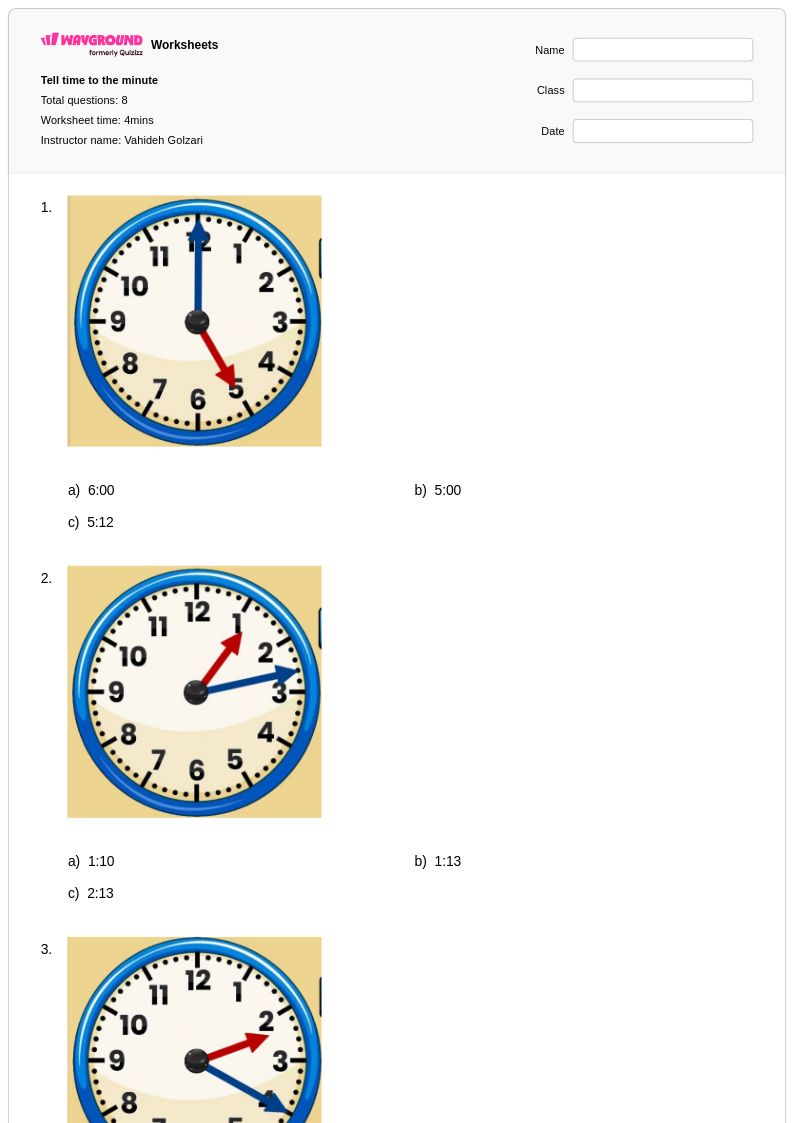
8 Q
1st
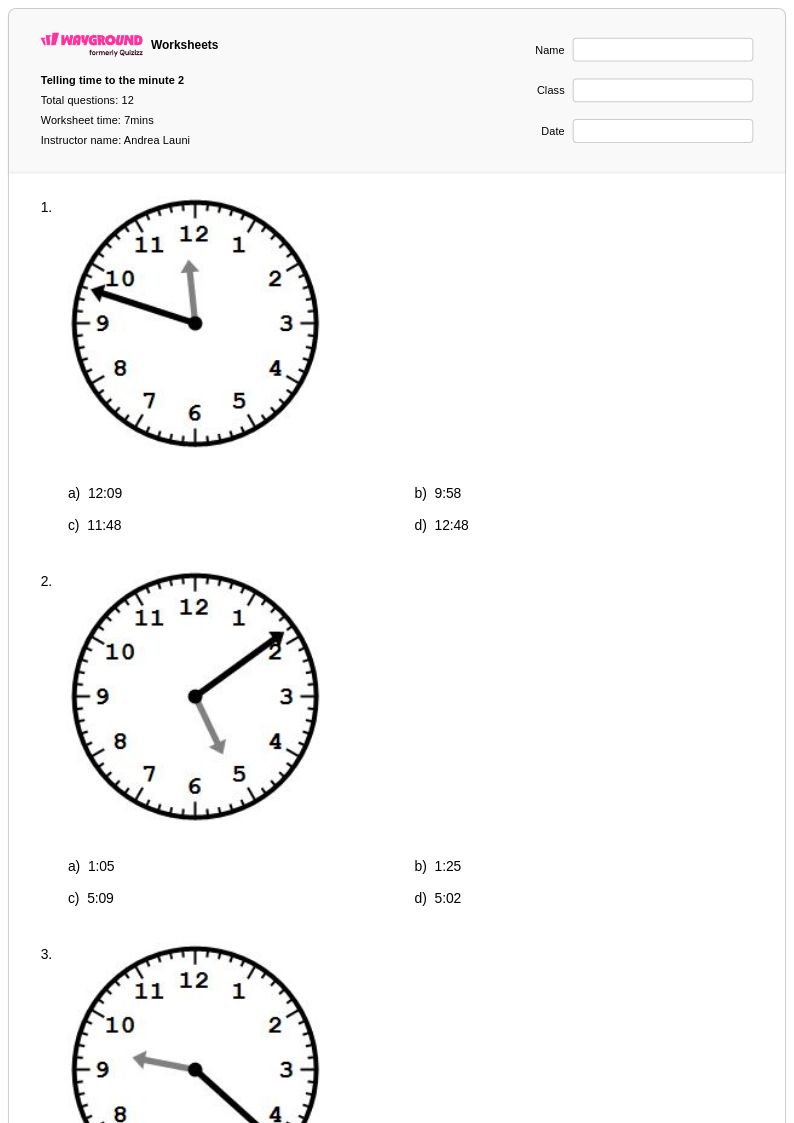
12 Q
1st - 5th
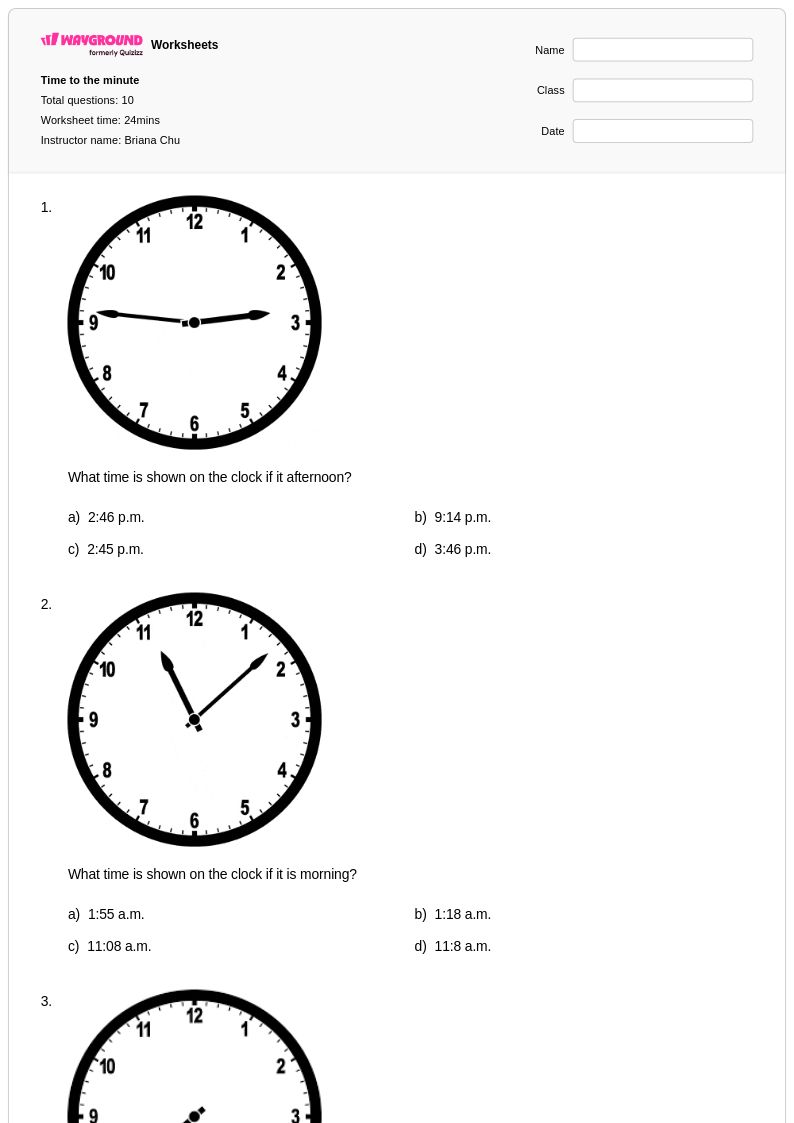
10 Q
1st - 5th
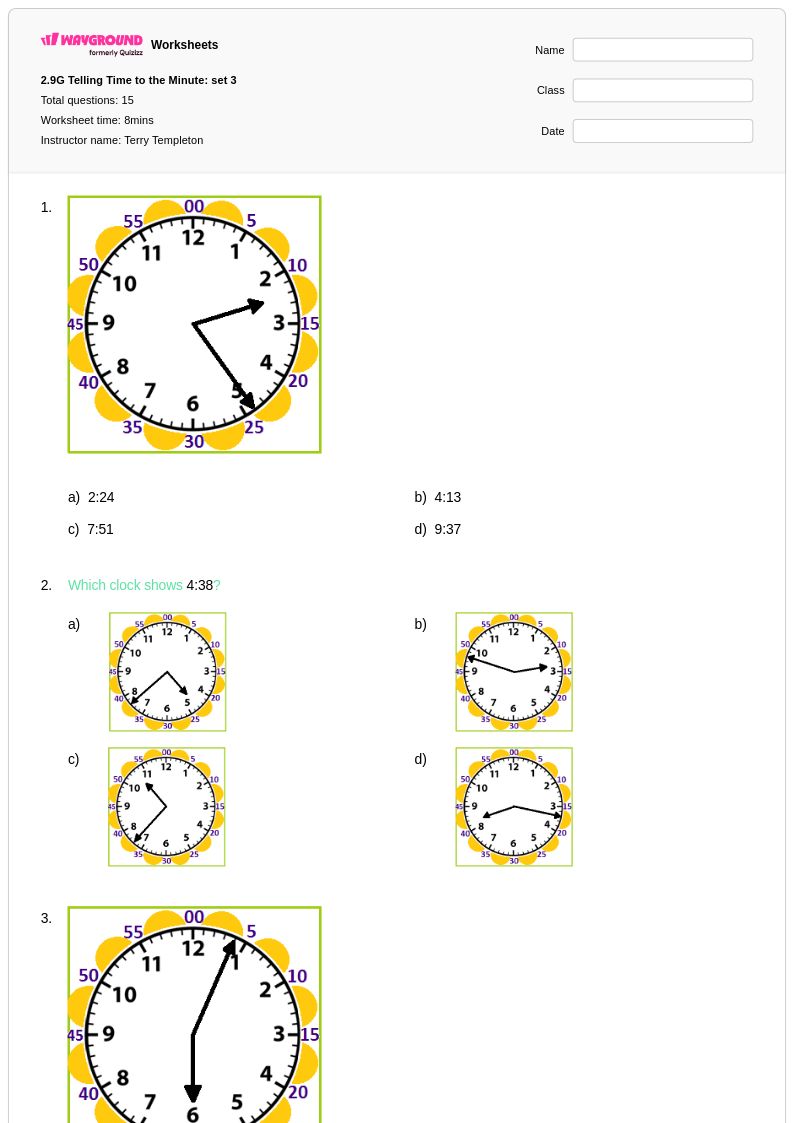
15 Q
2nd - 3rd
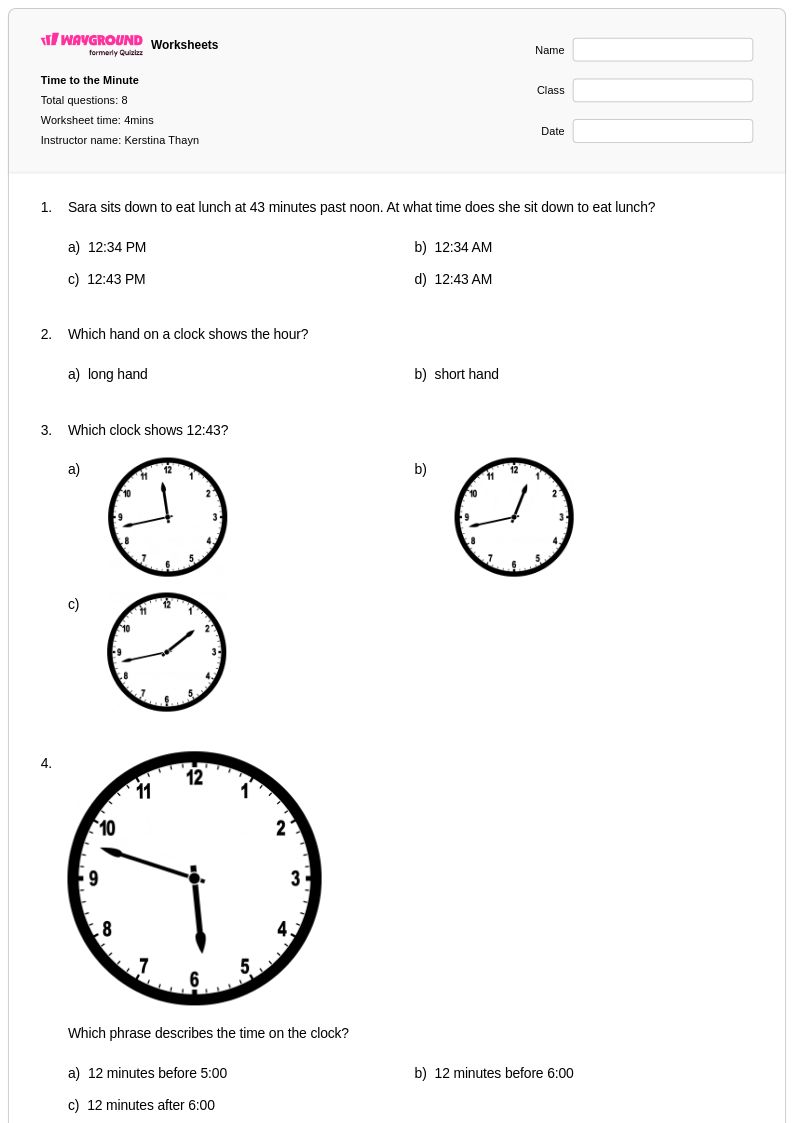
8 Q
3rd
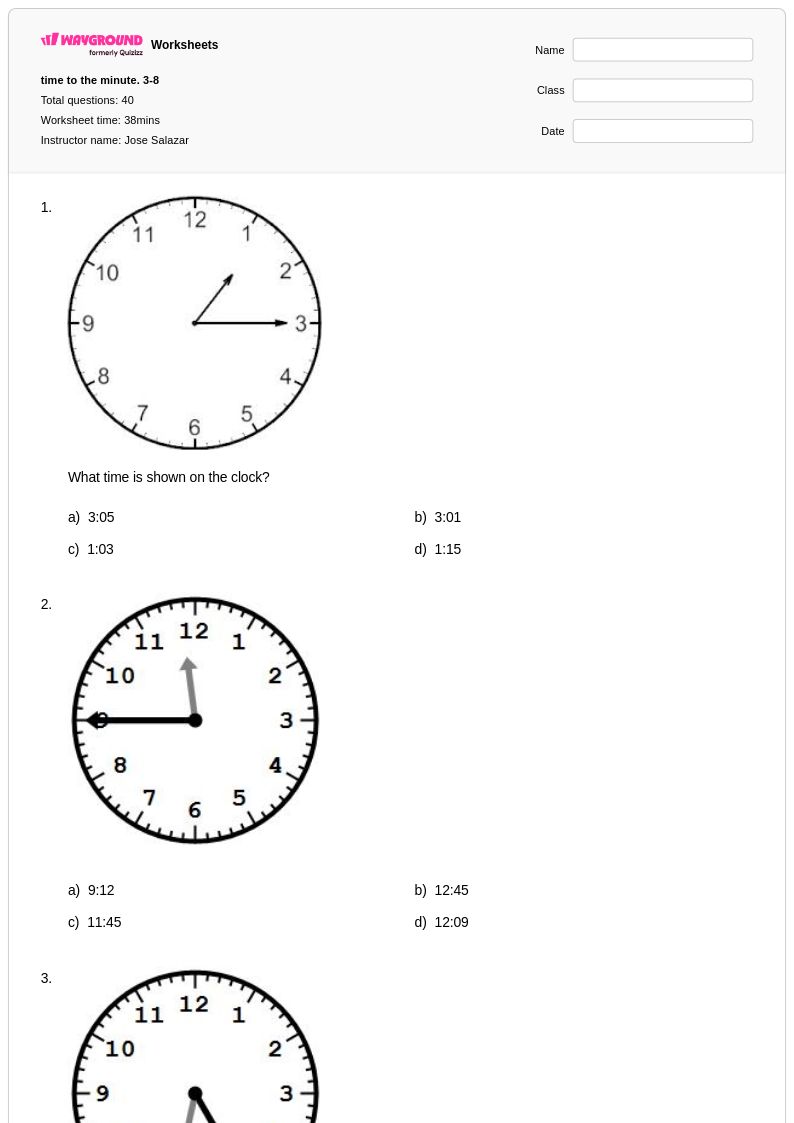
40 Q
3rd - 4th
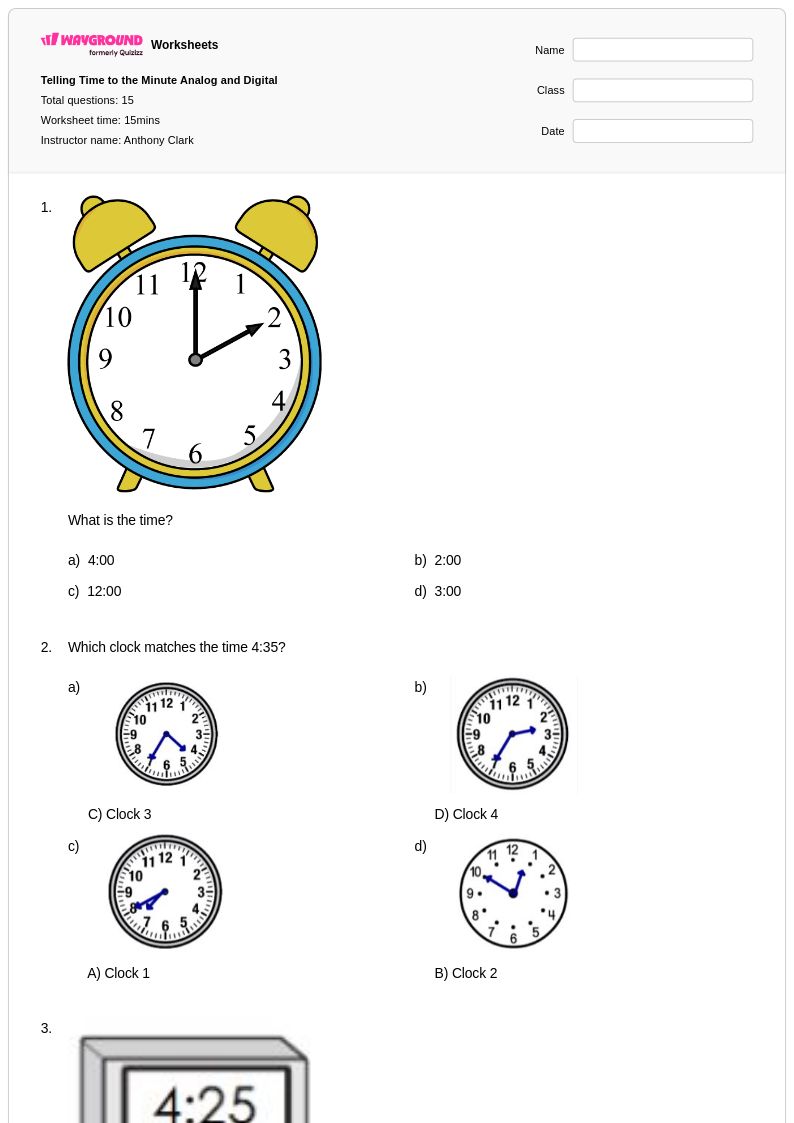
15 Q
3rd - Uni
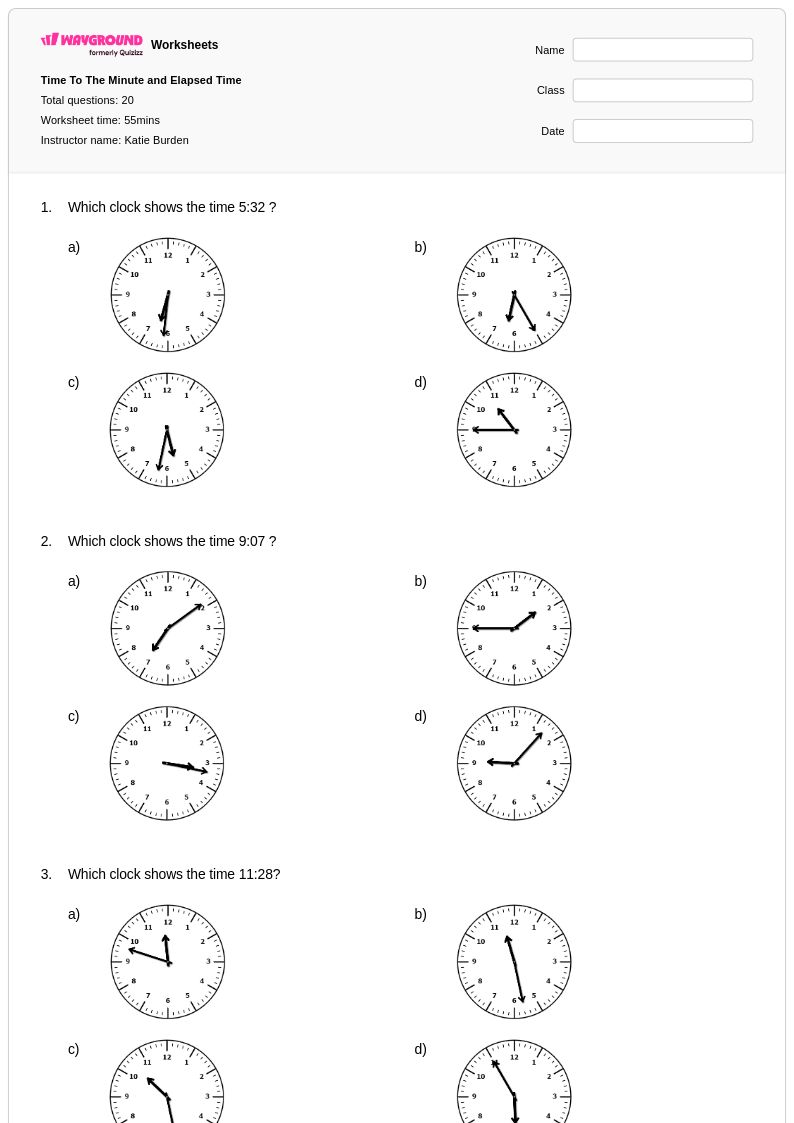
20 Q
3rd
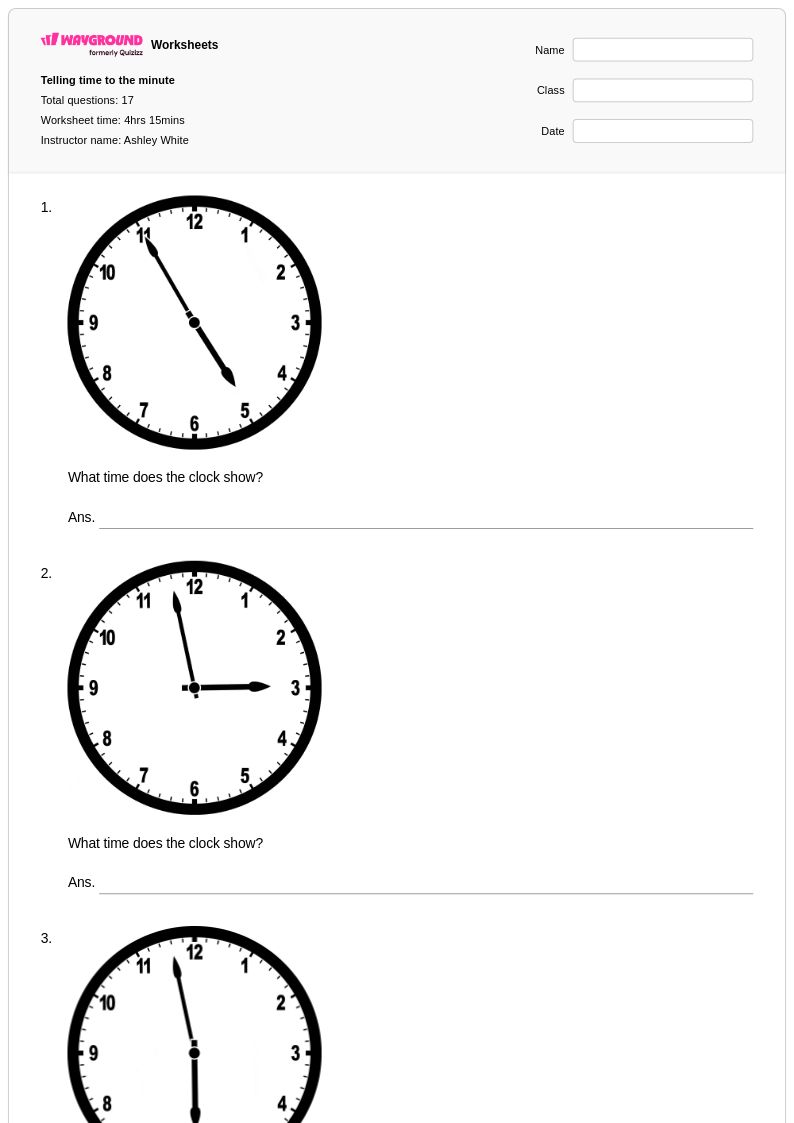
17 Q
3rd
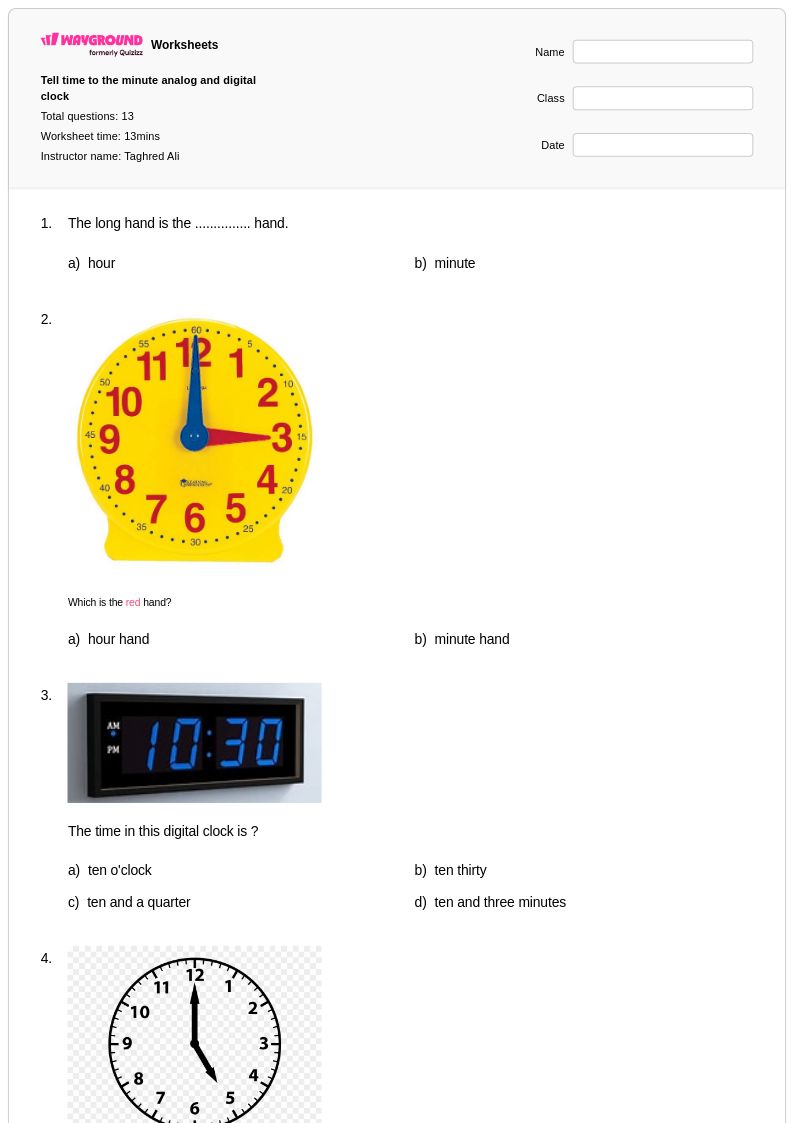
13 Q
3rd
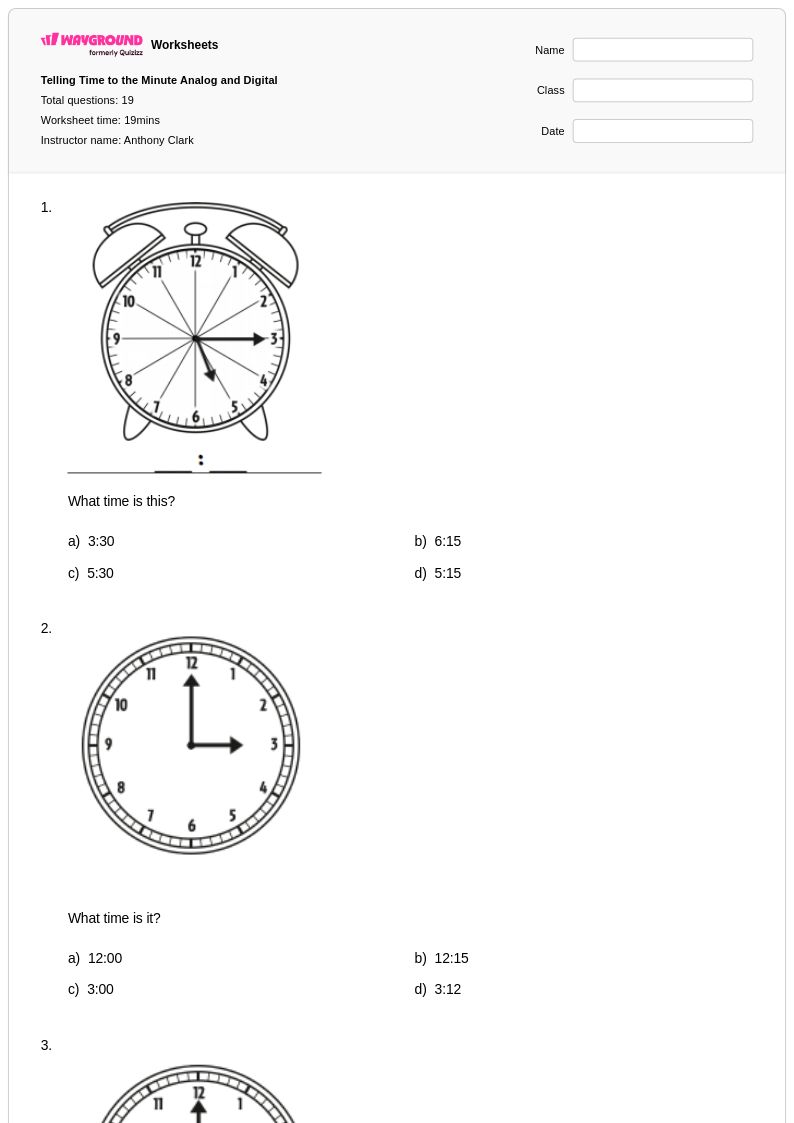
19 Q
3rd - Uni
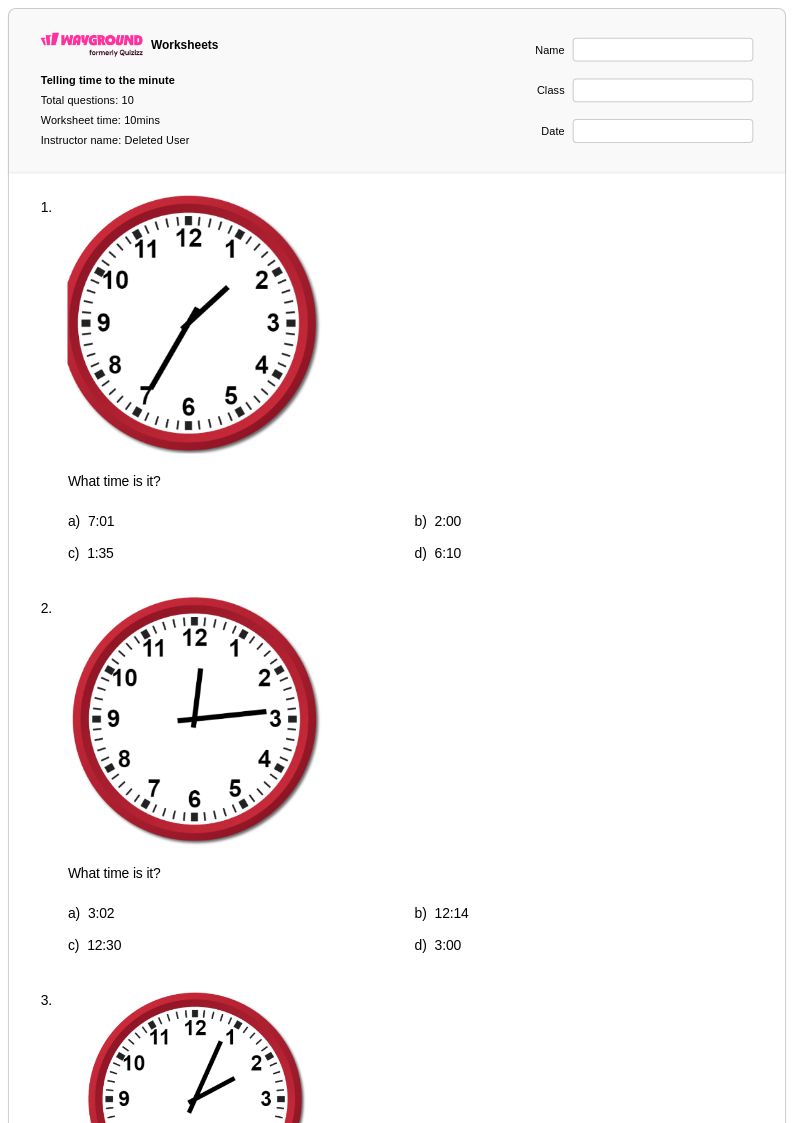
10 Q
2nd - 3rd
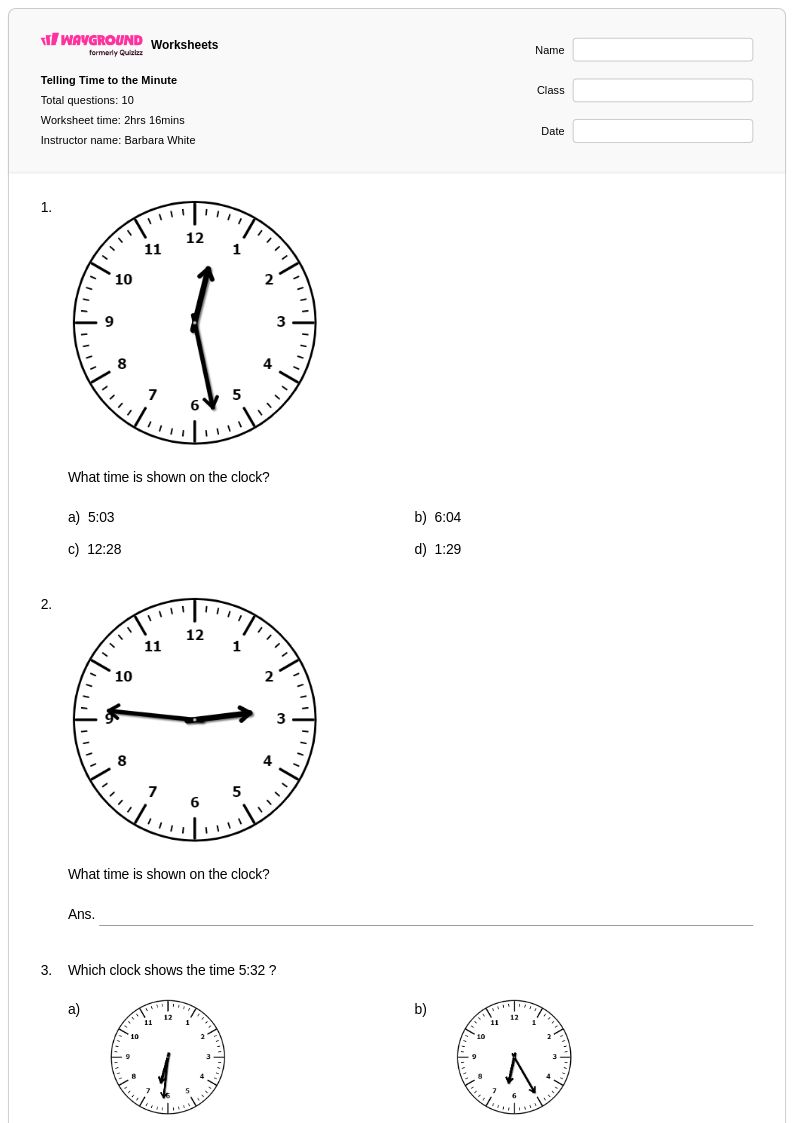
10 Q
3rd - 4th
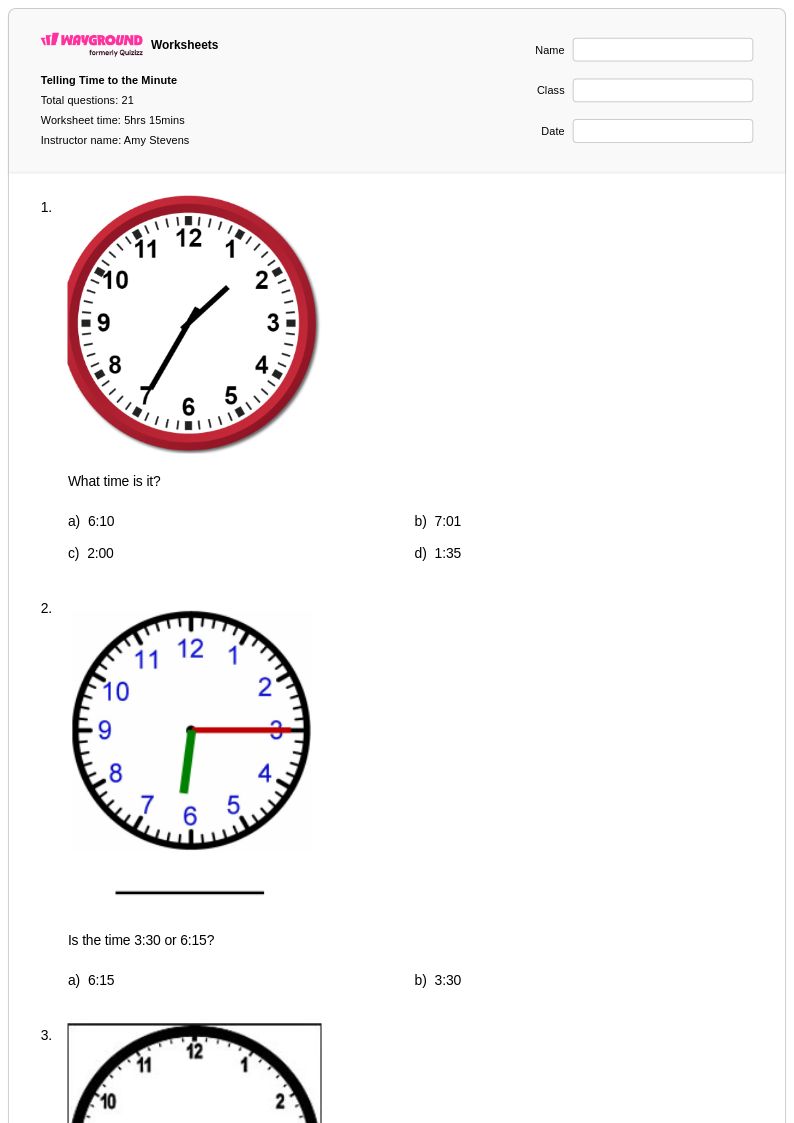
21 Q
2nd
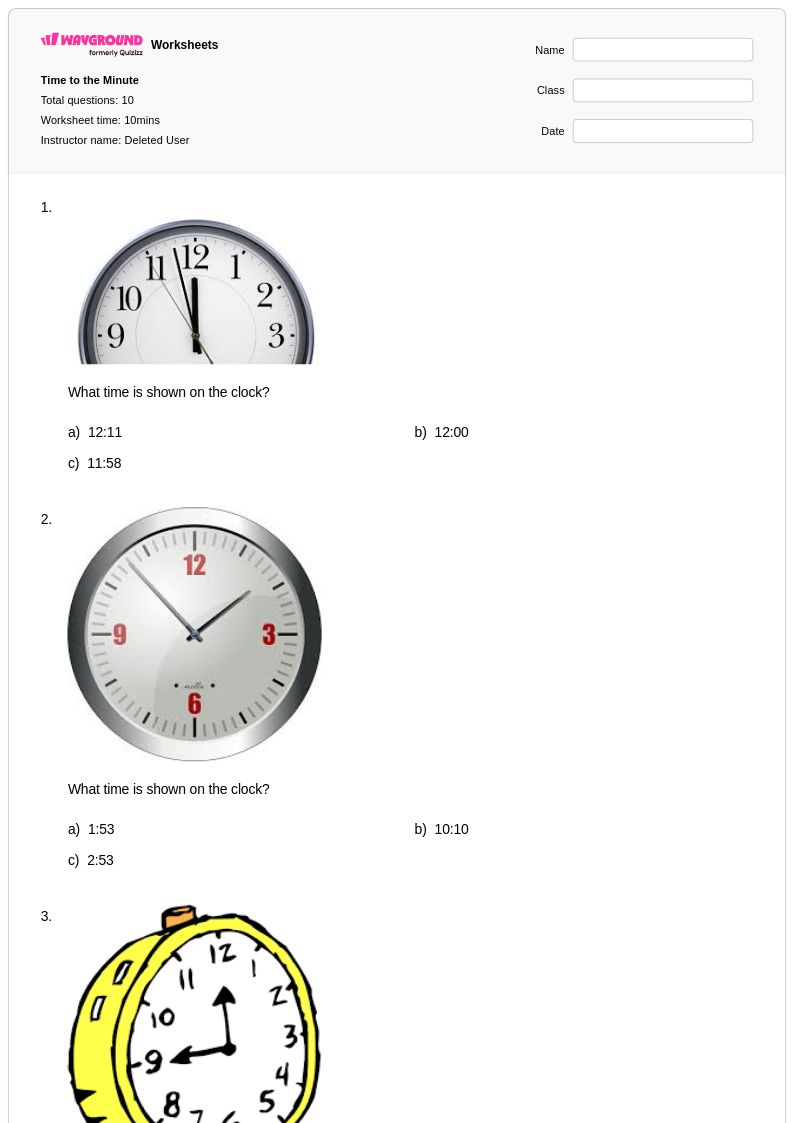
10 Q
2nd - 4th
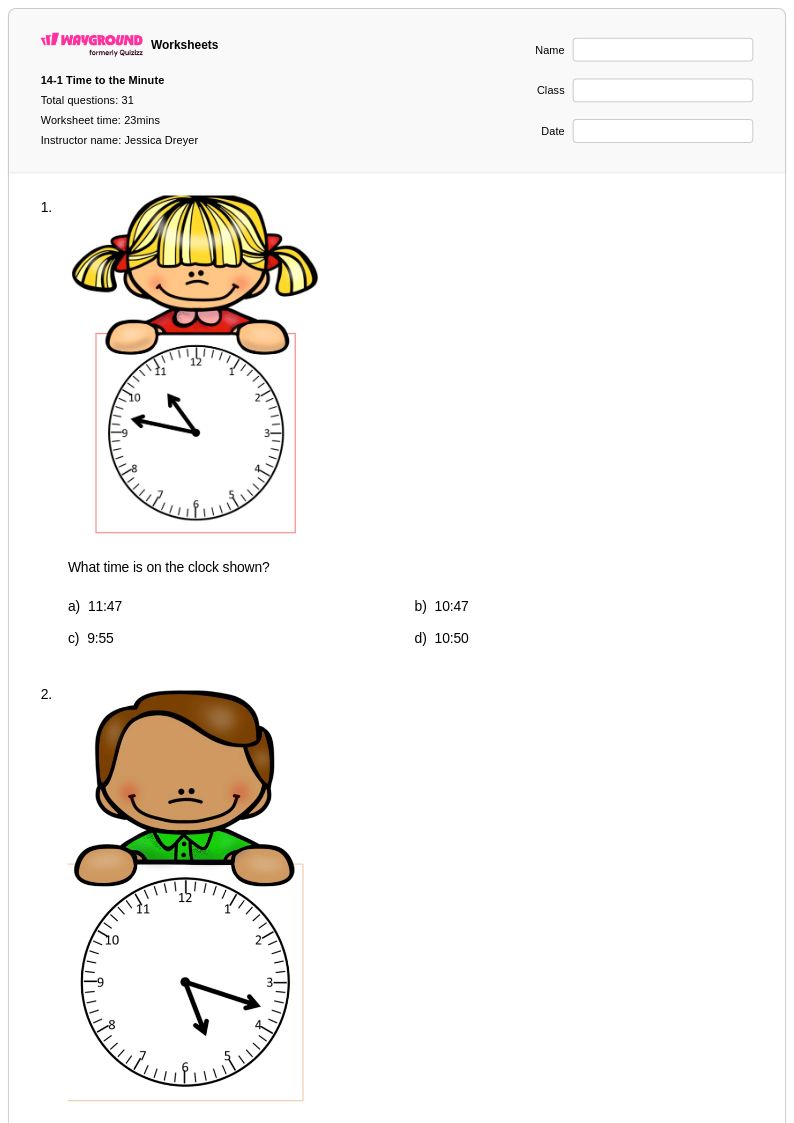
31 Q
3rd
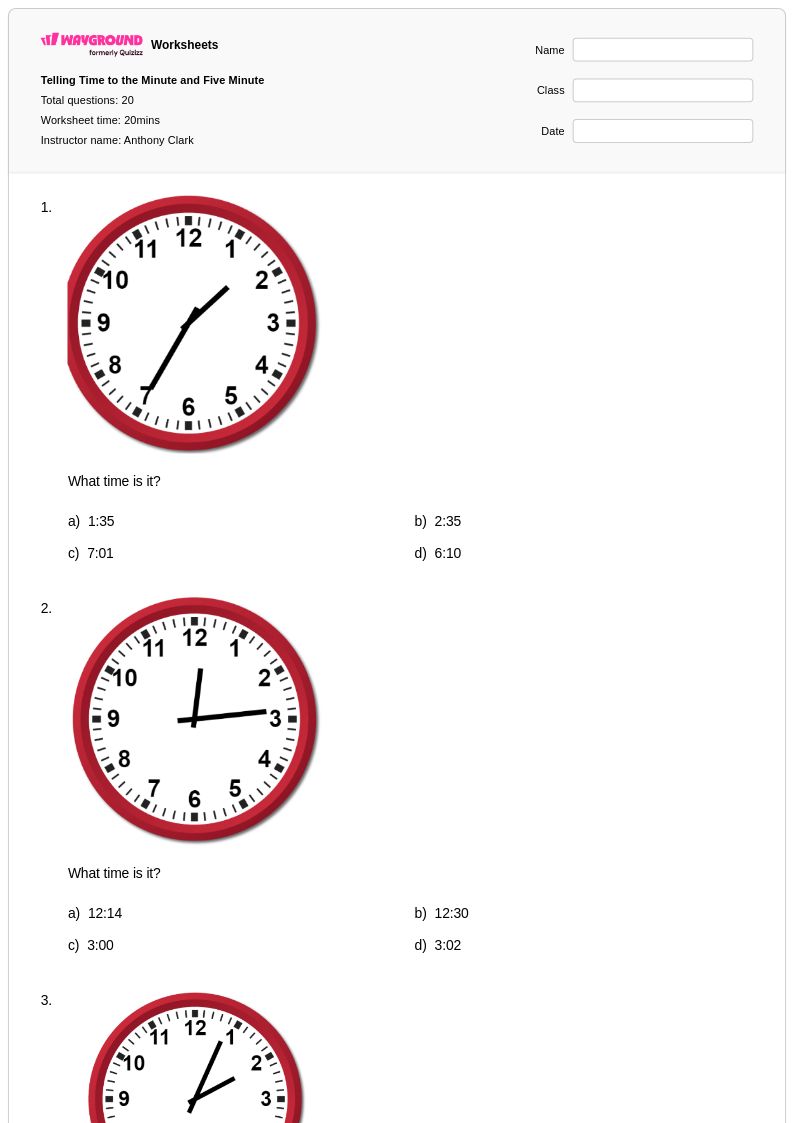
20 Q
3rd - Uni
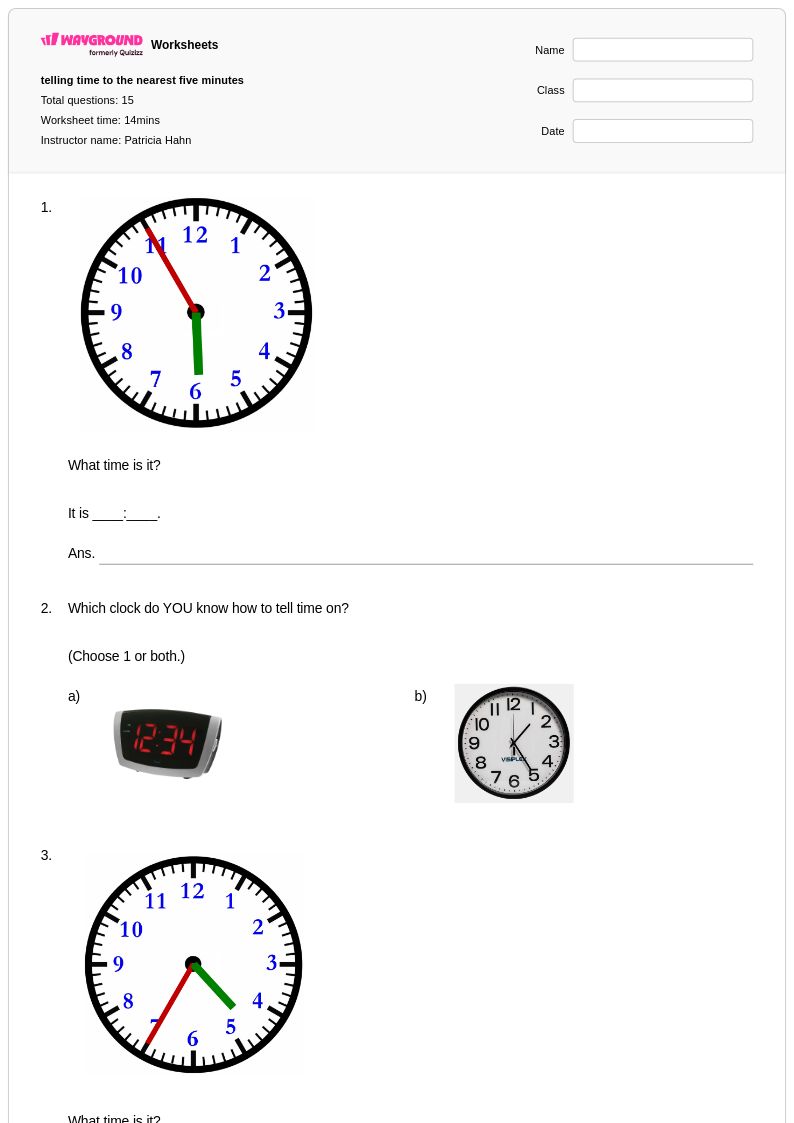
15 Q
9th
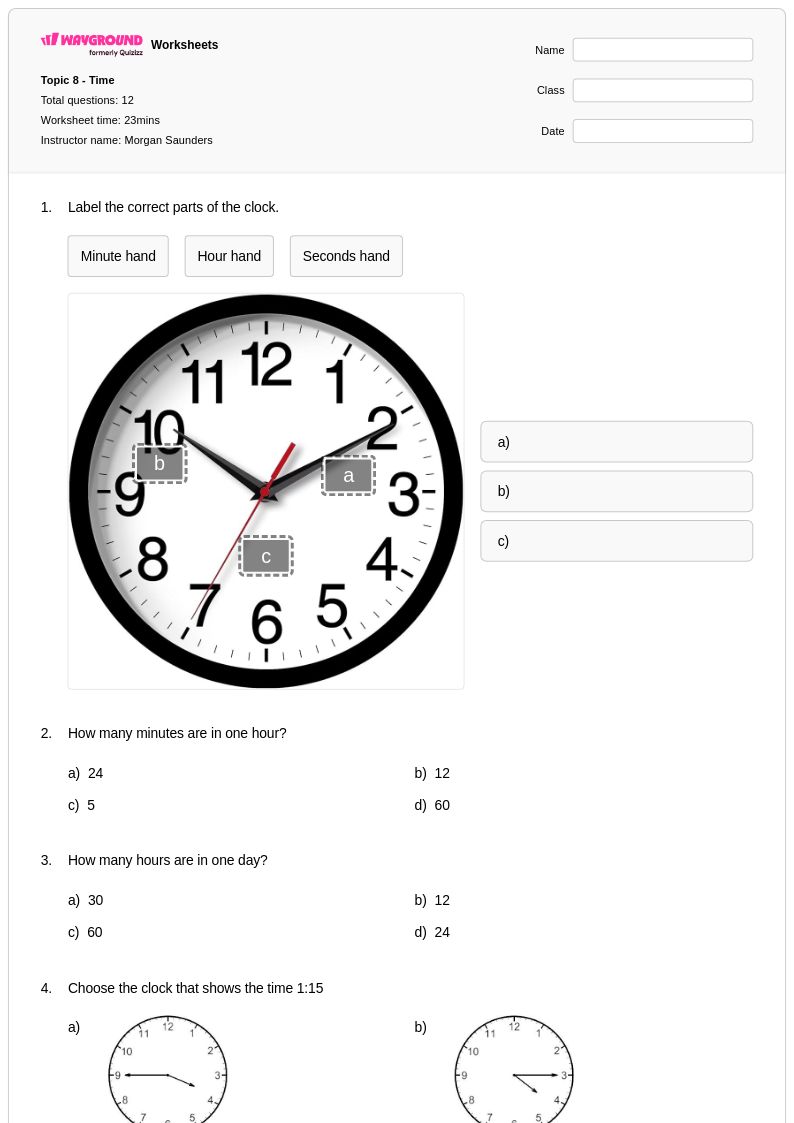
12 Q
2nd
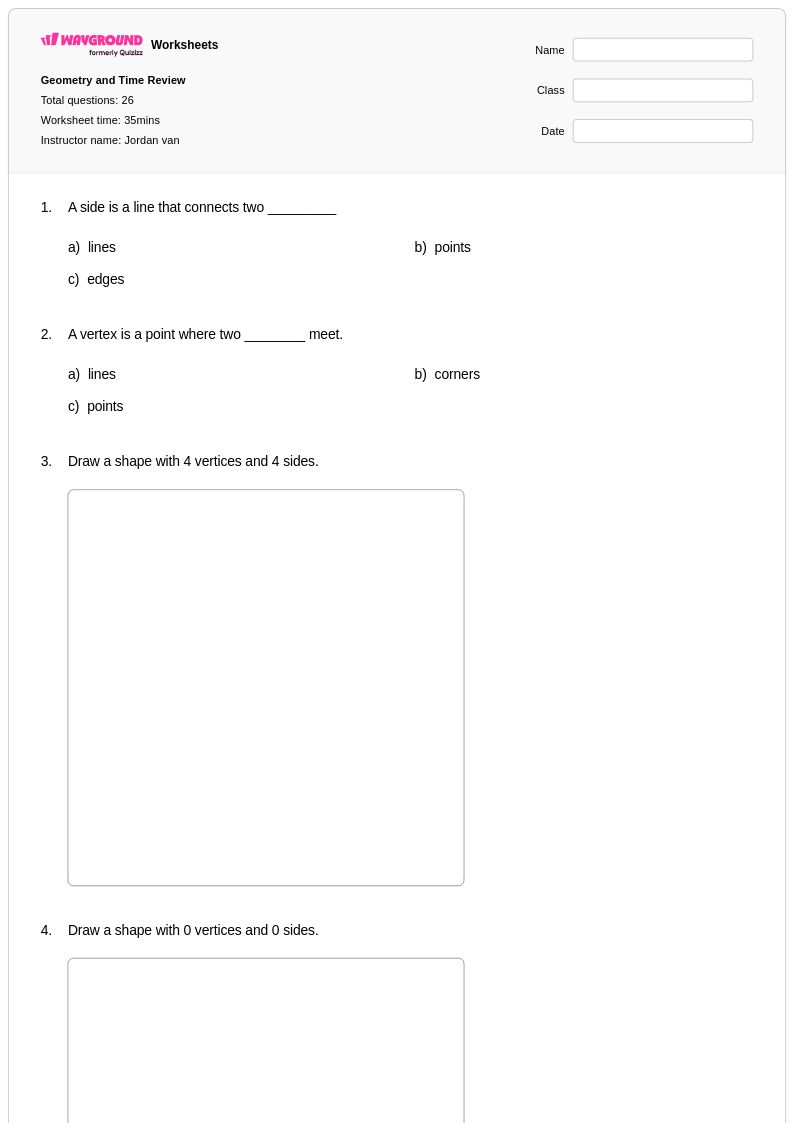
26 Q
1st
Explore Other Subject Worksheets for kindergarten
Explore printable Time to the Minute worksheets for Kindergarten
Time to the minute worksheets for kindergarten students available through Wayground (formerly Quizizz) provide essential foundational practice for developing precise time-telling skills at an age-appropriate level. These comprehensive printables focus on helping young learners recognize and read clock faces down to the minute mark, building upon their basic understanding of hours and half-hours. The worksheets strengthen critical mathematical concepts including number recognition, counting by fives, understanding the relationship between hour and minute hands, and developing visual-spatial skills necessary for analog clock interpretation. Each practice problem set includes carefully designed exercises that progress from simple minute recognition to more complex time-reading challenges, complete with answer keys to support independent learning and immediate feedback for both students and educators.
Wayground's extensive collection of kindergarten time to the minute resources draws from millions of teacher-created materials, ensuring educators have access to diverse, high-quality worksheet options that align with early childhood mathematics standards. The platform's robust search and filtering capabilities allow teachers to quickly locate specific skill-focused printables, while differentiation tools enable customization for various learning levels within the same classroom. These pdf worksheets are available in both digital and printable formats, providing flexibility for classroom instruction, homework assignments, remediation sessions, and enrichment activities. Teachers can seamlessly integrate these resources into their lesson planning workflow, using the comprehensive answer keys and varied problem types to support systematic skill development, assess student progress, and provide targeted practice opportunities that build confidence in time-telling fundamentals.