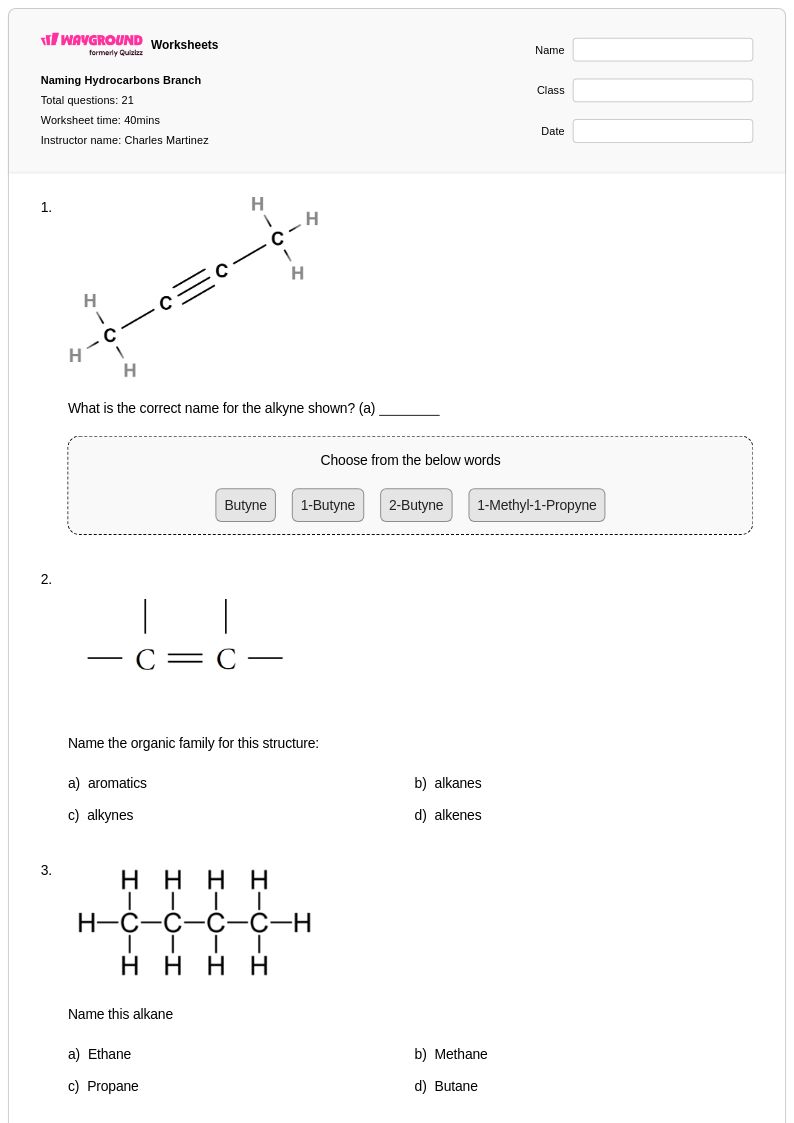
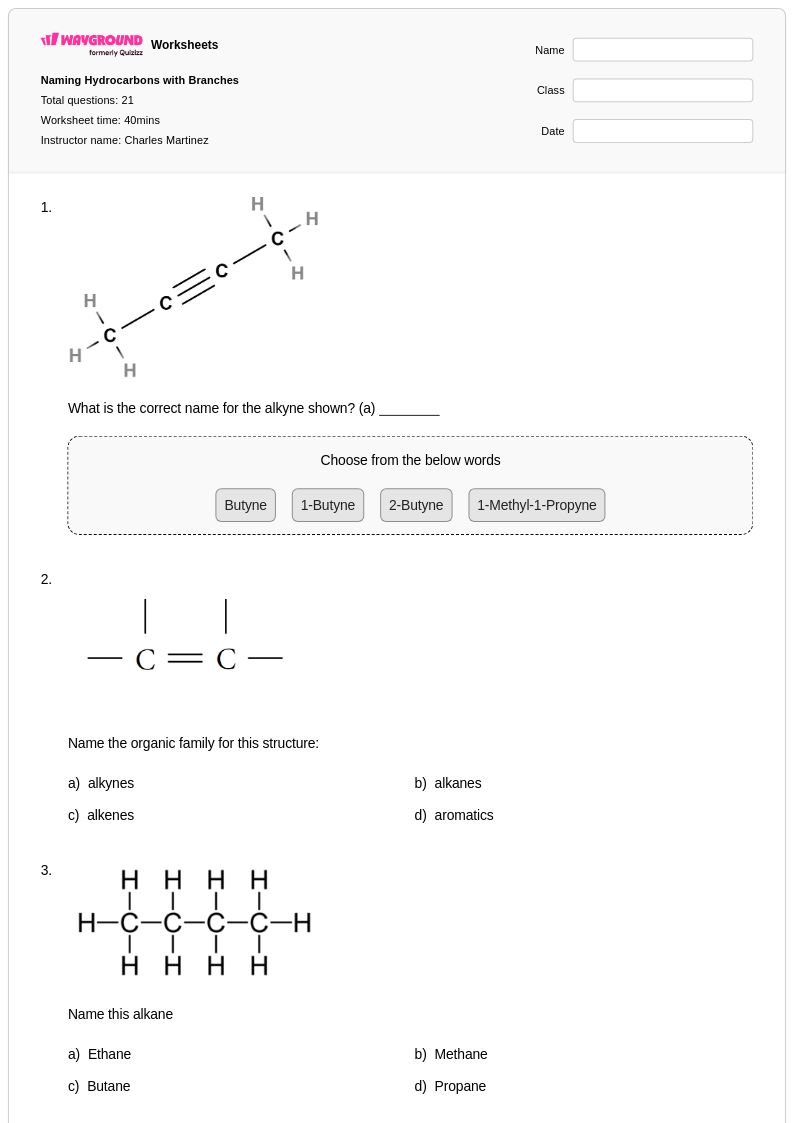
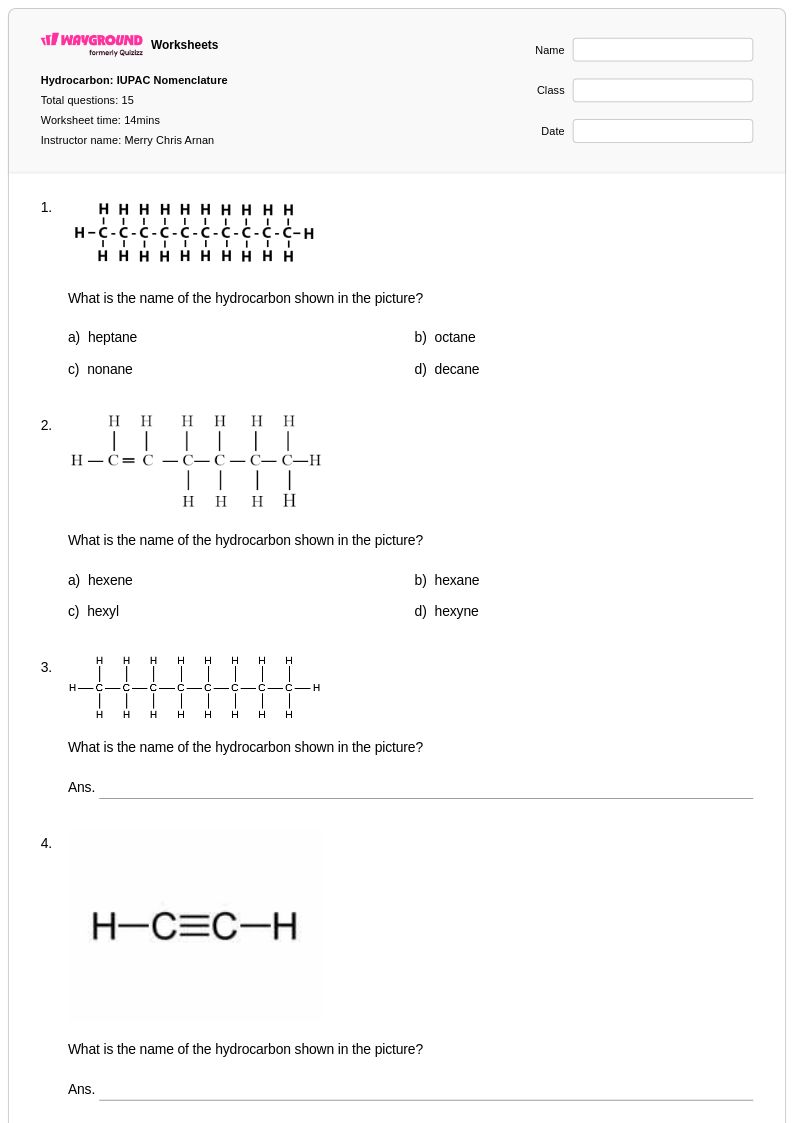
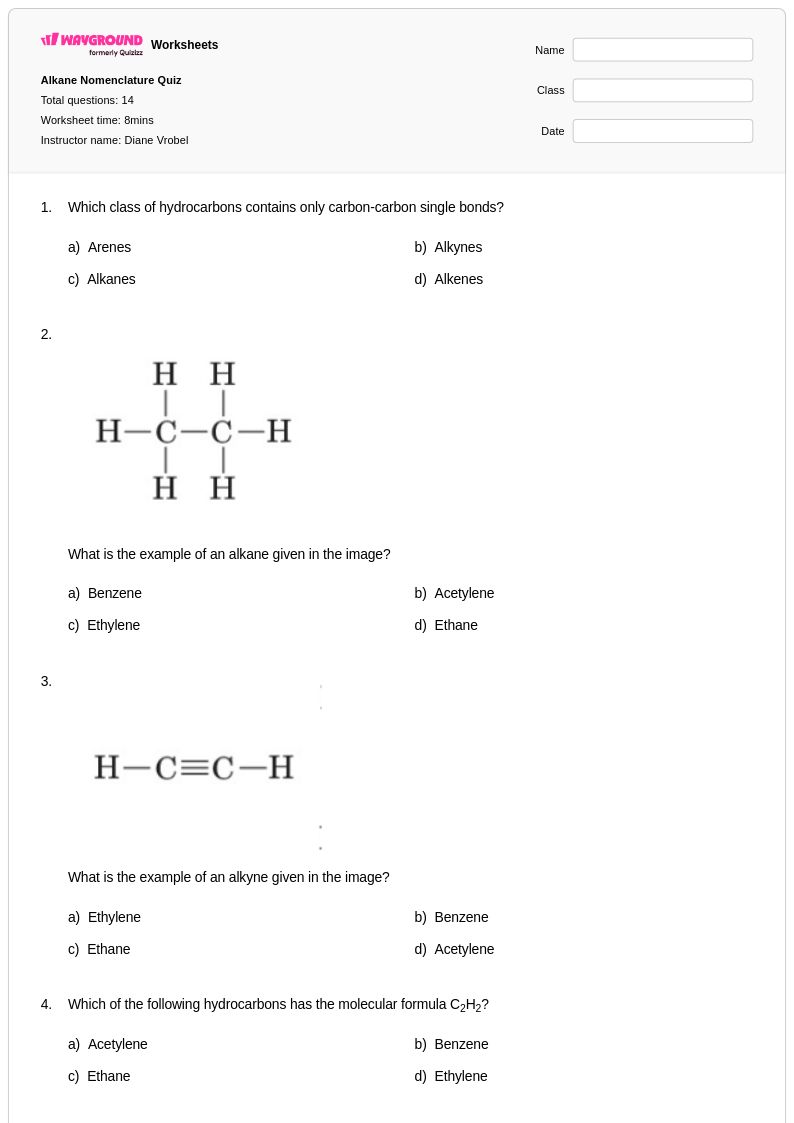
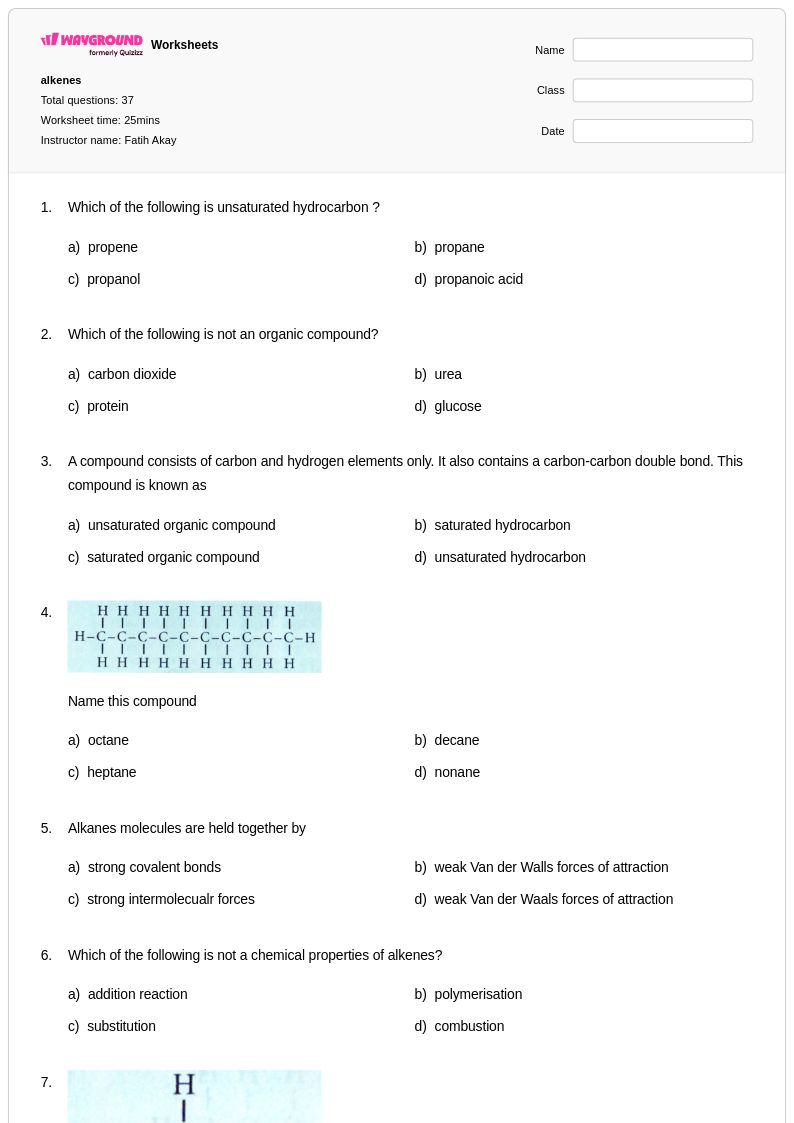
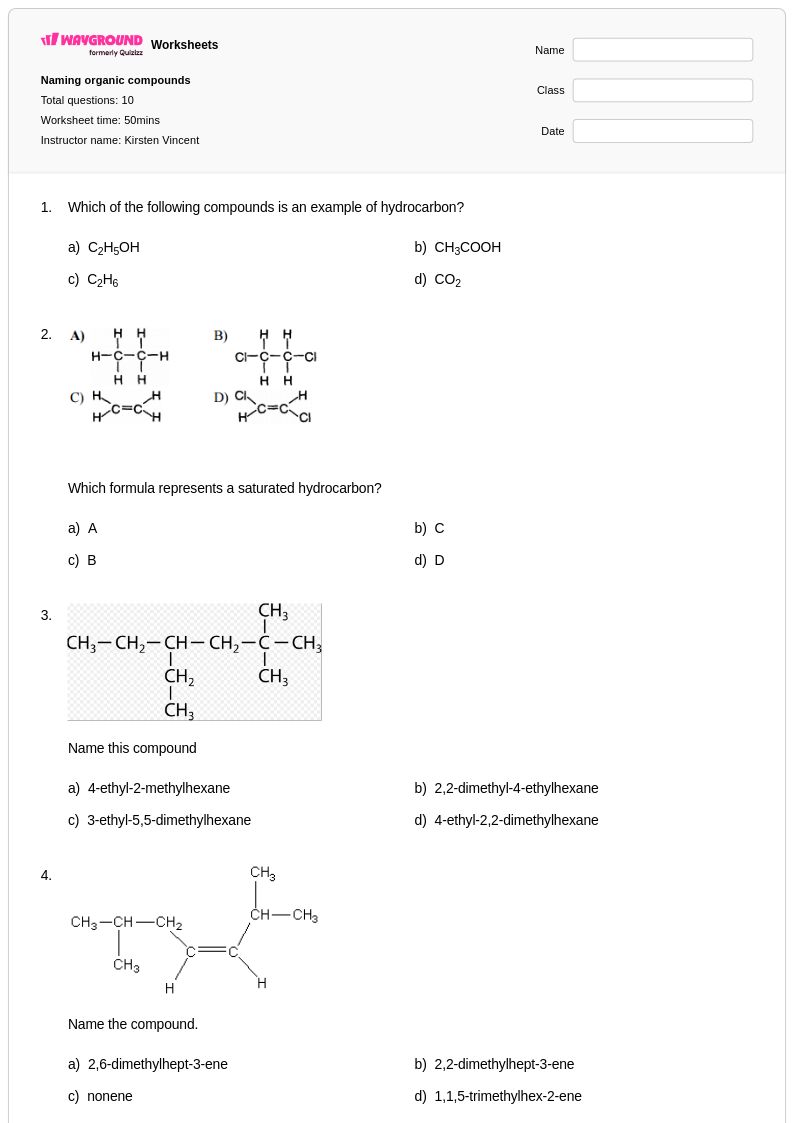
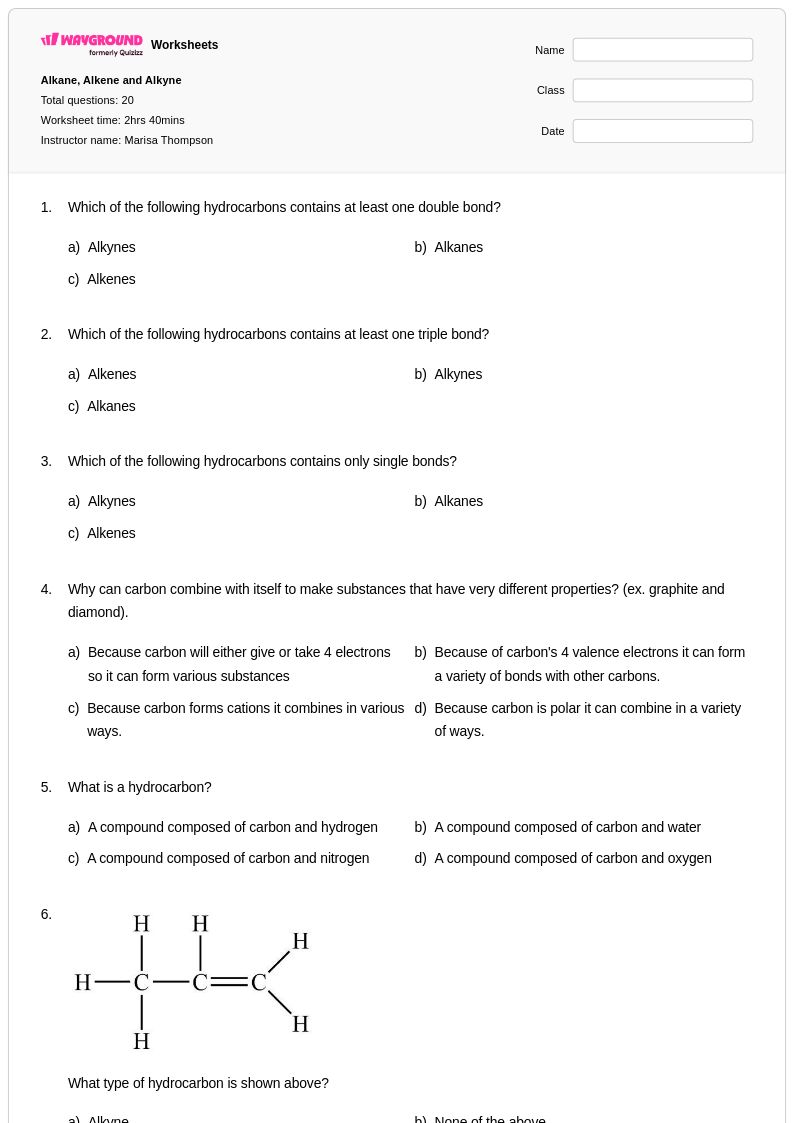
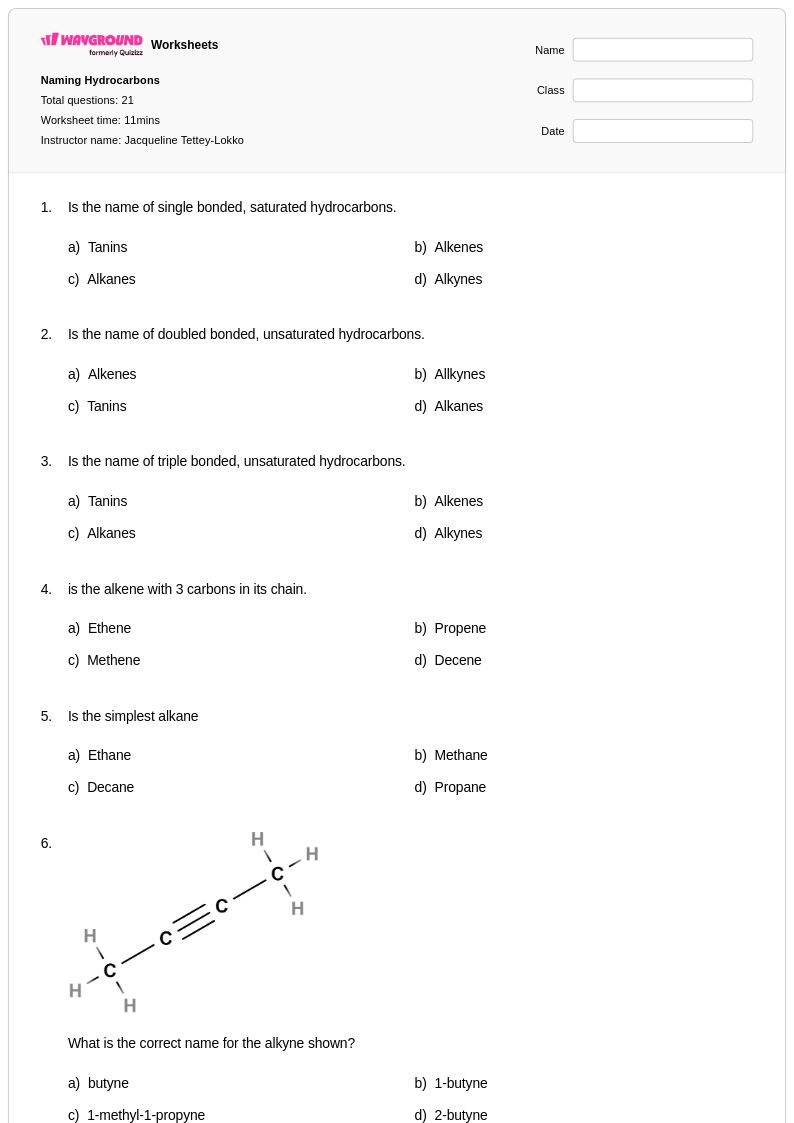
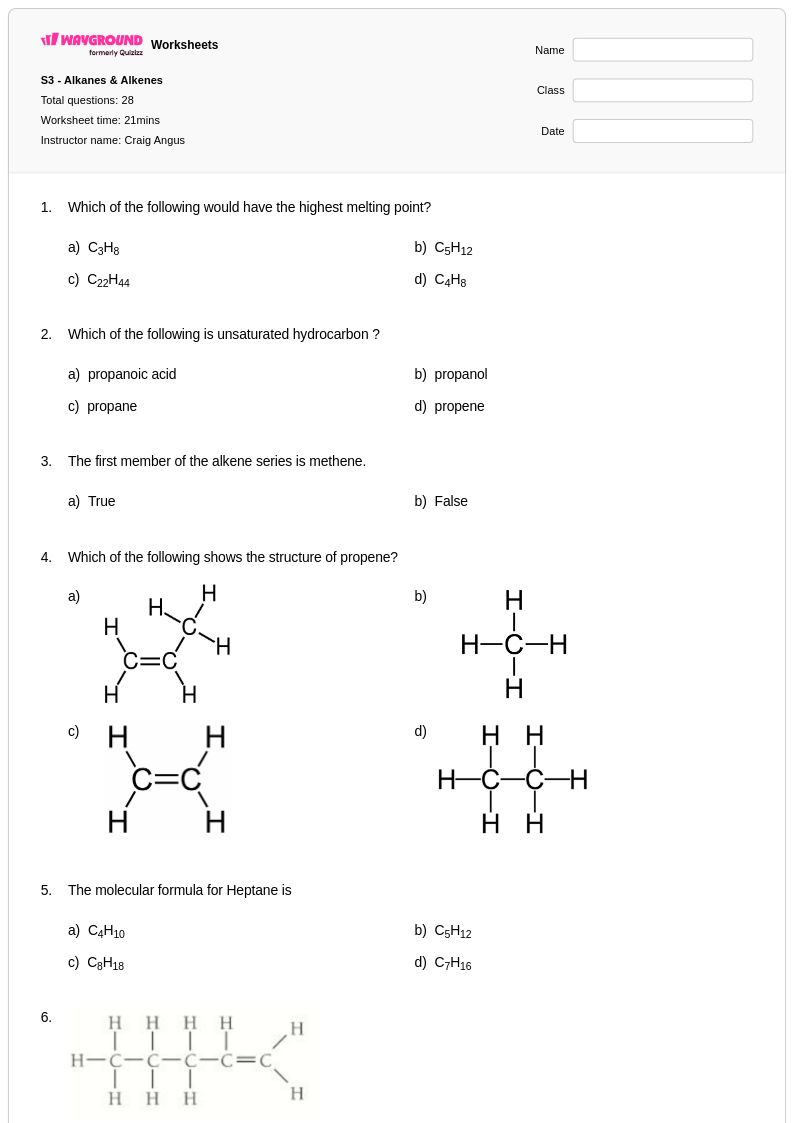
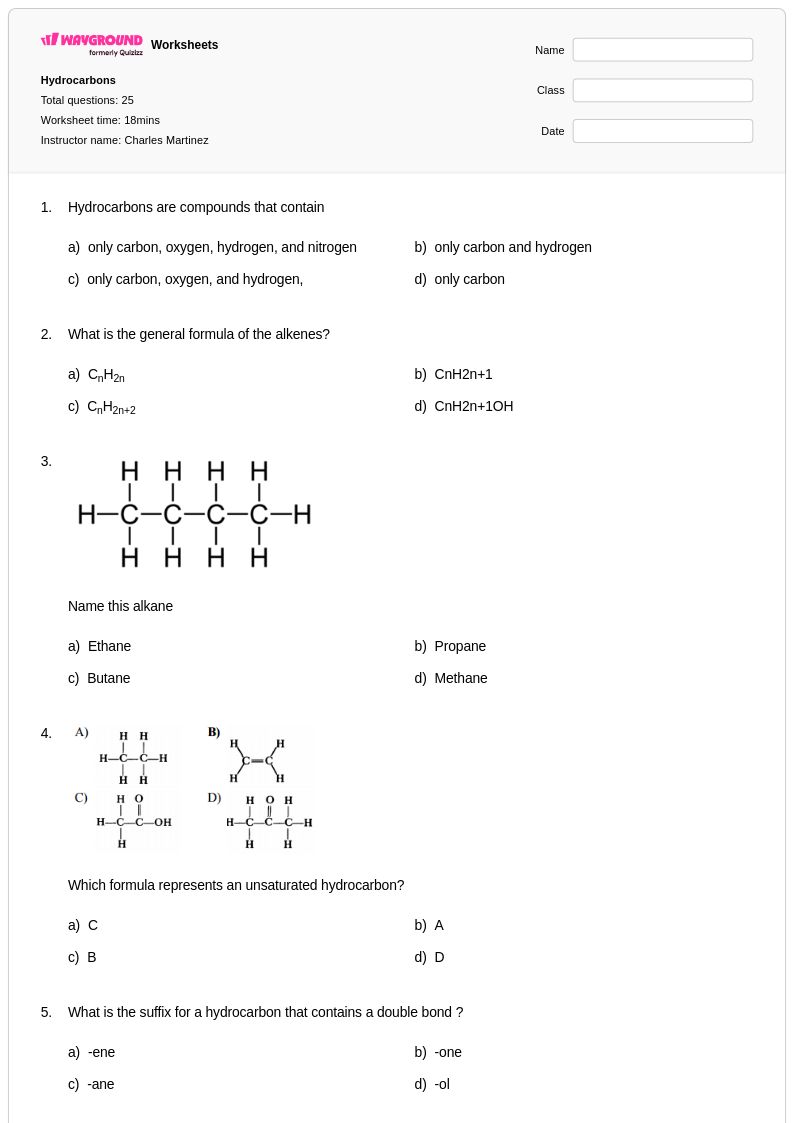
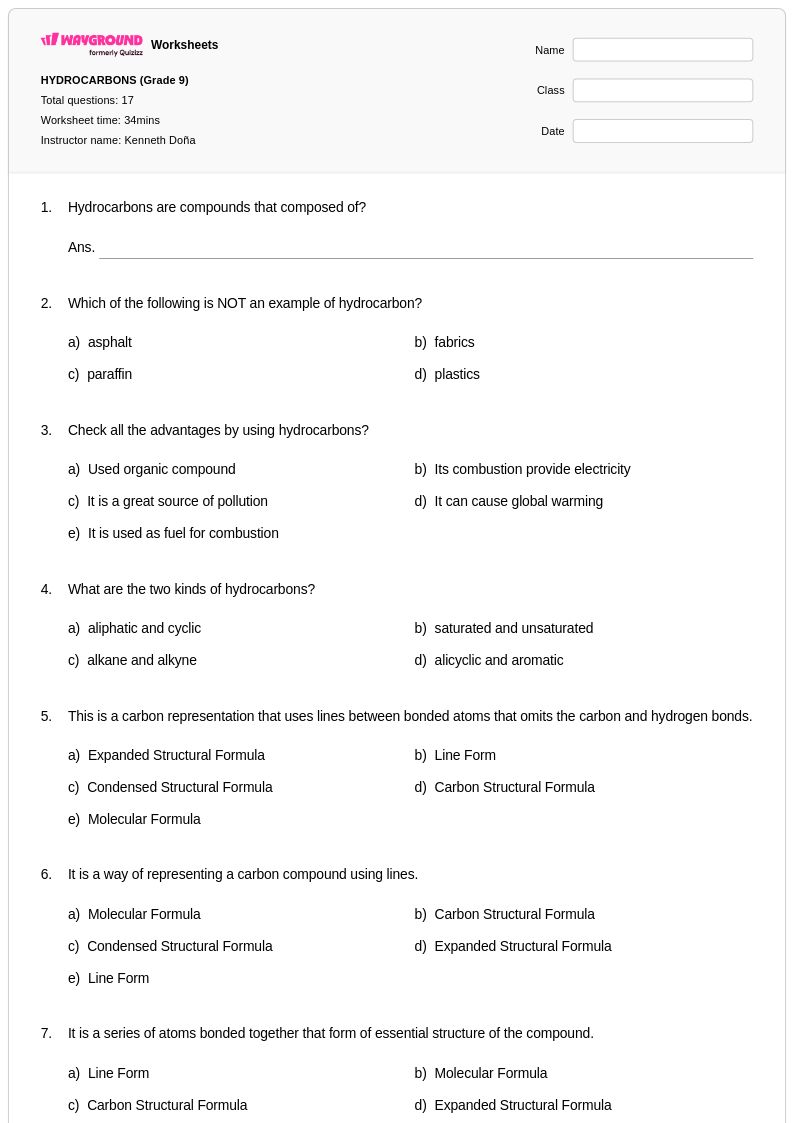
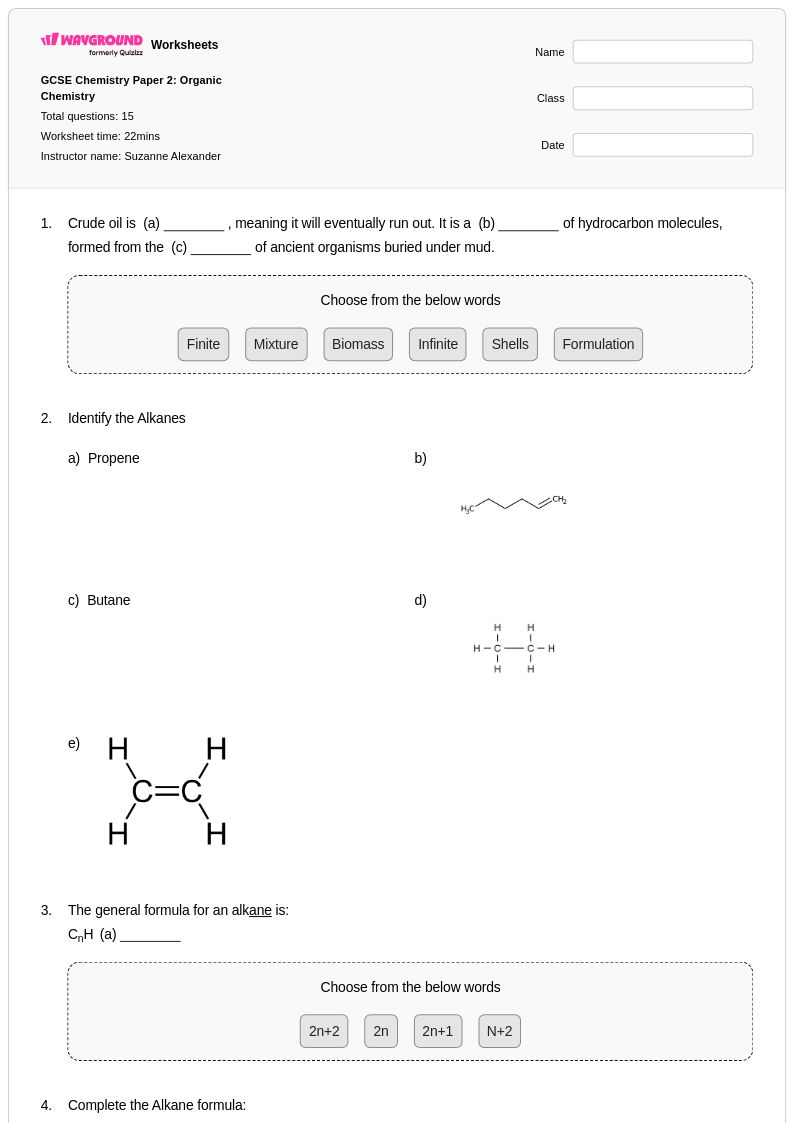
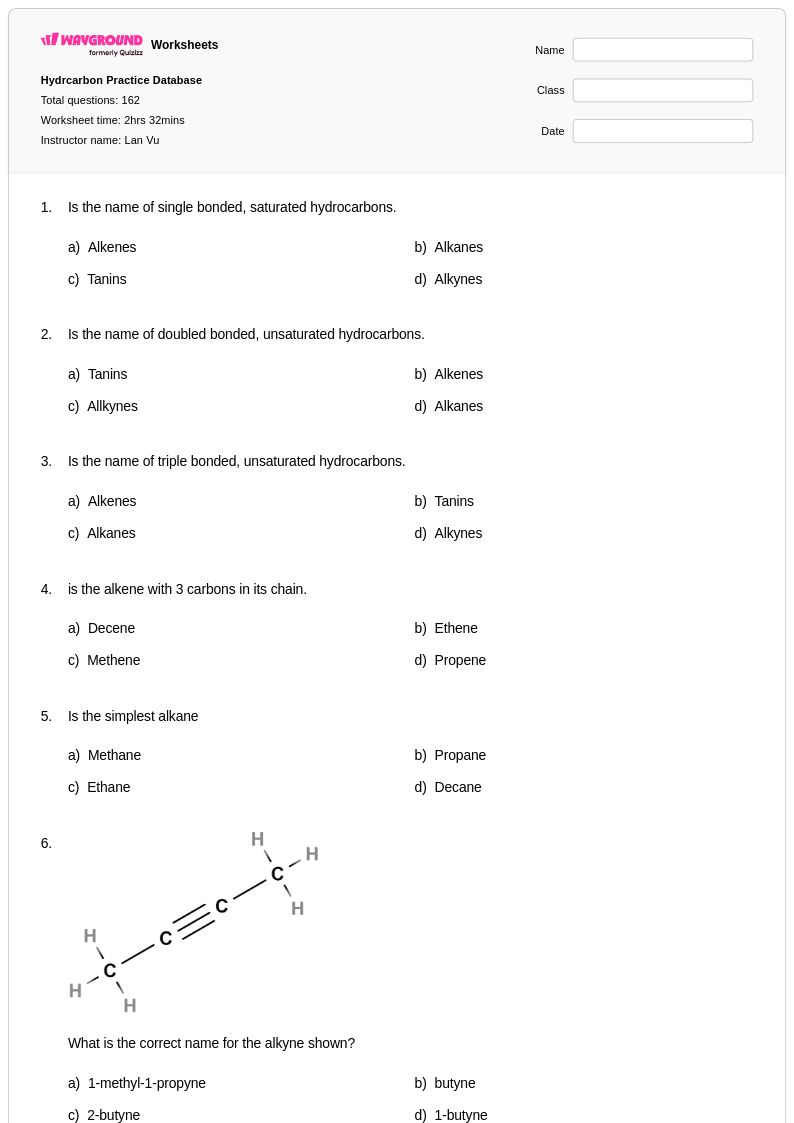
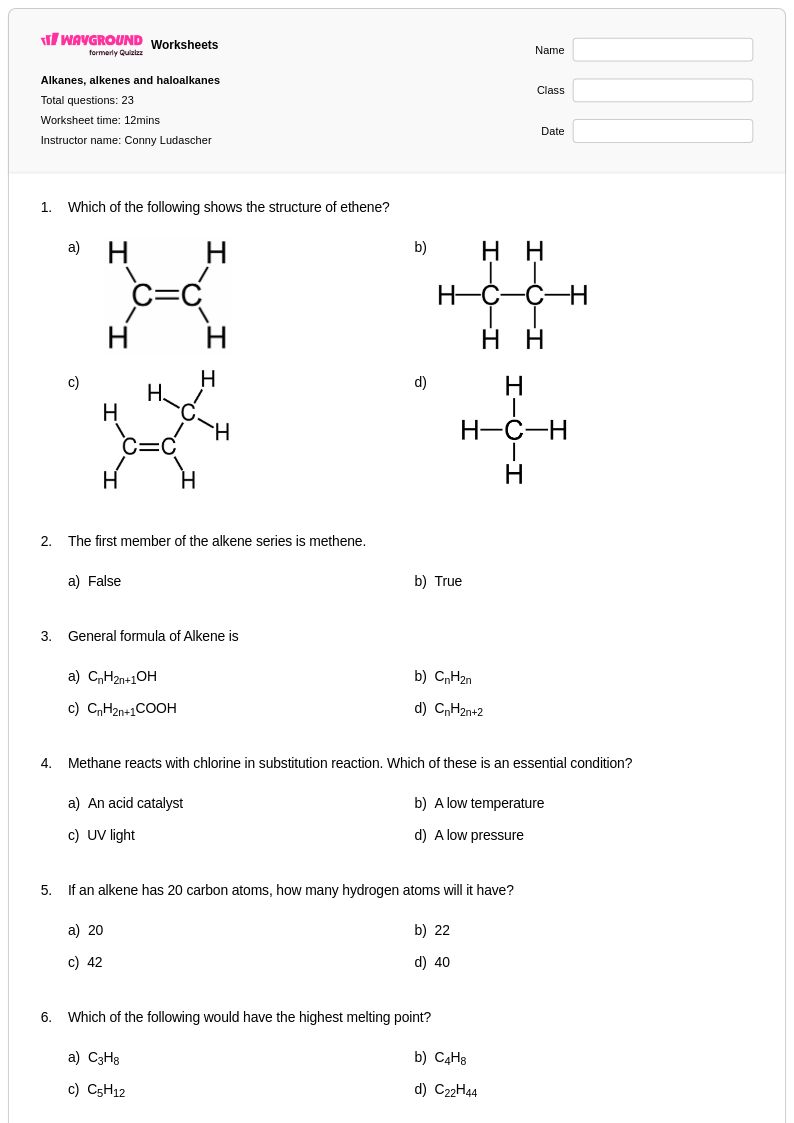
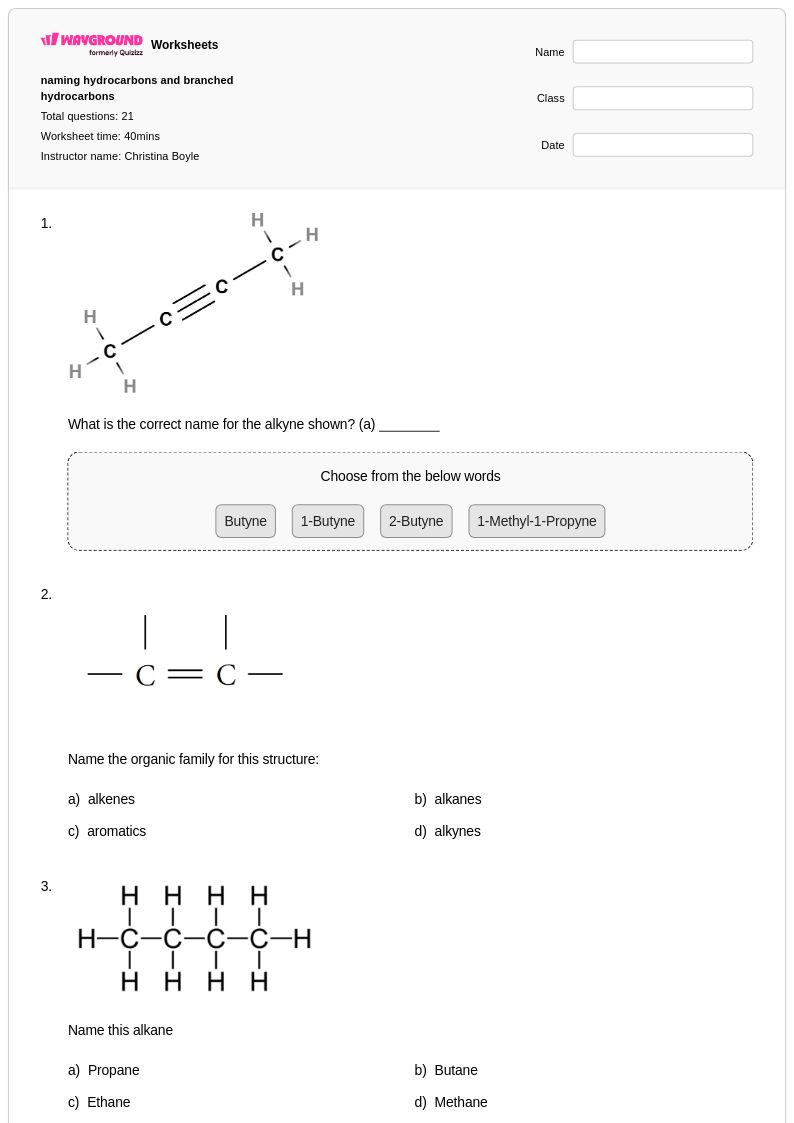
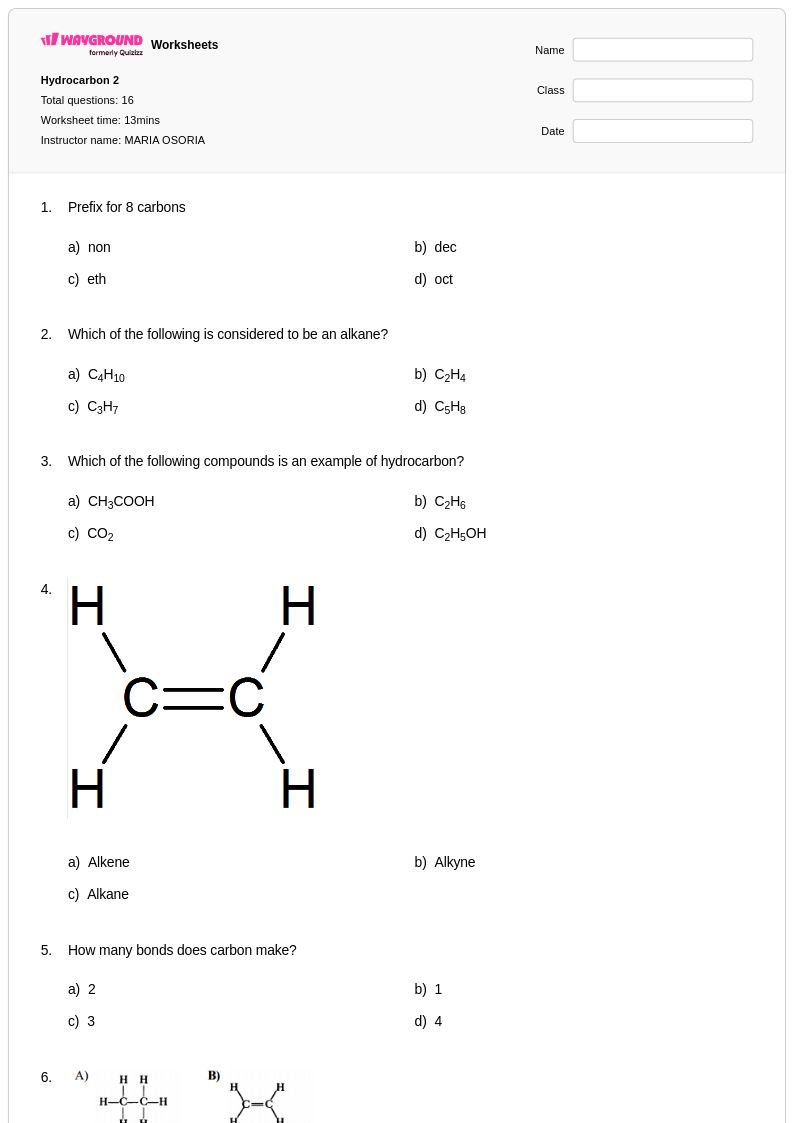
Master alkene nomenclature with Wayground's comprehensive collection of free chemistry worksheets, featuring structured practice problems, printable PDFs, and detailed answer keys to help students confidently learn IUPAC naming conventions for alkenes.
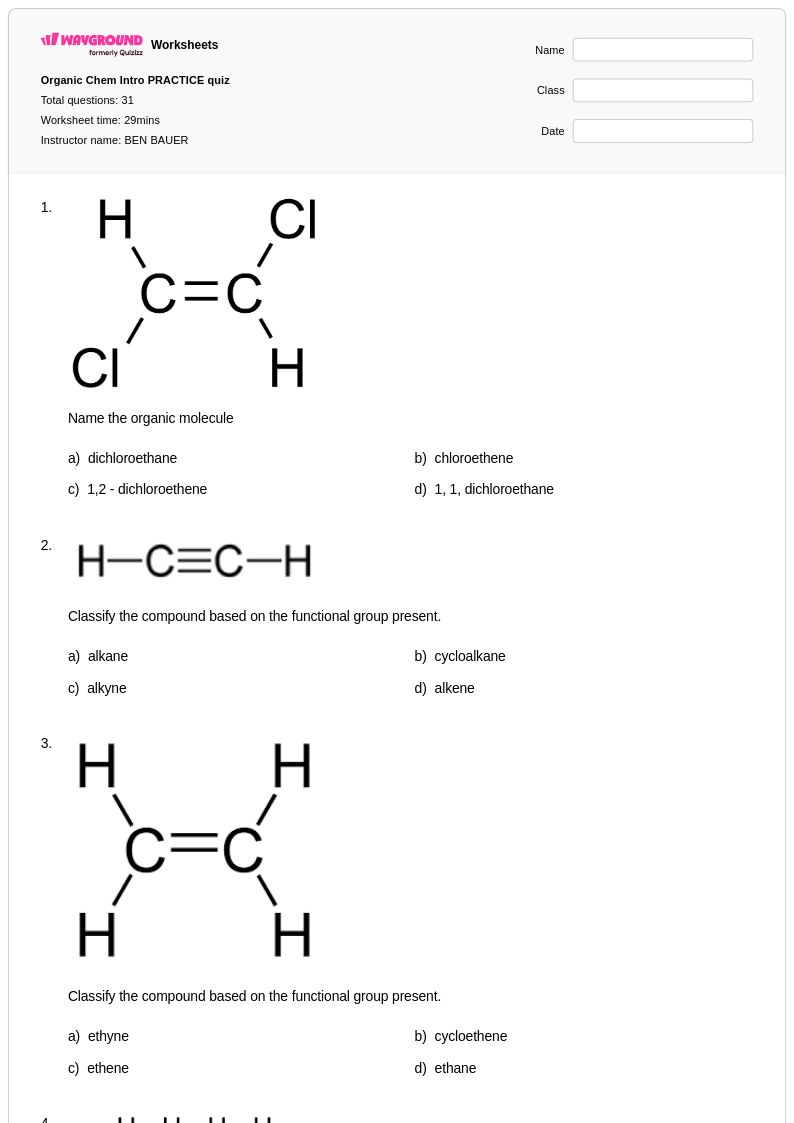
Alkene nomenclature worksheets available through Wayground (formerly Quizizz) provide comprehensive practice in the systematic naming of unsaturated hydrocarbons containing carbon-carbon double bonds. These expertly crafted resources strengthen students' understanding of IUPAC naming conventions, including proper identification of the longest carbon chain, correct numbering to give the double bond the lowest possible position number, and appropriate use of the -ene suffix. The practice problems within these worksheets progress from simple alkenes to more complex structures involving multiple double bonds, branched chains, and various functional groups, ensuring students master both fundamental concepts and advanced applications. Each worksheet includes detailed answer keys and is available as free printables in pdf format, making them accessible for both classroom instruction and independent study.
Wayground (formerly Quizizz) supports chemistry educators with millions of teacher-created alkene nomenclature resources that can be easily located through robust search and filtering capabilities. The platform's extensive collection aligns with established chemistry standards and offers differentiation tools that allow instructors to customize worksheets based on student proficiency levels, from introductory organic chemistry concepts to advanced nomenclature challenges. Teachers can access materials in both printable pdf formats for traditional paper-and-pencil work and digital formats for interactive online practice, providing flexibility for diverse learning environments. These comprehensive resources facilitate effective lesson planning while offering targeted options for remediation of struggling students, enrichment activities for advanced learners, and systematic skill practice that builds confidence in organic chemistry nomenclature across all ability levels.
FAQs
How do I teach alkene nomenclature to chemistry students?
Start by ensuring students are confident with alkane naming before introducing the -ene suffix and the rule that the double bond must receive the lowest possible locant. Use molecular models or structural drawings to make the carbon-carbon double bond visually concrete before moving to IUPAC naming. Progress from simple, unbranched alkenes to structures with multiple double bonds and substituents, reinforcing chain-numbering decisions at each stage. Consistent repetition with varied structures is key to building fluency with IUPAC conventions.
What exercises help students practice alkene nomenclature?
Effective practice includes both name-to-structure and structure-to-name exercises, as each direction reinforces a different aspect of IUPAC reasoning. Problems should progress from simple terminal alkenes to branched chains, dienes, and structures with additional functional groups. Timed naming drills on simpler structures build automaticity, while multi-step complex problems develop higher-order application. Alkene nomenclature worksheets on Wayground provide structured practice that moves through this progression, with detailed answer keys so students can self-correct immediately.
What mistakes do students commonly make when naming alkenes?
The most frequent error is numbering the carbon chain from the wrong end, failing to give the double bond the lowest possible position number. Students also confuse the parent chain length by not identifying the longest continuous carbon chain that includes both carbons of the double bond. Another common mistake is omitting the locant for the double bond entirely, or misidentifying substituent positions after incorrectly numbering the chain. Targeted practice with answer keys helps students catch and self-correct these systematic errors before they become ingrained habits.
How do I differentiate alkene nomenclature practice for students at different levels?
For introductory learners, limit problems to straight-chain alkenes with a single double bond before introducing branching or multiple double bonds. Advanced students can work with dienes, cycloalkenes, and structures incorporating other functional groups requiring priority decisions. On Wayground, teachers can use differentiation tools to customize worksheets based on student proficiency levels, from introductory organic chemistry concepts to advanced nomenclature challenges, so each student works at an appropriate level of complexity.
How do I use Wayground's alkene nomenclature worksheets in my classroom?
Wayground's alkene nomenclature worksheets are available as free printable PDFs for traditional paper-and-pencil work and in digital formats for interactive online practice, giving teachers flexibility across different learning environments. Teachers can print worksheets for in-class assignment or independent study, or host them digitally, including as a quiz on Wayground. Each worksheet includes detailed answer keys, making them suitable for guided instruction, self-paced review, or formative assessment without additional preparation on the teacher's part.
How do I support struggling students with alkene nomenclature?
Struggling students typically need reinforcement of two foundational skills: identifying the longest carbon chain that includes the double bond, and applying the lowest-locant rule for numbering. Breaking the IUPAC naming process into a step-by-step checklist can reduce cognitive overload during early practice. On Wayground, teachers can apply accommodations such as read aloud support and reduced answer choices for individual students, and these settings are saved and reusable across future sessions so targeted support is consistent without extra setup each class.