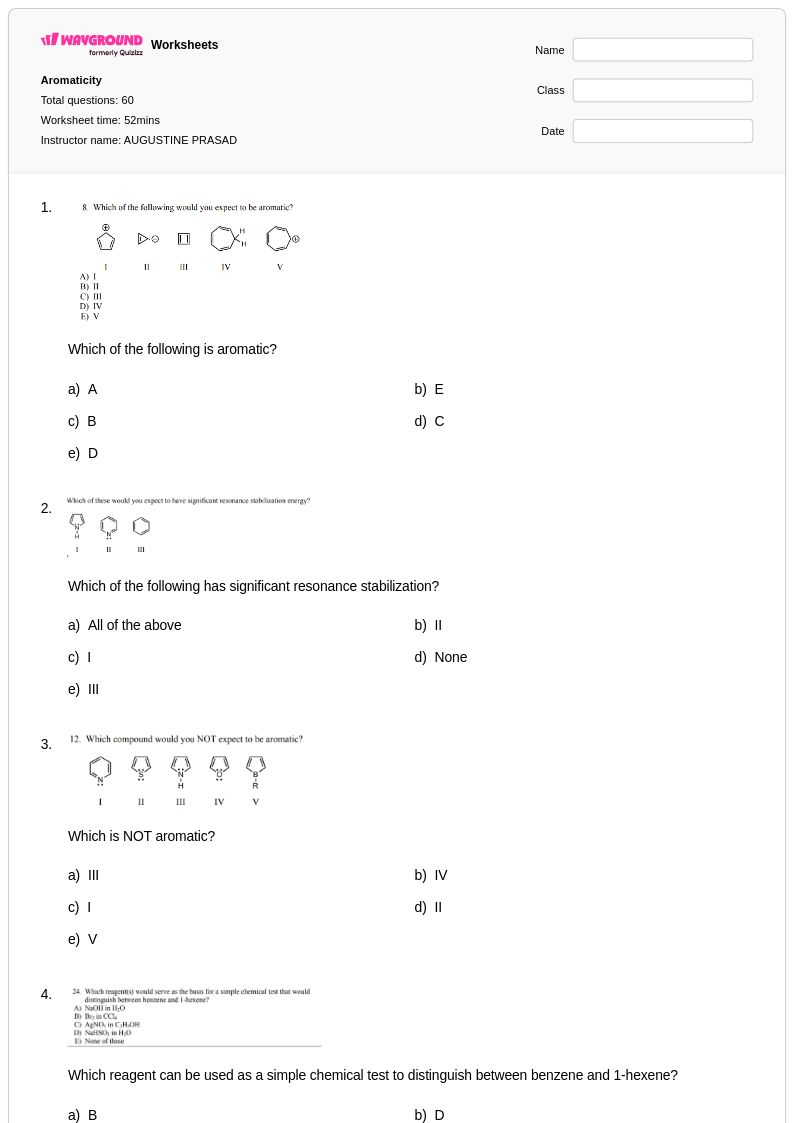
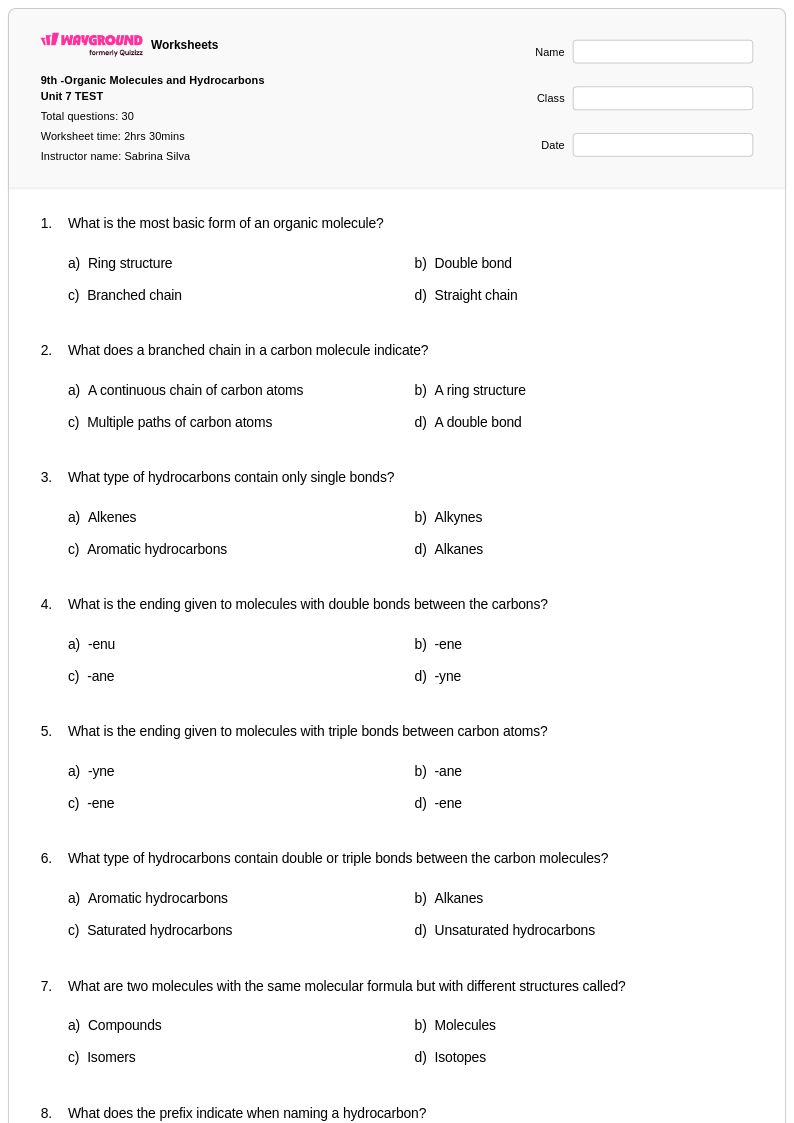
Explore Wayground's comprehensive collection of free aromatic compounds worksheets and printables that help students master benzene structures, nomenclature, and reaction mechanisms through engaging practice problems with detailed answer keys.
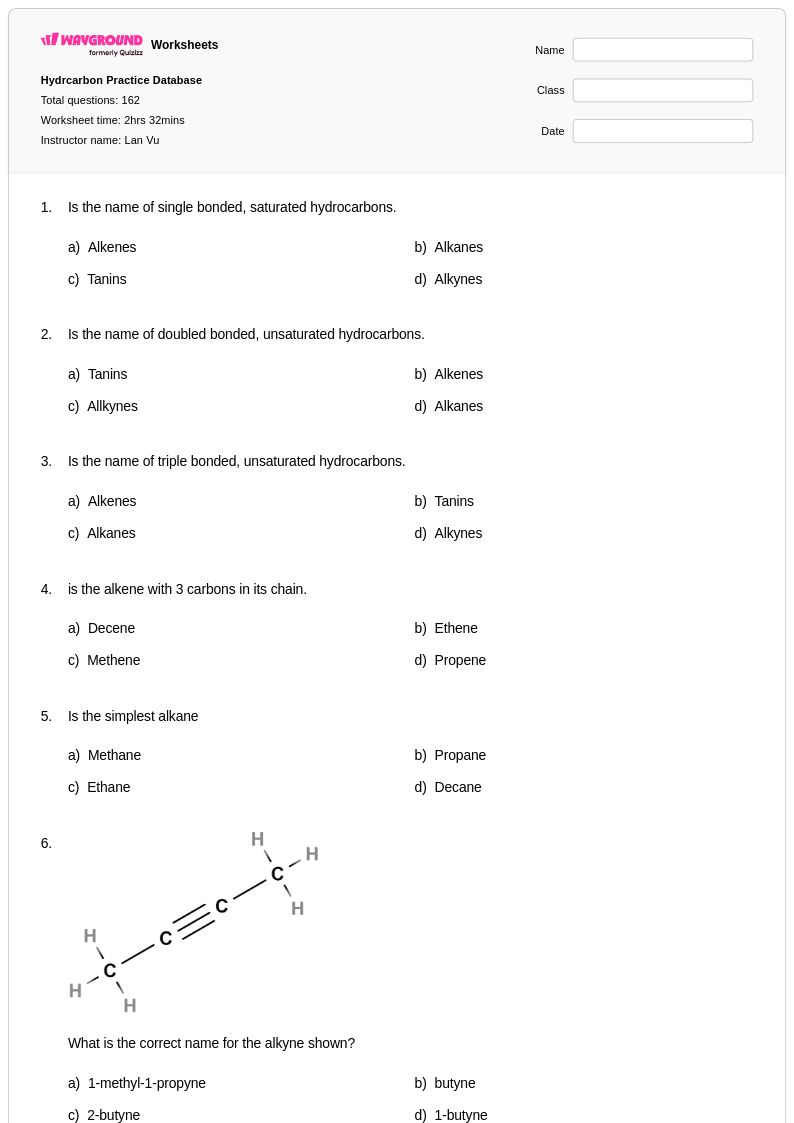
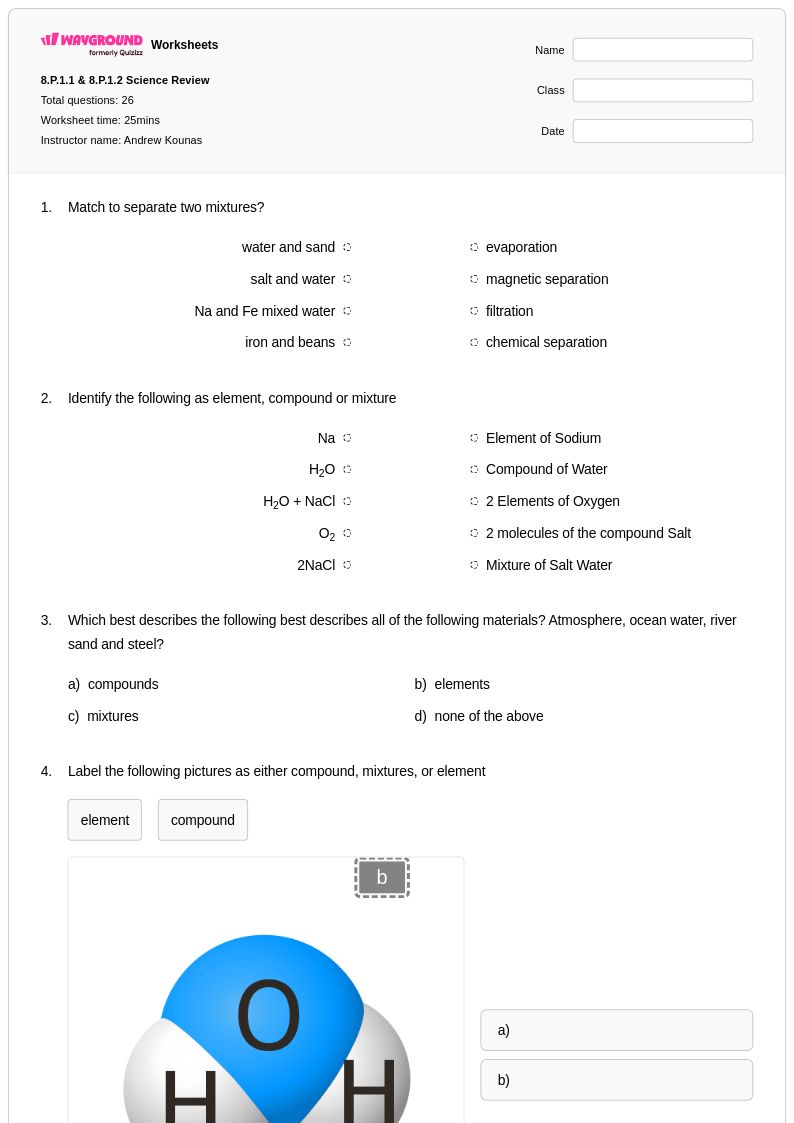
Aromatic compounds represent a fundamental class of organic molecules that form the backbone of countless chemical reactions and industrial processes, and Wayground's comprehensive worksheet collection provides educators with expertly crafted resources to help students master these complex structures. These practice problems guide learners through the essential concepts of benzene rings, resonance structures, electrophilic aromatic substitution reactions, and the unique stability characteristics that define aromatic systems. Each worksheet includes detailed answer keys that break down multi-step mechanisms, nomenclature rules, and reaction pathways, while printable pdf formats ensure easy classroom distribution and homework assignments. Students develop critical analytical skills as they work through free practice exercises covering topics from simple benzene derivatives to complex polycyclic aromatic hydrocarbons, building the foundation necessary for advanced organic chemistry concepts.
Wayground, formerly Quizizz, empowers chemistry educators with access to millions of teacher-created resources specifically designed for aromatic compounds instruction, featuring robust search and filtering capabilities that allow instructors to quickly locate materials aligned with their curriculum standards and learning objectives. The platform's differentiation tools enable teachers to customize worksheets for varying skill levels, while flexible formatting options provide both digital and printable pdf versions to accommodate diverse classroom environments and remote learning scenarios. These comprehensive collections support effective lesson planning by offering ready-to-use materials for introducing new concepts, targeted remediation exercises for struggling students, and enrichment activities that challenge advanced learners to explore complex aromatic reaction mechanisms. The extensive database ensures that educators can efficiently locate practice problems that reinforce specific skills, from basic aromatic identification to sophisticated synthesis pathways involving multiple substitution patterns.
FAQs
How do I teach aromatic compounds to chemistry students?
Start by building a solid foundation in molecular orbital theory and resonance before introducing aromaticity. Use Hückel's rule (4n+2 π electrons) as the central organizing principle, then move from benzene as the prototype into substituted derivatives and polycyclic systems. Grounding each new structure in physical and chemical stability data helps students understand why aromatic systems behave differently from typical alkenes.
What practice exercises help students master electrophilic aromatic substitution?
Effective practice includes mechanism-tracing exercises where students draw each step of EAS reactions — including arenium ion intermediates — rather than simply identifying products. Directing-group classification problems, where students predict ortho/para versus meta outcomes based on substituent effects, are especially valuable. Worksheets that chain multiple substitution steps into synthesis problems push students to apply these rules sequentially under realistic conditions.
What mistakes do students commonly make with aromatic compounds?
The most frequent error is conflating aromaticity with unsaturation — students often assume any ring with double bonds is aromatic, overlooking the planarity and continuous π-system requirements. Students also routinely misapply directing group rules, particularly confusing deactivating ortho/para directors (like halogens) with meta directors. Drawing resonance structures incorrectly, especially for polysubstituted benzenes, is another persistent error that compounds downstream mistakes in mechanism problems.
How do I help students understand benzene resonance structures without misconceptions?
Emphasize early and often that no single Lewis structure accurately represents benzene — the true structure is a resonance hybrid, and electrons are delocalized across all six carbons equally. Having students calculate bond lengths and compare them to typical C-C and C=C values reinforces this empirically. Using the circle-in-hexagon notation alongside contributing structures helps students toggle between symbolic shorthand and mechanistic detail without conflating the two.
How can I use Wayground's aromatic compounds worksheets in my classroom?
Wayground's aromatic compounds worksheets are available as printable PDFs for traditional classroom distribution and homework assignments, as well as in digital formats for technology-integrated or remote learning environments. Teachers can also host worksheets directly as a quiz on Wayground, enabling real-time student response and progress tracking. Each worksheet includes detailed answer keys that break down multi-step mechanisms, nomenclature rules, and reaction pathways, making them ready to use with minimal preparation.
How do I differentiate aromatic compounds instruction for students at different skill levels?
For students who are still building foundational skills, begin with identification and naming exercises for simple benzene derivatives before introducing reaction mechanisms. More advanced learners can tackle multi-step synthesis problems involving polycyclic aromatic hydrocarbons and complex substitution patterns. On Wayground, teachers can apply accommodations such as read-aloud support, reduced answer choices, and extended time to individual students, allowing the same core worksheet to serve a range of learners without singling anyone out.