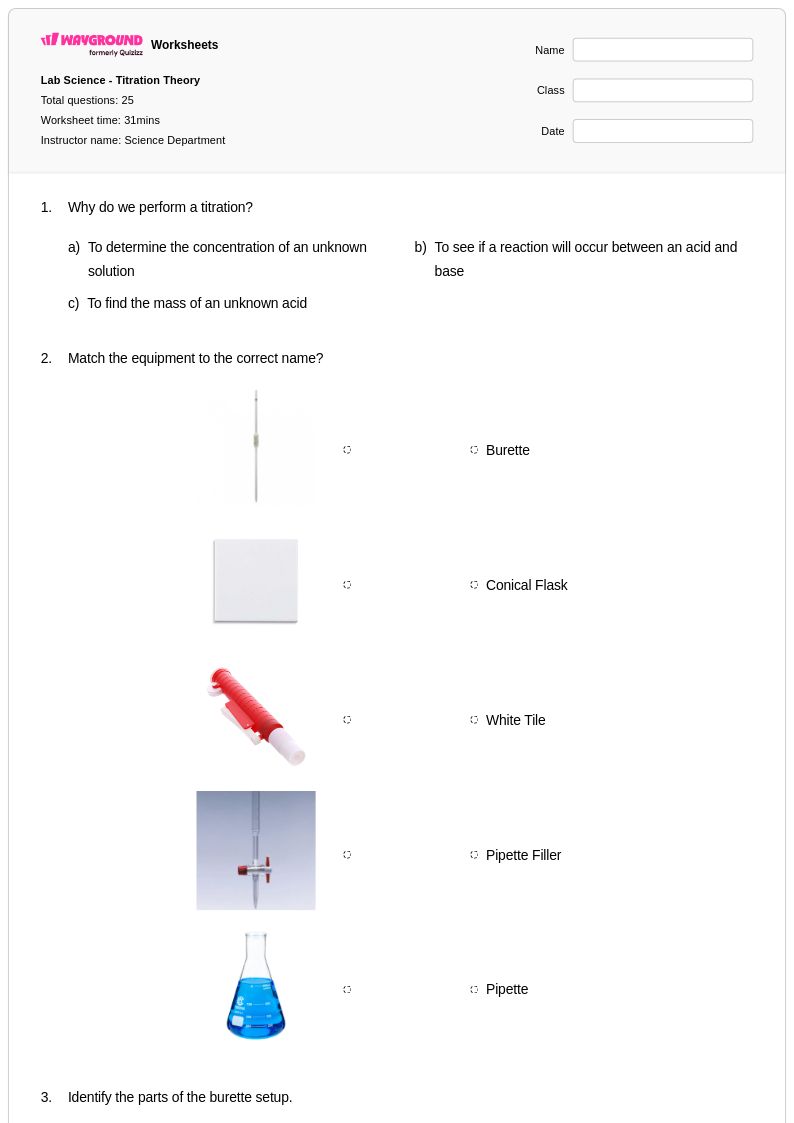
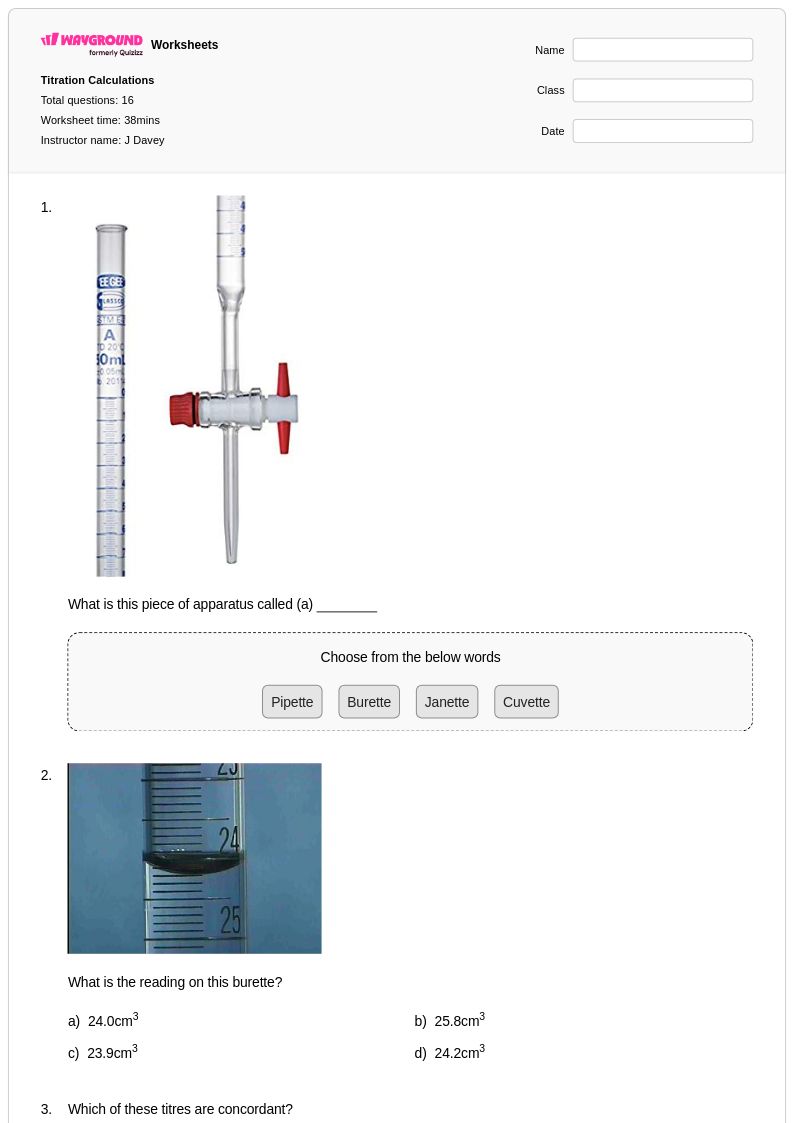
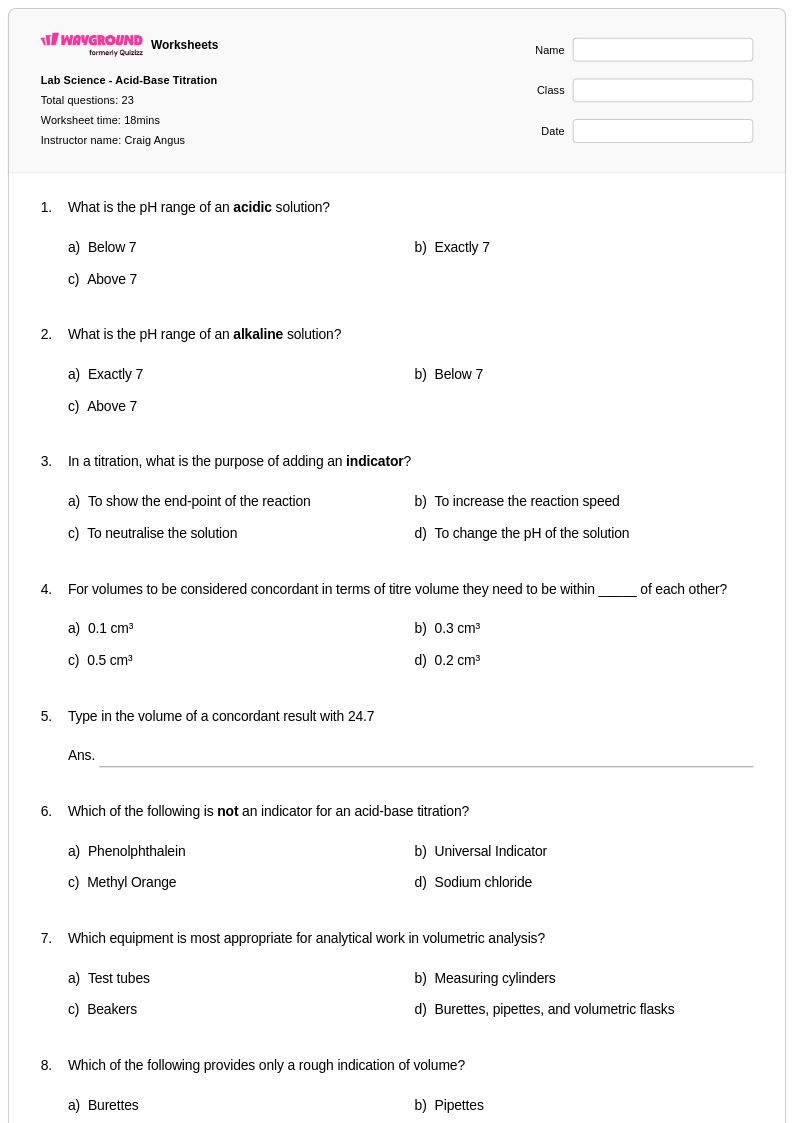
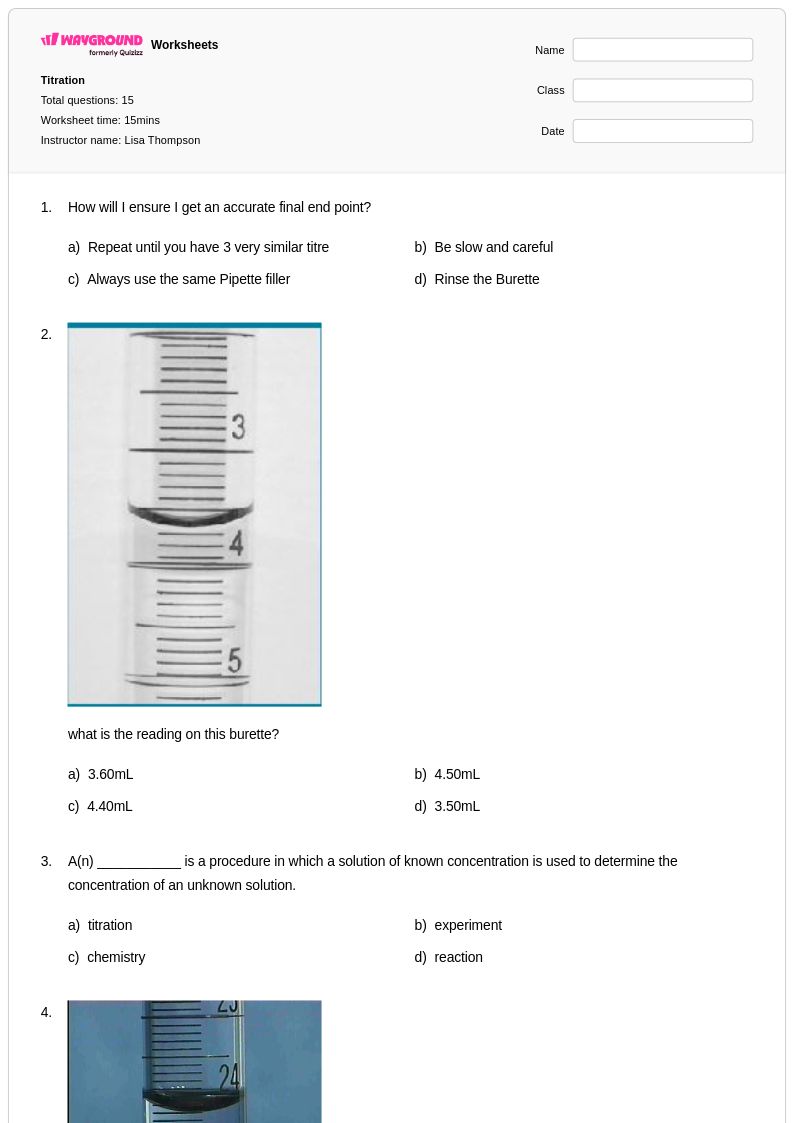
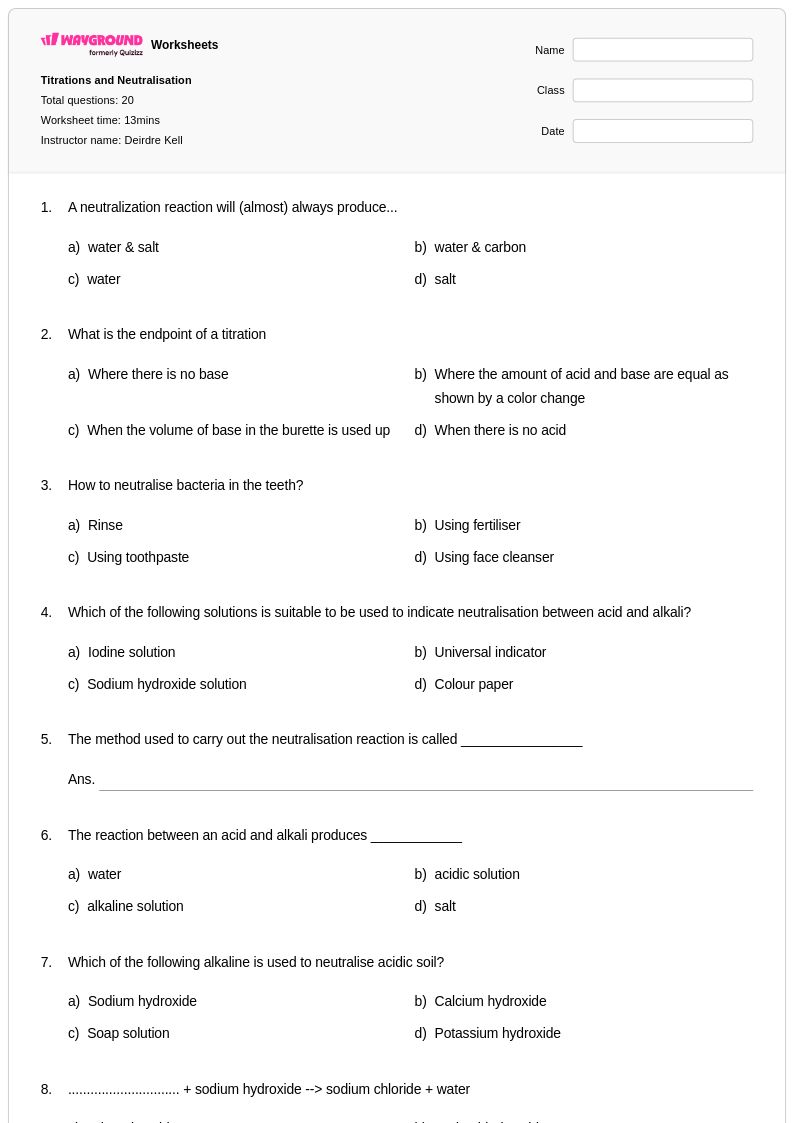
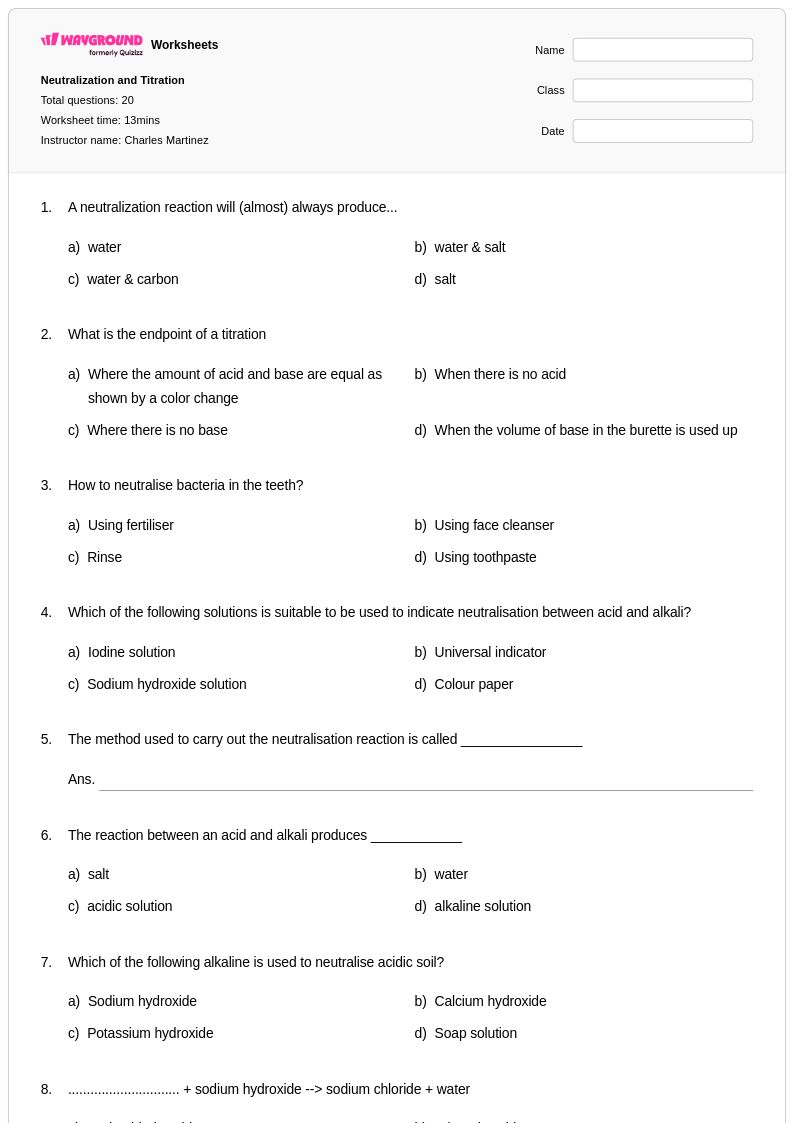
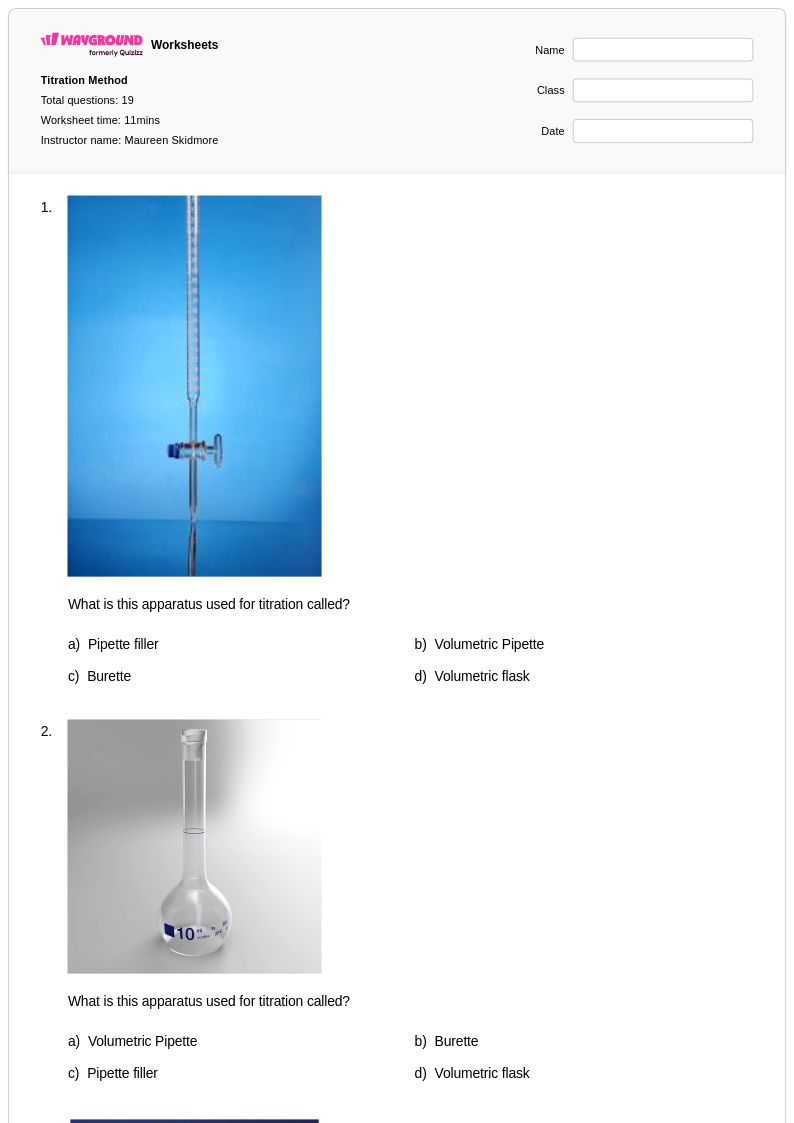
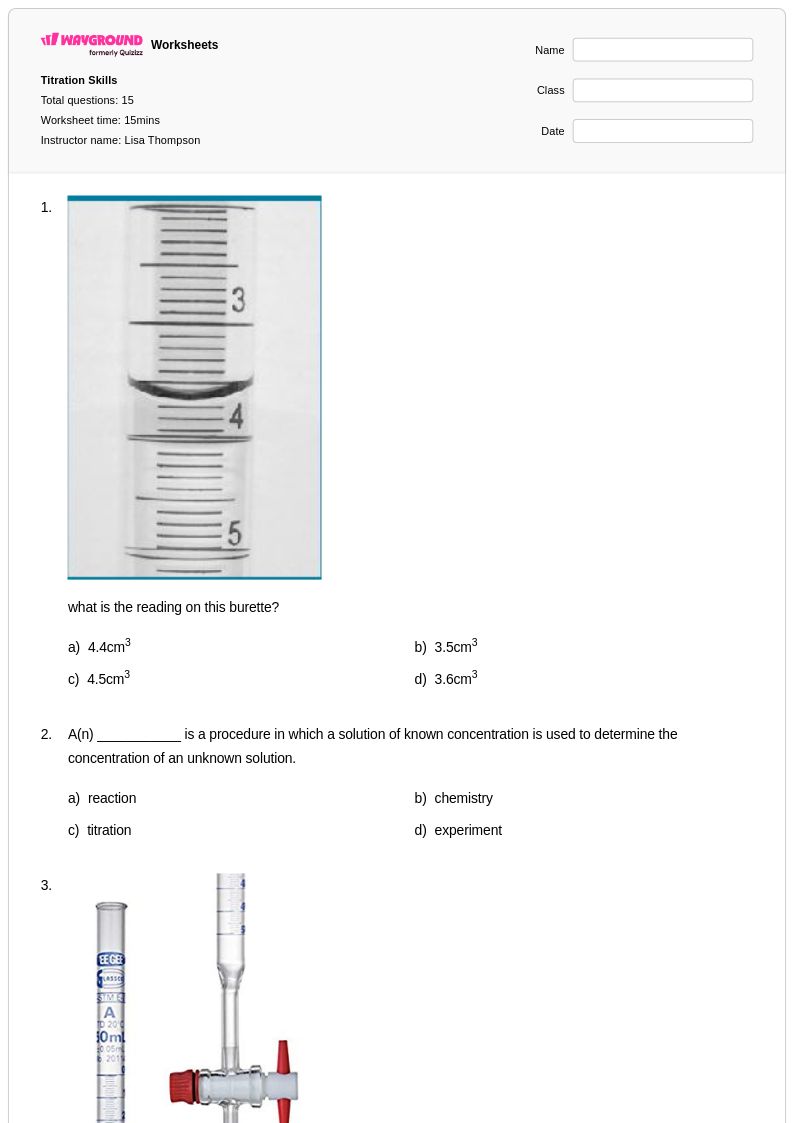
Master burette reading skills with Wayground's free chemistry worksheets featuring printable practice problems, detailed answer keys, and comprehensive PDF resources to help students accurately measure liquid volumes in laboratory settings.
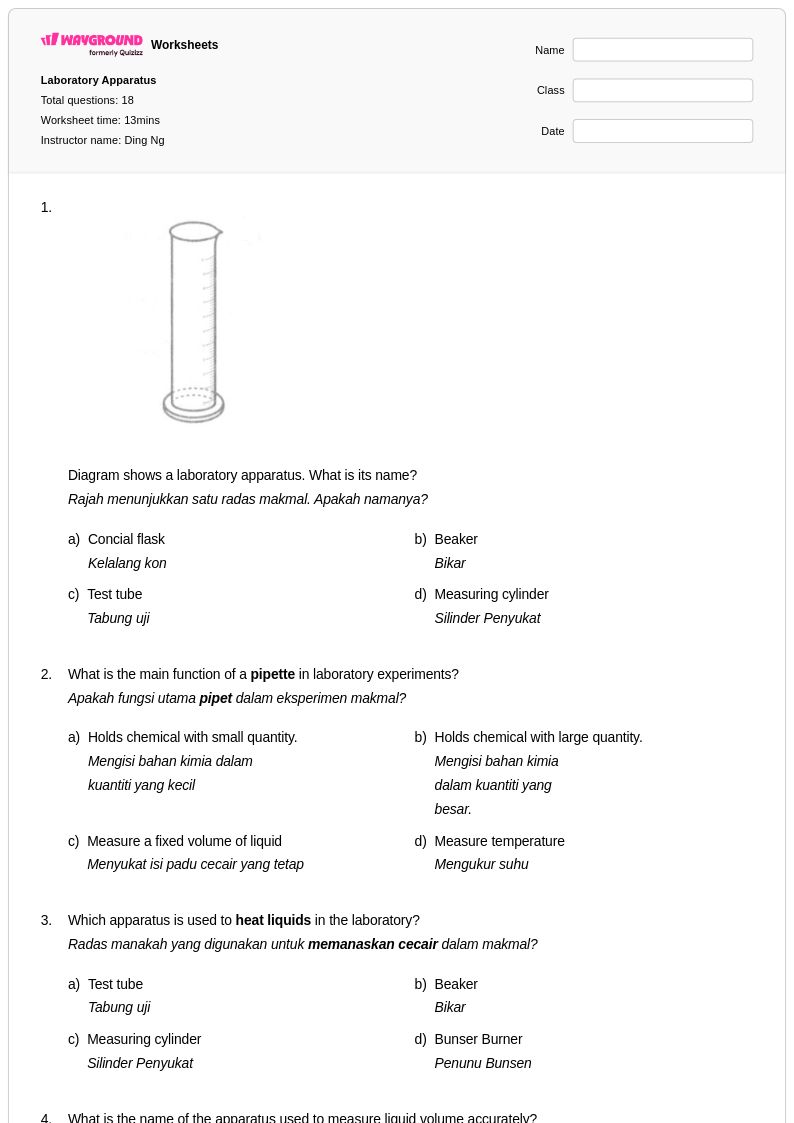
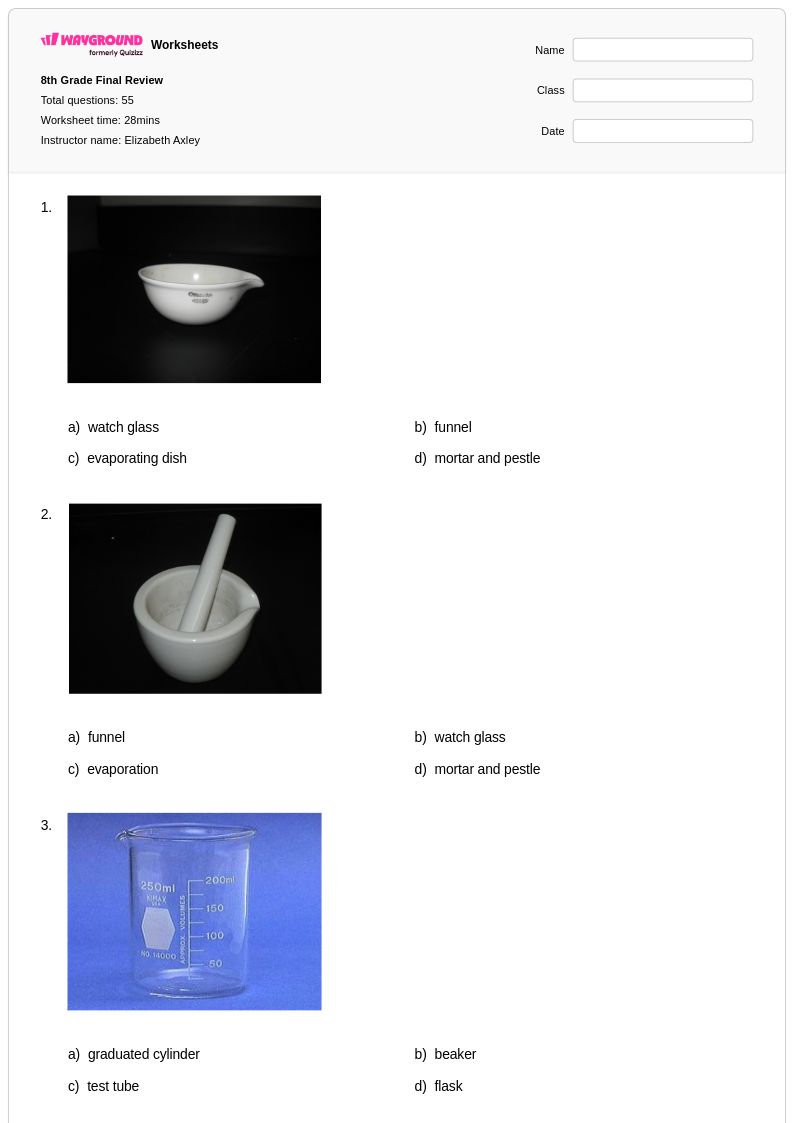
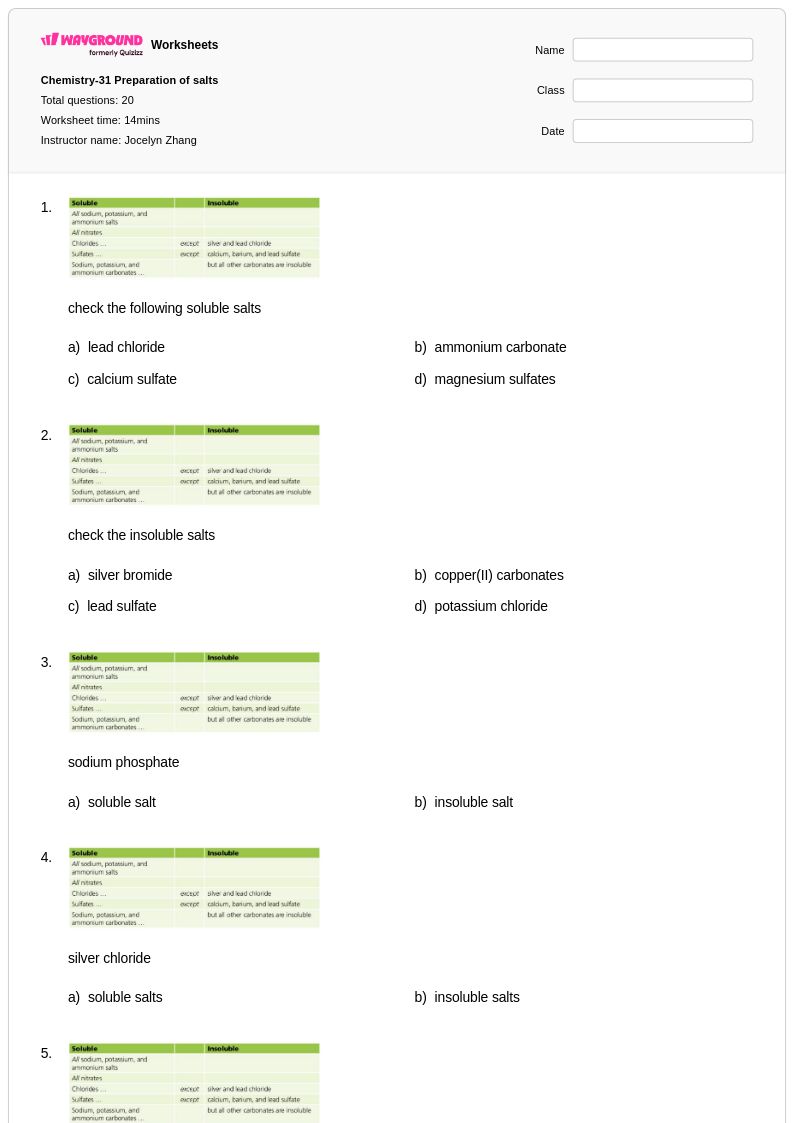
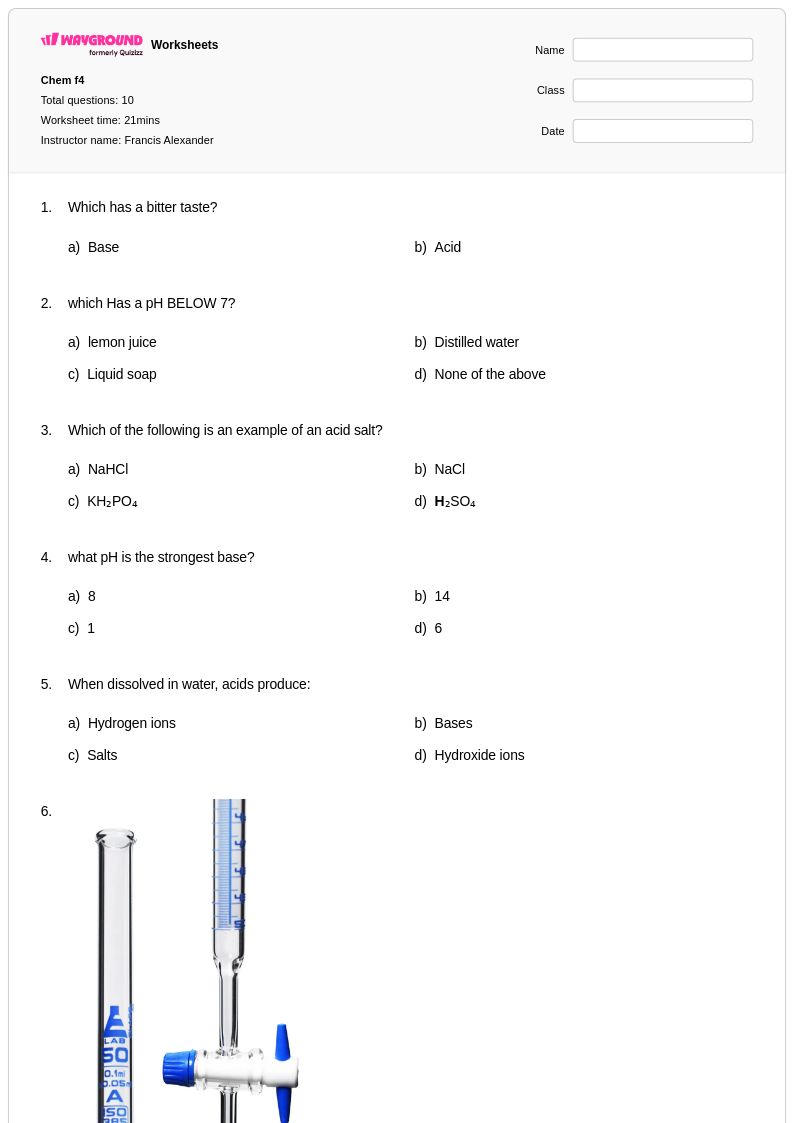
Burette reading worksheets available through Wayground (formerly Quizizz) provide essential practice for mastering the precise measurement techniques fundamental to quantitative chemistry analysis. These comprehensive worksheets focus on developing students' ability to accurately read meniscus levels, interpret graduated markings, and record volumetric measurements to the appropriate number of significant figures. The practice problems included in these free printables systematically build proficiency in titration procedures, solution preparation, and analytical chemistry protocols. Each worksheet comes with a detailed answer key that not only provides correct readings but also explains proper eye positioning, parallax error prevention, and the reasoning behind decimal place accuracy in burette measurements.
Wayground (formerly Quizizz) supports chemistry educators with millions of teacher-created burette reading resources that can be easily searched, filtered, and customized to match specific laboratory objectives and skill levels. The platform's robust collection includes both printable pdf formats for hands-on practice and digital versions that can be integrated into virtual laboratory experiences. Teachers can differentiate instruction by selecting worksheets that range from basic meniscus reading exercises to complex multi-step titration calculations, while the standards alignment features ensure that activities support curriculum requirements for analytical chemistry units. These versatile tools facilitate targeted skill practice, support remediation for students struggling with measurement precision, and provide enrichment opportunities for advanced learners ready to tackle professional-level analytical techniques.
FAQs
How do I teach students to read a burette accurately?
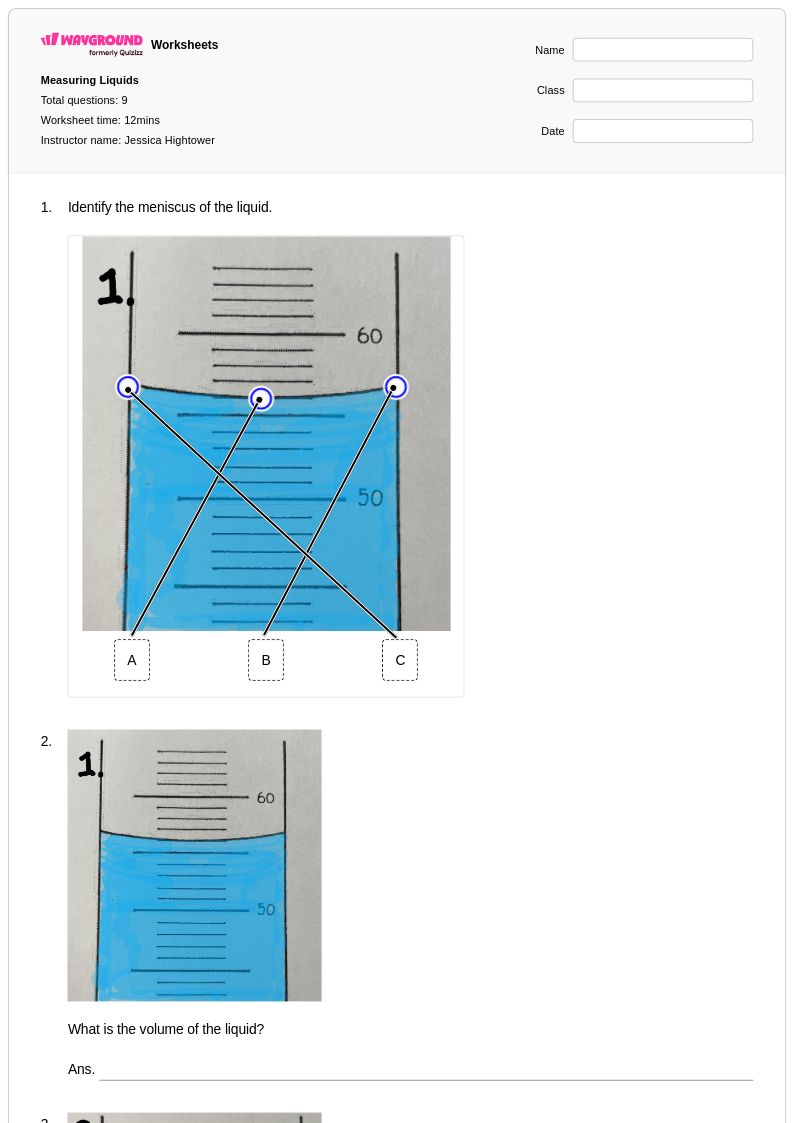
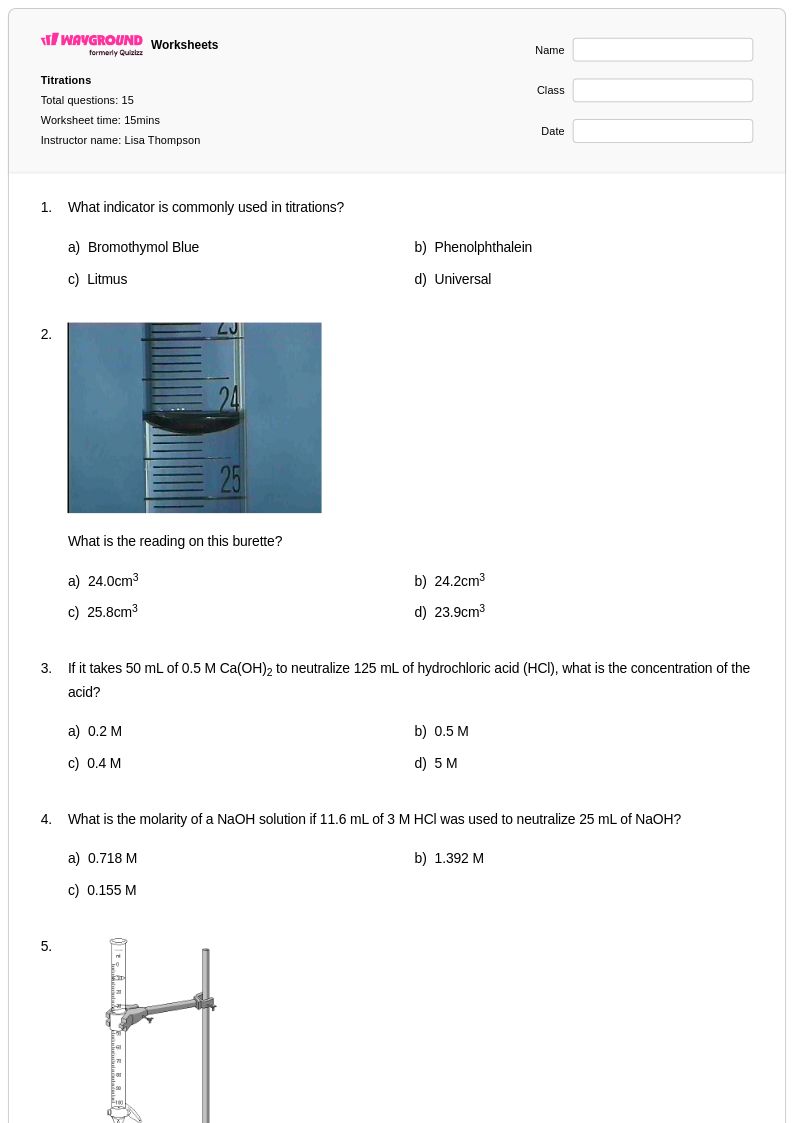
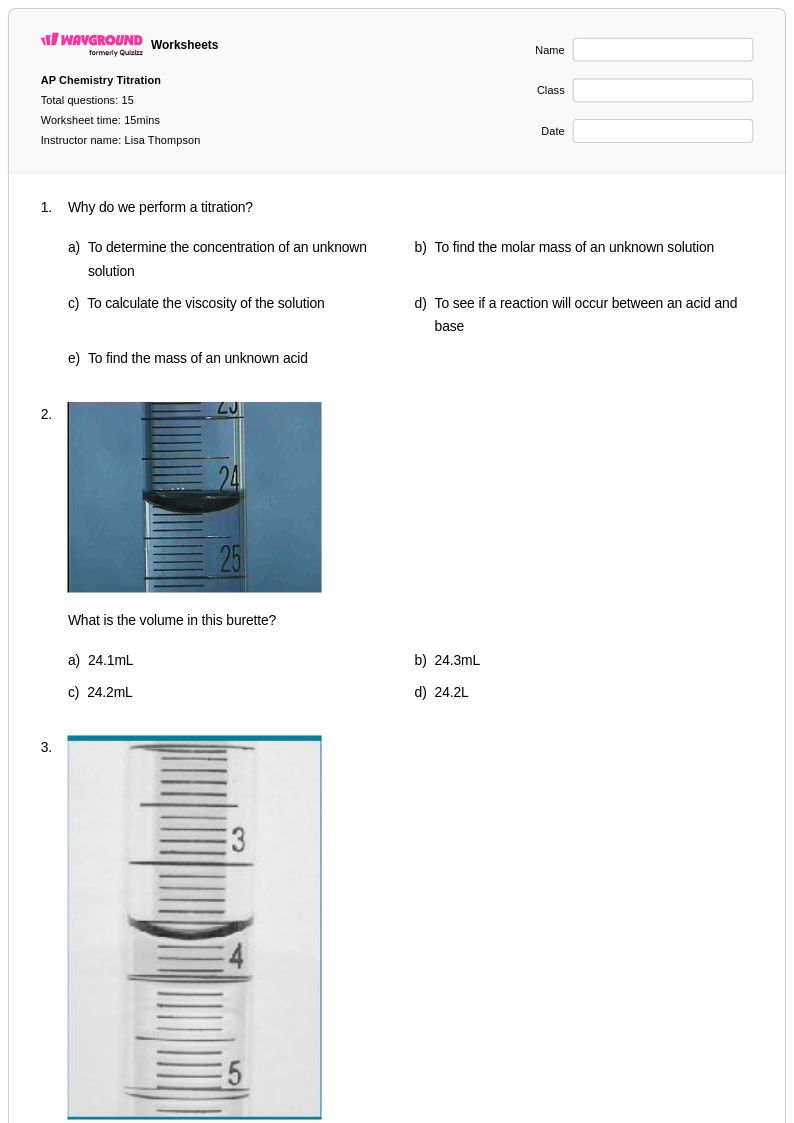
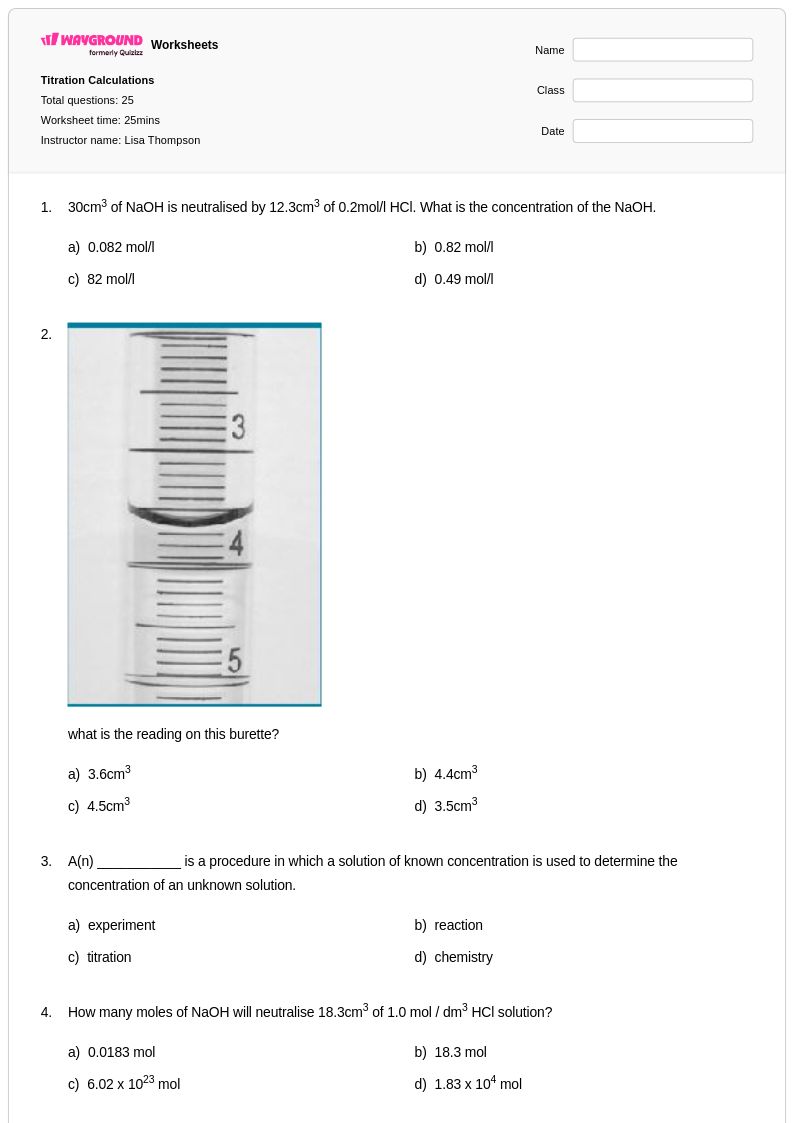
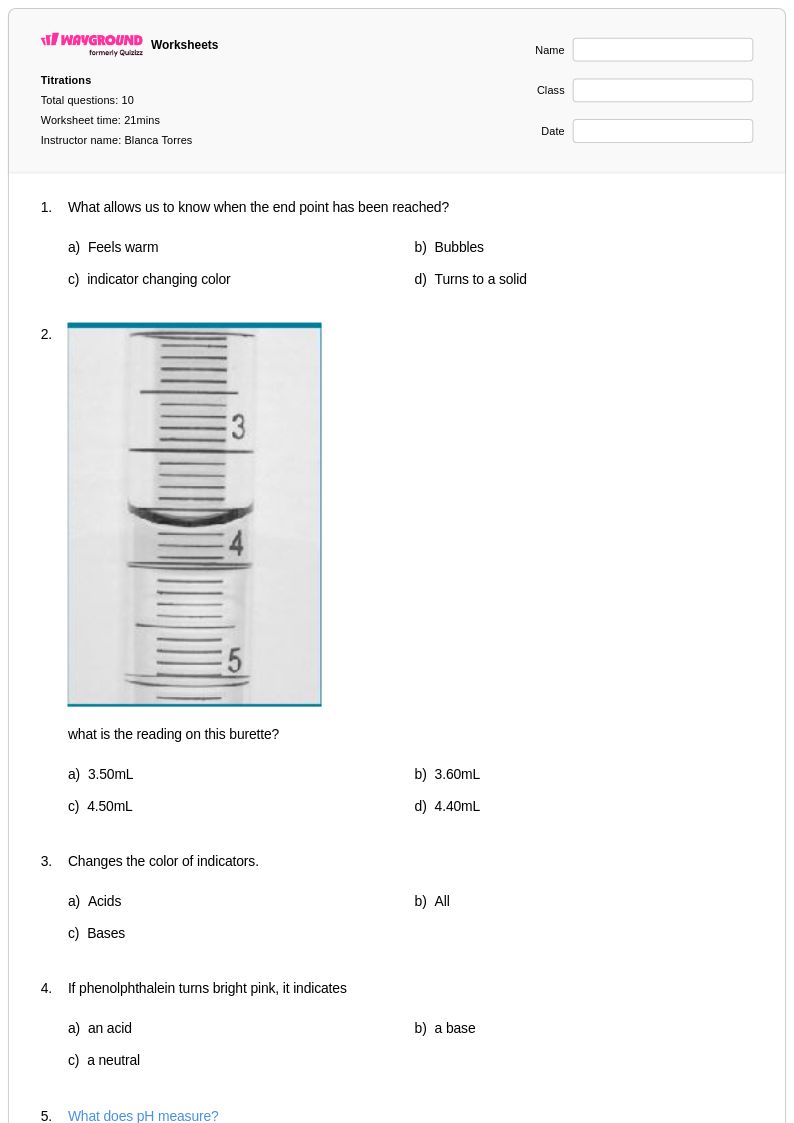
Start by teaching students to identify the meniscus and explaining why aqueous solutions form a concave curve. Emphasize that readings must always be taken from the bottom of the meniscus, with the eye level aligned horizontally to avoid parallax error. Practice with diagrams before moving to physical burettes, and require students to record readings to two decimal places, since burettes are calibrated to 0.01 mL precision.
What exercises help students practice burette reading?
Diagram-based worksheets showing burettes at various fill levels are among the most effective practice tools, as they isolate the reading skill from the physical complexity of a live lab setup. Students benefit from exercises that require them to identify the meniscus, apply parallax correction, and record measurements to the correct number of significant figures. Progressing from single readings to calculating volume delivered between two readings builds the full skill set needed for titration work.
What mistakes do students most commonly make when reading a burette?
The most common error is reading from the top of the meniscus rather than the bottom, which consistently produces inflated volume readings. Parallax error is also frequent — students who look up or down at the burette rather than straight across will misread the scale. Another recurring mistake is forgetting that burette scales run top-to-bottom, leading students to subtract incorrectly when calculating volume delivered.
How do I use Wayground's burette reading worksheets in my chemistry class?
Wayground's burette reading worksheets are available as printable PDFs, making them straightforward to use as pre-lab preparation, in-class practice, or homework assignments. They are also available in digital formats, which allows integration into virtual lab units or blended learning environments. Teachers can host worksheets as a quiz directly on Wayground, enabling real-time response tracking. Each worksheet includes a detailed answer key with explanations of correct technique, so students can self-correct and understand the reasoning behind each reading.
How can I differentiate burette reading instruction for students at different skill levels?
Begin with basic meniscus identification exercises for students who are new to volumetric glassware, then progress to reading graduated scales with finer divisions and finally to multi-step titration volume calculations for advanced learners. On Wayground, teachers can apply accommodations such as Read Aloud for students who benefit from audio support or reduced answer choices to lower cognitive load for students who struggle with precision measurement tasks. These settings can be assigned individually so the rest of the class is unaffected.
Why is significant figure accuracy important when recording burette readings?
Burettes are precision instruments calibrated to 0.01 mL, so recording readings to fewer decimal places introduces unnecessary error into titration calculations and final concentration results. In quantitative analysis, small measurement errors compound across multiple steps, meaning a poorly recorded burette reading can invalidate an entire titration. Teaching students to record the correct number of decimal places builds the disciplined measurement habits essential for analytical chemistry at any level.