
12 P
1st
40 P
1st - 5th
20 P
1st
20 P
1st - 5th
20 P
1st
30 P
1st - PD
16 P
1st
20 P
1st - 7th
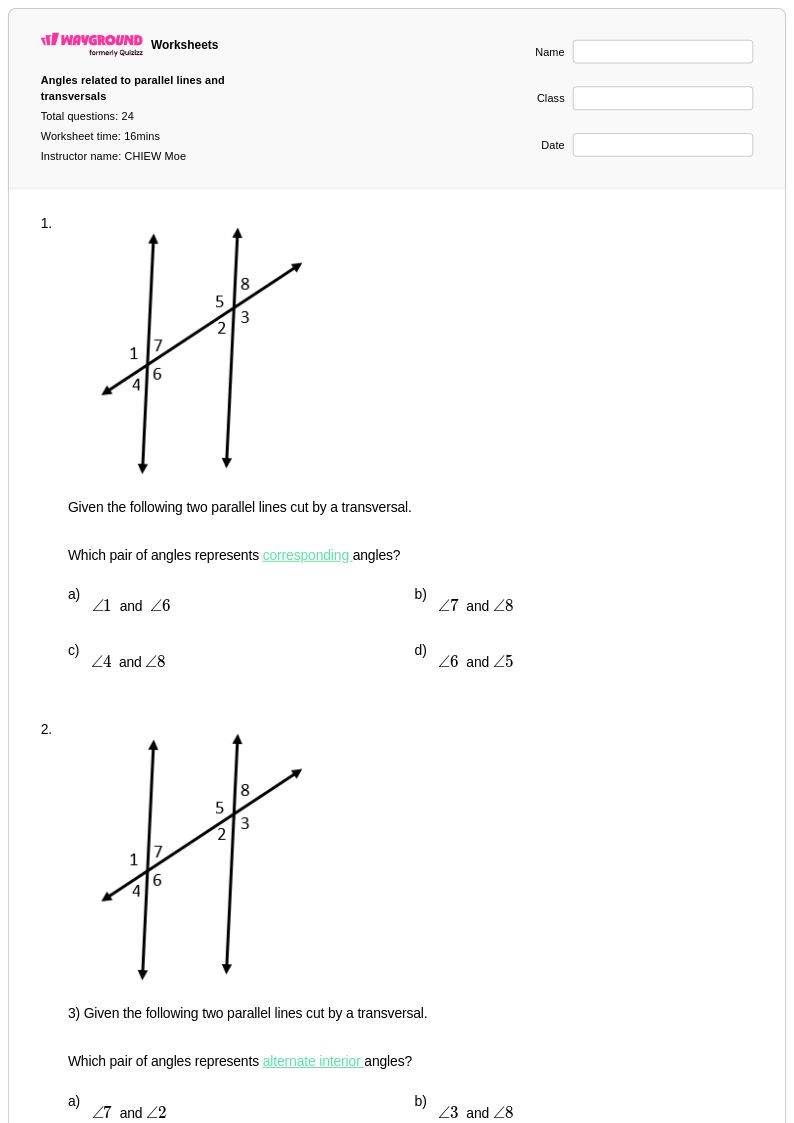
24 P
1st
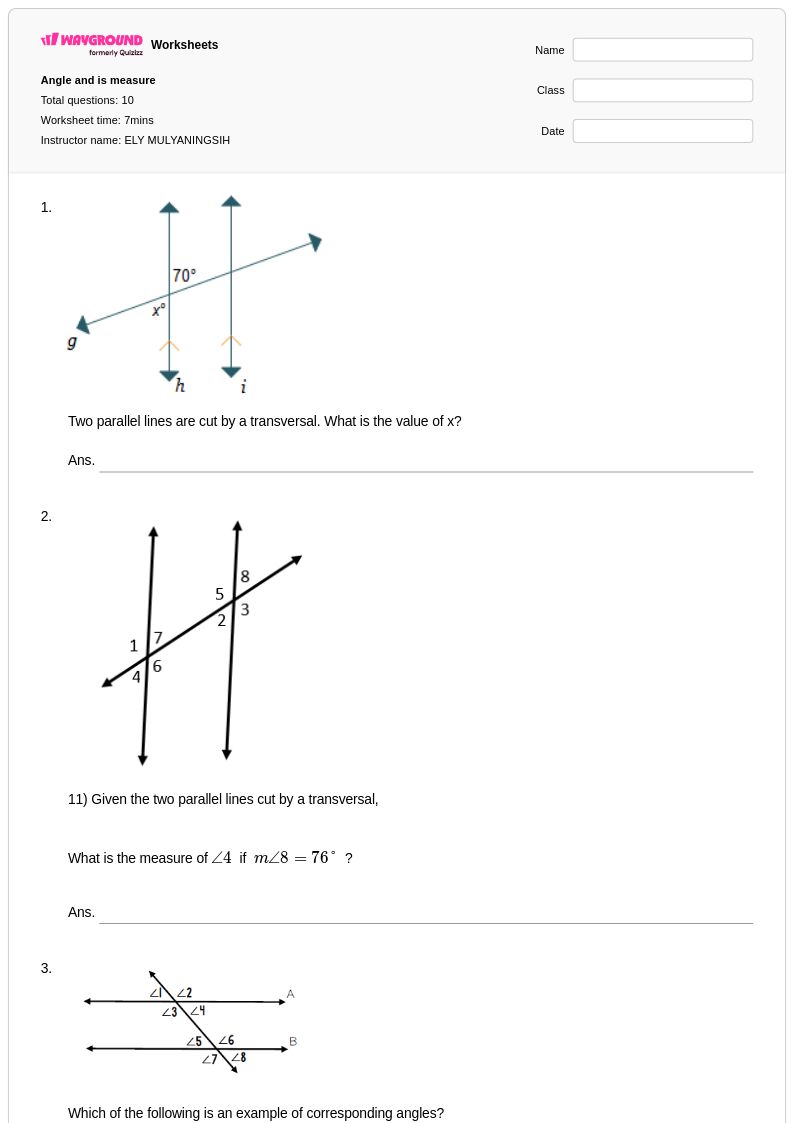
10 P
1st - 5th
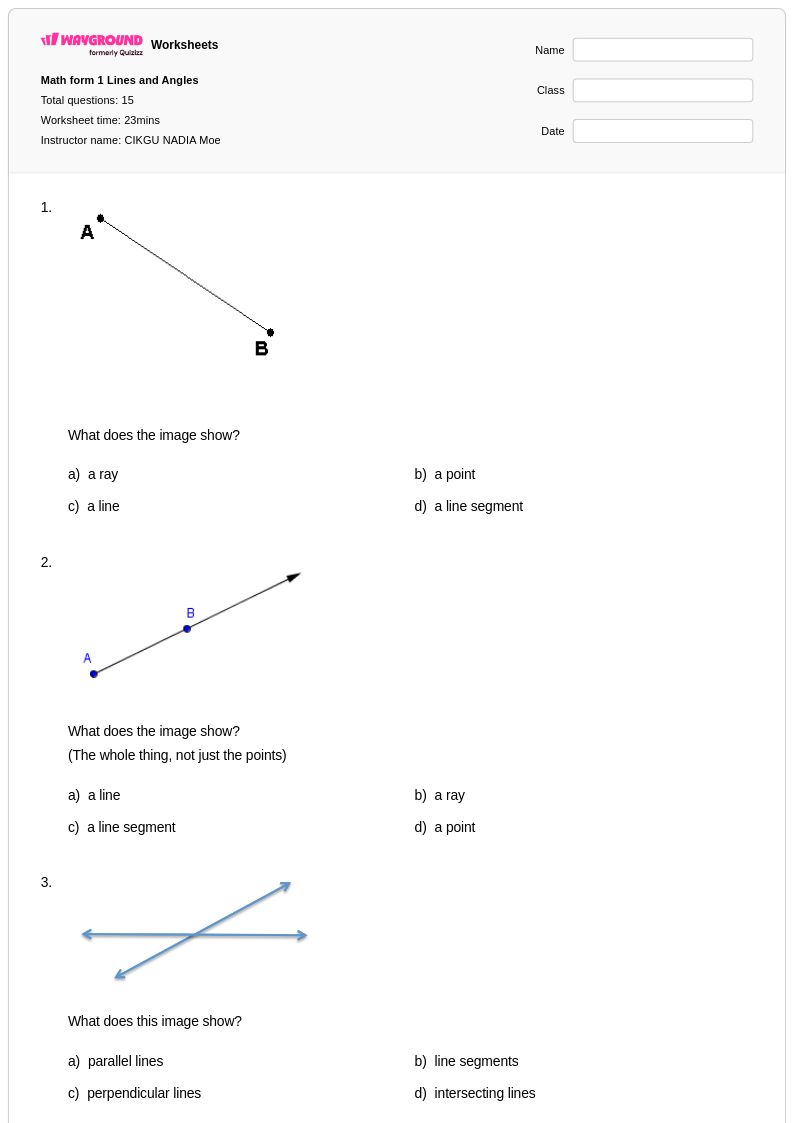
15 P
1st
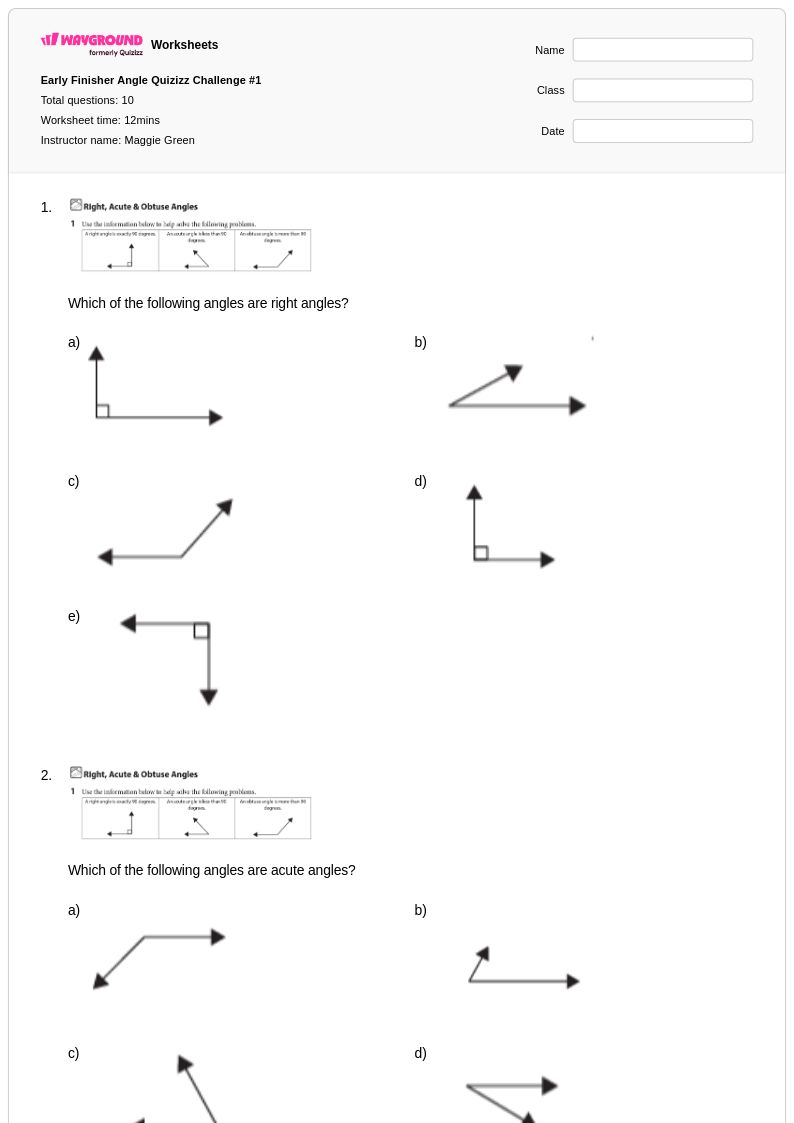
10 P
1st - 5th
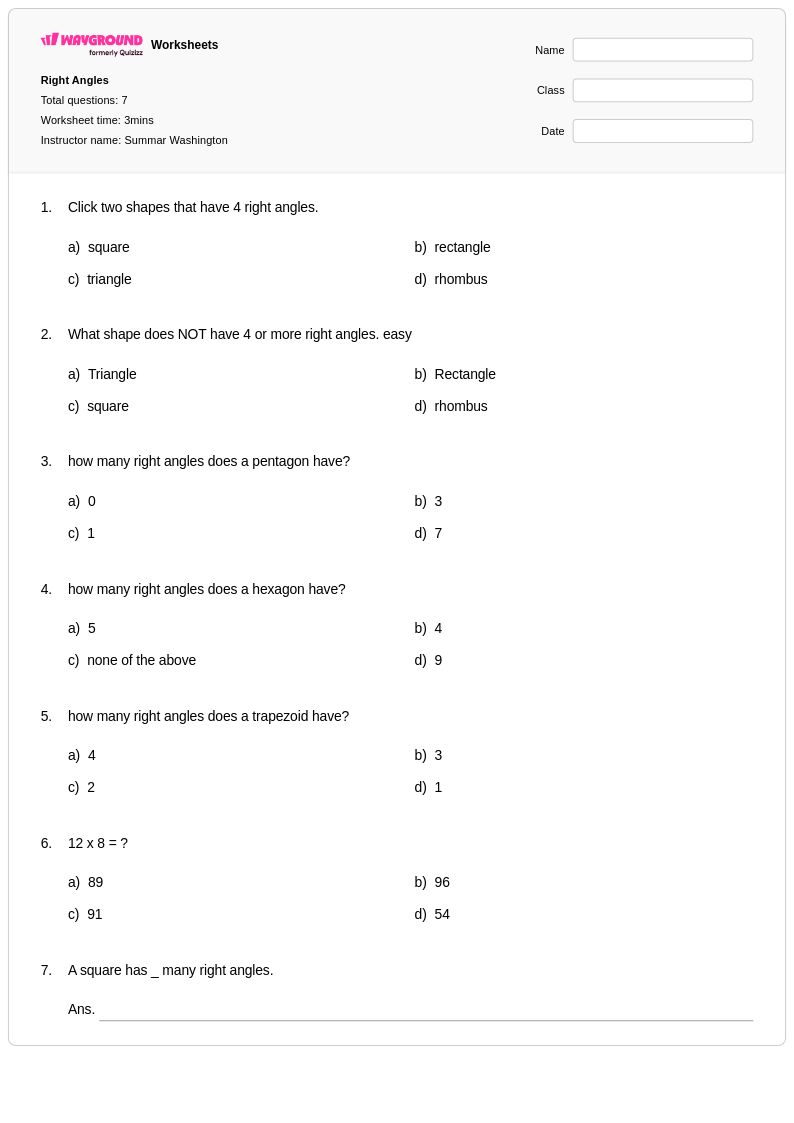
7 P
KG - 2nd
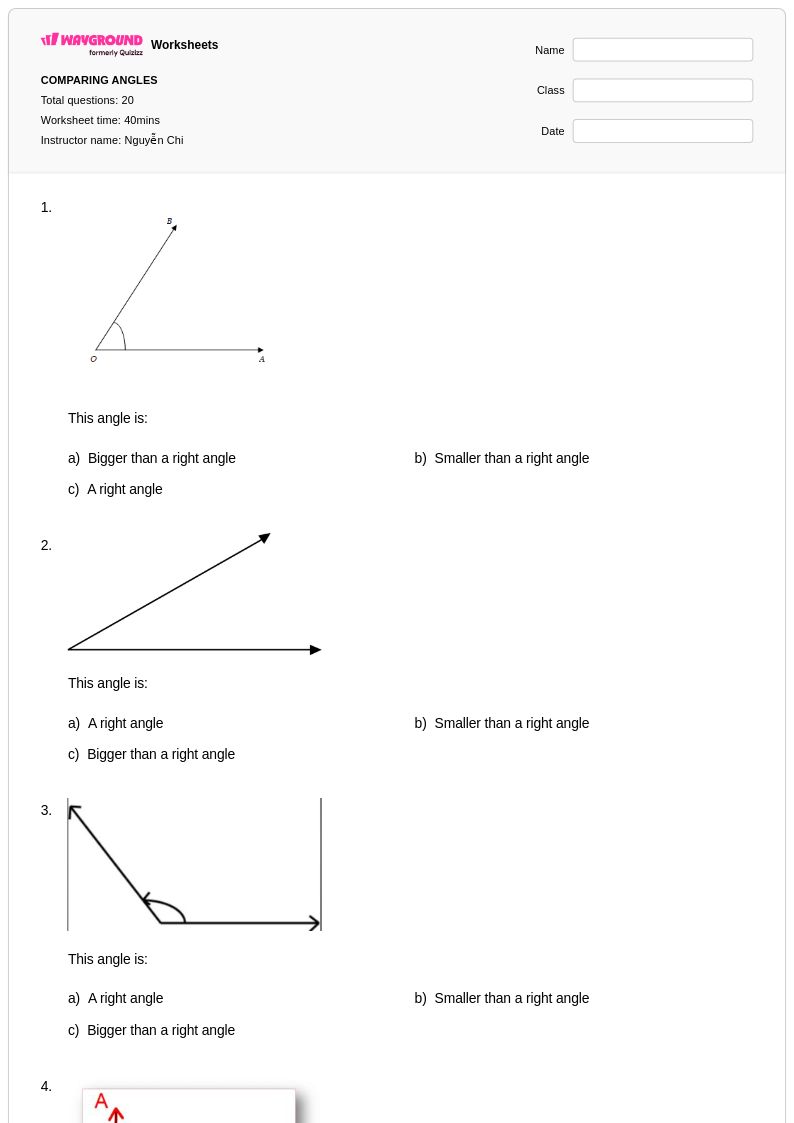
20 P
1st - 3rd
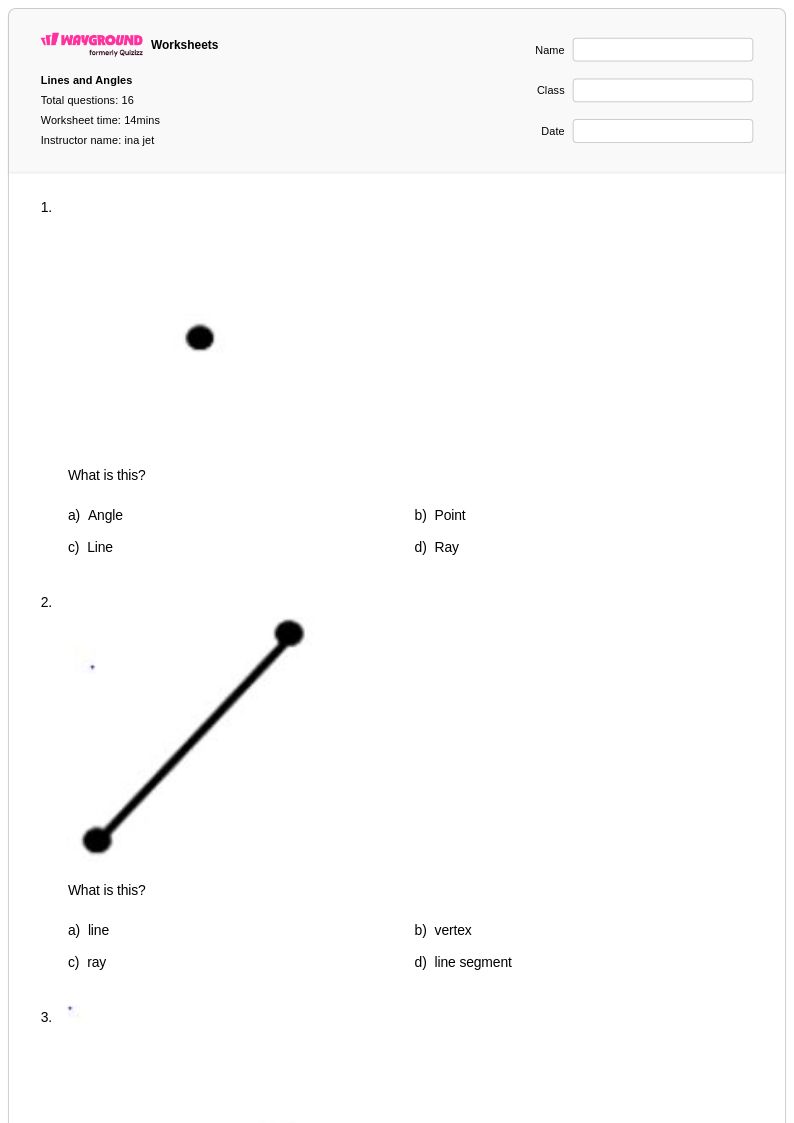
16 P
1st - 5th
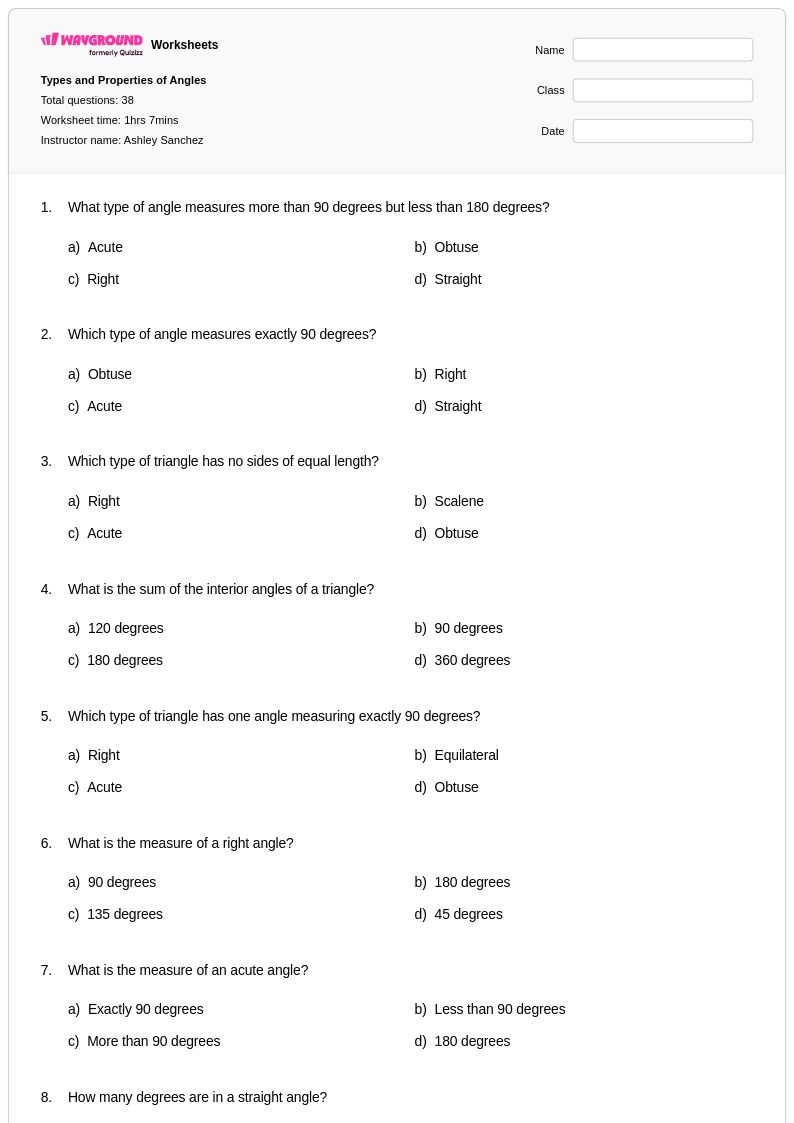
38 P
1st - 5th
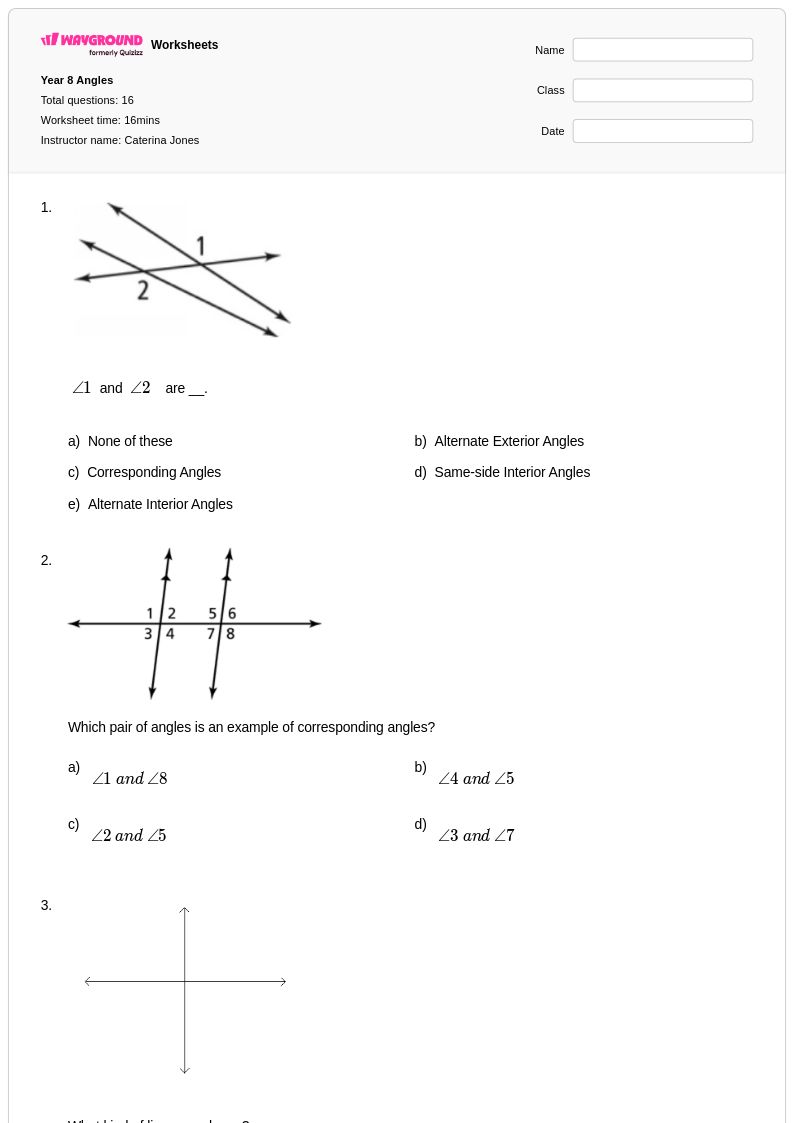
16 P
1st
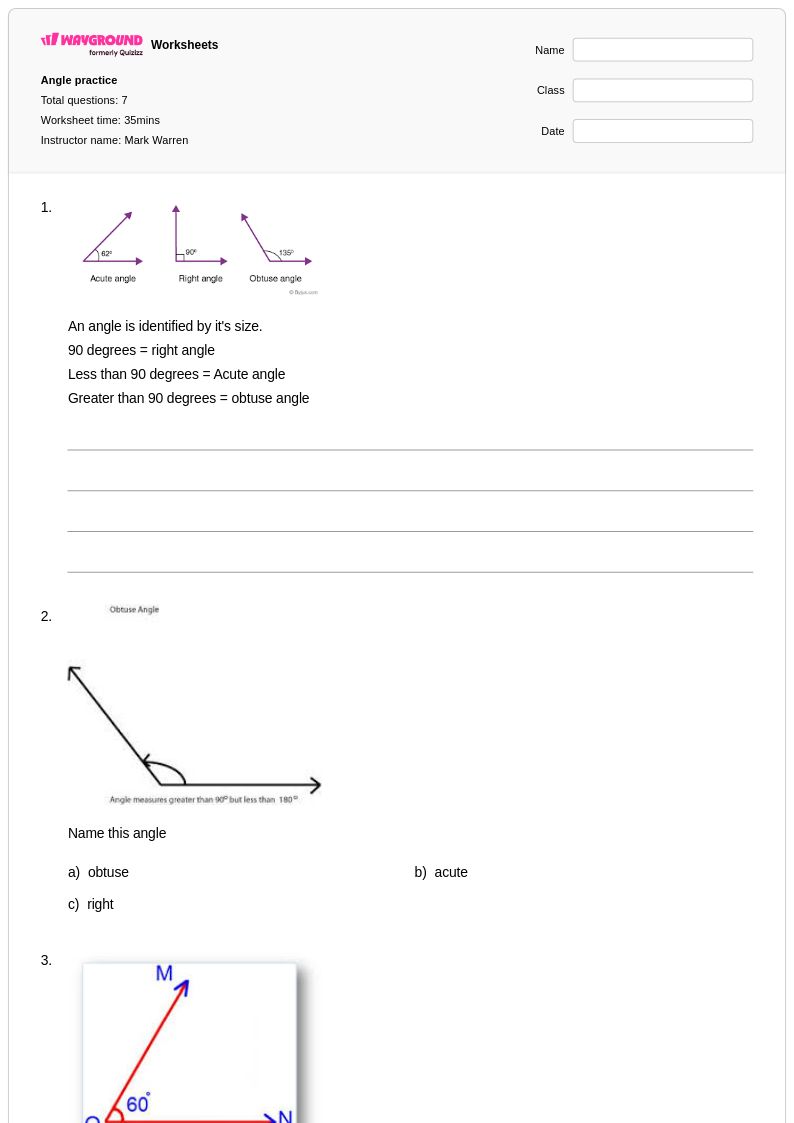
7 P
1st - 2nd
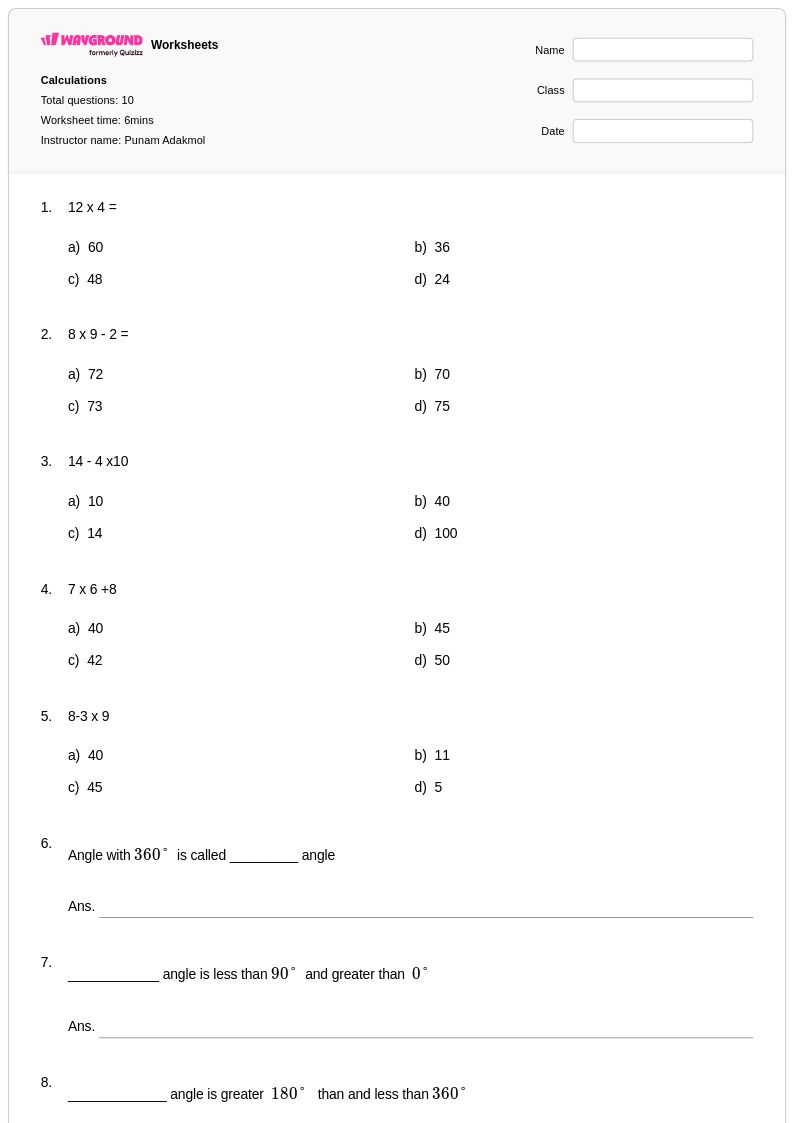
10 P
1st - 4th
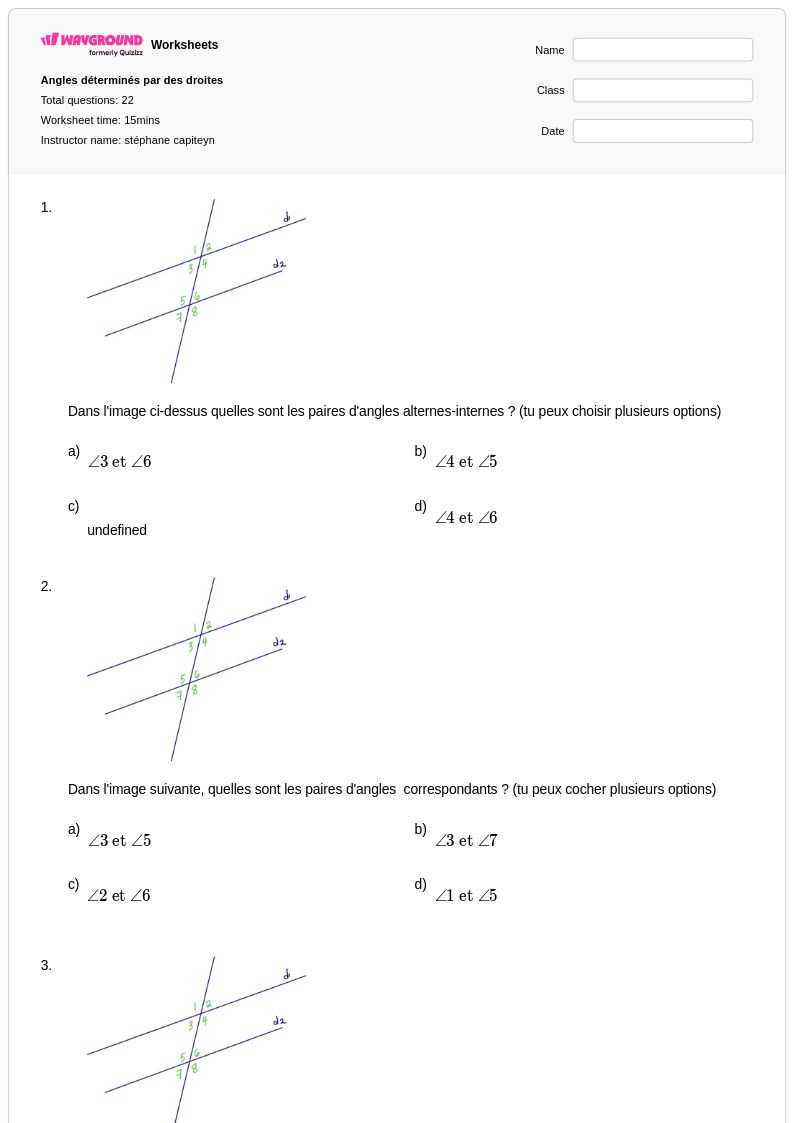
22 P
1st
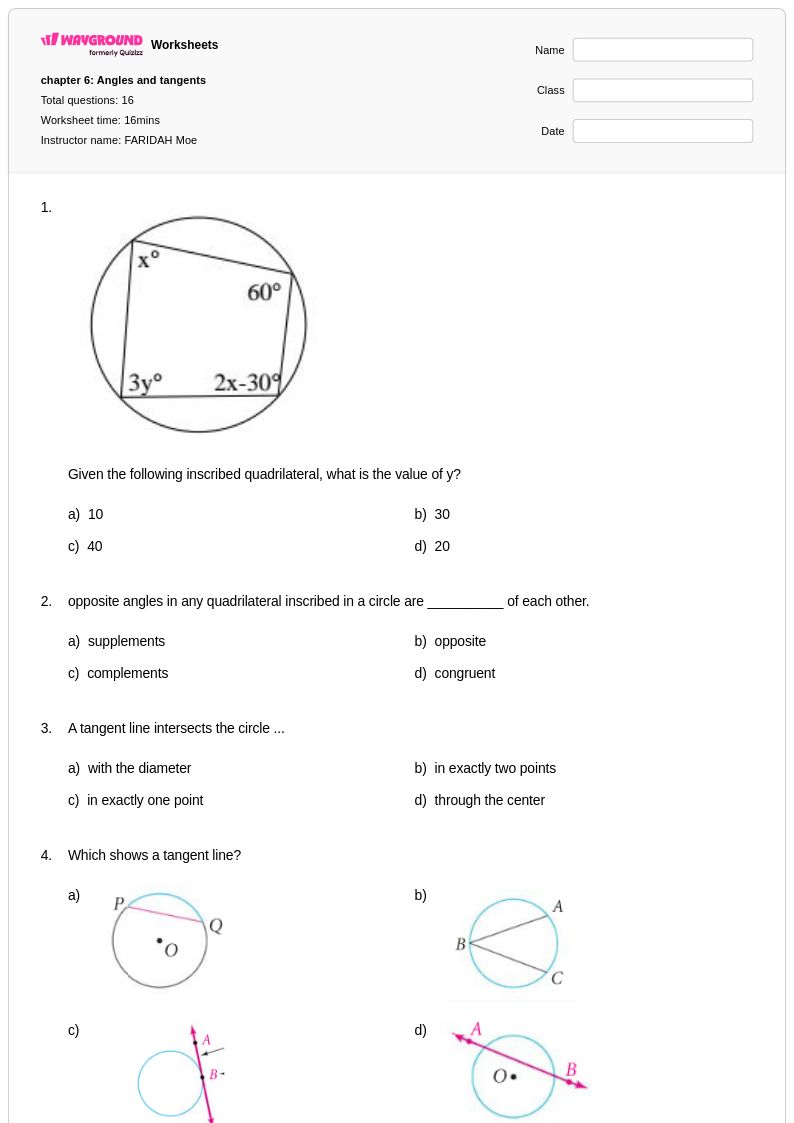
16 P
1st
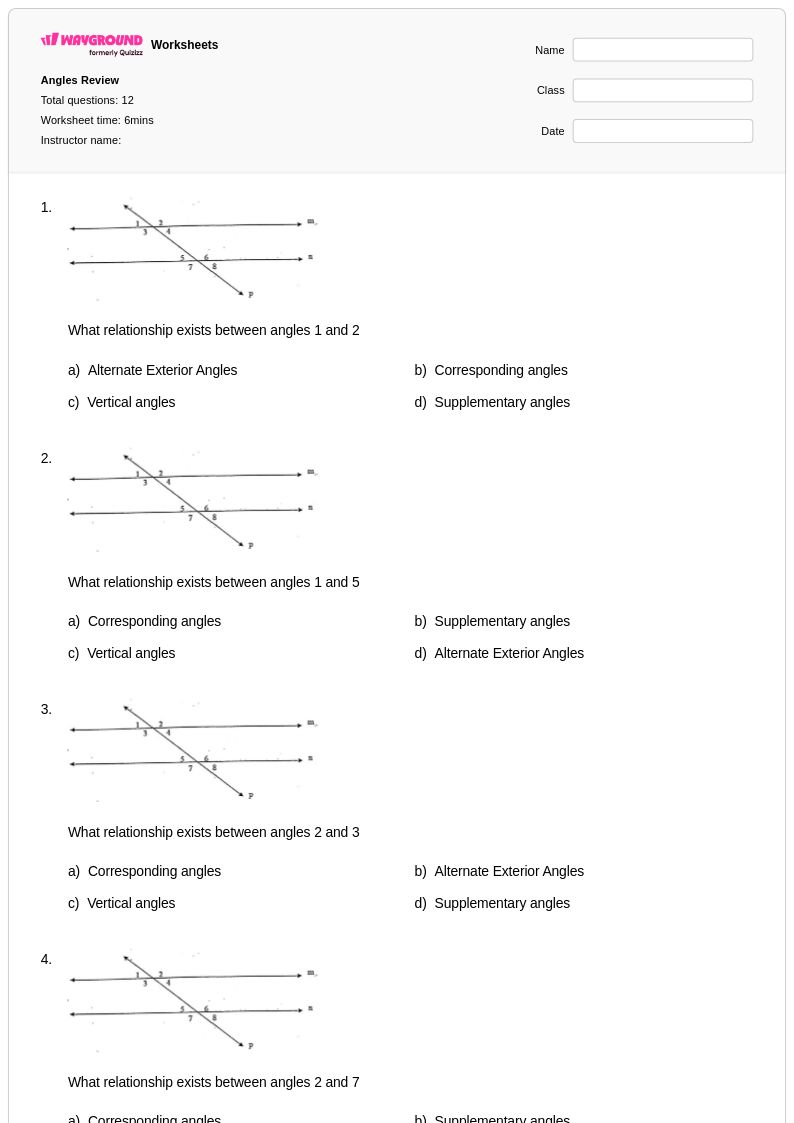
12 P
1st
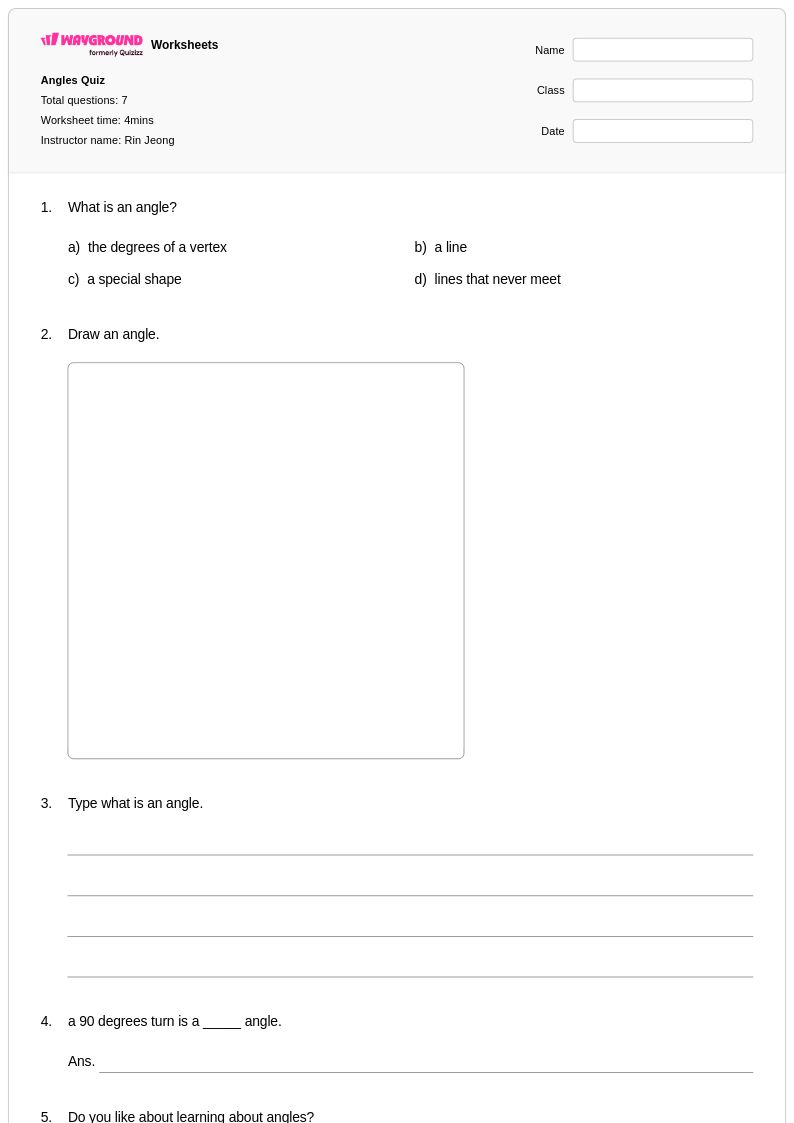
7 P
1st - 3rd
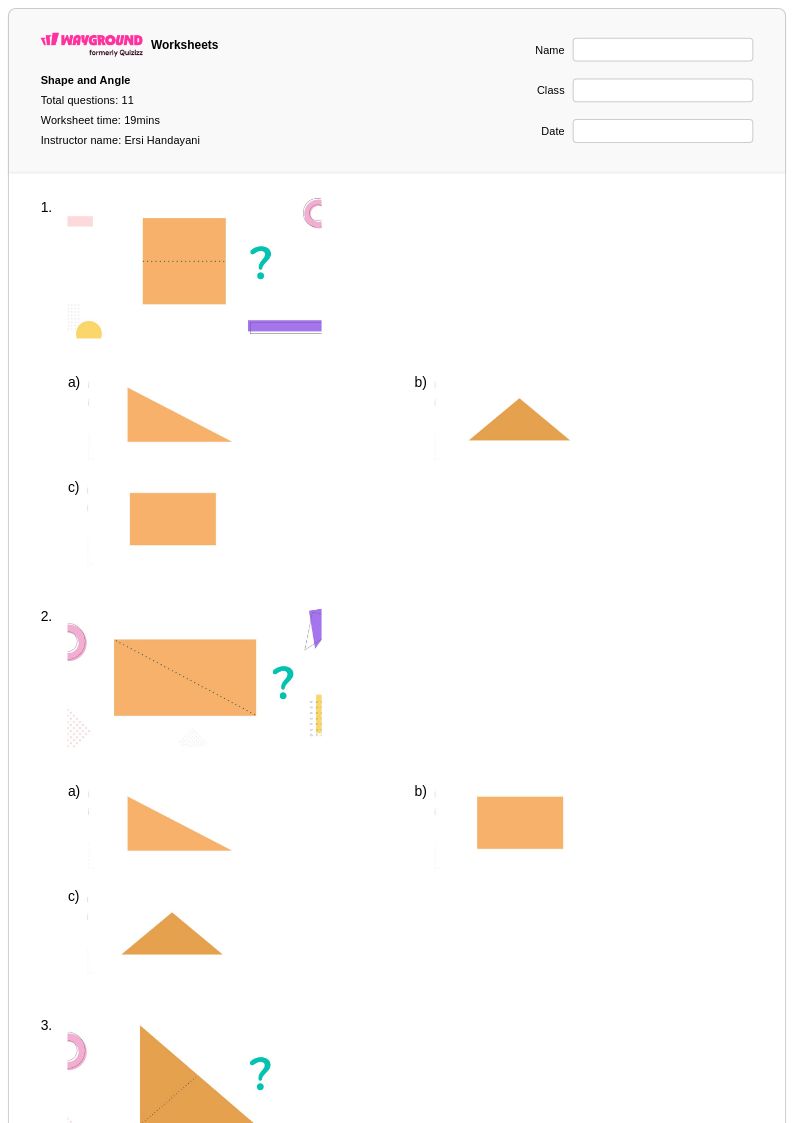
11 P
1st
Przeglądaj Angle Calculations arkusze ćwiczeń według ocen
Przeglądaj inne arkusze tematyczne dla grade 1
Explore printable Angle Calculations worksheets for Grade 1
Grade 1 angle calculations worksheets available through Wayground (formerly Quizizz) provide young learners with foundational exposure to geometric concepts through age-appropriate visual activities. These educational resources focus on developing early spatial reasoning skills by introducing students to basic angle recognition and simple comparative tasks, such as identifying which angles appear larger or smaller in everyday objects and shapes. The worksheets strengthen essential mathematical thinking through engaging practice problems that help first graders begin to understand how angles exist in their world, from the corners of books to the hands of clocks. Teachers can access comprehensive answer keys alongside these free printables, ensuring accurate guidance as students explore these fundamental geometric concepts through structured pdf resources designed specifically for beginning learners.
Wayground (formerly Quizizz) supports educators with an extensive collection of teacher-created angle calculation resources that span millions of carefully curated materials, all searchable through robust filtering systems that allow precise targeting of Grade 1 developmental needs. The platform's standards alignment features ensure these geometry worksheets meet curriculum requirements while offering differentiation tools that accommodate diverse learning styles and ability levels within early elementary classrooms. Teachers benefit from flexible customization options that enable modification of existing materials, while the availability of both printable and digital formats, including downloadable pdf versions, facilitates seamless integration into various instructional approaches. These comprehensive features streamline lesson planning while providing targeted resources for remediation, enrichment, and systematic skill practice that builds confidence in young mathematicians as they develop their understanding of geometric relationships.
FAQs
How do I teach angle concepts to first graders?
What exercises help first graders practice angles?
What do first graders commonly misunderstand about angles?
How should I use a Grade 1 angle calculations worksheet?
How do Grade 1 angle activities fit the Common Core progression?
How can I support first graders who struggle with visual angle comparisons?
What level of angle work is appropriate for Grade 1?