
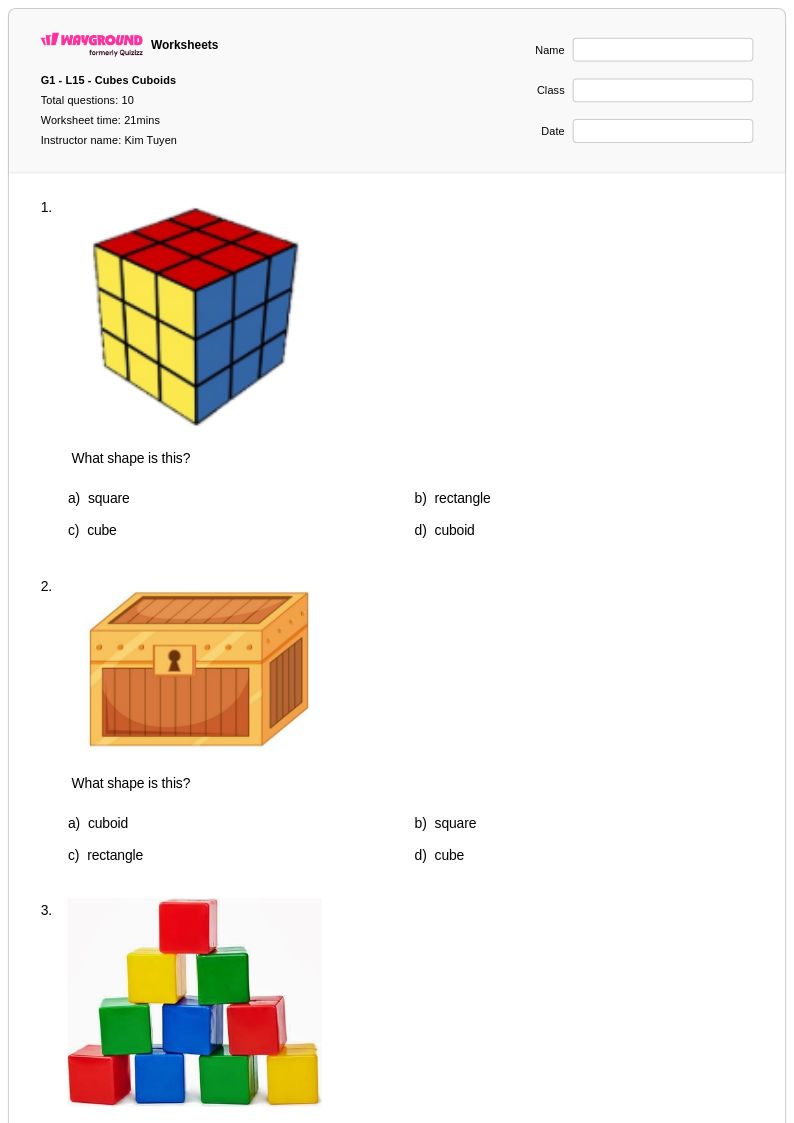
10 Q
1st
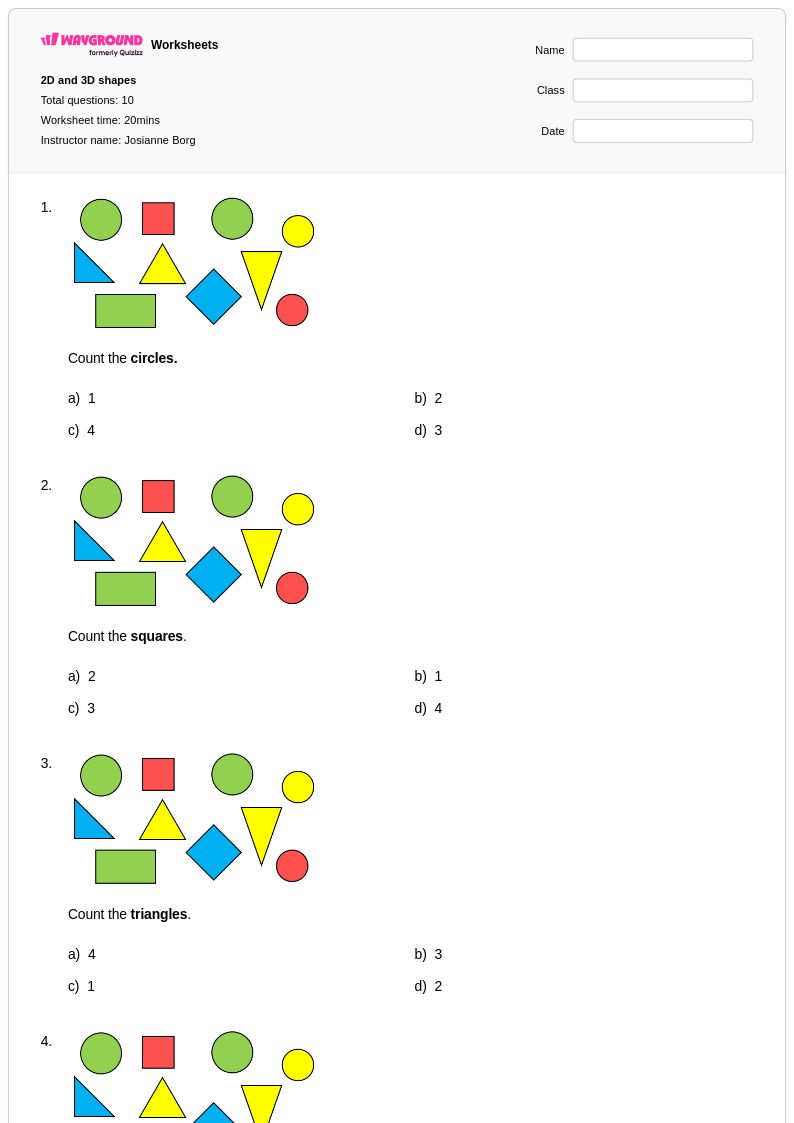
10 Q
1st
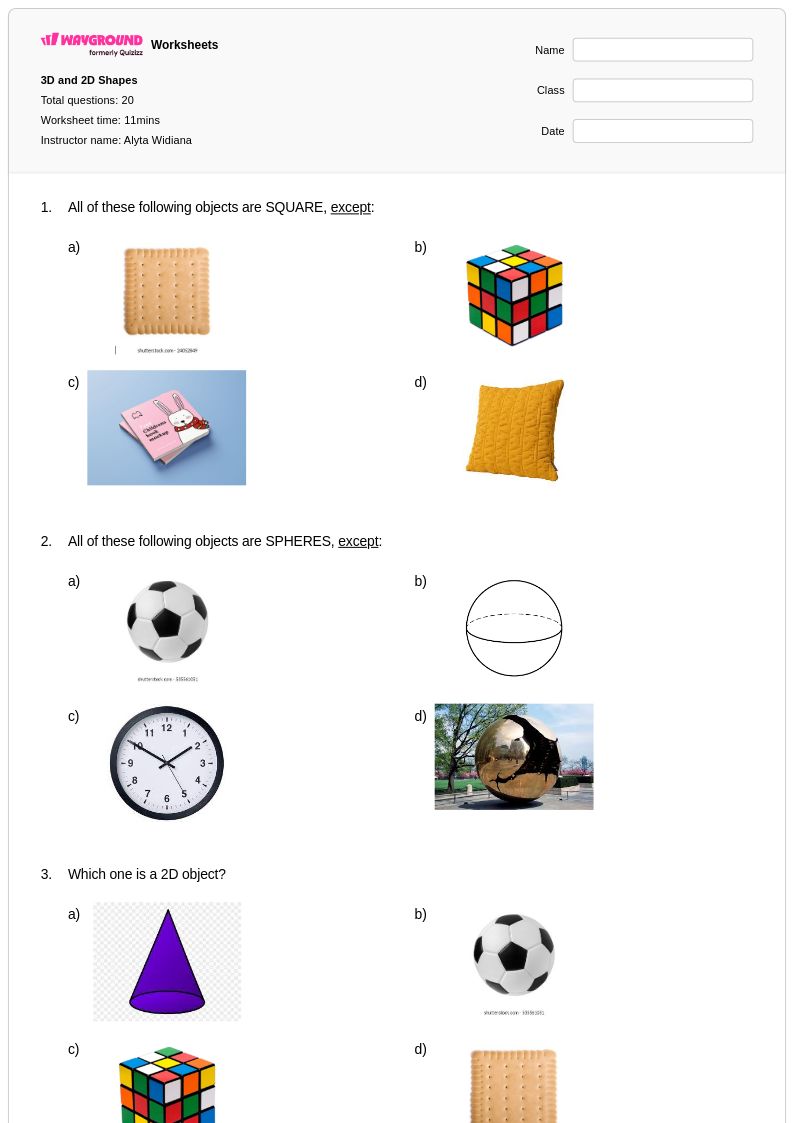
20 Q
1st
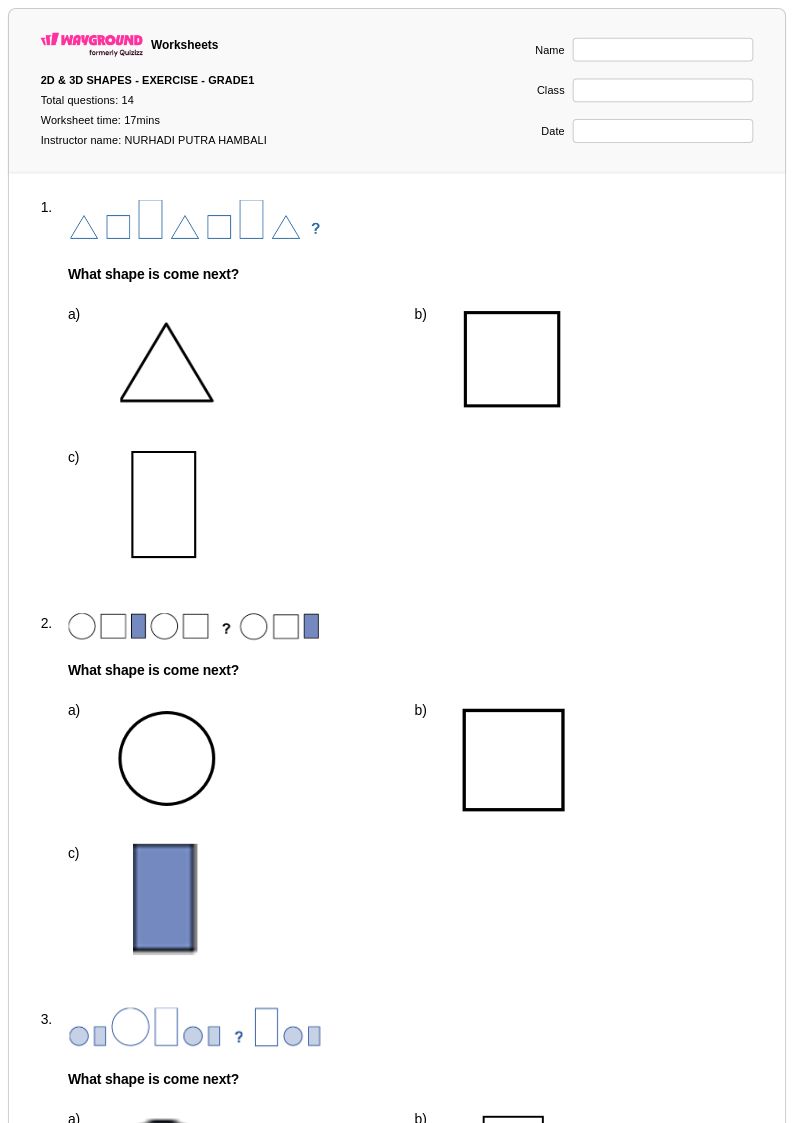
14 Q
1st - Uni
12 Q
1st
20 Q
1st
20 Q
1st
20 Q
1st
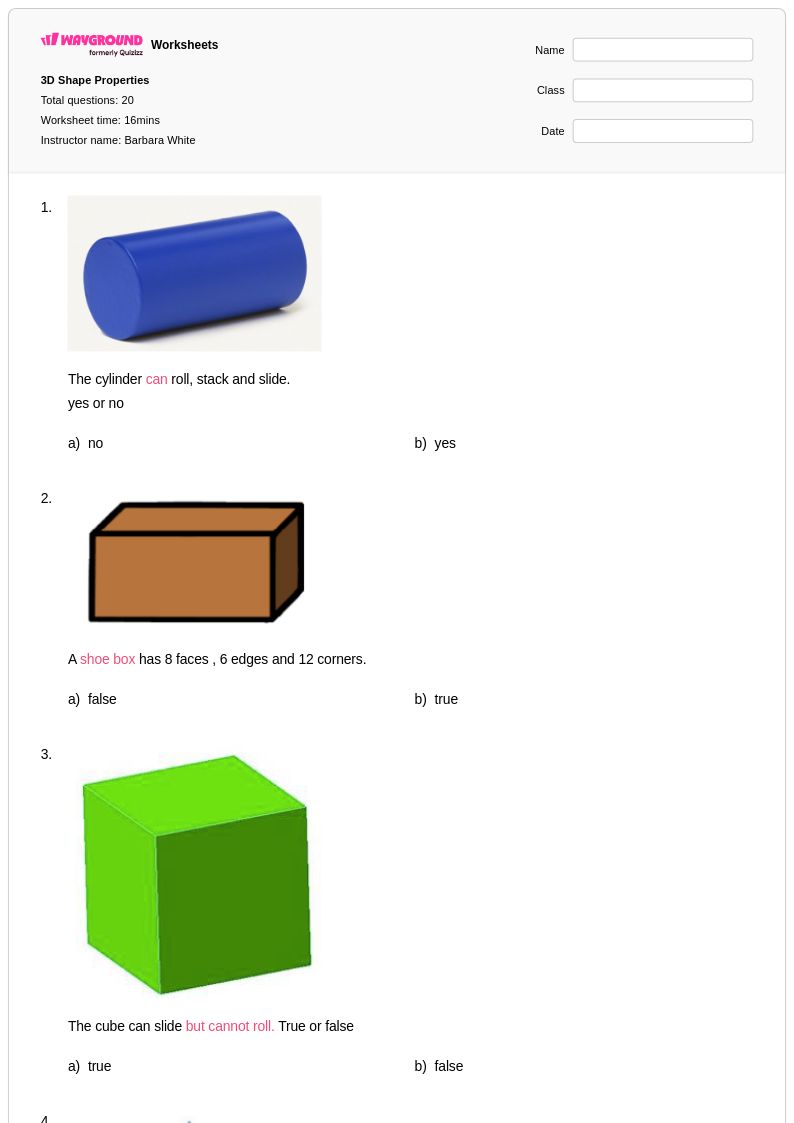
20 Q
1st
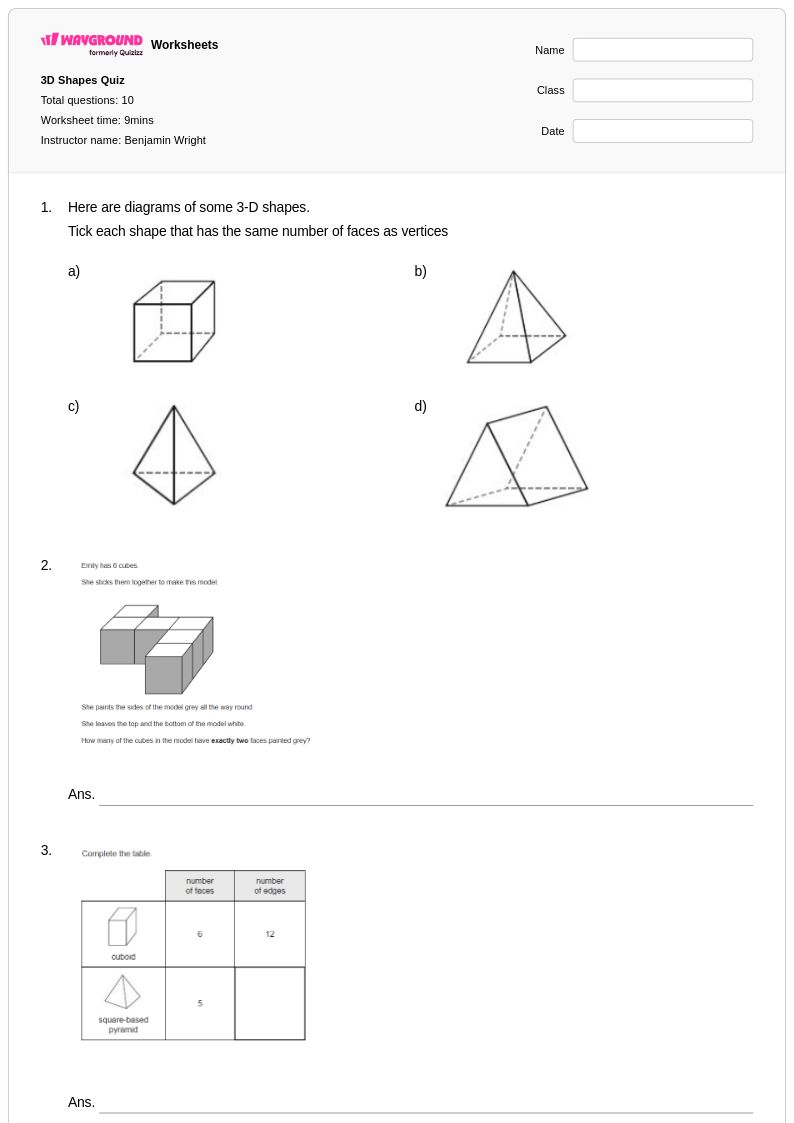
10 Q
1st - 5th
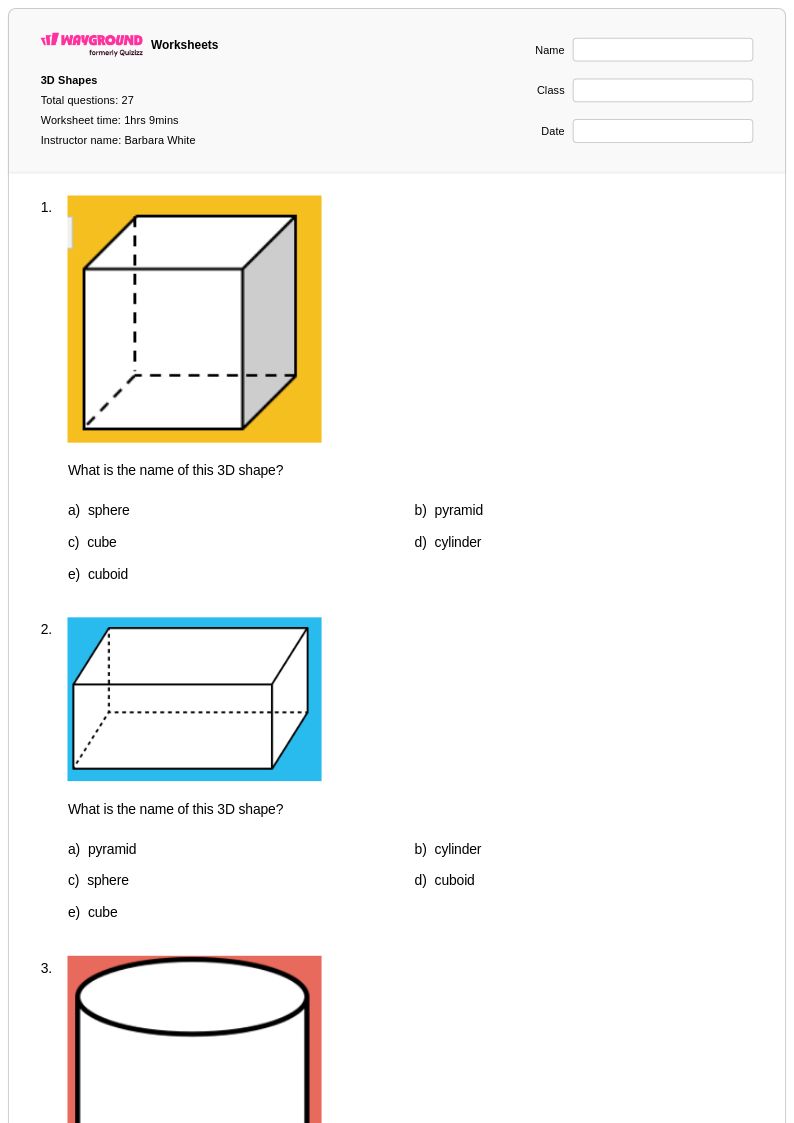
27 Q
1st
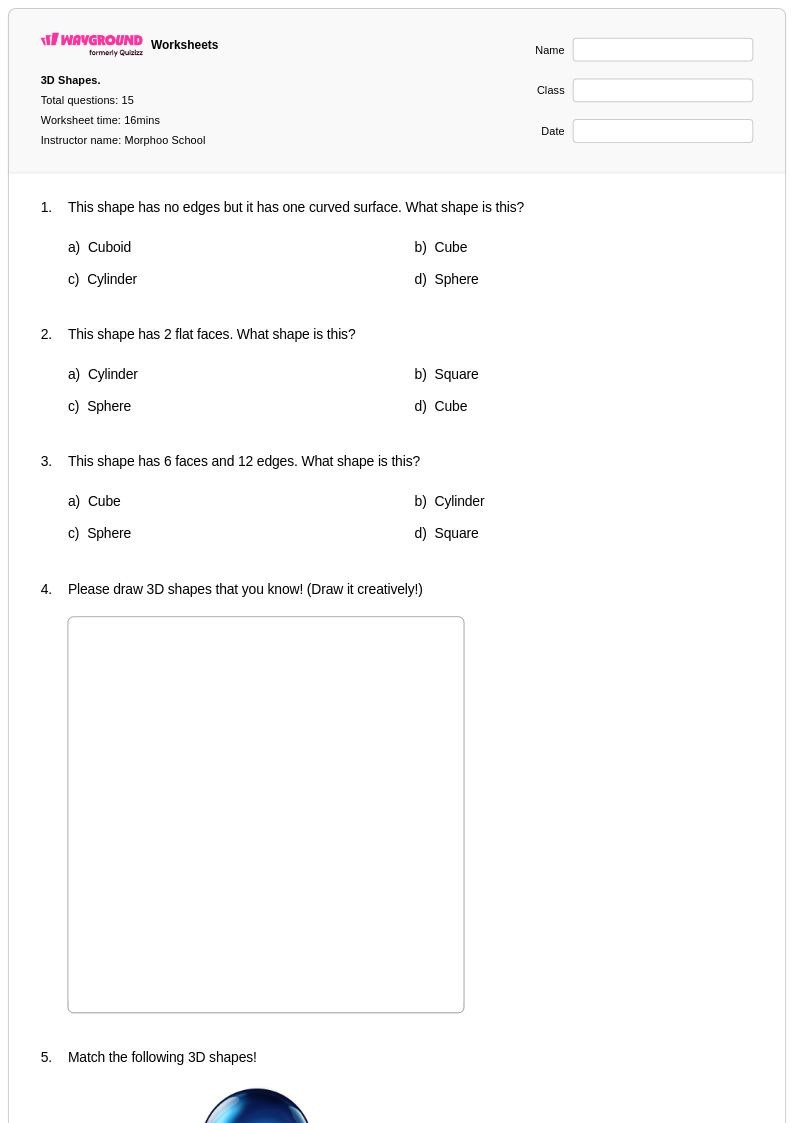
15 Q
1st
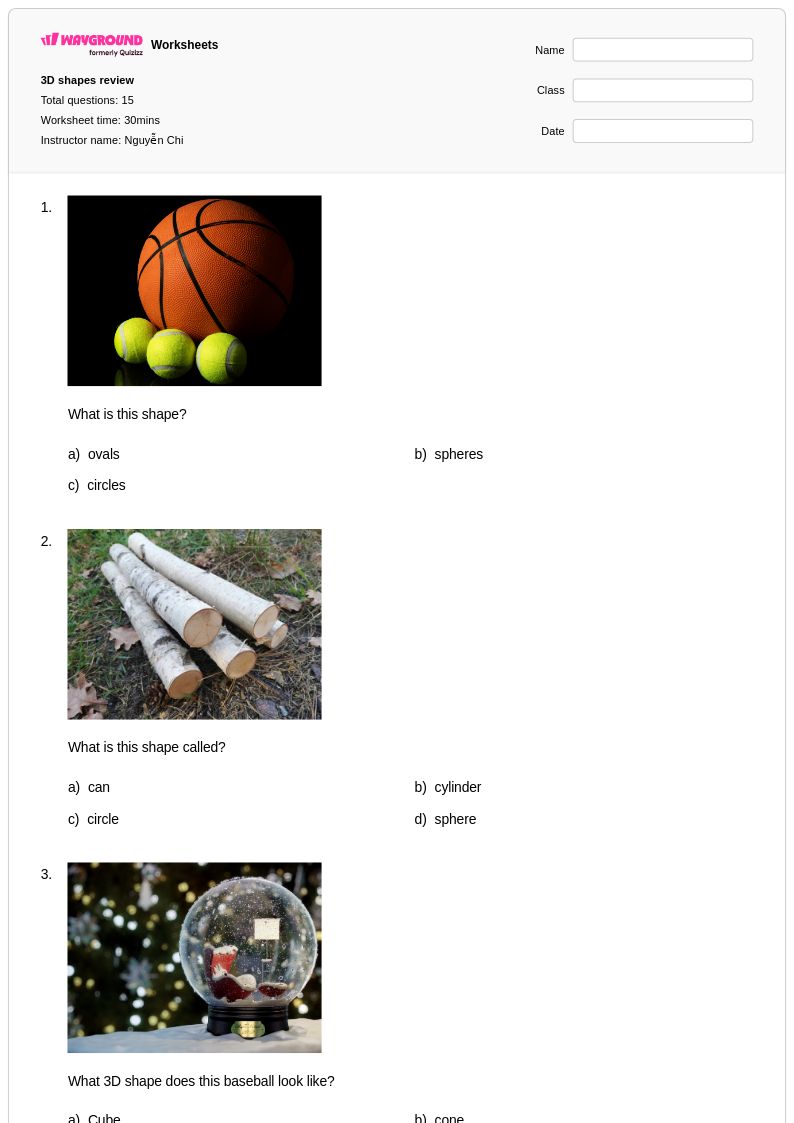
15 Q
1st - 4th
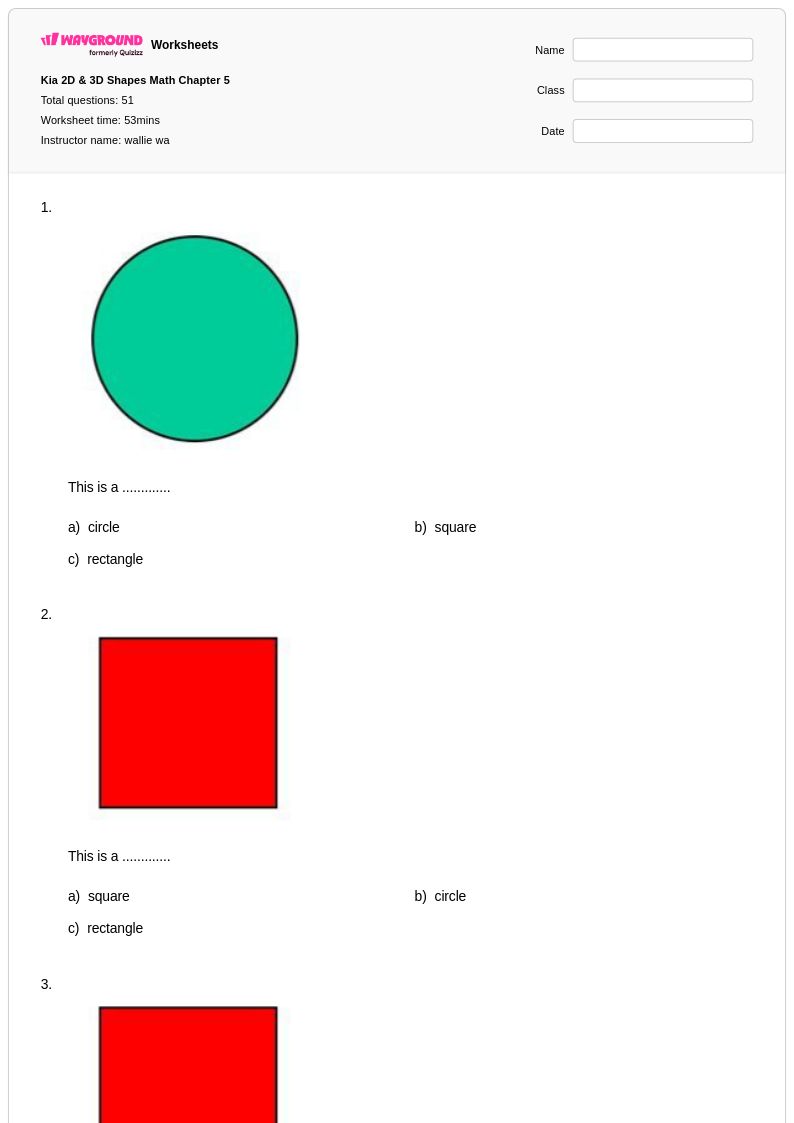
51 Q
1st
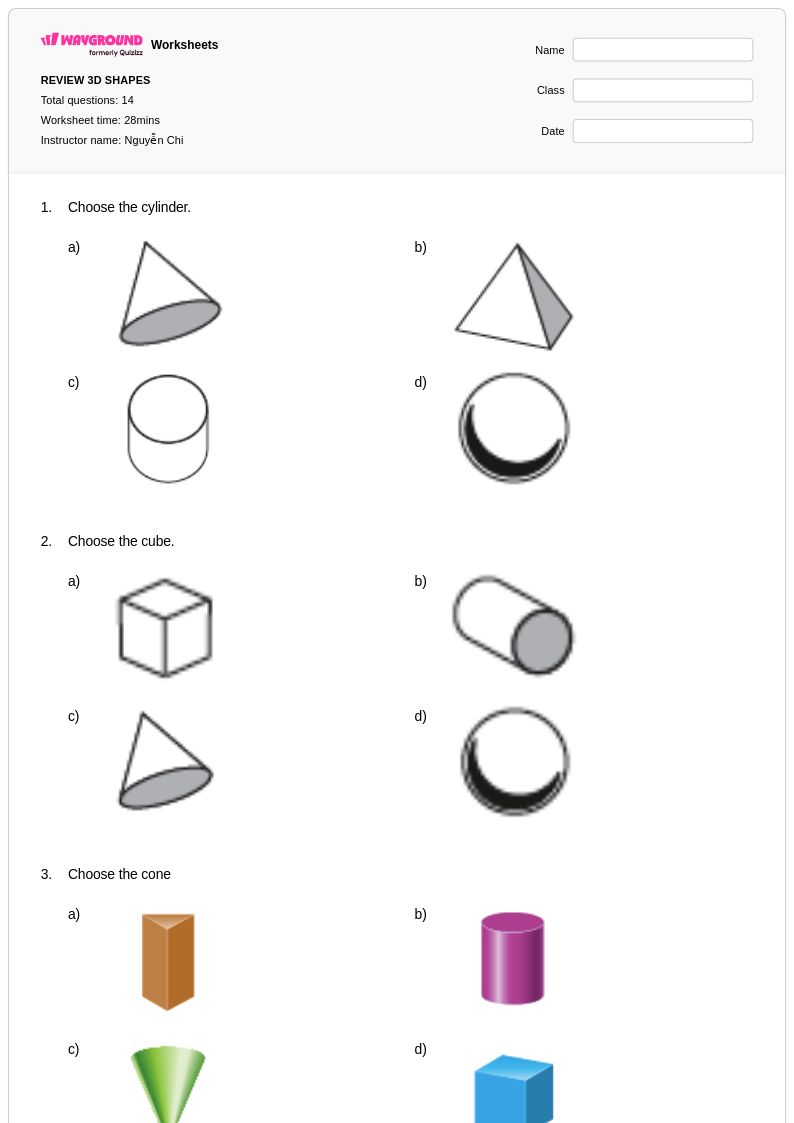
14 Q
1st - 3rd
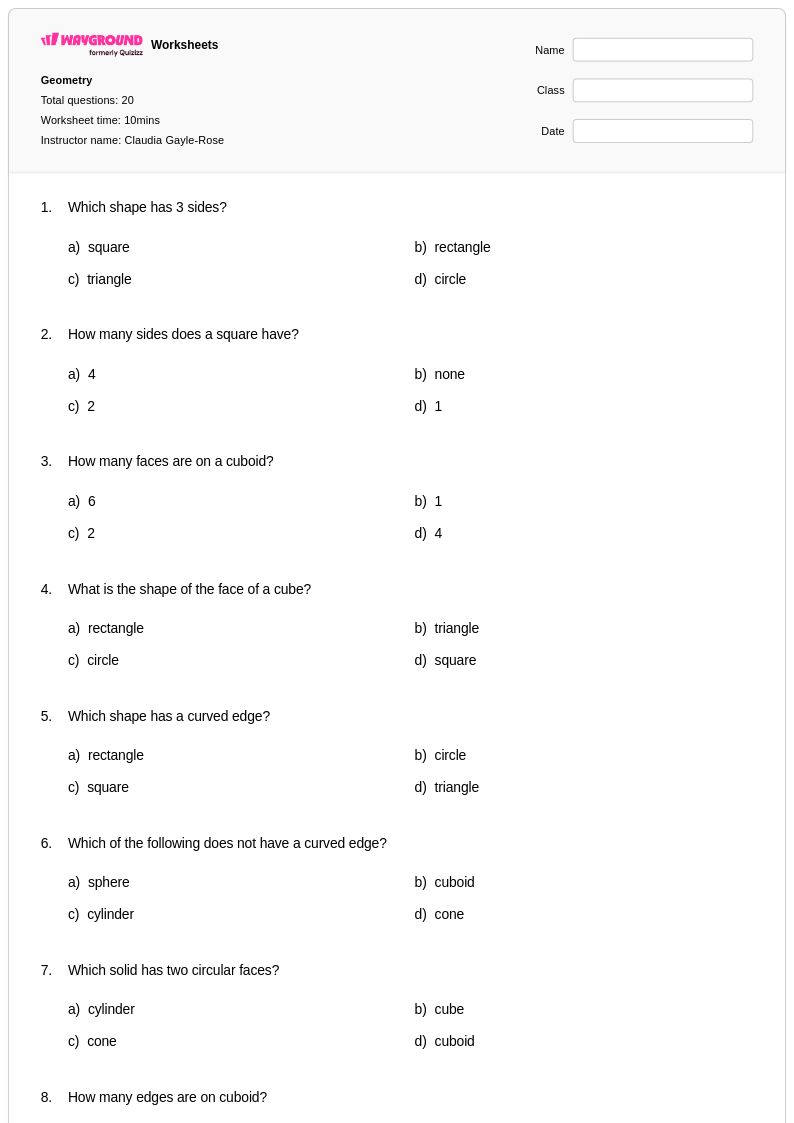
20 Q
1st - 2nd
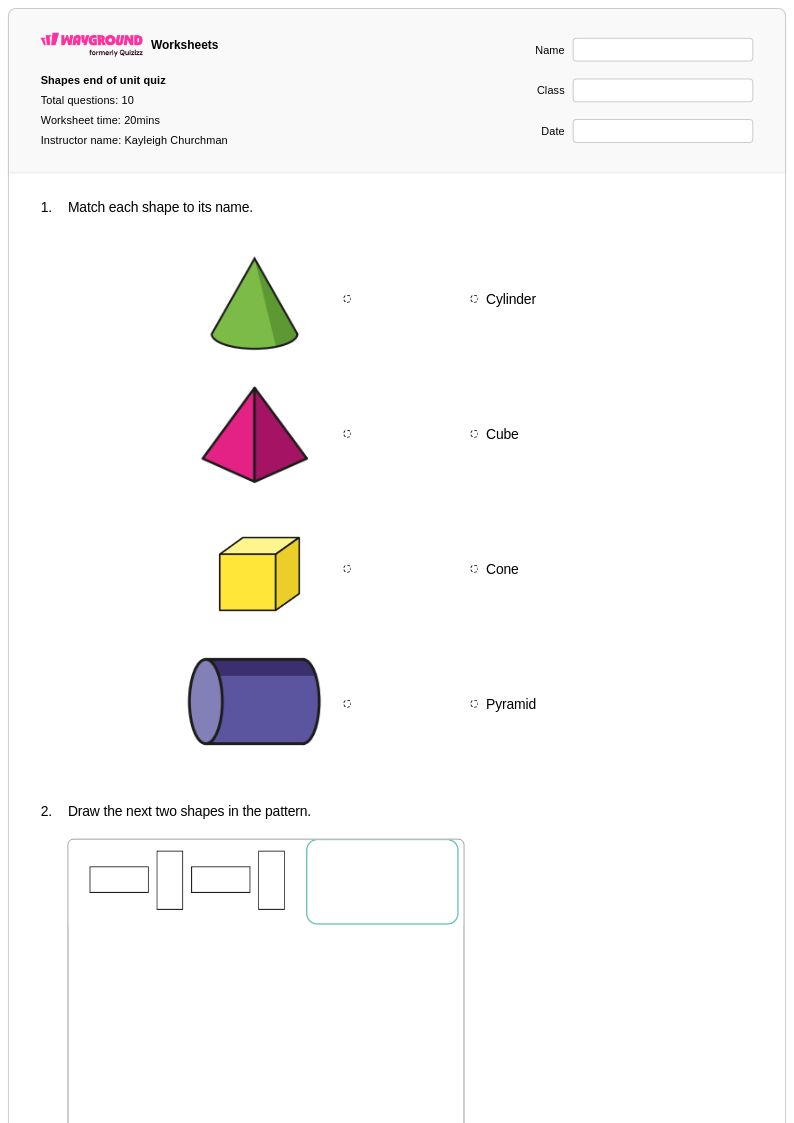
10 Q
1st
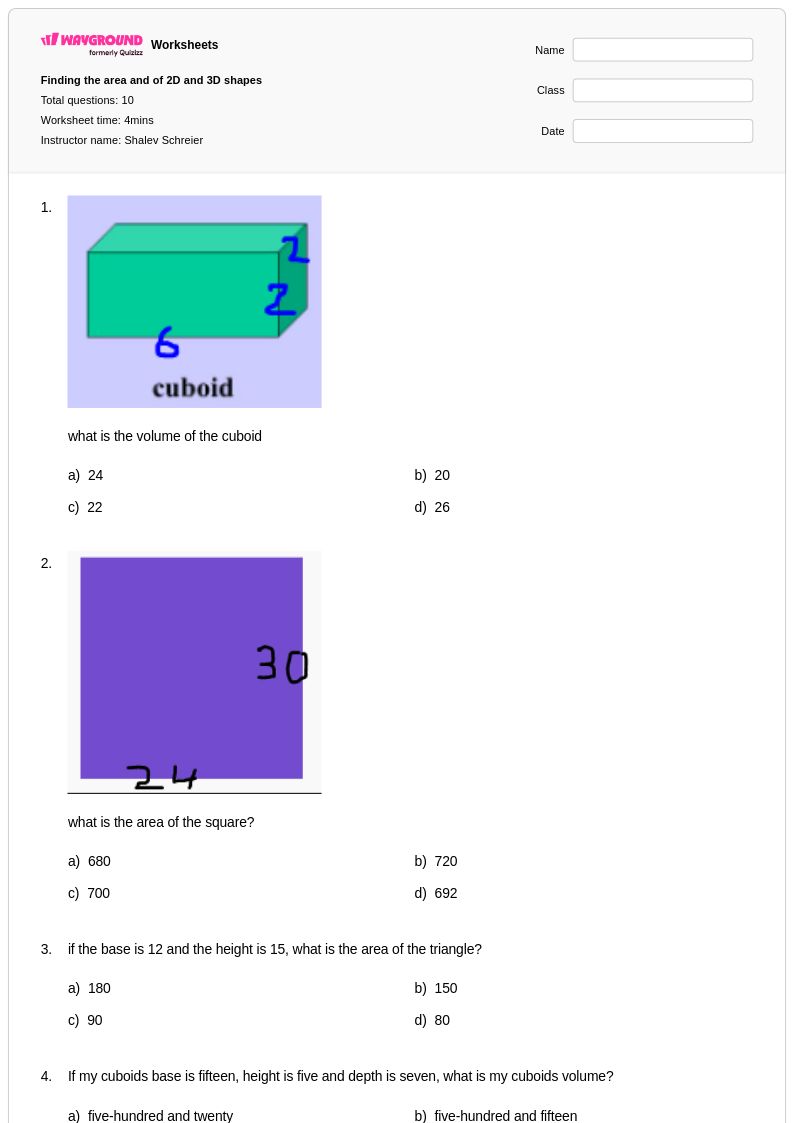
10 Q
1st - Uni
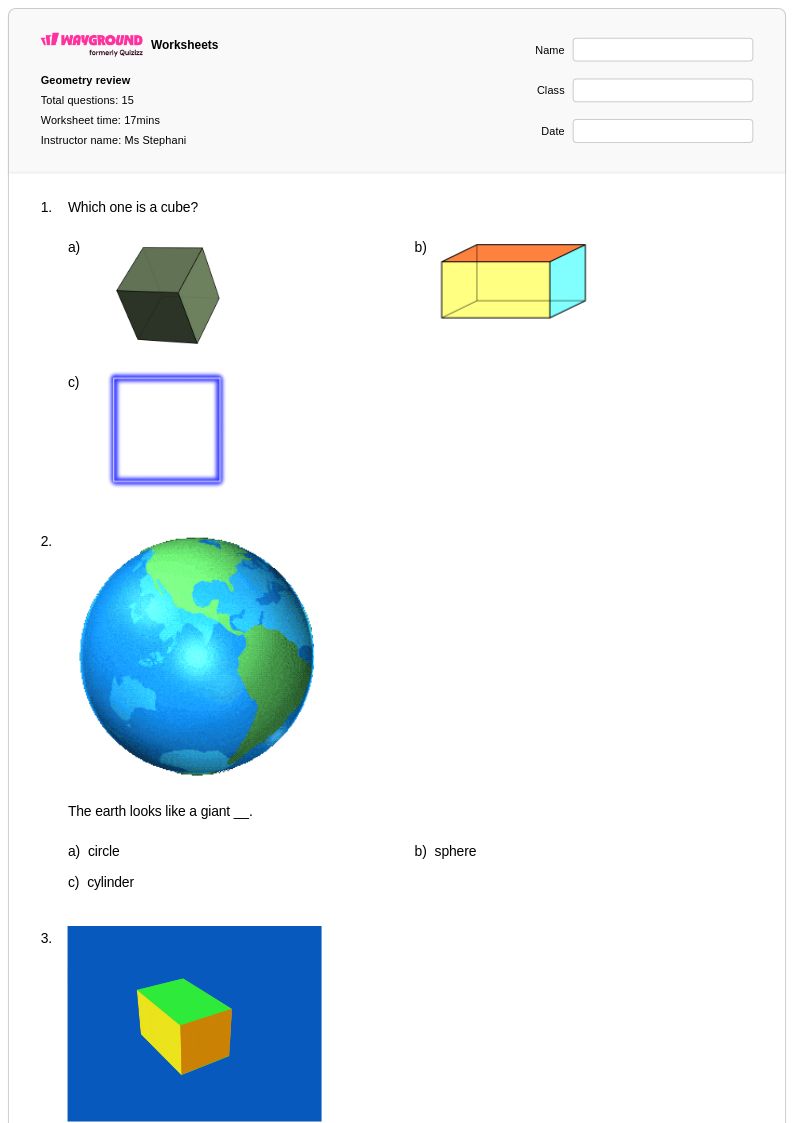
15 Q
1st
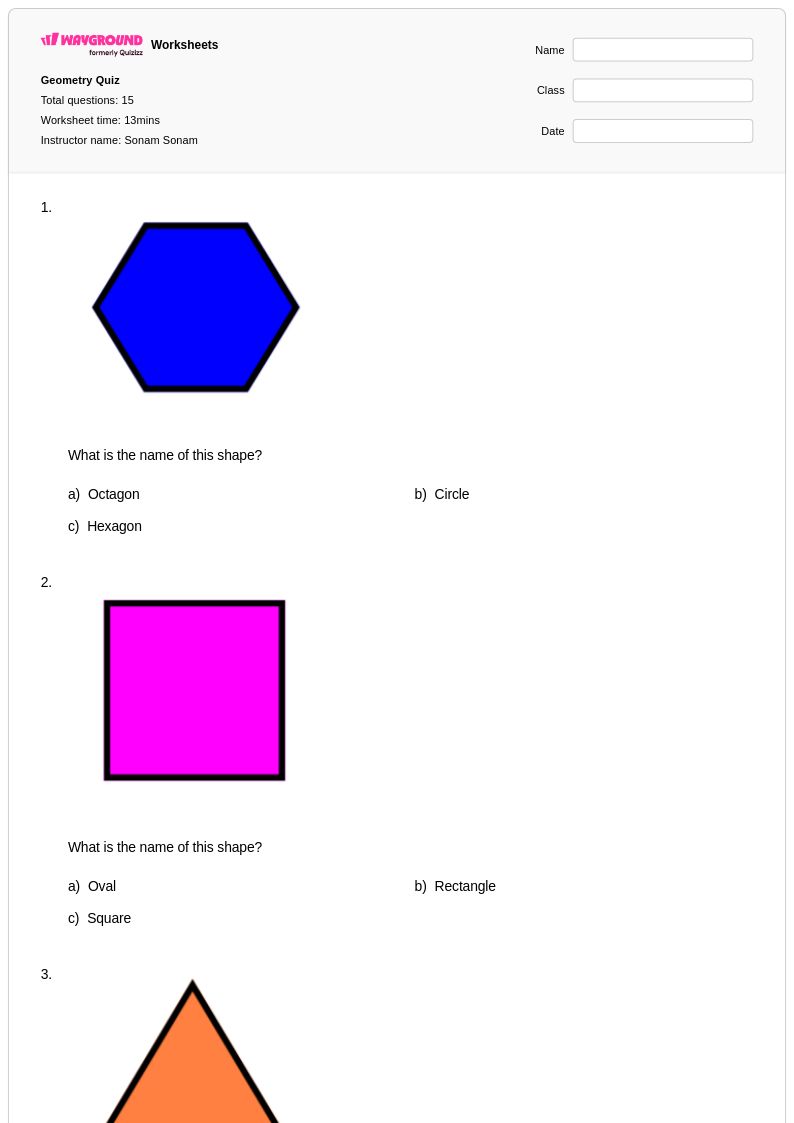
15 Q
1st
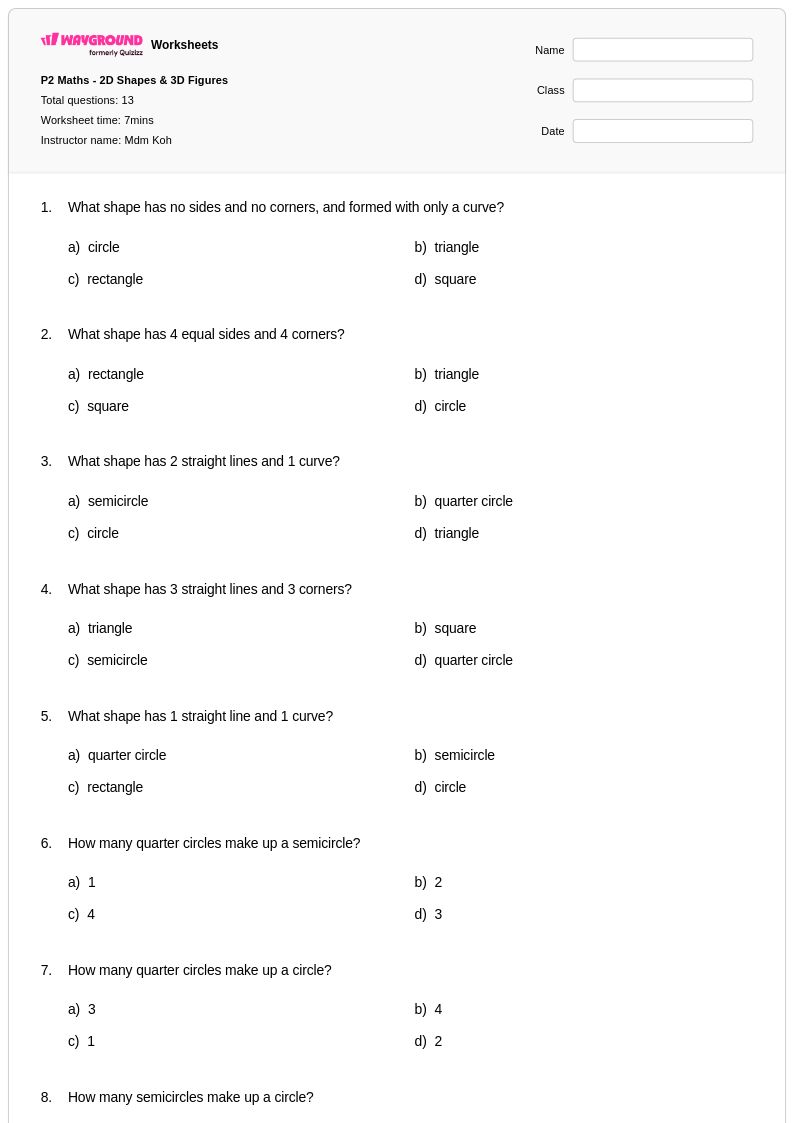
13 Q
1st - 2nd
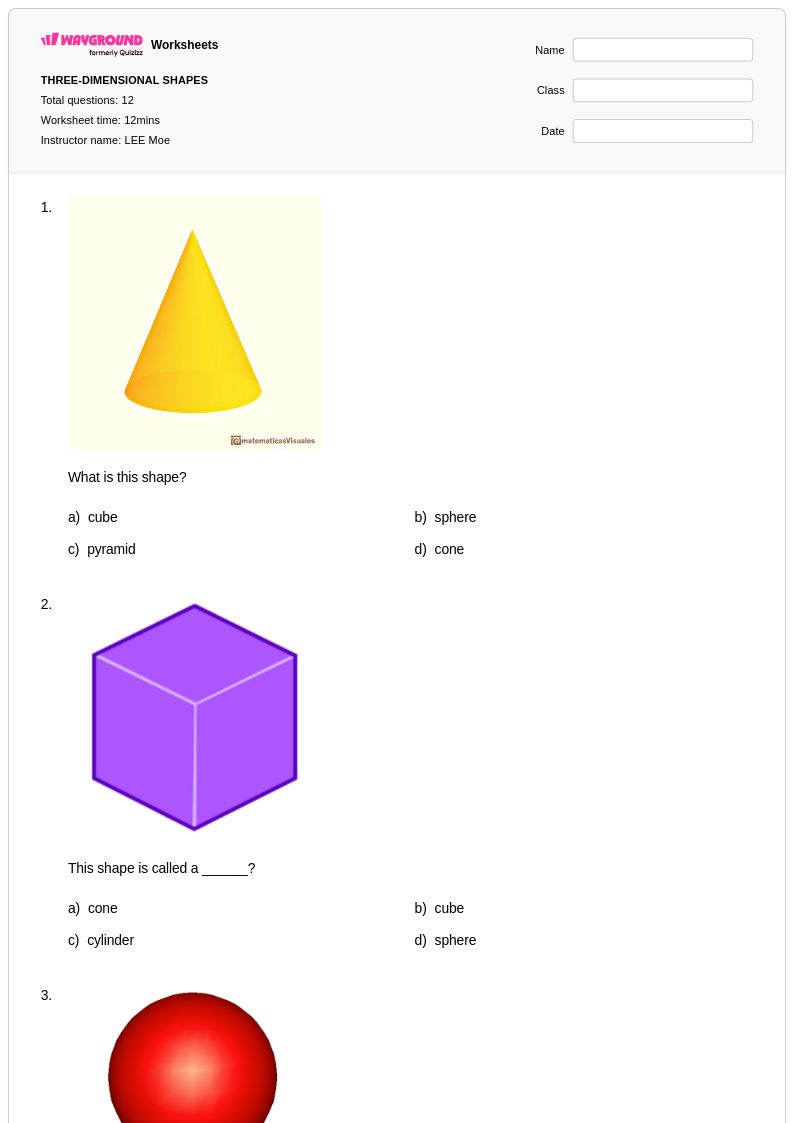
12 Q
1st
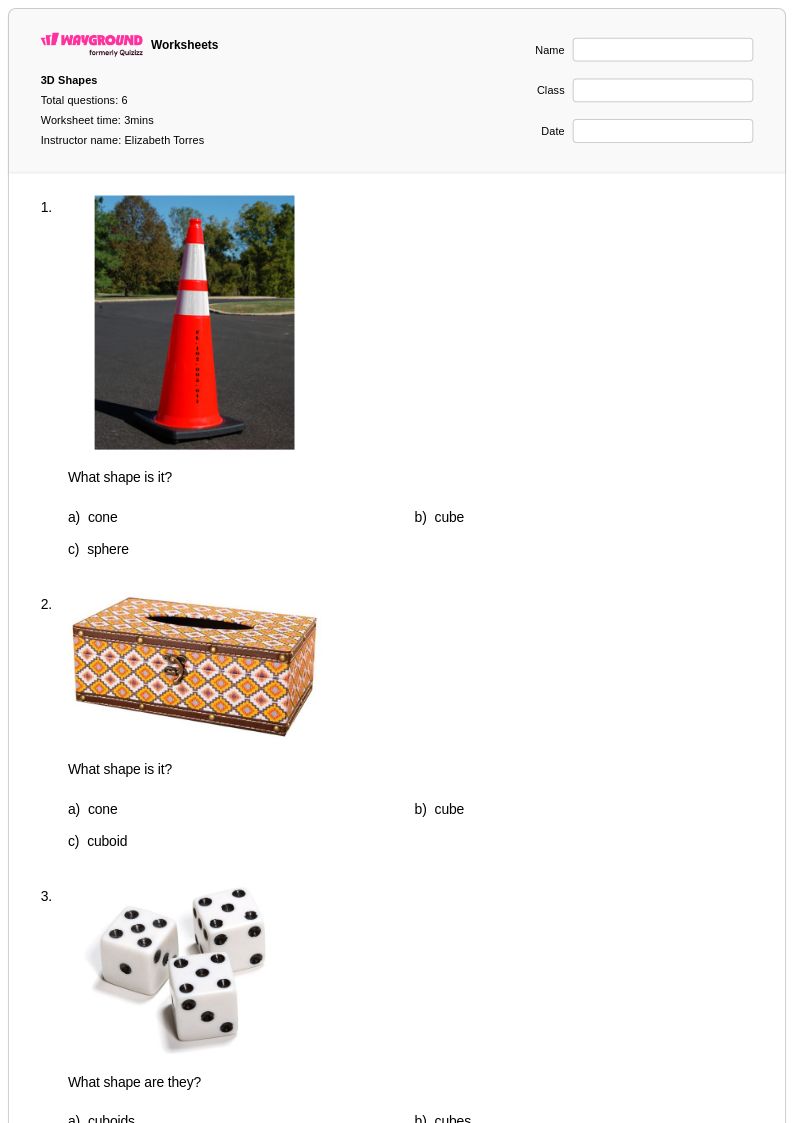
6 Q
1st
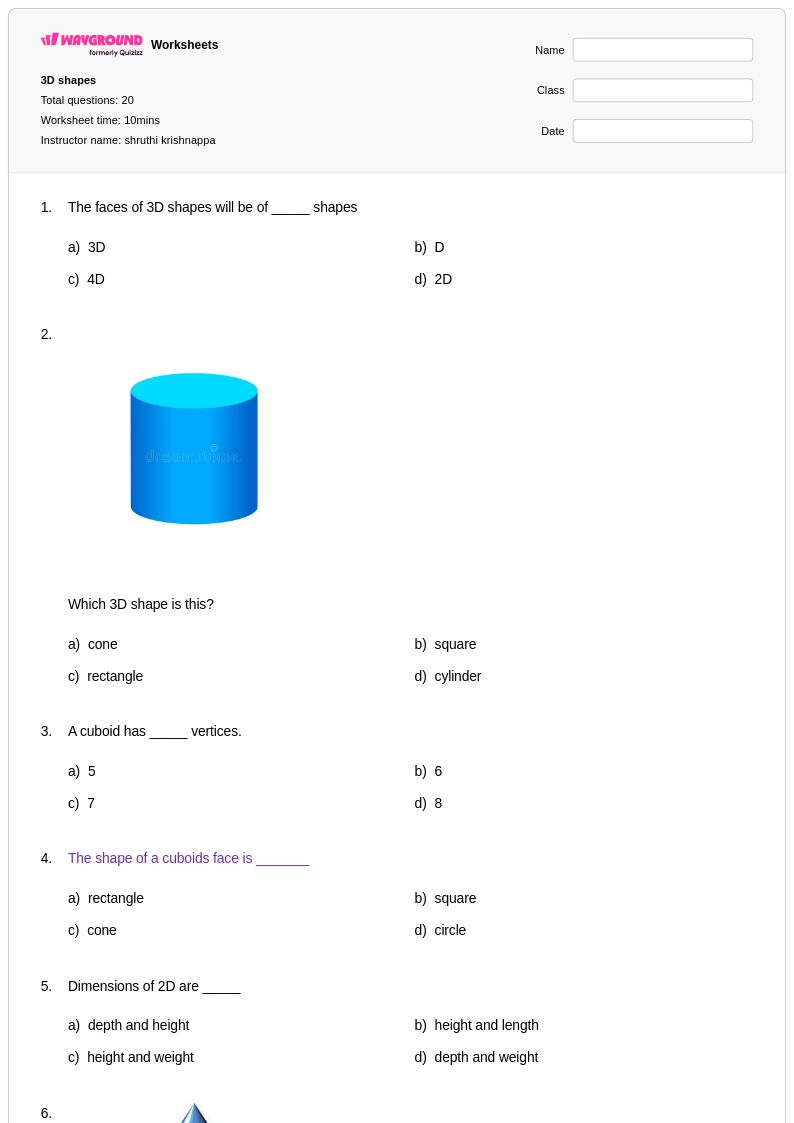
20 Q
1st
Explore Other Subject Worksheets for grade 1
Explore printable Cuboids worksheets for Grade 1
Grade 1 cuboids worksheets available through Wayground (formerly Quizizz) introduce young learners to the fundamental three-dimensional geometric shape that forms the foundation for spatial reasoning and measurement concepts. These carefully designed practice problems help first-grade students recognize cuboids in everyday objects like boxes, books, and building blocks while developing essential skills in shape identification, counting faces and edges, and understanding basic geometric vocabulary. The comprehensive collection includes printables that guide students through hands-on activities such as sorting cuboids from other 3D shapes, tracing cuboid outlines, and completing simple pattern exercises that strengthen visual-spatial processing abilities. Each worksheet comes with a detailed answer key to support accurate assessment, and the free pdf format ensures easy classroom distribution and homework assignments that reinforce geometric understanding through engaging, age-appropriate activities.
Wayground (formerly Quizizz) empowers educators with millions of teacher-created resources specifically designed for Grade 1 geometry instruction, featuring robust search and filtering capabilities that allow quick access to cuboid worksheets aligned with educational standards and learning objectives. The platform's differentiation tools enable teachers to customize practice materials for diverse learning needs, offering both digital interactive formats and traditional printable pdf options that accommodate various classroom environments and teaching preferences. These flexible resources support comprehensive lesson planning by providing multiple difficulty levels for remediation and enrichment opportunities, while the extensive worksheet library ensures teachers can access fresh practice problems that maintain student engagement throughout the geometry unit. The seamless integration of assessment tools with answer keys allows educators to efficiently track student progress in 3D shape recognition and spatial reasoning skills, making it simple to identify areas requiring additional skill practice or advanced challenges.
FAQs
How do I teach cuboids to first-grade students?
What exercises help first graders practice cuboids?
What mistakes do first graders make when learning about cuboids?
How can I use Wayground Grade 1 cuboids worksheets?
How do cuboids fit into the Common Core Grade 1 geometry progression?
How can I differentiate cuboid practice in Grade 1?
What should Grade 1 students learn about cuboids?