
10 Q
1st
7 Q
1st
10 Q
1st
15 Q
1st - Uni
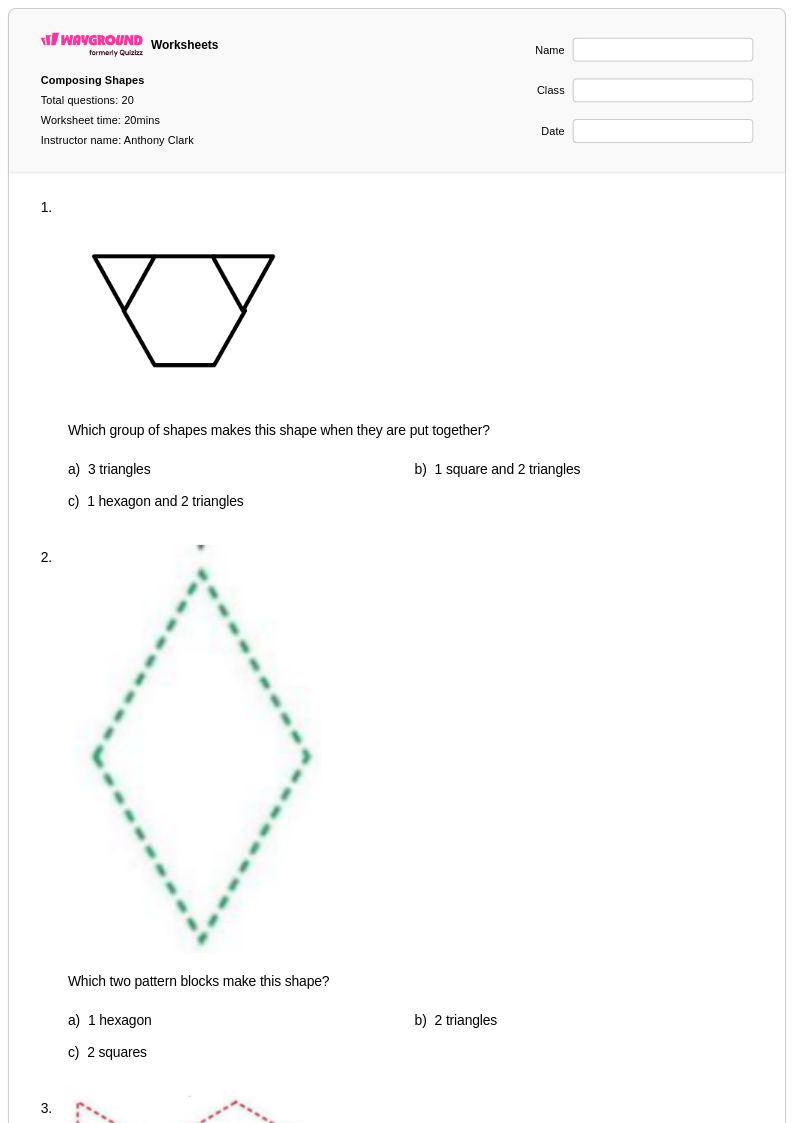
20 Q
1st - Uni
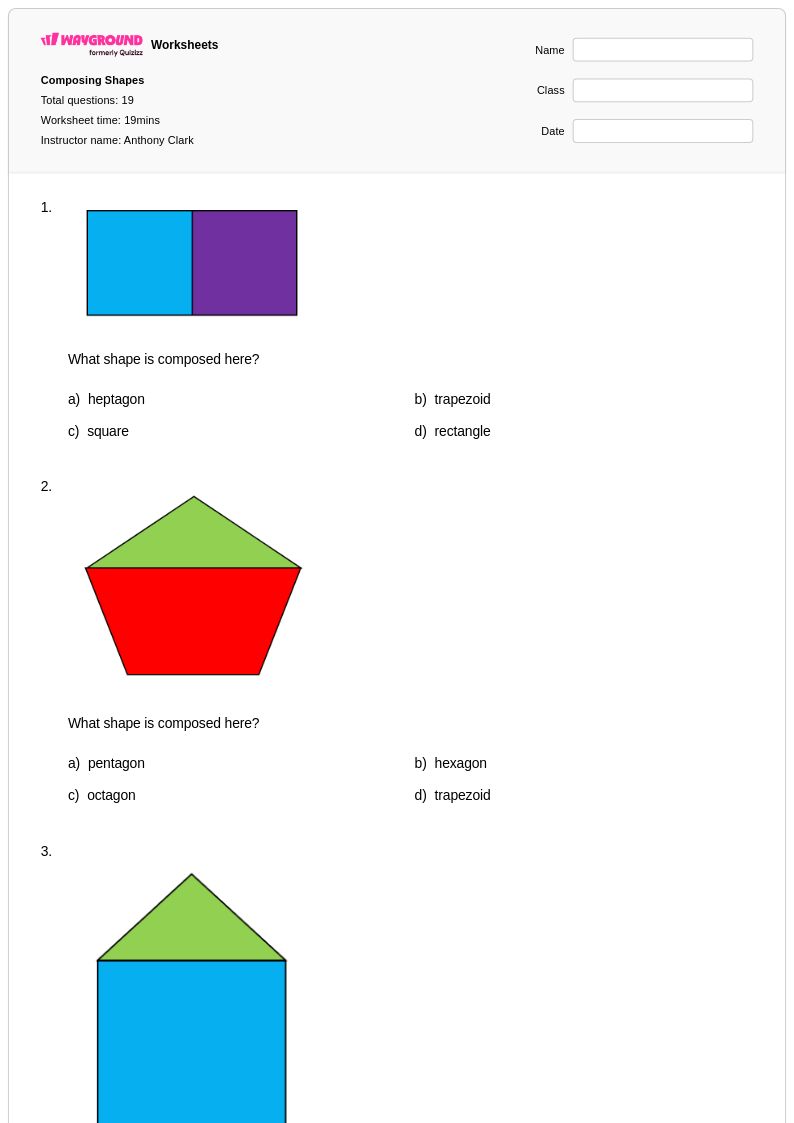
19 Q
1st - Uni
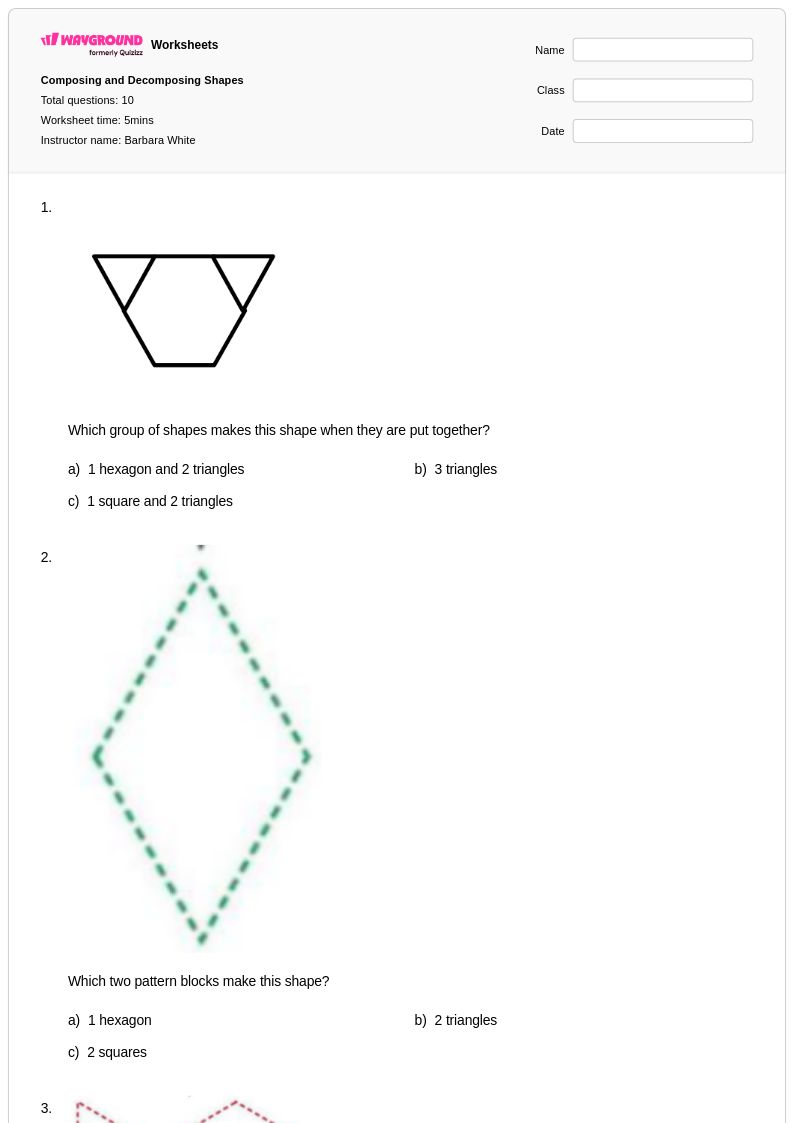
10 Q
1st
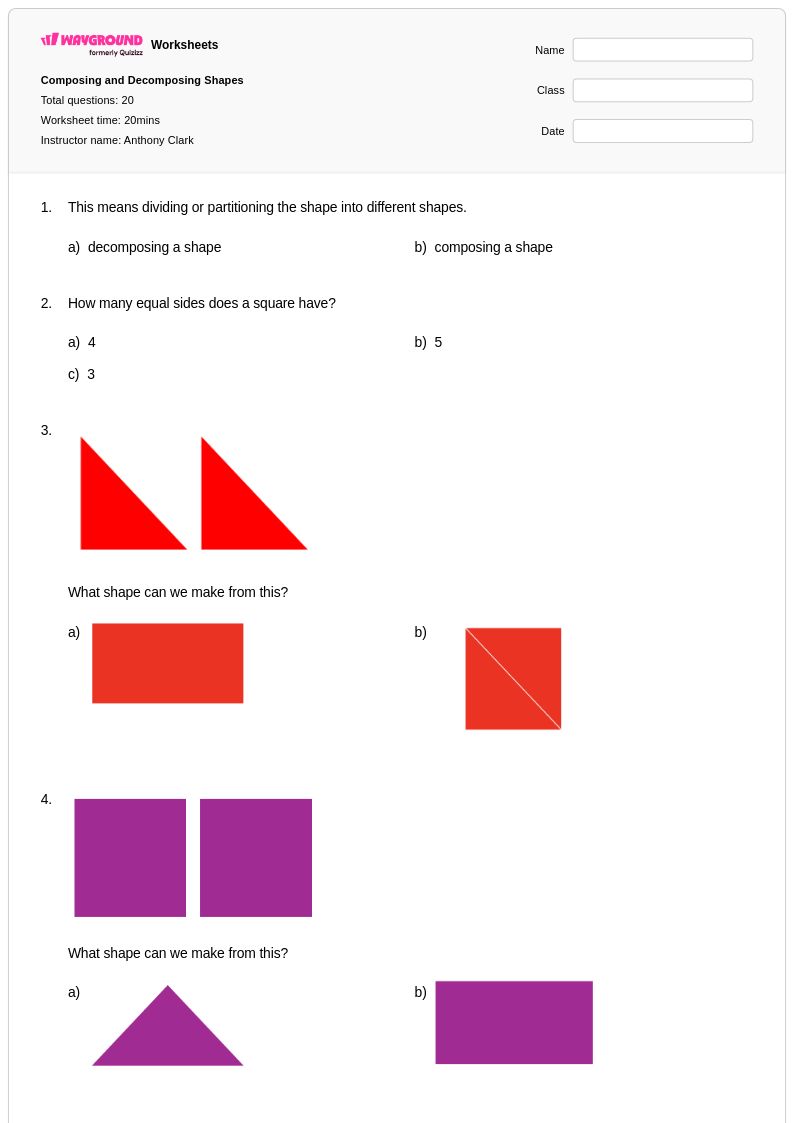
20 Q
1st - Uni
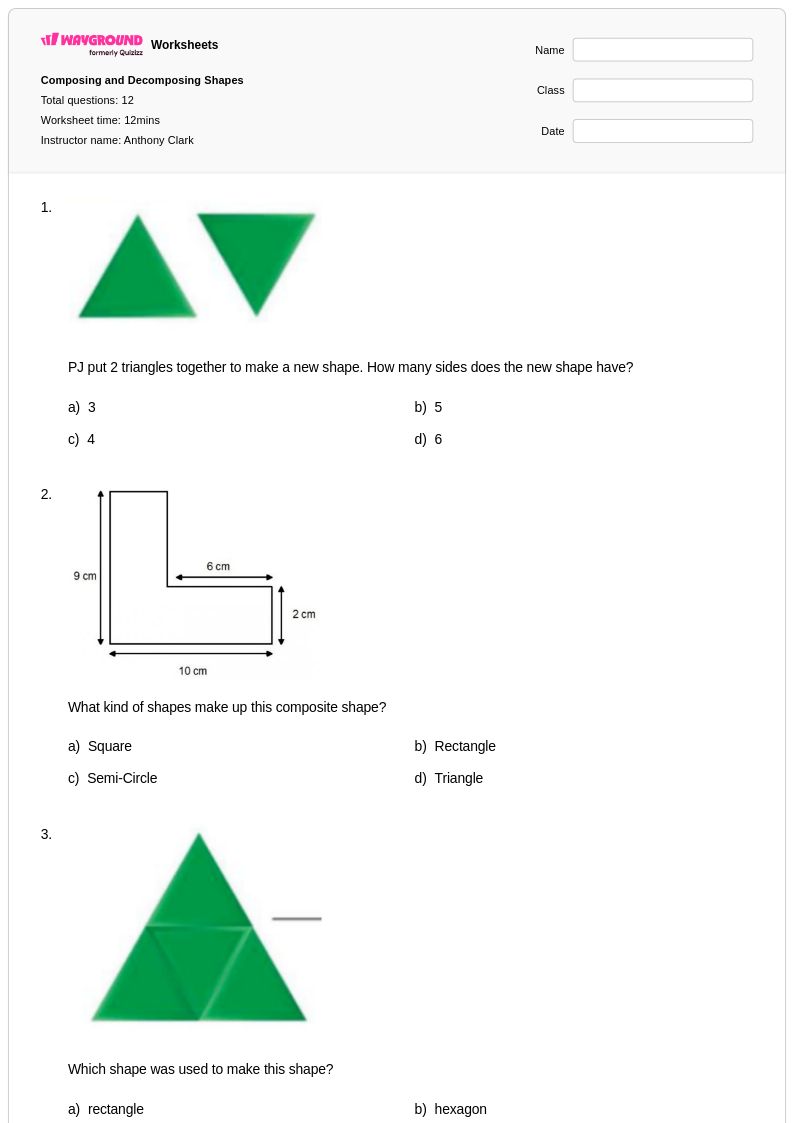
12 Q
1st - Uni
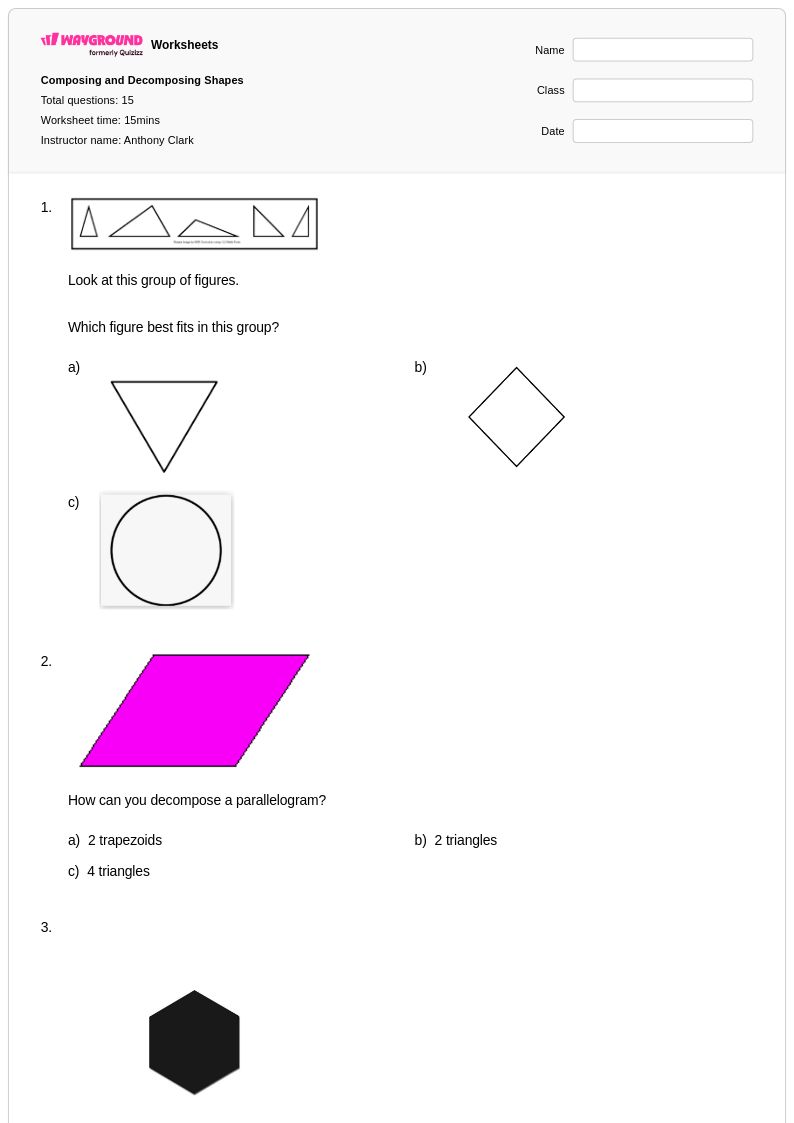
15 Q
1st - Uni
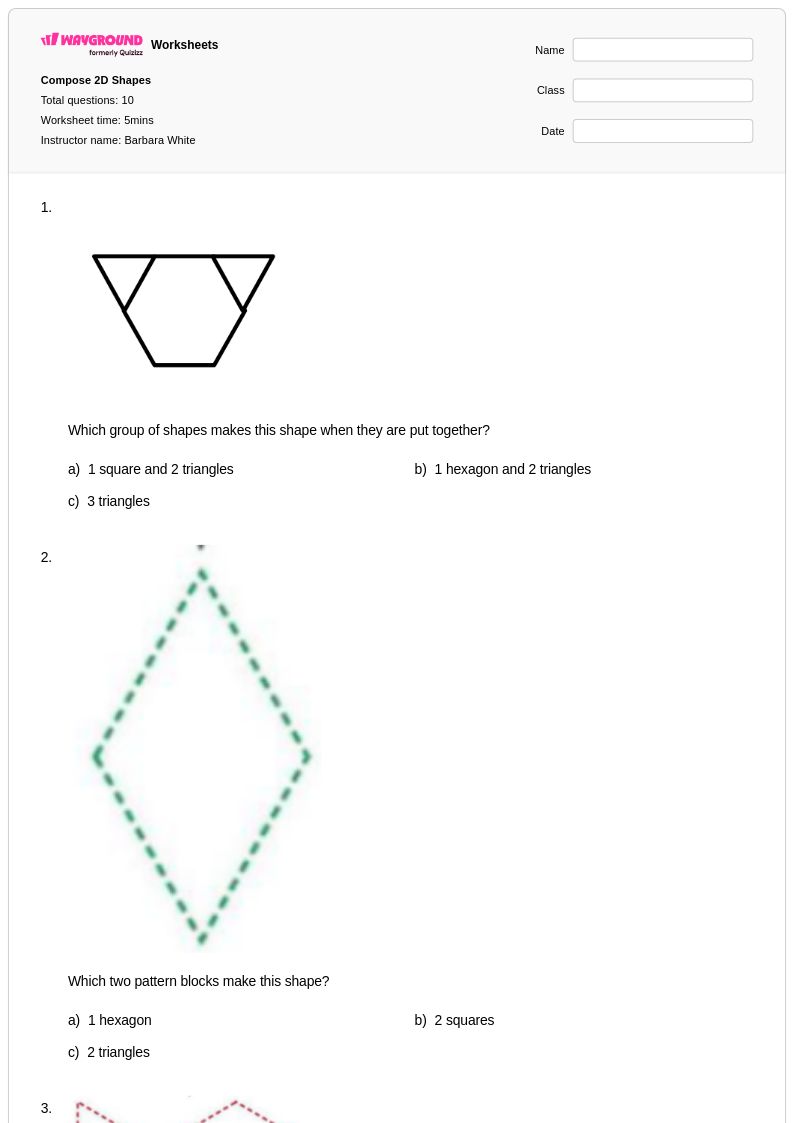
10 Q
1st
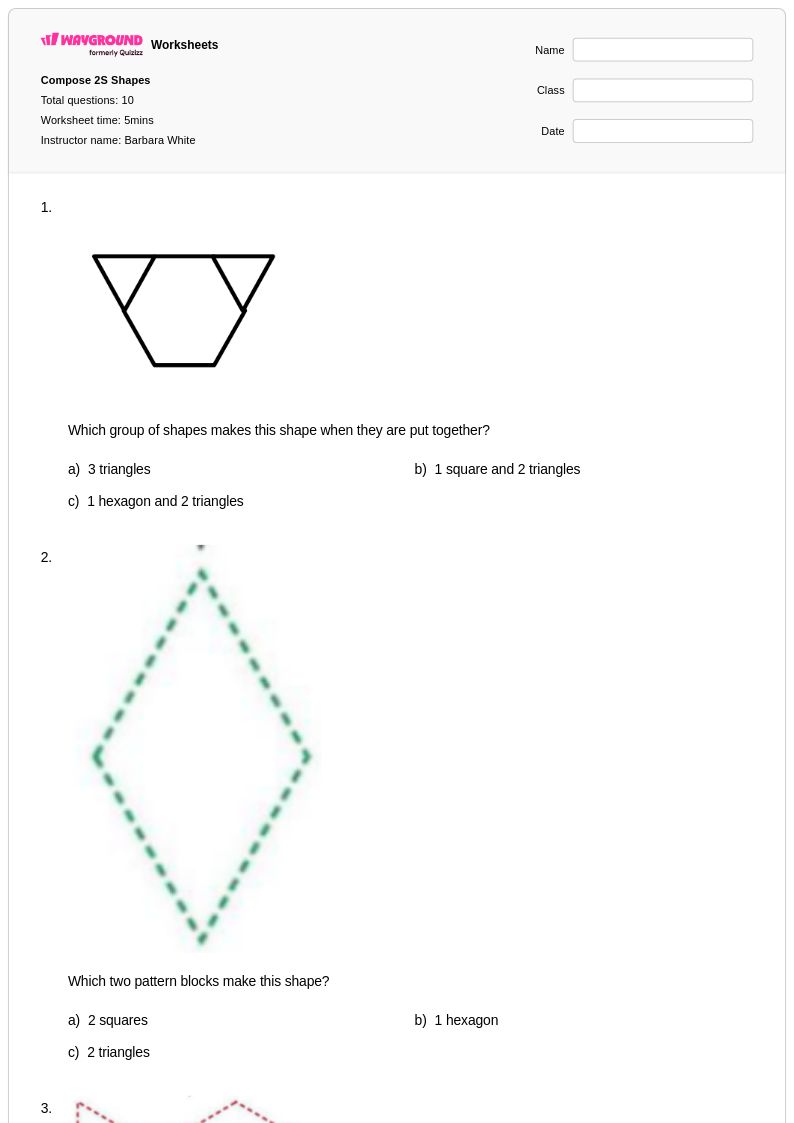
10 Q
1st
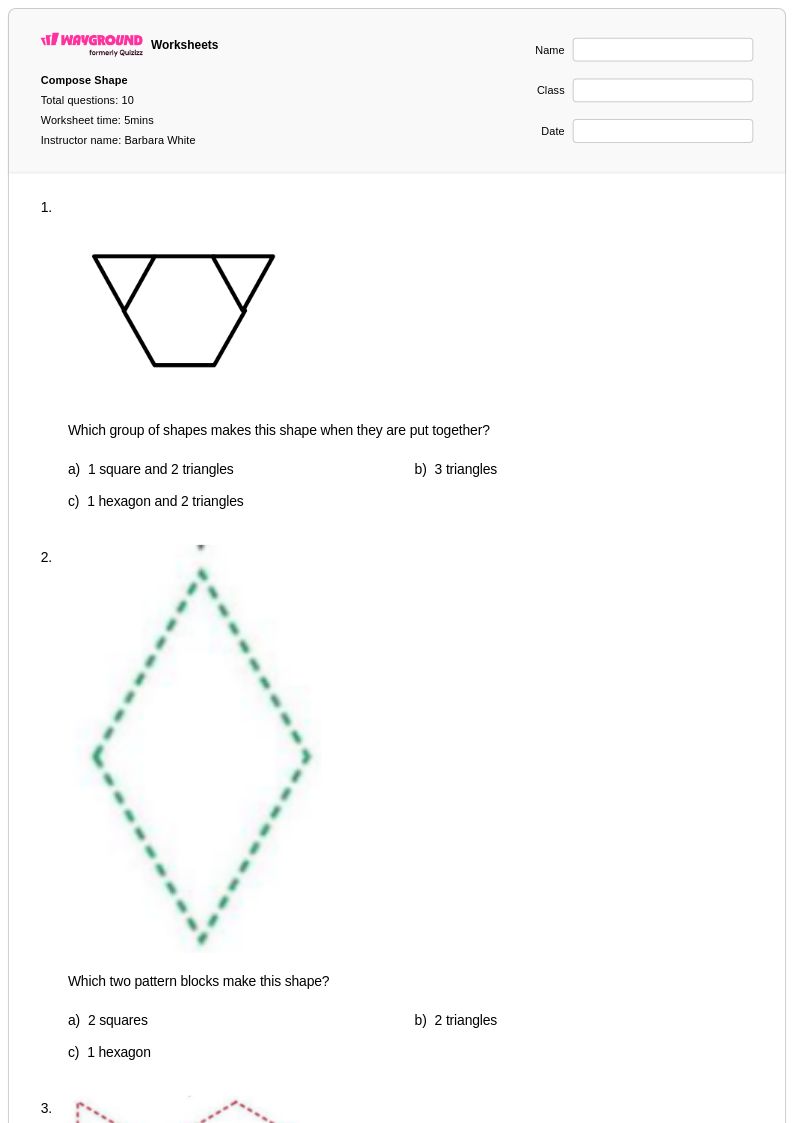
10 Q
1st
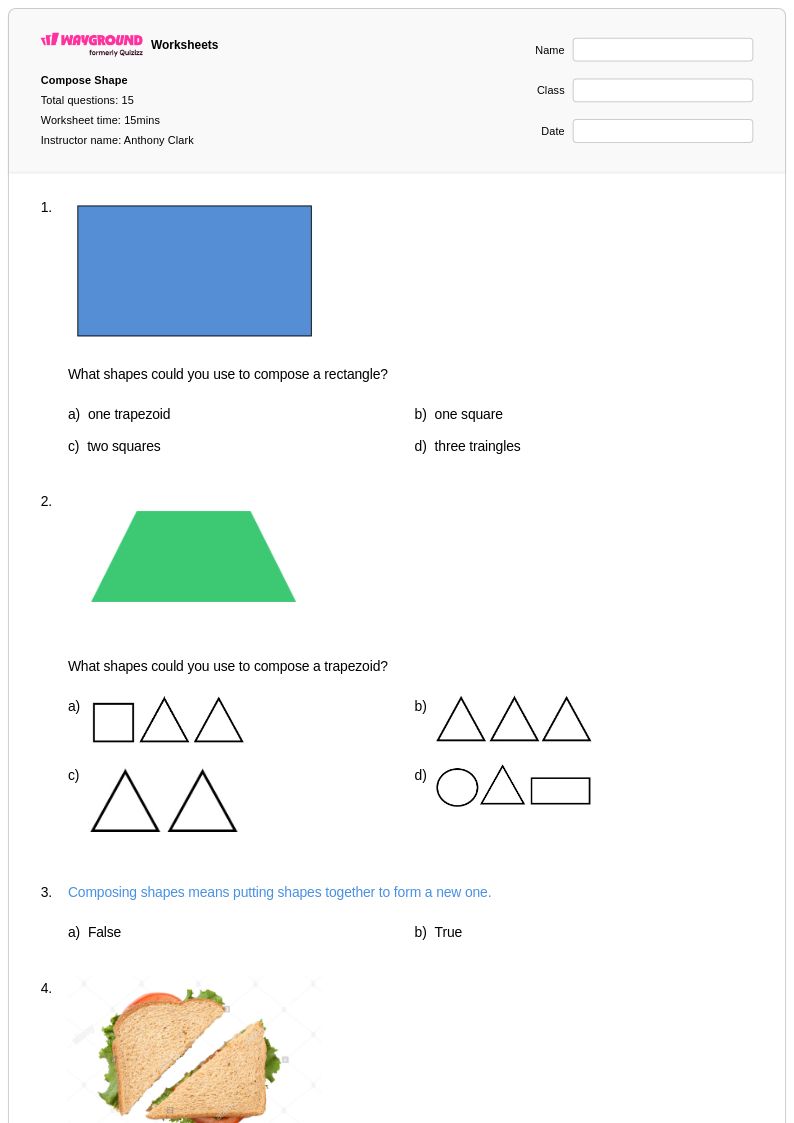
15 Q
1st - Uni
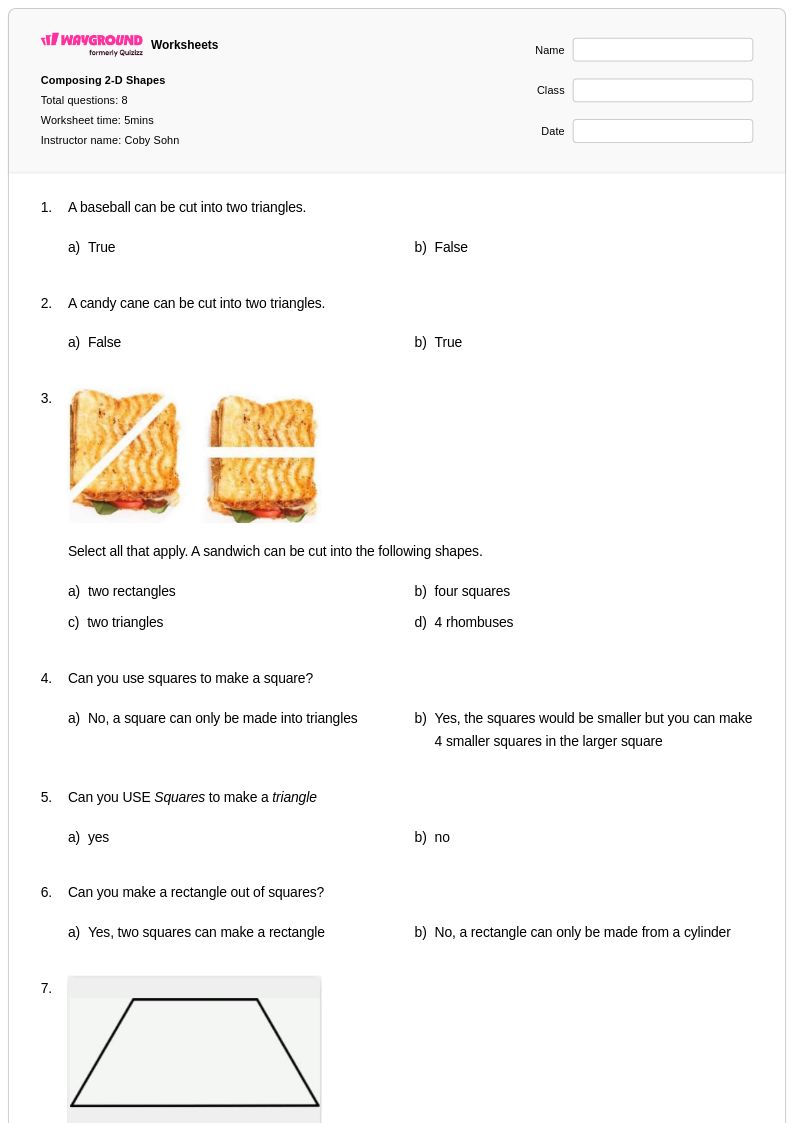
8 Q
1st
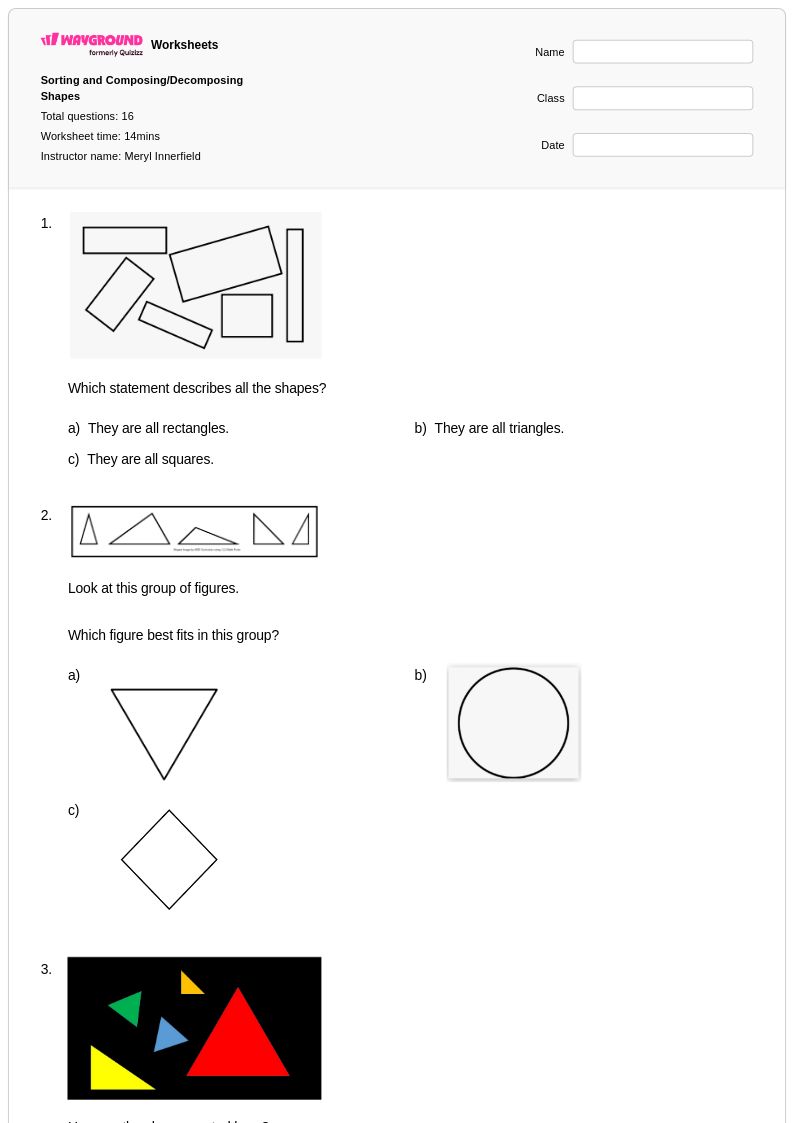
16 Q
1st
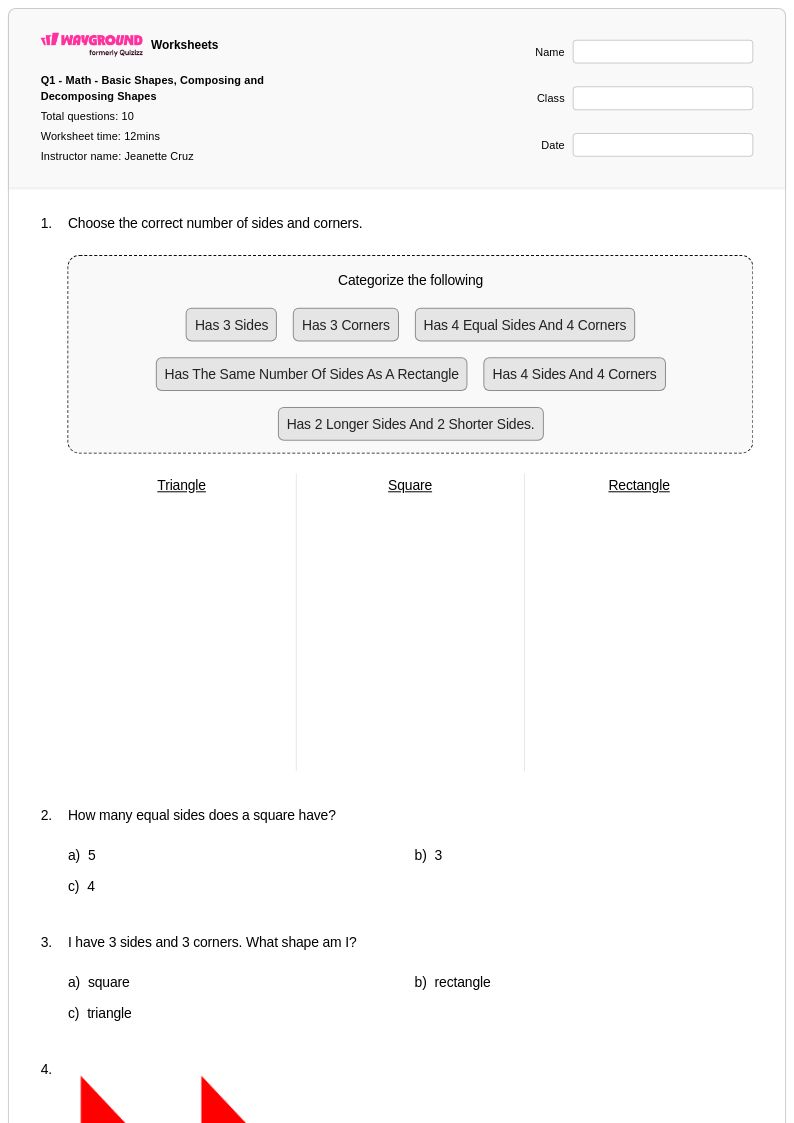
10 Q
1st
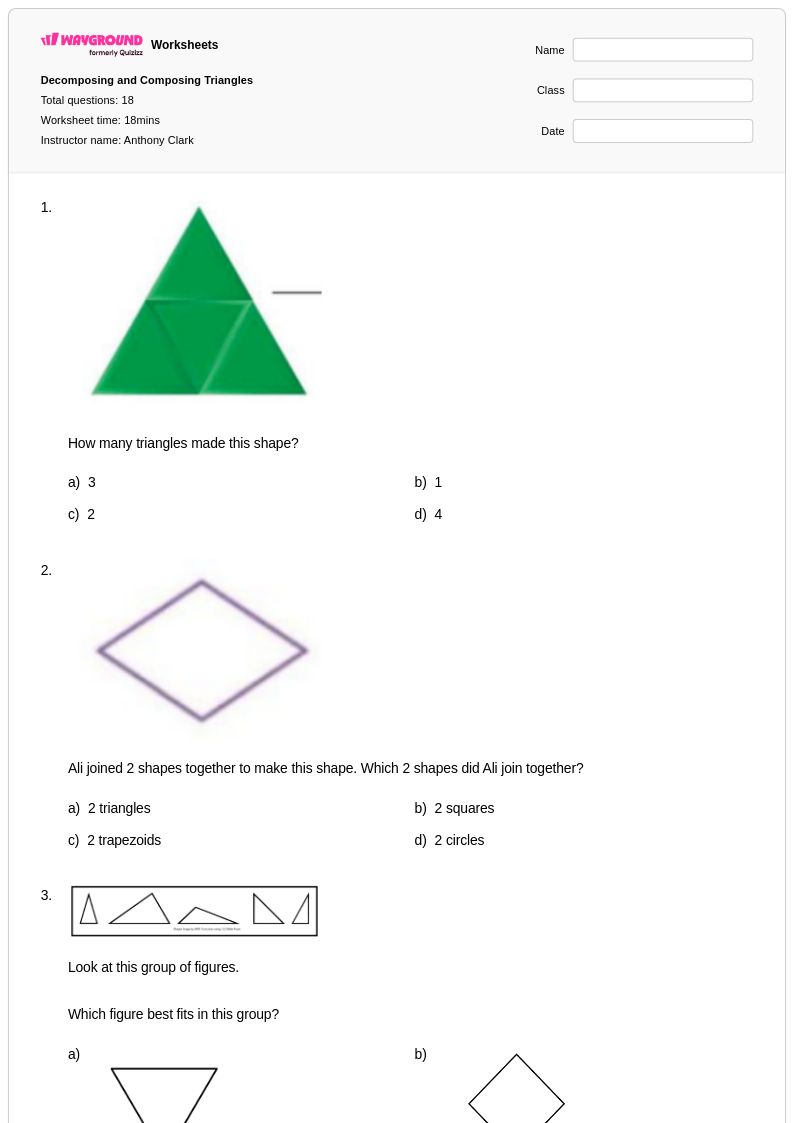
18 Q
1st - Uni
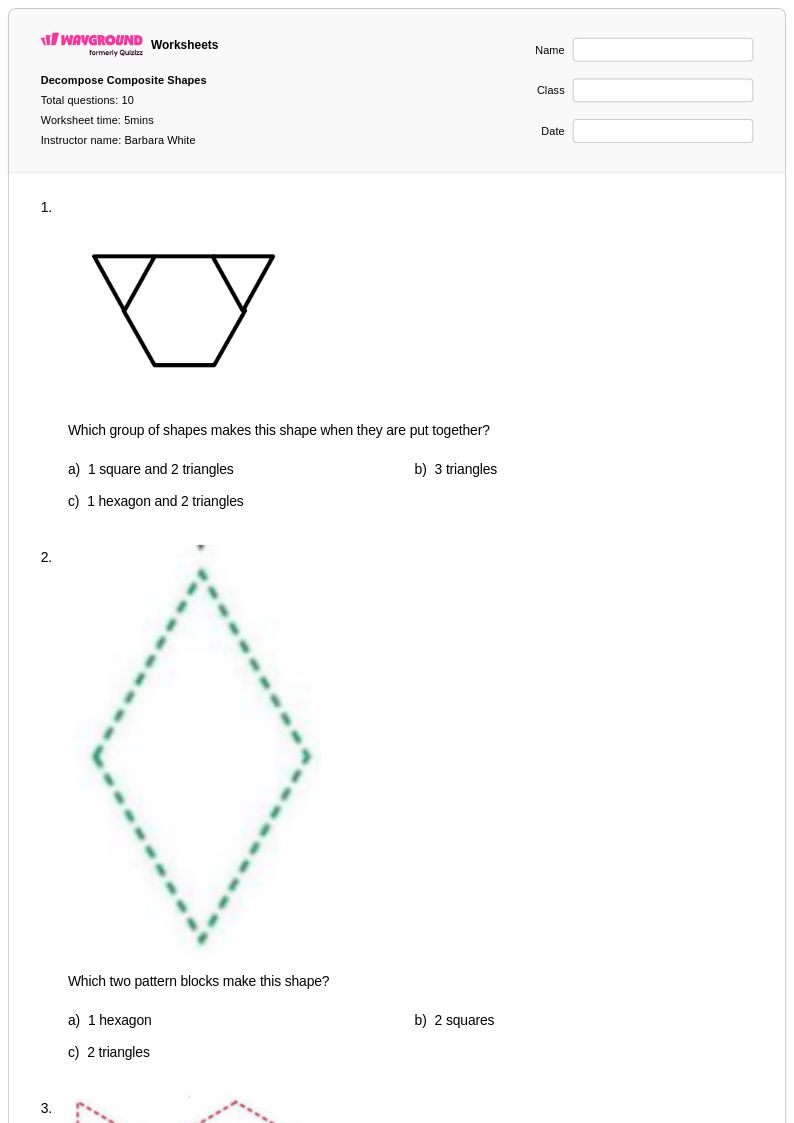
10 Q
1st
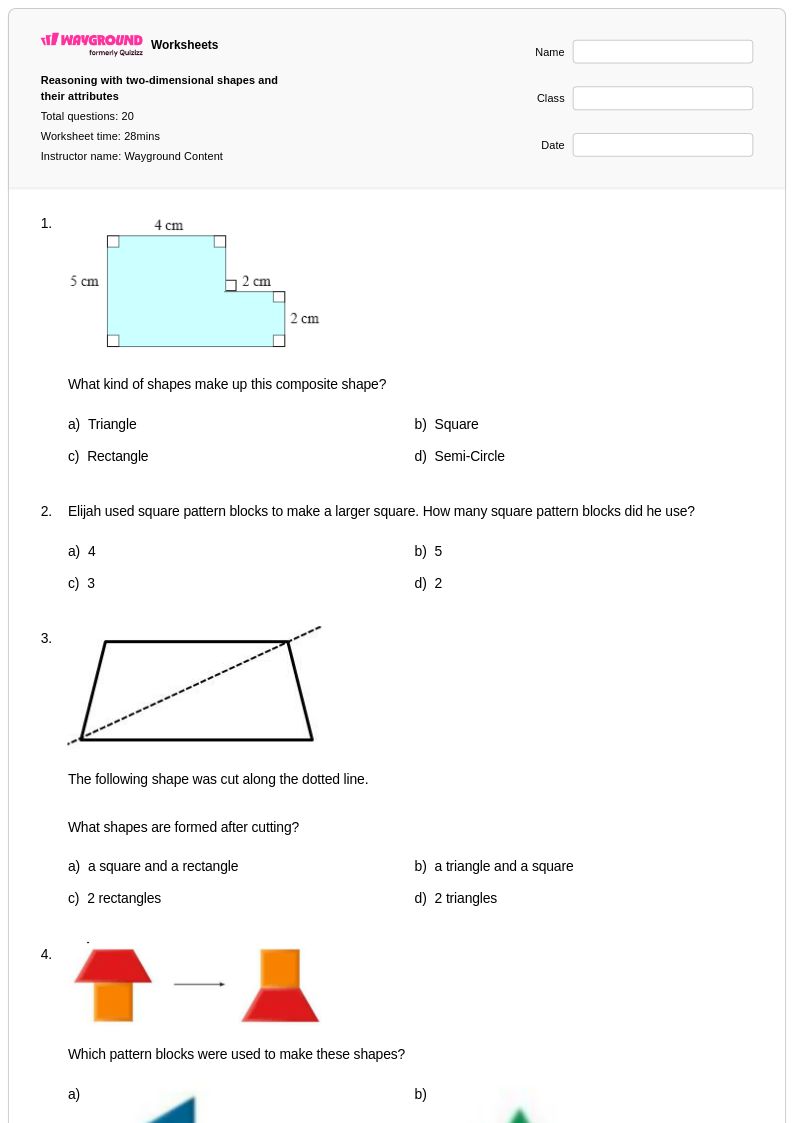
20 Q
1st
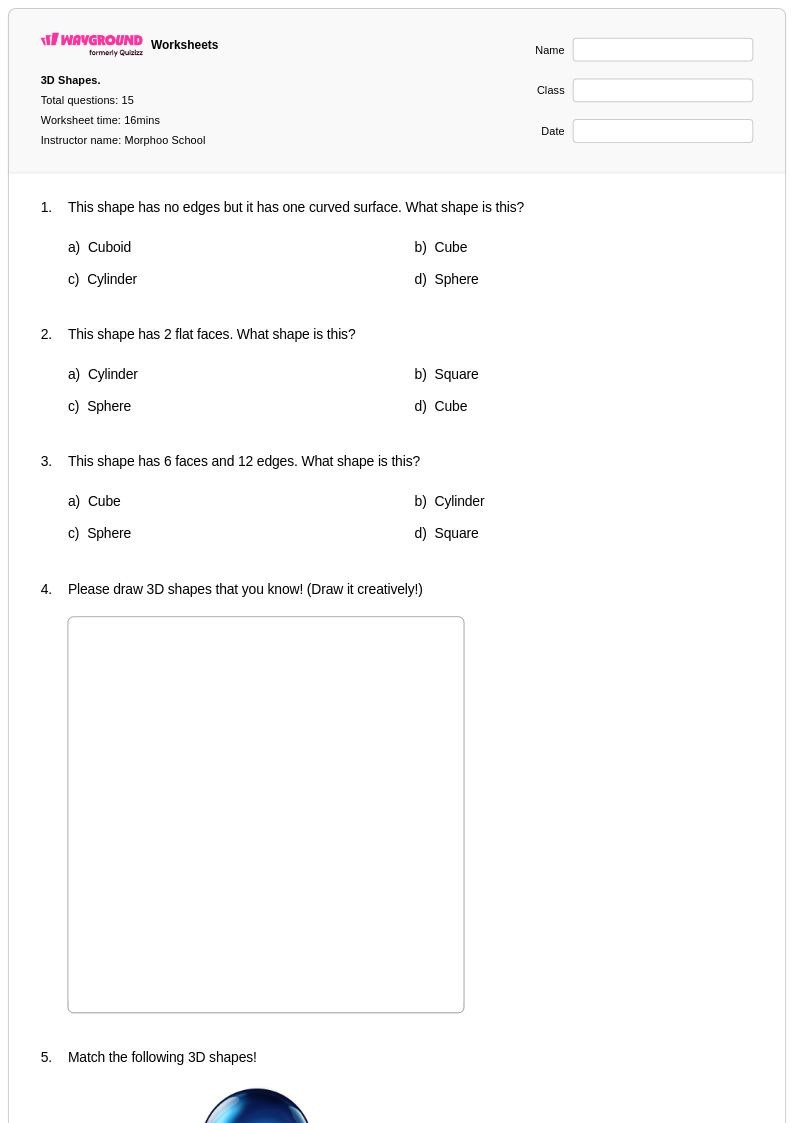
15 Q
1st
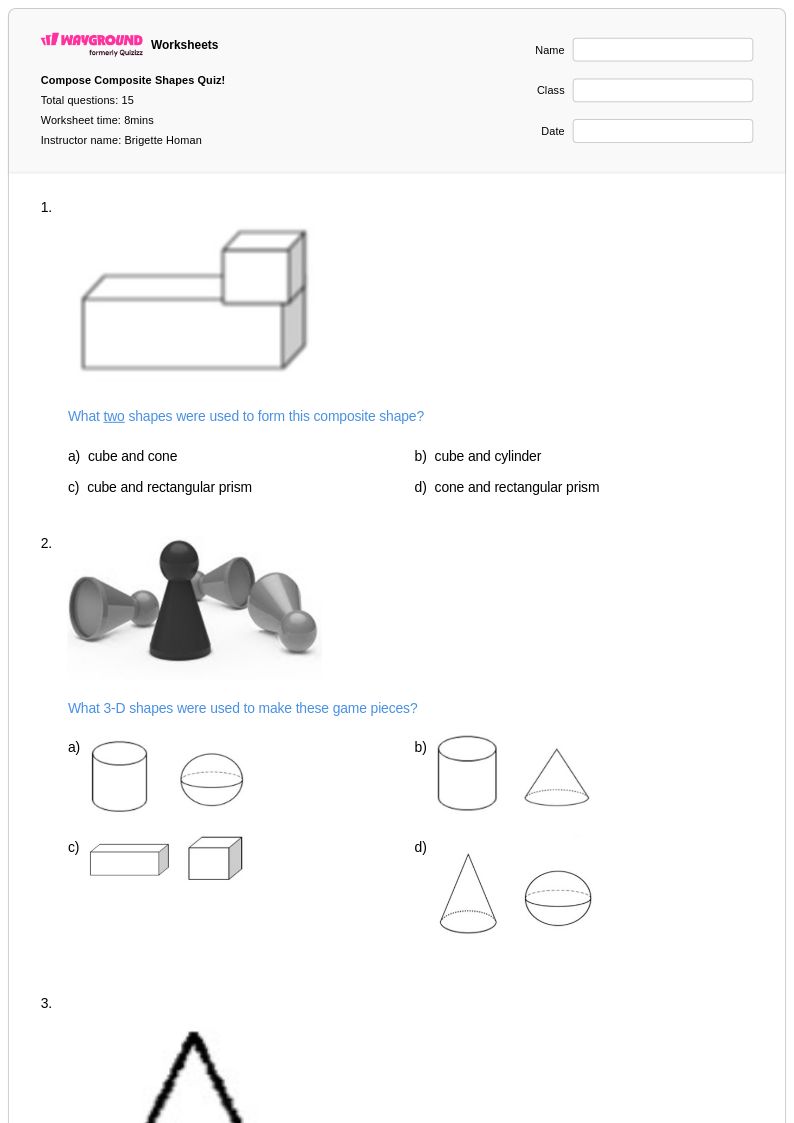
15 Q
1st
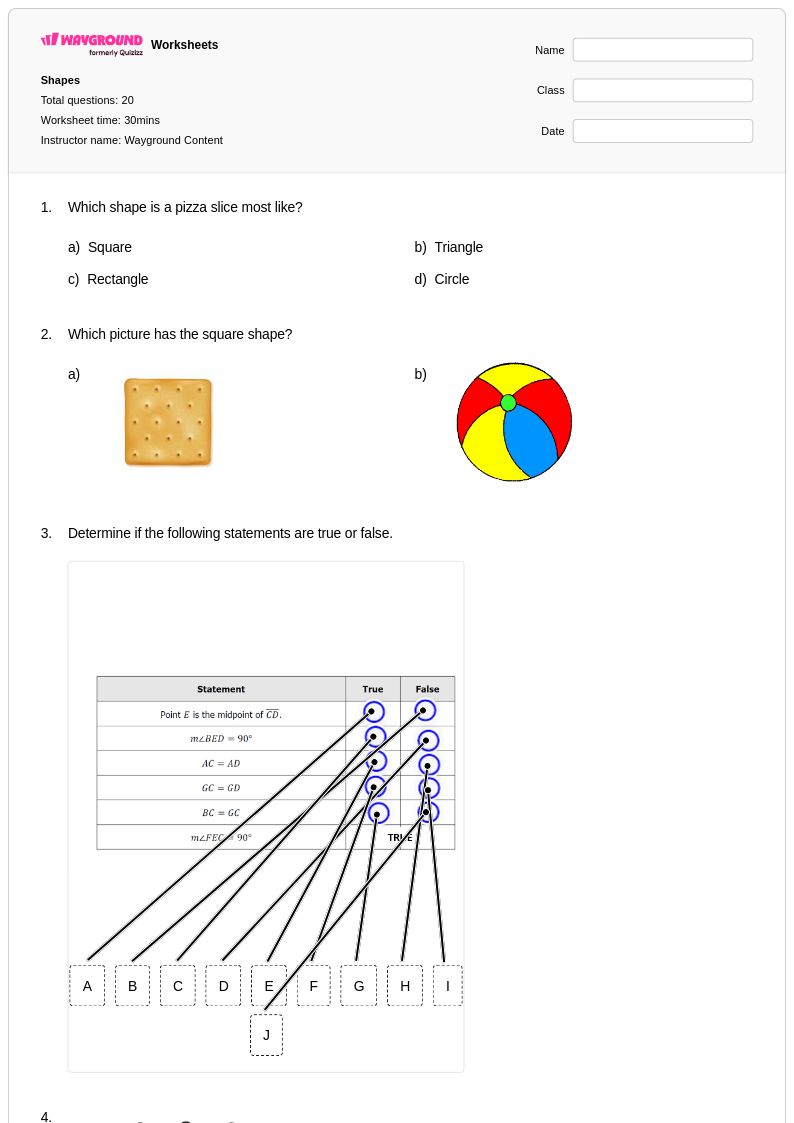
20 Q
1st - 2nd
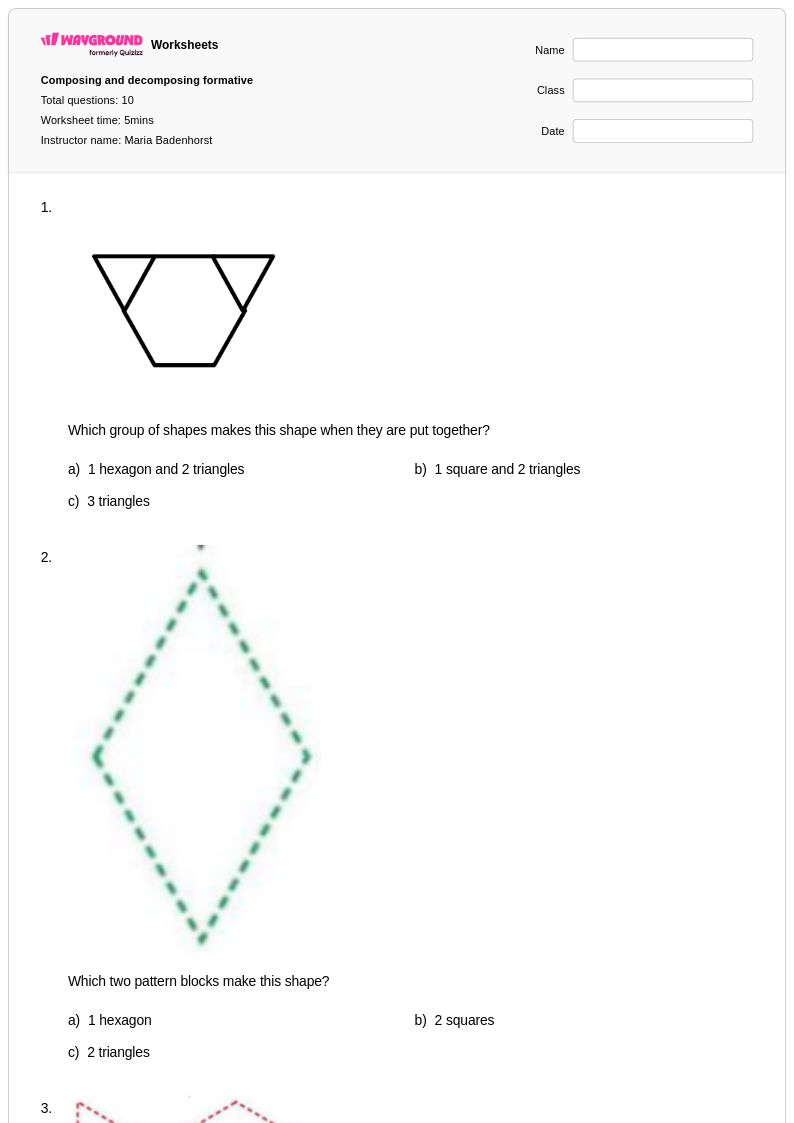
10 Q
1st
Explore Other Subject Worksheets for grade 1
Explore printable Composing Shapes worksheets for Grade 1
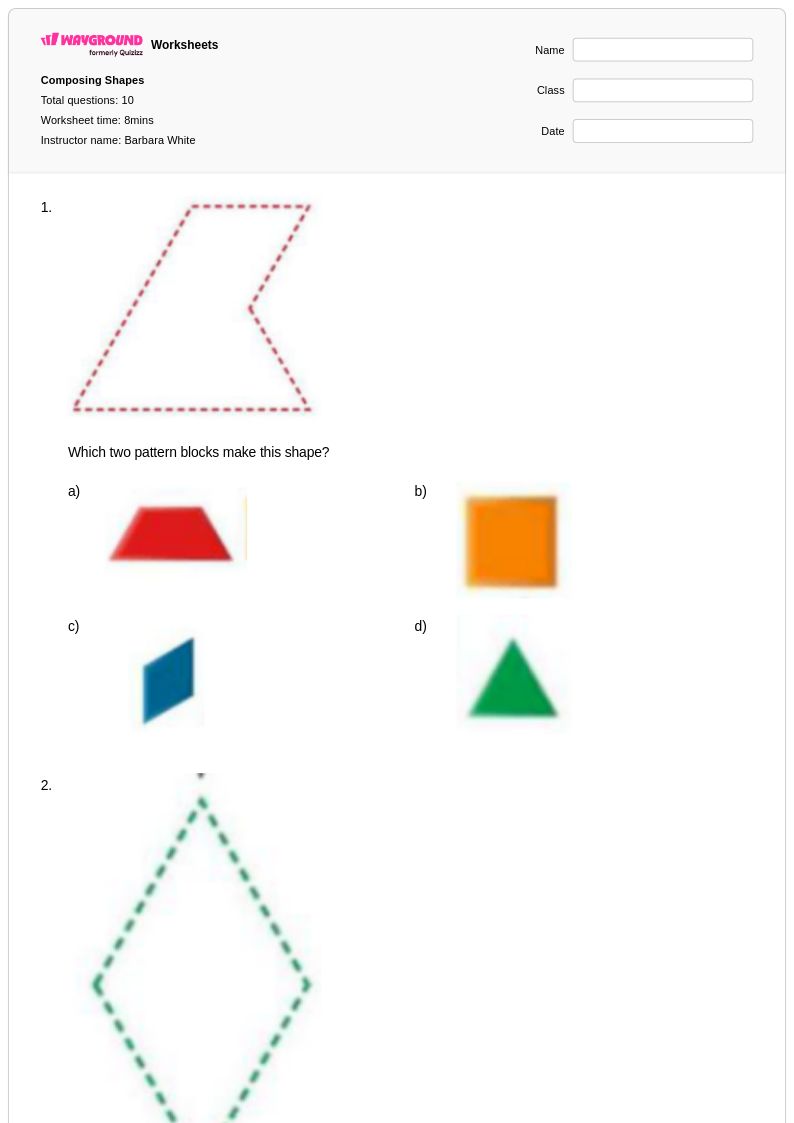
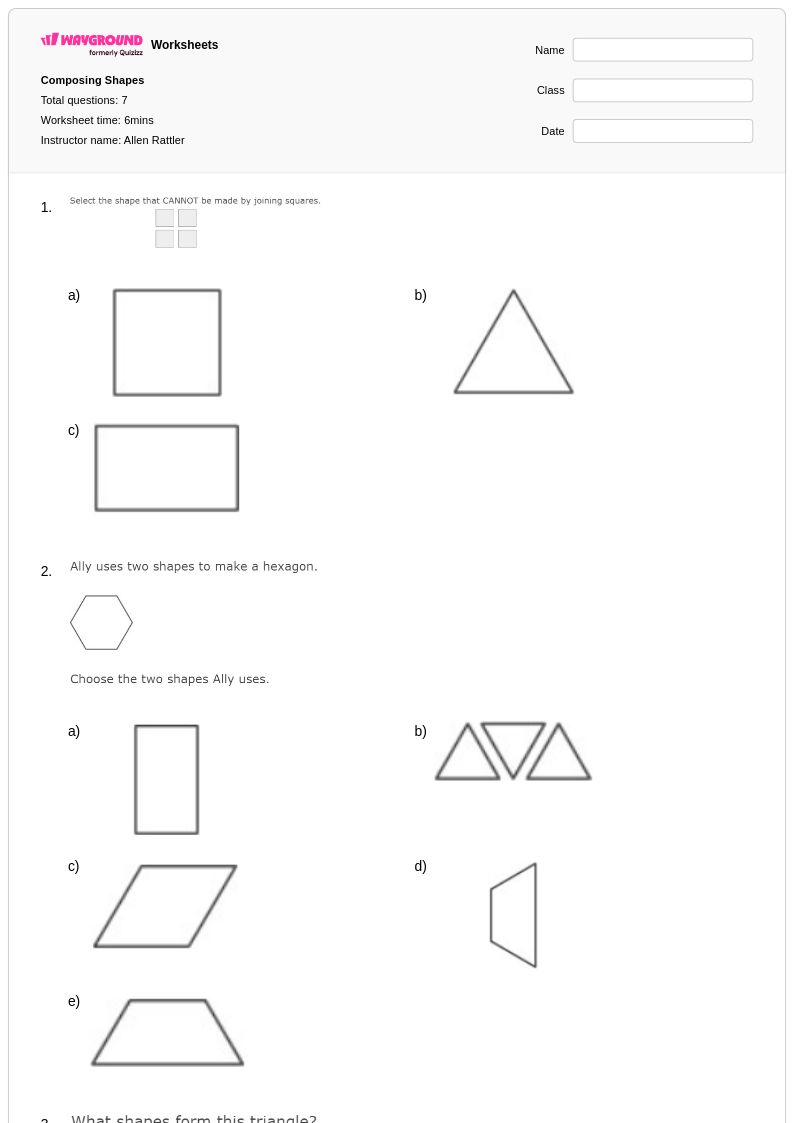
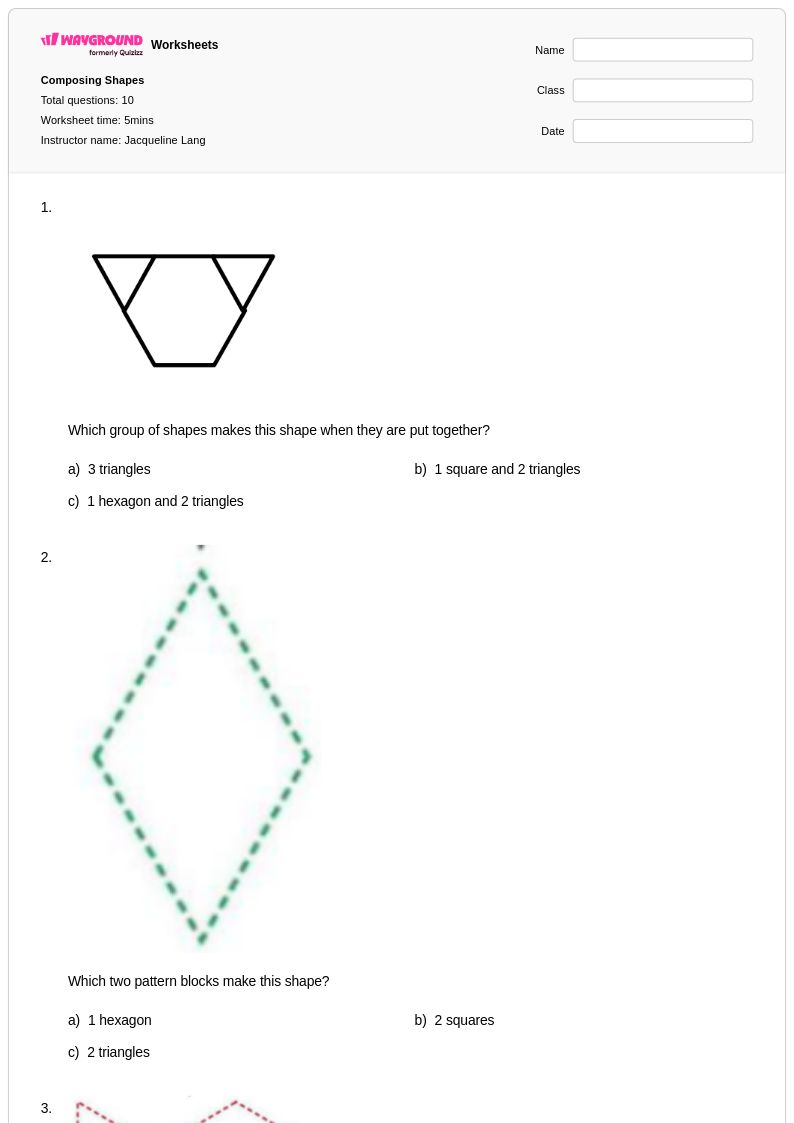
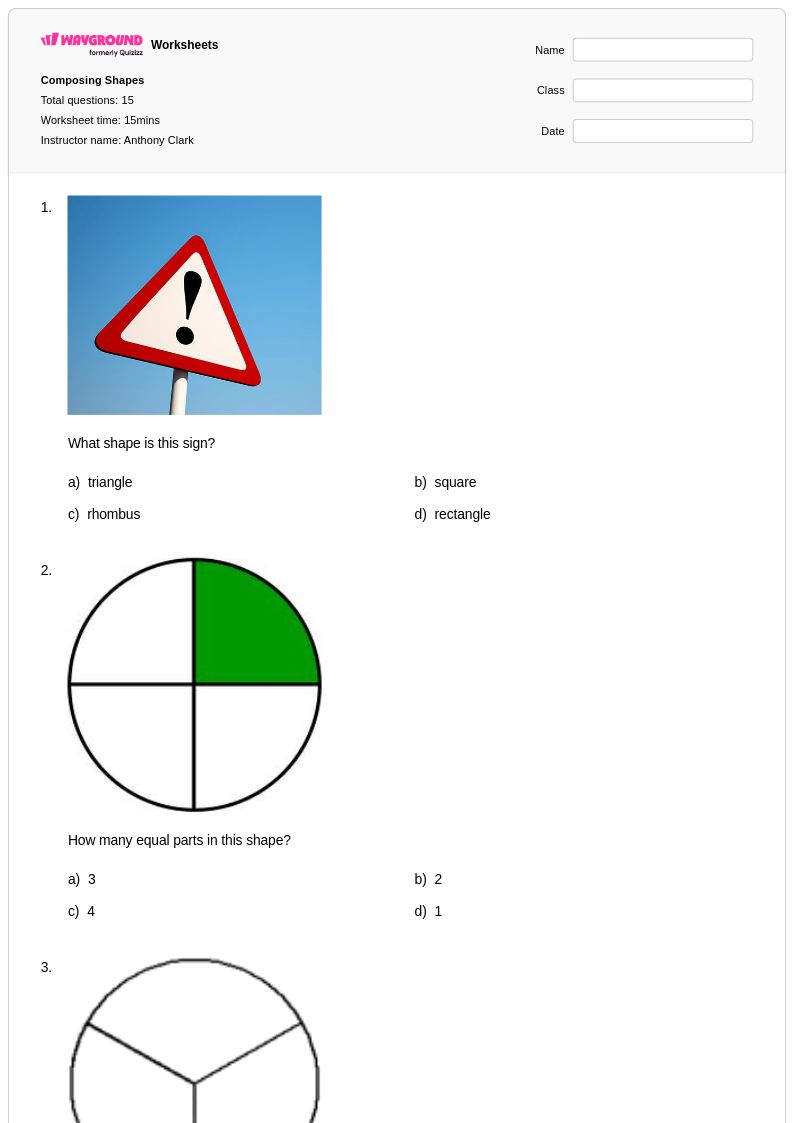
Composing shapes worksheets for Grade 1 students available through Wayground (formerly Quizizz) provide essential foundational practice in geometric reasoning and spatial visualization skills. These carefully designed resources help young learners understand how smaller shapes can be combined to create larger, more complex forms through hands-on activities and visual exercises. Students develop critical thinking abilities as they manipulate triangles, squares, circles, and rectangles to build new configurations, strengthening their understanding of shape attributes and spatial relationships. Each worksheet collection includes comprehensive answer keys and detailed practice problems that guide students through progressive skill-building exercises, with free printable pdf options that make implementation seamless for classroom instruction and independent practice.
Wayground (formerly Quizizz) empowers educators with access to millions of teacher-created composing shapes resources that feature robust search and filtering capabilities aligned to mathematics standards for Grade 1 geometry instruction. The platform's differentiation tools allow teachers to customize worksheets based on individual student needs, offering both remediation support for struggling learners and enrichment opportunities for advanced students ready to explore more complex shape composition challenges. Available in both printable and digital pdf formats, these resources streamline lesson planning while providing flexible options for in-class activities, homework assignments, and assessment preparation. Teachers can efficiently identify specific skill gaps in shape recognition and spatial reasoning, then select targeted practice materials that support diverse learning styles and help students master fundamental geometric concepts essential for future mathematical success.
FAQs
How do I teach composing shapes to first graders?
What exercises help first graders practice composing shapes?
What mistakes do Grade 1 students make when composing shapes?
How can I use Grade 1 composing shapes worksheets on Wayground?
What grade do students learn to compose shapes?
How does composing shapes fit into the Common Core Grade 1 math progression?
How can I differentiate Grade 1 composing shapes practice?